Results by title
3785 books match the query 'Poetry' and 342 start with s
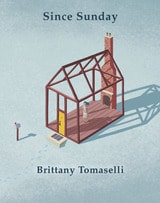
Since Sunday
Brittany Tomaselli
Omnidawn, 2019
Through wit, vulnerability, and rich lyrical language, Tomaselli invites us to walk with her through loss and on to a persistent process of discovery. The poems chronicle a cultivation of awe, unearthing a fresh faith rooted in the present realness of everyday experiences. Stripped of the orthodoxy that both grew and crushed her, she reconstructs a new core of trust for herself. Here we learn with the poet to seek celebration in daily life and to foster a sense of beauty from the mundane.
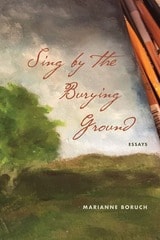
Sing by the Burying Ground
EssaysMarianne Boruch
Northwestern University Press, 2024
In her fourth essay collection, award-winning author Marianne Boruch explores the possibilities of hope even in darkness. Through poetry, the silence of Trappist monks, the pandemic moment, the Wright brothers’ quirky stab at flight, treasured knickknacks, and more, this book celebrates the weird, the mundane, the overlooked, and the promise of a future. Though each essay is distinct, foraging fresh ways into Louise Glück, W. H. Auden, Elizabeth Bishop, Robert Frost, Marianne Moore, Sylvia Plath, John Berryman, Langston Hughes, and more, they are all connected through the thread of Emily Dickinson’s comment that her fate was to “sing, as a Boy does by the Burying Ground . . .” Even in times filled with horror, we find beauty. Maybe we can sing in the blackest of nights.
Thoughtful and expressive, this collection provides solace and humor for readers in a world where both are often in short supply.
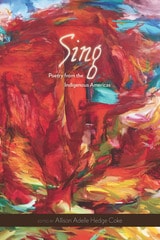
Sing
Poetry from the Indigenous AmericasEdited by Allison Adelle Hedge Coke
University of Arizona Press, 2011
They write from disparate zones and parallel experience, from lands of mounded earthwork long-since paved, from lands of ancient ball courts and the first great cities on the continents, from places of cold, from places of volcanic loam, from zones of erased history and ongoing armed conflict, where “postcolonial” is not an academic concept but a lived reality. As befits a volume of such geographical inclusivity, many poems here appear in multiple languages, translated by fellow poets and writers like Juan Felipe Herrera and Cristina Eisenberg.
Hedge Coke’s thematic organization of the poems gives them an added resonance and continuity, and readers will appreciate the story of the genesis of this project related in Hedge Coke’s deeply felt introduction, which details her experiences as an invited performer at several international poetry festivals. Sing is a journey compelled by the exploration of kinship and the desire for songs that open “pathways of return.”
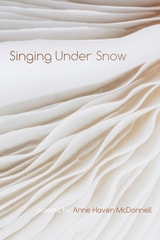
Singing Under Snow
Anne Haven McDonnell
Michigan State University Press, 2026
These are poems of queer ecology—poetry that “exults in the grit and texture of the natural world, in the unassuming and overlooked wonders beneath our feet and beyond our doors—in lichen and snow, in martens and mushrooms.” In reckoning with a mother’s aging, a breakup, or grief and disorientation in the face of the climate crisis, these poems seek a spiritual meaning in ecological belonging. Central to the collection is a series of poems exploring science, ceremony, and personal encounters with fungi. Fungi and lichen blur what we consider biological, what we think of as an individual, and how we understand death, and these poems reflect this complexity through imagery, juxtaposition, leaps of imagination, and sonic spells.
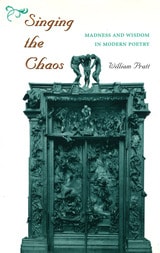
Singing the Chaos
Madness and Wisdom in Modern PoetryWilliam Pratt
University of Missouri Press, 1996
Singing the Chaos: Madness and Wisdom in Modern Poetry combines both a historical and a critical approach toward the works of major British, American, French, German, and Russian poets. Comprehensive in scope and arranged chronologically to survey a century of high poetic achievement, the study is unified by Pratt's overriding argument that "modern poets have endowed a disintegrating civilization with humane wisdom by 'singing the chaos' that surrounds them, making ours a great age in spite of itself."
In developing this central theme, Pratt brings alive the energy, the freshness, and the originality of technique that made Baudelaire, Pound, Yeats, Rilke, Eliot, and others the initiators of the revolution in poetry. He brings a more complete, clearer perspective to other major themes: modernism as an age of irony; poets as both madmen and geniuses; the modern poet as tragic hero; the dominance of religious or visionary truths over social or political issues; and the combination of radical experiments in poetic form with an apocalyptic view of Western civilization. His detailed treatment of the Fugitive poets and his recognition of their prominent role in twentieth-century literature constitute an important historical revision.
Brilliantly informed, insightful, and, above all, accurately sympathetic to the points of view of the poets Pratt presents, Singing the Chaos is that rare book that belongs on all shelves devoted to modernist poetry.

Sir Gawain and the Green Knight
R. A. Waldron
Northwestern University Press, 1972
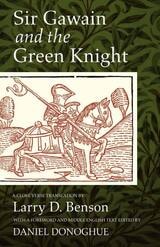
Sir Gawain and the Green Knight
A Close Verse TranslationLarry D. Benson
West Virginia University Press, 2012
Sir Gawain and the Green Knight is a late fourteenth-century Middle English alliterative romance outlining an adventure of Sir Gawain, a knight of King Arthur’s Round Table. In this poem, Sir Gawain accepts a challenge from a mysterious green warrior. In a struggle to uphold his oath along this quest, Gawain demonstrates chivalry, loyalty, and honor. This new verse translation of the most popular and enduring fourteenth century poem to survive to the present offers students an accessible way of approaching the literature of medieval England without losing the flavor of the original writing. The language of Sir Gawain presents considerable problems to present-day readers as it is written in the West Midlands dialect before English became standardized. With a foreword by David Donoghue, the close verse translation includes facing pages of the original fourteenth-century text and its modern translation.
Medieval European Studies Series, Volume 13
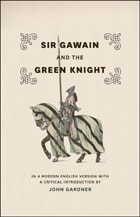
Sir Gawain and the Green Knight
In a Modern English Version with a Critical IntroductionTranslated, Edited, and with an Introduction by John Gardner
University of Chicago Press, 2011
The adventures and challenges of Sir Gawain, King Arthur’s nephew and a knight at the Round Table, including his duel with the mysterious Green Knight, are among the oldest and best known of Arthurian stories. Here the distinguished author and poet John Gardner has captured the humor, elegance, and richness of the original Middle English in flowing modern verse translations of this literary masterpiece. Besides the tale of Sir Gawain and the Green Knight, this edition includes two allegorical poems, “Purity” and “Patience”; the beautiful dream allegory “Pearl”; and the miracle story “Saint Erkenwald,” all attributed to the same anonymous poet, a contemporary of Chaucer and an artist of the first rank.

Sir Philip Sidney and the Poetics of Protestantism
A Study of ContextsAndrew Weiner
University of Minnesota Press, 1978
Sir Philip Sidney
Selected Prose and PoetryEdited by Robert Kimbrough
University of Wisconsin Press, 1983
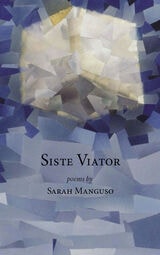
Siste Viator
Sarah Manguso
Four Way Books, 2006
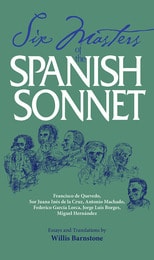
Six Masters of the Spanish Sonnet
Francisco de Quevedo, Sor Juana Ines de la Cruz, Antonio Machado, Federico Garcia Lorca, Jorge Luis Borges, Miguel HernandezEssays and Translations by Willis Barnstone
Southern Illinois University Press, 1997
With poems selected and translated by one of the preeminent translators of our day, this bilingual collection of 112 sonnets by six Spanish-language masters of the form ranges in time from the seventeenth to the twentieth centuries and includes the works of poets from Spanish America as well as poets native to Spain. Willis Barnstone’s selection of sonnets and the extensive historical and biographical background he supplies serve as a compelling survey of Spanish-language poetry that should be of interest both to lovers of poetry in general and to scholars of Spanish-language literature in particular.
Following an introductory examination of the arrival of the sonnet in Spain and of that nation’s poetry up to Francisco de Quevedo, Barnstone takes up his six masters in chronological turn, preceding each with an essay that not only presents the sonneteer under discussion but also continues the carefully delineated history of Spanish-language poetry. Consistently engaging and informative and never dull or pedantic, these essays stand alone as appreciations—in the finest sense of that word—of some of the greatest poets ever to write. It is, however, Barnstone’s subtle, musical, clear, and concise translations that form the heart of this collection. As Barnstone himself says, "In many ways all my life has been some kind of preparation for this volume."
Six Modernist Moments in Poetry
David Young
University of Iowa Press, 2006
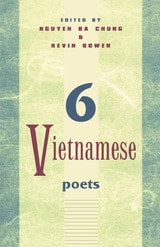
Six Vietnamese Poets
Bilingual EditionEdited by Kevin Bowen and Nguyen Ba Chung
Northwestern University Press, 2001
Speaking to the Heart
After a long night up writing poems,a streak of sunlight leapt into my room.
I ran to the yard,
running as if I were a child,
footprints breaking the earth's first dew,
chest brushing softly the short grass.
Earth and sky seeped into me like wine.
Startled,
I saw my heart in the shape of a ploughshare<
resting on the earth's shoulder,
the heart thumping, steadily ploughing into time.
—Lam Thi My Da
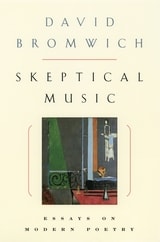
Skeptical Music
Essays on Modern PoetryDavid Bromwich
University of Chicago Press, 2001
The two general essays that frame Skeptical Music make Bromwich's aesthetic commitments clear. In "An Art without Importance," published here for the first time, Bromwich underscores the trust between author and reader that gives language its subtlety and depth, and makes the written word adequate to the reality that poetry captures. For Bromwich, understanding the work of a poet is like getting to know a person; it is a kind of reading that involves a mutual attraction of temperaments. The controversial final essay, "How Moral Is Taste?," explores the points at which aesthetic and moral considerations uneasily converge. In this timely essay, Bromwich argues that the wish for excitement that poetry draws upon is at once primitive and irreducible.
Skeptical Music most notably offers incomparable readings of individual poets. An essay on the complex relationship between Hart Crane and T. S. Eliot shows how the delicate shifts of tone and shading in their work register both affinity and resistance. A revealing look at W. H. Auden traces the process by which the voice of a generation changed from prophet to domestic ironist. Whether discussing heroism in the poetry of Wallace Stevens, considering self-reflection in the poems of Elizabeth Bishop, or exploring the battle between the self and its images in the work of John Ashbery, Skeptical Music will make readers think again about what poetry is, and even more important, why it still matters.
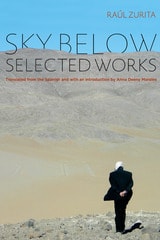
Sky Below
Selected WorksRaul Zurita; Translated from the Spanish and with an introduction by Anna Deeny Morales
Northwestern University Press, 2016
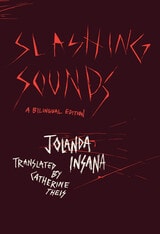
Slashing Sounds
A Bilingual EditionJolanda Insana
University of Chicago Press, 2024
Jolanda Insana’s Slashing Sounds uses invectives, fragments, epigrams, and epigraphs to construct poems that pulse with the texture of an idiosyncratic Sicilian dialect. The poems in this collection are ferocious, irreverent, strange, snarky, and otherworldly. Insana’s commitment to contentiousness, her brutal and skeptical eye, and her preoccupation with language make Insana’s poetry particularly arresting. For Insana, there is no subject more worthy of our interest than language’s misfires and contradictory impulses—language being the ultimate arrow, forging a direction in the world and forcing a turn toward whatever reality appears in front of you.
The first book-length collection of Insana’s poetry published in English, Slashing Sounds is a powerful offering that addresses a lack of female Italian voices in Anglophone poetry publishing.
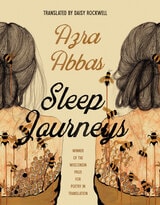
Sleep Journeys
Azra Abbas, Translated by Daisy Rockwell
University of Wisconsin Press, 2026
When Sleep Journeys first appeared in 1981, it took the Urdu poetry world by storm. Now considered one of the finest contemporary Urdu poets, Azra Abbas was among the first to embrace experimental, free verse poetry. A single book-length poem, divided into three cantos, Sleep Journeys is a dreamlike rumination that explores faith, female desire, and the subconscious mind. Abbas’s language is simple and austere, the complexity of the work emerging through repetition, interweaving, and juxtaposition. The result is a gossamer thread that leads the reader through a labyrinth of metaphor, imagery, and awe.
Award-winning translator Daisy Rockwell expertly captures the rhythm and flow of the original. The result is a book that ushers us into a state between sleeping and waking, the world of hidden thoughts and desires. This edition brings one of the most celebrated Urdu poems of the latter twentieth century to a broader, worldwide readership.

Sleep Tight Satellite
StoriesCarol Guess
Tupelo Press, 2023
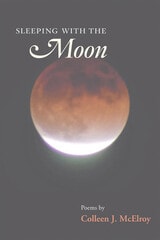
Sleeping with the Moon
Colleen J. McElroy
University of Illinois Press, 2007
PEN Oakland National Literary Award, 2008
Colleen J. McElroy's poetry shoots for the moon, and takes it in, too, in one way after another. The collection’s award-winning poems animate women’s experiences of sex, shopping, and dancing, while offering telling insight into the struggles and silver lining of lust, love, illness, and aging. Rich with vivid imagery and candid storytelling, Sleeping with the Moon takes readers on moonlit adventures under the night sky, through the barroom’s smoky haze, and under the covers....Beware: such delicate
sights have driven more than one woman to despair
instead she watched him breathe-- relishing
for a moment that secret space where night
grows soft and the moon’s detumescence forgives--
and where if this jeweled light holds they might
strip themselves of years if only for one night
--from “In Praise of Older Women”
Slick Like Dark
Meg Wade
Tupelo Press, 2020
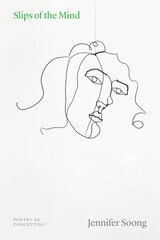
Slips of the Mind
Poetry as ForgettingJennifer Soong
University of Chicago Press, 2025
In Slips of the Mind, poet and critic Jennifer Soong turns away from forgetting’s long-standing associations with suppression, privation, and error to argue that the absence or failure of memory has often functioned as a generative creative principle. Exploring forgetting not as the mere rejection of a literary past or a form of negative poetics, Soong puts to the test its very aesthetic meaning. What new structures, forms of desires, styles, and long and short feelings do lapses in time allow? What is oblivion’s relationship to composition? And how does the twentieth-century poet come to figure as the quintessential embodiment of such questions?
Soong uncovers forgetting’s influence on Gertrude Stein, Lyn Hejinian, Tan Lin, Harryette Mullen, Lissa Wolsak, and New York School poets John Ashbery, James Schuyler, Bernadette Mayer, and Ted Berrigan, among others. She reveals that forgetting’s shapeshifting produces differences in poetic genre, interest, and degrees of intentionality—and that such malleability is part of forgetting’s nature. Most provocatively, Soong shows how losing track of things, leaving them behind, or finding them already gone resists overdetermination and causality in the name of surprise, as poets leverage forgetting in order to replace identity with style. Slips of the Mind is the kind of literary criticism that will reward all readers of modern and contemporary poetry.
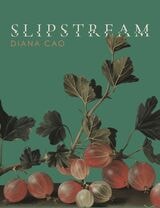
Slipstream
Diana Cao
Tupelo Press, 2026
The poems in Slipstream deal with the slippery concept of home, with robots and the internet and other human inventions, and with what we can learn from the natural world around us.
Winner of the Berkshire Prize, Slipstream is a bracing, intimate, and formally adventurous debut that moves with equal grace through personal memory, inherited history, myth, and the ambient technologies of contemporary life. Diana Cao’s poems braid ancient Chinese legend, family migration, illness, love, and grief with moon landers, algorithms, privacy policies, and online ritual, creating a lyric field where the ancestral and the digital speak fluently to one another. The book is formally restless and assured. Sonnets, sestinas, villanelles, fables, and linked sequences feel conversational rather than ornate, their intelligence worn lightly, their music precise and unforced. Throughout, Cao writes with a clarity that never flattens complexity: humor and vulnerability coexist with philosophical rigor. Tenderness is sharpened, not softened, by attention to politics, history, and care.
What emerges is a voice attuned to relational life in all its registers—daughterhood, friendship, desire, citizenship, species—asking how to live, love, and remain lucid inside systems that both sustain and estrange us. Slipstream is a book of uncommon range and emotional intelligence, one that feels fully of this moment while remaining in deep, living conversation with the past.
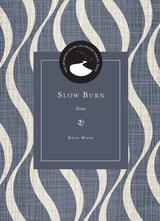
Slow Burn
PoemsEvan Wang, Ching-In Chen
Northwestern University Press, 2026
Winner of the 2024 Drinking Gourd Chapbook Poetry Prize
Persistent yet flickering, Slow Burn unveils a passionate world where love is both impossible and inevitable. Divided into three sections, Evan Wang’s debut chapbook traces the confrontation of the self through a cyclical journey of discovery and contradiction, ultimately leading to the choice of allowance: that which is made by the reader. These poems slowly burn first through our own inner silence, then through the thick dark of night, and finally to abstract closure—or lack thereof. They urge and hold us back, begging us to understand how, amid cultural, societal, and political suppression of the self, we kiss the muscled mouths of the world by carrying our bodies through it. Slow Burn is a romantic’s answer to the search for love, and the strangely comforting realization that the effects of the world mark us all.
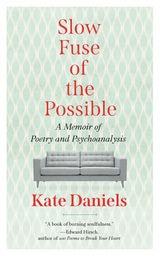
Slow Fuse of the Possible
A Memoir of Poetry and PsychoanalysisKate Daniels
West Virginia University Press, 2022
Slow Fuse of the Possible is a poet’s narrative of a troubled psychoanalysis. It is also a commanding meditation on the powers of language, for good and for ill.
From the beginning of their time together, it is clear that the enigmatic analyst and Daniels are not a good match, yet both are determined to continue their work—the former in nearly complete silence, and the latter as best she can with the tools at her disposal: careful attention to language, deep reading, and literary imagination. Throughout, the story is filtered through the mind of Emily Dickinson, whose poetry Daniels uses as a fulcrum for the interpretation of her own experience. The book is saturated with Dickinson’s verse, and Dickinson is an increasingly haunting presence as crises emerge and the author unravels.
This compelling lyric memoir, so richly steeped in all facets of language and the literary, allows readers a glimpse into the mind of a renowned poet, revealing the dazzling and anguished connections between poetry and psychoanalysis.
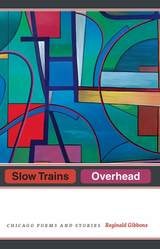
Slow Trains Overhead
Chicago Poems and StoriesReginald Gibbons
University of Chicago Press, 2010
Few people writing today could successfully combine an intimate knowledge of Chicago with a poet’s eye, and capture what it’s really like to live in this remarkable city. Embracing a striking variety of human experience—a chance encounter with a veteran on Belmont Avenue, the grimy majesty of the downtown El tracks, domestic violence in a North Side brownstone, the wide-eyed wonder of new arrivals at O’Hare, and much more—these new and selected poems and stories by Reginald Gibbons celebrate the heady mix of elation and despair that is city life. With Slow Trains Overhead, he has rendered a living portrait of Chicago as luminously detailed and powerful as those of Nelson Algren and Carl Sandburg.
Gibbons takes the reader from museums and neighborhood life to tense proceedings in Juvenile Court, from comically noir-tinged scenes at a store on Clark Street to midnight immigrants at a gas station on Western Avenue, and from a child's piggybank to nature in urban spaces. For Gibbons, the city’s people, places, and historical reverberations are a compelling human array of the everyday and the extraordinary, of poverty and beauty, of the experience of being one among many. Penned by one of its most prominent writers, Slow Trains Overhead evokes and commemorates human life in a great city.
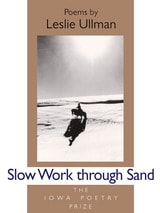
Slow Work Through Sand
Leslie Ullman
University of Iowa Press, 1998
For a number of years, Leslie Ullman has lived in the Southwest, on cultivated land, in the company of horses and with access to uncultivated desert. The seasons and conditions of this starkly appealing land have found their way into the poet and her work. In her poems there always seems to be someone who is making herself over from scratch. Ullman creates origins for herself in nature, in solitude, in animals, and of course through those aspects of human relationships that teach important lessons.
Since winning the prestigious Yale Younger Poets Award in 1979, Ullman has manifested her love of language as both writer and teacher. As she remembers from her youthful summers in a Wisconsin lake lodge: “Sometimes the words I read were the tap of rain on the roof or the fire snapping in its great stone bed, but mostly they bloomed as the sound of the lake, a mantra against the weathered dock.” She writes that her book may be trying to validate the “history of women”—the title of one of the poems—just as “men's history has always validated hugely and by implication the way we use language and the way history has been taught.”Hers is not a defensive or an angry intention, however, but an exciting one. Slow Work through Sand attempts simply to make visible “the dance a woman's life is, not apart from other dances, but as a valid dance among dances.”
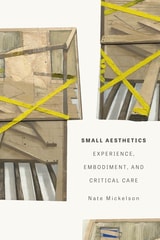
Small Aesthetics
Experience, Embodiment, and Critical CareNate Mickelson
Northwestern University Press, 2027
Synthesizing emerging theories of aesthetic action in relation to literary and art criticism
Drawing attention to what critical theorist Heather Love identifies as “the micro,” contemporary artists use small materials and cross‑media methods to elicit interpretation and foster critical engagement, immersing audiences in the entangled relations engendered with near and distant others through artistic experience. Small Aesthetics analyzes this insurgent tradition in twentieth- and twenty‑first-century poetry and art to show how it confronts the challenges of creating mutually sustaining lives. Feminist and feminist‑of‑color theorists have long argued that acts of care take on critical force when they foreground collective well-being and solidarity across power, class, and cultural differences. Guided by their insights, Nate Mickelson proposes that literary and visual artworks elicit acts of caring attention that engage audiences in their responsibilities to tend to the collective structures through which their lives unfold. Through his close readings, he extends the “post‑critical turn” in literary and art criticism and demonstrates the urgent vitality of feminist, Black, Latine, queer, and trans lives in increasingly hostile social contexts.
Small Boat
Lesle Lewis
University of Iowa Press, 2003
Small Hours of the Night
Selected Poems of Roque DaltonRoque Dalton
Northwestern University Press, 1996
Small Porcelain Head
Allison Benis White
Four Way Books, 2013
Smiling in the Darkness
Adelaide Freitas, Translated by Katharine F. Baker, with Bobby J. Chamberlain, Reinaldo F. Silva, and Emanuel Melo
Tagus Press, 2020
Many people of Portuguese descent take pride in claiming that the word “saudade” is untranslatable. In reality, we come close with a melding of bittersweet nostalgia, bone-deep longing, and an endless yearning for what one can never have again—or indeed may never have had. Adelaide Freitas dipped her pen in saudade to tell of family separation and bonds that never loosen. In her authentic Azorean voice, she recounts the immigrant experience and centrifugal impulses that force people apart in spite of their desperation to cling to one another. In their sensitive rendering, the translators have captured the nuances of Freitas's novel Smiling in the Darkness, with special care for those who have her native language in their heritage and heartfelt saudade for its loss.
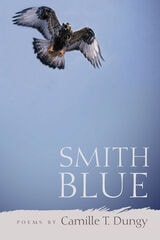
Smith Blue
Camille T. Dungy
Southern Illinois University Press, 2011
In Smith Blue, Camille T. Dungy offers a survival guide for the modern heart as she takes on twenty-first-century questions of love, loss, and nature. From a myriad of lenses, these poems examine the human capability for perseverance in the wake of heartbreak; the loss of beloved heroes and landscapes; and our determination in the face of everyday struggles. Dungy explores the dual nature of our presence on the planet, juxtaposing the devastation caused by human habitation with our own vulnerability to the capricious whims of our environment. In doing so, she reveals with fury and tenderness the countless ways in which we both create and are victims of catastrophe.
This searing collection delves into the most intimate transformations wrought by our ever-shifting personal, cultural, and physical terrains, each fraught with both disillusionment and hope. In the end, Dungy demonstrates how we are all intertwined, regardless of race or species, living and loving as best we are able in the shadows of both man-made and natural follies.
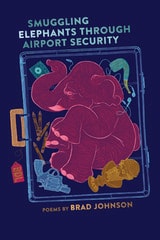
Smuggling Elephants through Airport Security
Brad Johnson
Michigan State University Press, 2020
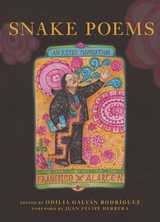
Snake Poems
An Aztec InvocationFrancisco X. Alarcón; Edited by Odilia Galván Rodríguez; Foreword by Juan Felipe Herrera; Translated by David Bowles and Xánath Caraza
University of Arizona Press, 2019
Alarcón was a stalwart student, researcher, and specialist on the lost teachings of his Indigenous ancestors. He first found their wisdom in the words of his Mexica (Aztec) grandmother and then by culling through historical texts. During a Fulbright fellowship to Mexico, Alarcón uncovered the writings of zealously religious Mexican priest Hernando Ruiz de Alarcón (1587–1646), who collected (often using extreme measures), translated, and interpreted Nahuatl spells and invocations.
In Snake Poems Francisco Alarcón offered his own poetic responses, reclaiming the colonial manuscript and making it new. This special edition is a tender tribute to Alarcón, who passed away in 2016, and includes Nahuatl, Spanish, and English renditions of the 104 poems based on Nahuatl invocations and spells that have survived more than three centuries. The book opens with remembrances and testimonials about Alarcón’s impact as a writer, colleague, activist, and friend from former poet laureate Juan Felipe Herrera and poet and activist Odilia Galván Rodríguez, who writes, “This book is another one of those doors that [Francisco] opened and invited us to enter. Here we get to visit a snapshot in time of an ancient place of Nahuatl-speaking ancestors, and Francisco’s poetic response to what he saw through their eyes.”
So Ask
Essays, Conversations, and InterviewsPhilip Levine
University of Michigan Press, 2002
So Long
Jen Levitt
Four Way Books, 2023
Anticipating and then grieving the death of her father, Jen Levitt’s So Long fleshes out a full elegiac register, sitting with the mourning of farewell while holding onto gratitude, remembrance, and a permeating love. “Soon,” she says, “we’ll have to find another way to meet, as moonlight / makes the river glow.” In the contrails of bittersweet loss, Levitt’s speaker observes all that surrounds her, and the self, too, as a phenomenon in loneliness. In the suburbs, she notes high- school athletes circling “in their sweat-resistant fabrics,” “so natural in their tank tops, those dutiful kids trying to beat time”; upstate, she finds herself in temple where Broadway music has replaced prayer and discovers “no promises, / but, like hearing a rustle in deep woods & turning to locate its source, the chance for something rare.” It is this humanistic faith that inverts the title’s idiomatic goodbye into a statement of permanence, the truth of our enduring, improbable lives: look at this, she seems to command herself, “& look at how lucky I’ve been, for so long.”
So Long! Walt Whitman's Poetry of Death
Harold Aspiz
University of Alabama Press, 2005
Walt Whitman is unquestionably a great poet of the joys of living. But as Harold Aspiz demonstrates in this study, concerns with death and dying define Whitman’s career as a thinker, a poet, and a person. Through a close reading of Leaves of Grass, its constituent poems, particularly “Song of Myself,” and Whitman’s prose and letters, Aspiz charts how the poet’s exuberant celebration of life—the cascade of sounds, sights, and smells that erupt in his verse—is a consequence of his central concern: the ever-presence of death and the prospect of an afterlife.
Until now no one has studied as systematically the degree to which mortality informs Whitman’s entire enterprise as a poet. So Long! devotes particular attention to Whitman’s language and rich artistry in the context of the poet’s social and intellectual milieus. We see Whitman (and his many personae) as a folk prophet announcing a gospel of democracy and immortality; pondering death in alternating moods of acceptance and terror; fantasizing his own dying and his postmortem selfhood; yearning for mates and lovers while conscious of fallible flesh; agonizing over the omnipresence of death in wartime; patiently awaiting death; and launching imaginary journeys toward immortality and godhood.
So Long! is valuable for American literature collections, students and scholars of Whitman and 19th-century literature, and general readers interested in Whitman and poetry. By exploring Whitman's faith in death as a meaningful experience, we may understand better how the poet—whether personified as representative man, victim, hero, lover, or visionary—lived so completely on the edge of life.
So Much Nonsense
Edward Lear
Bodleian Library Publishing, 2007
Which they ate with a runcible spoon;
And hand in hand, on the edge of the sand,
They danced by the light of the moon,
The moon,
The moon,
They danced by the light of the moon.
The Owl and the Pussycat is only the most familiar of Edward Lear’s numerous nonsense verses, which have delighted millions worldwide for the last two centuries. Now his beloved verse and drawings are compiled here in a handsomely produced volume of classic material.
Leariana runs rampant in this enchanting treasury; readers encounter such indelible Lear creations as “snail mail,” while drawings of the Stripy Bird and images of the heroic and irrepressible Foss in heraldic poses are scattered throughout. Lear’s zany illustrations are reproduced here in their full vibrancy, and the goofily delightful art, including his illustrated nonsense alphabets, infuses Lear’s fanciful phrases and humorously incomprehensible limericks with their original liveliness and irresistible spirit. Rarely has the powerful charm and timeless appeal of Edward Lear’s work been available in such a beautifully produced edition, and So Much Nonsense is a gift that will unleash the imaginations of young and old alike.

Softly Undercover
Hanae Jonas
The Ohio State University Press, 2024
Soldier On
Gale Marie Thompson
Tupelo Press, 2015
Soliciting Interpretation
Literary Theory and Seventeenth-Century English PoetryEdited by Elizabeth D. Harvey and Katharine Eisaman Maus
University of Chicago Press, 1990
In the first group of essays, David Norbrook, Annabel Patterson, John Guillory, Rosemary Kegl, and Stephen Orgel explore the various ways in which a text can be "political." Next, Arthur Marotti, Jane Tylus, and Jonathan Goldberg consider the circumstances of textual production and reception in the seventeenth century. Finally, Stanley Fish, Gordon Braden, Michael C. Schoenfeldt, and Maureen Quilligan discuss the particular forms of anxiety that result when seventeenth-century poets modify the traditional rhetoric of sexual desire to serve what seem to be erotic or religious purposes.
These essays, accompanied by an extensive editors' introduction, intersect less in their shared enthusiasm for particular authors or interpretative methods than in a common interest in particular critical issues. They present the most exciting work by critics redefining Renaissance studies.
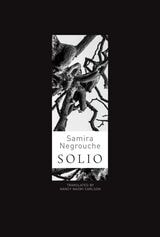
Solio
Samira Negrouche
Seagull Books, 2024
In these otherworldly poetry sequences, Samira Negrouche reminds us that “all life is movement,” where “time passes through me / beings pass through me / they are me / I am them.” The “I” is representative of one voice, three voices, all voices, all rooted in movement as their bodies brush past one another, brush against thresholds of time and space. Everything is in flux—including the dream-like landscapes at the borders of borders—as the poet seeks to recover parts of self and memory, on both a personal and universal level. In these poems, history-laden locales such as Algiers, Timbuktu, N’Djamena, Cotonou, Zanzibar, Cape Town, and Gorée are evoked. Even the language, expertly and sensitively translated by Nancy Naomi Carlson, refuses to be pinned down, as it loops back on itself. At times contradictory, at times fractured in meaning, syntax, and diction, the playful language is riddled with “restless” verbs. In the end, the “I” takes on prophetic overtones, instilling hope for the future.
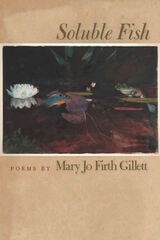
Soluble Fish
Mary Jo Firth Gillett
Southern Illinois University Press, 2007
Soluble Fish transports readers to a place of discovery, exploring issues of borders, familial and love relationships, and other aspects of being human. Mary Jo Firth Gillett layers her poems in rich metaphor as she searches for meaning in everyday life. Contemplating a range of topics from teaching poetry to watching her father filet a fish, Gillett’s humorous and playful collection celebrates language and life.
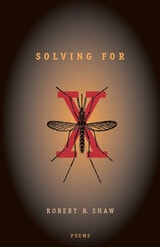
Solving For X
PoemsRobert B. Shaw
Ohio University Press, 2002
In Solving for X, his award-winning collection of new poems, Robert B. Shaw probes the familiar and encounters the unexpected; in the apparently random he discerns a hidden order. Throughout, Shaw ponders the human frailties and strengths that continue to characterize us, with glances at the stresses of these millennial times that now test our mettle and jar our complacency. Often touched with humor, his perceptions are grounded in devoted observation of the changing world.
As in his previous collections, Shaw in these poems unites conversational vigor with finely crafted metrical lines. Final judge Rachel Hadas says it best: “Solving for X is droll and puzzled, elegiac and satirical in equal measure. Shaw’s attention alights on a variety of more and less tangible things—a seed catalog, a shirt, a bad book, a request for a letter of recommendation, an irritating colleagues’s death—which his masterfully packed lines then proceed to light up with deliberate and unforgettable authority.”
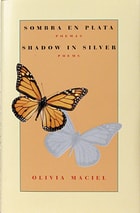
Sombra en plata
poemas / Shadow in Silver: Poems: A Bilingual EditionOlivia Maciel
Swan Isle Press, 2005
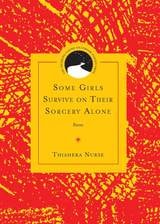
Some Girls Survive on Their Sorcery Alone
PoemsThiahera Nurse
Northwestern University Press, 2019
Some Girls Survive on Their Sorcery Alone sees Renisha McBride, Sandra Bland, Korrynn Gaines, and others not as ornamental nor does the book attempt to canonize the dead women as saints. The poems see them as they are: play-cousins, home-girls, the mirror. Line to line, there is an obsession with keeping all of the women in the poems safe and perhaps resurrectable. The black girl who is alive here lives to switch her waistline to a reggae beat. She is in the middle of the dance floor with a suicide note in her purse as a means of warding off bad juju. Always, she is chasing joy head-on, at warp speed.
Some Girls Survive on Their Sorcery Alone is a celebration that the black girl will always dance, in the church basement, a grandmother’s funeral repast—she dances until she hits the floor, in her joy . . . and her grief.
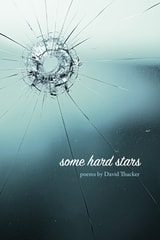
Some Hard Stars
Thacker, David
Signature Books, 2026
Some Hard Stars knits together past and present in pursuit of a deeper understanding of love, rebirth, and sustaining joy. Through poems full of care and tenderness for family, neighbors, and friends, Thacker demonstrates how “love requires / a willing mind,” especially when confronting the difficulties of mortality with honesty. These poems sing and think out loud, through traditional forms and meters as well as through music invented for the needs at hand. They are intense and exacting in their questions, careful and complex in their laments, and delicate with sacred moments of change.

Some Jazz a While
Collected PoemsMiller Williams
University of Illinois Press, 1999
Some Jazz a While, the eagerly anticipated collected poems of one of America's best-loved poets, gathers Miller Williams's most representative work and adds some new pieces as well.
This generous collection welcomes newcomers as well as longtime admirers of Williams's trademark style: a compact and straightforward language, a masterful command of form, and an unsentimental approach to his subject matter. Williams treats the mundane interchanges, the lingering uncertainties, the missed opportunities, and the familiar sense of loss that mark daily life with the surgeon's deft touch.
An American original, Miller Williams involves the reader's emotions and imagination with an effective illusion of plain talk, continually rediscovering what is vital and musical in the language we speak and by which we imagine.
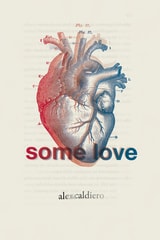
Some Love
PoetryAlex Caldiero
Signature Books, 2015
Indifference rests quietly alone in the universe while love, hate, and hurt rage tightly together elsewhere across safely defined demarcations. Some Love secretly yearns for rest but plunges deeply into the scramble of human emotions:
One Day a hurt hits
with a fact and a sorrow.
It makes me want to
write. It makes me want
to go away, to cry
in the arms of a lover,
past words said and actions
you cant take back not even in
a next life—on that day you
choose the one who comes to you.
From his childhood in Sicily as a Catholic altar boy through his latter days as a Mormon “saint,” Caldiero recalls in verse his emerging passion for performance and for the sensual liturgical marriage of physical space—the church or temple proper—with bodily space. This ritualized confluence of architectural structure, human bodies, images, movements, smells, and sounds affects him as much today as it did in the past. It is this memory of the religious ritual that keeps him striving for a poetic creation and richness that achieves a depth of symbolic meaning.