Results by title
4743 books match the query 'Religion' and 324 start with s
Sharing the Journey Seder Leader's Guide (includes CDs)
The Haggadah for the Contemporary FamilyAlan S. Yoffie
Central Conference of American Rabbis, 2012
This Leader's Guide for Sharing the Journey: The Haggadah for the Contemporary Family focuses on practical suggestions for an inclusive family Seder. It also includes explanations of Seder traditions and suggests a few additional rituals that, when included in the service, can add meaning and increased understanding of our Passover celebration.
Includes 2 music CDs
Sharing the Journey
The Haggadah for the Contemporary FamilyAlan S. Yoffie
Central Conference of American Rabbis, 2012
The inclusive text, commentary, and magnificent original artwork in this new Haggadah will make all family members and friends feel welcome at your Seder. Young and old, beginners and experienced Seder participants, will experience the joy of celebrating Passover together with clear step-by-step explanations, inspiring readings on the themes of justice and freedom for all, and opportunities for discussion. An accompanying comprehensive leader's guide (with music CDs) is available as well.

Shawnee
Ceremonialism Native American TribeJames H. Howard
Ohio University Press, 1981
In this first comprehensive account of Shawnee culture, Dr. Howard assembled data concerning the tribe by utilizing published accounts, documents, maps, photographs, and paintings; and by visiting present-day Shawnees and participating in their ceremonies, games and everyday activities. The work is embellished with musical notations of Shawnee songs, maps, heirloom photographs and several photographs taken by the author during his fieldwork. Of particular interest is a remarkable series of paintings of Shawnee life by gifted Shawnee artist, Earnest Spybuck.
Shifting Borders and a Tattered Passport
Intellectual Journeys of a Mormon AcademicArmand L. Mauss
University of Utah Press, 2012
The life of a Mormon intellectual in the secular academic community is likely to include some contradictions between belief, scholarship, and the changing times. In his memoir, Armand L. Mauss recounts his personal and intellectual struggles—inside and outside the LDS world—from his childhood to his days as a graduate student at UC Berkeley in the 1960s through his many years as a professor.
As an important and influential observer and author in the Mormon intellectual world, Mauss has witnessed how, in attempting to suppress independent and unsponsored scholarship during the final decades of the twentieth century, LDS leaders deliberately marginalized important intellectual support and resources that could have helped, in the twenty-first century, to refurbish the public image of the church. As a sociologist, he notes how the LDS Church, as a large, complex organization, strives to adjust its policies and practices in order to maintain an optimal balance between unique, appealing claims on the one hand and public acceptance on the other. He also discusses national and academic controversies over the New Religious Movements of the 1960s and 1970s. Writing in clear language, Mauss shows how he has navigated the boundaries where his faith and academic life intersect, and reveals why a continuing commitment to the LDS Church must be a product of choice more than of natural or supernatural “proof.”
Shorter Lexicon of the Greek New Testament
Edited by F. Wilbur Gingrich and Frederick William Danker
University of Chicago Press, 1983
"[The Shorter Lexicon] is by far superior to other New Testament 'dictionaries' of comparable size."—Robert Hoerber, Classical World
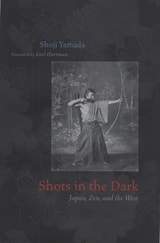
Shots in the Dark
Japan, Zen, and the WestShoji Yamada
University of Chicago Press, 2009
In the years after World War II, Westerners and Japanese alike elevated Zen to the quintessence of spirituality in Japan. Pursuing the sources of Zen as a Japanese ideal, Shoji Yamada uncovers the surprising role of two cultural touchstones: Eugen Herrigel’s Zen in the Art of Archery and the Ryoanji dry-landscape rock garden. Yamada shows how both became facile conduits for exporting and importing Japanese culture.
First published in German in 1948 and translated into Japanese in 1956, Herrigel’s book popularized ideas of Zen both in the West and in Japan. Yamada traces the prewar history of Japanese archery, reveals how Herrigel mistakenly came to understand it as a traditional practice, and explains why the Japanese themselves embraced his interpretation as spiritual discipline. Turning to Ryoanji, Yamada argues that this epitome of Zen in fact bears little relation to Buddhism and is best understood in relation to Chinese myth. For much of its modern history, Ryoanji was a weedy, neglected plot; only after its allegorical role in a 1949 Ozu film was it popularly linked to Zen. Westerners have had a part in redefining Ryoanji, but as in the case of archery, Yamada’s interest is primarily in how the Japanese themselves have invested this cultural site with new value through a spurious association with Zen.
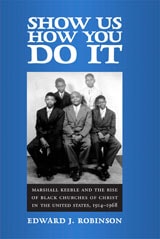
Show Us How You Do It
Marshall Keeble and the Rise of Black Churches of Christ in the United States, 1914-1968Edward J. Robinson
University of Alabama Press, 2008
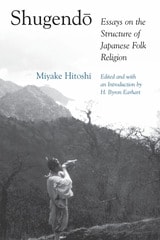
Shugendo
Essays on the Structure of Japanese Folk ReligionMiyake Hitoshi; Edited and with an Introduction by H. Byron Earhart
University of Michigan Press, 2001
Shuva
The Future of the Jewish PastYehuda Kurtzer
Brandeis University Press, 2012
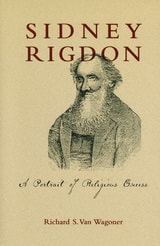
Sidney Rigdon
A Portrait of Religious ExcessRichard S. Van Wagoner
Signature Books, 2006
In the late 1820s a fiery young minister in western Ohio converted nearly 1,000 proselytes to the Reformed Baptist Movement. As these schismatics organized themselves into the new Disciples of Christ church, the Reverend Sidney Rigdon was already aligning himself with another, more radical movement, the Latter-day Saints, where he quickly became the LDS prophet’s principal advisor and spokesman. He served Joseph Smith loyally for the next fourteen years, even through a brief spat over the prophet’s romantic interest in his teenage daughter.
Next to Smith, Rigdon was the most influential early Mormon. He imported Reformed Baptist teachings into Latter-day Saint theology, wrote the canonized Lectures on Faith, championed communalism and isolationism, and delivered many of the most significant early sermons, including the famous Salt Sermon and the Ohio temple dedicatory address.
Following Smith’s death, Rigdon parted company with Brigham Young to lead his own group of some 500 secessionists Mormons in Pennsylvania. Rigdon’s following gradually dwindled, as the one-time orator took to wandering the streets, taunting indifferent passersby with God’s word. He was later recruited by another Mormon faction. Although he refused to meet with them, he agreed to be their prophet and send revelations by mail. Before long he had directed them to settle far-off Iowa and Manitoba, among other things. At his death, his followers numbered in the hundreds, and today they number about 10,000, mostly in Pennsylvania.
“Rigdon is a biographer’s dream,” writes Richard Van Wagoner. Intellectually gifted, manic-depressive, an eloquent orator and social innovator but a chronic indigent, Rigdon aspired to altruism but demanded advantage and deference. When he lost prominence, his early attainments were virtually written out of the historical record.
Correcting this void, Van Wagoner has woven the psychology of religious incontinence into the larger fabric of social history. In doing so, he reminds readers of the significance of this nearly-forgotten founding member of the LDS First Presidency. Nearly ten million members in over one hundred churches trace their heritage to Joseph Smith. Many are unaware of the importance of Rigdon’s contributions to their inherited theology.
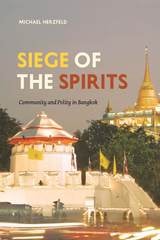
Siege of the Spirits
Community and Polity in BangkokMichael Herzfeld
University of Chicago Press, 2016
Herzfeld argues that even though the residents of Pom Mahakan have lost every legal battle the city government has dragged them into, they have won every public relations contest, highlighting their struggle as one against bureaucrats who do not respect the age-old values of Thai/Siamese social and cultural order. Such values include compassion for the poor and an understanding of urban space as deeply embedded in social and ritual relations. In a gripping account of their standoff, Herzfeld—who simultaneously argues for the importance of activism in scholarship—traces the agile political tactics and styles of the community’s leadership, using their struggle to illuminate the larger difficulties, tensions, and unresolved debates that continue to roil Thai society to this day.
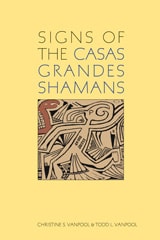
Signs of the Casas Grandes Shamans
VanPool Christine & Todd
University of Utah Press, 2007
Looking through this window, authors Christine and Todd VanPool find a world centered on shamans who took spiritual journeys to consort with supernatural creatures. The shamans called upon horned serpents to bring rain, the lifeblood for farmers living in the Chihuahuan desert; dealt with snakes that held powers more potent than their bites; and raised, sacrificed, and buried macaws as ritual offerings to ensure water and fertility.
These findings challenge long-held beliefs about Southwestern religion and force a reconsideration of the importance of shamanism in the development of social differentiation in societies around the world.
Sikh Kirtan and Its Journeys
Instruments, Theories, TechnologiesGurminder Kaur Bhogal
University of Chicago Press, 2025
Kirtan—the sung expression of sacred verses—spans the Indian subcontinent, but it plays a unique role in the Sikh faith. In Sikh Kirtan and ItsJourneys, musicologist Gurminder Kaur Bhogal introduces the devotional tradition of kirtan, examining it alongside the writings of holy figures, the Sikh Gurus and Bhagats, and its practice among musicians. The long-established tradition of kirtan originated in a canon of instruments and songs, each of which produces a singular spiritual and worldly effect when kirtan is sung. However, the realities of colonization and migration have necessitated changes to these canonical practices. Bhogal offers a deep exploration of the traditions that gave rise to kirtan and a robust portrait of the many transformations kirtan has undergone, particularly in the wide-ranging Sikh diaspora, dedicating special attention to marginal kirtan players such as women and innovators developing digital techniques and styles. A practicing kirtaniya, Bhogal has spent her life studying and performing this music, steeped in the histories and controversies her book describes.
Through a rigorous explanation of the traditions and evolutions of kirtan, Bhogal ultimately shows that kirtan is fluid, multi-faceted, and ever-changing because it reflects the shifting spiritual needs and musical tastes of devotees and practitioners across the world. Moreover, wherever kirtan is offered and received, it heightens corporeal vibrations between practitioners and devotees to motivate a sense of social purpose, social responsibility, and selfless service.
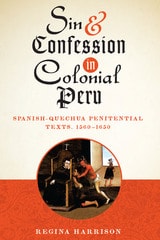
Sin and Confession in Colonial Peru
Spanish-Quechua Penitential Texts, 1560-1650By Regina Harrison
University of Texas Press, 2014
A central tenet of Catholic religious practice, confession relies upon the use of language between the penitent and his or her confessor. In the sixteenth and seventeenth centuries, as Spain colonized the Quechua-speaking Andean world, the communication of religious beliefs and practices—especially the practice of confession—to the native population became a primary concern, and as a result, expansive bodies of Spanish ecclesiastic literature were translated into Quechua. In this fascinating study of the semantic changes evident in translations of Catholic catechisms, sermons, and manuals, Regina Harrison demonstrates how the translated texts often retained traces of ancient Andean modes of thought, despite the didactic lessons they contained.
In Sin and Confession in Colonial Peru, Harrison draws directly from confession manuals to demonstrate how sin was newly defined in Quechua lexemes, how the role of women was circumscribed to fit Old World patterns, and how new monetized perspectives on labor and trade were taught to the subjugated indigenous peoples of the Andes by means of the Ten Commandments. Although outwardly confession appears to be an instrument of oppression, the reformer Bartolomé de Las Casas influenced priests working in the Andes; through their agency, confessional practice ultimately became a political weapon to compel Spanish restitution of Incan lands and wealth. Bringing together an unprecedented study (and translation) of Quechua religious texts with an expansive history of Andean and Spanish transculturation, Harrison uses the lens of confession to understand the vast and telling ways in which language changed at the intersection of culture and religion.
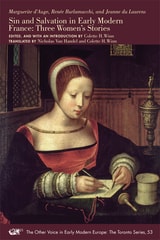
Sin and Salvation in Early Modern France
Three Women’s StoriesMarguerite d'Auge, Renée Burlamacchi, and Jeanne du Laurens
Iter Press, 2017
The texts available here in English for the first time open a window into the lives of three early modern Frenchwomen as they explore the common themes of family, memory, sin, and salvation. The Regrets of Marguerite d’Auge (1600), the Memoirs of Renée Burlamacchi (1623), and the Genealogy of Jeanne du Laurens (1631), taken from different genres of historical writings, raise important questions: Why and how did female authorship find its way into the historical record? How did these voices escape the censorship and prejudice against female publication? In a time of extreme religious conflict, how did these women convey their views on controversial issues such as primacy of grace, indulgences, and salvation without disrupting the gender expectations of the era?
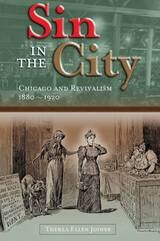
Sin in the City
Chicago and Revivalism, 1880-1920Thekla Ellen Joiner
University of Missouri Press, 2013
Long before today’s culture wars, the “Third Great Awakening” rocked America. During the late nineteenth and early twentieth centuries, evangelists such as Dwight L. Moody and Billy Sunday roused citizens to renounce sin as it manifested in popular culture, moral ambiguity, and the changing role of women.
Sin in the City examines three urban revivals in turn-of-the-century Chicago to show how revivalists negotiated that era’s perceived racial, sexual, and class threats. While most studies of this movement have focused on its male leaders and their interactions with society, Thekla Ellen Joiner raises new questions about gender and race by exploring Third Awakening revivalism as the ritualized performance of an evangelical social system defined by middle-class Protestant moral aspirations for urban America. Rather than approaching these events merely as the achievements of persuasive men, she views them as choreographed collective rituals reinforcing a moral order defined by ideals of femininity, masculinity, and racial purity.
Joiner reveals how revivalist rhetoric and ritual shifted from sentimentalist identification of sin with males to a more hard-nosed focus on females, castigating “loose women” whose economic and sexual independence defied revivalist ideals and its civic culture. She focuses on Dwight L. Moody’s 1893 World’s Fair revival, the 1910 Chapman-Alexander campaign, and the 1918 Billy Sunday revival, comparing the locations, organization, messages, and leaders of these three events to depict the shift from masculinized to feminized sin. She identifies the central role women played in the Third Awakening as the revivalists promoted feminine virtue as the corrective to America’s urban decline. She also shows that even as its definition of sin became more feminized, Billy Sunday’s revivalism began to conform to Chicago’s emerging color line.
Enraged by rapid social change in cities like Chicago, these preachers spurred Protestant evangelicals to formulate a gendered and racialized moral regime for urban America. Yet, as Joiner shows, even as revivalists demonized new forms of entertainment, they used many of the modern cultural practices popularized in theaters and nickelodeons to boost the success of their mass conversions.
Sin in the City shows that the legacy of the Third Awakening lives on today in the religious right’s sociopolitical activism; crusade for family values; disparagement of feminism; and promotion of spirituality in middle-class, racial, and cultural terms. Providing cultural and gender analysis too often lacking in the study of American religious history, it offers a new model for understanding the development of a gendered theology and set of religious practices that influenced Protestantism in a period of enormous social change.
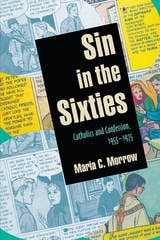
Sin in the Sixties
Maria C. Morrow
Catholic University of America Press, 2016
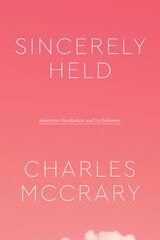
Sincerely Held
American Secularism and Its BelieversCharles McCrary
University of Chicago Press, 2022
“Sincerely held religious belief” is now a common phrase in discussions of American religious freedom, from opinions handed down by the US Supreme Court to local controversies. The “sincerity test” of religious belief has become a cornerstone of US jurisprudence, framing what counts as legitimate grounds for First Amendment claims in the eyes of the law. In Sincerely Held, Charles McCrary provides an original account of how sincerely held religious belief became the primary standard for determining what legally counts as authentic religion.
McCrary skillfully traces the interlocking histories of American sincerity, religion, and secularism starting in the mid-nineteenth century. He analyzes a diverse archive, including Herman Melville’s novel The Confidence-Man, vice-suppressing police, Spiritualist women accused of being fortune-tellers, eclectic conscientious objectors, secularization theorists, Black revolutionaries, and anti-LGBTQ litigants. Across this history, McCrary reveals how sincerity and sincerely held religious belief developed as technologies of secular governance, determining what does and doesn’t entitle a person to receive protections from the state.
This fresh analysis of secularism in the United States invites further reflection on the role of sincerity in public life and religious studies scholarship, asking why sincerity has come to matter so much in a supposedly “post-truth” era.
Sing Them Over Again to Me
Hymns and Hymnbooks in AmericaEdited by Mark A. Noll and Edith L. Blumhofer
University of Alabama Press, 2006
Hymns and hymnbooks as American historical and cultural icons.
This work is a study of the importance of Protestant hymns in defining America and American religion. It explores the underappreciated influence of hymns in shaping many spheres of personal and corporate life as well as the value of hymns for studying religious life. Distinguishing features of this volume are studies of the most popular hymns (“Amazing Grace,” “O, For a Thousand Tongues to Sing,” “All Hail the Power of Jesus’ Name”), with attention to the ability of such hymns to reveal, as they are altered and adapted, shifts in American popular religion. The book also focuses attention on the role hymns play in changing attitudes about race, class, gender, economic life, politics, and society.
Singing the Lord's Song in a Strange Land
Hymnody in the History of North American ProtestantismEdith L. Blumhofer
University of Alabama Press, 2008
Music and song are important parts of worship, and hymns have long played a central role in Protestant cultural history. This book explores the ways in which Protestants have used and continue to use hymns to clarify their identity and define their relationship with America and to Christianity. Representing seven groups—Baptists, Presbyterians, Lutherans, Mennonites, Holiness, Hispanics, and Evangelicals—the nine essays reveal how hymns have helped immigrants to establish new identities, contributed to the body of worship resources, and sustained ethnic identity.
Individual essays address the music of the Old-Fashioned Revival Hour, America’s longest running and most successful independent radio program; singing among Swedish evangelicals in America; the German hymn tradition as transformed by Mennonite immigrants; the ways hymnody reinforces themes of the Wesleyan holiness movement; the history of Mercer’s Cluster (1810), a southern hymnal that gave voice to slaves, women, and native Americans; and the Presbyterian hymnal tradition in Canada formed by Scottish immigrants.
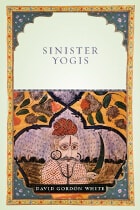
Sinister Yogis
David Gordon White
University of Chicago Press, 2009
Since the 1960s, yoga has become a billion-dollar industry in the West, attracting housewives and hipsters, New Agers and the old-aged. But our modern conception of yoga derives much from nineteenth-century European spirituality, and the true story of yoga’s origins in South Asia is far richer, stranger, and more entertaining than most of us realize.
To uncover this history, David Gordon White focuses on yoga’s practitioners. Combing through millennia of South Asia’s vast and diverse literature, he discovers that yogis are usually portrayed as wonder-workers or sorcerers who use their dangerous supernatural abilities—which can include raising the dead, possession, and levitation—to acquire power, wealth, and sexual gratification. As White shows, even those yogis who aren’t downright villainous bear little resemblance to Western assumptions about them. At turns rollicking and sophisticated, Sinister Yogis tears down the image of yogis as detached, contemplative teachers, finally placing them in their proper context.
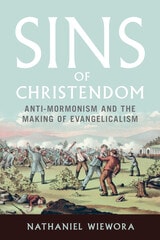
Sins of Christendom
Anti-Mormonism and the Making of EvangelicalismNathaniel Wiewora
University of Illinois Press, 2024
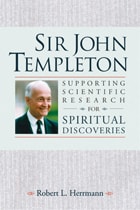
Sir John Templeton
Supporting Scientific Research For Spiritual DiscoveriesRobert Herrmann
Templeton Press, 2004
Sir John's Vision
What Do We Know? What Is There to Learn?Davies
Templeton Press, 2018
This volume is a result of that meeting—a collection of thirteen essays written by experts in fields that most fascinated Sir John. The contributors assess the Foundation’s fidelity to its founder’s intent, chart promising avenues for future grantmaking, and champion Sir John’s contrarian mission of unlocking life’s deepest mysteries.
The members of the John Templeton Foundation are the custodians of Sir John’s vision—bold in its aspiration; humble in its approach—charged with using the tools of science to advance the frontiers of the spirit. May the essays collected here serve as inspiration as we carry that vision forward.
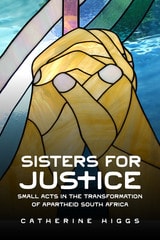
Sisters for Justice
Small Acts in the Transformation of Apartheid South AfricaCatherine Higgs
University of Wisconsin Press, 2025
Based on extensive oral history interviews with white and Black sisters as well as deep archival research, this groundbreaking book reveals a largely untold story, nested within the broader literature of women’s activism in South Africa. The result is a new perspective that expands and intensifies our understanding of a dramatic period during which individual actions, in the aggregate, contributed to social change.
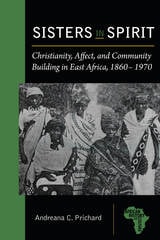
Sisters in Spirit
Christianity, Affect, and Community Building in East Africa, 1860–1970Andreana C. Prichard
Michigan State University Press, 2017
Sisters in Spirit
Mormon Women in Historical and Cultural PerspectiveEdited by Maureen Ursenbach Beecher and Lavina Fielding Anderson
University of Illinois Press, 1987
"The women who contributed to this book are among the best of the Mormon literati . . . [they] hold that there is hope within the church for change, for reform, for expansion of the place of women." -- Women's Review of Books
"Historians of women in America have a great deal to learn from the history of Mormon women. This fine set of essays provides an excellent introduction to a subject about which we should all know more." -- Anne Firor Scott, author of Making the Invisible Woman Visible.
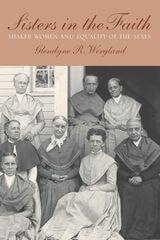
Sisters in the Faith
Shaker Women and Equality of the SexesGlendyne R. Wergland
University of Massachusetts Press, 2011
In 1788, following the death of charismatic founder Mother Ann Lee, the celibate religious group known as the Shakers set out to institutionalize equality of the sexes in their theology, government, and daily practice. In this book, Glendyne Wergland evaluates how well they succeeded in that mission by examining the experiences of women within Shaker communities over more than a century.
Drawing on an extensive archive of primary documents, Wergland discusses topics ranging from girlhood, health, and dress to why women joined the Shakers and how they were viewed by those outside their community. She analyzes the division of labor between men and women, showing that there was considerable cooperation and reciprocity in carrying out most tasks—from food production to laundering to gathering firewood—even as gendered conflicts remained.
In her conclusion, Wergland draws together all of these threads to show that Shaker communities achieved a remarkable degree of gender equality at a time when women elsewhere still suffered under the legal and social strictures of the traditional patriarchal order. In so doing, she argues, the experience of Shaker women served as a model for promoting women's rights in American political culture.

Sites of Insight
A Guide to Colorado Sacred PlacesJames Lough
University Press of Colorado, 2003

Skeptic in the House of God
Kelley, James L
Rutgers University Press, 1997
After fifteen years of full participation in a church that is open not only to skeptics but also to gay men and lesbians, blacks and Jews, where members are invited to critique Sunday sermons, and where hymns are rewritten to reflect feminist concerns, Kelley found that his agnosticism remained but his skepticism about church participation had disappeared. Modern urban life can be a sterile, isolating experience. Yet in St. Mark's Kelley discovered a place of vibrant community, honest inquiry, and support over the hard places in life.
Slandering the Sacred
Blasphemy Law and Religious Affect in Colonial IndiaJ. Barton Scott
University of Chicago Press, 2023
Why is religion today so often associated with giving and taking offense? To answer this question, Slandering the Sacred invites us to consider how colonial infrastructures shaped our globalized world. Through the origin and afterlives of a 1927 British imperial law (Section 295A of the Indian Penal Code), J. Barton Scott weaves a globe-trotting narrative about secularism, empire, insult, and outrage. Decentering white martyrs to free thought, his story calls for new histories of blasphemy that return these thinkers to their imperial context, dismantle the cultural boundaries of the West, and transgress the borders between the secular and the sacred as well as the public and the private.
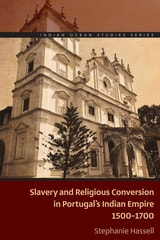
Slavery and Religious Conversion in Portugal's Indian Empire, 1500-1700
Stephanie Hassell
Ohio University Press, 2025
In the sixteenth and seventeenth centuries, enslaved Africans and Asians were part of the larger Portuguese project of building and maintaining a Catholic empire in the Indian Ocean. Both the Church and the Crown influenced the owner-slave relationship across households, the most basic organizational unit of power over the populace. Responsible for their enslaved dependents’ conversion to Catholicism, slaveholders became religious stewards whose spiritual duties toward their slaves helped expand the Christian population. This converted population was part of the imperial security apparatus, which conceptualized enslaved Catholics as loyal allies against neighboring Muslim states. They became members of the broader colonial community in which Catholicism also conveyed rights, enabled agency, and provoked household struggles between owners and slaves. Thus, the making of a Catholic empire was a contested process tied to the complex relationships between enslaved individuals, their enslavers, and the Church. The Portuguese Inquisition was a hybrid ecclesiastical and state institution, and its records detail the Crown’s commitment to the creation of a worldwide Catholic empire. Accordingly, inquisitorial encounters brought conversion, slavery, and empire into one field of vision. The Portuguese Inquisition had only one overseas tribunal, located in Goa, India. While most trial records of the Goa Tribunal were destroyed, author Stephanie Hassell has utilized extant sixteenth- and seventeenth-century cases featuring enslaved defendants and witnesses. Her use of thousands of case summaries provides a broader inquisitorial context by showing how prosecutorial trends reflected the anxieties of the Portuguese imperial state. Parish records, ecclesiastical council records, and municipal council records likewise emphasize the significance of religious conversion.
Slavery and the Catholic Church in the United States
Historical StudiesDavid J. Endres
Catholic University of America Press, 2023
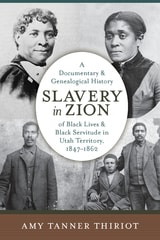
Slavery in Zion
A Documentary and Genealogical History of Black Lives and Black Servitude in Utah Territory, 1847-1862Amy Tanner Thiriot
University of Utah Press, 2022
Slavery in Zion has two major parts. The first section provides an introductory history, chapters on southern and western experiences, and information on life after emancipation. The second section is a biographical encyclopedia of names, relationships, and events. Although Slavery in Zion contains material applicable to legal history and the history of race and Mormonism, its most important contribution is as an archive of the experiences of Utah’s enslaved Black people, at last making their stories an integral part of the record of Utah and the American West—no longer forgotten or written out of history.

Small Town in Mass Society
Class, Power, and Religion in a Rural Community (rev. ed.)Arthur J. Vidich and Joseph BensmanForeword by Michael W. Hughey
University of Illinois Press, 2000
Through a close study of "Springdale, New York," Arthur J. Vidich and Joseph Bensman depict the small town as continuously and increasingly drawn into the central institutions and processes of the total society. Vidich and Bensman based their conclusions on extensive interviews with and close observation of the inhabitants of one community. The original publication of the book caused a sharp response among the town's citizens who felt their trust had been violated and their town misrepresented.
The present volume includes the editorials and correspondence evoked by that controversy, the authors' articles describing their methodology, a new foreword by Michael W. Hughey, and a new afterword in which Arthur J. Vidich recounts the creation and history of the book.
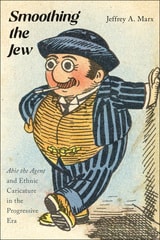
Smoothing the Jew
"Abie the Agent" and Ethnic Caricature in the Progressive EraJeffrey A. Marx
Rutgers University Press, 2024
Smoothing the Jew investigates how Jewish artists of the time attempted to “smooth over” these demeaning portrayals by focusing on the first Jewish comic strip published in English, Harry Hershfield’s Abie the Agent. Jeffrey Marx demonstrates how Hershfield created a Jewish protagonist who in part reassured nativists of the Jews’ ability to assimilate into American society while also encouraging immigrants and their children that, over time, they would be able to adopt American customs without losing their distinctly Jewish identity.
So Ancient and So New
St. Augustine's Confessions and Its InfluenceGlenn Arbery
St. Augustine's Press, 2016
The essays uncover a variety of themes, from Augustine’s act of reading (Marc LePain and Bercier), his emphasis on memory (Roger Corriveau), and his choice to reveal to the world his “hidden and unworldly activity” (Daniel Maher), to the way Augustine’s own education might serve as a corrective to contemporary understandings of “assessment” (Gavin Colvert). The vast wake of Augustine’s work includes writers from Dante and Montaigne to Nabokov, but three representative figures were chosen to show his influence: Jean-Jacques Rousseau in the Confessions (Rick Sorenson), James Joyce in the whole range of his work (Eloise Knowlton), and T.S. Eliot in the Four Quartets (Glenn Arbery). The most direct engagement with Augustine is obviously Rousseau’s. In his essay comparing and contrasting the pivotal moments of the two Confessions, Rick Sorenson explores major differences between the way of faith and the path of reliance on reason. Joyce might be said to have taken Rousseau’s path (at least in rejecting revelation), whereas Eliot took Augustine’s.
In its sophistications and anxieties, the late antiquity Augustine inhabited feels a great deal like the late modernity we inhabit now. Certainly, the barbarians of materialist thought long ago sacked the civilization our ancestors inhabited. When Eliot published The Waste Land in 1922, he already saw the old order of antiquity and Christendom as “stony rubble,” “a heap of broken images.” As one of his speakers puts it, “Dry bones can harm no one.” This old book, the Confessions, might seem to our contemporaries as dry and dead as those bones, but it is not so.
Without being a defense of Christianity (as the City of God is) or a work of catechesis, the Confessions might be the greatest counter to the materialist creed in Western literature. It recounts Augustine’s central, intensely personal, and ultimately liberating struggle to conceive of spiritual substance, an intellectual achievement without which he cannot even hope to accommodate his understanding to the reality of God. This book of essays has one primary end, which is to entice the reader to reopen Augustine’s book, to look over his shoulder and see what the act of reading means to him and what it has accomplished: the world-changing encounter with the substance of the Word.
Social Justice and Subsidiarity
Luigi Taparelli and the Origins of Modern Catholic Social ThoughtThomas C. Behr
Catholic University of America Press, 2020
Social Origins Of Islam
Mind, Economy, DiscourseMohammed Bamyeh
University of Minnesota Press, 1999
Explores the genesis of Islam for insight into the nature of ideological transformation.
The story of the origins of Islam provides a rich and suggestive example of sweeping cultural transformation. Incorporating both innovation and continuity, Islam built upon the existing cultural patterns among the peoples of the Arabian peninsula even as it threatened to eradicate these same patterns. In this provocative interdisciplinary study, Mohammed A. Bamyeh combines perspectives from sociology, literary studies, anthropology, and economic history to examine the cultural ecology that fostered Islam.
Highlighting the pivotal connections in pre-Islamic society between the emergence of certain economic practices (such as trade and money-based exchange), worldview (as rendered in pre-Islamic literature and theology), and the reconfiguration of transtribal patterns of solidarity and settlement, Bamyeh finds in the genesis of Islam a sophisticated model for examining ideological transformation in general.At the heart of Bamyeh’s enterprise are close readings of both the Qur’an and the pre-Islamic poetry that preceded it. Bamyeh uncovers in these texts narrative and pedagogical content, poetic structure, use of metaphor, and historical references that are suggestive of societies in transition. He also explores the expressive limits of the pre-Islamic literature and its transmutation into Qur’anic speech in the wake of social transformation. Emphasizing the organic connections between belief structures, economic formations, and modes of discourse in pre-Islamic Arabia, The Social Origins of Islam explains how various material and discursive changes made the idea of Islam possible at a particular point in history. More broadly, it persuasively demonstrates how grand cultural shifts give rise to new systems of faith.
Social Origins Of Religion
Roger Bastide
University of Minnesota Press, 2003
Social Theory and the Study of Israelite Religion
Essays in Retrospect and ProspectSaul M. Olyan
SBL Press, 2012
Socrates and the Fat Rabbis
Daniel Boyarin
University of Chicago Press, 2009
Socrates and the Jews
Hellenism and Hebraism from Moses Mendelssohn to Sigmund FreudMiriam Leonard
University of Chicago Press, 2012
"What has Athens to do with Jerusalem?” Asked by the early Christian Tertullian, the question was vigorously debated in the nineteenth century. While classics dominated the intellectual life of Europe, Christianity still prevailed and conflicts raged between the religious and the secular. Taking on the question of how the glories of the classical world could be reconciled with the Bible, Socrates and the Jews explains how Judaism played a vital role in defining modern philhellenism.
Soft Patriarchs, New Men
How Christianity Shapes Fathers and HusbandsW. Bradford Wilcox
University of Chicago Press, 2004
According to W. Bradford Wilcox, the divergent family ideologies of evangelical and mainline churches do not translate into large differences in family behavior between evangelical and mainline Protestant men who are married with children. Mainline Protestant men, he contends, are "new men" who take a more egalitarian approach to the division of household labor than their conservative peers and a more involved approach to parenting than men with no religious affiliation. Evangelical Protestant men, meanwhile, are "soft patriarchs"—not as authoritarian as some would expect, and given to being more emotional and dedicated to their wives and children than both their mainline and secular counterparts. Thus, Wilcox argues that religion domesticates men in ways that make them more responsive to the aspirations and needs of their immediate families.
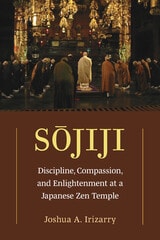
Sojiji
Discipline, Compassion, and Enlightenment at a Japanese Zen TempleJoshua A. Irizarry
University of Michigan Press, 2022
Based on more than fifteen years of fieldwork, interviews, and archival research, Sōjiji: Discipline, Compassion, and Enlightenment at a Japanese Zen Temple immerses the reader in the lives and experiences of the different groups that comprise Sōjiji's contemporary religious community. Through clear and accessible prose, ethnographically-grounded analysis, and emotionally compelling stories, the reader will explore the rich pastiche of daily life and ritual activity at a major Japanese Zen temple in institutional, historical, and social context through the lived practices of its community of clergy, practitioners, parishioners, and visitors.
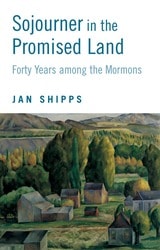
Sojourner in the Promised Land
Forty Years among the MormonsJan Shipps
University of Illinois Press, 2001
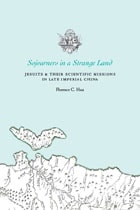
Sojourners in a Strange Land
Jesuits and Their Scientific Missions in Late Imperial ChinaFlorence C. Hsia
University of Chicago Press, 2009
Though Jesuits assumed a variety of roles as missionaries in late imperial China, their most memorable guise was that of scientific expert, whose maps, clocks, astrolabes, and armillaries reportedly astonished the Chinese. But the icon of the missionary-scientist is itself a complex myth. Masterfully correcting the standard story of China Jesuits as simple conduits for Western science, Florence C. Hsia shows how these missionary-scientists remade themselves as they negotiated the place of the profane sciences in a religious enterprise.
Sojourners in a Strange Land develops a genealogy of Jesuit conceptions of scientific life within the Chinese mission field from the sixteenth through eighteenth centuries. Analyzing the printed record of their endeavors in natural philosophy and mathematics, Hsia identifies three models of the missionary man of science by their genres of writing: mission history, travelogue, and academic collection. Drawing on the history of early modern Europe’s scientific, religious, and print culture, she uses the elaboration and reception of these scientific personae to construct the first collective biography of the Jesuit missionary-scientist’s many incarnations in late imperial China.

Soka Gakkai
Studies in Contemporary ReligionKarel Dobbelaere
Signature Books, 2001
Professor Dobbelaere points to several reasons for its growth. Soka Gakkai emphasizes inner peace rather than rules of behavior or hierarchical allegiance. Sociologists describe it as “trans-modern,” meaning that it blends ancient and contemporary sensitivities such as Buddhist mysticism, science, art and music, a concern for the environment, and social activism.
Initially there was a reliance on aggressive proselyting, later replaced with a more moderate encouragement to share with friends. The movement now engages other faiths in cultural and intellectual exchanges and in pursuit of common ethical objectives. This adaptability and sincere concern for its membership and for society as a whole bode well for its future success.
Solemn Covenant
THE MORMON POLYGAMOUS PASSAGEB. Carmon Hardy
University of Illinois Press, 1992
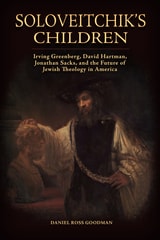
Soloveitchik's Children
Irving Greenberg, David Hartman, Jonathan Sacks, and the Future of Jewish Theology in AmericaDaniel Ross Goodman
University of Alabama Press, 2023
A revealing account of the three main disciples of Rabbi Joseph B. Soloveitchik, an essential figure in Orthodox Judaism in America
Orthodox Judaism is one of the fastest-growing religious communities in contemporary American life. Anyone who wishes to understand more about Judaism in America will need to consider the tenets and practices of Orthodox Judaism: who its adherents are, what they believe in, what motivates them, and to whom they turn for moral, intellectual, and spiritual guidance.
Among those spiritual leaders none looms larger than Rabbi Joseph B. Soloveitchik, heir to the legendary Talmudic dynasty of Brisk and a teacher and ordainer of thousands of rabbis during his time as a Talmud teacher at Yeshiva University from the Second World War until the 1980s. Soloveitchik was not only a Talmudic authority but a scholar of Western philosophy. While many books and articles have been written about Soloveitchik’s legacy and his influence on American Orthodoxy, few have looked carefully at his disciples in Torah and Talmud study, and even fewer at his disciples in Jewish thought and philosophy.
Soloveitchik’s Children: Irving Greenberg, David Hartman, Jonathan Sacks, and the Future of Jewish Theology in America is the first book to study closely three of Soloveitchik’s major disciples in Jewish thought and philosophy: Rabbis Irving (“Yitz”) Greenberg, David Hartman, and Jonathan Sacks. Daniel Ross Goodman narrates how each of these three major modern Jewish thinkers learned from and adapted Soloveitchik’s teachings in their own ways, even while advancing his philosophical and theological legacy.
The story of religious life and Judaism in contemporary America is incomplete without an understanding of how three of the most consequential Jewish thinkers of this generation adapted the teachings of one of the most consequential Jewish thinkers of the previous generation. Soloveitchik’s Children tells this gripping intellectual and religious story in a learned and engaging manner, shining a light on where Jewish religious thought in the United States currently stands—and where it may be heading in future generations.