Results by title
4127 books match the query 'Science' and 313 start with s
Sites of the Unconscious
Hypnosis and the Emergence of the Psychoanalytic SettingAndreas Mayer
University of Chicago Press, 2013
Sites of the Unconscious analyzes the major controversies between competing French schools of hypnotism that emerged at this time, stressing their different views on the production of viable evidence and their different ways of deploying hypnosis. Mayer then reconstructs in detail the reception of French hypnotism in German-speaking countries, arguing that the distinctive features of Freud’s psychoanalytic setting of the couch emerged out of the clinical laboratories and private consulting rooms of the practitioners of hypnosis.
Skywatchers
A Revised and Updated Version of Skywatchers of Ancient MexicoBy Anthony F. Aveni
University of Texas Press, 2001
Skywatchers of Ancient Mexico helped establish the field of archaeoastronomy, and it remains the standard introduction to this subject. Combining basic astronomy with archaeological and ethnological data, it presented a readable and entertaining synthesis of all that was known of ancient astronomy in the western hemisphere as of 1980.
In this revised edition, Anthony Aveni draws on his own and others' discoveries of the past twenty years to bring the Skywatchers story up to the present. He offers new data and interpretations in many areas, including:
- The study of Mesoamerican time and calendrical systems and their unprecedented continuity in contemporary Mesoamerican culture
- The connections between Precolumbian religion, astrology, and scientific, quantitative astronomy
- The relationship between Highland Mexico and the world of the Maya and the state of Pan-American scientific practices
- The use of personal computer software for computing astronomical data
With this updated information, Skywatchers will serve a new generation of general and scholarly readers and will be useful in courses on archaeoastronomy, astronomy, history of astronomy, history of science, anthropology, archaeology, and world religions.
Slopovers
Fire Surveys of the Mid-American Oak Woodlands, Pacific Northwest, and AlaskaStephen J. Pyne
University of Arizona Press, 2019
The Mid-American oak woodlands were the scene of vigorous settlement in the late eighteenth and early nineteenth centuries and thus the scene of changing fire practices. The debate over the origin of the prairies—by climate or fire—foreshadowed the more recent debate about fire in oak and hickory hardwoods. In both cases, today’s thinking points to the critical role of fire.
The Pacific Northwest was the great pivot between laissez-faire logging and state-sponsored conservation and the fires that would accompany each. Then fire faded as an environmental issue. But it has returned over the past decade like an avenging angel, forcing the region to again consider the defining dialectic between axe and flame.
And Alaska—Alaska is different, as everyone says. It came late to wildland fire protection, then managed an extraordinary transfiguration into the most successful American region to restore something like the historic fire regime. But Alaska is also a petrostate, and climate change may be making it the vanguard of what the Anthropocene will mean for American fire overall.
Slopovers collates surveys of these three regions into the national narrative. With a unique mixture of journalism, history, and literary imagination, renowned fire expert Stephen J. Pyne shows how culture and nature, fire from nature and fire from people, interact to shape our world with three case studies in public policy and the challenging questions they pose about the future we will share with fire.
Snake Day
A Story of 24 Hours and 24 Serpentine LivesMarty Crump
University of Chicago Press, 2026
Does a snake crossing your path trigger delight or dread? The answer is clear for celebrated biologist Marty Crump, who shows us that snakes deserve our respect, admiration, and protection. In her short book Snake Day, each chapter introduces a single snake during a single hour, highlighting twenty-four different species from around the globe.
In the dark morning of a Brazilian forest, we avoid stepping on a jararaca, a nocturnal viper. If she bites, her venom will make our blood pressure—and us—drop. A synthetic version of this venom is now a lifesaving drug, used to treat hypertension and heart failure. Later in the morning, in the Zagros Mountains that trace Iran’s northwest border, what appears to be a tiny arachnid wiggles on the ground. When a hungry warbler approaches for a meal, realizes too late that the spider is actually a snake’s tail, and an Iranian spider-tailed viper makes a meal of the bird. In the early afternoon, in a pine forest outside Atlanta, Georgia, an eastern hognose snake strikes at us—a bluff—and then rolls over and plays dead. By the end of our snake day, we’ll have glimpsed the diversity of this unique group of reptiles, met serpentine friends who frighten and fascinate, and learned how humans can protect these amazing species.
For each hour, celebrated artist Stuart Patience has depicted serpentine scenes in stunning pen-and-ink drawings. Working together to narrate and illustrate these unique moments in time, Crump and Patience have created an engaging read that is a perfect way to spend an hour or two—and a true gift for amateur scientists or anyone who recoils at or relishes the sight of a snake.

Snakes, Sunrises, and Shakespeare
How Evolution Shapes Our Loves and FearsGordon H. Orians
University of Chicago Press, 2014
In this ambitious and unusual work, evolutionary biologist Gordon H. Orians explores the role of evolution in human responses to the environment, beginning with why we have emotions and ending with evolutionary approaches to aesthetics. Orians reveals how our emotional lives today are shaped by decisions our ancestors made centuries ago on African savannas as they selected places to live, sought food and safety, and socialized in small hunter-gatherer groups. During this time our likes and dislikes became wired in our brains, as the appropriate responses to the environment meant the difference between survival or death. His rich analysis explains why we mimic the tropical savannas of our ancestors in our parks and gardens, why we are simultaneously attracted to danger and approach it cautiously, and how paying close attention to nature’s sounds has resulted in us being an unusually musical species. We also learn why we have developed discriminating palates for wine, and why we have strong reactions to some odors, and why we enjoy classifying almost everything.
By applying biological perspectives ranging from Darwin to current neuroscience to analyses of our aesthetic preferences for landscapes, sounds, smells, plants, and animals, Snakes, Sunrises, and Shakespeare transforms how we view our experience of the natural world and how we relate to each other.
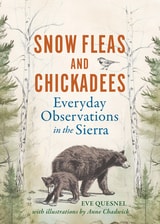
Snow Fleas and Chickadees
Everyday Observations in the SierraEve Quesnel
University of Nevada Press, 2025
Quesnel embraces the notion that to simply walk in one’s neighborhood is to familiarize oneself with the local flora and fauna, drawing attention to everyday things too often neglected. She argues that we can be complacent with what surrounds us, but with careful observation and research, we become acutely aware—and in awe of—nature’s everyday activities. The black bear’s hibernation techniques and mountain chickadee’s caching methods reveal just two of nature’s wily ways. Quesnel chases other curiosities as well, asking, “How does a spider create an orb web?” or, “How does a boulder the size of a small car end up alone in the woods?” In the introduction, she writes, “It is this ‘un-peeling’ of layers in nature that opens up our world.”
For anyone interested in nature writing, whether an armchair explorer, outdoor enthusiast, or science aficionado, Snow Fleas and Chickadees provides an entertaining and engaging discovery of the picturesque Sierra Nevada.
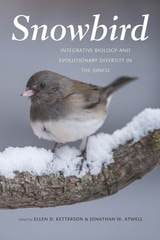
Snowbird
Integrative Biology and Evolutionary Diversity in the JuncoEdited by Ellen D. Ketterson and Jonathan W. Atwell
University of Chicago Press, 2016
Intended for scholars, citizen scientists, and amateur ornithologists, alike, Snowbird synthesizes decades of research from the diverse and talented researchers who study the Junco genus. Though contributors approach their subject from a variety of perspectives, they share a common goal: elucidating the organismal and evolutionary processes by which animals adapt and diversify in response to environmental change. Placing special emphasis on the important role that underlying physiological, hormonal, and behavioral mechanisms play in these processes, Snowbird not only provides a definitive exploration of the junco’s evolutionary history and behavioral and physiological diversity but also underscores the junco’s continued importance as a model organism in a time of rapid global climate change. By merging often disparate biological fields, Snowbird offers biologists across disciplines an integrative framework for further research into adaptation, population divergence, and the formation of new species.
Social Causes of Environmental Destruction in Latin America
Michael Painter and William H. Durham, Editors
University of Michigan Press, 1995
Social Darwinism
Science and Myth in Anglo-American Social ThoughtRobert C. Bannister
Temple University Press, 1989
Social Practices as Biological Niche Construction
Joseph Rouse
University of Chicago Press, 2023
In this book, Joseph Rouse takes his innovative work to the next level by articulating an integrated philosophy of society as part of nature. He shows how and why we ought to unite our biological conception of human beings as animals with our sociocultural and psychological conceptions of human beings as persons and acculturated agents. Rouse’s philosophy engages with biological understandings of human bodies and their environments as well as the diverse practices and institutions through which people live and engage with one another. Familiar conceptual separations of natural, social, and mental “worlds” did not arise by happenstance, he argues, but often for principled reasons that have left those divisions deeply entrenched in contemporary intellectual life. Those reasons are eroding in light of new developments across the disciplines, but that erosion has not been sufficient to produce more adequately integrated conceptual alternatives until now.
Social Practices and Biological Niche Construction shows how the characteristic plasticity, plurality, and critical contestation of human ways of life can best be understood as evolved and evolving relations among human organisms and their distinctive biological environments. It also highlights the constitutive interdependence of those ways of life with many other organisms, from microbial populations to certain plants and animals, and explores the consequences of this in-depth, noting, for instance, how the integration of the natural and social also provides new insights on central issues in social theory, such as the body, language, normativity, and power.
Sojourners in a Strange Land
Jesuits and Their Scientific Missions in Late Imperial ChinaFlorence C. Hsia
University of Chicago Press, 2009
Though Jesuits assumed a variety of roles as missionaries in late imperial China, their most memorable guise was that of scientific expert, whose maps, clocks, astrolabes, and armillaries reportedly astonished the Chinese. But the icon of the missionary-scientist is itself a complex myth. Masterfully correcting the standard story of China Jesuits as simple conduits for Western science, Florence C. Hsia shows how these missionary-scientists remade themselves as they negotiated the place of the profane sciences in a religious enterprise.
Sojourners in a Strange Land develops a genealogy of Jesuit conceptions of scientific life within the Chinese mission field from the sixteenth through eighteenth centuries. Analyzing the printed record of their endeavors in natural philosophy and mathematics, Hsia identifies three models of the missionary man of science by their genres of writing: mission history, travelogue, and academic collection. Drawing on the history of early modern Europe’s scientific, religious, and print culture, she uses the elaboration and reception of these scientific personae to construct the first collective biography of the Jesuit missionary-scientist’s many incarnations in late imperial China.

Solar Interior and Atmosphere
Edited by A. N. Cox, W. C. Livingston, and M. S. Matthews
University of Arizona Press, 1991
Solarities
Seeking Energy JusticeAyesha After Oil Collective
University of Minnesota Press, 2022
A collective engages and mirrors the critical need for energy justice and transformation
Solarities considers the possibilities of organizing societies and economies around solar energy, and the challenges of a just and equitable transition away from fossil fuels. Far from presenting solarity as a utopian solution to the climate crisis, it critically examines the ambiguous potentials of solarities: plural, situated, and often contradictory.
Here, a diverse collective of activists, scholars, and practitioners critically engage a wide range of relationships and orientations to the sun. They consider the material and infrastructural dimensions of solar power, the decolonial and feminist promises of decentralized energy, solarian relations with more-than-human kin, and the problem of oppressive and weaponized solarities. Solarities imagines—and demands— possibilities for energy justice in this transition.
Solvable
How We Healed the Earth, and How We Can Do It AgainSusan Solomon
University of Chicago Press, 2024
We solved planet-threatening problems before, Susan Solomon argues, and we can do it again. Solomon knows firsthand what those solutions entail. She first gained international fame as the leader of an expedition to Antarctica in 1986, making discoveries that were key to healing the damaged ozone layer. She saw a path—from scientific and public awareness to political engagement, international agreement, industry involvement, and effective action. Solomon, an atmospheric scientist and award-winning author, connects this career-defining triumph to the inside stories of other past environmental victories—against ozone depletion, smog, pesticides, and lead—to extract the essential elements of what makes change possible.
The path to success begins when an environmental problem becomes both personal and perceptible to the general public. Lawmakers, diplomats, industries, and international agencies respond to popular momentum, and effective change takes place in tandem with consumer pressure when legislation and regulation yield practical solutions. Healing the planet is a long game won not by fear and panic but by the union of public, political, and regulatory pressure.
Solvable is a book for anyone who has ever despaired about the climate crisis. As Solomon reminds us, doom and gloom get us nowhere, and idealism will only take us so far. The heroes in these stories range from angry mothers to gang members turned social activists, to upset Long Island birdwatchers to iconoclastic scientists (often women) to brilliant legislative craftsmen. Solomon’s authoritative point of view is an inspiration, a reality check, a road map, and a much-needed dose of realism. The problems facing our planet are Solvable. Solomon shows us how.

Solved Problems in Dynamical Systems and Control
J. Tenreiro-Machado
The Institution of Engineering and Technology, 2017

Somatic Selection and Adaptive Evolution
On the Inheritance of Acquired CharactersE. J. Steele
University of Chicago Press, 1981
Something Hidden in the Ranges
The Secret Life of Mountain EcosystemsEllen Wohl
Oregon State University Press, 2021
Geologist Ellen Wohl has spent three decades investigating the streams and forests near her home in Colorado. In writing that is free from jargon and easy to understand, she tells the intricate story of how streams provide energy to adjacent forests, how lake sediments record the history of wind-blown pollutants, and how hidden networks of fungi keeps forests healthy. She guides readers through forests at both lower and higher elevations, revealing how trees rely on microbes in the soil, in the forest canopy, and even within individual pine needles to obtain the food they need. Other chapters focus on subalpine lakes, mountain streams, beaver meadows, and alpine tundra.
While scientists, students, and scholars will benefit from Wohl’s intimate knowledge of mountain ecosystems, Something Hidden in the Ranges is written for anyone interested in natural or environmental history. It will change the way readers perceive and think about natural landscapes.
Something Incredibly Wonderful Happens
Frank Oppenheimer and His Astonishing ExploratoriumK. C. Cole
University of Chicago Press, 2012
Sonora
Its Geographical PersonalityBy Robert C. West
University of Texas Press, 1993
A land where some streams ran with gold. A landscape nearly empty of inhabitants in the wake of Apache raids from the north. And a former desert transformed by irrigation into vast fields of wheat and cotton. This was and is the state of Sonora in northwest Mexico.
In this cultural historical geography, Robert C. West explores the dual geographic "personality" of this part of Mexico's northern frontier. Utilizing the idea of "old" and "new" landscapes, he describes two Sonoras—to the east, a semiarid to subhumid mountainous region that reached its peak of development in the colonial era and still lives largely in its colonial past; and, to the west, a desert region that in the twentieth century has become a major agricultural producer and the modern center of economic and cultural activity.
After a description of the physical and biotic aspects of Sonora, West describes the aboriginal farming cultures that inhabited eastern Sonora before the Spanish conquest. Following the conquest, he traces the spread of Jesuit missions and Spanish mining and ranching communities into this land where gold, silver, and copper ores were easily extracted by surface mining. He charts the decline of eastern Sonora with the coming of Apache and Seri raids during the eighteenth and nineteenth centuries. And he shows how western Sonora has become one of Mexico's most powerful political and economic entities in the twentieth century.
For geographers, historians, anthropologists, and economists, as well as travelers to Sonora and its coastal resorts, this lively and interesting book will be important reading.
Sonoran Desert Plants
An Ecological AtlasRaymond M. Turner, Janice E. Bowers, and Tony L. Burgess
University of Arizona Press, 1995
An encyclopedia as well as an atlas, this monumental work describes the taxonomy, geographic distribution, and ecology of 339 plants, most of them common and characteristic trees, shrubs, or succulants. Also included is valuable information on natural history and ethnobotanical, commercial, and horticultural uses of these plants. The entry for each species includes a range map, an elevational profile, and a narrative account. The authors also include an extensive bibliography, referring the reader to the latest research and numerous references of historical importance, with a glossary to aid the general reader. Sonoran Desert Plants is a monumental work, unlikely to be superseded in the next generation. As the region continues to attract more people, there will be an increasingly urgent need for basic knowledge of plant species as a guide for creative and sustainable habitation of the area. This book will stand as a landmark resource for many years to come.
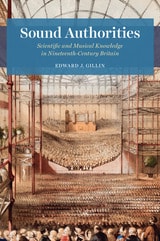
Sound Authorities
Scientific and Musical Knowledge in Nineteenth-Century BritainEdward J. Gillin
University of Chicago Press, 2021
Sound Authorities shows how experiences of music and sound played a crucial role in nineteenth-century scientific inquiry in Britain.
In Sound Authorities, Edward J. Gillin focuses on hearing and aurality in Victorian Britain, claiming that the development of the natural sciences in this era cannot be understood without attending to the study of sound and music.
During this time, scientific practitioners attempted to fashion themselves as authorities on sonorous phenomena, coming into conflict with traditional musical elites as well as religious bodies. Gillin pays attention to sound in both musical and nonmusical contexts, specifically the cacophony of British industrialization. Sound Authorities begins with the place of acoustics in early nineteenth-century London, examining scientific exhibitions, lectures, spectacles, workshops, laboratories, and showrooms. He goes on to explore how mathematicians mobilized sound in their understanding of natural laws and their vision of a harmonious ordered universe. In closing, Gillin delves into the era’s religious and metaphysical debates over the place of music (and humanity) in nature, the relationship between music and the divine, and the tensions between spiritualist understandings of sound and scientific ones.
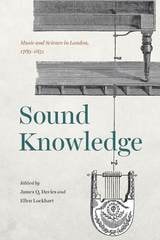
Sound Knowledge
Music and Science in London, 1789-1851Edited by J. Q. Davies and Ellen Lockhart
University of Chicago Press, 2017
Sound Knowledge examines how scientific truth was accrued by means of visual and aural experience, and, in turn, how musical knowledge was located in relation to empirical scientific practice. James Q. Davies and Ellen Lockhart gather work by leading scholars to explore a crucial sixty-year period, beginning with Charles Burney’s ambitious General History of Music, a four-volume study of music around the globe, and extending to the Great Exhibition of 1851, where musical instruments were assembled alongside the technologies of science and industry in the immense glass-encased collections of the Crystal Palace. Importantly, as the contributions show, both the power of science and the power of music relied on performance, spectacle, and experiment. Ultimately, this volume sets the stage for a new picture of modern disciplinarity, shining light on an era before the division of aural and visual knowledge.

Sounds of Black Switzerland
Blackness, Music, and Unthought VoicesJessie Cox
Duke University Press, 2025

Sourcebook on the Environment
A Guide to the LiteratureKenneth A. Hammond, George Macinko, and Wilma B. Fairchild
University of Chicago Press, 1978
Beginning with an introduction to various philosophies and perspectives, the Sourcebook examines major elements of the environment and selected case studies of human alteration of our surroundings. The essential references in each field are carefully presented, and directions are given for examining more advanced and specialized works. Appendixes on selected periodicals, the latest relevant federal legislation, and environmental organizations point to further areas of investigation. To maintain its value in this volatile area, this indispensable work will be periodically revised and updated.
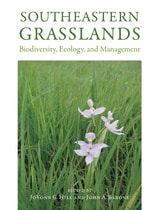
Southeastern Grasslands
Biodiversity, Ecology, and ManagementJoVonn G. Hill and John A. Barone, eds.
University of Alabama Press, 2019
Today the southeastern United States is a largely rural, forested, and agricultural landscape interspersed with urban areas of development. However, two centuries ago it contained hundreds of thousands of acres of natural grasslands that stretched from Florida to Texas. Now more than 99 percent of these prairies, glades, and savannas have been plowed up or paved over, lost to agriculture, urban growth, and cattle ranching. The few remaining grassland sites are complex ecosystems, home to hundreds of distinct plant and animal species, and worthy of study.
Southeastern Grasslands: Biodiversity, Ecology, and Management brings together the latest research on southeastern prairie systems and species, provides a complete picture of an increasingly rare biome, and offers solutions to many conservation biology queries. Editors JoVonn G. Hill and John A. Barone have gathered renowned experts in their fields from across the region who address questions related to the diversity, ecology, and management of southeastern grasslands, along with discussions of how to restore sites that have been damaged by human activity.
Over the last twenty years, both researchers and the public have become more interested in the grasslands of the Southeast. This volume builds on the growing knowledge base of these remarkable ecosystems with the goal of increasing appreciation for them and stimulating further study of their biota and ecology. Topics such as the historical distribution of grasslands in the South, the plants and animals that inhabit them, as well as assessments of several techniques used in their conservation and management are covered in-depth. Written with a broad audience in mind, this book will serve as a valuable introduction and reference for nature enthusiasts, scientists, and land managers.
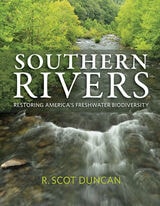
Southern Rivers
Restoring America's Freshwater BiodiversityR. Scot Duncan
University of Alabama Press, 2024
Explores the Southeast’s imperiled river systems and solutions for preserving them in the face of habitat loss, climate change, and extinction
Southern Rivers, by award-winning nature writer and biologist R. Scot Duncan, is a thoroughly crafted exploration of the perilous state of the Southeast’s rivers and the urgent need to safeguard their vitality. The region’s rivers are the epicenter of North American freshwater biodiversity and are the top global hotspot for important aquatic animals including mussels, turtles, snails, crayfish, and fish, many of which have made important contributions to southern life and culture.
Centuries of commercial development have impaired the region’s river systems, sacrificing biodiversity and compromising the rivers’ ability to provide resources essential to human life: drinking water, waste disposal, irrigation, navigation, recreation, power production, and more. Now, increased heat and drought caused by climate change are lowering water levels. As such threats increase, it may seem necessary to choose between nature conservation and human needs, but Duncan persuasively demonstrates that this is a false choice. Conservation enhances human life.
In the same engaging voice of an expert friend that won over thousands of readers of his earlier book, Southern Wonder: Alabama’s Surprising Biodiversity, Duncan explains the task of managing southeastern rivers and how river water quality affects the daily lives of the millions who hold these historic waterways dear. He shows how managing rivers wisely can meet the needs of biodiversity and humanity both. With Americans increasingly anxious about the onset of climate change and the accelerating extinction crisis, Southern Rivers illuminates actionable solutions.
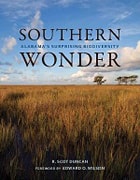
Southern Wonder
Alabama's Surprising BiodiversityR. Scot Duncan
University of Alabama Press, 2013
WINNER, REED AWARD FOR ENVIRONMENTAL WRITING GIVEN BY THE SOUTHERN ENVIRONMENTAL LAW CENTER
Southern Wonder explores Alabama’s amazing biological diversity, the reasons for the large number of species in the state, and the importance of their preservation.
Alabama ranks fifth in the nation in number of species of plants and animals found in the state, surpassed only by the much larger western states of California,Texas, Arizona, and New Mexico. When all the species of birds, trees, mammals, reptiles, amphibians, fishes, wildflowers, dragonflies, tiger beetles, and ants are tallied, Alabama harbors more species than 90 percent of the other states in the United States. Alabamais particularly rich in aquatic biodiversity, leading the nation in species of freshwater fishes, turtles, mussels, crayfish, snails, damselflies, and carnivorous plants. The state also hosts an exceptional number of endemic species—those not found beyond its borders—ranking seventh in the nation with 144 species. The state’s 4,533 species, with more being inventoried and discovered each year, are supported by no less than 64 distinct ecological systems—each a unique blend of soil, water, sunlight, heat, and natural disturbance regimes. Habitats include dry forests, moist forests, swamp forests, sunny prairies, grassy barrens, scorching glades, rolling dunes, and bogs filled with pitcher plants and sundews. The state also includes a region of subterranean ecosystems that are more elaborate and species rich than any other place on the continent.
Although Alabama is teeming with life, the state’s prominence as a refuge for plants and animals is poorly appreciated. Even among Alabama’s citizens, few outside a small circle of biologists, advocates, and other naturalists understand the special quality of the state’s natural heritage. R. Scot Duncan rectifies this situation in Southern Wonder by providing a well-written, comprehensive overview that the general public, policy makers, and teachers can understand and use. Readers are taken on an exploratory journey of the state’s varied landscapes—from the Tennessee River Valley to the coastal dunes—and are introduced to remarkable species, such as the cave salamander and the beach mouse. By interweaving the disciplines of ecology, evolution, meteorology, and geology into an accessible whole, Duncan explains clearly why Alabama is so biotically rich and champions efforts for its careful preservation.
Published in Cooperation with The Nature Conservancy
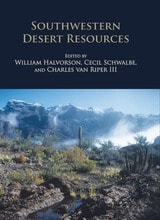
Southwestern Desert Resources
Edited by William Halvorson, Cecil Schwalbe, and Charles van Riper III
University of Arizona Press, 2010
This book puts a spotlight on individual research projects which are specific examples of work being done in the area and when they are all brought together, to shed a general light of understanding the biological and cultural resources of this vast region so that those same resources can be managed as effectively and efficiently as possible. The intent is to show that collaborative efforts among federal, state agency, university, and private sector researchers working with land managers, provides better science and better management than when scientists and land managers work independently.

Soviet Intelligence Plans for the British Isles
John M. Davies and Alexander J. Kent
Bodleian Library Publishing, 0
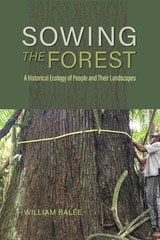
Sowing the Forest
A Historical Ecology of People and Their LandscapesWilliam Balée
University of Alabama Press, 2023
Explores how, over centuries, Amazonian people and their cultures have interacted with rainforests
William Balée is a world-renowned expert on the cultural and historical ecology of the Amazon basin. His new collection, Sowing the Forest, is a companion volume to the award-winning Cultural Forests of the Amazon, published in 2013. Sowing the Forest engages in depth with how, over centuries, Amazonian people and their cultures have interacted with rainforests, making the landscapes of palm forests and other kinds of forests, and how these and related forests have fed back into the vocabulary and behavior of current indigenous occupants of the remotest parts of the vast hinterlands.
The book is divided into two parts. Part 1, “Substrate of Intentionality,” comprises chapters on historical ecology, indigenous palm forests, plant names in Amazonia, the origins of the Amazonian plantain, and the unknown “Dark Earth people” of thousands of years ago and their landscaping. Together these chapters illustrate the phenomenon of feedback between culture and environment.
In Part 2, “Scope of Transformation,” Balée lays out his theory of landscape transformation, which he divides into two rubrics—primary landscape transformation and secondary landscape transformation—and for which he provides examples and various specific effects. One chapter compares environmental and social interrelationships in an Orang Asli group in Malaysia and the Ka’apor people of eastern Amazonian Brazil, and another chapter covers loss of language and culture in the Bolivian Amazon. A final chapter addresses the controversial topic of monumentality in the rainforest. Balée concludes by emphasizing the common thread in Amazonian historical ecology: the long-term phenomenon of encouraging diversity for its own sake, not just for economic reasons.

Soybeans and Their Products
Markets, Models, and PolicyJames P. Houck, Mary E. Ryan, and Abraham Subotnik
University of Minnesota Press, 1972
Soybeans and Their Products was first published in 1972. Minnesota Archive Editions uses digital technology to make long-unavailable books once again accessible, and are published unaltered from the original University of Minnesota Press editions.
This is the report of a comprehensive study designated to identify and measure empirically the forces, interrelationships, and processes which shape the behavior of the total soybean market. The research focused on the years from 1946 to 1967, a period when the soybean economy developed from its small beginnings to its present magnitude. Soybeans are now the leading oilseed in world trade; soybean oil is the most prominent among the many edible oils available in the world; and soybean meal stands first in importance in world markets for high-protein livestock feeds. As a top cash crop in U.S. agriculture soybeans are rivaled only by corn.
Much of the remarkable surge in soybean and related markets in recent years can be explained and analyzed by using the concepts of demand growth and commodity substitution developed in this book. In addition to serving the specific interests of commodity experts, the study will be useful to econometricians and price analysts as an example of empirical investigation of a major agricultural and industrial raw material.
The research was carried out through close cooperation between the University of Minnesota's Department of Agricultura and Applied Economics and the Economic and Statistical Analysis Division of the Economic Research Service, U.S. Department of Agriculture.

Space And Place
The Perspective of ExperienceYi-Fu Tuan
University of Minnesota Press, 2001

Space Monkeys!
Remembering the Nonhuman Astronauts in US Space ExplorationJohn A. Lynch
University of Alabama Press, 2026
Exposes how emotion, memory, and national pride shape the stories we tell about science, animals, and the history of the “race to space”
Before humans ever left Earth’s atmosphere, a handful of primates paved the way—earning fame and fascination but leaving behind a complicated and often highly debated legacy. As the Cold War intensified, the US space program turned to monkeys—Able, Baker, Ham, and Enos—to test and explore the limits of human survival in space. These animals became media sensations, museum exhibits, and symbols of American ingenuity, even as their suffering was often overlooked.
With insight and empathy, Lynch unpacks the stories we tell about these primates and how they are remembered through culture and time, both modern and historically. Lynch argues that the public memory of these animals often justifies their use in the name of scientific progress. Sometimes they are portrayed as tools, other times as human stand-ins, and frequently as objects of sympathy—but rarely as subjects of critique.
Lynch shows how feelings—compassion, cuteness, patriotism, and the technological sublime—shape the stories we tell about these animals and the ethical frameworks we build around them. Each chapter focuses on a different genre of memory-making, from newspaper and photojournalism to museum exhibits, children’s literature, and fictional films.
By reframing these animal pioneers, Lynch uncovers the ethical and emotional narratives that shape how we remember science. Space Monkeys! is a vital reflection on memory, identity, and the more-than-human costs of progress.

Space, Time, and Gravity
The Theory of the Big Bang and Black HolesRobert M. Wald
University of Chicago Press, 1992

Spacetime And Geometry
The Alfred Schild LecturesEdited by Richard A. Matzner and L. C. Shepley
University of Texas Press, 1982
These reports, at the forefront of relativity theory when they were written, in particular the geometrical aspects of spacetime theory, were the result of the Alfred Schild Memorial Lecture Series presented at the University of Texas at Austin beginning in 1977. Each article is a self-contained summary of an important area of contemporary gravitational physics, while the book as a whole provides an overview of a wide variety of the problems of general relativity and gravitation.
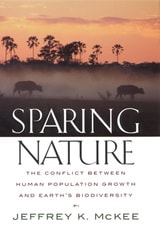
Sparing Nature
The Conflict between Human Population Growth and Earth's BiodiversityMcKee, Jeffrey K.
Rutgers University Press, 2005
Are humans too good at adapting to the earth’s natural environment? Every day, there is a net gain of more than 200,000 people on the planet—that’s 146 a minute. Has our explosive population growth led to the mass extinction of countless species in the earth’s plant and animal communities?
Jeffrey K. McKee contends yes. The more people there are, the more we push aside wild plants and animals. In Sparing Nature, he explores the cause-and-effect relationship between these two trends, demonstrating that nature is too sparing to accommodate both a richly diverse living world and a rapidly expanding number of people. The author probes the past to find that humans and their ancestors have had negative impacts on species biodiversity for nearly two million years, and that extinction rates have accelerated since the origins of agriculture. Today entire ecosystems are in peril due to the relentless growth of the human population. McKee gives a guided tour of the interconnections within the living world to reveal the meaning and value of biodiversity, making the maze of technical research and scientific debates accessible to the general reader. Because it is clear that conservation cannot be left to the whims of changing human priorities, McKee takes the unabashedly neo-Malthusian position that the most effective measure to save earth’s biodiversity is to slow the growth of human populations. By conscientiously becoming more responsible about our reproductive habits and our impact on other living beings, we can ensure that nature’s services will make our lives not only supportable, but also sustainable for this century and beyond.
Speaking for the River
Confronting Pollution on the Willamette, 1920s-1970sJames V. Hillegas-Elting
Oregon State University Press, 2018
Willamette River cleanup efforts between 1926 and 1975 centered on a struggle between abatement advocates and the two primary polluters in the watershed, the City of Portland and the pulp and paper industry. Beginning in 1926, clean streams advocates created ad hoc groups of public health experts, sanitary engineers, conservationists, sportsmen, and others to pressure Portland officials and industry representatives to cease polluting the river. By the late 1960s, these grassroots initiatives found political footholds at the state level. As governor between 1967 and 1975, Tom McCall took the issue of environmental protection personally, providing the charisma and leadership that was needed to finally make substantive progress toward cleaning the Willamette.
Speaking for the River is the first book to describe the historical roots of Willamette River pollution, providing important context for understanding the political, fiscal, and technological antecedents to the present-day conundrum. Hillegas-Elting’s contribution to the academic literature on environmental and urban history in Oregon will be welcomed by policy makers, environmentalists, and concerned citizens alike.
SpecLab
Digital Aesthetics and Projects in Speculative ComputingJohanna Drucker
University of Chicago Press, 2009
Nearly a decade ago, Johanna Drucker cofounded the University of Virginia’s SpecLab, a digital humanities laboratory dedicated to risky projects with serious aims. In SpecLab she explores the implications of these radical efforts to use critical practices and aesthetic principles against the authority of technology based on analytic models of knowledge.
Inspired by the imaginative frontiers of graphic arts and experimental literature and the technical possibilities of computation and information management, the projects Drucker engages range from Subjective Meteorology to Artists’ Books Online to the as yet unrealized ’Patacritical Demon, an interactive tool for exposing the structures that underlie our interpretations of text. Illuminating the kind of future such experiments could enable, SpecLab functions as more than a set of case studies at the intersection of computers and humanistic inquiry. It also exemplifies Drucker’s contention that humanists must play a role in designing models of knowledge for the digital age—models that will determine how our culture will function in years to come.
Species Diversity in Ecological Communities
Edited by Robert E. Ricklefs and Dolph Schluter
University of Chicago Press, 1993
The authors use new theoretical developments, analyses, and case studies to explore the large-scale mechanisms that generate and maintain diversity. Case studies of various regions and organisms consider how local and regional processes interact to determine patterns of species richness. The contributors emphasize the fact that ecological processes acting quickly on a local scale do not erase the effects of regional and historical events that occur more slowly and less frequently.
This book compels scientists to rethink the foundations of community ecology and sets the stage for further research using comparative, experimental, geographical, and historical data.
Species and Speciation in the Fossil Record
Edited by Warren D. Allmon and Margaret M. Yacobucci
University of Chicago Press, 2016
After outlining views of the Modern Synthesis of evolutionary disciplines and detailing the development within paleobiology of quantitative methods for documenting and analyzing variation within fossil assemblages, contributors explore the challenges of recognizing and defining species from fossil specimens—and offer potential solutions. Addressing both the tempo and mode of speciation over time, they show how with careful interpretation and a clear species concept, fossil species may be sufficiently robust for meaningful paleobiological analyses. Indeed, they demonstrate that the species concept, if more refined, could unearth a wealth of information about the interplay between species origins and extinctions, between local and global climate change, and greatly deepen our understanding of the evolution of life.

Speculate This!
Uncertain Commons
Duke University Press, 2013
Sperm Whales
Social Evolution in the OceanHal Whitehead
University of Chicago Press, 2003
With this book, Hal Whitehead gives us a clearer picture of the ecology and social life of sperm whales than we have ever had before. Based on almost two decades of field research, Whitehead describes their biology, behavior, and habitat; how they organize their societies; and how their complex lifestyles may have evolved in this unique environment. Among the many fascinating topics he explores is the crucial role that culture plays in the life of the sperm whale, and he traces the consequences of this argument for both evolution and conservation. Finally, drawing on these findings, Whitehead builds a general model of how the ocean environment influences social behavior and cultural evolution among mammals as well as other animals.
The definitive portrait of a provocative creature, Sperm Whales will interest animal behaviorists, conservationists, ecologists, and evolutionary biologists as well as marine mammalogists.

Spider Webs
Behavior, Function, and EvolutionWilliam Eberhard
University of Chicago Press, 2020
As Eberhard reveals, the extraordinary diversity of webs includes ingenious solutions to gain access to prey in esoteric habitats, from blazing hot and shifting sand dunes (to capture ants) to the surfaces of tropical lakes (to capture water striders). Some webs are nets that are cast onto prey, while others form baskets into which the spider flicks prey. Some aerial webs are tramways used by spiders searching for chemical cues from their prey below, while others feature landing sites for flying insects and spiders where the spider then stalks its prey. In some webs, long trip lines are delicately sustained just above the ground by tiny rigid silk poles.
Stemming from the author’s more than five decades observing spider webs, this book will be the definitive reference for years to come.
Spiritual Information
100 Perspectives on Science and ReligionCharles L. Harper Jr.
Templeton Press, 2005
Spiritual Information is a collection of one hundred essays that explore a portion of the vast interdisciplinary approaches to the study of science and religion. Individually and together, the essays show how the study of ourselves, our planet, and the universe helps us understand our place as spiritual beings within God’s universe.
The book is a tribute to Sir John Templeton and his pioneering commitment toward new research that results in “one hundredfold more spiritual information than humankind has ever possessed before.” It begins with essays that reflect on Sir John’s principal domains of interest and expertise: free-enterprise based finance and accelerating spiritual progress.
Themes of the sections are:
•Science-Religion Dialogue•Cosmology, Physics, and Astronomy
•Mathematics, Musicology, and Speculation
•Biological Evolution—the Human Being
•Social Evolution—the Human Mind and Heart
•Religion and Health
•The Nature of the Divine
•Theology and Philosophy
•Faith Traditions
“Sir John’s leadership has enabled us to edge ever closer to the frontier where knowledge meets wisdom at the threshold of ‘ultimate reality,’” notes the editor in the preface to this volume. As Spiritual Information presents an overview of how far we have come in the science and religion dialogue, it also opens windows to the vast possibilities for additional research and further advances in spiritual information.
Split and Splice
A Phenomenology of ExperimentationHans-Jörg Rheinberger
University of Chicago Press, 2023
The experiment has long been seen as a test bed for theory, but in Split and Splice, Hans-Jörg Rheinberger makes the case, instead, for treating experimentation as a creative practice. His latest book provides an innovative look at the experimental protocols and connections that have made the life sciences so productive.
Delving into the materiality of the experiment, the first part of the book assesses traces, models, grafting, and note-taking—the conditions that give experiments structure and make discovery possible. The second section widens its focus from micro-level laboratory processes to the temporal, spatial, and narrative links between experimental systems. Rheinberger narrates with accessible examples, most of which are drawn from molecular biology, including from the author’s laboratory notebooks from his years researching ribosomes.
A critical hit when it was released in Germany, Split and Splice describes a method that involves irregular results and hit-or-miss connections—not analysis, not synthesis, but the splitting and splicing that form a scientific experiment. Building on Rheinberger’s earlier writing about science and epistemology, this book is a major achievement by one of today’s most influential theorists of scientific practice.
Sport, Physical Culture, and the Moving Body
Materialisms, Technologies, EcologiesJoshua I. Newman
Rutgers University Press, 2020
The moving body—pervasively occupied by fitness activities, intense training and dieting regimes, recreational practices, and high-profile sporting mega-events—holds a vital function in contemporary society. As the body moves—as it performs, sweats, runs, and jumps—it sets in motion an intricate web of scientific rationalities, spatial arrangements, corporate imperatives, and identity politics (i.e. politics of gender, race, social class, etc.). It represents vitality in its productive and physiological capacities, it drives a complex economy of experiences and products, and it is a meaningful site of cultural identities and politics.
Contributors to Sport, Physical Culture, and the Moving Body work from a simple premise: as it moves, the material body matters. Adding to the burgeoning fields of sport studies and body studies, the works featured here draw upon the traditions of feminist theory, posthumanism, actor network theory, and new materialism to reposition the physical, moving body as crucial to the cultural, political, environmental, and economic systems that it constitutes and within which is constituted. Once assembled, the book presents a study of bodies in motion—made to move in contexts where technique, performance, speed, strength, and vitality not only define the conduct therein, but provide the very reason for the body’s being within those economies and environments. In so doing, the contributors look to how the body moving for and about rational systems of science, medicine, markets, and geopolity shapes the social and material world in important and unexpected ways.
In Sport, Physical Culture, and the Moving Body, contributors explore the extent to which the body, when moving about both ostensibly active body spaces (i.e., the gymnasium, the ball field, exercise laboratory, the track or running trail, the beach, or the sport stadium) and those places less often connected to physical activity (i.e. the home, the street, the classroom, the automobile), is bounded to technologies of life and living; and to the political arrangements that seek to capitalize upon such frames of biological vitality. To do so, the authors problematize the rise of active body science (i.e. kinesiology, sport and exercise sciences, performance biotechnology) and the effects these scientific interventions have on embodied, lived experience.
Contributors to Sport, Physical Culture, and the Moving Body will be engaging a range of new and emerging theoretical perspectives, including new materialist, political ecology, developmental systems theory, and new material feminist approaches, to examine the actors and assemblages of movement-based material, political, and economic production. In so doing, contributors will vividly and powerfully illustrate the extent to which a focus on the fleshed body and its material conditions can bring forth new insights or ontological and epistemological innovation to the sociology of sport and physical activity. They will also explore the agency of the body as and amongst things. Such a performative materialist approach explicates how complex assemblages of sport and physical activity—bringing into association everything from muscle fibers and dietary proteins to stadium concrete or regional aquifers—are not only meaningful, but ecological.
By focusing on the confluence of agentive materialities, disciplinary technologies, vibrant assemblages, speculative realities, and vital performativities, Sport, Physical Culture, and the Moving Body promises to offer a groundbreaking departure from representationalist tendencies and orthodoxies brought about by the cultural turn in sport and physical cultural studies. It brings the moving body and its physics back into focus: recentering moving flesh and bones as locus of social order, environmental change, and the global political economy.
Spring Flora of Wisconsin
A Manual of Plants Growing without Cultivation and Flowering Before June 15Norman C. Fassett; Revised and enlarged by Olive S. Thomson
University of Wisconsin Press, 1976
Spying with Maps
Surveillance Technologies and the Future of PrivacyMark Monmonier
University of Chicago Press, 2002
Despite our apprehension about surveillance technology, Spying with Maps is not a jeremiad, crammed with dire warnings about eyes in the sky and invasive tracking. Monmonier's approach encompasses both skepticism and the acknowledgment that geospatial technology brings with it unprecedented benefits to governments, institutions, and individuals, especially in an era of asymmetric warfare and bioterrorism. Monmonier frames his explanations of what this new technology is and how it works with the question of whether locational privacy is a fundamental right. Does the right to be left alone include not letting Big Brother (or a legion of Little Brothers) know where we are or where we've been? What sacrifices must we make for homeland security and open government?
With his usual wit and clarity, Monmonier offers readers an engaging, even-handed introduction to the dark side of the new technology that surrounds us—from traffic cameras and weather satellites to personal GPS devices and wireless communications.
Squid Empire
The Rise and Fall of the CephalopodsDanna Staaf
University Press of New England, 2017

St. Austin Review, Science & Orthodoxy
The Legacy of Fr. Stanley L. Jaki, May/June 2014, Vol. 14, No. 3Joseph Pearce
St. Augustine's Press, 2014