Results by title
22279 books match the query 'Social Science' and 1635 start with s
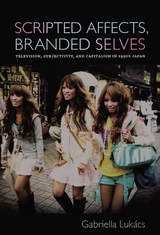
Scripted Affects, Branded Selves
Television, Subjectivity, and Capitalism in 1990s JapanGabriella Lukács
Duke University Press, 2010
Scripted Culture
Digitalization and the Cultural Public SphereEdited by Ruedi Widmer and Ines Kleesattel
Diaphanes, 2018
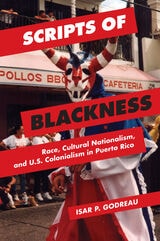
Scripts of Blackness
Race, Cultural Nationalism, and U.S. Colonialism in Puerto RicoIsar P. Godreau
University of Illinois Press, 2015
Based on an ethnographic study of the barrio of San Antón in the city of Ponce, Scripts of Blackness examines institutional and local representations of blackness as developing from a power-laden process that is inherently selective and political, not neutral or natural. Godreau traces the presumed benevolence or triviality of slavery in Puerto Rico, the favoring of a Spanish colonial whiteness (under a hispanophile discourse), and the insistence on a harmonious race mixture as discourses that thrive on a presumed contrast with the United States that also characterize Puerto Rico as morally superior. In so doing, she outlines the debates, social hierarchies, and colonial discourses that inform the racialization of San Antón and its residents as black.
Mining ethnographic materials and anthropological and historical research, Scripts of Blackness provides powerful insights into the critical political, economic, and historical context behind the strategic deployment of blackness, whiteness, and racial mixture.
Scrutinizing Feminist Epistemology
An Examination of Gender in SciencePinnick, Cassandra
Rutgers University Press, 2003
This volume presents the first systematic evaluation of a feminist epistemology of sciences’ power to transform both the practice of science and our society. Unlike existing critiques, this book questions the fundamental feminist suggestion that purging science of alleged male biases will advance the cause of both science and by extension, social justice.
The book is divided into four sections: the strange status of feminist epistemology, testing feminist claims about scientific practice, philosophical and political critiques of feminist epistemology, and future prospects of feminist epistemology. Each of the essays¾most of which are original to this text¾ directly confronts the very idea that there could be a feminist epistemology or philosophy of science. Rather than attempting to deal in detail with all of the philosophical views that fall under the general rubric of feminist epistemology, the contributors focus on positions that provide the most influential perspectives on science. Not all of the authors agree amongst themselves, of course, but each submits feminist theories to careful scrutiny. Scrutinizing Feminist Epistemology provides a timely, well-rounded, and much needed examination of the role of gender in scientific research.
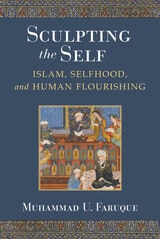
Sculpting the Self
Islam, Selfhood, and Human FlourishingMuhammad U. Faruque
University of Michigan Press, 2021
Sculpting the Self addresses “what it means to be human” in a secular, post-Enlightenment world by exploring notions of self and subjectivity in Islamic and non-Islamic philosophical and mystical thought. Alongside detailed analyses of three major Islamic thinkers (Mullā Ṣadrā, Shāh Walī Allāh, and Muhammad Iqbal), this study also situates their writings on selfhood within the wider constellation of related discussions in late modern and contemporary thought, engaging the seminal theoretical insights on the self by William James, Jean-Paul Sartre, and Michel Foucault. This allows the book to develop its inquiry within a spectrum theory of selfhood, incorporating bio-physiological, socio-cultural, and ethico-spiritual modes of discourse and meaning-construction. Weaving together insights from several disciplines such as religious studies, philosophy, anthropology, critical theory, and neuroscience, and arguing against views that narrowly restrict the self to a set of cognitive functions and abilities, this study proposes a multidimensional account of the self that offers new options for addressing central issues in the contemporary world, including spirituality, human flourishing, and meaning in life.
This is the first book-length treatment of selfhood in Islamic thought that draws on a wealth of primary source texts in Arabic, Persian, Urdu, Greek, and others. Muhammad U. Faruque’s interdisciplinary approach makes a significant contribution in the growing field of cross-cultural dialogue, as it opens up the way for engaging premodern and modern Islamic sources from a contemporary perspective by going beyond the exegesis of historical materials. He initiates a critical conversation between new insights into human nature as developed in neuroscience and modern philosophical literature and millennia-old Islamic perspectives on the self, consciousness, and human flourishing as developed in Islamic philosophical, mystical, and literary traditions.
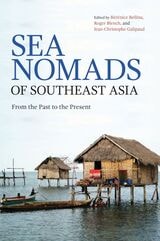
Sea Nomads of Southeast Asia
From the Past to the PresentEdited by Bérénice Bellina, Roger Blench, and Jean-Christophe Galipaud
National University of Singapore Press, 2020
For many years, the sea nomads were assumed to be without history, and even without archaeology. This has proven far from the case, and recent archaeological findings allow us to more closely describe sea nomadism from the Pleistocene through the early Holocene up to the present. Integrating these findings with the latest in historical research, linguistics, ethnography and historical genetics allows us to better understand sea-nomad ways of life over a scale of millennia and to appreciate the diversity and flexibility of this sea-nomad world. This in turn enriches our understanding of nomadism and mobility as ways of life more generally, and of the sea not only as a landscape of resources, but as a home and spiritual landscape.

Sea of Lentils
Hilda Otano Benitez
University of Massachusetts Press, 1990
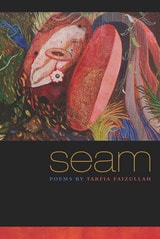
Seam
Tarfia Faizullah
Southern Illinois University Press, 2014
Winner, Great Lakes Colleges Association New Writers Award, 2014
Winner, Binghamton University Milt Kessler Poetry Book Award, 2015
Winner, Drake University Emerging Writers Award, 2015
The poems in this captivating collection weave beauty with violence, the personal with the historic as they recount the harrowing experiences of the two hundred thousand female victims of rape and torture at the hands of the Pakistani army during the 1971 Liberation War. As the child of Bangladeshi immigrants, the poet in turn explores her own losses, as well as the complexities of bearing witness to the atrocities these war heroines endured.
Throughout the volume, the narrator endeavors to bridge generational and cultural gaps even as the victims recount the horror of grief and personal loss. As we read, we discover the profound yet fragile seam that unites the fields, rivers, and prisons of the 1971 war with the poet’s modern-day hotel, or the tragic death of a loved one with the holocaust of a nation.
Moving from West Texas to Dubai, from Virginia to remote villages in Bangladesh and back again, the narrator calls on the legacies of Willa Cather, César Vallejo, Tomas Tranströmer, and Paul Celan to give voice to the voiceless. Fierce yet loving, devastating and magical at once, Seam is a testament to the lingering potency of memory and the bravery of a nation’s victims.

Search and Clear
Critical Responses to Selected Literature and Films of the Vietnam WarWilliam J. Searle
University of Wisconsin Press, 1988
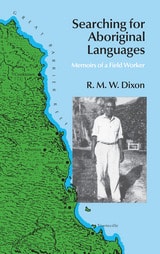
Searching for Aboriginal Languages
Memoirs of a Field WorkerR. M. W. Dixon
University of Chicago Press, 1989
As he made his way through northern Australia, Dixon was dependent on rumors of Aboriginal speakers, the unreliable advice of white Australians, and the faulty memories of many of the remaining speakers of the languages. Suggestions of informants led him on a circuitous trail through the bush, to speakers such as the singer Willie Kelly in Ravenshoe, who wanted his recordings sent to the south, "where white people would pay big money to hear a genuine Aborigine sing" and Chloe Grant in Murray Upper, who told tales in four dialects of digging wild yams, of the blue-tongue lizard Banggara, and of the arrival of Captain Cook. Dixon tells of obtaining the trust of possible informants, of learning the customs and terrain of the country, and of growing understanding of the culture and tradition of his subjects. And he explains his surprise at his most unexpected discovery: that the rich oral tradition of the "primitive" Aborigines could yield a history of a people, as told by that people, that dates to almost ten millenia before.
Searching for Africa in Brazil
Power and Tradition in CandombléStefania Capone
Duke University Press, 2010
Challenging the usual interpretations of Afro-Brazilian religions as fixed entities, completely independent of one another, Capone reveals these practices as parts of a unique religious continuum. She does so through an analysis of ritual variations as well as discursive practices. To illuminate the continuum of Afro-Brazilian religious practice and the tensions between exegetic discourses and ritual practices, Capone focuses on the figure of Exu, the sacred African trickster who allows communication between gods and men. Following Exu and his avatars, she discloses the centrality of notions of prestige and power—mystical and religious—in Afro-Brazilian religions. To explain how religious identity is constantly negotiated among social actors, Capone emphasizes the agency of practitioners and their political agendas in the “return to roots,” or re-Africanization, movement, an attempt to recover the original purity of a mythical and legitimizing Africa.
Searching for Democracy
Women, Domestic Work, and Social Reproduction in Latin AmericaLeda M. Pérez
Temple University Press, 2026
How can we achieve lasting social and political equality for women? Leda Pérez tackles this thorny question in Searching for Democracy by interrogating egalitarianism in Latin America, where nearly 20% of women work in domestic service. She examines how women’s participation in society, labor, and politics continues to be conditioned by their relationship to domestic and care work.
Pérez argues that women’s relationship to these spheres of life is indicative of a nation’s development and democracy. She provides a comparative focus on the socio-cultural valuation of this labor and the experiences of women in Bolivia, Chile, Peru, and Uruguay, among other countries. Pérez asserts that it is only by changing sociocultural views on this “women’s work” that nations can create political change, foster equitable legislation, and ensure implementation of effective policies that benefit women.
Searching for Democracy shows why real and lasting equality cannot be achieved without fully enfranchising women in the lowest tiers of employment and closing the equality gap among women. Pérez’s models for gender equality are relevant for women around the world.

Searching for Emma
Gustave Flaubert and Madame BovaryDacia Maraini
University of Chicago Press, 1997
Maraini argues that in their desire to claim Emma Bovary as a standard-bearer of revolt, women have often overlooked the bitter, pitiless way in which Flaubert evokes Emma's insignificance and vulgarity. Searching for Emma guides the reader through Flaubert's novel and many of his letters, seeking out the sources of his obsessive cruelty toward Emma. Maraini relates Flaubert's contempt for Emma to his relationship with his mistress, Louise Colet, to his general terror of women, and to his own self-loathing. It was entirely in spite of himself, Maraini writes, that Flaubert created the female Don Quixote so admired for her restlessness and determination.
Searching for Emma offers a novelist's insight into the complex relationship between author and character, and into the deepest motivations of fiction.
Searching for Feminist Superheroes
Gender, Sexuality, and Race in Marvel ComicsSam Langsdale
University of Texas Press, 2024
How superhero narratives in the margins of the mainstream tell innovative, feminist stories.
It’s no secret that superhero comics and their related media perpetuate a model of a straight, white, male hero at the expense of representing women and other minorities, but other narratives exist. Searching for Feminist Superheroes recognizes that female-led superhero comics, with diverse casts of characters and inclusive storytelling, exist on the margins of the mainstream superhero genre. But rather than focusing on these stories as marginalized, Sam Langsdale’s work on heroes such as Spider-Woman, America Chavez, and Ironheart locates the margins as a site of innovation and productivity, which have enabled the creation of feminist superhero texts.
Employing feminist and intersectional philosophies in an analysis of these comics, Langsdale suggests that feminist superheroes have the potential to contribute to a social imagination that is crucial in working toward a more just world. At a time when US popular culture continues to manifest as a battleground between oppressive and progressive social norms, Searching for Feminist Superheroes demonstrates that a fight for a better world is worthwhile.

Searching for Home Abroad
Japanese Brazilians and TransnationalismJeffrey Lesser, ed.
Duke University Press, 2003
The concepts of home and diaspora are engaged and debated throughout the volume. Drawing on numerous sources—oral histories, interviews, private papers, films, myths, and music—the contributors highlight the role ethnic minorities have played in constructing Brazilian and Japanese national identities. The essayists consider the economic and emotional motivations for migration as well as a range of fascinating cultural outgrowths such as Japanese secret societies in Brazil. They explore intriguing paradoxes, including the feeling among many Japanese-Brazilians who have migrated to Japan that they are more "Brazilian" there than they were in Brazil. Searching for Home Abroad will be of great interest to scholars of immigration and ethnicity in the Americas and Asia.
Contributors. Shuhei Hosokawa, Angelo Ishi, Jeffrey Lesser, Daniel T. Linger, Koichi Mori, Joshua Hotaka Roth, Takeyuki (Gaku) Tsuda, Keiko Yamanaka, Karen Tei Yamashita

Searching for Life's Meaning
Changes and Tensions in the Worldviews of Chinese Youth in the 1980sLuo Xu
University of Michigan Press, 2002
Drawing on his own experience as a teacher at Capital Normal University in Beijing, China during the 1980s, as well as exhaustive research, Luo Xu investigates the social and political climate of 1980s China in order to help better define the culture that ultimately drove the events at Tiananmen. Supporting his arguments with solid primary source documents, Xu contends that the contemplation of the meaning of life, along with other philosophical questions, were integral components of the general social crisis leading up to the movement of 1989.
Elegantly written and accessible to a general readership, this study will also be useful to specialists. Searching for Life's Meaning is a concise but detailed introduction to the mentalities of the Chinese generation presently assuming leadership in China. It should be valuable reading in courses on Chinese history and politics, and will be of interest to scholars in the related fields of Asian studies, anthropology, cultural studies, and youth studies. The book will also appeal to business- people and other professionals concerned with managing relations with the world's fastest growing polity.
Luo Xu is Assistant Professor of History, State University of New York College at Cortland.
Searching for Safe Spaces
Afro-Caribbean Women Writers in ExileMyriam Chancy
Temple University Press, 1997
Understanding exile as flight from political persecution or types of oppression that single out women, Chancy concentrates on diasporic writers and filmmakers who depict the vulnerability of women to poverty and exploitation in their homelands and their search for safe refuge. These Afro-Caribbean feminists probe the complex issues of race, nationality, gender, sexuality, and class that limit women's lives. They portray the harsh conditions that all too commonly drive women into exile, depriving them of security and a sense of belonging in their adopted countries -- the United States, Canada, or England.
As they rework traditional literary forms, artists such as Joan Riley, Beryl Gilroy, M. Noubese Philip, Dionne Brand, Makeda Silvera, Audre Lorde, Rosa Guy, Michelle Cliff, and Mari Chauvet give voice to Åfro-Caribbean women's alienation and longing to return home. Whether their return is realized geographically or metaphorically, the poems, fiction, and film considered in this book speak boldly of self-definition and transformation.
Searching for Solidarity
Revolutionary Dreams and Radical Social MovementsNoor Ghazal Aswad
The Ohio State University Press, 2025
Searching for Sycorax
Black Women's Hauntings of Contemporary HorrorBrooks, Kinitra D
Rutgers University Press, 2018
Searching for Their Places
Women in the South across Four CenturiesEdited by Thomas H. Appleton, Jr. & Angela Boswell
University of Missouri Press, 2003
Searching for a Different Future
The Rise of a Global Middle Class in MoroccoShana Cohen
Duke University Press, 2004
Cohen delves into the rupture that has occurred between the middle class, the individual, and the nation in Morocco and elsewhere around the world. Combining institutional economic analysis with cultural theory and ethnographic observation including interviews with seventy young adults in Casablanca and Rabat, she reveals how young, urban, educated Moroccans conceive of their material, social, and political conditions. She finds that, for the most part, they perceive improvement in their economic and social welfare apart from the types of civic participation commonly connected with nationalism and national identity. In answering classic sociological questions about how the evolution of capitalism influences identity, Cohen sheds new light on the measurable social and economic consequences of globalization and on its less tangible effects on individuals’ perception of their place in society and prospects in life.
Season of Rains
Africa in the WorldStephen Ellis
University of Chicago Press, 2012
Seasoned Authors for a New Season
The Search for Standards in Popular WritingEdited by Louis Filler
University of Wisconsin Press, 1980

Seasons of Hunger
Fighting Cycles of Starvation Among the World's Rural PoorStephen Devereux, Samuel Hauenstein Swan, and Bapu Vaitla
Pluto Press, 2008
Every year, millions of the rural poor suffer from predictable and preventable seasonal hunger. This hunger is less dramatic but no less damaging than the starvation associated with famines, wars and natural disasters. Seasons of Hunger explores why the world does not react to a crisis that we know will continue year after year.
Seasonal hunger is caused by annual cycles of shrinking food stocks, rising prices, and lack of income. This hidden hunger pushes millions of children to the brink of starvation every year, permanently stunting their physical and cognitive development, weakening their immune systems and opening the door for killer diseases. Action Against Hunger argue that ending seasonal hunger could save millions of young lives and is key to achieving the Millennium Development Goals. This book documents seasonal hunger in four countries - India, Malawi, Mali and Myanmar - including personal stories and country-wide data which shows the magnitude of the problem.
The authors also find encouraging examples of interventions designed to address seasonality - initiatives led by governments, donors and NGOs, and poor people themselves - and propose a package of advocacy messages that could contribute to the global eradication of seasonal hunger. This book will be a valuable resource for journalists, policy makers, NGO members and students of development studies.

Seattle Sports
Play, Identity, and Pursuit in the Emerald CityTerry Anne Scott
University of Arkansas Press, 2020
Seattle Sports: Play, Identity, and Pursuit in the Emerald City, edited by Terry Anne Scott, explores the vast and varied history of sports in this city where diversity and social progress are reflected in and reinforced by play. The work gathered here covers Seattle’s professional sports culture as well as many of the city’s lesser-known figures and sports milestones. Fresh, nuanced takes on the Seattle Mariners, Supersonics, and Seahawks are joined by essays on gay softball leagues, city court basketball, athletics in local Japanese American communities during the interwar years, ultimate, the fierce women of roller derby, and much more. Together, these essays create a vivid portrait of Seattle fans, who, in supporting their teams—often in rain, sometimes in the midst of seismic activity—check the country’s implicit racial bias by rallying behind outspoken local sporting heroes.
Seaways and Gatekeepers
Trade and State in the Eastern Archipelagos of Southeast Asia, c.1600–c.1906Heather Sutherland
National University of Singapore Press, 2020
In this book, trade provides the integrating framework for local and regional histories that cover more than three hundred years, from the late sixteenth century to the beginning of the twentieth, when new technologies and changing markets helped lead to Western dominance. This book presents theories from the social sciences and economics that can help liberate scholars from dependence on states as narrative frameworks. It will also appeal to those working on wider themes such as global history, state formation, the evolution of markets, and anthropology.

Second Chances
Surviving AIDS in UgandaSusan Reynolds Whyte, editor
Duke University Press, 2014
Contributors. Phoebe Kajubi, David Kyaddondo, Lotte Meinert, Hanne O. Mogensen, Godfrey Etyang Siu, Jenipher Twebaze, Michael A. Whyte, Susan Reynolds Whyte
Second Cities
Globalization and Local Politics in Manchester and PhiladelphiaAuthored by Jerome I. Hodos
Temple University Press, 2013
Manchester, England, and Philadelphia, Pennsylvania, are what sociologist Jerome Hodos calls second cities—viable alternatives to well-known global cities such as London and New York. In Second Cities, Hodos considers how Manchester and Philadelphia have confronted problems of globalization over the past two centuries.
This thought-provoking, comparative look at these cities examines their histories, economies, migration patterns, cultural innovations, transportation planning, and self-identities. Hodos demonstrates not just how the two cities are positioned in global flows of capital, goods, people, and ideas but also how each has used what he calls “municipal foreign policy” to preserve and rejuvenate its position over time. The second city offers an illustrative lens through which to view other urban centers, from Atlanta to Bangalore, Seattle, and Turin.
Hodos’s description and analysis of urban development over a broad time frame offer lessons for policy makers, scholars, and community leaders concerned with the impact of globalization on their own cities.

Second Star to the Right
Peter Pan in the Popular ImaginationFriedman, Lester D
Rutgers University Press, 2008
Since 2003 the characters from this story have had a highly visible presence in nearly every genre of popular culture: two major films, a literary sequel to the original adventures, a graphic novel featuring a grown-up Wendy Darling, and an Argentinean novel about a children's book writer inspired by J. M. Barrie. Simultaneously, Barrie surfaced as the subject of two major biographies and a feature film. The engaging essays in Second Star to the Right approach Pan from literary, dramatic, film, television, and sociological perspectives and, in the process, analyze his emergence and preservation in the cultural imagination.
Second Tier Cities
Rapid Growth beyond the MetropolisAnn Markusen
University of Minnesota Press, 1999
Analyzes and compares the rapid growth of medium-sized cities.
Over the past thirty years, transnational investment, trade, and government policies have encouraged the decentralization of national economies, disrupting traditional patterns of urban and regional growth. Many smaller cities-such as Seattle, Washington; Campinas, Brazil; Oita, Japan; and Kumi, Korea-have grown markedly faster than the largest metropolitan regions. These “second tier cities” are home to specialized industrial complexes that have taken root, provided significant job growth, and attracted mobile capital and labor.
The culmination of an ambitious five-year, fourteen-city research project conducted by an international team of economists and geographers, Second Tier Cities examines the potential of these new regions to balance uneven regional development, create good, stable jobs, and moderate hyper-urbanization. Comparing across national borders, the contributors describe four types of second tier cities: Marshallian industrial districts, hub-and-spoke cities, satellite platforms, and government-anchored complexes. They find that both industrial and regional policies have been important contributors to the rise of second tier cities, though the former often trump the latter. Lessons for local, national, and international policymakers are drawn. The authors are critical of devolution and argue that it must be accompanied by strong labor and environmental standards and mechanisms to overcome differential regional resource endowments.Contributors: Clelio Campolina Diniz, U Federal de Minas Gerais, Brazil; Masatomi Funaba, Kobe U of Commerce, Japan; Elyse Golob, NYC Economic Development Goup; Mia Gray, Cambridge U; Jun Ho Jeong, Oxford U; Sam Ock Park, Seoul National U; Mohammad Razavi; Fabiana Borges T. Santos, U Federal de Minas Gerais, Brazil; and Masayuki Sasaki, Kanzawa U, Japan.
Second World, Second Sex
Socialist Women's Activism and Global Solidarity during the Cold WarKristen Ghodsee
Duke University Press, 2019
Second Wounds
Victims’ Rights and the Media in the U.S.Carrie A. Rentschler
Duke University Press, 2011
Secrecy and Cultural Reality
Utopian Ideologies of the New Guinea Men's HouseGilbert Herdt
University of Michigan Press, 2003
Secrecy and Insurgency
Socialities and Knowledge Practices in GuatemalaSilvia Posocco
University of Alabama Press, 2014
Drawing on a broad field of contemporary theory, Silvia Posocco’s Secrecy and Insurgency presents a vivid ethnographic account of secrecy as both sociality and a set of knowledge practices. Informed by multi-sited anthropological fieldwork among displaced communities with experiences of militancy in the guerrilla organization Fuerzas Armadas Rebeldes, the book traces the contours of dispersed and intermittent guerrilla social relations, unraveling the gendered dimensions of guerrilla socialities and subjectivities in a local context marked by violence and rapid social change.
The chapters chart shifting regimes of governance in the northern departamento of Petén; the inception of violence and insurgency; guerrilla practices of naming and secret relations; moral orders based on sameness and sharing; and forms of relatedness, embodiment, and subjectivity among the combatants. The volume develops new critical idioms for grappling with partiality, perspective, and incompleteness in ethnography and contributes to new thinking on the anthropology of Guatemala.
Secrecy and Insurgency will be of interest to social and cultural anthropologists, human geographers, and scholars in Latin American studies, human rights, women’s studies, and gender studies.
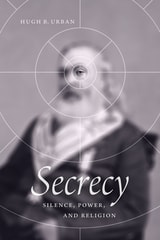
Secrecy
Silence, Power, and ReligionHugh B. Urban
University of Chicago Press, 2021
With Secrecy, Urban investigates several revealing instances of the power of secrecy in religion, including nineteenth-century Scottish Rite Freemasonry, the sexual magic of a Russian-born Parisian mystic; the white supremacist BrüderSchweigen or “Silent Brotherhood” movement of the 1980s, the Five Percenters, and the Church of Scientology. An electrifying read, Secrecy is the culmination of decades of Urban’s reflections on a vexed, ever-present subject.

Secret Life of a Black Aspie
A MemoirAnand Prahlad
University of Alaska Press, 2017
For the first four years of his life, Prahlad didn’t speak. But his silence didn’t stop him from communicating—or communing—with the strange, numinous world he found around him. Ordinary household objects came to life; the spirits of long-dead slave children were his best friends. In his magical interior world, sensory experiences blurred, time disappeared, and memory was fluid. Ever so slowly, he emerged, learning to talk and evolving into an artist and educator. His journey takes readers across the United States during one of its most turbulent moments, and Prahlad experiences it all, from the heights of the Civil Rights Movement to West Coast hippie enclaves to a college town that continues to struggle with racism and its border state legacy.
Rooted in black folklore and cultural ambience, and offering new perspectives on autism and more, The Secret Life of a Black Aspie will inspire and delight readers and deepen our understanding of the marginal spaces of human existence.
Secret Manoeuvres in the Dark
Corporate and Police Spying on ActivistsEveline Lubbers
Pluto Press, 2012
The exposure of undercover policeman Mark Kennedy in the eco-activist movement revealed how the state monitors and undermines political activism. This book shows the other grave threat to our political freedoms - undercover activities by corporations.
Secret Manoeuvres in the Dark documents how corporations are halting legitimate action and investigation by activists. Using exclusive access to previously confidential sources, Eveline Lubbers shows how companies such as Nestlé, Shell and McDonalds use covert methods to evade accountability. She argues that corporate intelligence gathering has shifted from being reactive to pro-active, with important implications for democracy itself.
Secret Manoeuvres in the Dark will be vital reading for activists, investigative and citizen journalists, and all who care about freedom and democracy in the 21st century.

Secret Maps
Maps You Were Never Meant to See, from the Middle Ages to TodayTom Harper, Nick Dykes, and Magdalena Peszko
University of Chicago Press, 2025
An illustrated story of the relationship between mapping and secrecy, charting the role maps played in concealing and revealing knowledge across centuries.
Is there anything more intriguing than a secret map? One that reveals clandestine information or meanings, or a map that is itself a secret? Secret Maps features over one hundred examples of these kinds of maps, connected by their varied relationships to secrecy, and ranging from the twelfth to the twenty-first centuries and across the globe. They include views into state secrecy and power—such as maps used for domestic and military purposes, imperial expansion, espionage, and surveillance as well as those with private or commercial uses, such as charts of private land, trade routes, or the flights of private jets. The maps span widely in their scope and cover issues of broad interest, from old-fashioned spying to contemporary concerns about technology and privacy.
As illuminating as it is thrilling, Secret Maps unearths the once-hidden routes, landscapes, and locations that have covertly shaped our world.

Secret Spaces of Childhood
Elizabeth Goodenough, Editor
University of Michigan Press, 2003

Secret Treachery Of Words
Feminism And Modernism In AmericaElizabeth Francis
University of Minnesota Press, 2002
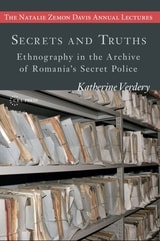
Secrets and Truths
Ethnography in the Archive of Romania's Secret PoliceKatherine Verdery
Central European University Press, 2014

Secrets of the English War Bow
Hugh D. H. Soar
Westholme Publishing, 2010
A Complete Recreation of the Deadliest Medieval Arm
Dominating medieval battlefields for more than two centuries but requiring long and arduous practice to command, the English war bow and its battle shaft are the symbols of the rise of British power in Europe. Despite being crafted for hundreds of years and wielded by generations of archers, no example of the war bow—the military version of the longbow—exists, outside of a single broken limb. Now for the first time, expert craftsmen use all available evidence including applied archaeology to unlock the secrets of the English war bow. Historian Hugh D. H. Soar is joined by Mark Stretton, master blacksmith, and Joseph Gibbs, bowyer, in order to demonstrate how a war bow and its associated arrow heads and shafts may have been constructed and used. In addition to showing the complete manufacture of a bow from tree selection to stringing and how specialized arrowheads were forged and attached to shafts, Secrets of the English War Bowprovides information on the actual performance of the war bow, including the bow's effectiveness against various materials and, for the first time, its use against moving targets, since bows were often drawn against mounted soldiers. Armed with this new information, Soar provides an analysis of both successes and failures of the war bow in several important battles. Illustrated in color and black and white, Secrets of the English War Bowprovides an invaluable service for those interested in medieval military history, archery, and technology.
Sect Ideologies and Social Status
Gary Schwartz
University of Chicago Press, 1970
The author studied and compared a Pentecostal group and a Seventh-day Adventist group in preparation for this work. The question which stimulated the investigation can be stated as a paradox. In the Adventist case, why should persons who firmly believe that God is soon to destroy the world work so diligently and against formidable odds to improve their own secular fortunes? In the Pentecostal case, why should persons who believe that God is available for direct aid in every human contingency not use this power for their own advancement?
In theorizing about the relationship between an individual's position in the socioeconomic system and his sect affiliation, Mr. Schwartz asserts that the specifically ideological component of a creed resides in the ways in which believers conceptualize the meaning of secular problems.
The study as a whole attempts to reveal what makes a special set of beliefs attractive to a person grappling with certain secular exigencies, and how these beliefs affect his view of secular matters. It develops a model of a religious ideology applicable to any study of the relationship between cultural symbols and social structure.
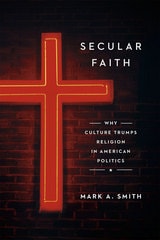
Secular Faith
How Culture Has Trumped Religion in American PoliticsMark A. Smith
University of Chicago Press, 2015
Mark A. Smith provocatively argues that religion is not nearly the unchanging conservative influence in American politics that we have come to think it is. In fact, in the long run, religion is best understood as responding to changing political and cultural values rather than shaping them. Smith makes his case by charting five contentious issues in America’s history: slavery, divorce, homosexuality, abortion, and women’s rights. For each, he shows how the political views of even the most conservative Christians evolved in the same direction as the rest of society—perhaps not as swiftly, but always on the same arc. During periods of cultural transition, Christian leaders do resist prevailing values and behaviors, but those same leaders inevitably acquiesce—often by reinterpreting the Bible—if their positions become no longer tenable. Secular ideas and influences thereby shape the ways Christians read and interpret their scriptures.
So powerful are the cultural and societal norms surrounding us that Christians in America today hold more in common morally and politically with their atheist neighbors than with the Christians of earlier centuries. In fact, the strongest predictors of people’s moral beliefs are not their religious commitments or lack thereof but rather when and where they were born. A thoroughly researched and ultimately hopeful book on the prospects for political harmony, Secular Faith demonstrates how, over the long run, boundaries of secular and religious cultures converge.
Secularism as Misdirection
Critical Thought from the Global SouthNivedita Menon
Duke University Press, 2024
Secularisms
Janet R. Jakobsen and Ann Pellegrini, eds.
Duke University Press, 2008
With essays addressing secularism in India, Iran, Turkey, Great Britain, China, and the United States, this collection crucially complicates the dominant narrative by showing that secularism is multifaceted. How secularism is lived and experienced varies with its national, regional, and religious context. The essays explore local secularisms in relation to religious traditions ranging from Islam to Judaism, Hinduism to Christianity. Several contributors explicitly take up the way feminism has been implicated in the dominant secularization story. Ultimately, by dislodging secularism’s connection to the single (and singular) progress narrative, this volume seeks to open spaces for other possible narratives about both secularism and religion—as well as for other possible ways of inhabiting the contemporary world.
Contributors: Robert J. Baird, Andrew Davison, Tracy Fessenden, Janet R. Jakobsen, Laura Levitt,
Molly McGarry, Afsaneh Najmabadi, Taha Parla, Geeta Patel, Ann Pellegrini, Tyler Roberts,
Ranu Samantrai, Banu Subramaniam, Rajeswari Sunder Rajan, Angela Zito
Securing Paradise
Tourism and Militarism in Hawai'i and the PhilippinesVernadette Vicuña Gonzalez
Duke University Press, 2013
Securing the City
Neoliberalism, Space, and Insecurity in Postwar GuatemalaKevin Lewis O Neill and Kedron Thomas, eds.
Duke University Press, 2011
Contributors. Peter Benson, Manuela Camus, Avery Dickins de Girón, Edward F. Fischer, Deborah Levenson, Thomas Offit, Kevin Lewis O’Neill, Kedron Thomas, Rodrigo José Véliz

Securing the Future
Investing in Children From Birth to CollegeSheldon Danziger
Russell Sage Foundation, 2000
Securitizing Youth
Young People’s Roles in the Global Peace and Security AgendaMarisa O. Ensor
Rutgers University Press, 2021