Results by title
8113 books match the query 'Literary Criticism' and 542 start with s
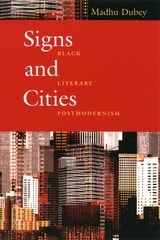
Signs and Cities
Black Literary PostmodernismMadhu Dubey
University of Chicago Press, 2003
Dubey shows how black novelists from the last three decades have reconsidered the modern urban legacy and thus articulated a distinctly African-American strain of postmodernism. She argues that novelists such as Octavia Butler, Samuel Delany, Toni Morrison, Gloria Naylor, Ishmael Reed, Sapphire, and John Edgar Wideman probe the disillusionment of urban modernity through repeated recourse to tropes of the book and scenes of reading and writing. Ultimately, she demonstrates that these writers view the book with profound ambivalence, construing it as an urban medium that cannot recapture the face-to-face communities assumed by oral and folk forms of expression.
Signs and Images
Writings on Art, Cinema and PhotographyRoland Barthes
Seagull Books, 2016
Roland Barthes was a restless, protean thinker. A constant innovator—often as a daring smuggler of ideas from one discipline to another—he first gained an audience with his pithy essays on mass culture and then went on to produce some of the most suggestive and stimulating cultural criticism of the late twentieth century, including Empire of Signs, The Pleasure of the Text, and Camera Lucida. In 1976, this one-time structuralist outsider was elected to a chair at France’s preeminent Collège de France, where he chose to style himself as a professor of literary semiology until his death in 1980.
The greater part of Barthes’s published writings has been available to a French audience since 2002, but now, translator Chris Turner presents a collection of essays, interviews, prefaces, book reviews, and other journalistic material for the first time in English and divided into five themed volumes. Volume four, Signs and Images, gathers pieces related to his central concerns—semiotics, visual culture, art, cinema, and photography—and features essays on Marthe Arnould, Lucien Clergue, Daniel Boudinet, Richard Avedon, Bernard Faucon, and many more.
Signs and Symbols in Chaucer's Poetry
John P. Hermann
University of Alabama Press, 1981
Unlocking the rich symbolic world of Chaucer through the lens of medieval culture and meaning.
Innovative and thorough, Signs and Symbols in Chaucer’s Poetry presents nine essays that reexamine the literary iconography of Middle English. Chaucer’s work is the most well-known, and possibly the most significant, remnant of the Middle Ages; investigations into his writing and meanings are fruitful even today. The essays collected by John P. Hermann and John J. Burke Jr. invite scholars to consider new interpretations of old symbols while acknowledging the intricacies of historical context.
Each highly distinguished scholar responds to D. W. Robertson’s seminal, if controversial, approach to Chaucer’s work. Robertson’s scholarship, which also provides the opening essay of the collection, uses a historicist approach to contextualize Chaucer’s imagery within the literary and cultural conventions of the Middle Ages. Sources for such contextualization include etymology, topology, the classics, pictorial art, the Bible, and the developing sciences of the time. Robertson, as well as his contemporary Bernard F. Huppé, provided a fascinating new direction for modern Chaucer studies that focused on daily life.
Each essay uses this approach to draw attention to various examples of Chaucer’s iconography. The texts span several of Chaucer’s works and a plethora of subjects, including music, disappointed expectations, repeated or conflicting signs, and more. This volume provides insight into Chaucer’s work as well as the Middle Ages as a whole, examining conventions and expectations of society at that time. Scholars, instructors, and lovers of Chaucer will all find value in this finely edited collection.
Signs of Borges
Sylvia Molloy
Duke University Press, 1994
Borges's sustained practice of the uncanny gives rise in his texts to endless tensions between illusion and meaning, and to the competing desires for fragmentation, dispersal, and stability. Molloy traces the movement of Borges's own writing by repeatedly spanning the boundaries of genre and cutting across the conventional separations of narrative, lyric and essay, fact and fiction. Rather than seeking to resolve the tensions and conflicts, she preserves and develops them, thereby maintaining the potential of these texts to disturb. At the site of these tensions, Molloy locates the play between meaning and meaninglessness that occurs in Borges's texts. From this vantage point his strategies of deception, recourse to simulacra, inquisitorial urge to unsettle binarism, and distrust of the permanent--all that makes Borges Borges--are examined with unmatched skill and acuity.
Elegantly written and translated, Signs of Borges presents a remarkable and dynamic view of one of the most international and compelling writers of this century. It will be of great interest to all students of twentieth-century literature, particularly to students of Latin American literature.
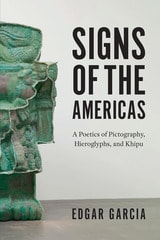
Signs of the Americas
A Poetics of Pictography, Hieroglyphs, and KhipuEdgar Garcia
University of Chicago Press, 2020
Garcia tells the story of the present life of these sign-systems, examining the contemporary impact they have had on poetry, prose, visual art, legal philosophy, political activism, and environmental thinking. In doing so, he brings together a wide range of indigenous and non-indigenous authors and artists of the Americas, from Aztec priests and Amazonian shamans to Simon Ortiz, Gerald Vizenor, Jaime de Angulo, Charles Olson, Cy Twombly, Gloria Anzaldúa, William Burroughs, Louise Erdrich, Cecilia Vicuña, and many others. From these sources, Garcia depicts the culture of a modern, interconnected hemisphere, revealing that while these “signs of the Americas” have suffered expropriation, misuse, and mistranslation, they have also created their own systems of knowing and being. These indigenous systems help us to rethink categories of race, gender, nationalism, and history. Producing a new way of thinking about our interconnected hemisphere, this ambitious, energizing book redefines what constitutes a “world” in world literature.
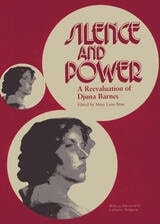
Silence and Power
A Reevaluation of Djuna BarnesEdited by Mary Lynn Broe. Afterword by Catharine Stimpson
Southern Illinois University Press, 1991
Roughly chronological, these essays explore Barnes’ early work in the New York newspaper world of the ‘teens, proceed through the 1954 publication of The Antiphon, and include several approaches to such works as Ryder, Ladies Almanack, and Nightwood. This judicious mix of essays—many of them illustrated by photographs and drawings—presents a comprehensive picture of the creative imagination of Djuna Barnes.
Essayists include Mary Lynn Broe, Nancy J. Levine, Ann Larabee, Joan Retallack, Carolyn Allen, Carolyn Burke, Sheryl Stevenson, Marie Ponsot, Frances M. Doughty, Susan Sniader Lanser, Frann Michel, Karla Jay, Jane Marcus, Judith Lee, Julie L. Abraham, Meryl Altman, Lynda Curry, Louise A. DeSalvo, and Catharine Stimpson. Individuals sharing personal recollections of Barnes are Ruth Ford, James B. Scott, Alex Gildzen, Hank O’Neal, Chester Page, Andrew Field, and Frances McCullough. Janice Thom and Kevin Engel provide an updated bibliography.
From The Book of Repulsive Women to The Antiphon, Barnes challenged old gender dichotomies as she shaped radical sociopolitical views. Her textual methods celebrated a multiplicity of voices, heterodox forms, and genres, transgressing those tenets of modernism that privilege the “high art” of a single, unified textual identity or a discrete discourse. These essays offer various critical approaches and sinuous readings of the full range of Barnes’ achievement. Interwoven through the essays and reminiscences is a lively commentary from Barnes’ friends and contemporaries as well as Barnes herself.
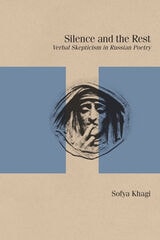
Silence and the Rest
Verbal Skepticism in Russian PoetrySofya Khagi
Northwestern University Press, 2013
Scholars have long noted the deeply rooted veneration of the power of the word—both the expressive and communicative capacities of language—in Russian literature and culture. In her ambitious book Silence and the Rest, Sofya Khagi illuminates a consistent counternarrative, showing how, throughout its entire history, Russian poetry can be read as an argument for what she calls “verbal skepticism.” Although she deals with many poets from a two-century tradition, Khagi gives special emphasis to Osip Mandelstam, Joseph Brodsky, and Timur Kibirov, offering readings that add new layers of meaning to their work. She posits a long-running dialogue between the poets and the philosophers and theorists who have also been central to the antiverbal strain of Russian culture. Unlike its Western counterpart, the Russian philosophical and theological doubt of the efficacy of the word still grants the author, and literature itself, an ethical force—the inadequacies of language notwithstanding.
Silence in Catullus
Benjamin Eldon Stevens
University of Wisconsin Press, 2014
Silenced Voices
The Poetics of Speech in OvidBartolo A. Natoli
University of Wisconsin Press, 2021
Bartolo A. Natoli provides a unique cross-reading of these works. He examines how the motifs and ideas articulated in the Metamorphoses provide the template for the poet's representation of his own exile. Ovid depicts his transformation with an eye toward memory, reformulating how his exile would be perceived by his audience. His exilic poems are an attempt to recover the voice he lost and to reconnect with the community of Rome.
Silent Medievalisms
Reimagining the Middle Ages During Film’s Foundational EraEdited by Tison Pugh and Angela Jane Weisl
The Ohio State University Press, 2026
Contributors:
Kimberly Ball, Elizabeth Coggeshall, John Haines, Kevin J. Harty, Valerie B. Johnson, Tison Pugh, Sabina Rahman, Carol L. Robinson, Robert Squillace, Alexandra Sterling-Hellenbrand, Alfred Thomas, Laura E. Wangerin, Angela Jane Weisl
Simplicity and Complexity
Pondering Literature, Science, and PaintingFloyd Merrell
University of Michigan Press, 1998
Simulacra and Simulation
Jean Baudrillard
University of Michigan Press, 1994
Simulcast
Four Experiments in CriticismBenjamin Friedlander
University of Alabama Press, 2004
A provocative overview of avant-garde American poetry of the past 25 years that raises important questions about the practice of criticism.
Simulcast offers long overdue, highly opinionated, and penetrating examinations of a flourishing movement in American letters by one of its most perceptive practitioners. The four “experiments” in literary criticism gathered in this volume vary in style and point of view. Taken together, they reassess the fundamental relationship between poetry and criticism.
“The Anti-Hegemony Project” is a satire, employing the rhetoric of journalism and the colloquial exchanges of online fan groups to analyze one of the earliest appearances of a poetry community on the World Wide Web: the “Poetics List” maintained at the State University of New York, Buffalo. “Poe’s Poetics and Selected Essays” is a collection of polemical essays on subjects ranging from modernism to language poetry. The third experiment, “The Literati of San Francisco,” is a detailed portrait of the figures and ideas at the heart of an important literary scene a decade after language poetry’s inception. The final essay, “A Short History of Language Poetry,” provides a less polemical, more sober and even-handed analysis of that movement from its origins to the present and its prospects for the future.
These critical interventions and essays are important studies of an evolving poetic field, but they also represent an evolution in criticism itself. Friedlander’s unorthodox methodology is to create a critical text by rewriting prior examples of criticism, among them Jean Wahl’s A Short History of Existentialism and Edgar Allan Poe’s "Literati of New York City." The resulting critiques are themselves a kind of poetry. They explore the issues of style versus substance, artifice versus authenticity, and plausibility versus truth, while the shifts in perspective call into question the authority of any one critical account.
Sin and Salvation in Early Modern France
Three Women’s StoriesMarguerite d'Auge, Renée Burlamacchi, and Jeanne du Laurens
Iter Press, 2017
The texts available here in English for the first time open a window into the lives of three early modern Frenchwomen as they explore the common themes of family, memory, sin, and salvation. The Regrets of Marguerite d’Auge (1600), the Memoirs of Renée Burlamacchi (1623), and the Genealogy of Jeanne du Laurens (1631), taken from different genres of historical writings, raise important questions: Why and how did female authorship find its way into the historical record? How did these voices escape the censorship and prejudice against female publication? In a time of extreme religious conflict, how did these women convey their views on controversial issues such as primacy of grace, indulgences, and salvation without disrupting the gender expectations of the era?
Sing by the Burying Ground
EssaysMarianne Boruch
Northwestern University Press, 2024
In her fourth essay collection, award-winning author Marianne Boruch explores the possibilities of hope even in darkness. Through poetry, the silence of Trappist monks, the pandemic moment, the Wright brothers’ quirky stab at flight, treasured knickknacks, and more, this book celebrates the weird, the mundane, the overlooked, and the promise of a future. Though each essay is distinct, foraging fresh ways into Louise Glück, W. H. Auden, Elizabeth Bishop, Robert Frost, Marianne Moore, Sylvia Plath, John Berryman, Langston Hughes, and more, they are all connected through the thread of Emily Dickinson’s comment that her fate was to “sing, as a Boy does by the Burying Ground . . .” Even in times filled with horror, we find beauty. Maybe we can sing in the blackest of nights.
Thoughtful and expressive, this collection provides solace and humor for readers in a world where both are often in short supply.
Singing the Chaos
Madness and Wisdom in Modern PoetryWilliam Pratt
University of Missouri Press, 1996
Singing the Chaos: Madness and Wisdom in Modern Poetry combines both a historical and a critical approach toward the works of major British, American, French, German, and Russian poets. Comprehensive in scope and arranged chronologically to survey a century of high poetic achievement, the study is unified by Pratt's overriding argument that "modern poets have endowed a disintegrating civilization with humane wisdom by 'singing the chaos' that surrounds them, making ours a great age in spite of itself."
In developing this central theme, Pratt brings alive the energy, the freshness, and the originality of technique that made Baudelaire, Pound, Yeats, Rilke, Eliot, and others the initiators of the revolution in poetry. He brings a more complete, clearer perspective to other major themes: modernism as an age of irony; poets as both madmen and geniuses; the modern poet as tragic hero; the dominance of religious or visionary truths over social or political issues; and the combination of radical experiments in poetic form with an apocalyptic view of Western civilization. His detailed treatment of the Fugitive poets and his recognition of their prominent role in twentieth-century literature constitute an important historical revision.
Brilliantly informed, insightful, and, above all, accurately sympathetic to the points of view of the poets Pratt presents, Singing the Chaos is that rare book that belongs on all shelves devoted to modernist poetry.
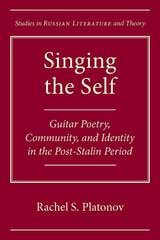
Singing the Self
Guitar Poetry, Community, and Identity in the Post-Stalin PeriodRachel S. Platonov
Northwestern University Press, 2012
This book is a study of a Soviet cultural phenomenon of the 1950s through the 1980s known as guitar poetry—songs accompanied by guitar and considered poetry in much the same way as those of, for example, Bob Dylan. Platonov’s is the most comprehensive book in English to date to analyze guitar poetry, which has rarely received scholarly attention outside of Russia. Going well beyond the conventional, text-centered view of guitar poetry as a form of political or artistic dissent, largely a function of the Cold War climate in which it began, Platonov argues for a more complex understanding of guitar poetry as a means of self-invention and community formation. Although grounded in literary studies, the book effectively brings historical, anthropological, and musicological perspectives to bear on an understudied phenomenon of the post-Stalin period.
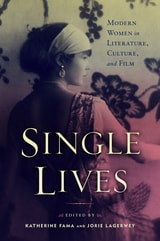
Single Lives
Modern Women in Literature, Culture, and FilmKatherine Fama
Rutgers University Press, 2022

Singular Examples
Artistic Politics and the Neo-Avant-GardeTyrus Miller
Northwestern University Press, 2008
This book focuses on the integral, interdisciplinary, and intermedial "compositions"—verbal, visual, musical, theatrical, and cinematic—of the avant-gardes in the period following World War II. It also considers the artistic politics of these postwar avant-gardes and their works. The book’s geographical span is primarily the United States, although in its more extended reach, it comprehends an international context of American postwar cultural hegemony throughout what was once referred to as "the free world."
The works and the artists Miller takes up are those of the so-called "neo–avant-garde" with its inherent contradiction: an avant-garde whose newness is defined by its seeming reiteration of an earlier historical formation. Concentrating on the rhetorical, contextual, and performative characteristic of neo–avant-garde practice, including its relation to politics, Miller emphasizes the centrality of the example in this practice. John Cage, Jackson Mac Low, Gilbert Sorrentino, David Tudor, Stan Brakhage, and Samuel Beckett are among the artists whose exemplary works feature in Singular Examples. Miller’s key readings of these major artists of the period open up some of the most difficult texts of the neo–avant-garde even as they contribute to an eloquent argument for "artistic politics." Underlining the relation between material particulars and their thematic implications, between particular works and larger theoretical claims, between avant-garde aesthetics and formalist analysis, Singular Examples is exemplary in its own right, revealing the ultimate shape and direction of a postwar avant-garde contending with the historical predicaments of radical modernism.
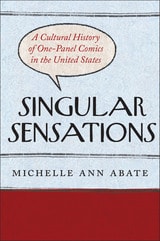
Singular Sensations
A Cultural History of One-Panel Comics in the United StatesMichelle Ann Abate
Rutgers University Press, 2024
Shortlisted for the 2024 Eisner Award for Best Academic/Scholarly Book
What do The Family Circus, Ziggy, and The Far Side have in common? They are all single-panel comics, a seemingly simple form that cartoonists have used in vastly different ways.
Singular Sensations is the first book-length critical study to examine this important but long-neglected mode of cartoon art. Michelle Ann Abate provides an overview of how the American single-panel comic evolved, starting with Thomas Nast’s political cartoons and R.F. Outcault’s groundbreaking Yellow Kid series in the nineteenth century. In subsequent chapters, she explores everything from wry New Yorker cartoons to zany twenty-first-century comics like Bizarro. Offering an important corrective to the canonical definition of comics as “sequential art,” Abate reveals the complexity, artistry, and influence of the single-panel art form.
Engaging with a wide range of historical time periods, sociopolitical subjects, and aesthetic styles, Singular Sensations demonstrates how comics as we know and love them would not be the same without single-panel titles. Abate’s book brings the single-panel comic out of the margins and into the foreground.
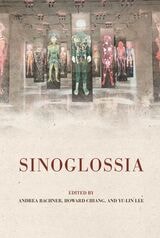
Sinoglossia
Edited by Andrea Bachner, Howard Chiang, and Yu-Lin Lee
Hong Kong University Press, 2023
Sinoglossia places embodiment, mediality, and translation at the center of this analytical inquiry into Chinese and Sinophone cultures. This book introduces a theory defined by cultural formations not overdetermined by Sinitic linguistic ties. The concept of sinoglossia combines a heteroglossic and heterotopian approach to the critical study of mediated discourses of China and “Chineseness.” From the history of physical examinations and queer subalternity to the cinematic inscription of “Chineseness-as-landscape,” and from Sinopop to the translational writings of Eileen Chang and Syaman Rapongan, this book argues for a flexible conceptualization of cultural objects, conditions, and contexts that draws attention to an array of polyphonic, multi-discursive, and multilingual articulations. In this new horizon of understanding, place or theme create a source of friction and innovation.

Sir Gawain and the Green Knight
R. A. Waldron
Northwestern University Press, 1972

Sir Philip Sidney and the Poetics of Protestantism
A Study of ContextsAndrew Weiner
University of Minnesota Press, 1978
Sir Philip Sidney
Selected Prose and PoetryEdited by Robert Kimbrough
University of Wisconsin Press, 1983
Siren Songs
Gender, Audiences, and Narrators in the OdysseyLillian Eileen Doherty
University of Michigan Press, 1995
Siren Songs synthesizes audience-oriented and narratological approaches, and examines the relationships among three kinds of audiences: internal, implied, and actual. The author prefaces her own reading of the Odyssey with an analysis of the issues posed by the earlier feminist readings on which she builds. Should the Odyssey be read as a "closed" text, that is, as one whose meaning is highly determined, or as an "open" text whose contradictions and ambiguities undercut its overt meanings?
Siren Songs presents a feminist critique of the Odyssey in an accessible manner aimed at a more general audience. All Greek is translated, and critical terminology is clearly defined.
Lillian Eileen Doherty is Associate Professor of Classics, University of Maryland, College Park.
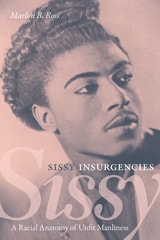
Sissy Insurgencies
A Racial Anatomy of Unfit ManlinessMarlon B. Ross
Duke University Press, 2022
Sissy!
The Effeminate Paradox in Postwar US Literature and CultureHarry Thomas Jr.
University of Alabama Press, 2017
Sissy!: The Effeminate Paradox in Postwar US Literature and Culture is a fascinating work of cultural criticism that focuses on the ways men and boys deemed to be feminine have been—and continue to be—condemned for their personalities and behavior. Critic Harry Thomas Jr. does not dismiss this approach, but rather identifies it as merely one side of a coin. On the other side, he asserts, the opposite exists: an American artistic tradition that celebrates and affirms effeminate masculinity.
The author argues that effeminate men and boys are generally portrayed using the grotesque, an artistic mode concerned with the depictions of hybrid bodies. Thomas argues that the often grotesque imagery used to depict effeminate men evokes a complicated array of emotions, a mix of revulsion and fascination that cannot be completely separated from one another.
Thomas looks to the sissies in the 1940s novels of Truman Capote and Carson McCullers; the truth-telling flaming princesses of James Baldwin’s Giovanni’s Room; the superstardom of pop culture icon Liberace; the prophetic queens of Tony Kushner’s Angels in America; and many others to demonstrate how effeminate men have often been adored because they are seen as the promise of a different world, one free from the bounds of heteronormativity.
Sissy! offers an unprecedented and counterintuitive overview of cultural and artistic attitudes toward male effeminacy in post–World War II America and provides a unique and contemporary reinterpretation of the “sissy” figure in modern art and literature.
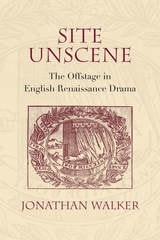
Site Unscene
The Offstage in English Renaissance DramaJonathan Walker
Northwestern University Press, 2017
Jonathan Walker demonstrates that by removing scenes from visible performance, playwrights take up the nondramatic mode of storytelling in order to transcend the limits of the stage. Through this technique, they present dramatic action from the subjective, self-interested, and idiosyncratic perspectives of individual characters. By recovering these offstage elements, Walker reveals the pervasive and formative dynamic between the onstage and offstage and between the seen and unseen in Renaissance drama.
Examining premodern dramatic theory, Renaissance plays, period amphitheaters, and material texts, this interdisciplinary work considers woodcuts, engravings, archaeology, architecture, rhetoric, the history of the book, as well as plays by Shakespeare, Marlowe, Kyd, Ford, Middleton, and Webster, among others. It addresses readers engaged in literary criticism, dramatic theory, theater history, and textual studies.
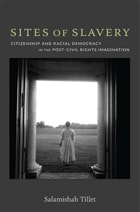
Sites of Slavery
Citizenship and Racial Democracy in the Post–Civil Rights ImaginationSalamishah Tillet
Duke University Press, 2012
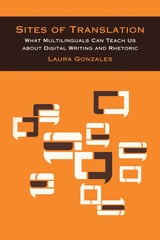
Sites of Translation
What Multilinguals Can Teach Us about Digital Writing and RhetoricLaura Gonzales
University of Michigan Press, 2018
Winner of the 2016 Sweetland Digital Rhetoric Collaborative Book Prize
Sites of Translation illustrates the intricate rhetorical work that multilingual communicators engage in as they translate information for their communities. Blending ethnographic and empirical methods from multiple disciplines, Laura Gonzales provides methodological examples of how linguistic diversity can be studied in practice, both in and outside the classroom, and provides insights into the rhetorical labor that is often unacknowledged and made invisible in multilingual communication. Sites of Translation is relevant to researchers and teachers of writing as well as technology designers interested in creating systems, pedagogies, and platforms that will be more accessible and useful to multilingual audiences. Gonzales presents multilingual communication as intellectual labor that should be further valued in both academic and professional spaces, and supported by multilingual technologies and pedagogies that center the expertise of linguistically diverse communicators.
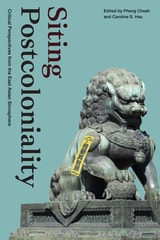
Siting Postcoloniality
Critical Perspectives from the East Asian SinospherePheng Cheah and Caroline Hau, editors
Duke University Press, 2023
Contributors. Pheng Cheah, Dai Jinhua, Caroline S. Hau, Elaine Yee Lin Ho, Wendy Larson, Liao Ping-hui, Lin Pei-yin, Lo Kwai-Cheung, Lui Tai-lok, Pang Laikwan, Lisa Rofel, David Der-wei Wang, Erebus Wong, Robert J. C. Young
Situation Critical
Critique, Theory, and Early American StudiesMax Cavitch and Brian Connolly, editors
Duke University Press, 2024
Contributors. Max Cavitch, Brian Connolly, Matthew Crow, John J. Garcia, Christopher Looby, Michael Meranze, Mark J. Miller, Justine S. Murison, Britt Rusert, Ana Schwartz, Joan W. Scott, Jordan Alexander Stein
Six American Poets from Emily Dickinson to the Present
An IntroductionAllen Tate
University of Minnesota Press, 1969
Six Masters of the Spanish Sonnet
Francisco de Quevedo, Sor Juana Ines de la Cruz, Antonio Machado, Federico Garcia Lorca, Jorge Luis Borges, Miguel HernandezEssays and Translations by Willis Barnstone
Southern Illinois University Press, 1997
With poems selected and translated by one of the preeminent translators of our day, this bilingual collection of 112 sonnets by six Spanish-language masters of the form ranges in time from the seventeenth to the twentieth centuries and includes the works of poets from Spanish America as well as poets native to Spain. Willis Barnstone’s selection of sonnets and the extensive historical and biographical background he supplies serve as a compelling survey of Spanish-language poetry that should be of interest both to lovers of poetry in general and to scholars of Spanish-language literature in particular.
Following an introductory examination of the arrival of the sonnet in Spain and of that nation’s poetry up to Francisco de Quevedo, Barnstone takes up his six masters in chronological turn, preceding each with an essay that not only presents the sonneteer under discussion but also continues the carefully delineated history of Spanish-language poetry. Consistently engaging and informative and never dull or pedantic, these essays stand alone as appreciations—in the finest sense of that word—of some of the greatest poets ever to write. It is, however, Barnstone’s subtle, musical, clear, and concise translations that form the heart of this collection. As Barnstone himself says, "In many ways all my life has been some kind of preparation for this volume."

Six Modernist Moments in Poetry
David Young
University of Iowa Press, 2006

Sixteen Modern American Authors
A Survey of Research and CriticismJackson R. Bryer, ed.
Duke University Press, 1973
Sixteen Modern American Authors
A Survey of Research and Criticism since 1972Jackson R. Bryer, ed.
Duke University Press, 1989
“Students of modern American literature have for some years turned to Fifteen Modern American Authors (1969) as an indispensable guide to significant scholarship and criticism about twentieth-century American writers. In its new form—Sixteenth Modern American Authors—it will continue to be indispensable. If it is not a desk-book for all Americanists, it is a book to be kept in the forefront of the bibliographical compartment of their brains.”—American Studies
Skeptical Music
Essays on Modern PoetryDavid Bromwich
University of Chicago Press, 2001
The two general essays that frame Skeptical Music make Bromwich's aesthetic commitments clear. In "An Art without Importance," published here for the first time, Bromwich underscores the trust between author and reader that gives language its subtlety and depth, and makes the written word adequate to the reality that poetry captures. For Bromwich, understanding the work of a poet is like getting to know a person; it is a kind of reading that involves a mutual attraction of temperaments. The controversial final essay, "How Moral Is Taste?," explores the points at which aesthetic and moral considerations uneasily converge. In this timely essay, Bromwich argues that the wish for excitement that poetry draws upon is at once primitive and irreducible.
Skeptical Music most notably offers incomparable readings of individual poets. An essay on the complex relationship between Hart Crane and T. S. Eliot shows how the delicate shifts of tone and shading in their work register both affinity and resistance. A revealing look at W. H. Auden traces the process by which the voice of a generation changed from prophet to domestic ironist. Whether discussing heroism in the poetry of Wallace Stevens, considering self-reflection in the poems of Elizabeth Bishop, or exploring the battle between the self and its images in the work of John Ashbery, Skeptical Music will make readers think again about what poetry is, and even more important, why it still matters.
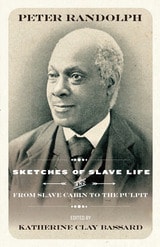
Sketches of Slave Life and From and From Slave Cabin to the Pulpit
Peter Randolph
West Virginia University Press, 2016
This book is the first anthology of the autobiographical writings of Peter Randolph, a prominent nineteenth-century former slave who became a black abolitionist, pastor, and community leader.
Randolph’s story is unique because he was freed and relocated from Virginia to Boston, along with his entire plantation cohort. A lawsuit launched by Randolph against his former master’s estate left legal documents that corroborate his autobiographies.
Randolph's writings give us a window into a different experience of slavery and freedom than other narratives currently available and will be of interest to students and scholars of African American literature, history, and religious studies, as well as those with an interest in Virginia history and mid-Atlantic slavery.
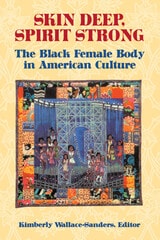
Skin Deep, Spirit Strong
The Black Female Body in American CultureKimberly Wallace-Sanders, Editor
University of Michigan Press, 2002
The collection blends original and classic essays to reveal the interconnections among art, literature, public policy, the history of medicine, and theories about sexuality with regard to bodies that are both black and female. Contributors include Rachel Adams, Elizabeth Alexander, Lisa Collins, Bridgette Davis, Lisa E.Farrington, Anne Fausto-Sterling, Beverly Guy-Sheftall, Evelynn Hammonds, Terri Kapsalis, Jennifer L. Morgan, Siobhan B. Somerville, Kimberly Wallace-Sanders, Carla Williams, and Doris Witt.
Skin Deep, Spirit Strong: The Black Female Body in American Culture will appeal to both the academic reader attempting to integrate race into discussion about the female body and to the general reader curious about the history of black female representation.
Kimberly Wallace-Sanders is Assistant Professor, Graduate Institute of Liberal Arts and Institute of Women's Studies, Emory University.
Slapstick Modernism
Chaplin to Kerouac to Iggy PopWilliam Solomon
University of Illinois Press, 2018
William Solomon charts the origins and evolution of what he calls slapstick modernism--a merging of artistic experimentation with the socially disruptive lunacy made by the likes of Charlie Chaplin. Romping through texts, films, and theory, Solomon embarks on an intellectual odyssey from the high modernism of Dos Passos and Williams to the late modernism of the Beats and Burroughs before a head-on crash into the raw power of punk rock. Throughout, he shows the links between the experimental writers and silent screen performers of the early century, and explores the potent cultural undertaking that drew inspiration from anarchical comedy after World War II.
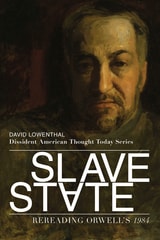
Slave State
Rereading Orwell's 1984David Lowenthal
St. Augustine's Press, 2021
There is no positive political message in 1984, argues Lowenthal, but there is positive moral message that is nearly always overlooked by commentators. “Through the movement of the novel, Orwell tries to impress on the passions, hearts and minds of his readers the most valuable lessons concerning the right and wrong way to live. With the decline of Christianity’s influence in forming the moral sense of the West and the concomitant increase in power hunger, wielding instruments born of modern enlightenment, what mankind most needed was moral guidance, conveyed not abstractly, through philosophy, but in such a way as to grip the whole soul.”
But can Orwell be trusted as a guide to the goodness in human nature? Lowenthal says he can be, and more. He gives us a sketch of the intellectual process that compels Orwell to ultimately outgrow Marxism, his detection and rejection of totalitarian regimes (above all in Communism), and in what way the principles of liberalism of his day were given warning labels by a writer who was not a formally educated political philosopher. Laced with relativism, any current of thought that does not acknowledge the proper ends of man will be effaced by the next master of the masses. Lowenthal echoes Orwell when he says, “we have abandoned inculcating good citizenship, higher ideals and a sense of personal worth in the schools, encouraging instead an aimless low-level conformist ‘individuality’ just waiting to be harnessed together and directed. Given these conditions, can we be sure we have left the conditions to the horrors of 1984 far behind as mere fiction?”
Orwell and Lowenthal are unlikely co-collaborators, unless one perceives how much alike in their exhortations to fellow man they are. The steady tenor of their hard warning is made possible by a hope-soaked confidence that, in utter sobriety, is repulsed by anything that threatens human freedom and dignity. This book is required reading for anyone who believes in the return of socialism. Indeed, any recent university graduate should be debriefed by Lowenthal before entering the real world.
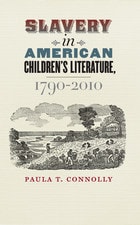
Slavery in American Children's Literature, 1790-2010
Paula T. Connolly
University of Iowa Press, 2013

Slavic Excursions
Essays on Russian and Polish LiteratureDonald Davie
University of Chicago Press, 1991
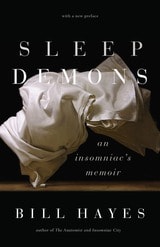
Sleep Demons
An Insomniac’s MemoirBill Hayes
University of Chicago Press, 2018
An acclaimed journalist and memoirist—and partner of the late neurologist Oliver Sacks—Hayes has been plagued by insomnia his entire life. The science and mythology of sleep and sleeplessness form the backbone to Hayes’s narrative of his personal battles with sleep and how they colored his waking life, as he threads stories of fugitive sleep through memories of growing up in the closet, coming out to his Irish Catholic family, watching his friends fall ill during the early years of the AIDS crisis in San Francisco, and finding a lover. An erudite blend of science and personal narrative, Sleep Demons offers a poignant introduction to the topics for which Hayes has since become famous, including art, eros, city life, the history of medical science, and queer identity.
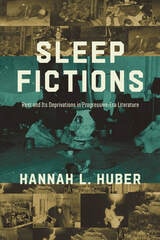
Sleep Fictions
Rest and Its Deprivations in Progressive-Era LiteratureHannah L. Huber
University of Illinois Press, 2023
A turn-of-the-century influx of new technologies and the enormous impact of the electric light transformed not only individual sleeping habits but the ways American culture conceived and valued sleep. Hannah L. Huber analyzes the works of Henry James, Edith Wharton, Charles Chesnutt, and Charlotte Perkins Gilman to examine the literary response to the period’s obsession with wakefulness. As these writers blurred the separation of public and private space, their characters faced exhaustion in a modern world that permeated every moment of their lives with artificial light, traffic noise, and the social pressure to remain active at all hours. The implacable cultural clock and constant stress over physical limitations had an even greater impact on marginalized figures. Huber pays particular attention to how these writers rebutted Americans’ confidence in the body’s ability to conquer sleep with vivid portraits of the devastating consequences of sleep disruption and deprivation.
The author also provides a website and text visualization tool that offers readers an interdisciplinary, deconstructed analysis of the book’s primary texts. The website can be found at: https://sleepfictions.org/sleep/scalar/index
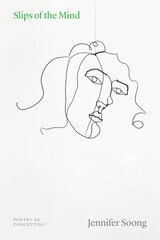
Slips of the Mind
Poetry as ForgettingJennifer Soong
University of Chicago Press, 2025
In Slips of the Mind, poet and critic Jennifer Soong turns away from forgetting’s long-standing associations with suppression, privation, and error to argue that the absence or failure of memory has often functioned as a generative creative principle. Exploring forgetting not as the mere rejection of a literary past or a form of negative poetics, Soong puts to the test its very aesthetic meaning. What new structures, forms of desires, styles, and long and short feelings do lapses in time allow? What is oblivion’s relationship to composition? And how does the twentieth-century poet come to figure as the quintessential embodiment of such questions?
Soong uncovers forgetting’s influence on Gertrude Stein, Lyn Hejinian, Tan Lin, Harryette Mullen, Lissa Wolsak, and New York School poets John Ashbery, James Schuyler, Bernadette Mayer, and Ted Berrigan, among others. She reveals that forgetting’s shapeshifting produces differences in poetic genre, interest, and degrees of intentionality—and that such malleability is part of forgetting’s nature. Most provocatively, Soong shows how losing track of things, leaving them behind, or finding them already gone resists overdetermination and causality in the name of surprise, as poets leverage forgetting in order to replace identity with style. Slips of the Mind is the kind of literary criticism that will reward all readers of modern and contemporary poetry.
Slow Narrative across Media
Edited by Marco Caracciolo and Ella Mingazova
The Ohio State University Press, 2024
Slowness is frequently seen as a response to modernity’s cult of speed and efficiency, and its influence in contemporary culture can be felt in artistic trends such as “slow cinema” or “slow TV.” Despite the popularity of these labels, however, slowness remains undertheorized in contemporary narrative scholarship. What makes a narrative slow, and what conceptual and analytical tools are best suited to account for this slowness? Is slowness a feature of certain narratives, an experiential response to these narratives, or both? How is narrative slowness related to the pace and rhythm of plot, and how does it carry cultural significance?
Slow Narrative across Media illuminates the concept of slow narrative and demonstrates how it manifests across media forms: from short stories to novel cycles, to comics, to music, to experimental film. Led by editors Marco Caracciolo and Ella Mingazova, contributors draw on cognitive and rhetorical approaches to narrative as well as on econarratology to bring into focus both the media-specific ways in which narrative evokes slowness and the usefulness of a transmedial approach to this phenomenon.
Contributors:
Jan Baetens, Raphaël Baroni, Lars Bernaerts, Marco Caracciolo, Karin Kukkonen, Ella Mingazova, Peggy Phelan, Greice Schneider, Roy Sommer, Carolien Van Nerom, Gary Weissman
Slumming in New York
From the Waterfront to Mythic HarlemRobert M. Dowling
University of Illinois Press, 2006
Using the methods of ethnicity theory, black studies, regional studies, literary studies, and popular culture, Robert M. Dowling reveals the way in which "outsider" authors helped alleviate New York's mounting social anxieties by popularizing "insider" voices from neighborhoods as distinctive as the East Side waterfront, the Bowery, the Tenderloin's "black Bohemia," the Jewish Lower East Side, and mythic Harlem.
Small Aesthetics
Experience, Embodiment, and Critical CareNate Mickelson
Northwestern University Press, 2027
Synthesizing emerging theories of aesthetic action in relation to literary and art criticism
Drawing attention to what critical theorist Heather Love identifies as “the micro,” contemporary artists use small materials and cross‑media methods to elicit interpretation and foster critical engagement, immersing audiences in the entangled relations engendered with near and distant others through artistic experience. Small Aesthetics analyzes this insurgent tradition in twentieth- and twenty‑first-century poetry and art to show how it confronts the challenges of creating mutually sustaining lives. Feminist and feminist‑of‑color theorists have long argued that acts of care take on critical force when they foreground collective well-being and solidarity across power, class, and cultural differences. Guided by their insights, Nate Mickelson proposes that literary and visual artworks elicit acts of caring attention that engage audiences in their responsibilities to tend to the collective structures through which their lives unfold. Through his close readings, he extends the “post‑critical turn” in literary and art criticism and demonstrates the urgent vitality of feminist, Black, Latine, queer, and trans lives in increasingly hostile social contexts.