Results by title
18284 books match the query 'United States' and 1181 start with s

She Devils at the Door
Eliza Smith Brown
Carnegie Mellon University Press, 2023
Sometimes troublemakers emerge from the most unlikely of places. This true story follows the lives of two daughters of the Gilded Age—Lucy and Eliza Kennedy—who were educated at Vassar College and became leaders of the suffrage movement. Then, after the Nineteenth Amendment was passed in 1920, they spent the next forty years fighting corruption in politics and government.
Tenacious, smart, and witty, they captivated crowds, disarmed their opponents, and instilled particular dread among the corrupt politicians who were the unfortunate targets of their nonpartisan crusade. Their entry across the threshold of Pittsburgh’s City-County Building would reportedly invoke a flurry of hushed warnings through the halls: “The She Devils are at the door!” Together, Lucy and Eliza fought for the vote, empowered women to use it wisely, forced a mayor out of office in disgrace, took control of the city budget, exposed a series of scandals, spearheaded police reform, and launched a campaign that would eventually clear Pittsburgh of its smoky veil.
Featuring the true story of two powerful women, this book comes at a propitious time, reminding us how far women have come and how vigilant we must remain.

She's Got a Gun
Nancy Floyd
Temple University Press, 2008
Sympathetic but unsentimental, Floyd presents gun-toting women young and old, including an eleven-year-old girl competing in her first gun competition, a woman whose grandmother was killed by an intruder, and a war veteran who experienced firefights while stationed in Iraq. Whatever you might think about gun-toting women before you open this book, your preconceptions are sure to be shattered by the end.
She's the Boss
The Rise of Women’s Entrepreneurship since World War IIDebra Michals
Rutgers University Press, 2025
She’s the Boss chronicles the forces that made entrepreneurship attractive to women. In rich detail, Debra Michals shares the stories of the countless women of all races, ethnicities, genders, and abilities who contributed to this important history. The book also explores the intersection of women’s personal choices within changing social, political, and economic factors, such as the rising divorce rates of the 1960s and 1970s, ongoing workplace and credit discrimination, civil and women’s rights activism and activist entrepreneurs, the 1970s recession and 1980s “Reagan Revolution,” and more recently, the internet, crowd-funding, and social entrepreneurship.

Sheep Industry of Territorial New Mexico
Livestock, Land, and DollarsJon M. Wallace
University Press of Colorado, 2023
Author Jon Wallace tells the story of evolving living conditions as the sheep industry came to encompass innumerable families of modest means. The transformation improved many New Mexicans’ lives and helped establish the territory as a productive part of the United States. There was a cost, however, with widespread ecological changes to the lands—brought about in large part by heavy grazing. Following the US annexation of New Mexico, new markets for mutton and wool opened. Well-connected, well-financed Anglo merchants and growers who had recently arrived in the territory took advantage of the new opportunity and joined their Hispanic counterparts in entering the sheep industry.
The Sheep Industry of Territorial New Mexico situates this socially imbued economic story within the larger context of the environmental consequences of open-range grazing while examining the relationships among Hispanic, Anglo, and Indigenous people in the region. Historians, students, general readers, and specialists interested in the history of agriculture, labor, capitalism, and the US Southwest will find Wallace’s analysis useful and engaging.

Sheer Misery
Soldiers in Battle in WWIIMary Louise Roberts
University of Chicago Press, 2021
Sheer Misery trains a humane and unsparing eye on the corporeal experiences of the soldiers who fought in Belgium, France, and Italy during the last two years of the war. In the horrendously unhygienic and often lethal conditions of the front line, their bodies broke down, stubbornly declaring their needs for warmth, rest, and good nutrition. Feet became too swollen to march, fingers too frozen to pull triggers; stomachs cramped, and diarrhea stained underwear and pants. Turning away from the accounts of high-level military strategy that dominate many WWII chronicles, acclaimed historian Mary Louise Roberts instead relies on diaries and letters to bring to life visceral sense memories like the moans of the “screaming meemies,” the acrid smell of cordite, and the shockingly mundane sight of rotting corpses. As Roberts writes, “For soldiers who fought, the war was above all about their bodies.”

Shelby’s Expedition to Mexico
An Unwritten Leaf of the WarJohn R. Edwards
University of Arkansas Press, 2007
Confederate general Joseph O. Shelby and his legendary Iron Brigade refused to acknowledge the end of the Civil War. Instead, they fought their way to Mexico in search of a place where they could continue to defy the U.S. government. These veteran Missouri cavalrymen clawed their way for fifteen hundred miles, fighting Juaristas, Indians, desperados, and disgruntled gringos. They disbanded only after they had offered their services to Emperor Maximilian and were turned down.
Shelby’s adjutant, journalist John N. Edwards, first published his story of the exploits of this superb mounted brigade and its quixotic final march in 1872. Conger Beasley provides a lively introduction that includes the first biographical sketch of the author. The 1969 movie The Undefeated starring John Wayne and Rock Hudson was based upon Shelby’s expedition.
Shelter Poverty
New Ideas on Housing AffordabilityMichael E. Stone
Temple University Press, 1993
Shelter from the Machine
Homesteaders in the Age of CapitalismJason G. Strange
University of Illinois Press, 2020
Jason Strange shows where homesteaders fit, and don't fit, within contemporary America. Blending history with personal stories, Strange visits pig roasts and bohemian work parties to find people engaged in a lifestyle that offers challenge and fulfillment for those in search of virtues like self-employment, frugality, contact with nature, and escape from the mainstream. He also lays bare the vast differences in education and opportunity that leave some homesteaders dispossessed while charting the tensions that arise when people seek refuge from the ills of modern society—only to find themselves indelibly marked by the system they dreamed of escaping.
Shelter on the Journey
Humanitarianism, Human Rights, and MigrationPriscilla Solano
Temple University Press, 2024
Solano, who volunteered at shelters in Mexico, chronicles the activity in three of the nearly 100 shelters along a unique humanitarian trail that many Central Americans take to reach the United States. She outlines the constraints faced by these sites and their potential to create social transformation and considers how and why migration security is currently framed and managed as both a criminal and humanitarian issue.
Shelter on the Journey explores the politics of the shelters, their social world, and the dynamics of charity and solidarity, as well as the need for humanitarian assistance and advocacy for dignified and free transit migration.
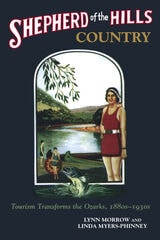
Shepherd of the Hills Country
Tourism Transforms the Ozarks, 1880s-1930sLynn Morrow
University of Arkansas Press, 1999
Modern tourism in the Ozark Mountains of Missouri and Arkansas is concentrated around the area’s glistening man-made lakes, its fish-filled streams and rivers, and the entertainment mecca of Branson. But recreational excursions into this part of the country began over one hundred years ago as urban Midwesterners, many of them captivated by Harold Bell Wright’s novel The Shepherd of the Hills, sought the outdoors for spiritual and physical regeneration.
Morrow and Myers-Phinney excavate the beginnings of commercial tourism in the region and follow it through six decades as the influx of visitors who became familiar with the Ozarks and its investment opportunities brought capital, new commerce, and additional residents to the hills. Chapters focus on float fishing, game parks, cave exploration, the influence of the railroad, and the men who were instrumental in the region’s transformation. The authors discuss traditional lifestyles rooted in “living off the land,” with stock raising and lumbering providing basic subsistence, and changes wrought by tourism, which affected all classes of people across the White River landscape. They describe the flowering of “Ozarks folklore”—how stories told around gravel-bar fishing camps and retold by newspaper journalists translated the hills’ oral tradition for mass audiences.
While the main theme of this study is the development of tourism, it is also a social history of the interior highlands of the Ozarks. We see how the residents and their way of life were discovered, exploited, and changed by new opportunities and the demands of tourism and increasing trade. As such, this book is a valuable new addition to the University of Arkansas Press’s Ozarks Collection.
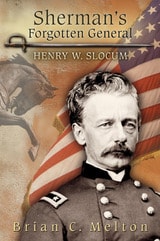
Sherman's Forgotten General
Henry W. SlocumBrian C. Melton
University of Missouri Press, 2007
Henry Warner Slocum, a Union major general who was a corps and army commander in the Civil War, served from the first call for troops until he stood with William Tecumseh Sherman to receive Joseph E. Johnston’s surrender after Appomattox. He saw action at Bull Run, Chancellorsville, and Gettysburg, and by the end of the war he had taken command of the Army of Georgia, yet historians have largely overlooked this key commander.
Brian Melton has written the first scholarly account of this important general—the first full-length biography in nearly a century—who as one of Sherman’s most trusted commanders exercised significant influence during the Civil War. Although Slocum is remembered primarily for his lackluster performance at Gettysburg, Melton discloses that there is more to him than current history credits, offering a holistic account of his life to show that his career was much more significant than has been supposed.
Slocum took on the characteristics of the leaders he served, and Melton reveals how Slocum’s attitudes and tactics changed dramatically between commanders to explain why he proved to be of little help to George McClellan and almost a liability while serving under “Fighting Joe” Hooker and yet was an effective commander under Sherman. Slocum became Sherman’s “left arm” and adapted so thoroughly to his style of generalship that he anticipated the general’s intentions on two important occasions, and Melton contends that Slocum was a much more important contributor to the success of Sherman’s later campaigns than has been acknowledged, becoming at times more aggressive and driving than Sherman himself.
Melton ultimately considers Slocum’s fate as one of the forgotten generals of the Civil War—brought on largely by his joining the Democratic Party in 1865—and demonstrates why previous simplistic depictions of Slocum miss the mark. By providing the first detailed look at this important second-tier commander, Sherman’s Forgotten General illuminates the influences, events, and individuals of Slocum’s career to show that, while he may not have changed the course of the war, he played a conspicuous and important role in its successful execution that has long deserved to be recognized.
Sherman's Mississippi Campaign
Buck T. Foster
University of Alabama Press, 2006
The campaign that shaped Sherman's path to victory and changed the future of Civil War warfare.
With the fall of Vicksburg to Union forces in mid-1863, the Federals began work to extend and consolidate their hold on the lower Mississippi Valley. As a part of this plan, Major General William Tecumseh Sherman set out from Vicksburg on February 3, 1864, with an army of some 25,000 infantry and a battalion of cavalry. They expected to be joined by another Union force moving south from Memphis and supported themselves off the land as they traveled due east across Mississippi.
Sherman entered Meridian on February 14 and thoroughly destroyed its railroad facilities, munitions plants, and cotton stores, before returning to Vicksburg. Though not a particularly effective campaign in terms of enemy soldiers captured or killed, it offers a rich opportunity to observe how this large-scale raid presaged Sherman’s Atlanta and Carolina campaigns, revealing the transformation of Sherman’s strategic thinking.
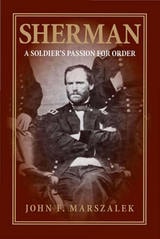
Sherman
A Soldier's Passion for OrderJohn F. Marszalek
Southern Illinois University Press, 1993
Sherman: A Soldier’s Passion for Order is the premier biography of William Tecumseh Sherman, the Civil War commander known for his “destructive war” policy against Confederates and as a consummate soldier. This updated edition of John F. Marszalek’s award-winning book presents the general as a complicated man who, fearing anarchy, searched for the order that he hoped would make his life a success.
Sherman was profoundly influenced by the death of his father and his subsequent relationship with the powerful Whig politician Thomas Ewing and his family. Although the Ewings treated Sherman as one of their own, the young Sherman was determined to make it on his own. He graduated from West Point and moved on to service at military posts throughout the South. This volume traces Sherman’s involvement in the Mexican War in the late 1840s, his years battling prospectors and deserting soldiers in gold-rush California, and his 1850 marriage to his foster sister, Ellen. Later he moved to Louisiana, and, after the state seceded, Sherman returned to the North to fight for the Union.
Sherman covers the general’s early Civil War assignments in Kentucky and Missouri and his battles against former Southern friends there, the battle at Shiloh, and his rise to become second only to Grant among the Union leadership. Sherman’s famed use of destructive war, controversial then and now, is examined in detail. The destruction of property, he believed, would convince the Confederates that surrender was their best option, and Sherman’s successful strategy became the stuff of legend.
This definitive biography, which includes forty-six illustrations, effectively refutes misconceptions surrounding the controversial Union general and presents Sherman the man, not the myth.

Sherwood Anderson and Other Famous Creoles
A Gallery of Contemporary New OrleansDrawings by William Spratling<br>Text by William Faulkner
University of Texas Press, 1966
"When Bill Faulkner came to New Orleans he was a skinny little guy, three years older than I, and was not taken very seriously except by a few of us." Thus the late William Spratling, popularly known as the Taxco "Silver King," recalled the mid-1920's, when Faulkner, a young man fresh from Oxford, Mississippi, roomed with Spratling in Pirates Alley.
"By the time I would be up, say at seven, Bill would already be out on the little balcony over the garden tapping away on his portable, an invariable glass of alcohol-and-water at hand."
A result of their friendship was a book depicting "various people who were then engaged … with the arts in New Orleans." It was based on firsthand observation.
"There were casual parties with wonderful conversation and with plenty of grand, or later to be grand, people." Some of the names, in addition to Sherwood Anderson, were Horace Liveright, Carl Van Doren, Carl Sandberg, John Dos Passos, Anita Loos, and Oliver La Farge.
Spratling supplied sharp caricatures of the people and Faulkner contributed succinct captions and a Foreword. It was all "sort of a private joke," but the four hundred copies were sold within a week and the original edition is now a collector's item. This book is a charming reminder of exciting days and talented people.
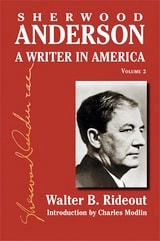
Sherwood Anderson
A Writer in America, Volume 2Walter B. Rideout
University of Wisconsin Press, 2006
Walter Rideout’s Sherwood Anderson: A Writer in America is a seminal work that reintroduces us to this important, yet recently neglected, American writer, giving him long overdue attention. This second volume of the monumental two-volume work covers Anderson’s life after his move in the mid-1920s to “Ripshin,” his house near Marion, Virginia (where Volume 1 ended.) The second volume covers his return to business pursuits; his extensive travels in the South touring factories, which resulted in his political involvement in labor struggles and several books on the topic; and finally his unexpected death in 1941.
No other existing Anderson biography, the most recent of which was published nearly twenty years ago, is as thoroughly researched, so extensively based on primary sources and interviews with a range of Anderson’s friends and family members, or as complete in its vision of the man and the writer. Rideout uncovers much new information about events and people in Anderson’s life and provides a new perspective on many of his works. This two-volume biography presents Anderson’s many remarkable attributes more clearly than ever before, while astutely placing his life and writings in the broader social, political, and artistic movements of his times.
Outstanding Book, selected by the American Association of School Librarians, and Best Books for General Audiences, selected by the Public Library Association
Outstanding Academic Title, Choice Magazine
Winner, Biography Award, Society of Midland Authors
Shifting Borders and a Tattered Passport
Intellectual Journeys of a Mormon AcademicArmand L. Mauss
University of Utah Press, 2012
The life of a Mormon intellectual in the secular academic community is likely to include some contradictions between belief, scholarship, and the changing times. In his memoir, Armand L. Mauss recounts his personal and intellectual struggles—inside and outside the LDS world—from his childhood to his days as a graduate student at UC Berkeley in the 1960s through his many years as a professor.
As an important and influential observer and author in the Mormon intellectual world, Mauss has witnessed how, in attempting to suppress independent and unsponsored scholarship during the final decades of the twentieth century, LDS leaders deliberately marginalized important intellectual support and resources that could have helped, in the twenty-first century, to refurbish the public image of the church. As a sociologist, he notes how the LDS Church, as a large, complex organization, strives to adjust its policies and practices in order to maintain an optimal balance between unique, appealing claims on the one hand and public acceptance on the other. He also discusses national and academic controversies over the New Religious Movements of the 1960s and 1970s. Writing in clear language, Mauss shows how he has navigated the boundaries where his faith and academic life intersect, and reveals why a continuing commitment to the LDS Church must be a product of choice more than of natural or supernatural “proof.”
Shifting Borders
Rhetoric, Immigration And Prop 187Kent Ono
Temple University Press, 2002
"Like articles representing the positions of proponents of the measure, those representing opponents constructing the nation as potentially in danger as a result of undocumented immigration."
How do we learn to recognize the damning effects of good rhetorical intentions? And where will we find arguments which escape this trap that permeates the liberal social policy world? Shifting Borders uses an evaluation of the debate over California Proposition 187 to demonstrate how this quandary is best understood by close interrogation of mainstream reports and debates and by bringing to the fore voices that are often left out of mediated discussions.
It is these voices outside the mainstream, so-called "outlaw" discourses, that hold the best possibilities for real social change. To illustrate their claim, the authors present dominant and outlaw discourses around Proposition 187, from television reports, internet chat sites, and religious discourse to coverage of the Los Angeles Times. Their critique ably demonstrates how difficult it is to maintain a position outside the mainstream, but also how important it is for the press, citizens and scholars to actively search out such voices. The findings are organized through a model that provides an innovative method for understanding events and arguments through their rhetorical and communicative construction. In a world where the mediated word defines so much of what we know, Shifting Borders provides a lucid introduction to analyzing the spoken and written word that constitutes political debate in contemporary U.S. culture. In doing so, it makes an important contribution to any future development of progressive political strategy.
postamble();
Shifting the Burden
The Struggle over Growth and Corporate TaxationCathie J. Martin
University of Chicago Press, 1991
Remarkably accessible and rich in historical evidence, Shifting the Burden is the most compelling explanation to date of how our nation's tax policy is formulated. Cathie J. Martin shows how presidents' cultivation of allies within the business community and struggles within that community itself combine to shape tax policy.
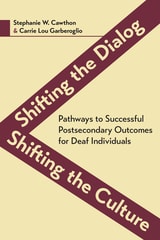
Shifting the Dialog, Shifting the Culture
Pathways to Successful Postsecondary Outcomes for Deaf IndividualsStephanie W. Cawthon
Gallaudet University Press, 2017
In addition to using a systems theory approach, the authors employ resiliency models that emphasize how deaf individuals persist through the transition process amidst the barriers that reside within larger educational and social systems. Employment, independent living, and community involvement are a few of the postsecondary outcomes that are covered. Shifting the Dialog, Shifting the Culture addresses critical issues that influence how deaf individuals reach their postsecondary goals and is designed for a diverse audience that includes professionals who work (or are training to work) with deaf individuals, policy makers, as well as federal and state personnel.
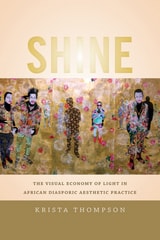
Shine
The Visual Economy of Light in African Diasporic Aesthetic PracticeKrista Thompson
Duke University Press, 2015
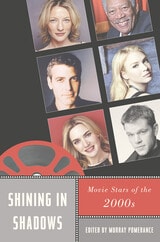
Shining in Shadows
Movie Stars of the 2000sPomerance, Murray
Rutgers University Press, 2012
In the 2000s, new technologies transformed the experiences of movie-going and movie-making, giving us the first generation of stars to be just as famous on the computer screen as on the silver screen.
Shining in Shadows examines a wide range of Hollywood icons from a turbulent decade for the film industry and for America itself. Perhaps reflecting our own cultural fragmentation and uncertainty, Hollywood’s star personas sent mixed messages about Americans’ identities and ideals. Disheveled men-children like Will Ferrell and Jack Black shared the multiplex with debonair old-Hollywood standbys like George Clooney and Morgan Freeman. Iconic roles for women ranged from Renee Zellweger’s dithering romantics to Tina Fey’s neurotic professionals to Hilary Swank’s vulnerable boyish characters. And in this age of reality TV and TMZ, stars like Jennifer Aniston and “Brangelina” became more famous for their real-life romantic dramas—at the same time that former tabloid fixtures like Johnny Depp and Robert Downey Jr. reinvented themselves as dependable leading men. With a multigenerational, international cast of stars, this collection presents a fascinating composite portrait of Hollywood stardom today.

Ship Captain's Daughter
Growing Up on the Great LakesAnn Michler Lewis
Wisconsin Historical Society Press, 2015
Ann Lewis's childhood was marked by an unusual rhythm. Each year the thawing and freezing of the Great Lakes signaled the beginning and end of the shipping season, months of waiting that were punctuated by brief trips to various ports to meet her father, the captain.
With lively storytelling and vivid details, Lewis captures the unusual life of shipping families whose days and weeks revolved around the shipping industry on the Great Lakes. She paints an intriguing and affectionate portrait of her father, a talented pianist whose summer job aboard an ore freighter led him to a life on the water. Working his way up from deckhand to ship captain, Willis Michler became the master of thirteen ships over a span of twenty-eight years. From the age of twelve, Ann accompanied the captain to the ports of Milwaukee, Chicago, Toledo, and Cleveland on the lower Great Lakes. She describes sailing through stormy weather and starry nights, visiting the engine room, dining at the captain's table, and wheeling the block-long ship with her father in the pilot house. Through her mother's stories and remarks, Lewis also reveals insights into the trials and rewards of being a ship captain's wife. The book is enhanced by the author's vintage snapshots, depicting this bygone lifestyle.

Ships and Shipwrecks of the Au Sable Shores Region of Western Lake Huron
John M. O'Shea
University of Michigan Press, 2004

Shirley Temple and the Performance of Girlhood
Hatch, Kristen
Rutgers University Press, 2015
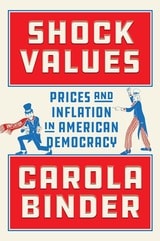
Shock Values
Prices and Inflation in American DemocracyCarola Binder
University of Chicago Press, 2024
ONE OF THE WALL STREET JOURNAL'S 10 BEST BOOKS OF 2024
How inflation and deflation fears shape American democracy.
Many foundational moments in American economic history—the establishment of paper money, wartime price controls, the rise of the modern Federal Reserve—occurred during financial panics as prices either inflated or deflated sharply. The government’s decisions in these moments, intended to control price fluctuations, have produced both lasting effects and some of the most contentious debates in the nation’s history.
A sweeping history of the United States’ economy and politics, Shock Values reveals how the American state has been shaped by a massive, ever-evolving effort to insulate its economy from the real and perceived dangers of price fluctuations. Carola Binder narrates how the pains of rising and falling prices have brought lasting changes for every generation of Americans. And with each brush with price instability, the United States has been reinvented—not as a more perfect union, but as a reflection of its most recent failures.
Shock Values tells the untold story of prices and price stabilization in the United States. Expansive and enlightening, Binder recounts the interest-group politics, legal battles, and economic ideas that have shaped a nation from the dawn of the republic to the present.
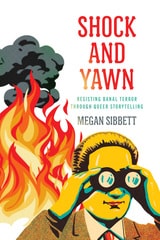
Shock and Yawn
Resisting Banal Terror Through Queer StorytellingMegan Sibbett
The Ohio State University Press, 2026
Building on queer theorists’ critiques of intimate and administrative violence, especially Gloria Anzaldúa’s “intimate terrorism,” Sibbett develops methodologies for conceptualizing and subverting violence aimed at queer, racialized, and gendered bodies in this era of surveillance and increasing authoritarianism. Sibbett addresses book bans, anti-trans legislation, idealized histories of westward expansion, and more, examining materials that include public service announcements, advertising, social media, news reports, poems, interviews, and novels. In so doing, she demonstrates the crucial role queer testimonies—and queer histories and queer futures—play in revealing systemic violence and illuminating the transformative potential of everyday resistance.
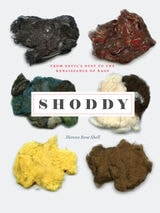
Shoddy
From Devil’s Dust to the Renaissance of RagsHanna Rose Shell
University of Chicago Press, 2020
In Shoddy: From Devil’s Dust to the Renaissance of Rags, Hanna Rose Shell takes readers on a journey to discover shoddy, from Haiti to the “shoddy towns” of West Yorkshire in England, to the United States, back in time to the British cholera epidemics and the American Civil War, and into agricultural fields, textile labs, and rag-shredding factories. Shell’s narrative is both literary and historical, drawing on an extraordinary range of sources, from court cases to military uniforms, mattress labels to medical textbooks, political cartoons to high art. Shoddy moves between genres, bringing richly drawn characters and unexpected objects to life. Along the way, shoddy becomes equally an evocative object and a portal into another world.
Almost since the time it first appeared, shoddy was both ubiquitous and controversial. In part because it was often so hard to detect, it was inherently suspicious. Public health experts worried about sanitation and disease—how could old clothes be disinfected? As well, the idea of wearing someone else’s old clothes so close to your own skin was discomforting in and of itself. Could you sleep peacefully knowing that your mattress was very likely to be stuffed with dead soldiers’ overcoats? The use of the term “virgin” wool, the idea of virginity in relation to clothes, in fact emerged as an effort by the wool industry to counter shoddy’s appeal: to make shoddy seem shoddy. Over time, shoddy would capture a host of personal, ethical, commercial, and societal failings. And yet, there was always, within shoddy, the alluring concept of regeneration, of what we today think of as conscious clothing, eco-fashion, sustainable textiles.
Shell exposes an interwoven tale of industrial espionage, political infighting, scientific inquiry, ethnic prejudices, and war profiteering. Discarded clothes may make many journeys over the course of several lifetimes. Not only in your garments, but under your rug, in your mattress pads, piano blankets, in the peculiar confetti-like stuffing in your mailing envelopes, even in the insulation in your walls. Though it began with wool, over the past century the shredding “devil” has turned to synthetics from nylon stockings to Kevlar. Shoddy is likely connected to something you are wearing right now. After reading, you will never use the word shoddy or think about your clothes, the environment, sustainability, or the intermingled world around you the same way again.

Shoot the Conductor
Too Close to Monteux, Szell, and OrmandyAnshel Brusilow
University of North Texas Press, 2015
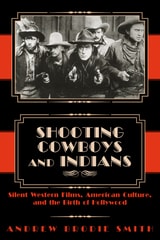
Shooting Cowboys and Indians
Silent Western Films, American Culture, and the Birth of HollywoodAndrew Brodie Smith
University Press of Colorado, 2003
Tracing the western from its hazy silent-picture origins in the 1890s to the advent of talking pictures in the 1920s, Smith examines the ways in which silent westerns contributed to the overall development of the film industry.
Focusing on such early important production companies as Selig Polyscope, New York Motion Picture, and Essanay, Smith revises current thinking about the birth of Hollywood and the establishment of Los Angeles as the nexus of filmmaking in the United States. Smith also reveals the role silent westerns played in the creation of the white male screen hero that dominated American popular culture in the twentieth century.
Illustrated with dozens of historic photos and movie stills, this engaging and substantive story will appeal to scholars interested in Western history, film history, and film studies as well as general readers hoping to learn more about this little-known chapter in popular filmmaking.
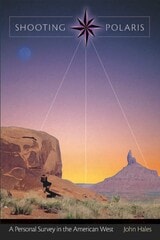
Shooting Polaris
A Personal Survey in the American WestJohn Hales
University of Missouri Press, 2005
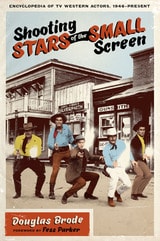
Shooting Stars of the Small Screen
Encyclopedia of TV Western Actors, 1946–PresentBy Douglas Brode
University of Texas Press, 2009
Since the beginning of television, Westerns have been playing on the small screen. From the mid-1950s until the early 1960s, they were one of TV's most popular genres, with millions of viewers tuning in to such popular shows as Rawhide, Gunsmoke, and Disney's Davy Crockett. Though the cultural revolution of the later 1960s contributed to the demise of traditional Western programs, the Western never actually disappeared from TV. Instead, it took on new forms, such as the highly popular Lonesome Dove and Deadwood, while exploring the lives of characters who never before had a starring role, including anti-heroes, mountain men, farmers, Native and African Americans, Latinos, and women.
Shooting Stars of the Small Screen is a comprehensive encyclopedia of more than 450 actors who received star billing or played a recurring character role in a TV Western series or a made-for-TV Western movie or miniseries from the late 1940s up to 2008. Douglas Brode covers the highlights of each actor's career, including Western movie work, if significant, to give a full sense of the actor's screen persona(s). Within the entries are discussions of scores of popular Western TV shows that explore how these programs both reflected and impacted the social world in which they aired. Brode opens the encyclopedia with a fascinating history of the TV Western that traces its roots in B Western movies, while also showing how TV Westerns developed their own unique storytelling conventions.
Shooting from the Hip
Photography, Masculinity, and Postwar AmericaPatricia Vettel-Becker
University of Minnesota Press, 2005

Shopping Our Way to Safety
How We Changed from Protecting the Environment to Protecting OurselvesAndrew Szasz
University of Minnesota Press, 2007
“Not long ago, people did not worry about the food they ate. They did not worry about the water they drank or the air they breathed. It never occurred to them that eating, drinking water, satisfying basic, mundane bodily needs might be a dangerous thing to do. Parents thought it was good for their kids to go outside, get some sun.
“That’s all changed now.” —from the Introduction
Many Americans today rightly fear that they are constantly exposed to dangerous toxins in their immediate environment: tap water is contaminated with chemicals; foods contain pesticide residues, hormones, and antibiotics; even the air we breathe, outside and indoors, carries invisible poisons. Yet we have responded not by pushing for governmental regulation, but instead by shopping. What accounts for this swift and dramatic response? And what are its unintended consequences?
Andrew Szasz examines this phenomenon in Shopping Our Way to Safety. Within a couple of decades, he reveals, bottled water and water filters, organic food, “green” household cleaners and personal hygiene products, and “natural” bedding and clothing have gone from being marginal, niche commodities to becoming mass consumer items. Szasz sees these fatalistic, individual responses to collective environmental threats as an inverted form of quarantine, aiming to shut the healthy individual in and the threatening world out.
Sharply critiquing these products’ effectiveness as well as the unforeseen political consequences of relying on them to keep us safe from harm, Szasz argues that when consumers believe that they are indeed buying a defense from environmental hazards, they feel less urgency to actually do something to fix them. To achieve real protection, real security, he concludes, we must give up the illusion of individual solutions and together seek substantive reform.
Andrew Szasz is professor and chair of the department of sociology at the University of California at Santa Cruz and author of the award-winning EcoPopulism (Minnesota, 1994).
Shortchanged
Height Discrimination and Strategies for Social ChangeTanya S Osensky
University Press of New England, 2017

Shoshonean Peoples and the Overland Trail
Frontiers of the Utah Superintendency of Indian Affairs, 1849–1869Richard Saunders
Utah State University Press, 2007
This compilation of Dale Morgan’s historical work on Indians in the Intermountain West focuses primarily on the Shoshone who lived near the Oregon and California trails. Three connected works by Morgan are included: First is his classic article on the history of the Utah Superintendency of Indian Affairs. This is followed by an important set of government reports and correspondence from the National Archives concerning the Eastern Shoshone and their leader Washakie. Morgan heavily annotated these for serial publication in the Annals of Wyoming. He also wrote a previously unpublished history of early relations among the Western Shoshone, emigrants, and the government along the California Trail. Morgan biographer Richard L. Saunders introduced, edited, and further annotated this collection. His introduction includes an intellectual biography of Morgan that focuses on the place of the anthologized pieces in Morgan’s corpus. Gregory E. Smoak, a leading historian of the Shoshone, contributed an ethnohistorical essay as additional context for Morgan’s work.
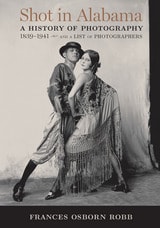
Shot in Alabama
A History of Photography, 1839–1941, and a List of PhotographersFrances Osborn Robb
University of Alabama Press, 2016
A landmark study of vernacular and professional photography, from 1839 to 1941, that frames Alabama’s history through its images.
Shot in Alabama by Frances Osborn Robb is a visual and textual narrative of Alabama’s photographic history from 1839 to 1941. It describes the phenomenon of photography as practiced in Alabama as a major cultural force, paying close attention to the particular contexts from which each image emerges and the fragments of microhistory that each image documents.
Presented chronologically—from the very first photograph ever taken in the state to the appearance of cameras as commonplace possessions in mid-twentieth-century households—Robb draws into sharp relief the eras of daguerreotypes, Civil War photography, photographic portraiture at the end of the nineteenth century, urban and rural photography in the early twentieth century, WPA photography during the Great Depression, postcards and tourist photography, and pre–World War II illustrated books and art photographs. Robb also examines a wide spectrum of vernacular photography: Alabama-made photographs of everyday people and places, the photographs that fill dresser drawers and shoeboxes, a vast array of unusual images against which Alabama’s more typical iconography can be measured.
She also chronicles the work of hundreds of photographers—black and white, amateur and professional, women and men—some little-known outside their communities, some of them the medium’s most important practitioners. “Who Shot Alabama?” is an accompanying appendix that includes 1,400 photographers by name, working dates, and location—a resource that will help countless individuals, families, and archives identify the specific Alabama photographers whose names appear on family photographs or those in institutional collections.
Shot in Alabama is an insightful document of photography as both a communicator and creator of social, cultural, economic, and visual history. It highlights the very personal worlds rendered by individual photographs as well as the larger panorama of Alabama history as seen through the photographs collectively. A landmark work of research, curation, and scholarship, it fills the void of published history on Alabama photography and is an invaluable resource for historians, archivists, librarians, collectors, hobbyists, and readers with an interest in Alabama history or historic photography. Shot in Alabama is a book that all Alabamians will want on their coffee tables.

Shot on Location
Postwar American Cinema and the Exploration of Real PlacePalmer, R. Barton
Rutgers University Press, 2016
Renowned film scholar R. Barton Palmer answers this question in Shot on Location by exploring the historical, ideological, economic, and technological developments that led Hollywood to head back outside in order to capture footage of real places. His groundbreaking research reveals that wartime newsreels had a massive influence on postwar Hollywood film, although there are key distinctions to be made between these movies and their closest contemporaries, Italian neorealist films. Considering how these practices were used in everything from war movies like Twelve O’Clock High to westerns like The Searchers, Palmer explores how the blurring of the formal boundaries between cinematic journalism and fiction lent a “reality effect” to otherwise implausible stories.
Shot on Location describes how the period’s greatest directors, from Alfred Hitchcock to Billy Wilder, increasingly moved beyond the confines of the studio. At the same time, the book acknowledges the collaborative nature of moviemaking, identifying key roles that screenwriters, art designers, location scouts, and editors played in incorporating actual geographical locales and social milieus within a fictional framework. Palmer thus offers a fascinating behind-the-scenes look at how Hollywood transformed the way we view real spaces.
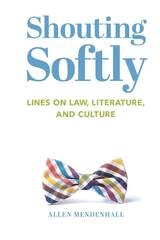
Shouting Softly
Lines on Law, Literature, and CultureAllen Mendenhall
St. Augustine's Press, 2020
The work is given in three parts. The first section on law explores legal minds, rules and commentary on seminal jurisprudence. The second part explores literature and the influence of the writer and the disconcerting truths stories often seek to convey. Thirdly, Mendenhall delves into culture and the more obvious situations wherein we gain insight into our manner of living, and here Mendenhall exudes a Southern accent that in no way compromises his universal bearings. One of the highlights is his echo of Larry Seidentop’s question: “If we in the West do not understand the moral depth of our own tradition, how can we hope to shape the conversation of mankind?” This is all the more meaningful given that Mendenhall is a member of the Millennial generation, and part of the intellectual minority who sees the urgency of “a studied appreciation for nuanced story and linguistic narrative.”

Shovel Ready
Archaeology and Roosevelt's New Deal for AmericaBernard K. Means
University of Alabama Press, 2013
John L. Cordell / John F. Doershuk / David H. Dye /Scott W. Hammerstedt / Janet R. Johnson / Kevin Kiernan /Gregory D. Lattanzi /Patrick C. Livingood / Anna R. Lunn / Bernard K. Means / Stephen E. Nash / Amanda L. Regnier / Sissel Schroeder / James R. Wettstaed
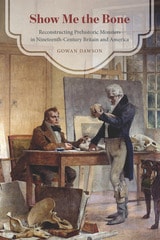
Show Me the Bone
Reconstructing Prehistoric Monsters in Nineteenth-Century Britain and AmericaGowan Dawson
University of Chicago Press, 2016
Show Me the Bone tells the story of the rise and fall of this famous claim, tracing its fortunes from Europe to America and showing how it persisted in popular science and literature and shaped the practices of paleontologists long after the method on which it was based had been refuted. In so doing, Gowan Dawson reveals how decisively the practices of the scientific elite were—and still are—shaped by their interactions with the general public.
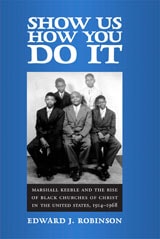
Show Us How You Do It
Marshall Keeble and the Rise of Black Churches of Christ in the United States, 1914-1968Edward J. Robinson
University of Alabama Press, 2008

Showboats
The History of an American InstitutionBy Philip Graham
University of Texas Press, 1951
This book is a delightful and authoritative record of America's showboats from the first one, launched in 1831, to the last, ultimately tied up at a St. Louis dock.
It is also a record of the men and women who built and loved these floating theaters, of those who performed on their stages, and of the thousands who sat in their auditoriums.
And, lastly, it is a record of a genuine folk institution, as American as catfish, which for more than a century did much to relieve the social and cultural starvation of our vast river frontier.
For these showboats brought their rich cargoes of entertainment—genuine laughter, a glimpse of other worlds, a respite from the grinding hardship of the present, emotional relaxation—to valley farmers, isolated factory workers and miners, and backwoodsmen who otherwise would have lacked all such opportunities.
To the more privileged , the showboats brought pleasant reminder of a half-forgotten culture. They penetrated regions where churches and school had not gone, and where land theaters were for generations to be impossible. Like circuit preachers, they carried their message to the outer fringes of American civilization. In spite of many faults, it was a good message.
The frontier had created this institution to fill a genuine need, and it lasted only until other and better means of civilizing these regions could reach them—good roads, automobiles, motion pictures, schools, churches, newspapers, and theaters. But although the showboats have passed into history, they have left a rich legacy. As long as the Mississippi flows into the Gulf, their story will fire the imagination of Americans.
Showboating has become so legendary that few Americans know what this unique institution was really like. In Showboats, at long last, the true story emerges. It differs in many important respects from the motion picture and fictional versions to which Americans are accustomed, but it is not a whit the less glamorous.
Philip Graham has told his story with imagination, genuine insight, and complete devotion to facts. No one who is interested in America's past should fail to read it.

Showdown in Desire
The Black Panthers Take a Stand in New OrleansOrissa Arend
University of Arkansas Press, 2009

Showdown in the Show-Me State
The Fight Over Conceal-and-Carry Gun Laws in MissouriWilliam T. Horner
University of Missouri Press, 2005

Showers of Blessings
Myrtle Lawrence, Notable Sharecropper and Union OrganizerElizabeth Anne Payne
University of Arkansas Press, 2023

Showing Out
Fashion in HarlemPeter "Souleo" Wright
Rutgers University Press, 2027
Showing Out: Fashion in Harlem explores the unprecedented and enduring impact of the Harlem Institute of Fashion (HIF) on American culture and style. Founded in 1966 by Lois K. Alexander-Lane, HIF produced legendary fashion shows for the annual HARLEM WEEK festival. With their eye-catching costumes, dramatic runway presentations, and embrace of the local community, the shows became one of HIF’s most popular and successful initiatives, spotlighting the underrepresented talents of Black fashion designers, models, and administrators. Tracing HIF’s legacy within the larger narrative of fashion history, Showing Out uses fashion shows as a portal, showcasing previously unpublished archival photos; first-hand accounts from HIF alumni, and contemporary collectives that continue to celebrate the Black contribution to fashion. In the wake of Black Lives Matter, anti-DEI policies, and ongoing political and racial turmoil, Showing Out is the much-needed voice of inspiration to reshape the narrative around fashion.

Sick Building Syndrome and the Problem of Uncertainty
Environmental Politics, Technoscience, and Women WorkersM. Murphy
Duke University Press, 2006
Sick building syndrome embodied a politics of uncertainty that continues to characterize contemporary American environmental debates. Murphy explores the production of uncertainty by juxtaposing multiple histories, each of which explains how an expert or lay tradition made chemical exposures perceptible or imperceptible, existent or nonexistent. They show how uncertainty emerged from a complex confluence of feminist activism, office worker protests, ventilation engineering, toxicology, popular epidemiology, corporate science, and ecology. In an illuminating case study, she reflects on EPA scientists’ efforts to have their headquarters recognized as a sick building. Murphy brings all of these histories together in what is not only a thorough account of an environmental health problem but also a much deeper exploration of the relationship between history, materiality, and uncertainty.

Sick Work
Exhaustion, Labor, and Invisible IllnessEmily Lim Rogers
Duke University Press, 2026

Sickening
Anti-Black Racism and Health Disparities in the United StatesAnne Pollock
University of Minnesota Press, 2021
An event-by-event look at how institutionalized racism harms the health of African Americans in the twenty-first century
A crucial component of anti-Black racism is the unconscionable disparity in health outcomes between Black and white Americans. Sickening examines this institutionalized inequality through dramatic, concrete events from the past two decades, revealing how unequal living conditions and inadequate medical care have become routine.
From the spike in chronic disease after Hurricane Katrina to the lack of protection for Black residents during the Flint water crisis—and even the life-threatening childbirth experience for tennis star Serena Williams—author Anne Pollock takes readers on a journey through the diversity of anti-Black racism operating in healthcare. She goes beneath the surface to deconstruct the structures that make these events possible, including mass incarceration, police brutality, and the hypervisibility of Black athletes’ bodies. Ultimately, Sickening shows what these shocking events reveal about the everyday racialization of health in the United States.
Concluding with a vital examination of racialized healthcare during the COVID pandemic and the Black Lives Matter rebellions of 2020, Sickening cuts through the mind-numbing statistics to vividly portray healthcare inequalities. In a gripping and passionate style, Pollock shows the devastating reality and consequences of systemic racism on the lives and health of Black Americans.
Sickness and Health in America
Readings in the History of Medicine and Public HealthEdited by Judith W. Leavitt and Ronald L. Numbers
University of Wisconsin Press, 1997