Results by title
299 books match the query 'Arizona' and 56 start with t
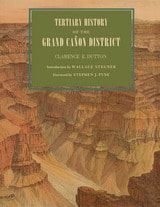
Tertiary History of the Grand Cañon District
Clarence E. Dutton; Introduction by Wallace Stegner; Foreword by Stephen J. Pyne
University of Arizona Press, 2001
Originally published in 1882, Clarence Dutton’s Tertiary History of the Grand Cañon District has become one of the definitive books on the Grand Canyon. Commissioned as a study of the region’s geology and issued by the fledgling U.S. Geological Survey, it is as much admired today for its literary as its scientific merits. With its beautiful illustrations by Thomas Moran and William Henry Holmes, it is a seminal work on the Canyon that has never been surpassed for its eloquence and authority.
This new edition of Dutton’s magnum opus makes that work available once again. Visitors to the Canyon will gain a new appreciation of its majesty as Dutton takes readers on several excursions among its castellated and cathedral-like peaks and ridges. Along the way, he explains the peculiar characteristics of different rocks, the water-sculpturing process, volcanic cones and outflows, the extent of the river’s erosion, and other geological features.
Dutton’s Tertiary History remains arguably the most evocative and compelling geological writing ever done on the Grand Canyon region. As Stephen J. Pyne observes in his foreword, Dutton “recast a rocky peninsula into geo-poetry, reshaped an amorphous panorama of Time into narrative History, and transformed an American scene into a universal symbol.” No one who has thrilled to the majesty of the Grand Canyon will fail to be moved by this timeless work.
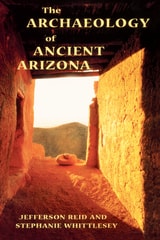
The Archaeology of Ancient Arizona
Jefferson Reid and Stephanie Whittlesey
University of Arizona Press, 1997
This book invites us to step into a Hohokam village with its sounds of barking dogs, children's laughter, and the ever-present grinding of mano on metate to produce the daily bread. Here, too, readers will marvel at the skills of Clovis elephant hunters and touch the lives of other ancestral people known as Mogollon, Anasazi, Sinagua, and Salado. Descriptions of long-ago people are balanced with tales about the archaeologists who have devoted their lives to learning more about "those who came before." Trekking through the desert with the famed Emil Haury, readers will stumble upon Ventana Cave, his "answer to a prayer." With amateur archaeologist Richard Wetherill, they will sense the peril of crossing the flooded San Juan River on the way to Chaco Canyon. Others profiled in the book are A. V. Kidder, Andrew Ellicott Douglass, Julian Hayden, Harold S. Gladwin, and many more names synonymous with the continuing saga of southwestern archaeology.
This book is an open invitation to general readers to join in solving the great archaeological puzzles of this part of the world. Moreover, it is the only up-to-date summary of a field advancing so rapidly that much of the material is new even to professional archaeologists. Lively and fast paced, the book will appeal to anyone who finds magic in a broken bowl or pueblo wall touched by human hands hundreds of years ago. For all readers, these pages offer a sense of adventure, that "you are there" stir of excitement that comes only with making new discoveries about the distant past.

The Arizona Diary of Lily Frémont, 1878–1881
Elizabeth Benton Frémont
University of Arizona Press, 1997
Here, in rich detail, her day-by-day narrative and the editor's annotations bring to life Arizona's territorial capital of Prescott more than one hundred years ago. Lily gives us firsthand accounts of the operation of territorial government; of pressure from Anglo settlers to dispossess Pima Indians from their land; and of efforts by the governor and the army to deal with Indian scares. Here also, underlying her words, are insights into the dynamics of a close-knit Victorian family, shaping the life of an intelligent, educated single woman. As unofficial secretary for her father, Lily was well placed to observe and record an almost constant stream of visitors to the governor's home and office. Observe and record, she did. Her diary is filled with unvarnished images of personalities such as the Goldwaters, General O. B. Willcox, Moses Sherman, Judge Charles Silent, and a host of lesser citizens, politicians, and army officers.
Lily's anecdotes vividly re-create the periodic personality clashes that polarized society (and one full-fledged scandal), the ever-present danger of fire, religious practices (particularly a burial service conducted in Hebrew), and attitudes toward Native Americans and Chinese. On a more personal level, the reader will find intimate accounts of John Frémont's obsession with mining promotion, his complicated business dealings with Judge Silent, and his attempts to recoup his family's sagging fortune. Here especially, Lily outlines a telling profile of her father, a man roundly castigated then and now as a carpetbagger less interested in promoting Arizona's interests than his own.
For students of western history, Lily Frémont's diary provides a wealth of fresh information on frontier politics, mining, army life, social customs, and ethnicity. For all readers, her words from a century ago offer new perspectives on the winning of the West as well as fascinating glimpses of a world that once was and is no more.

The Bird Cage Theater
The Curtain Rises on Tombstone, Arizona's National TreasureMichael Paul Mihaljevich
University of North Texas Press, 2024

The Birds of Arizona
Allan R. Phillips
University of Arizona Press, 1964

The Blond Box
Toby Olson
University of Alabama Press, 2003
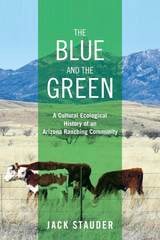
The Blue and the Green
A Cultural Ecological History of an Arizona Ranching CommunityJack Stauder
University of Nevada Press, 2016
In The Blue and the Green, anthropologist Jack Stauder analyzes how large-scale political, social, and environmental processes have transformed ranching and rural life in the West. Focusing on the community of Blue, Arizona, Stauder details how the problems of overgrazing, erosion, and environmental stresses on the open range in the early twentieth century coincided with a push by the newly created US Forest Service to develop fenced grazing allotments on federal lands. Later in the twentieth century, with the enactment of the Endangered Species Act and other laws, the growing power of urban-based environmental groups resulted in the reduction of federal grazing leases throughout the West.
The author combines historical research with oral interviews to explore the impact of these transformations on the ranchers residing in the Blue River Valley of eastern Arizona. Stauder gives voice to these ranchers, along with Forest Service personnel, environmental activists, scientists, and others involved with issues on “the Blue,” shedding light on how the ranchers’ rural way of life has changed dramatically over the course of the past century. This is a fascinating case study of the effects of increasing government regulations and the influence of outsiders on ranching communities in the American West.
The Cacti of Arizona
Lyman Benson
University of Arizona Press, 1969
"Of tremendous value to the professional botanist and ecologist, and with layman English and careful instructions, the work provides the amateur botanist insight into a fascinating family."—Garden Journal
"For the general desert lover as well as the botanist."—Books of the Southwest
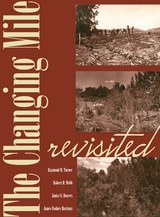
The Changing Mile Revisited
An Ecological Study of Vegetation Change with Time in the Lower Mile of an Arid and Semiarid RegionRaymond M. Turner, Robert H. Webb, Janice E. Bowers, and James Rodney Hastings
University of Arizona Press, 2003
Using nearly two hundred additional triplicate sets of unpublished photographs, The Changing Mile Revisited utilizes repeat photographs selected from almost three hundred stations located in southern Arizona, in the Pinacate region of Mexico, and along the coast of the Gulf of California. Coarse photogrammetric analysis of this enlarged photographic set shows the varied response of the region's major plant species to the forces of change. The images show vegetation across the entire region at sites ranging in elevation from sea level to a mile above sea level. Some sites are truly arid, while others are located above the desert in grassland and woodland. Common names are used for most plants and animals (with Latin equivalents in endnotes) to make the book more accessible to non-technical readers.
The original Changing Mile was based upon a unique set of data that allowed the authors to evaluate the extent and magnitude of vegetation change in a large geographic region. By extending the original landmark study, The Changing Mile Revisited will remain an indispensable reference for all concerned with the fragile desert environment.
The Chinese of Early Tucson
Historic Archaeology from the Tucson Urban Renewal ProjectFlorence C. Lister and Robert H. Lister
University of Arizona Press, 1989
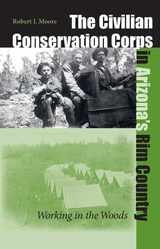
The Civilian Conservation Corps In Arizona's Rim Country
Working In The WoodsRobert J. Moore
University of Nevada Press, 2006
Part of the massive relief effort of Roosevelt’s New Deal, the CCC was created in 1933 to give young men an opportunity to work and make money to help families devastated by the Great Depression, and to participate in forest and conservation projects across the country. In Arizona, thousands of young men, many of them from the industrial Northeast, served in the state’s CCC forest camps. Arizona’s Mogollon Rim is a spectacular expanse of cliffs that slices through half the state, stretching from Sedona eastward to New Mexico. Along with the White Mountains, it includes the largest contiguous forest of ponderosa pine in America. Remote and little-visited in the 1930s, the Rim Country offered copious outlets for the CCC men’s energies: building roads, public campsites, hiking trails, fire lookout towers, and administration buildings; fighting fires; controlling erosion; eliminating vermin; and restoring damaged soils. The CCC enrollees were also given an opportunity to continue interrupted educations, learn useful skills and self-discipline, participate in sports and other leisure activities, and meet local residents. Author Robert J. Moore interviewed a number of CCC veterans who served in the Rim Country, and their stories are part of this book. So too are photographs—many of them from veterans’ personal collections—of Rim Country camps and workers, and such ephemera as camp newspapers. This is an engrossing account of several thousand young men who came to Arizona to escape the misery of the Great Depression, whose work in the woods changed the state, and who in the process were themselves changed. Here is the human face of Arizona’s CCC, the men’s experiences, their work, and their lasting impact on the forests of the Rim Country.
The Clifton-Morenci Strike
Labor Difficulty in Arizona, 1915–1916James R. Kluger
University of Arizona Press, 1970
Coming at a time when western labor was purging itself of radicalism and recharting its goals, the Clifton-Morenci strike may well have been that "milestone" in organized labor's groping for recognition in the West. Violence did not erupt- this notable absence of bloodshed thereby making the strike unique in that time of industrial turbulence.
Kluger's answer to the question of why and how peace prevailed is significant reading. Strikers and managers hurled charges at each other, but both sides showed restraint when it came to action. When negotiations reached an impasse, Gov. George W. P. Hunt moved to prevent the managers from importing strike-breakers. At the same time, the Department of Labor entered the situation, and the rise in copper prices and loss of wages made a settlement desirable for both sides.
When the mine whistles blew on January 26, 1916, to signal the end of the strike, the repercussions of the events of 1915 were still to be felt. Author Kluger traces how the strike affected working conditions, wages, and the cause of unionism in the district. Overall, he provides insight into feelings concerning the fears of management regarding unionism, and labor's manner of making itself heard during these years.
Western historians, labor historians, and all those concerned with labor relations will recognize the importance of this highly readable work.
The Cochise Cultural Sequence in Southeastern Arizona
E. B. Sayles
University of Arizona Press, 1983
The Geoarchaeology of Whitewater Draw, Arizona
Michael R. Waters
University of Arizona Press, 1986
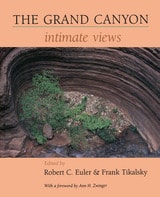
The Grand Canyon
Intimate ViewsEdited by Robert C. Euler and Frank Tikalsky; Foreword by Ann H. Zwinger
University of Arizona Press, 1992
Contents
Foreword, by Ann H. Zwinger
1. The Geologic Record, by Stanley S. Beus
2. The Living Canyon, by Steven W. Carothers
3. Grand Canyon Indians, by Robert C. Euler
4. Historical Explorations, by Robert C. Euler
5. The Canyon by River, by Kim Crumbo
6. Hiking the Canyon, by Frank Tikalsky
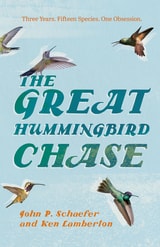
The Great Hummingbird Chase
John P. Schaefer and Ken Lamberton
University of Arizona Press, 2027
Southern Arizona is a world-renown hummingbird destination. The Great Hummingbird Chase chronicles John P. Schaefer and Ken Lamberton’s passionate quest to photograph all fifteen of Arizona’s hummingbird species.
The Indians of Point of Pines, Arizona
A Comparative Study of Their Physical CharacteristicsKenneth A. Bennett
University of Arizona Press, 1973

The Keepsake Storm
Gina Franco
University of Arizona Press, 2004
Kathryn is near the end of her life and is losing her memories: travels, husbands, a storm of keepsakes. As Gina Franco unleashes that storm and as Kathryn's flood of memories washes over us, we know at once that we are in the hands of a truly gifted poet. "The Keepsake Storm" is the culmination of a verse cycle that probes the depths of the heart—a meditation on the meaning of life in a difficult world. Drawing on a rich tradition of storytelling in Latino literature, Franco explores the transformative power of compassion as she addresses themes of cultural alienation, lost family roots, and the uncertain resiliency of the self. In writing that blends rapture, vision, and mystery, Franco calls on a multiplicity of voices and a prodigious command of forms to explore the underlying rhythms of life, finding poetry even in the imperfect transmissions of e-mail:
"I was happy to get your letter. I had a rough day.
My step-mom had a breakdown and is in a hospitol.
I don't understand all the why's of it. She has paranoia
scetsafrinia. (and I know that is spelled totally
wrong). I don't blame myself I just didn't see it coming."
By reaffirming the power of self-awareness, history, and place, Franco reaches out to all who struggle to find meaning in times of trouble or self-doubt. The Keepsake Storm is a personal journey through many lives that is nothing less than a celebration—and a reassessment—of American consciousness.
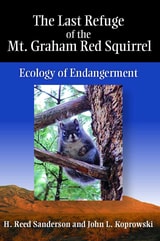
The Last Refuge of the Mt. Graham Red Squirrel
Ecology of EndangermentH. Reed Sanderson and John L. Koprowski
University of Arizona Press, 2009
This book is derived from a symposium on the Mt. Graham red squirrel and offers a comprehensive picture of the ecology of this red squirrel and the impacts on its mountain home. Forty contributors detail studies conducted to understand the natural history of the creature and the challenges and changing ecological conditions on Mt. Graham.
Each chapter tells a unique story that contributes to the mosaic of natural history knowledge about the endangered Mt. Graham red squirrel. They reflect diverse viewpoints on the problems of conserving the habitats and populations of the squirrel, showing how it was complicated by perspectives ranging from Native Americans’ concern over traditional lands to astronomers’ hope for a better view of space, and by issues ranging from forestry practices to climate change. Studies of such factors as squirrel middens, seed hoarding, and nest sites provide definitive research on the animal.
Ongoing censuses continue to track the squirrel’s population trends, and both Forest Service and Arizona Department of Transportation activities continue to be scrutinized by interested parties to determine their impact. This book represents an authoritative overview of this still-endangered species and its habitat.
The Last Shepherd
Martin Etchart
University of Nevada Press, 2012
Matt’s journey to manhood takes place in a vividly depicted landscape populated by lively, memorable characters. This is the powerful story of a young man’s search for an identity that encompasses two cultures and one complex, scattered family.
The Law of the Miner
The Arizona ExperienceJohn C. Lacy
University of Nevada Press, 2026
The first adventurers into the New World faced a fundamental legal challenge: how to secure rights to any mineral claims they discovered. Early conquistadors worked under charters that required them to return a portion of their findings to the Spanish crown, but those without such charters had no formal protection—and the crown was slow to clarify individual rights. This uncertainty only grew as miners pushed into the lands that would become the Western United States.
When gold was discovered in California, miners suddenly found themselves operating without any governing laws during the period between the end of the war with Mexico and the establishment of formal U.S. jurisdiction. In response, and without official sanction, they formed self-governing “mining districts,” best understood as mutual protection societies. These districts marked the first organized attempt to define boundaries and create rules for establishing and maintaining mining claims. As the early rushes in California and Nevada subsided, miners carried these practices with them into Arizona and other western territories.
In Arizona, no comprehensive collection of these early regulations has ever existed. The Law of the Mineraddresses this gap by tracing the development of mineral law in early Arizona and presenting the full text of every mining district regulation that could be found. This work serves both the mining industry and historians seeking to identify the individuals involved in creating the districts and to understand these districts’ historical boundaries.
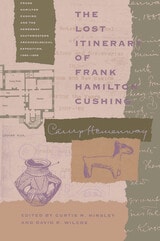
The Lost Itinerary of Frank Hamilton Cushing
Curtis M. Hinsley
University of Arizona Press, 2002
This second installment of a multivolume work on the Hemenway Expedition focuses on a report written by Cushing—at the request of the expedition's board of directors—to serve as vindication for the expedition, the worst personal and professional failure of his life. Reconstructed between 1891 and 1893 by Cushing from field notes, diaries, jottings, and memories, it provides an account of the origins and early months of the expedition. Hidden in several archives for a century, the Itinerary is assembled and presented here for the first time.
A vivid account of the first attempt at scientific excavatons in the Southwest, Cushing's Itinerary is both an exciting tale of travel through the region and an intellectual adventure story that sheds important light on the human past at Hohokam sites in Arizona's Salt River Valley, where Cushing sought to prove his hypothesis concerning the ancestral "Lost Ones" of the Zuñis. It initiates the construction of an ethnological approach to archaeology, which drew upon an unprecedented knowledge of a southwestern Pueblo tribe and use of that knowledge in the interpretation of archaeological sites.
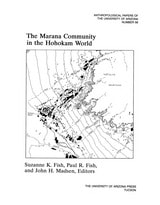
The Marana Community in the Hohokam World
Suzanne K. Fish
University of Arizona Press, 1992
The Maze
A Desert JourneyLucy Rees
University of Arizona Press, 1996
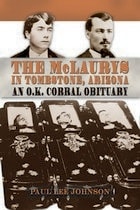
The McLaurys in Tombstone, Arizona
An O.K. Corral ObituaryPaul Lee Johnson
University of North Texas Press, 2012
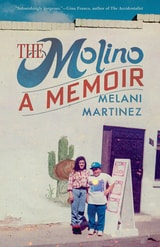
The Molino
A MemoirMelani Martinez
University of Arizona Press, 2024
Set in one of Tucson’s first tamal and tortilla factories, The Molino is a hybrid memoir that reckons with one family’s loss of home, food, and faith.
Weaving together history, culture, and Mexican food traditions, Melani Martinez shares the story of her family’s life and work in the heart of their downtown eatery, El Rapido. Opened by Martinez’s great-grandfather, Aurelio Perez, in 1933, El Rapido served tamales and burritos to residents and visitors to Tucson’s historic Barrio Presidio for nearly seventy years. For the family, the factory that bound them together was known for the giant corn grinder churning behind the scenes—the molino. With clear eyes and warm humor, Martinez documents the work required to prepare food for others, and explores the heartbreaking aftermath of gentrification that forces the multigenerational family business to close its doors.
The Molino is also Martinez’s personal story—that of a young Tucsonense coming of age in the 1980s and ’90s. As a young woman she rejects the work in her father’s popular kitchen, but when the business closes, her world shifts and the family disbands. When she finds her way back home, the tortillería’s iconic mural provides a gateway into history and ruin, ancestry and sacrifice, industrial myth and artistic incarnation—revealing a sacred presence still alive in Tucson.
A must-read for foodies, history lovers, and anyone searching for spiritual truth in the desert, this is a story of belonging and transformation in the borderlands.
The Mollusks of the Arid Southwest
With an Arizona Check ListJoseph C. Bequaert and Walter B. Miller
University of Arizona Press, 1973
Part I: Zoogeography of Southwestern Nearctic Mollusks
Integrates and evaluates information of interest to students of variation, evolution, zoogeography, and ecology of the fauna of the arid Southwest.
Part II: Annotated Check List of Recent Arizona Mollusks
Treatment of 173 valid species and 46 recognized subspecies gives nomenclature, type localities, distribution in Arizona, occurrence elsewhere in the Southwestern Molluscan Province, general Recent distribution, presence or absence in Late Cenozoic deposits, and synonymy.
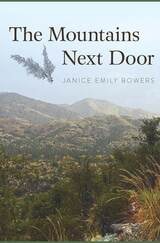
The Mountains Next Door
Janice Emily Bowers
University of Arizona Press, 1991
"I watched the seasons march through the canyons," writes Bowers, "followed the wildflower parade from February through November, and throughout it all realized that I could travel in the Rincon Mountains forever and never learn all they contained." It is also a book of meditations, as Bowers reflects upon the meaning of nature, the similarities between the scientific and creative processes, the value of wilderness in the face of urban encroachment, and other ideas. Participating in the long tradition of reflective natural history writing, she has produced a memorable book that depicts the delights and dilemmas of field botany as it explores the perennial struggle between science and mysticism that tugs at every naturalist's heart.
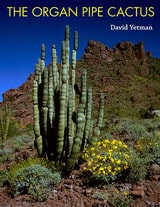
The Organ Pipe Cactus
David Yetman
University of Arizona Press, 2006
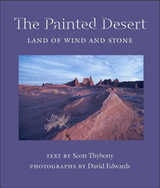
The Painted Desert
Land of Wind and StoneText by Scott Thybony; Photographs by David Edwards
University of Arizona Press, 2006
But this remote pocket of the Arizona desert, sandwiched between the Little Colorado River on one side and bold escarpments on the other, is much more than most tourists ever experience. An ethereal landscape of sculpted rock, wind-fluted cliffs, and elegantly drifting sand, the Painted Desert is a rich storehouse of natural beauty, colorful history, and scientific wonders. Here the strongest winds in Arizona blow across extensive dunefields, where less than ten inches of rain falls each year and only a few desert-savvy Navajo are able to live.
Now, for the first time award-winning writer Scott Thybony and freelance photographer David Edwards offer an intimate look at a place that remains inhospitable and inaccessible to so many. They share insights about the geology, paleontology, anthropology, and human history of the region as well as personal stories that dispel the misconceptions and mysteries that surround this delicate and difficult landscape.
With fifteen stunning photographs gracing the text, this book offers a vibrant portrait of one of the Southwest’s most barren, and most colorful landscapes.
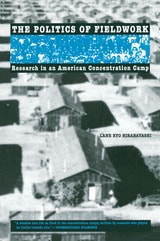
The Politics of Fieldwork
Research in an American Concentration CampLane Ryo Hirabayashi
University of Arizona Press, 1999
In addressing these questions, author Lane Hirabayashi examines the case of the late Dr. Tamie Tsuchiyama. At the time an advanced doctoral student in anthropology, Tsuchiyama was hired in 1942 to conduct ethnographic fieldwork for the University of California at Berkeley's Japanese American Evacuation and Resettlement Study. Drawing from personal letters, ethnographic fieldnotes, reports, interviews, and other archival sources, The Politics of Fieldwork describes Tsuchiyama's experiences as a researcher at Poston, Arizona—a.k.a. the Colorado River Relocation Center. The book relates the daily life, fieldwork methodology, and politics of the residents and researchers at the Poston camp, as well as providing insight into the pressures that led to Tsuchiyama's ultimate resignation, in protest, from the JERS project in 1945.
Facilitating the critical analysis of Tsuchiyama's role in the JERS research are questions regarding the relationships between Japanese American research and the nature of "colonial science" that merit discussion in contemporary field research. A multidisciplinary synthesis of anthropological, historical, and ethnic studies perspectives, The Politics of Fieldwork is rich with lessons about the ethics and politics of ethnographic fieldwork.
The Politics of Water in Arizona
Dean E. Mann
University of Arizona Press, 1963
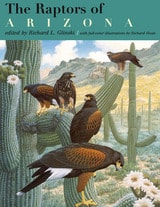
The Raptors of Arizona
Edited by Richard L. Glinski, with full-color illustrations by Richard Sloan
University of Arizona Press, 1998
Arizona's raptors are found in an unrivaled diversity of habitats, from saguaro cactus forests where tiny Elf Owls nest to the Vermilion Cliffs, where the gigantic California Condor was introduced in 1996. Yet many species live in habitats that are now jeopardized by degradation or development, making an understanding and appreciation of raptors crucial to their survival.
The Raptors of Arizona brings together the knowledge and insights of 29 raptor and wildlife authorities who provide original information and syntheses on Arizona's 42 raptor species, with an emphasis on aspects of their natural history in Arizona. A chapter on each bird includes its description, a range map, and information on its distribution, habitat, life history, and status. Additional chapters cover conservation, habitats, where and when to watch raptors, and the sport of falconry. The book is enhanced by 42 full-color illustrations by Richard Sloan, one of the premier wildlife artists in North America, whose paintings were commissioned by the Arizona Wildlife Foundation specifically for this project. Co-published with the Arizona Game and Fish Department.
The Recent Mammals of Arizona
Their Taxonomy and DistributionE. Lendell Cockrum
University of Arizona Press, 1960

The Return of the Mexican Gray Wolf
Back to the BlueBobbie Holaday
University of Arizona Press, 2003
Inspired by the plight of the Mexican gray wolf, retiree Bobbie Holaday formed the citizens advocacy group Preserve Arizona's Wolves (P.A.WS.) in 1987 and embarked on a crusade to raise public awareness. She soon found herself in the center of a firestorm of controversy, with environmentalists taking sides against ranchers and neighbors against neighbors. This book tells her story for the first time, documenting her eleven-year effort to bring the gray wolf back to the Blue.
As Holaday quickly learned, ranchers exerted considerable control over the state legislature, and politicians in turn controlled decisions made by wildlife agencies. Even though the wolf had been listed as endangered since 1976, opposition to it was so strong that the Arizona Game and Fish Department had been unable to launch a recovery program. In The Return of the Mexican Gray Wolf, Holaday describes first-hand the tactics she and other ordinary citizens on the Mexican Wolf Recovery Team adopted to confront these obstacles. Enhanced with more than 40 photographs—32 in color—her account chronicles both the triumphs of reintroduction and the heartbreaking tragedies the wolves encountered during early phases.
Thanks to Holaday's perseverance, eleven wolves were released into the wild in 1998, and the Blue Range once again echoed with their howls. Her tenacity was an inspiration to all those she enlisted in the cause, and her story is a virtual primer for conservation activists on mobilizing at the grassroots level. The Return of the Mexican Gray Wolf shows that one person can make a difference in a seemingly hopeless cause and will engage all readers concerned with the preservation of wildlife.
All royalties go to the Mexican Wolf Trust Fund administered by the Arizona Game and Fish Department.
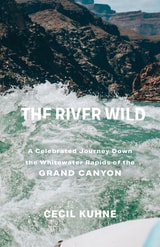
The River Wild
A Celebrated Journey Down the Whitewater Rapids of the Grand CanyonCecil Kuhne
University of Utah Press, 2026
Embark on an unforgettable adventure down the mighty Colorado River in The River Wild: A Celebrated Journey down the Whitewater Rapids of the Grand Canyon. Former professional river guide Cecil Kuhne takes readers through 225 miles of towering canyon walls, surging currents, and legendary rapids that have challenged explorers for over 150 years. From the historic first descent of John Wesley Powell’s expedition to the modern thrill-seekers navigating Lava Falls, Crystal, and Hance, this book captures the heart-pounding excitement of whitewater rafting.
With vivid descriptions of the canyon’s breathtaking geology, lush flora, and abundant wildlife, Kuhne blends history, adventure, and natural beauty into an immersive journey. Whether you’re a seasoned river runner or an armchair explorer, The River Wild offers a front-row seat to one of the world’s most exhilarating river expeditions.
The Road to Mount Lemmon
A Father, A Family, and the Making of SummerhavenMary Ellen Barnes
University of Arizona Press, 2009
The Santa Catalina Mountains first captivated Tony Zimmerman on a 1937 hunting trip. Regard for the alpine beauty must have been in his genes—he was the son of Swiss German immigrants—and by 1940 the Tucson schoolteacher had begun taking his family to Mount Lemmon to spend the summer. Back then, the road up the mountain was a rough two-track dirt road from Oracle, and Summerhaven was nothing but a sleepy cluster of summer cabins. But Tony Zimmerman was to help change all of that.
The Road to Mount Lemmon is a beguiling memoir of the Catalina Mountains told by the daughter of one of the pioneers in the life and development of Mount Lemmon’s communities. Mary Ellen Barnes tells how her father Tony resigned from teaching in 1943 to devote his career to the development of this mountain oasis. He not only sold real estate for long time landowner Randolph Jenks, he even bought the village’s tiny two-room store, installing a sawmill to build a larger store, and built the Mount Lemmon Inn. And as she spins Tony’s personal saga, she also gives readers a glimpse of the Catalinas before Tucson became a boom town, recalling idyllic adventures in wild country and the cowboys, rangers, ranchers, and loggers who worked there.
Barnes tells Tony’s story as if sharing it with family, evoking her father’s personality on every page. The Road to Mount Lemmon is an intimate view of a mountain community over the course of nearly sixty years—a view that few people have shared but one all can appreciate.
The Safford Valley Grids
Prehistoric Cultivation in the Southern Arizona DesertWilliam E. Doolittle
University of Arizona Press, 2004
Between A.D. 750 and 1385, people gathered rocks from the tops of the terraces and rearranged them in grids of varying size and shape, averaging about 4 meters to 5 meters square. The grids captured rainfall and water accumulated under the rocks forming the grids. Agave was planted among the rocks, providing a dietary supplement to the maize and beans that were irrigated on the nearby bottom land, a survival crop when the staple crops failed, and possibly a trade commodity when yields were high. Stunning photographs by Adriel Heisey convey the vastness of the grids across the landscape.
The Southwest in the American Imagination
The Writings of Sylvester Baxter, 1881-1889Curtis M. Hinsley
University of Arizona Press, 1996
Drawing on materials housed in half a dozen institutions and now brought together for the first time, this projected seven-volume work presents a cultural history of the Hemenway Expedition and early anthropology in the American Southwest, told in the voices of its participants and interpreted by contemporary scholars. Taken as a whole, the series comprises a thorough study and presentation of the cultural, historical, literary, and archaeological significance of the expedition, with each volume posing distinct themes and problems through a set of original writings such as letters, reports, and diaries. Accompanying essays guide readers to a coherent understanding of the history of the expedition and discuss the cultural and scientific significance of these data in modern debates.
This first volume, The Southwest in the American Imagination, presents the writings of Sylvester Baxter, a journalist who became Cushing's friend and publicist in the early 1880s and who traveled to the Southwest and wrote accounts of the expedition. Included are Baxter's early writings about Cushing and the Southwest, from 1881 to 1883, which reported enthusiastically on the anthropologist's work and lifestyle at Zuñi before the expedition. Also included are published accounts of the Hemenway Expedition and its scientific promise, from 1888 to 1889, drawing on Baxter's central role in expedition affairs as secretary-treasurer of the advisory board. Series co-editor Curtis Hinsley provides an introductory essay that reviews Baxter's relationship with Cushing and his career as a journalist and civic activist in Boston, and a closing essay that inquires further into the lasting implications of the "invention of the Southwest," arguing that this aesthetic was central to the emergence and development of southwestern archaeology.
Seen a century later, the Hemenway Expedition provides unusual insights into such themes as the formation of a Southwestern identity, the roots of museum anthropology, gender relations and social reform in the late nineteenth century, and the grounding of American nationhood in prehistoric cultures. It also conveys an intellectual struggle, ongoing today, to understand cultures that are different from the dominant culture and to come to grips with questions concerning America's meaning and destiny.
The Southwest
A Fire SurveyStephen J. Pyne
University of Arizona Press, 2016
Through a mixture of journalism, history, and literary imagination, fire expert Stephen J. Pyne provides a lively survey of what makes this region distinctive, moving us beyond the usual conversations of science and policy. Pyne explores the Southwest’s sacred mountains, including the Jemez, Mogollon, Huachucas, and Kaibab; its sky islands, among them the Chiricahuas, Mount Graham, and Tanque Verde; and its famous rims and borders. Together, the essays provide a cross-section of how landscape fire looks in the early years of the 21st century, what is being done to manage it, and how fire connects with other themes of southwestern life and culture.
The Southwest is part of the multivolume series describing the nation’s fire scene region by region. The volumes in To the Last Smoke also cover California, the Northern Rockies, the Great Plains, Florida, and several other critical fire regions. The series serves as an important punctuation point to Pyne’s 50-year career with wildland fire—both as a firefighter and a fire scholar. These unique surveys of regional pyrogeography are Pyne’s way of “keeping with it to the end,” encompassing the directive from his rookie season to stay with every fire “to the last smoke.”

The Spiral of Memory
InterviewsJoy Harjo
University of Michigan Press, 1995
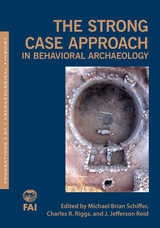
The Strong Case Approach in Behavioral Archaeology
Edited by Michael Brian Schiffer, Charles R. Riggs, and J. Jefferson Reid
University of Utah Press, 2017
The chapters employ a wide range of data classes, demonstrating the versatility and productivity of the approach for fashioning rigorous inferences in history, historical archaeology, ethnoarchaeology, and prehistory. By illustrating the strong case approach with convincing case studies from behavioral archaeology, the editors aim to alert the archaeological community about how the process of archaeological inference can be improved.
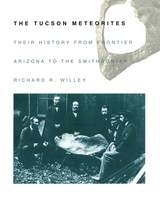
The Tucson Meteorites
Their History from Frontier Arizona to the SmithsonianRichard R. Willey
University of Arizona Press, 1997
Willey tracks the meteorites through years of confiscation and disputed ownership to the Smithsonian Institution. "I had seen passing allusions to the Meteorite in occasional writings on Tucson’s colorful history," he recalls, "but little that hinted at the social, political, and military involvement that the Meteorite had enjoyed in the Southwest of yesteryear, nor of the mystery surrounding other, yet unfound ‘enormous masses’ of the Meteorite." The book features both historical illustrations and photographs of the meteorite fragments and also includes data on their physical characteristics. Willey’s story will leave readers with an enhanced appreciation of life on the early Arizona frontier and of the facts surrounding the fate of the Tucson Meteorites in that frontier setting.
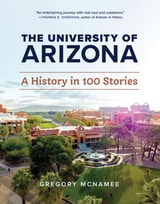
The University of Arizona
A History in 100 StoriesGregory McNamee
University of Arizona Press, 2024
The University of Arizona: A History in 100 Stories is a celebration of the people, ideas, inventions, teaching, and structures that have been part of the school’s evolution from a small land-grant institution to an internationally renowned research institution. Drawing on half a century of connection with the University of Arizona as a student, staff member, and faculty member, Gregory McNamee presents a history through the lens of a hundred subjects.
That story begins in 1885, with the establishment of the school, which quickly proved itself to be a powerhouse in its foundational “four pillars”: agriculture and earth sciences, followed by astronomy and anthropology. In the years following World War II, those four pillars became ever more important to the University, even as countless other fields of study gained prominence: optical sciences, women’s studies, the humanities, mathematics, and more. This phenomenal institution has as its setting the Sonoran Desert, and, closer to home, to a built environment that is widely considered among the most scenic in the country, from the Historic District with its buildings that are more than a century old to the latest steel-and-glass constructions on the edges of the ever-expanding campus.
McNamee relates this history in an entertaining manner, peppering discussion of serious intellectual and institutional themes with lighter moments—the origins of the university's rivalry with Arizona State, the ghosts that are said to lurk about campus, and more. Wildcats everywhere will delight in McNamee’s celebration of the people, places, learning, books, and pastimes that have distinguished our school.
The Vertebrates of Arizona
With Major Section on Arizona HabitatsEdited by Charles H. Lowe
University of Arizona Press, 1964
“An impressive volume . . . a valuable reference for professional biologists, students, and others interested in the native fauna of Arizona and its distribution there.”—Science

The War on Slums in the Southwest
Public Housing and Slum Clearance in Texas, Arizona, and New Mexico, 1935-1965Robert B Fairbanks
Temple University Press, 2016
In The War on Slums in the Southwest, Robert Fairbanks provides compelling and probing case studies of economic problems and public housing plights in Albuquerque, Dallas, Houston, Phoenix and San Antonio. He provides brief histories of each city--all of which expanded dynamically between 1935 and 1965--and how they responded to slums under the Housing Acts of 1937, 1949, and 1954.
Despite being a region where conservative politics has ruled, these Southwestern cities often handled population growth, urban planning, and economic development in ways that closely followed the national account of efforts to eliminate slums and provide public housing for the needy. The War on Slums in the Southwest therefore corrects some misconceptions about the role of slum clearance and public housing in this region as Fairbanks integrates urban policy into the larger understanding of federal and state-based housing policies.
The Yuma Reclamation Project
Irrigation, Indian Allotment, and Settlement Along the Lower Colorado RiverRobert Sauder
University of Nevada Press, 2009
In the arid American West, settlement was generally contingent on the availability of water to irrigate crops and maintain livestock and human residents. Early irrigation projects were usually the cooperative efforts of pioneer farmers, but by the early twentieth century they largely reflected federal intentions to create new farms out of the western public domain. The Yuma Reclamation Project, authorized in 1904, was one of the earliest federal irrigation projects initiated in the western United States and the first authorized on the Colorado River. Its story exemplifies the range of difficulties associated with settling the nation’s final frontier—the remaining irrigable lands in the arid West, including Indian lands—and illuminates some of the current issues and conflicts concerning the Colorado River. Author Robert Sauder’s detailed, meticulously researched examination of the Yuma Project illustrates the complex multiplicity of problems and challenges associated with the federal government’s attempt to facilitate homesteading in the arid West. He examines the history of settlement along the lower Colorado River from earliest times, including the farming of the local Quechan people and the impact of Spanish colonization, and he reviews the engineering problems that had to be resolved before an industrial irrigation scheme could be accomplished. The study also sheds light on myriad unanticipated environmental, economic, and social challenges that the government had to confront in bringing arid lands under irrigation, including the impact on the Native American population of the region.The Yuma Reclamation Project is an original and significant contribution to our understanding of federal reclamation endeavors in the West. It provides new and fascinating information about the history of the Yuma Valley and, as a case study of irrigation policy, it offers compelling insights into the history and consequences of water manipulation in the arid West.

There's a Bobcat in My Backyard
Living with and Enjoying Urban WildlifeJonathan Hanson
University of Arizona Press, 2004
Human residents of the Sonoran Desert are sometimes not completely comfortable when confronted by the wild creatures with whom they share this fragile habitat. But have no fear—please! Not only do these critters mean you no harm, they can also be a source of immense delight.
In this entertaining guidebook, naturalist Jonathan Hanson introduces readers to the satisfaction of attracting and enjoying desert wildlife. Whether your home is deep within the city limits or on what is (currently) the edge of human settlement, you can turn your backyard into a miniature wildlife refuge by providing a simple combination of food, water, and habitat. An appropriately landscaped yard can become a home for a bevy of birds, beasts, and bugs, while even a condo patio can attract colorful hummingbirds and butterflies. Hanson advises you on what kind of birdseed to put out to attract the most interesting avian species, how to tell the difference between rabbits and jackrabbits, and when to worry about roving reptiles—which really isn't all that often. He'll even help you pick out a pair of binoculars to heighten your enjoyment.
Not all desert creatures offer people a positive experience, and Hanson tells how to cope with those that are sometimes considered pests—whether it's the Gila woodpecker announcing its presence on your roof at five in the morning, the rattlesnake slithering unconcerned across your porch, the coyote running amok with a taste for wandering housecats, or the aforementioned woodrat homesteading in a major appliance or car engine. From bears to bees to "creepy crawlies"—scorpions, spiders, and the like—he lets you know when you need to be cautious . . . and when you simply need to give a wild animal its space.
If you live in the desert, you're part of the desert. This book, generously laced with humor and brimming with helpful information, can turn you from a mere bystander into an active participant in an environment in which we all—people and wildlife—must coexist.
They Called Him Buckskin Frank
The Life and Adventures of Nashville Franklyn LeslieJack DeMattos
University of North Texas Press, 2018
They Kept Running
Michelle Ross
University of North Texas Press, 2022