Results by title
490 books match the query 'Asian' and 105 start with t

Talking to North Korea
Ending the Nuclear StandoffGlyn Ford
Pluto Press, 2018
This provocative insider’s account blasts apart the myths which paint North Korea as a rogue state run by a mad leader. Informed by extraordinary access to the country's leadership, Glyn Ford investigates the regime from the inside, providing game-changing insights. Acknowledging that North Korea is a deeply flawed and barbaric state, he nonetheless shows that sections of the leadership are desperate to modernize and end their isolation.
With chapters on recent developments including the Trump / Kim summit, Ford supports a dialogue between East and West and provides a road map to avert the looming threat of a war that would threaten the lives of millions.

Territory of Desire
Representing the Valley of KashmirAnanya Jahanara Kabir
University of Minnesota Press, 2009
Moves beyond traditional analysis to understand the conflict over Kashmir
A result of territorial disputes between India and Pakistan since 1947, exacerbated by armed freedom movements since 1989, the ongoing conflict over Kashmir is consistently in the news. Taking a unique multidisciplinary approach, Territory of Desire asks how, and why, Kashmir came to be so intensely desired within Indian, Pakistani, and Kashmiri nationalistic imaginations. Literary historian Ananya Jahanara Kabir finds an answer to this question in the Valley of Kashmir’s repeated portrayal as a “special” place and the missing piece of Pakistan and India.
Analyzing the conversion of natural beauty into collective desire—through photography, literature, cinema, art, and souvenir production—Kabir exposes the links between colonialism, modernity, and conflict within the postcolonial nation. Representations of Kashmir as a space of desire emerge in contemporary film, colonial “taming” of the valley through nineteenth-century colonialist travelogues, the fetishization of traditional Kashmiri handicrafts like papier maché, and Pandit and Muslim religious revivalisms in the region. Linking a violent modernity to the fantasies of nationhood, Kabir proposes nonmilitaristic ways in which such desire may be overcome. In doing so she offers an innovative approach to complex and protracted conflict and, ultimately, its resolution.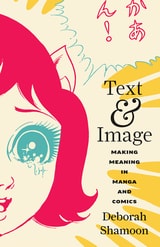
Text and Image
Making Meaning in Manga and ComicsDeborah Shamoon
University of Minnesota Press, 2026
How manga and comics reshape storytelling across cultures
Text and Image is a groundbreaking exploration of how Japanese manga and comics from the United States and United Kingdom craft meaning through the combination of words and pictures. Current scholarship often isolates manga in niche genre studies or prioritizes anime instead; in response, Deborah Shamoon proposes a unified framework for understanding paneled visual storytelling across cultures. She reframes comics not as kids’ stuff but as a sophisticated narrative art with its own grammar, rhythm, and visual poetics.
Drawing on narratology, art history, film studies, and media theory, Text and Image examines a vast array of material, from four-panel comic strips to different manga genres, including shōjo (girls’ romance comics), shōnen (teen action), seinen (adult drama), and gekiga (mature realism). Through close visual analysis, Shamoon demonstrates how creators use panel layout, pacing, and the choreography of text and image to shape emotional impact and narrative momentum. She reveals the shared techniques that link works as disparate as Fun Home and Spider-Man while also showing where cultural conventions diverge. Beyond the traditional print realm, Shamoon discusses digital platforms, such as webtoons and vertically scrolling comics, to show how new technologies merge manga’s cinematic sensibility with global innovation.
Making a bold case for a more expansive, inclusive theory of visual narrative that bridges long-standing divides between manga studies and Anglophone comics scholarship, Text and Image is an indispensable guide to understanding how contemporary stories work and why they resonate across borders.
Retail e-book files for this title are screen-reader friendly with images accompanied by short alt text and/or extended descriptions.
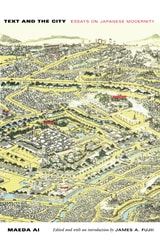
Text and the City
Essays on Japanese ModernityMaeda Ai
Duke University Press, 2004
Maeda remapped the study of modern Japanese literature and culture in the 1970s and 1980s, helping to generate widespread interest in studying mass culture on the one hand and marginalized sectors of modern Japanese society on the other. These essays reveal the broad range of Maeda’s cultural criticism. Among the topics considered are Tokyo; utopias; prisons; visual media technologies including panoramas and film; the popular culture of the Edo, Meiji, and contemporary periods; maps; women’s magazines; and women writers. Integrally related to these discussions are Maeda’s readings of works of Japanese literature including Matsubara Iwagoro’s In Darkest Tokyo, Nagai Kafu’s The Fox, Higuchi Ichiyo’s Growing Up, Kawabata Yasunari’s The Crimson Gang of Asakusa, and Narushima Ryuhoku’s short story “Useless Man.” Illuminating the infinitely rich phenomena of modernity, these essays are full of innovative, unexpected connections between cultural productions and urban life, between the text and the city.

Text/Politics in Island Southeast Asia
Essays in InterpretationD.M. Roskies
Ohio University Press, 1993
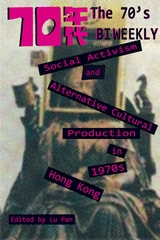
The 70's Biweekly
Social Activism and Alternative Cultural Production in 1970s Hong KongEdited by Lu Pan
Hong Kong University Press, 2023
Taking The 70’s Biweekly—an independent youth publication in 1970s Hong Kong—as the main thread, this edited collection investigates an unexplored trajectory of Hong Kong’s cultural and artistic production in the 1970s. The 70’s Biweekly stands out from many other independent magazines with its unique blending of radical political theories, social activism, avant-garde art, and local literature. By taking the magazine as a node of social and cultural activism from and around which actions, debates, community, and artistic practices are formed, this book fills gaps in the study of how young Hong Kong cultural producers carved out an alternative space to speak out against established authorities.
Split into three parts, The 70’s Biweekly provides readers with a panoramic view of the political and cultural activism in Hong Kong during the 1970s, featuring writings on art and film, and interviews with former founders and contributors that reflect on how their participation led them to engage ideologically with their activism and community.
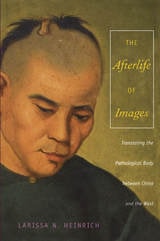
The Afterlife of Images
Translating the Pathological Body between China and the WestAri Larissa Heinrich
Duke University Press, 2008
Combining literary studies, the history of science, and visual culture studies, Heinrich analyzes the rhetoric and iconography through which medical missionaries transmitted to the West an image of China as “sick” or “diseased.” He also examines the absorption of that image back into China through missionary activity, through the earliest translations of Western medical texts into Chinese, and even through the literature of Chinese nationalism. Heinrich argues that over time “scientific” Western representations of the Chinese body and culture accumulated a host of secondary meanings, taking on an afterlife with lasting consequences for conceptions of Chinese identity in China and beyond its borders.
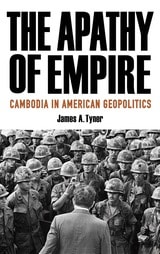
The Apathy of Empire
Cambodia in American GeopoliticsJames A. Tyner
University of Minnesota Press, 2024
What America’s intervention in Cambodia during the Vietnam War reveals about Cold War–era U.S. national security strategy
The Apathy of Empire reveals just how significant Cambodia was to U.S. policy in Indochina during the Vietnam War, broadening the lens to include more than the often-cited incursion in 1970 or the illegal bombing after the Paris Peace Accords in 1973. This theoretically informed and thoroughly documented case study argues that U.S. military intervention in Cambodia revealed America’s efforts to construct a hegemonic spatial world order.
James Tyner documents the shift of America’s post-1945 focus from national defense to national security. He demonstrates that America’s expansionist policies abroad, often bolstered by military power, were not so much about occupying territory but instead constituted the construction of a new normal for the exercise of state power. During the Cold War, Vietnam became the geopolitical lodestar of this unfolding spatial order. And yet America’s grand strategy was one of contradiction: to build a sovereign state (South Vietnam) based on democratic liberalism, it was necessary to protect its boundaries—in effect, to isolate it—through both covert and overt operations in violation of Cambodia’s sovereignty. The latter was deemed necessary for the former.
Questioning reductionist geopolitical understandings of states as central or peripheral, Tyner explores this paradox to rethink the formulation of the Cambodian war as sideshow, revealing it instead as a crucial site for the formation of this new normal.
Retail e-book files for this title are screen-reader friendly.
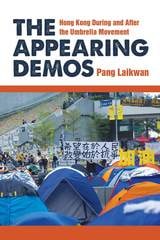
The Appearing Demos
Hong Kong During and After the Umbrella MovementPang Laikwan
University of Michigan Press, 2020
The 79-day-long Hong Kong Umbrella Movement occupied major streets in the busiest parts of the city, creating tremendous inconvenience to this city famous for capitalist order and efficiency. It was also a peaceful collective effort of appearance, and it was as much a political event as a cultural one. The urge for expressing an independent cultural identity underlined both the Occupy movement and the remarkably rich cultural expressions it generated. While understanding the specificity of Hong Kong’s situations, The Appearing Demos also comments on some global predicaments we are facing in the midst of neoliberalism and populism. It directs our attention from state-based sovereignty to city-based democracy, and emphasizes the importance of participation and cohabitation. The book also examines how the ideas of Hannah Arendt are useful to those happenings much beyond the political circumstances that gave rise to her theorization. The book pays particular attention to the actual intersubjective experiences during the protest. These experiences are local, fragile, and sometimes inarticulable, therefore resisting rationality and debates, but they define the fullness of any individual, and they also make politics possible. Using the Umbrella Movement as an example, this book examines the “freed” political agents who constantly take others into consideration in order to guarantee the political realm as a place without coercion and discrimination. In doing so, Pang Laikwan demonstrates how politics means neither to rule nor to be ruled, and these movements should be defined by hope, not by goals.
The Artisans
Madeleine Thien
Diaphanes, 2025
Canadian writer Madeleine Thien reflects on a fragment of a mural depicting Three Uighur Princes from one of the Bezeklik Caves along the Northern Silk Road, in what is now the Xinjiang Uighur Autonomous Region of China. This most renowned donor portrait of Uighur-Buddhist art was brought to the Berlin museums following the Second German Turfan Expedition (1904–5). Thien responds to its vibrant colors and expressive lines with a literary text, transporting us into the daily lives of the painters who adorned the caves with strikingly lifelike murals in the tenth century.
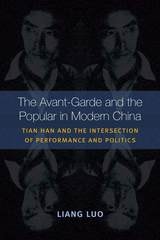
The Avant-Garde and the Popular in Modern China
Tian Han and the Intersection of Performance and PoliticsLiang Luo
University of Michigan Press, 2014
The Book of Korean Poetry
Songs of Shilla and KoryoKevin O'Rourke
University of Iowa Press, 2006
The Call
Rawi Hage
Diaphanes, 2025
Following one of the Turfan archaeological expeditions in the early 1900s, a fragment of a Manichaean text written in Uighur and Old Turkic found its way to the Asian Art Museum in Berlin. Originating from the Northern Silk Road region (now the Xinjiang Uighur Region in China), these “loose leaves” became a source of inspiration for Rawi Hage.
Hage writes, “I was born near Byblos in Lebanon. The ancient city of Byblos is believed to be the place where the first alphabet was invented.” Encountering this rare and precious manuscript, with its layered and multicolored words, Hage reflects on the movement, uprooting, displacement, and migration of both objects and people.
The Chinese Garden as Lyric Enclave
A Generic Study of <em>The Story of the Stone</em>Chi Xiao
University of Michigan Press, 2012
The Contradictions of Neoliberal Agri-Food
Corporations, Resistance, and Disasters in JapanKae Sekine
West Virginia University Press, 2016
Sekine and Bonanno stress the incompatibility of the requirements of neoliberalism with the structural and cultural conditions of Japanese agri-food. Local farmers’ and fishermen’s emphasis on community collective management of natural resources, they argue, clashes with neoliberalism’s focus on individualism and competitiveness. The authors conclude by pointing out the resulting fundamental contradiction: The lack of recognition of this incompatibility allows the continuous implementation of market solutions to problems that originate in these very market mechanisms.
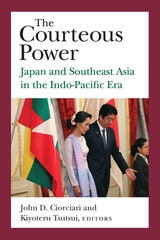
The Courteous Power
Japan and Southeast Asia in the Indo-Pacific EraJohn D. Ciorciari and Kiyoteru Tsutsui, editors
University of Michigan Press, 2021
The Courteous Power seeks to provide a nuanced view of the current relationship between Japan and Southeast Asia. Much of the current scholarship on East–Southeast Asian engagement has focused on the multidimensional chess game playing out between China and Japan, as the dominant post-imperialist powers. Alternatively, there has been renewed attention on ASEAN and other Southeast Asian–centered initiatives, explicitly minimizing the influence of East Asia in the region. Given the urgency of understanding the careful balance in the Indo-Pacific region, this volume brings together scholars to examine the history and current engagement from a variety of perspectives, ranging from economic and political, to the cultural and technological, while also focusing more clearly on the specific relationship between the region and Japan.
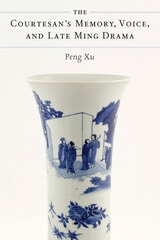
The Courtesan's Memory, Voice, and Late Ming Drama
Peng Xu
University of Michigan Press, 2025
This study profoundly remaps the textbook narratives of gender bias, challenges modern prejudices prevalent in the literary history of Chinese drama, and reveals how theatrical conditions and writing styles shifted to accommodate courtesan performances. Utilizing a wide range of sources such as scripts, city guides, biographies, diaries, letters, wood-block illustrations, and paintings, this study distinguishes itself from earlier studies of Chinese courtesans by not thematizing courtesans for their allegorical values, but rather pinpointing their agency in shaping the features of Chinese theater and recognizing courtesans as a source of creativity and development in the medium. Xu’s focus on courtesan performance culture allows for fresh readings of canonical Chinese plays, opening up new ways of understanding the history of Chinese drama written by women, thus deviating from standard historiography based solely on the writings of men.
The Crisis of Secularism in India
Anuradha Dingwaney Needham and Rajeswari Sunder Rajan, eds.
Duke University Press, 2007
Scholars of history, anthropology, religion, politics, law, philosophy, and media studies take on a broad range of concerns. Some consider the history of secularism in India; others explore theoretical issues such as the relationship between secularism and democracy or the shortcomings of the categories “majority” and “minority.” Contributors examine how the debates about secularism play out in schools, the media, and the popular cinema. And they address two of the most politically charged sites of crisis: personal law and the right to practice and encourage religious conversion. Together the essays inject insightful analysis into the fraught controversy about the shortcomings and uncertain future of secularism in the world today.
Contributors. Flavia Agnes, Upendra Baxi, Shyam Benegal, Akeel Bilgrami, Partha Chatterjee, V. Geetha, Sunil Khilnani, Nivedita Menon, Ashis Nandy, Anuradha Dingwaney Needham, Gyanendra Pandey, Gyan Prakash, Arvind Rajagopal, Paula Richman, Sumit Sarkar, Dwaipayan Sen, Rajeswari Sunder Rajan, Shabnum Tejani, Romila Thapar, Ravi S. Vasudevan, Gauri Viswanathan
The Currency of Truth
Newsmaking and the Late-Socialist Imaginaries of China's Digital EraEmily H. C. Chua
University of Michigan Press, 2023
In The Currency of Truth, Emily H. C. Chua argues that news in China works less as a medium of mass communication than as a kind of currency as industry players make and use news articles to create agreements, build connections, and protect and advance their positions against one another. Looking at the ethical and professional principles that well-intentioned and civically minded journalists strive to uphold, and the challenges and doubts that they grapple with in the process, Chua brings her findings into conversation around “post-truth” news and the “crisis” of professional journalism in the West. The book encourages readers to rethink contemporary news, arguing that rather than setting out from the assumption that news works either to inform or deceive its publics, we should explore the “post-public” social and political imaginaries emerging among today’s newsmakers and remaking the terms of their practice.
The Death and Life of Chinese Civil Society
Mujun Zhou
University of Michigan Press, 2026
Mujun Zhou employs the concept of interstitial space, or the space where the exercise of power has not been fully institutionalized, to examine the history of the civil society project over the past three decades and its changing relationship with other social movements. Zhou suggests that by advocating for civil society the liberals gained allies and thematized many social problems rising during China’s economic reform; however, liberals’ activism also produced new forms of power inequalities.
The Dictator's Dilemma at the Ballot Box
Electoral Manipulation, Economic Maneuvering, and Political Order in AutocraciesMasaaki Higashijima
University of Michigan Press, 2022
Contrary to our stereotypical views, dictators often introduce elections in which they refrain from employing blatant electoral fraud. Why do electoral reforms happen in autocracies? Do these elections destabilize autocratic rule? The Dictator’s Dilemma at the Ballot Box argues that strong autocrats who can garner popular support become less dependent on coercive electioneering strategies. When autocrats fail to design elections properly, elections backfire in the form of coups, protests, and the opposition’s stunning election victories. The book’s theoretical implications are tested on a battery of cross-national analyses with newly collected data on autocratic elections and in-depth comparative case studies of the two Central Asian republics of Kazakhstan and Kyrgyzstan.
The Disinterested Witness
A Fragment of Advaita Vedanta PhenomenologyBina Gupta
Northwestern University Press, 1998

The Double Screen
Medium and Representation in Chinese PaintingWu Hung
University of Chicago Press, 1997
and pictorial representations, The Double Screen shows how the
collaboration and tension between material form and image gives life to
a painting. A Chinese painting is often reduced to the image it bears;
its material form is dismissed; its intimate connection with social
activities and cultural conventions neglected.
A screen occupies a space and divides it, supplies an ideal surface for
painting, and has been a favorite pictorial image in Chinese art since
antiquity. Wu Hung undertakes a comprehensive analysis of the screen,
which can be an object, an art medium, a pictorial motif, or all three
at once. With its diverse roles, the screen has provided Chinese
painters with endless opportunities to reinvent their art.
The Double Screen provides a powerful non-Western perspective on
issues from portraiture and pictorial narrative to voyeurism,
masquerade, and political rhetoric. It will be invaluable to anyone
interested in the history of art and Asian studies.
The Dumpling Field
Haiku of IssaKobayashi Issa
Ohio University Press, 1991
Kobayashi Issa (1763–1827), long considered among Japan’s four greatest haiku poets (along with Basho, Buson, and Shiki) is probably the best loved. This collection of more than 360 haiku, arranged seasonally and many rendered into English for the first time, attempts to reveal the full range of the poet’s extraordinary life as if it were concentrated within a year. Issa’s haiku are traditionally structured, of seventeen syllables in the original, tonally unified and highly suggestive, yet they differ from those of fellow haikuists in a few important respects. Given his character, they had to. The poet never tries to hide his feelings, and again and again we find him grieving over the lot of the unfortunate – of any and all species.
No poet, of any time or culture, feels greater compassion for his life of creatures. No Buddhist—Issa was to become a monk—acts out the credos of his faith more genuinely. The poet, a devoted follower of Basho, traveled throughout the country, often doing the most menial work, seeking spiritual companionship and inspiration for the thousands of haiku he was to write. Yet his emotional and creative life was centered in his native place, Kashiwabara in the province of Shinano (now Nagano Prefecture), and his severest pain was the result of being denied a place in his dead father’s house by his stepmother and half brother.
By the time he was able to share the house of his beloved father, Issa had experienced more than most the grief of living, and much more was to follow with the death of his wife and their four children. In the face of all he continued to write, celebrating passionately the lives of all that shared the world with him, all creatures, all humans. Small wonder that Issa is so greatly loved by his fellow poets throughout the world, and by poetry lovers of all ages.
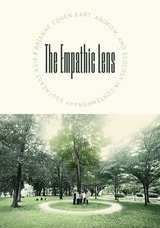
The Empathic Lens
Art, Animism, and Ecology in Contemporary Southeast AsiaBrianne Cohen
University of Minnesota Press, 2026
How lens-based art from Southeast Asia offers alternative visions for ecological sustainability
A new paradigm of ecologically minded artistic practices is taking shape in Southeast Asia—one that at once tracks ecological destruction and works specifically to cultivate deeper feelings of empathy toward the environment. Examining a range of photography and video work, The Empathic Lens explores how these lens-based projects respond to increasingly urgent concerns related to climate disaster and capitalist acceleration.
In this analysis of work produced across Cambodia, Vietnam, and Singapore, Brianne Cohen highlights artists for whom rampant urban development, resource extraction, and environmental toxicity are close at hand. As each artist takes their lens to these realities, Cohen shows, they draw on Indigenous knowledge and local traditions that have long recognized the kinship of humans and nonhumans. Engaging often-censored discourses of Indigenous land relations and environmental justice in a region with a long history of colonial and neocolonial development, Cohen traces genealogies of empathy and animism to demonstrate how these works develop sustainable visions for the future coexistence of planetary life.
The first critical account of marginalized artworks that depict the centrality of the more-than-human in Southeast Asian Indigenous worldviews, The Empathic Lens makes a powerful case for the relevance of Southeast Asian lens-based art in contemporary media practice and the art of the Anthropocene.
Retail e-book files for this title are screen-reader friendly with images accompanied by short alt text and/or extended descriptions.
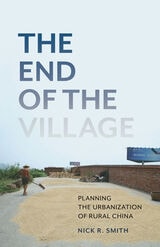
The End of the Village
Planning the Urbanization of Rural ChinaNick R. Smith
University of Minnesota Press, 2021
How China’s expansive new era of urbanization threatens to undermine the foundations of rural life
Since the beginning of the twenty-first century, China has vastly expanded its urbanization processes in an effort to reduce the inequalities between urban and rural areas. Centered on the mountainous region of Chongqing, which serves as an experimental site for the country’s new urban development policies, The End of the Village analyzes the radical expansion of urbanization and its consequences for China’s villagers. It reveals a fundamental rewriting of the nation’s social contract, as villages that once organized rural life and guaranteed rural livelihoods are replaced by an increasingly urbanized landscape dominated by state institutions.
Throughout this comprehensive study of China’s “urban–rural coordination” policy, Nick R. Smith traces the diminishing autonomy of the country’s rural populations and their subordination to larger urban networks and shared administrative structures. Outside Chongqing’s urban centers, competing forces are at work in reshaping the social, political, and spatial organization of its villages. While municipal planners and policy makers seek to extend state power structures beyond the boundaries of the city, village leaders and inhabitants try to maintain control over their communities’ uncertain futures through strategies such as collectivization, shareholding, real estate development, and migration.
As China seeks to rectify the development crises of previous decades through rapid urban growth, such drastic transformations threaten to displace existing ways of life for more than 600 million residents. Offering an unprecedented look at the country’s contentious shift in urban planning and policy, The End of the Village exposes the precarious future of rural life in China and suggests a critical reappraisal of how we think about urbanization.
The Ethics and Poetics of Alterity in Asian American Poetry
Xiaojing Zhou
University of Iowa Press, 2006
Poetry by Asian American writers has had a significant impact on the landscape of contemporary American poetry, and a book-length critical treatment of Asian American poetry is long overdue. In this groundbreaking book, Xiaojing Zhou demonstrates how many Asian American poets transform the conventional “I” of lyric poetry—based on the traditional Western concept of the self and the Cartesian “I”—to enact a more ethical relationship between the “I” and its others.
Drawing on Emmanuel Levinas’s idea of the ethics of alterity—which argues that an ethical relation to the other is one that acknowledges the irreducibility of otherness—Zhou offers a reconceptualization of both self and other. Taking difference as a source of creativity and turning it into a form of resistance and a critical intervention, Asian American poets engage with broader issues than the merely poetic. They confront social injustice against the other and call critical attention to a concept of otherness which differs fundamentally from that underlying racism, sexism, and colonialism. By locating the ethical and political questions of otherness in language, discourse, aesthetics, and everyday encounters, Asian American poets help advance critical studies in race, gender, and popular culture as well as in poetry.
The Ethics and Poetics of Alterity is not limited, however, to literary studies: it is an invaluable response to the questions raised by increasingly globalized encounters across many kinds of boundaries.
The Poets
Marilyn Chin, Kimiko Hahn, Myung Mi Kim, Li Young Lee, Timothy Liu, David Mura, and John Yau
The Female as Subject
Reading and Writing in Early Modern JapanP. F. Kornicki, Mara Patessio, and G. G. Rowley, Editors
University of Michigan Press, 2010
The Fine Art of Persuasion
Corporate Advertising Design, Nation, and Empire in Modern JapanGennifer Weisenfeld
Duke University Press, 2025
The Forbidden Worlds of Haruki Murakami
Matthew Carl Strecher
University of Minnesota Press, 2014
In an “other world” composed of language—it could be a fathomless Martian well, a labyrinthine hotel or forest—a narrative unfolds, and with it the experiences, memories, and dreams that constitute reality for Haruki Murakami’s characters and readers alike. Memories and dreams in turn conjure their magical counterparts—people without names or pasts, fantastic animals, half-animals, and talking machines that traverse the dark psychic underworld of this writer’s extraordinary fiction.
Fervently acclaimed worldwide, Murakami’s wildly imaginative work in many ways remains a mystery, its worlds within worlds uncharted territory. Finally in this book readers will find a map to the strange realm that grounds virtually every aspect of Murakami’s writing. A journey through the enigmatic and baffling innermost mind, a metaphysical dimension where Murakami’s most bizarre scenes and characters lurk, The Forbidden Worlds of Haruki Murakami exposes the psychological and mythological underpinnings of this other world. Matthew Carl Strecher shows how these considerations color Murakami’s depictions of the individual and collective soul, which constantly shift between the tangible and intangible but in this literary landscape are undeniably real.
Through these otherworldly depths The Forbidden Worlds of Haruki Murakami also charts the writer’s vivid “inner world,” whether unconscious or underworld (what some Japanese critics call achiragawa, or “over there”), and its connectivity to language. Strecher covers all of Murakami’s work—including his efforts as a literary journalist—and concludes with the first full-length close reading of the writer’s newest novel, Colorless Tsukuru Tazaki and His Years of Pilgrimage.
The Formless Empire
A Short History of Diplomacy and Warfare in Central AsiaChristopher Mott
Westholme Publishing, 2015
Central Asia, a vast region extending from eastern Russia and across Kazakhstan, Uzbekistan, Turkmenistan, Afghanistan, Tajikistan, Kyrgystan, Mongolia, and western China, has its own tradition of foreign policy rooted in the ancient nomadic culture of many of its peoples as well as the region’s distinctive geography. From the thundering hooves of Mongol or Cossack cavalry across the steppes to the clanking of tanks on parade in Moscow or Beijing, elements of this system still cast a shadow on the region at the heart of Earth’s largest continent. By tracing the evolution of Central Asian warfare and diplomacy through a series of historical examples, ranging from the ancient Xiongnu people and medieval Mongol Empire to the fall of the Soviet Union, historian Christopher Mott argues that the original system of informal relationships, indirect rule, and rapid military movement did not entirely fade from the region with the eclipse of the nomadic powers during the Middle Ages. In fact, many states like China, Iran, and Russia had already been influenced by nomadic people, and in so doing adapted their own diplomatic and military policies accordingly. The Formless Empire: A Short History of Diplomacy and Warfare in Central Asia is an engaging study of the nature of non-Western imperialism and great-power strategy. In addition, the book demonstrates that regional histories can show us the variety of political possibilities in the past and how they were adapted to changing circumstances—a point made even more important by the rapid changes facing global security and new forms of empire building.
“Christopher Mott’s extremely erudite and wide-ranging examination of the history of Central Asia shows us that we have been far too narrow-minded and Eurocentric in thinking about power and how the global system changes historically. Given the current interest in ‘caliphates’ we need to reflect on the history of the areas of the world that dance to a different historical drum than we do in the West.” —Andrew John Williams, author of France, Britain, and the United States in the Twentieth Century
The Future of the South China Sea
Disputes and NegotiationsJiye Kim
University of Michigan Press, 2026
By incorporating negotiation records, such as the 1958 Declaration on China’s Territorial Sea, the 1992 ASEAN Declaration, and the 2005 Tripartite Agreement, Jiye Kim traces how China reshapes its interests into negotiation agendas, providing critical insights into the nation’s diplomacy and making a significant contribution to an existing literature on the South China Sea that has been largely dominated by analyses of great power rivalry. This book sheds light on China’s underlying interests as living and adaptable entities, providing scholars with a detailed, evidence-based understanding of the complexities that define one of the world’s most contested maritime regions.
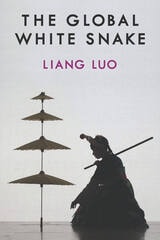
The Global White Snake
Liang Luo
University of Michigan Press, 2021
The Global White Snake uncovers how the White Snake legend often acts as an unsettling narrative of radical tolerance for hybrid sexualities, loving across traditional boundaries, subverting authority, and valuing the strange and the uncanny. A timely mediation and reflection on our contemporary moment of continued struggle for minority rights and social justice, The Global White Snake revives the radical anti-authoritarian spirit slithering under the tales of monsters and demons, love and lust, and reminds us of the power of the fantastic and the fabulous in inspiring and empowering personal and social transformations.
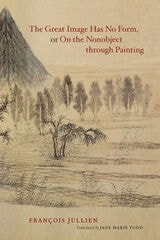
The Great Image Has No Form, or On the Nonobject through Painting
François Jullien
University of Chicago Press, 2009
In premodern China, elite painters used imagery not to mirror the world around them, but to evoke unfathomable experience. Considering their art alongside the philosophical traditions that inform it, The Great Image Has No Form explores the “nonobject”—a notion exemplified by paintings that do not seek to represent observable surroundings.
François Jullien argues that this nonobjectifying approach stems from the painters’ deeply held belief in a continuum of existence, in which art is not distinct from reality. Contrasting this perspective with the Western notion of art as separate from the world it represents, Jullien investigates the theoretical conditions that allow us to apprehend, isolate, and abstract objects. His comparative method lays bare the assumptions of Chinese and European thought, revitalizing the questions of what painting is, where it comes from, and what it does. Provocative and intellectually vigorous, this sweeping inquiry introduces new ways of thinking about the relationship of art to the ideas in which it is rooted.
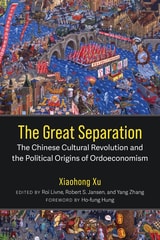
The Great Separation
The Chinese Cultural Revolution and the Political Origins of OrdoeconomismXiaohong Xu Edited by Roi Livne, Robert Jansen and Yang Zhang
University of Michigan Press, 2026
With a keen attention to how culture and elite conflict shape politics, The Great Separation upends deterministic understandings of the Chinese Cultural Revolution and the market reforms that followed. This ambitious posthumous volume by sociologist Xiaohong Xu turns the existing scholarship on China’s “neoliberalism” on its head by demonstrating that the effort to separate mass politics from economic policy had its origins well before the Reform and Opening-up era.
Over the course of the Cultural Revolution, unfolding factional dynamics and interpretive struggles enabled Chairman Mao and his radical colleagues to mobilize workers to advance their own political goals while neutralizing the masses’ economic demands, symbolically separating the political from the economic. This set the stage for a more thoroughgoing depoliticization of the economy after 1989, when China faced challenges from students and workers whose economic grievances had rapidly morphed into political demands for democracy. The result was what Xu calls ordoeconomism: an ideology that valorizes economic development, rejects mass politics, and views the state as the apolitical guardian of the economy. As Xu demonstrates, while ordoeconomism may share some affinities with neoliberalism, it is a distinctively Chinese approach that must be understood on its own terms.
The Guide of the Perplexed, Volume 2
Moses Maimonides
University of Chicago Press, 1963
This monument of rabbinical exegesis written at the end of the twelfth century has exerted an immense and continuing influence upon Jewish thought. Its aim is to liberate people from the tormenting perplexities arising from their understanding of the Bible according only to its literal meaning. This edition contains extensive introductions by Shlomo Pines and Leo Strauss, a leading authority on Maimonides.
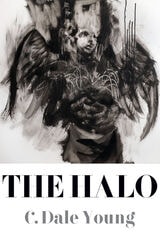
The Halo
C. Dale Young
Four Way Books, 2016
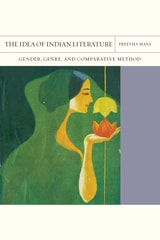
The Idea of Indian Literature
Gender, Genre, and Comparative MethodPreetha Mani
Northwestern University Press, 2022
Indian literature is not a corpus of texts or literary concepts from India, argues Preetha Mani, but a provocation that seeks to resolve the relationship between language and literature, written in as well as against English. Examining canonical Hindi and Tamil short stories from the crucial decades surrounding decolonization, Mani contends that Indian literature must be understood as indeterminate, propositional, and reflective of changing dynamics between local, regional, national, and global readerships. In The Idea of Indian Literature, she explores the paradox that a single canon can be written in multiple languages, each with their own evolving relationships to one another and to English.
Hindi, representing national aspirations, and Tamil, epitomizing the secessionist propensities of the region, are conventionally viewed as poles of the multilingual continuum within Indian literature. Mani shows, however, that during the twentieth century, these literatures were coconstitutive of one another and of the idea of Indian literature itself. The writers discussed here—from short-story forefathers Premchand and Pudumaippittan to women trailblazers Mannu Bhandari and R. Chudamani—imagined a pan-Indian literature based on literary, rather than linguistic, norms, even as their aims were profoundly shaped by discussions of belonging unique to regional identity. Tracing representations of gender and the uses of genre in the shifting thematic and aesthetic practices of short vernacular prose writing, the book offers a view of the Indian literary landscape as itself a field for comparative literature.
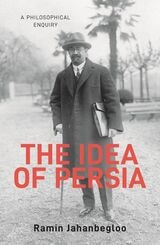
The Idea of Persia
A Philosophical EnquiryRamin Jahanbegloo
Gingko, 2026
This book explores the idea of Persia as a means of investigating the soul of the fascinating nation.
In 1721, the French philosopher Montesquieu posed the question “Comment peut-on être persan?” ("How can one be Persian?") in the title to his famous Persian Letters. After centuries of invasion, murder, destruction, authoritarian rule, decay of political theory, and increasing dissolution in Iran’s politics, this volume is an investigation into what the answer to that question might be today.
The Idea of Persia explores the notion of what it is to be Persian, but not as it has been constituted in the past with reference to the political experience of antiquity, nor as an affirmation of the secular-rational project of modernity. Rather, the book examines the question of what it is to be Persian against the backdrop of centuries in which a common, plural subjectivity of Persian-ness has been continually delayed by those who, with or without ideologies, believed in politics only as a means of ruling or of being ruled without laws or citizenship.
The historical battle for social and political freedoms is still underway in Iran. As the nation wrestles with the possibility of an extended period of political, social, and cultural decline, it is a timely moment to return to the perspective embodied in the enlightened thinking of figures such as the writer and three times prime minister of Iran Mohammed Ali Foroughi (1877–1942) and his vision of a country possessing rational and moral capabilities, and to a possible renaissance of social and political institutions.
The idea of Persia as it is presented here sees hope in the future as the means by which Iranians may liberate themselves from the duality of heroes and saints and remake their political mentality while staying true to an age-old idea of Persia and to freedom as an essential virtue.
The Impossible Nude
François Jullien
University of Chicago Press, 2007
The undraped human form is ubiquitous in Western art and even appears in the art of India and Japan. Only in China, François Jullien argues, is the nude completely absent. In this enthralling extended essay, he explores the different conceptions of the human body that underlie this provocative disparity.
Contrasting nakedness (which implies a diminished state) with nudity (which represents a complete presence), Jullien explores the traditional European vision of the nude as a fixed point of fusion where form joins truth. He then shows that the absence of the nude in Chinese art evinces an understanding of the human body as changeable and transitory. Viewed in light of each other, these differing concepts allow for a new way of thinking about form, the ideal, and beauty, enabling us to delve deeper into the relationship between art and the ideas that lie at its roots. Beautifully illustrated and gracefully translated into English for the first time, The Impossible Nude will fascinate anyone interested in art history, Chinese art, or aesthetics.
The Indigenization of Pali Meters in Thai Poetry
Mis Sea#87Thomas Hudak
Ohio University Press, 1990
This study of the Thai chan meters contends that Thai linguistic constraints and poetic principles determined the transformation of the Pali meters and stanzas into their Thai counterparts. Disproving the frequent claims that the old chan compositions ignored the sequencing of the particular syllable types required by the meters, the author determines why the meters became popular only during certain eras and just what the aesthetic conditions were that nurtured the use of the meters.

The Khwan Niamut
Or, Nawab'S Domestic CookeryDavid E. Schoonover
University of Iowa Press, 1992
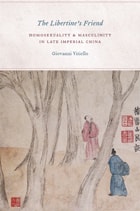
The Libertine's Friend
Homosexuality and Masculinity in Late Imperial ChinaGiovanni Vitiello
University of Chicago Press, 2011
Delving into three hundred years of Chinese literature, from the mid-sixteenth century to the mid-nineteenth, The Libertine’s Friend uncovers the complex and fascinating history of male homosexual and homosocial relations in the late imperial era. Drawing particularly on overlooked works of pornographic fiction, Giovanni Vitiello offers a frank exploration of the importance of same-sex love and eroticism to the evolution of masculinity in China.
Vitiello’s story unfolds chronologically, beginning with the earliest sources on homoeroticism in pre-imperial China and concluding with a look at developments in the twentieth century. Along the way, he identifies a number of recurring characters—for example, the libertine scholar, the chivalric hero, and the lustful monk—and sheds light on a set of key issues, including the social and legal boundaries that regulated sex between men, the rise of male prostitution, and the aesthetics of male beauty. Drawing on this trove of material, Vitiello presents a historical outline of changing notions of male homosexuality in China, revealing the integral part that same-sex desire has played in its culture.
The Magellan Fallacy
Globalization and the Emergence of Asian and African Literature in SpanishAdam Lifshey
University of Michigan Press, 2012
The Magellan Fallacy argues that literature in Spanish from Asia and Africa, though virtually unknown, reimagines the supposed centers and peripheries of the modern world in fundamental ways. Through archival research and comparative readings, The Magellan Fallacy rethinks mainstream mappings of diverse cultures while advocating the creation of a new field of scholarship: global literature in Spanish. As the first attempt to analyze Asian and African literature in Spanish together, and doing so while ranging over all continents, The Magellan Fallacy crosses geopolitical and cultural borders without end. The implications of the book, therefore, extend far beyond the lands formerly ruled by the Spanish empire. The Magellan Fallacy shows that all theories of globalization, including those focused on the Americas and Europe, must be able to account for the varied significances of hispanophone Asia and Africa as well.
The Minjung Art Movement
Decolonization and Democracy in South KoreaSohl Lee
Duke University Press, 2026
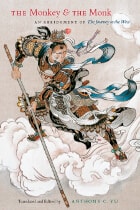
The Monkey and the Monk
An Abridgment of The Journey to the WestTranslated by Anthony C. Yu
University of Chicago Press, 2006
A compact abridgment of the legendary Chinese classic that inspired the hit game Black Myth: Wukong!
Anthony C. Yu’s celebrated translation of The Journey to the West reinvigorated one of Chinese literature’s most beloved classics for English-speaking audiences when it first appeared thirty years ago. Yu’s abridgment of his four-volume translation, The Monkey and the Monk, finally distills the epic novel’s most exciting and meaningful episodes without taking anything away from their true spirit.
These fantastic episodes recount the adventures of Xuanzang, a seventh-century monk who became one of China’s most illustrious religious heroes after traveling for sixteen years in search of Buddhist scriptures. Powerfully combining religious allegory with humor, fantasy, and satire, accounts of Xuanzang’s journey were passed down for a millennium before culminating in the sixteenth century with The Journey to the West. Now, readers of The Monkey and the Monk can experience the full force of his lengthy quest as he travels to India with four animal disciples, most significant among them a guardian-monkey known as “the Great Sage, Equal to Heaven.” Moreover, in its newly streamlined form, this acclaimed translation of a seminal work of world literature is sure to attract an entirely new following of students and fans.
“A new translation of a major literary text which totally supersedes the best existing version. . . . It establishes beyond contention the position of The Journey to the West in world literature, while at the same time throwing open wide the doors to interpretive study on the part of the English audience.”—Modern Language Notes, on the unabridged translation
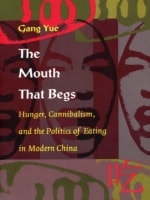
The Mouth That Begs
Hunger, Cannibalism, and the Politics of Eating in Modern ChinaGang Yue
Duke University Press, 1999
Yue’s discussion begins with a brief look at ancient Chinese alimentary writing and then moves on to its main concern: the exploration and textual analysis of themes of eating in modern Chinese literature from the May Fourth period through the post-Tiananmen era. The broad historical scope of this volume illustrates how widely applicable eating-related metaphors can be. For instance, Yue shows how cannibalism symbolizes old China under European colonization in the writing of Lu Xun. In Mo Yan’s 1992 novel Liquorland, however, cannibalism becomes the symbol of overindulgent consumerism. Yue considers other writers as well, such as Shen Congwen, Wang Ruowang, Lu Wenfu, Zhang Zianliang, Ah Cheng, Zheng Yi, and Liu Zhenyun. A special section devoted to women writers includes a chapter on Xiao Hong, Wang Anyi, and Li Ang, and another on the Chinese-American women writers Jade Snow Wong, Maxine Hong Kingston, and Amy Tan. Throughout, the author compares and contrasts the work of these writers with similarly themed Western literature, weaving a personal and political semiotics of eating.
The Mouth That Begs will interest sinologists, literary critics, anthropologists, cultural studies scholars, and everyone curious about the semiotics of food.
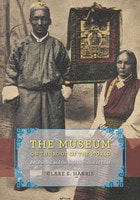
The Museum on the Roof of the World
Art, Politics, and the Representation of TibetClare E. Harris
University of Chicago Press, 2012
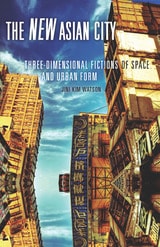
The New Asian City
Three-Dimensional Fictions of Space and Urban FormJini Kim Watson
University of Minnesota Press, 2011
Under Jini Kim Watson’s scrutiny, the Asian Tiger metropolises of Seoul, Taipei, and Singapore reveal a surprising residue of the colonial environment. Drawing on a wide array of literary, filmic, and political works, and juxtaposing close readings of the built environment, Watson demonstrates how processes of migration and construction in the hypergrowth urbanscapes of the Pacific Rim crystallize the psychic and political dramas of their colonized past and globalized present.
Examining how newly constructed spaces—including expressways, high-rises, factory zones, department stores, and government buildings—become figured within fictional and political texts uncovers how massive transformations of citizenries and cities were rationalized, perceived, and fictionalized. Watson shows how literature, film, and poetry have described and challenged contemporary Asian metropolises, especially around the formation of gendered and laboring subjects in these new spaces. She suggests that by embracing the postwar growth-at-any-cost imperative, they have buttressed the nationalist enterprise along neocolonial lines.
The New Asian City provides an innovative approach to how we might better understand the gleaming metropolises of the Pacific Rim. In doing so, it demonstrates how reading cultural production in conjunction with built environments can enrich our knowledge of the lived consequences of rapid economic and urban development.
The New Politics of Beijing–Hong Kong Relations
Ideological Conflicts and FactionalismSonny Shiu-Hing Lo
Hong Kong University Press, 2024
The New Politics of Beijing–Hong Kong Relations particularly examines the paternalistic authoritarianism that can be seen in Beijing's policy toward Hong Kong since the promulgation of the national security law in late June 2020. Lo analyzes the ideological shift from liberal nationalism to conservative nationalism on the mainland Chinese side since late 2012. The increasingly radical localism on the Hong Kong side after 2014 altered Beijing-Hong Kong relations and introduced factional struggles. While the imposition of the national security law in Hong Kong in late June 2020 has stabilized the city politically, Beijing's policy toward Hong Kong is now guided by the principles of protecting its national security and maintaining economic pragmatism, with implications for Beijing's relations with Taipei in the coming years.