Results by title
435 books match the query 'Asian American & Pacific Islander Studies' and 68 start with t
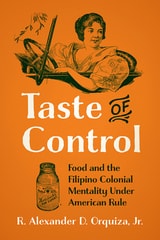
Taste of Control
Food and the Filipino Colonial Mentality under American RuleR. Alexander D. Orquiza, Jr.
Rutgers University Press, 2020
Winner of the 2021 Gourmand Awards, Asian Section & Culinary History Section
Filipino cuisine is a delicious fusion of foreign influences, adopted and transformed into its own unique flavor. But to the Americans who came to colonize the islands in the 1890s, it was considered inferior and lacking in nutrition. Changing the food of the Philippines was part of a war on culture led by Americans as they attempted to shape the islands into a reflection of their home country.
Taste of Control tells what happened when American colonizers began to influence what Filipinos ate, how they cooked, and how they perceived their national cuisine. Food historian René Alexander D. Orquiza, Jr. turns to a variety of rare archival sources to track these changing attitudes, including the letters written by American soldiers, the cosmopolitan menus prepared by Manila restaurants, and the textbooks used in local home economics classes. He also uncovers pockets of resistance to the colonial project, as Filipino cookbooks provided a defense of the nation’s traditional cuisine and culture.
Through the topic of food, Taste of Control explores how, despite lasting less than fifty years, the American colonial occupation of the Philippines left psychological scars that have not yet completely healed, leading many Filipinos to believe that their traditional cooking practices, crops, and tastes were inferior. We are what we eat, and this book reveals how food culture served as a battleground over Filipino identity.
Techno-Orientalism 2.0
New Intersections and InterventionsDavid S. Roh
Rutgers University Press, 2025
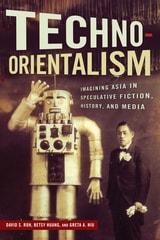
Techno-Orientalism
Imagining Asia in Speculative Fiction, History, and MediaRoh, David S.
Rutgers University Press, 2015
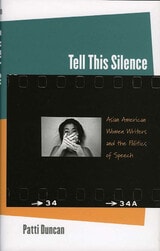
Tell This Silence
Asian American Women Writers And The Politics Of SpeechPatti Duncan
University of Iowa Press, 2004
However, as the writers discussed in Tell This Silence suggest, silence too has multiple meanings especially in contexts like the U.S., where speech has never been a guaranteed right for all citizens. Duncan argues that writers such as Maxine Hong Kingston, Mitsuye Yamada, Joy Kogawa, Theresa Hak Kyung Cha, Nora Okja Keller, and Anchee Min deploy silence as a means of resistance. Juxtaposing their “unofficial narratives” against other histories—official U.S. histories that have excluded them and American feminist narratives that have stereotyped them or distorted their participation—they argue for recognition of their cultural participation and offer analyses of the intersections among gender, race, nation, and sexuality.
Tell This Silence offers innovative ways to consider Asian American gender politics, feminism, and issues of immigration and language. This exciting new study will be of interest to literary theorists and scholars in women's, American, and Asian American studies.
Terrifying Muslims
Race and Labor in the South Asian DiasporaJunaid Rana
Duke University Press, 2011
The American Dream in Vietnamese
Nhi T. Lieu
University of Minnesota Press, 2010
Lieu examines how live music variety shows and videos, beauty pageants, and Web sites created by and for Vietnamese Americans contributed to the shaping of their cultural identity. She shows how popular culture forms repositories for conflicting expectations of assimilation, cultural preservation, and invention, alongside gendered and classed dimensions of ethnic and diasporic identity.
The American Dream in Vietnamese demonstrates how the circulation of images manufactured by both Americans and Vietnamese immigrants serves to produce these immigrants’ paradoxical desires. Within these desires and their representations, Lieu finds the dramatization of the community’s struggle to define itself against the legacy of the refugee label, a classification that continues to pathologize their experiences in American society.

The Anti-Chinese Movement in California
Elmer Clarence Sandmeyer. Foreword and supplementary bibliographies by Roger Daniels
University of Illinois Press, 1991
The Asian American Achievement Paradox
JENIFFER LEE is professor of sociology at the University of California, Irvine. MIN ZHOU is professor of sociology at Nanyang Technological University, Singapore, and the University of California, Los Angeles.
Russell Sage Foundation, 2015
The Asian American Avant-Garde
Universalist Aspirations in Modernist Literature and ArtAudrey Wu Clark
Temple University Press, 2015
The Asian American Avant-Garde is the first book-length study that conceptualizes a long-neglected canon of early Asian American literature and art. Audrey Wu Clark traces a genealogy of counter-universalism in short fiction, poetry, novels, and art produced by writers and artists of Asian descent who were responding to their contemporary period of Asian exclusion in the United States, between the years 1882 and 1945.
Believing in the promise of an inclusive America, these avant-gardists critiqued racism as well as institutionalized art. Clark examines racial outsiders including Isamu Noguchi, Dong Kingman and Yun Gee to show how they engaged with modernist ideas, particularly cubism. She draws comparisons between writers such as Sui Sin Far and Carlos Bulosan with modernist luminaries like Stein, Eliot, Pound, and Proust.
Acknowledging the anachronism of the term “Asian American” with respect to these avant-gardists, Clark attempts to reconstruct it. The Asian American Avant-Garde explores the ways in which these artists and writers responded to their racialization and the Orientalism that took place in modernist writing.
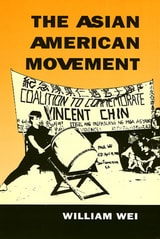
The Asian American Movement
William Wei
Temple University Press, 1993
Active for more than two decades, the Asian American movement began a middle-class reform effort to achieve racial equality, social justice, and political empowerment. In this first history and in-depth analysis of the Movement, William Wei traces to the late 1960s, the genesis of an Asian American identity, culture, and activism.
Wei analyzes the Asian American women's movement, the alternative press, Asian American involvement in electoral politics. Interviews with many key participants in the Movement and photographs of Asian American demonstrations and events enliven this portrayal of the Movement's development, breadth, and conflicts.
The Beautiful Generation
Asian Americans and the Cultural Economy of FashionThuy Linh Nguyen Tu
Duke University Press, 2011

The Bible in Asian America
Tat-siong Benny Liew
SBL Press, 2002
The Children of 1965
On Writing, and Not Writing, as an Asian AmericanMin Hyoung Song
Duke University Press, 2013
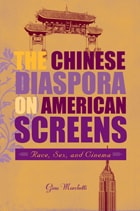
The Chinese Diaspora on American Screens
Race, Sex, and CinemaGina Marchetti
Temple University Press, 2012
The Chinese Diaspora on American Screens looks at the way in which issues of race and sexuality have become central concerns in cinema generated by and about Chinese communities in America after the mid-1990s. This companion volume to Marchetti's From Tian'anmen to Times Square looks specifically at the Chinese diaspora in relation to ethnic, racial, gender, and sexual identity as depicted in the cinema.
Examining films from the United States and Canada, as well as transnational co-productions, The Chinese Diaspora on American Screens includes analyses of films such as The Wedding Banquet and Double Happiness in addition to interviews with celebrated filmmakers such as Wayne Wang.
Marchetti also reflects on how Chinese identity is presented in a multitude of media forms, including commercial cinema, documentaries, experimental films, and hybrid digital media to offer a textured look at representations of the Chinese diasporic experience after Tian'anmen.
The Company We Keep
Interracial Friendships and Romantic Relationships from Adolescence to AdulthoodGrace Kao
Russell Sage Foundation, 2019
While research on interracial social ties has often focused on whites and blacks, Hispanics are the largest minority group and Asian Americans are the fastest growing racial group in the United States. The Company We Keep examines friendships and romantic relationships among blacks, whites, Hispanics, and Asian Americans to better understand the full spectrum of contemporary race relations. Using data from the National Longitudinal Study of Adolescent to Adult Health, the authors explore the social ties of more than 15,000 individuals from their first survey responses as middle and high school students in the mid-1990s through young adulthood nearly fifteen years later. They find that while approval for interracial marriages has increased and is nearly universal among young people, interracial friendships and romantic relationships remain relatively rare, especially for whites and blacks. Black women are particularly disadvantaged in forming interracial romantic relationships, while Asian men are disadvantaged in the formation of any romantic relationships, both as adolescents and as young adults. They also find that people in same-sex romantic relationships are more likely to have partners from a different racial group than are people in different-sex relationships. The authors pay close attention to how the formation of interracial friendships and romantic relationships depends on opportunities for interracial contact. They find that the number of students choosing different-race friends and romantic partners is greater in schools that are more racially diverse, indicating that school segregation has a profound impact on young people’s social ties.
Kao, Joyner, and Balistreri analyze the ways school diversity and adolescent interracial contact intersect to lay the groundwork for interracial relationships in young adulthood. The Company We Keep provides compelling insights and hope for the future of living and loving across racial divides.
The Crucible
An Autobiography by Colonel Yay, Filipina American GuerrillaCruz, Denise
Rutgers University Press, 2010
On December 8, 1941, as the Pacific War reached the Philippines, Yay Panlilio, a Filipina-Irish American, faced a question with no easy answer: How could she contribute to the war?
In this 1950 memoir, The Crucible: An Autobiography by Colonel Yay, Filipina American Guerrilla, Panlilio narrates her experience as a journalist, triple agent, leader in the Philippine resistance against the Japanese, and lover of the guerrilla general Marcos V. Augustin. From the war-torn streets of Japanese-occupied Manila, to battlegrounds in the countryside, and the rural farmlands of central California, Panlilio blends wry commentary, rigorous journalistic detail, and popular romance.
Weaving together appearances by Douglas MacArthur and Carlos Romulo with dangerous espionage networks, this work provides an insightful perspective on the war. The Crucible invites readers to see new intersections in Filipina/o, Asian American, and American literature studies, and Denise Cruz's introduction imparts key biographical, historical, and cultural contexts to that purpose.
The Day the Dancers Stayed
Performing in the Filipino/American DiasporaTheodore S. Gonzalves
Temple University Press, 2009
Pilipino Cultural Nights at American campuses have been a rite of passage for youth culture and a source of local community pride since the 1980s. Through performances—and parodies of them—these celebrations of national identity through music, dance, and theatrical narratives reemphasize what it means to be Filipino American. In The Day the Dancers Stayed, scholar and performer Theodore Gonzalves uses interviews and participant observer techniques to consider the relationship between the invention of performance repertoire and the development of diasporic identification.
Gonzalves traces a genealogy of performance repertoire from the 1930s to the present. Culture nights serve several functions: as exercises in nostalgia, celebrations of rigid community entertainment, and occasionally forums for political intervention. Taking up more recent parodies of Pilipino Cultural Nights, Gonzalves discusses how the rebellious spirit that enlivened the original seditious performances has been stifled.
The Echoes of Trauma
An Oral Historical Study on the Impact of the World War II Mass Incarceration on the Health of Japanese AmericansGwenn M. Jensen
University Press of Colorado, 2026
In Echoes of Trauma, medical anthropologist Gwenn Jensen traces the longitudinal ramifications of racism, the chronic stress of imprisonment in concentration camps, and widespread healthcare inadequacies on the well-being of Japanese American Nisei during WWII and beyond.
Based on ninety oral history interviews conducted between 1995 and 2005, Jensen’s work uncovers long-term health impacts on former incarcerees, relating personal stories of Japanese Americans with archival corroboration of their traumatic experiences of having been made prisoners in their own land. These memories illuminate the betrayal and lifelong consequences of imprisonment not only on physical and psychological health but also including intergenerational trauma passed on to subsequent generations. Echoes of Trauma details these short- and long-term health effects and records the stories of these Americans for posterity.
In the wake of the current political climate, with echoes of this past reverberating, the reexamination of Japanese American incarceration undertaken here underscores the importance of comprehending the fallout from incomprehensible injustice visited upon innocent and law-abiding citizens.
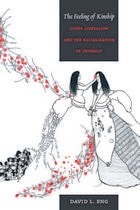
The Feeling of Kinship
Queer Liberalism and the Racialization of IntimacyDavid L. Eng
Duke University Press, 2010
Eng develops the concept of “queer diasporas” as a critical response to queer liberalism. A methodology drawing attention to new forms of family and kinship, accounts of subjects and subjectivities, and relations of affect and desire, the concept differs from the traditional notions of diaspora, theories of the nation-state, and principles of neoliberal capitalism upon which queer liberalism thrives. Eng analyzes films, documentaries, and literature by Asian and Asian American artists including Wong Kar-wai, Monique Truong, Deann Borshay Liem, and Rea Tajiri, as well as a psychoanalytic case history of a transnational adoptee from Korea. In so doing, he demonstrates how queer Asian migrant labor, transnational adoption from Asia, and the political and psychic legacies of Japanese internment underwrite narratives of racial forgetting and queer freedom in the present. A focus on queer diasporas also highlights the need for a poststructuralist account of family and kinship, one offering psychic alternatives to Oedipal paradigms. The Feeling of Kinship makes a major contribution to American studies, Asian American studies, diaspora studies, psychoanalysis, and queer theory.
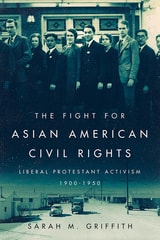
The Fight for Asian American Civil Rights
Liberal Protestant Activism, 1900-1950Sarah M Griffith
University of Illinois Press, 2018
The First Fifteen
How Asian American Women Became Federal JudgesSusan Oki Mollway
Rutgers University Press, 2022
This book tells the stories of the first fifteen. In the process, it recounts remarkable tales of Asian women overcoming adversity and achieving the American dream, despite being the daughters of a Chinese garment worker, Japanese Americans held in internment camps during World War II, Vietnamese refugees, and penniless Indian immigrants. Yet The First Fifteen also explores how far Asian Americans and women still have to go before the federal judiciary reflects America as a whole.
In a candid series of interviews, these judges reflect upon the personal and professional experiences that led them to this distinguished position, as well as the nerve-wracking political process of being nominated and confirmed for an Article III judgeship. By sharing their diverse stories, The First Fifteen paints a nuanced portrait of how Asian American women are beginning to have a voice in determining American justice.
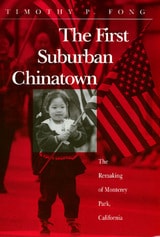
The First Suburban Chinatown
The Remaking of Monterey Park, CaliforniaTimothy P. Fong
Temple University Press, 1994
Monterey Park, California, only eight miles east of downtown Los Angeles, was dubbed by the media as the "First Suburban Chinatown." The city was a predominantly white middle-class bedroom community in the 1970s when large numbers of Chinese immigrants transformed it into a bustling international boomtown. It is now the only city in the United States with a majority Asian American population. Timothy P. Fong examines the demographic, economic, social, and cultural changes taking place there, and the political reactions to the change.
Fong, a former journalist, reports on how pervasive anti-Asian sentiment fueled a series of initiatives intended to strengthen "community control," including a movement to make English the official language. Recounting the internal strife and the beginnings of recovery, Fong explores how race and ethnicity issues are used as political organizing tools and weapons.
In the series Asian American History and Culture, edited by Sucheng Chan, David Palumbo-Liu, Michael Omi, K. Scott Wong, and Linda Trinh Võ.
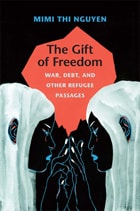
The Gift of Freedom
War, Debt, and Other Refugee PassagesMimi Thi Nguyen
Duke University Press, 2012
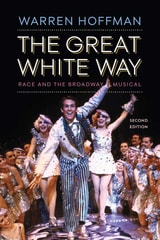
The Great White Way
Race and the Broadway MusicalWarren Hoffman
Rutgers University Press, 2020
Now in a new second edition, The Great White Way is the first book to reveal the racial politics, content, and subtexts that have haunted musicals for almost one hundred years from Show Boat (1927) to Hamilton (2015). This revised edition includes a new introduction and conclusion, updated chapters, as well as a brand-new chapter that looks at the blockbuster musicals The Book of Mormon and Hamilton.
Musicals mirror their time periods and reflect the political and social issues of their day. Warren Hoffman investigates the thematic content of the Broadway musical and considers how musicals work on a structural level, allowing them to simultaneously present and hide their racial agendas in plain view of their audiences. While the musical is informed by the cultural contributions of African Americans and Jewish immigrants, Hoffman argues that ultimately the history of the American musical is the history of white identity in the United States.
Presented chronologically, The Great White Way shows how perceptions of race altered over time and how musicals dealt with those changes. Hoffman focuses first on shows leading up to and comprising the Golden Age of Broadway (1927–1960s), then turns his attention to the revivals and nostalgic vehicles that defined the final quarter of the twentieth century. He offers entirely new and surprising takes on shows from the American musical canon—Show Boat (1927), Oklahoma! (1943), Annie Get Your Gun (1946), The Music Man (1957), West Side Story (1957), A Chorus Line (1975), and 42nd Street (1980), among others. In addition to a new chapter on Hamilton and The Book of Mormon, this revised edition brings The Great White Way fully into the twenty-first century with an examination of jukebox musicals and the role of off-Broadway and regional theaters in the development of the American musical.
New archival research on the creators who produced and wrote these shows, including Leonard Bernstein, Jerome Robbins, Stephen Sondheim, and Edward Kleban, will have theater fans and scholars rethinking forever how they view this popular American entertainment.
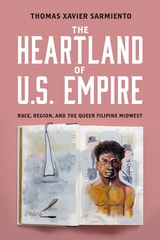
The Heartland of U.S. Empire
Race, Region, and the Queer Filipinx MidwestThomas Xavier Sarmiento
Temple University Press, 2026
Examining Filipinx cultural representations in the Midwest since the early twentieth century, Thomas Sarmiento shrewdly considers the impact of American exceptionalism and U.S. imperialism in a region where white, middle class, heterosexual, and Christian is the norm. The Heartland of U.S. Empire offers a cogent analysis of the 1904 St. Louis World’s Fair and its infamous Philippine Exhibit alongside minor museum displays and archives of Midwesterners in the Philippines. Sarmiento also considers the “exile literature” of Filipino/American writer Bienvenido Santos as well as the TV shows Glee and Superstore, which provide mainstream visibility of the queer Filipinx Midwest.
He employs a queer, decolonial Filipinx methodology that traces how narratives of America’s heartland position Filipinxs in the region as nonnormative due to their racial, gender, sexual, and national statuses. The Heartland of U.S. Empire locates queer Filipinxs in the geographic center of the nation and at the center of cultural narratives, thereby mapping alternative images of diasporic Filipinx identity and experience alongside U.S. regional and national identities, histories, and realities.
In the series Asian American History and Culture
The History of Modern Japanese Education
Constructing the National School System, 1872-1890Duke, Benjamin
Rutgers University Press, 2014
The Hypersexuality of Race
Performing Asian/American Women on Screen and SceneCeline Parreñas Shimizu
Duke University Press, 2007
Shimizu combines theoretical and textual analysis and interviews with artists involved in various productions. She complicates understandings of the controversial portrayals of Asian female sexuality in the popular Broadway musical Miss Saigon by drawing on ethnographic research and interviews with some of the actresses in it. She looks at how three Hollywood Asian/American femme fatales—Anna May Wong, Nancy Kwan, and Lucy Liu—negotiate representations of their sexuality; analyzes 1920s and 1930s stag films in which white women perform as sexualized Asian characters; and considers Asian/American women’s performances in films ranging from the stag pornography of the 1940s to the Internet and video porn of the 1990s. She also reflects on two documentaries depicting Southeast Asian prostitutes and sex tourism, The Good Woman of Bangkok and 101 Asian Debutantes. In her examination of films and videos made by Asian/American feminists, Shimizu describes how female characters in their works reject normative definitions of race, gender, and sexuality, thereby expanding our definitions of racialized sexualities in representation.

The Japan of Pure Invention
Gilbert and Sullivan’s The MikadoJosephine Lee
University of Minnesota Press, 2010
The Korean-American Dream
Portraits of a Successful Immigrant CommunityJames Flanigan
University of Nevada Press, 2018
In The Korean-American Dream, respected and distinguished business journalist James Flanigan uncovers the struggles and contributions of the people who have made Los Angeles the largest Korean city outside of Seoul.
This intimate account illustrates how Korean immigrants have preserved their culture and history as well as adapted to the American culture of E Pluribus Unum, the radical promise of “out of many, one.” Flanigan shows how Los Angeles emerged as a capital of the Asia Pacific region.
At less than 2 million, Korean Americans are a relatively small group compared to new Americans from China, the Philippines, and India. But with energy and drive, they are building landmarks in New York as well as L.A., lobbying for causes in Washington, founding businesses, heading universities and hospitals, and holding public office in all parts of the U.S.
Flanigan’s compelling narrative told largely through personal interviews provides a front-row seat to the economic, business, and cultural developments of the Korean American Community. At a time of spirited debate about immigration, their energy and ambition serve as a ringing reminder of the promise of the American mosaic.
The Labor of Care
Filipina Migrants and Transnational Families in the Digital AgeValerie Francisco-Menchavez
University of Illinois Press, 2018
The Literary Voices of Winnifred Eaton
Redefining Ethnicity and AuthenticityCole, Jean Lee
Rutgers University Press, 2002
Eaton attempted to disguise her Chinese heritage by writing under a hypothetically Japanese pen name. In legal documents, she usually claimed a "white" racial identity. In her fiction, Eaton portrayed Japanese, Chinese, Irish, and American characters, relying on the accepted stereotypes of the day. Jean Lee Cole shows that the many voices Eaton adopted show her deep preoccupations with "American" identity as a whole. The author attempts to reconcile all of these "voices," examining how Eaton survived in a climate hostile to minority writers in the early twentieth century, and how her seemingly anomalous works conjoin Asian American and American literary history.
The Minor Intimacies of Race
Asian Publics in North AmericaChristine Kim
University of Illinois Press, 2016
The Movies of Racial Childhoods
Screening Self-Sovereignty in Asian/AmericaCeline Parreñas Shimizu
Duke University Press, 2024
The New Asian Immigration in Los Angeles and Global Restructuring
Paul Ong
Temple University Press, 1994
The New Chinese America
Class, Economy, and Social HierarchyZhao, Xiaojian
Rutgers University Press, 2010
In this detailed and comprehensive study of contemporary Chinese America, Xiaojian Zhao uses class analysis to illuminate the difficulties of everyday survival for poor and undocumented immigrants and analyzes the process through which social mobility occurs. Through ethnic ties, Chinese Americans have built an economy of their own in which entrepreneurs can maintain a competitive edge given their access to low-cost labor; workers who are shut out of the mainstream job market can find work and make a living; and consumers can enjoy high quality services at a great bargain. While the growth of the ethnic economy enhances ethnic bonds by increasing mutual dependencies among different groups of Chinese Americans, it also determines the limits of possibility for various individuals depending on their socioeconomic and immigration status.
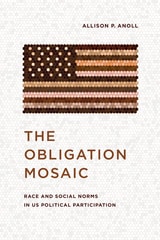
The Obligation Mosaic
Race and Social Norms in US Political ParticipationAllison P. Anoll
University of Chicago Press, 2022
In The Obligation Mosaic, Allison P. Anoll shows that the obligations that bring people into the political world—or encourage them to stay away—vary systematically by race in the United States, with broad consequences for representation. Drawing on a rich mix of interviews, surveys, and experiments with Asian, Black, Latino, and White Americans, the book uncovers two common norms that centrally define concepts of obligation: honoring ancestors and helping those in need. Whether these norms lead different groups to politics depends on distinct racial histories and continued patterns of segregation.
Anoll’s findings not only help to explain patterns of participation but also provide a window into opportunities for change, suggesting how activists and parties might better mobilize marginalized citizens.
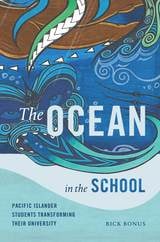
The Ocean in the School
Pacific Islander Students Transforming Their UniversityRick Bonus
Duke University Press, 2020
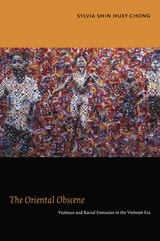
The Oriental Obscene
Violence and Racial Fantasies in the Vietnam EraSylvia Shin Huey Chong
Duke University Press, 2011

The Philippine Temptation
Dialectics of Philippines-U.S. Literary RelationsE. San Juan
Temple University Press, 1996
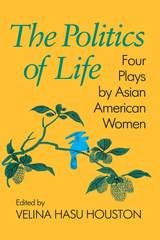
The Politics Of Life
edited by Velina Hasu Houston
Temple University Press, 1993
This anthology of work by three Asian American women playwrights—Wakako Yamauchi, Genny Lim, and Velina Hasu Houston—features pioneering contemporary writers who have made their mark in regional and ethnic theatres throughout the United States. In her introduction, Houston observes that the Asian American woman playwright is compelled "to mine her soul" and express the angst, fear, and rage that oppression has wrought while maintaining her relationship with America as a good citizen.
The plays are rich with cultural and political substance and have a feminist concern about women's spirit, intellect, and lives. They portray Asian and Asian American women who challenge the cultural and sexual stereotypes of the Asian female. Yamauchi's two plays deal with how easily a country can dishonor its citizens. In "12-1-A," a Japanese American family is incarcerated during World War II in an Arizona camp where Yamauchi herself was interned. "The Chairman's Wife" dramatizes the life of Madame Mao Tse Tung through the lens of events at Tien An Men Square in 1989. Lim's "Bitter Cane" is about the exploitation of Chinese laborers who were recruited to work the Hawaiian sugar cane plantations. In "Asa Ga Kimashita" ("Morning Has Broken"), Houston explores a Japanese woman's interracial romance in postwar Japan and the influence of traditional patriarchy on the lives of Japanese women.
These plays will entertain and enlighten, enrage and profoundly move audiences. With honesty, imagination and courage, each grapples with the politics of life.
In the series Asian American History and Culture, edited by Sucheng Chan, David Palumbo-Liu, Michael Omi, K. Scott Wong, and Linda Trinh Võ.
The Promise of Beauty
Mimi Thi Nguyen
Duke University Press, 2024
The Racial Logic of Politics
Asian Americans and Party CompetitionThomas P. Kim
Temple University Press, 2006
The Resilient Self
Gender, Immigration, and Taiwanese AmericansGu, Chien-Juh
Rutgers University Press, 2017
Most of the women immigrated as dependents when their U.S.-educated husbands found professional jobs upon graduation. Constrained by their dependent visas, these women could not work outside of the home during the initial phase of their settlement. The significant contrast of their lives before and after immigration—changing from successful professionals to foreign housewives—generated feelings of boredom, loneliness, and depression. Mourning their lost careers and lacking fulfillment in homemaking, these highly educated immigrant women were forced to redefine the meaning of work and housework, which in time shaped their perceptions of themselves and others in the family, at work, and in the larger community.
The Retreat from Race
Asian-American Admissions and Racial PoliticsTakagi, Dana Y
Rutgers University Press, 1993
“An excellent book. Takagi takes a very complex and sensitive subject—racial politics—and shows, through a careful analysis . . . that changes in the discourse about Asian American admissions have facilitated a 'retreat from race' in the area of affirmative action. . . . This book will appeal to an audience significantly wider than a typical academic one.”— David Karen, Bryn Mawr College
Charges by Asian Americans that the top universities in the United States used quotas to limit the enrollment of Asian-American students developed into one of the most controversial public controversies in higher education since the Bakke case. In Retreat from Race, Dana Takagi follows the debates over Asian-American admissions at Berkeley, UCLA, Brown, Stanford, Harvard, and Princeton. She explains important developments in the politics of race: changes in ethnic coalitions, reconstruction of the debate over affirmative action, and the conservative challenge to the civil rights agenda of the 1960s. Takagi examines the history and significance of the Asian American admissions controversy on American race relations both inside and outside higher education.
Takagi's central argument is that the Asian-American admissions controversy facilitated a subtle but important shift in affirmative action policy away from racial preferences toward class preferences. She calls this development a retreat from race. Takagi suggests that the retreat signals not only an actual policy shift but also the increasing reluctance on the part of intellectuals, politicans, and policy analysts to identify and address social problems as explicitly racial problems.
Moving beyond the university setting, Takagi explores the political significance of the retreat from race by linking Asian-American admissions to other controversies in higher education and in American politics, including the debates over political correctness and multiculturalism. In her assessment, the retreat from race is likely to fail at its promise of easing racial tension and promoting racial equality.
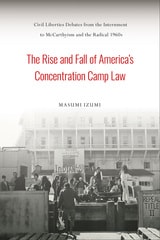
The Rise and Fall of America's Concentration Camp Law
Civil Liberties Debates from the Internment to McCarthyism and the Radical 1960sMasumi Izumi
Temple University Press, 2019
The Emergency Detention Act, Title II of the Internal Security Act of 1950, is the only law in American history to legalize preventive detention. It restricted the freedom of a certain individual or a group of individuals based on actions that may be taken that would threaten the security of a nation or of a particular area. Yet the Act was never enforced before it was repealed in 1971.
Masumi Izumi links the Emergency Detention Act with Japanese American wartime incarceration in her cogent study, The Rise and Fall of America’s Concentration Camp Law. She dissects the entangled discourses of race, national security, and civil liberties between 1941 and 1971 by examining how this historical precedent generated “the concentration camp law” and expanded a ubiquitous regime of surveillance in McCarthyist America.
Izumi also shows how political radicalism grew as a result of these laws. Japanese Americas were instrumental in forming grassroots social movements that worked to repeal Title II. The Rise and Fall of America’s Concentration Camp Law is a timely study in this age of insecurity where issues of immigration, race, and exclusion persist.
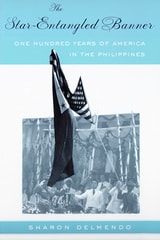
The Star-Entangled Banner
One Hundred Years of America in the PhilippinesDelmendo, Sharon
Rutgers University Press, 2004
During a ceremony held in 1996 to commemorate the fiftieth anniversary of formal Philippine independence, the U.S. flag was being lowered while the Philippine flag was being raised, and the two became entangled. In The Star-Entangled Banner, Sharon Delmendo demonstrates that this incident is indicative of the longstanding problematic relationship between the two countries. When faced with a national crisis or a compelling need to reestablish its autonomy, each nation paradoxically turns to its history with the other to define its place in the world.
Each chapter of the book deals with a separate issue in this linked history: the influence of Buffalo Bill’s show on the proto-nationalism of José Rizal, who is often described as the “First Filipino”; the portrayal of the Philippines in American children’s books; Back to Bataan, a World War II movie starring John Wayne; the post-independence fiction of F. Sionil José; and the refusal of the U..S military to return the Balangiga Bells, which were taken as war booty during the Philippine-American War. Ultimately, Delmendo demonstrates how the effects of U.S. imperialism in the Philippines continue to resonate in U.S. foreign policy in the post cold war era and the war on terrorism.
The Subject(s) of Human Rights
Crises, Violations, and Asian/American CritiqueCathy J. Schlund-Vials
Temple University Press, 2020
Human rights violations have always been part of Asian American studies. From Chinese immigration restrictions, the incarceration of Japanese Americans, yellow peril characterizations, and recent acts of deportation and Islamophobia, Asian Americans have consistently functioned as subordinated “subjects” of human rights violations. The Subject(s) of Human Rights brings together scholars from North America and Asia to recalibrate these human rights concerns from both sides of the Pacific.
The essays in this collection provide a sharper understanding of how Asian/Americans have been subjected to human rights violations, how they act as subjects of history and agents of change, and how they produce knowledge around such subjects. The editors of and contributors to The Subject(s) of Human Rights examine refugee narratives, human trafficking, and citizenship issues in twentieth- and twenty-first century literature. These themes further refract issues of American war-making, settler colonialism, military occupation, collateral damage, and displacement that relocate the imagined geographies of Asian America from the periphery to the center of human rights critique.
The Sum Of Our Parts
Mixed-Heritage Asian AmericansTeresa Williams-Leon
Temple University Press, 2001
In the U.S., discussions of race generally center on matters of black and white; Asian Americans usually figure in conversations about race as an undifferentiated ethnic group or as exotic Eurasians. The contributors to this book disrupt the standard discussions by considering people of mixed Asian ethnicities. They also pay particular attention to non-white multiracial identities to decenter whiteness and reflect the experience of individuals or communities who are considered a minority within a minority. With an entire section devoted to the Asian diaspora, The Sum of Our Parts suggests that questions of multiracial and multiethnic identity are surfacing around the globe. This timely and provocative collection articulates them for social scientists and students.
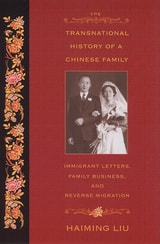
The Transnational History of a Chinese Family
Immigrant Letters, Family Business, and Reverse MigrationLiu, Haiming
Rutgers University Press, 2005
Family and home are one word—jia—in the Chinese language. Family can be separated and home may be relocated, but jia remains intact. It signifies a system of mutual obligation, lasting responsibility, and cultural values. This strong yet flexible sense of kinship has enabled many Chinese immigrant families to endure long physical separation and accommodate continuities and discontinuities in the process of social mobility.
Based on an analysis of over three thousand family letters and other primary sources, including recently released immigration files from the National Archives and Records Administration, Haiming Liu presents a remarkable transnational history of a Chinese family from the late nineteenth century to the 1970s. For three generations, the family lived between the two worlds. While the immigrant generation worked hard in an herbalist business and asparagus farming, the younger generation crossed back and forth between China and America, pursuing proper education, good careers, and a meaningful life during a difficult period of time for Chinese Americans. When social instability in China and hostile racial environment in America prevented the family from being rooted in either side of the Pacific, transnational family life became a focal point of their social existence.
This well-documented and illustrated family history makes it clear that, for many Chinese immigrant families, migration does not mean a break from the past but the beginning of a new life that incorporates and transcends dual national boundaries. It convincingly shows how transnationalism has become a way of life for Chinese American families.
The Transnational Politics of Asian Americans
edited by Christian Collet and Pei-te Lien, foreword by Don Nakanishi
Temple University Press, 2009
As America’s most ethnically diverse foreign-born population, Asian Americans can puzzle political observers. This volume’s multidisciplinary team of contributors employ a variety of methodologies— including quantitative, ethnographic, and historical—to illustrate how transnational ties between the U.S. and Asia have shaped, and are increasingly defining, Asian American politics in our multicultural society.
Original essays by U.S.- and Asian-based scholars discuss Cambodian, Chinese, Filipino, Indian, Japanese, Korean, and Vietnamese communities from Boston to Honolulu. The volume also shows how the grassroots activism of America's "newest minority" both reflects and is instrumental in broader processes of political change throughout the Pacific. Addressing the call for more global approaches to racial and ethnic politics, contributors describe how Asian immigrants strategically navigate the hurdles to domestic incorporation and equality by turning their political sights and energies toward Asia. These essays convincingly demonstrate that Asian American political participation in the U.S. does not consist simply of domestic actions with domestic ends.
Contributors include: Eiichiro Azuma, Augusto Espiritu, Hiroko Furuya, Peter Kiang, Ikumi Koakutsu, Michel Laguerre, Sangay Mishra, Hiromi Monobe, Shirley Tang, Tritia Toyota, Janelle Wong, and the editors.