Results by title
5159 books match the query 'Biography' and 934 start with t
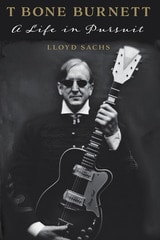
T Bone Burnett
A Life in PursuitBy Lloyd Sachs
University of Texas Press, 2016
This first critical appreciation of T Bone Burnett reveals how the proponent of Americana music and producer of artists ranging from Robert Plant and Alison Krauss to B. B. King and Elvis Costello has profoundly influenced American music and culture.
T Bone Burnett is a unique, astonishingly prolific music producer, singer-songwriter, guitarist, and soundtrack visionary. Renowned as a studio maven with a Midas touch, Burnett is known for lifting artists to their greatest heights, as he did with Raising Sand, the multiple Grammy Award–winning album by Robert Plant and Alison Krauss, as well as acclaimed albums by Los Lobos, the Wallflowers, B. B. King, and Elvis Costello. Burnett virtually invented “Americana” with his hugely successful roots-based soundtrack for the Coen Brothers film, O Brother, Where Art Thou? Outspoken in his contempt for the entertainment industry, Burnett has nevertheless received many of its highest honors, including Grammy Awards and an Academy Award.
T Bone Burnett offers the first critical appreciation of Burnett’s wide-ranging contributions to American music, his passionate advocacy for analog sound, and the striking contradictions that define his maverick artistry. Lloyd Sachs highlights all the important aspects of Burnett’s musical pursuits, from his early days as a member of Bob Dylan’s Rolling Thunder Revue and his collaboration with the playwright Sam Shepard to the music he recently composed for the TV shows Nashville and True Detective and his production of the all-star album Lost on the River: The New Basement Tapes. Sachs also underscores Burnett’s brilliance as a singer-songwriter in his own right. Going well beyond the labels “legendary” or “visionary” that usually accompany his name, T Bone Burnett reveals how this consummate music maker has exerted a powerful influence on American music and culture across four decades.
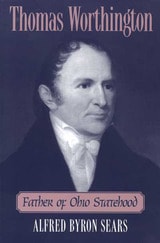
THOMAS WORTHINGTON
FATHER OF OHIO STATEHOODAlfred Byron Sears
The Ohio State University Press, 1998

TITO
Yugoslavia’s Great Dictator, A ReassessmentStevan K. Pavlowitch
The Ohio State University Press, 1992
Taboo
Boyer Rickel
University of Wisconsin Press, 1999
An impressionistic memoir offers images of a life in progress, including scenes from Boyer Rickel’s rural Tempe, Arizona, childhood in the 1950s; his relationship with a physically shrinking father; his eccentric teenage friendships; his growing awareness of his sexuality among young, Hispanic gays; and a trip through Italy with his lover. A personal book, but also wholly universal, Taboo investigates the way one breaks through taboos and becomes a self-realized adult.
Taken from the Paradise Isle
The Hoshida Family StoryHeidi Kim
University Press of Colorado, 2015
Crafted from George Hoshida’s diary and memoir, as well as letters faithfully exchanged with his wife Tamae, Taken from the Paradise Isle is an intimate account of the anger, resignation, philosophy, optimism, and love with which the Hoshida family endured their separation and incarceration during World War II.
George and Tamae Hoshida and their children were a Japanese American family who lived in Hawai‘i. In 1942, George was arrested as a “potentially dangerous alien” and interned in a series of camps over the next two years. Meanwhile, forced to leave her handicapped eldest daughter behind in a nursing home in Hawai‘i, Tamae and three daughters, including a newborn, were incarcerated at the Jerome Relocation Center in Arkansas. George and Tamae regularly exchanged letters during this time, and George maintained a diary including personal thoughts, watercolors, and sketches. In Taken from the Paradise Isle these sources are bolstered by extensive archival documents and editor Heidi Kim’s historical contextualization, providing a new and important perspective on the tragedy of the incarceration as it affected Japanese American families in Hawai‘i.
This personal narrative of the Japanese American experience adds to the growing testimony of memoirs and oral histories that illuminate the emotional, psychological, physical, and economic toll suffered by Nikkei as the result of the violation of their civil rights during World War II.
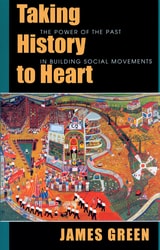
Taking History to Heart
The Power of the Past in Building Social MovementsJames Green
University of Massachusetts Press, 2000
Deftly blending autobiography and history, James Green here reflects on thirty years as an activist, educator, and historian. He recounts how he became deeply immersed in political protest and in recovering and preserving the history of progressive social movements, and how the two are linked. His book, written in an engaging and accessible style, tells powerful stories of people in struggle, framed by the personal account of his own development. As a historian, Green gives voice to generations of Americans who banded together to fight for social justice. His subjects range from the martyrs of the Haymarket tragedy to the Bread and Roses strikers of 1912, from depression-era struggles for democracy to the civil rights crusaders, from recent Rainbow Coalition campaigns to the latest union organizing drives. As an activist, Green describes how his participation in the civil rights and labor movements of our own time has transformed his life, first as a student and radical scholar in the 1960s, then as a public historian and teacher of working-class students. He also describes his efforts to break free from academic confinement and “tell movement stories in public,” in an attempt to offer hope and counsel to those still fighting for equality and fairness. He concludes with a revealing look at how awareness of past social activism has contributed to the revival of the labor movement during the last ten years, an effort in which Green has been vigorously engaged.
Taking Leave
Deborah Kapchan
Duke University Press, 2025

Taking Part
A Twentieth-Century LifeRobert Josephy
University of Iowa Press, 1993
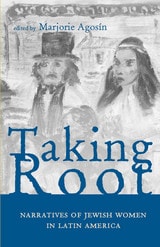
Taking Root
Narratives of Jewish Women in Latin AmericaMarjorie Agosín
Ohio University Press, 2002
In Taking Root, Latin American women of Jewish descent, from Mexico to Uruguay, recall their coming of age with Sabbath candles and Hebrew prayers, Ladino songs and merengue music, Queen Esther and the Virgin of Guadalupe. Rich and poor, Sephardi and Ashkenazi, Jewish immigrant families searched for a new home and identity in predominantly Catholic societies. The essays included here examine the religious, economic, social, and political choices these families have made and continue to make as they forge Jewish identities in the New World.
Marjorie Agosín has gathered narratives and testimonies that reveal the immense diversity of Latin American Jewish experience. These essays, based on first- and second-generation immigrant experience, describe differing points of view and levels of involvement in Jewish tradition. In Taking Root, Agosín presents us with a contemporary and vivid account of the Jewish experience in Latin America.
Taking Root documents the sadness of exile and loss but also a fierce determination to maintain Jewish traditions. This is Jewish history but it is also part of the untold history of Brazil, Argentina, El Salvador, Ecuador, Chile, Peru, and all of Latin America.
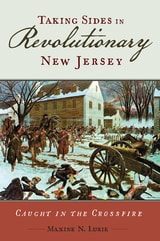
Taking Sides in Revolutionary New Jersey
Caught in the CrossfireMaxine N. Lurie
Rutgers University Press, 2022
Supplemental Instructor Resources for Taking Sides in Revolutionary New Jersey:
Questions (https://d3tto5i5w9ogdd.cloudfront.net/wp-content/uploads/2022/07/19144155/Taking-Sides-Supplementary-Instructor-Resources-Questions.pdf)
Bibliography (https://d3tto5i5w9ogdd.cloudfront.net/wp-content/uploads/2022/07/19144154/Taking-Sides-Supplementary-Instructor-Resources-Bibliography.pdf)
Taking Society's Measure
A Personal History of Survey ResearchHerbert Hyman
Russell Sage Foundation, 1991
Tales and Trails of Illinois
Stu Fliege
University of Illinois Press, 2002
Stu Fliege highlights historical events, such as the Herrin Massacre and Chicago’s Iroquois Theatre fire, and covers the diverse terrain of Illinois’s natural and constructed wonders, from Lusk Creek Canyon to Robert Allerton Park. Readers will meet a colorful cast of characters including pioneers, squatters, miners, gangsters, and utopian leaders. They’ll travel back in time to when salt production was the state’s main industry and learn of the Illinois ingenuity that spawned inventions including barbed wire, the steel plow, and the Ferris wheel. From Oquawka’s elephant memorial to Murphysboro’s mysterious mud monster, the book also offers quirky facts and spooky stories that aren’t found in the average history book.
Liberally illustrated and clearly written, Tales and Trails of Illinois is a helpful learning tool for Illinoisans of all ages, perfect for families, history buffs, libraries, and the classroom.
Tales from la Vida
A Latinx Comics AnthologyEdited by Frederick Luis Aldama
The Ohio State University Press, 2018
In the Latinx comics community, there is much to celebrate today, with more Latinx comic book artists than ever before. The resplendent visual-verbal storyworlds of these artists reach into and radically transform so many visual and storytelling genres. Tales from la Vida celebrates this space by bringing together more than eighty contributions by extraordinary Latinx creators. Their short visual-verbal narratives spring from autobiographical experience as situated within the language, culture, and history that inform Latinx identity and life. Tales from la Vida showcases the huge variety of styles and worldviews of today’s Latinx comic book and visual creators.
Whether it’s detailing the complexities of growing up—mono- or multilingual, bicultural, straight, queer, or feminist Latinx—or focusing on aspects of pop culture, these graphic vignettes demonstrate the expansive complexity of Latinx identities. Taken individually and together, these creators—including such legendary artists as Jaime and Gilbert Hernandez, Roberta Gregory, and Kat Fajardo, to name a few—and their works show the world that when it comes to Latinx comics, there are no limits to matters of content and form. As we travel from one story to the next and experience the unique ways that each creator chooses to craft his or her story, our hearts and minds wake to the complex ways that Latinxs live within and actively transform the world.
Tales from the Big Thicket
Francis Edward Abernethy
University of North Texas Press, 2002
Tales of Forgotten Chicago
Richard C. Lindberg
Southern Illinois University Press, 2020
Tales of Forgotten Chicago contains twenty-one fascinating, little-known stories about a great city and its people. Richard C. Lindberg has dug deeply to reveal lost historical events and hidden gems from Chicago’s past.
Spanning the Civil War through the 1960s, the volume showcases forgotten crimes, punishments, and consequences: poisoned soup that nearly killed three hundred leading citizens, politicians, and business and religious leaders; a woman in showbiz and her street-thug husband whose checkered lives inspired a 1955 James Cagney movie; and the first police woman in Chicago, hired as a result of the senseless killing of a young factory girl in a racially tinged case of the 1880s.
Also included are tales of industry and invention, such as America’s first automobile race, the haunting of a wealthy Gilded Age manufacturer’s mansion, and the identity of the telephone’s rightful inventor. Chapters on the history of early city landmarks spotlight the fight to save Lakefront Park and how “Lucky” Charlie Weeghman’s north side baseball park became Wrigley Field. Other chapters explore civic, cultural, and political happenings: the great Railroad Fairs of 1948 and 1949; Richard J. Daley’s revival of the St. Patrick’s Day parade; political disrupter Lar “America First” Daly; and the founding of the Special Olympics in Chicago by Anne Burke and others. Finally, some are just wonderful tales, such asa touching story about the sinking of Chicago's beloved Christmas tree ship.
Engrossing and imaginative, this collection opens new windows into the past of the Windy City.
Tales of South Jersey
Profiles and PersonalitiesWaltzer, Jim
Rutgers University Press, 2001
There's much more to southern New Jersey than the Pine Barrens and the Jersey Devil, and this collection by journalists Jim Waltzer and Tom Wilk tells readers all about it. Oceanside and bayside towns offer a box seat from which to observe the regions rich history and the summery lore of the wonders of nature. Landlocked towns boast their own homespun and hell-raising traditions and idiosyncrasies.
Waltzer and Wilk have compiled almost fifty stories about the state's southernmost counties. Although the focus is on Atlantic City and its remarkable people, outsize structures, and quirky events, the storytelling ranges across the wider region to provide an insiders look at history as it was being made. You'll encounter gangsters and gamblers, baseball hitters and hurricanes, famous piers and hotels, landmark theaters and eateries, splashy events and unheralded oddities ¾ in sum, a cross-section of the regions character and characters.
The authors divide their book into six sections: entertainment, famous and infamous events, innovations and innovators, leisure and recreation, room and board, and sports legends. Within each section are the rich and varied stories Waltzer and Wilk have collected for New Jerseyans reading pleasure.
Tales of an American Hobo
Charles Elmer Fox
University of Iowa Press, 1989
"Reefer Charlie" Fox rode the rails from 1928 to 1939; from 1939 to 1965 he hitched rides in automobiles and traveled by foot. From Indiana to British Columbia, from Arkansas to Texas, from Utah to Mexico, he was part of the grand hobo tradition that has all but passed away from American life.
He camped in hobo jungles, slept under bridges and in sand houses at railroad yards, ate rattlesnake meat, fresh California grapes, and fish speared by the Indians of the Northwest. He quickly learned both the beauty and the dangers of his chosen way of life. One lesson learned early on was that there are distinct differences among hoboes, tramps, and bums. As the all-time king of hoboes, Jeff Davis, used to say, "Hoboes will work, tramps won't, and bums can't."
Tales of an American Hobo is a lasting legacy to conventional society, teaching about a bygone era of American history and a rare breed of humanity who chose to live by the rails and on the road.
Tales of an Old Horsetrader
The First Hundred YearsLeroy Judson Daniels
University of Iowa Press, 1987
Leroy Daniels was born in 1882 near Adair, Iowa. When he was ten, his father gave him a pony and a checkbook and sent him out to buy cattle. By the time he was sixteen, he was alone on a ranch in Montana with a herd of seventy wild horses to break. At twenty-one, he was trading horses in the Chicago stockyards, where he told Henry Ford that a horse was better than a car any day. At one hundred, he retired to tell his memoirs.
The years in between are well worth reading about. Lee Daniels followed a plow all day long, worked coal to make ends meet, raised and traded and sold all manner of four-legged stock. But horses were always part of his life. Daniels traded them in Chicago for decades, sold them to Italy, England, France, and Belgium during World War I, inspected them for the army once the U.S. joined the Allies, bought them for eighty dollars in the morning and sold them for thousands by noon. He handled show horses, work horses, and trick horses, traveled the country over to fill his show barn with the best of them, befriended, understood, and loved them.
These pages tell the tale of a unique and vigorous American whose every word reveals his love of this land and its animals. If you weren't lucky enough to live like Lee Daniels, reading about his life is the next best thing.
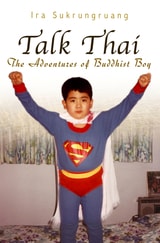
Talk Thai
The Adventures of Buddhist BoyIra Sukrungruang
University of Missouri Press, 2011
When Ira Sukrungruang was born to Thai parents newly arrived in the U.S., they picked his Jewish moniker out of a book of “American” names. In this lively, entertaining, and often hilarious memoir, he relates the early life of a first-generation Thai-American and his constant, often bumbling attempts to reconcile cultural and familial expectations with the trials of growing up in 1980s America.
Young Ira may have lived in Oak Lawn, Illinois, but inside the family’s bi-level home was “Thailand with American conveniences.” They ate Thai food, spoke the Thai language, and observed Thai customs. His bedtime stories were tales of Buddha and monkey-faced demons. On the first day of school his mother reminded him that he had a Siamese warrior’s eyes—despite his thick glasses—as Aunty Sue packed his Muppets lunch box with fried rice. But when his schoolmates played tag he was always It, and as he grew, he faced the constant challenge of reconciling American life with a cardinal family rule: “Remember, you are Thai.”
Inside the Thai Buddhist temple of Chicago, another “simulated Thailand,” are more rules, rules different from those of the Southside streets, and we see mainstream Western religion—“god people”—through the Sukrungruang family’s eyes. Within the family circle, we meet a mother who started packing for her return to Thailand the moment she arrived; her best friend, Aunty Sue, Ira’s second mother, who lives with and cooks for the family; and a wayward father whose dreams never quite pan out.
Talk Thai is a richly told account that takes us into an immigrant’s world. Here is a story imbued with Thai spices and the sensibilities of an American upbringing, a story in which Ira practices English by reciting lines from TV sitcoms and struggles with the feeling of not belonging in either of his two worlds. For readers who delight in the writings of Amy Tan, Gish Jen, and other Asian-Americans, Talk Thai provides generous portions of a still-mysterious culture while telling the story of an American boyhood with humor, playfulness, and uncompromising honesty.
Talk of Darkness
By Fatna El Bouih
University of Texas Press, 2008
Fatna El Bouih was first arrested in Casablanca as an 18-year-old student leader with connections to the Marxist movement. Over the next decade she was rearrested, forcibly disappeared, tortured, and transferred between multiple prisons. While imprisoned, she helped organize a hunger strike, completed her undergraduate degree in sociology, and began work on a Master's degree.
Beginning with the harrowing account of her kidnapping during the heightened political tension of the 1970s, Talk of Darkness tells the true story of one woman's struggle to secure political prisoners' rights and defend herself against an unjust imprisonment.
Poetically rendered from Arabic into English by Mustapha Kamal and Susan Slyomovics, Fatna El Bouih's memoir exposes the techniques of state-instigated "disappearance" in Morocco and condemns the lack of laws to protect prisoners' basic human rights.

Tall Walls and High Fences
Bob Alexander
University of North Texas Press, 2020
Taming Alabama
Lawyers and Reformers, 1804-1929Paul M. Pruitt, Jr. introduction by G. Ward Hubbs
University of Alabama Press, 2010
Tangled Bylines
A Father and Son Cover the Twentieth CenturyClyde H. Farnsworth
University of Missouri Press, 2017
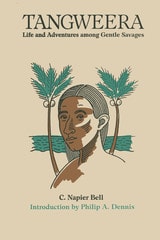
Tangweera
Life and Adventures among Gentle SavagesBy C. Napier Bell
University of Texas Press, 1989
In the 1980s, conflicts between the Miskito people of Nicaragua's eastern coast and the Sandinistas drew international attention. Indeed, the Miskitos' struggle to defend their cultural autonomy and land rights points out a curious historical anomaly. This native group has long had closer ties to British and American culture than to Hispanic Nicaraguan culture. C. Napier Bell, son of a British trader, grew up on the Miskito Coast in the nineteenth century and spoke the Miskito language fluently.
Tangweera, first published in 1899, is Bell's autobiographical account of his boyhood experiences. Rich in ethnographic detail, the book records an idyllic life of hunting, fishing, and trading. Bell describes the social customs and beliefs of the various Indian peoples he knew, as well as the relations among the coastal Miskito, the black creole population, and the tribes of the interior—the latter a subject of continuing importance. Although Bell shared common nineteenth-century ideas about the inferiority of “savage” races, his affection for the Miskito people and his love of their land fill Tangweera. Anthropologists, historians, naturalists, and travelers in the region will find this fascinating reading.
The introduction by Philip A. Dennis, Professor of Anthropology at Texas Tech University, provides a modern observer's view of Miskito culture and discusses important changes and continuities since Bell's time.

Tania León's Stride
A Polyrhythmic LifeAlejandro L. Madrid
University of Illinois Press, 2021
Nuanced and multifaceted, Tania León's Stride looks at the life, legacy, and milieu that created and sustained one of the most important figures in American classical music.
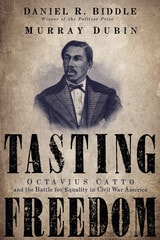
Tasting Freedom
Octavius Catto and the Battle for Equality in Civil War AmericaDaniel R. Biddle
Temple University Press, 2017
Octavius Valentine Catto was an orator who shared stages with Frederick Douglass, a second baseman on Philadelphia’s best black baseball team, a teacher at the city’s finest black school and an activist who fought in the state capital and on the streets for equal rights. With his racially-charged murder, the nation lost a civil rights pioneer—one who risked his life a century before Selma and Birmingham.
In Tasting Freedom Murray Dubin and Pulitzer Prize winner Dan Biddle painstakingly chronicle the life of this charismatic black leader—a “free” black whose freedom was in name only. Born in the American south, where slavery permeated everyday life, he moved north where he joined the fight to be truly free—free to vote, go to school, ride on streetcars, play baseball and even participate in July 4th celebrations.
Catto electrified a biracial audience in 1864 when he proclaimed, “There must come a change,” calling on free men and women to act and educate the newly freed slaves. With a group of other African Americans who called themselves a “band of brothers,” they challenged one injustice after another. Tasting Freedom presents the little-known stories of Catto and the men and women who struggled to change America.
Teaching Life
Letters from a Life in LiteratureDale Salwak
University of Iowa Press, 2008
Written in response to the sudden death of one of his students, who died tragically in an automobile accident on her way to Salwak’s office to talk over her career plans, Teaching Life is an effort to impart lessons to the next generation of teachers: “It was the suddenness of her death, I think, along with the utter loss of so much potential, which struck me forcibly, and I found myself wondering if anything I had said in class had made a difference in her too-short life or, for that matter, in the lives of any of my students.”
By turns analytical, reflective, and exhortatory, Teaching Life unselfconsciously captures the fascination, enlightenment, and sheer joy that literary studies can offer professors and students. It also implicitly speaks to society's prevailing—and disturbing—prejudice against the profession.
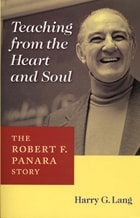
Teaching from the Heart and Soul
The Robert F. Panara StoryHarry G. Lang
Gallaudet University Press, 2007
The Sixth Volume in the Deaf Lives Series
Robert F. Panara lost his hearing from spinal meningitis in 1931 at the age of ten. However, he could read and write, and with his friends’ help, Bob (as he was known), made it through high school. His new solitude created a new passion – reading, reading, and reading. The stage was set for the emergence of one of the great deaf educators in modern time, a life fully captured in Harry G. Lang’s Teaching from the Heart and Soul: The Robert F. Panara Story.
Bob Panara’s many achievements began after his discovery of Gallaudet College in the 1940s. There, he wrote “The Significance of the Reading Problem,” which first expressed his belief that teaching “comes from the heart and soul.” The article secured him his first job at the New York School for the Deaf in White Plains. Bob returned to teach at Gallaudet College from 1948 until 1965, when he left to help found the National Technical Institute for the Deaf (NTID) and the National Theatre of the Deaf (NTD) — all in the same year. He continued to expand arts and literature at NTID until his retirement in 1987.
Bob Panara’s genius resides in the people he inspired with his vivacious teaching style. He believed ardently in involving students, that they should “be the book.” Former students tell story after story about his fabulous interpretations of drama and poetry, a legacy confirmed by his own story in Teaching from the Heart and Soul.
Teaching in the Terrordome
Two Years in West Baltimore with Teach for AmericaHeather Kirn Lanier
University of Missouri Press, 2012
Ted Lambert
The Man Behind the PaintingsTed Lambert
University of Alaska Press, 2012
Television, a memoir
Karen Brennan
Four Way Books, 2022
Television, a memoir is a hybrid collection of autobiographical pieces, tragi-comic in spirit, that depict a woman’s life evolving through time and culture in fragmentary glimpses. Indeterminate in genre, Television is a fluid text that sometimes reads as poetry, sometimes as prose, while exploring classism, ableism, and feminism in a world defined by the advent of new media and, for the author, a privilege that often felt suffocating. Working structurally and thematically, television creates conceptual mileposts in the memoir, with certain programs and cultural references corresponding to specific eras in the author’s past, but it also gestures at an existential modality — the experience of a televisual life, the performative arrangements of nuclear families and neighborhoods, the periodic events and dramas of an adolescence watched from outside oneself.
Tell Me, Grandmother
Traditions, Stories, and Cultures of Arapaho PeopleVirginia Sutter
University Press of Colorado, 2004
- Watonga Republican
"Virginia Sutter uses an interesting technique to write the history of her people, the Northern Arapaho Indian Nation. She constructs her work as a series of conversations between herself and her paternal great-grandmother. . . . [T]hrough this device, the history of the Arapaho people is traced from the early nineteenth-century years, when the buffalo ran aplenty and the prairies were boundless, through present-day living conditions in American Indian tribal reservations."
- Moira Richards, www.WomenWriters.net
"Emblematic of the struggle of so many Native Americans of the twentieth century, who seek to reconcile modernity with tradition, and who struggle to recast, reframe, and restore what is Native, even as the majority culture has done its best to uproot, separate, and tell Natives that they can be either modern or Native, but certainly not both."
- Brian Hosmer, Studies in American Indian Literatures (SAIL)
Tell Me, Grandmother is at once the biography of Goes-in-Lodge, a traditional Arapaho woman of the nineteenth century, and the autobiography of her descendant, Virginia Sutter, a modern Arapaho woman with a Ph.D. in public administration. Sutter adeptly weaves her own story with that of Goes-in-Lodge - who, in addition to being Sutter's great-grandmother, was first wife of Sharpnose, the last chief of the Northern Arapaho nation.
Writing in a question-and-answer format between twentieth-century granddaughter and matriarchal ancestor, Sutter discusses four generations of home life, including details about child rearing, education, courtship, marriage, birthing, and burial. Sutter's portrait of Goes-in-Lodge is based on tribal history and interviews with tribal members. Goes-in-Lodge speaks of social and ceremonial gatherings, the Sun Dance, the sweat lodges, and the changes that took place on the Great Plains throughout her lifetime. Sutter details her own life as a child born in a teepee to a white mother and Indian father and the discrimination and injustice she faced struggling to make her way in an increasingly Euro-American world.
Tell Mother I'm in Paradise
Memoirs of a Political Prisoner in El SalvadorAna Margarita Gasteazoro, edited by Judy Blankenship and Andrew Wilson
University of Alabama Press, 2022
The life and times of Ana Margarita Gasteazoro: political activist, clandestine operative, and prisoner of conscience.
Ana Margarita Gasteazoro (1950–1993) was a Salvadoran opposition activist and renowned Amnesty International prisoner of conscience. Tell Mother I’m in Paradise:Memoirs of a Political Prisoner in El Salvador recounts her extraordinary life story. From a privileged Catholic upbringing, with time spent studying and working abroad, Ana Margarita first became a member of the legal political opposition in the late 1970s and later a clandestine operative at work against the brutal military junta.
Gasteazoro recounts her early rebellion against the strictures of conservative upper-class Salvadoran society. She spoke perfect English and discovered a talent for organizing in administrative jobs abroad and at home. As the civil war progressed, she quickly became a valued figure in the National Revolutionary Movement (MNR), a social democratic party, often representing it at international meetings. Against the backdrop of massive social oppression and the “disappearances” of thousands of opposition members, Gasteazoro began a double life as an operative in a faction of the Farabundo Martí National Liberation Front (FMLN). Multitalented and energetic, she organized safe houses for fellow activists, transported weapons and equipment, wrote scripts for an underground radio station, and produced an award-winning documentary film. But the toll on her family life and personal relationships was heavy.
Ana Margarita was disappeared in May 1981 by the infamous National Guard and endured a nightmare 11 days of interrogations, beatings, and abuse. Through international pressure and the connections of her family, her arrest was finally made public, and she was transferred to the women’s prison at Ilopango. There, she and other activists continued the political struggle through the Committee of Political Prisoners of El Salvador (COPPES). During her two years in prison, tested by hunger strikes, violence, and factional divisions, she became one of Amnesty International’s best-known prisoners of conscience. Tell Mother I’m in Paradise is a gripping story of a self-aware activist and a vital young woman’s struggle to find her own way within a deeply conservative society.
Tell Us a Story
An African American Family in the HeartlandShirley Motley Portwood
Southern Illinois University Press, 2000
Illinois State Historical Society's Certificate of Excellence (2002)
Supplemented by recollections from the present era, Tell Us a Story is a colorful mosaic of African American autobiography and family history set in Springfield, Illinois, and in rural southern Illinois, Missouri, and Arkansas from the 1920s through the 1950s.
Shirley Motley Portwood shares rural, African American family and community history through a collection of vignettes about the Motley family. Initially transcribed accounts of the Motleys’ rich oral history, these stories have been passed among family members for nearly fifty years. In addition to her personal memories, Portwood presents interviews with her father, three brothers, and two sisters plus notes and recollections from their annual family reunions. The result is a composite view of the Motley family.
A historian, Portwood enhances the Motley family story by investigating primary data such as census, marriage, school, and land records, newspaper accounts, city directories, and other sources. The backbone of this saga, however, is oral history gathered from five generations, extending back to Portwood's grandparents, born more than one hundred years ago. Information regarding two earlier generations—her great- grandfather and great-great-grandparents, who were slaves—is based on historical research into state archives, county and local records, plantation records, and manuscript censuses.
A rich source for this material—the Motley family reunions—are week-long retreats where four generations gather at the John Motley house in Burlington, Connecticut, the Portwood home in Godfrey, Illinois, or other locations. Here the Motleys, all natural storytellers, pass on the family traditions. The stories, ranging from humorous to poignant, reveal much about the culture and history of African Americans, especially those from nonurban areas. Like many rural African Americans, the Motleys have a rich and often joyful family history with traditions reaching back to the slave past. They have known the harsh poverty that made even the necessities difficult to obtain and the racial prejudice that divided whites and blacks during the era of Jim Crow segregation and inequality; yet they have kept a tremendous faith in self-improvement through hard work and education.

Tell the Driver
A Biography of Elinor F.E. Black, MDJulie Vandervoort
University of Manitoba Press, 1992
Telling Moments
Autobiographical Lesbian Short StoriesEdited by Lynda Hall
University of Wisconsin Press, 2003
The stories are by well-known contemporary writers—Gloria Anzaldúa, Mary Cappello, Emma Donoghue, Jewelle Gomez, Karla Jay, Anna Livia, Valerie Miner, Lesléa Newman, Minnie Bruce Pratt, Ruthann Robson, Sarah Schulman, and Jess Wells—and exciting newer voices, such as Donna Allegra and Marion Douglas. There are also stories from performance artists Carmelita Tropicana, Peggy Shaw, and Maya Chowdhry. Anna Livia’s protagonist appreciates her mother’s artful garden creation. Ruthann Robson tells of a survivor of the health care system. In Marion Douglas’s story a teenager dances with an alluring classmate. Donna Allegra’s strong construction worker copes with the death of her mother. And Karla Jay sets her character forth to swim with sharks. Most of the stories are accompanied by an author photo, biographical sketch, and—a most significant feature—a commentary from the author on her writing process and the autobiographical nature of her story, illustrating the truth behind the fiction.
Telling Stories That Matter
Memoirs and EssaysMarvin R. O'Connell
St. Augustine's Press, 2020
In Miscamble’s thorough introduction of O’Connell, he writes that the latter “utilized his striking talents as a historian as an integral part of his fundamental vocation as a priest. [O’Connell] once described the historian as a veritable ‘midwife to our faith,’ who must capture, as best as evidence will allow, the truth of the past.” This position lends itself to the structure of this work. The first part is the sadly incomplete memoirs of Fr. O’Connell, wherein the reader meets the historian and moves with eagerness and confidence into the essays that follow. Highlights of these collected essays include thoughts on Cardinal Newman, Belloc, the Spanish Inquisition, and the historical perspective of evangelization in the United States and modernism at large. What one reads are stories that might have been lost but are here preserved in what can with all moral certainty be called truthfulness. As his friend Ralph McInerny once qualified him, O’Connell combined compassion and judgment such that his histories were always indeed primarily stories and, as the reader well knows, stories have layers and threads and are not told simply for their conclusions.
O’Connell succeeds in showing one how human history is written. Above all, he reveals that history is made by humans, but must also be remembered and deciphered by humans who cannot forego leaving their own marks and prints on everything they encounter (in memory or otherwise). The objectivity we seek can be found in one historical account alone, asserts the priest-storyteller, yet a sharp eye to the past is always consonant with a compassionate desire to understand. Bill Schmitt, Fr. Bill Miscamble and David Solomon do posterity a service by giving us this man and his masterful engagement of history. These friends of O’Connell deem the historian’s passion for truth-in-context to be foundational for shaping stories that matter, including his own.
"This artful combination of memoir and selected essays reawakens our memory of Father O'Connell in all his immense personal charm, intellectual energy, rich erudition, keen wit, and steadfast dedication to his interlocking callings as priest and historian." —J. Philip Gleason, Emeritus Professor, History Department, University of Notre Dame
"The work of a master historian, these memoirs and essays are reliable in recounting what happened, insightful in judging how and why, and eloquent in presenting it all with a flair and wit rarely equaled in historical writing. Moreover, they come forth from a Catholic faith so deep and secure that it need not be imposed on the reader. Rather, they do what good historical writing does, placing the reader into a past that can be seen and felt, recognized and understood. Whether it be his colorful accounts of the tumultuous life and times of Thomas More, or the valiant struggles of Newman and the Oxford Movement, or his own seminary training and teaching in St. Paul, or his fortunes as a graduate student at Notre Dame under the tutelage of the eminent Monsignor Phillip Hughes—whatever the topic, reading O’Connell’s history gives one the gift of being able to say, I remember that happening and I wasn’t even there!"—Michael J. Baxter, Director of Catholic Studies, Regis University in Denver
"O'Connell was a master story teller. He was not, however, just a story teller. He was painstakingly rigorous in what and how he taught. His stories always perfectly illustrated a point, but they were never a substitution for the truth--rather an illustration of it." —Bradley Birzer, Russell Amos Kirk Chair in American Studies, Hillsdale College
Telling Women's Lives
The New BiographyWagner-Martin, Linda
Rutgers University Press, 1996
Placing herself in the avid reader’s chair, Linda Wagner-Martin writes about women’s biography from George Eliot and Virginia Woolf to Eleanor Roosevelt and Margaret Mead, and even to Cher and Elizabeth Taylor. Along the way, she looks at dozens of other life stories, probing at the differences between biographies of men and women, prevailing stereotypes about women’s lives and roles, questions about what is public and private, and the hazy margins between autobiography, biography, and other genres. In quick paced and wide-ranging discussions, she looks at issues of authorial stance (who controls the narrative? who chooses which story to tell?), voice (is this story told in the traditional objective tone? and if it is, what effect does that telling have on our reading?), and the politics of publishing (why aren’t more books about women’s lives published? and when they are, what happens to their advertising budgets?). She discusses the problems of writing biography of achieving women who were also wives (how does the biographer balance the two?), of daughters who attempt to write about their mothers, and of husbands trying to portray their wives.
Telling Women’s Lives is the first overview of the writing and the history of biographies about women. It is a significant contribution to the reassessment of the work of the hundreds of women writers who have made a difference in our conception of what women’s stories--and women’s lives--have been, and are becoming. The book is a must read for anyone who loves reading biographies, particularly biographies of women.
Telling Young Lives
Portraits of Global Youthedited by Craig Jeffrey and Jane Dyson
Temple University Press, 2008
Telling Young Lives presents more than a dozen fascinating, ethnograph-ically informed portraits of young people facing rapid changes in society and politics from different parts of the world. From a young woman engaged in agricultural labor in the High Himalayas to a youth activist based in Tanzania, the distinctive voices from the U.K., India, Germany, Sierra Leone, South Africa and Bosnia Herzegovina, provide insights into the active and creative ways these youths are addressing social and political challenges such as war, hunger and homelessness.
Telling Young Lives has great appeal for classroom use in geography courses and makes a welcome contribution to the growing field of “young geographies,” as well as to politics and political geography. Its focus on individual portraits gives readers a fuller, more vivid picture of the ways in which global changes are reshaping the actual experiences and strategies of young people around the world.
Telling to Live
Latina Feminist TestimoniosLatina Feminist Group
Duke University Press, 2001
The complex and rich tapestry of narratives that comprises this book introduces us to an intergenerational group of Latina women who negotiate their place in U.S. society at the cusp of the twenty-first century. These are the stories of women who struggled to reach the echelons of higher education, often against great odds, and constructed relationships of sustenance and creativity along the way. The stories, poetry, memoirs, and reflections of this diverse group of Puerto Rican, Chicana, Native American, Mexican, Cuban, Dominican, Sephardic, mixed-heritage, and Central American women provide new perspectives on feminist theorizing, perspectives located in the borderlands of Latino cultures.
This often heart wrenching, sometimes playful, yet always insightful collection will interest those who wish to understand the challenges U.S. society poses for women of complex cultural heritages who strive to carve out their own spaces in the ivory tower.
Contributors. Luz del Alba Acevedo, Norma Alarcón, Celia Alvarez, Ruth Behar, Rina Benmayor, Norma E. Cantú, Daisy Cocco De Filippis, Gloria Holguín Cuádraz, Liza Fiol-Matta, Yvette Flores-Ortiz, Inés Hernández-Avila, Aurora Levins Morales, Clara Lomas, Iris Ofelia López, Mirtha N. Quintanales, Eliana Rivero, Caridad Souza, Patricia Zavella
Tempests into Rainbows
Managing TurbulenceRobben W. Fleming
University of Michigan Press, 1996
Templates for Authorship
American Women's Literary Autobiography of the 1930sWindy Counsell Petrie
University of Massachusetts Press, 2021
Windy Counsell Petrie considers twelve autobiographies from a diverse group of writers, ranging from highbrow modernists such as Gertrude Stein and Harriet Monroe to popular fiction writers like Edith Wharton and Edna Ferber, and lesser known figures such as Grace King and Carolyn Wells. Since there were few existing examples of women's literary autobiography, these writers found themselves marketed and interpreted within four cultural templates: the artist, the activist, the professional, and the celebrity. As they wrote their life stories, the women adapted these templates to counter unwanted interpretations and resist the sentimental feminine traditions of previous generations with innovative strategies of deferral, elision, comedy, and collaboration. This accessible study contends that writing autobiography offered each of these writers an opportunity to define and defend her own literary legacy.
Tempting All the Gods
Joseph P. Kennedy, Ambassador to Great Britain, 1938–1940Jane Karoline Vieth
Michigan State University Press, 2021
Ten Percent of Nothing
The Case of the Literary Agent from HellJim Fisher
Southern Illinois University Press, 2004
Former FBI agent Jim Fisher upends the genteel racket of fee-based literary agents and vanity publishers in this searing look at the rise and fall of one bogus entrepreneur who systematically swindled thousands of would-be writers out of millions of dollars with promises of having their work turned into salable books. In divulging the details of this colossal and shocking confidence game, Ten Percent of Nothing: The Case of the Literary Agent from Hell exposes a growing and serious crime against writers and a dark, ugly secret about the American publishing industry.
In 1989, Dorothy L. Deering, possessing a high school degree, a recent embezzlement conviction, and no experience as a professional writer, editor, or publisher, began operating a fee-based literary agency out of her garage in Nicholasville, Kentucky. Over the next ten years, she racked up a fortune in reading and marketing fees, learning the business of sham publishing as she went along. Later, as the owner of a vanity press, she bilked 1.5 million dollars out of her clients, masterfully manufacturing dreams of literary success until she was brought to justice by Fisher’s investigative journalism, an FBI probe, and the retaliation and testimonies of numerous victims.
Deering never sold a single manuscript to a major publisher. With the money in her pocket and her clients’ hopes and hard work wrapped up in fraudulent contracts, Deering produced a few copies of four cheaply printed, poorly edited paperbacks. These she used as bait to hoodwink more clients. She was abetted by her husband, Charles, a former car salesman; his son, Daniel, a drug user with a ninth-grade education; and her brother, Bill, a fugitive from the law at the time he headed her vanity press.
By successfully impersonating a literary agent for ten years, Deering operated one of the longest-running confidence games in American history. The financial loss for her clients was devastating, and the heartbreak was extreme. Drawing on victims’ experiences and documents recovered from the Deering venture, Fisher shows how Deering engineered and executed her scam, emphasizing the warning signs of sham agents, crook book doctors, and mendacious publishers.
Ten Percent of Nothing provides essential information for aspiring writers and publishing professionals. Fisher’s findings also prompt new inquiries into the potential licensing of literary agents and the prosecution of interstate scam artists. The volume’s gallery of illustrations includes reproductions of correspondence, newsletters, and advertisements used by the Deering operation.
Tenderfoot in Colorado
Richard Baxter Townshend
University Press of Colorado, 1968
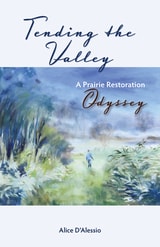
Tending the Valley
A Prairie Restoration OdysseyAlice D'Alessio
Wisconsin Historical Society Press, 2020
In Tending the Valley, Alice chronicles their efforts to return the land to its natural prairie state and to manage their oak and pine woods. Along the way they joined the land restoration movement, became involved in a number of stewardship groups, and discovered the depths of dedication and toil required to bring their dream to fruition. With hard-earned experience and the evocative language of a poet, D’Alessio shares her personal triumphs and setbacks as a prairie steward, along with a profound love for the land and respect for the natural history of the Driftless.
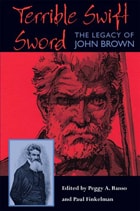
Terrible Swift Sword
The Legacy of John BrownPeggy A. Russo
Ohio University Press, 2005
More than two centuries after his birth and almost a century and a half after his death, the legendary life and legacy of John Brown go marching on. Variously deemed martyr, madman, monster, terrorist, and saint, he remains one of the most controversial figures in America’s history. Brown’s actions in Kansas and in Harpers Ferry, West Virginia, were major catalysts for the American Civil War, and continue today to evoke praise or condemnation.
Through the prisms of history, literature, psychology, criminal justice, oral history, African American studies, political science, film studies, and anthropology, Terrible Swift Sword offers insights not only into John Brown’s controversial character and motives but also into the nature of a troubled society before, during, and after the Civil War. The contributors discuss reasons why Brown’s contemporaries supported him, analyze Brown’s behavior and his depiction in literature, and examine the iconography and mythology surrounding him.
The interdisciplinary focus brought by editors Peggy A. Russo and Paul Finkelman makes this collection unique. Terrible Swift Sword: The Legacy of John Brown will appeal to a broad audience of readers interested in this turbulent moment in American history.
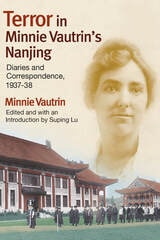
Terror in Minnie Vautrin's Nanjing
Diaries and Correspondence, 1937-38Minnie Vautrin. Edited and with an Introduction by Suping Lu
University of Illinois Press, 2007
In December of 1937, the Japanese Imperial Army marched into China's capital city of Nanjing and launched six weeks of carnage that would become known as the Rape of Nanjing. In addition to the deaths of Chinese POWs and civilians, tens of thousands of women were raped, tortured, and killed by Japanese soldiers. In this traumatic environment, both native and foreign-born inhabitants of Nanjing struggled to carry on with their lives.
This volume collects the diaries and correspondence of Minnie Vautrin, a farmgirl from Illinois who had dedicated herself to the education of Chinese women at Ginling College in Nanjing. Faced with the impending Japanese attack, she turned the school into a sanctuary for ten thousand women and girls. Vautrin's firsthand accounts of daily life in Nanjing and the intensifying threat of Japanese invasion reveal the courage of the occupants under siege--Chinese nationals as well as Western missionaries, teachers, surgeons and business people--and the personal costs of violence in wartime.
Thanks to Vautrin's painstaking effort in keeping a day-to-day account, present-day readers are able to examine this episode of history at close range through her eyes. With detailed maps, photographs, and carefully researched in-depth annotations, Terror in Minnie Vautrin's Nanjing: Diaries and Correspondence, 1937-38 presents a comprehensive and detailed daily account of the events and of life during the horror-stricken days within the city walls and in particular on the Ginling campus. Through chronologically arranged diaries, letters, reports, documents, and telegrams, Vautrin bears witness to those terrible events and to the magnitude of trauma that the Nanjing Massacre exacted on the populace.

Terry Sanford
Politics, Progress, and Outrageous AmbitionsHoward E. Covington Jr. and Marion A. Ellis
Duke University Press, 1999
After defeating a segregationist campaign in 1960 to win the governorship, Sanford used his years in office to boost public education and advance race relations. A decade later, at the height of tumult on American campuses, Sanford assumed the presidency of Duke University and led it to its position as one of the top universities in the nation. During his more than fifty years as a public servant he was associated with presidents John F. Kennedy, Lyndon B. Johnson, Richard Nixon, and Jimmy Carter. Sanford was a presidential candidate himself in 1972 and 1976, and he won election to the United States Senate in 1986 where his international commission produced an economic recovery plan for Central America. As one of the last New Deal Democrats in the Senate, he remained passionate about the opportunity for leaders to use government to improve people’s lives.
Terry Sanford draws on Sanford’s considerable private and public archive as well as on the recollections of Sanford himself and his family, colleagues, and friends. This biography offers a unique perspective on North Carolina life, politics, political personalities, and the shifting public allegiances of the second half of the twentieth century that transformed life both in North Carolina and throughout the American South.
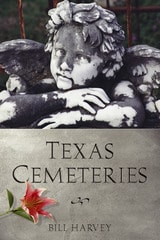
Texas Cemeteries
The Resting Places of Famous, Infamous, and Just Plain Interesting TexansBy Bill Harvey
University of Texas Press, 2003
Winner, Journalistic Achievement Award, Texas Historical Foundation, 2004
From the simplest slab of weathered stone to the most imposing mausoleum, every marker in a Texas cemetery bears witness to a life that—in ways small or large—helped shape the history and culture of the state. Telling the stories of some of these significant lives is the purpose of this book. Within its pages, you'll meet not only the heroes of the Texas Revolution, for example, but also one of the great African American cowboys of the traildriving era (Bose Ikard) and the first woman in Texas elected to statewide office (Annie Webb Blanton). Visiting cemeteries from every era and all regions of the state, Bill Harvey recounts the histories of famous, infamous, and just plain interesting Texans who lie at rest in Texas cemeteries.
The book is organized alphabetically by city for easy reference. For each city, Harvey lists one or more cemeteries, giving their location and history, if significant. At the heart of the book are his profiles of the noteworthy people buried in each cemetery. They include not only famous but also lesser-known and even unknown Texans who made important contributions to the state in the arts, sports, business, military service, politics—truly every area of communal life. For those who want to visit these resting places, Harvey also includes tips on finding cemeteries, locating gravesites, and taking good photographs. Spend time with him in the graveyards of Texas, and you'll soon appreciate what fascinating stories the silent stones can tell.