277 books match the query 'Biology' and 96 start with t
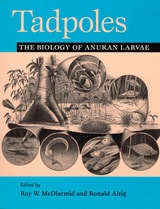
cover of Tadpoles: The Biology of Anuran Larvae

Tadpoles

The Biology of Anuran Larvae

Edited by Roy W. McDiarmid and Ronald Altig

University of Chicago Press, 1999

In our own juvenile stage, many of us received our wide-eyed introduction to the wonders of nature by watching the metamorphosis of swimming tadpoles into leaping frogs and toads. The recent alarming declines in amphibian populations worldwide and the suitability of amphibians for use in answering research questions in disciplines as diverse as molecular systematics, animal behavior, and evolutionary biology have focused enormous attention on tadpoles. Despite this popular and scientific interest, relatively little is known about these fascinating creatures.

In this indispensable reference, leading experts on tadpole biology relate what we currently know about tadpoles and what we might learn from them in the future. Tadpoles provides detailed summaries of tadpole morphology, development, behavior, ecology, and environmental physiology; explores the evolutionary consequences of the tadpole stage; synthesizes available information on their biodiversity; and presents a standardized terminology and an exhaustive literature review of tadpole biology.
[more]
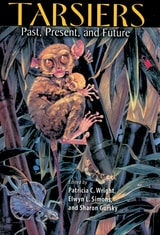
cover of Tarsiers: Past, Present, and Future

Tarsiers

Past, Present, and Future

Wright, Patricia C.

Rutgers University Press, 2003

Tarsiiformes, or tarsiers for short, are a group of living species of special interest to primatologists because their combination of derived and ancient characters make them pivotal to understanding the roots of primate evolution. These small-bodied, nocturnal, solitary creatures resemble lower primates in their behavior but genetically, DNA evidence aligns them more closely with higher primates, such as monkeys, apes, and humans. These astounding creatures exhibit an ability found in no other living mammal¾they can turn their heads 180 degrees in either direction to see both prey and predators. The world’s only exclusive carnivorous primate, they eat live food (primarily insects, but the occasional vertebrate, such as lizards, snakes, or frogs will also do). This unique combination of behavior and anatomy makes the tarsier an especially interesting and controversial animal for study among primate behaviorists, evolutionists, and taxonomists, who view the tarsiers as “living fossils” that link past and present, lower and higher, primates in the long chain of evolutionary history.

This new volume presents alternative and contrasting perspectives on the most debated questions that have arisen in tarsier studies. Top researchers bring together perspectives from anatomical, behavioral, genetic, and conservation studies in this new and exciting addition to the understanding of primate evolution.

This book is a volume in the Rutgers Series on Human Evolution, edited by Robert Trivers, Lee Cronk, Helen Fischer, and Lionel Tiger.
[more]
cover of The Age of Everything: How Science Explores the Past

The Age of Everything

How Science Explores the Past

Matthew Hedman

University of Chicago Press, 2007

Taking advantage of recent advances throughout the sciences, Matthew Hedman brings the distant past closer to us than it has ever been. Here, he shows how scientists have determined the age of everything from the colonization of the New World over 13,000 years ago to the origin of the universe nearly fourteen billion years ago.

Hedman details, for example, how interdisciplinary studies of the Great Pyramids of Egypt can determine exactly when and how these incredible structures were built. He shows how the remains of humble trees can illuminate how the surface of the sun has changed over the past ten millennia. And he also explores how the origins of the earth, solar system, and universe are being discerned with help from rocks that fall from the sky, the light from distant stars, and even the static seen on television sets.

Covering a wide range of time scales, from the Big Bang to human history, The Age of Everything is a provocative and far-ranging look at how science has determined the age of everything from modern mammals to the oldest stars, and will be indispensable for all armchair time travelers.
 
“We are used to being told confidently of an enormous, measurable past: that some collection of dusty bones is tens of thousands of years old, or that astronomical bodies have an age of some billions. But how exactly do scientists come to know these things? That is the subject of this quite fascinating book. . . . As told by Hedman, an astronomer, each story is a marvel of compressed exegesis that takes into account some of the most modern and intriguing hypotheses.”—Steven Poole, Guardian
 
“Hedman is worth reading because he is careful to present both the power and peril of trying to extract precise chronological data. These are all very active areas of study, and as you read Hedman you begin to see how researchers have to be both very careful and incredibly audacious, and how much of our understanding of ourselves—through history, through paleontology, through astronomy—depends on determining the age of everything.”—Anthony Doerr, Boston Globe 
[more]
cover of The American Development of Biology

The American Development of Biology

Maienschein, Jane

Rutgers University Press, 1991

The papers in this volume represent original work to celebrate the centenary of the American Society of Zoologists. They illustrate the impressive nature of historical scholarship that has subsequently focused on the development of biology in the United States.
[more]
cover of The Better to Eat You With: Fear in the Animal World

The Better to Eat You With

Fear in the Animal World

Joel Berger

University of Chicago Press, 2008

At dawn on a brutally cold January morning, Joel Berger crouched in the icy grandeur of the Teton Range.  It had been three years since wolves were reintroduced to Yellowstone after a sixty-year absence, and members of a wolf pack were approaching a herd of elk. To Berger’s utter shock, the elk ignored the wolves as they went in for the kill. The brutal attack that followed—swift and bloody—led Berger to hypothesize that after only six decades, the elk had forgotten to fear a species that had survived by eating them for hundreds of millennia.

Berger’s fieldwork that frigid day raised important questions that would require years of travel and research to answer: Can naive animals avoid extinction when they encounter reintroduced carnivores? To what extent is fear culturally transmitted? And how can a better understanding of current predator-prey behavior help demystify past extinctions and inform future conservation?

The Better to Eat You With is the chronicle of Berger’s search for answers.  From Yellowstone’s elk and wolves to rhinos living with African lions and moose coexisting with tigers and bears in Asia, Berger tracks cultures of fear in animals across continents and climates, engaging readers with a stimulating combination of natural history, personal experience, and conservation. Whether battling bureaucracy in the statehouse or fighting subzero wind chills in the field, Berger puts himself in the middle of the action.  The Better to Eat You With invites readers to join him there. The thrilling tales he tells reveal a great deal not only about survival in the animal kingdom but also the process of doing science in foreboding conditions and hostile environments.
[more]
cover of The Biological Bulletin, volume 241 number 2 (October 2021)

The Biological Bulletin, volume 241 number 2 (October 2021)

The University of Chicago Press

University of Chicago Press Journals, 2021
This is volume 241 issue 2 of The Biological Bulletin. The Biological Bulletin disseminates novel scientific results in broadly related fields of biology in keeping with more than 100 years of a tradition of excellence. The Bulletin publishes outstanding original research with an overarching goal of explaining how organisms develop, function, and evolve in their natural environments. To that end, the journal publishes papers in the fields of Neurobiology and Behavior, Physiology and Biomechanics, Ecology and Evolution, Development and Reproduction, Cell Biology, Symbiosis and Systematics. The Bulletin emphasizes basic research, including articles on marine model systems and those of an interdisciplinary nature.
[more]
cover of The Biological Bulletin, volume 241 number 3 (December 2021)

The Biological Bulletin, volume 241 number 3 (December 2021)

The University of Chicago Press

University of Chicago Press Journals, 2021
This is volume 241 issue 3 of The Biological Bulletin. The Biological Bulletin disseminates novel scientific results in broadly related fields of biology in keeping with more than 100 years of a tradition of excellence. The Bulletin publishes outstanding original research with an overarching goal of explaining how organisms develop, function, and evolve in their natural environments. To that end, the journal publishes papers in the fields of Neurobiology and Behavior, Physiology and Biomechanics, Ecology and Evolution, Development and Reproduction, Cell Biology, Symbiosis and Systematics. The Bulletin emphasizes basic research, including articles on marine model systems and those of an interdisciplinary nature.
[more]
cover of The Biological Bulletin, volume 242 number 1 (February 2022)

The Biological Bulletin, volume 242 number 1 (February 2022)

The University of Chicago Press

University of Chicago Press Journals, 2022

This is volume 242 issue 1 of The Biological Bulletin. The Biological Bulletin disseminates novel scientific results in broadly related fields of biology in keeping with more than 100 years of a tradition of excellence. The Bulletin publishes outstanding original research with an overarching goal of explaining how organisms develop, function, and evolve in their natural environments. To that end, the journal publishes papers in the fields of Neurobiology and Behavior, Physiology and Biomechanics, Ecology and Evolution, Development and Reproduction, Cell Biology, Symbiosis and Systematics. The Bulletin emphasizes basic research, including articles on marine model systems and those of an interdisciplinary nature.
[more]
cover of The Biological Bulletin, volume 242 number 2 (April 2022)

The Biological Bulletin, volume 242 number 2 (April 2022)

The University of Chicago Press

University of Chicago Press Journals, 2022
This is volume 242 issue 2 of The Biological Bulletin. The Biological Bulletin disseminates novel scientific results in broadly related fields of biology in keeping with more than 100 years of a tradition of excellence. The Bulletin publishes outstanding original research with an overarching goal of explaining how organisms develop, function, and evolve in their natural environments. To that end, the journal publishes papers in the fields of Neurobiology and Behavior, Physiology and Biomechanics, Ecology and Evolution, Development and Reproduction, Cell Biology, Symbiosis and Systematics. The Bulletin emphasizes basic research, including articles on marine model systems and those of an interdisciplinary nature.
[more]
cover of The Biological Bulletin, volume 242 number 3 (June 2022)

The Biological Bulletin, volume 242 number 3 (June 2022)

The University of Chicago Press

University of Chicago Press Journals, 2022
This is volume 242 issue 3 of The Biological Bulletin. The Biological Bulletin disseminates novel scientific results in broadly related fields of biology in keeping with more than 100 years of a tradition of excellence. The Bulletin publishes outstanding original research with an overarching goal of explaining how organisms develop, function, and evolve in their natural environments. To that end, the journal publishes papers in the fields of Neurobiology and Behavior, Physiology and Biomechanics, Ecology and Evolution, Development and Reproduction, Cell Biology, Symbiosis and Systematics. The Bulletin emphasizes basic research, including articles on marine model systems and those of an interdisciplinary nature.
[more]
cover of The Biological Bulletin, volume 243 number 1 (August 2022)

The Biological Bulletin, volume 243 number 1 (August 2022)

The University of Chicago Press

University of Chicago Press Journals, 2022
This is volume 243 issue 1 of The Biological Bulletin. The Biological Bulletin disseminates novel scientific results in broadly related fields of biology in keeping with more than 100 years of a tradition of excellence. The Bulletin publishes outstanding original research with an overarching goal of explaining how organisms develop, function, and evolve in their natural environments. To that end, the journal publishes papers in the fields of Neurobiology and Behavior, Physiology and Biomechanics, Ecology and Evolution, Development and Reproduction, Cell Biology, Symbiosis and Systematics. The Bulletin emphasizes basic research, including articles on marine model systems and those of an interdisciplinary nature.
[more]
cover of The Biological Bulletin, volume 243 number 2 (October 2022)

The Biological Bulletin, volume 243 number 2 (October 2022)

The University of Chicago Press

University of Chicago Press Journals, 2022
This is volume 243 issue 2 of The Biological Bulletin. The Biological Bulletin disseminates novel scientific results in broadly related fields of biology in keeping with more than 100 years of a tradition of excellence. The Bulletin publishes outstanding original research with an overarching goal of explaining how organisms develop, function, and evolve in their natural environments. To that end, the journal publishes papers in the fields of Neurobiology and Behavior, Physiology and Biomechanics, Ecology and Evolution, Development and Reproduction, Cell Biology, Symbiosis and Systematics. The Bulletin emphasizes basic research, including articles on marine model systems and those of an interdisciplinary nature.
[more]
cover of The Biological Bulletin, volume 243 number 3 (December 2022)

The Biological Bulletin, volume 243 number 3 (December 2022)

The University of Chicago Press

University of Chicago Press Journals, 2022
This is volume 243 issue 3 of The Biological Bulletin. The Biological Bulletin disseminates novel scientific results in broadly related fields of biology in keeping with more than 100 years of a tradition of excellence. The Bulletin publishes outstanding original research with an overarching goal of explaining how organisms develop, function, and evolve in their natural environments. To that end, the journal publishes papers in the fields of Neurobiology and Behavior, Physiology and Biomechanics, Ecology and Evolution, Development and Reproduction, Cell Biology, Symbiosis and Systematics. The Bulletin emphasizes basic research, including articles on marine model systems and those of an interdisciplinary nature.
[more]
cover of The Biological Bulletin, volume 244 number 1 (February 2023)

The Biological Bulletin, volume 244 number 1 (February 2023)

The University of Chicago Press

University of Chicago Press Journals, 2023
This is volume 244 issue 1 of The Biological Bulletin. The Biological Bulletin disseminates novel scientific results in broadly related fields of biology in keeping with more than 100 years of a tradition of excellence. The Bulletin publishes outstanding original research with an overarching goal of explaining how organisms develop, function, and evolve in their natural environments. To that end, the journal publishes papers in the fields of Neurobiology and Behavior, Physiology and Biomechanics, Ecology and Evolution, Development and Reproduction, Cell Biology, Symbiosis and Systematics. The Bulletin emphasizes basic research, including articles on marine model systems and those of an interdisciplinary nature.
[more]
cover of The Biological Bulletin, volume 244 number 2 (April 2023)

The Biological Bulletin, volume 244 number 2 (April 2023)

The University of Chicago Press

University of Chicago Press Journals, 2023
This is volume 244 issue 2 of The Biological Bulletin. The Biological Bulletin disseminates novel scientific results in broadly related fields of biology in keeping with more than 100 years of a tradition of excellence. The Bulletin publishes outstanding original research with an overarching goal of explaining how organisms develop, function, and evolve in their natural environments. To that end, the journal publishes papers in the fields of Neurobiology and Behavior, Physiology and Biomechanics, Ecology and Evolution, Development and Reproduction, Cell Biology, Symbiosis and Systematics. The Bulletin emphasizes basic research, including articles on marine model systems and those of an interdisciplinary nature.
[more]
cover of The Biological Bulletin, volume 244 number 3 (June 2023)

The Biological Bulletin, volume 244 number 3 (June 2023)

The University of Chicago Press

University of Chicago Press Journals, 2023
This is volume 244 issue 3 of The Biological Bulletin. The Biological Bulletin disseminates novel scientific results in broadly related fields of biology in keeping with more than 100 years of a tradition of excellence. The Bulletin publishes outstanding original research with an overarching goal of explaining how organisms develop, function, and evolve in their natural environments. To that end, the journal publishes papers in the fields of Neurobiology and Behavior, Physiology and Biomechanics, Ecology and Evolution, Development and Reproduction, Cell Biology, Symbiosis and Systematics. The Bulletin emphasizes basic research, including articles on marine model systems and those of an interdisciplinary nature.
[more]
cover of The Biological Bulletin, volume 245 number 1 (August 2023)

The Biological Bulletin, volume 245 number 1 (August 2023)

The University of Chicago Press

University of Chicago Press Journals, 2023
This is volume 245 issue 1 of The Biological Bulletin. The Biological Bulletin disseminates novel scientific results in broadly related fields of biology in keeping with more than 100 years of a tradition of excellence. The Bulletin publishes outstanding original research with an overarching goal of explaining how organisms develop, function, and evolve in their natural environments. To that end, the journal publishes papers in the fields of Neurobiology and Behavior, Physiology and Biomechanics, Ecology and Evolution, Development and Reproduction, Cell Biology, Symbiosis and Systematics. The Bulletin emphasizes basic research, including articles on marine model systems and those of an interdisciplinary nature.
[more]
cover of The Biological Bulletin, volume 245 number 2 (October 2023)

The Biological Bulletin, volume 245 number 2 (October 2023)

The University of Chicago Press

University of Chicago Press Journals, 2023
This is volume 245 issue 2 of The Biological Bulletin. The Biological Bulletin disseminates novel scientific results in broadly related fields of biology in keeping with more than 100 years of a tradition of excellence. The Bulletin publishes outstanding original research with an overarching goal of explaining how organisms develop, function, and evolve in their natural environments. To that end, the journal publishes papers in the fields of Neurobiology and Behavior, Physiology and Biomechanics, Ecology and Evolution, Development and Reproduction, Cell Biology, Symbiosis and Systematics. The Bulletin emphasizes basic research, including articles on marine model systems and those of an interdisciplinary nature.
[more]
cover of The Biological Bulletin, volume 245 number 3 (December 2023)

The Biological Bulletin, volume 245 number 3 (December 2023)

The University of Chicago Press

University of Chicago Press Journals, 2023
This is volume 245 issue 3 of The Biological Bulletin. The Biological Bulletin disseminates novel scientific results in broadly related fields of biology in keeping with more than 100 years of a tradition of excellence. The Bulletin publishes outstanding original research with an overarching goal of explaining how organisms develop, function, and evolve in their natural environments. To that end, the journal publishes papers in the fields of Neurobiology and Behavior, Physiology and Biomechanics, Ecology and Evolution, Development and Reproduction, Cell Biology, Symbiosis and Systematics. The Bulletin emphasizes basic research, including articles on marine model systems and those of an interdisciplinary nature.
[more]
cover of The Biological Bulletin, volume 246 number 1 (February 2024)

The Biological Bulletin, volume 246 number 1 (February 2024)

The University of Chicago Press

University of Chicago Press Journals, 2024
This is volume 246 issue 1 of The Biological Bulletin. The Biological Bulletin disseminates novel scientific results in broadly related fields of biology in keeping with more than 100 years of a tradition of excellence. The Bulletin publishes outstanding original research with an overarching goal of explaining how organisms develop, function, and evolve in their natural environments. To that end, the journal publishes papers in the fields of Neurobiology and Behavior, Physiology and Biomechanics, Ecology and Evolution, Development and Reproduction, Cell Biology, Symbiosis and Systematics. The Bulletin emphasizes basic research, including articles on marine model systems and those of an interdisciplinary nature.
[more]
cover of The Biological Bulletin, volume 246 number 2-3 (April 2024)

The Biological Bulletin, volume 246 number 2-3 (April 2024)

The University of Chicago Press

University of Chicago Press Journals, 2024
This is volume 246 issue 2-3 of The Biological Bulletin. The Biological Bulletin disseminates novel scientific results in broadly related fields of biology in keeping with more than 100 years of a tradition of excellence. The Bulletin publishes outstanding original research with an overarching goal of explaining how organisms develop, function, and evolve in their natural environments. To that end, the journal publishes papers in the fields of Neurobiology and Behavior, Physiology and Biomechanics, Ecology and Evolution, Development and Reproduction, Cell Biology, Symbiosis and Systematics. The Bulletin emphasizes basic research, including articles on marine model systems and those of an interdisciplinary nature.
[more]
cover of The Biological Bulletin, volume 247 number 1 (August 2024)

The Biological Bulletin, volume 247 number 1 (August 2024)

The University of Chicago Press

University of Chicago Press Journals, 2024
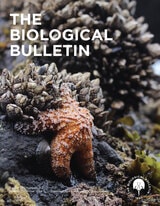
This is volume 247 issue 1 of The Biological Bulletin. The Biological Bulletin disseminates novel scientific results in broadly related fields of biology in keeping with more than 100 years of a tradition of excellence. The Bulletin publishes outstanding original research with an overarching goal of explaining how organisms develop, function, and evolve in their natural environments. To that end, the journal publishes papers in the fields of Neurobiology and Behavior, Physiology and Biomechanics, Ecology and Evolution, Development and Reproduction, Cell Biology, Symbiosis and Systematics. The Bulletin emphasizes basic research, including articles on marine model systems and those of an interdisciplinary nature.
[more]
cover of The Biological Bulletin, volume 247 number 2-3 (October 2024)

The Biological Bulletin, volume 247 number 2-3 (October 2024)

The University of Chicago Press

University of Chicago Press Journals, 2024
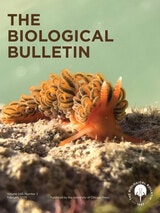
This is volume 247 issue 2-3 of The Biological Bulletin. The Biological Bulletin disseminates novel scientific results in broadly related fields of biology in keeping with more than 100 years of a tradition of excellence. The Bulletin publishes outstanding original research with an overarching goal of explaining how organisms develop, function, and evolve in their natural environments. To that end, the journal publishes papers in the fields of Neurobiology and Behavior, Physiology and Biomechanics, Ecology and Evolution, Development and Reproduction, Cell Biology, Symbiosis and Systematics. The Bulletin emphasizes basic research, including articles on marine model systems and those of an interdisciplinary nature.
[more]
cover of The Biological Bulletin, volume 248 number 1 (February 2025)

The Biological Bulletin, volume 248 number 1 (February 2025)

The University of Chicago Press

University of Chicago Press Journals, 2025
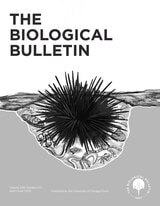
This is volume 248 issue 1 of The Biological Bulletin. The Biological Bulletin disseminates novel scientific results in broadly related fields of biology in keeping with more than 100 years of a tradition of excellence. The Bulletin publishes outstanding original research with an overarching goal of explaining how organisms develop, function, and evolve in their natural environments. To that end, the journal publishes papers in the fields of Neurobiology and Behavior, Physiology and Biomechanics, Ecology and Evolution, Development and Reproduction, Cell Biology, Symbiosis and Systematics. The Bulletin emphasizes basic research, including articles on marine model systems and those of an interdisciplinary nature.
[more]
cover of The Biological Bulletin, volume 248 number 2-3 (April 2025)

The Biological Bulletin, volume 248 number 2-3 (April 2025)

The University of Chicago Press

University of Chicago Press Journals, 2025
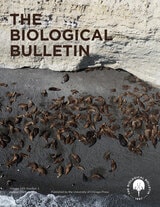
This is volume 248 issue 2-3 of The Biological Bulletin. The Biological Bulletin disseminates novel scientific results in broadly related fields of biology in keeping with more than 100 years of a tradition of excellence. The Bulletin publishes outstanding original research with an overarching goal of explaining how organisms develop, function, and evolve in their natural environments. To that end, the journal publishes papers in the fields of Neurobiology and Behavior, Physiology and Biomechanics, Ecology and Evolution, Development and Reproduction, Cell Biology, Symbiosis and Systematics. The Bulletin emphasizes basic research, including articles on marine model systems and those of an interdisciplinary nature.
[more]
cover of The Biological Bulletin, volume 249 number 1 (August 2025)

The Biological Bulletin, volume 249 number 1 (August 2025)

The University of Chicago Press

University of Chicago Press Journals, 2025
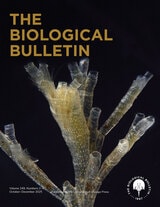
This is volume 249 issue 1 of The Biological Bulletin. The Biological Bulletin disseminates novel scientific results in broadly related fields of biology in keeping with more than 100 years of a tradition of excellence. The Bulletin publishes outstanding original research with an overarching goal of explaining how organisms develop, function, and evolve in their natural environments. To that end, the journal publishes papers in the fields of Neurobiology and Behavior, Physiology and Biomechanics, Ecology and Evolution, Development and Reproduction, Cell Biology, Symbiosis and Systematics. The Bulletin emphasizes basic research, including articles on marine model systems and those of an interdisciplinary nature.
[more]
cover of The Biological Bulletin, volume 249 number 2-3 (October 2025)

The Biological Bulletin, volume 249 number 2-3 (October 2025)

The University of Chicago Press

University of Chicago Press Journals, 2025
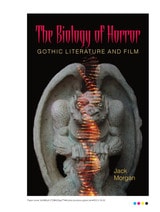
This is volume 249 issue 2-3 of The Biological Bulletin. The Biological Bulletin disseminates novel scientific results in broadly related fields of biology in keeping with more than 100 years of a tradition of excellence. The Bulletin publishes outstanding original research with an overarching goal of explaining how organisms develop, function, and evolve in their natural environments. To that end, the journal publishes papers in the fields of Neurobiology and Behavior, Physiology and Biomechanics, Ecology and Evolution, Development and Reproduction, Cell Biology, Symbiosis and Systematics. The Bulletin emphasizes basic research, including articles on marine model systems and those of an interdisciplinary nature.
[more]
cover of The Biology of Horror: Gothic Literature and Film

The Biology of Horror

Gothic Literature and Film

Jack Morgan

Southern Illinois University Press, 2002

Unearthing the fearful flesh and sinful skins at the heart of gothic horror, Jack Morgan rends the genre’s biological core from its oft-discussed psychological elements and argues for a more transhistorical conception of the gothic, one negatively related to comedy. The Biology of Horror: Gothic Literature and Film dissects popular examples from the gothic literary and cinematic canon, exposing the inverted comic paradigm within each text.

Morgan’s study begins with an extensive treatment of comedy as theoretically conceived by Suzanne Langer, C. L. Barber, and Mikhail Bakhtin. Then, Morgan analyzes the physical and mythological nature of horror in inverted comic terms, identifying a biologically grounded mythos of horror. Motifs such as sinister loci, languishment, masquerade, and subversion of sensual perception are contextualized here as embedded in an organic reality, resonating with biological motives and consequences. Morgan also devotes a chapter to the migration of the gothic tradition into American horror, emphasizing the body as horror’s essential place in American gothic.

The bulk of Morgan’s study is applied to popular gothic literature and films ranging from high gothic classics like Matthew Lewis’s The Monk, Ann Radcliffe’s The Mysteries of Udolpho, Charles Maturin’s Melmoth the Wanderer, and Mary Shelley’s Frankenstein, to later literary works such as Poe’s macabre tales, Melville’s “Benito Cereno,” J.S. Le Fanu’s Uncle Silas, H.P. Lovecraft’s “The Shadow over Innsmouth,” Shirley Jackson’s The Haunting of Hillhouse, Stephen King’s Salem’s Lot, and Clive Barker’s The Damnation Game. Considered films include Nosferatu, Invasion of the Body Snatchers, Friday the 13th, Halloween, Night of the Living Dead, Angel Heart, The Stand, and The Shining.

Morganconcludes his physical examination of the Gothic reality with a consideration born of Julia Kristeva’s theoretical rubric which addresses horror’s existential and cultural significance, its lasting fascination, and its uncanny positive—and often therapeutic—direction in literature and film.

[more]
cover of The Biology of Human Starvation: Volume I

The Biology of Human Starvation

Volume I

Ancel Keys

University of Minnesota Press, 1950

The Biology of Human Starvation was first published in 1950. Minnesota Archive Editions uses digital technology to make long-unavailable books once again accessible, and are published unaltered from the original University of Minnesota Press editions.With great areas of the world battling the persistent and basic problem of hunger, this work constitutes a major contribution to needed scientific knowledge. The publication is a definitive treatise on the morphology, biochemistry, physcology, psychology, and medical aspects of calorie undernutrition, cachexia, starvation, and rehabilitation in man. Presented critically and systematically are the fact and theory from the world literature, including the evidence from World War II and the finding of the Minnesota Starvation Experiment (1944*1946). Pertinent experiments and field and clinical observations to 1949 are covered. The extensive original research involved was conducted at the University of Minnesota Laboratory of Physiological Hygiene, which Dr. Keys heads. The authors, all of the laboratory staff, were assisted in preparation of the work by Ernst Simonson, Samuel Wells and Angie Sturgeon Skinner.
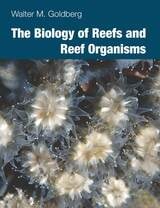
[more]
cover of The Biology of Human Starvation: Volume II

The Biology of Human Starvation

Volume II

Ancel Keys

University of Minnesota Press, 1950

The Biology of Human Starvation was first published in 1950. Minnesota Archive Editions uses digital technology to make long-unavailable books once again accessible, and are published unaltered from the original University of Minnesota Press editions.

With great areas of the world battling the persistent and basic problem of hunger, this work constitutes a major contribution to needed scientific knowledge. The publication is a definitive treatise on the morphology, biochemistry, physcology, psychology, and medical aspects of calorie undernutrition, cachexia, starvation, and rehabilitation in man. 

Presented critically and systematically are the fact and theory from the world literature, including the evidence from World War II and the finding of the Minnesota Starvation Experiment (1944*1946). Pertinent experiments and field and clinical observations to 1949 are covered. 

The extensive original research involved was conducted at the University of Minnesota Laboratory of Physiological Hygiene, which Dr. Keys heads. The authors, all of the laboratory staff, were assisted in preparation of the work by Ernst Simonson, Samuel Wells and Angie Sturgeon Skinner.

[more]
cover of The Biology of Reefs and Reef Organisms

The Biology of Reefs and Reef Organisms

Walter M. Goldberg

University of Chicago Press, 2013

Reefs provide a wealth of opportunity for learning about biological and ecosystem processes, and reef biology courses are among the most popular in marine biology and zoology departments the world over. Walter M. Goldberg has taught one such course for years, and he marshals that experience in the pages of The Biology of Reefs and Reef Organisms.

Goldberg examines the nature not only of coral reefs—the best known among types of reefs—but also of sponge reefs, worm reefs, and oyster reefs, explaining the factors that influence their growth, distribution, and structure. A central focus of the book is reef construction, and Goldberg details the plants and animals that form the scaffold of the reef system and allow for the attachment and growth of other organisms, including those that function as bafflers, binders, and cementing agents. He also tours readers through reef ecology, paleontology, and biogeography, all of which serve as background for the problems reefs face today and the challenge of their conservation.
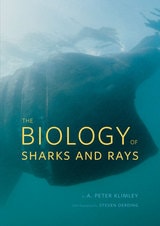
 
Visually impressive, profusely illustrated, and easy to read, The Biology of Reefs and Reef Organisms offers a fascinating introduction to reef science and will appeal to students and instructors of marine biology, comparative zoology, and oceanography.

[more]
cover of The Biology of Sharks and Rays

The Biology of Sharks and Rays

A. Peter Klimley

University of Chicago Press, 2013

The Biology of Sharks and Rays is a comprehensive resource on the biological and physiological characteristics of the cartilaginous fishes: sharks, rays, and chimaeras. In sixteen chapters, organized by theme, A. Peter Klimley covers a broad spectrum of topics, including taxonomy, morphology, ecology, and physiology. For example, he explains the body design of sharks and why the ridged, toothlike denticles that cover their entire bodies are present on only part of the rays’ bodies and are absent from those of chimaeras. Another chapter explores the anatomy of the jaws and the role of the muscles and teeth in jaw extension, seizure, and handling of prey. The chapters are richly illustrated with pictures of sharks, diagrams of sensory organs, drawings of the body postures of sharks during threat and reproductive displays, and maps showing the extent of the species’ foraging range and long-distance migrations. Each chapter commences with an anecdote from the author about his own personal experience with the topic, followed by thought-provoking questions and a list of recommended readings in the scientific literature. 

The book will be a useful textbook for advanced ichthyology students as well as an encyclopedic source for those seeking a greater understanding of these fascinating creatures.
[more]
cover of The Chicago Guide to Landing a Job in Academic Biology

The Chicago Guide to Landing a Job in Academic Biology

C. Ray Chandler, Lorne M. Wolfe, and Daniel E. L. Promislow

University of Chicago Press, 2007

The Chicago Guide to Landing a Job in Academic Biology is an indispensable guide for graduate students and post-docs as they enter that domain red in tooth and claw: the job market.

An academic career in the biological sciences typically demands well over a decade of technical training. So it’s ironic that when a scholar reaches the most critical stage in that career—the search for a job following graduate work—he or she receives little or no formal preparation. Instead, students are thrown into the job market with only cursory guidance on how to search for and land a position.
Now there’s help. Carefully, clearly, and with a welcome sense of humor, The Chicago Guide to Landing a Job in Academic Biology leads graduate students and postdoctoral fellows through the perils and rewards of their first job search. The authors—who collectively have for decades mentored students and served on hiring committees—have honed their advice in workshops at biology meetings across the country. The resulting guide covers everything from how to pack an overnight bag without wrinkling a suit to selecting the right job to apply for in the first place. The authors have taken care to make their advice useful to all areas of academic biology—from cell biology and molecular genetics to evolution and ecology—and they give tips  on how applicants can tailor their approaches to different institutions from major research universities to small private colleges.

With jobs in the sciences ever more difficult to come by, The Chicago Guide to Landing a Job in Academic Biology is designed to help students and post-docs navigate the tricky terrain of an academic job search—from the first year of a graduate program to the final negotiations of a job offer.
[more]
cover of The Chicago Guide to Your Career in Science: A Toolkit for Students and Postdocs

The Chicago Guide to Your Career in Science

A Toolkit for Students and Postdocs

Victor A. Bloomfield and Esam E. El-Fakahany

University of Chicago Press, 2008

Embarking upon research as a graduate student or postdoc can be exciting and enriching—the start of a rewarding career. But the world of scientific research is also a competitive one, with grants and good jobs increasingly hard to find. The Chicago Guide to Your Career in Science is intended to help scientists not just cope but excel at this critical phase in their careers.

Victor A. Bloomfield and Esam E. El-Fakahany, both well-known scientists with extensive experience as teachers, mentors, and administrators, have combined their knowledge to create a guidebook that addresses all of the challenges that today’s scientists-in-training face. They begin by considering the early stages of a career in science: deciding whether or not to pursue a PhD, choosing advisors and mentors, and learning how to teach effectively. Bloomfield and El-Fakahany then explore the skills essential to conducting and presenting research. The Chicago Guide to Your Career in Science offers detailed advice on how to pursue research ethically, manage time, and communicate effectively, especially at academic conferences and with students and peers. Bloomfield and El-Fakahany write in accessible, straightforward language and include a synopsis of key points at the end of each chapter, so that readers can dip into relevant sections with ease.

From students prepping for the GRE to postdocs developing professional contacts to faculty advisors and managers of corporate labs, scientists at every level will find The Chicago Guide to Your Career in Science an unparalleled resource.
 
“The Chicago Guide to Your Career in Science is a roadmap to the beginning stages of a scientific career. I will encourage my own students to purchase it.”—Dov F. Sax, assistant professor of ecology and evolutionary biology, Brown University
 
“Step-by-step, Victor Bloomfield and Esam El-Fakahany provide sound, thorough, yet succinct advice on every issue a scientist in training is likely to encounter. Young readers will welcome the authors’ advice on choosing a graduate school, for example, while senior scientists will probably wish that a book like this had been around when they were starting out. With down-to-earth and occasionally humorous advice, The Chicago Guide to your Career in Academic Biology belongs on the bookshelf of every graduate student and advisor.”—Norma Allewell, Dean, College of Chemical and Life Sciences, University of Maryland
 
[more]
cover of The Comparative Approach in Evolutionary Anthropology and Biology

The Comparative Approach in Evolutionary Anthropology and Biology

Charles L. Nunn

University of Chicago Press, 2011

Comparison is fundamental to evolutionary anthropology. When scientists study chimpanzee cognition, for example, they compare chimp performance on cognitive tasks to the performance of human children on the same tasks. And when new fossils are found, such as those of the tiny humans of Flores, scientists compare these remains to other fossils and contemporary humans. Comparison provides a way to draw general inferences about the evolution of traits and therefore has long been the cornerstone of efforts to understand biological and cultural diversity. Individual studies of fossilized remains, living species, or human populations are the essential units of analysis in a comparative study; bringing these elements into a broader comparative framework allows the puzzle pieces to fall into place, creating a means of testing adaptive hypotheses and generating new ones.
 
With this book, Charles L. Nunn intends to ensure that evolutionary anthropologists and organismal biologists have the tools to realize the potential of comparative research. Nunn provides a wide-ranging investigation of the comparative foundations of evolutionary anthropology in past and present research, including studies of animal behavior, biodiversity, linguistic evolution, allometry, and cross-cultural variation. He also points the way to the future, exploring the new phylogeny-based comparative approaches and offering a how-to manual for scientists who wish to incorporate these new methods into their research.
[more]
cover of The Comparative Approach in Evolutionary Anthropology and Biology

The Comparative Approach in Evolutionary Anthropology and Biology

Charles L. Nunn

University of Chicago Press, 2011

Comparison is fundamental to evolutionary anthropology. When scientists study chimpanzee cognition, for example, they compare chimp performance on cognitive tasks to the performance of human children on the same tasks. And when new fossils are found, such as those of the tiny humans of Flores, scientists compare these remains to other fossils and contemporary humans. Comparison provides a way to draw general inferences about the evolution of traits and therefore has long been the cornerstone of efforts to understand biological and cultural diversity. Individual studies of fossilized remains, living species, or human populations are the essential units of analysis in a comparative study; bringing these elements into a broader comparative framework allows the puzzle pieces to fall into place, creating a means of testing adaptive hypotheses and generating new ones.
 
With this book, Charles L. Nunn intends to ensure that evolutionary anthropologists and organismal biologists have the tools to realize the potential of comparative research. Nunn provides a wide-ranging investigation of the comparative foundations of evolutionary anthropology in past and present research, including studies of animal behavior, biodiversity, linguistic evolution, allometry, and cross-cultural variation. He also points the way to the future, exploring the new phylogeny-based comparative approaches and offering a how-to manual for scientists who wish to incorporate these new methods into their research.
[more]
cover of The DNA Mystique: The Gene as a Cultural Icon

The DNA Mystique

The Gene as a Cultural Icon

Dorothy Nelkin and M. Susan Lindee

University of Michigan Press, 2004

The DNA Mystique suggests that the gene in popular culture draws on scientific ideas but is not constrained by the technical definition of the gene as a section of DNA that codes for a protein. In highlighting DNA as it appears in soap operas, comic books, advertising, and other expressions of mass culture, the authors propose that these domains provide critical insights into science itself.

With a new introduction and conclusion, this edition will continue to be an engaging, accessible, and provocative text for the sociology, anthropology, and bioethics classroom, as well as stimulating reading for those generally interested in science and culture.
[more]
cover of The Deep Structure of Biology: Is Convergence Sufficiently Ubiquitous to Give a Directional Signal

The Deep Structure of Biology

Is Convergence Sufficiently Ubiquitous to Give a Directional Signal

Simon Conway Morris

Templeton Press, 2008

Twelve renowned scientists and theologians offer penetrating insights into the evolution dialogue in The Deep Structure of Biology. Each considers whether the orthodox evolution model is sufficient and offers their perspective on evolution and biology. Essays include:

  • Chance and Necessity in Evolution
  • Green Plants as Intelligent Organisms
  • Canny Corvoids and Political Primates: A Case for Convergent Evolution in Intelligence
  • Social and Cultural Evolution in the Ocean: Convergences and Contrasts with Terrestrial Systems
  • Purpose in Nature: On the Possibility of a Theology of Evolution

Editor Simon Conway Morris provides the introduction, an overview of the issues, and an essay on evolution and convergence. Other contributors are Richard Lenski, George McGhee, Karl Niklas, Anthony Trewavas, Nigel Franks, Nicola Clayton, Nathan Emery, HalWhitehead, Robert Foley, Michael Ruse, Celia Deane-Drummond, and John Haught.

The discussion of biology and evolution in these essays broadens the scope of the traditional evolution discussion as it aims to stimulate the development of other research programs. Scholars in the science and religion field will find this book a valuable resource.
[more]
cover of The Deep: The Extraordinary Creatures of the Abyss

The Deep

The Extraordinary Creatures of the Abyss

Claire Nouvian

University of Chicago Press, 2007

On dry land, most organisms are confined to the surface, or at most to altitudes of a hundred meters—the height of the tallest trees. In the oceans, though, living space has both vertical and horizontal dimensions: with an average depth of 3800 meters, the oceans offer 99% of the space on Earth where life can develop. And the deep sea, which has been immersed in total darkness since the dawn of time, occupies 85% of ocean space, forming the planet’s largest habitat.  Yet these depths abound with mystery. The deep sea is mostly uncharted—only about 5 percent of the seafloor has been mapped with any reasonable degree of detail—and we know very little about the creatures that call it home. Current estimates about the number of species yet to be found vary between ten and thirty million.  The deep sea no longer has anything to prove; it is without doubt Earth’s largest reservoir of life.

Combining the latest scientific discoveries with astonishing color imagery, The Deep takes readers on a voyage into the darkest realms of the ocean. Revealing nature’s oddest and most mesmerizing creatures in crystalline detail, The Deep features more than two hundred color photographs of terrifying sea monsters, living fossils, and ethereal bioluminescent creatures, some photographed here for the very first time. Accompanying these breathtaking photographs are contributions from some of the world’s most respected researchers that examine the biology of deep-sea organisms, the ecology of deep-sea habitats, and the history of deep-sea exploration.

An unforgettable visual and scientific tour of the teeming abyss, The Deep celebrates the incredible diversity of life on Earth and will captivate anyone intrigued by the unseen—and unimaginable—creatures of the deep sea. 
[more]
cover of The Ecology and Behavior of Amphibians

The Ecology and Behavior of Amphibians

Kentwood D. Wells

University of Chicago Press, 2007

Consisting of more than six thousand species, amphibians are more diverse than mammals and are found on every continent save Antarctica. Despite the abundance and diversity of these animals, many aspects of the biology of amphibians remain unstudied or misunderstood. The Ecology and Behavior of Amphibians aims to fill this gap in the literature on this remarkable taxon. It is a celebration of the diversity of amphibian life and the ecological and behavioral adaptations that have made it a successful component of terrestrial and aquatic ecosystems.

Synthesizing seventy years of research on amphibian biology, Kentwood D. Wells addresses all major areas of inquiry, including phylogeny, classification, and morphology; aspects of physiological ecology such as water and temperature relations, respiration, metabolism, and energetics; movements and orientation; communication and social behavior; reproduction and parental care; ecology and behavior of amphibian larvae and ecological aspects of metamorphosis; ecological impact of predation on amphibian populations and antipredator defenses; and aspects of amphibian community ecology. With an eye towards modern concerns, The Ecology and Behavior of Amphibians concludes with a chapter devoted to amphibian conservation.

An unprecedented scholarly contribution to amphibian biology, this book is eagerly anticipated among specialists.
[more]
cover of The Ecology and Conservation of Asian Hornbills: Farmers of the Forest

The Ecology and Conservation of Asian Hornbills

Farmers of the Forest

Margaret F. Kinnaird and Timothy G. O'Brien

University of Chicago Press, 2008

Hornbills are among the world’s most distinct birds. Easily recognized by their oversized beaks adorned with large casques, they range from Africa to India and throughout Asia. One of the oldest bird orders, they have been known to mankind for millennia and loom large in the mythology of indigenous cultures of tropical Asia. In the past thirty years, ecologists have uncovered many fascinating aspects of hornbill biology, from their unique nest-sealing behavior to their roles as farmers of the forest.

Building on fourteen years of research, Margaret F. Kinnaird and Timothy G. O’Brien offer in Ecology and Conservation of Asian Hornbills the most up-to-date information on the evolution, reproduction, feeding ecology, and movement patterns of thirty-one species of Asian hornbills. The authors address questions of ecological functionality, ecosystem services, and keystone relationships, as well as the disturbing influence of forest loss and fragmentation on hornbills. Complemented by superb full-color images by renowned photographer Tim Laman that provide rare glimpses of hornbills in their native habitat and black-and-white illustrations by Jonathan Kingdon that highlight the intriguing aspects of hornbill behavior, Ecology and Conservation of Asian Hornbills will stand tall in the pantheon of natural history studies for years to come.
[more]
cover of The Ecology of Place: Contributions of Place-Based Research to Ecological Understanding

The Ecology of Place

Contributions of Place-Based Research to Ecological Understanding

Edited by Ian Billick and Mary V. Price

University of Chicago Press, 2010

Ecologists can spend a lifetime researching a small patch of the earth, studying the interactions between organisms and the environment, and exploring the roles those interactions play in determining distribution, abundance, and evolutionary change. With so few ecologists and so many systems to study, generalizations are essential. But how do you extrapolate knowledge about a well-studied area and apply it elsewhere?

Through a range of original essays written by eminent ecologists and naturalists, The Ecology of Place explores how place-focused research yields exportable general knowledge as well as practical local knowledge, and how society can facilitate ecological understanding by investing in field sites, place-centered databases, interdisciplinary collaborations, and field-oriented education programs that emphasize natural history. This unique patchwork of case-study narratives, philosophical musings, and historical analyses is tied together with commentaries from editors Ian Billick and Mary Price that develop and synthesize common threads. The result is a unique volume rich with all-too-rare insights into how science is actually done, as told by scientists themselves.
[more]
cover of The Elephant in the Room: How to Stop Making Ourselves and Other Animals Sick

The Elephant in the Room

How to Stop Making Ourselves and Other Animals Sick

Liz Kalaugher

University of Chicago Press, 2025

A healthier future starts with seeing the human causes of wildlife diseases.
 
When new diseases spread, news reports often focus on wildlife culprits—rodents, monkeys and mpox; bats and COVID-19; waterfowl and avian flu; or mosquitoes and Zika. But, in this urgent and engaging book, we see it often works the other way around—humans have caused diseases in other animals countless times, through travel and transport, the changes we impose on our environment, and global warming. With science journalist Liz Kalaugher as our guide, we meet the wildlife we have harmed and the experts now studying the crosscurrents between humans, other animals, and health.
 
Herds of buffalo in Kenya, cloned ferrets in Colorado, and frogs shipped worldwide as living pregnancy tests for humans, all help Kalaugher dive into the murky backstories behind wildlife epidemics past and present. We learn that military conflict likely contributed to the spread of rinderpest, or cattle plague, throughout Africa, devastating pastoral communities. That crowded poultry farms may create virulent new forms of bird flu that spill back into the wild. And that West Nile virus—which affects not only birds and humans, but other animals, including horses, skunks, and squirrels—is spreading as global temperatures rise.
 
Expanding today’s discussions of environmental protection to include illness and its impact, Kalaugher both sounds the alarm and explores ways to stop the emergence and spread of wildlife diseases. These solutions start with a simple lesson: when we protect other animals, we protect ourselves.
[more]
cover of The Elephant's Secret Sense: The Hidden Life of the Wild Herds of Africa

The Elephant's Secret Sense

The Hidden Life of the Wild Herds of Africa

Caitlin O'Connell

University of Chicago Press, 2008

While observing a family of elephants in the wild, Caitlin O’Connell noticed a peculiar listening behavior—the matriarch lifted her foot and scanned the horizon, causing the other elephants to follow suit, as if they could “hear” the ground. The Elephant’s Secret Sense is O’Connell’s account of her groundbreaking research into seismic listening and communication, chronicling the extraordinary social lives of elephants over the course of fourteen years in the Namibian wilderness.
            This compelling odyssey of scientific discovery is also a frank account of fieldwork in a poverty-stricken, war-ravaged country. In her attempts to study an elephant community, O’Connell encounters corrupt government bureaucrats, deadly lions and rhinos, poachers, farmers fighting for arable land, and profoundly ineffective approaches to wildlife conservation. The Elephant’s Secret Sense is ultimately a story of intellectual courage in the face of seemingly insurmountable obstacles.
 
“I was transported by the author’s superbly sensuous descriptions of her years spent studying the animals. . . . Conjures a high-class nature documentary film in prose.”—Steven Poole, Guardian
 
“A ride as rough and astonishing as the roads of the African floodplain.”—Joan Keener, Entertainment Weekly
 
“A successful combination of science and soulfulness, explaining her groundbreaking theory of how elephants use seismic communication. . . . O’Connell’s account is studded with sympathetic insights and well-turned phrases.”—Publishers Weekly
 
“This fascinating book reads like a fast-paced detective story of a scientific discovery and adventure set in contemporary Africa. . . . By the end, O’Connell takes her rightful place among the leading biographers of the African elephant.”—Iain Douglas-Hamilton, author of Among the Elephants

 
 
[more]
cover of The Enlightened Gene: Biology, Buddhism, and the Convergence that Explains the World

The Enlightened Gene

Biology, Buddhism, and the Convergence that Explains the World

Arri Eisen and Yungdrung Konchok

University Press of New England, 2017
Eight years ago, in an unprecedented intellectual endeavor, the Dalai Lama invited Emory University to integrate modern science into the education of the thousands of Tibetan Buddhist monks and nuns in exile in India. This project, the Emory Tibet Science Initiative, became the first major change in the monastic curriculum in six centuries. Eight years in, the results are transformative. The singular backdrop of teaching science to Tibetan Buddhist monks and nuns offered provocative insights into how science and religion can work together to enrich each other, as well as to shed light on life and what it means to be a thinking, biological human. In The Enlightened Gene, Emory University Professor Dr. Arri Eisen, together with monk Geshe Yungdrung Konchok explore the striking ways in which the integration of Buddhism with cutting-edge discoveries in the biological sciences can change our understanding of life and how we live it. What this book discovers along the way will fundamentally change the way you think. Are humans inherently good? Where does compassion come from? Is death essential for life? Is experience inherited? These questions have occupied philosophers, religious thinkers and scientists since the dawn of civilization, but in today’s political discourse, much of the dialogue surrounding them and larger issues—such as climate change, abortion, genetically modified organisms, and evolution—are often framed as a dichotomy of science versus spirituality. Strikingly, many of new biological discoveries—such as the millions of microbes that we now know live together as part of each of us, the connections between those microbes and our immune systems, the nature of our genomes and how they respond to the environment, and how this response might be passed to future generations—can actually be read as moving science closer to spiritual concepts, rather than further away. The Enlightened Gene opens up and lays a foundation for serious conversations, integrating science and spirit in tackling life’s big questions. Each chapter integrates Buddhism and biology and uses striking examples of how doing so changes our understanding of life and how we lead it.
[more]
cover of The Essential Naturalist: Timeless Readings in Natural History

The Essential Naturalist

Timeless Readings in Natural History

Edited by Michael H. Graham, Joan Parker, and Paul K. Dayton

University of Chicago Press, 2011

Like nearly every area of scholarly inquiry today, the biological sciences are broken into increasingly narrow fields and subfields, its practitioners divided into ecologists, evolutionary biologists, taxonomists, paleontologists, and much more. But all these splintered pieces have their origins in the larger field of natural history—and in this era where climate change and relentless population growth are irrevocably altering the world around us, perhaps it’s time to step back and take a new, fresh look at the larger picture.

            
The Essential Naturalist offers exactly that: a wide-ranging, eclectic collection of writings from more than eight centuries of observations of the natural world, from Leeuwenhoek to E. O. Wilson, from von Humboldt to Rachel Carson. Featuring commentaries by practicing scientists that offer personal accounts of the importance of the long tradition of natural history writing to their current research, the volume serves simultaneously as an overview of the field’s long history and as an inspirational starting point for new explorations, for trained scientists and amateur enthusiasts alike.
[more]
cover of The Evidence for Evolution

The Evidence for Evolution

Alan R. Rogers

University of Chicago Press, 2011

According to polling data, most Americans doubt that evolution is a real phenomenon. And it’s no wonder that so many are skeptical: many of today’s biology courses and textbooks dwell on the mechanisms of evolution—natural selection, genetic drift, and gene flow—but say little about the evidence that evolution happens at all. How do we know that species change? Has there really been enough time for evolution to operate?

With The Evidence for Evolution, Alan R. Rogers provides an elegant, straightforward text that details the evidence for evolution. Rogers covers different levels of evolution, from within-species changes, which are much less challenging to see and believe, to much larger ones, say, from fish to amphibian, or from land mammal to whale. For each case, he supplies numerous lines of evidence to illustrate the changes, including fossils, DNA, and radioactive isotopes. His comprehensive treatment stresses recent advances in knowledge but also recounts the give and take between skeptical scientists who first asked “how can we be sure” and then marshaled scientific evidence to attain certainty. The Evidence for Evolution is a valuable addition to the literature on evolution and will be essential to introductory courses in the life sciences.
[more]
cover of The Geographic Mosaic of Coevolution

The Geographic Mosaic of Coevolution

John N. Thompson

University of Chicago Press, 2005

Coevolution—reciprocal evolutionary change in interacting species driven by natural selection—is one of the most important ecological and genetic processes organizing the earth's biodiversity: most plants and animals require coevolved interactions with other species to survive and reproduce. The Geographic Mosaic of Coevolution analyzes how the biology of species provides the raw material for long-term coevolution, evaluates how local coadaptation forms the basic module of coevolutionary change, and explores how the coevolutionary process reshapes locally coevolving interactions across the earth's constantly changing landscapes.

Picking up where his influential The Coevolutionary Process left off, John N. Thompsonsynthesizes the state of a rapidly developing science that integrates approaches from evolutionary ecology, population genetics, phylogeography, systematics, evolutionary biochemistry and physiology, and molecular biology. Using models, data, and hypotheses to develop a complete conceptual framework, Thompson also draws on examples from a wide range of taxa and environments, illustrating the expanding breadth and depth of research in coevolutionary biology.
[more]
cover of The Gestation of German Biology: Philosophy and Physiology from Stahl to Schelling

The Gestation of German Biology

Philosophy and Physiology from Stahl to Schelling

John H. Zammito

University of Chicago Press, 2017

The emergence of biology as a distinct science in the eighteenth century has long been a subject of scholarly controversy. Michel Foucault, on the one hand, argued that its appearance only after 1800 represented a fundamental rupture with the natural history that preceded it, marking the beginnings of modernity. Ernst Mayr, on the other hand, insisted that even the word "biology" was unclear in its meaning as late as 1800, and that the field itself was essentially prospective well into the 1800s.
 
In The Gestation of German Biology, historian of ideas John Zammito presents a different version of the emergence of the field, one that takes on both Foucault and Mayr and emphasizes the scientific progress throughout the eighteenth century that led to the recognition of the need for a special science. The embrace of the term biology around 1800, Zammito shows, was the culmination of a convergence between natural history and human physiology that led to the development of comparative physiology and morphology—the foundations of biology. Magisterial in scope, Zammito’s book offers nothing less than a revisionist history of the field, with which anyone interested in the origins of biology will have to contend.
[more]
cover of The Infanticide Controversy: Primatology and the Art of Field Science

The Infanticide Controversy

Primatology and the Art of Field Science

Amanda Rees

University of Chicago Press, 2009

Infanticide in the natural world might be a relatively rare event, but as Amanda Rees shows, it has enormously significant consequences. Identified in the 1960s as a phenomenon worthy of investigation, infanticide had, by the 1970s, become the focus of serious controversy. The suggestion, by Sarah Hrdy, that it might be the outcome of an evolved strategy intended to maximize an individual’s reproductive success sparked furious disputes between scientists, disagreements that have continued down to the present day.

Meticulously tracing the history of the infanticide debates, and drawing on extensive interviews with field scientists, Rees investigates key theoretical and methodological themes that have characterized field studies of apes and monkeys in the twentieth century. As a detailed study of the scientific method and its application to field research, The Infanticide Controversy sheds new light on our understanding of scientific practice, focusing in particular on the challenges of working in “natural” environments, the relationship between objectivity and interpretation in an observational science, and the impact of the public profile of primatology on the development of primatological research. Most importantly, it also considers the wider significance that the study of field science has in a period when the ecological results of uncontrolled human interventions in natural systems are becoming ever more evident.

[more]