Results by title
112 books match the query 'Body' and 35 start with t
Telling Rhythm
Body and Meaning in PoetryAmittai Aviram
University of Michigan Press, 1994
The Actor's Instrument
Body, Theory, StageHollis Huston
University of Michigan Press, 1993
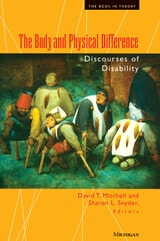
The Body and Physical Difference
Discourses of DisabilityDavid T. Mitchell and Sharon L. Snyder, Editors
University of Michigan Press, 1997
The book provides a provocative range of topics and perspectives: the absence of physical "otherness" in Ancient Greece, the depiction of the female invalid in Victorian literature, the production of tragic innocence in British and American telethons, the reconstruction of Civil War amputees, and disability as the aesthetic basis for definitions of expendable life within the modern eugenics movement. With this new, secure anchoring in the humanities, disability studies now emerges as a significant strain in contemporary theories of identity and social marginality.
Moving beyond the oversimplication that disabled people are marginalized and made invisible by able-ist assumptions and practices, the contributors demonstrate that representation is founded upon the perpetual exhibition of human anomalies. In this sense, all art can be said to migrate toward the "freakish" and the "grotesque." Such a project paradoxically makes disability the exception and the rule of the desire to represent that which has been traditionally out-of-bounds in polite discourse.
The Body and Physical Difference has relevance across a wide range of academic specialties such as cultural studies, the sociology of medicine, history, literature and medicine, the allied health professions, rehabilitation, aesthetics, philosophical discourses of the body, literary and film studies, and narrative theory.
David T. Mitchell is Assistant Professor of English, Northern Michigan University. Sharon L. Snyder teaches film and literature at Northern Michigan University.

The Body and the Song
Elizabeth Bishop's PoeticsMarilyn May Lombardi
Southern Illinois University Press, 1995
In this original contribution to Elizabeth Bishop studies, Marilyn May Lombardi uses previously unpublished materials (letters, diaries, notebooks, and unfinished poems) to shed new light on the poet’s published work. She explores the ways Bishop’s lesbianism, alcoholism, allergic illnesses, and fear of mental instability affected her poetry—the ways she translated her bodily experiences into poetic form.
A cornerstone of The Body and the Song is the poet’s thirty-year correspondence with her physician, Dr. Anny Baumann, who was both friend and surrogate mother to Bishop. The letters reveal Bishop’s struggles to understand the relation between her physical and creative drives. "Dr. Anny" also helped Bishop unravel the connections in her life between psychosomatic illness and early maternal deprivation—her mother was declared incurably insane and institutionalized in 1916, when Bishop was five years old. Effectively an orphan, she spent the rest of her childhood with relatives.
In addition to these letters, Lombardi uses Bishop’s unpublished notebooks to demonstrate the poet’s resolve to "face the facts"—to confront her own emotional, intellectual, and physical frailties—and translate them into poetry that is clear-eyed and economical in its form.
Lombardi argues that in her subtle way, Bishop explores the same issues that preoccupy the current generation of women writers. A deeply private artist, Bishop never directly refers to her homosexuality in her published work, but the metaphors she draws from her carnal desires and aversions confront stifling cultural prescriptions for personal and erotic expression. In choosing restraint over confession, Bishop parted company with her friend Robert Lowell, but Lombardi shows that her reticence becomes a powerful artistic strategy resulting in poetry remarkable for its hermeneutic potential.
Informed by recent gender criticism, Lombardi’s lucid argument advances our understanding of the ways the material circumstances of life can be transformed into art.
The Body as Capital
Masculinities in Contemporary Latin American FictionVinodh Venkatesh
University of Arizona Press, 2015
Addressing this, Vinodh Venkatesh uses contemporary Latin American literature to examine how masculinity is constructed and conceived. The Body as Capital centers socioeconomic and political concerns, anxieties, and paradigms on the male anatomy and on the matrices of masculinities presented in fiction. Developing concepts such as the “market of masculinities” and the “transnational theater of masculinities,” the author explains how contemporary fiction centers the male body and masculine expressions as key components in the relationship between culture, space, and global tensile forces.
Venkatesh includes novels by canonical and newer writers from Mexico, Central America, the Caribbean, Peru, and Chile. He focuses on texts produced after 1990, coinciding with what has popularly been termed the neoliberal experiment. In addition to probing well-known novels such as La fiesta del Chivo and La mujer habitada and their accompanying body of criticism, The Body as Capital defines and examines several masculine tropes that will be of interest to scholars of contemporary Latin American literature and gender studies. Ultimately, Venkatesh argues for a more holistic approximation of discursive gender that will feed into other angles of criticism, forging a new path in the critical debates over gender and sexuality in Latin American writing.
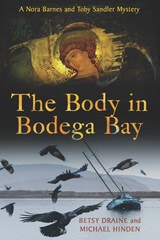
The Body in Bodega Bay
A Nora Barnes and Toby Sandler MysteryBetsy Draine and Michael Hinden
University of Wisconsin Press, 2014
Local tales about Hitchcock’s famous film, and some digging into the region’s past as a Russian outpost, provide Toby and Nora with clues to the existence of a lost masterpiece. Convinced that this forgotten work may hold the key to the murder, Nora and Toby set out to find it. When Nora’s trouble-prone sister Angie arrives, events take a surprising turn, leading to the uncanny realm of angel reading and putting Nora and her family in danger. As Nora and Toby investigate matters both criminal and otherworldly, Nora realizes that some mysteries in life may be too deep to solve.
The Body in Bodega Bay
A Nora Barnes and Toby Sandler MysteryBetsy Draine and Michael Hinden
University of Wisconsin Press, 2020
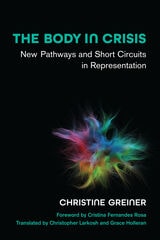
The Body in Crisis
New Pathways and Short Circuits in RepresentationChristine Greiner
University of Michigan Press, 2021
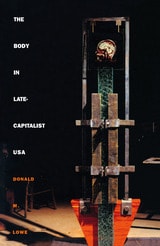
The Body in Late-Capitalist USA
Donald M. Lowe
Duke University Press, 1995
Moving beyond studies of representations and images of the body, Lowe focuses on the intersection of body practices, language, and the Social to describe concretely the reality of a lived body. His strongly synthetic work brings together Marxist critique, semiotics, Foucaultian discourse analysis, and systems and communications theory to examine those practices that construct the body under late capitalism: habits of work and consumption, the ways we give birth and raise children, socialization, mental and physical healing, reconstructions and contestations of sexuality and gender. Lowe draws upon a wide range of sources, including government and labor studies and statistics, diagnostic and statistical manuals on mental illness, computer manuals, self-help books, and guides to work-related stress disorders, to illustrate the transformation of the body into a nexus of exchange value in postmodern society.
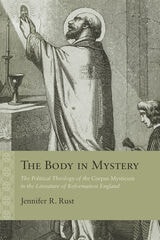
The Body in Mystery
The Political Theology of the Corpus Mysticum in the Literature of Reformation EnglandJennifer R. Rust
Northwestern University Press, 2013
The Body in the Mind
The Bodily Basis of Meaning, Imagination, and ReasonMark Johnson
University of Chicago Press, 1990
The Body of Brooklyn
David Lazar
University of Iowa Press, 2003
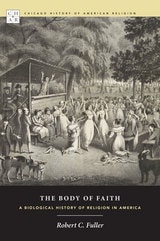
The Body of Faith
A Biological History of Religion in AmericaRobert C. Fuller
University of Chicago Press, 2013
The postmodern view that human experience is constructed by language and culture has informed historical narratives for decades. Yet newly emerging information about the biological body now makes it possible to supplement traditional scholarly models with insights about the bodily sources of human thought and experience.
The Body of Faith is the first account of American religious history to highlight the biological body. Robert C. Fuller brings a crucial new perspective to the study of American religion, showing that knowledge about the biological body deeply enriches how we explain dramatic episodes in American religious life. Fuller shows that the body’s genetically evolved systems—pain responses, sexual passion, and emotions like shame and fear—have persistently shaped the ways that Americans forge relationships with nature, to society, and to God.
The first new work to appear in the Chicago History of American Religion series in decades, The Body of Faith offers a truly interdisciplinary framework for explaining the richness, diversity, and endless creativity of American religious life.
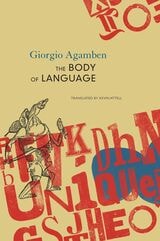
The Body of Language
esperruquancluzelubelouzerireluGiorgio Agamben
Seagull Books, 2025
An erudite exploration of transgressive language from the Renaissance by one of Europe’s greatest living philosophers.
This book explores how early modern authors broke linguistic boundaries, creating new words and languages that challenged traditional grammar and lexicon, providing historical insight into today’s debates on the politics of language. Through a scholarly analysis by Giorgio Agamben, the text delves into the boundary-shifting language of the Renaissance, exemplified by giants like Pantagruel and Gargantua, whose outsized bodies mirror the vastness of their speech. The macaronic language invented by Teofilo Folengo, blending Latin and vernacular, embodies a linguistic rebellion that transforms language into a tangible, unruly force. Featuring illustrations from the Songes drolatiques de Pantagruel and Folengo’s Baldo, this volume offers a vivid portrayal of language as a physical, dynamic entity that defies grammatical norms.
The Body of Poetry
Essays on Women, Form, and the Poetic SelfAnnie Finch
University of Michigan Press, 2005
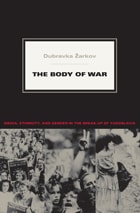
The Body of War
Media, Ethnicity, and Gender in the Break-up of YugoslaviaDubravka Zarkov
Duke University Press, 2007
Tracing the links between the war and press representations of ethnicity, gender, and sexuality, Žarkov examines the media’s coverage of two major protests by women who explicitly identified themselves as mothers, of sexual violence against women and men during the war, and of women as militants. She draws on contemporary feminist analyses of violence to scrutinize international and local feminist writings on the war in former Yugoslavia. Demonstrating that some of the same essentialist ideas of gender and sexuality used to produce and reinforce the significance of ethnic differences during the war often have been invoked by feminists, she points out the political and theoretical drawbacks to grounding feminist strategies against violence in ideas of female victimhood.
The Body of Writing
An Erotics of Contemporary American FictionFlore Chevaillier
The Ohio State University Press, 2013
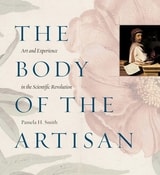
The Body of the Artisan
Art and Experience in the Scientific RevolutionPamela H. Smith
University of Chicago Press, 2004
From goldsmiths to locksmiths and from carpenters to painters, artists and artisans were much sought after by the new scientists for their intimate, hands-on knowledge of natural materials and the ability to manipulate them. Drawing on a fascinating array of new evidence from northern Europe including artisans' objects and their writings, Smith shows how artisans saw all knowledge as rooted in matter and nature. With nearly two hundred images, The Body of the Artisan provides astonishingly vivid examples of this Renaissance synergy among art, craft, and science, and recovers a forgotten episode of the Scientific Revolution-an episode that forever altered the way we see the natural world.
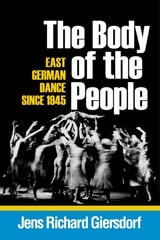
The Body of the People
East German Dance since 1945Jens Richard Giersdorf
University of Wisconsin Press, 2013
Giersdorf looks closely at uniquely East German dance forms—including mass exercise events, national folk dances, Marxist-Leninist visions staged by the dance ensemble of the armed forces, the vast amateur dance culture, East Germany’s version of Tanztheater, and socialist alternatives to rock ‘n’ roll—to demonstrate how dance was used both as a form of corporeal utopia and of embodied socialist propaganda and indoctrination. The Body of the People also explores the artists working in the shadow of official culture who used dance and movement to critique and resist state power, notably Charlotte von Mahlsdorf, Arila Siegert, and Fine Kwiatkowski. Giersdorf considers a myriad of embodied responses to the Communist state even after reunification, analyzing the embodiment of the fall of the Berlin Wall in the works of Jo Fabian and Sasha Waltz, and the diasporic traces of East German culture abroad, exemplified by the Chilean choreographer Patricio Bunster.
The Culture of the Body
Genealogies of ModernityDalia Judovitz
University of Michigan Press, 2001
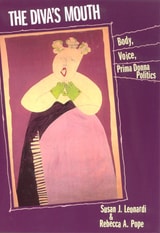
The Diva's Mouth
Body, Voice, and Prima Donna PoliticsLeonardi, Susan J.
Rutgers University Press, 1996
The Essential Guide to Aging in the Twenty-First Century
Mind, Body, and BehaviorDonald H. Kausler, Barry C. Kausler & Jill A. Krupsaw
University of Missouri Press, 2007
For more than a decade, The Graying of America has helped thousands of middle-aged and senior citizens find their way through the thickets and thorns of growing old. Now greatly revised and expanded to include information gleaned from studies of the past five years, this third edition has been retitled to stress its ongoing purpose: conveying a wealth of commonsense information for general readers in nontechnical language.
The book is a storehouse of concise, useful information on the effects of aging on health, the mind, and behavior. Its 588 entries (including 172 new and 150 substantially revised) cover a broad spectrum of topics—from adjusting to retirement to grandparenting, sleep disorders to Alzheimer’s disease. All are directed to the average reader; all stress successful aging and how to accomplish it.
New entries cover such topics as the incidence and causes of frailty, the cognitive benefits of diversified activity, and findings of the Women’s Health Initiative. There is new information on matters like the effects of untreated hearing impairment on spouses and the impact of insufficient exposure to sunlight on sleep, plus new insight into what to look for in searching for a quality nursing home for a loved one.
Also included are results of recent studies on interventions that help to reduce age-related declines in mental and physical health, among them revelations that reports on age-related declines in memory have been skewed by testing errors. And with memory a concern for seniors fearful of declining mental agility, the book tells how to bypass memory problems—such as how to remember where you parked your car—and how physical exercise and challenging mental games can help reduce the risk of dementia. Other “how to avoid” entries offer ways to protect against eye fatigue in computer use, hip fractures when falling, and back injuries while lifting heavy objects.
No other book is so specifically geared to the challenges of how to reduce or even eliminate many of the problems associated with growing old. Aging in the Twenty-First Century can help seniors come to grips with their own aging process—and help younger adults understand what is happening to older family members.
The Good Is Love
The Body and Human Acts in Humanae Vitae and John Paul IIAdrian Reimers
St. Augustine's Press, 2020
Reimers draws upon the encyclical Humanae Vitae and John Paul II’s catechesis known as the theology of the body to respond to the stalled development of moral theology on the issues most crucial to human love and intimacy. “It is time, we are told, for a ‘paradigm shift’ in the Catholic Church’s moral teaching, such shift representing a more pastoral and less dogmatic approach to moral issues,” writes Reimers. His claim that “a paradigm shift in moral theology and philosophy may be valuable––perhaps vital––to scholars who think and write about these sciences and to teachers who communicate moral truth” is not an exhortation to redefine moral truths. Rather, he argues that an approach to contraception, for example, that relies exclusively on natural law is a hackneyed one and often “tedious.”
John Paul II’s series of catechetical addresses known as the theology of the body was originally composed in the 1970s after Paul VI’s encyclical Humanae Vitae. Albeit derived from the writing of an archbishop and not yet pope, Reimers identifies John Paul II’s perspectives on love, sex and contraception as an essential force behind this so-called paradigm shift in continuity with the profound and unchanging truths set forth in Humanae Vitae. As Reimers states, “Moral truths do not change, even if our ways to understand them improve.”
How, then, is our sense of the goodness or badness of contraception meant to be helped by such a development of thought? Ethics grounded philosophically tends to lean toward legalism in the context of moral actions, says Reimers, as it emphasizes conformity to God’s law and largely overlooks “the relationship between moral behavior and the human person’s ultimate end of beatitude with God.” The important principle of the necessarily two-fold description that natural law gives to sex––namely, as unitive and procreative––must not be the authoritative end of the discussion regarding the moral nature of contraception. In an age where technology has given human beings new power it seems there must be new rules as well, and the conquest of procreative acts changes the human perception of the limitations once associated with harmful acts. Herein lies the importance of John Paul II’s catechesis––the goodness or badness of acts is not just concerned with end of a particular act. As Reimers writes, “If we are to understand the complex relationships among love, marriage, and their sexual expression, we must situate these within the context of the end of the human being.”
A position on contraception and human sexuality cannot be comprehensive without a concept of love properly understood. Human acts must bring us closer to sanctity, not to comfort or possession. Holiness is the perfection of love, and its pursuit aims at ultimate beatitude. This end, the truest love human can know, is the end which ultimately condemns contraception once and for all, as “contracepted sex is contrary to holiness.” Reimers unpacks this sometimes difficult truth in eight chapters, which begin with love and conclude with faithfulness to moral norms and a spirituality of marriage.
The arguments surrounding contraception and “good sex” seem to have set the grounds for coherently choosing a side rather than to have succeeded in presenting certain human acts as definitively immoral. As Reimers notes, a natural law position on contraception often fails to employ its greatest ally: the reality of authentic human love and “victory” of the individual in one’s sanctity as achieved through that love. This work will reorient the objectives and claims of the moral debate, as well as influence the popular notion of what love is and what it cannot be. It is an aid to scholars, students and study groups, humanists, and those who seek to deepen the sense of love’s highest physical expression.
The Meaning of the Body
Aesthetics of Human UnderstandingMark Johnson
University of Chicago Press, 2007
In The Meaning of the Body, Mark Johnson continues his pioneering work on the exciting connections between cognitive science, language, and meaning first begun in the classic Metaphors We Live By. Johnson uses recent research into infant psychology to show how the body generates meaning even before self-consciousness has fully developed. From there he turns to cognitive neuroscience to further explore the bodily origins of meaning, thought, and language and examines the many dimensions of meaning—including images, qualities, emotions, and metaphors—that are all rooted in the body’s physical encounters with the world. Drawing on the psychology of art and pragmatist philosophy, Johnson argues that all of these aspects of meaning-making are fundamentally aesthetic. He concludes that the arts are the culmination of human attempts to find meaning and that studying the aesthetic dimensions of our experience is crucial to unlocking meaning's bodily sources.
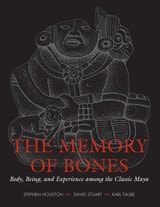
The Memory of Bones
Body, Being, and Experience among the Classic MayaBy Stephen Houston, David Stuart, and Karl Taube
University of Texas Press, 2006
All of human experience flows from bodies that feel, express emotion, and think about what such experiences mean. But is it possible for us, embodied as we are in a particular time and place, to know how people of long ago thought about the body and its experiences? In this groundbreaking book, three leading experts on the Classic Maya (ca. AD 250 to 850) marshal a vast array of evidence from Maya iconography and hieroglyphic writing, as well as archaeological findings, to argue that the Classic Maya developed a coherent approach to the human body that we can recover and understand today.
The authors open with a cartography of the Maya body, its parts and their meanings, as depicted in imagery and texts. They go on to explore such issues as how the body was replicated in portraiture; how it experienced the world through ingestion, the senses, and the emotions; how the body experienced war and sacrifice and the pain and sexuality that were intimately bound up in these domains; how words, often heaven-sent, could be embodied; and how bodies could be blurred through spirit possession.
From these investigations, the authors convincingly demonstrate that the Maya conceptualized the body in varying roles, as a metaphor of time, as a gendered, sexualized being, in distinct stages of life, as an instrument of honor and dishonor, as a vehicle for communication and consumption, as an exemplification of beauty and ugliness, and as a dancer and song-maker. Their findings open a new avenue for empathetically understanding the ancient Maya as living human beings who experienced the world as we do, through the body.
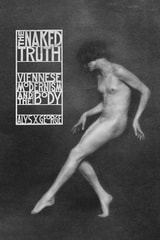
The Naked Truth
Viennese Modernism and the BodyAlys X. George
University of Chicago Press, 2020
Viennese modernism is often described in terms of a fin-de-siècle fascination with the psyche. But this stereotype of the movement as essentially cerebral overlooks a rich cultural history of the body. The Naked Truth, an interdisciplinary tour de force, addresses this lacuna, fundamentally recasting the visual, literary, and performative cultures of Viennese modernism through an innovative focus on the corporeal.
Alys X. George explores the modernist focus on the flesh by turning our attention to the second Vienna medical school, which revolutionized the field of anatomy in the 1800s. As she traces the results of this materialist influence across a broad range of cultural forms—exhibitions, literature, portraiture, dance, film, and more—George brings into dialogue a diverse group of historical protagonists, from canonical figures such as Egon Schiele, Arthur Schnitzler, Joseph Roth, and Hugo von Hofmannsthal to long-overlooked ones, including author and doctor Marie Pappenheim, journalist Else Feldmann, and dancers Grete Wiesenthal, Gertrud Bodenwieser, and Hilde Holger. She deftly blends analyses of popular and “high” culture, laying to rest the notion that Viennese modernism was an exclusively male movement. The Naked Truth uncovers the complex interplay of the physical and the aesthetic that shaped modernism and offers a striking new interpretation of this fascinating moment in the history of the West.
The Resurrection of the Body
Pier Paolo Pasolini from Saint Paul to SadeArmando Maggi
University of Chicago Press, 2009
The Wounded Storyteller
Body, Illness, and EthicsArthur W. Frank
University of Chicago Press, 1995
Ill people are more than victims of disease or patients of medicine; they are wounded storytellers. People tell stories to make sense of their suffering; when they turn their diseases into stories, they find healing.
Drawing on the work of authors such as Oliver Sacks, Anatole Broyard, Norman Cousins, and Audre Lorde, as well as from people he met during the years he spent among different illness groups, Frank recounts a stirring collection of illness stories, ranging from the well-known—Gilda Radner's battle with ovarian cancer—to the private testimonials of people with cancer, chronic fatigue syndrome, and disabilties. Their stories are more than accounts of personal suffering: they abound with moral choices and point to a social ethic.
Frank identifies three basic narratives of illness in restitution, chaos, and quest. Restitution narratives anticipate getting well again and give prominence to the technology of cure. In chaos narratives, illness seems to stretch on forever, with no respite or redeeming insights. Quest narratives are about finding that insight as illness is transformed into a means for the ill person to become someone new.
The Wounded Storyteller
Body, Illness, and Ethics, Second EditionArthur W. Frank
University of Chicago Press, 1997
Drawing on the work of authors such as Oliver Sacks, Anatole Broyard, Norman Cousins, and Audre Lorde, as well as from people he met during the years he spent among different illness groups, Frank recounts a stirring collection of illness stories, ranging from the well-known—Gilda Radner's battle with ovarian cancer—to the private testimonials of people with cancer, chronic fatigue syndrome, and disabilities. Their stories are more than accounts of personal suffering: they abound with moral choices and point to a social ethic.
In this new edition Frank adds a preface describing the personal and cultural times when the first edition was written. His new afterword extends the book’s argument significantly, writing about storytelling and experience, other modes of illness narration, and a version of hope that is both realistic and aspirational. Reflecting on both his own life during the creation of the first edition and the conclusions of the book itself, Frank reminds us of the power of storytelling as way to understanding our own suffering.
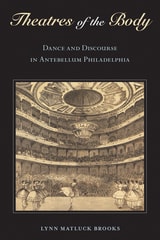
Theatres of the Body
Dance and Discourse in Antebellum PhiladelphiaLynn Matluck Brooks
Temple University Press, 2025
Reviewing print culture in the 1840s, Brooks shows how newspapers, magazines, and popular fiction provided documentation of dancing in Philadelphia as well as the responses of dance commentators, practitioners, and moralists. Theatres of the Body also considers the interplay of science with dance in the 1850s, which impacted both dance practices and reception.
Providing an expansive historiography of these significant contributions to dance in the United States, Brooks deepens our understanding of antebellum culture and history.
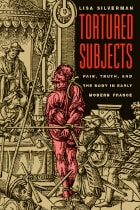
Tortured Subjects
Pain, Truth, and the Body in Early Modern FranceLisa Silverman
University of Chicago Press, 2001
Looking closely at the theory and practice of judicial torture in France from 1600 to 1788, the year in which it was formally abolished, Silverman revisits dossiers compiled in criminal cases, including transcripts of interrogations conducted under torture, as well as the writings of physicians and surgeons concerned with the problem of pain, records of religious confraternities, diaries and letters of witnesses to public executions, and the writings of torture's abolitionists and apologists. She contends that torture was at the center of an epistemological crisis that forced French jurists and intellectuals to reconsider the relationship between coercion and sincerity, or between free will and evidence. As the philosophical consensus on which torture rested broke down, and definitions of truth and pain shifted, so too did the foundation of torture, until by the eighteenth century, it became an indefensible practice.
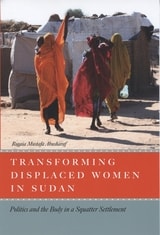
Transforming Displaced Women in Sudan
Politics and the Body in a Squatter SettlementRogaia Mustafa Abusharaf
University of Chicago Press, 2009
Over twenty years of civil war in predominantly Christian Southern Sudan has forced countless people from their homes. Transforming Displaced Women in Sudan examines the lives of women who have forged a new community in a shantytown on the outskirts of Khartoum, the largely Muslim, heavily Arabized capital in the north of the country.
Sudanese-born anthropologist Rogaia Mustafa Abusharaf delivers a rich ethnography of this squatter settlement based on personal interviews with displaced women and careful observation of the various strategies they adopt to reconstruct their lives and livelihoods. Her findings debunk the myth that these settlements are utterly abject, and instead she discovers a dynamic culture where many women play an active role in fighting for peace and social change. Abusharaf also examines the way women’s bodies are politicized by their displacement, analyzing issues such as religious conversion, marriage, and female circumcision.
An urgent dispatch from the ongoing humanitarian crisis in northeastern Africa, Transforming Displaced Women in Sudan will be essential for anyone concerned with the interrelated consequences of war, forced migration, and gender inequality.
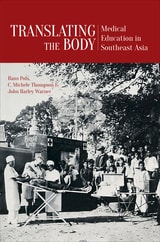
Translating the Body
Medical Education in Southeast AsiaEdited by Hans Pols, C. Michele Thompson, and John Harley Warner
National University of Singapore Press, 2017
Troping the Body
Gender, Etiquette, and PerformanceGwendolyn Audrey Foster
Southern Illinois University Press, 2000
Troping the Body: Gender, Etiquette, and Performance is an interdisciplinary study of etiquette texts, conduct literature, and advice books and films. GwendolynAudrey Foster analyzes the work of such women authors as Emily Post, Christine de Pizan, Hannah Webster Foster, Emily Brontë, Frances E. W. Harper, and Martha Stewart as well as such women filmmakers as Lois Weber and Kasi Lemmons.
“Specifically,” Foster notes, “I was interested in the possibility of locating power and agency in the voices of popular etiquette writers.” Her investigation led her to analyze etiquette and conduct literature from the Middle Ages to the present. Within this wide scope, she redefines the boundaries of conduct literature through a theoretical examination of the gendered body as it is positioned in conduct books, etiquette texts, poetry, fiction, and film.
Drawing on Bakhtin, Gates, Foucault, and the new school of performative feminism to develop an interdisciplinary approach to conduct literature—and literature as conduct—Foster brings a unique perspective to the analysis of ways in which the body has been gendered, raced, and constructed in terms of class and sexuality.
Even though women writers have been actively writing conduct and etiquette texts since the medieval period, few critical examinations of such literature exist in the fields of cultural studies and literary criticism. Thus, Foster’s study fills a gap and does so uniquely in the existing literature. In examining these voices of authority over the body, Foster identifies the dialogic in the texts of this discipline that both supports and disrupts the hegemonic discourse of a gendered social order.
Troubled Bodies
Critical Perspectives on Postmodernism, Medical Ethics, and the BodyPaul A. Komesaroff
Duke University Press, 1995
These essays examine the ways in which the consideration of ethical questions is shaped by the structures of knowledge and communication at work in clinical practice, by current assumptions regarding the concept of the body, and by the social and political implications of both. Representing various perspectives including medicine, nursing, philosophy, and sociology, these essays look anew at issues of abortion, reproductive technologies, the doctor-patient relationship, the social construction of illness, the cultural assumptions and consequences of medicine, and the theoretical presuppositions underlying modern psychiatry. Diverging from the tenets of mainstream bioethics, Troubled Bodies suggests that, rather than searching for the correct "coherent perspective" from which to draw ethical principles, we must apprehend the complexity and diversity of the discursive systems within which we dwell.