Results by title
159 books match the query 'Change' and 33 start with t
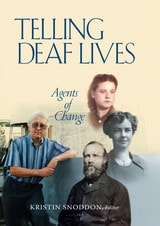
Telling Deaf Lives
Agents of ChangeKristin Snoddon
Gallaudet University Press, 2014
Due to the dearth of formal research on deaf people, Deaf community historians drove the preservation of the stories in this collection. Their diversity is remarkable: Melissa Anderson and Breda Carty describe the Cosmopolitan Correspondence Club, a group of Deaf individuals who corresponded in the early 20th century from Australia to Western Europe to the United States; Ulla-Bell Thorin recounts first-hand growing up deaf in Sweden and her process in authoring six memoirs; Harry Lang reflects on writing biographies of numerous Deaf Americans in the arts and science; Akio Suemori profiles the first Deaf president of a Japanese school for the Deaf; Tatiana Davidenko writes about her Deaf family’s experience during the World War II siege of Leningrad; Theara Yim and Julie Chateauvert look at the evolution of ASL poetry by analyzing works of prominent ASL poets Clayton Valli, Peter Cook, and Kenny Lerner. These and the other contributions here enshrine Deaf people in collective memory by virtue of disseminating and preserving their stories.

The Age of Immunology
Conceiving a Future in an Alienating WorldA. David Napier
University of Chicago Press, 2003
To illustrate these destructive consequences, Napier likens the current craze for embracing diversity and the use of politically correct speech to a cultural potluck to which we each bring different dishes, but at which no one can eat unless they abide by the same rules. Similarly, loaning money to developing nations serves as a tool both to make the peoples in those nations more like us and to maintain them in the nonthreatening status of distant dependents. To break free of the resulting downward spiral of homogenization and self-focus, Napier suggests that we instead adopt a new defining concept based on embryology, in which development and self-growth take place through a process of incorporation and transformation. In this effort he suggests that we have much to learn from non-Western peoples, such as the Balinese, whose ritual practices require them to take on the considerable risk of injecting into their selves the potential dangers of otherness—and in so doing ultimately strengthen themselves as well as their society.
The Age of Immunology, with its combination of philosophy, history, and cultural inquiry, will be seen as a manifesto for a new age and a new way of thinking about the world and our place in it.
The American Business Cycle
Continuity and ChangeEdited by Robert J. Gordon
University of Chicago Press, 1986
In The American Business Cycle, some of the most prominent macroeconomics in the United States focuses on the questions, To what extent are business cycles propelled by external shocks? How have post-1946 cycles differed from earlier cycles? And, what are the major factors that contribute to business cycles? They extend their investigation in some areas as far back as 1875 to afford a deeper understanding of both economic history and the most recent economic fluctuations.
Seven papers address specific aspects of economic activity: consumption, investment, inventory change, fiscal policy, monetary behavior, open economy, and the labor market. Five papers focus on aggregate economic activity. In a number of cases, the papers present findings that challenge widely accepted models and assumptions. In addition to its substantive findings, The American Business Cycle includes an appendix containing both the first published history of the NBER business-cycle dating chronology and many previously unpublished historical data series.
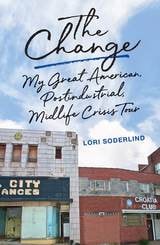
The Change
My Great American, Postindustrial, Midlife Crisis TourLori Soderlind
University of Wisconsin Press, 2020
With humanity and humor, Soderlind's journey introduces quirky folks along the way, including Swannie Jim of Silo City and his fawn pit bull, Champ. She attempts to channel muckraking journalist Ida M. Tarbell and celebrates complicated characters, including Robert De Niro's heartbroken veteran in The Deer Hunter. Ultimately a romance—of Soderlind's love for America, her dog, the long-term partner she left behind, and the childhood crush she remembers with a big, aching pang—The Change offers daring and often hilarious insights into loss and acceptance, especially when it takes a while to get there.

The Designer
Half a Century of Change in Image, Training, and TechniqueRosemary Sassoon
Intellect Books, 2008
The Edge of Change
Women in the Twenty-First-Century PressEdited by June O. Nicholson, Pamela J. Creedon, Wanda S. Lloyd, and Pamela J. Jo: Foreword by Ellen Goodman
University of Illinois Press, 2008
Prominent female voices in journalism provide critical perspectives on the challenges women face in today's news organizations, such as connecting with diverse audiences, educating readers about international issues and cultures, maintaining credibility, negotiating media consolidation and corporate pressures, and overcoming the persistent barriers to professional advancement. A powerful and complex assessment of how women are transforming the news industry, The Edge of Change explores how the news industry might implement further reforms aimed at creating a more inclusive journalistic community.
Contributors are Catalina Camia, Kathleen Carroll, Pamela J. Creedon, Paula Lynn Ellis, Helen E. Fisher, Dorothy Butler Gilliam, Ellen Goodman, Sharon Grigsby, Carol Guzy, Kirsten Scharnberg Hampton, Cathy Henkel, Pamela J. Johnson, Jane Kirtley, Jan Leach, Caroline Little, Wanda S. Lloyd, Arlene Notoro Morgan, June O. Nicholson, Geneva Overholser, Marty Petty, Deb Price, Donna M. Reed, Sandra Mims Rowe, Peggy Simpson, Margaret Sullivan, Julia Wallace, and Keven Ann Willey.

The Essential Tension
Selected Studies in Scientific Tradition and ChangeThomas S. Kuhn
University of Chicago Press, 1977
The Grooves of Change
Eastern Europe at the Turn of the MillenniumJ.F. Brown
Duke University Press, 2001
While acknowledging that the term “Eastern Europe” began to fall into disuse with the end of the cold war, Brown uses it as a framework for discussing the enduring features of the modern history of this region: its basic continuity, the prominence of ethnic and national factors, and its dependence on great powers or combinations of powers outside it. He explains the significance of the growing gulf between East Central Europe and South Eastern Europe, the overall political and economic deprivation and its effect on the people, the urgency of change, and the complex dynamics within Eastern Europe that have defied definitions and generalization. Finally, Brown points to the need for continuing assistance by the United States and the West and suggests what the twenty-first century may bring to this constantly changing part of the world.
Those seeking a clear overview of events in Eastern Europe during the recent psat and the state of these nations now will benefit from this incisive study by J. F. Brown.
The Hopi Indians of Old Oraibi
Change and ContinuityMischa Titiev
University of Michigan Press, 1972
The Instruction Myth
Why Higher Education is Hard to Change, and How to Change ItJohn Tagg
Rutgers University Press, 2019
The Instruction Myth argues that yes, higher education can be reformed and reinvigorated, but it will not be an easy process. In fact, it will require universities to abandon their central operating principle, the belief that education revolves around instruction, easily measurable in course syllabi, credits, and enrollments. Acclaimed education scholar John Tagg presents a powerful case that instruction alone is worthless and that universities should instead be centered upon student learning, which is far harder to quantify and standardize. Yet, as he shows, decades of research have indicated how to best promote student learning, but few universities have systematically implemented these suggestions.
This book demonstrates why higher education must undergo radical change if it hopes to survive. More importantly, it offers specific policy suggestions for how universities can break their harmful dependence on the instruction myth. In this extensively researched book, Tagg offers a compelling diagnosis of what’s ailing American higher education and a prescription for how it might still heal itself.

The Jews of Georgian England, 1714-1830
Tradition and Change in a Liberal SocietyTodd M. Endelman
University of Michigan Press, 1999
The Karankawa Indians of Texas
An Ecological Study of Cultural Tradition and ChangeBy Robert A. Ricklis
University of Texas Press, 1996
Popular lore has long depicted the Karankawa Indians as primitive scavengers (perhaps even cannibals) who eked out a meager subsistence from fishing, hunting and gathering on the Texas coastal plains. That caricature, according to Robert Ricklis, hides the reality of a people who were well-adapted to their environment, skillful in using its resources, and successful in maintaining their culture until the arrival of Anglo-American settlers.
The Karankawa Indians of Texas is the first modern, well-researched history of the Karankawa from prehistoric times until their extinction in the nineteenth century. Blending archaeological and ethnohistorical data into a lively narrative history, Ricklis reveals the basic lifeway of the Karankawa, a seasonal pattern that took them from large coastal fishing camps in winter to small, dispersed hunting and gathering parties in summer. In a most important finding, he shows how, after initial hostilities, the Karankawa incorporated the Spanish missions into their subsistence pattern during the colonial period and coexisted peacefully with Euroamericans until the arrival of Anglo settlers in the 1820s and 1830s. These findings will be of wide interest to everyone studying the interactions of Native American and European peoples.

The Lumberman's Frontier
Three Centuries of Land Use, Society, and Change in America's ForestsThomas R. Cox
Oregon State University Press, 2010
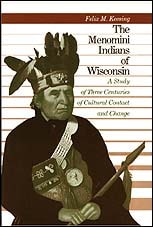
The Menomini Indians of Wisconsin
A Study of Three Centuries of Cultural Contact and ChangeFelix M. Keesing
University of Wisconsin Press, 1987
The Menomini, a peaceful people, lived by farming, hunting, fishing, and gathering wild rice. Perhaps because of their peaceful nature their name was not generally found in the white military annals, and they were largely unknown until 1892, when Walter James Hoffman published a detailed ethnographic account of them.
Felix Keesing's classic 1939 work on the Menomini is one of the most detailed, authoritative, and useful accounts of their history and culture. It superseded Hoffman's earlier work because of Keesing's modern methods of research. This work was among the first monographs on an American Indian people to employ a model of acculturation, and it is also an excellent early example of what is now called ethnohistory. It served as a model of anthropological research for decades after its publication.
Keesing's work, reprinted in this new Wisconsin edition, will continue to serve as a comprehensive introduction for the general reader, a book respected by both anthropologists and historians, and by the Menomini themselves. It is still the most important study of Menomini life up until 1939.

The Non-Independent Territories of the Caribbean and Pacific
Continuity or Change?Edited by Peter Clegg and David Killingray
University of London Press, 2012

The Old German Baptist Brethren
Faith, Farming, and Change in the Virginia Blue RidgeCharles D. Thompson Jr.
University of Illinois Press, 2006
Charles D. Thompson Jr.'s The Old German Baptist Brethren combines oral history with ethnography and archival research--as well as his own family ties to the Franklin County community--to tell the story of the Brethren's faith on the cusp of impending change. The book traces the transformation of their operations from frontier subsistence farms to cash-based enterprises, connecting this with the wider confluence of agriculture and faith in colonial America. Using extensive interviews, Thompson looks behind the scenes at how individuals interpret their own futures in farming, their hope for their faith, and how the failure of religiously motivated agriculture figures in the larger story of the American farmer.
The Point is to Change the World
Selected Writings of AndaiyeAlissa Andaiye
Pluto Press, 2020
Through essays, letters and journal entries, Andaiye's thinking on the intersections of gender, race, class and power are profoundly articulated, Caribbean histories emerge, and stories from a life lived at the barricades are revealed. We learn about the early years of the Working People's Alliance, the meaning and impact of the murder of Walter Rodney and the fall of the Grenada Revolution. Throughout, we bear witness to Andaiye's acute understanding of politics rooted in communities and the daily lives of so-called ordinary people.
Featuring forewords by Clem Seecharan and Robin DG Kelley, these texts will become vital tools in our own struggles to 'overturn the power relations which are embedded in every unequal facet of our lives'.

The Politics of Change in Palestine
State-Building and Non-Violent ResistanceMichael Broning
Pluto Press, 2011
This book contradicts the dominant myth that incompetent, corrupt, and uncompromising Palestinian decision-makers are responsible for the lasting stalemate in the Middle-East Peace Process. It highlights recent political developments in Palestine that fundamentally redefine important parameters of the Israeli-Palestinian conflict.
Contrary to public perception, new political trends in the Palestinian Territories bolster prospects for the realisation of Palestinian national aspirations. Michael Bröning identifies key indicators which fundamentally question dominant Israeli narratives and pose an unprecedented strategic challenge to the Israeli leadership. These include the re-invention of Hamas, the reform of the Fatah movement, Palestinian Prime Minister Salam Fayyad’s state-building efforts and the surge of non-violent resistance against Israel.
This persuasive book forces us to reconsider the perceived wisdom that the Palestinians are powerless to influence events as they struggle for peace.
The Politics of Diversity
Immigration, Resistance, and Change in Monterey Park, CaliforniaJohn Horton
Temple University Press, 1995
Advertised in Asia as "The Chinese Beverly Hills," this small city minutes east of downtown Los Angeles, became by the late 1970s a regional springboard for a new type of Chinese immigration—suburban and middle class with a diversified and globally-oriented economy. Freed from the isolation of old Chinatowns, new immigrants now confronted resistance from more established Anglo, Asian American, and Latino neighbors, whose opposition took the form of interconnected "English Only" and slow-growth movements.
In The Politics of Diversity, a multiethnic team of researches employ ethnography, interviewing, and exit polls to capture the process of change as newcomers and established residents come to terms with the meaning of diversity and identity in their everyday lives. The result is an engaging grass-roots account of immigration and change: the decline of the loyal old-boy Anglo network; the rise of women, minorities, and immigrants in the political scene; and a transformation of ethnic and American identities.

The Population of the South
Structure and Change in Social Demographic ContextEdited by Dudley L. Poston, Jr., and Robert H. Weller
University of Texas Press, 1981
The expression “the New South” was introduced by Henry Grady, editor of the Atlanta Constitution, to a New York audience in 1886; every generation of writers since has used the term. The southern population, unique in its socioeconomic and cultural characteristics, has always been a topic of major interest with U.S. demographers.
The articles in this book, the majority of which were originally presented at the Southern Regional Demographic Group meeting in 1976, deal with fertility, mortality, migration, and the factors that influence these components. A number of the contributors trace patterns of demographic change in the South showing convergence with the rest of the United States. Questions are raised about whether the convergence represents a permanent trend—possibly due to increased communication—or whether further divergence may be expected in the future.
The contributors include Dudley L. Poston, Jr., William J. Serow, Robert H. Weller, Ronald R. Rindfuss, Harry M. Rosenberg, Drusilla Burnham, David F. Sly, Omer R. Galle, Robert N. Stern, Joachim Singelmann, Susan E. Clarke, and George C. Myers.
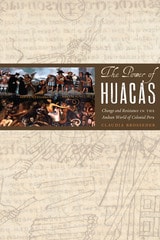
The Power of Huacas
Change and Resistance in the Andean World of Colonial PeruBy Claudia Brosseder
University of Texas Press, 2014
Based on extensive archival research, The Power of Huacas is the first book to take account of the reciprocal effects of religious colonization as they impacted Andean populations and, simultaneously, dramatically changed the culture and beliefs of Spanish Christians.
Winner, Award for Excellence in the Study of Religion in the category of Historical Studies, American Academy of Religion, 2015
The role of the religious specialist in Andean cultures of the sixteenth, seventeenth, and eighteenth centuries was a complicated one, balanced between local traditions and the culture of the Spanish. In The Power of Huacas, Claudia Brosseder reconstructs the dynamic interaction between religious specialists and the colonial world that unfolded around them, considering how the discourse about religion shifted on both sides of the Spanish and Andean relationship in complex and unexpected ways. In The Power of Huacas, Brosseder examines evidence of transcultural exchange through religious history, anthropology, and cultural studies. Taking Andean religious specialists—or hechizeros (sorcerers) in colonial Spanish terminology—as a starting point, she considers the different ways in which Andeans and Spaniards thought about key cultural and religious concepts. Unlike previous studies, this important book fully outlines both sides of the colonial relationship; Brosseder uses extensive archival research in Bolivia, Chile, Ecuador, Peru, Spain, Italy, and the United States, as well as careful analysis of archaeological and art historical objects, to present the Andean religious worldview of the period on equal footing with that of the Spanish. Throughout the colonial period, she argues, Andean religious specialists retained their own unique logic, which encompassed specific ideas about holiness, nature, sickness, and social harmony. The Power of Huacas deepens our understanding of the complexities of assimilation, showing that, within the maelstrom of transcultural exchange in the Spanish Americas, European paradigms ultimately changed more than Andean ones.
The Prairie People
Continuity and Change in Potawatomi Indian Culture, 1665-1965James A. Clifton
University of Iowa Press, 1998
The Ribbon of Green
Change in Riparian Vegetation in the Southwestern United StatesRobert H. Webb, Stanley A. Leake, and Raymond M. Turner
University of Arizona Press, 2007
The Texture of Change
Dress, Self-Fashioning, and History in Western Africa, 1700–1850Jody Benjamin
Ohio University Press, 2024
Jody Benjamin analyzes a range of archival, visual, oral, and material sources drawn from three continents to illuminate entanglements between local textile industries and global commerce and between the politics of Islamic reform and encroaching European colonial power. The study highlights the roles of a diverse range of historical actors mentioned only glancingly in core-periphery or Atlantic-centered framings: women indigo dyers, maroon cotton farmers, petty traveling merchants, caravan guides, and African Diaspora settlers. It argues that their combined choices within a set of ecological, political, and economic constraints structured networks connecting the Atlantic and Indian Ocean perimeters.
The Tyranny of Change
America in the Progressive Era, 1890-1920Chambers, John Whiteclay II
Rutgers University Press, 2000
Between 1890 and 1920, the forces accompanying industrialization sent the familiar nineteenth-century world plummeting toward extinction. The traditional countryside with its villages and family farms was eclipsed by giant corporations and sprawling cities. America appeared headed into an unknown future.
In lively, accessible prose, John Chambers incorporates the latest scholarship about the social, cultural, political, and economic changes which produced modern America. He illuminates the experiences of blacks, Asians, Latinos, as well as other working men and women in the cities and countryside as they struggled to improve their lives in a transformed economy. He explores the dimensions of the new consumer society and the new information and entertainment industries: newspapers, magazines, the movies. Striding these pages are many of the prominent individuals who shaped the attitudes and institutions of modern America: J. P. Morgan and corporate reorganization; Jane Addams and the origin of modern social work; Mary Pickford and the new star-oriented motion picture industry; and the radical labor challenge of “Big Bill” Haywood and the “Wobblies.”
While recognizing a “progressive ethos”—a mixture of idealistic vision and pragmatic reforms—which dominated the mainstream reforms that characterized the period, Chambers elaborates the role of civic volunteerism as well as the state in achieving directed social change. He also emphasizes the importance of radical and conservative political forces in shaping the so-called “Progressive Era.”
The revised edition in this classic work has an updated bibliography and a new preface, both of which incorporate particularly the new social and cultural research of the past decade.
The View from the Helm
Leading the American University during an Era of ChangeJames J. Duderstadt
University of Michigan Press, 2009
Widely regarded as one of the most active and publicly engaged university presidents in modern academia, Duderstadt—who led the University of Michigan from 1988 to 1996—presided over a period of enormous change, not only for his institution, but for universities across the country. His presidency was a time of growth and conflict: of sweeping new affirmative-action and equal-opportunity programs, significant financial expansion, and reenergized student activism on issues from apartheid to codes of student conduct.
Under James Duderstadt’s stewardship, Michigan reaffirmed its reputation as a trailblazer among universities. Part memoir, part history, part commentary, The View from the Helm extracts general lessons from his experiences at the forefront of change in higher education, offering current and future administrators a primer on academic leadership and venturing bold ideas on how higher education should be steered into the twenty-first century.
Time and Change
150 Years of The Ohio State UniversityTamar Chute with a Letter by President Michael V. Drake and an Afterword by Provost Bruce A. McPheron
The Ohio State University Press, 2019
Gain a visually stunning new perspective on iconic landmarks such as Mirror Lake, the Oval, Ohio Stadium, and the neighborhoods surrounding the Columbus and regional campuses. From beloved teams, symbols, and traditions to scenes from academic and campus life, reflect on time and change and rediscover the extraordinary connection that unites generations of Buckeyes.
Time, Duration and Change in Contemporary Art
Beyond the ClockKate Bretkelly-Chalmers
Intellect Books, 2018
This book examines alternative frameworks of time, duration, and change in prominent philosophical, scientific, and technological traditions, including physics, psychology, phenomenology, neuroscience, media theory, and selected environmental sciences. It suggests that art makes a crucial contribution to these discourses not by “visualizing” time, but by entangling viewers in different sensory, material, and imaginary temporalities.
To Change the World
My Years in CubaRandall, Margaret
Rutgers University Press, 2009
Randall gives readers an inside look at her children's education, the process through which new law was enacted, the ins and outs of healthcare, employment, internationalism, culture, and ordinary people's lives. She explores issues of censorship and repression, describing how Cuban writers and artists faced them. She recounts one of the country's last beauty pageants, shows us a night of People's Court, and takes us with her when she shops for her family's food rations. Key figures of the revolution appear throughout, and Randall reveals aspects of their lives never before seen.
More than fifty black and white photographs, most by the author, add depth and richness to this astute and illuminating memoir. Written with a poet's ear, depicted with a photographer's eye, and filled with a feminist vision, To Change the Worldùneither an apology nor gratuitous attackùadds immensely to the existing literature on revolutionary Cuba.
Tomorrow Is Another Country
The Inside Story of South Africa's Road to ChangeAllister Sparks
University of Chicago Press, 1996
"A gripping, fast-paced, authoritative account of the long and mostly secret negotiations that brought South Africa's bitter conflict to its near-miraculous end. Sparks's description of these talks sometimes brings a lump to one's throat. He shows how the participants' deep mutual suspicion was gradually replaced by excitement at the prospect of making a momentous agreement—and also by the dawning realization that the people on the other side were human beings, perhaps even decent human beings."—Adam Hochschild, New York Times Book Review
"A splendid and original history. . . . Sparks's skillful weaving of myriad strands—Mandela's secret sessions with the committee, the clandestine talks in England between the African National Congress and the government, the back-channel communications between Mandela and the A.N.C. in exile, the trepidation of Botha and the apparent transformation of his successor, De Klerk—possesses the drama and intrigue of a diplomatic whodunit."—Richard Stengel, Time
"Sparks offers many reasons for hope, but the most profound of them is the story this book tells."—Jacob Weisberg, Washington Post
"The most riveting of the many [accounts] that have been published about the end of apartheid."—The Economist
Towards Better Reproductive Health in Eastern Europe
Concern, Commitment, and ChangeWHO Scientific Working Group WHO Scientific Working Group
Central European University Press, 1998
Documenting the latest statistical data on current problems related to reproductive health issues in Central and Eastern Europe, this text explores the reasons for these problems and recommends action based on the scientific evidence for improving reproductive health.
The main issues covered are: declining standards of reproductive health care; rising trends in the incidence of sexually transmitted diseases; low rates of use of modern contraceptives; high rates of induced abortion; high prevalence of infertility; and the needs of adolescents with regard to reproductive health.
Transformation Now!
Toward a Post-Oppositional Politics of ChangeAnaLouise Keating
University of Illinois Press, 2013
Trusteeship in Change
Toward Tribal Autonomy in Resource ManagementRichmond L. Clow
University Press of Colorado, 2001
This book also includes case studies focused on wildlife management, forest preservation, tribal hunting laws, and other specific concerns in management, preservation and utilization of Native American land. An excellent source for scholars in the fields of Native American and environmental studies, Trusteeship in Change is sure to spark debate and to be an important reference book for years to come.