496 books match the query 'Christian Theology' and 141 start with t
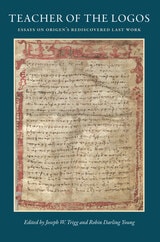
cover of Teacher of the Logos: Essays on Origen's Rediscovered Last Work

Teacher of the Logos

Essays on Origen's Rediscovered Last Work

Joseph W. Trigg

Catholic University of America Press, 2025
In 2012 Marina Molin Pradel, an archivist at the Bavarian State Library discovered that CMG 314, a long-neglected Byzantine manuscript , contained twenty-nine homilies by Origen, the most important and most talented genius of early Christianity. He delivered these homilies around 259 CE, shortly before arrest and torture during the Decian persecution would put an end to his work. Thus, along with the Contra Celsum, Origen’s lengthy defense of Christianity, written after 248, when that persecution was clearly impending, they enable readers to appreciate Origen’s fully-developed thought. Except for the four of these homilies that had been translated into Latin in the fifth century, scholars of Origen thought that all the homilies on the Psalms had been lost. In 2015 Lorenzo Perrone of the University of Bologna, an eminent Origen scholar, assisted by a team including Dr. Pradel, produced a magnificent critical edition of the text. In 2017 the editors of this volume organized a colloquium in Washington, DC, generously hosted by the program in Early Christian Studies. The authors of this volume, a group of American and Canadian scholars, invited Professor Perrone to address the discovery of the homilies and his edition, and to join their discussion of their interpretation. This volume represents the group’s energetic investigations and discussion over the two days of the conference. The essays address Origen’s use of language, his philosophical interests, his relationship with Judaism, and his scholarly patrimony in the next century.
[more]
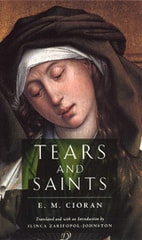
cover of Tears and Saints

Tears and Saints

E. M. Cioran

University of Chicago Press, 1995

By the mid-1930s, Emil Cioran was already known as a leader of a new generation of politically committed Romanian intellectuals. Researching another, more radical book, Cioran was spending hours in a library poring over the lives of saints. As a modern hagiographer, Cioran "dreamt" himself "the chronicler of these saints' falls between heaven and earth, the intimate knower of the ardors in their hearts, the historian of God's insomniacs." Inspired by Nietzsche's Beyond Good and Evil, Cioran "searched for the origin of tears." He asked himself if saints could be "the sources of tears' better light."

"Who can tell?" he wrote in the first paragraph of this book, first published in Romania in 1937. "To be sure, tears are their trace. Tears did not enter the world through the saints; but without them we would never have known that we cry because we long for a lost paradise." By following in their traces, "wetting the soles of one's feet in their tears," Cioran hoped to understand how a human being can renounce being human. Written in Cioran's characteristic aphoristic style, this flamboyant, bold, and provocative book is one of his most important—and revelatory—works.

Cioran focuses not on martyrs or heroes but on the mystics—primarily female—famous for their keening spirituality and intimate knowledge of God. Their Christianity was anti-theological, anti-institutional, and based solely on intuition and sentiment. Many, such as Catherine of Siena, Teresa of Avila, and Saint John of the Cross, have produced classic works of mystical literature; but Cioran celebrates many more minor and unusual figures as well.

Following Nietzsche, he focuses explicitly on the political element hidden in saints' lives. In his hands, however, their charitable deeds are much less interesting than their thirst for pain and their equally powerful capacity to endure it. Behind their suffering and their uncanny ability to renounce everything through ascetic practices, Cioran detects a fanatical will to power.

"Like Nietzsche, Cioran is an important religious thinker. His book intertwines God and music with passion and tears. . . . [Tears and Saints] has a chillingly contemporary ring that makes this translation important here and now."—Booklist
[more]
cover of Teeth and Talons Whetted for Slaughter: Divine Attributes and Suffering Animals in Historical Perspective (1600–1961)

Teeth and Talons Whetted for Slaughter

Divine Attributes and Suffering Animals in Historical Perspective (1600–1961)

Piet Slootweg

Central European University Press, 2026
Is a life cycle that depends on eating or being eaten compatible with a creation in which ‘the heavens are telling the glory of God; and the fi rmament proclaims His handiwork’? Are animal death and extinction manifestations of a good God’s majesty and power? When creating the world, did God use animal death and extinction as a means to realize his intentions? This study challenges the view that the emergence and acceptance of the theory of evolution brought a break in thinking about animal suffering in a good creation. Even before Darwin, people thought about animal suffering, about how God’s goodness and good creation related to this, and about whether animals were already subject to death in paradise. Historically, Charles Darwin’s theory of evolution did not form a watershed in the debate about animal suffering, nor did concerns about animal suffering only emerge with the Darwinian theory of evolution. If you would like to order the book for delivery outside of the Netherlands, please email orders@aup.nl
[more]
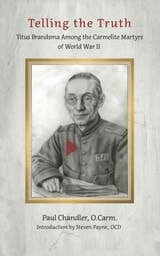
cover of Telling the Truth: Titus Brandsma Among the Carmelite Martyrs of World War II

Telling the Truth

Titus Brandsma Among the Carmelite Martyrs of World War II

Paul Chandler

Catholic University of America Press, 2026
Titus Brandsma is best known for courageously speaking out against the ideology of National Socialism and for defending the freedom of the Catholic press to refuse their propaganda. Indeed, it was his activities as a Catholic journalist and on behalf of Catholic journalism that placed him in the crosshairs of the Nazi authorities. But his imprisonment and eventual death in the concentration camp of Dachau was preceded by a notable academic career and a life of tireless service. As Paul Chandler reveals in this ground-breaking volume, the torture and “experiments” that he suffered in the infirmary at Dachau included shocking examples of sexual abuse, according to the infirmary nurse who administered the fatal injection, whose eye-witness account previous biographers have glossed over. For the first time, Chandler provides an English translation of her complete testimony. Additional material reminds us of other major Carmelite “witnesses to truth” during World War II, including St. Edith Stein (Teresa Benedicta of the Cross) and Père Jacques Bunel. All of them show that authentic Carmelite and Christian spirituality is not something abstract and ethereal, but has social consequences, and that mystical prayer must express itself in prophetic words and actions.
[more]
cover of The Achievement of Hans Urs von Balthasar

The Achievement of Hans Urs von Balthasar

Matthew Levering

Catholic University of America Press, 2019
In The Achievement of Hans Urs von Balthasar, Matthew Levering has written a book for theologically educated readers who mistrust von Balthasar or who mistrust von Balthasar’s critics. The book shows that von Balthasar’s critics can and should benefit both from the rich and wide-ranging conversations that mark his trilogy and from the critical and constructive engagement with German philosophical modernity offered by the trilogy. In addition, Levering hopes to show that those who mistrust von Balthasar’s critics need to be more Balthasarian in their response to criticisms of the Swiss theologian.
[more]
cover of The Antediluvian Librarians' Secrets for Success in Seminary and Theology School

The Antediluvian Librarians' Secrets for Success in Seminary and Theology School

Jane Lenz Elder, Duane Harbin, and David Schmersal. Designed and Illustrated by Rebecca Howdeshell.

Bridwell Press, 2022

In The Antediluvian Librarians’ Secrets to Success, the authors draw on their combined experience and unique perspective as librarians to address the most common concerns they hear students express. Their light-hearted approach, combined with eye-catching illustrations, makes for a friendly work students can read from beginning to end or refer to as they move through their first anxious weeks of seminary.

In easy-to-digest segments, the book reveals the kind of strategies for being a graduate student that are seldom revealed in the classroom. Consisting of seven sections, The Antediluvian Librarians’ Secrets to Success offers guidance on such varied topics as reading strategically, asking questions, managing time, practicing self-care, staying organized, and tackling that first paper. It also offers lists for further reading and thoughtful pieces of advice. Although the authors are theological librarians, the recommendations they offer are just as practical for students beginning any graduate program in the humanities.

Deeply useful for anyone entering seminary or theology school both now and in the future, The Antediluvian Librarians’ Secrets to Success is the first work released from the new Bridwell Press. 
 
[more]
cover of The Apostolic Fathers

The Apostolic Fathers

The Apostolic Fathers

Catholic University of America Press, 1947
No description available
[more]
cover of The Arab Christ: Towards an Arab Christian Theology of Conviviality

The Arab Christ

Towards an Arab Christian Theology of Conviviality

Mouchir Basile Aoun

Gingko, 2022

A reflection on Christianity in Arab society.
 
This work explores the Christian faith in the current intercultural context of Arab societies. It argues that Arab Christianity seeks to express the Christian faith through openness to Muslim otherness, existential conviviality, and fraternal solidarity. In order to safeguard not only the physical existence of these communities but also and above all the relevance and richness of their message of life, the theological reflection presented here takes on a three-part task. First, it faithfully describes the sociopolitical and sociocultural reality of the historical integration of Arab Christian communities. Second, it reinterprets the content of the Christ event with reference to the challenge of Muslim otherness. And finally, it offers a path for conversion that involves a form not only of evangelical practice, designed to foster bonds of fraternal solidarity between the inhabitants of the Arab world but also of shared spiritual quest for moral and political commitment.
 
[more]
cover of The Augustinian Person

The Augustinian Person

Peter Burnell

Catholic University of America Press, 2005
Through careful analysis of Augustine's writings, Burnell concludes that Augustine conceives of human nature as a unity at every level--socially, morally, and in basic constitution--despite very common objections that he fails to achieve such a conception
[more]
cover of The Best Effect: Theology and the Origins of Consequentialism

The Best Effect

Theology and the Origins of Consequentialism

Ryan Darr

University of Chicago Press, 2023

A theological history of consequentialism and a fresh agenda for teleological ethics.
 

Consequentialism—the notion that we can judge an action by its effects alone—has been among the most influential approaches to ethics and public policy in the Anglophone world for more than two centuries. In The Best Effect, Ryan Darr argues that consequentialist ethics is not as secular or as rational as it is often assumed to be. Instead, Darr describes the emergence of consequentialism in the seventeenth century as a theological and cosmological vision and traces its intellectual development and eventual secularization across several centuries. The Best Effect reveals how contemporary consequentialism continues to bear traces of its history and proposes in its place a more expansive vision for teleological ethics.
[more]
cover of The Birth of Purgatory

The Birth of Purgatory

Jacques Le Goff

University of Chicago Press, 1984
In The Birth of Purgatory, Jacques Le Goff, the brilliant medievalist and renowned Annales historian, is concerned not with theological discussion but with the growth of an idea, with the relation between belief and society, with mental structures, and with the historical role of the imagination. Le Goff argues that the doctrine of Purgatory did not appear in the Latin theology of the West before the late twelfth century, that the word purgatorium did not exist until then. He shows that the growth of a belief in an intermediate place between Heaven and Hell was closely bound up with profound changes in the social and intellectual reality of the Middle Ages. Throughout, Le Goff makes use of a wealth of archival material, much of which he has translated for the first time, inviting readers to examine evidence from the writings of great, obscure, or anonymous theologians.
[more]
cover of The Bonds of Love: St. Peter Damian's Theology of the Spiritual Life

The Bonds of Love

St. Peter Damian's Theology of the Spiritual Life

Gordon Mursell

Catholic University of America Press, 2022
St Peter Damian (1007-1072) is an exceptional example of a paradox that is found in many saints and thinkers through the ages (St Jerome, St Bernard, St Bridget of Sweden, St Teresa of Avila and Thomas Merton come to mind) – of a lifelong tension between two competing vocations: the call to solitude and holiness and the call to prophetic social and ecclesial engagement. The author has explored this tension throughout his adult life, both in his published work and in his own life as an Episcopalian/Anglican priest and later bishop. Damian’s “The Book of ‘The Lord be with you’” is a profound exploration of the spirituality of solitude, whereas his “Book of Gomorrah” is an intense attack on clerical sexual abuse which has helped to give Damian a new recent prominence in the light of the huge challenges facing the Church today. The Bonds of Love shows that the paradox at the heart of Damian's life and everything he cared about was rooted in the remarkable theology of love which finds expression across the whole of his work and gives it both coherence and dynamism. His life and spirituality are of far more than academic interest, and will make a major contribution, not only to those committed to ecclesial reform and renewal, but to all who struggle to live with the kind of competing tensions that made St. Peter Damian who he was.
[more]
cover of The Book of Before and After: The Liturgy of the Hours of the Church of the East

The Book of Before and After

The Liturgy of the Hours of the Church of the East

Andrew Younan

Catholic University of America Press, 2025
The Book of Before & After is the traditional name given to the book of commonly-used portions of the liturgy of the hours of the Church of the East (the branches of which are now the Chaldean Catholic Church, the Assyrian Church of the East, the Ancient Apostolic Assyrian Church of the East, and the Malabar Catholic Church). This volume will present, for the first time, a complete English translation (from the original Aramaic/Syriac) of all the Ordinaries and Commons of the Liturgy of the Hours used by all the Churches of this Tradition. It will also include a complete translation of the Psalter as included in the liturgical books (with antiphons and prayers between sets of Psalms), the full collection of the famous “Martyr Hymns,” and extensive selections of the Propers for each week of the Liturgical Year. Finally, the volume will also include translations of the Introductions written by the various Chaldean and Assyrian Patriarchs who published editions of the Hudhra (the full liturgy of the hours) over the past two centuries, as well as a comprehensive Introductory Essay by Younan. Many of the hymns translated in this volume will be singable according to their original melody.
[more]
cover of The Call of Conscience: Protestant Clergy and Jews in the Netherlands

The Call of Conscience

Protestant Clergy and Jews in the Netherlands

Johan Hegeman

Central European University Press, 2026
Recalling Protestant missionary work among Jews and assistance to Jewish refugees before the war, Dr. Hegeman dissects the various positions taken by the clergy during World War II. He discusses the clergy’s resistance documents and analyzes the morality used. The result is a unique portrayal of the clergy’s struggle with conscience as they faced Nazi persecution of Jews during the war. The plight of the Jews who belonged to the churches is addressed. This study is the first comprehensive English-language treatment of the attitudes of Dutch Protestant clergy toward the Jews in the period before and during World War II. If you would like to order the book for delivery outside of the Netherlands, please email orders@aup.nl
[more]
cover of The Catholic Enlightenment: A Global Anthology

The Catholic Enlightenment

A Global Anthology

Ulrich L. Lehner

Catholic University of America Press, 2021
The Catholic Enlightenment: A Global Anthology presents readers with accessible, translated selections from the writings of fifteen major Catholic Enlightenment authors. These early modern authors include women, priests, lay intellectuals, and bishops. Twelve of these figures are being brought into English for the first time. The purpose of the volume is to provide students, scholars, and interested non-specialists with a single point of departure to delve into the primary sources of the Catholic Enlightenment. This anthology shows the geographical and intellectual diversity of the Catholic Enlightenment, while also demonstrating significant threads of commonality in intellectual orientation. One strength of this volume is the geographical spread of the figures considered. Included are Catholic thinkers from England, the United States, Mexico, Spain, Portugal, Brazil, France, Portugal, and the Italian and German-speaking lands. Another strength of this volume is the breadth of subject matter treated – it features pastoral letters, mystical tracts, pedagogical treatises, political manifestos, and theological works. These texts elucidate Catholic Enlightenment views on topics such as the history of women’s education, liturgy and devotions, and the relationship between church and state. The co-editors, Ulrich Lehner and Shaun Blanchard, have assembled a team of international scholars from Europe and the Americas for this exciting project. Lehner is one of the central scholars behind the renewed interest in the Catholic Enlightenment. He co-edits the volume, contributes to the introduction, and introduces and translates two significant German-speaking figures. Shaun Blanchard, who has recently published a monograph on radical Catholic Enlightenment figures, also co-edits, contributes selections from two English-speaking figures and has completed the first English translation of a section of Lodovico Muratori’s landmark On the Regulated Devotion of a Christian since 1789.
[more]
cover of The Catholic and Manichaean Ways of Life

The Catholic and Manichaean Ways of Life

Saint Augustine

Catholic University of America Press, 1966
No description available
[more]
cover of The Center is Jesus Christ Himself: Essays on Revelation, Salvation, and Evangelization in Honor of Robert P. Imbelli

The Center is Jesus Christ Himself

Essays on Revelation, Salvation, and Evangelization in Honor of Robert P. Imbelli

Andrew Meszaros

Catholic University of America Press, 2021
The polarization in the Church today can be traced back to a more fundamental crisis in theology, one which has failed to connect our mundane experiences and the mysteries of the Christian faith with the person of Jesus Christ. Ecclesial discourse on the so-called ‘hot- button issues’ of the day too often take place without considering the foundation and goal of the Church. And this is unfortunately due to a similar tendency in the academic theology that informs that ecclesial discourse. In short, much of post-conciliar Catholic theology is adrift, floating aimlessly away from the center of the Christian faith, who is Christ. The Center is Jesus Christ Himself is a collection of essays which anchor theological reflection in Jesus Christ. These diverse essays share a unified focal point, but engage with a variety of theological subdisciplines (e.g., dogmatic, moral, Biblical, etc.), areas (e.g., Christology, Pneumatology, missiology, etc.), and periods (e.g., patristic, medieval, and modern). Given the different combinations of sub-disciplines, areas, and periods, theology is susceptible to fragmentation when it is not held together by some principle of unity. A theology in which the person of Jesus Christ serves as that principle of unity is a Christocentric theology. Together, the essays illustrate not only what Christocentric theology looks like, but also what the consequences are when Christ is dislodged from the center, whether by a conspicuous silence on, or by a relativization of, his unique salvific mission. The volume is published in honor of Emeritus Professor of Systematic Theology at Boston College, Rev. Dr. Robert P. Imbelli, who dedicated his teaching and writing to bringing Christ back to the center of Catholic theological discourse.
[more]
cover of The Children's God

The Children's God

David Heller

University of Chicago Press, 1986
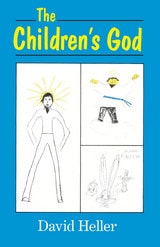
How do children imagine God? Surprisingly, few researchers have asked this question. In crayon drawings, doll-play, letters, and carefully designed interviews, the forty children in David Heller's study reveal a rich array of spiritual imagery. Though Heller does find some differing views attributable to age, gender, and religious background (the children were Jewish, Catholic, Protestant, and Hindu), he discovers to a surprising degree a common vision of God that cuts across ethnic and religious differences. He also considers related issues of school prayer and the psychology of religion.
[more]
cover of The Christian Tradition: A History of the Development of Doctrine, Volume 1: The Emergence of the Catholic Tradition (100-600)

The Christian Tradition

A History of the Development of Doctrine, Volume 1: The Emergence of the Catholic Tradition (100-600)

Jaroslav Pelikan

University of Chicago Press, 1971


The first volume of a magisterial survey of the entire history of the Christian tradition, this volume focusing on the emergence of Catholicism

In this five-volume opus Jaroslav Pelikan traces the development of Christian doctrine from the first century to the twentieth.
 
[more]
cover of The Christian Tradition: A History of the Development of Doctrine, Volume 2: The Spirit of Eastern Christendom (600-1700)

The Christian Tradition

A History of the Development of Doctrine, Volume 2: The Spirit of Eastern Christendom (600-1700)

Jaroslav Pelikan

University of Chicago Press, 1974

The line that separated Eastern Christendom from Western on the medieval map is similar to the "iron curtain" of recent times. Linguistic barriers, political divisions, and liturgical differences combined to isolate the two cultures from each other. Except for such episodes as the schism between East and West or the Crusades, the development of non-Western Christendom has been largely ignored by church historians. In The Spirit of Eastern Christendom, Jaroslav Pelikan explains the divisions between Eastern and Western Christendom, and identifies and describes the development of the distinctive forms taken by Christian doctrine in its Greek, Syriac, and early Slavic expression.

"It is a pleasure to salute this masterpiece of exposition. . . . The book flows like a great river, slipping easily past landscapes of the utmost diversity—the great Christological controversies of the seventh century, the debate on icons in the eighth and ninth, attitudes to Jews, to Muslims, to the dualistic heresies of the high Middle Ages, to the post-Reformation churches of Western Europe. . . . His book succeeds in being a study of the Eastern Christian religion as a whole."—Peter Brown and Sabine MacCormack, New York Review of Books

"The second volume of Professor Pelikan's monumental work on The Christian Tradition is the most comprehensive historical treatment of Eastern Christian thought from 600 to 1700, written in recent years. . . . Pelikan's reinterpretation is a major scholarly and ecumenical event."—John Meyendorff

"Displays the same mastery of ancient and modern theological literature, the same penetrating analytical clarity and balanced presentation of conflicting contentions, that made its predecessor such an intellectual treat."—Virgina Quarterly Review
[more]
cover of The Christian Tradition: A History of the Development of Doctrine, Volume 3: The Growth of Medieval Theology (600-1300)

The Christian Tradition

A History of the Development of Doctrine, Volume 3: The Growth of Medieval Theology (600-1300)

Jaroslav Pelikan

University of Chicago Press, 1978

"A magnificent history of doctrine."—New York Review of Books

"In this volume Jaroslav Pelikan continues the splendid work he has done thus far in his projected five-volume history of the development of Christian doctrine, defined as 'what the Church believes, teaches, and confesses on the basis of the word of God.' The entire work will become an indispensable resource not only for the history of doctrine but also for its reformulation today. Copious documentation in the margins and careful indexing add to its immense usefulness."—E. Glenn Hinson, Christian Century

"This book is based on a most meticulous examination of medieval authorities and the growth of medieval theology is essentially told in their own words. What is more important, however, then the astounding number of primary sources the author has consulted or his sovereign familiarity with modern studies on his subject, is his ability to discern form and direction in the bewildering growth of medieval Christian doctrine, and, by thoughtful emphasis and selection, to show the pattern of that development in a lucid and persuasive narrative. No one interested in the history of Christianity or theology and no medievalist, whatever the field of specialization, will be able to ignore this magnificent synthesis."—Bernhard W. Scholz, History

"The series is obviously the indispensable text for graduate theological study in the development of doctrine, and an important reference for scholars of religious and intellectual history as well. . . . Professor Pelikan's series marks a significant departure, and in him we have at last a master teacher."—Marjorie O'Rourke Boyle, Commonweal
[more]
cover of The Christian Tradition: A History of the Development of Doctrine, Volume 4: Reformation of Church and Dogma (1300-1700)

The Christian Tradition

A History of the Development of Doctrine, Volume 4: Reformation of Church and Dogma (1300-1700)

Jaroslav Pelikan

University of Chicago Press, 1984

This penultimate volume in Pelikan's acclaimed history of Christian doctrine—winner with Volume 3 of the Medieval Academy's prestigious Haskins Medal—encompasses the Reformation and the developments that led to it.

"Only in America, and in this case from a Lutheran scholar, could we expect an examination so lacking in parti pris, a survey so perceptive, so free—and, one must say, the result of so much immense labor, so rewardingly presented."—John M. Todd, New York Times Book Review

"Never wasting a word or losing a plot line, Pelikan builds on an array of sources that few in our era have the linguistic skill, genius or ambition to master."—Martin E. Marty, America

"The use of both primary materials and secondary sources is impressive, and yet it is not too formidable for the intelligent layman."—William S. Barker, Eternity
[more]
cover of The Christian Tradition: A History of the Development of Doctrine, Volume 5: Christian Doctrine and Modern Culture (since 1700)

The Christian Tradition

A History of the Development of Doctrine, Volume 5: Christian Doctrine and Modern Culture (since 1700)

Jaroslav Pelikan

University of Chicago Press, 1989

Jaroslav Pelikan begins this volume with the crisis of orthodoxy that confronted all Christian denominations by the beginning of the eighteenth century and continues through the twentieth century in its particular concerns with ecumenism. The modern period in the history of Christian doctrine, Pelikan demonstrates, may be defined as the time when doctrines that had been assumed more than debated for most of Christian history were themselves called into question: the idea of revelation, the uniqueness of Christ, the authority of Scripture, the expectation of life after death, even the very transcendence of God.

"Knowledge of the immense intellectual effort invested in the construction of the edifice of Christian doctrine by the best minds of each successive generation is worth having. And there can hardly be a more lucid, readable and genial guide to it than this marvellous work."—Economist

"This volume, like the series which it brings to a triumphant conclusion, may be unreservedly recommended as the best one-stop introduction currently available to its subject."—Alister E. McGrath, Times Higher Education Supplement

"Professor Pelikan's series marks a significant departure, and in him we have at last a master teacher."—Marjorie O'Rourke Boyle, Commonweal

"Pelikan's book marks not only the end of a dazzling scholarly effort but the end of an era as well. There is reason to suppose that nothing quite like it will be tried again."—Harvey Cox, Washington Post Book World
[more]
cover of The Christianity Reader

The Christianity Reader

Edited by Mary Gerhart and Fabian Udoh

University of Chicago Press, 2007

Christianity is the world’s most populous religion, with some two billion adherents. As a world religion, Christianity has flourished because it is capable of taking on new forms in new contexts. To understand both the religion’s history and its present state, Mary Gerhart and Fabian Udoh gather original texts—from early Christian writings to contemporary documents on church-related issues—in The Christianity Reader. The most comprehensive anthology of Christian texts ever in English, this is a landmark sourcebook for the study of Christianity’s historical diversity. With newly edited, annotated, and translated primary texts, along with supplemental analytical essays, the volume allows Christianity, at long last, to speak in its many voices.

Focusing on Christianity as a religion, Gerhart and Udoh select texts that illuminate issues such as theology, mysticism, and ritual, while also articulating the stories of previously marginalized groups, as well as those in new and growing epicenters of the religion. With nearly three hundred selections, the texts encompass the entire history of Christian writings excluding the New Testament, from Justin Martyr and Tertullian to Fabien Eboussi Boulaga and Teresa of Calcutta. Eight thematic sections cover biblical traditions and interpretations; early influences; nascent forms; patterns of worship; structures of community; philosophy, theology, and mysticism; twentieth-century issues and challenges; and the contemporary relationship between Christianity and other world religions. The Reader’s contents are arranged chronologically and are supported with introductions and source notes that explain the rationale for their inclusion and their context.

Providing a far richer selection than ever before available in a single volume, The Christianity Reader will be welcomed as both a classroom resource and a work of reference for decades to come.
[more]
cover of The Christology of Erasmus: Christ, Humanity, and Peace

The Christology of Erasmus

Christ, Humanity, and Peace

Terence J. Martin

Catholic University of America Press, 2024
Nothing is more central to the religious thinking of Erasmus of Rotterdam than the reality of Christ—in his eyes, that supreme revelation of divine mercy embodied in the life of Jesus of Nazareth to which Christian scriptures variously testify, but also the divine presence undergirding that life-centering ethic of love and peace, what Erasmus calls the “philosophy of Christ.” The purpose of this book is to distill the Christological elements from his vast corpus in a manner that shows the range, coherence, and value of Erasmus’ thinking on Christological questions. While Erasmus works within the broad parameters of orthodox teaching, his critical skills with languages, accent on rhetoric in theology, keen sense of irony, appreciation for the limits of human knowledge, incipient sense of history, emphasis on the welfare of humanity, and passionate defense of peace, give his work a distinctive stamp and thereby make a singular contribution to the history of Christology. What Erasmus contributes to discussions of the divinity of Christ is a counsel of restraint in metaphysical speculation, an accent on the revelatory breadth of the eternal Word of God, and an invitation to think of Christ incarnate as the eloquent oration of God. But the central impulse of the Christology of Erasmus is the affirmation of the full incarnation of Christ in human existence, abstaining as much as possible from docetic insulation of the divine from the struggles of human experience, in order to highlight the redemptive capacity of Christ for the transformation of human life. With that, the ethical capstone of Erasmus’ reflections on Christ centers on the responsibility to imitate Christ’s love for others, and thus for advancing the cause of peace in personal and social life. This books adds the voice of this remarkable Catholic humanist to the history of theological discussions in the early modern era, while also restoring its rightful place in the broader history of Christology.
[more]
cover of The City of God, Books I–VII

The City of God, Books I–VII

Saint Augustine

Catholic University of America Press, 1952
No description available
[more]
cover of The City of God, Books VIII–XVI

The City of God, Books VIII–XVI

Saint Augustine

Catholic University of America Press, 1952
No description available
[more]
cover of The City of God, Books XVII–XXII

The City of God, Books XVII–XXII

Saint Augustine

Catholic University of America Press, 1954
No description available
[more]
cover of The Correspondence of Theodoret of Cyrus: The Collectio Sirmondiana, Volume 4

The Correspondence of Theodoret of Cyrus

The Collectio Sirmondiana, Volume 4

John F. Theodoret of Cyrus

Catholic University of America Press, 2025
Volumes 4 and 5 of the Library of Early Christianity, The Correspondence of Theodoret of Cyrus: The Collectio Sirmondiana, present a text and translation of the largest of three collections of Theodoret’s letters that have come down to us (first edited by the Jesuit father Jacques Sirmond, Paris 1642). Though pastor of the remote see of Cyrus in Syria, Theodoret was one of the major teachers of the eastern Christian church of the late fourth and early fifth century. These 147 letters place before us the myriad concerns, both spiritual and secular, of a late-antique bishop: Theodoret expounds theological and moral issues for fellow churchmen, begs imperial officials for tax relief for local landowners, provides for the sustenance and safety of refugees from the Vandal war in Africa, thanks a friend for a gift of wine. The edition of the Greek text is the work of John Petruccione. A textual introduction explains the relationships among the manuscripts, and the critical notes the choices made where the text is uncertain. The historical / theological introduction is the work of István Pásztori-Kupán, one of the foremost expositors of the thought of Theodoret and of his Antiochene predecessors and contemporaries. Two maps locate for the reader the place names mentioned in the letters, and three indices (a Scriptural Index, General Index, and Index of Modern Authors) complement the notes attached to the text and translation.
[more]
cover of The Correspondence of Theodoret of Cyrus: The Collectio Sirmondiana, Volume 5

The Correspondence of Theodoret of Cyrus

The Collectio Sirmondiana, Volume 5

John F. Theodoret of Cyrus

Catholic University of America Press, 2025
Volumes 4 and 5 of the Library of Early Christianity, The Correspondence of Theodoret of Cyrus: The Collectio Sirmondiana, present a text and translation of the largest of three collections of Theodoret’s letters that have come down to us (first edited by the Jesuit father Jacques Sirmond, Paris 1642). Though pastor of the remote see of Cyrus in Syria, Theodoret was one of the major teachers of the eastern Christian church of the late fourth and early fifth century. These 147 letters place before us the myriad concerns, both spiritual and secular, of a late-antique bishop: Theodoret expounds theological and moral issues for fellow churchmen, begs imperial officials for tax relief for local landowners, provides for the sustenance and safety of refugees from the Vandal war in Africa, thanks a friend for a gift of wine. The edition of the Greek text is the work of John Petruccione. A textual introduction explains the relationships among the manuscripts, and the critical notes the choices made where the text is uncertain. The historical / theological introduction is the work of István Pásztori-Kupán, one of the foremost expositors of the thought of Theodoret and of his Antiochene predecessors and contemporaries. Two maps locate for the reader the place names mentioned in the letters, and three indices (a Scriptural Index, General Index, and Index of Modern Authors) complement the notes attached to the text and translation.
[more]
cover of The Development of Dogma: A Systematic Account

The Development of Dogma

A Systematic Account

Guy Mansini, OSB

Catholic University of America Press, 2023
The Development of Dogma examines the nature of dogmatic statements and the causes of development. It devotes particular attention to the emergence of the form of dogmatic statements at the Council of Nicaea, but notes how this form is anticipated in the New Testament. It situates dogma and its development within the matrix of the great fundamental theological realities of Scripture, Tradition, and Magisterium. Fr. Mansini examines at some length how the Church comes to recognize a development as a genuine development rather than as a distortion of the word of God. The Development of Dogma is especially valuable today for its discussion and defense of the philosophical presuppositions of dogma, which are often simply presupposed but should not be ignored in a complete account of development. These presuppositions touch on fundamental philosophical issues, including the nature of knowledge, the objectivity and trustworthiness of names, and the various logical forms employed in understanding how development is related to a closed revelation. The historicity of human knowledge is also addressed, and the role of dogma itself in heading off the extreme relativism the historical nature of man is supposed to imply for ecclesial faith and life. The Church's dogma about dogma enunciated at the First Vatican Council is also examined. The role of certain fundamental concepts in understanding the possibility of the irreformability of dogma it speaks of is expressly addressed—concepts in principle accessible to all human beings and that enable a trans-cultural, trans-temporal proposal and reception of revealed truth.
[more]
cover of The Diaconate Revisited: Questions and Developments Since Vatican II

The Diaconate Revisited

Questions and Developments Since Vatican II

Marc B. Caron

Catholic University of America Press, 2026
The sacrament of Holy Orders is the only one of the seven sacraments which exists in three ranks arranged hierarchically, that is, bishops, presbyters, and deacons. Deacons are distinct from both bishops and presbyters, yet united with them in one sacrament. Since the Second Vatican Council, various magisterial documents have limited the priestly dimension of holy orders to bishops and presbyters alone. If deacons do not share in the hierarchical priesthood at all, how are they then related to bishops and to presbyters? In the end, is the diaconate even part of the sacrament of holy orders? This book attempts to show how a ministerial dimension to the character received in ordination to each of the three ranks unites the episcopate, the presbyterate, and the diaconate in a single sacrament. According to the theology of the sacrament of holy orders found in Lumen gentium, the bishop receives the fullness of the sacrament, meaning both its sacerdotal and diaconal or ministerial dimensions. The presbyter then receives a lesser portion than the bishop of both sacerdotal and ministerial dimensions of the sacrament. Finally, the deacon receives an even lesser share than that of the presbyter of the ministerial dimension of holy orders alone. This approach makes clear that the bishop is the greatest servant of the Church as well as its high priest. It challenges presbyters to be of greater service to the Body of Christ than even deacons. The baptismal call to holiness of all the faithful can also be described as having both priestly and ministerial or diaconal dimensions as well. With this understanding, it now becomes clearer how the laity can perform certain functions by delegation which the Church normally entrusts to deacons by ordination. Finally, the unity of the diaconate with the two priestly ranks must inform the current discussions taking place about any possible ordination of women to the sacrament of holy orders in the diaconal rank.
[more]
cover of The Didache: A Missing Piece of the Puzzle in Early Christianity

The Didache

A Missing Piece of the Puzzle in Early Christianity

Jonathan A. Draper

SBL Press, 2015

An intriguing dilemma for those who study ancient Christian contexts and literature

This edited volume includes essays and responses from specialists in the Didache and in early church history in general.

Features:

  • Strategies for understanding liturgical constructions and ritual worship found in the text
  • Studies that apply generally to the overall content and background of the Didache
  • Essays on the relationship between the Didache and scripture—particularly with respect to the Gospel of Matthew
[more]
cover of The Diversity of Religions: A Christian Perspective

The Diversity of Religions

A Christian Perspective

J. A. DiNoia, O.P.

Catholic University of America Press, 1992
DiNoia approaches the debate in the theology of religions with a fresh, lucid, critical and informed mind. . . . This book is timely, provocative and explores new territories and recasts old debates in a fresh and intelligent manner. It will appeal to philosophers, theologians, indologists and those concerned with the meeting of Christianity and the world religions.--Gavin D'Costa, University of Bristol
[more]
cover of The Dividing of Christendom

The Dividing of Christendom

Christopher Dawson

Catholic University of America Press, 2026
Christopher Dawson, the renowned historian of culture, offered an overarching narrative in two volumes of the rise and fall of Christian unity within Western Civilization in lectures he delivered at Harvard University between 1958 and 1962. Volume 1, The Formation of Christendom, laid out Dawson’s anthropological approach to culture in general and to the formation of Christian culture in particular. Volume 2, The Dividing of Christendom, examines the forces that led to the dissolution of European unity and the rise of a new secular vision of humanity with its hopes set on material progress. Dawson begins the tale of dissolution in the Middle Ages, examining its spiritual, intellectual, and social causes. A Church in desperate need of reform, divided in its allegiance during the Great Western Schism, could not muster the collective will to overcome laxity and corruption. Nominalism and voluntarism unraveled the great intellectual synthesis of scholasticism. Political and economic forces, burdened by feudal restraints, needed only a catalyst to overturn the old order. The Dividing of Christendom highlights the social and cultural forces that shaped the Age of Reformations and its aftermath. While not neglecting the importance of theological claims, Dawson explains how political ambition and consolidation of power played a role just as significant. Furthermore, the distinct theological vision of the different reformations of the sixteenth century created a new culture, focused much more on the individual and an emphasis on industry. The mystical extravagance of the Baroque period, which characterized the Catholic renewal of southern Europe and spread throughout the world, eventually gave way to the more utilitarian values of the ascendant European north. Religious wars resulted in a secularism that prioritized science and economics in the shaping of modern culture. The Enlightenment, in particular, initiated a campaign against throne and altar that paved the way for political revolutions. Successful movements of religious revival occurred simultaneously, as Dawson traces their influence on the American colonies, particularly Puritanism and Methodism. Nevertheless, those bent on material progress as a kind of new religion undermined the spiritual foundations of Christian culture so completely that we must seek to rediscover a new source of internal vigor and unity to overcome our cultural crisis.
[more]
cover of The Divine Institutes, Books I–VII

The Divine Institutes, Books I–VII

Catholic University of America Press, 1964
No description available
[more]
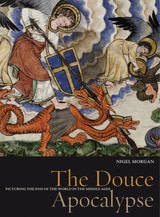
cover of The Douce Apocalypse: Picturing the End of the World in the Middle Ages

The Douce Apocalypse

Picturing the End of the World in the Middle Ages

Nigel Morgan

Bodleian Library Publishing, 2006

One of the finest of all medieval apocalypse manuscripts, the Douce Apocalypse was part of a series of illuminated texts that brought St. John’s apocalyptic visions to life. 

Now the manuscript—created sometime between 1250 and 1275—reaches an entirely new audience at the hands of noted scholar Nigel Morgan. The Douce Apocalypse explores the manuscript’s royal patronage, looks at its fascinating imagery, and examines its significance in light of contemporary prophecy. The commentary is accompanied by lush, full-color illustrations.

As Morgan relates, the Douce Apocalypse is especially enlightening because of its unfinished nature. A few of its images remain incomplete—and such absences give insight into the artist’s painstaking techniques of drawing, gilding, and painting. The second volume in the Treasures from the Bodleian Library series, The Douce Apocalypse will convey both the beauty of the original and the enduring fascination of its contents.
[more]
cover of The Essential Tillich

The Essential Tillich

Paul Tillich

University of Chicago Press, 1999

An essential collection of the best work by renowned Christian theologian Paul Tillich
 
In his lifetime, Paul Tillich became that rarest of things: a famous theologian. Known for marrying an approachable personal and intellectual manner with rigorous religious thought and analysis, Tillich was as influential as any writer on religion at mid-century, listened to not just by parishioners and students but by political leaders, intellectuals, artists, and scientists as well. 

This volume collects Tillich's best and most important work. Editor F. Forrester Church has structured the book around eight key areas of Tillich's thought, titled: Ultimate Concern; Symbols of Faith; The Protestant Principle; Addressing the Situation; Love, Power, and Justice; The Courage to Be; The Future of Religions; and Living on the Boundary. Through them we get a clear picture of the work of a man whom Church describes as “a man of rare genius and perspecuity, a modern man whose heart was in Jerusalem, whose spirit was with the ancient Greeks, and whose soul was committed to a better future.”
[more]
cover of The Ethos of the Christian Heart: Reading Veritatis Splendor

The Ethos of the Christian Heart

Reading Veritatis Splendor

Adrian Reimers

St. Augustine's Press, 2024

​​One of the most studied and critiqued documents of the papal magisterium is largely spoken of with regards to moral theology and the refutation of modern error. Yet Adrian Reimers points out that, as affirmed by this encyclical, the moral life is itself a realm of love and freedom, a place of intimacy with the Creator as much as interaction with others. Reimers is eager to show that the Encyclical is more innovative than it looks, just as morality is not just about the correction of error. It is not content to defend the traditional positions; it traces the paths of a profound renewal in the presentation of Catholic morality. "We would gladly say that it performs a kind of discreet revolution in the conception of Christian morality, affecting the very bases that support it."
     The publication of Veritatis Splendor met with vigorous opposition and even rejection within the Catholic theological community. But in Veritatis Splendor John Paul II addresses these contemporary conceptions, including dissention, coming to grips with the roots of the modern errors that have resulted in the loss of transcendence. However, the scope of Veritatis Splendor is far broader than evil and judgment of sin. The pope addresses such issues as conscience, intrinsically evil acts, and the theory of fundamental freedom. Inevitably, these discussions revolve around how to conceive the nature of the human act and the conception of natural law. 
     This present work examines this encyclical against the backdrop of the philosophers with whom Karol Wojtyła engaged in his own philosophical project. Of central concern to Wojtyła throughout his career were the nature and prerogatives of the human person. Among his most frequent modern interlocutors were David Hume, Immanuel Kant, the utilitarian school, and Max Scheler. The program of Wojtyła’s philosophical corpus is to present an alternative account of the human person to that which has marked the post-Enlightenment world. Having shared in the sufferings of his native Poland under the Nazi occupation and then as a scholar working in Communist Poland, Wojtyła was keenly aware of the forms of materialism which formed the environment of his own life and work. He offers not only his own analyses but also provides a model for engaging with the contemporary culture.
     Veritatis Splendor is a timeless examination of human, personal acts that challenges the post-modern conception of morality, love, and freedom. Reimers reorients this presentation for contemporary readers and invites readers who may have missed this foundational treatment to incorporate it into the questions and issues of our own times.

 
[more]
cover of The Eucharistic Vision of Laudato Si: Praise, Conversion, and Integral Ecology

The Eucharistic Vision of Laudato Si

Praise, Conversion, and Integral Ecology

Lucas Briola

Catholic University of America Press, 2022
No other encyclical has generated as much conversation—both Catholic and non-Catholic—as Laudato si’. Often forgotten in these conversations is the theological heart and eucharistic vision of the encyclical and its integral ecology. Even the title of Laudato si’—“Praised be!”—signals the centrality of right praise in caring for our common home. Using Bernard Lonergan’s theology of history, this book unearths the doxological, eucharistic vision that shapes the encyclical’s integral presentation of social and ecological conversion. It offers the first book-length study that recovers the eucharistic nature of Laudato si’. In drawing out the eucharistic vision of Laudato si’, the book accomplishes several feats for the reader. It roots the eucharistic dimensions of the encyclical in the writings of Popes John Paul II and Benedict XVI, showing how Pope Francis develops their thought in notable ways. It introduces Bernard Lonergan’s theology of history, showing how his framework can capture the eucharistic contours of caring for our common home; so too, in light of Laudato si’, does the book expand his theology of history to incorporate both ecological concern and the doxological, eucharistic essence of the church. The book assembles a liturgically shaped, systematic account of the church’s social mission. It joins poles otherwise sundered in a polarized church and world: between worship and justice, between concerns for human life and concerns for the natural world. Realizing the eucharistic vision of Laudato si’ promises much for our contemporary moment. Pope Francis recently observed that the integral ecology of Laudato si’ holds the key for the world’s recovery from the COVID-19 pandemic. The U.S. Catholic Bishops recently launched a Eucharistic Revival that aims to rekindle eucharistic devotion and praxis. The Eucharistic Vision of Laudato Si’: Praise, Conversion, and Integral Ecology supplies a timely study that helps fulfill these intertwined calls.
[more]
cover of The Exposition of 1 John and An Exposition upon Matthew V-VII

The Exposition of 1 John and An Exposition upon Matthew V-VII

William Tyndale

Catholic University of America Press, 2023
The Exposition of 1 John and An Exposition upon Matthew V-VII are William Tyndale’s two major exegetical writings, published respectively in 1531 and 1533 in Antwerp. By this period Tyndale’s English translations of the New Testament and Pentateuch had both been printed, and he was preparing a revised version of the former to be published in 1534. Among the books he produced in the interim are these verse-by-verse commentaries on St. John’s first epistle and on Jesus’s Sermon on the Mount. In them Tyndale characteristically alternates between fierce polemics and solemn homilies that together, as has been claimed, amount to the most complete articulation of his theological positions. This volume replaces the nineteenth-century editions on which scholars and students have long relied by providing an original-spelling text of each Exposition with notes recording substantive textual variants in all sixteenth-century editions; an introduction and extensive commentary documenting, in particular, parallels and differences between the two texts and Tyndale’s other works, the works of Luther and other reform theologians, and the works of the Church Fathers and others; plus a comprehensive glossary, appendices, and indices.
[more]
cover of The Eyes of Faith: The Sense of the Faithful and the Church's Reception of Revelation

The Eyes of Faith

The Sense of the Faithful and the Church's Reception of Revelation

Ormond Rush

Catholic University of America Press, 2009
The Eyes of Faith presents a systematic theology of the sense of the faithful (sensus fidelium) and shows the fundamental and necessary interrelationship between sensus fidelium, tradition, Scripture, theology, and the magisterium.
[more]
cover of The Fathers of the Church in Christian Theology

The Fathers of the Church in Christian Theology

Catholic University of America Press, 2019
The main purpose of The Fathers of the Church in Christian Theology is to argue that Patristic studies still has much to contribute to theological reflections in our time. Throughout history, the reading of the Fathers of the Church has made major contributions to Christian thinking. This fecundity was notably verified in the 20th century through the work of theologians like Henri de Lubac and Hans Urs von Balthasar. It was as well manifested broadly in the life of the church that, with the Vatican II council, drew from the patristic tradition a source of inspiration for its own renewal. However, even though the research and work on early Christianity has experienced considerable growth for several decades, Christian theology is today confronted with new questions. Thus, what status to recognize in the exegesis of the Fathers? Has not the distance from the heritage of patristic thinking been widened? More radically, do not the demands of contextual theologies on diverse continents compel a distancing away from some traditions that formerly were principally limited to Mediterranean and European regions? If these questions must be taken into account, they, nevertheless, cannot dispense with Christian theology being, today as yesterday, inspired and made fecund by the writings of the Fathers. Michel Fédou attempts to shed light on what, in our own era, justifies the necessity of a patristic theology. He shows how the reading of the Fathers contributes to the understanding of the faith in the different fields of Christian thinking. It highlights the importance of their writings for the spiritual life and the valuable nourishment that they thus offer to our times.
[more]
cover of The Feminine in Jungian Psychology and in Christian Theology

The Feminine in Jungian Psychology and in Christian Theology

Ann Belford Ulanov

Northwestern University Press, 1971

The Feminine in Jungian Psychology and in Christian Theology investigates the implications for Christian theology of Jung's special insights into the feminine. In it, Ann Belford Ulanov gathers together in one volume what Jung and Jungians have discovered about the feminine in order to explore what Jungian thought and methods may illuminate about the place of the feminine in Christian theology.

Jung focuses on the human person and sees as central its mixture of masculine and feminine elements. In a time when so much is asserted and written about women in society—their rights, roles, identities, needs, and contributions—it is especially significant that Jung asserts the existence of the feminine as a key element, not only in women but in men as well. No less contested are the roles and identities of Christians. Ulanov brings into focus the deep and fascinating connections between theology and psychology.
[more]
cover of The First Apology, The Second Apology, Dialogue with Trypho, Exhortation to the Greeks, Discourse to the Greeks, The Monarchy or The Rule of God

The First Apology, The Second Apology, Dialogue with Trypho, Exhortation to the Greeks, Discourse to the Greeks, The Monarchy or The Rule of God

Saint Justin Martyr

Catholic University of America Press, 1965
No description available
[more]
cover of The Formation of Christendom

The Formation of Christendom

Christopher Dawson

Catholic University of America Press, 2026
Together with its sequel The Dividing of Christendom, this book was the fruit of the Harvard lectures that Christopher Dawson delivered as the first occupant of the Charles Chauncey Stillman Chair of Roman Catholic Studies from 1958-1962. Here, as in all his works, he sees religion as the dynamic element of culture. This work traces the formation of Christian culture from its roots in the Judeo-Christian tradition through the rise and fall of medieval Christendom, and ends with an epilogue in which the author reflects on the defining characteristics of Christianity in general and the Catholic Church in particular. In the introductory section of this work, Dawson highlights the importance of language in the origin and development of civilization. Christina Scott, the author’s daughter and first biographer, summarises Dawson’s ideas on this point in her work A Historian and his World: “In the beginning was the word: language was the gateway to the human world and was the single factor that distinguished man from the animal kingdom.” Language, as Dawson wrote, “enables man to think, to create a new world of imagination and reason.” In parts two and three Dawson traces the beginnings of Christian culture in the first centuries after Christ through to the decline of medieval unity. Some of the tantalizing chapter headings include The Christian and Jewish Idea of Revelation, The Foundation of Europe: The Monks of the West, The Carolingian Age, Feudal Europe and the Age of Anarchy, The Achievement of Medieval Thought, and East and West in the Middle Ages. Dawson shared with Arnold Toynbee the ideal of a universal spiritual society as the goal of history; but whereas Dr. Toynbee saw this as achievable by a consensus of the great world religions, Dawson concludes his work with a clear exposition of the Catholic ideal of a universal spiritual society. It provides an excellent summary of the author’s view of the uniqueness and universality of the Catholic Church, as well as its fundamentally non-sectarian basis. His concluding words demonstrate his commitment to the concept of unity: “On the other hand, if Christianity were to lead the nations still further apart from one another into spiritual disunity, it would defeat the central purpose of the Church’s institution.”
[more]
cover of The Future is Mestizo: Life Where Culture Meet, Revised Edition

The Future is Mestizo

Life Where Culture Meet, Revised Edition

Virgilio Elizondo

University Press of Colorado, 2000
Twelve years after it was first published, The Future is Mestizo is now updated and revised with a new foreword, introduction, and epilogue. This book speaks to the largest demographic change in twentieth-century United States history—the Latinization of music, religion, and culture.
[more]
cover of The Happy Life; Answer to Skeptics; Divine Providence and the Problem of Evil; Soliloquies

The Happy Life; Answer to Skeptics; Divine Providence and the Problem of Evil; Soliloquies

Saint Augustine

Catholic University of America Press, 1948
No description available
[more]
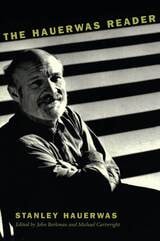
cover of The Hauerwas Reader

The Hauerwas Reader

Stanley Hauerwas

Duke University Press, 2001

Stanley Hauerwas is one of the most widely read and oft-cited theologians writing today. A prolific lecturer and author, he has been at the forefront of key developments in contemporary theology, ranging from narrative theology to the “recovery of virtue.” Yet despite his prominence and the esteem reserved for his thought, his work has never before been collected in a single volume that provides a sense of the totality of his vision.
The editors of The Hauerwas Reader, therefore, have compiled and edited a volume that represents all the different periods and phases of Hauerwas’s work. Highlighting both his constructive goals and penchant for polemic, the collection reflects the enormous variety of subjects he has engaged, the different genres in which he has written, and the diverse audiences he has addressed. It offers Hauerwas on ethics, virtue, medicine, and suffering; on euthanasia, abortion, and sexuality; and on war in relation to Catholic and Protestant thought. His essays on the role of religion in liberal democracies, the place of the family in capitalist societies, the inseparability of Christianity and Judaism, and on many other topics are included as well.
Perhaps more than any other author writing on religious topics today, Hauerwas speaks across lines of religious traditions, appealing to Methodists, Jews, Anabaptists or Mennonites, Catholics, Episcopalians, and others.
[more]
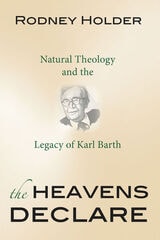
cover of The Heavens Declare: Natural Theology and the Legacy of Karl Barth

The Heavens Declare

Natural Theology and the Legacy of Karl Barth

Rodney Holder

Templeton Press, 2012

One of the central themes of inquiry for Karl Barth, the twentieth-century Protestant theologian, was the notion of revelation. Although he was suspicious of natural theology (i.e. the seeking of evidence for God’s existence in the ordered structure of the world), recent scientific advances (notably in physics and cosmology) and the flourishing modern dialogue between science and religion offer compelling reasons to revisit Barth’s thinking on the concept. We must again ask whether and how it might be possible to hold together the notion of revelation whilst employing reason and scientific evidence in the justification of belief.

In The Heavens Declare, author Rodney Holder re-examines Barth’s natural theology argument and then explores how it has been critiqued and responded to by others, starting with Dietrich Bonhoeffer and Wolfhart Pannenberg. Holder then considers the contributions of two notable British participants in the science-religion dialogue, Thomas Torrance and Alister McGrath, who, despite their repudiation of natural theology in the traditional sense, also provide many positive lessons. The book concludes by defending an overall position which takes into account the ideas of the aforementioned theologians as well as others who are currently engaged positively in natural theology, such as John Polkinghorne and Richard Swinburne.

Holder’s new study is sure to be of interest to theologians, philosophers of religion, and all scholars interested in the science-religion dialogue, especially those interested in natural theology as an enterprise in itself.
[more]