Results by title
205 books match the query 'City' and 40 start with t
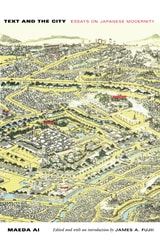
Text and the City
Essays on Japanese ModernityMaeda Ai
Duke University Press, 2004
Maeda remapped the study of modern Japanese literature and culture in the 1970s and 1980s, helping to generate widespread interest in studying mass culture on the one hand and marginalized sectors of modern Japanese society on the other. These essays reveal the broad range of Maeda’s cultural criticism. Among the topics considered are Tokyo; utopias; prisons; visual media technologies including panoramas and film; the popular culture of the Edo, Meiji, and contemporary periods; maps; women’s magazines; and women writers. Integrally related to these discussions are Maeda’s readings of works of Japanese literature including Matsubara Iwagoro’s In Darkest Tokyo, Nagai Kafu’s The Fox, Higuchi Ichiyo’s Growing Up, Kawabata Yasunari’s The Crimson Gang of Asakusa, and Narushima Ryuhoku’s short story “Useless Man.” Illuminating the infinitely rich phenomena of modernity, these essays are full of innovative, unexpected connections between cultural productions and urban life, between the text and the city.

The Architects and the City
Holabird & Roche of Chicago, 1880-1918Robert Bruegmann
University of Chicago Press, 1997
Chicago has always held a special fascination for those interested in architectural and urban history. For many, the defining moment occurred at the turn of the century when Chicago was booming and the world came to the city by the lake. But the story most often told in architectural history—the tale of single creative geniuses like Frank Lloyd Wright and Louis Sullivan—does little to explain the birth of the everyday modern city, with its high-rise downtown, diverse neighborhoods, and sprawling suburbs. This book connects architectural history with urban history by looking at the work of a major architectural firm, Holabird & Roche. No firm in any large American city had a greater impact.
With projects that ranged from tombstones to skyscrapers, boiler rooms to entire industrial complexes, Holabird & Roche left an indelible stamp on the city of Chicago and, indeed, far beyond. In this volume, the first of two on Holabird & Roche and its successor, Holabird & Root, Robert Bruegmann traces the firm’s history from its founding in 1880 to the end of the First World War. Incorporating meticulous research based on the extensive architectural holdings of the Chicago Historical Society, Bruegmann documents the firm’s work from the boom years of the 1880s through the period of sustained growth and innovation after the turn of the century. In chapters devoted to topics as diverse as downtown commercial and retail development, business hotels, civic buildings, automobile showrooms, and suburban clubs and housing, Bruegmann creates a sustained historical narrative that considers the profound interdependence of architecture and modern urban life.
The Backcountry and the City
Colonization and Conflict in Early AmericaEd White
University of Minnesota Press, 2005
Ed White explores the backcountry-city divide as well as the dynamics of indigenous peoples, bringing together two distinct bodies of scholarship: one stressing the political culture of the Revolutionary era, the other taking an ethnohistorical view of white–Native American contact. White concentrates his study in Pennsylvania, a state in which the majority of the population was rural, and in Philadelphia, a city that was a center of publishing and politics and the national capital for a decade. Against this backdrop, White reads classic political texts such as Crèvecoeur’s Letters from an American Farmer, Franklin’s Autobiography, and Paine’s “Agrarian Justice,” alongside missionary and captivity narratives, farmers’ petitions, and Native American treaties. Using historical and ethnographic sources to enrich familiar texts, White demonstrates the importance of rural areas in the study of U.S. nation formation and finds unexpected continuities between the early colonial period and the federal ascendancy of the 1790s.
Ed White is associate professor of English at the University of Florida.
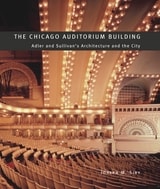
The Chicago Auditorium Building
Adler and Sullivan's Architecture and the CityJoseph M. Siry
University of Chicago Press, 2002
When the magnificent Auditorium Building opened on Chicago's Michigan Avenue in December 1889, it marked Chicago's emergence both as the leading city of the Midwest and as a metropolis of international stature. In this lavishly illustrated book, Joseph M. Siry explores not just the architectural history of the Auditorium Building but also the crucial role it played in Chicago's social history. Covering the Auditorium from the early design stage to its opening, its later renovations, its links to culture and politics in Chicago, and its influence on later Adler and Sullivan works (including the Schiller Building and the Chicago Stock Exchange Building), this volume recounts the fascinating tale of a building that helped to define a city and an era.
The City
Robert E. Park and Ernest W. Burgess
University of Chicago Press, 1984
"It is a classic which remains relevant largely because it poses questions still unresolved."—Choice
The City
Robert E. Park and Ernest W. Burgess
University of Chicago Press, 2019
The City
Robert E. Park and Ernest W. Burgess
University of Chicago Press, 2019
First published in 1925, The City is a trailblazing text in urban history, urban sociology, and urban studies. Its innovative combination of ethnographic observation and social science theory epitomized the Chicago school of sociology. Robert E. Park, Ernest W. Burgess, and their collaborators were among the first to document the interplay between urban individuals and larger social structures and institutions, seeking patterns within the city’s riot of people, events, and influences. As sociologist Robert J. Sampson notes in his new foreword, though much has changed since The City was first published, we can still benefit from its charge to explain where and why individuals and social groups live as they do.
The City Of Trembling Leaves
Walter Van Tilburg Clark
University of Nevada Press, 2012
The City of Trembling Leaves by Walter Van Tilburg Clark was first published in 1945 by Random House and reprinted by the University of Nevada Press in paperback in 1991 with a new foreword by Robert Laxalt.
Clark’s novel broke new ground in his telling of the story of the rites of passage of a boy, Tim Hazard, into adulthood in the setting of the Western town of Reno, Nevada. The descriptions of Reno’s landscape and the realistic characters depict the role of nature during the tumultuous stages of adolescence and the potential risk of obstruction and loss in the attainment of maturity.
The City and Man
Leo Strauss
University of Chicago Press, 1978
The City and the Hospital
The Paradox of Medically Overserved CommunitiesDaniel Skinner, Jonathan R. Wynn, and Berkeley Franz
University of Chicago Press, 2023
An enduring paradox of urban public health is that many communities around hospitals are economically distressed and, counterintuitively, medically underserved. In The City and the Hospital two sociologists, Jonathan R. Wynn and Berkeley Franz, and a political scientist, Daniel Skinner, track the multiple causes of this problem and offer policy solutions.
Focusing on three urban hospitals—Connecticut’s Hartford Hospital, the flagship of the Hartford Healthcare system; the Cleveland Clinic, which coordinates with other providers for routine care while its main campus provides specialty care; and the University of Colorado Hospital, a rare example of an urban institution that relocated to a new community—the authors analyze the complicated relationship between a hospital and its neighborhoods. On the one hand, hospitals anchor the communities that surround them, often staying in a neighborhood for decades. Hospitals also craft strategies to engage with the surrounding community, many of those focused on buying locally and hiring staff from their surrounding area. On the other hand, hospitals will often only provide care to the neighboring community through emergency departments, reserving advanced medical care and long-term treatment for those who can pay a premium for it. In addition, the authors show, hospitals frequently buy neighborhood real estate and advocate for development programs that drive gentrification and displacement.
To understand how urban healthcare institutions work with their communities, the authors address power, history, race, and urbanity as much as the workings of the medical industry. These varied initiatives and effects mean that understanding urban hospitals requires seeing them in a new light—not only as medical centers but as complicated urban forces.

The City as Campus
Urbanism and Higher Education in ChicagoSharon Haar
University of Minnesota Press, 2010
The City as Campus shows the strain of this integration, detailing historical accounts of battles over space as campus designers faced the challenge of weaving the social, spatial, and architectural conditions of the urban milieu into new forms to meet the changing needs of academia. Through a close analysis of the history of higher education in Chicago, The City as Campus explores how the university's missions of service, teaching, and research have metamorphosed over time, particularly in response to the unique opportunities-and restraints-the city provides. Illustrating how Chicago serves as a site of pedagogical transformation and a location for the larger purpose of the academic community, The City as Campus presents a social and design history of the urban campus as an architectural idea and form.
The City in Texas
A HistoryBy David McComb
University of Texas Press, 2015
Texans love the idea of wide-open spaces and, before World War II, the majority of the state’s people did live and work on the land. Between 1940 and 1950, however, the balance shifted from rural to urban, and today 88 percent of Texans live in cities and embrace the amenities of urban culture. The rise of Texas cities is a fascinating story that has not been previously told. Yet it is essential for understanding both the state’s history and its contemporary character.
In The City in Texas, acclaimed historian David G. McComb chronicles the evolution of urban Texas from the Spanish Conquest to the present. Writing in lively, sometimes humorous and provocative prose, he describes how commerce and politics were the early engines of city growth, followed by post–Civil War cattle shipping, oil discovery, lumbering, and military needs. McComb emphasizes that the most transformative agent in city development was the railroad. This technology—accompanied by telegraphs that accelerated the spread of information and mechanical clocks that altered concepts of time—revolutionized transportation, enforced corporate organization, dictated town location, organized space and architecture, and influenced thought. McComb also thoroughly explores the post–World War II growth of San Antonio, Dallas, Fort Worth, Austin, and Houston as incubators for businesses, educational and cultural institutions, and health care centers.
The City of God, Books I–VII
Saint Augustine
Catholic University of America Press, 1952
The City of God, Books VIII–XVI
Saint Augustine
Catholic University of America Press, 1952
The City of God, Books XVII–XXII
Saint Augustine
Catholic University of America Press, 1954
The City of Mexico in the Age of Díaz
By Michael Johns
University of Texas Press, 1997
Mexico City assumed its current character around the turn of the twentieth century, during the dictatorship of Porfirio Díaz (1876-1911). In those years, wealthy Mexicans moved away from the Zócalo, the city's traditional center, to western suburbs where they sought to imitate European and American ways of life. At the same time, poorer Mexicans, many of whom were peasants, crowded into eastern suburbs that lacked such basic amenities as schools, potable water, and adequate sewerage. These slums looked and felt more like rural villages than city neighborhoods. A century—and some twenty million more inhabitants—later, Mexico City retains its divided, robust, and almost labyrinthine character.
In this provocative and beautifully written book, Michael Johns proposes to fathom the character of Mexico City and, through it, the Mexican national character that shaped and was shaped by the capital city. Drawing on sources from government documents to newspapers to literary works, he looks at such things as work, taste, violence, architecture, and political power during the formative Díaz era. From this portrait of daily life in Mexico City, he shows us the qualities that "make a Mexican a Mexican" and have created a culture in which, as the Mexican saying goes, "everything changes so that everything remains the same."
The City of Our Dreaming
The Alchemy LectureLaleh Khalili, V. Mitch McEwen, Gabriela Leandro Pereira, and Leanne Betasamosake Simpson
Duke University Press, 2026
The City of Palaces
A NovelMichael Nava
University of Wisconsin Press, 2014
Against this backdrop, The City of Palaces opens in a Mexico City jail with the meeting of Miguel Sarmiento and Alicia Gavilán. Miguel is a principled young doctor, only recently returned from Europe but wracked by guilt for a crime he committed as a medical student ten years earlier. Alicia is the spinster daughter of an aristocratic family. Disfigured by smallpox, she has devoted herself to working with the city’s destitute. This unlikely pair—he a scientist and atheist and she a committed Christian—will marry. Through their eyes and the eyes of their young son, José, readers follow the collapse of the old order and its bloody aftermath.
The City of Palaces is a sweeping novel of interwoven lives: Miguel and Alicia; José, a boy as beautiful and lonely as a child in a fairy tale; the idealistic Francisco Madero, who overthrows Díaz but is nevertheless destroyed by the tyrant’s political system; and Miguel’s cousin Luis, shunned as a “sodomite.” A glittering mosaic of the colonial past and the wealth of the modern age, The City of Palaces is a story of faith and reason, cathedrals and hovels, barefoot street vendors and frock-coated businessmen, grand opera and silent film, presidents and peasants, the living and the dead.
Winner, International Latino Book Award for Latino Fiction, Latino Literacy Now
Second place, International Latino Book Award for Historical Fiction, Latino Literacy Now
Finalist, Gay Fiction, Lambda Literary Awards
Honorable Mention in Drama, Latino Books into Movies Award, International Latino Book Awards
Best Books for General Audiences, selected by the American Association of School Librarians
Outstanding Book, selected by the Public Library Reviewers
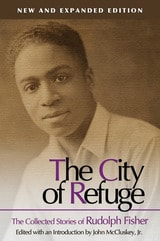
The City of Refuge [New and Expanded Edition]
The Collected Stories of Rudolph FisherRudolph Fisher, Edited & Intro by John McCluskey, Jr.
University of Missouri Press, 2008
A definitive collection of Fisher’s short stories, The City of Refuge offers vibrant tales that deal with the problems faced by newcomers to the city, ancestor figures who struggle to instill a sense of integrity in the young, problems of violence and vengeance, and tensions of caste and class. This anthology has now been expanded to include seven previously unpublished stories that take up such themes as marital infidelity and passing for black and also relate the further adventures of Jinx and Bubber, the comic duo who appeared in Fisher’s two novels.
This new edition also includes two unpublished speeches and the popular article “The Caucasian Storms Harlem,” describing the craze for black music and dance. John McCluskey’s introduction has been updated to place the additional works within the context of Fisher’s career while situating his oeuvre within the broader context of American writing during the twenties.
Fisher recognized the dramatic and comic power in African American folklore and music and frequented Harlem’s many cabarets, speakeasies, and nightclubs, and at the core of his work is a strong regard for music as context and counterpoint. The City of Refuge now better captures the sounds of the city experience by presenting all of Fisher’s known stories. It offers a portrait of Harlem unmatched in depth and range by Fisher’s contemporaries or successors, celebrating, as Booklist noted, “the complexity of black urban life in its encounter with the dangers and delights of the city.” This expanded edition adds new perspectives to that experience and will enhance Fisher’s status for a new generation of readers.
The City on the Hill From Below
The Crisis of Prophetic Black PoliticsAuthored by Stephen Marshall
Temple University Press, 2012
Within the discipline of American political science and the field of political theory, African American prophetic political critique as a form of political theorizing has been largely neglected. Stephen Marshall, in The City on the Hill from Below, interrogates the political thought of David Walker, Frederick Douglass, W. E. B. DuBois, James Baldwin, and Toni Morrison to reveal a vital tradition of American political theorizing and engagement with an American political imaginary forged by the City on the Hill.
Originally articulated to describe colonial settlement, state formation, and national consolidation, the image of the City on the Hill has been transformed into one richly suited to assessing and transforming American political evil. The City on the Hill from Below shows how African American political thinkers appropriated and revised languages of biblical prophecy and American republicanism.
The City, Revisited
Urban Theory from Chicago, Los Angeles, and New YorkDennis R. Judd
University of Minnesota Press, 2011
Contributors: Janet Abu-Lughod, Northwestern U and New School for Social Research; Robert Beauregard, Columbia U; Larry Bennett, DePaul U; Andrew A. Beveridge, Queens College and CUNY; Amy Bridges, U of California, San Diego; Terry Nichols Clark, U of Chicago; Nicholas Dahmann, U of Southern California; Michael Dear, U of California, Berkeley; Steven P. Erie, U of California, San Diego; Frank Gaffikin, Queen's U of Belfast; David Halle, U of California, Los Angeles; Tom Kelly, U of Illinois at Chicago; Ratoola Kunda, U of Illinois at Chicago; Scott A. MacKenzie, U of California, Davis; John Mollenkopf, CUNY; David C. Perry, U of Illinois at Chicago; Francisco Sabatini, Ponticia Universidad Catolica de Chile; Rodrigo Salcedo, Pontificia Universidad Catolica de Santiago; Dick Simpson, U of Illinois at Chicago; Daphne Spain, U of Virginia; Costas Spirou, National-Louis U in Chicago.
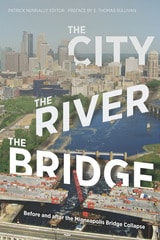
The City, the River, the Bridge
Before and after the Minneapolis Bridge CollapsePatrick Nunnally
University of Minnesota Press, 2011
The City, the River, the Bridge represents another set of responses to the disaster. Stemming from a 2008 University of Minnesota symposium on the bridge collapse and the building of a new bridge, it addresses the ramifications of the disaster from the perspectives of history, engineering, architecture, water science, community-based journalism, and geography. Contributors examine the factors that led to the collapse, the lessons learned from the disaster and the response, the policy and planning changes that have occurred or are likely to occur, and the impact on the city and the Mississippi River. The City, the River, the Bridge demonstrates the University's commitment to issues that concern the community and shares insights on public questions of city building, infrastructure, and design policy.
Contributors: John O. Anfinson; Roberto Ballarini; Heather Dorsey; Thomas Fisher; Minmao Liao; Judith A. Martin; Roger Miller; Mark Pedelty; Deborah L. Swackhamer; Melissa Thompson.

The Friday Mosque in the City
Liminality, Ritual, and PoliticsEdited by A. Hilâl Ugurlu and Suzan Yalman
Intellect Books, 2020
This edited volume explores the dynamic relationship between the Friday mosque and the Islamic city, addressing the traditional topics through a fresh new lens and offering a critical examination of each case study in its own spatial, urban, and socio-cultural context. While these two well-known themes—concepts that once defined the field—have been widely studied by historians of Islamic architecture and urbanism, this compilation specifically addresses the functional and spatial ambiguity or liminality between these spaces.
Instead of addressing the Friday mosque as the central signifier of the Islamic city, this collection provides evidence that there was (and continues to be) variety in the way architectural borders became fluid in and around Friday mosques across the Islamic world, from Cordoba to Jerusalem and from London to Lahore. By historicizing different cases and exploring the way human agency, through ritual and politics, shaped the physical and social fabric of the city, this volume challenges the generalizing and reductionist tendencies in earlier scholarship.
The Hero and the City
An Interpretation of Sophocles' Oedipus at ColonusJoseph P. Wilson
University of Michigan Press, 2003
Joseph P. Wilson is Professor of Foreign Languages at the University of Scranton.
The Key to the City
Anne Winters
University of Chicago Press, 1985
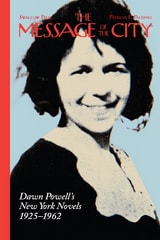
The Message of the City
Dawn Powell’s New York Novels, 1925–1962Patricia E. Palermo
Ohio University Press, 2016
Dawn Powell was a gifted satirist who moved in the same circles as Dorothy Parker, Ernest Hemingway, renowned editor Maxwell Perkins, and other midcentury New York luminaries. Her many novels are typically divided into two groups: those dealing with her native Ohio and those set in New York. “From the moment she left behind her harsh upbringing in Mount Gilead, Ohio, and arrived in Manhattan, in 1918, she dove into city life with an outlander’s anthropological zeal,” reads a recent New Yorker piece about Powell, and it is those New York novels that built her reputation for scouring wit and social observation.
In this critical biography and study of the New York novels, Patricia Palermo reminds us how Powell earned a place in the national literary establishment and East Coast social scene. Though Powell’s prolific output has been out of print for most of the past few decades, a revival is under way: the Library of America, touting her as a “rediscovered American comic genius,” released her collected novels, and in 2015 she was posthumously inducted into the New York State Writer’s Hall of Fame.
Engaging and erudite, The Message of the City fills a major gap in in the story of a long-overlooked literary great. Palermo places Powell in cultural and historical context and, drawing on her diaries, reveals the real-life inspirations for some of her most delicious satire.
The Rise of the City, 1878–1898
Arthur Meier Schlesinger
The Ohio State University Press, 1999
The Sexual Organization of the City
Edited by Edward O. Laumann, Stephen Ellingson, Jenna Mahay, Anthony Paik, and Y
University of Chicago Press, 2004
But in The Sexual Organization of the City, Edward Laumann and company argue that this idea is a myth. Drawing on extensive surveys and interviews with Chicago adults, they show that the city is—to the contrary—a place where sexual choices and options are constrained. From Wicker Park and Boys Town to the South Side and Pilsen, they observe that sexual behavior and partnering are significantly limited by such factors as which neighborhood you live in, your ethnicity, what your sexual preference might be, or the circle of friends to which you belong. In other words, the social and institutional networks that city dwellers occupy potentially limit their sexual options by making different types of sexual activities, relationships, or meeting places less accessible.
To explain this idea of sex in the city, the editors of this work develop a theory of sexual marketplaces—the places where people look for sexual partners. They then use this theory to consider a variety of questions about sexuality: Why do sexual partnerships rarely cross racial and ethnic lines, even in neighborhoods where relatively few same-ethnicity partners are available? Why do gay men and lesbians have few public meeting spots in some neighborhoods, but a wide variety in others? Why are African Americans less likely to marry than whites? Does having a lot of friends make you less likely to get a sexually transmitted disease? And why do public health campaigns promoting safe sex seem to change the behaviors of some, but not others?
Considering vital questions such as these, and shedding new light on the city of Chicago, this work will profoundly recast our ideas about human sexual behavior.
The Skyscraper and the City
The Woolworth Building and the Making of Modern New YorkGail Fenske
University of Chicago Press, 2008
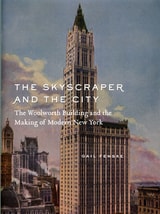
Fenske shows here that the building’s multiplicity of meanings reflected the cultural contradictions that defined New York City’s modernity. For Frank Woolworth—founder of the famous five-and-dime store chain—the building served as a towering trademark, for advocates of the City Beautiful movement it suggested a majestic hotel de ville, for technological enthusiasts it represented the boldest of experiments in vertical construction, and for tenants it provided an evocative setting for high-style consumption. Tourists, meanwhile, experienced a spectacular sightseeing destination and avant-garde artists discovered a twentieth-century future. In emphasizing this faceted significance, Fenske illuminates the process of conceiving, financing, and constructing skyscrapers as well as the mass phenomena of consumerism, marketing, news media, and urban spectatorship that surround them.
As the representative example of the skyscraper as a “cathedral of commerce,” the Woolworth Building remains a commanding presence in the skyline of lower Manhattan, and the generously illustrated Skyscraper and the City is a worthy testament to its importance in American culture.
The Spirit of the City
Marshall Fredericks Sculptures in DetroitJanna Jones
Michigan State University Press, 2023
The State and the City
Ted Robert Gurr and Desmond King
University of Chicago Press, 1987
Gurr and King's analysis assumes modern states have their own interests, institutional momentum, and the capacity to act with relative autonomy. Their historically based analysis begins with an account of the evolution of the Western state's interest in the viability of cities since the industrial revolution. Their agument extends to the local level, examining the nature of the local state and its autonomy from national political and economic forces.
Using cross-national evidence, Gurr and King examine specific problems of urban policy in the United States and Britain. In the United States, for example, they show how the dramatic increases in federal assistance to cities in the 1930s and the 1960s were made in response to urban crises, which simultaneously threatened national interests and offered opportunities for federal expansion of power. As a result, national and local states now play significant material and regulatory roles that can have as much impact on cities as all private economic activities.
A comparative analysis of thirteen American cities reflects the range and impact of the state's activities at the urban level. Boston, they argue, has become the archetypical postindustrial public city: half of its population and personal income are directly dependent on government spending. While Gurr and King are careful to delineate the limits to the extent and effectiveness of state intervention, they conclude that these limits are much broader than formerly thought. Ultimately, their evidence suggests that the continued decline of most of the old industrial cities is the result of public decisions to allow their economic fate to be determined in the private sector.
The Stoic Idea of the City
Malcolm Schofield
University of Chicago Press, 1999
"The account emerges from a jigsaw-puzzle of items from a wide range of authorities, painstakingly pieced together and then annotated in a series of appendixes, the whole executed with fine scholarship, clarity, and good humor."—Times Literary Supplement
The Urban Apparatus
Mediapolitics and the CityReinhold Martin
University of Minnesota Press, 2017
Urbanization is a system of power and knowledge, and today’s city functions through the expansive material infrastructures of the urban order. In The Urban Apparatus, Reinhold Martin analyzes urbanization and the contemporary city in aesthetic, socioeconomic, and mediapolitical terms. He argues that understanding the city as infrastructure reveals urbanization to be a way of imparting functional, aesthetic, and cognitive order to a contradictory, doubly bound neoliberal regime.
Blending critical philosophy, political theory, and media theory, The Urban Apparatus explores how the aesthetics of cities and their political economies overlap. In a series of ten essays, with a detailed theoretical introduction, Martin explores questions related to urban life, drawn from a wide range of global topics—from the fiscal crisis in Detroit to speculative development in Mumbai to the landscape of Mars, from discussions of race and the environment to housing and economic inequality. Each essay proposes a particular “mediator” (or a material complex) that is shaped by imaginative practices, each answering the question “What is a city, today?”
The Urban Apparatus serves as an “urban” bookend to the architectural questions explored by Martin in his earlier book Utopia’s Ghost, and ultimately offers readers a way to think politically about urbanization.
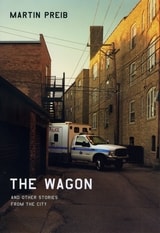
The Wagon and Other Stories from the City
Martin Preib
University of Chicago Press, 2010
Martin Preib is an officer in the Chicago Police Department—a beat cop whose first assignment as a rookie policeman was working on the wagon that picks up the dead. Inspired by Preib’s daily life on the job, The Wagon and Other Stories from the City chronicles the outer and inner lives of both a Chicago cop and the city itself.
The book follows Preib as he transports body bags, forges an unlikely connection with his female partner, trains a younger officer, and finds himself among people long forgotten—or rendered invisible—by the rest of society. Preib recounts how he navigates the tenuous labyrinths of race and class in the urban metropolis, such as a domestic disturbance call involving a gang member and his abused girlfriend or a run-in with a group of drunk yuppies. As he encounters the real and imagined geographies of Chicago, the city reveals itself to be not just a backdrop, but a central force in his narrative of life and death. Preib’s accounts, all told in his breathtaking prose, come alive in ways that readers will long remember.
The World in a City
Multiethnic Radicalism in Early Twentieth-Century Los AngelesDavid M. Struthers
University of Illinois Press, 2019
David M. Struthers draws on the anarchist concept of affinity to explore the radicalism of Los Angeles's interracial working class from 1900 to 1930. Uneven economic development created precarious employment and living conditions for laborers. The resulting worker mobility led to coalitions that, inevitably, remained short lived. As Struthers shows, affinity helps us understand how individual cooperative actions shaped and reshaped these alliances. It also reveals social practices of resistance that are often too unstructured or episodic for historians to capture. What emerges is an untold history of Los Angeles and a revolutionary movement that, through myriad successes and failures, produced powerful examples of racial cooperation.
Theorizing the City
The New Urban Anthropology ReaderLow, Setha M.
Rutgers University Press, 1999
Anthropological perspectives are not often represented in urban studies, even though many anthropologists have been contributing actively to theory and research on urban poverty, racism, globalization, and architecture. The New Urban Anthropology Reader corrects this omission by presenting 12 cross-cultural case studies focusing on the analysis of space and place.
To Dwell among Friends
Personal Networks in Town and CityClaude S. Fischer
University of Chicago Press, 1982
To The City
Urban Photographs of the New DealAuthored by Julia L. Foulkes
Temple University Press, 2011
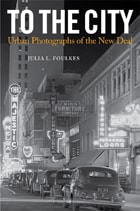
In the 1930s and 1940s, as the United States moved from a rural to an urban nation, the pull of the city was irrepressible. It was so strong that even a photographic mission designed to record the essence of rural America could not help but capture the energy of urbanization too. To the City showcases over 100 photographs from the Farm Security Administration (FSA) project along with extracts from the Works Progress Administration (WPA) guidebooks and oral histories, to convey the detail and dimensions of that transformation.
This artfully grouped collection of photographs includes magnificent images by notable photographers Dorothea Lange, Walker Evans and Gordon Parks, among many others. Foulkes organizes this history of Americana into five themes: Intersection; Traffic; High Life and Low Life; The City in the Country; and Citizens to illuminate the changes in habits, landscapes, and aspirations that the march to cities encompassed.
As the rural past holds symbolic sway and the suburb presents demographic force, the urban portion of our history—why and how cities have been a destination for hope—recedes from view. To the City is a thoughtful, engaging reminder.
Transformations
Art and the CityEdited by Elizabeth M. Grierson
Intellect Books, 2017
Trust Matters
Parsi Endowments in Mumbai and the Horoscope of a CityLeilah Vevaina
Duke University Press, 2023