Results by title
617 books match the query 'Civil War Period (1850-1877)' and 146 start with t
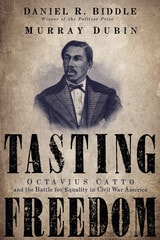
Tasting Freedom
Octavius Catto and the Battle for Equality in Civil War AmericaDaniel R. Biddle
Temple University Press, 2017
Octavius Valentine Catto was an orator who shared stages with Frederick Douglass, a second baseman on Philadelphia’s best black baseball team, a teacher at the city’s finest black school and an activist who fought in the state capital and on the streets for equal rights. With his racially-charged murder, the nation lost a civil rights pioneer—one who risked his life a century before Selma and Birmingham.
In Tasting Freedom Murray Dubin and Pulitzer Prize winner Dan Biddle painstakingly chronicle the life of this charismatic black leader—a “free” black whose freedom was in name only. Born in the American south, where slavery permeated everyday life, he moved north where he joined the fight to be truly free—free to vote, go to school, ride on streetcars, play baseball and even participate in July 4th celebrations.
Catto electrified a biracial audience in 1864 when he proclaimed, “There must come a change,” calling on free men and women to act and educate the newly freed slaves. With a group of other African Americans who called themselves a “band of brothers,” they challenged one injustice after another. Tasting Freedom presents the little-known stories of Catto and the men and women who struggled to change America.
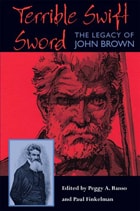
Terrible Swift Sword
The Legacy of John BrownPeggy A. Russo
Ohio University Press, 2005
More than two centuries after his birth and almost a century and a half after his death, the legendary life and legacy of John Brown go marching on. Variously deemed martyr, madman, monster, terrorist, and saint, he remains one of the most controversial figures in America’s history. Brown’s actions in Kansas and in Harpers Ferry, West Virginia, were major catalysts for the American Civil War, and continue today to evoke praise or condemnation.
Through the prisms of history, literature, psychology, criminal justice, oral history, African American studies, political science, film studies, and anthropology, Terrible Swift Sword offers insights not only into John Brown’s controversial character and motives but also into the nature of a troubled society before, during, and after the Civil War. The contributors discuss reasons why Brown’s contemporaries supported him, analyze Brown’s behavior and his depiction in literature, and examine the iconography and mythology surrounding him.
The interdisciplinary focus brought by editors Peggy A. Russo and Paul Finkelman makes this collection unique. Terrible Swift Sword: The Legacy of John Brown will appeal to a broad audience of readers interested in this turbulent moment in American history.
Texas in the Confederacy
An Experiment in Nation BuildingClayton E. Jewett
University of Missouri Press, 2002
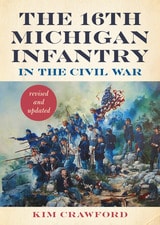
The 16th Michigan Infantry in the Civil War, Revised and Updated
Kim Crawford
Michigan State University Press, 2019
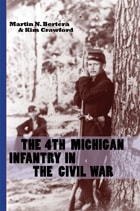
The 4th Michigan Infantry in the Civil War
Martin N. Bertera
Michigan State University Press, 2010
This fascinating narrative tells the story of a remarkable regiment at the center of Civil War history. The real-life adventure emerges from accounts of scores of soldiers who served in the 4th Michigan Infantry, gleaned from their diaries, letters, and memoirs; the reports of their officers and commanders; the stories by journalists who covered them; and the recollections of the Confederates who fought against them. The book includes tales of life in camp, portraying the Michigan soldiers as everyday people—recounting their practical jokes, illnesses, political views, personality conflicts, comradeship, and courage.
The book also tells the true story of what happened to Colonel Harrison Jeffords and the 4th Michigan when the regiment marched into John Rose's wheat field on a sweltering early July evening at Gettysburg. Beyond the myths and romanticized newspaper stories, this account presents the historical evidence of Jeffords's heroic, yet tragic, hand-to-hand struggle for his regiment's U.S. flag.
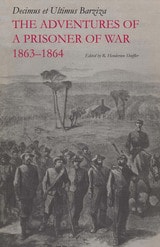
The Adventures of a Prisoner of War, 1863–1864
By Decimus et Ultimus Barziza. Edited by R. Henderson Shuffler
University of Texas Press, 1964
This journal is the exciting personal narrative of a Texan who was a prisoner of the Union Army during the Civil War, escaped to Canada, and finally made his way back into the Confederacy through the blockade. It was written while the war was still in progress.
The journal was issued anonymously in Houston early in 1865. Its author, Decimus et Ultimus Barziza, was a colorful, competent, truly remarkable Texan—well educated, well traveled, and sophisticated as an observer. Barziza came to Texas from Virginia in 1857. He left a growing law practice at Owensville to enter Confederate service as first lieutenant of the “Robertson Five-Shooters,” an infantry company which was one of the original units of the Fourth Texas Infantry, Hood’s Brigade. After fighting in many battles, he was wounded at Gettysburg and left lying on the field. The Yankees picked him up and imprisoned him at Johnson’s Island.
A year later, as Barziza was being shipped to another prison, he escaped by diving through a window of the moving train at midnight. Making his way across Pennsylvania to New York, he took a train for Canada. There he became one of the first beneficiaries of an underground system which eventually returned him to North Carolina. Too ill from his wounds and the hardships of his escape to return to active duty, he spent the next few months writing his memoirs. They cover the period from the drive for Gettysburg to Barziza’s return to the Confederacy.
Before the original publication of this book, only two copies of The Adventures of a Prisoner of War were known to exist. R. Henderson Shuffler, then director of the Texana program of the University of Texas, felt that it was intriguing and important enough to merit editing for republication. The journal has the further attraction of describing the then little-known machinery which was set up in Canada to help Rebel soldiers who had escaped Northern prisons make their way back to the Confederacy by way of Nova Scotia and Bermuda.
Shuffler supplements the narrative with limited yet helpful documentation, providing introductory sections explaining Barziza’s background and his career as a Texas legislator and lawyer, as well as carrying the war story up to the sequence where Barziza’s account begins.
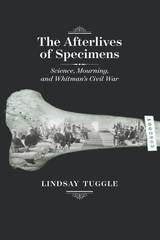
The Afterlives of Specimens
Science, Mourning, and Whitman's Civil WarLindsay Tuggle
University of Iowa Press, 2017
Grounded in archival discoveries, Afterlives traces the origins of nineteenth-century America’s preservation compulsion, illuminating the influences of botanical, medical, spiritualist, and sentimental discourses on Whitman’s work. Tuggle unveils previously unrecognized connections between Whitman and the leading “medical men” of his era, such as the surgeon John H. Brinton, founding curator of the Army Medical Museum, and Silas Weir Mitchell, the neurologist who discovered phantom limb syndrome. Remains from several amputee soldiers whom Whitman nursed in the Washington hospitals became specimens in the Army Medical Museum.
Tuggle is the first scholar to analyze Whitman’s role in medically memorializing the human cadaver and its abandoned parts.
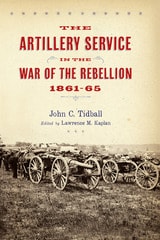
The Artillery Service in the War of the Rebellion, 1861–65
John C. Tidball
Westholme Publishing, 2011
A Rediscovered History That Will Become Essential Reading for Civil War Studies
The Artillery Service in the War of the Rebellion, 1861–65, is a comprehensive overview and analysis of the U.S. Army’s field artillery service in the Civil War’s principal battles, written by John C. Tidball, a distinguished artilleryman of the era. The overview, which appeared in the Journal of the Military Service Institution from 1891 to 1893, and nearly impossible to find today, examines the Army of the Potomac, including the battles of Fair Oaks, Gaines’s Mill, Mechanicsville, Malvern Hill, Antietam, Fredericksburg, Chancellorsville, and Gettysburg; the Army of the Tennessee, including the battles of Stones River and Chickamauga, and the Army of the Ohio’s battle of Shiloh. Tidball, a decorated Civil War veteran and superintendent of artillery instruction for the army, expertly presents the war through an artilleryman’s eyes in explaining the organization, equipping, and manning of the artillery service. His analysis highlights how the improper use of artillery, tying batteries down to relatively small infantry commands that diluted their firepower, seriously undermined the army’s effectiveness until reforms produced independent artillery commands that could properly mass artillery fire in battle.
The Artillery Service in the War of the Rebellion, edited by historian Lawrence M. Kaplan and presented here in one volume for the first time, includes additional material from an unpublished paper Tidball wrote in 1905 which contains further insights into the artillery service, as well as a general overview of the Petersburg campaign. A major new discovery in Civil War scholarship, The Artillery Service in the War of the Rebellion contains essential information that will change earlier historical interpretations of key battles and will be essential reading for all those interested in the war or contemplating writing about it.
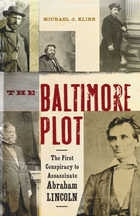
The Baltimore Plot
The First Conspiracy to Assassinate Abraham LincolnMichael J. Kline
Westholme Publishing, 2008
The Complete Story of the First Attempt to Assassinate President Abraham Lincoln
"In a thrilling detective story of conspiracy, treachery and assassination, Michael J. Kline suggests how close the Baltimore plotters came to achieving their goal, and reveals how Lincoln and a few guards outwitted them. Meticulously researched and written with verve, "The Baltimore Plot" takes readers aboard Lincoln's inaugural train for a perilous and unforgettable journey." —James L. Swanson, author of the Edgar Award-winning New York Times bestseller Manhunt: The 12-Day Chase for Lincoln's Killer
On February 11, 1861, the "Lincoln Special" - Abraham Lincoln's private train—began its journey from Springfield, Illinois, to the City of Washington, carrying the president-elect to his inauguration as the sixteenth president of the United States. Considered a "sectional candidate" by the South, and winning the election without the popular vote, Lincoln was so despised that seven states immediately seceded from the Union. Over the next twelve days, Lincoln would speak at numerous stops, including Indianapolis, Columbus, Cleveland, Pittsburgh, Buffalo, Albany, New York, and Philadelphia, expressing his desire to maintain the Union. But as Lincoln made his way east, America's first private detective, Allan Pinkerton, and a separate undercover operation by New York City detectives, uncovered startling evidence of a conspiracy to assassinate Lincoln during his next-to-last stop in Baltimore. Long a site of civil unrest—even Robert E. Lee's father, Henry "Light Horse Harry" Lee, was nearly beaten to death in its streets—Baltimore provided the perfect environment for a strike. The largest city of a border state with secessionist sympathies, Baltimore had been infiltrated by paramilitary groups bent on killing Lincoln, the "Black Republican." The death of the president-elect would, it was supposed, throw the nation into chaos and allow the South to establish a new nation and claim Washington as its capital. Warned in time, Lincoln outfoxed the alleged conspirators by slipping through Baltimore undetected, but at a steep price. Ridiculed by the press for "cowardice" and the fact that no conspirators were charged, Lincoln would never hide from the public again. Four years later, when he sat unprotected in the balcony of Ford's Theatre, the string of conspiracies against his life finally succeeded. One of the great presidential mysteries and long a source of fascination among Lincoln scholars, the Baltimore Plot has never been fully investigated until now. In The Baltimore Plot: The First Conspiracy to Assassinate Abraham Lincoln, Michael J. Kline turns his legal expertise to evaluating primary sources in order to discover the extent of the conspiracy and culpability of the many suspects surrounding the case. Full of memorable characters, including Kate Warne, the first female undercover agent, and intriguing plot twists, the story is written as an unfolding criminal proceeding in which the author allows the reader to determine whether there was a true plot to kill Lincoln and if the perpetrators could have been brought to trial.
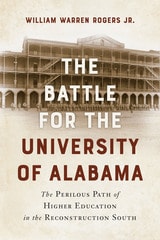
The Battle for the University of Alabama
The Perilous Path of Higher Education in the Reconstruction SouthWilliam Warren Rogers, Jr.
University of Alabama Press, 2025
Traces the little-known story of the bitter contest for the fate of the University of Alabama after the Civil War.
In The Battle for the University of Alabama, William Warren Rogers Jr. gives a fascinating account of the fierce struggle over the nature of the University of Alabama after the Civil War. Union forces reduced the campus to ruins as the war ended, and the university did not reopen until 1869. In the interregnum, powerful forces shifted the trajectory of the school. Alabama Republicans authored an egalitarian state constitution that delivered oversight of the university to the Republican Party. That set the stage for turmoil and confrontation. This book tells the story of that conflict.
In the next few years, Democrats charged Republicans with turning the university into a “radical” institution. They alleged that a handful of unqualified individuals had gained faculty positions because of their political allegiance, which resulted in the university’s academic desecration. Professors were bitterly denounced in the state newspaper press and quite personally in Tuscaloosa. Administration of the university became part of the fratricidal political debate in the state. Political violence and questions concerning race, specifically the possible integration of the university, illuminated the controversies of the Reconstruction years. Many of these questions resonate even today.
This authoritative account sets events at the University of Alabama against the backdrop of what occurred at other state universities in the Reconstruction South. The University of North Carolina experienced controversy similar to Alabama’s. At the University of Georgia, however, calm prevailed. This story of the incendiary events at Alabama’s flagship university charts new ground and provides a revelatory look into the extraordinary partisanship that characterized the South after the Civil War.
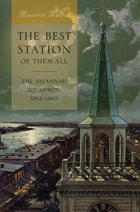
The Best Station of Them All
The Savannah Squadron, 1861-1865Maurice Melton
University of Alabama Press, 2012
The Confederate Navy’s Savannah Squadron, its relationship with the people of Savannah, Georgia, and its role in the city’s economy
In this well-written and extensively researched narrative, Maurice Melton charts the history of the unit, the sailors (both white and black), the officers, their families, and their activities aboard ship and in port.
The Savannah Squadron worked, patrolled, and fought in the rivers and sounds along the Georgia coast. Though they saw little activity at sea, the unit did engage in naval assault, boarding, capture, and ironclad combat. The sailors finished the war as an infantry unit in Robert E. Lee’s Army of Northern Virginia, fighting at Sayler’s Creek on the road to Appomattox.
Melton concentrates on navy life and the squadron’s place in wartime Savannah. The book reveals who the Confederate sailors were and what their material, social, and working lives were like.
The Best Station of Them All is an essential piece of historical literature for anyone interested in the Civil War, its navies, or Savannah.
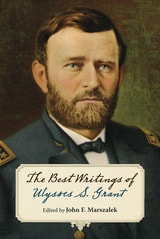
The Best Writings of Ulysses S. Grant
Edited by John F. Marszalek
Southern Illinois University Press, 2015
Famous for his military acumen and for his part in saving the Union during the American Civil War, Ulysses S. Grant also remains known for his two-volume memoirs, considered among the greatest military memoirs ever written. Grant’s other writings, however, have not received the same acclaim, even though they show the same literary skill. Originally published in the thirty-two volumes of The Papers of Ulysses S. Grant, the letters and speeches are the major source of information about Grant’s life and era and have played a key role in elevating his reputation to that of the leading general of the Civil War and the first of the modern presidents. In this collection, editor John F. Marszalek presents excerpts from Grant’s most insightful and skillfully composed writings and provides perspective through introductory comments tying each piece to the next. The result is a fascinating overview of Grant’s life and career.
In sixteen chronological chapters, selections from Grant’s letters and other writings reveal his personal thoughts on the major events of his momentous life, including the start of the Civil War, the capture of Vicksburg, Lincoln’s reelection, Lee’s surrender, his terms as president, the Panic of 1873, and his bouts of mouth and throat cancer. Throughout, Grant’s prose reveals clearly the power of his words and his ability to present them well. Although some historians have maligned his presidency as one of the most corrupt periods in American history, these writings reinforce Grant’s greatness as a general, demonstrate the importance of his presidency, and show him to be one of the driving forces of the nineteenth century.
With this compendium, Marszalek not only celebrates the literary talent of one of America’s greatest military figures but also vindicates an individual who, for so long, has been unfairly denigrated. A concise reference for students of American history and Civil War enthusiasts as well as a valuable introduction for those who are new to Grant’s writings, this volume provides intriguing insight into one of the nineteenth century’s most important Americans.
The Better Angels of Our Nature
Freemasonry in the American Civil WarMichael A. Halleran
University of Alabama Press, 2010
The first in-depth study of the Freemasons during the Civil War
One of the enduring yet little examined themes in Civil War lore is the widespread belief that on the field of battle and afterward, members of Masonic lodges would give aid and comfort to wounded or captured enemy Masons, often at great personal sacrifice and danger. This work is a deeply researched examination of the recorded, practical effects of Freemasonry among Civil War participants on both sides.
From first-person accounts culled from regimental histories, diaries, and letters, Michael A. Halleran has constructed an overview of 19th-century American freemasonry in general and Masonry in the armies of both North and South in particular, and provided telling examples of how Masonic brotherhood worked in practice. Halleran details the response of the fraternity to the crisis of secession and war, and examines acts of assistance to enemies on the battlefield and in POW camps.
The author examines carefully the major Masonic stories from the Civil War, in particular the myth that Confederate Lewis A. Armistead made the Masonic sign of distress as he lay dying at the high-water mark of Pickett’s charge at Gettysburg.
The Black Citizen-Soldiers of Kansas, 1864-1901
Roger D. Cunningham
University of Missouri Press, 2008
Roger Cunningham examines a lost history to show that, in addition to black regulars, hundreds of other black militiamen and volunteers from the Sunflower State provided military service from the Civil War until the dawn of the twentieth century. He tells how African Americans initially filled segregated companies hurriedly organized to defend the state from the threat of Confederate invasion, with some units ordered into battle around Kansas City. Then after the state constitution was amended to admit blacks into the Kansas National Guard, but its generals still refused to integrate, blacks served in reserve militia and independent companies and in all-black regiments that were raised for the Spanish-American and Philippine wars.
Cunningham has researched service records, African American newspapers, and official correspondence to give voice to these citizen-soldiers. He shares stories of real people like William D. Matthews, a captain in the First Kansas Colored Infantry who was refused a commission when his regiment was mustered into the Union army; Charles Grinsted, who commanded the first black militia company after the Civil War; and other unsung heroes.
More than a military history, Cunningham’s account records the quest of black men, many of them former slaves, for inclusion in American society. Many came from the bottom of the socioeconomic order and found that as militiamen they could gain respect within their communities. And by marching in public ceremonies and organizing fund-raising activities to compensate for lack of financial support from the state, they also strengthened the ties that bound African American communities together.
The Black Heavens
Abraham Lincoln and DeathBrian R. Dirck
Southern Illinois University Press, 2019
From multiple personal tragedies to the terrible carnage of the Civil War, death might be alongside emancipation of the slaves and restoration of the Union as one of the great central truths of Abraham Lincoln’s life. Yet what little has been written specifically about Lincoln and death is insufficient, sentimentalized, or devoid of the rich historical literature about death and mourning during the nineteenth century. The Black Heavens: Abraham Lincoln and Death is the first in-depth account of how the sixteenth president responded to the riddles of mortality, undertook personal mourning, and coped with the extraordinary burden of sending hundreds of thousands of soldiers to be killed on battlefields.
Going beyond the characterization of Lincoln as a melancholy, tragic figure, Brian R. Dirck investigates Lincoln’s frequent encounters with bereavement and sets his response to death and mourning within the social, cultural, and political context of his times. At a young age Lincoln saw the grim reality of lives cut short when he lost his mother and sister. Later, he was deeply affected by the deaths of two of his sons, three-year-old Eddy in 1850 and eleven-year-old Willie in 1862, as well as the combat deaths of close friends early in the war. Despite his own losses, Lincoln learned how to approach death in an emotionally detached manner, a survival skill he needed to cope with the reality of his presidency.
Dirck shows how Lincoln gradually turned to his particular understanding of God’s will in his attempts to articulate the meaning of the atrocities of war to the American public, as showcased in his allusions to religious ideas in the Gettysburg Address and the Second Inaugural. Lincoln formed a unique approach to death: both intellectual and emotional, typical and yet atypical of his times. In showing how Lincoln understood and responded to death, both privately and publicly, Dirck paints a compelling portrait of a commander in chief who buried two sons and gave the orders that sent an unprecedented number of Americans to their deaths.
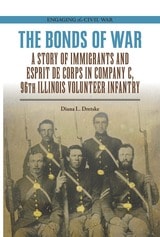
The Bonds of War
A Story of Immigrants and Esprit de Corps in Company C, 96th Illinois Volunteer InfantryDiana L. Dretske
Southern Illinois University Press, 2021
When curator Diana L. Dretske discovered that the five long-gone Union soldiers in a treasured photograph in the Bess Bower Dunn Museum were not fully identified, it compelled her into a project of recovery and reinterpretation. Utilizing an impressive array of local and national archives, as well as private papers, the author’s microhistorical approach records events that often go unnoticed, such as a farmer enlisting in the middle of a crop field, a sister searching her brother’s face for signs of war, and an immigrant dying in an effort to become a good American citizen.
This book, the most intensive examination of the 96th Illinois Volunteer Infantry since the regiment’s history was published in 1887 centers on immigrants from the British Isles who wished to be citizens of a country at war with itself. Far removed from their native homelands, they found new promise in rural Illinois. These men, neighbors along the quiet Stateline Road in Lake County, decide to join the fighting at its most dangerous hour. The bonds of war become then the bonds of their new national identity.
The Bonds of War uncovers the common soldier from the cataclysm that is the American Civil War by offering a collective biography of five soldiers of the 96th in the Western Theater. The human drama of their lives unfolds before the reader on battlefields such as Chickamauga and within the high pine stockades of Andersonville. Their lives argue that those who seem to matter least in military history are the very ones who can tell us the most about the experience of war and the reasons for remembering.
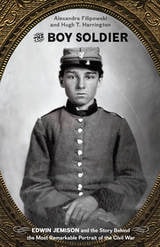
The Boy Soldier
Edwin Jemison and the Story Behind the Most Remarkable Portrait of the Civil WarAlexandra Filipowski and Hugh T. Harrington
Westholme Publishing, 2016
Since its first publication over fifty years ago, the haunting image of Private Edwin F. Jemison has attracted widespread attention from those interested in the Civil War and other wars. His likeness has been compared to that of the Mona Lisa, and it rivals Abraham Lincoln as being one of the Civil War’s most recognized photographs. And yet, his name is not widely known. Some believe that there is something about the mouth that is special, or his hands. Others, perhaps the majority, find his eyes to be powerful and thought provoking. Some wonder if they are looking into the future: Eddie’s own future or the future of all soldiers. Is there a sense of fear or a resignation to fate? He is, foremost, strikingly boyish.
Despite the great interest in the photograph almost nothing has been known of the young man himself, and misinformation about him has circulated since he was properly identified twenty years ago. The authors have spent decades researching the story behind the photograph seeking primary sources for accurate details of Jemison’s life. The result is The Boy Soldier: Edwin Jemison and the Story Behind the Most Remarkable Portrait of the Civil War, the only biography of this young Confederate soldier. We first encounter Eddie as he travels from Louisiana in 1857 to stay with relatives and attend school in Georgia. In the spring of 1861, after Louisiana had seceded from the Union, Eddie enlists in the Confederate army. A little over a week after enlistment, and with minimal training, he is sent to Virginia to fight in the greatest struggle this nation has ever endured. Over 150 years later the intrigue around his photograph is matched by the very peculiar accounts of his death, as well as the controversy of his burial location. The authors examine both issues to complete the story of the young soldier’s life and death.
The Caning
The Assault That Drove America to Civil WarStephen Puleo
Westholme Publishing, 2012
Early in the afternoon of May 22, 1856, ardent pro-slavery Congressman Preston S. Brooks of South Carolina strode into the United States Senate Chamber in Washington, D.C., and began beating renowned anti-slavery Senator Charles Sumner with a gold-topped walking cane. Brooks struck again and again—more than thirty times across Sumner’s head, face, and shoulders—until his cane splintered into pieces and the helpless Massachusetts senator, having nearly wrenched his desk from its fixed base, lay unconscious and covered in blood. It was a retaliatory attack. Forty-eight hours earlier, Sumner had concluded a speech on the Senate floor that had spanned two days, during which he vilified Southern slaveowners for violence occurring in Kansas, called Stephen A. Douglas of Illinois a “noise-some, squat, and nameless animal,” and famously charged Brooks’s second cousin, South Carolina Senator Andrew Butler, as having “a mistress. . . who ugly to others, is always lovely to him. . . . I mean, the harlot, Slavery.” Brooks not only shattered his cane during the beating, but also destroyed any pretense of civility between North and South.
One of the most shocking and provocative events in American history, the caning convinced each side that the gulf between them was unbridgeable and that they could no longer discuss their vast differences of opinion regarding slavery on any reasonable level.The Caning: The Assault That Drove America to Civil War tells the incredible story of this transformative event. While Sumner eventually recovered after a lengthy convalescence, compromise had suffered a mortal blow. Moderate voices were drowned out completely; extremist views accelerated, became intractable, and locked both sides on a tragic collision course.
The caning had an enormous impact on the events that followed over the next four years: the meteoric rise of the Republican Party and Abraham Lincoln; the Dred Scott decision; the increasing militancy of abolitionists, notably John Brown’s actions; and the secession of the Southern states and the founding of the Confederacy. As a result of the caning, the country was pushed, inexorably and unstoppably, to war. Many factors conspired to cause the Civil War, but it was the caning that made conflict and disunion unavoidable five years later.
The Chattanooga Campaign
Steven E. Woodworth and Charles D. Grear
Southern Illinois University Press, 2012
When the Confederates emerged as victors in the Chickamauga Campaign, the Union Army of the Cumberland lay under siege in Chattanooga, with Braxton Bragg’s Army of Tennessee on nearby high ground at Missionary Ridge and Lookout Mountain. A win at Chattanooga was essential for the Confederates, both to capitalize on the victory at Chickamauga and to keep control of the gateway to the lower South. Should the Federal troops wrest control of that linchpin, they would cement their control of eastern Tennessee and gain access to the Deep South. In the fall 1863 Chattanooga Campaign, the new head of the western Union armies, Ulysses S. Grant, sought to break the Confederate siege. His success created the opportunity for the Union to start a campaign to capture Atlanta the following spring.
Woodworth’s introduction sets the stage for ten insightful essays that provide new analysis of this crucial campaign. From the Battle of Wauhatchie to the Battle of Chattanooga, the contributors’ well-researched and vividly written assessments of both Union and Confederate actions offer a balanced discussion of the complex nature of the campaign and its aftermath. Other essays give fascinating examinations of the reactions to the campaign in northern newspapers and by Confederate soldiers from west of the Mississippi River.
Complete with maps and photos, The Chattanooga Campaign contains a wealth of detailed information about the military, social, and political aspects of the campaign and contributes significantly to our understanding of the Civil War’s western theater.
Univeristy Press Books for Public and Secondary Schools 2013 edition
The Chickamauga Campaign
Edited by Steven E. Woodworth
Southern Illinois University Press, 2010
From mid-August to mid-September 1863, Union major general William S. Rosecrans’s Army of the Cumberland maneuvered from Tennessee to north Georgia in a bid to rout Confederate general Braxton Bragg’s Army of Tennessee and blaze the way for further Union advances. Meanwhile, Confederate reinforcements bolstered the numbers of the Army of Tennessee, and by the time the two armies met at the Battle of Chickamauga, in northern Georgia, the Confederates had gained numerical superiority.
Although the Confederacy won its only major victory west of the Appalachians, it failed to achieve the truly decisive results many high-ranking Confederates expected. In The Chickamauga Campaign,Steven E. Woodworth assembles eight thought-provoking new essays from an impressive group of authors to offer new insight into the complex reasons for this substantial, yet ultimately barren, Confederate victory.
This broad collection covers every angle of the campaign, from its prelude to its denouement, from the points of view of key players of all ranks on both sides. In addition to analyzing the actions taken by Union leaders Thomas L. Crittenden, Alexander McCook, and James S. Negley, and Confederate commanders Braxton Bragg, Patrick Cleburne, Daniel Harvey Hill, Thomas C. Hindman, James Longstreet, and Alexander P. Stewart, the book probes the campaign’s impact on morale in the North and South, and concludes with an essay on the campaign’s place in Civil War memory. The final essay pays particular attention to Union veteran Henry Van Ness Boynton, the founder and developer of Chickamauga and Chattanooga State Military Park, whose achievements helped shape how the campaign would be remembered.
This second volume in the Civil War Campaigns in the Heartland seriesprovides a profound understanding of the campaign’s details as well as its significance to Civil War history.
Contributors:
John R. Lundberg
Alexander Mendoza
David Powell
Ethan S. Rafuse
William G. Robertson
Timothy B. Smith
Lee White
Steven E. Woodworth
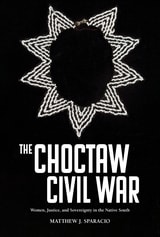
The Choctaw Civil War
Women, Justice, and Sovereignty in the Native SouthMatthew J. Sparacio
University of Alabama Press, 2026
Reexamines the contested geopolitical landscape of the lower Mississippi River Valley in 1740s, centering Choctaw perspectives
Matthew J. Sparacio’s comprehensive history, The Choctaw Civil War: Women, Justice, and Sovereignty in the Native South, delivers a rich portrait of eighteenth-century Choctaw life and recasts the Native South as a region shaped by Choctaw decisions.
In the 1730s and 1740s, the Choctaw Nation leveraged competing European imperial agendas while establishing reciprocal diplomatic ties with other tribes, including their neighboring “brothers,” the Chickasaws. Choctaws drew strength from their multifaceted understanding of sovereignty: connections to land, contributions to society through work, generosity, respect, kinship obligations, and justice. A series of attacks on Choctaw women, however, tested the limits of justice and obligation within and between Choctaw communities. Mounting pressures from both Louisiana and South Carolina added to this factionalism, ultimately leading to civil war.
Relying on Chahta anumpa (“Choctaw language”) training and tribal histories, gender theory, and ethnohistorical methods, Sparacio highlights women’s contributions to Choctaw society and governance. Intense eighteenth-century debates over justice, kinship, and responsibility created several Choctaw movements for justice that still inspire efforts in Oklahoma and Mississippi to end the Missing and Murdered Indigenous Persons’ crisis. Tribal and bodily sovereignty shaped the Native South and will shape its future.
The Choctaw Civil War is a major reinterpretation of Choctaw history and the colonial South. This will be a must-read for historians, scholars of the Native South, and anyone interested in sovereignty movements today.
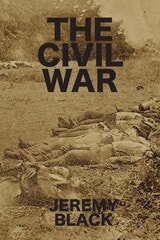
The Civil War
Jeremy Black
St. Augustine's Press, 2025
European military historian Jeremy Black reorients readers to see what was extraordinary in the civil war of 'the American colonies' and why this was warfare unlike anything that could be properly understood on the world stage at that time. He also examines with expertise the role of foreign powers (or lack thereof).
Black's treatment might be the doom of civil war counterfactuals. Was the south destined to fail? Was it weaker motive, faulty strategy, or lack of European support? Was the north just lucky, or possessed of foresight and providential endowment? Black dispels romanticism and sentimentalist hindsight––the American Civil War is unparalleled in many respects, but it is not without clear lessons in warcraft, diplomacy, and cultural–economic impasse.
Furthermore, Black's Civil War is a new resource that teaches, reaffirms, and reminds readers of the intensity of the American past––in both error and idealistic impulse––that might continue to guide us to the best future and avoid the lose-lose circumstances of a civil war. Black's acumen for historical review in this case renders a kind of warning: May the leaders of men in the future come to a better way of self-realization than give way to the internal conflict that pits father against son, and sister against brother. But if he must engage, at least understand the distinction between war and politics.
Black's objective and concise account is a treasure for students and experts alike who need clarity and insight without too much of an investment. The take-away is an appreciation for the American spirit that civil strife petrified and an understanding of the tactical progression of this conflict and the context of combat of that era.
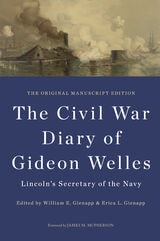
The Civil War Diary of Gideon Welles, Lincoln's Secretary of the Navy
The Original Manuscript EditionGideon Welles, Edited by William E. Gienapp and Erica L. Gienapp; Foreword by James M. McPherson
University of Illinois Press, 2014
Perhaps the hardest-working member of the cabinet, Welles still found time to keep a detailed diary that has become one of the key documents for understanding the inner workings of the Lincoln administration. In this new edition, William E. and Erica L. Gienapp have restored Welles’s original observations, gleaned from the manuscript diaries at the Library of Congress and freed from his many later revisions, so that the reader can experience what he wrote in the moment. With his vitriolic pen, Welles captures the bitter disputes over strategy and war aims, lacerates colleagues from Secretary of State William H. Seward to General-in-Chief Henry Halleck, and condemns the actions of the self-serving southern elite he sees as responsible for the war. He just as easily waxes eloquent about the Navy's wartime achievements, extols the virtues of Lincoln, and drops in a tidbit of Washington gossip.
Carefully edited and extensively annotated, this edition contains a wealth of supplementary material. The appendixes include short biographies of the members of Lincoln’s cabinet, the retrospective Welles wrote after leaving office covering the period missing from the diary proper, and important letters regarding naval matters and international law.
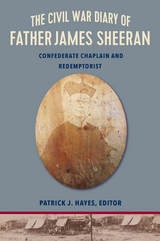
The Civil War Diary of Rev. James Sheeran, C.Ss.R.
Patrick J. Hayes
Catholic University of America Press, 2017
The Civil War Letters of Colonel Charles F. Johnson, Invalid Corps
Fred Pelka
University of Massachusetts Press, 2004
Organized in May 1863 to meet the Union Army's growing manpower needs, the Invalid Corps—later renamed the Veteran Reserve Corps—was a unique military unit. With more than twenty-four regiments of troops, nearly all of them men disabled by illness or combat wounds, it was at one point twice as large as the entire pre-war United States Army. During four years of service its troops enforced the draft, guarded prisoners and vital outposts, protected rail lines and supply depots, and served as military police in cities all across the country. Members of the Corps escorted President Lincoln's body home to Illinois, and after the war its officers formed the nucleus of the new Freedman's Bureau.
This volume brings together some 143 letters written by Colonel Charles F. Johnson, an officer who served with the 18th Veteran Reserve Corps after sustaining debilitating wounds during the Seven Days' Battles in June 1862. Edited with an introduction by Fred Pelka, the letters describe the day-to-day circumstances of “The Cripple Brigade,” as it was derisively called, as well as guerrilla warfare in Missouri, combat in Virginia, and barracks life in Washington, D.C. Johnson was a keen observer of his nation at war, and his correspondence with his wife Mary is by turns literate and comic, objective and personal.
In his introduction and annotations, Pelka provides a detailed history of the Invalid Corps and explores the experience of disability in nineteenth-century America. He looks at how the nation responded to the sudden appearance of tens of thousands of newly disabled young men, and traces how members of the Invalid Corps fought not only to restore the Union but also to retain their dignity as Americans and as human beings.
The Civil War Memoirs of a Virginia Cavalryman
Lt. Robert T. Hubard Jr., Edited by Thomas P. Nanzig
University of Alabama Press, 2007
Robert Hubard was an enlisted man and officer of the 3rd Virginia Cavalry in the Army of Northern Virginia (CSA) from 1861 through 1865. He wrote his memoir during an extended convalescence spent at his father’s Virginia plantation after being wounded at the battle of Five Forks on April 1, 1865. Hubard served under such Confederate luminaries as Jeb Stuart, Fitz Lee, Wade Hampton, and Thomas L. Rosser. He and his unit fought at the battles of Antietam, on the Chambersburg Raid, in the Shenandoah Valley, at Fredericksburg, Kelly’s Ford, Chancellorsville, Gettysburg, Bristoe Station, and down into Virginia from the Wilderness to nearly the end of the war at Five Forks.
Hubard was like many of his class and station a son of privilege and may have felt that his service was an act of noblesse oblige. Unlike many of his contemporaries, however, he was a keen observer and a writer of unusual grace, clarity, humor, and intelligence. The editor has fleshed out his memoir by judicious use of Hubard’s own wartime letters, which not only fill in gaps but permit the reader to see developments in the writer’s thinking after the passage of time. Because he was a participant in events of high drama and endured the quotidian life of a soldier, Hubard’s memoir should be of value to both scholars and avocational readers.

The Civil War in Books
AN ANALYTICAL BIBLIOGRAPHYDavid J. Eicher
University of Illinois Press, 1997
Gary Gallagher's foreword traces the development of Civil War bibliographies and declares that Eicher's annotation exceeds that of any previous comprehensive volume. The Civil War in Books, Gallagher believes, is "precisely the type of guide" that has been needed. The first full-scale, fully-annotated bibliography on the Civil War to appear in more than thirty years, Eicher's The Civil War in Books is a remarkable compendium of the best reading available about the worst conflict ever to strike the United States. The bibliography, the most valuable reference book on the subject since The Civil War Day by Day, will be essential for college and university libraries, dealers in rare and secondhand books, and Civil War buffs.
The Civil War in Missouri
A Military HistoryLouis S. Gerteis
University of Missouri Press, 2012
Both the Union and the Confederacy had a vested interest in Missouri throughout the war. The state offered control of both the lower Mississippi valley and the Missouri River, strategic areas that could greatly factor into either side’s success or failure. Control of St. Louis and mid-Missouri were vital for controlling the West, and rail lines leading across the state offered an important connection between eastern states and the communities out west. The Confederacy sought to maintain the Ozark Mountains as a northern border, which allowed concentrations of rebel troops to build in the Mississippi valley. With such valuable stock at risk, Lincoln registered the importance of keeping rebel troops out of Missouri, and so began the conventional battles investigated by Gerteis.
The first book-length examination of its kind, The Civil War in Missouri: A Military History dares to challenge the prevailing opinion that Missouri battles made only minor contributions to the war. Gerteis specifically focuses not only on the principal conventional battles in the state but also on the effects these battles had on both sides’ national aspirations. This work broadens the scope of traditional Civil War studies to include the losses and wins of Missouri, in turn creating a more accurate and encompassing narrative of the nation’s history.
The Class of 1861
Custer, Ames, and Their Classmates after West PointRalph Kirshner
Southern Illinois University Press, 1999
Ralph Kirshner has provided a richly illustrated forum to enable the West Point class of 1861 to write its own autobiography. Through letters, journals, and published accounts, George Armstrong Custer, Adelbert Ames, and their classmates tell in their own words of their Civil War battles and of their varied careers after the war.
Two classes graduated from West Point in 1861 because of Lincoln's need of lieutenants: forty-five cadets in Ames's class in May and thirty-four in Custer's class in June. The cadets range from Henry Algernon du Pont, first in the class of May, whose ancestral home is now Winterthur Garden, to Custer, last in the class of June. “Only thirty-four graduated,” remarked Custer, “and of these thirty-three graduated above me.” West Point's mathematics professor and librarian Oliver Otis Howard, after whom Howard University is named, is also portrayed.
Other famous names from the class of 1861 are John Pelham, Emory Upton, Thomas L. Rosser, John Herbert Kelly (the youngest general in the Confederacy when appointed), Patrick O'Rorke (head of the class of June), Alonzo Cushing, Peter Hains, Edmund Kirby, John Adair (the only deserter in the class), and Judson Kilpatrick (great-grandfather of Gloria Vanderbilt). They describe West Point before the Civil War, the war years, including the Vicksburg campaign and the battle of Gettysburg, the courage and character of classmates, and the ending of the war.
Kirshner also highlights postwar lives, including Custer at Little Bighorn; Custer's rebel friend Rosser; John Whitney Barlow, who explored Yellowstone; du Pont, senator and author; Kilpatrick, playwright and diplomat; Orville E. Babcock, Grant's secretary until his indictment in the "Whiskey Ring"; Pierce M. B. Young, a Confederate general who became a diplomat; Hains, the only member of the class to serve on active duty in World War I; and Upton, "the class genius."
The Class of 1861, which features eighty-three photographs, includes a foreword by George Plimpton, editor of theParis Review and great-grandson of General Adelbert Ames.
The Collapse of Price's Raid
The Beginning of the End in Civil War MissouriMark A. Lause
University of Missouri Press, 2025
The Colonel's Dream
R.J. Ellis
University of Delaware Press, 0
Charles Waddell Chesnutt (1858–1932) was an African American writer, essayist, Civil Rights activist, legal-stenography businessman, and lawyer whose novels and short stories explore race, racism, and the problematic contours of African Americans’ social and cultural identities in post–Civil War South. He was the first African American to be published by a major American publishing house and served as a beacon-point for future African American writers.
The Colonel’s Dream was the third novel published by the distinguished African American writer Charles W. Chestnutt; since its publication in the early twentieth century, however, the novel has been unduly neglected--and, hence, the pressing need for this edition, the first to include scholarly notes. Written in 1905, The Colonel's Dream is a compelling tale of the post–Civil War South’s degeneration into a region awash with virulent racist practices against African Americans: segregation, lynchings, disenfranchisement, convict-labor exploitation, and endemic violent repression. The events in this novel are powerfully depicted from the point of view of a philanthropic but unreliable southern white colonel. Upon his return to the South, the colonel learns to abhor this southern world, as a tale of vicious racism unfolds. Throughout this narrative, Chesnutt confronts the deteriorating position of African Americans in an increasingly hostile South. Upon its publication, The Colonel’s Dream was considered too controversial and unpalatable because of its bitter criticisms of southern white prejudice and northern indifference, and so this groundbreaking story failed to gain public attention and acclaim.
This is the first scholarly edition of The Colonel’s Dream. It includes an introduction and notes by R. J. Ellis and works to reestablish this great novel’s reputation.
The Coming of the Civil War
Avery O. Craven
University of Chicago Press, 1966
". . . those who would examine the democratic process during a period of progressive breakdown, in order to understand the dangers it embodies within itself, will find The Coming of the Civil War a classic analysis."—Louis D. Rubin, Jr., Sewanee Review
"The book has always been recognized, even by its most severe critics, as a work of consummate scholarship."—T. Harry Williams, Baton Rouge Morning Advocate

The Complete Civil War Journal and Selected Letters of Thomas Wentworth Higginson
Thomas Wentworth Higginson
University of Chicago Press, 1999
So wrote Thomas Wentworth Higginson about his role in one of the most compelling and fascinating episodes in the history of the United States. As the colonel of the first regiment of black men in the Union army during the Civil War, Higginson was an early, articulate, and powerful crusader for civil rights, and his journal and letters, collected for the first time in this volume, present some of the most extraordinary documents of the Civil War.
Higginson was a politically engaged intellectual at the forefront of radical antislavery, labor, and feminist causes. Born in 1823 to a formerly wealthy but still prominent Brahmin family, he became one of America's leading social activists and a prominent writer, minister, and reformer. With the publication in 1869 of his classic Army Life in a Black Regiment, which drew on this journal, Higginson became one of the most important chroniclers of the Civil War. The Complete Civil War Journal and Selected Letters of Thomas Wentworth Higginson is the first comprehensive edition of his journal. Sensitively and thoroughly annotated by Christopher Looby and supplemented by a large selection of Higginson's wartime letters, this volume offers the most vivid and intimate picture of the radical interracial solidarity brought about by the transformative experience of the army camp and of Civil War life.
"The immediacy of Higginson's reflections, as well as their sharp insights, make this journal both distinctive and enduringly compelling . . . . Higginson's vivid texts can once again educate, gratify and delight readers."—Publishers Weekly
"This volume will enrich our understanding of the transformations that emancipation and war wrought."—Library Journal
The Complete Lincoln-Douglas Debates of 1858
Abraham Lincoln and Stephen A. Douglas
University of Chicago Press, 1991
Zarefsky analyzes the rhetoric of the speeches, showing how Lincoln and Douglas chose their arguments and initiated a debate that shook the nation. Their eloquent, statesmanlike discussion of the morality of slavery illustrates the masterful use of rhetorical strategies and tactics in the public forum: a form of discourse that has nearly disappeared from the political scene today.
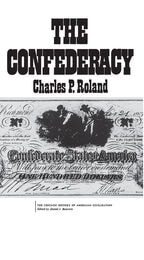
The Confederacy
Charles P. Roland
University of Chicago Press, 1962
In The Confederacy Charles P. Roland is faithful to both the larger career and the internal complexity. Paying careful attention to President Davis' struggle against dividing forces within, the author skillfully narrates the attempt of the Confederacy to wage total war against superior forces. All the poignant events and conditions are here: the formation of the government, the upper South's final commitment to the cause, the doomed attempts to combat the Northern blockade at home and Northern diplomacy overseas, an agrarian economy's heroic defiance of an industrial enemy, the desperate measures by which the Davis government tried to sustain the Confederacy, and, at last, the dissolution and flight of the administration in 1865.
With accuracy, sensitivity, and balance, Mr. Roland develops the epic themes of his story against a background of vivid historical detail and re-creates the Confederacy with a tragic splendor—the prime quality of its surviving image among Southerners.
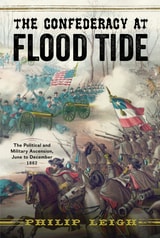
The Confederacy at Flood Tide
The Political and Military Ascension, June to December 1862Philip Leigh
Westholme Publishing, 2016
The first six months of 1862 provided a string of Federal victories in the West at Mill Springs, Fort Donelson, Pea Ridge, Island Number 10, and Shiloh. In May, New Orleans fell, and Union General George McClellan’s army was so close to the Confederate capital of Richmond, Virginia, that the troops could set their watches by the city’s church bells. But then the unexpected happened. In June, Robert E. Lee’s Army of Northern Virginia pushed McClellan’s much larger army back to the James River. In Europe, Confederate diplomats sought international recognition for the Confederate States of America, which was made even more attractive now that a shortage of cotton made the powerful textile interests anxious to end the war. Further tipping the balance, in July, the Confederacy secretly ordered two of the latest ironclad ships from England’s famous Laird Shipyard—the same yard that built the commerce raider Alabama. These steam-powered ironclads would be far superior to anything in the Federal navy.
While the “high tide” of the Confederacy is often identifed as Pickett’s Charge during the Battle of Gettysburg in July 1863, the most opportune time for the Confederacy vanished seven months earlier, coinciding with President Abraham Lincoln’s Emancipation Proclamation on January 1, 1863 and the failure of the secessionist states to be recognized as a sovereign nation. As Philip Leigh explains in his engrossing new book, The Confederacy at Flood Tide: The Political and Military Ascension, June to December 1862, on every battlefront and in the governmental halls of Europe, the Confederate effort reached its furthest extent during the second half of 1862. But with the president’s proclamation, battlefield reverses, Europe's decision to reject Confederate diplomatic overtures, and Britian's decision to halt the sale of the ironclads, the opportunity for Confederate success ended. The Confederacy would recede, and the great battles of 1863 and 1864 only marked the Southerners’ tenacity and stubborn belief in a lost cause.
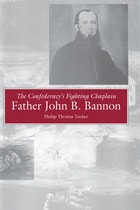
The Confederacy's Fighting Chaplain
Father John B. BannonPhillip Thomas Tucker
University of Alabama Press, 1992
The Confederacy’s Fighting Chaplain is the remarkable story of the Irishman who brought the Bible and his own resourcefulness and daring to both the battlefield and the diplomatic field—a story that has been largely ignored for more than 130 years. The biography of John B. Bannon also chronicles the forgotten Southerners—the Irish immigrants of the Confederacy—whose colorful and crucial role in the Civil War has been seriously neglected.
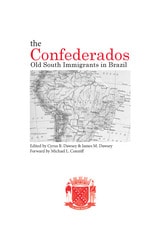
The Confederados
Old South Immigrants in BrazilCyrus B. Dawsey
University of Alabama Press, 1998
The story of exiles from the Confederate South who fled to Brazil after the US Civil War. The collection includes a previously unpublished narrative by an original settler
In the wake of the American Civil War, thousands of disillusioned Southerners sought refuge far from Reconstruction’s reach—many found it in Brazil. The Confederados is a compelling exploration of this little-known migration, tracing the journey of Confederate exiles who forged new lives in the sugarcane fields of São Paulo. Through vivid personal narratives, scholarly essays, and rare archival insights, this volume uncovers the cultural, agricultural, and religious legacy these settlers left behind.
From the harrowing voyage of Sarah Bellona Smith Ferguson to the enduring traditions of the Campo chapel, the book reveals how these Americans shaped—and were shaped by—their Brazilian surroundings. It examines their impact on education, Protestantism, and farming, and how their descendants maintain a distinct identity more than a century later.
Richly illustrated and deeply researched, The Confederados is essential reading for anyone interested in Southern history, diaspora studies, or the global echoes of the Civil War. This is not just a story of exile—it’s a testament to resilience, adaptation, and the enduring ties between two nations.
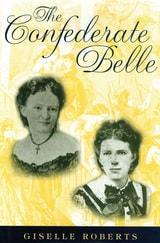
The Confederate Belle
Giselle Roberts
University of Missouri Press, 2003
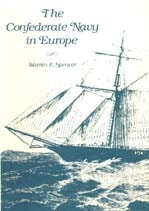
The Confederate Navy in Europe
Warren F. Spencer
University of Alabama Press, 1983
“A major contribution to Civil War and naval history.” —Journal of Southern History
The Civil War was fought not only on American battlefields but also in the shipyards, diplomatic salons, and ports of Europe. In this sweeping history of the Confederate navy’s operations overseas, Warren Spencer traces the South’s ambitious efforts to build, equip, and deploy a naval force across the Atlantic. Drawing on extensive archival research in the United States, Great Britain, and France, the book reveals how Confederate agents, diplomats, and naval officers pursued international support while attempting to challenge Union power on the seas.
More than a military narrative, this study offers a richly detailed examination of the intersection of naval warfare, diplomacy, and international politics. The author synthesizes scattered research and original documentary evidence to provide a comprehensive account of Confederate naval activity in Europe, illuminating the roles of shipbuilders, foreign governments, intelligence networks, and naval leaders. By engaging both published sources and archival records, the book presents fresh interpretations of controversial episodes and demonstrates how events far from American shores shaped the course of the Civil War.
This volume will appeal to readers of Civil War history, naval history, diplomatic history, and international relations. Scholars, students, and history enthusiasts alike will appreciate its careful research, engaging narrative, and global perspective on a conflict too often viewed solely through a domestic lens. Anyone interested in the maritime dimensions of the Civil War or the Confederacy’s quest for recognition abroad will find this book both enlightening and compelling.
The Constitution in Congress
Democrats and Whigs, 1829-1861David P. Currie
University of Chicago Press, 2005
Like its predecessors, The Constitution in Congress: Democrats and Whigs will be an invaluable reference for legal scholars and constitutional historians alike.
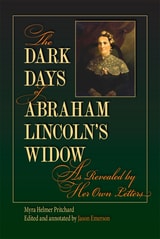
The Dark Days of Abraham Lincoln's Widow, as Revealed by Her Own Letters
Myra Helmer Pritchard, edited and annotated by Jason Emerson
Southern Illinois University Press, 2011
Written in 1927 but barred from timely publication by the Lincoln family, The Dark Days of Abraham Lincoln's Widow, as Revealed by Her Own Letters is based on nearly two dozen intimate letters written between Mary Lincoln and her close friend Myra Bradwell mainly during the former's 1875 incarceration in an insane asylum. By the 1920s most accounts of Mrs. Lincoln focused on her negative qualities and dismissed her as "crazy." Bradwell's granddaughter Myra Helmer Pritchard wrote this distinctly sympathetic manuscript at the behest of her mother, who wished to vindicate Mary Lincoln in the public eye by printing the private correspondence. Pritchard fervently defends Mrs. Lincoln's conduct and sanity, arguing that she was not insane but rather the victim of an overzealous son who had his mother committed.
The manuscript and letters were thought to have been destroyed, but fortunately the Lincolns' family lawyer stored copies in a trunk, where historian Jason Emerson discovered them in 2005. While leaving the manuscript intact, Emerson has enhanced it with an introduction and detailed annotations. He fills in factual gaps; provides background on names, places, and dates; and analyzes Pritchard's interpretations, making clear where she was right and where her passion to protect Mrs. Lincoln led to less than meticulous research and incorrect conclusions. This volume features an easy-to-follow format that showcases Pritchard's text on the left-hand pages and Emerson's insightful annotations on the right-hand pages.
Following one of the most revered and reviled, famous and infamous of the First Ladies, this book provides a unique perspective of Mrs. Lincoln's post-White House years, with an emphasis on her commitment to a sanitarium. Emerson's contributions make this volume a valuable addition to the study of the Lincoln family. This fascinating work gives today's Lincoln enthusiasts the chance to read this intriguing interpretation of the former First Lady that predates nearly every other book written about her.
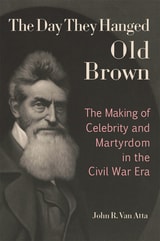
The Day They Hanged Old Brown
The Making of Celebrity and Martyrdom in the Civil War EraJohn R. Van Atta
University of Missouri Press, 2025
Brown’s lifespan covered most of the period between the Revolution and the Civil War, a time of the still-early beginnings of the United States. Only then had his kind of “celebrity” started to matter. From different economic and moral perspectives, politically aware Americans clashed over different visions for the future of the country. At that time, any disruptive figure might be taken as a barometer of the progress or the decline of the republic. A function of the widely varying newspapers and magazines of that day, celebrity offered Americans an angle of vision, happily or not, as to who they were or were becoming or believed themselves to be—as if by a mirror reflection.
In The Day They Hanged Old Brown, John Van Atta examines the creation of celebrity in John Brown’s time and how it differed from modern day perceptions. Yet, as applicable as the concept of celebrity is in this case, the story of Brown’s notoriety represents far more. To his admirers, Brown was not merely a celebrity; he was a hero and, after his sacrificial death, a martyr. Not all celebrities rise to such levels. This book traces the meaning of heroism and martyrdom—as well as the opposite side of that coin, villainy—and suggests that John Brown’s story and legacy helped to redefine these concepts for many Americans during the era of the Civil War, before modern historians began to deliberate him.
The Decision Was Always My Own
Ulysses S. Grant and the Vicksburg CampaignTimothy B. Smith
Southern Illinois University Press, 2018
The Vicksburg Campaign, argues Timothy B. Smith, is the showcase of Ulysses S. Grant’s military genius. From October 1862 to July 1863, Grant tried repeatedly to capture the Confederate river city. His final, daring move allowed him to land an army in Mississippi and fight his way to the gates of Vicksburg. He captured the city and Confederate garrison on July 4, 1863, opening the Mississippi River for the Union.
This volume presents a fast-paced reexamination of Grant’s decision-making process during the Vicksburg maneuvers, battles, and siege. Smith details the course of campaigning on military, political, administrative, and personal levels. The successful military campaign required Grant to handle President Lincoln’s impatience, as well as to deal with troublesome general John A. McClernand, all while juggling administrative work. In addition, Grant was more than a military genius—he was also a husband and a father, and Smith shows how Grant’s family played a role in every decision he made.
Grant’s nontraditional choices went against the accepted theories of war, supply, and operations, as well as against the chief thinkers of the day, such as Henry Halleck, Grant’s superior. Yet Grant pulled off the victory in compelling fashion. In the first in-depth examination in decades, Smith shows how Grant’s decisions created and won the Civil War’s most brilliant, complex, decisive, and lengthy campaign.
The Die Is Cast
Arkansas Goes to War, 1861Mark K. Christ
Butler Center for Arkansas Studies, 2010
The Drums of the 47th
Robert J. Burdette
University of Illinois Press, 2000
From Peoria to Corinth, from Corinth to Vicksburg, up the Red River country, down to Mobile and Fort Blakely, and back to Tupelo and Selma, the 47th marched three thousand miles during Burdette's tour, from March 1862 to December 1864.
In a literate voice rare in war memoirs, Burdette speaks of comradeship built and tested, the noise and confusion of the battlefield, the conflicting feelings of witnessing a military execution. Both nostalgic and piercingly immediate, his remembrances evoke the sights, sounds, smells, and above all the inner feelings stirred up by war, from exuberance to terror and from patriotic fervor to compassion for a fallen enemy.
Originally published--on the eve of another great conflict--in 1914, The Drums of the 47th is a moving depiction of the inner life of the common soldier. Like Stephen Crane's The Red Badge of Courage, Burdette's book puts a human face on the war and his words speak to all who have served or imagined serving under fire. The introduction by John E. Hallwas provides a biographical sketch of Burdette and a commentary on his engaging Civil War memoir.
The Edge of Mosby’s Sword
The Life of Confederate Colonel William Henry ChapmanGordon B. Bonan
Southern Illinois University Press, 2009
The Edge of Mosby’s Sword is the first scholarly volume to delve into the story of one of John Singleton Mosby’s most trusted and respected officers, Colonel William Henry Chapman. Presenting both military and personal perspectives of Chapman’s life, Gordon B. Bonan offers an in-depth understanding of a man transformed by the shattering of his nation. This painstakingly researched account exposes a soldier and patriot whose convictions compelled him to battle fiercely for Southern independence; whose quest for greatness soured when faced with the brutal realities of warfare; and who sought to heal his wounded nation when the guns of war were silenced.
Born into a wealthy slave-owning family, Chapman was a student of the fiery secessionist rhetoric of antebellum Virginia who eagerly sought glory and adventure on the battlefields of the Civil War. Bonan traces Chapman’s evolution from an impassioned student at the University of Virginia to an experienced warrior and leader, providing new insight into the officer’s numerous military accomplishments. Explored here are Chapman’s previously overlooked endeavors as a student warrior, leader of the Dixie Artillery, and as second-in-command to Mosby, including his participation in the capture of Harpers Ferry, the battering of Union forces at Second Manassas, and his ferocious raids during the 1864 Shenandoah Valley campaign. Bonan reveals fresh perspectives on the intrepid maneuvers of Mosby’s Rangers, the hardships of war, and Chapman’s crucial role as the right hand of the “Gray Ghost.” But while Mosby recognized him for his bravery and daring, the fame Chapman sought always eluded him. Instead, with his honors and successes came disillusionment and sorrow, as he watched comrades and civilians alike succumb to the terrible toll of the war.
The end of the struggle between North and South saw Chapman accept defeat with dignity, leading the Rangers to their official surrender and parole at Winchester. With the horrors of the war behind him, he quickly moved to embrace the rebuilding of his country, joining the Republican party and beginning a forty-two-year career at the IRS enforcing Federal law throughout the South. In the end, Chapman’s life is a study in contradictions: nationalism and reconciliation; slavery and liberty; vengeance and chivalry.
The Emancipation Circuit
Black Activism Forging a Culture of FreedomThulani Davis
Duke University Press, 2022
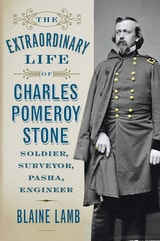
The Extraordinary Life of Charles Pomeroy Stone
Soldier, Surveyor, Pasha, EngineerBlaine Lamb
Westholme Publishing, 2016
In the winter of 1861, as the secession crisis came to a head, an obscure military engineer, Charles Pomeroy Stone, emerged as the rallying point for the defense of Washington, D.C. against rebel attack. He was protector of the newly elected president and right-hand man of the army’s commanding general, General Winfield Scott, under whom he had served with distinction during the Mexican–American War. Nevertheless, with in a year, this same hero sat in a military prison accused of incompetence and possible treason.
Like other Union officers, Stone had the misfortune to run afoul of radical politicians in the nation’s capital who sought to control the war effort by undermining the professional military establishment. Their weapon, the Joint Committee on the Conduct of the War, applied a litmus test of commitment to abolition, loyalty to the Republican Party and battlefield success for the retention and promotion of army commanders. Stone, a Democrat who did not see the conflict as a crusade against slavery, and who lost his only battle, failed on all counts.
Readers of Civil War history know Stone best for his mistreatment at the hands of the Joint Committee.When his name appears, it is almost always in connection with the battle at Ball’s Bluff, Virginia, during which a close associate of Lincoln’s was killed, and its aftermath. His story, however, goes far beyond that engagement. In The Extraordinary Life of Charles Pomeroy Stone: Soldier, Surveyor, Pasha, Engineer that ranges from the Halls of Montezuma to Gold Rush California, and from the pyramids of Egypt to the foot of the Statue of Liberty, historian Blaine Lamb brings to light the many facets of Stone’s remarkable life and career. He weaves into the narrative such characters as Ulysses S. Grant,William Tecumseh Sherman, Abraham Lincoln,Winfield Scott, Alexander von Humboldt, Thaddeus Lowe, Chinese Gordon, Khedive Ismail, and Frederic Auguste Bartholdi. But the center of this tale of nineteenth-century adventure, exploration, war, and intrigue remains Stone himself, a man of honor, steadfast loyalty, and tragic innocence.
The Failure of Our Fathers
Family, Gender, and Power in Confederate AlabamaVictoria E. Ott
University of Alabama Press, 2023
An in-depth study of non-elite white families in Alabama—from the state’s creation through the end of the Civil War
The Failure of Our Fathers: Family, Gender, and Power in Confederate Alabama examines the evolving position of non-elite white families in Alabama during one of the most pivotal epochs in the state’s history. Drawing on a wide range of personal and public documents reflecting the state’s varied regions and economies, Victoria E. Ott uses gender and family as a lens to examine the yeomanry and poor whites, a constituency that she collectively defines as “common whites,” who identified with the Confederate cause.
Ott provides a nuanced examination of how these Alabamians fit within the antebellum era’s paternalistic social order, eventually identifying with and supporting the Confederate mission to leave the Union and create an independent, slaveholding state. But as the reality of the war slowly set in and the Confederacy began to fray, the increasing dangers families faced led Alabama’s common white men and women to find new avenues to power as a distinct socioeconomic class.
Ott argues that family provided the conceptual framework necessary to understand why common whites supported a war to protect slavery despite having little or no investment in the institution. Going to war meant protecting their families from outsiders who threatened to turn their worlds upside down. Despite class differences, common whites envisioned the Confederacy as a larger family and the state as paternal figures who promised to protect its loyal dependents throughout the conflict. Yet, as the war ravaged many Alabama communities, devotion to the Confederacy seemed less a priority as families faced continued separations, threats of death, and the potential for starvation. The construct of a familial structure that once created a sense of loyalty to the Confederacy now gave them cause to question its leadership. Ott shows how these domestic values rooted in highly gendered concepts ultimately redefined Alabama’s social structure and increased class distinctions after the war.