Results by title
173 books match the query 'Collective Memory' and 29 start with t
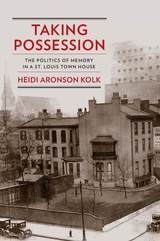
Taking Possession
The Politics of Memory in a St. Louis Town HouseHeidi Aronson Kolk
University of Massachusetts Press, 2019
In Taking Possession, Heidi Aronson Kolk explores the complex and sometimes contradictory motivations for safeguarding the house as a site of public memory. Crafting narratives about the past that comforted business elites and white middle-class patrons, museum promoters assuaged concerns about the city's most pressing problems, including racial and economic inequality, segregation and privatization, and the legacies of violence for which St. Louis has been known since Ferguson. Kolk's case study illuminates the processes by which civic pride and cultural solidarity have been manufactured in a fragmented and turbulent city, showing how closely linked are acts of memory and forgetting, nostalgia and shame.
Texan Identities
Moving beyond Myth, Memory, and Fallacy in Texas HistoryLight Townsend Cummins
University of North Texas Press, 2016
The Amalgamation Waltz
Race, Performance, and the Ruses of MemoryTavia Nyong’o
University of Minnesota Press, 2009
Does racial hybridity offer a future beyond racial difference?
At a time when the idea of a postracial society has entered public discourse, The Amalgamation Waltz investigates the practices that conjoined blackness and whiteness in the nineteenth and twentieth centuries. Scrutinizing widely diverse texts—archival, musical, visual, and theatrical—Tavia Nyong’o traces the genealogy of racial hybridity, analyzing how key events in the nineteenth century spawned a debate about interracialism that lives on today.
Deeply interested in how discussions of racial hybridity have portrayed the hybrid as the recurring hope for a distant raceless future, Nyong’o is concerned with the ways this discourse deploys the figure of the racial hybrid as an alibi for a nationalism that reinvents the racist logics it claims to have broken with. As Nyong’o demonstrates, the rise of a pervasive image of racially anomalous bodies responded to the appearance of an independent black public sphere and organized politics of black uplift. This newfound mobility was apprehended in the political imaginary as a bodily and sexual scandal, and the resultant amalgamation discourse, he argues, must be recognized as one of the earliest and most enduring national dialogues on sex and sexuality. Nyong’o tracks the emergence of the concept of the racial hybrid as an ideological modernization of the older concept of the mongrel and shows how this revision brought race-thinking in line with new understandings of sex and gender, providing a racial context for the shift toward modern heterosexuality, the discourse on which postracial metaphors so frequently rely. A timely rebuttal to our contemporary fascination with racial hybridity, The Amalgamation Waltz questions the vision of a national future without racial difference or conflict.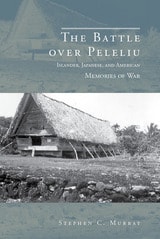
The Battle over Peleliu
Islander, Japanese, and American Memories of WarStephen C. Murray
University of Alabama Press, 2016
The expansionist Japanese empire annexed the inhabited archipelago of Palau in 1914. The airbase built on Peleliu Island became a target for attack by the United States in World War II. The Battle over Peleliu: Islander, Japanese, and American Memories of War offers an ethnographic study of how Palau and Peleliu were transformed by warring great powers and further explores how their conflict is remembered differently by the three peoples who shared that experience.
Author Stephen C. Murray uses oral histories from Peleliu’s elders to reconstruct the island’s prewar way of life, offering a fascinating explanation of the role of land and place in island culture. To Palauans, history is conceived geographically, not chronologically. Land and landmarks are both the substance of history and the mnemonic triggers that recall the past. Murray then offers a detailed account of the 1944 US invasion against entrenched Japanese forces on Peleliu, a seventy-four-day campaign that razed villages, farms, ancestral cemeteries, beaches, and forests, and with them, many of the key nodes of memory and identity.
Murray also explores how Islanders’ memories of the battle as shattering their way of life differ radically from the ways Japanese and Americans remember the engagement in their histories, memoirs, fiction, monuments, and tours of Peleliu. Determination to retrieve the remains of 11,000 Japanese soldiers from the caves of Peleliu has driven high-profile civic groups from across the Japanese political spectrum to the island. Contemporary Japan continues to debate pacifist, right-wing apologist, and other interpretations of its aggression in Asia and the Pacific. These disputes are exported to Peleliu, and subtly frame how Japanese commemoration portrays the battle in stone and ritual. Americans, victors in the battle, return to the archipelago in far fewer numbers. For them, the conflict remains controversial but is most often submerged into the narrative of “the good war.”
The Battle over Peleliu is a study of public memory, and the ways three peoples swept up in conflict struggle to create a common understanding of the tragedy they share.
The Battles of Germantown
Effective Public History in AmericaDavid W. Young
Temple University Press, 2019
2020 Philip S. Klein Book Prize Winner, Pennsylvania Historical Association
Known as America’s most historic neighborhood, the Germantown section of Philadelphia (established in 1683) has distinguished itself by using public history initiatives to forge community. Progressive programs about ethnic history, postwar urban planning, and civil rights have helped make historic preservation and public history meaningful. The Battles of Germantown considers what these efforts can tell us about public history’s practice and purpose in the United States.
Author David Young, a neighborhood resident who worked at Germantown historic sites for decades, uses his practitioner’s perspective to give examples of what he calls “effective public history.” The Battles of Germantown shows how the region celebrated “Negro Achievement Week” in 1928 and, for example, how social history research proved that the neighborhood’s Johnson House was a station on the Underground Railroad. These encounters have useful implications for addressing questions of race, history, and memory, as well as issues of urban planning and economic revitalization.
Germantown’s historic sites use public history and provide leadership to motivate residents in an area challenged by job loss, population change, and institutional inertia. The Battles of Germantown illustrates how understanding and engaging with the past can benefit communities today.
The Dance That Makes You Vanish
Cultural Reconstruction in Post-Genocide IndonesiaRachmi Diyah Larasati
University of Minnesota Press, 2013
Indonesian court dance, a purportedly pure and untouched tradition, is famed throughout the world for its sublime calm and stillness. Yet this unyieldingly peaceful surface conceals a time of political repression and mass killing. Between 1965 and 1966, some one million Indonesians—including a large percentage of the country’s musicians, artists, and dancers—were killed, arrested, or disappeared as Suharto established a virtual dictatorship that ruled for the next thirty years.
In The Dance That Makes You Vanish, an examination of the relationship between female dancers and the Indonesian state since 1965, Rachmi Diyah Larasati elucidates the Suharto regime’s dual-edged strategy: persecuting and killing performers perceived as communist or left leaning while simultaneously producing and deploying “replicas”—new bodies trained to standardize and unify the “unruly” movements and voices of those vanished—as idealized representatives of Indonesia’s cultural elegance and composure in bowing to autocratic rule. Analyzing this history, Larasati shows how the Suharto regime’s obsessive attempts to control and harness Indonesian dance for its own political ends have functioned as both smoke screen and smoke signal, inadvertently drawing attention to the site of state violence and criminality by constantly pointing out the “perfection” of the mask that covers it.
Reflecting on her own experiences as an Indonesian national troupe dancer from a family of persecuted female dancers and activists, Larasati brings to life a powerful, multifaceted investigation of the pervasive use of culture as a vehicle for state repression and the global mass-marketing of national identity.
The End of the Future
Trauma, Memory, and Reconciliation in Peruvian AmazoniaBartholomew Dean
Vanderbilt University Press, 2023
To give context to the causes and consequences of the MRTA's presence in the lower and central Huallaga, this book relies on the written works and testimony of Sístero García Torres, an MRTA rebel commander; the government's Truth and Reconciliation Commission; MRTA propaganda; media accounts; and critical historical texts. Besides exposing Huallaga Valley human rights abuses, the book's contribution to political anthropology is consequential for its insistence that reconciliation is by no means equivalent to local, Indigenous notions of "justice" or customary forms of dispute resolution. Without deliberately addressing the diverse socio-cultural contours defining overlapping epistemologies of justice, freedom, and communal well-being, enduring reconciliation will likely remain elusive.
The Feeling of Forgetting
Christianity, Race, and Violence in AmericaJohn Corrigan
University of Chicago Press, 2023
The dual traumas of colonialism and slavery are still felt by Native Americans and African Americans as victims of ongoing violence toward people of color today. In The Feeling of Forgetting, John Corrigan calls attention to the trauma experienced by white Americans as perpetrators of this violence. By tracing memory’s role in American Christianity, Corrigan shows how contemporary white Christian nationalism is motivated by a widespread effort to forget the role race plays in American society. White trauma, Corrigan argues, courses through American culture like an underground river that sometimes bursts forth into brutality, terrorism, and insurrection. Tracing the river to its source is a necessary first step toward healing.
The Feeling of History
Islam, Romanticism, and AndalusiaCharles Hirschkind
University of Chicago Press, 2021
Against this xenophobic tendency, The Feeling of History examines the idea of Andalucismo—a modern tradition founded on the principle that contemporary Andalusia is connected in vitally important ways with medieval Islamic Iberia. Charles Hirschkind explores the works and lives of writers, thinkers, poets, artists, and activists, and he shows how, taken together, they constitute an Andalusian sensorium. Hirschkind also carefully traces the various itineraries of Andalucismo, from colonial and anticolonial efforts to contemporary movements supporting immigrant rights. The Feeling of History offers a nuanced view into the way people experience their own past, while also bearing witness to a philosophy of engaging the Middle East that experiments with alternative futures.
The Force of Witness
Contra FeminicideRosa-Linda Fregoso
Duke University Press, 2023
The Haunted West
Memory and Commemoration at the Buffalo Bill Center of the WestGreg Dickinson, Eric Aoki, and Brian L. Ott
University of Alabama Press, 2024
Through incisive analysis of the museum’s five institutions, Greg Dickinson and his coauthors reveal how narratives of Native American heritage, violent colonial settlement, Western art, natural history, and ever‑present gun culture collide to shape a haunted sense of American identity. By tracing the tensions between what is memorialized, what is mythologized, and what is suppressed, the authors expose the ghosts that linger in contemporary understandings of the West and offer a compelling rethinking of how memory and commemoration continue to influence the nation’s cultural imagination.
The High School
Sports, Spirit, and Citizens, 1903-2024Michael A. Messner
Rutgers University Press, 2025
In The High School, acclaimed sociologist Michael A. Messner reads through 120 years of El Gabilan, the yearbook from his own alma mater, Salinas High School in California, where his father taught and coached. Treating the yearbooks as a historical archive, Messner makes surprising discoveries about the school he thought he knew so well. For example, over fifty years before Title IX, the earliest yearbooks gave equal spotlights to boys’ and girls’ athletics, while the cheerleaders were all boys.
Tracing American life and culture from 1903 to 2024, Messner illuminates shifts in social practices at his high school that reflect broader changes in American culture across the twentieth century. The High School spotlights how the meanings and iconography of certain activities have changed radically over the decades, even as the “sports spirit complex”—involving athletes, cheerleaders, band members, and community boosters—has remained a central part of the high school experience. By exploring evolving sports cultures, socioeconomic conditions, racial demographics, and gender norms, Messner offers a fresh perspective on a defining feature of American teenage life.
The Necromantic State
Spectral Remains in the Afterglow of Venezuela's Bolivarian RevolutionIrina R. Troconis
Duke University Press, 2025
The Origins of Bioethics
Remembering When Medicine Went WrongJohn A. Lynch
Michigan State University Press, 2019
The Politics of Memory in Postwar Europe
Richard Ned Lebow, Wulf Kansteiner and Claudio Fogu, eds.
Duke University Press, 2006
An extensive introduction contains reflections on the significance of Europeans’ memories of World War II and a conclusion provides an analysis of the implications of the contributors’ findings for memory studies. These two pieces tease out some of the findings common to all seven countries: for instance, in each nation, the decade and a half between the late 1960s and the mid-1980s was the period of most profound change in the politics of memory. At the same time, the contributors demonstrate that Europeans understand World War II primarily through national frames of reference, which are surprisingly varied. Memories of the war have important ramifications for the democratization of Central and Eastern Europe and the consolidation of the European Union. This volume clarifies how those memories are formed and institutionalized.
Contributors. Claudio Fogu, Richard J. Golsan, Wulf Kansteiner, Richard Ned Lebow, Regula Ludi, Annamaria Orla-Bukowska, Heidemarie Uhl, Thomas C. Wolfe
The Repeating Body
Slavery's Visual Resonance in the ContemporaryKimberly Juanita Brown
Duke University Press, 2015
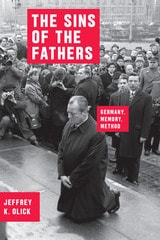
The Sins of the Fathers
Germany, Memory, MethodJeffrey K. Olick
University of Chicago Press, 2016
Nowhere has this precarious balance been more potent, or important, than in the Federal Republic of Germany, where the devastation and atrocities of two world wars have weighed heavily in virtually every moment and aspect of political life. The Sins of the Fathers confronts that difficulty head-on, exploring the variety of ways that Germany’s leaders since 1949 have attempted to meet this challenge, with a particular focus on how those approaches have changed over time. Jeffrey K. Olick asserts that other nations are looking to Germany as an example of how a society can confront a dark past—casting Germany as our model of difficult collective memory.
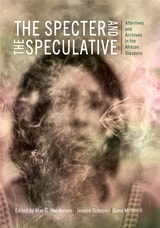
The Specter and the Speculative
Afterlives and Archives in the African DiasporaMae G. Henderson
Rutgers University Press, 2024
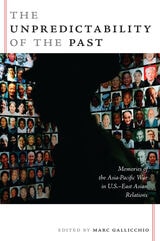
The Unpredictability of the Past
Memories of the Asia-Pacific War in U.S.-East Asian RelationsMarc Gallicchio, ed.
Duke University Press, 2007
The contributors interpret mass media sources, museum displays, monuments, film, and literature, as well as the archival sources traditionally used by historians. They explore how American ideas about Japanese history shaped U.S. occupation policy following Japan’s surrender in 1945, and how memories of the Asia-Pacific War influenced Washington and Tokyo policymakers’ reactions to the postwar rise of Soviet power. They investigate topics from the resurgence of Pearl Harbor images in the U.S. media in the decade before September 11, 2001, to the role of Chinese war museums both within China and in Chinese-Japanese relations, and from the controversy over the Smithsonian Institution’s Enola Gay exhibit to Japanese tourists’ reactions to the USS Arizona memorial at Pearl Harbor. One contributor traces how a narrative commemorating African Americans’ military service during World War II eclipsed the history of their significant early-twentieth-century appreciation of Japan as an ally in the fight against white supremacy. Another looks at the growing recognition and acknowledgment in both the United States and Japan of the Chinese dimension of World War II. By focusing on how memories of the Asia-Pacific War have been contested, imposed, resisted, distorted, and revised, The Unpredictability of the Past demonstrates the crucial role that interpretations of the past play in the present.
Contributors. Marc Gallicchio, Waldo Heinrichs, Haruo Iguchi, Xiaohua Ma, Frank Ninkovich, Emily S. Rosenberg, Takuya Sasaki, Yujin Yaguchi, Daqing Yang
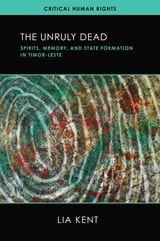
The Unruly Dead
Spirits, Memory, and State Formation in Timor-LesteLia Kent
University of Wisconsin Press, 2024
With generous, careful ethnography and incisive analysis, Kent challenges comfortable, linear narratives of transitional justice and argues that this memory work is reshaping the East Timorese social and political order—a process in which the dead are active, and sometimes disruptive, participants. Community ties and even the landscape itself are imbued with their presence and demands, and the horrific scale of mass death in recent times—at least a third of the population perished during the Indonesian occupation—means Timor-Leste’s dead have real, significant power in the country’s efforts to remember, recover, and reestablish itself.
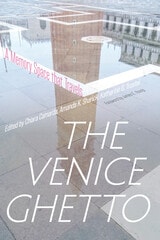
The Venice Ghetto
A Memory Space that TravelsEdited by Chiara Camarda, Amanda K. Sharick, and Katharine G. Trostel
University of Massachusetts Press, 2022
This interdisciplinary collection engages with questions about the history, conditions, and lived experience of the Venice Ghetto, including its legacy as a compulsory, segregated, and enclosed space. Contributors also consider the ghetto's influence on the figure of the Renaissance moneylender, the material culture of the ghetto archive, the urban form of North Africa's mellah and hara, and the ghetto's impact on the writings of Primo Levi and Marjorie Agosín.
In addition to the volume editors, The Venice Ghetto features a foreword from James E. Young and contributions from Shaul Bassi, Murray Baumgarten, Margaux Fitoussi, Dario Miccoli, Andrea Yaakov Lattes, Federica Ruspio, Michael Shapiro, Clive Sinclair, and Emanuela Trevisan Semi.
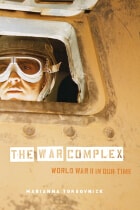
The War Complex
World War II in Our TimeMarianna Torgovnick
University of Chicago Press, 2005
Marianna Torgovnick argues that we have lived, since the end of World War II, under the power of a war complex—a set of repressed ideas and impulses that stems from our unresolved attitudes toward the technological acceleration of mass death. This complex has led to gaps and hesitations in public discourse about atrocities committed during the war itself. And it remains an enduring wartime consciousness, one most recently animated on September 11.
Showing how different events from World War II became prominent in American cultural memory while others went forgotten or remain hidden in plain sight, The War Complex moves deftly from war films and historical works to television specials and popular magazines to define the image and influence of World War II in our time. Torgovnick also explores the 1961 trial of Adolf Eichmann, the emotional legacy of the Holocaust, and the treatment of World War II's missing history by writers such as W. G. Sebald to reveal the unease we feel at our dependence on those who hold the power of total war. Thinking anew, then, about how we account for war to each other and ourselves, Torgovnick ultimately, and movingly, shows how these anxieties and fears have prepared us to think about September 11 and our current war in Iraq.
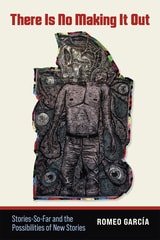
There Is No Making It Out
Stories-So-Far and the Possibilities of New StoriesRomeo García
Utah State University Press, 2025
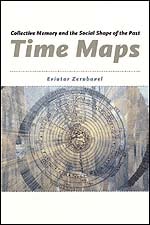
Time Maps
Collective Memory and the Social Shape of the PastEviatar Zerubavel
University of Chicago Press, 2003
Who were the first people to inhabit North America? Does the West Bank belong to the Arabs or the Jews? Why are racists so obsessed with origins? Is a seventh cousin still a cousin? Why do some societies name their children after dead ancestors?
As Eviatar Zerubavel demonstrates in Time Maps, we cannot answer burning questions such as these without a deeper understanding of how we envision the past. In a pioneering attempt to map the structure of our collective memory, Zerubavel considers the cognitive patterns we use to organize the past in our minds and the mental strategies that help us string together unrelated events into coherent and meaningful narratives, as well as the social grammar of battles over conflicting interpretations of history. Drawing on fascinating examples that range from Hiroshima to the Holocaust, from Columbus to Lucy, and from ancient Egypt to the former Yugoslavia, Zerubavel shows how we construct historical origins; how we tie discontinuous events together into stories; how we link families and entire nations through genealogies; and how we separate distinct historical periods from one another through watersheds, such as the invention of fire or the fall of the Berlin Wall.
Most people think the Roman Empire ended in 476, even though it lasted another 977 years in Byzantium. Challenging such conventional wisdom, Time Maps will be must reading for anyone interested in how the history of our world takes shape.
Time Passages
Collective Memory and American Popular CultureGeorge Lipsitz
University of Minnesota Press, 2001
The classic work on collective memory and popular culture in the United States.
Probes the complicated relationship between postwar America between historical memory and commercial culture—popular television, music, and film.
To Rise in Darkness
Revolution, Repression, and Memory in El Salvador, 1920–1932Jeffrey L. Gould, Aldo A. Lauria-Santiago
Duke University Press, 2008
Gould conducted more than two hundred interviews with survivors of la Matanza and their descendants. He and Lauria-Santiago combine individual accounts with documentary sources from archives in El Salvador, Guatemala, Washington, London, and Moscow. They describe the political, economic, and cultural landscape of El Salvador during the 1920s and early 1930s, and offer a detailed narrative of the uprising and massacre. The authors challenge the prevailing idea that the Communist organizers of the uprising and the rural Indians who participated in it were two distinct groups. Gould and Lauria-Santiago demonstrate that many Communist militants were themselves rural Indians, some of whom had been union activists on the coffee plantations for several years prior to the rebellion. Moreover, by meticulously documenting local variations in class relations, ethnic identity, and political commitment, the authors show that those groups considered “Indian” in western El Salvador were far from homogeneous. The united revolutionary movement of January 1932 emerged out of significant cultural difference and conflict.
Tourists of History
Memory, Kitsch, and Consumerism from Oklahoma City to Ground ZeroMarita Sturken
Duke University Press, 2007
Sturken contends that a consumer culture of comfort objects such as World Trade Center snow globes, FDNY teddy bears, and Oklahoma City Memorial t-shirts and branded water, as well as reenactments of traumatic events in memorial and architectural designs, enables a national tendency to see U.S. culture as distant from both history and world politics. A kitsch comfort culture contributes to a “tourist” relationship to history: Americans can feel good about visiting and buying souvenirs at sites of national mourning without having to engage with the economic, social, and political causes of the violent events. While arguing for the importance of remembering tragic losses of life, Sturken is urging attention to a dangerous confluence—of memory, tourism, consumerism, paranoia, security, and kitsch—that promulgates fear to sell safety, offers prepackaged emotion at the expense of critical thought, contains alternative politics, and facilitates public acquiescence in the federal government’s repressive measures at home and its aggressive political and military policies abroad.
Trauma, Taboo, and Truth-Telling
Listening to Silences in Postdictatorship ArgentinaNancy J. Gates-Madsen
University of Wisconsin Press, 2018
Nancy J. Gates-Madsen reads between the lines of Argentine cultural texts (fiction, drama, testimonial narrative, telenovela, documentary film) to explore the fundamental role of silence—the unsaid—in the expression of trauma. Her careful examination of the interplay between textual and contextual silences illuminates public debate about the meaning of memory in Argentina—which stories are being told and, more important, which are being silenced. The imposition of silence is not limited to the military domain or its apologists, she shows; the human rights community also perpetuates and creates taboos.
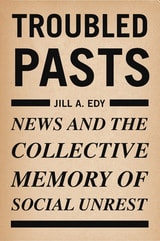
Troubled Pasts
News and the Collective Memory of Social UnrestJill A. Edy
Temple University Press, 2006