Results by title
167 books match the query 'Colorado' and 26 start with t
Tenderfoot in Colorado
Richard Baxter Townshend
University Press of Colorado, 1968
The Archaeology of Class War
The Colorado Coalfield Strike of 1913-1914Karin Larkin
University Press of Colorado, 2009
The Bassett Women
Grace McClure
Ohio University Press, 1985
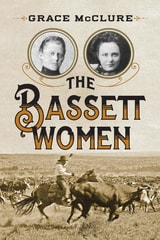
In the late nineteenth century, Brown’s Park, a secluded valley astride the Utah-Colorado border, was a troubled land of deadly conflict among cattle barons, outlaws, rustlers, and small ranchers. Homesteader Elizabeth Bassett gained a tough reputation of her own, and her daughters followed suit, going on to become members of Butch Cassidy and the Wild Bunch’s inner circle. Ann—who counted Cassidy among her lovers—became known as “queen of the cattle rustlers.” Both sisters proved themselves shrewd businesswomen as they fended off hostile takeovers of the family ranch. Through the following decades, the sisters became the stuff of legend, women who embodied the West’s fearsome reputation, yet whose lived experiences were far more nuanced. Ann became a writer. Josie, whose cabin still stands at present-day Dinosaur National Monument, applied her pioneer ethics to a mechanized world and became renowned for her resourcefulness, steadfastness, and audacity.
For The Bassett Women, Grace McClure tracked down and untangled the legends of Brown’s Park, one of the way stations of the fabled “Outlaw Trail,” while creating an evenhanded and indelible portrait of the Bassetts. Based on interviews, written records, newspapers, and archives, The Bassett Women is one of the few credible accounts of early settlers on Colorado’s western slope, one of the last strongholds of the Old West.
The Colorado
Frank Waters
Ohio University Press, 1985
The vast Colorado River collects water from the highest Rocky Mountain peaks and traverses the widest plateaus, the deepest canyons, and the lowest deserts before emptying into the delta of northern Mexico. This austere land and mighty river resist exploration, settlement, and description. But in the hands of one of the West’s great writers, Frank Waters, the history and lore of its past make irresistible reading and a resounding case for mankind’s respect for the environment.
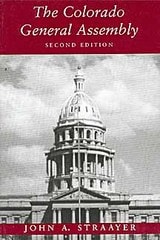
The Colorado General Assembly, Second Edition
John A. Straayer
University Press of Colorado, 2000
The Colorado General Assembly is based on years of author John Straayer's first-hand observations, his review of original documents and secondary sources, and hundred of conversations with lawmakers, lobbyists, members of the legislative staff, executive branch personnel, and journalists.
In this lively, informative book, Straayer describes the formal structure of the Legislature, as well as the all-important process by which bills become or do not become law, and how the power center within the institution can move or kill legislative initiatives. He also examines the clout of the lobby corps, which outnumbers the elected lawmakers five to one; the way the Legislature dominates the budget process; and the manner by which divisions between the two parties, the two houses, and the legislative and executive branches impact the conduct of the public's business under Colorado's gold dome.
The Colorado General Assembly fills a major gap in our knowledge of state government. It will appeal to students and practitioners of politics as well as to those with general interest in civic life.

The Crux
Charlotte Perkins Gilman
Duke University Press, 2003
Dana Seitler’s introduction provides historical context, revealing The Crux as an allegory for social and political anxieties—including the rampant insecurities over contagion and disease—in the United States at the beginning of the twentieth century. Seitler highlights the importance of The Crux to understandings of Gilman’s body of work specifically and early feminism more generally. She shows how the novel complicates critical history by illustrating the biological argument undergirding Gilman’s feminism. Indeed, The Crux demonstrates how popular conceptions of eugenic science were attractive to feminist authors and intellectuals because they suggested that ideologies of national progress and U.S. expansionism depended as much on women and motherhood as on masculine contest.
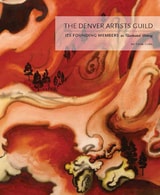
The Denver Artists Guild
Its Founding Members; An Illustrated HistoryStan Cuba
University Press of Colorado, 2015
In 1928, the newly organized Denver Artists Guild held its inaugural exhibition in downtown Denver. Little did the participants realize that their initial effort would survive the Great Depression and World War II—and then outlive all of the group’s fifty-two charter members.
The guild’s founders worked in many media and pursued a variety of styles. In addition to the oils and watercolors one would expect were masterful pastels by Elsie Haddon Haynes, photographs by Laura Gilpin, sculpture by Gladys Caldwell Fisher and Arnold Rönnebeck, ceramics by Anne Van Briggle Ritter and Paul St. Gaudens, and collages by Pansy Stockton. Styles included realism, impressionism, regionalism, surrealism, and abstraction. Murals by Allen True, Vance Kirkland, John E. Thompson, Louise Ronnebeck, and others graced public and private buildings—secular and religious—in Colorado and throughout the United States. The guild’s artists didn’t just contribute to the fine and decorative arts of Colorado; they enhanced the national reputation of the state.
Then, in 1948, the Denver Artists Guild became the stage for a great public debate pitting traditional against modern. The twenty-year-old guild split apart as modernists bolted to form their own group, the Fifteen Colorado Artists. It was a seminal moment: some of the guild’s artists became great modernists, while others remained great traditionalists.
Enhanced by period photographs and reproductions of the founding members’ works, The Denver Artists Guild chronicles a vibrant yet overlooked chapter of Colorado’s cultural history. The book includes a walking tour of guild members’ paintings and sculptures viewable in Denver and elsewhere in Colorado, by Leah Naess and author Stan Cuba.
In honor of the book’s release, the Byers-Evans House Gallery will showcase a collection of founding guild members’ works starting June 26, 2015. The exhibit, also titled The Denver Artists Guild: Its Founding Members, contains paintings from artists such as the famed Paschal Quackenbush, Louise Ronnebeck, Albert Byron Olson, Elisabeth Spalding, Waldo Love and Vance Kirkland. The show will be on display through September 26, 2015.
The Durango South Project
Archaeological Salvage of Two Basketmaker III Sites in the Durango DistrictEdited by John D. Gooding
University of Arizona Press, 1980

The Dust Within the Rock
A NovelFrank Waters
Ohio University Press, 2002
Based on one of the most significant periods in Frank Waters’s own life, Pike’s Peak is perhaps the most complete expression of all the archetypal themes he explored in both fiction and nonfiction.
In The Dust within the Rock, the third book in the Pike’s Peak saga, an aging Joseph Rogier clings to his vision of finding gold in the great mountain and his grandson Marsh comes of age in the Rogier household. It is the early part of the twentieth century, in Colorado Springs, and the schoolhouse, the newsstand, the railroad, the mines, all become part of the younger man’s emergence into adulthood and self-discovery.
Waters’s powerful and intuitive style transforms the tale into a mythic journey, a search for meaning played out in the drama of everyday living on the vast American frontier.
Pike’s Peak (1971) is composed of three condensed novels: The Wild Earth’s Nobility, Below Grass Roots, and The Dust within the Rock. Some years after its publication, an interviewer asked Frank Waters whether it was autobiographical. “Yes,” he replied, “and no.”
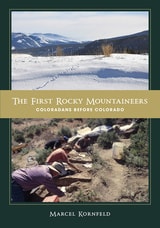
The First Rocky Mountaineers
Coloradans before ColoradoMarcel Kornfeld
University of Utah Press, 2013
Chosen by Foreword as the 2014 bronze winner in science.
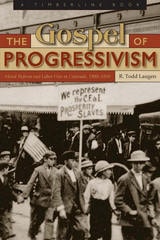
The Gospel of Progressivism
Moral Reform and Labor War in Colorado, 1900-1930R. Todd Laugen
University Press of Colorado, 2010
Sharing enemies like the party boss and corporate lobbyist who undermined honest and responsive government, Progressive leaders were determined to root out selfish political action with public exposure. Labor unions defied bosses and rallied for government protection of workers. Women's clubs appealed to other women as mothers, calling for social welfare, economic justice, and government responsiveness. Protestant church congregations formed a core of support for moral reform. Labor relations experts struggled to prevent the outbreak of violence through mediation between corporate employers and organized labor. Persevering through World War I, Colorado reformers faced their greatest challenge in the 1920s, when leaders of the Ku Klux Klan drew upon the rhetoric of Protestant Progressives and manipulated reform tools to strengthen their own political machine. Once in power, Klan legislators turned on Progressive leaders in the state government.
A story of promising alliances never fully realized, zealous crusaders who resisted compromise, and reforms with unexpected consequences, The Gospel of Progressivism will appeal to those interested in Progressive Era reform, Colorado history, labor relations, and women's activism.

The Interior West
A Fire SurveyStephen J. Pyne
University of Arizona Press, 2018
In this collection of essays, fire historian Stephen J. Pyne explains the relevance of the Interior West to the national fire scene. This region offered the first scientific inquiry into landscape fire in the United States, including a map of Utah burns published in 1878 as part of John Wesley Powell’s Arid Lands report. Then its significance faded, and for most of the 20th century, the Interior West was the hole in the national donut of fire management. Recently the region has returned to prominence due to fires along its front ranges; invasive species, both exotics like cheatgrass and unleashed natives like mountain pine beetle; and fatality fires, notably at South Canyon in 1994.
The Interior West has long been passed over in national fire narratives. Here it reclaims its rightful place.
Included in this volume:
- A summary of 19th- and 20th-century fire history in the Interior West
- How this important region inspired U.S. studies of landscape fire
- Why the region disappeared from national fire management discussions
- How the expansion of invasive species and loss of native species has affected the region’s fire ecology
- The national significance of fire in the Interior West
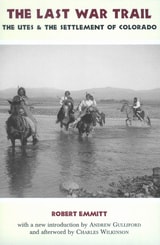
The Last War Trail
The Utes and the Settlement of ColoradoRobert Emmitt
University Press of Colorado, 2000
Written with the care and precision of a finely crafted novel, The Last War Trail was nominated for the Pulitzer Prize when it was first published in 1954. Long out of print and now brought back with new rare photographs and illustrations, The Last War Trail will be eagerly read by anyone trying to understand conflicts of the nineteenth century between Native American and encroaching settlers.

The Olympics that Never Happened
Denver '76 and the Politics of GrowthAdam Berg
University of Texas Press, 2023
A look back at how powerful politicians, business leaders, and a diverse cast of activists used a thwarted Olympics to shape the state of Colorado and the city of Denver.
If you don’t recall the 1976 Denver Olympic Games, it’s because they never happened. The Mile-High City won the right to host the winter games and then was forced by Colorado citizens to back away from its successful Olympic bid through a statewide ballot initiative. Adam Berg details the powerful Colorado regime that gained the games for Denver and the grassroots activism that brought down its Olympic dreams, and he explores the legacy of this milestone moment for the games and politics in the United States.
The ink was hardly dry on Denver’s host agreement when Mexican American and African American urbanites, white middle-class environmentalists, and fiscally concerned local politicians realized opposition to the Olympics provided them new political openings. The Olympics quickly became a platform for taking stands on a range of issues, from conservation to urban livability to the very idea of growth, which for decades had been unquestioned in Colorado. The Olympics That Never Happened argues that hostility to the Olympics galvanized and empowered diverse citizens in a major US city, with long-term ramifications for Colorado and political activism elsewhere. The Olympics themselves were changed forever, compelling organizers to take seriously competing interests from subgroups within their communities.
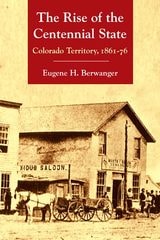
The Rise of the Centennial State
Colorado Territory, 1861-76Eugene H. Berwanger
University of Illinois Press, 2006
A vivid description of Colorado’s beginnings
This is the first single-volume history of the Colorado territory, encompassing the entire territorial period from the beginning of the Civil War to 1876, when Colorado became a state. The Rise of the Centennial State traces the growth of the territory as new technologies increased mining profits and as new modes of transportation--especially the Union Pacific and Kansas Pacific railroads--opened the territory to eastern markets, bringing waves of settlers to farm, ranch, and establish new communities.
Eugene H. Berwanger's history is packed with colorful characters and portraits of sprawling, brawling frontier and mining towns from Denver to Central City. He presents a multifaceted discussion of Colorado's resurgence after the war, with rich discussions of the role of minorities in the territory’s development: Indian-white relations (including discussions of now forgotten battles of Beecher’s Island and Summit Springs, which destroyed the Indians’ hold on the Colorado Plains); the social segregation of blacks in Denver; and Mexican Americans’ displeasure at being separated from the Hispano culture of New Mexico. Berwanger also demonstrates the decisive role of Colorado’s admission to statehood in swinging the disputed presidential election of 1876 to the Republican candidate, Rutherford B. Hayes.
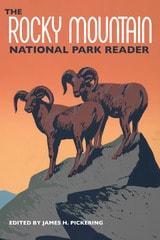
The Rocky Mountain National Park Reader
James H. Pickering
University of Utah Press, 2015
Representative both in subject and approach, the selections reach back to Arapaho and pioneer times before the park was established and move forward to span its entire first century. The voices that speak to us are distinctive: among them are Irish sportsman Windham Thomas Wyndham-Quin, the Fourth Earl of Dunraven; British travel writer Isabella Bird; mountaineer Frederick Chapin; naturalist Enos Mills; iconic ranger Jack Moomaw and his fictional counterpart, Dorr Yeager’s Bob Flame; and contemporary nature writers Anne Zwinger and SueEllen Campbell—to mention but a few. Some tell us about the past, recalling moments of personal triumph and tragedy. Other voices are quieter; some are more polemic. All capture and share a part of the national treasure that is Rocky Mountain National Park.
The first of its kind, this original collection is a rich literary and historical compendium of the best that has been written about Rocky Mountain National Park. As such it provides an indispensable introduction to the nation’s twelfth national park.
Part of the National Park Reader series, edited by Lance Newman and David Stanley
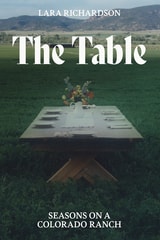
The Table
Seasons on a Colorado RanchLara Richardson
University Press of Colorado, 2024
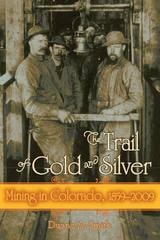
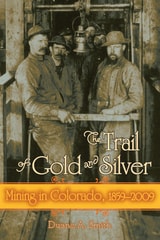
The Trail of Gold and Silver
Mining in Colorado, 1859-2009Duane A. Smith
University Press of Colorado, 2009
Written in a lively manner by one of Colorado's preeminent historians, this book honors the 2009 sesquicentennial of Colorado's gold rush. Smith's narrative will appeal to anybody with an interest in the state's fascinating mining history over the past 150 years.
The Wild Earth’s Nobility
A NovelFrank Waters
Ohio University Press, 2002
The Wild Earth’s Nobility is the first of Frank Waters’s semiautobiographical novels in the Pikes Peak saga. Here, in a frontier town in the shadow of the commanding mountain, the Rogier family settles near an age-old route of migrating Native Americans. In an era of prospecting, silver strikes, and frenzied mining, Joseph Rogier becomes a successful building contractor, rears a large family, and is gradually overwhelmed by the power of the great peak.
In Waters’s visionary prose, the story becomes a mythic journey to reconcile instinct and reason, consciousness and intuition, and the powerful emotions of a family struggling with its own dreams and human limitations.
Frank Waters (1902-1995), one of the finest chroniclers of the American Southwest, wrote twenty-eight works of fiction and nonfiction. Of Pike’s Peak (1971), the Chicago Daily News wrote, “It is a product of maturity, written with a sustained strength and beauty of style rarely found in fiction today.”
Pike’s Peak is composed of three condensed novels: The Wild Earth’s Nobility, Below Grass Roots, and The Dust within the Rock.
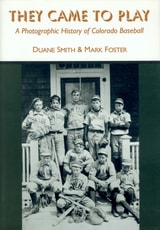
They Came to Play
A Photographic History of Colorado BaseballDuane A. Smith
University Press of Colorado, 2012
In They Came To Play: A Photographic History of Colorado Baseball, historians and avid baseball fans Duane Smith and Mark Foster have collected the finest historic baseball photographs of teams, players, and games from around the state. They are all here, the town teams, company teams, early professional clubs, and the ethnic teams that made baseball an integral part of the life and times in Colorado's mountain towns, prairie hamlets, and bustling frontier cities. Combined with the wonderful photographs and captions is an essay that brings baseball's rich heritage in Colorado to life for the reader.
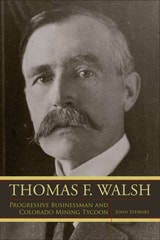
Thomas F. Walsh
Progressive Businessman and Colorado Mining TycoonJohn Stewart
University Press of Colorado, 2007
In the first complete biography of Thomas Walsh, John Stewart recounts the tycoon's life from his birth in 1850 and his beginnings as a millwright and carpenter in Ireland to his tenacious, often fruitless mining work in the Black Hills and Colorado, which finally led to his discovery of an extremely rich vein of gold ore in the Imogene Basin. Walsh's Camp Bird Mine yielded more than $20 million worth of gold and other minerals in twenty years, and the mine's 1902 sale to British investors made Walsh very wealthy.
He achieved national prominence, living with his family in mansions in Colorado and Washington, D.C., and maintaining a rapport with Presidents McKinley, Theodore Roosevelt, and Taft, as well as King Leopold II of Belgium.
Despite his fame and lavish lifestyle, Walsh is remembered as an unassuming and philanthropic man who treated his employees well. In addition to making many anonymous donations, he established the Walsh Library in Ouray and a library near his Irish birthplace, and helped establish a research fund for the study of radium and other rare western minerals at the Colorado School of Mines. Walsh gave his employees at the Camp Bird Mine top pay and lodged them in an alpine boardinghouse featuring porcelain basins, electric lighting, and excellent food.
Stewart's engaging account explores the exceptional path of this Colorado mogul in detail, bringing Walsh and his time to life.

Thunder Tree
Lessons from an Urban WildlandRobert Michael Pyle
Oregon State University Press, 2011
Timberline Tailings
Tales Of Colorado'S Ghost Towns And Mining CampsMuriel Sibell Wolle
Ohio University Press, 1993
Trail Of Gold & Silver
D Smith
University Press of Colorado, 2009
Treasure Tales of the Rockies
Perry Eberhart
Ohio University Press, 1990
Perry Eberhart gathered and researched almost 150 treasure tales and tells them with the same thoroughness, engaging style, and lively anecdotes that distinguish his other major contribution to Colorado lore and history: Guide to the Colorado Ghost Towns and Mining Camps.
Treasure Tales not only tells the original story of a lost mine or a buried treasure, but also fills in the pieces of the puzzle as they have come to light over the years. Many tales become more and more intriguing — but still remain a puzzle. In some cases the puzzle is solved, often accidentally. Eberhart also collects the fascinating tales of lost treasures found. This latest edition of Treasure Tales brings all of this information up to date.
Forty-three maps by Sandy Eberhart and forty-eight well-chosen photographs round out Treasure Tales. This is a book for both armchair excitement and for the adventurer who wants to search out what nature, time, and man's ingenuity have hidden from us — and what nature, time, and man's ingenuity also often help us find. Good luck!
Troubled Trails
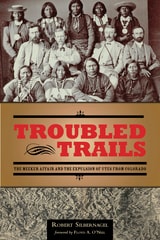
The Meeker Affair and the Expulsion of Utes from ColoradoRobert Silbernagel
University of Utah Press, 2011
When U.S. Cavalry troops rode onto the Ute Indian Reservation in northwestern Colorado on September 29, 1879, they triggered a chain of events that cost the Utes their homeland: a deadly battle at Milk Creek, the killing of all men at the Indian agency headed by Nathan Meeker, and the taking of three women and two children who were held hostage for 23 days. The Utes didn’t seek a fight with the whites, most of whom they viewed as friends. However, powerful whites in Colorado wanted the Utes expelled. The Meeker affair was an opportunity to achieve that.
In Troubled Trails, Robert Silbernagel casts new light on the story of the Meeker Affair. Using details from historical interview transcripts and newspaper articles, he reveals the personalities of the major characters—both Indian and non-Indian. He tells the story from many perspectives, including that of Indian Agent Nathan Meeker; the U.S. military; Nicaagat, a leader of the White River Utes; and Josephine Meeker, Nathan Meeker’s daughter, who was held hostage by the Utes. Silbernagel took great pains to tell a complete story, even following on horseback the trail taken by the Utes. As a result, his book paints a multifaceted picture of what took place and, most importantly, his portrayal brings the Ute side of the story into focus.