Results by title
324 books match the query 'Comparative literature' and 71 start with t

Tangential Terrains
Cormac McCarthy's GeoaestheticsStefanie Heine
University of Nevada Press, 2026
Blood Meridian’s emergent geoaesthetics reveals forces operating according to other-than-human principles, as literary desert terrains retain a passive resistance, or weak agency, which presents a radical disturbance of anthropocentrism, mirrored in the novel’s style. Though the mediated unstable deserts in Blood Meridian defy appropriation, they are neither untouched nor untouchable: the borderlands bear the wounds and “blood meridians” of a non-chronological history of violence, tangential to the massacres of Native American and Mexican peoples depicted in the novel.
Stefanie Heine’s reading of Blood Meridian offers a crucial contribution to and intervention in contemporary ecocriticism, Anthropocene criticism, and New Materialist theories, encouraging readers to critically rethink customary notions of entanglement, kinship, and agency.
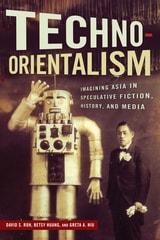
Techno-Orientalism
Imagining Asia in Speculative Fiction, History, and MediaRoh, David S.
Rutgers University Press, 2015
Technologies of Empire
Writing, Imagination, and the Making of Imperial Networks, 1750–1820Dermot Ryan
University of Delaware Press, 2013
Published by University of Delaware Press. Distributed worldwide by Rutgers University Press.

Textual Confrontations
Comparative Readings in Latin American LiteratureAlfred J. Mac Adam
University of Chicago Press, 1987
Mac Adam describes the changes that have taken place in Latin American literature since the time of Modernismo (roughly 1880-1920), when Spanish American writers tried to update their literary language by imitating foreign, mostly French, literature. Since then, as he demonstrates, Latin American writing has achieved a pioneering status by means of a different kind of imitation—parody—whereby it gives back to the former centers of Western culture their own writing, now distorted and reshaped into something new.
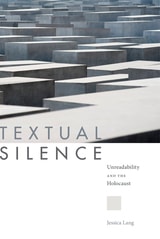
Textual Silence
Unreadability and the HolocaustLang, Jessica
Rutgers University Press, 2017
Holocaust texts, which encompass works as diverse as memoirs, novels, poems, and diaries, are traditionally characterized by silences the authors place throughout the text, both deliberately and unconsciously. While a reader may have the desire and will to comprehend the Holocaust, the presence of “textual silence” is a force that removes the experience of genocide from the reader’s analysis and imaginative recourse. Lang defines silences as omissions that take many forms, including the use of italics and quotation marks, ellipses and blank pages in poetry, and the presence of unreliable narrators in fiction. While this limits the reader’s ability to read in any conventional sense, these silences are not flaws. They are instead a critical presence that forces readers to acknowledge how words and meaning can diverge in the face of events as unimaginable as those of the Holocaust.
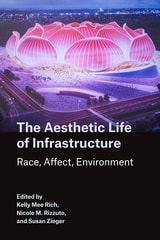
The Aesthetic Life of Infrastructure
Race, Affect, EnvironmentEdited by Kelly M. Rich, Nicole M. Rizzuto, and Susan Zieger
Northwestern University Press, 2023
A critical reading of the unstable structures that organize biological and social life
This timely and radically interdisciplinary volume uncovers the aesthetics and politics of infrastructure. From roads and bridges to harbors and canals, infrastructure is conventionally understood as the public works that allow for the circulation of capital. Yet this naturalized concept of infrastructure, driven by capital’s restless expansion, is haunted by imperial tendencies to occupy territory, extract resources, and organize life. Infrastructure thus undergirds the living nexus of modernity in an ongoing project of racialization, affective embodiment, and environmental praxis. Rather than merely making visible infrastructure’s modes of power, however, The Aesthetic Life of Infrastructure brings literary methods to bear on the interpretive terrain, reading infrastructural space and temporalities to show that their aesthetic and sensorial experience cannot be understood apart from histories of production and political economies.
Building on critical infrastructure studies in anthropology, geography, and media studies, this collection demonstrates the field’s vitality to scholars working across the humanities, including in literary, visual, and cultural studies. By querying the presumed invisibility of infrastructure’s hidden life, the volume’s contributors revitalize ongoing literary debates about reading surface and depth. How, they ask, might infrastructure and aesthetics then function as epistemic tools for rethinking each other? And what urgency do they acquire in light of current crises that bear on death, whether biological, social, or planetary?
The Age of the World Target
Self-Referentiality in War, Theory, and Comparative WorkRey Chow
Duke University Press, 2006
The American New Woman Revisited
A Reader, 1894-1930Patterson, Martha H
Rutgers University Press, 2008
In North America between 1894 and 1930, the rise of the “New Woman” sparked controversy on both sides of the Atlantic and around the world. As she demanded a public voice as well as private fulfillment through work, education, and politics, American journalists debated and defined her. Who was she and where did she come from? Was she to be celebrated as the agent of progress or reviled as a traitor to the traditional family? Over time, the dominant version of the American New Woman became typified as white, educated, and middle class: the suffragist, progressive reformer, and bloomer-wearing bicyclist. By the 1920s, the jazz-dancing flapper epitomized her. Yet she also had many other faces.
Bringing together a diverse range of essays from the periodical press of the late nineteenth and early twentieth centuries, Martha H. Patterson shows how the New Woman differed according to region, class, politics, race, ethnicity, and historical circumstance. In addition to the New Woman’s prevailing incarnations, she appears here as a gun-wielding heroine, imperialist symbol, assimilationist icon, entrepreneur, socialist, anarchist, thief, vamp, and eugenicist. Together, these readings redefine our understanding of the New Woman and her cultural impact.
The Art of Time
Levinas, Ethics, and the Contemporary Peninsular NovelNina L. Molinaro
Bucknell University Press, 2019
Academicians and journalists in Spain and abroad have recently fastened on an emerging cluster of peninsular writers who, they argue, pertain to a discernible literary generation, provisionally referred to as Generación X. These writers are distinct from their predecessors; they and their literary texts are closely related to the specific socio-political and historical circumstances in Spain and their novels relate stories of more and less proximity, more and less responsibility, and more and less temporality. In short, they trace the temporal movement of alterity through narrative.
Published by Bucknell University Press. Distributed worldwide by Rutgers University Press.
The Autobiography of Citizenship
Assimilation and Resistance in U.S. EducationCooper, Tova
Rutgers University Press, 0
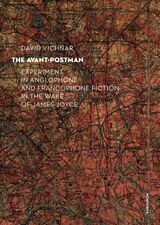
The Avant-Postman
Experiment in Anglophone and Francophone Fiction in the Wake of James JoyceDavid Vichnar
Karolinum Press, 2022
The Avant-Postman explores a broad range of innovative postwar writing from France, Britain, and the United States. Taking James Joyce’s Ulysses and Finnegans Wake as a joint starting point, David Vichnar draws genealogical lines from there through the work of more than fifty writers up to very recent years, including William Burroughs, B. S. Johnson, Ian Sinclair, Kathy Acker, Alan Moore, David Foster Wallace, and many others. Centering the exploration around five strategies employed by Joyce—narrative parallax, stylistic metempsychosis, concrete writing, forgery, and neologizing the logos—the book reveals the striking continuities and developments from Joyce’s day to our own.
The Barbara Johnson Collective
Edited by Devin M. Garofalo and Nathan K. Hensley
Northwestern University Press, 2027
Collaboratively reassesses Barbara Johnson’s legacy as a reader and thinker with an eye to contemporary conditions
Across an archive of essays on abortion and race, Mallarmé and Melville, feminist philosophy, rhetorical device, and pedagogical method, Barbara Johnson built a legacy of thought whose energies reverberate into the present. This collected volume gathers writers and critics from a range of North American higher educational settings to engage with this essential but still often underappreciated critic in a time of renewed and deepening crisis.
In Zoom meetings and shared essays, across a virtualized map of today’s academic and para-academic worlds, the group assessed how the rolling catastrophes of late neoliberalism continue to stage the sort of analogy Johnson herself would highlight between patriarchy, capitalism, ecocide, and other forms of structural violence. Emerging from that assemblage, this experimental collection tracks Johnson’s efforts to link literary reading with concrete matters of personhood and care at a moment when the very system of higher education that enabled Johnson’s work in the 1980s and 1990s faces existential threat. The frozen record of a live experience, the book is an impure procedure, tangled in the idiom of its own unfolding: a temporary culmination of an ongoing collaborative undertaking that will always remain unfinished.
The Baroque Night
Spencer Golub
Northwestern University Press, 2018
The Baroque Night draws upon materials that have not previously been included in studies of either the baroque or film noir, while offering new perspectives on other, more familiar sources. Leibniz's concepts of the monad and compossibility provide organizing thought models, and death, fear, and mental illness cast their anamorphic images across surfaces that are deeper and closer than they at first appear. Key characters and situations in the book derive from the works of Alfred Hitchcock, Henri-Georges Clozot, Jean-Pierre Melville, Oscar Wilde, Georges Perec, Patricia Highsmith, William Shakespeare, Jean Racine, Pierre Corneille, and Arthur Conan Doyle, among many others.
This is virtuality and reality for the phobic, making it a fascinating and viable document of and episteme for the anxious age in which we (always) find ourselves living, though not yet fully alive. This performance of suspect evidence speaks to and in the ways we are organically inauthentic, the cause of our own causality and our own worst eyewitnesses to all that appears and disappears in space and time.
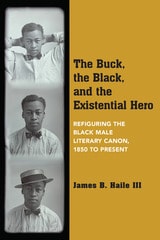
The Buck, the Black, and the Existential Hero
Refiguring the Black Male Literary Canon, 1850 to PresentJames B. Haile III
Northwestern University Press, 2020
The Buck, the Black, and the Existential Hero: Refiguring the Black Male Literary Canon, 1850 to Present combines philosophy, literary theory, and jazz studies with Africana studies to develop a theory of the black male literary imagination. In doing so, it seeks to answer fundamental aesthetic and existential questions: How does the experience of being black and male in the modern West affect the telling of a narrative, the shape or structure of a novel, the development of characters and plot lines, and the nature of criticism itself?
James B. Haile argues that, since black male identity is largely fluid and open to interpretation, reinterpretation, and misinterpretation, the literature of black men has developed flexibility and improvisation, termed the “jazz of life.” Our reading of this literature requires the same kind of flexibility and improvisation to understand what is being said and why, as well as what is not being said and why. Finally, the book attempts to offer this new reading experience by placing texts by well-known authors, such as Frederick Douglass, Ralph Ellison, and Colson Whitehead, in conversation with texts by those who are less well known and those who have, for the most part, been forgotten, in particular, Cecil Brown. Doing so challenges the reader to visit and revisit these novels with a new perspective about the social, political, historical, and psychic realities of black men.
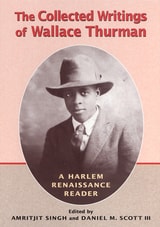
The Collected Writings of Wallace Thurman
A Harlem Renaissance ReaderSingh, Amritjit
Rutgers University Press, 2003
This book is the definitive collection of the writings of Wallace Thurman (1902-1934), providing a comprehensive anthology of both the published and unpublished works of this bohemian, bisexual writer. Widely regarded as the enfant terrible of the Harlem Renaissance scene, Thurman was a leader among a group of young artists and intellectuals that included, among others, Langston Hughes, Zora Neale Hurston, Richard Bruce Nugent, Gwendolyn Bennett, and Aaron Douglas. Through the publication of magazines such as FIRE!! and Harlem: A Forum of Negro Life, Thurman tried to organize the opposition of the younger generation against the programmatic and promotional ideologies of the older generation of black leaders and intellectuals such as W.E.B. Du Bois and Benjamin Brawley. Thurman also left a permanent mark on the period through his prolific work as a novelist, playwright, short story writer, and literary critic, as well as by claiming for himself a voice as a public intellectual.
The Collected Writings of Wallace Thurman is divided into eight sections to highlight the variety of genres and styles Thurman practiced as he courageously pursued controversial subjects throughout his short and brilliant career. It includes Essays on Harlem, Social Essays and Journalism, Correspondence, Literary Essays and Reviews, Poetry and Short Fiction, Plays, and Excerpts from Novel.
Filling an important gap in Harlem Renaissance literature, this collection brings together all of Thurman’s essays, nearly all of his letters to major black and white figures of the 1920s, and three previously unpublished major works. These books are Aunt Hagar’s Children, which is a collection of essays and two full-length plays, Harlem, and Jeremiah the Magnificent. The introduction to the volume, along with the carefully researched introductory notes to each of the eight sections, provides a challenging new reevaluation of Thurman and the Harlem Renaissance for both the general reader and scholar.
The Dark Thread
From Tragical Histories to Gothic TalesJohn D. Lyons
University of Delaware Press, 2011
Published by University of Delaware Press. Distributed worldwide by Rutgers University Press.
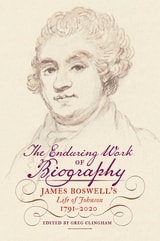
The Enduring Work of Biography
James Boswell’s Life of Johnson, 1791–2020Greg Clingham
University of Delaware Press, 2026
The Enduring Work of Biography seeks to revitalize appreciation of Boswell’s great biography for a new generation of scholars, students, and general readers. Engaging accessibly and informatively with biographical, historical, critical, and textual matters and drawing on the Yale Edition of the Private Papers of James Boswell, Enduring Work discusses Boswell’s collaboration with others (both alive and dead) in researching, writing, revising, proofing, publishing, and promoting his biography of Johnson. Central to Boswell’s concept of life writing is memory, and Enduring Work highlights both its dynamic and collaborative force in the Life of Johnson. This collection is book-ended by an introduction that considers the critical reception of the Life of Johnson and an epilogue that suggests its continuing critical insight and relevance. A closing chapter and two appendixes survey the history of the Life of Johnson as a best-selling book for over two centuries, an extraordinary collaboration between readers and publishers and between Boswell and Johnson themselves that is still evolving.
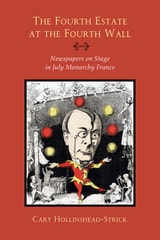
The Fourth Estate at the Fourth Wall
Newspapers on Stage in July Monarchy FranceCary Hollinshead-Strick
Northwestern University Press, 2019
July Monarchy plays, which provided affordable entertainment to a broad section of the public, constitute a large, nearly untapped reservoir of commentary on the arrival of the forty-franc press. Vaudevilles and comedies ask whether journalism that benefits from advertisement can be unbiased. Dramas explore whether threatening to spread false news is an acceptable way for journalists to exercise their influence. Hollinshead-Strick uses both plays and novels to show that despite their claims to enlighten their readers, newspapers were often accused of obscuring public access to information. Balzac’s interventions in this media sphere reveal his utopian views on print technology. Nerval’s and Pyat’s demonstrate the nefarious impact that corrupt theater critics could have on authors and on the public alike.
Scholars of press and media studies, French literature, theater, and nineteenth-century literature more generally will find this book a valuable introduction to a cross-genre debate about press publicity that remains surprisingly resonant today.
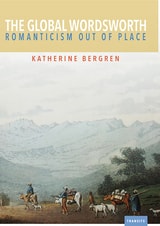
The Global Wordsworth
Romanticism Out of PlaceBergren, Katherine
Bucknell University Press, 2019
Published by Bucknell University Press. Distributed worldwide by Rutgers University Press.
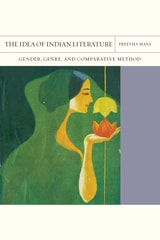
The Idea of Indian Literature
Gender, Genre, and Comparative MethodPreetha Mani
Northwestern University Press, 2022
Indian literature is not a corpus of texts or literary concepts from India, argues Preetha Mani, but a provocation that seeks to resolve the relationship between language and literature, written in as well as against English. Examining canonical Hindi and Tamil short stories from the crucial decades surrounding decolonization, Mani contends that Indian literature must be understood as indeterminate, propositional, and reflective of changing dynamics between local, regional, national, and global readerships. In The Idea of Indian Literature, she explores the paradox that a single canon can be written in multiple languages, each with their own evolving relationships to one another and to English.
Hindi, representing national aspirations, and Tamil, epitomizing the secessionist propensities of the region, are conventionally viewed as poles of the multilingual continuum within Indian literature. Mani shows, however, that during the twentieth century, these literatures were coconstitutive of one another and of the idea of Indian literature itself. The writers discussed here—from short-story forefathers Premchand and Pudumaippittan to women trailblazers Mannu Bhandari and R. Chudamani—imagined a pan-Indian literature based on literary, rather than linguistic, norms, even as their aims were profoundly shaped by discussions of belonging unique to regional identity. Tracing representations of gender and the uses of genre in the shifting thematic and aesthetic practices of short vernacular prose writing, the book offers a view of the Indian literary landscape as itself a field for comparative literature.
The Imaginary and Its Worlds
American Studies after the Transnational TurnEdited by Laura Bieger, Ramón Saldívar, and Johannes Voelz
Dartmouth College Press, 2013
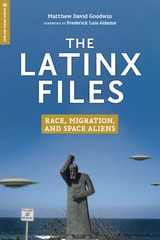
The Latinx Files
Race, Migration, and Space AliensMatthew David Goodwin
Rutgers University Press, 2021
The Limits of Orientalism
Seventeenth-Century Representations of IndiaRahul Sapra
University of Delaware Press, 2011
The Limits of Orientalism: Seventeenth-Century Representations of India challenges the recent postcolonial readings of European, predominantly English, representations of India in the seventeenth century. Following Edward Said’s discourse of “Orientalism,” most postcolonial analyses of the seventeenth-century representations of India argue that the natives are represented as barbaric or exotic “others,” imagining these representations as products of colonial ideology. Such approaches tend to offer a homogeneous idea of the “native” and usually equate it with the term “Indian.” Sapra, however, argues that instead of representing all natives as barbaric “others,” the English drew parallels, especially between themselves and the Mughal aristocracy, associating with them as partners in trade and potential allies in war. While the Muslims are from the outset largely portrayed as highly civilized and cultured, early European writers tended to be more conflicted with Hindus, their first highly negative views undergoing a transformation that brings into question any straightforward Orientalist reading of the texts and anticipates the complexity of later representations of the indigenous peoples of the sub-continent.
Sapra’s theoretical and methodological approach is influenced by such writers as Aijaz Ahmad and Denis Porter, who have highlighted powerful alternatives to Said’s discourse of “Orientalism.” Sapra historicizes European representations of the indigenous to draw attention to the contrasting approaches of the Portuguese, the Dutch and the English in relation to seventeenth-century India, effectively undermining comfortable notions of a homogenous “West.” Unlike the Portuguese, for whom the idea of a dynasty and the conversion of heathens went hand in hand with the idea of trade, for the Dutch and the English the primary consideration was commercial. In keeping with the commercial approach of the English East India Company, most English travelers, instead of representing the Muslims as barbaric “others,” highlight the compatibility between the two cultures and consistently praise the Mughal empire for its religious tolerance. In the representations of the Hindus, Sapra demonstrates that most writers, even while denigrating the Hindu religion, appreciate the civilized society of the Hindus. Moreover, in the representations of sati or widow-burning, a distinction needs to be made between the patriarchal and the Orientalist points of views, which are at variance with each other. The tension between the patriarchal and the Orientalist positions challenges Gayatri Chakravorty Spivak’s analysis of sati in “Can the Subaltern Speak?” which has become the standard model for most postcolonial appraisals of European representations of sati. The book highlights the lacuna in postcolonial readings by providing access to selections of commonly unavailable early-modern writings by Thomas Roe, Edward Terry, Henry Lord, Thomas Coryate, Alexander Hamilton and other the records of the East India Company, which makes the book vital for students of theory, European and South-Asian history, and Renaissance literatures.
Published by University of Delaware Press. Distributed worldwide by Rutgers University Press.
The Modernist Bestiary
Translating Animals and the Arts with Guillaume Apollinaire, Raoul Dufy and Graham SutherlandEdited by Sarah Kay and Timothy Mathews
University College London, 2020
The New Anthology of American Poetry
Postmodernisms 1950-PresentAxelrod, Steven Gould
Rutgers University Press, 2012
Steven Gould Axelrod, Camille Roman, and Thomas Travisano continue the standard of excellence set in Volumes I and II of this extraordinary anthology. Volume III provides the most compelling and wide-ranging selection available of American poetry from 1950 to the present. Its contents are just as diverse and multifaceted as America itself and invite readers to explore the world of poetry in the larger historical context of American culture.
Nearly three hundred poems allow readers to explore canonical works by such poets as Elizabeth Bishop, Robert Lowell, and Sylvia Plath, as well as song lyrics from such popular musicians as Bob Dylan and Queen Latifah. Because contemporary American culture transcends the borders of the continental United States, the anthology also includes numerous transnational poets, from Julia de Burgos to Derek Walcott. Whether they are the works of oblique avant-gardists like John Ashbery or direct, populist poets like Allen Ginsberg, all of the selections are accompanied by extensive introductions and footnotes, making the great poetry of the period fully accessible to readers for the first time.
The New Anthology of American Poetry
Traditions and Revolutions, Beginnings to 1900Edited by Steven Gould Axelrod, Camille Roman, and Thomas Travisano
Rutgers University Press, 2002
Volume I begins with a generous selection of Native American materials, then spans the years from the establishment of the American colonies to about 1900, a world on the brink of World War I and the modern era. Part One focuses on poetry from the very beginnings through the end of the eighteenth century. The expansion and development of a newly forged nation engendered new kinds of poetry. Part Two includes works from the early nineteenth century through the time of the Civil War. The poems in Part Three reflect the many issues affecting a nation undergoing tumultuous change: the Civil War, immigration, urbanization, industrialization, and cultural diversification.
Such well-recognized names as Anne Bradstreet, Edward Taylor, Phillis Wheatley, Edgar Allan Poe, Herman Melville, Walt Whitman, Emily Dickinson, and Stephen Crane appear in this anthology alongside such less frequently anthologized poets as George Horton, Sarah Helen Whitman, Elizabeth Oakes-Smith, Frances Harper, Rose Terry Cooke, Helen Hunt Jackson, Adah Menken, Sarah Piatt, Ina Coolbrith, Emma Lazarus, Albery Whitman, Owl Woman (Juana Manwell) Sadakichi Hartmann, Ernest Fenollosa, James Weldon Johnson, Paul Laurence Dunbar, and—virtually unknown as a poet—Abraham Lincoln. It also includes poems and songs reflecting the experiences of a variety of racial and ethnic groups.
The New Negro in the Old South
Briggs, Gabriel A
Rutgers University Press, 2015
In this groundbreaking historical study, Gabriel A. Briggs makes the compelling case that the New Negro first emerged long before the Great Migration to the North. The New Negro in the Old South reconstructs the vibrant black community that developed in Nashville after the Civil War, demonstrating how it played a pivotal role in shaping the economic, intellectual, social, and political lives of African Americans in subsequent decades. Drawing from extensive archival research, Briggs investigates what made Nashville so unique and reveals how it served as a formative environment for major black intellectuals like Sutton Griggs and W.E.B. Du Bois.
The New Negro in the Old South makes the past come alive as it vividly recounts little-remembered episodes in black history, from the migration of Colored Infantry veterans in the late 1860s to the Fisk University protests of 1925. Along the way, it gives readers a new appreciation for the sophistication, determination, and bravery of African Americans in the decades between the Civil War and the Harlem Renaissance.
The New Woman
Literary Modernism, Queer Theory, and the Trans Feminine AllegoryEmma Heaney
Northwestern University Press, 2017
The book is the first to identify the process by which medical sources simplified the diversity of trans feminine experience into a single diagnostic narrative. It then demonstrates that this medical figure became an archetype for the "sexual anarchy" of the Modernist period in works by Aldous Huxley, James Joyce, Djuna Barnes, T. S. Eliot, and Jean Genet.
Thus illuminating the trans feminine's Modernist provenance, the book examines foundational works of Queer Theory that resuscitated the trans feminine allegory at the end of the twentieth century. Insightful and seminal, The New Woman debunks the pervasive reflex beginning in the 1990s to connect trans experience to a late twentieth-century collapse of sexual differences by revealing the Modernist roots of that very formulation.
The Nigrescent Beyond
Mexico, the United States, and the Psychic Vanishing of BlacknessRicardo A. Wilson II
Northwestern University Press, 2020
Wilson models a practice of reading that honors the disruptive possibilities offered by an ever-present awareness of that which lies, irretrievable, beyond the horizon of vanishing itself. In doing so, he engages with historical accounts detailing maroon activities in early New Spain, contemporary coverage of the push to make legible Afro-Mexican identities, the electronic archives of the Obama presidency, and the work of Carlos de Sigüenza y Góngora, Octavio Paz, Ivan Van Sertima, Miguel Covarrubias, Steven Spielberg, and Colson Whitehead, among others.
The Poetics of Epiphany in the Spanish Lyric of Today
Judith Nantell
Bucknell University Press, 2020
Published by Bucknell University Press. Distributed worldwide by Rutgers University Press.
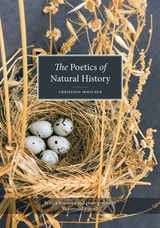
The Poetics of Natural History
Christoph Irmscher
Rutgers University Press, 2019
Early American naturalists assembled dazzling collections of native flora and fauna, from John Bartram’s botanical garden in Philadelphia and the artful display of animals in Charles Willson Peale’s museum to P. T. Barnum’s American Museum, infamously characterized by Henry James as “halls of humbug.” Yet physical collections were only one of the myriad ways that these naturalists captured, catalogued, and commemorated America’s rich biodiversity. They also turned to writing and art, from John Edward Holbrook’s forays into the fascinating world of herpetology to John James Audubon’s masterful portraits of American birds.
In this groundbreaking, now classic book, Christoph Irmscher argues that early American natural historians developed a distinctly poetic sensibility that allowed them to imagine themselves as part of, and not apart from, their environment. He also demonstrates what happens to such inclusiveness in the hands of Harvard scientist-turned Amazonian explorer Louis Agassiz, whose racist pseudoscience appalled his student William James.
This expanded, full-color edition of The Poetics of Natural History features a preface and art from award-winning artist Rosamond Purcell and invites the reader to be fully immersed in an era when the boundaries between literature, art, and science became fluid.
The Powers of the False
Reading, Writing, Thinking beyond Truth and FictionDoro Wiese
Northwestern University Press, 2014

The Price of Living
The Stories We Tell About the PoorS. Shankar
Duke University Press, 2027
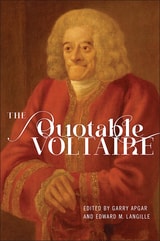
The Quotable Voltaire
Garry Apgar
Bucknell University Press, 2021
Drawing from a wide range of his publications, private letters, and remarks recorded by his contemporaries, The Quotable Voltaire includes material never before gathered in a single volume. English translations appear alongside the original French, and each quote is thoroughly indexed and referenced, with page numbers for both the first known publication edition of each entry and the most recent edition of Voltaire’s works. The book also features over 400 quotes about Voltaire, including commentary by eighteenth-century luminaries like Samuel Johnson, Catherine the Great, Casanova, and John Adams, as well as an eclectic assortment of modern-day personages ranging from Winston Churchill and Jorge Luis Borges to Mae West and Mike Tyson.
Lavishly illustrated with nearly three dozen images of Voltaire-related art, this collection opens with a scholarly essay that recounts the great man’s life and reflects on his outsized influence on Western culture. Whether you are a Voltaire scholar or a neophyte, The Quotable Voltaire is the perfect introduction to a brilliant mind.
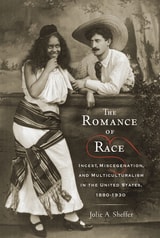
The Romance of Race
Incest, Miscegenation, and Multiculturalism in the United States, 1880-1930Sheffer, Jolie A.
Rutgers University Press, 2013
In the United States miscegenation is not merely a subject of literature and popular culture. It is in many ways the foundation of contemporary imaginary community. The Romance of Race examines the role of minority women writers and reformers in the creation of our modern American multiculturalism.
The national identity of the United States was transformed between 1880 and 1930 due to mass immigration, imperial expansion, the rise of Jim Crow, and the beginning of the suffrage movement. A generation of women writers and reformers—particularly women of color—contributed to these debates by imagining new national narratives that put minorities at the center of American identity. Jane Addams, Pauline Hopkins, Onoto Watanna (Winnifred Eaton), María Cristina Mena, and Mourning Dove (Christine Quintasket) embraced the images of the United States—and increasingly the world—as an interracial nuclear family. They also reframed public debates through narratives depicting interracial encounters as longstanding, unacknowledged liaisons between white men and racialized women that produced an incestuous, mixed-race nation.
By mobilizing the sexual taboos of incest and miscegenation, these women writers created political allegories of kinship and community. Through their criticisms of the nation’s history of exploitation and colonization, they also imagined a more inclusive future. As Jolie A. Sheffer identifies the contemporary template for American multiculturalism in the works of turn-of-the century minority writers, she uncovers a much more radical history than has previously been considered.
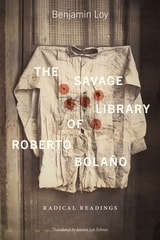
The Savage Library of Roberto Bolaño
Radical ReadingsBenjamin Loy
Bucknell University Press, 2026
Visionary Chilean writer Roberto Bolaño was known for his darkly poetic prose and postmodern narratives, exemplified in his novel The Savage Detectives. His work is also deeply infused with references to the Western literary canon—from French and Spanish baroque texts to American and German modernism, as well as postmodern literature from Latin America and France. Taking Bolaño’s notion of “savage” reading as a point of departure, this study explores the key authors and literary traditions that underpin his oeuvre. Blending close textual analysis with insights from the history of literature and ideas, Loy offers fresh perspectives on some of Bolaño’s most significant works, including Distant Star, By Night in Chile, and 2666. The intertextual dialogues Loy traces—with figures such as Blaise Pascal, Sor Juana Inés de la Cruz, Charles Baudelaire, William Carlos Williams, Ernst Jünger, Nicanor Parra, and Georges Perec—illuminate the aesthetic universe of an author now regarded as a central figure in twenty-first-century world literature.
Published by Bucknell University Press. Distributed worldwide by Rutgers University Press.
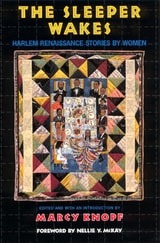
The Sleeper Wakes
Harlem Renaissance Stories by WomenKnopf-Newman, Marcy
Rutgers University Press, 1993
In recent years there has been an explosion of interest in the art and culture of the Harlem Renaissance. Yet this significant collection is the first definitive edition of Harlem Renaissance stories by women. The writers include Gwendolyn Bennett, Jessie Redmon Fauset, Angelina Weld Grimké, Zora Neale Hurston, Nella Larsen, Alice Dunbar-Nelson, and Dorothy West.
Published originally in periodicals such as The Crisis, Fire!!, and Opportunity, these twenty-seven stories have until now been virtually unavailable to readers. These stories are as compelling today as they were in the 1920s and 1930s. In them, we find the themes of black and white racial tension and misunderstanding, economic deprivation, passing, love across and within racial lines, and the attempt to maintain community and uplift the race.
Marcy Knopf's introduction surveys the history of the Harlem Renaissance, the periodicals and books it generated, and describes the rise to prominence of these women writers and their later fall from fame. She also includes a brief biography of each of the writers. Nellie Y. McKay's foreword analyzes the themes and concerns of the stories.
The Sovereignty of Taste
James S. Hans
University of Illinois Press, 2002
Taste is everything, Hans says, for it produces the primary values that guide our lives. Taste is the fundamental organizing mechanism of human bodies, a lifelong effort to fit one's own rhythms to the rhythms and patterns of the natural world and the larger human community. It is an aesthetic sorting process by which one determines what belongs in--a conversation, a curriculum, a committee, a piece of art, a meal, a logical argument--and what should be left out. On the one hand, taste is the source of beauty, justice, and a sense of the good. On the other hand, as an arbiter of the laws of fair and free play, taste enters into more ominous and destructive patterns--but patterns nonetheless--of resentment and violence.
Hans develops his conception of taste through astute readings of five literary landmarks: Milan Kundera's The Unbearable Lightness of Being, Sophocles' Oedipus the King, William Faulkner's Light in August, and the poetry of Emily Dickinson and the Polish Nobel Laureate Czeslaw Milosz. These texts explore the art of soulmaking and the quest for personal expression: the costs as well as the fruits that come from acceding to the imperatives of one's being. They also reveal how the collision of personal and collective rhythms, whether in the Greek citadel or the Mississippi countryside, leads to violence and ritualized sacrifice.
Elegant, principled, and provocative, The Sovereignty of Taste is an essential book that restores taste to its rightful place of influence, shoring up the ground beneath civilization's feet and offering hope for the future of integrity, value, and aesthetic truth.
The Space In-Between
Essays on Latin American CultureSilviano Santiago
Duke University Press, 2001
Santiago’s work creates a theoretical field that transcends both the study of a specific national literature and the traditional perspectives of comparative literature. He examines the pedagogical and modernizing mission of Western voyagers from the conquistadors to the present. He deconstructs the ideas of “original” and “copy,” unpacking their implications for the notions of so-called dominant and dominated cultures. Santiago also confronts questions of cultural dependency and analyzes the problems involved in the imposition of an alien European history, the cultural displacements experienced by the Indians through their religious conversion, and the hierarchical suppression of native and Afro-Brazilian values.
Elegantly written and translated, The Space In-Between will provide insights and perspectives that will interest cultural and literary theorists, postcolonial scholars, and other students of contemporary culture.
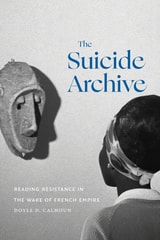
The Suicide Archive
Reading Resistance in the Wake of French EmpireDoyle D. Calhoun
Duke University Press, 2024
The Surprising Effects of Sympathy
Marivaux, Diderot, Rousseau, and Mary ShelleyDavid Marshall
University of Chicago Press, 1988
Placing novels in the context of eighteenth-century writing about theater, fiction, and painting, Marshall argues that an unusual variety of authors and texts were concerned with the possibility of entering into someone else's thoughts and feelings. He shows how key eighteenth-century works reflect on the problem of how to move, touch, and secure the sympathy of readers and beholders in the realm of both "art" and "life." Marshall discusses the demands placed upon novels to achieve certain effects, the ambivalence of writers and readers about those effects, and the ways in which these texts can be read as philosophical meditations on the differences and analogies between the experiences of reading a novel, watching a play, beholding a painting, and witnessing the spectacle of someone suffering. The Surprising Effects of Sympathy traces the interaction of sympathy and theater and the artistic and philosophical problems that these terms represent in dialogues about aesthetics, moral philosophy, epistemology, psychology, autobiography, the novel, and society.
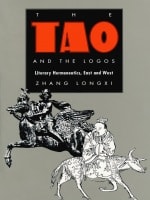
The Tao and the Logos
Literary Hermeneutics, East and WestLongxi Zhang
Duke University Press, 1992
Zhang's book brings together philosophy and literature, theory and practical criticism, the Western and the non-Western in defining common ground on which East and West may come to a mutual understanding. He provides commentary on the rich traditions of poetry and poetics in ancient China; equally illuminating are Zhang's astute analyses of Western poets such as Rilke, Shakespeare, and Mallarmé and his critical engagement with the work of Foucault, Derrida, and de Man, among others.
Wide-ranging and learned, this definitive work in East-West comparative poetics and the hermeneutic tradition will be of interest to specialists in comparative literature, philosophy, literary theory, poetry and poetics, and Chinese literature and history.
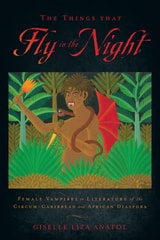
The Things That Fly in the Night
Female Vampires in Literature of the Circum-Caribbean and African DiasporaGiselle Liza Anatol
Rutgers University Press, 2015
This book is available as an audio book (https://www.abantuaudio.com/books/1197052/The-Things-That-Fly-in-the-Night).
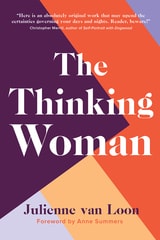
The Thinking Woman
Julienne van Loon
Rutgers University Press, 2021
While women have struggled to gain recognition in the discipline of philosophy, there is no shortage of brilliant female thinkers. What can these women teach us about ethics, politics, and the nature of existence, and how might we relate these big ideas back to the smaller everyday concerns of domestic life, work, play, love, and relationships?
Australian novelist Julienne van Loon goes on a worldwide quest to answer these questions, by engaging with eight world-renowned thinkers who have deep insights on humanity and society: media scholar Laura Kipnis, novelist Siri Hustvedt, political philosopher Nancy Holmstrom, psychoanalytic theorist Julia Kristeva, domestic violence reformer Rosie Batty, peace activist Helen Caldicott, historian Marina Warner, and feminist philosopher Rosi Braidotti. As she speaks to these women, she reflects on her own experiences. Combining the intimacy of a memoir with the intellectual stimulation of a theoretical text, The Thinking Woman draws novel connections between the philosophical, personal, and political. Giving readers a new appreciation for both the ethical complexities and wonder of everyday life, this book is inspiration to all thinking people.
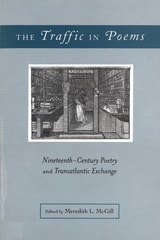
The Traffic In Poems
Nineteenth-Century Poetry and Transatlantic ExchangeMcGill, Meredith L
Rutgers University Press, 2008
Drawing on examples such as Felicia Hemans's elaboration of the foundational American myth of Plymouth Rock, Emma Lazarus's ambivalent welcome of Europe's cast-off populations, black abolitionist Mary Webb's European performances of Hiawatha, and American reprints of Robert Browning and George Meredith, the eleven essays in this book focus on poetic depictions of exile, slavery, immigration, and citizenship and explore the often asymmetrical traffic between British and American poetic cultures.
The Uses of Literary History
Marshall Brown, ed.
Duke University Press, 1995
Concerned with both the theory and practice of literary history, these provocative and sometimes combative pieces examine the writing of literary history, the nature of our interest in tradition, and the ways that literary works act in history. Among the numerous issues discussed are the uses of evidence, anachronism, the dialectic of texts and contexts, particularism and the resistance to reductive understanding, the construction of identities, memory, and the endurance of the past. New historicism, nationalism, and gender studies appear in relation to more traditional issues such as textual editing, taste, and literary pedagogy. Combining new and old perspectives, The Uses of Literary History provides a broad view of the field.
Contributors. Charles Altieri, Jonathan Arac, R. Howard Bloch, Richard Dellamora, Paul H. Fry, Geoffrey Hartman, Denis Hollier, Donna Landry, Lawrence Lipking, Jerome J. McGann, Walter Benn Michaels, Rukmini Bhaya Nair, Virgil Nemoianu, Annabel Patterson, David Perkins, Marjorie Perloff, Meredith Anne Skura, Doris Sommer, Peter Stallybrass, Susan Stewart
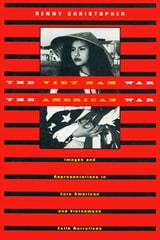
The Viet Nam War/The American War
Images and Representations in Euro-American and Vietnamese Exile NarrativesRenny Christopher
University of Massachusetts Press, 1995
This book seeks to reformulate the canon of writings on what is called “the Viet Nam War” in America and “the American War” in Viet Nam. Until recently, the accepted canon has consisted almost exclusively of American white male combat narratives, which often reflect and perpetuate Asian stereotypes. Renny Christopher introduces material that displays a bicultural perspective, including works by Vietnamese exile writers and by lesser-known Euro-Americans who attempt to bridge the cultural gap.
Christopher traces the history of American stereotyping of Asians and shows how Euro-American ethnocentricity has limited most American authors' ability to represent fairly the Vietnamese in their stories. By giving us access to Vietnamese representations of the war, she creates a context for understanding the way the war was experienced from the “other” side, and she offers perceptive, well-documented analyses of how and why Americans have so emphatically excised the Vietnamese from narratives about a war fought in their own country.
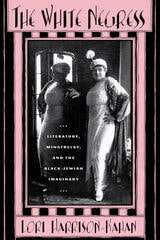
The White Negress
Literature, Minstrelsy, and the Black-Jewish ImaginaryHarrison-Kahan, Lori
Rutgers University Press, 2010
Lori Harrison-Kahan examines writings by Edna Ferber, Fannie Hurst, and Zora Neale Hurston, as well as the blackface performances of vaudevillian Sophie Tucker and controversies over the musical and film adaptations of Show Boat and Imitation of Life. Moving between literature and popular culture, she illuminates how the dynamics of interethnic exchange have at once produced and undermined the binary of black and white.
The White Trash Menace and Hemispheric Fiction
Ramón E. Soto-Crespo
The Ohio State University Press, 2020
The Writer as Migrant
Ha Jin
University of Chicago Press, 2008
Consisting of three interconnected essays, The Writer as Migrant sets Ha Jin’s own work and life alongside those of other literary exiles, creating a conversation across cultures and between eras. He employs the cases of Alexander Solzhenitsyn and Chinese novelist Lin Yutang to illustrate the obligation a writer feels to the land of their birth, while Joseph Conrad and Vladimir Nabokov—who, like Ha Jin, adopted English for their writing—are enlisted to explore a migrant author’s conscious choice of a literary language. A final essay draws on V. S. Naipaul and Milan Kundera to consider the ways in which our era of perpetual change forces a migrant writer to reconceptualize the very idea of home. Throughout, Jin brings other celebrated writers into the conversation as well, including W. G. Sebald, C. P. Cavafy, and Salman Rushdie—refracting and refining the very idea of a literature of migration.
Simultaneously a reflection on a crucial theme and a fascinating glimpse at the writers who compose Ha Jin’s mental library, The Writer as Migrant is a work of passionately engaged criticism, one rooted in departures but feeling like a new arrival.