Results by title
115 books match the query 'Criminal Law' and 17 start with t
Taking Juvenile Justice Seriously
Developmental Insights and System ChallengesChristopher J. Sullivan
Temple University Press, 2019
The juvenile justice system navigates a high degree of variation in youthful offenders. While professionals with insights about reform and adolescent development consider the risks, the needs, and the patterns of delinquency of youth, too little attention is paid to the responses and practicalities of a system that is both complex and limited in its resources.
In his essential book, Taking Juvenile Justice Seriously, Christopher Sullivan systematically analyzes key facets of justice-involved youth populations and parses cases to better understand core developmental influences that affect delinquency. He takes a comprehensive look at aspects of the life-course affected by juvenile justice as well as at the juvenile justice system’s operations and its multifaceted mission of delivering both treatment and sanctions to a varied population of youths.
Taking Juvenile Justice Seriously first provides an overview of the youth who encounter the system, then describes its present operations and obstacles, synthesizes relevant developmental insights, and reviews current practices. Drawing on research, theory, and evidence regarding innovative policies, Sullivan offers a series of well-grounded recommendations that suggest how to potentially—and realistically—implement a more effective juvenile justice system that would benefit all.

The Child Savers
The Invention of DelinquencyPlatt, Anthony M
Rutgers University Press, 2009
Focusing on social reformers of the late nineteenth and early twentieth centuries, Platt's principal argument is that the "child savers" movement was not an effort to liberate and dignify youth but, instead, a punitive and intrusive attempt to control the lives of working-class urban adolescents. This expanded edition provides a renewed and distinguished contribution by placing it in historical context through insightful commentaries from cross-disciplinary academics, along with an essay by Miroslava Chávez-García examining how Platt's influential study has impacted many of the central arguments social scientists and historians face today.
The Culture of Control
Crime and Social Order in Contemporary SocietyDavid Garland
University of Chicago Press, 2001
Garland explains how the new policies of crime and punishment, welfare and security—and the changing class, race, and gender relations that underpin them—are linked to the fundamental problems of governing contemporary societies, as states, corporations, and private citizens grapple with a volatile economy and a culture that combines expanded personal freedom with relaxed social controls. It is the risky, unfixed character of modern life that underlies our accelerating concern with control and crime control in particular. It is not just crime that has changed; society has changed as well, and this transformation has reshaped criminological thought, public policy, and the cultural meaning of crime and criminals. David Garland's The Culture of Control offers a brilliant guide to this process and its still-reverberating consequences.

The Delinquent Girl
edited by Margaret A. Zahn
Temple University Press, 2009
Over the past decade and a half, girls’ involvement in the juvenile justice system has increased. Yet the topic remains under-studied among criminologists. The Delinquent Girl is a “state-of-the-field” evaluation that identifies and analyzes girls who become delinquent, the kinds of crimes they commit and the reasons they commit them. The distinguished academics and practitioners who contributed to this volume provide an overview of the research on girls’ delinquency, discuss policy implications and point to areas where further research is critically needed.
The Discourse of Police Interviews
Edited by Marianne Mason and Frances Rock
University of Chicago Press, 2020
The first book to focus exclusively on the discourses of police interviewing, The Discourse of Police Interviews examines leading debates, approaches, and topics in contemporary police interview research. Among other topics, the book explores the sociolegal, psychological, and discursive framework of popular police interview techniques employed in the United States and the United Kingdom, such as PEACE and Reid, and the discursive practices of institutional representatives like police officers and interpreters that can influence the construction and quality of linguistic evidence. Together, the contributions situate the police interview as part of a complex, and multistage, criminal justice process. The book will be of interest to both scholars and practitioners in a variety of fields, such as linguistic anthropology, interpreting studies, criminology, law, and sociology.
The Forgotten Men
Serving a Life without Parole SentenceLeigey, Margaret E
Rutgers University Press, 2015
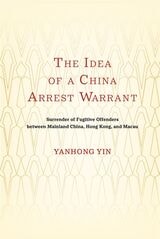
The Idea of a China Arrest Warrant
Surrender of Fugitive Offenders between Mainland China, Hong Kong, and MacauYanhong Yin
Hong Kong University Press, 2025
Hong Kong and Macau have both been Special Administrative Regions of China since 1999. To this day, however, the two SARs and mainland China have yet to form a cohesive agreement for extradition. Yanhong Yin proposes a theoretical model, the China Arrest Warrant, that fulfills three essential criteria: compliance with the framework of “one country, two systems,” allowance for differences within the three divergent legal systems, and sufficient human rights protection.
This model takes direct inspiration from the European Arrest Warrant, which is undergirded by the principle of mutual recognition—the idea that while states may make different decisions on a wide range of matters, results will be accepted equivalently to decisions made by one’s own state. The success of the European Union’s adoption of mutual recognition across political, economic, and legal situations is instrumental in providing a blueprint for judicial cooperation among mainland China, Hong Kong SAR, and Macau SAR.
The Idea of a China Arrest Warrant seeks to resolve a legal quandary that has existed for decades without resolution, and is essential reading in criminal and constitutional law.
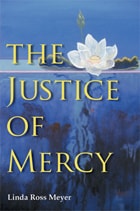
The Justice of Mercy
Linda Ross Meyer
University of Michigan Press, 2010
"The Justice of Mercy is exhilarating reading. Teeming with intelligence and insight, this study immediately establishes itself as the unequaled philosophical and legal exploration of mercy. But Linda Meyer's book reaches beyond mercy to offer reconceptualizations of justice and punishment themselves. Meyer's ambition is to rethink the failed retributivist paradigm of criminal justice and to replace it with an ideal of merciful punishment grounded in a Heideggerian insight into the gift of being-with-others. The readings of criminal law, Heideggerian and Levinasian philosophy, and literature are powerful and provocative. The Justice of Mercy is a radical and rigorous exploration of both punishment and mercy as profoundly human activities."
---Roger Berkowitz, Director of the Hannah Arendt Center for Ethical and Political Thinking, Bard College
"This book addresses a question both ancient and urgently timely: how to reconcile the law's call to justice with the heart's call to mercy? Linda Ross Meyer's answer is both philosophical and pragmatic, taking us from the conceptual roots of the supposed conflict between justice and mercy to concrete examples in both fiction and contemporary criminal law. Energetic, eloquent, and moving, this book's defense of mercy will resonate with philosophers, legal scholars, lawyers, and policymakers engaged with criminal justice, and anyone concerned about our current harshly punitive legal system."
---Carol Steiker, Harvard Law School
"Far from being a utopian, soft and ineffectual concept, Meyer shows that mercy already operates within the law in ways that we usually do not recognize. . . . Meyer's piercing insights and careful analysis bring the reader to think of law, justice, and mercy itself in a new and far more profound light."
---James Martel, San Francisco State University
How can granting mercy be just if it gives a criminal less punishment than he "deserves" and treats his case differently from others like it? This ancient question has become central to debates over truth and reconciliation commissions, alternative dispute resolution, and other new forms of restorative justice. The traditional response has been to marginalize mercy and to cast doubt on its ability to coexist with forms of legal justice.
Flipping the relationship between justice and mercy, Linda Ross Meyer argues that our rule-bound and harsh system of punishment is deeply flawed and that mercy should be, not the crazy woman in the attic of the law, but the lady of the house. This book articulates a theory of punishment with mercy and illustrates the implications of that theory with legal examples drawn from criminal law doctrine, pardons, mercy in military justice, and fictional narratives of punishment and mercy.
Linda Ross Meyer is Carmen Tortora Professor of Law at Quinnipiac University School of Law; President of the Association for the Study of Law, Culture and the Humanities; and Associate Editor of Journal of Law, Culture and the Humanities.
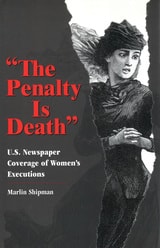
The Penalty Is Death
U.S. Newspaper Coverage of Women's ExecutionsMarlin Shipman
University of Missouri Press, 2002
The Politics of Corruption
Organized Crime in an American CityJohn A. Gardiner
Russell Sage Foundation, 1970
The Privilege against Self-Incrimination
Its Origins and DevelopmentR. H. Helmholz, Charles M. Gray, John H. Langbein, Eben Moglen, Henry E. Smith,
University of Chicago Press, 1997
Each chapter of this definitive study uncovers what the privilege meant in practice. The authors trace the privilege from its origins in the medieval period to its first appearance in English common law, and from its translation to the American colonies to its development into an effective protection for criminal defendants in the nineteenth century. The authors show that the modern privilege—the right to remain silent—is far from being a basic civil liberty. Rather, it has evolved through halting and controversial steps. The book also questions how well an expansive notion of the privilege accords with commonly accepted principles of morality.
This book constitutes a major revision of our understanding of an important aspect of both criminal and constitutional law.
The Punitive Imagination
Law, Justice, and ResponsibilityAustin Sarat
University of Alabama Press, 2014
From the Gospel of Matthew to numerous US Supreme Court justices, many literary and legal sources have observed that how a society metes out punishment reveals core truths about its character. The Punitive Imagination is a collection of essays that engages and contributes to debates about the purposes and meanings of punishment in the United States.
The Punitive Imagination examines some of the critical assumptions that frame America's approach to punishment. It explores questions such as:
· What is the place of concern for human dignity in our prevailing ideologies of punishment?
· Can we justly punish the socially disadvantaged?
· What assumptions about persons, social institutions, and the ordering of social space provide the basis for American punitiveness?
· Who, if anyone, can be held responsible for excessively punitive criminal sentences?
· How does punishment depend on prevailing views of free will, responsibility, desert, blameworthiness?
· Where/how are those views subject to challenge in our punitive practices?
As Sarat posits in his introduction, the way a society punishes demonstrates its commitment to standards of judgment and justice, its distinctive views of blame and responsibility, its understandings of mercy and forgiveness, and its particular ways of responding to evil. He goes on to discuss the history of punishment in the United States and what it reveals about assumptions made about persons that “undergird” the American system of punishment.
The five additional contributors to The Punitive Imagination seek to illuminate what American practices of punishment tell us about who we are as a nation. Synthesizing cultural, sociological, philosophical, and legal perspectives, they offer a distinctive take on the meaning of punishment in America.
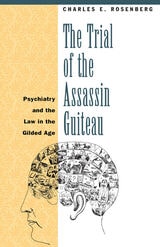
The Trial of the Assassin Guiteau
Psychiatry and the Law in the Gilded AgeCharles E. Rosenberg
University of Chicago Press, 1968
Although the role of genetics in behavior was widely accepted, these psychiatrists fiercely debated whether heredity had predisposed Guiteau to assassinate Garfield. Rosenberg's account allows us to consider one of the opening rounds in the controversy over the criminal responsibility of the insane, a debate that still rages today.
Trading Democracy for Justice
Criminal Convictions and the Decline of Neighborhood Political ParticipationTraci Burch
University of Chicago Press, 2013
Transformation and Trouble
Crime, Justice and Participation in Democratic South AfricaDiana Gordon
University of Michigan Press, 2006
Crime is one of the major challenges to any new democracy. Violence often increases after the lifting of authoritarian control, or in the aftermath of regime change. But how can a fledgling democracy fight crime without violating the fragile rights of its citizens? In Transformation and Trouble, accomplished theorist and criminal justice scholar Diana Gordon critically examines South Africa's efforts to strike the perilous balance between democratic participation and social control.
South Africa has made great progress in pursuing the Western ideals of participatory justice and due process. Yet Gordon finds that popular concerns about crime have fostered the growth of a punitive criminal justice system that undermines the country's rights-oriented political culture. Transformation and Trouble calls for South Africa to reaffirm its commitment to public empowerment by reforming its criminal justice system-an approach, she argues, that would strengthen the country's new democracy.
"An eloquent, critical, but ultimately optimistic, analysis of the democratization of crime and justice in post-apartheid South Africa."
--Bill Dixon, School of Criminology, Education, Sociology and Social Work, Keele University
"A must read for understanding contemporary South Africa's agonizing dilemmas as it struggles to reconcile crime control with democratic values."
--Jerome H. Skolnick, New York University School of Law
"Gordon's vast experience with criminal justice illuminates her cautionary tale of the search for a new way in south Africa."
--Paul Chevigny, New York University
Diana Gordon is Professor Emerita of Political Science and Senior Research Scholar, City University of New York.
Trapped in a Vice
The Consequences of Confinement for Young PeopleCox, Alexandra
Rutgers University Press, 2018
Trapped in a Vice explores the consequences of a juvenile justice system that is aimed at promoting change in the lives of young people, yet ultimately relies upon tools and strategies that enmesh them in a system that they struggle to move beyond. The system, rather than the crimes themselves, is the vice. Trapped in a Vice explores the lives of the young people and adults in the criminal justice system, revealing the ways that they struggle to manage the expectations of that system; these stories from the ground level of the justice system demonstrate the complex exchange of policy and practice.
True Stories of False Confessions
Rob Warden
Northwestern University Press, 2009
Editors Rob Warden and Steven Drizin—leaders in the field of wrongful convictions—have gathered articles about some of the most critical accounts of false confessions in the U.S. justice system from more than forty authors, including Sydney H. Schanberg, Christine Ellen Young, Alex Kotlowitz, and John Grisham. Many of the pieces originally appeared in leading magazines and newspapers, including the New York Times, The Nation, the New Yorker, and the Los Angeles Times.
By grouping the cases into categories—including brainwashing, fabrication, mental fragility, police force, and unrequited innocence—the editors demonstrate similarities between cases, thereby refuting the perception that false confessions represent individual tragedies rather than a systemic flaw in the justice system. These incidents are not isolated; they are, in fact, related, and more shocking for it. But the authors of the articles excerpted, adapted, and reprinted in this collection want more for their subjects than outrage; they want to fuel change in the practices and standards that illicit false confessions in the first place. To this end, Warden and Drizin include an illuminating introduction to each category and recommendations for policy changes that would reduce false confessions. They also include a postscript for each case, providing legal updates and additional information.