Results by title
394 books match the query 'English literature' and 91 start with t
THE ECONOMICS OF FANTASY
RAPE IN TWENTIETH-CENTURY LITERATURESharon Stockton
The Ohio State University Press, 2006
It is important to make clear that the genre of rape story studied here presumes a white masculine subject and a white feminine object. Stockton makes the case that the aestheticized rape narrative reveals particular things about the way white masculinity represents itself. Plotting violent sexual fantasy on the grid of economic concerns locates masculine agency in relation to an explicitly contingent material system of power, value, and order. It is in this way that The Economics of Fantasy discloses the increased desperation with which the body has been made to carry ideology under systems of advanced capitalism.
Talk and Textual Production in Medieval England
Marisa Libbon
The Ohio State University Press, 2021
Textile Orientalisms
Cashmere and Paisley Shawls in British Literature and CultureSuchitra Choudhury
Ohio University Press, 2023

Textual Confrontations
Comparative Readings in Latin American LiteratureAlfred J. Mac Adam
University of Chicago Press, 1987
Mac Adam describes the changes that have taken place in Latin American literature since the time of Modernismo (roughly 1880-1920), when Spanish American writers tried to update their literary language by imitating foreign, mostly French, literature. Since then, as he demonstrates, Latin American writing has achieved a pioneering status by means of a different kind of imitation—parody—whereby it gives back to the former centers of Western culture their own writing, now distorted and reshaped into something new.
Textual Magic
Charms and Written Amulets in Medieval EnglandKatherine Storm Hindley
University of Chicago Press, 2023
Katherine Storm Hindley explores words at their most powerful: words that people expected would physically change the world. Medieval Europeans often resorted to the use of spoken or written charms to ensure health or fend off danger. Hindley draws on an unprecedented archive of more than a thousand such charms from medieval England—more than twice the number gathered, transcribed, and edited in previous studies and including many texts still unknown to specialists on this topic. Focusing on charms from 1100 to 1350 CE as well as previously unstudied texts in Latin, French, and English, Hindley addresses important questions of how people thought about language, belief, and power. She describes seven hundred years of dynamic, shifting cultural landscapes, where multiple languages, alphabets, and modes of transmission gained and lost their protective and healing power. Where previous scholarship has bemoaned a lack of continuity in the English charms, Hindley finds surprising links between languages and eras, all without losing sight of the extraordinary variety of the medieval charm tradition: a continuous, deeply rooted part of the English Middle Ages.
The Acoustic World of Early Modern England
Attending to the O-FactorBruce R. Smith
University of Chicago Press, 1999
In this ear-opening journey into the sound-worlds of Shakespeare's contemporaries, Bruce R. Smith explores both the physical aspects of human speech (ears, lungs, tongue) and the surrounding environment (buildings, landscape, climate), as well as social and political structures. Drawing on a staggeringly wide range of evidence, he crafts a historical phenomenology of sound, from reconstructions of the "soundscapes" of city, country, and court to detailed accounts of the acoustic properties of the Globe and Blackfriars theaters and how scripts designed for the two spaces exploited sound very differently.
Critical for anyone who wants to understand the world of early modern England, Smith's pathbreaking "ecology" of voice and listening also has much to offer musicologists and acoustic ecologists.
The Aesthetics of Service in Early Modern England
Elizabeth Rivlin
Northwestern University Press, 2011
In The Aesthetics of Service in Early Modern England, Elizabeth Rivlin explores the ways in which servant-master relationships reshaped literature. The early modern servant is enjoined to obey his or her master out of dutiful love, but the servant's duty actually amounts to standing in for the master, a move that opens the possibility of becoming master. Rivlin shows that service is fundamentally a representational practice, in which the servant who acts for a master merges with the servant who acts as a master.
Rivlin argues that in the early modern period, servants found new positions as subjects and authors found new forms of literature. Representations of servants and masters became a site of contact between pressing material concerns and evolving aesthetic ones. Offering readings of dramas by Shakespeare, Jonson, and Thomas Dekker and prose fictions by Thomas Deloney and Thomas Nashe, Rivlin suggests that these authors discovered their own exciting and unstable projects in the servants they created.
The Age of Eclecticism
Literature and Culture in Britain, 1815–1885Christine Bolus-Reichert
The Ohio State University Press, 2009
The Anonymous Renaissance
Cultures of Discretion in Tudor-Stuart EnglandMarcy L. North
University of Chicago Press, 2003
The Renaissance was in many ways the beginning of modern and self-conscious authorship, a time when individual genius was celebrated and an author's name could become a book trade commodity. Why, then, did anonymous authorship flourish during the Renaissance rather than disappear? In addressing this puzzle, Marcy L. North reveals the rich history and popularity of anonymity during this period.
The book trade, she argues, created many intriguing and paradoxical uses for anonymity, even as the authorial name became more marketable. Among ecclesiastical debaters, for instance, anonymity worked to conceal identity, but it could also be used to identify the moral character of the author being concealed. In court and coterie circles, meanwhile, authors turned name suppression into a tool for the preservation of social boundaries. Finally, in both print and manuscript, anonymity promised to liberate an authentic female voice, and yet made it impossible to authenticate the gender of an author. In sum, the writers and book producers who helped to create England's literary culture viewed anonymity as a meaningful and useful practice.
Written with clarity and grace, The Anonymous Renaissance will fill a prominent gap in the study of authorship and English literary history.
The Author's Due
Printing and the Prehistory of CopyrightJoseph Loewenstein
University of Chicago Press, 2002
As Loewenstein shows, copyright is a form of monopoly that developed alongside a range of related protections such as commercial trusts, manufacturing patents, and censorship, and cannot be understood apart from them. The regulation of the press pitted competing interests and rival monopolistic structures against one another—guildmembers and nonprofessionals, printers and booksellers, authors and publishers. These struggles, in turn, crucially shaped the literary and intellectual practices of early modern authors, as well as early capitalist economic organization.
With its probing look at the origins of modern copyright, The Author's Due will prove to be a watershed for historians, literary critics, and legal scholars alike.
The Bitch is Back
Wicked Women in LiteratureSarah Appleton Aguiar
Southern Illinois University Press, 2001
Although the “bitch” has always commanded a prominent spot in popular culture—television, movies, art—she virtually disappeared from the work of the second wave of feminist writers in the late 1960s and early 1970s. Now, announces Sarah Appleton Aguiar, the bitch is back, returned once more to cultural center stage in the world of serious literature.
Feminist writers such as Mary Gordon and Alice Walker, to name only two, felt obligated to subvert literary misrepresentations of females as dimensionless, to refute preconceptions of objectified characters, and, of paramount importance, to create memorable women full of complexity and character. They wanted to create a subjective reality for their protagonists. And they succeeded admirably.
But along the road to subjectivity, that vital woman, empowered with anger, with ruthless survival instincts—the bitch—was banished from the pages of feminist fiction. The village gossips, calculating gold-diggers, merciless backstabbers, sinful sirens, evil stepmothers, deadly daughters, twisted sisters, hags, bags, and crones—all had vanished from the fiction written by women. Ubiquitous in other forms of media, the bitch was noticeably absent from the feminist literary canon.
Aguiar, however, points to indications in contemporary culture that the season of the bitch is fast approaching. Contemporary feminist writers and theorists are making substantial reevaluations of the archetypal bitch. Focusing on the traits and the types of guises usually associated with this vital character, Aguiar discusses such characters as Zenia in Margaret Atwood’s The Robber Bride, Ruth Patchett in Fay Weldon’s The Life and Loves of a She-Devil, Sula in Toni Morrison’s Sula, and Ginny in Jane Smiley’s A Thousand Acres.
The Body in Mystery
The Political Theology of the Corpus Mysticum in the Literature of Reformation EnglandJennifer R. Rust
Northwestern University Press, 2013
The Burdens of Intimacy
Psychoanalysis and Victorian MasculinityChristopher Lane
University of Chicago Press, 1998
Lane discredits the conservative notion that Victorian literature expresses only a demand for repression and moral restraint. But he also refutes historicist and Foucauldian approaches, arguing that they dismiss the very idea of repression and end up denouncing psychoanalysis as complicit in various kinds of oppression. These approaches, Lane argues, reduce Victorian literature to a drama about politics, power, and the ego. Striving instead to reinvigorate discussions of fantasy and the unconscious, Lane offers a clear, often startling account of writers who grapple with the genuine complexities of love, desire, and friendship.

The Changing Fictions of Masculinity
David Rosen
University of Illinois Press, 1993
study of six great works of British literature, David Rosen traces the evolution
of masculinity, inviting readers to contemplate the shifting joys and sorrows
men have experienced throughout the last millennium, and the changing but constant
tensions between their lives and ideals. Focusing on Beowulf, Sir Gawain
and the Green Knight, Hamlet, Paradise Lost, Hard Times, and Sons and
Lovers, Rosen shows how the actions of heroes fail to resolve tensions between
masculine ideals and male experiences.
The Chartist Imaginary
Literary Form in Working-Class Political Theory and PracticeMargaret A. Loose
The Ohio State University Press, 2014
The Chartist Imaginary offers close readings of poems and fiction by Chartist figures from Ernest Jones and Thomas Cooper to W. J. Linton, Thomas Martin Wheeler, and Gerald Massey. It also draws on extensive archival research to examine, for the first time, working-class female Chartist poets Mary Hutton, E. L. E., and Elizabeth La Mont. Focusing on the literary form of these works, Loose strongly argues for the political power of the aesthetic in working-class literature.
The Circuit of Apollo
Eighteenth-Century Women’s Tributes to WomenLaura Runge
University of Delaware Press, 2019
Published by University of Delaware Press. Distributed worldwide by Rutgers University Press.

The Crisis of Action in Nineteenth-Century English Literature
Stefanie Markovits
The Ohio State University Press, 2006
The Disappearance of God
FIVE NINETEENTH-CENTURY WRITERSJ. Hillis Miller
University of Illinois Press, 1963
interpreters of nineteenth-century England, The Disappearance of God confronts the consciousness of an absent (though perhaps still existent) God in the writings of Thomas De Quincey, Robert Browning, Emily Brontë, Matthew Arnold, and Gerard Manley Hopkins. J. Hillis Miller surveys the intellectual and material developments that conspired to cut man off from God--among other factors the city, developments within Christianity, subjectivism, and the emergence of the modern historical sense--and shows how each writer's body of work reflects a sustained response to the experience of God's disappearance.
The Emperor Redressed
Critiquing Critical TheoryDwight Eddins
University of Alabama Press, 1995
The essays in this volume represent a collective questioning of the poststructuralist ascendancy, and of the assumptions involved therin, by a group of our most prominent scholars. These scholars were charged with examining the truth-value, methodology, practice, and humanistic status of poststructuralist theories and with speculating on what their conclusions portend for the future of theory. They provide cogent evidence that the poststructuralist heyday has passed.
The English Civil Wars in the Literary Imagination
Edited by Claude J. Summers & Ted-Larry Pebworth
University of Missouri Press, 1999
The English civil wars loom large in seventeenth-century history and literature. This period, which culminated in the execution of a king, the dismantling of the Established Church, the inauguration of a commonwealth, and the assumption of rule by a lord protector, was one of profound change and disequilibrium. Focusing on writers as major as Milton, Marvell, Herrick, and Vaughan, and as misunderstood as Fane, Overton, and the poet Eliza, the fifteen essays in this collection discuss not only the representation of the civil wars but also the ways in which the civil wars were anticipated, refigured, and refracted in the century's literary imagination.
Although all of the essays are historically grounded and critically based, they vary widely in their historical perspectives and critical techniques, as well as in their scope and area of concentration. Six of the essays are on Royalist literary figures, six are on figures traditionally associated with the Parliamentarian side of the civil wars, two consider both, and the remaining essay examines how Royalist writers refashioned a puritan literary trope.
Unified through the contributors' concentration on "moderate" voices and their recurrent concerns with the ambiguities of literary response, The English Civil Wars in the Literary Imagination provides an important understanding of the English civil wars' manifold and sometimes indirect presence in the literature of the period.
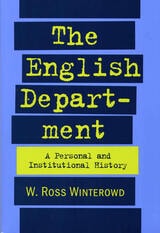
The English Department
A Personal and Institutional HistoryW. Ross Winterowd
Southern Illinois University Press, 1998
Tounderstand the history of "English," Ross Winterowd insists, one must understand how literary studies, composition-rhetoric studies, and influential textbooks interrelate. Stressing the interrelationship among these three forces, Winterowd presents a history of English studies in the university since the Enlightenment.
Winterowd’s history is unique in three ways. First, it tells the whole story of English studies: it does not separate the history of literary studies from that of composition-rhetoric studies, nor can it if it is going to be an authentic history. Second, it traces the massive influence on English studies exerted by textbooks such as Adventures in Literature, Understanding Poetry, English in Action, and the Harbrace College Handbook. Finally, Winterowd himself is very much a part of the story, a partisan with more than forty years of service to the discipline, not simply a disinterested scholar searching for the truth.
After demonstrating that literary studies and literary scholars are products of Romantic epistemology and values, Winterowd further invites controversy by reinterpreting the Romantic legacy inherited by English departments. His reinterpretation of major literary figures and theory, too, invites discussion, possibly argument. And by directly contradicting current histories of composition-rhetoric that allow for no points of contact with literature, Winterowd intensifies the argument by explaining the development of composition-rhetoric from the standpoint of literature and literary theory.
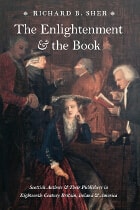
The Enlightenment and the Book
Scottish Authors and Their Publishers in Eighteenth-Century Britain, Ireland, and AmericaRichard B. Sher
University of Chicago Press, 2007
The late eighteenth century witnessed an explosion of intellectual activity in Scotland by such luminaries as David Hume, Adam Smith, Hugh Blair, William Robertson, Adam Ferguson, James Boswell, and Robert Burns. And the books written by these seminal thinkers made a significant mark during their time in almost every field of polite literature and higher learning throughout Britain, Europe, and the Americas.
In this magisterial history, Richard B. Sher breaks new ground for our understanding of the Enlightenment and the forgotten role of publishing during that period. The Enlightenment and the Book seeks to remedy the common misperception that such classics as The Wealth of Nations and The Life of Samuel Johnson were written by authors who eyed their publishers as minor functionaries in their profession. To the contrary, Sher shows how the process of bookmaking during the late eighteenth-century involved a deeply complex partnership between authors and their publishers, one in which writers saw the book industry not only as pivotal in the dissemination of their ideas, but also as crucial to their dreams of fame and monetary gain. Similarly, Sher demonstrates that publishers were involved in the project of bookmaking in order to advance human knowledge as well as to accumulate profits.
The Enlightenment and the Book explores this tension between creativity and commerce that still exists in scholarly publishing today. Lavishly illustrated and elegantly conceived, it will be must reading for anyone interested in the history of the book or the production and diffusion of Enlightenment thought.
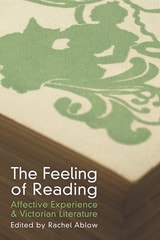
The Feeling of Reading
Affective Experience and Victorian LiteratureEdited by Rachel Ablow
University of Michigan Press, 2010
"A terrifically engaging collection of essays, which exemplifies the very best recent work in the history of reading and affect. The distinguished contributors explore ‘the feeling of reading' throughout Victorian literature, showing how a broad range of works---novels, lyrics, critical essays---not only represent but also analyze and evoke the surprisingly varied experience of immersing oneself in a book. It's rare to encounter a collection of such consistently high quality: the feeling of reading it is one of rich and manifold pleasure."
---James Eli Adams, Columbia University
"This gathering of state-of-the-art work generates a convincing and compelling vision of the emerging state of the field."
---Daniel Hack, University of Michigan
The Feeling of Reading is the first collection to address how we think of reading today through a focus on Victorian reading practices and the individual experience of reading in the nineteenth century. It brings together essays from some of the most established writers in the field with contributions from younger scholars to provide new ways of thinking about this definitive moment. The collection moves from the general to the particular: from excavations of the material and intellectual conditions of Victorian reading to the consequences of such excavations in readings of individual texts. All of the contributors engage the crucial critical question of the shaping of readerly feeling. In addition, they address a set of interlocking issues central to understanding Victorian reading: Kate Flint explores the material and social settings of reading; Nicholas Dames and Leah Price consider the concrete realities of books and periodicals; and the consequences of the mass circulation of texts are explored by Flint, John Plotz, and Rachel Ablow. The temporality of consumption appears in the contribution of Dames as well as those of Catherine Robson and Herbert F. Tucker, who also address the implications of meter; and Ablow, Plotz, Stephen Arata, and Garrett Stewart investigate the notion of identification.
Rachel Ablow is Associate Professor at the University at Buffalo, State University of New York.
Cover design and art by Julian Montague
The Footsteps of Israel
Understanding Jews in Anglo-Saxon EnglandAndrew P. Scheil
University of Michigan Press, 2004
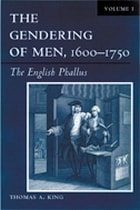
The Gendering of Men, 1600–1750
The English PhallusThomas A. King
University of Wisconsin Press, 2004
Taking on nothing less than the formation of modern genders and sexualities, Thomas A. King develops a history of the political and performative struggles that produced both normative and queer masculinities in the seventeenth and eighteenth centuries. The result is a major contribution to gender studies, gay studies, and theater and performance history.
The Gendering of Men, 1600–1750 traces the transition from a society based on alliance, which had subordinated all men, women, and boys to higher ranked males, to one founded in sexuality, through which men have embodied their claims to personal and political privacy. King proposes that the male body is a performative production marking men’s resistance to their subjection within patriarchy and sovereignty. Emphasizing that categories of gender must come under historical analysis, The Gendering of Men explores men’s particpation in an ongoing struggle for access to a universal manliness transcending other biological and social differentials.
This is volume one of two projected volumes.
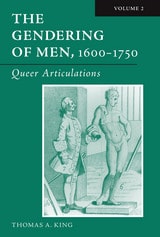
The Gendering of Men, 1600–1750
Volume 2, Queer ArticulationsThomas A. King
University of Wisconsin Press, 2008
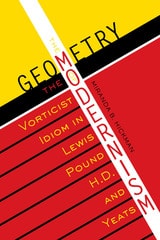
The Geometry of Modernism
The Vorticist Idiom in Lewis, Pound, H.D., and YeatsBy Miranda B. Hickman
University of Texas Press, 2006
Addressing both the literature and the visual arts of Anglo-American modernism, The Geometry of Modernism recovers a crucial development of modernism's early years that until now has received little sustained critical attention: the distinctive idiom composed of geometric forms and metaphors generated within the early modernist movement of Vorticism, formed in London in 1914. Focusing on the work of Wyndham Lewis, leader of the Vorticist movement, as well as Ezra Pound, H.D., and William Butler Yeats, Hickman examines the complex of motives out of which Lewis initially forged the geometric lexicon of Vorticism—and then how Pound, H.D., and Yeats later responded to it and the values that it encoded, enlisting both the geometric vocabulary and its attendant assumptions and ideals, in transmuted form, in their later modernist work.
Placing the genesis and appropriation of the geometric idiom in historical context, Hickman explores how despite its brevity as a movement, Vorticism in fact exerted considerable impact on modernist work of the years between the wars, in that its geometric idiom enabled modernist writers to articulate their responses to both personal and political crises of the 1930s and 1940s. Informed by extensive archival research as well as treatment of several of the least-known texts of the modernist milieu, The Geometry of Modernism clarifies and enriches the legacy of this vital period.
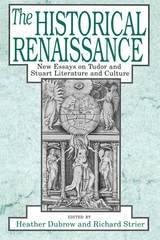
The Historical Renaissance
New Essays on Tudor and Stuart Literature and CultureEdited by Heather Dubrow and Richard Strier
University of Chicago Press, 1988
The volume includes studies of mid-Tudor culture as well as of Elizabethan and Stuart periods.
The Iconic Page in Manuscript, Print, and Digital Culture
George Bornstein and Theresa Tinkle, Editors
University of Michigan Press, 1998
The material features of texts as physical artifacts--their "bibliographic codes" --have over the last decade excited increasing interest in a variety of disciplines. The Iconic Page in Manuscript, Print, and Digital Culture gathers essays by an extraordinarily distinguished group of scholars to offer the most comprehensive examination of these issues yet, drawing on examples from literature, history, the fine arts, and philosophy.
Fittingly, the volume contains over two dozen illustrations that display the iconic features of the works analyzed--from Alfred the Great's Boethius through medieval manuscripts to the philosophy of C. S. Peirce and the dustjackets on works by F. Scott Fitzgerald and William Styron.
The Iconic Page in Manuscript, Print, and Digital Culture will be groundbreaking reading for scholars in a wide range of fields.
George Bornstein is C. A. Patrides Professor of English, University of Michigan. Theresa Tinkle is Associate Professor of English, University of Michigan.
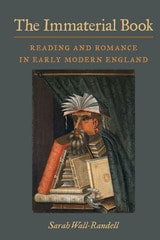
The Immaterial Book
Reading and Romance in Early Modern EnglandSarah Wall-Randell
University of Michigan Press, 2013
In romances—Renaissance England’s version of the fantasy novel—characters often discover books that turn out to be magical or prophetic, and to offer insights into their readers’ selves. The Immaterial Book examines scenes of reading in important romance texts across genres: Spenser’s Faerie Queene, Shakespeare’s Cymbeline and The Tempest, Wroth’s Urania, and Cervantes’ Don Quixote. It offers a response to “material book studies” by calling for a new focus on imaginary or “immaterial” books and argues that early modern romance authors, rather than replicating contemporary reading practices within their texts, are reviving ancient and medieval ideas of the book as a conceptual framework, which they use to investigate urgent, new ideas about the self and the self-conscious mind.
The Insatiability of Human Wants
Economics and Aesthetics in Market SocietyRegenia Gagnier
University of Chicago Press, 2000
The Insatiability of Human Wants begins during a key transitional moment in aesthetic and economic theory, 1871, when both disciplines underwent a turn from production to consumption models. In economics, an emphasis on the theory of value and the social relations between land, labor, and capital gave way to more individualistic models of consumerism. Similarly, in aesthetics, theories of artistic production or creativity soon bowed to models of taste, pleasure, and reception.
Using these developments as a point of departure, Gagnier deftly traces the shift in Western thought from models of production to consumption. From its exploration of early market logic and Kantian thought to its look at the aestheticization of homelessness and our own market boom, The Insatiability of Human Wants invites us to contemplate alternative interpretations of economics, aesthetics, and history itself.
The Intimate Critique
Autobiographical Literary CriticismDiane P. Freedman, Olivia Frey, and Frances Murphy Zauhar, eds.
Duke University Press, 1993
Grounded in feminism and connected to the race, class, and gender paradigms in cultural studies, the twenty-six contributors to this volume—including Jane Tompkins, Henry Louis Gates, Jr., Shirley Nelson Garner, and Shirley Goek-Lin Lim—respond in new, refreshing ways to literary subjects ranging from Homer to Freud, Middlemarch to The Woman Warrior, Shiva Naipaul to Frederick Douglass. Revealing the beliefs and formative life experiences that inform their essays, these writers characteristically recount the process by which their opinions took shape--a process as conducive to self-discovery as it is to critical insight. The result—which has been referred to as "personal writing," "experimental critical writing," or "intellectual autobiography"—maps a dramatic change in the direction of literary criticism.
Contributors. Julia Balen, Dana Beckelman, Ellen Brown, Sandra M. Brown, Rosanne Kanhai-Brunton, Suzanne Bunkers, Peter Carlton, Brenda Daly, Victoria Ekanger, Diane P. Freedman, Olivia Frey, Shirley Nelson Garner, Henry Louis Gates, Jr., Melody Graulich, Gail Griffin, Dolan Hubbard, Kendall, Susan Koppelman, Shirley Geok-Lin Lim, Linda Robertson, Carol Taylor, Jane Tompkins, Cheryl Torsney, Trace Yamamoto, Frances Murphy Zauhar
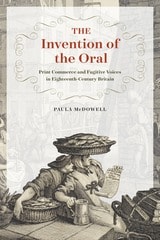
The Invention of the Oral
Print Commerce and Fugitive Voices in Eighteenth-Century BritainPaula McDowell
University of Chicago Press, 2017
Drawing on an impressive array of sources including travel narratives, elocution manuals, theological writings, ballad collections, and legal records, McDowell re-creates a world in which everyone from fishwives to philosophers, clergymen to street hucksters, competed for space and audiences in taverns, marketplaces, and the street. She argues that the earliest positive efforts to theorize "oral tradition," and to depict popular oral culture as a culture (rather than a lack of culture), were prompted less by any protodemocratic impulse than by a profound discomfort with new cultures of reading, writing, and even speaking shaped by print.
Challenging traditional models of oral versus literate societies and key assumptions about culture’s ties to the spoken and the written word, this landmark study reorients critical conversations across eighteenth-century studies, media and communications studies, the history of the book, and beyond.
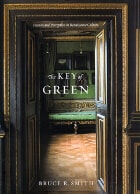
The Key of Green
Passion and Perception in Renaissance CultureBruce R. Smith
University of Chicago Press, 2008
Contending that color is a matter of both sensation and emotion, Bruce R. Smith examines Renaissance material culture—including tapestries, clothing, and stonework, among others—as well as music, theater, philosophy, and nature through the lens of sense perception and aesthetic pleasure. At the same time, Smith offers a highly sophisticated meditation on the nature of consciousness, perception, and emotion that will resonate with students and scholars of the early modern period and beyond. Like the key to a map, The Key of Green provides a guide for looking, listening, reading, and thinking that restores the aesthetic considerations to criticism that have been missing for too long.
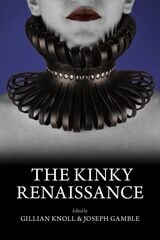
The Kinky Renaissance
Edited by Gillian Knoll and Joseph Gamble
Arizona Center for Medieval and Renaissance Studies, 2024
The Kinky Renaissance is a groundbreaking collection of essays that explore kink as a theoretical analytic, a historical formation, and an aesthetic mode. The essays in this work expand the sexual archive and its lexicon by introducing new vocabularies to familiar sexual scenes in early modern literature and culture and by bringing lesser-known scenes to bear on the study of sexuality in the period. Providing a capacious theory of sexuality and historical precedents for contemporary kinky practices, The Kinky Renaissance explores the erotic potential of early modern literature and pauses over various kinks nestled between and beside them. The collection boldly argues for a broader concept of a kinky Renaissance—one which reorients the terms of both the history of sexuality and queer theory more broadly.
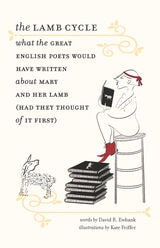
The Lamb Cycle
What the Great English Poets Would Have Written About Mary and Her Lamb (Had They Thought of It First)David R. Ewbank
Brandeis University Press, 2023
In The Lamb Cycle, David R. Ewbank achieves the unthinkable—he writes so convincingly in the style of the great English poets that one could be lulled into thinking that Shakespeare himself was inspired to muse upon the subject of “Mary Had a Little Lamb.” Ewbank captures not only the style of each of the poets he chooses, but also their preoccupations and subject matter. So D.H. Lawrence’s Mary longs for her lamb as any woman longing for her lover, whilst T.S. Eliot’s Mary is recollected by an old man looking back on his life. Alexander Pope writes an “An Essay on Lambs,” and Tennyson’s lotus eaters become “The Clover Eater.” Brilliantly written, sophisticated, and laugh-out-loud funny, these poems, enhanced by Kate Feiffer’s charming illustrations, will enchant anyone who has ever read an English poem.
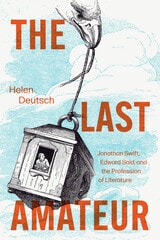
The Last Amateur
Jonathan Swift, Edward Said, and the Profession of LiteratureHelen Deutsch
University of Chicago Press, 2026
Joining the unfinished conversation between the satirist Jonathan Swift and the critic Edward Said, The Last Amateur argues for the transformative potential of literature.
What does “Swiftian” mean to you? For many, the name is synonymous with ingenious satire and an acid, clarifying mix of decorum and outrage. Jonathan Swift was, of course, the author of not only Gulliver’s Travels but also A Modest Proposal, which the columnist Gene Lyons recently called “perhaps the most penetrating anti-racist essay in the English language.” Small wonder, then, that the Anglo-Irish satirist was a lifelong inspiration to the great Palestinian American critic Edward Said, who for many years worked on an unfinished book about Swift and cultivated a Swiftian voice across his career.
Helen Deutsch’s highly personal book explores what Said’s love of Swift—and hers of both—tells us about not only these authors but also the powers of criticism itself. The Last Amateur is about how one comes to love one writer through another. Deutsch scrutinizes Said in relationship to Swift to raise questions of her own about the profession of literary studies. At a time when many in the field have lost faith in critique, Deutsch shows how passion and a refusal of professional propriety—the hallmarks of the amateur—can enliven critique again.
What, then, does it mean to be a Swiftian? The Swiftian hears Swift’s animus and uses it as an incentive for their own freedom of thought. Said was a Swiftian because the experience of reading Swift freed him to speak out, to have something serious to say. Deutsch’s revelatory book is an exercise in hearing Swift’s voice and speaking in her own.

The Literary Guide and Companion to Southern England
Revised EditionRobert M. Cooper
Ohio University Press, 1998
In a series of intriguing routes through the English countryside, Professor Robert Cooper notes those attractions that the casual tourist might unknowingly pass by, such as the house where Dickens wrote A Tale of Two Cities, or the windswept quay where John Fowles’s French Lieutenant’s woman walked. Maps and information about restaurants and accommodations give the traveler the opportunity of having pints of “half and half” where Jane Austen dined or visiting the pub where Blake’s scuffle led to his trial for treason.
This newly revised and updated edition of Robert Cooper’s acclaimed handbook combines the utility of current travel information with the appeal of literary history, biography, and anecdote in a leisurely and flavorful guide to the broad sweep of southern England outside of London. A rich and reliable guide to the landscape that fostered one of our most cherished cultures, The Literary Guide and Companion to Southern England is an indispensable resource for those who wish to experience literature firsthand.
The Literary Text in the Digital Age
Richard J. Finneran, Editor
University of Michigan Press, 1996
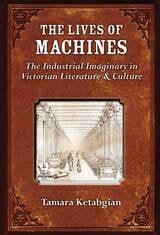
The Lives of Machines
The Industrial Imaginary in Victorian Literature and CultureTamara Ketabgian
University of Michigan Press, 2011
"The Lives of Machines is intelligent, closely argued, and persuasive, and puts forth a contention that will unsettle the current consensus about Victorian attitudes toward the machine."
---Jay Clayton, Vanderbilt University
Today we commonly describe ourselves as machines that "let off steam" or feel "under pressure." The Lives of Machines investigates how Victorian technoculture came to shape this language of human emotion so pervasively and irrevocably and argues that nothing is more intensely human and affecting than the nonhuman. Tamara Ketabgian explores the emergence of a modern and more mechanical view of human nature in Victorian literature and culture.
Treating British literature from the 1830s to the 1870s, this study examines forms of feeling and community that combine the vital and the mechanical, the human and the nonhuman, in surprisingly hybrid and productive alliances. Challenging accounts of industrial alienation that still persist, the author defines mechanical character and feeling not as erasures or negations of self, but as robust and nuanced entities in their own right. The Lives of Machines thus offers an alternate cultural history that traces sympathies between humans, animals, and machines in novels and nonfiction about factory work as well as in other unexpected literary sites and genres, whether domestic, scientific, musical, or philosophical. Ketabgian historicizes a model of affect and community that continues to inform recent theories of technology, psychology, and the posthuman.
The Lives of Machines will be of interest to students of British literature and history, history of science and of technology, novel studies, psychoanalysis, and postmodern cultural studies.
Cover image: "Power Loom Factory of Thomas Robinson," from Andrew Ure, The Philosophy of Manufactures (London: Charles Knight, 1835), frontispiece.
DIGITALCULTUREBOOKS: a collaborative imprint of the University of Michigan Press and the University of Michigan Library
The Living Dead
A Study of the Vampire in Romantic LiteratureJames B. Twitchell
Duke University Press, 1981
The Margins of the Text
D. C. Greetham, Editor
University of Michigan Press, 1997
The Margins of the Text is the first attempt to collect a body of essays concerned with specific aspects of the marginal as they relate to text. The volume is divided into two sections. The first part assembles essays concerned with the margins of textual discourse and explores the function of discourses not previously recognized as significant to scholarly editing, such as those of class, race, gender, and sexual orientation. The second section attends to the textual margins in the bibliographical sense--the margins of the book, in which there has been so much recent interest. The two parts of the collection are clearly interrelated, since both study the effects of margins as a form of cultural discourse.
As a whole, the collection spans several periods (medieval, Renaissance, eighteenth-century to modern), several disciplines (drama, literature, art history, politics, and philosophy), and offers a wide-ranging consideration of a single topic as it is manifested in various genres, formats, and media. The contributors are among the most respected textual/critical theorists in their fields.
The Margins of the Text will become a standard reference in the field, and will be read profitably by culture critics and social historians as well as textual critics and editors.
D. C. Greetham is Professor of English and Medieval Studies, City University of New York Graduate School.
The Moral Obligation to Be Intelligent
Selected EssaysLionel Trilling
Northwestern University Press, 2009
Bringing together the thoughts of one of American literature’s sharpest cultural critics, this compendium will open the eyes of a whole new audience to the work of Lionel Trilling. Trilling was a strenuous thinker who was proud to think “too much.” As an intellectual he did not spare his own kind, and though he did not consider himself a rationalist, he was grounded in the world.
This collection features 32 of Trilling’s essays on a range of topics, from Jane Austen to George Orwell and from the Kinsey Report to Lolita. Also included are Trilling’s seminal essays “Art and Neurosis” and “Manners, Morals, and the Novel.” Many of the pieces made their initial appearances in periodicals such as The Partisan Review and Commentary; most were later reprinted in essay collections. This new gathering of his writings demonstrates again Trilling’s patient, thorough style. Considering “the problems of life”—in art, literature, culture, and intellectual life—was, to him, a vital occupation, even if he did not expect to get anything as simple or encouraging as “answers.” The intellectual journey was the true goal.
No matter the subject, Trilling’s arguments come together easily, as if constructing complicated defenses and attacks were singularly simple for his well-honed mind. The more he wrote on a subject and the more intricate his reasoning, the more clear that subject became; his elaboration is all function and no filler. Wrestling with Trilling’s challenging work still yields rewards today, his ideas speaking to issues that transcend decades and even centuries.
The Mosaic Constitution
Political Theology and Imagination from Machiavelli to MiltonGraham Hammill
University of Chicago Press, 2012
It is a common belief that scripture has no place in modern, secular politics. Graham Hammill challenges this notion in The Mosaic Constitution, arguing that Moses’s constitution of Israel, which created people bound by the rule of law, was central to early modern writings about government and state.
The Nature of Cities
Ecocriticism and Urban EnvironmentsMichael Bennett
University of Arizona Press, 1999
The editors—both raised in small towns but now living in major urban areas—are especially concerned with the sociopolitical construction of all environments, both natural and manmade. Following an opening interview with Andrew Ross exploring the general parameters of urban ecocriticism, they present essays that explore urban nature writing, city parks, urban "wilderness," ecofeminism and the city, and urban space. The volume includes contributions on topics as wide-ranging as the urban poetry of English writers from Donne to Gay, the manufactured wildness of a gambling casino, and the marketing of cosmetics to urban women by idealizing Third World "naturalness." These essays seek to reconceive nature and its cultural representations in ways that contribute to understanding the contemporary cityscape. They explore the theoretical issues that arise when one attempts to adopt and adapt an environmental perspective for analyzing urban life.
The Nature of Cities offers the ecological component often missing from cultural analyses of the city and the urban perspective often lacking in environmental approaches to contemporary culture. By bridging the historical gap between environmentalism, cultural studies, and urban experience, the book makes a statement of lasting importance to the development of the ecocritical movement.
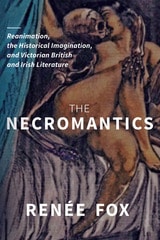
The Necromantics
Reanimation, the Historical Imagination, and Victorian British and Irish LiteratureRenée Fox
The Ohio State University Press, 2023
Winner, 2025 Sonya Rudikoff Award for the best first book in Victorian Studies
Honorable Mention, 2023 North American Victorian Studies Association First Book Prize
Honorable Mention, American Council for Irish Studies Donald Murphy Prize for Distinguished First Book
The Necromantics dwells on the literal afterlives of history. Reading the reanimated corpses—monstrous, metaphorical, and occasionally electrified—that Mary Shelley, Robert Browning, Charles Dickens, W. B. Yeats, Bram Stoker, and others bring to life, Renée Fox argues that these undead figures embody the present’s desire to remake the past in its own image. Fox positions “necromantic literature” at a nineteenth-century intersection between sentimental historiography, medical electricity, imperial gothic monsters, and the Irish Literary Revival, contending that these unghostly bodies resist critical assumptions about the always-haunting power of history.
By considering Irish Revival texts within the broader scope of nineteenth-century necromantic works, The Necromantics challenges Victorian studies’ tendency to merge Irish and English national traditions into a single British whole, as well as Irish studies’ postcolonial efforts to cordon off a distinct Irish canon. Fox thus forges new connections between conflicting political, formal, and historical traditions. In doing so, she proposes necromantic literature as a model for a contemporary reparative reading practice that can reanimate nineteenth-century texts with new aesthetic affinities, demonstrating that any effective act of reading will always be an effort of reanimation.
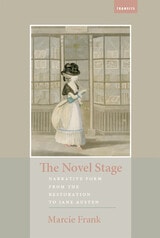
The Novel Stage
Narrative Form from the Restoration to Jane AustenMarcie Frank
Bucknell University Press, 2020
2020 Choice Outstanding Academic Title
Marcie Frank’s study traces the migration of tragicomedy, the comedy of manners, and melodrama from the stage to the novel, offering a dramatic new approach to the history of the English novel that examines how the collaboration of genres contributed to the novel’s narrative form and to the modern organization of literature. Drawing on media theory and focusing on the less-examined narrative contributions of such authors as Aphra Behn, Frances Burney, and Elizabeth Inchbald, alongside those of Samuel Richardson, Henry Fielding, and Jane Austen, The Novel Stage tells the story of the novel as it was shaped by the stage.
Published by Bucknell University Press. Distributed worldwide by Rutgers University Press.

The Performing Self
Compositions and Decompositions in the Languages of Contemporary LifePoirier, Richard
Rutgers University Press, 1992
.
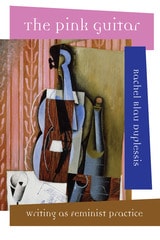
The Pink Guitar
Writing as Feminist PracticeRachel Blau DuPlessis
University of Alabama Press, 2006
The Politics of Mirth
Jonson, Herrick, Milton, Marvell, and the Defense of Old Holiday PastimesLeah S. Marcus
University of Chicago Press, 1989