Results by title
134 books match the query 'English-speaking countries' and 32 start with t
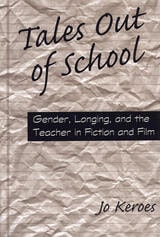
Tales Out of School
Gender, Longing, and the Teacher in Fiction and FilmJo Keroes
Southern Illinois University Press, 1999
Jo Keroes's scope is wide: she examines the teacher as represented in fiction and film in works ranging from the twelfth-century letters of Abelard and Heloise to contemporary films such as Dangerous Minds and Educating Rita. And from the twelfth through the twentieth century, Keroes shows, the teaching encounter is essentially erotic.
Tracing the roots of eros from cultural as well as psychological perspectives, Keroes defines erotic in terms broader than the merely sexual. She analyzes ways in which teachers serve as convenient figures on whom to map conflicts about gender, power, and desire. To show how portrayals of men and women differ, she examines pairs of texts, using a film or a novel with a woman protagonist (Up the Down Staircase, for example) as counterpoint to one featuring a male teacher (Blackboard Jungle) or The Prime of Miss Jean Brodie balanced against Dead Poets Society.
The portrayals of teachers, like all images a culture presents of itself, reveal much about our private and social selves. Keroes points out authentic accounts of authoritative women teachers who are admired and respected by colleagues and students alike. Real teachers differ from the stereotypes we see in fiction and film, however. Male teachers are often portrayed as heroes in film and fallibly human in fiction, whereas women in either genre are likely to be monstrous or muddled and are virtually never women of color. Among other things, Keroes demonstrates, the tension between reality and representation reveals society's ambivalence about power in the hands of women.

Ten Women of Mystery
Edited by Earl F. Bargainnier
University of Wisconsin Press, 1981
This volume, which examines the special contributions of a number of women mystery writers, sheds light on this significant example of common interests in recreational reading among women and men and the reasons behind the early and continuing uncharacteristic near-equality of both sexes in this field of endeavor.
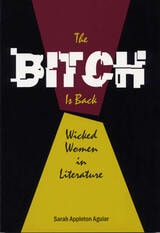
The Bitch is Back
Wicked Women in LiteratureSarah Appleton Aguiar
Southern Illinois University Press, 2001
Although the “bitch” has always commanded a prominent spot in popular culture—television, movies, art—she virtually disappeared from the work of the second wave of feminist writers in the late 1960s and early 1970s. Now, announces Sarah Appleton Aguiar, the bitch is back, returned once more to cultural center stage in the world of serious literature.
Feminist writers such as Mary Gordon and Alice Walker, to name only two, felt obligated to subvert literary misrepresentations of females as dimensionless, to refute preconceptions of objectified characters, and, of paramount importance, to create memorable women full of complexity and character. They wanted to create a subjective reality for their protagonists. And they succeeded admirably.
But along the road to subjectivity, that vital woman, empowered with anger, with ruthless survival instincts—the bitch—was banished from the pages of feminist fiction. The village gossips, calculating gold-diggers, merciless backstabbers, sinful sirens, evil stepmothers, deadly daughters, twisted sisters, hags, bags, and crones—all had vanished from the fiction written by women. Ubiquitous in other forms of media, the bitch was noticeably absent from the feminist literary canon.
Aguiar, however, points to indications in contemporary culture that the season of the bitch is fast approaching. Contemporary feminist writers and theorists are making substantial reevaluations of the archetypal bitch. Focusing on the traits and the types of guises usually associated with this vital character, Aguiar discusses such characters as Zenia in Margaret Atwood’s The Robber Bride, Ruth Patchett in Fay Weldon’s The Life and Loves of a She-Devil, Sula in Toni Morrison’s Sula, and Ginny in Jane Smiley’s A Thousand Acres.
The Detective as Historian
History and Art in Historical Crime FictionEdited by Ray B. Browne and Lawrence A. Kreiser, Jr.; Preface by Robin W. Winks
University of Wisconsin Press, 2000
Topics include: Ellis Peter’s Brother Cadfael; Umberto Eco’s Name of the Rose; Susanna Gregory’s Doctor Matthew Bartholomew; Peter Heck’s Mark Twain as detective; Anne Perry and her Victorian-era world; Caleb Carr’s works; and Elizabeth Peter’s Egyptologist-adventurer tales.
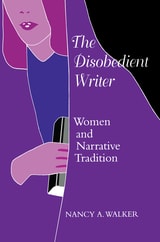
The Disobedient Writer
Women and Narrative TraditionBy Nancy A. Walker
University of Texas Press, 1995
For centuries, women who aspired to write had to enter a largely male literary tradition that offered few, if any, literary forms in which to express their perspectives on lived experience. Since the nineteenth century, however, women writers and readers have been producing "disobedient" counter-narratives that, while clearly making reference to the original texts, overturn their basic assumptions.
This book looks at both canonical and non-canonical works, over a variety of fiction and nonfiction genres, that offer counter-readings of familiar Western narratives. Nancy Walker begins by probing women's revisions of two narrative traditions pervasive in Western culture: the biblical story of Adam and Eve, and the traditional fairy tales that have served as paradigms of women's behavior and expectations. She goes on to examine the works of a wide range of writers, from contemporaries Marilynne Robinson, Ursula Le Guin, Anne Sexton, Fay Weldon, Angela Carter, and Margaret Atwood to precursors Caroline Kirkland, Fanny Fern, Mary De Morgan, Mary Louisa Molesworth, Edith Nesbit, and Evelyn Sharp.
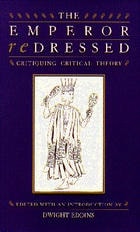
The Emperor Redressed
Critiquing Critical TheoryDwight Eddins
University of Alabama Press, 1995
The essays in this volume represent a collective questioning of the poststructuralist ascendancy, and of the assumptions involved therin, by a group of our most prominent scholars. These scholars were charged with examining the truth-value, methodology, practice, and humanistic status of poststructuralist theories and with speculating on what their conclusions portend for the future of theory. They provide cogent evidence that the poststructuralist heyday has passed.
The Ethos of Romance at the Turn of the Century
By William J. Scheick
University of Texas Press, 1994
The romance genre was a popular literary form among writers and readers in the nineteenth and early twentieth centuries, but since then it has often been dismissed as juvenile, unmodern, improper, or subversive. In this study, William J. Scheick seeks to recover the place of romance in fin-de-siècle England and America; to distinguish among its subgenres of eventuary, aesthetic, and ethical romance; and to reinstate ethical romance as a major mode of artistic expression.
Scheick argues that the narrative maneuvers of ethical romance dissolve the boundary between fiction and fact. In contrast to eventuary romances, which offer easily consumed entertainment, or aesthetic romances, which urge upon readers a passive appreciation of a wondrous work of art, ethical romances potentially disorient and reorient their readers concerning some metaphysical insight hidden within the commonplace. They prompt readers to question what is real and what is true, and to ponder the wonder of life and the text of the self, there to detect what the reader might do in the art of his or her own life
The authors whose works Scheick discusses are Nathaniel Hawthorne, H. Rider Haggard, Henry James, C. J. Cutcliffe Hyne, H. G. Wells, John Kendrick Bangs, Gilbert K. Chesterton, Richard Harding Davis, Stephen Crane, Mary Austin, Jack London, Robert Louis Stevenson, Mary Cholmondeley, and Rudyard Kipling. This wide selection expands the canon to include writers and works that highly merit re-reading by a new generation.
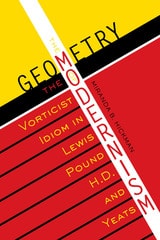
The Geometry of Modernism
The Vorticist Idiom in Lewis, Pound, H.D., and YeatsBy Miranda B. Hickman
University of Texas Press, 2006
Addressing both the literature and the visual arts of Anglo-American modernism, The Geometry of Modernism recovers a crucial development of modernism's early years that until now has received little sustained critical attention: the distinctive idiom composed of geometric forms and metaphors generated within the early modernist movement of Vorticism, formed in London in 1914. Focusing on the work of Wyndham Lewis, leader of the Vorticist movement, as well as Ezra Pound, H.D., and William Butler Yeats, Hickman examines the complex of motives out of which Lewis initially forged the geometric lexicon of Vorticism—and then how Pound, H.D., and Yeats later responded to it and the values that it encoded, enlisting both the geometric vocabulary and its attendant assumptions and ideals, in transmuted form, in their later modernist work.
Placing the genesis and appropriation of the geometric idiom in historical context, Hickman explores how despite its brevity as a movement, Vorticism in fact exerted considerable impact on modernist work of the years between the wars, in that its geometric idiom enabled modernist writers to articulate their responses to both personal and political crises of the 1930s and 1940s. Informed by extensive archival research as well as treatment of several of the least-known texts of the modernist milieu, The Geometry of Modernism clarifies and enriches the legacy of this vital period.
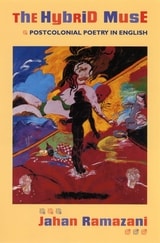
The Hybrid Muse
Postcolonial Poetry in EnglishJahan Ramazani
University of Chicago Press, 2001
In The Hybrid Muse, Jahan Ramazani argues that postcolonial poets have also dramatically expanded the atlas of literature in English, infusing modern and contemporary poetry with indigenous metaphors and creoles. A rich and vibrant poetry, he contends, has issued from the hybridization of the English muse with the long resident muses of Africa, India, and the Caribbean. Starting with the complex case of Ireland, Ramazani closely analyzes the work of leading postcolonial poets and explores key questions about the relationship between poetry and postcolonialism. As inheritors of both imperial and native cultures, poets such as W. B. Yeats, Derek Walcott, Louise Bennett, A. K. Ramanujan, and Okot p'Bitek invent compelling new forms to articulate the tensions and ambiguities of their cultural in-betweeness. They forge hybrid figures, vocabularies, and genres that embody the postcolonial condition.
Engaging an array of critical topics, from the aesthetics of irony and metaphor to the politics of nationalism and anthropology, Ramazani reconceptualizes issues central to our understanding of both postcolonial literatures and twentieth-century poetry. The first book of its kind, The Hybrid Muse will help internationalize the study of poetry, and in turn, strengthen the place of poetry in postcolonial studies.
The Intimate Critique
Autobiographical Literary CriticismDiane P. Freedman, Olivia Frey, and Frances Murphy Zauhar, eds.
Duke University Press, 1993
Grounded in feminism and connected to the race, class, and gender paradigms in cultural studies, the twenty-six contributors to this volume—including Jane Tompkins, Henry Louis Gates, Jr., Shirley Nelson Garner, and Shirley Goek-Lin Lim—respond in new, refreshing ways to literary subjects ranging from Homer to Freud, Middlemarch to The Woman Warrior, Shiva Naipaul to Frederick Douglass. Revealing the beliefs and formative life experiences that inform their essays, these writers characteristically recount the process by which their opinions took shape--a process as conducive to self-discovery as it is to critical insight. The result—which has been referred to as "personal writing," "experimental critical writing," or "intellectual autobiography"—maps a dramatic change in the direction of literary criticism.
Contributors. Julia Balen, Dana Beckelman, Ellen Brown, Sandra M. Brown, Rosanne Kanhai-Brunton, Suzanne Bunkers, Peter Carlton, Brenda Daly, Victoria Ekanger, Diane P. Freedman, Olivia Frey, Shirley Nelson Garner, Henry Louis Gates, Jr., Melody Graulich, Gail Griffin, Dolan Hubbard, Kendall, Susan Koppelman, Shirley Geok-Lin Lim, Linda Robertson, Carol Taylor, Jane Tompkins, Cheryl Torsney, Trace Yamamoto, Frances Murphy Zauhar
The Living Dead
A Study of the Vampire in Romantic LiteratureJames B. Twitchell
Duke University Press, 1981
The Nature of Cities
Ecocriticism and Urban EnvironmentsMichael Bennett
University of Arizona Press, 1999
The editors—both raised in small towns but now living in major urban areas—are especially concerned with the sociopolitical construction of all environments, both natural and manmade. Following an opening interview with Andrew Ross exploring the general parameters of urban ecocriticism, they present essays that explore urban nature writing, city parks, urban "wilderness," ecofeminism and the city, and urban space. The volume includes contributions on topics as wide-ranging as the urban poetry of English writers from Donne to Gay, the manufactured wildness of a gambling casino, and the marketing of cosmetics to urban women by idealizing Third World "naturalness." These essays seek to reconceive nature and its cultural representations in ways that contribute to understanding the contemporary cityscape. They explore the theoretical issues that arise when one attempts to adopt and adapt an environmental perspective for analyzing urban life.
The Nature of Cities offers the ecological component often missing from cultural analyses of the city and the urban perspective often lacking in environmental approaches to contemporary culture. By bridging the historical gap between environmentalism, cultural studies, and urban experience, the book makes a statement of lasting importance to the development of the ecocritical movement.
The Objectivist Nexus
Essays in Cultural PoeticsPeter Quartermain
University of Alabama Press, 1999
Outstanding poets and critics present cultural readings of the Objectivist poets, a group whose works have been largely unexamined.
"Objectivist" writers, conjoined through a variety of personal, ideological, and literary-historical links, have, from the late 1920s to the present, attracted emulation and suspicion. Representing a nonsymbolist, postimagist poetics and characterized by a historical, realist, antimythological worldview, Objectivists have retained their outsider status. Despite such status, however, the formal, intellectual, ideological, and ethical concerns of the Objectivist nexus have increasingly influenced poetry and poetics in the United States.
Thus, argue editors Rachel Blau DuPlessis and Peter Quartermain, the time has come for an anthology that unites essential works on Objectivist practices and presents Objectivist writing as an enlargement of the possibilities of poetry rather than as a determinable and definable literary movement. The authors' collective aim is to bring attention to this group of poets and to exemplify and specify cultural readings for poetic texts--readings alert to the material world, politics, society, and history, and readings concerned with the production, dissemination, and reception of poetic texts.
The contributors consider Basil Bunting, Lorine Niedecker, George Oppen, Carl Rakosi, Charles Reznikoff, and Louis Zukofsky within both their historical milieu and our own. The essays insist on poetry as a mode of thought; analyze and evaluate Objectivist politics; focus on the ethical, spiritual, and religious issues raised by certain Objectivist affiliations with Judaism; and explore the dissemination of poetic texts and the vagaries of Objectivist reception. Running throughout the book are two related threads: Objectivist writing as generally a practice aware of its own historical and social contingency and Objectivist writing as a site of complexity, contestation, interrogation, and disagreement.
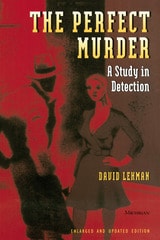
The Perfect Murder
A Study in DetectionDavid Lehman
University of Michigan Press, 2000
As Lehman shows, the detective story draws deeply from ancient storytelling traditions. The mystery's conventions--the locked room, the clue "hidden" in plain sight, the diabolical double, the villainous least likely subject--work on us as childhood fairy tales do; they prey upon our darkest fears, taking us to the brink of the unbearable before restoring a comforting sense of order. The myth of Oedipus, for example, contains the essential elements of a whodunit, with the twist that the murderer the detective pursues is himself.
With their wisecracking gumshoe heroes, Dashiell Hammett and Raymond Chandler fashioned an existential romance out of the detective novel. More recent writers such as Ross MacDonald, P. D. James, and Ruth Rendell have raised the genre to a new level of psychological sophistication. Yet the form evolves still, and Lehman guides us to the epistemological riddles of Jorge Luis Borges and Umberto Eco, who challenge the notion of a knowable truth. Originally published in 1989, this new edition features an additional chapter on the mystery novels of the 1990s.
"A lively study of the development and varieties of the detective story since Poe, its relations with other forms high and low, and the latter-day appropriation of its techniques by such writers as Borges and Eco. . . . A thoroughly intelligent and readable book." --Richard Wilbur, Pulitzer-Prize winning poet
David Lehman is the series editor of both the The Best American Poetry, published by Scribner, and the Poets on Poetry series published by the University of Michigan Press. He is a former Guggenheim Fellow in poetry, a vice president of the National Book Critics Circle, and the author of several books of criticism and collections of poems.

The Performing Self
Compositions and Decompositions in the Languages of Contemporary LifePoirier, Richard
Rutgers University Press, 1992
.
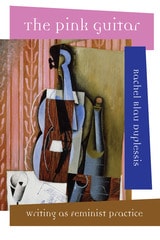
The Pink Guitar
Writing as Feminist PracticeRachel Blau DuPlessis
University of Alabama Press, 2006
The Police Procedural
George N. Dove
University of Wisconsin Press, 1982

The Power of Genre
Adena Rosmarin
University of Minnesota Press, 1986
The Power of Genre was first published in 1986. Minnesota Archive Editions uses digital technology to make long-unavailable books once again accessible, and are published unaltered from the original University of Minnesota Press editions.
The Power of Genre is a radical and systematic rethinking of the relationship between literary genre and critical explanation. Adene Rosmarin shows how traditional theories of genre—whether called "historical," "intrinsic," or "theoretical"—are necessarily undone by their attempts to define genre representationally. Rather, Rosmarin argues, the opening premise of critical argument is always critical purpose or, as E. H. Gombrich has said, function, and the genre or "form" follows the reform. The goal is a relational model that works.
Rosemarin analyzes existing theories of genre — those of Hirsch, Crane, Frye, Todorov, Jauss, and Rader are given particular attention—before proposing her own. These analyses uncover the illogic that plagues even sophisticated attempts to treat genre as a preexistent entity. Rosmarin shows how defining genre pragmatically – as explicitly chosen or devised to serve explicitly critical purposes – solves this problem: a pragmatic theory of genre builds analysis of its metaphors and motives into its program, thereby eliminating theory's traditional need to deny the invented and rhetorical nature of its schemes. A pragmatic theory, however, must be tested not only by its internal cohesion but also by its power to enable practice, and Rosmarin chooses the dramatic monologue, an infamously problematic genre, and its recent relative, the mask lyric, as testing grounds. Both genres—variously exemplified by poems of Browning, Thennyson, Eliot, and Pound—are ex post facto critical constructs that, when defined as such, make closely reasoned sense not only of particular poems but also of their perplexed interpretive histories. Moreover, both genres dwell on the historicity, textuality, and redemptive imperfection of the speaking self. This generic obsession ties the poems to their reception and, finally, to the openended, processes of hermeneutic question-and-answer stressed in Rosmarin's framing theory.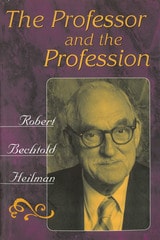
The Professor and the Profession
Robert Bechtold Heilman
University of Missouri Press, 1999
Robert Bechtold Heilman is one of the last survivors of a remarkable generation of American critics that included such literary giants as Cleanth Brooks, Allen Tate, and Edmund Wilson, men to whom literary criticism was not a profession or an academic necessity but a calling. In a distinguished career that has spanned nearly six decades, Heilman has influenced generations of scholars and critics through his exquisitely written commentaries on subjects ranging from William Shakespeare to Thomas Hardy.
In The Professor and the Profession, Heilman looks back over his life and times from his perspective as both an academic and an American. Differing in theme and subject matter, the essays included in this collection are ultimately unified by the author himself. Whether the topic is football, Robert Penn Warren, or education, Heilman's generous and intelligent voice emerges on every page. Yet this collection is more than one academic's personal reminiscences; it is a reflection upon American literary history itself.
In the first section of essays, "The Self Displayed," Heilman reveals how he developed from a small-town boy into a distinguished critic and teacher, touching upon his participation in baseball and love of football along the way. "Writers Portrayed" and "Literary Types and Problems Inspected," the following sections, offer his opinions on the past and on the current state of American literary criticism, including personal portraits of such renowned friends as Eric Voegelin, Robert Penn Warren, Theodore Roethke, and Malcolm Cowley. The final section, "Education Examined," is an enlightening inquiry into the development of American universities in the twentieth century.
A fascinating chronicle of a significant academic life, The Professor and the Profession will appeal to a broad array of scholars, from young academics wanting to know where they came from to those of Heilman's generation who can appreciate this personal reminiscence into the world of letters.
The Rhetoric of Empire
Colonial Discourse in Journalism, Travel Writing, and Imperial AdministrationDavid Spurr
Duke University Press, 1993
Despite historical differences among British, French, and American versions of colonialism, their rhetoric had much in common. The Rhetoric of Empire identifies these shared features—images, figures of speech, and characteristic lines of argument—and explores them in a wide variety of sources. A former correspondent for the United Press International, the author is equally at home with journalism or critical theory, travel writing or official documents, and his discussion is remarkably comprehensive. Ranging from T. E. Lawrence and Isak Dineson to Hemingway and Naipaul, from Time and the New Yorker to the National Geographic and Le Monde, from journalists such as Didion and Sontag to colonial administrators such as Frederick Lugard and Albert Sarraut, this analysis suggests the degree to which certain rhetorical tactics penetrate the popular as well as official colonial and postcolonial discourse.
Finally, Spurr considers the question: Can the language itself—and with it, Western forms of interpretation--be freed of the exercise of colonial power? This ambitious book is an answer of sorts. By exposing the rhetoric of empire, Spurr begins to loosen its hold over discourse about—and between—different cultures.
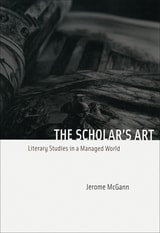
The Scholar's Art
Literary Studies in a Managed WorldJerome McGann
University of Chicago Press, 2006
Of particular interest to McGann is the demise of public discourse about poetry. That poetry has become recondite is, to his mind, at once a problem for how scholars do their work and a general cultural emergency. The Scholar’s Art asks what could be gained by reimagining the way scholars have codified the literary and cultural history of the past two hundred years and goes on to provide a series of case studies that illustrate how scholarly method can help bring about such reimaginings. McGann closes with a discussion of technology’s ability to harness the reimagination of cultural memory and concludes with exemplary acts of critical reflection.
Astute observation from one of America’s most bracing and original commentators on the place of literature in twenty-first century culture, The Scholar’s Art proposes new ways—cultural, philological, and technological—to reimagine our literary past and future.
The Significance of Sibling Relationships in Literature
Joanna Stephens Mink
University of Wisconsin Press, 1993
The essays bring together studies in the fields of social and family therapy, psychological research, and literary criticism.
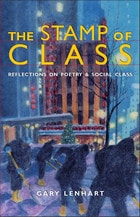
The Stamp of Class
Reflections on Poetry and Social ClassGary Lenhart
University of Michigan Press, 2005
-Lorenzo Thomas
The Stamp of Class explores the nature of reading poetry in the context of class and its themes and sheds new light on how this important yet little-heralded subject affects the poet's life and work.
While numerous works have taken up the question of race and gender as they relate to literary creation, this is the first book of its kind to probe the interplay between class and American poetry. Author Gary Lenhart considers poetry and class across a wide variety of time periods and poetic trends and reflects on a range of influential poets from the eighteenth to the twenty-first centuries.
The essays in The Stamp of Class deal with the question of class as reflected in the works of Tracie Morris, Tillie Olsen, Melvin Tolson, William Carlos Williams, Walt Whitman, and others. The work is rooted in the author's own experiences as a working-class poet and teacher and is the result of more than a decade of exploration.
Poet and scholar Gary Lenhart is Lecturer in English at Dartmouth College in Hanover, New Hampshire. His most recent books of poetry are Father and Son Night, Light Heart, and One at a Time. His essays and reviews have appeared in numerous magazines and journals, including the American Poetry Review, American Book Review, and Exquisite Corpse.
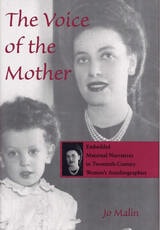
The Voice of the Mother
Embedded Maternal Narratives in Twentieth-Century Women's AutobiographiesJo Malin
Southern Illinois University Press, 2000
Every woman autobiographer is a daughter who writes and establishes her identity through her autobiographical narrative. In The Voice of the Mother, Jo Malin argues that many twentieth-century autobiographies by women contain an intertext, an embedded narrative, which is a biography of the writer/daughter’s mother.
Analyzing this narrative practice, Malin examines ten texts by women who seem particularly compelled to tell their mothers’ stories: Virginia Woolf, Sara Suleri, Kim Chernin, Drusilla Modjeska, Joan Nestle, Carolyn Steedman, Dorothy Allison, Adrienne Rich, Cherríe Moraga, and Audre Lorde. Each author is, in fact, able to write her own autobiography only by using a narrative form that contains her mother’s story at its core. These texts raise interesting questions about autobiography as a genre and about a feminist writing practice that resists and subverts the dominant literary tradition.
Malin theorizes a hybrid form of autobiographical narrative containing an embedded narrative of the mother. The textual relationship between the two narratives is unique among texts in the auto/biographical canon. This alternative narrative practice—in which the daughter attempts to talk both to her mother and about her—is equally an autobiography and a biography rather than one or the other. The technique is marked by a breakdown of subject/object categories as well as auto/biographical dichotomies of genre. Each text contains a “self” that is more plural than singular, yet neither.
In addition to being a theoretical and textual analysis, Malin’s book is also a mother-daughter autobiography and biography itself. She shares her own story and her mother’s story as a way to connect directly with readers and as a way to bridge the gap between theory and practice.

The Voyage In
Fictions of Female DevelopmentEdited by Elizabeth Abel, Marianne Hirsch, and Elizabeth Langland
Dartmouth College Press, 1983

The Woman Detective
GENDER AND GENREViola Klein
University of Illinois Press, 1995
This new edition adds sixty new female private eyes to the roster and includes an afterword that assesses the current state of the genre's new and old novels. A comprehensive bibliography and a character list update the field through mid-1994.
"A highly intelligent analysis." -- Ms.
"Well-researched and well-written. . . . Traces the evolution of sexist boundaries in popular detective fiction from a feminist viewpoint and documents the parallels in social history and the women's rights movement." -- Ronald C. Miller, The Armchair Detective
"Identifies dozens of good novels whose titles are not well known, its promise of good reading extending well beyond its own covers." -- Jane Bakerman, Belles Lettres
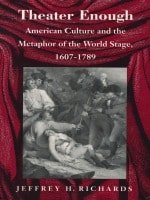
Theater Enough
American Culture and the Metaphor of the World Stage, 1607–1789Jeffrey H. Richards
Duke University Press, 1991
The rhetoric, or discourse, of early American theater emerged out of the figures of speech that permeated the colonists’ lives and literary productions. Jeffrey H. Richards examines a variety of texts—histories, diaries, letters, journals, poems, sermons, political tracts, trial transcripts, orations, and plays—and looks at the writings of such authors as John Winthrop and Mercy Otis Warren. Richards places the American usage of theatrum mundi—the world depicted as a stage—in the context of classical and Renaissance traditions, but shows how the trope functions in American rhetoric as a register for religious, political, and historical attitudes.

Toward the End of the Century
Essays into PoetryWayne Dodd
University of Iowa Press, 1992
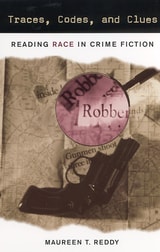
Traces, Codes, and Clues
Reading Race in Crime FictionReddy, Maureen T
Rutgers University Press, 2002
Detective fiction featuring white women and people of color such as Barbara Neelys Blanche White and Walter Mosleys Easy Rawlinshas become tremendously popular. Although they are considered "light reading," mysteries also hold important cultural and social "clues." Much recent scholarly work has demonstrated that race is both a cultural fiction not a biological reality and a central organizing principle of experience. Popular writers are likely to reflect the conventions of their own historical situations.
In Traces, Codes, and Clues: Reading Race in Crime Fiction, Maureen T. Reddy explores the ways in which crime fiction manipulates cultural constructions such as race and gender to inscribe dominant cultural discourses. She notes that even those writers who appear to set out to revise outdated conventions repeatedly reproduce the genres most conservative elements. The greatest obstacle to transforming crime fiction, Reddy states, is the fact that the genre itself is deeply embedded in the discourse of white (and male) superiority. There is, therefore, an absolute necessity to break away from that discourse through reversal or other strategies in order to produce work that defies, and thus helps readers to defy, the dominant ideology of race.

Transatlantic Women
Nineteenth-Century American Women Writers and Great BritainBeth L. Lueck
University of New Hampshire Press, 2012
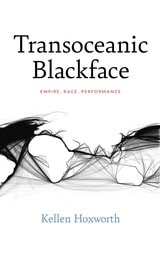
Transoceanic Blackface
Empire, Race, PerformanceKellen Hoxworth
Northwestern University Press, 2024
A material history of racialized performance throughout the Anglophone imperial world, Transoceanic Blackface: Empire, Race, Performance revises prevailing understandings of blackface and minstrelsy as distinctively US American cultural practices. Tracing intertwined histories of racialized performance from the mid-eighteenth through the early twentieth century across the United States and the British Empire, this study maps the circulations of blackface repertoires in theatrical spectacles, popular songs, visual materials, comic operas, closet dramas, dance forms, and Shakespearean burlesques.
Kellen Hoxworth focuses on overlooked performance histories, such as the early blackface minstrelsy of T. D. Rice’s “Jump Jim Crow” and the widely staged blackface burlesque versions of Othello, as traces of the racial and sexual anxieties of empire. From the nascent theatrical cultures of Australia, Britain, Canada, India, Jamaica, South Africa, and the United States, Transoceanic Blackface offers critical insight into the ways racialized performance animated the imperial “common sense” of white supremacy on a global scale.
Tropes, Parables, and Performatives
J. Hillis Miller
Duke University Press, 1991
Throughout these essays Miller is fascinated with the tropological dimension of literary language, with the way figures of speech turn aside the telling of a story or the presentation of a literary theme. The exploration of this turning leads to the recognition that all works of literature are parabolic, “thrown beside” their real meaning. They tell one story but call forth something else.
Miller further agrees that all parables are fundamentally performative. They do not merely name something or give knowledge, but rather use words to make something happen, to get the reader from here to there. Each essay here attempts to formulate what, in a given case, the reader perfomatively enters by way of parabolic trope.