Results by title
187 books match the query 'Essays & Travelogues' and 56 start with t
Tasting Spain
A Culinary TourH. M. van den Brink
Haus Publishing, 2017
H. M. van den Brink paints an evocative scene of everyday life in Spain. Readers see the urban shop windows displaying famous serrano ham and Spanish sweet cakes, taste crispy pigs’ ears along with rich chickpea soup, and smell the strong coffee and steaming tortillas often enjoyed while breakfasting outdoors. An appealing blend of historical background and personal recollections, Tasting Spain shapes a lively account of the country and its culture, both in the city and out in the countryside. From exquisite restaurants to private settings, this is a book about eating—meals that Van den Brink has enjoyed solo or with friends—and about the vivid and sustaining memories such meals can create.
“I am not a cook, nor a historian, nor a critic,” writes Van den Brink. “I am just an eater.” With Tasting Spain, he opens new vistas on Spanish cuisine that will tickle the taste buds of readers and leave them hungry for more of this beautiful land.
The Ancient Shore
Dispatches from NaplesShirley Hazzard and Francis Steegmuller
University of Chicago Press, 2008
Born in Australia, Shirley Hazzard first moved to Naples as a young woman in the 1950s to take up a job with the United Nations. It was the beginning of a long love affair with the city. The Ancient Shore collects the best of Hazzard’s writings on Naples, along with a classic New Yorker essay by her late husband, Francis Steegmuller. For the pair, both insatiable readers, the Naples of Pliny, Gibbon, and Auden is constantly alive to them in the present.
With Hazzard as our guide, we encounter Henry James, Oscar Wilde, and of course Goethe, but Hazzard’s concern is primarily with the Naples of our own time—often violently unforgiving to innocent tourists, but able to transport the visitor who attends patiently to its rhythms and history. A town shadowed by both the symbol and the reality of Vesuvius can never fail to acknowledge the essential precariousness of life—nor, as the lover of Naples discovers, the human compassion, generosity, and friendship that are necessary to sustain it.
Beautifully illustrated by photographs from such masters as Henri Cartier-Bresson and Herbert List, The Ancient Shore is a lyrical letter to a lifelong love: honest and clear-eyed, yet still fervently, endlessly enchanted.
“Much larger than all its parts, this book does full justice to a place, and a time, where ‘nothing was pristine, except the light.’”—Bookforum
“Deep in the spell of Italy, Hazzard parses the difference between visiting and living and working in a foreign country. She writes with enormous eloquence and passion of the beauty of getting lost in a place.”—Susan Slater Reynolds, Los Angeles Times
“The two voices join in exquisite harmony. . . . A lovely book.”—Booklist, starred review
The Aran Islands
John M. Synge
Northwestern University Press, 1999
Synge first traveled to the primitive, little-known Aran Islands in 1898. His trip proved to be a wonderfully fruitful and decisive experience. He then went back for part of each summer until 1902. The Aran Islands, his memoir of those experiences, was published in 1907, and the future playwright called it his "first serious piece of work."
The Bark River Chronicles
Stories from a Wisconsin WatershedMilton J. Bates
Wisconsin Historical Society Press, 2012
The Bark River valley in southeastern Wisconsin is a microcosm of the state's - indeed, of the Great Lakes region's - natural and human history. "The Bark River Chronicles" reports one couple's journey by canoe from the river's headwaters to its confluence with the Rock River and several miles farther downstream to Lake Koshkonong. Along the way, it tells the stories of Ice Age glaciation, the effigy mound builders, the Black Hawk War, early settlement and the development of waterpower sites, and recent efforts to remove old dams and mitigate the damage done by water pollution and invasive species.
Along with these big stories, the book recounts dozens of little stories associated with sites along the river. The winter ice harvest, grain milling technology, a key supreme court decision regarding toxic waste disposal, a small-town circus, a scheme to link the Great Lakes to the Mississippi River by canal, the murder of a Chicago mobster, controversies over race and social class in Waukesha County's lake country, community efforts to clean up the river and restore a marsh, visits to places associated with the work of important Wisconsin writers - these and many other stories belong to the Bark River chronicles.
For the two voyageurs who paddle the length of the Bark, it is a journey of rediscovery and exploration. As they glide through marshes, woods, farmland, and cities, they acquire not only historical and environmental knowledge but also a renewed sense of the place in which they live. Maps and historical photographs help the reader share their experience.
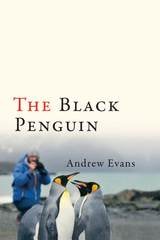
The Black Penguin
Andrew Evans
University of Wisconsin Press, 2018
Ejected from church and shunned by his family as a young man, Evans embarks on an ambitious overland journey halfway across the world. Riding public transportation, he crosses swamps, deserts, mountains, and jungles, slowly approaching his lifelong dream and ultimate goal: Antarctica. With each new mile comes laughter, pain, unexpected friendship, true weirdness, unsettling realities, and some hair-raising moments that eventually lead to a singular discovery on a remote beach at the bottom of the world.
Evans's 12,000-mile voyage becomes a soulful quest to balance faith, family, and self, reminding us that, in the end, our lives are defined by the roads we take, the places we touch, and those we hold nearest.
The Black Rock Desert
Text by William L. Fox; Photographs by Mark Klett
University of Arizona Press, 2002
The Blind Masseuse
A Traveler's Memoir from Costa Rica to CambodiaAlden Jones
University of Wisconsin Press, 2013
Gold Winner for Travel Essays, Foreword Books of the Year
Gold Medal for Travel Essays, Independent Publisher Book Awards
Winner, Bisexual Book Awards, Bisexual Biography/Memoir Category
Finalist, Housatonic Book Awards
Longlist of eight, PEN/Diamonstein Spielvogel Award for the Art of the Essay
Finalist, Travel Book or Guide Award, North American Travel Journalists Association
The Blind Masseuse
A Traveler's Memoir from Costa Rica to CambodiaAlden Jones
University of Wisconsin Press, 2017
By way of explorations to Costa Rica, Bolivia, Nicaragua, Cuba, Burma, Cambodia, Egypt, and around the world on a ship, Jones chronicles her experience as a young American traveler while pondering her role as an outsider in the cultures she temporarily inhabits. Her wanderlust fuels a strong, high-adventure story and, much in the vein of classic travel literature, Jones's picaresque tale of personal evolution informs her own transitions, rites of passage, and understandings of her place as a citizen of the world. With sharp insight and stylish prose, Jones asks: Is there a right or wrong way to travel? The Blind Masseuse concludes that there is, but that it's not always black and white.
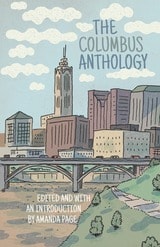
The Columbus Anthology
Amanda Page
The Ohio State University Press, 2020
Race, sports, the endless squeeze of gentrification, the city’s booming literary and comics scenes, its reputation as a haven for queer life, the sometimes devastating differences in perspective among black and white, native and transplant residents—and more than one tribute to Buckeye Donuts—make this anthology a challenging and an energizing read. From Hanif Abdurraqib’s sparkling and urgent portrait of Columbus’s vital immigrant culture as experienced through Crew games to Nick Dekker’s insights into breakfast as a vehicle for getting to know a city to the poetry of Maggie Smith and Ruth Awad, the pieces gathered here show us a Columbus far more textured than any test marketer could dream up.
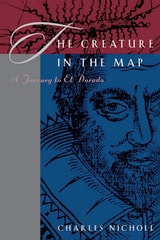
The Creature in the Map
A Journey to El DoradoCharles Nicholl
University of Chicago Press, 1997
"Walter Raleigh . . . was one of those Elizabethan all-rounders who still seem staggeringly larger than life. . . . Mr. Nicholl's cogent reconstruction of the journey uses Raleigh's own account, 'The Discoverie of Guiana'—part truth, part advertising, part rhapsody—and much well-found ancillary material."—Anthony Bailey, New York Times
"Like The Reckoning, his brilliant account of the murder of Christopher Marlowe, Nicholl's new book might be called an exercise in historical conjuring. The Creature in the Map is an effort not only to analyse but also to call into presence the lived experience of the voyage Raleigh undertook in 1595 to the Orinoco Delta in what is now Venezuela."—Stephen Greenblatt, Times Literary Supplement
"Charles Nicholl belongs to an elite company, that of historians who know how to make research into arcane matters and distant times as engrossing as In Cold Blood or All the President's Men."—Michael Dirda, Washington Post
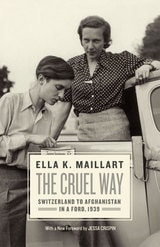
The Cruel Way
Switzerland to Afghanistan in a Ford, 1939Ella K. Maillart
University of Chicago Press, 2013
While the core of the book is the journey itself and their interactions with people oppressed by political conflict and poverty, towards the end of the trip the women’s increasingly troubled relationship takes center stage. By then the glamorous, androgynous Schwarzenbach, whose own account of the trip can be found in All the Roads Are Open, is fighting a losing battle with her own drug addiction, and Maillart’s frustrated attempts to cure her show the profound depth of their relationship.
Complete with thirteen of Maillart’s own photographs from the journey, The Cruel Way is a classic of travel writing, and its protagonists are as gripping and fearless as any in literature.
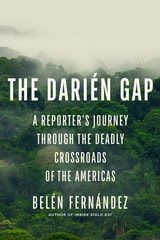
The Darién Gap
A Reporter's Journey through the Deadly Crossroads of the AmericasBelén Fernández
Rutgers University Press, 2025
The narrow Darién Gap, the only land bridge connecting South and Central America, encompasses a spectacularly hostile jungle, covered in steep mountains, dense rainforests, and flood-prone marshes. Known in Spanish as el infierno verde, or “the green hell,” it is one of the most inhospitable places in the world. Its terrain is too treacherous for roads, yet hundreds of thousands of refuge seekers contend with its horrors every year in the hopes of reaching the United States, still some three thousand miles away. And of the countless who set out for the border, an untold number never arrive.
In this book, journalist Belén Fernández travels through the Darién Gap to report on the dehumanizing and deadly stretch of land that has become a mass graveyard for migrants. Fernández’s journey brings her into contact with refuge seekers, people smugglers, law enforcement officials, and many more whose stories bring life to a place overwhelmingly associated with death. Combining history, on-the-ground reporting, travelogue, memoir, and searing politico-economic analysis, she shines light on a largely made-in-the-USA crisis that has come to define our modern era.
Engrossing and heartrending, The Darién Gap is a poignant and compassionate indictment of structural inequality and institutionalized inhumanity in a world where the have-nots must risk death for a chance at a better life—or any life at all.
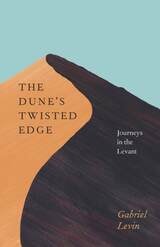
The Dune's Twisted Edge
Journeys in the LevantGabriel Levin
University of Chicago Press, 2012
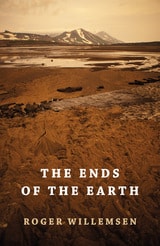
The Ends of the Earth
Roger Willemsen
Haus Publishing, 2010
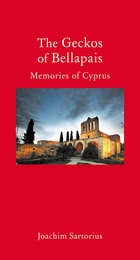
The Geckos of Bellapais
Memories of CyprusJoachim Sartorius
Haus Publishing, 2013
In The Geckos of Bellapais, Joachim Sartorius shares the cultures and legends, colors and lights of the Levant. He explores the island’s history—including its division after the Turkish invasion of 1974 and the difficulties that followed. A revealing exploration of Cyprus after the Turkish partition and an evocative account of one poet’s life on one of the most beautiful islands in the Mediterranean, this book belongs among the world’s best travel writing.
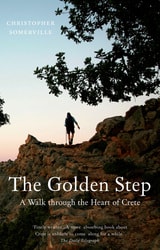
The Golden Step
A Walk Through the Heart of CreteChristopher Somerville
Haus Publishing, 2012
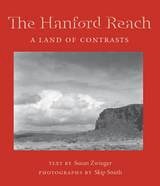
The Hanford Reach
A Land of ContrastsText by Susan Zwinger; Photographs by Skip Smith
University of Arizona Press, 2004
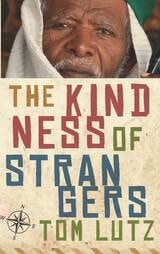
The Kindness of Strangers
Tom Lutz
University of Iowa Press, 2021
You may never visit these places, but Tom Lutz will do it for you. And while global media may serve up a steady diet of division, violence, oppression, hatred, and strife, The Kindness of Strangers shows that people the world over are much more likely to meet strangers with interest, empathy, welcome, and compassion.
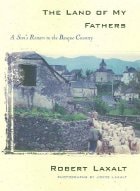
The Land of My Fathers
A Son's Return to the Basque CountryRobert Laxalt
University of Nevada Press, 2024
In 1960, renowned Nevada writer Robert Laxalt moved himself and his family to a small Basque village in the French Pyrenees. The son of Basque emigrants, Laxalt wanted to learn as much as he could about the ancient and mysterious people from which he was descended and about the country from which his parents came. Thanks to his Basque surname and a wide network of family connections, Laxalt was able to penetrate the traditional reserve of the Basques in a way that outsiders rarely can. In the process, he gained rare insight into the nature of the Basques and the isolated, beautiful mountain world where they have lived for uncounted centuries. Based on Laxalt’s personal journals of this and a later sojourn in 1965, The Land of My Fathers is a moving record of a people and their homeland. Through Laxalt’s perceptive eyes and his wife Joyce’s photographs, we observe the Basques’ market days and festivals, join their dove hunts and harvests, share their humor and history, their deep sense of nationalism, their abiding pride in their culture and their homes, and discover the profound sources of the Basques’ strength and their endurance as a people. Photography by Joyce Laxalt.
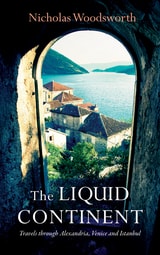
The Liquid Continent
Travels through Alexandria, Venice and IstanbulNicholas Woodsworth
Haus Publishing, 2016
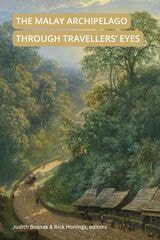
The Malay Archipelago Through Travellers' Eyes
1800–1900Edited by Judith E. Bosnak and Rick Honings
National University of Singapore Press, 2026
A history of colonial encounters in maritime Southeast Asia, through the lens of an underexplored group of nineteenth-century travelogues.
What did nineteenth-century travellers actually see when they journeyed through the Malay Archipelago—and what did they miss? The travelogues penned by British and Dutch explorers reached a wide readership; they have shaped how we imagine this region with their accounts of island kingdoms, volcanic landscapes, and maritime crossroads. Other voices—Javanese nobles venturing beyond their courts, Eurasian tourists navigating between worlds, French administrators, Scandinavian adventurers, Italian naturalists—remained in the shadows.
The Malay Archipelago through Travellers’ Eyes recovers these overlooked perspectives alongside fresh readings of celebrated figures like James Brooke, the “White Rajah” of Sarawak, and the intrepid Isabella Bird. Here we encounter Purwalelana, whose groundbreaking Javanese travelogue in modern prose abandoned centuries of poetic tradition; Kartini, whose letters became a means of traversing boundaries she could not physically cross; and Dé-Lilah, whose Eurasian heritage gave her writing an unsettling double vision. The naturalist Junghuhn scaling Java’s volcanoes, Raffles burnishing British reputation against Dutch rivals, Italian explorers charting New Guinea's coasts—each constructed not only the lands they described but also themselves.
Travel writing has often claimed to offer transparent windows onto foreign worlds. This collection reveals it as something far more interesting: a literature of encounter where imperial ambition, personal identity, and genuine curiosity intertwine. For anyone captivated by the arts of travel and observation, these essays open new ways of reading a genre we thought we knew.
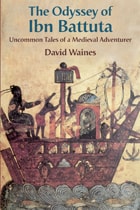
The Odyssey of Ibn Battuta
Uncommon Tales of a Medieval AdventurerDavid Waines
University of Chicago Press, 2010
Ibn Battuta was, without doubt, one of the world’s truly great travelers. Born in fourteenth-century Morocco, and a contemporary of Marco Polo, Ibn Battuta left an account in his own words of his remarkable journeys, punctuated by adventure and peril, throughout the Islamic world and beyond. Whether sojourning in Delhi and the Maldives, wandering through the mazy streets of Cairo and Damascus, or contesting with pirates and shipwreck, the indefatigable Ibn Battuta brought to vivid life a medieval world brimming with marvel and mystery. Carefully observing the great diversity of civilizations that he encountered, Ibn Battuta exhibited an omnivorous interest in such matters as food and drink; religious differences among Christians, Hindus, and Shia Muslims; and ideas about purity and impurity, disease, women, and sex.
David Waines offers here a graceful analysis of Ibn Battuta’s travelogue. This is a gripping treatment of the life and times of one of history’s most daring, and at the same time most human, adventurers.
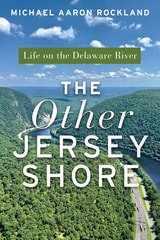
The Other Jersey Shore
Life on the Delaware RiverMichael Aaron Rockland
Rutgers University Press, 2024
The Other Jersey Shore takes readers on a personal tour of the New Jersey portion of the Delaware River and its surroundings. You will learn about the role that the river played in human history, including Washington’s four crossings of the Delaware during the Revolutionary War. And you will also learn about the ecological history of the river itself, once one of the most polluted waterways in the country and now one of the cleanest, providing drinking water for 17 million people. Michael Aaron Rockland, a long-time New Jersey resident, shows readers his very favorite spots along the Delaware, including the pristine waterfalls and wilderness in the Delaware Water Gap recreation area. Along the way, he shares engrossing stories and surprising facts about the river that literally defines western New Jersey.
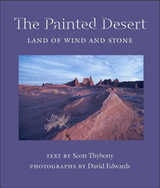
The Painted Desert
Land of Wind and StoneText by Scott Thybony; Photographs by David Edwards
University of Arizona Press, 2006
But this remote pocket of the Arizona desert, sandwiched between the Little Colorado River on one side and bold escarpments on the other, is much more than most tourists ever experience. An ethereal landscape of sculpted rock, wind-fluted cliffs, and elegantly drifting sand, the Painted Desert is a rich storehouse of natural beauty, colorful history, and scientific wonders. Here the strongest winds in Arizona blow across extensive dunefields, where less than ten inches of rain falls each year and only a few desert-savvy Navajo are able to live.
Now, for the first time award-winning writer Scott Thybony and freelance photographer David Edwards offer an intimate look at a place that remains inhospitable and inaccessible to so many. They share insights about the geology, paleontology, anthropology, and human history of the region as well as personal stories that dispel the misconceptions and mysteries that surround this delicate and difficult landscape.
With fifteen stunning photographs gracing the text, this book offers a vibrant portrait of one of the Southwest’s most barren, and most colorful landscapes.
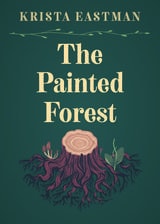
The Painted Forest
Krista Eastman
West Virginia University Press, 2019
Council for Wisconsin Writers, Norbert Blei/August Derleth Nonfiction Book Award winner
In this often-surprising book of essays, Krista Eastman explores the myths we make about who we are and where we’re from. The Painted Forest uncovers strange and little-known “home places”—not only the picturesque hills and valleys of the author’s childhood in rural Wisconsin, but also tourist towns, the “under-imagined and overly caricatured” Midwest, and a far-flung station in Antarctica where the filmmaker Werner Herzog makes an unexpected appearance.
The Painted Forest upends easy narratives of place, embracing tentativeness and erasing boundaries. But it is Eastman’s willingness to play—to follow her curiosity down every odd path, to exude a skeptical wonder—that gives this book depth and distinction. An unlikely array of people, places, and texts meet for close conversation, and tension is diffused with art, imagination, and a strong sense of there being some other way forward. Eastman offers a smart and contemporary take on how we wander and how we belong.
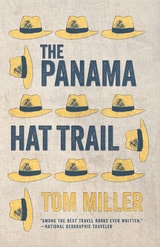
The Panama Hat Trail
Tom Miller
University of Arizona Press, 1986
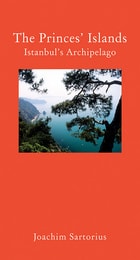
The Princes' Islands
Istanbul's ArchipelagoJoachim Sartorius
Haus Publishing, 2023
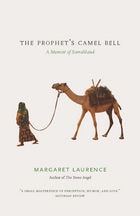
The Prophet's Camel Bell
A Memoir of SomalilandMargaret Laurence
University of Chicago Press, 1963
In 1950, as a young bride, Margaret Laurence set out with her engineer husband to what was then Somaliland: a British protectorate in North Africa few Canadians had ever heard of. Her account of this voyage into the desert is full of wit and astonishment. Laurence honestly portrays the difficulty of colonial relationships and the frustration of trying to get along with Somalis who had no reason to trust outsiders. There are moments of surprise and discovery when Laurence exclaims at the beauty of a flock of birds only to discover that they are locusts, or offers medical help to impoverished neighbors only to be confronted with how little she can help them. During her stay, Laurence moves past misunderstanding the Somalis and comes to admire memorable individuals: a storyteller, a poet, a camel-herder. The Prophet’s Camel Bell is both a fascinating account of Somali culture and British colonial characters, and a lyrical description of life in the desert.
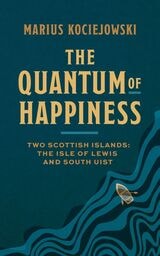
The Quantum of Happiness
Two Scottish Islands: the Isle of Lewis and South UistMarius Kociejowski
Haus Publishing, 2026
What happened a few thousand years ago no longer seems quite so far away in time. It is what islands induce in one, a sense of simultaneity, as well as the old penchant a fool might have for occupying several dimensions at once. And the people who inhabited those ancient places seem more and more like ourselves whereas, at times, our contemporaries become increasingly, troublingly, remote.
The islands of the Outer Hebrides have long fostered a culture outside time. Once eroded by the Highland Clearances and persecution of Gaelic, the cornerstones of island culture – stories at the fireside, the singing of psalms, and an intimacy with the past – are now under threat by the trappings of modernity and dominance of the English language. Still, there lingers in most people a desire to tell, and be told, stories: a desire as ancient as oatcakes.
Marius Kociejowski’s story has heroes – the poets of Upper Bayble, perhaps, or Father Colin MacInnes, champion of the Gaelic language – and villains, like the brutal Donald Munro, who delighted in evicting tenant farmers from his master’s land. The Quantum of Happiness distils the elements of joy that exist in this north-westerly corner of Europe and wonders if happiness here is truly measurable: or if it moves at such speed that we don’t even notice its passing.
The Reinvention of Mexico in Contemporary Spanish Travel Writing
Jane Hanley
Vanderbilt University Press, 2021
To frame the analysis of contemporary travel writing, author Jane Hanley examines key moments in the history of Mexican-Spanish relations, including the origins of narratives regarding Spaniards' sense of Mexico's similarity to and difference from Spain. This history underpins the discussion of the role of Spanish travelers in their encounters with Mexican peoples and places and their reflection on their own role as communicators of cultural meaning and participants in the tourist economy with its impact—both negative and positive—on places.
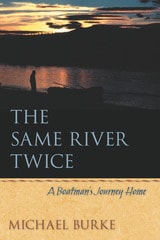
The Same River Twice
A Boatman's Journey HomeMichael Burke
University of Arizona Press, 2006
As Burke contemplates what he and Sid may have had in common, he meditates on the changing meaning of rivers, and the impossibility of fully recovering the past. In clear and graceful prose, Burke blends Sid’s colorful history with his own uncommon journey. He also reflects upon the quick currents of time and the fierce passion he shares with Sid for the life of river running in Alaska and the west. Unlike most river-running books that often describe waterways in the lower forty-eight states, The Same River Twice introduces readers to rough, austere, and unfamiliar rivers in the northern wilderness. Burke has an intimate understanding of these remote, free-flowing rivers. He effectively captures the thrill of moving water, the spirit of rivers and river canyons, and the life of river guides. This insightful memoir brings readers into a confluence of rivers, where past and present merge, revealing the power of wilderness and the truth about changing course.
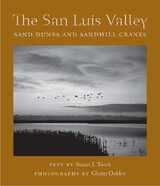
The San Luis Valley
Sand Dunes and Sandhill CranesText by Susan J. Tweit; Photographs by Glenn Oakley
University of Arizona Press, 2005
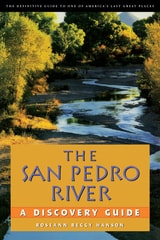
The San Pedro River
A Discovery GuideRoseann Beggy Hanson
University of Arizona Press, 2001
Roseann Hanson has spent much of her life exploring the San Pedro and its environs and has written a book that is both a personal celebration of and a definitive guide to this, the last undammed and unchanneled river in the Southwest. Taking you from the San Pedro's entry into the U.S. at the Mexican border to its confluence with the Gila River about a hundred miles north, she devotes a separate chapter to each of seven sections of river. Each chapter contains an eloquent essay on natural and cultural history, laced with Hanson's own experiences, plus an exploration guide brimming with useful information: how to get to the river, finding hiking trails, camping and other accommodations, birdwatching tips, access to biking and horseback riding, and nearby historic sites. Maps are included for each stretch of river, and the text is illustrated throughout with drawings from Roseann's copious field notebooks. Along the 40 miles of the San Pedro Riparian National Conservation Area, a sanctuary protected by the Bureau of Land Management since 1988, Hanson shows how the elimination of cattle and off-road vehicles has restored the river corridor to a more natural condition. She tells of the impact of humans on the San Pedro, from Clovis hunters to American settlers to Washington bureaucrats, and shows how, as the river winds its way north, it is increasingly threatened by groundwater pumping and urbanization.
In addition to the "discovery" sections of each chapter, Hanson has included species checklists for habitats and plants, birds, mammals, and reptiles and amphibians to make this a perfect companion for anyone exploring the area, whether as occasional tourist or frequent visitor. The book's blending of graceful prose and practical information shows that a river is the sum of many parts. Roseann Hanson will give you a special understanding—and perhaps a sense of stewardship—of this wild place.
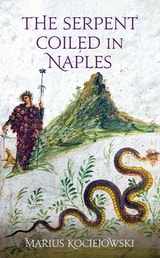
The Serpent Coiled in Naples
Marius Kociejowski
Haus Publishing, 2023
In recent years Naples has become, for better or worse, the new destination in Italy. While many of its more unusual features are on display for all to see, the stories behind them remain largely hidden. In Marius Kociejowski’s portrait of this baffling city, the serpent can be many things: Vesuvius, the mafia-like Camorra, the outlying Phlegrean Fields (which, geologically speaking, constitute the second most dangerous area on the planet). It is all these things that have, at one time or another, put paid to the higher aspirations of Neapolitans themselves. Naples is simultaneously the city of light, sometimes blindingly so, and the city of darkness, although often the stuff of cliché. The boundary that separates death from life is porous in the extreme: the dead inhabit the world of the living and vice versa. The Serpent Coiled in Naples is a travelogue, a meditation on mortality, and much else besides.
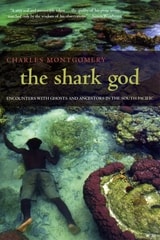
The Shark God
Encounters with Ghosts and Ancestors in the South PacificCharles Montgomery
University of Chicago Press, 2007
In the South Pacific, he discovers a world of sorcery and shark worship, where Christian and pagan rituals coexist and an ordinary day is marked by confrontations with America-worshiping cult leaders and militants alike. A defiantly original blend of history and memoir, anthropology and travel writing, The Shark God is ultimately a tale of personal and political transformation.
“The Shark God, a travel story as dark and twisted as one might ever wish to hear . . . reaches a superb climax with some apocalyptically page-turning scenes.”—Guardian
“A fascinating account of the drama of Melanesian life.”—Times Literary Supplement
“With exquisite writing, Montgomery lovingly captures the beauty and the horrors, the mysteries and the shams of the people and places he visits.”—Publishers Weekly
“A very real and memorable talent. . . . The endurance [Montgomery] displayed on his travels was admirable, the adventures he survived were tremendous, and the quality of his prose seems matched only by the wisdom of his observations.”—Simon Winchester, Globe and Mail (Toronto)
The Spirit of Mediterranean Places
Michael Butor
Northwestern University Press, 1997
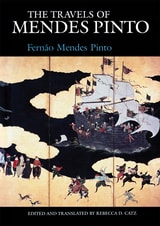
The Travels of Mendes Pinto
Fernão Mendes Pinto
University of Chicago Press, 1989
"[T]here is plenty here for the modern reader. . . . The vivid descriptions of swashbuckling military campaigns and exotic locations make this a great adventure story. . . . Mendes Pinto may have been a sensitive eyewitness, or a great liar, or a brilliant satirist, but he was certainly more than a simple storyteller."—Stuart Schwartz, The New York Times
The Unknown Islands
Raul Brandão, Translated by David Brookshaw
Tagus Press, 2020
The Void, The Grid & The Sign
Traversing The Great BasinWilliam L. Fox
University of Nevada Press, 2005
The Whales Know
A Journey through Mexican CaliforniaPino Cacucci
Haus Publishing, 2014
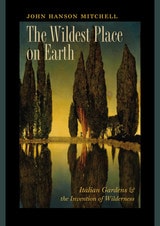
The Wildest Place on Earth
Italian Gardens and the Invention of WildernessJohn Hanson Mitchell
University Press of New England, 2015
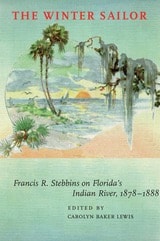
The Winter Sailor
Francis R. Stebbins on Florida's Indian River, 1878-1888Edited by Carolyn Frances Baker Lewis
University of Alabama Press, 2004
A unique guide to Florida's frontier history along Indian River.
The Winter Sailor is a historical adventure that details the yearly winter travels of Francis R. Stebbins to Florida's Indian River. Stebbins, a writer from Michigan, visited Florida in March of 1878 and became entranced by its pristine beauty. Subsequently, Stebbins and his traveling companions made annual visits to Indian River—until 1888 when tragedy struck and ended Stebbins' yearly journeys.
Being an observant traveler, Stebbins began a series of descriptive articles for his hometown newspaper that chronicled his journeys to the Indian River area. Stebbins's articles tell of his own personal experiences during his leisurely visits, which included such activities as hunting and fishing, studying the natural surroundings, and excavating Indian mounds. What Stebbins enjoyed most was sailing down the river interviewing townspeople and examining local attractions as he went. His articles also detail the lifestyle of the region, food, fashion, industry, history, environment, and changes that occurred over time. Stebbins's articles not only entertained and informed but also became a travelogue for his readers. He inspired northern travelers to go south and visit Florida, which contributed to the beginnings of large-scale tourism in the region.
The Winter Sailor combines Stebbins's 49 articles along with three by his companions, to provide an enjoyable, historical guide. Unique among 19th-century travelogues, this fascinating look into Florida's past documents a decade of change to the Indian River wilderness and becomes Stebbins's gift to the present.
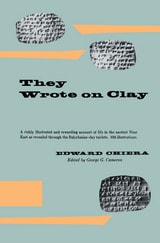
They Wrote on Clay
The Babylonian Tablets Speak TodayEdward Chiera
University of Chicago Press, 1956
"The book presents, briefly and clearly, a vivid picture of a long-dead people who in numerous ways were very like ourselves."—L. M. Field, New York Times
"No mystery story can be as exciting."—Harper's
"Plainly and fetchingly written."—New Republic
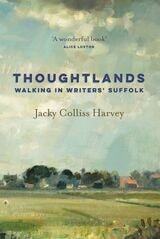
Thoughtlands
Walking in Writers' SuffolkJacky Colliss Harvey
Haus Publishing, 2026
The first book of its kind to map writers, walks, and writing within the Suffolk landscape.
This is a book about walking and writing: about walkers who wrote and writers who walk. It is about the circuit that exists between mind and feet, and about landscapes that exist both physically in front of you and in a line of words. And since all this walking and writing and thinking must have somewhere to take place, it is also a book about Suffolk, the author’s birthplace, and how writers have used and responded to its unmistakable magic.
Colliss Harvey travels from west to east, from chalk plain to crag, from velvety farmlands muffled by leaves to deafening shingle and uncompromising sea. She walks in excellent company—her fellow writers range from Daniel Defoe and Robert Louis Stevenson to Patricia Highsmith, P. D. James, Ronald Blythe, and Ruth Rendell. They include the poets George Crabbe and Robert Bloomfield; literary greats Wilkie Collins, George Orwell, and W. G. Sebald, who found a new native land here; and those born in Suffolk, such as M. R. James and Edward Fitzgerald.
The walks can be followed on foot with this book in a backpack, for those moments when walking gives way to reading, or from within the deep comfort of a favorite armchair. A bit of the writer’s notebook, a little of the memoir, and a dash of the love letter, Thoughtlands is a one-of-a-kind literary journey and an unparalleled exploration of the Suffolk landscape.
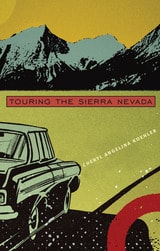
Touring The Sierra Nevada
Cheryl Angelina Koehler
University of Nevada Press, 2007
The complete guide to the entire Sierra Nevada
The Sierra Nevada is one of the most scenic, biologically diverse, and historically rich mountain ranges in North America. Touring the Sierra Nevada covers the entire range and its adjacent regions, exploring the Sierra Nevada from such world-famous sites as Lake Tahoe and Yosemite to picturesque mining towns, scenic alpine lakes, lush vineyards, and colorful hidden byways. Koehler offers suggestions for long tours and exciting daytrips, as well as detailed information about the history, geology, flora and fauna, economy, and unique features of places along the way. The book is illustrated with photographs and maps of the regions she describes. Koehler includes excursions for automobile travelers as well as backcountry adventures for hikers. She provides information about attractions in the Sierra’s two “jumping-off” cities, Sacramento and Reno, as well as in some of the major towns within the range. There is practical advice about contacting parks, museums, historical sites, visitors’ bureaus, U.S. Forest Service offices, and other agencies; finding lodging, campgrounds, and restaurants along the way; preparing for weather and altitude changes; and identifying further sources of information about the region in published guides and other books, as well as on websites. Koehler offers her readers the literary companionship of an experienced, charming, and vivacious guide through one of America’s most fascinating regions.
Tramp
Or the Art of Living a Wild and Poetic LifeTomas Espedal
Seagull Books, 2010
“Why travel?” asks Tomas Espedal in Tramp, “Why not just stay at home, in your room, in your house, in the place you like better than any other, your own place. The familiar house, the requisite rooms in which we have gathered the things we need, a good bed, a desk, a whole pile of books. The windows giving on to the sea and the garden with its apple trees and holly hedge, a beautiful garden, growing wild.”
The first step in any trip or journey is always a footstep—the brave or curious act of putting one foot in front of the other and stepping out of the house onto the sidewalk below. Here, Espedal contemplates what this ambulatory mode of travel has meant for great artists and thinkers, including Rousseau, Kant, Hazlitt, Thoreau, Rimbaud, Whitman, Giacometti, and Robert Louis Stevenson. In the process, he confronts his own inability to write from a fixed abode and his refusal to banish the temptation to become permanently itinerant.
Lyrical and rebellious, immediate and sensuous, Tramp conveys Espedal’s own need to explore on foot—in places as diverse as Wales and Turkey—and offers us the excitement and adventure of being a companion on his fascinating and intriguing travels.
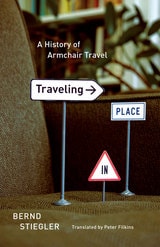
Traveling in Place
A History of Armchair TravelBernd Stiegler
University of Chicago Press, 2013
Organized into twenty-one “legs”—or short chapters—Traveling in Place begins with a consideration of Xavier de Maistre’s 1794 Voyage autour de ma chambre, an account of the forty-two-day “journey around his room” Maistre undertook as a way to entertain himself while under house arrest. Stiegler is fascinated by the notion of exploring the familiar as though it were completely new and strange. He engages writers as diverse as Roussel, Beckett, Perec, Robbe-Grillet, Cortázar, Kierkegaard, and Borges, all of whom show how the everyday can be brilliantly transformed. Like the best guidebooks, Traveling in Place is more interested in the idea of travel as a state of mind than as a physical activity, and Stiegler reflects on the different ways that traveling at home have manifested themselves in the modern era, from literature and film to the virtual possibilities of the Internet, blogs, and contemporary art.
Reminiscent of the pictorial meditations of Sebald, but possessed of the intellectual playfulness of Calvino, Traveling in Place offers an entertaining and creative Baedeker to journeying at home.
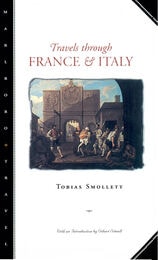
Travels Through France and Italy
Tobias Smollett
Northwestern University Press, 1997
Travels through France and Italy is a landmark work in travel literature. Full of prejudice, grousing, sharp observation, and caustic satire, it is the first travel book in modern literature to go beyond the simple conveyance of information to reflect the writer's state of mind.

Travels in the Reich, 1933-1945
Foreign Authors Report from GermanyEdited by Oliver Lubrich
University of Chicago Press, 2010
“Even now,” wrote Christopher Isherwood in his Berlin Diary of 1933, “I can’t altogether believe that any of this has really happened.” Three years later, W. E. B. DuBois described Germany as “silent, nervous, suppressed; it speaks in whispers.” In contrast, a young John F. Kennedy, in the journal he kept on a German tour in 1937, wrote, “The Germans really are too good—it makes people gang against them for protection.”
Drawing on such published and unpublished accounts from writers and public figures visiting Germany, Travels in the Reich creates a chilling composite portrait of the reality of life under Hitler. Written in the moment by writers such as Virginia Woolf, Isak Dinesen, Samuel Beckett, Jean-Paul Sartre, William Shirer, Georges Simenon, and Albert Camus, the essays, letters, and articles gathered here offer fascinating insight into the range of responses to Nazi Germany. While some accounts betray a distressing naivete, overall what is striking is just how clearly many of the travelers understood the true situation—and the terrors to come.
Through the eyes of these visitors, Travels in the Reich offers a new perspective on the quotidian—yet so often horrifying—details of German life under Nazism, in accounts as gripping and well-written as a novel, but bearing all the weight of historical witness.
Travels with a Donkey in the Cevennes
Robert Louis Stevenson
Northwestern University Press, 1996
Stevenson's third book, Travels with a Donkey was originally intended as a lighthearted sketch, a companion-piece to his recent Inland Voyage. Although he would not be recognized as a major author until the publication of Treasure Island and Dr. Jekyll and Mr. Hyde, one can see his voice developing. Full of charm and instruction, Travels with a Donkey serves as a guide to alternatives to the restless and distracted standard of contemporary travel.