Results by title
52 books match the query 'Fantasy' and 19 start with t
THE ECONOMICS OF FANTASY
RAPE IN TWENTIETH-CENTURY LITERATURESharon Stockton
The Ohio State University Press, 2006
It is important to make clear that the genre of rape story studied here presumes a white masculine subject and a white feminine object. Stockton makes the case that the aestheticized rape narrative reveals particular things about the way white masculinity represents itself. Plotting violent sexual fantasy on the grid of economic concerns locates masculine agency in relation to an explicitly contingent material system of power, value, and order. It is in this way that The Economics of Fantasy discloses the increased desperation with which the body has been made to carry ideology under systems of advanced capitalism.
The Artistic Censoring of Sexuality
Fantasy and Judgment in the Twentieth Century NovelSusan Mooney
The Ohio State University Press, 2008
Through the twentieth century, from colonial Ireland to the United States, and from Franco's Spain to late Soviet Russia, to include sexuality in a novel signaled social progressiveness and artistic innovation, but also transgression. Certain novelists—such as James Joyce, Vladimir Nabokov, Luis Martín-Santos, and Viktor Erofeev—radicalized the content of the novel by incorporating sexual thoughts, situations, and fantasies and thus portraying repressed areas of social, cultural, political, and mental life.
In The Artistic Censoring of Sexuality: Fantasy and Judgment in the Twentieth-Century Novel, Susan Mooney extensively examines four modernist and postmodernist novels that prompted in their day harsh external censorship because of their sexual content—Ulysses, Lolita, Time of Silence, and Russian Beauty. She shows how motifs of censorship, with all its restrictions, pressures, rules, judgments, and forms of negation, became artistically embedded in the novels' plots, characters, settings, tropes, and themes. These novels contest censorship's status quo and critically explore its processes and power. This study reveals the impact of censorship on literary creation, particularly in relation to the twentieth century's growing interest in sexuality and its discourses.
The Beautiful Skin
Football, Fantasy, and Cinematic Bodies in AfricaVlad Dima
Michigan State University Press, 2020
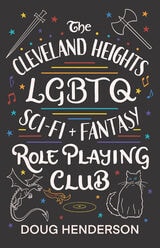
The Cleveland Heights LGBTQ Sci-Fi and Fantasy Role Playing Club
Doug Henderson
University of Iowa Press, 2021
On Thursday nights, the players assemble in the back of Readmore Comix and Games. Celeste is the dungeon master; Valerie, who works at the store, was roped in by default; Mooneyham, the banker, likes to argue; and Ben, sensitive, unemployed, and living at home, is still recovering from an unrequited love. In the real world they go about their days falling in love, coming out at work, and dealing with their family lives all with varying degrees of success. But in the world of their fantasy game, they are heroes and wizards fighting to stop an evil cult from waking a sleeping god.
But then a sexy new guy, Albert, joins the club, Ben’s character is killed, and Mooneyham’s boyfriend is accosted on the street. The connections and parallels between the real world and the fantasy one become stronger and more important than ever as Ben struggles to bring his character back to life and win Albert’s affection, and the group unites to organize a protest at a neighborhood bar. All the while the slighted and competing vampire role playing club, working secretly in the shadows, begins to make its move.
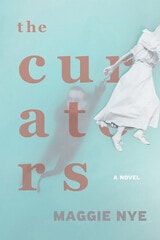
The Curators
A NovelMaggie Nye
Northwestern University Press, 2024
A dark, lyrical blend of historical fiction and magical realism, The Curators examines a critically underexplored event in American history through unlikely eyes. All of Atlanta is obsessed with the two-year-long trial and subsequent lynching of Jewish factory superintendent Leo Frank in 1915. None more so than thirteen-year-old Ana Wulff and her friends, who take history into their own hands—quite literally—when they use dirt from Ana’s garden to build and animate a golem in Frank’s image. They’ll do anything to keep his story alive, but when their scheme gets out of hand, they must decide what responsibility requires of them. The Curators tells the story of five zealous girls and the cyclonic power of their friendship as they come of age in a country riven by white supremacy.
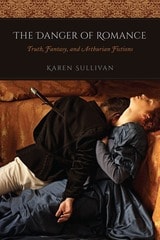
The Danger of Romance
Truth, Fantasy, and Arthurian FictionsKaren Sullivan
University of Chicago Press, 2018
Yet is it possible that romance is expressing a truth—and a truth unrecognized by realist genres? The Arthurian literature of the Middle Ages, Karen Sullivan argues, consistently ventriloquizes in its pages the criticisms that were being made of romance at the time, and implicitly defends itself against those criticisms. The Danger of Romance shows that the conviction that ordinary reality is the only reality is itself an assumption, and one that can blind those who hold it to the extraordinary phenomena that exist around them. It demonstrates that that which is rare, ephemeral, and inexplicable is no less real than that which is commonplace, long-lasting, and easily accounted for. If romance continues to appeal to audiences today, whether in its Arthurian prototype or in its more recent incarnations, it is because it confirms the perception—or even the hope—of a beauty and truth in the world that realist genres deny.
The Fantasy of Feminist History
Joan Wallach Scott
Duke University Press, 2012
The Fantasy of J.R.R. Tolkien
Mythopeia and the Recovery of CreationRobert J. Dobie, Robert J.
Catholic University of America Press, 2024
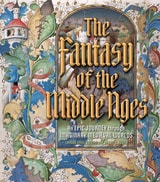
The Fantasy of the Middle Ages
An Epic Journey through Imaginary Medieval WorldsLarisa Grollemond
J. Paul Getty Trust, The, 2022
From the soaring castles of Sleeping Beauty to the bloody battles of Game of Thrones, from Middle-earth in The Lord of the Rings to mythical beasts in Dungeons & Dragons, and from Medieval Times to the Renaissance Faire, the Middle Ages have inspired artists, playwrights, filmmakers, gamers, and writers for centuries. Indeed, no other historical era has captured the imaginations of so many creators.
This volume aims to uncover the many reasons why the Middle Ages have proven so applicable to a variety of modern moments from the eighteenth through the twenty-first century. These “medieval” worlds are often the perfect ground for exploring contemporary cultural concerns and anxieties, saying much more about the time and place in which they were created than they do about the actual conditions of the medieval period. With over 140 color illustrations, from sources ranging from thirteenth-century illuminated manuscripts to contemporary films and video games, and a preface by Game of Thrones costume designer Michele Clapton, The Fantasy of the Middle Ages will surprise and delight both enthusiasts and scholars.
This title is published to accompany an exhibition on view at the J. Paul Getty Museum at the Getty Center from June 21 to September 11, 2022.
The Force of Fantasy
Restoring the American DreamErnest G. Borman
Southern Illinois University Press, 2000
In this book, first published in 1985, Ernest G. Bormann explores mass persuasion in America from 1620 to 1860, examining closely four rhetorical communities: the revivals of 1739–1740, the hot gospel of the postrevolutionary period, the evangelical revival and reform of the 1830s, and the Free Soil and Republican parties. Each community varies greatly, but Bormann asserts that each succeeding community shares a rhetorical vision of restoring the “American Dream” that is essentially a modification of the previous visions. Thus, they form a family of rhetorical visions that constitutes a rhetorical tradition of importance in nineteenth-century American popular culture.
The Great Tales Never End
Essays in Memory of Christopher TolkienEdited by Richard Ovenden and Catherine McIlwaine
Bodleian Library Publishing, 2022
Over more than four decades, J. R. R. Tolkien’s son and literary executor Christopher Tolkien completed some twenty-four volumes of his father’s work, much more than his father had succeeded in publishing during his own lifetime. Thanks to Christopher’s extraordinary publishing efforts and scholarship, readers today can survey and understand the vast landscape of Tolkien’s legendarium.
The Great Tales Never End sheds new light on J. R. R. Tolkien’s work and the debt owed to Christopher by the many Tolkien scholars who were privileged to work with him. Essays by world-renowned scholars and Tolkien family reminiscences offer unique insights into the publication process. What was Tolkien’s intended ending for The Lord of the Rings, and did it leave echoes in the stripped-down version that was actually published? What was the audience’s response to the first-ever adaptation of The Lord of the Rings—a radio dramatization that has now been deleted forever from the BBC’s archives?
The book is illustrated with color reproductions of J. R. R. Tolkien’s manuscripts, maps, drawings, and letters, as well as photographs of Christopher Tolkien and extracts from his works. Many of these documents have never been seen before, making this volume essential reading for Tolkien scholars, readers, and fans.
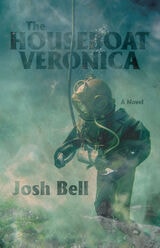
The Houseboat Veronica
A NovelJosh Bell
University of Alabama Press, 2024
A witch, a ward, and a houseboat adrift in time—where beauty and terror share the helm.
The mysterious houseboat Veronica motors across a postapocalyptic freshwater lake, inhabited by a black-haired witch and her young male ward. They explore an unfolding world of shape-shifting moons, vampire moths, and submerged witch cemeteries—a world where voluntary imprisonment holds its own appeal and the heart yearns for the delicate dance between blood and power, beauty and terror.
Neither a pirate nor a mere witch, she is an artist, a master of water and time who shapes reality with her baffling powers. This lyrical and compelling novel beckons readers to explore the enigmatic depths of its prose, inviting them to traverse the waters of wonder and bewilderment. Embrace the bewitching allure of The Houseboat Veronica and lose yourself in its enchanting embrace.
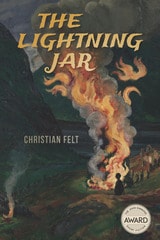
The Lightning Jar
Christian Felt
University of Iowa Press, 2018
The Lightning Jar is about lonely children. It may be more about lonely children than any other book. These children are good at making imaginary friends but have trouble keeping them. For instance, there’s the Morra, who plunges the world into eternal winter. But she also teaches Mons the meaning of love and helps him burn down his house after some Gypsies turn it into a middle school.
Then there’s the Gorbel. Amanda invented it to scare the Guest, but it ended up liking him best. A bit like a cat but more like a spider, it turned out a lot cuter than she’d intended.
And the Wisps—they’re pretty unhappy about being dead. Karl accidentally turned his smallest cousin into a Wisp. They were trying to catch some lightning in a jar, but they caught the smallest cousin’s ghost instead. Karl had to drown it for its own good. Something similar happened with his grandma Astrid and a rock named Melisande.
But the loneliest character is probably Christian. He insists on being from Jämtland, where Karl and Amanda live. When his cousin Eskild got married, Christian rewrote their past so it’s like The Little Mermaid, except Eskild drowns and Christian doesn’t earn a soul.
In the spirit of Tove Jansson, William Blake, and Calvin & Hobbes, The Lightning Jar contains a volatile mix of innocence and experience, faith and doubt, nostalgia and a sense of all there is to gain by accepting reality on fresh terms.
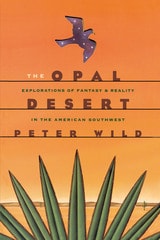
The Opal Desert
Explorations of Fantasy and Reality in the American SouthwestBy Peter Wild
University of Texas Press, 1999
The opalescent deserts of the American Southwest have become romantic icons in the public imagination through the words of writers, the images of artists and photographers, and the visual storytelling of filmmakers. In this spirited, personal, beautifully written book, Peter Wild explores the lives and works of sixteen writers whose words have shaped our visions of the opal desert.
Wild begins with Cabeza de Vaca, whose Relación of his desert wanderings sent treasure-hungry Spaniards searching for cities of gold. He goes on to discuss the works of both widely read and lesser-known nineteenth- and twentieth-century authors, including such luminaries as Mary Austin, Joseph Wood Krutch, Edward Abbey, Ann Zwinger, and Charles Bowden. He links all the writers as explorers of one kind or another, searching for tangible or intangible treasures, some finding and some losing their dreams in the opal desert.
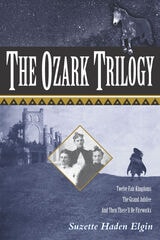
The Ozark Trilogy
Twelve Fair Kingdoms, The Grand Jubilee, And Then There’ll Be FireworksSuzette Haden Elgin
University of Arkansas Press, 2000
The Ozark Trilogy (previously published in 1981, Doubleday) is a widely acclaimed fantasy/science fiction story with, as the title suggests, very strong ties to the Ozark region. Twelve Fair Kingdoms, The Grand Jubilee, And Then There’ll Be Fireworks—the books that comprise the trilogy—chronicle life on the planet Ozark and its Confederation of Continents, which are appropriately named Arkansaw, Oklahomah, Mizzurah, Tinaseeh, Kintucky, and Marktwain. However, the story told here involves much more than a mere transplant of Ozark culture and heritage onto a new planet. While this new Ozark culture maintains and even intensifies many of the “real” Ozark traditions and customs (for instance, “Grannys” hold significant, stabilizing social roles and are important sources of wisdom), the planet Ozark combines many new, fantastical elements with traditional ways. Mules on Ozark fly, and the wise “Grannys” also work magic.
The protagonist of The Ozark Trilogy, Responsible of Brightwater, appears at the center of Ozark society, a society she must save from evil magic, civil war, and, ultimately, alien invasion. As Responsible travels from continent to continent in an attempt to discover and squelch the evil magic and calm the civil unrest, we are witness to many dangerous and sometimes comical adventures along the way, including a spectacular flying Mule crash and a magic duel with a Granny gone bad.
Elgin has created a fantastic world infused with the folk traditions, social and familial hierarchies, and traditional dialect of the Ozarks. While parallels might be drawn between, for example, the break-up of the Confederacy of Continents on planet Ozark and the American Civil War, Elgin comments on aspects of Ozark history and tradition in a non didactic way. The trilogy, with its strong heroine and witty engagement of tradition, is a classic of Ozark literature.
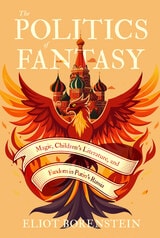
The Politics of Fantasy
Magic, Children's Literature, and Fandom in Putin's RussiaEliot Borenstein
University of Wisconsin Press, 2025
With crisp, engaging prose, Eliot Borenstein leaps from Harry Potter into an exploration of the culture wars and moral panics sparked in Russia by Western-inspired children’s literature, extending back into the Soviet period and through the invasion of Ukraine. As cultural products pitched ostensibly to children, the Harry Potter books and films became the perfect objects for criticism, translation, adaptation, parody, attack, mimicry, and meme-making, allowing Russians to carve out their own space in the worldwide market of magical multiverses.

The Politics of Islamophobia
Race, Power and FantasyDavid Tyrer
Pluto Press, 2013
Despite its emblematic place within contemporary racism and its increasingly important position in defining relations between states and ethnicised minorities, Islamophobia remains a contested, frequently unrecognised and largely under-theorised form of racism.
The Politics of Islamophobia provides a definitive contribution to these debates, offering a theoretically sophisticated account which draws upon a series of substantive case studies to position Islamophobia as an expression of racialised governmentality.
By taking into account connections across different national contexts, and by moving beyond the limiting framing of the war on terror which has dominated recent debates, this book offers a new perspective on the study of Islamophobia.
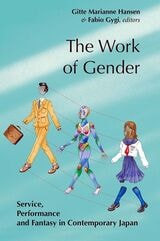
The Work of Gender
Service, Performance and Fantasy in Contemporary JapanEdited by Gitte Marianne Hansen and Fabio Gygi
National University of Singapore Press, 2022
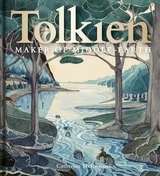
Tolkien
Maker of Middle-earthEdited by Catherine McIlwaine
Bodleian Library Publishing, 2018
Tolkien: Maker of Middle-earth explores the huge creative endeavor behind Tolkien’s enduring popularity. Lavishly illustrated with three hundred images of his manuscripts, drawings, maps, and letters, the book traces the creative process behind his most famous literary works—The Hobbit, The Lord of the Rings, and The Silmarillion—and reproduces personal photographs and private papers, many of which have never been seen before in print.
Six essays introduce the reader to the person of J. R. R. Tolkien and to main themes in his life and work, including the influence of northern languages and legends on the creation of his own legendarium; his concept of “Faërie” as an enchanted literary realm; the central importance of his invented languages in his fantasy writing; his visual imagination and its emergence in his artwork; and the encouragement he derived from his close friend C. S. Lewis and their literary group the Inklings.
The book brings together the largest collection of original Tolkien material ever assembled in a single volume. Drawing on the extensive archives of the Tolkien collections at the Bodleian Libraries, Oxford, which stretch to more than five hundred boxes, and Marquette University, Milwaukee, as well as private collections, this hugely ambitious and exquisitely produced book draws together the worlds of J. R. R. Tolkien – scholarly, literary, creative, and domestic—offering a rich and detailed understanding and appreciation of this extraordinary author.
This landmark publication, produced on the occasion of a major exhibition at the Bodleian Libraries in Oxford in 2018 and at the Morgan Library in New York in 2019, is set to become a standard work in the literature on J. R. R. Tolkien.