Results by title
329 books match the query 'Folklore & Mythology' and 67 start with t
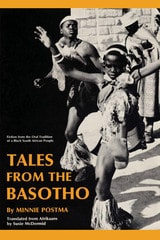
Tales from the Basotho
By Minnie Postma
University of Texas Press, 1974
"They say that the eldest of the chief's daughters..." So begins a tale from the Basotho, unfolded by the meager light of a dung fire that burns smokily behind the reed screen sheltering the entrance of the hut. The old ones of the tribe wait until dark before telling their stories, for everyone knows horns will grow from the head of one who tells a story during daylight hours. Tales from the Basotho abounds with elements familiar to folk narrative. The heroes and heroines are the chiefs and their wives, their sons and their daughters. Fantastic creatures frequent the narratives. exhibiting their awful powers.
Rustic peace and beauty pervade the stories, as Minnie Postma amply demonstrates in her versions of the tales. Something fearful may be occurring—the dreaded Koeoko pulling the only son of the chief under water—but, at the same time, girls with babies tied to their backs are searching for edible bulbs in the veld, and an old woman dreams in the gentle sunlight in front of the huts.
These tales from the Basotho are for entertainment only. There is a tabu against telling tales while the sun shines, because daylight hours must be saved for work. The telling itself is the· reason the story exists, for the audience is already aware of the outcome of each tale. As Wm. Hugh Jansen emphasizes in his foreword, "text" and "context" are often easily interpreted and made accessible in a translation, but Tales from the Basotho is ultimately successful for its rendering of "texture." And texture is doubly hard to convey when the telling itself is of primary importance. Minnie Postma and Susie McDermid have transferred the art of the Basotho raconteur onto the printed page. All the simple, understandable formulas, exclamations, and repetitions used so skillfully by the native storyteller are present. Rhythm is an important element in the tales, and a word, a phrase, even a whole paragraph will be repeated until the rhythm satisfies the storyteller, in tum increasing the appreciation of the listeners.
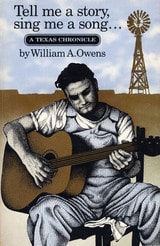
Tell Me a Story, Sing Me a Song
A Texas ChronicleBy William A. Owens
University of Texas Press, 1983
Texas, the 1930s—the years of the Great Depression. It was the Texas of great men: Dobie, Bedichek, Webb, the young Américo Paredes. And it was the Texas of May McCord and "Cocky" Thompson, the Reverend I. B. Loud, the Cajun Marcelle Comeaux, the black man they called "Grey Ghost," and all the other extraordinary "ordinary" people whom William A. Owens met in his travels.
"Up and down and sideways" across Texas, Owens traveled. His goal: to learn for himself what the diverse peoples of the state "believed in, yearned for, laughed at, fought over, as revealed in story and song." Tell me a story, sing me a song brings together both the songs he gathered—many accompanied by music—and Owens' warm reminiscences of his travels in the Texas of the Thirties and early Forties.
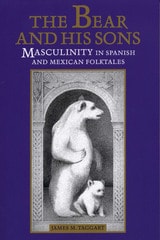
The Bear and His Sons
Masculinity in Spanish and Mexican FolktalesBy James M. Taggart
University of Texas Press, 1997
All the world over, people tell stories to express their deepest feelings about such things as what makes a "real" man or woman; what true love, courage, or any other virtue is; what the proper relationships are between people. Often groups of people widely separated by space or time will tell the same basic story, but with differences in the details that reveal much about a particular group's worldview.
This book looks at differences in the telling of several common Hispanic folktales. James Taggart contrasts how two men—a Spaniard and an Aztec-speaking Mexican—tell such tales as "The Bear's Son." He explores how their stories present different ways of being a man in their respective cultures.
Taggart's analysis contributes to a revision of Freud's theory of gender, which was heavily grounded in biological determinism. Taggart focuses instead on how fathers reproduce different forms of masculinity in their sons. In particular, he shows how fathers who care for their infant sons teach them a relational masculinity based on a connected view of human relationships. Thus, The Bear and His Sons will be important reading not only in anthropology and folklore, but also in the growing field of men's studies.
The Bedtrick
Tales of Sex and MasqueradeWendy Doniger
University of Chicago Press, 2000
The Bedtrick brings together hundreds of stories from all over the world, from the earliest recorded Hindu and Hebrew texts to the latest item in the Weekly World News, to show the hilariously convoluted sexual scrapes that people manage to get themselves into and out of. Here you will find wives who accidentally commit adultery with their own husbands. You will read Lincoln's truly terrible poem about a bedtrick. You will learn that in Hong Kong the film The Crying Game was retitled Oh No! My Girlfriend Has a Penis. And that President Clinton was not the first man to be identified by an idiosyncratic organ.
At the bottom of these wonderful stories, ancient myths, and historical anecdotes lie the dynamics of sex and gender, power and identity. Why can't people tell the difference in the dark? Can love always tell the difference between one lover and another? And what kind of truth does sex tell? Funny, sexy, and engaging, The Bedtrick is a masterful work of energetic storytelling and dazzling scholarship. Give it to your spouse and your lover.
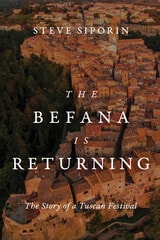
The Befana Is Returning
The Story of a Tuscan FestivalSteve Siporin
University of Wisconsin Press, 2022
The Pigitliano Befanata is distinct in its emphasis on song and strong in its richly symbolic use of food, which is not only consumed at each home but is also carried away as a gift. The characters who make up the squad are unique to the Italian practice. They always include the Befana and her husband, the Befano, but other members of the befanotti vary from place to place over time. Siporin combines fieldwork and archival evidence to introduce the Befanata and its historical and social contexts: what it is, what it means, and how it feels. The Befana Is Returning is a deeply researched, deftly insightful presentation of this living tradition that adds a large missing piece to the array of contemporary ethnographic scholarship on mumming.
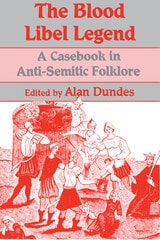
The Blood Libel Legend
A Casebook in Anti-Semitic FolkloreAlan Dundes
University of Wisconsin Press, 1991
Alan Dundes, in this casebook of an anti-Semitic legend, demonstrates the power of folklore to influence thought and history. According to the blood libel legend, Jews murdered Christian infants to obtain blood to make matzah. Dundes has gathered here the work of leading scholars who examine the varied sources and elaborations of the legend. Collectively, their essays constitute a forceful statement against this false accusation.
The legend is traced from the murder of William of Norwich in 1144, one of the first reported cases of ritualized murder attributed to Jews, through nineteenth-century Egyptian reports, Spanish examples, Catholic periodicals, modern English instances, and twentieth-century American cases. The essays deal not only with historical cases and surveys of blood libel in different locales, but also with literary renditions of the legend, including the ballad “Sir Hugh, or, the Jew’s Daughter” and Chaucer’s “The Prioress’s Tale.”
These case studies provide a comprehensive view of the complex nature of the blood libel legend. The concluding section of the volume includes an analysis of the legend that focuses on Christian misunderstanding of the Jewish feast of Purim and the child abuse component of the legend and that attempts to bring psychoanalytic theory to bear on the content of the blood libel legend. The final essay by Alan Dundes takes a distinctly folkloristic approach, examining the legend as part of the belief system that Christians developed about Jews.
This study of the blood libel legend will interest folklorists, scholars of Catholicism and Judaism, and many general readers, for it is both the literature and the history of anti-Semitism.
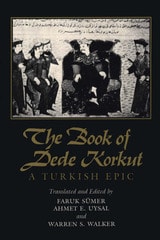
The Book of Dede Korkut
A Turkish EpicTranslated and edited by Faruk Sümer, Ahmet E. Uysal, and Warren S. Walker
University of Texas Press, 1972
One of the oldest surviving pieces of Turkish literature, The Book of Dede Korkut can be traced to tenth-century origins. Now considered the national epic of Turkey, it is the heritage of the ancient Oghuz Turks and was composed as they migrated westward from their homeland in Central Asia to the Middle East, eventually to settle in Anatolia. Who its primary creator was no one knows, the titular bard, Dede Korkut, being more a symbol of Turkish minstrelsy than a verifiable author. The songs and tales of countless minstrels lay behind The Book of Dede Korkut, and in its oral form the epic was undoubtedly subject to frequent improvisation by individual performers. Partly in prose, partly in verse, these legends were sung or chanted in the courts and camps of political and military leaders. Even after they had been recorded in written form, they remained part of an oral tradition.
The present edition is the first complete text in English. The translators provide an excellent introduction to the language and background of the legends as well as a history of Dede Korkut scholarship. These outstanding tales will be of interest to all students of world mythology and folklore.
The British Traditional Ballad in North America
By Tristram P. Coffin
University of Texas Press, 1977
Tristram Potter Coffin’s The British Traditional Ballad in North America, published in 1950, became recognized as the standard reference to the published material on the Child ballad in North America. Centering on the theme of story variation, the book examines ballad variation in general, treats the development of the traditional ballad into an art form, and provides a bibliographical guide to story variation as well as a general bibliography of titles referred to in the guide.
Roger deV. Renwick’s supplement to The British Traditional Ballad in North America provides a thorough review of all sources of North American ballad materials published from 1963, the date of the last revision of the original volume, to 1977. The references, which include published text fragments and published title lists of items in archival collections, are arranged according to each ballad’s story variations. Textual and thematic comparisons among ballads in the British and American tradition are made throughout. In his introductory essay Renwick synthesizes the various theoretical approaches to the phenomenon of variation that have appeared in scholarly publications since 1963 and provides examples from texts referred to in the bibliographical guide itself.
The supplement, like its parent work, is an invaluable reference tool for the study of variation in ballad form, content, and style. Together with the reprinted text of the 1963 edition, the supplement provides an exhaustive bibliography to the literature on the British traditional ballad in North America.

The Brothers Grimm and Folktale
Edited by James M. McGlathery
University of Illinois Press, 1988
give an excellent overview of the scholarly research and current critical thought regarding
Jakob and Wilhelm Grimm and their hugely popular Grimm's Fairy Tales. . . . The
book is directed to the general educated public and is very readable." -- Choice

The Cockfight
A CasebookEdited by Alan Dundes
University of Wisconsin Press, 1994
Originating more than 2500 years ago, cockfighting is one of the oldest documented sports in the world. It has continued to flourish despite bans against it in many countries. In The Cockfight: A Casebook, folklorist Alan Dundes brings together a diverse array of writing on this male-dominated ritual.
Vivid descriptions of cockfights from Puerto Rico, Tahiti, Ireland, Spain, Brazil, and the Philippines complement critical commentaries, from the fourth-century reflections of St. Augustine to contemporary anthropological and psychoanalytic interpretations. The various essays discuss the intricate rules of the cockfight, the ethical question of pitting two equally matched roosters in a fight to the death, the emotional involvement of cockfighters and fans, and the sexual implications of the sport. The result is an enlightening collection for anthropologists, folklorists, sociologists, and psychologists, as well as followers of this ancient blood sport.
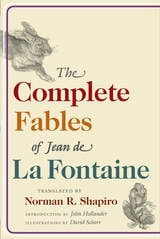
The Complete Fables of Jean de La Fontaine
Jean de La Fontaine
University of Illinois Press, 2007
Told in an elegant style, Jean de la Fontaine's (1621-95) charming animal fables depict sly foxes and scheming cats, vain birds and greedy wolves, all of which subtly express his penetrating insights into French society and the beasts found in all of us. Norman R. Shapiro has been translating La Fontaine's fables for over twenty years, capturing the original work's lively mix of plain and archaic language. This newly complete translation is destined to set the English standard for this work.
Awarded the Lewis Galantière Prize by the American Translators Association, 2008.
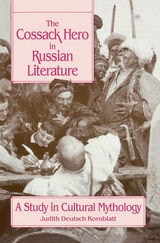
The Cossack Hero in Russian Literature
A Study in Cultural MythologyJudith Deutsch Kornblatt
University of Wisconsin Press, 1992
This is the first book to study the development of the Cossack hero and to identify him as part of Russian cultural mythology. Kornblatt explores the power of the myth as a literary image, providing new and challenging readings of Pushkin, Gogol, Tolstoi, and a host of other writers.
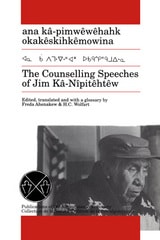
The Counselling Speeches of Jim Ka-Nipitehtew
Freda Ahenakew
University of Manitoba Press, 1998

The Cultures of Celebrations
Edited by Ray B. Browne and Michael T. Marsden
University of Wisconsin Press, 1994
Topics include: feminine processions and masculine parades; political activism and quietism in Shi’a rituals; civic socializing in Puritan New England; the circus and American culture; the Wild West shows; beauty pageants; theme parks; Bourbon Street, New Orleans; and Stonehenge.

The Dog's Children
Anishinaabe Texts told by Angeline WilliamsLeonard Bloomfield
University of Manitoba Press, 1991
The Erotic Muse
American Bawdy SongsEd Cray
University of Illinois Press, 1992
Ever wanted to know the "correct" words to "Roll Me Over?" Wondered where the melody of "Sweet Betsy from Pike" came from? Ed Cray ranges from "The Cod Fish Song" to "Hallelujah I'm a Bum" in a tireless quest to answer such questions and restore bawdy to an esteemed place in our folk music canon.
Extensively revised and including forty more songs than its predecessor, the second edition of The Erotic Muse is a unique collection of bawdy and even forbidden American folksongs. Cray presents the full texts of some 125 works with melodies for most and detailed annotations for all. In addition, he adds lively commentary that places the songs in historical, social, and, where appropriate, psychological context.
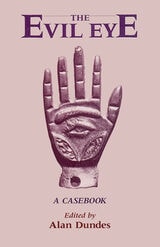
The Evil Eye
A CasebookAlan Dundes
University of Wisconsin Press, 1992
The evil eye—the power to inflict illness, damage to property, or even death simply by gazing at or praising someone—is among the most pervasive and powerful folk beliefs in the Indo-European and Semitic world. It is also one of the oldest, judging from its appearance in the Bible and in Sumerian texts five thousand years old. Remnants of the superstition persist today when we drink toasts, tip waiters, and bless sneezers. To avert the evil eye, Muslim women wear veils, baseball players avoid mentioning a no-hitter in progress, and traditional Jews say their business or health is "not bad" (rather than "good").
Though by no means universal, the evil eye continues to be a major factor in the behavior of millions of people living in the Mediterranean and Arab countries, as well as among immigrants to the Americas. This widespread superstition has attracted the attention of many scholars, and the twenty-one essays gathered in this book represent research from diverse perspectives: anthropology, classics, folklore studies, ophthalmology, psychiatry, psychoanalysis, sociology, and religious studies. Some essays are fascinating reports of beliefs about the evil eye, from India and Iran to Scotland and Slovak-American communities; others analyze the origin, function, and cultural significance of this folk belief from ancient times to the present day. Editor Alan Dundes concludes the volume by proffering a comprehensive theoretical explanation of the evil eye.
Anyone who has ever knocked on wood to ward off misfortune will enjoy this generous sampling of evil eye scholarship, and may never see the world through the same eyes again.
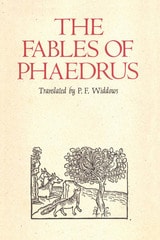
The Fables of Phaedrus
Translated by P. F. Widdows
University of Texas Press, 1992
Animal fables are said to have originated with Aesop, a semilegendary Samian slave, but the earliest surviving record of the fables comes from the Latin poet Phaedrus, who introduced the new genre to Latin literature. This verse translation of The Fables is the first in English in more than two hundred years.
In addition to the familiar animal fables, about a quarter of the book includes such diverse material as prologues and epilogues, historical anecdotes, short stories, enlarged proverbs and sayings, comic episodes and folk wisdom, and many incidental glimpses of Greek and Roman life in the classical period.
The Fables also sheds light on the personal history of Phaedrus, who seems to have been an educated slave, eventually granted his freedom by the emperor Augustus. Phaedrus' style is lively, clean, and sparse, though not at the cost of all detail and elaboration. It serves well as a vehicle for his two avowed purposes—to entertain and to give wise counsel for the conduct of life. Like all fabulists, Phaedrus was a moralist, albeit on a modest and popular level.
An excellent introduction by P. F. Widdows provides information about Phaedrus, the history of The Fables, the metric style of the original and of this translation, and something of the place of these fables in Western folklore. The translation is done in a free version of Anglo-Saxon alliterative verse, a form used by W. H. Auden and chosen here to match the popular tone of Phaedrus' Latin verse.
The Face in the Window and Other Alabama Ghostlore
Alan Brown
University of Alabama Press, 1996
True voices, real places, and unforgettable chills: Alabama’s ghost stories, gathered with scholarly care, reveal how memory, history, and belief linger—whispering from bridges, homes, cemeteries, and courthouses statewide today still.
The Face in the Window and Other Alabama Ghostlore is a landmark collection that preserves and brings to life Alabama’s rich tradition of supernatural storytelling. Rather than offering fictional retellings, this book presents ghost stories as they are told—by neighbors, families, students, and elders—rooted firmly in real places and lived experience. Alan Brown captures the voices of Alabamians across generations, revealing how belief, memory, humor, and fear continue to shape the state’s cultural landscape.
The collection is organized by geographic region, spiraling across the state so readers can explore local lore county by county and town by town. Many stories were gathered directly through fieldwork, lectures, and interviews, while others draw on previously unpublished Works Progress Administration materials from the 1930s. Dialect and storytelling style are preserved to maintain authenticity, and scholarly notes are placed at the back to keep the narratives accessible. Brown, a folklorist and former lecturer for the Alabama Humanities Foundation, brings both academic rigor and deep respect for oral tradition to the collection.
This collection will delight readers interested in folklore, Southern history, oral culture, and the supernatural. It is invaluable for scholars and students, irresistible to ghost-story enthusiasts, and especially meaningful for Alabamians eager to see their communities and traditions thoughtfully recorded and remembered.
The Fierce Tribe
Masculine Identity and Performance in the CircuitMickey Weems
Utah State University Press, 2008
The Flowering Thorn
International Ballad StudiesThomas McKean
Utah State University Press, 2003
The flowering thorn expresses the dual nature of the ballad: at once a distinctive expression of European tradition, but also somewhat tricky to approach from a scholarly perspective, requiring a range of disciplines to illuminate its rich composition. Most of this latter quality has to do with the very features that characterize ballads... or narrative songs. These include an appearance of fragmentation; a wide range of cultural and social referents; complex, evocative symbolic language; and variation. The notable multiformity of meaning, text and tune is mirrored in scholarship, too. The Flowering Thorn is therefore wide ranging, with articles written by world authorities from the fields of folklore, history, literature, and ethnology, employing a variety of methodologies—structuralism to functionalism, repertoire studies to geographical explorations of cultural movement and change. The twenty-five selected contributions represent the latest trends in ballad scholarship, embracing the multi-disciplinary nature of the field today. The essays have their origins in the 1999 International Ballad Conference of the Kommission fur Volksdichtung (KfV), which focused particularly on ballads and social context; performance and repertoire; genre, motif, and classification. The revised, tailored, and expanded essays are divided into five sections—the interpretation of narrative song; structure and motif; context, version, and transmission; regions, reprints, and repertoires; and the mediating collector's offering a range of examples from fifteen different cultures, ten of them drawing on languages other than English, resulting in a series of personal journeys to the heart of one of Europe's richest, most enduring cultural creations. —Thomas McKean, from the Introduction
CONTRIBUTORS: Mary Anne Alburger, David Atkinson, Julia C. Bishop, Valentina Bold, Katherine Campbell, Nicolae Constantinescu, Luisa Del Giudice, Sheila Douglas, David G. Engle, Frances J. Fischer, Simon Furey, Vic Gammon, Marjetka Golez-Kaucic, Pauline Greenhill, Cozette Griffin-Kremer, J. J. Dias Marques, William Bernard McCarthy, Isabelle Peere, Gerald Porter, James Porter, Roger de V. Renwick, Sigrid Rieuwerts, Michèle Simonsen, Larry Syndergaard, Stefaan Top, Larysa Vakhnina, Lynn Wollstadt
The Folklore Muse
Poetry, Fiction, and Other Reflections by FolkloristsFrank de Caro
Utah State University Press, 2008
Folklore—the inherently creative expression, transmission, and performance of cultural traditions—has always provided a deep well of material for writers, musicians, and artists of all sorts. Folklorists usually employ descriptive and analytical prose, but they, like scholars in other social sciences, have increasingly sought new, creative and reflexive modes of discourse. Many folklorists are also creative writers, some well known as such, and the folk traditions they research often provide shape and substance to their work. This collection of creative writing grounded in folklore and its study brings together some of the best examples of such writing.
Contributors to this collection include Teresa Bergen, John Burrison, Norma E. Cantu, Frank de Caro, Holly Everett, Danusha Goska, Neil R. Grobman, Carrie Hertz, Edward Hirsch, Laurel Horton, Rosan Augusta Jordan, Paul Jordan-Smith, Elaine J. Lawless, Cynthia Levee, Jens Lund, Mary Magoulick, Bernard McCarthy, Joanne B. Mulcahy, Kirin Narayan, Ted Olson, Daniel Peretti, Leslie Prosterman, Jo Radner, Susan Stewart, Jeannie Banks Thomas, Jeff Todd Titon, Libby Tucker, Margaret Yocom, and Steve Zeitlin.
The Frank C. Brown Collection of NC Folklore
Vol. V: The Music of the Folk SongsFrank C. Brown
Duke University Press, 1970
The Frank C. Brown Collection of NC Folklore
Vol. VII: Popular Beliefs and Superstitions from North Carolina, pt. 2Frank C. Brown
Duke University Press, 1970

The Grateful Dead
THE HISTORY OF A FOLK STORYGordon Hall GerouldIntroduction by Norm Cohen
University of Illinois Press, 2000
Gerould surveys more than a hundred grateful dead stories, tracing their lineages, describing their common traits, and unraveling their variations. Through a close study of secular as well as religious stories, Gerould demonstrates the remarkable durability and adaptability of the grateful dead.
With this book, Gerould established methods that laid the foundations for modern folklore scholarship. Norm Cohen's introduction places Gerould and his legacy in this historical context.

The Internet Is Real Life
Performing Folklore Online and OffAnthony Bak Buccitelli
University of Wisconsin Press, 2026
We often speak of a divide between online and offline cultures, despite growing recognition that the two are intertwined. Here, folklorist Anthony Bak Buccitelli challenges the idea of any divide at all in contemporary American culture. He argues that digital communications and behaviors are already deeply embedded in everyday expressive life and therefore are also already implicated in a variety of ways in the embodied performance and transmission of folklore. In other words, in contemporary American society, the internet truly is “real life.”
By treating the digital interface as a site at which embodied performance can take shape rather than just a point of contact with the online, Buccitelli argues for a critical renewal of core folkloristic concepts to meet the challenges of understanding modern networked life. The result is a folklore book for the current age.
The J. Golden Kimball Stories
Eric A. Eliason
University of Illinois Press, 2007
In The J. Golden Kimball Stories, beloved and iconoclastic Mormon humorist J. Golden Kimball (1853-1938) speaks on death, marriage, love, hell, God, and everything in between. Compiled by Eric A. Eliason from previously unpublished archival resources, this collection of stories, anecdotes, and jokes captures the irreverent comedy and independent thinking that made Kimball so beloved both in and out of his Mormon community.
Arranged thematically and framed by short contextual introductions, each chapter presents a colorful portrait of Kimball on topics including tricks, cussing, ministering, chastising, and repentance. A comprehensive introductory essay places Kimball in the context of Mormon history and folklore scholarship.
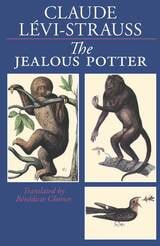
The Jealous Potter
Claude Lévi-Strauss
University of Chicago Press, 1988
"Electrifying. . . . A brilliant demonstration of structural analysis in action. . . . Can be read with pleasure and profit by anyone interested in that aspect of self-discovery that comes through knowledge of the universal and timeless myths that live on in all of us."—Jonathan Sharp, San Francisco Examiner-Chronicle
"A characteristic tour de force. . . . One remains awed by him."—Colin Thubron, Sunday Times
"With all its epistemological depth, the book reads at times like a Simenon or a Lewis Carroll, fusing concise methodology with mastery of style."—Bernadette Bucher, American Ethnologist
"[An] engagingly provocative exploration of mythology in the Americas. . . . Always a good read."—Choice
"A playful, highly entertaining book, fluently and elegantly translated by Bénédicte Chorier."—Wendy Doniger O'Flaherty, New York Times Book Review

The Last Laugh
Folk Humor, Celebrity Culture, and Mass-Mediated Disasters in the Digital AgeTrevor J. Blank
University of Wisconsin Press, 2013
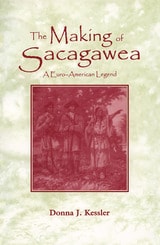
The Making of Sacagawea
A Euro-American LegendDonna Barbie Kessler
University of Alabama Press, 1998
Kessler supplies both the biography of a legend and an explanation of why that legend has endured.
Sacagawea is one of the most renowned figures of the American West. A member of the Shoshone tribe, she was captured by the Hidatsas as a child and eventually became one of the wives of a French fur trader, Toussaint Charbonneau. In 1805 Charbonneau joined Lewis and Clark as the expedition's interpreter. Sacagawea was the only woman to participate in this important mission, and some claim that she served as a guide when the expedition reached the upper Missouri River and the mountainous region.
Although much has been written about the historical importance of Sacagawea in connection with the expedition, no one has explored why her story has endured so successfully in Euro-American culture. In an examination of representative texts (including histories, works of fiction, plays, films, and the visual arts) from 1805 to the present, Kessler charts the evolution and transformation of the legend over two centuries and demonstrates that Sacagawea has persisted as a Euro-American legend because her story exemplified critical elements of America's foundation myths-especially the concept of manifest destiny. Kessler also shows how the Sacagawea legend was flexible within its mythic framework and was used to address cultural issues specific to different time periods, including suffrage for women, taboos against miscegenation, and modern feminism.
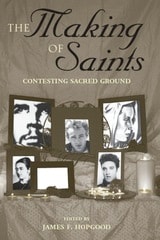
The Making of Saints
Contesting Sacred GroundEdited by James F. Hopgood
University of Alabama Press, 2005
Celebrities and popular icons are increasingly ubiquitous figures of a 21st century postmodern world. Some, in death, blur age-old distinctions of sanctification and trespass on sacred ground long held exclusively by religious saints. An emerging continuum is transforming that sacred arena and raising a number of important issues, including the nature of the relationships between the worshipped and the worshipful and the types of institutions that sustain them.
The Making of Saints: Contesting Sacred Ground investigates a number of religious leaders, healers, folk saints, and popular icons in seeking to identify their commonalities and discover how they speak to the same inner yearnings of human beings for gods and heroes. Issues of social relations, love, emotion, charisma, power, and sanctification are addressed by the contributors. Analyses of hagiographies, biographies, media, control of space, pilgrimage, and acts of devotion provide the bases for the authors' explorations of these issues. Among the sanctified included for analysis are the folk saints El Nino Fidencio and Teresa Urrea; the charismatic rabbis Baba Sali, Baba Baruch, and Ifargan; King Chulalongkorn of Thailand; two political figures, Evita Peron and Che Guevara; and three celebrities: James Dean, Elvis Presley, and Japanese rock star HIDE.
The contributors challenge notions of what is sacred and who may be sanctified, and argue that a broadening of views is needed to accommodate and appreciate emerging contemporary realities.
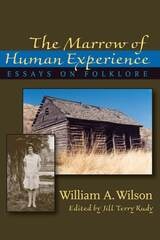
The Marrow of Human Experience
Essays on Folklore by William A. Wilsonedited by William A. Wilson and Jill Terry Rudy
Utah State University Press, 2006
The Monster with a Thousand Faces
Guises of the Vampire in Myth and LiteratureBrian J. Frost
University of Wisconsin Press, 1989
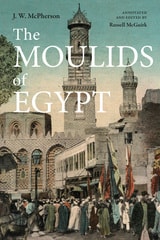
The Moulids of Egypt
Egyptian Saint’s Day FestivalsJ.W. McPherson
Gingko, 2022
First published in Cairo during World War II, The Moulids of Egypt is a study of moulids, the popular Egyptian religious festivals celebrated by both Muslims and Christians in the first half of the twentieth century. The book talks in detail about the secular side of moulids, where sports, games, theatres, dancing, and laughter were as much part of the festivals as the religious processions and the whirling of dervishes. Some of the rites and customs analyzed here date from as far back as the Pharaonic period, but the moulids are gradually dying out; many of the 126 festivals described in Moulids of Egypt have since faded away, making the book of lasting interest.
The Negro and His Folklore in Nineteenth-Century Periodicals
Edited by Bruce Jackson
University of Texas Press, 1967
In the eyes of many white Americans, North and South, the Negro did not have a culture until the Emancipation Proclamation. With few exceptions, serious collecting of Negro folklore by whites did not begin until the Civil War—and it was to be another four decades before black Americans would begin to appreciate their own cultural heritage. Few of the earlier writers realized that they had observed and recorded not simply a manifestation of a particular way of life but also a product peculiarly American and specifically Negro, a synthesis of African and American styles and traditions.
The folksongs, speech, beliefs, customs, and tales of the American Negro are discussed in this anthology, originally published in 1967, of thirty-five articles, letters, and reviews from nineteenth-century periodicals. Published between 1838 and 1900 and written by authors who range from ardent abolitionist to dedicated slaveholder, these articles reflect the authors’ knowledge of, and attitudes toward, the Negro and his folklore. From the vast body of material that appeared on this subject during the nineteenth century, editor Bruce Jackson has culled fresh articles that are basic folklore and represent a wide range of material and attitudes. In addition to his introduction to the volume, Jackson has prefaced each article with a commentary. He has also supplied a supplemental bibliography on Negro folklore.
If serious collecting of Negro folklore had begun by the middle of the nineteenth century, so had exploitation of its various aspects, particularly Negro songs. By 1850 minstrelsy was a big business. Although Jackson has considered minstrelsy outside the scope of this collection, he has included several discussions of it to suggest some aspects of its peculiar relation to the traditional. The articles in the anthology—some by such well-known figures as Joel Chandler Harris, George Washington Cable, Thomas Wentworth Higginson, John Mason Brown, and Antonin Dvorak—make fascinating reading for an observer of the American scene. This additional insight into the habits of thought and behavior of a culture in transition—folklore recorded in its own context—cannot but afford the thinking reader further understanding of the turbulent race problems of later times and today.
The Origin of Table Manners
Mythologiques, Volume 3Claude Lévi-Strauss
University of Chicago Press, 1990
"An immense anthropological erudition is here wielded by one of the world's finest minds, and the myths themselves have never been taken more seriously. . . . [Lévi-Strauss] raises issues and then resolves them with the suspenseful cunning of a mystery novelist."—John Updike, New Yorker
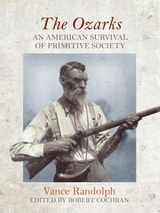
The Ozarks
An American Survival of Primitive SocietyVance Randolph
University of Arkansas Press, 2017
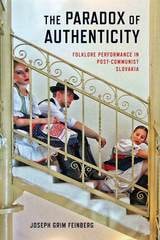
The Paradox of Authenticity
Folklore Performance in Post-Communist SlovakiaJoseph Grim Feinberg
University of Wisconsin Press, 2018
In Slovakia and elsewhere in Eastern Europe after World War II, Communist governments promoted folklore revivals and staged performances of song and dance as representations of "the people." When the Communists fell from power in Slovakia in 1989, folklore was also discredited in the eyes of many. By the early twenty-first century, however, a new generation launched a movement to revive folklore's reputation and reintroduce it to a broad public.
Weaving together personal narrative, ethnographic analysis, and philosophical reflection, Feinberg examines the aspirations and difficulties of young folk dance devotees as they recognize that authenticity is more easily prized than achieved. He sheds new light on the problems of specialized performance and broad participation, the uneasy relationship between folklore and the public sphere, and the paradoxical pursuit of authenticity in the modern world.
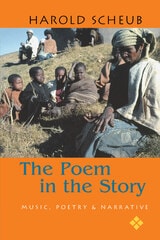
The Poem in the Story
Music, Poetry, and NarrativeHarold Scheub
University of Wisconsin Press, 2002
Fact and fiction meet at the boundaries, the betwixt and between where transformations occur. This is the area of ambiguity where fiction and fact become endowed with meaning, and this is the area—where ambiguity, irony, and metaphor join forces—that Harold Scheub exposes in all its nuanced and evocative complexity in The Poem in the Story.
In a career devoted to exploring the art of the African storyteller, Scheub has conducted some of the most interesting and provocative investigations into nonverbal aspects of storytelling, the complex relationship between artist and audience, and, most dramatically, the role played by poetry in storytelling. This book is his most daring effort yet, an unconventional work that searches out what makes a story artistically engaging and emotionally evocative, the metaphorical center that Scheub calls "the poem in the story." Drawing on extensive fieldwork in southern Africa and decades of experience as a researcher and teacher, Scheub develops an original approach—a blend of field notes, diary entries, photographs, and texts of stories and poems—that guides readers into a new way of viewing, even experiencing, meaning in a story. Though this work is largely focused on African storytelling, its universal applications emerge when Scheub brings the work of storytellers as different as Shakespeare and Faulkner into the discussion.
The Politics of Memory
Native Historical Interpretation in the Colombian AndesJoanne Rappaport
Duke University Press, 1997
Reconsidering the predominantly mythic status of non-Western historical narrative, Rappaport identifies the political realities that influenced the form and content of Andean history, revealing the distinct historical vision of these stories. Because of her examination of the influences of literacy in the creation of history, Rappaport’s analysis makes a special contribution to Latin American and Andean studies, solidly grounding subaltern texts in their sociopolitical contexts.
The Power of Words
Studies on Charms and Charming in EuropeJames Kapalo
Central European University Press, 2013
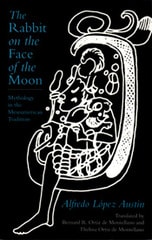
The Rabbit on the Face of the Moon
Mythology in the Mesoamerican TraditionAlfredo Lopez Austin
University of Utah Press, 1996
Eighteen essays provide an accessible, entertaining look into a system of millennia-old legends and beliefs.
Mythology is one of the great creations of humankind. It forms the core of sacred books and reflects the deepest preoccupations of human beings, their most intimate secrets, their glories, and their infamies.
In 1990, Alfredo López Austin, one of the foremost scholars of ancient Mesoamerican thought, began a series of essays about mythology in the Mesoamerican tradition, published in México Indígena. Although his articles were written for general readers, they were also intended to engage specialists. They span a divers subject matter: myths and names, eclipses, stars, left and right, Méxican origins, Aztec incantations, animals, and the incorporation of Christian elements into the living mythologies of Mexico. The title essay relates the Mesoamerican myth explaining why there is a rabbit o the moon’s face to a Buddhist image and suggests the importance of the profound mythical concepts presented by each image.
The eighteen essays in this volume are unified by their basis in Mesoamerican tradition and provide an accessible, entertaining look into a system of millennia-old legends and beliefs.
The Realm Of Prester John
Robert Silverberg
Ohio University Press, 1996
In this modern account of the genesis of a great medieval myth, celebrated science fiction author Robert Silverberg’s explores the mysterious origins of Prester John, the astonishing Christian potentate of the East.
Prester John was a legendary figure who cast a powerful spell over Latin Christendom for almost five centuries. Rumors of the warrior-king-prelate’s fabulous realms first reached Europe in the eleventh century and quickly assumed an exalted status alongside such fabled wonders as El Dorado, The Fountain of Youth, and the Holy Grail.
The defeat of a Moslem Turkish tribe by a Buddhist Chinese warlord seems to have been the unlikely historical nugget around which the Prester John myth grew, but contributions to this strange saga have also been traced all around the globe to the Apostle Thomas' apocryphal preaching in India, to the actual existence of small colonies of Nestorian schismatics in central Asia, and even to Genghis Khan.
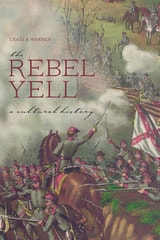
The Rebel Yell
A Cultural HistoryCraig A. Warren
University of Alabama Press, 2014
The first comprehensive history of the fabled Confederate battle cry from its origins and myths through its use in American popular culture.
No aspect of Civil War military lore has received less scholarly attention than the battle cry of the Southern soldier. In The Rebel Yell, Craig A. Warren brings together soldiers' memoirs, little-known articles, and recordings to create a fascinating and exhaustive exploration of the facts and myths about the “Southern screech.”
Through close readings of numerous accounts, Warren demonstrates that the Rebel yell was not a single, unchanging call, but rather it varied from place to place, evolved over time, and expressed nuanced shades of emotion. A multifunctional act, the flexible Rebel yell was immediately recognizable to friends and foes but acquired new forms and purposes as the epic struggle wore on. A Confederate regiment might deliver the yell in harrowing unison to taunt Union troops across the empty spaces of a battlefield. At other times, individual soldiers would call out solo or in call-and-response fashion to communicate with or secure the perimeters of their camps.
The Rebel yell could embody unity and valor, but could also become the voice of racism and hatred. Perhaps most surprising, The Rebel Yell reveals that from Reconstruction through the first half of the twentieth century, the Rebel yell—even more than the Confederate battle flag—served as the most prominent and potent symbol of white Southern defiance of Federal authority. With regard to the late-twentieth and early twenty-first centuries, Warren shows that the yell has served the needs of people the world over: soldiers and civilians, politicians and musicians, re-enactors and humorists, artists and businessmen. Warren dismantles popular assumptions about the Rebel yell as well as the notion that the yell was ever “lost to history.”
Both scholarly and accessible, The Rebel Yell contributes to our knowledge of Civil War history and public memory. It shows the centrality of voice and sound to any reckoning of Southern culture.
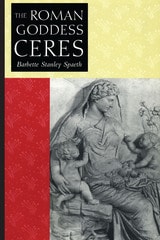
The Roman Goddess Ceres
By Barbette Stanley Spaeth
University of Texas Press, 1995
Interest in goddess worship is growing in contemporary society, as women seek models for feminine spirituality and wholeness. New cults are developing around ancient goddesses from many cultures, although their modern adherents often envision and interpret the goddesses very differently than their original worshippers did.
In this thematic study of the Roman goddess Ceres, Barbette Spaeth explores the rich complexity of meanings and functions that grew up around the goddess from the prehistoric period to the Late Roman Empire. In particular, she examines two major concepts, fertility and liminality, and two social categories, the plebs and women, which were inextricably linked with Ceres in the Roman mind. Spaeth then analyzes an image of the goddess in a relief of the Ara Pacis, an important state monument of the Augustan period, showing how it incorporates all these varied roles and associations of Ceres. This interpretation represents a new contribution to art history.
With its use of literary, epigraphical, numismatic, artistic, and archaeological evidence, The Roman Goddess Ceres presents a more encompassing view of the goddess than was previously available. It will be important reading for all students of Classics, as well as for a general audience interested in New Age, feminist, or pagan spirituality.
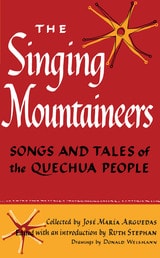
The Singing Mountaineers
Songs and Tales of the Quechua PeopleCollected by José María Arguedas
University of Texas Press, 1957
The Quechua people, the "singing mountaineers" of Peru, still sing the songs that their Inca ancestors knew before the Spaniards invaded the Andes. Some of these songs, collected and translated into Spanish by José María Arguedas and María Lourdes Valladares from the Quechua language and the Huanca dialect, are now presented for the first time in English in the beautiful translations of Ruth Stephan, author of the recent prize-winning novel, The Flight. Also included in this rich collection are nine folk tales collected by Father Jorge A. Lira, translated into Spanish by Sr. Arguedas, and into English by Kate and Angel Flores.
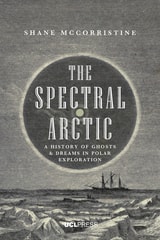
The Spectral Arctic
A History of Ghosts and Dreams in Polar ExplorationShane McCorristine
University College London, 2018
The narratives of Arctic exploration that we are all familiar with today are just the tip of the iceberg, argues Shane McCorristine, and there are a great many more mysterious stories beneath the surface. In contrast to oft-told tales of heroism and disaster, The Spectral Arctic reveals the hidden stories of dreaming and haunted explorers, of frozen mummies, of rescue balloons, visits to Inuit shamans, and of the entranced female clairvoyants who traveled to the Arctic in search of John Franklin’s lost expedition. Through new readings of archival documents, exploration narratives, and fictional texts, these stories reflect the complex ways that men and women actually thought about the Arctic in the past. This revisionist historical account also allows us to make sense of current cultural and political concerns in the Canadian Arctic about the long-lost Franklin Expedition and the recent rediscovery of the two ships.
The Storytellers' Journey
AN AMERICAN REVIVALJoseph Daniel Sobol
University of Illinois Press, 1999
Drawing on interviews with dozens of storytellers around the country, Sobol paints the revival as part of a larger process of cultural revitalization. He traces the growth of the preeminent revival organization, the National Association for the Preservation and Perpetuation of Storytelling (NAPPS), and details the individual passions, the organizational politics, and the economic, social, and mythic forces that have combined to transform a ragtag assemblage of enthusiasts into a national and international network of arts professionals.
A seemingly chance encounter between a restlessly ambitious high school teacher and a coonhunting tale on the car radio sets off a chain of inspirations that changes the face of a small southern town, touches lives across America, and revitalizes a homely but treasured art form.
The Three Nephites
Saints, Service, and Supernatural LegendJulie Swallow, Christopher James Blythe, Eric A. Eliason, and Jill Terry Rudy
University of Illinois Press, 2025
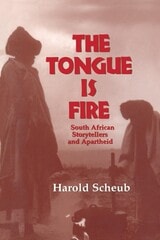
The Tongue Is Fire
South African Storytellers and ApartheidHarold E. Scheub
University of Wisconsin Press, 1996
With tape-recorder and camera in hand, Scheub registered the testaments of Swati, Xhosa, Ndebele, and Zulu storytellers, farming people who lived in the remote reaches of rural South Africa. While young people fought in the streets of Soweto and South African writers made the world aware of apartheid’s evils, the rural storytellers resisted apartheid in their own way, using myth and metaphor to preserve their traditions and confront their oppressors. For more than 20 years, Scheub kept the promise he made to the storytellers to publish his translations of their stories only when freedom came to South Africa. The Tongue Is Fire presents these voices of South African oral tradition—the historians, the poets, the epic-performers, the myth-makers—documenting their enduring faith in the power of the word to sustain tradition in the face of determined efforts to distort or eliminate it. These texts are a tribute to the storytellers who have always, in periods of crisis, exercised their art to inspire their own people.