Results by title
107 books match the query 'Form' and 31 start with t
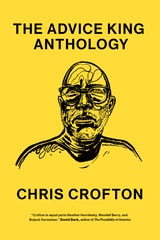
The Advice King Anthology
Chris Crofton
Vanderbilt University Press, 2022
If you are looking for traditional advice, this might not be the book for you. But if you care to find the incendiary, subversive, and hilarious alongside actual thoughts about addiction, depression, gentrification, politics, poetry, music, economic policy, living in New Nashville, and (inevitably) romance, the Advice King has much to offer.
The Advice King Anthology
Chris Crofton
Vanderbilt University Press, 2022
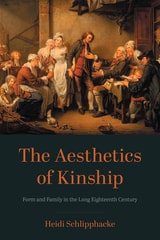
The Aesthetics of Kinship
Form and Family in the Long Eighteenth CenturyHeidi Schlipphacke
Bucknell University Press, 2023

The Architect's Dream
Form and Philosophy in Architectural ImaginationSean Pickersgill
Intellect Books, 2024
The Architect’s Dream demonstrates that the goal of creating meaningful architecture can take a variety of critical and philosophical paths. Sean Pickersgill draws on a broad range of subject areas, including film, philosophy, anthropology, mathematics, and economics, to show that the path to meaningful creative practice is always based on an understanding of the principal drivers for change in society. The Architect’s Dream is not a recipe book for others to reproduce; rather, it requires the engaged reader to use their own creative abilities to find the potential in each proposition, and it will encourage the scholastic architect to continue to mine the rich veins of intellectual culture to demonstrate the hidden purposiveness inherent in all meaningful architecture.
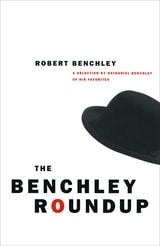
The Benchley Roundup
A Selection by Nathaniel Benchley of his FavoritesRobert C. Benchley
University of Chicago Press, 1983
"It took me fifteen years to discover that I had no talent for writing, but I couldn't give it up because by then I was too famous."
—Robert Benchley
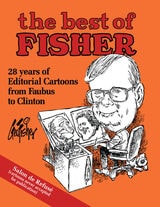
The Best of Fisher
28 years of Editorial Cartoons from Faubus to ClintonGeorge Fisher
University of Arkansas Press, 1993
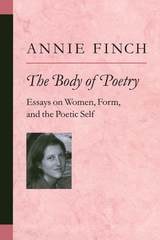
The Body of Poetry
Essays on Women, Form, and the Poetic SelfAnnie Finch
University of Michigan Press, 2005
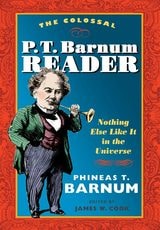
The Colossal P. T. Barnum Reader
Nothing Else Like It in the UniversePhineas T. Barnum. Edited by James W. Cook
University of Illinois Press, 2005
James W. Cook's The Colossal P. T. Barnum Reader is the largest collection of Barnum's works ever produced. Included are excerpts from his pseudo-autobiographical novel The Adventures of an Adventurer (1841), his European letters from 1844-46 informing readers of the New York Atlas of his regal reception overseas, and a large selection from his Ancient and Modern Humbugs of the World, Barnum's 1864-65 insider's look into the frauds of nineteenth-century American culture. It offers a glimpse of Tom Thumb's minstrel and singing performances in front of Queen Victoria, Barnum's many fraudulent representations of the supposedly ancient Joice Heth, and a more immediate, less filtered sense of Barnum as cultural and social critic in his serialized writings and travelogues. This volume also features reproductions of difficult to find posters from Barnum's two-decade collaboration with the prominent New York lithographers, Currier and Ives, and vintage photographs.
Finally, the reader also helps us to understand Barnum's role in building the modern culture industry. We follow his career from itinerant hawker, hardly distinguishable from his pre-industrial forebears, to manager of the world's first show business empire, with a staff of thousands and brand recognition across four continents. The Colossal P. T. Barnum Reader tracks the shifting personas of the great showman, his representational choices, and his publics across the nineteenth century.
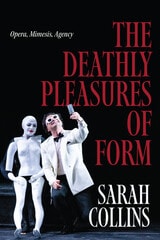
The Deathly Pleasures of Form
Opera, Mimesis, AgencySarah Collins
University of Chicago Press, 0
Opera offers a rich space in which to think about problems of mimesis—how artworks imitate ideal forms, how humans imitate the things around us, and how words attempt to represent reality.
In this book, musicologist and cultural historian Sarah Collins shows how the strange, exhilarating, and uniquely self-conscious art form of opera opens itself to such contemporary, theoretical questions. The Deathly Pleasures of Form is especially concerned with the links between linguistic and bodily signification in opera through the genre’s use of figures of partial agency—disembodied voices, enchanted objects, puppets, mechanical devices. The book is structured around four emblematic figures (Faust, Don Juan, Papageno, and Hoffmann) who are paired with four objects of variable animacy (puppet, stone, silhouette, and mirror, respectively). Across these chapters, Collins develops an expanded notion of mimesis that illuminates opera’s material and mechanical investments, its filmic and other adaptations, its explicit negotiation between vocal utterance and bodily gesture, and the epistemological significance of opera’s excesses. Ultimately, Collins claims that opera performs a type of compromised agency that can offer new critical insight into the self-limiting nature of both freedom and representation.
The Forces of Form in German Modernism
Malika Maskarinec
Northwestern University Press, 2018
Considering canonical artists such as Rodin and Klee, seminal authors such as Kafka and Döblin, and largely neglected thinkers in aesthetics and art history such as those associated with Empathy Aesthetics, Maskarinec unpacks the manifold anthropological and aesthetic concerns and historical lineage embedded in the idea of form as the precarious achievement of uprightness.
The Forces of Form in German Modernism makes a decisive contribution to our understanding of modernism and to contemporary discussions about form, empathy, materiality, and human embodiment.
The Fragmented Novel in Mexico
The Politics of FormBy Carol Clark D'Lugo
University of Texas Press, 1997
From Mariano Azuela's 1915 novel Los de abajo to Rosamaría Roffiel's Amora of 1989, fragmented narrative has been one of the defining features of innovative Mexican fiction in the twentieth century. In this innovative study, Carol Clark D'Lugo examines fragmentation as a literary strategy that reflects the social and political fissures within modern Mexican society and introduces readers to a more participatory reading of texts.
D'Lugo traces defining moments in the development of Mexican fiction and the role fragmentation plays in each. Some of the topics she covers are nationalist literature of the 1930s and 1940s, self-referential novels of the 1950s that focus on the process of reading and writing, the works of Carlos Fuentes, novels of La Onda that came out of rebellious 1960s Mexican youth culture, gay and lesbian fiction, and recent women's writings.
With its sophisticated theoretical methodology that encompasses literature and society, this book serves as an admirable survey of the twentieth-century Mexican novel. It will be important reading for students of Latin American culture and history as well as literature.
The Great Image Has No Form, or On the Nonobject through Painting
François Jullien
University of Chicago Press, 2009
In premodern China, elite painters used imagery not to mirror the world around them, but to evoke unfathomable experience. Considering their art alongside the philosophical traditions that inform it, The Great Image Has No Form explores the “nonobject”—a notion exemplified by paintings that do not seek to represent observable surroundings.
François Jullien argues that this nonobjectifying approach stems from the painters’ deeply held belief in a continuum of existence, in which art is not distinct from reality. Contrasting this perspective with the Western notion of art as separate from the world it represents, Jullien investigates the theoretical conditions that allow us to apprehend, isolate, and abstract objects. His comparative method lays bare the assumptions of Chinese and European thought, revitalizing the questions of what painting is, where it comes from, and what it does. Provocative and intellectually vigorous, this sweeping inquiry introduces new ways of thinking about the relationship of art to the ideas in which it is rooted.
The Great Latke-Hamantash Debate
Edited by Ruth Fredman Cernea
University of Chicago Press, 2005
What began as an informal gathering is now an institution that has been replicated on campuses nationwide. Highly absurd yet deeply serious, the annual debate is an
opportunity for both ethnic celebration and academic farce. In poetry, essays, jokes, and revisionist histories, members of elite American academies attack the latke-versus-hamantash question with intellectual panache and an unerring sense of humor, if not chutzpah. The Great Latke-Hamantash Debate is the first collection of the best of these performances, from Martha Nussbaum's paean to both foods—in the style of Hecuba's Lament—to Nobel laureate Leon Lederman's proclamation on the union of the celebrated dyad. The latke and the hamantash are here revealed as playing a critical role in everything from Chinese history to the Renaissance, the works of Jane Austen to constitutional law.
Philosopher and humorist Ted Cohen supplies a wry foreword, while anthropologist Ruth Fredman Cernea provides historical and social context as well as an overview of the Jewish holidays, latke and hamantash recipes, and a glossary of Yiddish and Hebrew terms, making the book accessible even to the uninitiated. The University of Chicago may have split the atom in 1942, but it's still working on the equally significant issue of the latke versus the hamantash.
The Heart of Things
A Midwestern AlmanacJohn Hildebrand
Wisconsin Historical Society Press, 2014
In this remarkable book of days, John Hildebrand charts the overlapping rings—home, town, countryside—of life in the Midwest. Like E. B. White, Hildebrand locates the humor and drama in ordinary life: church suppers, Friday night football, outdoor weddings, garden compost, family reunions, roadside memorials, camouflage clothing. In these wry, sharply observed essays, the Midwest isn’t The Land Time Forgot but a more complicated (and vastly more interesting) place where the good life awaits once we figure exactly out what it means. From his home range in northwestern Wisconsin, Hildebrand attempts to do just that by boiling down a calendar year to its rich marrow of weather, animals, family, home—in other words, all the things that matter.
The Ideal of the Practical
Colombia’s Struggle to Form a Technical EliteBy Frank Safford
University of Texas Press, 1976
The Ideal of the Practical is a study of efforts by a segment of the upper class in an aristocratic Latin American society to alter cultural values in the society, creating stronger orientations toward the technical and the practical. Frank Safford describes attempts by members of Colombia’s nineteenth-century political elite to use technical education as a means of nurturing energetic upper-class entrepreneurs and an industrious working class in a static agrarian economy. In the course of his analysis, Safford sketches the historical development of scientific and technical education and of the engineering profession in Colombia.
The book opens with a description of the economic and social context of early nineteenth-century Colombia. It then discusses some early experiments with manual industrial training between 1820 and 1850. Later chapters deal with the careers of upper-class youths sent abroad for scientific and technical training, the growth of indigenous engineering education, and the crystallization of a Colombian engineering profession. While the book primarily explores the nineteenth century, it also touches on eighteenth-century Spanish Bourbon antecedents and provides an epilogue on the twentieth-century evolution of technical elites in Colombia.
The author focuses on the reasons why the implantation of technical education and technical orientations proved difficult. He examines the interplay between various obstructions: on the one hand, a hierarchical social structure and aristocratic social values and, on the other, obstructions created by fundamental geographic and economic conditions. He concludes that, while Colombian leaders had hoped that technical education and the development of values oriented toward the technical would spearhead economic growth, in fact economic growth proved a prerequisite for the effective implantation of technical orientations and training.
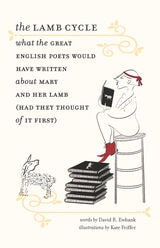
The Lamb Cycle
What the Great English Poets Would Have Written About Mary and Her Lamb (Had They Thought of It First)David R. Ewbank
Brandeis University Press, 2023
In The Lamb Cycle, David R. Ewbank achieves the unthinkable—he writes so convincingly in the style of the great English poets that one could be lulled into thinking that Shakespeare himself was inspired to muse upon the subject of “Mary Had a Little Lamb.” Ewbank captures not only the style of each of the poets he chooses, but also their preoccupations and subject matter. So D.H. Lawrence’s Mary longs for her lamb as any woman longing for her lover, whilst T.S. Eliot’s Mary is recollected by an old man looking back on his life. Alexander Pope writes an “An Essay on Lambs,” and Tennyson’s lotus eaters become “The Clover Eater.” Brilliantly written, sophisticated, and laugh-out-loud funny, these poems, enhanced by Kate Feiffer’s charming illustrations, will enchant anyone who has ever read an English poem.
The Objective Eye
Color, Form, and Reality in the Theory of ArtJohn Hyman
University of Chicago Press, 2006
This, in a nutshell, is the central problem in the theory of art. It has fascinated philosophers from Plato to Wittgenstein. And it fascinates artists and art historians, who have always drawn extensively on philosophical ideas about language and representation, and on ideas about vision and the visible world that have deep philosophical roots.
John Hyman’s The Objective Eye is a radical treatment of this problem, deeply informed by the history of philosophy and science, but entirely fresh. The questions tackled here are fundamental ones: Is our experience of color an illusion? How does the metaphysical status of colors differ from that of shapes? What is the difference between a picture and a written text? Why are some pictures said to be more realistic than others? Is it because they are especially truthful or, on the contrary, because they deceive the eye?
The Objective Eye explores the fundamental concepts we use constantly in our most innocent thoughts and conversations about art, as well as in the most sophisticated art theory. The book progresses from pure philosophy to applied philosophy and ranges from the metaphysics of color to Renaissance perspective, from anatomy in ancient Greece to impressionism in nineteenth-century France. Philosophers, art historians, and students of the arts will find The Objective Eye challenging and absorbing.
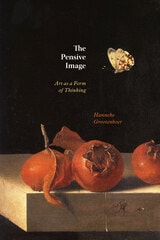
The Pensive Image
Art as a Form of ThinkingHanneke Grootenboer
University of Chicago Press, 2020
While the philosophical dimension of painting has long been discussed, a clear case for painting as a form of visual thinking has yet to be made. Traditionally, vanitas still life paintings are considered to raise ontological issues while landscapes direct the mind toward introspection. Grootenboer moves beyond these considerations to focus on what remains unspoken in painting, the implicit and inexpressible that manifests in a quality she calls pensiveness. Different from self-aware or actively desiring images, pensive images are speculative, pointing beyond interpretation. An alternative pictorial category, pensive images stir us away from interpretation and toward a state of suspension where thinking through and with the image can start.
In fluid prose, Grootenboer explores various modalities of visual thinking— as the location where thought should be found, as a refuge enabling reflection, and as an encounter that provokes thought. Through these considerations, she demonstrates that artworks serve as models for thought as much as they act as instruments through which thinking can take place. Starting from the premise that painting is itself a type of thinking, The Pensive Image argues that art is capable of forming thoughts and shaping concepts in visual terms.
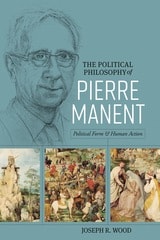
The Political Philosophy of Pierre Manent
Political Form and Human ActionJoseph Wood
Catholic University of America Press, 2024
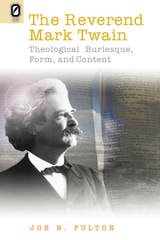
The REVEREND MARK TWAIN
THEOLOGICAL BURLESQUE, FORM, AND CONTENTJoe B. Fulton
The Ohio State University Press, 2006
Twain adopted such religious personae to burlesque the religious literary genres associated with those vocations. He wrote catechisms, prophecies, psalms, and creeds, all in the theological tradition, but with a comic twist. Twain even wrote a burlesque life of Christ that has the son of God sporting blue jeans and cowboy boots. With his distinctive comic genius, Twain entered the religious dialogue of his time, employing the genres of belief as his vehicle for criticizing church and society.
Twain’s burlesques of religious form and content reveal a writer fully engaged with the religious ferment of his day. Works like The Innocents Abroad, Adventures of Huckleberry Finn, Personal Recollections of Joan of Arc, Roughing It, and What Is Man? are the productions of a writer skilled at adopting and adapting established literary and religious forms for his own purposes. Twain is sometimes viewed as a haphazard writer, but in The Reverend Mark Twain, Fulton demonstrates how carefully Twain studied established literary and theological genres to entertain—and criticize—his society.
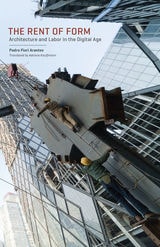
The Rent of Form
Architecture and Labor in the Digital AgePedro Fiori Arantes
University of Minnesota Press, 2019
A critique of prominent architects’ approach to digitally driven design and labor practices over the past two decades
With the advent of revolutionary digital design and production technologies, contemporary architects and their clients developed a taste for dramatic, unconventional forms. Seeking to amaze their audiences and promote their global brands, “starchitects” like Herzog & de Meuron and Frank Gehry have reaped substantial rewards through the pursuit of spectacle enabled by these new technologies. This process reached a climax in projects like Gehry’s Guggenheim Bilbao and the “Bilbao effect,” in which spectacular architectural designs became increasingly sought by municipal and institutional clients for their perceived capacity to enhance property values, which author Pedro Fiori Arantes calls the “rent of form.”
Analyzing many major international architectural projects of the past twenty years, Arantes provides an in-depth account of how this “architecture of exception” has come to dominate today’s industry. Articulating an original, compelling critique of the capital and labor practices that enable many contemporary projects, Arantes explains how circulation (via image culture), consumption (particularly through tourism), the division of labor, and the distribution of wealth came to fix a certain notion of starchitecture at the center of the industry.
Significantly, Arantes’s viewpoint is not that of Euro-American capitalism. Writing from the Global South, this Brazilian theorist offers a fresh perspective that advances ideas less commonly circulated in dominant, English-language academic and popular discourse. Asking key questions about the prevailing logics of finance capital, and revealing inconvenient truths about the changing labor of design and the treatment of construction workers around the world, The Rent of Form delivers a much-needed reevaluation of the astonishing buildings that have increasingly come to define world cities.
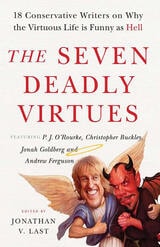
The Seven Deadly Virtues
18 Conservative Writers on Why the Virtuous Life is Funny as HellJonathan V. Last
Templeton Press, 2014
The book’s contributors include Sonny Bunch, Christopher Buckley, David “Iowahawk” Burge, Christopher Caldwell, Andrew Ferguson, Jonah Goldberg, Michael Graham, Mollie Hemingway, Rita Koganzon, Matt Labash, James Lileks, Rob Long, Larry Miller, P. J. O’Rourke, Joe Queenan, Christine Rosen, and Andrew Stiles. Jonathan V. Last, senior writer at the Weekly Standard, editor of the collection, is also a contributor. All eighteen essays in this book are appearing for the first time anywhere.
In the book’s opening essay, P. J. O’Rourke observes: “Virtue has by no means disappeared. It’s as much in public view as ever. But it’s been strung up by the heels. Virtue is upside down. Virtue is uncomfortable. Virtue looks ridiculous. All the change and the house keys are falling out of Virtue’s pants pockets.”
Here are the virtues everyone (including the book’s contributors) was taught in Sunday school but have totally forgotten about until this very moment. In this sanctimony-free zone:
• Joe Queenan observes: “In essence, thrift is a virtue that resembles being very good at Mahjong. You’ve heard about people who can do it, but you’ve never actually met any of them.”
• P. J. O’Rourke notes: “Fortitude is quaint. We praise the greatest generation for having it, but they had aluminum siding, church on Sunday, and jobs that required them to wear neckties or nylons (but never at the same time). We don’t want those either.”
• Christine Rosen writes: “A fellowship grounded in sociality means enjoying the company of those with whom you actually share physical space rather than those with whom you regularly and enthusiastically exchange cat videos.”
• Rob Long offers his version of modern day justice: if you sleep late on the weekend, you are forced to wait thirty minutes in line at Costco.
• Jonah Goldberg offers: “There was a time when this desire-to-do-good-in-all-things was considered the only kind of integrity: ‘Angels are better than mortals. They’re always certain about what is right because, by definition, they’re doing God’s will.’ Gabriel knew when it was okay to remove a mattress tag and Sandalphon always tipped the correct amount.”
• Sonny Bunch dissects forbearance, observing that the fictional Two Minutes Hate of George Orwell’s 1984 is now actually a reality directed at living, breathing people. Thanks, in part, to the Internet, “Its targets are designated by a spontaneously created mob—one that, due to its hive-mind nature—is virtually impossible to call off.”
By the time readers have completed The Seven Deadly Virtues, they won’t even realize that they’ve just been catechized into an entirely different—and better—moral universe.
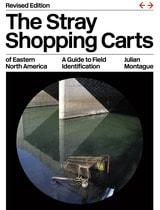
The Stray Shopping Carts of Eastern North America
A Guide to Field IdentificationJulian Montague
University of Chicago Press, 2023
Abandoned shopping carts are everywhere, and yet we know so little about them. Where do they come from? Why are they there? Their complexity and history baffle even the most careful urban explorer.
Thankfully, artist Julian Montague has created a comprehensive and well-documented taxonomy with The Stray Shopping Carts of Eastern North America. Spanning thirty-three categories from damaged, fragment, and plow crush to plaza drift and bus stop discard, it is a tonic for times defined increasingly by rhetoric and media and less by the plain objects and facts of the real world. Montague’s incomparable documentation of this common feature of the urban landscape helps us see the natural and man-made worlds—and perhaps even ourselves—anew.
First published in 2006 to great perplexity and acclaim alike, Montague’s book now appears in refreshed and expanded form. Told in an exceedingly dry voice, with full-color illustrations and photographs throughout, it is both rigorous and absurd, offering a strangely compelling vision of how we approach, classify, and understand the environments around us. A new afterword sheds light on the origins of the project.
The Structure of English
Studies in Form and Function for Language TeachingJeanette S. DeCarrico
University of Michigan Press, 2000
With an emphasis on discourse function throughout, students are never expected to rely on lists of unrelated, constructed example sentences. Rather, when major points of grammar are presented, the structures are illustrated with rich, "real world" contexts excerpted from literature (mostly American), including novels, short stories, poems, essays, and drama. Exercises in the companion workbook are likewise based on naturally occurring stretches of discourse.
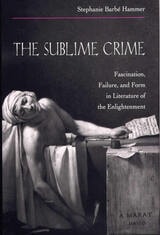
The Sublime Crime
Fascination, Failure, and Form in Literature of the EnlightenmentStephanie Barbe Hammer
Southern Illinois University Press, 1993
In this hermeneutic analysis of seven literary texts, Stephanie Barbé Hammer studies the roles of criminal protagonists in the dramas of George Lillo (The London Merchant) and Friedrich Schiller (The Robbers) and in the narratives of Abbé de Prévost (Manon Lescaut), Henry Fielding (Jonathan Wild), Marquis de Sade (Justine), William Godwin (Caleb Williams), and Heinrich von Kleist (Michael Kohlhaas).
Hammer reflects the current interest in cultural critique by utilizing the social theories of Michel Foucault and the feminist approaches of Hélène Cixous and Eve Sedgwick to redefine the Enlightenment as a movement of thought rather than as a strictly defined period synonymous with the eighteenth century. In addition, through the examination of the works of three post–World War II authors (Jean Genet, Anthony Burgess, and Peter Handke), Hammer suggests that the Enlightenment’s artistic representations of criminality are unparalleled by subsequent modern literature.
Hammer explains that the seven works she focuses on have been dismissed as failures by readers who have misunderstood the texts’ aesthetic elements. While claiming that the form of these works breaks down under the pressure of their criminal protagonists, she asserts that this formal failure actually contributes to the success of the works as art. The works "fail" because, like the criminal characters themselves, they break laws. The criminal protagonist effectively sabotages the official story that the text seeks to tell by deflecting the plot, style, and formal requirements in question, subverting its message—be it moral, sentimental, or libertine— through a kind of structural undermining, forcing the text beyond its own formal boundaries. For example, Hammer maintains that the presence of the criminal figure, Millwood, in Lillo’s bourgeois tragedy actually makes the play covertly antibourgeois.
Hammer insists that the criminal’s subversive presence in these seven works inaugurates new insight, and her analysis thereby challenges late twentieth-century readers to continue the investigation that the works themselves have begun.
This book will prove indispensable to scholars of comparative literature, especially eighteenth-century specialists, as well as to all individuals interested in cultural critique.
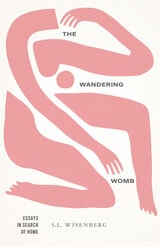
The Wandering Womb
Essays in Search of HomeS. L. Wisenberg
University of Massachusetts Press, 2023
Even as a fourth-generation Jewish Texan, S. L. Wisenberg has always felt the ghost of Europe dogging her steps, making her feel uneasy in her body and in the world. At age six, she’s sure that she hears Nazis at her bedroom window and knows that after they take her away, she’ll die without her asthma meds. In her late twenties, she infiltrates sorority rush at her alma mater, curious about whether she’ll get a bid now. Later in life, she makes her first and only trip to the mikvah while healing from a breast biopsy (benign this time), prompting an exploration of misogyny, shame, and woman-fear in rabbinical tradition.
With wit, verve, blood, scars, and a solid dose of self-deprecation, Wisenberg wanders across the expanse of continents and combs through history books and family records in her search for home and meaning. Her travels take her from Selma, Alabama, where her Eastern European Jewish ancestors once settled, to Vienna, where she tours Freud’s home and figures out what women really want, and she visits Auschwitz, which—disappointingly—leaves no emotional mark.
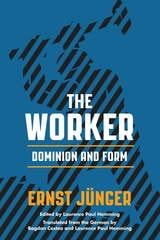
The Worker
Dominion and FormErnst Jünger, Edited by Laurence Paul Hemming, Translated from the German by Bogdan Costea and Laurence Paul Hemming
Northwestern University Press, 2018
Martin Heidegger considered Jünger “the only genuine follower of Nietzsche,” singularly providing “an interpretation which took shape in the domain of that metaphysics which already determines our epoch, even against our knowledge; this metaphysics is Nietzsche's doctrine of the ‘will to power.’” In The Worker, Jünger examines some of the defining questions of that epoch: the nature of individuality, society, and the state; morality, justice, and law; and the relationships between freedom and power and between technology and nature.
This work, appearing in its entirety in English translation for the first time, is an important contribution to debates on work, technology, and politics by one of the most controversial German intellectuals of the twentieth century. Not merely of historical interest, The Worker carries a vital message for contemporary debates about world economy, political stability, and equality in our own age, one marked by unsettling parallels to the 1930s.
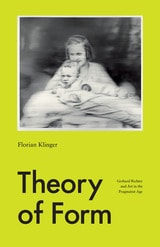
Theory of Form
Gerhard Richter and Art in the Pragmatist AgeFlorian Klinger
University of Chicago Press, 2022
In this study of the practice of contemporary painter Gerhard Richter, Florian Klinger proposes a fundamental change in the way we think about art today. In reaction to the exhaustion of the modernist-postmodernist paradigm’s negotiation of the “essence of art,” he takes Richter to pursue a pragmatist model that understands artistic form as action. Here form is no longer conceived according to what it says—as a vehicle of expression, representation, or realization of something other than itself—but strictly according to what it does.
Through its doing, Klinger argues, artistic form is not only more real but also more shared than non-artistic reality, and thus enables interaction under conditions where it would otherwise not be possible. It is a human practice aimed at testing and transforming the limits of shared reality, urgently needed in situations where such reality breaks down or turns precarious. Drawing on pragmatist thought, philosophical aesthetics, and art history, Klinger’s account of Richter’s practice offers a highly distinctive conceptual alternative for contemporary art in general.
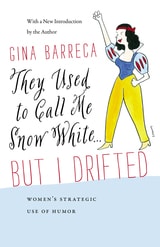
They Used to Call Me Snow White . . . But I Drifted
Women’s Strategic Use of HumorGina Barreca
University Press of New England, 2013
Towards the Ethics of Form in Fiction
Narratives of Cultural RemissionLeona Toker
The Ohio State University Press, 2010
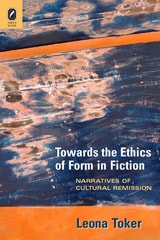
Toker is especially interested in cultural remissions such as the carnivalesque—that is, the inverting of standard cultural hierarchies or the blurring of boundaries between normally separated social groups, actors and audiences, self and other. She argues that cultural remissions have the potential not simply to provide a break from the determinacies of our quotidian existence but also to return us to that existence with some alteration of our perceptions, beliefs, and values. Toker contends that the ethical consequences of reading fiction result from features of its aesthetics, particularly what she calls, following the semiotician Louis Hjemslev, “the form of the content”—the patterns arising from the artistic deployment of narrative details. In addition to addressing the carnivalesque discourse of Bakhtin as well as the theory of oppositionality developed by de Certeau and Chambers, she puts theory into practice through detailed analyses of canonical texts by Fielding, Sterne, Austen, Hawthorne, Dickens, Conrad, Joyce, and other writers.
Two Jews on a Train
Stories from the Old Country and the NewAdam Biro
University of Chicago Press, 2001
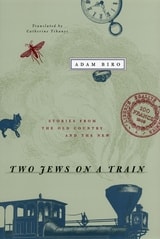
As Biro recounts these tales, we hear not only his voice and the voice of his father, but those of generations of storytellers who have used humor to teach about the truly important issues in life—the delicacy of love, the fragility of friendship, the pitfalls of self-righteousness, the costs of narrow-mindedness, and the unpredictability of life itself. Biro artfully spins each story, lingering on the details, guiding the reader to the inevitable—yet always unexpected—punchline.
Taken individually, these stories will make you laugh out loud; taken as a whole, they form an invaluable record of the sensibilities of an entire people. Biro writes: "These Jewish stories of which not a single one happened to me, and of which I did not invent a single one, do describe me, do characterize me, do explain me. They are always my own story. And yours."