Results by title
1104 books match the query 'Gender Studies' and 189 start with t

TRANS(per)FORMING Nina Arsenault
An Unreasonable Body of WorkEdited by Judith Rudakoff
Intellect Books, 2012

TV Family Values
Gender, Domestic Labor, and 1980s SitcomsAlice Leppert
Rutgers University Press, 2019
Taking Liberties
Gender, Transgressive Patriotism, and Polish Drama, 1786–1989Halina Filipowicz
Ohio University Press, 2014
As narrow, nationalist views of patriotic allegiance have become widespread and are routinely invoked to justify everything from flag-waving triumphalism to xenophobic bigotry, the concept of a nonnationalist patriotism has vanished from public conversation. Taking Liberties is a study of what may be called patriotism without borders: a nonnational form of loyalty compatible with the universal principles and practices of democracy and human rights, respectful of ethnic and cultural diversity, and, overall, open-minded and inclusive.
Moving beyond a traditional study of Polish dramatic literature, Halina Filipowicz turns to the plays themselves and to archival materials, ranging from parliamentary speeches to polemical pamphlets and verse broadsides, to explore the cultural phenomenon of transgressive patriotism and its implications for society in the twenty-first century.
In addition to recovering lost or forgotten materials, the author builds an innovative conceptual and methodological framework to make sense of those materials. The result is not only a significant contribution to the debate over the meaning and practice of patriotism, but a masterful intellectual history.

Taking The Field
Women, Men, and SportsMichael A. Messner
University of Minnesota Press, 2002
Tales Out of School
Gender, Longing, and the Teacher in Fiction and FilmJo Keroes
Southern Illinois University Press, 1999
Jo Keroes's scope is wide: she examines the teacher as represented in fiction and film in works ranging from the twelfth-century letters of Abelard and Heloise to contemporary films such as Dangerous Minds and Educating Rita. And from the twelfth through the twentieth century, Keroes shows, the teaching encounter is essentially erotic.
Tracing the roots of eros from cultural as well as psychological perspectives, Keroes defines erotic in terms broader than the merely sexual. She analyzes ways in which teachers serve as convenient figures on whom to map conflicts about gender, power, and desire. To show how portrayals of men and women differ, she examines pairs of texts, using a film or a novel with a woman protagonist (Up the Down Staircase, for example) as counterpoint to one featuring a male teacher (Blackboard Jungle) or The Prime of Miss Jean Brodie balanced against Dead Poets Society.
The portrayals of teachers, like all images a culture presents of itself, reveal much about our private and social selves. Keroes points out authentic accounts of authoritative women teachers who are admired and respected by colleagues and students alike. Real teachers differ from the stereotypes we see in fiction and film, however. Male teachers are often portrayed as heroes in film and fallibly human in fiction, whereas women in either genre are likely to be monstrous or muddled and are virtually never women of color. Among other things, Keroes demonstrates, the tension between reality and representation reveals society's ambivalence about power in the hands of women.
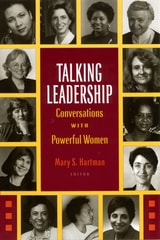
Talking Leadership
Conversations with Powerful WomenHartman, Mary
Rutgers University Press, 1999
Talking Leadership presents a though-provoking look at differences and commonalities in the lives and leadership approaches of some of today's outstanding women in areas ranging from philanthropy to politics, and from business to academia. Regardless of their backgrounds and areas of expertise, these women are committed to social change--change that includes improving women's lives and options.
Well beyond personal details and entertaining anecdotes, these conversations capture a variety of fascinating experiences and insights reflecting what it is like to be a woman and a major leader in America at the close of the twentieth century. Many of these women hold positions in which womanhood sets them apart--not infrequently in uncomfortable ways. Talking Leadership gives testimony not only to how far women have come, but also how far they still have to go to claim their places as leaders.
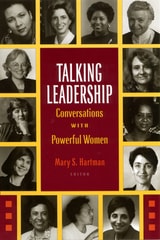
Talking Leadership
Conversations with Powerful WomenHartman, Mary
Rutgers University Press, 1999
Whether we love it, hate it, or use it just to pass the time, most adults in the United States are watching more television than ever, up to four hours a day by some estimates. Our devotion to commercial television gives it unprecedented power in our lives.
Advertisers and television executives want us to spend as much time as we can in front of our sets, for it is access to our brains that they buy and sell. Yet the most important effect of television may be one that no one intends-accelerated destruction of the natural environment.
Consuming Environments explores how, with its portrayal of a world of simulated abundance, television has nurtured a culture of consumerism and overconsumption. The average person in the US consumers more than twice the grain and ten times the oil of a citizen of Brazil or Indonesia. And people in less industrialized countries suffer while their resources while their resources are commandeered to support comfortable lifestyles in richer nations.
Using detailed examples illustrated with images from actual commercials, news broadcasts, and television shows, and authors demonstrate how ads and programs are put together in complex way s to manipulate viewers, and they offer specific ways to counteract the effects of TV and overconsumption's assault on the environment.
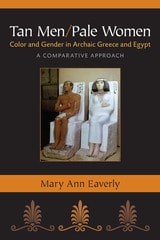
Tan Men/Pale Women
Color and Gender in Archaic Greece and Egypt, a Comparative ApproachMary Ann Eaverly
University of Michigan Press, 2013
One of the most obvious stylistic features of Athenian black-figure vase painting is the use of color to differentiate women from men. By comparing ancient art in Egypt and Greece, Tan Men/Pale Women uncovers the complex history behind the use of color to distinguish between genders, without focusing on race. Author Mary Ann Eaverly considers the significance of this overlooked aspect of ancient art as an indicator of underlying societal ideals about the role and status of women. Such a commonplace method of gender differentiation proved to be a complex and multivalent method for expressing ideas about the relationship between men and women, a method flexible enough to encompass differing worldviews of Pharaonic Egypt and Archaic Greece. Does the standard indoor/outdoor explanation—women are light because they stay indoors—hold true everywhere, or even, in fact, in Greece? How “natural” is color-based gender differentiation, and, more critically, what relationship does color-based gender differentiation have to views about women and the construction of gender identity in the ancient societies that use it?
The depiction of dark men and light women can, as in Egypt, symbolize reconcilable opposites and, as in Greece, seemingly irreconcilable opposites where women are regarded as a distinct species from men. Eaverly challenges traditional ideas about color and gender in ancient Greek painting, reveals an important strategy used by Egyptian artists to support pharaonic ideology and the role of women as complementary opposites to men, and demonstrates that rather than representing an actual difference, skin color marks a society’s ideological view of the varied roles of male and female.
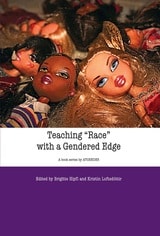
Teaching "Race" with a Gendered Edge
Brigitte Hipfl
Central European University Press, 2012
Teaching Gender with Libraries and Archives
Sara De Jong
Central European University Press, 2014
Teaching against Violence
The Reassessing ToolboxInez Testoni
Central European University Press, 2014
Teaching with Tenderness
Toward an Embodied PracticeBecky Thompson
University of Illinois Press, 2017
Teaching with Tenderness follows in the tradition of bell hooks's Teaching to Transgress and Paulo Freire's Pedagogy of the Oppressed, inviting us to draw upon contemplative practices (yoga, meditation, free writing, mindfulness, ritual) to keep our hearts open as we reckon with multiple injustices. Teaching with tenderness makes room for emotion, offers a witness for experiences people have buried, welcomes silence, breath and movement, and sees justice as key to our survival. It allows us to rethink our relationship to grading, office hours, desks, and faculty meetings, sees paradox as a constant companion, moves us beyond binaries; and praises self and community care.
Tenderness examines contemporary challenges to teaching about race, gender, class, nationality, sexuality, religion, and other hierarchies. It examines the ethical, emotional, political, and spiritual challenges of teaching power-laden, charged issues and the consequences of shifting power relations in the classroom and in the community. Attention to current contributions in the areas of contemplative practices, trauma theory, multiracial feminist pedagogy, and activism enable us to envision steps toward a pedagogy of liberation. The book encourages active engagement and makes room for self-reflective learning, teaching, and scholarship.

Teamsters Metropolis
Ryan Patrick Murphy
University of Michigan Press, 2025
Teamsters Metropolis argues that the union achieved unprecedented organizing success in the immediate postwar period precisely because its members defied bourgeois cultural standards. They wore overly flamboyant clothes, instigated jarringly violent confrontations, used aliases, extorted money, flouted the law, and often blended friendship, sex, and love in a way that challenged the boundaries of heteronormativity. Perhaps no one exemplified this freedom more than Jimmy Hoffa, who delivered better pay and worker conditions to marginal workers while also using coercive tactics, embezzling money, and colluding with the Mafia. Rather than impeding the union’s growth, unruly organizing, illicit business techniques, and dissident cultural practices appealed to prospective members and offered an opportunity to circumvent some of the suburban regulations, helping the International Brotherhood of Teamsters become the largest U.S. union of the mid-twentieth century.

Techniques of Pleasure
BDSM and the Circuits of SexualityMargot Weiss
Duke University Press, 2012
Templates for Authorship
American Women's Literary Autobiography of the 1930sWindy Counsell Petrie
University of Massachusetts Press, 2021
Windy Counsell Petrie considers twelve autobiographies from a diverse group of writers, ranging from highbrow modernists such as Gertrude Stein and Harriet Monroe to popular fiction writers like Edith Wharton and Edna Ferber, and lesser known figures such as Grace King and Carolyn Wells. Since there were few existing examples of women's literary autobiography, these writers found themselves marketed and interpreted within four cultural templates: the artist, the activist, the professional, and the celebrity. As they wrote their life stories, the women adapted these templates to counter unwanted interpretations and resist the sentimental feminine traditions of previous generations with innovative strategies of deferral, elision, comedy, and collaboration. This accessible study contends that writing autobiography offered each of these writers an opportunity to define and defend her own literary legacy.

Temporarily Yours
Intimacy, Authenticity, and the Commerce of SexElizabeth Bernstein
University of Chicago Press, 2007
Drawing upon dynamic and innovative research with sex workers, their clients, and state actors, Bernstein argues that in cities such as San Francisco, Stockholm, and Amstersdam, the nature of what is purchased in commercial sexual encounters is also new. Rather than the expedient exchange of cash for sexual relations, what sex workers are increasingly paid to offer their clients is an erotic experience premised upon the performance of authentic interpersonal connection. As such, contemporary sex markets are emblematic of a cultural moment in which the boundaries between intimacy and commerce—and between public life and private—have been radically redrawn. Not simply a compelling exploration of the changing landscape of sex-work, Temporarily Yours ultimately lays bare the intimate intersections of political economy, desire, and culture.

Terrorizing Latina/o Immigrants
Race, Gender, and Immigration Policy Post-9/11Anna Sampaio
Temple University Press, 2015
Immigration politics has been significantly altered by the advent of America’s war on terror and the proliferation of security measures. In her cogent study, Terrorizing Latina/o Immigrants, Anna Sampaio examines how these processes are racialized and gendered and how they impose inequitable burdens on Latina/o immigrants. She interrogates the rise of securitization, restrictive legislation, and the return of large-scale immigration raids and describes how these re-articulate and re-inscribe forms of racial and gender hierarchy.
Terrorizing Latina/o Immigrants demonstrates how the ascendance of America as a security state serves as a template to scrutinize, harass, and encumber immigrants while also reconfiguring citizenship. Sampaio uses intersectional analysis coupled with theoretical and empirical approaches to develop a critical framework for analyzing current immigration politics.
Sampaio provides a sustained and systematic examination of policy and enforcement shifts impacting Latinas/os. Her book concludes with an examination of immigration reform under the Obama administration, contrasting the promise of hope and change with the reality of increased detentions, deportations, and continued marginalization.
Testimonios of Care
Feminist Latina/x and Chicana/x Perspectives on Caregiving PraxisEdited by Natalia Deeb-Sossa, Yvette G. Flores, Angie Chabram
University of Arizona Press, 2024
The book opens with an introductory chapter by the three co-editors, and then is divided into three sections exploring the caregiver voice, community caregiving, and reflections that outline a Caregiver Bill of Rights and present a call to action. Throughout, contributors discuss kinship care, including formal and informal adoptions, community care, caregiving in professional health contexts, and the implicit caregiving inherent in teaching BIPOC students, which largely falls upon faculty of color.
Testimonios of Care gives voice to those who often are voiceless in histories of caregiving and is guided by Chicana and Latina feminist principles, which include solidarity between women of color, empathy, willingness to challenge the patriarchal medical health-care systems, questioning traditional gender roles and idealization of familia, and caring for self while caring for loved ones and community.
Contributors
yvonne hurtado allen
Angie Chabram
Natalia Deeb-Sossa
Yvette G. Flores
Inés Hernández-Ávila
ire’ne lara silva
Josie Méndez-Negrete
Maria R. Palacios
Hector Rivera-Lopez
Maria Angelina Soldatenko
Anita Tijerina Revilla
Mónica Torreiro-Casal
Enriqueta Valdez-Curiel

Testing for Athlete Citizenship
Regulating Doping and Sex in SportHenne, Kathryn E
Rutgers University Press, 2015
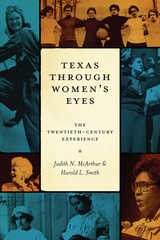
Texas Through Women's Eyes
The Twentieth-Century ExperienceBy Judith N. McArthur and Harold L. Smith
University of Texas Press, 2010
Winner, Liz Carpenter Award For Research in the History of Women, Texas State Historical Association, 2010
Texas women broke barriers throughout the twentieth century, winning the right to vote, expanding their access to higher education, entering new professions, participating fully in civic and political life, and planning their families. Yet these major achievements have hardly been recognized in histories of twentieth-century Texas. By contrast, Texas Through Women's Eyes offers a fascinating overview of women's experiences and achievements in the twentieth century, with an inclusive focus on rural women, working-class women, and women of color.
McArthur and Smith trace the history of Texas women through four eras. They discuss how women entered the public sphere to work for social reforms and the right to vote during the Progressive era (1900–1920); how they continued working for reform and social justice and for greater opportunities in education and the workforce during the Great Depression and World War II (1920–1945); how African American and Mexican American women fought for labor and civil rights while Anglo women laid the foundation for two-party politics during the postwar years (1945–1965); and how second-wave feminists (1965–2000) promoted diverse and sometimes competing goals, including passage of the Equal Rights Amendment, reproductive freedom, gender equity in sports, and the rise of the New Right and the Republican party.
Thai Women in the Global Labor Force
Consuming Desires, Contested SelvesMills, Mary Beth
Rutgers University Press, 1999
Mills describes the environments from which these women left, as well as the urban landscape they now call home. Hence, she examines key aspects of rural Thai community life, such as local consumption practices, gender roles, and the familial tensions that are often the catalyst to labor migration. Then she focuses on the city and the underlying tensions of urban employment as migrants pursue newly imagined identities as modern women, while still upholding economic and moral responsibilities to rural kin.
The Age of Sex
Custom, Law, and Ritual in Twentieth-Century East AfricaCorrie Decker
University of Wisconsin Press, 2025
In The Age of Sex, Decker demonstrates how maturation became defined as the hypothetical moment when a girl becomes a woman capable of engaging in heterosexual activity and a boy becomes a man imbued with the right and responsibility to have heterosexual intercourse. Colonial ethnographic studies reduced complex precolonial rites of passage to “puberty rites” fixated on these sexual transformations. The resulting stereotypes influenced, in turn, how colonial and postcolonial court officials decided age-of-consent and other sex crime cases. Court rituals thus legally transformed girls into women by ruling on their sexual maturity and boys into men by sentencing them to corporal punishment, marking their acceptance of heterosexual responsibilities.

The American Woman's Home
Beecher, Catharine E
Rutgers University Press, 2002
The American Womans Home, originally published in 1869, was one of the late nineteenth centurys most important handbooks of domestic advice. The result of a collaboration by two of the eras most important writers, this book represents their attempt to direct womens acquisition and use of a dizzying variety of new household consumer goods available in the postCivil War economic boom. It updates Catharine Beechers influential Treatise on Domestic Economy (1841) and incorporates domestic writings by Harriet Beecher Stowe first published in The Atlantic in the 1860s.
Today, the book can be likened to an anthology of household hints, with articles on cooking, decorating, housekeeping, child-rearing, hygiene, gardening, etiquette, and home amusements. The American Womans Home, almost a bible on domestic topics for Victorian women, illuminates womens roles a century and a half ago and can be used for comparison with modern theories on the role of women in the home and in society. Illustrated with the original engravings, this completely new edition offers a lively introduction by Nicole Tonkovich and notes linking the text to important historical, social, and cultural events of the late nineteenth century
The Archival Turn in Feminism
Outrage in OrderKate Eichhorn
Temple University Press, 2014
A volume in the American Literatures Initiative

The Banality of Good
The UN's Global Fight against Human TraffickingLieba Faier
Duke University Press, 2024

The Battle over Marriage
Gay Rights Activism through the MediaLeigh Moscowitz
University of Illinois Press, 2013

The Bear and His Sons
Masculinity in Spanish and Mexican FolktalesBy James M. Taggart
University of Texas Press, 1997
All the world over, people tell stories to express their deepest feelings about such things as what makes a "real" man or woman; what true love, courage, or any other virtue is; what the proper relationships are between people. Often groups of people widely separated by space or time will tell the same basic story, but with differences in the details that reveal much about a particular group's worldview.
This book looks at differences in the telling of several common Hispanic folktales. James Taggart contrasts how two men—a Spaniard and an Aztec-speaking Mexican—tell such tales as "The Bear's Son." He explores how their stories present different ways of being a man in their respective cultures.
Taggart's analysis contributes to a revision of Freud's theory of gender, which was heavily grounded in biological determinism. Taggart focuses instead on how fathers reproduce different forms of masculinity in their sons. In particular, he shows how fathers who care for their infant sons teach them a relational masculinity based on a connected view of human relationships. Thus, The Bear and His Sons will be important reading not only in anthropology and folklore, but also in the growing field of men's studies.

The Black Body in Ecstasy
Reading Race, Reading PornographyJennifer C. Nash
Duke University Press, 2014
The Black Shoals
Offshore Formations of Black and Native StudiesTiffany Lethabo King
Duke University Press, 2019
The Bodies of Others
Drag Dances and Their AfterlivesSelby Wynn Schwartz
University of Michigan Press, 2019

The Bohemian Body
Gender and Sexuality in Modern Czech CultureAlfred Thomas
University of Wisconsin Press, 2007
By re-examining the work of key Czech male and female writers and poets from the National Revival to the Velvet Revolution, Alfred Thomas exposes the tendency of Czech literary criticism to separate the political and the personal in modern Czech culture. He points instead to the complex interplay of the political and the personal across ethnic, cultural, and intellectual lines and within the works of such individual writers as Karel Hynek Mácha, Bozena Nemcová, and Rainer Maria Rilke, resulting in the emergence and evolution of a protean modern identity. The product is a seemingly paradoxical yet nuanced understanding of Czech culture (including literature, opera, and film), long overlooked or misunderstood by Western scholars.

The Book of Minor Perverts
Sexology, Etiology, and the Emergences of SexualityBenjamin Kahan
University of Chicago Press, 2019
Statue-fondlers, wanderlusters, sex magicians, and nymphomaniacs: the story of these forgotten sexualities—what Michel Foucault deemed “minor perverts”—has never before been told. In The Book of Minor Perverts, Benjamin Kahan sets out to chart the proliferation of sexual classification that arose with the advent of nineteenth-century sexology. The book narrates the shift from Foucault’s “thousand aberrant sexualities” to one: homosexuality. The focus here is less on the effects of queer identity and more on the lines of causation behind a surprising array of minor perverts who refuse to fit neatly into our familiar sexual frameworks. The result stands at the intersection of history, queer studies, and the medical humanities to offer us a new way of feeling our way into the past.

The British Blues Network
Adoption, Emulation, and CreativityAndrew Kellett
University of Michigan Press, 2017
The Bullet Meant for Me
By Jan Reid
University of Texas Press, 2005
Jan Reid's powerful, moving account of what being shot during a robbery in Mexico City and the painful road to recovery taught him about manhood, friendship, and marriage.
On April 20, 1998, Jan Reid was shot during a robbery in Mexico City, where he had gone to watch his friend, the boxer Jesus Chavez, fight. In The Bullet Meant for Me, Reid powerfully recounts his ordeal, the long chain of life events that brought him to that fateful attack, and his struggle to regain the ability to walk and to be a full partner in a deeply satisfying marriage. Re-examining the whole trajectory of his life, Reid questions how much the Texan ideal of manhood shaped his identity, including his love for boxing and participation in the sport. He meditates on male friendship as he tells the story of his close relationship with Chavez, whose career and personal travails Reid details with empathy and insight. And he describes his long months in physical therapy, during which he drew on the unwavering love of his wife and daughter, as well as the courage and strength he had learned from boxing, to heal his body and spirit. A moving, intimate portrait of a man, a friendship, and a marriage, The Bullet Meant for Me is Jan Reid's most personal book.

The Cassowary's Revenge
The Life and Death of Masculinity in a New Guinea SocietyDonald Tuzin
University of Chicago Press, 1997
The Cassowary's Revenge is an intimate account of how Ilahita’s men and women think, emote, dream, and explain themselves. Tuzin also explores how the death of masculinity in a remote society raises disturbing implications for gender relations in our own society. In this light Tuzin's book is about men and women in search of how to value one another, and in today's world there is no theme more universal or timely.
The Changing Face of Representation
The Gender of U.S. Senators and Constituent CommunicationsKim L. Fridkin and Patrick J. Kenney
University of Michigan Press, 2015
As the number of women in the U.S. Senate grows, so does the number of citizens represented by women senators. At the same time, gender remains a key factor in senators’ communications to constituents as well as in news media portrayals of senators. Focusing on 32 male and female senators during the 2006 congressional election year, Kim L. Fridkin and Patrick J. Kenney examine in detail senators’ official websites, several thousand press releases and local news stories, and surveys of 18,000 citizens to discern constituents’ attitudes about their senators.
The authors conclude that gender role expectations and stereotypes do indeed constrain representational and campaign messages and influence news coverage of both candidates and elected senators. Further, while citizens appear to be less influenced by entrenched stereotypes, they pay more attention to female senators’ messages and become more knowledgeable about them, in comparison to male senators.

The Child Now
Julian Gill-Peterson, Rebekah Sheldon, and Kathryn Bond Stockton, special issue editors
Duke University Press, 2016
Futurity, innocence, and childish subversion—as concepts, as frameworks—have yet to catch up to where the child has moved in the present century. The contributors to this issue explore topics that are both vital and challenging for current queer studies, including paradoxical exportations of the U.S. "innocent" child abroad, the queer child under same-sex marriage law, child revolutionaries' actions in Egypt, and the colonial afterlife of the boarding school for indigenous children. Following the twists and turns of children now, contributors confront how race, gender, and sexuality are made to live and grow in children’s bodies.
Contributors
Paul Amar, Julian Gill-Peterson, Clifford J. Rosky, Rebekah Sheldon, Kathryn Bond Stockton, Mary Zaborskis

The Claremont Run
Subverting Gender in the X-MenJ. Andrew Deman; Foreword by Jay Edidin
University of Texas Press, 2023
Winner — 2024 Will Eisner Comic Industry Awards in Best Academic/Scholarly Work, announced at San Diego Comic-Con International (2024)
A data-driven deep dive into a legendary comics author’s subversion of gender norms within the bestselling comic of its time.
By the time Chris Claremont’s run as author of Uncanny X-Men ended in 1991, he had changed comic books forever. During his sixteen years writing the series, Claremont revitalized a franchise on the verge of collapse, shaping the X-Men who appear in today’s Hollywood blockbusters. But, more than that, he told a new kind of story, using his growing platform to articulate transgressive ideas about gender nonconformity, toxic masculinity, and female empowerment.
J. Andrew Deman’s investigation pairs close reading and quantitative analysis to examine gender representation, content, characters, and story structure. The Claremont Run compares several hundred issues of Uncanny X-Men with a thousand other Marvel comics to provide a comprehensive account of Claremont’s sophisticated and progressive gender politics. Claremont’s X-Men upended gender norms: where female characters historically served as mere eye candy, Claremont’s had leading roles and complex, evolving personalities. Perhaps more surprisingly, his male superheroes defied and complicated standards of masculinity. Groundbreaking in their time, Claremont’s comics challenged readers to see the real world differently and transformed pop culture in the process.
The Clash of Moral Nations
Cultural Politics in Pilsudski’s Poland, 1926–1935Eva Plach
Ohio University Press, 2006
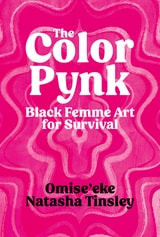
The Color Pynk
Black Femme Art for SurvivalOmise'eke Natasha Tinsley
University of Texas Press, 2022
2023 John Leo & Dana Heller Award for Best Single Work, Anthology, Multi-Authored, or Edited Book in LGBTQ Studies, Popular and American Culture Association (PACA) / Popular Culture Association (PCA)
2023 Honorable Mention, Harry Shaw and Katrina Hazzard-Donald Award for Outstanding Work in African-American Popular Culture Studies, Popular and American Culture Association (PACA) / Popular Culture Association (PCA)
2024 MPCA/ACA Best Single Work by One or More Authors, Midwest Popular Culture Association / Midwest American Culture Association (MPCA/ACA)
A celebration of the distinctive and politically defiant art of Black queer, cis-, and transfemmes, from the work of Janelle Monáe and Janet Mock to that of Indya Moore and Kelsey Lu.
The Color Pynk is a passionate exploration of Black femme poetics of survival. Sidelined by liberal feminists and invisible to mainstream civil rights movements, Black femmes spent the Trump years doing what they so often do best: creating politically engaged art, entertainment, and ideas. In the first full-length study of Black queer, cis-, and trans-femininity, Omise’eke Natasha Tinsley argues that this creative work offers a distinctive challenge to power structures that limit how we color, gender, and explore freedom.
Tinsley engages 2017–2020 Black femme cultural production that colorfully and provocatively imagines freedom in the stark white face of its impossibility. Looking to the music of Janelle Monáe and Kelsey Lu, Janet Mock’s writing for the television show Pose, the fashion of Indya Moore and (F)empower, and the films of Tourmaline and Juliana Huxtable, as well as poetry and novels, The Color Pynk conceptualizes Black femme as a set of consciously, continually rescripted cultural and aesthetic practices that disrupts conventional meanings of race, gender, and sexuality. There is an exuberant defiance in queer Black femininity, Tinsley finds—so that Black femmes continue to love themselves wildly in a world that resists their joy.
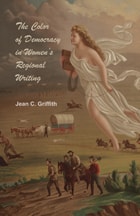
The Color of Democracy in Women's Regional Writing
Jean Carol Griffith
University of Alabama Press, 2009
Exploring how women writers used regional fiction to reimagine democracy, identity, and belonging in America.
American regionalism has become a contested subject in literary studies alongside the ubiquitous triad of race, class, and gender. The Color of Democracy in Women's Regional Writing enters into the heart of an ongoing debate in the field about the significance of regional fiction at the end of the 19th century. Jean Griffith presents the innovative view that regional writing provided Edith Wharton, Ellen Glasgow, and Willa Cather with the means to explore social transformation in a form of fiction already closely associated with women readers and writers.
Griffith provides new readings of texts by these authors; she places them alongside the works of their contemporaries, including William Faulkner and Langston Hughes, to show regionalism's responses to the debate over who was capable of democratic participation and reading regionalism's changing mediations between natives and strangers as reflections of the changing face of democracy.
This insightful work enriches the current debate about whether regionalism critiques hierarchies or participates in nationalist and racist agendas and will be of great interest to those invested in regional writing or the works of these significant authors.
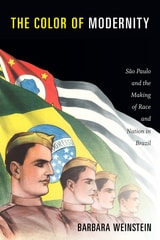
The Color of Modernity
São Paulo and the Making of Race and Nation in BrazilBarbara Weinstein
Duke University Press, 2015

The Comfort Women of Singapore in History and Memory
Kevin Blackburn
National University of Singapore Press, 2022
A balanced, sensitive study of the history of comfort women in Singapore during World War II.
“Comfort women” or ianfu is the euphemism used by the Japanese military for the women they compelled to do sex work in the Second World War, and has become the term generally used in English to discuss the subject. The role of comfort women in the Japanese empire during World War II remains an important and emotional topic around the world. Most scholarship concentrates on Korean comfort women, with less on their counterparts in Japan, China, and Taiwan, and even less on Southeast Asia. That gap persists despite widespread knowledge of the elaborate series of comfort stations, or comfort houses, that were organized by the Japanese administration across Singapore during the Occupation from 1942 to 1945. So why, the author asks, did no former comfort women from Singapore come forward and tell their stories when others across Asia began to do publicly in the 1990s?
To understand this silence, this book offers a detailed examination of the sex industry serving the Japanese military during the wartime occupation of Singapore: the comfort stations, managers, procuresses, girls, and women who either volunteered or were forced into service and in many cases sexual slavery. Kevin Blackburn then turns from history to the public presence of the comfort women in Singapore’s memory, including newspapers, novels, plays, television, and touristic heritage sites, showing how comfort women became known in Singapore during the 1990s and 2000s. Bringing great care, balance, and sensitivity to a difficult subject, Blackburn helps to fill an important gap in our understanding of this period.

The Computer's Voice
From Star Trek to SiriLiz W. Faber
University of Minnesota Press, 2020
A deconstruction of gender through the voices of Siri, HAL 9000, and other computers that talk
Although computer-based personal assistants like Siri are increasingly ubiquitous, few users stop to ask what it means that some assistants are gendered female, others male. Why is Star Trek’s computer coded as female, while HAL 9000 in 2001: A Space Odyssey is heard as male? By examining how gender is built into these devices, author Liz W. Faber explores contentious questions around gender: its fundamental constructedness, the rigidity of the gender binary, and culturally situated attitudes on male and female embodiment.
Faber begins by considering talking spaceships like those in Star Trek, the film Dark Star, and the TV series Quark, revealing the ideologies that underlie space-age progress. She then moves on to an intrepid decade-by-decade investigation of computer voices, tracing the evolution from the masculine voices of the ’70s and ’80s to the feminine ones of the ’90s and ’00s. Faber ends her account in the present, with incisive looks at the film Her and Siri herself.
Going beyond current scholarship on robots and AI to focus on voice-interactive computers, The Computer’s Voice breaks new ground in questions surrounding media, technology, and gender. It makes important contributions to conversations around the gender gap and the increasing acceptance of transgender people.
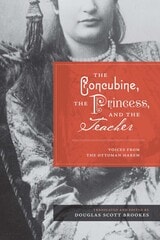
The Concubine, the Princess, and the Teacher
Voices from the Ottoman HaremTranslated and edited by Douglas Scott Brookes
University of Texas Press, 2008
In the Western imagination, the Middle Eastern harem was a place of sex, debauchery, slavery, miscegenation, power, riches, and sheer abandon. But for the women and children who actually inhabited this realm of the imperial palace, the reality was vastly different. In this collection of translated memoirs, three women who lived in the Ottoman imperial harem in Istanbul between 1876 and 1924 offer a fascinating glimpse "behind the veil" into the lives of Muslim palace women of the late nineteenth and early twentieth centuries.
The memoirists are Filizten, concubine to Sultan Murad V; Princess Ayse, daughter of Sultan Abdulhamid II; and Safiye, a schoolteacher who instructed the grandchildren and harem ladies of Sultan Mehmed V. Their recollections of the Ottoman harem reveal the rigid protocol and hierarchy that governed the lives of the imperial family and concubines, as well as the hundreds of slave women and black eunuchs in service to them. The memoirists show that, far from being a place of debauchery, the harem was a family home in which polite and refined behavior prevailed. Douglas Brookes explains the social structure of the nineteenth-century Ottoman palace harem in his introduction.
These three memoirs, written across a half century and by women of differing social classes, offer a fuller and richer portrait of the Ottoman imperial harem than has ever before been available in English.
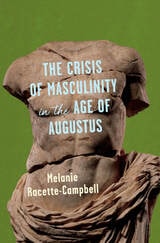
The Crisis of Masculinity in the Age of Augustus
Melanie Racette-Campbell
University of Wisconsin Press, 2023
Careful reading of contemporary texts reveals a decades-long process as tumultuous and unsteady as the political events they echoed, one in which multiple and competing strategies for reconceiving the nature of masculinity were tested, employed, discarded, and adopted in a complex public-private discourse. The eventual reconstitution of a definition of Roman manhood was not easily agreed upon. Masculinity in both the Republic and the Empire are well-studied subjects, but by shining a light on the precise moment of transition Racette-Campbell unveils the complexity, contours, and nuances of the Augustan crisis of masculinity.

The Critical Surf Studies Reader
Dexter Zavalza Hough-Snee and Alexander Sotelo Eastman, editors
Duke University Press, 2017
Contributors. Douglas Booth, Peter Brosius, Robin Canniford, Krista Comer, Kevin Dawson, Clifton Evers, Chris Gibson, Dina Gilio-Whitaker, Dexter Zavalza Hough-Snee, Scott Laderman, Kristin Lawler, lisahunter, Colleen McGloin, Patrick Moser, Tara Ruttenberg, Cori Schumacher, Alexander Sotelo Eastman, Glen Thompson, Isaiah Helekunihi Walker, Andrew Warren, Belinda Wheaton
The Cultural Impact of RuPaul's Drag Race
Why Are We All Gagging?Edited by Cameron Crookston
Intellect Books, 2022
This edited volume is an exploration of the social, cultural, political, and commercial implications of the trailblazing reality television series RuPaul’s Drag Race. Going beyond mere analysis of the show itself, the contributors interrogate the ways RuPaul’s Drag Race has affected queer representation in media, examining its audience, economics, branding, queer politics, and every point in between.
Since its groundbreaking and subversive entry into the reality television complex in 2009, the show has had profound effects on drag and the cultures that surround it. Bringing together scholarship across disciplines—including cultural anthropology, media studies, linguistics, sociology, marketing, and theater and performance studies—the collection offers rich academic analysis of Ru Paul’s Drag Race and its lasting influence on fan cultures, queer representation, and the very fabric of drag as an art form in popular cultural consciousness.
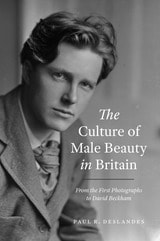
The Culture of Male Beauty in Britain
From the First Photographs to David BeckhamPaul R. Deslandes
University of Chicago Press, 2021
Spanning the decades from the rise of photography to the age of the selfie, this book traces the complex visual and consumer cultures that shaped masculine beauty in Britain, examining the realms of advertising, health, pornography, psychology, sport, and celebrity culture. Paul R. Deslandes chronicles the shifting standards of male beauty in British culture—from the rising cult of the athlete to changing views on hairlessness—while connecting discussions of youth, fitness, and beauty to growing concerns about race, empire, and degeneracy. From earlier beauty show contestants and youth-obsessed artists, the book moves through the decades into considerations of disfigured soldiers, physique models, body-conscious gay men, and celebrities such as David Beckham and David Gandy who populate the worlds of television and social media.
Deslandes calls on historians to take beauty and gendered aesthetics seriously while recasting how we think about the place of physical appearance in historical study, the intersection of different forms of high and popular culture, and what has been at stake for men in “looking good.”

The Culture of Sensibility
Sex and Society in Eighteenth-Century BritainG. J. Barker-Benfield
University of Chicago Press, 1992