Results by title
69 books match the query 'Genocide' and 20 start with t
Testimony
Death of a Guatemalan VillageVictor Montejo
Northwestern University Press, 1987
The Anatomy of a South African Genocide
The Extermination of the Cape San PeoplesMohamed Adhikari
Ohio University Press, 2011
The Architect of Genocide
Himmler and the Final SolutionRichard Breitman
Brandeis University Press, 1992
The Banyamulenge Soldier
Genocide between Congo and RwandaChristopher P. Davey
University of Michigan Press, 2025
Challenging the preconceived perpetrator and victim categories with a forward-thinking approach using the concept of genocide narrative identity—meaning a narrative identity shaped by experiences of social destruction or uses of genocide as a concept—Christopher P. Davey reveals how the stories we tell about ourselves shapes who we are. He shows that Banyamulenge experiences of genocide between Congo and Rwanda are layered around agencies of victimhood and perpetration of genocide. Using soldier and other community narratives, Davey examines the subjective nature of genocide in perception of an event, strategic deployment of the label, and in the (re)shaping of social worlds inhabited by this community and therefore impacting others in Congo and Rwanda. The Banyamulenge Soldier offers an insider view of the historical dynamics of current conflicts in South Kivu while adding to our understanding of relational genocide theory.
The Border of Lights Reader
Bearing Witness to Genocide in the Dominican RepublicMegan Jeanette Myers
Amherst College Press, 2021
"By bringing together in one volume poetry, visual arts, literary analysis, in-depth interviews and historical analysis this volume will provide its readers with a comprehensive view of the causes and the aftermath of the massacre." —Ramón Antonio Victoriano-Martínez, University of British Columbia
Contributions by Julia Alvarez, Amanda Alcántara, DeAndra Beard, Nancy Betances, Jésula Blanc, Matías Bosch Carcuro, Cynthia Carrión, Raj Chetty, Catherine DeLaura, Magaly Colimon, Juan Colón, Robin Maria DeLugan, Lauren Derby, Rosa Iris Diendomi Álvarez, Polibio Díaz, Rana Dotson, Rita Dove, Rhina P. Espaillat, Maria Cristina Fumagalli, Saudi García, Scherezade García, Juan Carlos González Díaz, Kiran C. Jayaram, Pierre Michel Jean, Nehanda Loiseau Julot, Jake Kheel, Carlos Alomia Kollegger, Jackson Lorrain “Jhonny Rivas”, Radio Marién, Padre Regino Martínez Bretón, Sophie Maríñez, April J. Mayes, Jasminne Mendez, Komedi Mikal PGNE, Osiris Mosquea, Megan Jeanette Myers, Rebecca Osborne, Ana Ozuna, Edward Paulino, John Presimé, Laura Ramos, Amaury Rodríguez, Doña Carmen Rodríguez de Paulino, The DREAM Project, Silvio Torres-Saillant, Ilses Toribio, Deisy Toussaint, Évelyne Trouillot, Richard Turits, William Vazquez, Chiqui Vicioso, Bridget Wooding, and Óscar Zazo.
The Circassian Genocide
Richmond, Walter
Rutgers University Press, 2013
Using rare archival materials, Walter Richmond chronicles the history of the war, describes in detail the final genocidal campaign, and follows the Circassians in diaspora through five generations as they struggle to survive and return home. He places the periods of acute genocide, 1821–1822 and 1863–1864, in the larger context of centuries of tension between the two nations and updates the story to the present day as the Circassian community works to gain international recognition of the genocide as the region prepares for the 2014 Winter Olympics in Sochi, the site of the Russians’ final victory.
The Complexity of Evil
Perpetration and GenocideTimothy Williams
Rutgers University Press, 2021
Download the open access ebook here.

The Holocaust and Other Genocides
History, Representation, EthicsHelmut Walser Smith
Vanderbilt University Press, 2002
The book consists of five parts: introduction; history of the Holocaust; representations of the Holocaust in literature, film, and the arts; other genocides; and ethics. The curriculum, shaped with feedback from those who teach Holocaust studies, consists mainly of primary documents and their analysis. Each section includes a general introduction to a body of knowledge that reflects current research and detailed introductions to particular documents. Throughout the book, there are provocative discussion questions and suggestions for further reading and other resources. Each section features "links" to other parts to encourage interdisciplinary reflection. The final section on ethics addresses the difficult questions raised by genocide.
The Holocaust and Other Genocides is designed as a model for flexible, innovative teaching about this complex subject. It is also a sophisticated, interdisciplinary effort to create the conditions for discussing and understanding the genocides of the twentieth century.
The Holocaust of Texts
Genocide, Literature, and PersonificationAmy Hungerford
University of Chicago Press, 2002
Hungerford examines the implications of conflating texts with people in a broad range of texts: Art Spiegelman's Maus; Ray Bradbury's Fahrenheit 451; the poetry of Sylvia Plath; Binjamin Wilkomirski's fake Holocaust memoir Fragments; and the fiction of Saul Bellow, Philip Roth, and Don DeLillo. She considers the ethical consequences of this trend in the work of recent and contemporary theorists and literary critics as well, including Cathy Caruth, Jacqueline Rose, Jacques Derrida, and Paul de Man. What she uncovers are fundamentally flawed ideas about representation that underwrite and thus undermine powerful and commonly accepted claims about literature and identity. According to Hungerford, the personification of texts is ethically corrosive and theoretically unsound. When we exalt the literary as personal and construe genocide as less a destruction of human life than of culture, we esteem memory over learning, short-circuit debates about cultural change, lend credence to the illusion or metaphysics of presence, and limit our conception of literature and its purpose.
Ultimately, The Holocaust of Texts asks us to think more deeply about the relationship between reading, experience, and memorialization. Why, for instance, is it more important to remember acts of genocide than simply to learn about them? If literary works are truly the bearers of ontology, then what must be our conduct toward them? Considering difficult questions such as these with fresh logic, Hungerford offers us an invigorating work, one that will not only interest scholars of American and postwar literature, but students of the Holocaust and critical theory as well.

The Media and the Rwanda Genocide
Edited by Allan Thompson
Pluto Press, 2007
This is the first book to explore both sides of the media equation. Examining how local radio was used as a tool of hate, encouraging neighbors to turn against each other, the book also presents a critique of international media coverage. Bringing together local reporters, high-profile Western journalists, and leading media theorists, this is the only book to identify the extent of the media's accountability. It also examines deliberations by the International Criminal Tribunal for Rwanda on the role of the media in the genocide. This book is a startling record of the negative influence that the media can have. The authors put forward suggestions for the future, outlining how we can avoid censorship and propaganda and they argue for a new responsibility in media reporting.
The Origins of Violence
Religion, History and GenocideJohn Docker
Pluto Press, 2008
Genocide is commonly understood to be a terrible aberration in human behaviour, performed by evil, murderous regimes such as the Nazis and dictators like Suharto and Pinochet. John Docker argues that the roots of genocide go far deeper into human nature than most people realise.
Genocide features widely in the Bible, the literature of ancient Greece and Rome, and debates about the Enlightenment. These texts are studied in depth to trace the origins of violence through time and across civilisations. Developing the groundbreaking work of Raphaël Lemkin, who invented the term 'genocide', Docker guides us from the dawn of agricultural society, through classical civilisation to the present, showing that violence between groups has been integral to all periods of history.
This revealing book will be of great interest to those wishing to understand the roots of genocide and why it persists in the modern age.
The Politics of Annihilation
A Genealogy of GenocideBenjamin Meiches
University of Minnesota Press, 2019
How did a powerful concept in international justice evolve into an inequitable response to mass suffering?
For a term coined just seventy-five years ago, genocide has become a remarkably potent idea. But has it transformed from a truly novel vision for international justice into a conservative, even inaccessible term? The Politics of Annihilation traces how the concept of genocide came to acquire such significance on the global political stage. In doing so, it reveals how the concept has been politically contested and refashioned over time. It explores how these shifts implicitly impact what forms of mass violence are considered genocide and what forms are not.
Benjamin Meiches argues that the limited conception of genocide, often rigidly understood as mass killing rooted in ethno-religious identity, has created legal and political institutions that do not adequately respond to the diversity of mass violence. In his insistence on the concept’s complexity, he does not undermine the need for clear condemnations of such violence. But neither does he allow genocide to become a static or timeless notion. Meiches argues that the discourse on genocide has implicitly excluded many forms of violence from popular attention including cases ranging from contemporary Botswana and the Democratic Republic of Congo, to the legacies of colonial politics in Haiti, Canada, and elsewhere, to the effects of climate change on small island nations.
By mapping the multiplicity of forces that entangle the concept in larger assemblages of power, The Politics of Annihilation gives us a new understanding of how the language of genocide impacts contemporary political life, especially as a means of protesting the social conditions that produce mass violence.
The Politics of Genocide
From the Genocide Convention to the Responsibility to ProtectJeffrey S. Bachman
Rutgers University Press, 2022
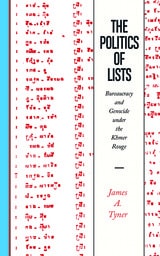
The Politics of Lists
Bureaucracy and Genocide under the Khmer RougeJames A. Tyner
West Virginia University Press, 2018
2019 Julian Minghi Distinguished Book Award winner
Scholars from a number of disciplines have, especially since the advent of the war on terror, developed critical perspectives on a cluster of related topics in contemporary life: militarization, surveillance, policing, biopolitics (the relation between state power and physical bodies), and the like. James A. Tyner, a geographer who has contributed to this literature with several highly regarded books, here turns to the bureaucratic roots of genocide, building on insight from Hannah Arendt, Zygmunt Bauman, and others to better understand the Khmer Rouge and its implications for the broader study of life, death, and power.
The Politics of Lists analyzes thousands of newly available Cambodian documents both as sources of information and as objects worthy of study in and of themselves. How, Tyner asks, is recordkeeping implicated in the creation of political authority? What is the relationship between violence and bureaucracy? How can documents, as an anonymous technology capable of conveying great force, be understood in relation to newer technologies like drones? What does data create and what does it destroy? Through a theoretically informed, empirically grounded study of the Khmer Rouge security apparatus, Tyner shows that lists and telegrams have often proved as deadly as bullet and bombs.
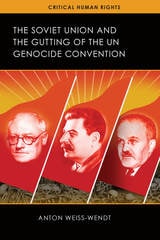
The Soviet Union and the Gutting of the UN Genocide Convention
Anton Weiss-Wendt
University of Wisconsin Press, 2017
Based on extensive archival research, Anton Weiss-Wendt reveals in detail how the political aims of the superpowers rendered the convention a weak instrument for addressing abuses against human rights. The Kremlin viewed the genocide treaty as a political document and feared repercussions. What the Soviets wanted most was to keep the subjugation of Eastern Europe and the vast system of forced labor camps out of the genocide discourse. The American Bar Association and Senate Committee on Foreign Relations, in turn, worried that the Convention contained vague formulations that could be used against the United States, especially in relation to the plight of African Americans. Sidelined in the heated discussions, Weiss-Wendt shows, were humanitarian concerns for preventing future genocides.
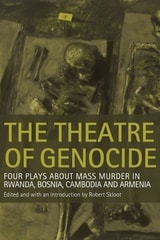
The Theatre of Genocide
Four Plays about Mass Murder in Rwanda, Bosnia, Cambodia, and ArmeniaEdited and with an introduction by Robert Skloot
University of Wisconsin Press, 2008
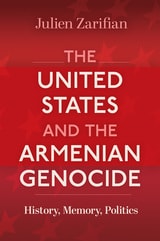
The United States and the Armenian Genocide
History, Memory, PoliticsJulien Zarifian
Rutgers University Press, 2024
This is the first book to examine how and why the United States refused to acknowledge the Armenian Genocide until the early 2020s. Although the American government expressed sympathy towards the plight of the Armenians in the 1910s and 1920s, historian Julien Zarifian explores how, from the 1960s, a set of geopolitical and institutional factors soon led the United States to adopt a policy of genocide non-recognition which it would cling to for over fifty years, through Republican and Democratic administrations alike. He describes the forces on each side of this issue: activists from the US Armenian diaspora and their allies, challenging Cold War statesmen worried about alienating NATO ally Turkey and dealing with a widespread American reluctance to directly confront the horrors of the past. Drawing from congressional records, rare newspapers, and interviews with lobbyists and decision-makers, he reveals how genocide recognition became such a complex, politically sensitive issue.
The United States and the Genocide Convention
Lawrence J. LeBlanc
Duke University Press, 1991
Adopted by the United Nations General Assembly in 1948 in response to the atrocities committed by the Nazis before and during World War II, the Genocide Convention was finally made law by the United States Senate in 1988 contingent upon a series of “conditions”—known as the “Lugar-Helms-Hatch Sovereignty Package”—which, LeBlanc suggests, markedly weakened the convention. Through careful analysis of the bitter debates over ratification, LeBlanc demonstrates that much of the opposition to the convention sprang from fears that it would be used domestically as a tool by groups such as blacks and Native Americans who might hold the U.S. accountable for genocide in matters of race relations.
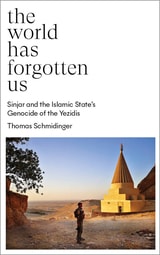
The World Has Forgotten Us
Sinjar and the Islamic State’s Genocide of the YezidisThomas Schmidinger
Pluto Press, 2022
The persecution of the Yezidis, a religious community originating in Upper Mesopotamia, has been ongoing since at least the 10th century. On 3 August 2014, Islamic State attacked the Yezidi community in Sinjar, Kurdistan. Thousands were enslaved or killed in this genocide, and 100,000 people fled to Mount Sinjar, permanently exiled from their homes.
Here, Thomas Schmidinger talks to the Yezidis in Iraq who tell the history of their people, why the genocide happened and how it affects their lives today. This is the first full account of these events, as told by the Yezidis in their own words, to be published in English.
The failure of the Kurdistan Peshmerga of the PDK in Iraq to protect the Yezidis is explored, as is the crucial support given by the Syrian-Kurdish YPG. This multi-faceted and important history brings the fight and trauma of the Yezidis back into focus, calling for the world to remember their struggle.
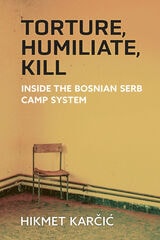
Torture, Humiliate, Kill
Inside the Bosnian Serb Camp SystemHikmet Karcic
University of Michigan Press, 2022
Half a century after the Holocaust, on European soil, Bosnian Serbs orchestrated a system of concentration camps where they subjected their Bosniak Muslim and Bosnian Croat neighbors to torture, abuse, and killing. Foreign journalists exposed the horrors of the camps in the summer of 1992, sparking worldwide outrage. This exposure, however, did not stop the mass atrocities. Hikmet Karčić shows that the use of camps and detention facilities has been a ubiquitous practice in countless wars and genocides in order to achieve the wartime objectives of perpetrators. Although camps have been used for different strategic purposes, their essential functions are always the same: to inflict torture and lasting trauma on the victims.
Torture, Humiliate, Kill develops the author’s collective traumatization theory, which contends that the concentration camps set up by the Bosnian Serb authorities had the primary purpose of inflicting collective trauma on the non-Serb population of Bosnia and Herzegovina. This collective traumatization consisted of excessive use of torture, sexual abuse, humiliation, and killing. The physical and psychological suffering imposed by these methods were seen as a quick and efficient means to establish the Serb “living space.” Karčić argues that this trauma was deliberately intended to deter non-Serbs from ever returning to their pre-war homes. The book centers on multiple examples of experiences at concentration camps in four towns operated by Bosnian Serbs during the war: Prijedor, Bijeljina, Višegrad, and Bileća. Chosen according to their political and geographical position, Karčić demonstrates that these camps were used as tools for the ethno-religious genocidal campaign against non-Serbs. Torture, Humiliate, Kill is a thorough and definitive resource for understanding the function and operation of camps during the Bosnian genocide.