Results by title
278 books match the query 'Guide' and 36 start with t

Temporary Power Systems
A guide to the application of BS 7671 and BS 7909 for temporary eventsJames Eade
The Institution of Engineering and Technology, 2014
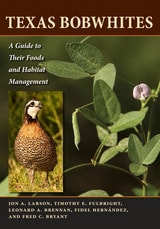
Texas Bobwhites
A Guide to Their Foods and Habitat ManagementBy Jon A. Larson, Timothy E. Fulbright, Leonard A. Brennan, Fidel Hernández, and Fred C. Bryant
University of Texas Press, 2010
Northern bobwhites are one of the most popular game birds in the United States. In Texas alone, nearly 100,000 hunters take to the field each fall and winter to pursue wild bobwhite quail. Texas is arguably the last remaining state with sufficient habitat to provide quail-hunting opportunities on a grand scale, and Texas ranchers with good bobwhite habitat often generate a greater proportion of their income from fees paid by quail hunters than from livestock production. Managing and expanding bobwhite habitat makes good sense economically, and it benefits the environment as well. The rangelands and woodlands of Texas that produce quail also support scores of other species of wildlife.
Texas Bobwhites is a field guide to the seeds commonly eaten by northern bobwhites, as well as a handbook for conserving and improving northern bobwhite habitat. It provides identifying characteristics for the seeds of 91 species of grasses, forbs, woody plants, and succulents. Each seed description includes a close-up and a scale photo of the seed and the plant that produces it, along with a range map. Using this information, hunters can readily identify concentrations of plants that are most likely to attract quail. Landowners and rangeland managers will greatly benefit from the book's state-of-the-art guidance for habitat management and restoration, including improving habitat dominated by invasive and nonnative grasses.
The Big Picture
A Guide to Finding Your Purpose in LifeChristine B. Whelan
Templeton Press, 2016
“If young adults could be guided in the right direction for a life journey of meaning and purpose, we would be grooming the leaders of tomorrow for a better world. This book is the perfect guide.” —Deepak Chopra, MD, FACP, founder of the Chopra Center for Wellbeing
What am I going to do for the rest of my life?
This question is familiar for young people at a turning point—whether it’s facing the end of high school, college, graduate school, or just a dead-end job. Maybe they have the degree they want but don’t know where to start their job search. Perhaps they’re still choosing a major and, given the range—from “Biochemistry” to “Adventure Education”—are lost in the options. Maybe they’re facing a mountain of debt but don’t want to get locked into a job they hate.
While other books might advise writing resumes or preparing for interviews, they only go so far. Young people want more than just another job—they want a life, and a meaningful one at that.
Enter The Big Picture. Created by the leading authority on self-help research and reviewed by over six hundred college students, Dr. Christine B. Whelan’s The Big Picture offers a guide to discovering one’s talents, dreams, and desires that can lead one to a fulfilling career but fulfilling life. It guides young people to take a step back and look at the “big picture” of who they are, what they want, and why they’re here.
Through quizzes and questionnaires which college students have vetted, Whelan guides the reader through “big picture” questions like,
- What are my talents—and how can I use those to help others and create meaning?
- How have my life experiences shaped who I am and what I can give?
- What do I value—and how can I be happy while being true to those values?
Although there are endless books on finding a job, this is the first book that presents research-based and tested material to help young people answer the question, What will I do with my life? The Big Picture provides the resources needed to find—and live—a purposeful life. An excellent gift for a graduate or a guide for yourself.
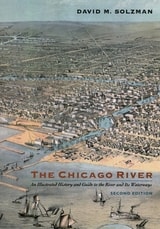
The Chicago River
An Illustrated History and Guide to the River and Its Waterways, Second EditionDavid M. Solzman
University of Chicago Press, 2006
The river is indeed the soul of the city—it runs through the heart of downtown, and it is a vehicle for both pleasure and the industry that keeps Chicago humming. With The Chicago River, Solzman has succeeded in writing an encyclopedic work—at once guidebook and history—that explores the river’s physical character and natural history. Examining the river’s past, contemplating its present, and forecasting its future, Solzman draws on his unparalleled knowledge to point out places of scientific and historic interest—involving everything from infamous murder cases to invasive zebra mussels. The book’s 200 photographs and maps perfectly complement Solzman’s vivid prose, leading readers on a visual journey as sinuous as the river it celebrates—a journey interspersed with plenty of river lore, facts, and literary quotations.
Solzman, a veteran Chicago River tour guide, has also compiled a diverse collection of easy and enjoyable tours for anyone who wants to experience the river by foot, boat, canoe, or car. And he provides an appendix that lists river-related organizations, museums, tours, and riverfront restaurants and clubs.
With practical tips, evocative language, and an astonishing array of anecdotes, TheChicago River is the most comprehensive guide to the river and its waterways, the perfect companion for everyone from the active river enthusiast to the armchair traveler.
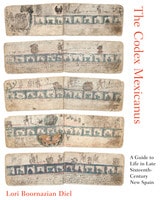
The Codex Mexicanus
A Guide to Life in Late Sixteenth-Century New SpainBy Lori Boornazian Diel
University of Texas Press, 2018
Winner, Roland H. Bainton Book Prize, The Sixteenth Century Society and Conference, 2019
Some sixty years after the Spanish conquest of Mexico, a group of Nahua intellectuals in Mexico City set about compiling an extensive book of miscellanea, which was recorded in pictorial form with alphabetic texts in Nahuatl clarifying some imagery or adding new information altogether. This manuscript, known as the Codex Mexicanus, includes records pertaining to the Aztec and Christian calendars, European medical astrology, a genealogy of the Tenochca royal house, and an annals history of pre-conquest Tenochtitlan and early colonial Mexico City, among other topics. Though filled with intriguing information, the Mexicanus has long defied a comprehensive scholarly analysis, surely due to its disparate contents.
In this pathfinding volume, Lori Boornazian Diel presents the first thorough study of the entire Codex Mexicanus that considers its varied contents in a holistic manner. She provides an authoritative reading of the Mexicanus’s contents and explains what its creation and use reveal about native reactions to and negotiations of colonial rule in Mexico City. Diel makes sense of the codex by revealing how its miscellaneous contents find counterparts in Spanish books called Reportorios de los tiempos. Based on the medieval almanac tradition, Reportorios contain vast assortments of information related to the issue of time, as does the Mexicanus. Diel masterfully demonstrates that, just as Reportorios were used as guides to living in early modern Spain, likewise the Codex Mexicanus provided its Nahua audience a guide to living in colonial New Spain.
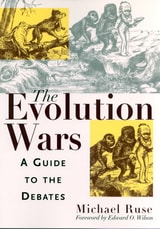
The Evolution Wars
A Guide to the DebatesRuse, Michael
Rutgers University Press, 2001
The Evolution Wars draws on history, science, and philosophy to examine the development of evolutionary thought through the past two and a half centuries. It focuses on the debates that have engaged, divided, and ultimately provoked scientists to ponder the origins of organisms—including humankind—paying regard to the nineteenth-century clash over the nature of classification and debates about the fossil record, genetics, and human nature. Much attention is paid to external factors and the underlying motives of scientists.
In these pages you will meet Charles Darwin’s ebullient grandfather Erasmus, the contentious Frenchmen Georges Cuvier and Etienne Geoffroy Stain-Hillaire, new creationist Phillip Johnson, the brilliant J. B. S. Haldane, outspoken Richard Dawkins, and many other stars of the debates.
The Evolution Wars explores the ten greatest controversies surrounding evolution in world history, with emphasis on recent times, including the infamous Scopes trial of the 1920s: the search for human origins and speculation about the “missing link,” spurred by the discovery of “Lucy;” the debate surrounding the new theory of paleontology proposed by Stephen Jay Gould; and the rise of teaching “creation science” in public school as a subject on par with evolution.
Although the author takes a strong stand on the side of evolution, he also shows respect for dissenting viewpoints. Thus, the book is intellectually rewarding not only for evolutionists but also for opponents of evolution theory, especially those who want to see how one of the great ideas of Western civilization resonates through time, both within and beyond the scientific community.
The Guide of the Perplexed, Volume 1
Moses Maimonides
University of Chicago Press, 1963
This monument of rabbinical exegesis written at the end of the twelfth century has exerted an immense and continuing influence upon Jewish thought. Its aim is to liberate people from the tormenting perplexities arising from their understanding of the Bible according only to its literal meaning. This edition contains extensive introductions by Shlomo Pines and Leo Strauss, a leading authority on Maimonides.
The Guide of the Perplexed, Volume 2
Moses Maimonides
University of Chicago Press, 1963
This monument of rabbinical exegesis written at the end of the twelfth century has exerted an immense and continuing influence upon Jewish thought. Its aim is to liberate people from the tormenting perplexities arising from their understanding of the Bible according only to its literal meaning. This edition contains extensive introductions by Shlomo Pines and Leo Strauss, a leading authority on Maimonides.
The Guide of the Perplexed
Complete in One VolumeMoses Maimonides
University of Chicago Press, 1963
The twelfth-century Judeo-Arabic text The Guide of the Perplexed is a monument of rabbinical exegesis and one of the most important works in the history of Jewish thought. Written by Moses ben Maimon,commonly known as Maimonides, the Guide aims to liberate people from the perplexities that arise from an understanding of the Bible based only on its literal meaning.
Shlomo Pines’s translation has served students and scholars for decades, and it is presented here, with Leo Strauss’s influential introduction, in one volume for the first time.
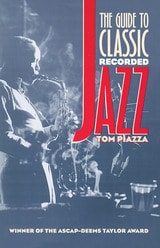
The Guide to Classic Recorded Jazz
Samuel F., Jr. Piazza
University of Iowa Press, 1995
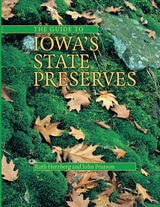
The Guide to Iowa's State Preserves
Herzberg, Ruth & John A. Pearson
University of Iowa Press, 2001
The Iowa state preserves system was created in 1965; a decade later, thirty preserves had been dedicated, including “six native prairies, a native White Pine stand, the state's only Sphagnum bog, a Balsam Fir stand, some of the oldest exposed rock outcrops in the world, an ancient fort, a fen, several Indian mound groups and a historical cemetery.” This new guide to all ninety Iowa state preserves—biological, geological, archaeological, historical, and scenic—describes the state's most treasured prairies and forests, quartzite outcrops and ice caves, and Indian mounds and wetlands as well as such historic sites as Fort Atkinson and Montauk.
Each entry includes two-color, progressively scaled maps giving the location of the preserve within the state, within its county, relative to a nearby town (with a recommended driving route), and on the local landscape (using USGS 7.5-minute topo maps). Also included are written directions (using 911 street names and signs); a description of the preserve's size, features, and history; a list of nearby or similar preserves, parks, natural areas, and other attractions; recommended readings; and contact information. (There are a few exceptions for privately owned or fragile preserves.) For travelers, a map in the introduction numbers all the preserves both geographically and alphabetically by name.
Although the preserves system emphasizes preservation rather than recreation, some preserves do have formal trails; some allow hunting, horseback riding, and canoeing; a few have museums or nature centers. This comprehensive guide allows visitors to plan active and informative visits to sites that highlight Iowa's natural and cultural heritage.
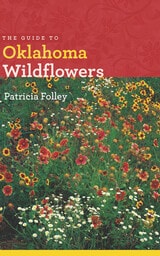
The Guide to Oklahoma Wildflowers
Patricia Folley
University of Iowa Press, 2012
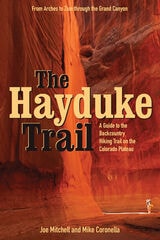
The Hayduke Trail
A Guide to the Backcountry Hiking Trail on the Colorado PlateauJoe Mitchell
University of Utah Press, 2005
Joe Mitchell and Mike Coronella pioneered Hayduke after concluding that a long trail—such as the Appalachian or Pacific Crest— was possible on the Plateau, thus introducing more people to these unique and threatened public lands. The Hayduke Trail includes detailed maps of the entire route, suggested cache points, and a wealth of description and tips for tackling this intense undertaking.
Hiking the entire route requires at least three months, though like other long trails it can be broken into smaller segments. The guide, featured in the March 2005 issue of National Geographic Adventure Magazine, is designed for experienced desert trekkers seeking a thorough-hiking experience on a well-tested route.

The Librarian's Book of Lists
A Librarian's Guide to Helping Job SeekersGeorge M. Eberhart
American Library Association, 2010
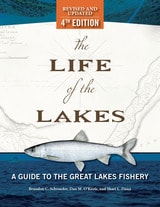
The Life of the Lakes, 4th Ed.
A Guide to the Great Lakes FisheryBrandon C. Schroeder, Dan M. O'Keefe, and Shari L. Dann
University of Michigan Press, 2019
Now in its fourth edition, The Life of the Lakes examines the complex portrait of the Great Lakes fishery, including the history of the fishery’s exploitation and management, the current health of the Lakes, and the outlook for the future. Featuring more graphics, photos, and illustrations than ever, all printed in full color, the new edition of this engaging book is a perfect resource for general readers, teachers, and students looking for an easy-to-follow guide to the Great Lakes fishery. This book is published in collaboration with Michigan Sea Grant (www.michiganseagrant.org), a cooperative program of the University of Michigan and Michigan State University.
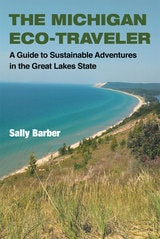
The Michigan Eco-Traveler
A Guide to Sustainable Adventures in the Great Lakes StateSally Barber
University of Michigan Press, 2014
Whether you’re a weekend traveler, extreme adventurer, or family on vacation, The Michigan Eco-Travelerlights the way to a greener getaway. Naturalists, conservationists, and hospitality experts will find the book equally helpful in responding to the ever rising demand for sustainable recreation.
The Newbery and Caldecott Awards
A Guide to the Medal and Honor BooksAmerican Library Association, 2015
The Newbery and Caldecott Awards
A Guide to the Medal and Honor BooksAmerican Library Association, 2011
The Newbery and Caldecott Awards
A Guide to the Medal and Honor BooksAmerican Library Association, 2012
The Newbery and Caldecott Awards
A Guide to the Medal and Honor BooksAmerican Library Association, 2013
The Newbery and Caldecott Awards
A Guide to the Medal and Honor BooksAmerican Library Association, 2014
The Quality Library
A Guide to Self-Improvement, Better Efficiency, and Happier CustomersSara Laughlin
American Library Association, 2008
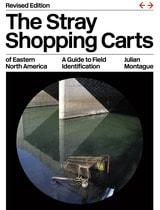
The Stray Shopping Carts of Eastern North America
A Guide to Field IdentificationJulian Montague
University of Chicago Press, 2023
Abandoned shopping carts are everywhere, and yet we know so little about them. Where do they come from? Why are they there? Their complexity and history baffle even the most careful urban explorer.
Thankfully, artist Julian Montague has created a comprehensive and well-documented taxonomy with The Stray Shopping Carts of Eastern North America. Spanning thirty-three categories from damaged, fragment, and plow crush to plaza drift and bus stop discard, it is a tonic for times defined increasingly by rhetoric and media and less by the plain objects and facts of the real world. Montague’s incomparable documentation of this common feature of the urban landscape helps us see the natural and man-made worlds—and perhaps even ourselves—anew.
First published in 2006 to great perplexity and acclaim alike, Montague’s book now appears in refreshed and expanded form. Told in an exceedingly dry voice, with full-color illustrations and photographs throughout, it is both rigorous and absurd, offering a strangely compelling vision of how we approach, classify, and understand the environments around us. A new afterword sheds light on the origins of the project.
The Total Survey Error Approach
A Guide to the New Science of Survey ResearchHerbert F. Weisberg
University of Chicago Press, 2005
Herbert F. Weisberg's handbook presents a unified method for conducting good survey research centered on the various types of errors that can occur in surveys—from measurement and nonresponse error to coverage and sampling error. Each chapter is built on theoretical elements drawn from specific disciplines, such as social psychology and statistics, and follows through with detailed treatments of the specific types of error and their potential solutions. Throughout, Weisberg is attentive to survey constraints, including time and ethical considerations, as well as controversies within the field and the effects of new technology on the survey process—from Internet surveys to those completed by phone, by mail, and in person. Practitioners and students will find this comprehensive guide particularly useful now that survey research has assumed a primary place in both public and academic circles.
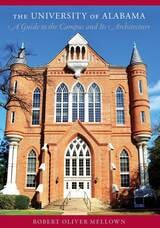
The University of Alabama
A Guide to the Campus and Its ArchitectureRobert Oliver Mellown
University of Alabama Press, 2013
In 1988 the University of Alabama Press published Robert Oliver Mellown’s The University of Alabama: A Guide to the Campus, a culmination of a decade’s worth of research into both the facts and the legends surrounding the architecture, history, and traditions of the Capstone.
Over twenty years later, this new guide brings to light the numerous additions, expansions, and renovations the university has undergone on its spacious grounds in Tuscaloosa. In addition to updated sections devoted to the university’s historic landmarks—such as Foster Auditorium, where “the stand in the schoolhouse door” occurred; Denny Chimes,where the handprints and footprints of famous Tide athletes are memorialized in concrete; and the Gorgas House, which with stood the destruction of Union troops at the end of the Civil War—new sections account for the acquisition of Bryce Hospital’s campus, the expansions at Bryant-Denny Stadium to accommodate the growing Crimson Tide fan base, and the burgeoning student recreation facilities, playing fields, and residential communities.
Chapters are arranged into various campus tours for walking or driving—Antebellum, Victorian, Early Twentieth-Century, East Quad, West Quad, Science and Engineering Corridor, Student Life, Bryce, Medical, Southeast, Athletics, and Off Campus. Alumni, prospective students and their parents, new faculty, out-of-state visitors, and foreign dignitaries will all welcome this useful, compact, and colorful guide to one of the most beautiful campuses in the country.
The Writer's Diet
A Guide to Fit ProseHelen Sword
University of Chicago Press, 2016
Helen Sword dispenses with excessive explanations and overwrought analysis. Instead, she offers an easy-to-follow set of writing principles: use active verbs whenever possible; favor concrete language over vague abstractions; avoid long strings of prepositional phrases; employ adjectives and adverbs only when they contribute something new to the meaning of a sentence; and reduce your dependence on four pernicious “waste words”: it, this, that, and there.
Sword then shows the rules in action through examples from William Shakespeare, Emily Dickinson, Martin Luther King Jr., John McPhee, A. S. Byatt, Richard Dawkins, Alison Gopnik, and many more. A writing fitness test encourages you to assess your own writing and get immediate advice on addressing problem areas. While The Writer’s Diet is as sleek and concise as the writing ideals contained within, this slim volume packs a powerful punch.
With Sword’s coaching writers of all levels can strengthen and tone their sentences with the stroke of a pen or the click of a mouse. As with any fitness routine, adhering to the rules requires energy and vigilance. The results, however, will speak for themselves.

To Test or Not To Test
A Guide to Genetic Screening and RiskZallen, Dorris Teichler
Rutgers University Press, 2008
To Test or Not to Test arms readers with questions that should be considered before they pursue genetic screening.
- Am I at higher risk for a disorder?
- Can genetic testing give me useful information?
- Is the timing right for testing?
- Do the benefits of having the genetic information outweigh the problems that testing can bring?
Determining the answers to these questions is no easy task. In this highly readable book, Doris Teichler Zallen provides a template that can guide individuals and families through the decision-making process and offers additional resources where they can gain more information. She shares interviews with genetic specialists, doctors, and researchers, as well as the personal stories of nearly 100 people who have faced genetic-testing decisions. Her examples focus on genetic testing for four types of illnesses: breast/ovarian cancer (different disorders but closely connected), colon cancer, late-onset Alzheimer's disease, and hereditary hemochromatosis. From the more common diseases to the rare hereditary conditions, we learn what genetic screening is all about and what it can tell us about our risks.
Given that we are now bombarded with ads in magazines and on television hawking the importance of pursuing genetic-testing, it is critical that we approach this tough issue with an arsenal of good information. To Test or Not to Test is an essential consumer tool-kit for the genetic decision-making process.
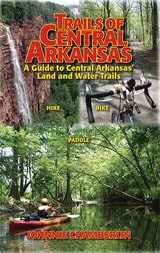
Trails of Central Arkansas
A Guide to Central Arkansas' Land and Water TrailsJohnnie Chamberlin
Parkhurst Brothers, Inc., 2012
Trails of Central Arkansas delivers:
* Sixty trails in 36 parks or locations from Benton and Bryant to Cabot, from Wrightsville to Conway
* Color maps of every trail
* GPS coordinates for every trailhead
* Color-coded distinctions between paved and unpaved trails
* Level of difficulty ratings
* Scenery Scores
* Top-ten lists: Most Scenic, Trails for Kids, and Trails for Solitude
Training Library Instructors
Vol 1: A Guide to Training Graduate StudentsMatthew Weirick Johnson
Assoc of College & Research Libraries, 2024
In two volumes, Training Library Instructors collects examples of how we train our colleagues to teach, whether they’re student workers, non-librarian staff, new or experienced librarians, or something else entirely. Volume 1, A Guide to Training Graduate Students, focuses on teacher training for graduate students in LIS programs and in academic libraries. It presents existing literature and theories, approaches to teaching library school students to teach, and critical reflections from librarians about their varied experiences receiving teacher training.
A Guide to Training Graduate Students provides a useful introduction, detailed examples, and salient reflections to help us better train library instructors during their time as graduate students through coursework and work experience. You’ll discover ideas for designing courses, internships, and other programs and ways to mentor graduate students who are interested in becoming library instructors.
Training Library Instructors
Vol 2: A Guide to Training LibrariansMatthew Weirick Johnson
Assoc of College & Research Libraries, 2024
In two volumes, Training Library Instructors collects examples of how we train our colleagues to teach, whether they’re student workers, non-librarian staff, new or experienced librarians, or something else entirely. In Volume 2, A Guide to Training Librarians, librarians share their knowledge about teaching, learning, and pedagogy through a variety of replicable activities: formal and informal workshops, courses, communities of practice, peer observation, and more. Programs include mock instruction, nano-teaching, and other feedback and homework mechanisms; happen at the individual, institutional, or consortial level; and can involve collaborations across library or university departments.
So many librarians value lifelong learning and the opportunity to learn from each other. A Guide to Training Librarians provides a starting point for readers considering their own teach-the-teacher programs and various approaches to learning together, exploring library instruction for the first time, or expanding existing knowledge through continued education.
Transforming History
A Guide to Effective, Inclusive, and Evidence-Based TeachingMary Jo Festle
University of Wisconsin Press, 2020
Instructors will improve their own conceptual understandings of teaching and learning issues, as well as receive guidance on designing courses and implementing pedagogies consistent with what research tells us about how students learn. The book offers practical illustrations of assignments, goals, questions, grading rubrics, unit plans, and formats for peer observation that are adaptable for courses on any subject and of any size. Transforming History is a critical guide for higher and secondary education faculty—neophytes and longtime professionals alike—working to improve student learning.
Traveling Through Time
A Guide to Michigan's Historical MarkersLaura Rose Ashlee, Editor
University of Michigan Press, 2005
Since 1955 the state of Michigan has erected historical markers throughout the state. In this revised edition of Traveling Through Time, Laura Rose Ashlee collects the histories that appear on these markers together into one handy guidebook---a great desk reference for researchers and armchair historians alike.
Some of the book's special features include:
o Location and full text of each marker
o Arranged alphabetically within county chapters
o More than 85 historic and color photographs
o Special section on Michigan historical markers placed outside Michigan
Treasure Map
A Guide to the Delian InventoriesRichard Hamilton
University of Michigan Press, 2015
Trees in Your Pocket
A Guide to Trees of the Upper MidwestThomas Rosburg
University of Iowa Press, 2012
Each state in this region maintains a Big Tree program that honors the largest individual tree of each species. Champion trees are determined by adding together measurements of trunk circumference, height, and canopy spread. Rosburg identifies the trees with the largest diameter and the tallest trees among the champion trees in the Upper Midwest by their county and state. Together his superb photographs and key information make this guide the perfect companion for enjoying the diversity of trees in all kinds of environments.
Turtles in Your Pocket
A Guide to Freshwater and Terrestrial Turtles of the Upper MidwestTerry VanDeWalle
University of Iowa Press, 2011
Twayblades and Adder's-mouth Orchids in Your Pocket
A Guide to the Native Liparis, Listera, and Malaxis Species of the Continental United States and CanPaul Martin Brown
University of Iowa Press, 2008
Brown provides general distributional information, time of flowering, and habitat requirements for each species as well as a complete list of hybrids and the many different growth and color forms that can make identifying orchids so intriguing. For the twayblades and adder’s-mouths he includes information on 21 species, 1 additional variety, and 2 hybrids.
Most twayblades and adder’s-mouths are relatively small plants with tiny green flowers, but a few have richly colored blooms or particularly interesting habits that attract the native orchid enthusiast. Most of these species are easy to identify based upon their general appearance, range, and time of flowering. Answering three simple questions—when, where, and how does it grow?—and comparing the living plant with the striking photos in the backpack-friendly laminated guide should enable both professional and amateur naturalists to achieve the satisfaction of identifying a specific orchid.