Results by title
883 books match the query 'Historical' and 243 start with t
TIME
Sojourns in Stone and LightCarolyn Brown
Bridwell Press, 2026
TIME: Sojourns in Stone and Light continues Carolyn Brown’s lifelong exploration of how light, memory, and architecture converge—revealing places not simply as monuments, but as living witnesses to history.
Tarpleywick
A Century of Iowa FarmingHenry C. Taylor
University of Iowa Press, 0
(Tarpleywick description) “When Tarpley Early Taylor came of age on August 2, 1858, his father gave him a horse, a saddle, and a bridle and wished him well…His first independent move was to go on horseback to Louisiana, Missouri, to visit his maternal grandparents, the Zumwalts. He stayed with them for some time, probably through the winter…We do not know what he did from the spring of 1859 to the spring of 1860 except that he had been earning money and saving it. We do know that he had returned to Van Buren County by Juy 24, 1860, because on that date he paid $800 for sixty acres of land a mile south of his father’s house…This was the beginning of Tarpleywick.” Born in Iowa in 1873, he was 96 years old when he died in May 1969. Taylor received his undergraduate training from Drake University and Iowa State University, his M.S. degree from Iowa State, and his Ph.D. degree from the University of Wisconsin. He was the first professor of agricultural economics in a land grant institution, the author of the first American textbook dealing with the principles of agricultural economics, the organizer and first Chief of the Bureau of Agricultural Economics in the USDA, and the first Managing Director of the Farm Foundation.
Tasting Freedom
Octavius Catto and the Battle for Equality in Civil War AmericaDaniel R. Biddle
Temple University Press, 2017
Octavius Valentine Catto was an orator who shared stages with Frederick Douglass, a second baseman on Philadelphia’s best black baseball team, a teacher at the city’s finest black school and an activist who fought in the state capital and on the streets for equal rights. With his racially-charged murder, the nation lost a civil rights pioneer—one who risked his life a century before Selma and Birmingham.
In Tasting Freedom Murray Dubin and Pulitzer Prize winner Dan Biddle painstakingly chronicle the life of this charismatic black leader—a “free” black whose freedom was in name only. Born in the American south, where slavery permeated everyday life, he moved north where he joined the fight to be truly free—free to vote, go to school, ride on streetcars, play baseball and even participate in July 4th celebrations.
Catto electrified a biracial audience in 1864 when he proclaimed, “There must come a change,” calling on free men and women to act and educate the newly freed slaves. With a group of other African Americans who called themselves a “band of brothers,” they challenged one injustice after another. Tasting Freedom presents the little-known stories of Catto and the men and women who struggled to change America.
Tattered Kimonos in Japan
Remaking Lives from Memories of World War IIRobert Rand
University of Alabama Press, 2024
Examines Japan’s war generation—Japanese men and women who survived World War Two and rebuilt their lives from memories of that conflict.
Since John Hersey’s Hiroshima—the classic account, published in 1946, of the aftermath of the atomic bombing of that city—very few books have examined the meaning and impact of World War II through the eyes of Japanese men and women who survived that conflict. Tattered Kimonos in Japan does just that: It is an intimate journey into contemporary Japan from the perspective of the generation of Japanese soldiers and civilians who survived World War II, by a writer whose American father and Japanese father-in-law fought on opposite sides of the conflict.
The author, a former NPR senior editor, is Jewish, and he approaches the subject with the sensibilities of having grown up in a community of Holocaust survivors. Mindful of the power of victimhood, memory, and shared suffering, he travels across Japan, including Hiroshima and Nagasaki, meeting a compelling group of men and women whose lives, even now, are defined by the trauma of war, and by lingering questions of responsibility and repentance for Japan’s wartime aggression.
The image of a tattered kimono from Hiroshima is the thread that drives the narrative arc of this emotional story about a writer’s encounter with history, inside the Japan of his father’s generation, on the other side of his father’s war. This is a book about history with elements of family memoir. It offers a fresh and truly unique perspective for readers interested in World War II, Japan, or Judaica; readers seeking cross-cultural journeys; and readers intrigued by Japanese culture, particularly the kimono.
Textual Dynamics
Historical & Contemporary Studies OfCharles Bazerman
University of Wisconsin Press, 1991
Invaluable to the new pedagogical field of “writing across the curriculum,” Textual Dynamics of the Professions is also a significant intervention into the studies of rhetoric, writing theory, and the sociology of knowledge.
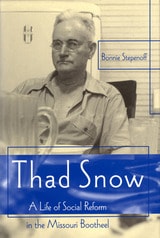
Thad Snow
A Life of Social Reform in the Missouri BootheelBonnie Stepenoff
University of Missouri Press, 2003
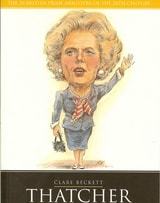
Thatcher
Clare Beckett
Haus Publishing, 2006

The Adventures of Lindamira
A Lady of QualityBenjamin Boyce, Editor
University of Minnesota Press, 1949
The Adventures of Lindamira was first published in 1949. Minnesota Archive Editions uses digital technology to make long-unavailable books once again accessible, and are published unaltered from the original University of Minnesota Press editions.
The Adventures of Lindamira, A Lady of Quality. Written by her own hand, to her Friend in the Country. In IV Parts. Revised and Corrected by Mr. Tho. Brown (London, 1702) is a very rare but important and interesting early English novel. This work was reissued in 1713 as The Lover's Secretary: or the Adventures of Lindamira, and again, with the same title, in 1734, 1745, and 1751.
Lindamira is remarkable historically as one of the earliest epistolary novels in English and also as one of the first pieces of extended prose fiction to enter the gap between the risque, realistic romance on one hand and the artificial French romance of court life on the other. The book is entertaining and compares favorably in naturalness, humor, and plausibility with the work of the contemporary Mrs. Behn, Congreve, and even Defoe.
Most historians have been unfamiliar with the work for the good reason that few copies have survived. The British Museum, Yale, University of Pennsylvania, Newberry, and Brown University have copies of the second or later edition. The only known copy of the first edition is in the Library of the University of Minnesota, and it is from this copy of the first edition that the University of Minnesota Press has reprinted this edition.
The Aesthetics of Resistance, Volume I
A Novel, Volume 1Peter Weiss
Duke University Press, 2005
Spanning the period from the late 1930s to World War II, this historical novel dramatizes antifascist resistance and the rise and fall of proletarian political parties in Europe. Living in Berlin in 1937, the unnamed narrator and his peers—sixteen- and seventeen-year-old working-class students—seek ways to express their hatred for the Nazi regime. They meet in museums and galleries, and in their discussions they explore the affinity between political resistance and art, the connection at the heart of Weiss’s novel. Weiss suggests that meaning lies in embracing resistance, no matter how intense the oppression, and that we must look to art for new models of political action and social understanding. The novel includes extended meditations on paintings, sculpture, and literature. Moving from the Berlin underground to the front lines of the Spanish Civil War and on to other parts of Europe, the story teems with characters, almost all of whom are based on historical figures. The Aesthetics of Resistance is one of the truly great works of postwar German literature and an essential resource for understanding twentieth-century German history.
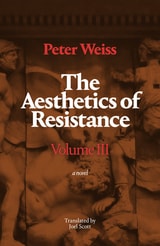
The Aesthetics of Resistance, Volume III
A Novel, Volume 3Peter Weiss
Duke University Press, 2025
Volume III, initially published in 1981, teems with characters, many of whom are based on historical figures. It commences in May of 1940, as the narrator’s parents flee Nazi forces in Eastern Europe and reunite with their son in Sweden. While in Stockholm, the narrator and other Communist activists living in exile struggle to build structures in the German underground. The story then follows Communist resistance fighter Charlotte Bischoff as she is smuggled to Bremen on a freighter. In Berlin, she contacts the narrator’s friends and joins the Red Orchestra resistance group. Soon, the Gestapo cracks the underground group’s code, arrests a number of its members, and takes them to Plötzensee Prison, where most of them are executed. Featuring the narrator’s meditations on paintings, sculpture, and literature throughout, The Aesthetics of Resistance demonstrates the affinity between political resistance and art. Ultimately, Weiss argues that we must look to art for new models of political action and social understanding.
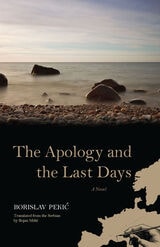
The Apology and the Last Days
A NovelBorislav Pekic
Northwestern University Press, 2012
Originally published in 1975, The Apology and the Last Days is the final volume in a trilogy of novels—also including The Rise and Fall of Icarus Gubelkian and How to Quiet a Vampire—about the aftermath of World War II, by Borislav Pekić, one of the former Yugoslavia’s most important postwar writers. The narrator tells his story from prison, where he is serving time for the murder of a former Nazi official. As the novel unfolds, we learn that the victim was the same person whom the narrator, while a lifeguard during the war, saved from drowning, thus making him vulnerable to charges of collaboration. In this tragicomic tale, Pekić explores eternal questions of fate and individual responsibility.
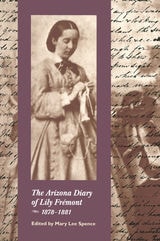
The Arizona Diary of Lily Frémont, 1878–1881
Elizabeth Benton Frémont
University of Arizona Press, 1997
Here, in rich detail, her day-by-day narrative and the editor's annotations bring to life Arizona's territorial capital of Prescott more than one hundred years ago. Lily gives us firsthand accounts of the operation of territorial government; of pressure from Anglo settlers to dispossess Pima Indians from their land; and of efforts by the governor and the army to deal with Indian scares. Here also, underlying her words, are insights into the dynamics of a close-knit Victorian family, shaping the life of an intelligent, educated single woman. As unofficial secretary for her father, Lily was well placed to observe and record an almost constant stream of visitors to the governor's home and office. Observe and record, she did. Her diary is filled with unvarnished images of personalities such as the Goldwaters, General O. B. Willcox, Moses Sherman, Judge Charles Silent, and a host of lesser citizens, politicians, and army officers.
Lily's anecdotes vividly re-create the periodic personality clashes that polarized society (and one full-fledged scandal), the ever-present danger of fire, religious practices (particularly a burial service conducted in Hebrew), and attitudes toward Native Americans and Chinese. On a more personal level, the reader will find intimate accounts of John Frémont's obsession with mining promotion, his complicated business dealings with Judge Silent, and his attempts to recoup his family's sagging fortune. Here especially, Lily outlines a telling profile of her father, a man roundly castigated then and now as a carpetbagger less interested in promoting Arizona's interests than his own.
For students of western history, Lily Frémont's diary provides a wealth of fresh information on frontier politics, mining, army life, social customs, and ethnicity. For all readers, her words from a century ago offer new perspectives on the winning of the West as well as fascinating glimpses of a world that once was and is no more.
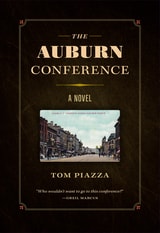
The Auburn Conference
Tom Piazza
University of Iowa Press, 2023
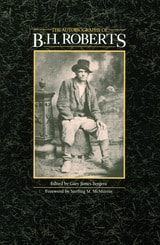
The Autobiography of B. H. Roberts
Gary J. Bergera
Signature Books, 1990
The story-book adventures of Roberts’s life made him a household name during his lifetime. His impassioned speeches incited riots, his reasoned writings defined and codified religious beliefs, and his candid disclosures of Utah history brought him both respect and censure. He is best remembered today as a largely self-educated intellectual. Several of his landmark published works are still in print more than fifty years after his death. His life story, told here in his own words and published for the first time, may well stand as his greatest, most enduring achievement.
For many today, B. H. Roberts is the quintessential Mormon intellectual of the twentieth century. But his theological writings came late in life and his historical views were more subjective than definitive. His autobiography, on the other hand, is a forthright account of the events and acquaintances that contributed to his unique faith and intellectual independence. Troubled by the memory of being abandoned as a child, and of the abusive care of quarrelling and intemperate foster-parents, he survived a stormy youth of poverty and neglect. He describes his nearly ten years as a missionary to the southern United States, his subsequent tenure as an outspoken member of the First Quorum of Seventy, his public opposition to women’s suffrage, and his controversial bid for the U.S. House of Representatives as a Mormon polygamist.
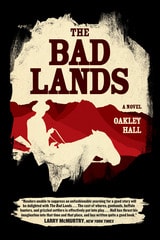
The Bad Lands
A NovelOakley Hall
University of Chicago Press, 2016
An action-packed western from one of the masters of the genre, Oakley Hall’s The Bad Lands blends roundups and rustlers, whorehouses and land grabs, shoot-outs and the threat of hangings in a tale of the war between the cowboys and the cattle barons. But more than this, it is an elegy to the wild beauty of the badlands before the ranchers moved in, chased off the free-rangers, the trappers, and the tribes, and fenced it all in.
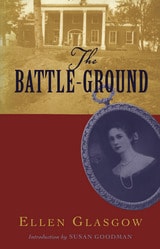
The Battle-Ground
Ellen Glasgow
University of Alabama Press, 2000
Captures the war's human toll and explores its social consequences
The Battle-Ground, Ellen Glasgow's fourth novel, was her first bestseller, with more than 21,000 copies sold in just two weeks. The novel committed her to a project almost unparalleled in American literary history: a novelistic meditation on the South from the decade before the Confederacy to the middle of the 20th century. The Battle-Ground speaks of a South before and during the Civil War in its struggles to become part of a nation still in the making. The overthrow of the aristocratic tradition, the transfer of hereditary power to a rural underclass, the continued disenfranchisement of African Americans, and the evolving status of women--these topics, which came to bind the more than a dozen volumes of Glasgow's self-styled "social history," initially coalesced in The Battle-Ground.
The Battle-Ground conspicuously departs from the tradition of Southern romances popularized by Thomas Nelson Page, and contemporary reviewers praised the book for its historical accuracy. Glasgow, an ardent Anglophile, bragged that military officers in Great Britain studied its descriptions of battle. With her, realism had not only crossed the Atlantic, it had "crossed the Potomac."
But Glasgow never sensationalizes the Civil War, whose bloodiest scenes she flanks with domestic officers, the sharing of rations, the warmth of camp, and reminders of home. Her vision of the war centers less on its corruption or barbarity than on its occasions for small decencies and their power of humanization. Glasgow cannot separate the war from its greater social implications--it is a place, as her title suggests, that tests the soul of a nation as well as individual men and women. The importance of The Battle-Ground in Southern literary history cannot be overemphasized, for Glasgow's reimagining of the Civil War had a profound impact on the next generation of Southern writers, including Allen Tate, Stark Young, and Margaret Mitchell.
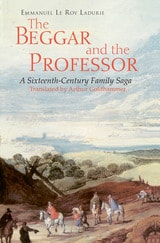
The Beggar and the Professor
A Sixteenth-Century Family SagaEmmanuel Le Roy Ladurie
University of Chicago Press, 1997
"Le Roy Ladurie paints a remarkably contemporary picture of life in the sixteenth century. . . . It's a good story, told with a deft narrative touch."—Michael S. Kimmel, The Nation
"Le Roy Ladurie is a master of the representative detail and uses the Platters' lives as a means to see a whole century 'through a glass, darkly'."—The Independent
"Le Roy Ladurie has not only thoroughly sketched out the Platters' particular brand of gusto, he has also made it seem a defining characteristic of the sixteenth century."—The New Republic
"All [of] the drama and pathos of a Disney film."—Emily Eakin, Lingua Franca
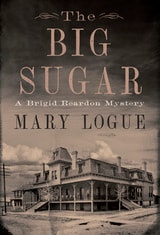
The Big Sugar
A Brigid Reardon MysteryMary Logue
University of Minnesota Press, 2024
A grisly death near her new homestead draws Brigid Reardon into a complicated mystery soon after her arrival in Cheyenne, Wyoming, in 1881
After the harrowing events that entangled her in Deadwood, Brigid Reardon just wants to move west and get on with her new life in America. But shortly after traveling to Cheyenne to join her brother Seamus, she finds herself caught up in another deadly mystery—beginning with her discovery of a neighbor’s body on the plains near their homes. Was Ella murdered? Are either of the two men in Ella’s life responsible? With Seamus away on a cattle drive, her friend Padraic possibly succumbing to a local’s charms, and the sheriff seemingly satisfied with Ella’s fate, it falls to Brigid to investigate what really happened, which puts her in the crosshairs of one of Cheyenne’s cattle barons, called “big sugars” in these parts. All she really wants is something better than a crumbling, soddy homestead on the desolate plains of Wyoming—and maybe, just maybe, she wants Padraic—but life, it seems, has other plans: this young immigrant from Ireland is going to be a detective on the western frontier of 1880s America, even if it kills her.
Loosely based on the true story of Ellen Watson in Cheyenne in 1889, The Big Sugar continues the adventure begun in Mary Logue’s celebrated mystery The Streel, which introduced a “gritty, charming, clever protagonist” (Kirkus Reviews). With a faultless sense of history, a keen eye for suspense, and a poet’s way with prose, Mary Logue all but guarantees that readers, like Brigid, will find the mystery at the heart of The Big Sugar downright irresistible.

The Bingo Long Traveling All-Stars and Motor Kings
A NOVELWilliam Brashler. Introduction by Peter C. Bjarkman
University of Illinois Press, 1993
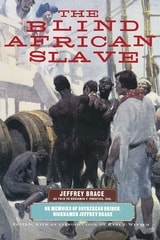
The Blind African Slave
Memoirs of Boyrereau Brinch, Nicknamed Jeffrey BraceJeffrey Brace, as told to Benjamin F. Prentiss, Esq.
University of Wisconsin Press, 2005
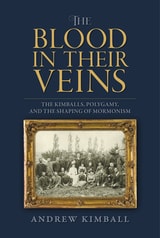
The Blood in Their Veins
The Kimballs, Polygamy, and the Shaping of MormonismKimball, Andrew
Signature Books, 2025
This meticulously documented, deeply engaging book represents a unique approach to Utah and Latter-day Saint history, drawing on previously untapped private letters and diaries of members of the large and widely known polygamist family of the prominent Latter-day Saint leader, Heber C. Kimball.
The story includes compelling accounts of Helen Kimball Whitney, who married Joseph Smith polygamously at fourteen and became, according to Emmeline B. Wells, “one of the best known and most estimable women of the Church,” and of her son Orson F. Whitney, who forswore his embrace of reincarnation only six years before his call as an apostle of the Church of Jesus Christ of Latter-day Saints. Another daughter, Alice Kimball Smith, married a man who was tracked to a brothel and arrested for armed robbery and assault in 1883, after which Alice turned to family friend and apostle Joseph F. Smith and became his fifth wife. Heber’s son, J. Golden Kimball, one of the most beloved and colorful personalities in Mormon and Utah history, is brought to life in another sketch. The Kimballs had to navigate the ticklish business of explaining or obfuscating polygamy to disapproving family in the East, including the extended claim by Heber’s wife Christeen to her New Jersey family that she had married a Mr. Chase monogamously. Two of Heber’s sons, both stake presidents, contemplated plural marriage in the first decade of the twentieth century, well after the church publicly disavowed the practice.
Additional light is shone on the now-defunct Latter-day Saint practices of adult adoptions and speaking in tongues, Mormon-settler relations with the Utes and Pahvants, the 1856 handcart rescue, the John Hyrum Koyle “Dream Mine,” the Jackson County, Missouri, Temple Lot suit of 1892, and federal pursuit of polygamists.
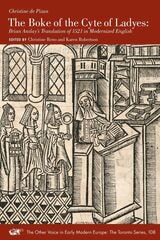
The Boke of the Cyte of Ladyes
Brian Anslay's Translation of 1521 in Modernized EnglishChristine de Pizan
Iter Press, 2025
Christine de Pizan's defense of women against centuries of misogyny, Cité des dames, was the only work of literature translated into English by Brian Anslay, an administrator in the household of King Henry VII. While numerous manuscripts were held in royal and aristocratic libraries, Anslay’s printed translation enabled a broader range of readers to appreciate the arguments for female rule crucial to the reigns of Mary I and Elizabeth I. Anslay’s translation also played a key role in the late-nineteenth-century revival of interest in Christine. This modernization of Anslay’s Tudor English makes his translation accessible to contemporary readers while preserving the rhythms of early Tudor prose. It includes an extensive introduction and notes highlighting both the history of the language and the cultural references embodied in the text.
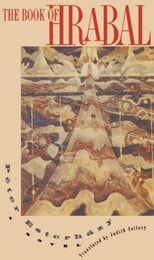
The Book of Hrabal
Peter Esterhazy, translated from the Czech by Judith Sollosy
Northwestern University Press, 1994
Named a New York Times Notable Book of 1994
Winner of 1995 The New York Times Review Notable Books
An elaborate, elegant homage to the great Czech storyteller Bohumil Hrabal (author of Closely Watched Trains), The Book of Hrabal is also a farewell to the years of communism in Eastern Europe and a glowing paean to the mixed blessings of domestic life. Anna, blues-singing housewife and mother of three, addresses her reminiscences and reflections to Hrabal. They swing from domestic matters, to accounts of the injustices suffered by her family during the Stalinist 1950s and the police harassment in subsequent years, to her husband's crazy ideas. He frets over his current project, a book celebrating Hrabal, but seems unable to write it. Meanwhile, two angels, undercover as secret policemen, shadow the household-communicating via walkie-talkie-to prevent Anna from aborting her fourth child. God himself (aka Bruno) enters the scene; he chats with Hrabal, takes saxophone lessons from an irreverent Charlie Parker (unfortunately even this doesn't cure his tone-deaf ear), and tries to play the saxophone to dissuade her from ending the pregnancy.
The Broken Vase
A Novel Based On the Life of Penina Krupitsky, a Holocaust SurvivorPhillip H. McMath
Butler Center for Arkansas Studies, 2010
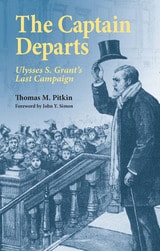
The Captain Departs
Ulysses S. Grant's Last CampaignThomas M. Pitkin. Foreword by John Y. Simon
Southern Illinois University Press, 1973
Early in 1885 Americans learned that General Grant was writing his Memoirs in a desperate race for time against an incurable cancer. Not generally known was the General’s precarious personal finances, made so by imprudent investments, and his gallant effort to provide for his family by his writing. For six months newspaper readers followed the dramatic contest, and the hearts of Americans were touched by the General’s last battle.
Grant’s last year was one of both personal and literary triumph in the midst of tragedy, as Thomas M. Pitkin shows in this memorable and inspiring book. The Memoirs was completed; its remarkable literary quality made ita triumph. Ultimately more than 300,000sets of the two-volume work were sold. And Grant accepted the inevitable with quiet courage, and faded away in a manner sadly familiar to many American families.
Though told without maudlin touches, the story of Grant’s last year will leave few readers emotionally uninvolved, for itis an account of pain and suffering as well as mighty deeds, and truly deserves to be considered the General’s final victory.
The Career of a Tsarist Officer
Memoirs, 1872-1916Anton I. DenikinMargaret Patoski, Editor
University of Minnesota Press, 1975
The Career of a Tsarist Officer was first published in 1975. Minnesota Archive Editions uses digital technology to make long-unavailable books once again accessible, and are published unaltered from the original University of Minnesota Press editions.
General Anton I. Denikin served as an officer in the Russian army throughout a notable career until 1920 when, as commander in chief of the White Russian armies, he was forced to flee from Bolshevik forces at Novorossiisk. In these memoirs, which cover his childhood, youth, and military service up to 1916, we have an unusually candid autobiography and one which illuminates some little-known aspects of Russian social as well as military history.
General Denikin was born in 1872 in the Warsaw province of Russian Poland. He was a graduate of the prestigious General Staff Academy in St. Petersburg, and during his years at the academy he launched a literary career which continued for the rest of his life, enabling him to support his family in their later exile.
Distinguished service in the Russo-Japanese War earned his promotion to colonel in the army, and from that time in 1905 to his tragic fate in 1920 when he left Russia never to return, he served his country with a deep and abiding loyalty, matched only by his devotion to the Orthodox religion. After living in exile in several European countries, principally in France, he moved in 1945 to the United States, where he died in 1947.
The present volume is a translation from the Russian-language edition which was published in 1953 by the Chekhov Publishing house in New York. In this, General Denikin's last work, he provides the social and intellectual background for an understanding of the traits of the Russian officer corps which enabled them to continue the fight for a unified, non-Bolshevik Russia even after the tsar was dead and the cause obviously lost. Through Denikin's eyes one sees also a revealing picture of the efforts of Russo-Japanese War participants to renovate the Russian army in the interwar period, their recognition of the growing threat from Germany as well as from the revolutionaries, and the futility they felt as they entered prematurely into World War I.
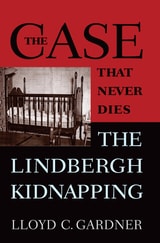
The Case That Never Dies
The Lindbergh KidnappingLloyd C. Gardner
Rutgers University Press, 2012
Winner of the 2004 New Jersey Studies Academic Alliance Book Award for Scholarly Non-Fiction | Named a 2005 Honor Book by the New Jersey Council for the Humanities
Essential reading for anyone interested in the most famous American crime of the twentieth century
Since its original publication in 2004, The Case That Never Dies has become the standard account of the Lindbergh kidnapping. Now, in a new afterword, historian Lloyd C. Gardner presents a surprise conclusion based on recently uncovered pieces of evidence that were missing from the initial investigation as well as an evaluation of Charles Lindbergh’s role in the search for the kidnappers. Out of the controversies surrounding the actions of Colonel Lindbergh, Norman Schwarzkopf, commander of the New Jersey State Police, and FBI director J. Edgar Hoover, Gardner presents a well-reasoned argument for what happened on the night of March 1, 1932.
The Case That NeverDies places the Lindbergh kidnapping, investigation, and trial in the context of the Depression, when many feared the country was on the edge of anarchy. Gardner delves deeply into the aspects of the case that remain confusing to this day, including Lindbergh’s dealings with crime baron Owney Madden, Al Capone’s New York counterpart, as well as the inexplicable exploits of John Condon, a retired schoolteacher who became the prosecution’s best witness. The initial investigation was hampered by Colonel Lindbergh, who insisted that the police not attempt to find the perpetrator because he feared the investigation would endanger his son’s life. He relented only when the child was found dead.
After two years of fruitless searching, Bruno Richard Hauptmann, a German immigrant, was discovered to have some of the ransom money in his possession. Hauptmann was arrested, tried, and sentenced to death. Throughout the book, Gardner pays special attention to the evidence of the case and how it was used and misused in the trial. Whether Hauptmann was guilty or not, Gardner concludes that there was insufficient evidence to convict him of first-degree murder.
Set in historical context, the book offers not only a compelling read, but a powerful vantage point from which to observe the United States in the 1930s as well as contemporary arguments over capital punishment.
The Cassique of Kiawah
A Colonial RomanceWilliam Gilmore Simms
University of Arkansas Press, 2003
The Cat Who Taught Me How to Fly
An Arab Prison NovelHashem Gharaibeh
Michigan State University Press, 2017
The Character of Truth
Historical Figures in Contemporary FictionNaomi Jacobs
Southern Illinois University Press, 1990
Can the novel survive in an age when tales of historical figures and contemporary personalities dominate the reading lists of the book-buying public?
Naomi Jacobs addresses this question in a study of writers such as William Styron, E. L. Doctorow, and Robert Coover, who challenge the dominance of nonfiction by populating their fictions with real people, living and dead. Jacobs explores the genesis, varieties, and implications of this trend in a prose as lively as that of the writers she critiques.
Using as a case study Robert Coover’s portrait of Richard Nixon in The Public Burning, Jacobs addresses the important legal and ethical questions raised by this trend and applies contemporary libel law to the fictionalization of living people, such as Richard Nixon. She closes her study by speculating on the future of this device and of the novel.

The Chattertooth Eleven
Eduard Bass
Karolinum Press, 2009
In 1922, the same year that saw the establishment of the Czechoslovak Football Association, a former singer and cabaret director from Prague published a novel about soccer. Eighty-six years later, that novel, Eduard Bass’s The Chattertooth Eleven, has been reprinted more than thirty times, has been made into a film, and has become one of the most popular works of Czech fiction.
The novel tells the extraordinary adventures of an ordinary father, Chattertooth, and his eleven sons—whom he has raised as an unbeatable soccer team. This humorous tale—set in the aftermath of World War I—celebrates fair play and perseverance while simultaneously taking a gently ironic stance towards the Czech infatuation with soccer. This edition, in a new graphic layout by Zdenek Ziegler, is accompanied by charming illustrations by Jirí Grus.
The City Of Trembling Leaves
Walter Van Tilburg Clark
University of Nevada Press, 2012
The City of Trembling Leaves by Walter Van Tilburg Clark was first published in 1945 by Random House and reprinted by the University of Nevada Press in paperback in 1991 with a new foreword by Robert Laxalt.
Clark’s novel broke new ground in his telling of the story of the rites of passage of a boy, Tim Hazard, into adulthood in the setting of the Western town of Reno, Nevada. The descriptions of Reno’s landscape and the realistic characters depict the role of nature during the tumultuous stages of adolescence and the potential risk of obstruction and loss in the attainment of maturity.
The City of Palaces
A NovelMichael Nava
University of Wisconsin Press, 2014
Against this backdrop, The City of Palaces opens in a Mexico City jail with the meeting of Miguel Sarmiento and Alicia Gavilán. Miguel is a principled young doctor, only recently returned from Europe but wracked by guilt for a crime he committed as a medical student ten years earlier. Alicia is the spinster daughter of an aristocratic family. Disfigured by smallpox, she has devoted herself to working with the city’s destitute. This unlikely pair—he a scientist and atheist and she a committed Christian—will marry. Through their eyes and the eyes of their young son, José, readers follow the collapse of the old order and its bloody aftermath.
The City of Palaces is a sweeping novel of interwoven lives: Miguel and Alicia; José, a boy as beautiful and lonely as a child in a fairy tale; the idealistic Francisco Madero, who overthrows Díaz but is nevertheless destroyed by the tyrant’s political system; and Miguel’s cousin Luis, shunned as a “sodomite.” A glittering mosaic of the colonial past and the wealth of the modern age, The City of Palaces is a story of faith and reason, cathedrals and hovels, barefoot street vendors and frock-coated businessmen, grand opera and silent film, presidents and peasants, the living and the dead.
Winner, International Latino Book Award for Latino Fiction, Latino Literacy Now
Second place, International Latino Book Award for Historical Fiction, Latino Literacy Now
Finalist, Gay Fiction, Lambda Literary Awards
Honorable Mention in Drama, Latino Books into Movies Award, International Latino Book Awards
Best Books for General Audiences, selected by the American Association of School Librarians
Outstanding Book, selected by the Public Library Reviewers
The City-Women
Mallorie Sievert
Carnegie Mellon University Press, 2026
This debut play from Mallorie Sievert follows what happens after two nuns fall in love.
When two young nuns in a seventeenth-century cloistered convent discover their feelings for each other, they must decide whether to conform to the life that was chosen for them or forge their own path and discover who God truly wants them to be. Set against the backdrop of Latin America during the Counter-Reformation, The City-Women explores love, spirituality, and sisterhood, and seeks to redefine what it means to be queer in the eyes of God.
The Collaborator
The Trial and Execution of Robert BrasillachAlice Kaplan
University of Chicago Press, 2000
Was Brasillach in fact guilty of treason? Was he condemned for his denunciations of the resistance, or singled out as a suspected homosexual? Was it right that he was executed when others, who were directly responsible for the murder of thousands, were set free? Kaplan's meticulous reconstruction of Brasillach's life and trial skirts none of these ethical subtleties: a detective story, a cautionary tale, and a meditation on the disturbing workings of justice and memory, The Collaborator will stand as the definitive account of Brasillach's crime and punishment.
A National Book Award Finalist
A National Book Critics Circle Award Finalist
"A well-researched and vivid account."—John Weightman, New York Review of Books
"A gripping reconstruction of [Brasillach's] trial."—The New Yorker
"Readers of this disturbing book will want to find moral touchstones of their own. They're going to need them. This is one of the few works on Nazism that forces us to experience how complex the situation really was, and answers won't come easily."—Daniel Blue, San Francisco Chronicle Book Review
"The Collaborator is one of the best-written, most absorbing pieces of literary history in years."—David A. Bell, New York Times Book Review
"Alice Kaplan's clear-headed study of the case of Robert Brasillach in France has a good deal of current-day relevance. . . . Kaplan's fine book . . . shows that the passage of time illuminates different understandings, and she leaves it to us to reflect on which understanding is better."—Richard Bernstein, The New York Times

The Collected Letters of Thomas and Jane Welsh Carlyle
January–December 1850, Volume 25Clyde de L. Ryals and Kenneth J. Fielding
Duke University Press, 0
The Collected Letters of Thomas and Jane Welsh Carlyle
January–December 1851, Volume 26Clyde de L. Ryals and Kenneth J. Fielding
Duke University Press, 0
The Colonel's Dream
Charles W. Chesnutt
West Virginia University Press, 2014
Charles Waddell Chesnutt (1858-1932) was an African American writer, essayist, Civil Rights activist, legal-stenography businessman, and lawyer whose novels and short stories explore race, racism, and the problematic contours of African Americans’ social and cultural identities in post-Civil War South. He was the first African American to be published by a major American publishing house and served as a beacon-point for future African American writers.
The Colonel’s Dream, written in 1905, is a compelling tale of the post-Civil War South’s degeneration into a region awash with virulent racist practices against African Americans: segregation, lynchings, disenfranchisement, convict-labor exploitation, and endemic violent repression. The events in this novel are powerfully depicted from the point of view of a philanthropic but unreliable southern white colonel. Upon his return to the South, the colonel learns to abhor this southern world, as a tale of vicious racism unfolds. Throughout this narrative, Chesnutt confronts the deteriorating position of African Americans in an increasingly hostile South. Upon its publication The Colonel’s Dream was considered too controversial and unpalatable because of its bitter criticisms of southern white prejudice and northern indifference, and so this groundbreaking story failed to gain public attention and acclaim.
This is the first scholarly edition of The Colonel’s Dream. It includes an introduction and notes by R. J. Ellis and works to reestablish this great novel’s reputation.
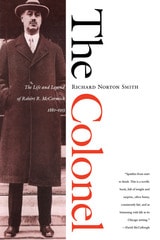
The Colonel
The Life and Legend of Robert R. McCormick, 1880-1955Richard Norton Smith
Northwestern University Press, 2003
This is the acclaimed biography of a giant of American journalism. As editor-publisher of the Chicago Tribune, Robert R. McCormick came to personify his city. Drawing on McCormick's personal papers and years of research, Richard Norton Smith has written the definitive life of the towering figure known as The Colonel.
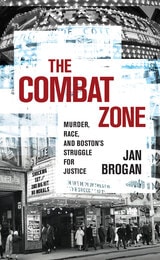
The Combat Zone
Murder, Race, and Boston's Struggle for JusticeJan Brogan
University of Massachusetts Press, 2021
At the end of the 1976 football season, more than forty Harvard athletes went to Boston's Combat Zone to celebrate. In the city's adult entertainment district, drugs and prostitution ran rampant, violent crime was commonplace, and corrupt police turned the other way. At the end of the night, Italian American star athlete Andy Puopolo, raised in the city's North End, was murdered in a stabbing. Three African American men were accused of the crime. His murder made national news and led to the eventual demise of the city's red-light district.
Starting with this brutal murder, The Combat Zone tells the story of the Puopolo family's struggle with both a devastating loss and a criminal justice system that produced two trials with opposing verdicts, all within the context of a racially divided Boston. Brogan traces the contentious relationship between Boston’s segregated neighborhoods during the busing crisis; shines a light on a court system that allowed lawyers to strike potential jurors based purely on their racial or ethnic identity; and lays bare the deep-seated corruption within the police department and throughout the Combat Zone. What emerges is a fascinating snapshot of the city at a transitional moment in its recent past.
The Complete Writings and Selected Correspondence of John Dickinson
Volume 1Jane E. Calvert
University of Delaware Press, 2011
The Complete Writings and Selected Correspondence of John Dickinson
Volume 2Jane E. Calvert
University of Delaware Press, 2021
Dickinson’s hard work on behalf of his clients brought him success in other areas of his public life. In October 1759, he was elected to his first public position as a representative for Kent County, Del., the following year he was elevated to the position of speaker, and in 1762, he became a representative for Philadelphia County, Pa. As a legislator in two colonies, learning his craft as a global war unfolded, he contributed to bills on military and defense, Indian relations, infrastructure improvements and city management, and served on various committees. The death of George II occasioned debates over laws and judges, in which Dickinson participated. This era concludes with Dickinson playing a central role in managing the unfolding Paxton Riots, in which frontiersmen massacred peaceful Indians and threatened the Quaker leadership of Pennsylvania.
In private, Dickinson lost the two most prominent male figures in his life in 1760, his father, Samuel, and soon thereafter, his mentor, colleague, and friend, John Moland. In honor of Moland, Dickinson published a poem and became a proxy head to Moland’s large family. Though his extant correspondence during this period is small, he exchanged letters with Mary Cadwalader Dickinson, Israel Pemberton, William Allason, George Read, Thomas McKean, and others. Perhaps most significant, he wrote a lengthy, unpublished essay on the flag-of-truce trade and also maintained commonplace books as he considered his place within the British Empire, opening up the next phase in Dickinson’s life as a leader of the resistance against Britain.
Published by the University of Delaware Press. Distributed worldwide by Rutgers University Press.
The Complete Writings and Selected Correspondence of John Dickinson
Volume 3Jane E. Calvert
University of Delaware Press, 2024
The Complete Writings and Selected Correspondence of John Dickinson
Volume 4, 1767-1769John Dickinson
University of Delaware Press, 0
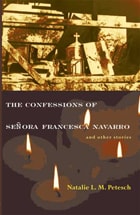
The Confessions of Señora Francesca Navarro and Other Stories
Natalie L. M. Petesch
Ohio University Press, 2005
“Memory, of course, is sometimes like a bucking horse, sometimes a runaway one, and one must control the reins until finally it stops, snorting with exhausted relief,” writes Natalie L. M. Petesch in her haunting new collection, The Confessions of Señora Francesca Navarro and Other Stories.
Petesch immerses readers in the lives of people caught up in the 1936–39 Spanish Civil War, which left more than five hundred thousand dead. She captures the hand-to-mouth existence on the streets of Madrid of two war orphans; an old soldier’s memories of a fallen militiawoman; the dilemma of Franco’s laundress as she seeks to duplicate a stolen religious icon she finds in his home; and a man’s struggle to find his bride among thousands of Republican refugees waiting for ships to evacuate them before Franco’s Fascists arrive to kill them.
In the title novella, an elderly woman describes to her granddaughter how the families of Franco’s officers fighting against Republican militiamen endured hunger, filth, and danger in an underground fortress. Petesch conveys the humiliating details of war through the sensibility of a cultured woman who recalls only too vividly latrines made of laundry tubs, the smell of unwashed humans, and the stench of death.
Brilliant in its imaginative power and heartbreaking in its access to the bottomless well of human tears, The Confessions of Señora Francesca Navarro and Other Stories is the work of a mature artist able to convey a particular world so vividly that we know these people as our own.
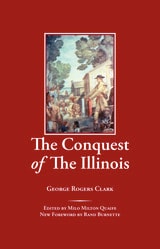
The Conquest of The Illinois
George Rogers Clark. Foreword by Rand Burnette
Southern Illinois University Press, 2001
Written only a decade after George Rogers Clark’s conquest of Illinois, this firsthand account shows the region as it existed in the 1770s, explains how British occupation affected Kentucky settlers, and exhibits Clark’s enormous diplomatic skills in convincing the French settlers and Indians along the rivers of Illinois that they were better off under the jurisdiction of the Americans rather than the British. In his new foreword to this book, Rand Burnette refers to Clark as a psychologist and an expert in human relations.
Believing the British responsible for Indian raids on the people of Kentucky, Clark determined to capture that area, which was claimed by his home state of Virginia. “His plan, which he presented to Governor Patrick Henry,” Burnette notes, “was to take possession of the Illinois country by defeating the British at Kaskaskia, win the support of the French in that area, and thus control both the Mississippi and the Ohio Rivers. The British support of the Indians, who raided the Kentucky settlements from the Illinois country, would be at an end.”
Clark’s stirring narrative—written between 1789 and 1791 and covering 1773–1779—chronicles the events in the Old Northwest in the second half of the eighteenth century. Life on the frontier was dangerous and uncertain at this time. As Clark points out and Milo Milton Quaife underlines in his footnotes, death came to many at the hands of Indians or in military battles and skirmishes.
First published in 1920 and long out of print, the Quaife edition of Clark’s The Conquest of The Illinois reprinted here is for the modern reader superior to the original. First, Quaife provided an index. Equally important for modern readers, he standardized Clark’s spelling. (Clark had little formal education, and his spelling was even more eccentric than that found in a typical eighteenth-century account.) Finally, Quaife’s footnotes often include biographical sketches of the people in the book.
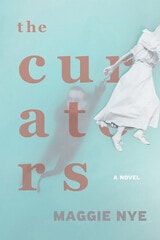
The Curators
A NovelMaggie Nye
Northwestern University Press, 2024
A dark, lyrical blend of historical fiction and magical realism, The Curators examines a critically underexplored event in American history through unlikely eyes. All of Atlanta is obsessed with the two-year-long trial and subsequent lynching of Jewish factory superintendent Leo Frank in 1915. None more so than thirteen-year-old Ana Wulff and her friends, who take history into their own hands—quite literally—when they use dirt from Ana’s garden to build and animate a golem in Frank’s image. They’ll do anything to keep his story alive, but when their scheme gets out of hand, they must decide what responsibility requires of them. The Curators tells the story of five zealous girls and the cyclonic power of their friendship as they come of age in a country riven by white supremacy.
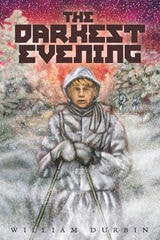
The Darkest Evening
William Durbin
University of Minnesota Press, 2011
Instead of finding the utopia they were promised, Jake and his family encounter only disappointment and hardship. When Stalin’s secret police begin targeting Americans for arrest, his worst fears are confirmed, and Jake leads his family on a daring midwinter escape attempt on cross-country skis, fleeing toward the Finnish border.
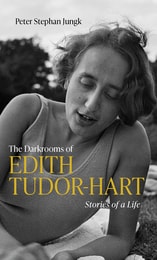
The Darkrooms of Edith Tudor-Hart
Stories of a LifePeter Stephan Jungk
Haus Publishing, 2026
A portrait of one of Britain's foremost documentary photographers—and her long career as a Soviet agent.
Why did you get yourself into this, Edith? Was it all worth it?
Born and raised in a liberal Jewish family in Vienna, Edith Tudor-Hart’s legacy is defined by her pioneering social photography and her pivotal role in the recruitment of Kim Philby as a Soviet agent. Arrested for her involvement with socialist groups, Edith immigrated to England in 1933 to escape political and religious persecution. There, her photography came to reflect her socialist ideals, and her clandestine work for the Soviet Union meant she would spend the rest of her life under the suspicion and close surveillance of MI5.
The Darkrooms of Edith Tudor-Hart is the culmination of Peter Stephan Jungk’s enduring fascination with his cousin’s life. His vivid portrait reveals a woman whose life was shrouded in secrecy and whom—in his confession to MI5 a decade before Edith’s death—the Soviet spy Anthony Blunt called ‘the grandmother of us all.’
The Deeds of Count Roger of Calabria and Sicily and of His Brother Duke Robert Guisc
Kenneth Baxter Wolf
University of Michigan Press, 2005
Geoffrey Malaterra's Deeds of Count Roger is the most important extant account of the Norman conquest of Muslim Silicy (1061-91). This volume includes a translation of the Latin original as well as an introduction, notes, and maps.
The Deeds of Count Roger fills a gap in the primary literature pertaining to the earliest phase of Latin Christian expansion at the expense of Islam, since the Norman conquests in Sicily were more or less contemporary with the First Crusade and the beginnings of the Spanish Reconquista. The account also illustrates the complexity of medieval historical writing, with Malaterra on the one hand praising the Normans for their military achievements and on the other subtly criticising the "lust for domination" that inspired them.
Kenneth Baxter Wolf is Professor of History at Pomona College.