Results by title
95 books match the query 'Ideology' and 27 start with t
Tarrying with the Negative
Kant, Hegel, and the Critique of IdeologySlavoj Zizek
Duke University Press, 1993
In Tarrying with the Negative, Žižek challenges the contemporary critique of ideology, and in doing so opens the way for a new understanding of social conflict, particularly the recent outbursts of nationalism and ethnic struggle. Are we, Žižek asks, confined to a postmodern universe in which truth is reduced to the contingent effect of various discursive practices and where our subjectivity is dispersed through a multitude of ideological positions? No is his answer, and the way out is a return to philosophy. This revisit to German Idealism allows Žižek to recast the critique of ideology as a tool for disclosing the dynamic of our society, a crucial aspect of which is the debate over nationalism, particularly as it has developed in the Balkans—Žižek's home. He brings the debate over nationalism into the sphere of contemporary cultural politics, breaking the impasse centered on nationalisms simultaneously fascistic and anticolonial aspirations. Provocatively, Žižek argues that what drives nationalistic and ethnic antagonism is a collectively driven refusal of our own enjoyment.
Using examples from popular culture and high theory to illuminate each other—opera, film noir, capitalist universalism, religious and ethnic fundamentalism—this work testifies to the fact that, far more radically than the postmodern sophists, Kant and Hegel are our contemporaries.

The Analysis of Ideology
Raymond Boudon
University of Chicago Press, 1989
Boudon begins by providing an exhaustive and subtle critique of sociological explanations of ideology from early conceptions to its current usage in the works of Barthes, Foucault, Habermas, Sartre, and others. He then offers his own interpretation of the origins and emergence of ideological beliefs. In opposition to those views which associate ideology with irrationalism, Boudon shows that ideologies are a natural ingredient of social life; he develops a rationalist theory that helps to explain why certain ideas are believed by individuals and thereby effective in the social world. Finally, he examines case studies of two modern-day ideologies—developmentalism and Third Worldism.
Moving easily across disciplinary boundaries, Boudon's provocative contribution to a subject of growing significance will be of great interest to scholars in sociology and social theory, as well as philosophy, political science, and development studies.
The Cattell Controversy
Race, Science, and IdeologyWilliam H. Tucker
University of Illinois Press, 2008
In addition to his mainstream research, Cattell had also authored a series of publications that posited evolutionary progress as the ultimate goal of human existence and argued that scientifically measurable criteria should be used to distinguish "successful" from "failing" racial groups so that the latter might be gradually "phased out" by non-violent methods such as regulation of birth control. Derived from science, Cattell's evolutionary philosophy was intended to be the basis of a full-blown religion. Although the earliest of these works had been published in the 1930s, near the end of an era in which eugenically based policies for human improvement were much more acceptable, Cattell promoted similar ideas well into the 1980s and '90s.
The Cattell Controversy describes Cattell's socio-religious beliefs in detail and analyzes their relationship to his scientific contributions. William H. Tucker discusses the controversy that arose within the field in response to the award's postponement, after which Cattell withdrew his name from consideration for the award but insisted that his position had been distorted by taking statements out of context. Reflecting on these events, Tucker concludes with a discussion of the complex question of whether and how a scientist's ideological views should ever be a relevant factor in determining the value of his or her contributions to the field.
The Conflict of Interpretations
Paul Ricoeur
Northwestern University Press, 1974
The Conflict of Interpretations
Essays in HermeneuticsPaul Ricoeur
Northwestern University Press, 2007
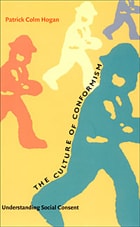
The Culture of Conformism
Understanding Social ConsentPatrick Colm Hogan
Duke University Press, 2001
In this wide-ranging and informative work, Patrick Colm Hogan draws on cognitive science, psychoanalysis, and social psychology to explore the cultural and psychological components of social consent. Focusing in particular on Americans’ acquiescence to a system that underpays and underrepresents the vast majority of the population, Hogan moves beyond typical studies of this phenomenon by stressing more than its political and economic dimensions.
With new insights into particularly insideous forms of consent such as those manifest in racism, sexism, and homophobia, The Culture of Conformism considers the role of emotion as it works in conjunction with belief and with the formation of group identity. Arguing that coercion is far more pervasive in democratic societies than is commonly recognized, Hogan discusses the subtle ways in which economic and social pressures operate to complement the more obviously violent forces of the police and military. Addressing issues of narcissism, self-esteem, and empathy, he also explains the concept of “rational” conformity—that is, the degree to which our social consent is based on self-interest—and explores the cognitive factors that produce and sustain social ideology.
Social activists, economic theorists, social psychologists, and political scientists will be intrigued and informed by this book.
The Discourse of Domination
From the Frankfurt School to PostmodernismBen Agger
Northwestern University Press, 1992
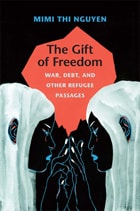
The Gift of Freedom
War, Debt, and Other Refugee PassagesMimi Thi Nguyen
Duke University Press, 2012
The Heavenly Contract
Ideology and Organization in Pre-Revolutionary PuritanismDavid Zaret
University of Chicago Press, 1985
The Individual in History
Essays in Honor of Jehuda ReinharzEdited by ChaeRan Y. Freeze, Sylvia Fuks Fried, and Eugene R. Sheppard
Brandeis University Press, 2015
The Lesbian Menace
Ideology, Identity, and the Representation of Lesbian LifeSherrie A. Inness
University of Massachusetts Press, 1997
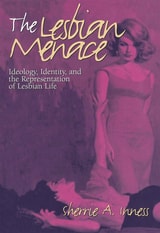
Electroshock. Hysterectomy. Lobotomy. These are only three of the many “cures” to which lesbians have been subjected in this century. How does a society develop such a profound aversion to a particular minority? In what ways do images in the popular media perpetuate cultural stereotypes about lesbians, and to what extent have lesbians been able to subvert and revise those images? This book addresses these and other questions by examining how lesbianism has been represented in American popular culture in the twentieth century and how conflicting ideologies have shaped lesbian experiences and identity.
In the first section, “Inventing the Lesbian,” Sherrie A. Inness explores depictions of lesbians in popular texts aimed primarily at heterosexual consumers. She moves from novels of the 1920s to books about life at women's colleges and boarding schools, to such contemporary women's magazines as Cosmopolitan, Glamour, and Vogue.
In the next section, “Forms of Resistance,” Inness probes the ways in which lesbians have refashioned texts intended for a heterosexual audience or created their own narratives. One chapter shows how lesbian readers have reinterpreted the Nancy Drew mysteries, looking at them from a distinctly “queer” perspective. Another chapter addresses the changing portrayal of lesbians in children's books over the past two decades.
The last section, “Writing in the Margins,” scrutinizes the extent to which lesbians, themselves a marginalized group, have created a society that relegates some of its own members to the outskirts. Topics include the geographic politics of lesbianism, the complex issue of "passing," and the meaning of butch identity in twentieth-century lesbian culture.

The Loss and Recovery of Truth
Selected Writings of Gerhart NiemeyerGerhart Niemeyer
St. Augustine's Press, 2013

The Muslim Brotherhood
Ideology, History, DescendantsJoas Wagemakers
Amsterdam University Press, 2022
The Performance Apparatus
On Ideological Production of BehaviorsBranislav Jakovljevic
University of Michigan Press, 2025
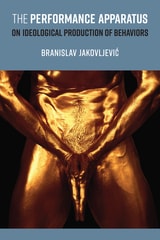
Jakovljević suggests that the centrality of behavior in early performance theory is important for the understanding of contemporary society, which is dominated by surveillance capitalism. If ideology is lodged in behaviors, and if surveillance capitalism thrives on the monetization of the behavioral surplus, then performance theory can make significant contributions to our understanding of the moment in which we live and the future we are facing. The Performance Apparatus argues for the importance of continuing attention to the question of ideology in contemporary, neoliberal order.

The Photographic Fix
Memory, Ideology, and the First World War in the Weimar RepublicJustin Court
University of Michigan Press, 2026

The Pliant Public
Ideology and Public Opinion in ChinaJason Y. Wu
University of Michigan Press, 2027
The Chinese Communist Party has long depended on ideology to set the agenda, communicate its priorities, and legitimize its rule. The Pliant Public argues that for Chinese citizens, however, ideology is in short supply. Surveys show that public opinion is depolarized. Ordinary people have little sense of what ideological labels like “left” and “right” mean, and most of the people who put themselves on the right have the scale backwards. Since a depolarized public is ill-equipped to check the state, China’s leaders can make massive changes to government policy without triggering much backlash.
But depolarization does not always strengthen the state. When citizens lack clear ideological commitments, it is easier for them to set aside their differences. If China’s leaders lost their performance legitimacy, then depolarization could facilitate a broader challenge to party rule.
The Politics of Glamour
Ideology and Democracy in the Screen Actors GuildDavid F. Prindle
University of Wisconsin Press, 1988
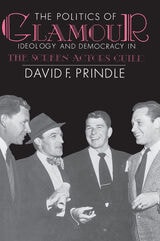
Rarely are the off-screen lives of actors examined for evidence of deep thinking or good citizenship. Still more rarely do the internal workings of labor unions attract public scrutiny. Nevertheless, as David Prindle shows in his examination of democracy in the Screen Actors Guild, this actors’ union has for over 50 years been an arena for idealistic, yet intense and hardboiled political maneuvering.
In The Politics of Glamour, readers become aware of the seriousness and political commitment displayed by people whom the general public has generally admired more for their artistic skills. After reading this account of politics among America’s screen royalty, no one could wonder about where Ronald Reagan, a former SAG president, received his political training.
Besides analyzing the politics of SAG, however, the author follows a good story wherever it leads. The reader can expect to learn something about the political economy of Hollywood and the American labor movement, the value of celebrity within the acting community, the impact of technological change, and even a bit of gossip.

The Proper Lady and the Woman Writer
Ideology as Style in the Works of Mary Wollstonecraft, Mary Shelley, and Jane AustenMary Poovey
University of Chicago Press, 1984
"The proper lady was a handy concept for a developing bourgeois patriarchy, since it deprived women of worldly power, relegating them to a sanctified domestic sphere that, in complex ways, nourished and sustained the harsh 'real' world of men. With care and subtle intelligence, Poovey examines this 'guardian and nemesis of the female self' through the ways it is implicated in the style and strategies of three very different writers."—Rachel M. Brownstein, The Nation
"The Proper Lady and the Woman Writer is a model of . . . creative discovery, providing a well-researched, illuminating history of women writers at the turn of the nineteenth century. [Poovey] creates sociologically and psychologically persuasive accounts of the writers: Wollstonecraft, who could never fully transcend the ideology of propriety she attacked; Shelley, who gradually assumed a mask of feminine propriety in her social and literary styles; and Austen, who was neither as critical of propriety as Wollstonecraft nor as accepting as Shelley ultimately became."—Deborah Kaplan, Novel
The Radiant Past
Ideology and Reality in Hungary's Road to CapitalismMichael Burawoy and János Lukács
University of Chicago Press, 1992
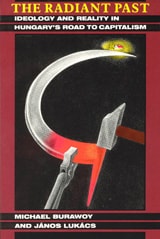
Michael Burawoy and Janos Lukacs consider this question from the standpoint of the Hungarian working class. Between 1983 and 1990 the authors carried out intensive studies in two core Hungarian industries, machine building and steel production, to produce the first extended participant-observation study of work and politics in state socialism.
"A fascinating and engagingly written eyewitness report on proletarian life in the waning years of goulash communism. . . . A richly rewarding book, one that should interest political scientists in a variety of subfields, from area specialists and comparativists to political economists, as well as those interested in Marxist and post-Marxist theory."—Elizabeth Kiss, American Political Science Review
"A very rich book. . . . It does not merely offer another theory of transition, but also presents a clear interpretive scheme, combined with sociological theory and vivid ethnographic description."—Ireneusz Bialecki, Contemporary Sociology
"Its informed skepticism of post-Communist liberal euphoria, its concern for workers, and its fine ethnographic details make this work valuable."—"àkos Róna-Tas, American Journal of Sociology
The Return of Ideology
The Search for Regime Identities in Postcommunist Russia and ChinaCheng Chen
University of Michigan Press, 2016
As a nation makes the transition from communism to democracy or another form of authoritarianism, its regime must construct not only new political institutions, but also a new political ideology that can guide policy and provide a sense of mission. The new ideology is crucial for legitimacy at home and abroad, as well as the regime’s long-term viability. In The Return of Ideology, Cheng Chen compares post-communist regimes, with a focus on Russia under Putin and post-Deng China, investigating the factors that affect the success of an ideology-building project and identifies the implications for international affairs.
Successful ideology-building requires two necessary—but not sufficient—conditions. The regime must establish a coherent ideological repertoire that takes into account the nation’s ideological heritage and fresh surges of nationalism. Also, the regime must attract and maintain a strong commitment to the emerging ideology among the political elite.
Drawing on rich primary sources, including interviews, surveys, political speeches, writings of political leaders, and a variety of publications, Chen identifies the major obstacles to ideology-building in modern Russia and China and assesses their respective long-term prospects. Whereas creating a new regime ideology has been a protracted and difficult process in China, it has been even more so in Russia. The ability to forge an ideology is not merely a domestic concern for these two nations, but a matter of international import as these two great powers move to assert and extend their influence in the world.
The Temptation of Saint Redon
Biography, Ideology, and Style in the Noirs of Odilon RedonStephen F. Eisenman
University of Chicago Press, 1992
Indeed, local tales and legends of witches, ghosts, one-eyed monsters, evil eyes, and wood fairies figure prominently in Redon's graphic works, which he called his noirs, or "blacks." After formal training at Bordeaux and Paris in the 1850s and 1860s, Redon began to chart his independent artistic course. Eisenman shows how, rejecting both naturalism and classicism, Redon, a prototypical Symbolist, found in grotesque and epic genres the expression of organic communities and precapitalist societies. He places Redon's desire for this imagined world of superstitious simplicity a desire manifest in his entire mature artistic practice in the context of contemporary avant-garde movements.
Redon's great noirs of the 1870s and 1880s, dreamlike configurations of seemingly irreconcilable elements from portraits, still lifes, and landscapes, show an increasingly subtle control of connotation and a complex indebtedness to caricature, allegory, and puns. Many of the noirs also visually interpret works by like-minded authors, including Baudelaire, Flaubert, Poe, and Mallarmé, one of Redon's close friends. Eisenman's analysis of the noirs underscores Redon's interest in creating an imaginative, even fantastic art, that could act directly on the human spirit. In addition to deepening our understanding of Redon and his art, The Temptation of Saint Redon exposes a link between place, politics, personal history, and the artistic imagination.
Theorizing Myth
Narrative, Ideology, and ScholarshipBruce Lincoln
University of Chicago Press, 2000
He begins by showing that mythos yielded to logos not as part of a (mythic) "Greek miracle," but as part of struggles over political, linguistic, and epistemological authority occasioned by expanded use of writing and the practice of Athenian democracy. Lincoln then turns his attention to the period when myth was recuperated as a privileged type of narrative, a process he locates in the political and cultural ferment of the eighteenth and nineteenth centuries. Here, he connects renewed enthusiasm for myth to the nexus of Romanticism, nationalism, and Aryan triumphalism, particularly the quest for a language and set of stories on which nation-states could be founded.
In the final section of this wide-ranging book, Lincoln advocates a fresh approach to the study of myth, providing varied case studies to support his view of myth—and scholarship on myth—as ideology in narrative form.
Thinking Across the American Grain
Ideology, Intellect, and the New PragmatismGiles Gunn
University of Chicago Press, 1992
major contribution to the current revival of pragmatism in
America by showing how it provides the most critically
resilient and constructive response to the intellectual
challenges of postmodernism.
Gunn reclaims and refurbishes elements of the pragmatic
tradition that either have been lost or have undergone
important changes and shows how newer critical approaches
have strong roots in the pragmatic tradition. For Gunn,
pragmatism is no longer concerned solely with the nature of
knowledge and the meaning of truth. Because of its
insistence on critical self-awareness, its opposition to
closed systems of thought, and its concern with the ethical,
political, and practical contexts of ideas, pragmatism offers
a blueprint for performing intellectual work in a world
without absolutes. The world Gunn's pragmatism recognizes is
one of multiple truths, unstable interpretations, and
competing interests.
After critically reexamining the nature and scope of the
pragmatic legacy, Gunn explores the way pragmatism
successfully responds to conceptual and methodological
controversies, from the rebirth of ideology, the spread of
interdisciplinarity, and the development of the new
historicism, to the revolt against theory, the erosion of
public discourse, and the problematics of American civil
religion. Drawing throughout on the work of William James,
Henry James, Sr., John Dewey, Kenneth Burke, W. E. B. Du
Bois, Richard Poirier, Stanley Cavell, Clifford Geertz, Frank
Lentricchia, Richard Rorty, Richard J. Bernstein, and
others, Gunn shows that pragmatism, because it offers a way
of thinking across the categories of modern intellectual
specializations, is located at the intersection of these
critical, and often competitive, discourses. The postmodern
challenge for the pragmatist thinker is not only how to
render these different discourses conversible with one
another, but how to turn the salient insights of each into
elements of a new democratic and critical public culture, one
able to counter the twin threats of ideology and solipsism.
Giles Gunn is one of our most acclaimed contemporary critics,
and this broad and ambitious book is certain to become one of
the central works in the current revival of critical
pragmatism and cultural studies.

Thought Crime
Ideology and State Power in Interwar JapanMax M. Ward
Duke University Press, 2019

Transatlantic Fascism
Ideology, Violence, and the Sacred in Argentina and Italy, 1919-1945Federico Finchelstein
Duke University Press, 2010
As Finchelstein explains, nacionalismo, the right-wing ideology that developed in Argentina, was not the wholesale imitation of Italian fascism that Mussolini wished it to be. Argentine nacionalistas conflated Catholicism and fascism, making the bold claim that their movement had a central place in God’s designs for their country. Finchelstein explores the fraught efforts of nationalistas to develop a “sacred” ideological doctrine and political program, and he scrutinizes their debates about Nazism, the Spanish Civil War, imperialism, anti-Semitism, and anticommunism. Transatlantic Fascism shows how right-wing groups constructed a distinctive Argentine fascism by appropriating some elements of the Italian model and rejecting others. It reveals the specifically local ways that a global ideology such as fascism crossed national borders.

Transfiguring America
Myth, Ideology, and Mourning in Margaret Fuller's WritingJeffrey Steele
University of Missouri Press, 2001
Transfiguring America is the product of more than ten years of research and numerous published articles on Margaret Fuller, arguably America's first feminist theorist and one of the most important woman writers in the nineteenth century. Focusing on Fuller's development of a powerful language that paired cultural critique with mythmaking, Steele shows why her writing had such a vital impact on the woman's rights movement and modern conceptions of gender.
This groundbreaking study pays special attention to the ways in which Fuller's feminist consciousness and social theory emerged out of her mourning for herself and others, her dialogue with Emersonian Transcendentalism, and her eclectic reading in occult and mythical sources. Transfiguring America is the first book to provide detailed analyses of all of Fuller's major texts, including her mystical Dial essays, correspondence with Emerson, Summer on the Lakes, 1844 poetry, Woman in the Nineteenth Century, and New York Tribune essays written both in New York and Europe.
Starting from her own profound sense of loss as a marginalized woman, Fuller eventually recognized the ways in which the foundational myths of American society, buttressed by conservative religious ideologies, replicated dysfunctional images of manhood and womanhood. With Woman in the Nineteenth Century, after exploring the roots of oppression in her essays and poetry, Fuller advanced the cause of woman's rights by conceptualizing a more fluid and equitable model of gender founded upon the mythical reconfiguration of human potential. But as her horizons expanded, Fuller demanded not only political equality for women, but also emotional, intellectual, and spiritual freedom for all victims of social oppression.
By the end of her career, Steele shows, Fuller had blended personal experience and cultural critique into the imaginative reconstruction of American society. Beginning with a fervent belief in personal reform, she ended her career with the apocalyptic conviction that the dominant myths both of selfhood and national identity must be transfigured. Out of the ashes of personal turmoil and political revolution, she looked for the phoenix of a revitalized society founded upon the ideal of political justice.

Transnational Political Islam
Religion, Ideology and PowerEdited by Azza Karam
Pluto Press, 2003
Political Islam, to be distinguished from Islam as a culture or a religion, and from Islamic Fundamentalism, is an increasingly important feature of the western political scene. The ideologies of Political Islam reflect the fact that some of their adherents live and work within a Western socio-political context.
Although Political Islam has been widely written about in Muslim countries, very little has been published the West, and this book attempts to redress that imbalance.
With a range of outstanding contributors that includes academics and human rights advocates this book tackles the diversity of Islamist thinking and practice in various Western countries and explores their transnational connections in both East and West.
The book analyses developments in Islamist thinking and activities, and their connections to the latest global political and economic trends, and discusses future evolutions of the ideology and its manifestations.