Results by title
433 books match the query 'Immigrants' and 71 start with t
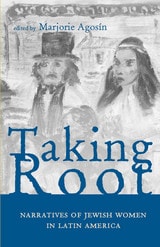
Taking Root
Narratives of Jewish Women in Latin AmericaMarjorie Agosín
Ohio University Press, 2002
In Taking Root, Latin American women of Jewish descent, from Mexico to Uruguay, recall their coming of age with Sabbath candles and Hebrew prayers, Ladino songs and merengue music, Queen Esther and the Virgin of Guadalupe. Rich and poor, Sephardi and Ashkenazi, Jewish immigrant families searched for a new home and identity in predominantly Catholic societies. The essays included here examine the religious, economic, social, and political choices these families have made and continue to make as they forge Jewish identities in the New World.
Marjorie Agosín has gathered narratives and testimonies that reveal the immense diversity of Latin American Jewish experience. These essays, based on first- and second-generation immigrant experience, describe differing points of view and levels of involvement in Jewish tradition. In Taking Root, Agosín presents us with a contemporary and vivid account of the Jewish experience in Latin America.
Taking Root documents the sadness of exile and loss but also a fierce determination to maintain Jewish traditions. This is Jewish history but it is also part of the untold history of Brazil, Argentina, El Salvador, Ecuador, Chile, Peru, and all of Latin America.

Talk Thai
The Adventures of Buddhist BoyIra Sukrungruang
University of Missouri Press, 2011
When Ira Sukrungruang was born to Thai parents newly arrived in the U.S., they picked his Jewish moniker out of a book of “American” names. In this lively, entertaining, and often hilarious memoir, he relates the early life of a first-generation Thai-American and his constant, often bumbling attempts to reconcile cultural and familial expectations with the trials of growing up in 1980s America.
Young Ira may have lived in Oak Lawn, Illinois, but inside the family’s bi-level home was “Thailand with American conveniences.” They ate Thai food, spoke the Thai language, and observed Thai customs. His bedtime stories were tales of Buddha and monkey-faced demons. On the first day of school his mother reminded him that he had a Siamese warrior’s eyes—despite his thick glasses—as Aunty Sue packed his Muppets lunch box with fried rice. But when his schoolmates played tag he was always It, and as he grew, he faced the constant challenge of reconciling American life with a cardinal family rule: “Remember, you are Thai.”
Inside the Thai Buddhist temple of Chicago, another “simulated Thailand,” are more rules, rules different from those of the Southside streets, and we see mainstream Western religion—“god people”—through the Sukrungruang family’s eyes. Within the family circle, we meet a mother who started packing for her return to Thailand the moment she arrived; her best friend, Aunty Sue, Ira’s second mother, who lives with and cooks for the family; and a wayward father whose dreams never quite pan out.
Talk Thai is a richly told account that takes us into an immigrant’s world. Here is a story imbued with Thai spices and the sensibilities of an American upbringing, a story in which Ira practices English by reciting lines from TV sitcoms and struggles with the feeling of not belonging in either of his two worlds. For readers who delight in the writings of Amy Tan, Gish Jen, and other Asian-Americans, Talk Thai provides generous portions of a still-mysterious culture while telling the story of an American boyhood with humor, playfulness, and uncompromising honesty.
Texan Crucible
How the Irish, Germans, and Czechs Became AngloMarian J. Barber
University of Texas Press, 2026
A history of European immigrants in Texas and how they redefined racial identity.
While the creation of a Black-White racial binary was foundational to most of the United States, nineteenth-century Texas developed a unique tripartite system that acknowledged the role of individuals of Mexican ancestry in a region that was Spanish, Mexican, and an independent nation before becoming a US (and briefly Confederate) state. Yet this framework was fraught, struggling to accommodate new arrivals from beyond North America, in particular the Irish, Germans, and Czechs. Texan Crucible tells the story of these immigrants and how they became Anglo.
Marian Barber reveals the ways language, religion, alcohol use, and attitudes toward slavery distinguished these newcomers to Texas from those arriving from the eastern United States and how they nevertheless created thriving, influential communities. Their status was shaped by events inside and far beyond Texas, including an 1887 prohibition fight, the Civil War, and two world wars that encouraged them to erase their distinctiveness. As segregation was formally outlawed and civil rights activism grew, understandings of race shifted, cementing these groups’ status as Anglo. Texan Crucible recovers the histories of German, Irish, and Czech immigrants and unveils the social construction of racial difference underpinning Texan identity.
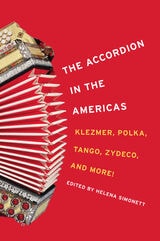
The Accordion in the Americas
Klezmer, Polka, Tango, Zydeco, and More!Edited by Helena Simonett
University of Illinois Press, 2012
This rich collection considers the accordion and its myriad forms, from the concertina, button accordion, and piano accordion familiar in European and North American music to the exotic-sounding South American bandoneon and the sanfoninha. Capturing the instrument's spread and adaptation to many different cultures in North and South America, contributors illuminate how the accordion factored into power struggles over aesthetic values between elites and working-class people who often were members of immigrant and/or marginalized ethnic communities. Specific histories and cultural contexts discussed include the accordion in Brazil, Argentine tango, accordion traditions in Colombia and the Dominican Republic, cross-border accordion culture between Mexico and Texas, Cajun and Creole identity, working-class culture near Lake Superior, the virtuoso Italian-American and Klezmer accordions, Native American dance music, and American avant-garde.
Contributors are María Susana Azzi, Egberto Bermúdez, Mark DeWitt, Joshua Horowitz, Sydney Hutchinson, Marion Jacobson, James P. Leary, Megwen Loveless, Richard March, Cathy Ragland, Helena Simonett, Jared Snyder, Janet L. Sturman, and Christine F. Zinni.
The Autobiography of Citizenship
Assimilation and Resistance in U.S. EducationCooper, Tova
Rutgers University Press, 0
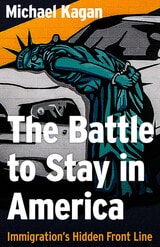
The Battle to Stay in America
Immigration's Hidden Front LineMichael Kagan
University of Nevada Press, 2025
The Battle to Stay in America is the story of a community coming to grips with the federal government’s crackdown on immigrants, and learning how to defend itself. Informative and personal, this is a story about mothers and fathers, lawyers and activists, local police and federal agencies, and a struggle for the identity of a nation. This is the quintessential story of the war on immigrants, as fought and felt on the front lines in the heart of America.
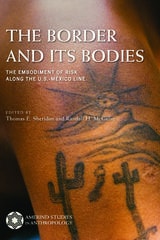
The Border and Its Bodies
The Embodiment of Risk Along the U.S.-México LineEdited by Thomas E. Sheridan and Randall H. McGuire
University of Arizona Press, 2019
The increasingly militarized U.S.-México border is an intensely physical place, affecting the bodies of all who encounter it. The essays in this volume explore how crossing becomes embodied in individuals, how that embodiment transcends the crossing of the line, and how it varies depending on subject positions and identity categories, especially race, class, and citizenship.
Timely and wide-ranging, this book brings into focus the traumatic and real impact the border can have on those who attempt to cross it, and it offers new perspectives on the effects for rural communities and ranchers. An intimate and profoundly human look at migration, The Border and Its Bodies reminds us of the elemental fact that the border touches us all.
Contributors
Bruce E. Anderson
Jared Beatrice
Rebecca Crocker
Jason De León
Linda Green
Randall H. McGuire
Shaylih Muehlmann
Robin Reineke
Olivia T. Ruiz Marrujo
David Seibert
Thomas E. Sheridan
Angela Soler
Ruth M. Van Dyke
The Borders of Dominicanidad
Race, Nation, and Archives of ContradictionLorgia García Peña
Duke University Press, 2016
The Borders of Inequality
Where Wealth and Poverty CollideÍñigo Moré
University of Arizona Press, 2011
In this fascinating book, originally published in Spain to much acclaim, researcher Íñigo Moré looks at the bigger picture. With a professionally trained eye, he examines the world’s “top twenty most unequal borders.” What he finds is that many of these border situations share similar characteristics. There is always illegal immigration from the poor country to the wealthy one. There is always trafficking in illegal substances. And the unequal neighbors usually regard each other with suspicion or even open hostility.
After surveying the “top twenty,” Moré explores in depth the cases of three borders: between Germany and Poland, Spain and Morocco, and the United States and Mexico. The core problem, he concludes, is not drugs or immigration or self-protection. Rather, the problem is inequality itself. Unequal borders result, he writes, from a skewed interaction among markets, people, and states. Using these findings, Moré builds a useful new framework for analyzing border dynamics from a quantitative view based on economic inequality.
The Borders of Inequality illustrates how longstanding “multidirectional misunderstandings” can exacerbate cross-border problems—and consequent public opinion. Perpetuating these misunderstandings can inflame and complicate the situation, but purposeful efforts to reduce inequality can produce promising results.
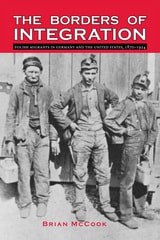
The Borders of Integration
Polish Migrants in Germany and the United States, 1870–1924Brian McCook
Ohio University Press, 2011
The issues of immigration and integration are at the forefront of contemporary politics. Yet debates over foreign workers and the desirability of their incorporation into European and American societies too often are discussed without a sense of history. McCook’s examination questions static assumptions about race and white immigrant assimilation a hundred years ago, highlighting how the Polish immigrant experience is relevant to present-day immigration debates on both sides of the Atlantic. Further, his research shows the complexity of attitudes toward immigration in Germany and the United States, challenging historical myths surrounding German national identity and the American “melting pot.”
In a comparative study of Polish migrants who settled in the Ruhr Valley and northeastern Pennsylvania, McCook shows that in both regions, Poles become active citizens within their host societies through engagement in social conflict within the public sphere to defend their ethnic, class, gender, and religious interests. While adapting to the Ruhr and northeastern Pennsylvania, Poles simultaneously retained strong bonds with Poland, through remittances, the exchange of letters, newspapers, and frequent return migration. In this analysis of migration in a globalizing world, McCook highlights the multifaceted ways in which immigrants integrate into society, focusing in particular on how Poles created and utilized transnational spaces to mobilize and attain authentic and more permanent identities grounded in newer broadly conceived notions of citizenship.
The Borders of Responsibility
Migration Control in the Mediterranean SeaKiri Olivia Santer
Duke University Press, 2026
The Changing Face of Home
The Transnational Lives of the Second GenerationPeggy Levitt
Russell Sage Foundation, 2002
The Changing Face of Inequality
Urbanization, Industrial Development, and Immigrants in Detroit, 1880-1920Olivier Zunz
University of Chicago Press, 1983
The Changing Face of World Cities
Young Adult Children of Immigrants in Europe and the United StatesMaurice Crul
Russell Sage Foundation, 2013
The Chinese in Mexico, 1882-1940
By Robert Chao Romero
University of Arizona Press, 2010
Robert Romero argues that Chinese immigrants turned to Mexico as a new land of economic opportunity after the passage of the U.S. Chinese Exclusion Act of 1882. As a consequence of this legislation, Romero claims, Chinese immigrants journeyed to Mexico in order to gain illicit entry into the United States and in search of employment opportunities within Mexico’s developing economy. Romero details the development, after 1882, of the “Chinese transnational commercial orbit,” a network encompassing China, Latin America, Canada, and the Caribbean, shaped and traveled by entrepreneurial Chinese pursuing commercial opportunities in human smuggling, labor contracting, wholesale merchandising, and small-scale trade.
Romero’s study is based on a wide array of Mexican and U.S. archival sources. It draws from such quantitative and qualitative sources as oral histories, census records, consular reports, INS interviews, and legal documents. Two sources, used for the first time in this kind of study, provide a comprehensive sociological and historical window into the lives of Chinese immigrants in Mexico during these years: the Chinese Exclusion Act case files of the U.S. Immigration and Naturalization Service and the 1930 Mexican municipal census manuscripts. From these documents, Romero crafts a vividly personal and compelling story of individual lives caught in an extensive network of early transnationalism.
The Common Camp
Architecture of Power and Resistance in Israel–PalestineIrit Katz
University of Minnesota Press, 2022
Seeing the camp as a persistent political instrument in Israel–Palestine and beyond
The Common Camp underscores the role of the camp as a spatial instrument employed for reshaping, controlling, and struggling over specific territories and populations. Focusing on the geopolitical complexity of Israel–Palestine and the dramatic changes it has experienced during the past century, this book explores the region’s extensive networks of camps and their existence as both a tool of colonial power and a makeshift space of resistance.
Examining various forms of camps devised by and for Zionist settlers, Palestinian refugees, asylum seekers, and other groups, Irit Katz demonstrates how the camp serves as a common thread in shaping lands and lives of subjects from across the political spectrum. Analyzing the architectural and political evolution of the camp as a modern instrument engaged by colonial and national powers (as well as those opposing them), Katz offers a unique perspective on the dynamics of Israel–Palestine, highlighting how spatial transience has become permanent in the ongoing story of this contested territory.
The Common Camp presents a novel approach to the concept of the camp, detailing its varied history as an apparatus used for population containment and territorial expansion as well as a space of everyday life and subversive political action. Bringing together a broad range of historical and ethnographic materials within the context of this singular yet versatile entity, the book locates the camp at the core of modern societies and how they change and transform.
The Constructed Mennonite
History, Memory, and the Second World WarHans Werner
University of Manitoba Press, 2013
The Creation of an Ethnic Identity
Being Swedish American in the Augustana Synod, 1860-1917Dag Blanck
Southern Illinois University Press, 2006
Analyzing the development of a Swedish American identity
The Creation of an Ethnic Identity: Being Swedish American in the Augustana Synod, 1860–1917 analyzes how Swedish American identity was constructed, maintained, and changed in the late nineteenth and early twentieth centuries. The Augustana Synod, the largest religious-based organization created by Swedish immigrants in the United States, played an important role in establishing what it meant to be Swedish American.
In this study, author Dag Blanck poses three fundamental questions: How did an ethnic identity develop in the Augustana Synod? What was that identity? Why was an ethnic identity formed? Based on primary sources formerly unknown or neglected, The Creation of an Ethnic Identity examines the Lutheran Augustana Synod, Augustana College, and the Augustana Book Concern to provide insights into how ethnic identity is constructed within a major religious body, a central educational institution, and a major publishing house.
Starting from the concept of ethnicity as something created or invented, Blanck goes on to explore how it was possible for a white European immigrant group like the Swedes to use its ethnicity as a tool of integration into American society. The nature of their ethnicity, says Blanck, was both determined by their cultural origins and also the values and nature of American society as they perceived it. Becoming Swedish American was also a way of becoming American.
The volume, which is augmented by illustrations, integrates the most critical scholarship on immigration and ethnicity over the past half century and provides a strong argument about how ethnicity is shaped over time within an immigrant group.
The Cubans of Union City
Immigrants and Exiles in a New Jersey CommunityYolanda Prieto
Temple University Press, 2009
As a result of the conflicts between Cuba and the United States, especially after 1959, Cubans immigrated in great numbers. Most stayed in Miami, but many headed north to Union City, making it second only to Miami in its concentration of Cubans. In The Cubans of Union City, Yolanda Prieto discusses why Cubans were drawn to this particular city and how the local economy and organizations developed. Central aspects of this story are the roles of women, religion, political culture, and the fact of exile itself.
As a member of this community and a participant in many of its activities, Prieto speaks with special authority about its demographic uniqueness. Far from being a snapshot of the community, The Cubans of Union City conveys an ongoing research agenda extending over more than twenty years, from 1959 to the 1980s. As a long-term observer who was also a resident, Prieto offers a unique and insightful view of the dynamics of this community’s evolution.
The Diversity Paradox
Immigration and the Color Line in Twenty-First Century AmericaJennifer Lee
Russell Sage Foundation, 2010

The Emigrants
George Lamming
University of Michigan Press, 1994
This is the epic journey of a group of West Indians who emigrate to Great Britain in the 1950s in search of educational opportunities unattainable at home. Seeking to redefine themselves in the "mother country," an idealized landscape that they have been taught to revere, the emigrants settle uncomfortably in England's industrial cities. Within two years, ghettoization is firmly in place. The emigrants discover the meaning of their marginality in the British Empire in an environment that is unexpectedly hostile and strange. For some, alienation prompts a new sense of community, a new sense of identity as West Indians. For others, alienation leads to a crisis of confrontation with the law and fugitive status.
There is a wealth of information here about the genesis of the black British community and about the cultural differences between the black British and West Indian/Caribbean.

The Emperor of Ice-Cream
Dan Gunn
Seagull Books, 2014
When she falls in love in Rome, it appears that happiness is Lucia’s for the asking, until unstoppable forces intervene—in both of her countries. With mounting tension, her tale leads through the rise of Fascism to the terrible moment in June 1940 when Mussolini declares war, and British Italians are interned. When hundreds are herded as ‘enemy aliens’ onto a ship bound for exile, among their number are two of her brothers. Determined to tell their story before it is too late, Lucia gives an account of one of the most shameful episodes in Britain’s Second World War.
Through his portrayal of Lucia’s singular vision and voice, Dan Gunn has created an unforgettable character who, while registering the buffets of history, is—just possibly—writing herself toward some overdue inner peace.
The Freedom of the Migrant
Objections to NationalismVilém Flusser. Translated to the German by Kenneth Kronenberg. Edited and with an Introduction by Anke K. Finger
University of Illinois Press, 2013

The Good Oak
Martin Etchart
University of Nevada Press, 2005
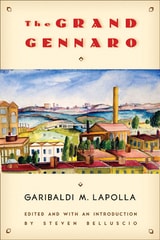
The Grand Gennaro
Belluscio, Steven
Rutgers University Press, 2009
The Grand Gennaro, a riveting saga set at the turn of the last century in Italian American Harlem, reflects on how youthful acts of cruelty and desperation follow many to the grave. A classic in the truest sense, this operatic narrative is alive once again, addressing the question: How does one become an "American"?
The Handbook of International Migration
The American ExperienceCharles Hirschman
Russell Sage Foundation, 1999
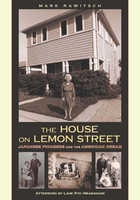
The House on Lemon Street
Japanese Pioneers and the American DreamMark Rawitsch
University Press of Colorado, 2013
Bringing this little-known story to light, The House on Lemon Street details the Haradas' decision to fight for the American dream. Chronicling their experiences from their immigration to the United States through their legal battle over their home, their incarceration during World War II, and their lives after the war, this book tells the story of the family's participation in the struggle for human and civil rights, social justice, property and legal rights, and fair treatment of immigrants in the United States.
The Harada family's quest for acceptance illuminates the deep underpinnings of anti-Asian animus, which set the stage for Executive Order 9066, and recognizes fundamental elements of our nation's anti-immigrant history that continue to shape the American story. It will be worthwhile for anyone interested in the Japanese American experience in the twentieth century, immigration history, public history, and law.
This publication was made possible with the support of Naomi, Kathleen, Ken, and Paul Harada, who donated funds in memory of their father, Harold Shigetaka Harada, honoring his quest for justice and civil rights. Additional support for this publication was also provided, in part, by UCLA's Aratani Endowed Chair as well as Wallace T. Kido, Joel B. Klein, Elizabeth A. Uno, and Rosalind K. Uno.
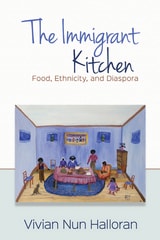
The Immigrant Kitchen
Food, Ethnicity, and DiasporaVivian Nun Halloran
The Ohio State University Press, 2016
The Immigrant Kitchen describes how these memoirs function as a complex and engaging mass media genre that caters to multiple reading constituencies. Specifically, they entertain readers with personal anecdotes and recollections, teach new culinary skills through recipes, share insight into different cultural mores through ethnographic and reportorial discussions of life in other countries, and attest to the impact that an individual’s legal immigration into the United States continues to have down through the generations of his or her American-born families.

The Immigrant Threat
The Integration of Old and New Migrants in Western Europe since 1850Leo Lucassen
University of Illinois Press, 2005
Leo Lucassen tackles the question of whether the integration process of these recent immigrants will fundamentally differ in the long run (over multiple generations) from the experiences of similar immigrant groups in the past. For comparison, Lucassen focuses on "large and problematic groups" from Western Europe's past (the Irish in the United Kingdom, the Poles in Germany, and the Italians in France) and demonstrates a number of structural similarities in the way migrants and their descendants integrated into these nation states. Lucassen emphasizes that the geographic sources of the "threat" have changed and that contemporaries tend to overemphasize the threat of each successive wave of immigrants, in part because the successfully incorporated immigrants of the past have become invisible in national histories.
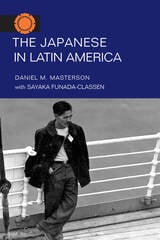
The Japanese in Latin America
Daniel M. Masterson with Sayaka Funada-Classen
University of Illinois Press, 2003
Latin America is home to 1.5 million persons of Japanese descent. Combining detailed scholarship with rich personal histories, Daniel M. Masterson, with the assistance of Sayaka Funada-Classen, presents the first comprehensive study of the patterns of Japanese migration on the continent as a whole.
When the United States and Canada tightened their immigration restrictions in 1907, Japanese contract laborers began to arrive at mines and plantations in Latin America. The authors examine Japanese agricultural colonies in Latin America, as well as the subsequent cultural networks that sprang up within and among them, and the changes that occurred as the Japanese moved from wage labor to ownership of farms and small businesses. They also explore recent economic crises in Brazil, Argentina, and Peru, which, combined with a strong Japanese economy, caused at least a quarter million Latin American Japanese to migrate back to Japan.
Illuminating authoritative research with extensive interviews with migrants and their families, The Japanese in Latin America tells the story of immigrants who maintained strong allegiances to their Japanese roots, even while they struggled to build lives in their new countries.
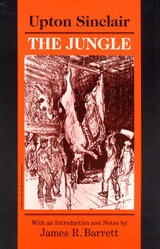
The Jungle
Upton Sinclair
University of Illinois Press, 1988
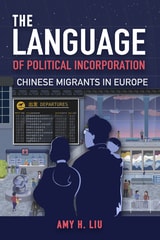
The Language of Political Incorporation
Chinese Migrants in EuropeAmy Liu
Temple University Press, 2021
In this groundbreaking study, The Language of Political Incorporation, Amy Liu focuses on Chinese migrants in Central-Eastern Europe and their varying levels of political incorporation in the local community. She examines the linguistic diversity of migrant networks, finding institutional trust and civic engagement depend not on national identity, but on the network’s linguistic diversity—namely, whether the operating language is a migrant’s mother tongue or a lingua franca.
The Language of Political Incorporation uses original survey data to assess when the Chinese engage positively with the authorities and when they become civic minded. The results are surprising. In Hungary, the Chinese community has experienced high levels of political incorporation in part because they have not been targeted by anti-immigrant rhetoric and policies. In contrast, migrants in Romania sought the assistance of the Chinese embassy to fight an effort to collect back taxes.
Liu also compares the Chinese experiences in Central-Eastern Europe with those of Muslims in the region, as well as how the Chinese are treated in Western Europe. Additionally, she considers how the local communities perceive the Chinese. The Language of Political Incorporation concludes by offering best practices for how governments can help migrants become more trusting of—and have greater involvement with—locals in their host countries. Ultimately, Liu demonstrates the importance of linguistic networks for the incorporation of immigrants.

The Making of Pioneer Wisconsin
Voices of Early SettlersMichael E. Stevens
Wisconsin Historical Society Press, 2018
The Making of Pioneer Wisconsin provides a unique and intimate glimpse into the lives of these early settlers, as they describe what it felt like to be a teenager in a wagon heading west or an isolated young wife living far from her friends and family. Woven together with context provided by historian Michael E. Stevens, these first-person accounts form a fascinating narrative that deepens our ability to understand and empathize with Wisconsin’s early pioneers.
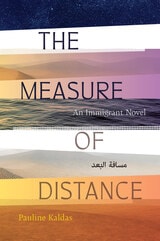
The Measure of Distance
An Immigrant NovelPauline Kaldas
University of Arkansas Press, 2023
This family saga begins when Salim, the eldest of three brothers, moves to Cairo at the start of the twentieth century with dreams of opening his own bakery. His decision to leave his ancestral village of Kom Ombo despite his parents’ objections reverberates across generations, kicking off a series of migrations that shape the lives of his family and their descendants throughout the decades that follow. These migrations only intensify after the revolution of 1952—with Misha, Salim’s eldest grandchild, being the first to flee to “Amreeka,” his annual phone calls home becoming briefer and briefer with each passing year.
Culminating with the 2011 protests in Tahrir Square, Pauline Kaldas’s The Measure of Distance is a detailed portrait of immigration against the backdrop of an Egypt in constant flux and an America that is always falling short of the fantasy. Alternating between tales of those who migrate and those who stay, this expansive novel follows its characters as they determine the course of their lives, often choosing one uncertainty over another as they migrate to new lands or plant their roots more firmly in their homeland.
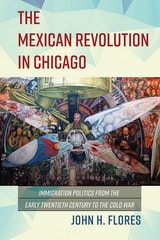
The Mexican Revolution in Chicago
Immigration Politics from the Early Twentieth Century to the Cold WarJohn H Flores
University of Illinois Press, 2018
The Migrant's Paradox
Street Livelihoods and Marginal Citizenship in BritainSuzanne M. Hall
University of Minnesota Press, 2021
Connects global migration with urban marginalization, exploring how “race” maps onto place across the globe, state, and street
In this richly observed account of migrant shopkeepers in five cities in the United Kingdom, Suzanne Hall examines the brutal contradictions of sovereignty and capitalism in the formation of street livelihoods in the urban margins. Hall locates The Migrant’s Paradox on streets in the far-flung parts of de-industrialized peripheries, where jobs are hard to come by and the impacts of historic state underinvestment are deeply felt.
Drawing on hundreds of in-person interviews on streets in Birmingham, Bristol, Leicester, London, and Manchester, Hall brings together histories of colonization with current forms of coloniality. Her six-year project spans the combined impacts of the 2008 financial crisis, austerity governance, punitive immigration laws and the Brexit Referendum, and processes of state-sanctioned regeneration. She incorporates the spaces of shops, conference halls, and planning offices to capture how official border talk overlaps with everyday formations of work and belonging on the street.
Original and ambitious, Hall’s work complicates understandings of migrants, demonstrating how migrant journeys and claims to space illuminate the relations between global displacement and urban emplacement. In articulating “a citizenship of the edge” as an adaptive and audacious mode of belonging, she shows how sovereignty and inequality are maintained and refuted.
The Modern Israeli and Palestinian Diasporas
A Comparative ApproachEdited by Nahum Karlinsky
University of Texas Press, 2024
A comparative study of contemporary Israeli and Palestinian diasporas.
Exilic and diasporic experience have become ubiquitous in recent decades. Jews, lacking a homeland, spread to various parts of the world, making the Jewish diaspora paradigmatic. But after the establishment of Israel in 1948, a different kind of diaspora emerged, as more than a tenth of Israeli citizens have chosen to leave their newly established state and resettle. Meanwhile, about half of all Palestinians, including Palestinian citizens of Israel, now reside in exile, predominantly as a result of the ongoing Palestinian-Israeli conflict.
Recognizing that Israeli-Jewish and Palestinian-Arab societies coexist and are engaged in constant relations, Nahum Karlinsky has assembled an impressive array of contributors to explore these diasporas alongside one another and in dialogue with other diasporic communities. The collected essays cover such topics as Palestinian exiles and diasporas, the demographics of today’s Israeli diaspora, immigrant enterprises, transnationalism and development, the unique place of Israeli Jews in the United States, the literature of Palestinian transnationals, and the emergence of Berlin as a queer Israeli-Jewish immigrant enclave.The Modern Israeli and Palestinian Diasporas challenges and reimagines the very notion of a homeland.

The Moon in Foil
Zuska Kepplová
Seagull Books, 2023
The Moon in Foil traces the stories of Petra, Natália, Anka, Mika, Juliana, and Jackie as they go out into the world in search of a better life—or maybe just a different one. In post-communist Europe, they have the freedom to study and work in places their parents couldn’t even have visited—Paris, London, Helsinki, and Budapest. But the reality of that “freedom,” they soon discover, is often nothing more than tedious work and poor living conditions. From close looks at the work of a housekeeper at a French hotel, a bartender at an Irish pub, a snowboarding instructor in Slovakia in the winter and an office worker in London in the summer, and a programmer in Helsinki, to explorations of larger topics such as marriage, divorce, and relationships, Zuska Kepplová’s novel is a millennials’ odyssey—a search for the self by the post–Cold War generation.

The Moon in Your Sky
An Immigrant's Journey HomeKate Saller
University of Missouri Press, 2014
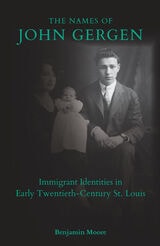
The Names of John Gergen
Immigrant Identities in Early Twentieth-Century St. LouisBenjamin Moore
University of Missouri Press, 2020
Winner of the 2022 Missouri History Book Award
Rescued from the dumpster of a boarded-up house, the yellowing scraps of a young migrant’s schoolwork provided Benjamin Moore with the jumping-off point for this study of migration, memory, and identity. Centering on the compelling story of its eponymous subject, The Names of John Gergen examines the converging governmental and institutional forces that affected the lives of migrants in the industrial neighborhoods of South St. Louis in the early twentieth century. These migrants were Banat Swabians from Torontál County in southern Hungary—they were Catholic, agrarian, and ethnically German.
Between 1900 and 1920, the St. Louis neighborhoods occupied by migrants were sites of efforts by civic authorities and social reformers to counter the perceived threat of foreignness by attempting to Americanize foreign-born residents. At the same time, these neighborhoods saw the strengthening of Banat Swabians’ ethnic identities. Historically, scholars and laypeople have understood migrants in terms of their aspirations and transformations, especially their transformations into Americans. The experiences of John Gergen and his kin, however, suggest that identity at the level of the individual was both more fragmented and more fluid than twentieth-century historians have recognized, subject to a variety of forces that often pulled migrants in multiple directions.
The New Asian Immigration in Los Angeles and Global Restructuring
Paul Ong
Temple University Press, 1994
The New Bostonians
How Immigrants Have Transformed the Metro Area since the 1960sMarilynn S. Johnson
University of Massachusetts Press, 2015
How immigrants helped rebuild a city—and redefined what it means to be American
Among the most consequential pieces of Great Society legislation, the Immigration Act of 1965 opened the nation's doors to large-scale immigration from Africa, Asia, and Latin America. A half century later, the impact of the "new immigration" is evident in the transformation of the country's demographics, economy, politics, and culture, particularly in urban America.
In The New Bostonians, Marilynn S. Johnson examines the historical confluence of recent immigration and urban transformation in greater Boston, a region that underwent dramatic decline after World War II. Since the 1980s, the Boston area has experienced an astounding renaissance—a development, she argues, to which immigrants have contributed in numerous ways. From 1970 to 2010, the percentage of foreign-born residents of the city more than doubled, representing far more diversity than earlier waves of immigration. Like the older Irish, Italian, and other European immigrant groups whose labor once powered the region's industrial economy, these newer migrants have been crucial in re-building the population, labor force, and metropolitan landscape of the New Boston, although the fruits of the new prosperity have not been equally shared.
The New Chicago
A Social and Cultural Analysisedited by John P. Koval, Larry Bennett, Michael I. J. Bennett, Fassil Demissie, Roberta Garner and Kiljoong Kim
Temple University Press, 2006
The New Chinese America
Class, Economy, and Social HierarchyZhao, Xiaojian
Rutgers University Press, 2010
In this detailed and comprehensive study of contemporary Chinese America, Xiaojian Zhao uses class analysis to illuminate the difficulties of everyday survival for poor and undocumented immigrants and analyzes the process through which social mobility occurs. Through ethnic ties, Chinese Americans have built an economy of their own in which entrepreneurs can maintain a competitive edge given their access to low-cost labor; workers who are shut out of the mainstream job market can find work and make a living; and consumers can enjoy high quality services at a great bargain. While the growth of the ethnic economy enhances ethnic bonds by increasing mutual dependencies among different groups of Chinese Americans, it also determines the limits of possibility for various individuals depending on their socioeconomic and immigration status.
The New Chosen People
Immigrants in the United StatesGuillermina Jasso
Russell Sage Foundation, 1990
The New Second Generation
Alejandro Portes
Russell Sage Foundation, 1996
The New World Inside A Basque Village
The Oiartzun Valley And Its Atlantic Emigrants, 1550-1800Juan Javier Pescador
University of Nevada Press, 2003
An ethnohistory detailing the lives of fifteen generations in a Basque-speaking community in Spain and the result of their diverse contacts with the New World. The Basques’ remarkable role in the establishment and exploitation of Spain’s American empire is well known, but until now the impact of these achievements on the Basque Country itself has received little attention. In this pioneering study, Juan Javier Pescador meticulously examines three centuries of social and economic change in the Oiartzun Valley of Gipuzkoa, a typical Basque peasant community altered by its contacts with the New World.
The Old Country and the New
Essays on Swedes and AmericaH. Arnold Barton
Southern Illinois University Press, 2006
Documenting a rich Scandinavian American culture and ethnic perspective
This notable collection of seventeen essays and six editorials by renowned Swedish American historian H. Arnold Barton was compiled from writings published between 1974 and 2005. The result of three decades of extensive research in the United States and Sweden, The Old Country and the New: Essays on Swedes and America, covers Swedish emigration to North America as well as the history and culture of Swedes in their new country.
In this rich mosaic of American ethnicity and cultural history, Barton analyzes the multifaceted Swedish emigration/immigration story. Essays include a survey of the historiography of emigration from the Scandinavian countries and the Scandinavian immigration to North America, Swedish emigration before 1846, and the Eric-Janssonist religious sect and its colony at Bishop Hill, Illinois.
Because Swedish immigrants were highly literate people, they wrote numerous letters describing their experiences to relatives and friends at home. What these letters related—or omitted—is the subject of another essay. Barton discusses Swedish immigrants who returned permanently to their homeland, affecting both the old country and the new. He also traces relations between the United States and Sweden, post—World War II Swedish immigration, and genealogy as history.
Offering a broad Scandinavian American ethnic perspective, The Old Country and the New appeals to both scholars and lay readers. Sixteen illustrations and a complete bibliography of Barton’s publications on Swedish American history and culture enhance the volume.
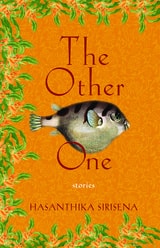
The Other One
StoriesHasanthika Sirisena
University of Massachusetts Press, 2016
Set in Sri Lanka and America, the ten short stories in this debut collection feature characters struggling to contend with the brutality of a decades-long civil war while also seeking security, love, and hope. The characters are students, accountants, soldiers, servants. They are immigrants and strivers. They are each forced to make sometimes comic, sometimes tragic, choices. What they share, despite what they've endured, is the sustaining power of human connection.
An excerpt from the book:
“All I want to know is when you are coming? When are you bringing my sons, my family?”
She watched as a gecko, tinier than normal, skittered across the far wall. It disappeared into a small crack. The room was very hot, and she hadn't turned on the ceiling fan so that the family could save a little money. She took a handkerchief from her nightstand and wiped the beads of sweat from her forehead and the back of her neck.
“I can't leave malli alone here. He's making progress but—”
“It will be for two years only. Then you can sponsor him.”
“The lawyer says it's not so easy.”
“He's a grown man. Let the government take him. The government did this to malli. Let the government pay the price for his care.”
Even though there was no chance that her brother Ranjith could hear her, Anoja dropped her voice. “Malli is all alone here. He has nobody but aiya and me.”
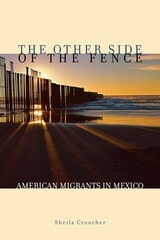
The Other Side of the Fence
American Migrants in MexicoBy Sheila Croucher
University of Texas Press, 2009
A growing number of Americans, many of them retirees, are migrating to Mexico's beach resorts, border towns, and picturesque heartland. While considerable attention has been paid to Mexicans who immigrate to the U.S., the reverse scenario receives little scrutiny. Shifting the traditional lens of North American migration, The Other Side of the Fence takes a fascinating look at a demographic trend that presents significant implications for the United States and Mexico.
The first in-depth account of this trend, Sheila Croucher's study describes the cultural, economic, and political lives of these migrants of privilege. Focusing primarily on two towns, San Miguel de Allende in the mountains and Ajijic along the shores of Lake Chapala, Croucher depicts the surprising similarities between immigrant populations on both sides of the border. Few Americans living in Mexico are fluent in the language of their new land, and most continue to practice the culture and celebrate the national holidays of their homeland, maintaining close political, economic, and social ties to the United States while making political demands on Mexico, where they reside.
Accessible, timely, and brimming with eye-opening, often ironic, findings, The Other Side of the Fence brings an important perspective to borderlands debates.