Results by title
763 books match the query 'Immigration & Emigration' and 131 start with t
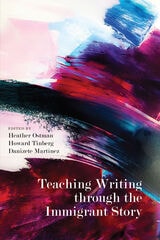
Teaching Writing through the Immigrant Story
Heather Ostman
Utah State University Press, 2021
Each of the chapters recognizes the prevalence of immigrant students in writing classrooms across the United States—including foreign-born, first- and second-generation Americans, and more—and the myriad opportunities and challenges those students present to their instructors. These contributors have seen the validity in the stories and experiences these students bring to the classroom—evidence of their lifetimes of complex learning in both academic and nonacademic settings. Like thousands of college-level instructors in the United States, they have immigrant stories of their own. The immigrant “narrative” offers a unique framework for knowledge production in which students and teachers may learn from each other, in which the ordinary power dynamic of teacher and students begins to shift, to enable empathy to emerge and to provide space for an authentic kind of pedagogy.
By engaging writing and literature teachers within and outside the classroom, Teaching Writing through the Immigrant Story speaks to the immigrant narrative as a viable frame for teaching writing—an opportunity for building and articulating knowledge through academic discourse. The book creates a platform for immigration as a writing and literary theme, a framework for critical thinking, and a foundation for significant social change and advocacy.
Contributors: Tuli Chatterji, Katie Daily-Bruckner, Libby Garland, Silvia Giagnoni, Sibylle Gruber, John Havard, Timothy Henderson, Brennan Herring, Lilian Mina, Rachel Pate, Emily Schnee, Elizabeth Stone
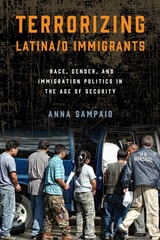
Terrorizing Latina/o Immigrants
Race, Gender, and Immigration Policy Post-9/11Anna Sampaio
Temple University Press, 2015
Immigration politics has been significantly altered by the advent of America’s war on terror and the proliferation of security measures. In her cogent study, Terrorizing Latina/o Immigrants, Anna Sampaio examines how these processes are racialized and gendered and how they impose inequitable burdens on Latina/o immigrants. She interrogates the rise of securitization, restrictive legislation, and the return of large-scale immigration raids and describes how these re-articulate and re-inscribe forms of racial and gender hierarchy.
Terrorizing Latina/o Immigrants demonstrates how the ascendance of America as a security state serves as a template to scrutinize, harass, and encumber immigrants while also reconfiguring citizenship. Sampaio uses intersectional analysis coupled with theoretical and empirical approaches to develop a critical framework for analyzing current immigration politics.
Sampaio provides a sustained and systematic examination of policy and enforcement shifts impacting Latinas/os. Her book concludes with an examination of immigration reform under the Obama administration, contrasting the promise of hope and change with the reality of increased detentions, deportations, and continued marginalization.
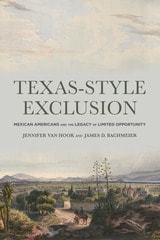
Texas-Style Exclusion
Mexican Americans and the Legacy of Limited OpportunityJennifer Van Hook
Russell Sage Foundation, 2024
Drawing on census and archival data on the quality of public schooling, Van Hook and Bachmeier find that Industrial Era European immigrants, who were primarily located in the northeastern U.S., benefited from programs and policies championed by the Americanization and Progressive movements. The Americanization movement sought to help acclimate new arrivals and transform “foreigners” into “Americans” by providing night school programs to promote civic integration and basic education, as well as other services. The Progressive movement, which aimed to improve education, work, and health conditions, sought to expand investment in public schools and make primary and secondary schooling mandatory, which kept working class children in school as opposed to entering the workforce. This access to education allowed for integration and astonishing intergenerational mobility.
Mexican immigrants in the 1920s and 1930s, the majority of whom resided in Texas, had radically different experiences from their European counterparts. Mexicans in Texas were subjected to racism, segregation, labor exploitation, and intentional school failures. This resulted in tremendous generational disadvantage that persists to the current day. Mexicans from this cohort who left Texas for states with strong Americanization and Progressive movements saw improved educational outcomes and integration. Additionally, Mexicans who immigrated after the Civil Rights Movement saw significantly greater inter-generational mobility and educational attainment than earlier cohorts due to the protections provided by civil rights laws. Van Hook and Bachmeier conclude that whether one is optimistic or pessimistic about the integration of Mexican Americans depends on when and where one looks.
Texas-Style Exclusion is an engaging examination of policies and practices that have been glossed over and forgotten that promoted mobility and integration for certain immigrant groups and impeded them for others.
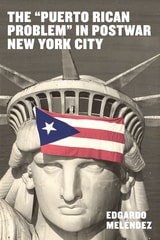
The "Puerto Rican Problem" in Postwar New York City
Edgardo Meléndez
Rutgers University Press, 2023
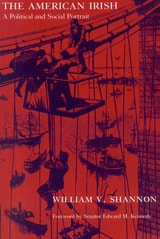
The American Irish
A Political and Social PortraitWilliam V. Shannon
University of Massachusetts Press, 1989

The Anthropology of Security
Perspectives from the Frontline of Policing, Counter-terrorism and Border ControlEdited by Mark Maguire, Catarina Frois, and Nils Zurawski
Pluto Press, 2014
In a post-Cold War world of political unease and economic crisis, processes of securitisation are transforming nation-states, their citizens and non-citizens in profound ways.
The book shows how contemporary Europe is now home to a vast security industry which uses biometric identification systems, CCTV and quasi-military techniques to police migrants and disadvantaged neighbourhoods. This is the first collection of anthropological studies of security with a particular but not exclusive emphasis on Europe.
The Anthropology of Security draws together studies on the lived experiences of security and policing from the perspective of those most affected in their everyday lives. The anthropological perspectives in this volume stretch from the frontlines of policing and counter-terrorism to border control.

The Background of Swedish Emigration to the United States
An Economic and Sociological Study in the Dynamics of MigrationJohn Lindberg
University of Minnesota Press, 1930
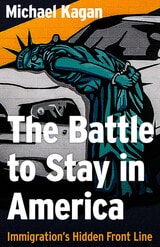
The Battle to Stay in America
Immigration's Hidden Front LineMichael Kagan
University of Nevada Press, 2025
The Battle to Stay in America is the story of a community coming to grips with the federal government’s crackdown on immigrants, and learning how to defend itself. Informative and personal, this is a story about mothers and fathers, lawyers and activists, local police and federal agencies, and a struggle for the identity of a nation. This is the quintessential story of the war on immigrants, as fought and felt on the front lines in the heart of America.
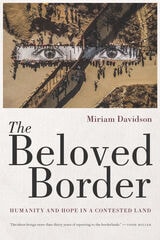
The Beloved Border
Humanity and Hope in a Contested LandMiriam Davidson
University of Arizona Press, 2021
The book draws on a variety of sources to explain how border issues intersect and how the current situation, while made worse under the Trump administration, is in fact the result of decades of prohibition, crackdowns, and wall building on the border. Davidson addresses subjects such as violence in Mexico, particularly against the press; cross-border gun smuggling and legal gun sales; the rise in migrant detentions, deportations, and deaths since the crackdown began; controversy over humanitarian aid in the desert; border patrol crimes and abuses; and the legal, ethical, and moral issues raised by increased police presence and militarization on the border. The book also looks at the environmental impact of wall building and construction of a planned copper mine near Tucson, especially on the jaguar and other endangered species.
Davidson shares the history of sanctuary and argues that this social movement and others that have originated on the border are vanguards of larger global movements against the mistreatment of migrant workers and refugees, police brutality, and other abuses of human and natural rights. She gives concrete examples of positive ways in which border people are promoting local culture and cross-border solidarity through health care, commerce, food, art, and music. While death and suffering continue to occur, The Beloved Border shows us how the U.S.-Mexico border could be, and in many ways already is, a model for peaceful coexistence worldwide.

The Bonds of War
A Story of Immigrants and Esprit de Corps in Company C, 96th Illinois Volunteer InfantryDiana L. Dretske
Southern Illinois University Press, 2021
When curator Diana L. Dretske discovered that the five long-gone Union soldiers in a treasured photograph in the Bess Bower Dunn Museum were not fully identified, it compelled her into a project of recovery and reinterpretation. Utilizing an impressive array of local and national archives, as well as private papers, the author’s microhistorical approach records events that often go unnoticed, such as a farmer enlisting in the middle of a crop field, a sister searching her brother’s face for signs of war, and an immigrant dying in an effort to become a good American citizen.
This book, the most intensive examination of the 96th Illinois Volunteer Infantry since the regiment’s history was published in 1887 centers on immigrants from the British Isles who wished to be citizens of a country at war with itself. Far removed from their native homelands, they found new promise in rural Illinois. These men, neighbors along the quiet Stateline Road in Lake County, decide to join the fighting at its most dangerous hour. The bonds of war become then the bonds of their new national identity.
The Bonds of War uncovers the common soldier from the cataclysm that is the American Civil War by offering a collective biography of five soldiers of the 96th in the Western Theater. The human drama of their lives unfolds before the reader on battlefields such as Chickamauga and within the high pine stockades of Andersonville. Their lives argue that those who seem to matter least in military history are the very ones who can tell us the most about the experience of war and the reasons for remembering.
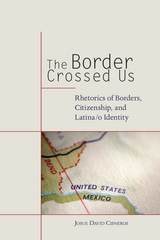
The Border Crossed Us
Rhetorics of Borders, Citizenship, and Latina/o IdentityJosue David Cisneros
University of Alabama Press, 2013
Explores efforts to restrict and expand notions of US citizenship as they relate specifically to the US-Mexico border and Latina/o identity.
Borders and citizenship go hand in hand. Borders define a nation as a territorial entity and create the parameters for national belonging. But the relationship between borders and citizenship breeds perpetual anxiety over the purported sanctity of the border, the security of a nation, and the integrity of civic identity.
In The Border Crossed Us, Josue David Cisneros addresses these themes as they relate to the US-Mexico border, arguing that issues ranging from the Mexican-American War of 1846–1848 to contemporary debates about Latina/o immigration and border security are negotiated rhetorically through public discourse. He explores these rhetorical battles through case studies of specific Latina/o struggles for civil rights and citizenship, including debates about Mexican American citizenship in the 1849 California Constitutional Convention, 1960s Chicana/o civil rights movements, and modern-day immigrant activism.
Cisneros posits that borders—both geographic and civic—have crossed and recrossed Latina/o communities throughout history (the book’s title derives from the popular activist chant, “We didn’t cross the border; the border crossed us!”) and that Latina/os in the United States have long contributed to, struggled with, and sought to cross or challenge the borders of belonging, including race, culture, language, and gender.
The Border Crossed Us illuminates the enduring significance and evolution of US borders and citizenship, and provides programmatic and theoretical suggestions for the continued study of these critical issues.
The Border Next Door
New York Migraciones, Volume 24Carlos Ulises Decena and Margaret Gray, eds.
Duke University Press, 0
While focusing on Central American and Mexican immigrants in New York state, the contributors to this issue—scholars, activists, artists, and filmmakers—situate their work within a national context and consider the paradox of the experience of Latino/a immigrants, who face increasing repression on the one hand and emerging opportunities on the other. Essays address the experience of transnational mothers who leave their children in the care of extended family to pursue low-wage U.S. jobs; the politics of gender and sexuality in immigrant communities; the social practices of day laborers as they wait for work on street corners; and the unlikely pairing of the Virgen de Guadalupe and New York State attorney general Eliot Spitzer as figures to whom Mexican immigrants appeal in their demands for rights and dignity. Other articles address the upsurge of immigrant mobility, anti-immigrant activities, and immigrant advocacy in non-urban locations.
Contributors. James E. Claffey, Carlos Ulises Decena, Alyshia Gálvez, Margaret Gray, Angela Martínez, Melanie Nicholson, Pilar A. Parra, Max J. Pfeffer, Michele G. Shedlin, Carolyn Pinedo Turnovsky
The Border Within
The Economics of Immigration in an Age of FearTara Watson and Kalee Thompson
University of Chicago Press, 2021
For decades, immigration has been one of the most divisive, contentious topics in American politics. And for decades, urgent calls for its policy reform have gone mostly unanswered. As the discord surrounding the modern immigration debate has intensified, border enforcement has tightened. Crossing harsher, less porous borders makes unauthorized entry to the United States a permanent, costly undertaking. And the challenges don’t end on the other side.
At once enlightening and devastating, The Border Within examines the costs and ends of America’s interior enforcement—the policies and agencies, including ICE, aimed at removing immigrants already living in the country. Economist Tara Watson and journalist Kalee Thompson pair rigorous analysis with deeply personal stories from immigrants and their families to assess immigration’s effects on every aspect of American life, from the labor force to social welfare programs to tax revenue. What emerges is a critical, utterly complete examination of what non-native Americans bring to the country, including immigration’s tendency to elevate the wages and skills of those who are native-born.
News coverage has prompted many to question the humanity of American immigration policies; The Border Within opens a conversation of whether it is effective. The United States spends billions each year on detention and deportation, all without economic gain and at a great human cost. With depth and discipline, the authors dissect the shock-and-awe policies that make up a broken, often cruel system, while illuminating the lives caught in the chaos. It is an essential work with far-reaching implications for immigrants and non-immigrants alike.
The Border and Its Bodies
The Embodiment of Risk Along the U.S.-México LineEdited by Thomas E. Sheridan and Randall H. McGuire
University of Arizona Press, 2019
The increasingly militarized U.S.-México border is an intensely physical place, affecting the bodies of all who encounter it. The essays in this volume explore how crossing becomes embodied in individuals, how that embodiment transcends the crossing of the line, and how it varies depending on subject positions and identity categories, especially race, class, and citizenship.
Timely and wide-ranging, this book brings into focus the traumatic and real impact the border can have on those who attempt to cross it, and it offers new perspectives on the effects for rural communities and ranchers. An intimate and profoundly human look at migration, The Border and Its Bodies reminds us of the elemental fact that the border touches us all.
Contributors
Bruce E. Anderson
Jared Beatrice
Rebecca Crocker
Jason De León
Linda Green
Randall H. McGuire
Shaylih Muehlmann
Robin Reineke
Olivia T. Ruiz Marrujo
David Seibert
Thomas E. Sheridan
Angela Soler
Ruth M. Van Dyke
The Borders of "Europe"
Autonomy of Migration, Tactics of BorderingNicholas De Genova, editor
Duke University Press, 2017
Contributors. Ruben Andersson, Nicholas De Genova, Dace Dzenovska, Evelina Gambino, Glenda Garelli, Charles Heller, Clara Lecadet, Souad Osseiran, Lorenzo Pezzani, Fiorenza Picozza, Stephan Scheel, Maurice Stierl, Laia Soto Bermant, Martina Tazzioli
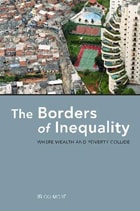
The Borders of Inequality
Where Wealth and Poverty CollideÍñigo Moré
University of Arizona Press, 2011
In this fascinating book, originally published in Spain to much acclaim, researcher Íñigo Moré looks at the bigger picture. With a professionally trained eye, he examines the world’s “top twenty most unequal borders.” What he finds is that many of these border situations share similar characteristics. There is always illegal immigration from the poor country to the wealthy one. There is always trafficking in illegal substances. And the unequal neighbors usually regard each other with suspicion or even open hostility.
After surveying the “top twenty,” Moré explores in depth the cases of three borders: between Germany and Poland, Spain and Morocco, and the United States and Mexico. The core problem, he concludes, is not drugs or immigration or self-protection. Rather, the problem is inequality itself. Unequal borders result, he writes, from a skewed interaction among markets, people, and states. Using these findings, Moré builds a useful new framework for analyzing border dynamics from a quantitative view based on economic inequality.
The Borders of Inequality illustrates how longstanding “multidirectional misunderstandings” can exacerbate cross-border problems—and consequent public opinion. Perpetuating these misunderstandings can inflame and complicate the situation, but purposeful efforts to reduce inequality can produce promising results.
The Browning of the New South
Jennifer A. Jones
University of Chicago Press, 2019

The Changing Face of Home
The Transnational Lives of the Second GenerationPeggy Levitt
Russell Sage Foundation, 2002
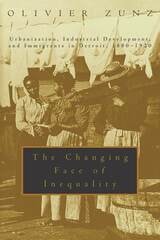
The Changing Face of Inequality
Urbanization, Industrial Development, and Immigrants in Detroit, 1880-1920Olivier Zunz
University of Chicago Press, 1983
The Changing Face of World Cities
Young Adult Children of Immigrants in Europe and the United StatesMaurice Crul
Russell Sage Foundation, 2013
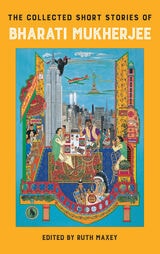
The Collected Short Stories of Bharati Mukherjee
Edited by Ruth Maxey
Temple University Press, 2023
Pioneering Indian American writer Bharati Mukherjee is best known for her novel, Jasmine, and her breakthrough collection, The Middleman and Other Stories, which won the 1988 National Book Critics Circle Award. Her writing is distinguished as much by its narrative style and shifting points of view as it is by Mukherjee’s piercing emotional observations on the immigrant experience and her depiction of racism, nostalgia, and displacement.
The Collected Short Stories of Bharati Mukherjee is the first volume to feature the author’s complete short fiction—all 35 stories. Leading Mukherjee scholar Ruth Maxey edits the collection, unearthing seven unknown stories: five in Mukherjee’s unpublished 1963 Iowa Writer’s Workshop M.F.A. thesis, The Shattered Mirror, and two tales from 2008.
Arranged chronologically, this essential collection brings many of Mukherjee’s stories back into print, from the semi-autobiographical story, “Hindus,” in her 1985 debut collection, Darkness, to her late stories, published from 1997-2012, as well as her classic, “The Management of Grief.”
Maxey contextualizes Mukherjee’s short fiction and the provocative, often prescient political questions it raises about migration, nationhood, class, and history. The Collected Short Stories of Bharati Mukherjee features a Forward by prominent literary studies scholar Nalini Iyer and Afterword by critically acclaimed writer Lysley Tenorio, one of Mukherjee’s former students. It is an essential volume for readers both familiar with Mukherjee’s work and new to her groundbreaking fiction.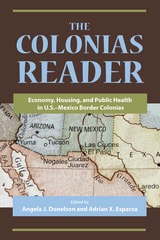
The Colonias Reader
Economy, Housing and Public Health in U.S.-Mexico Border ColoniasEdited by Angela J. Donelson and Adrian X. Esparza
University of Arizona Press, 2010
The Colonias Reader is the first book to present such a broad overview of these communities, offering a glimpse into life in the colonias and the circumstances that allow them to continue to exist—and even grow—in persistent poverty. The contributors document the depth of existing problems in each state and describe how government agencies, nongovernmental organizations, and community activists have mobilized resources to overcome obstacles to progress.
More than reporting problems and documenting programs, the book provides conceptual frameworks that tie poverty to institutional and class-based conflicts, and even challenges the very basis of colonia designations. Most of these contributions move beyond portraying border residents as hapless victims of discrimination and racism, showing instead their devotion to improving their own living conditions through grassroots organizing and community leadership.
These contributions show that, despite varying degrees of success, all colonia residents aspire to a livable wage, safe and decent housing, and basic health care. The Colonias Reader showcases many situations in which these people have organized to fulfill these ambitions and provides new insight into life along the border.
The Company We Keep
Interracial Friendships and Romantic Relationships from Adolescence to AdulthoodGrace Kao
Russell Sage Foundation, 2019
While research on interracial social ties has often focused on whites and blacks, Hispanics are the largest minority group and Asian Americans are the fastest growing racial group in the United States. The Company We Keep examines friendships and romantic relationships among blacks, whites, Hispanics, and Asian Americans to better understand the full spectrum of contemporary race relations. Using data from the National Longitudinal Study of Adolescent to Adult Health, the authors explore the social ties of more than 15,000 individuals from their first survey responses as middle and high school students in the mid-1990s through young adulthood nearly fifteen years later. They find that while approval for interracial marriages has increased and is nearly universal among young people, interracial friendships and romantic relationships remain relatively rare, especially for whites and blacks. Black women are particularly disadvantaged in forming interracial romantic relationships, while Asian men are disadvantaged in the formation of any romantic relationships, both as adolescents and as young adults. They also find that people in same-sex romantic relationships are more likely to have partners from a different racial group than are people in different-sex relationships. The authors pay close attention to how the formation of interracial friendships and romantic relationships depends on opportunities for interracial contact. They find that the number of students choosing different-race friends and romantic partners is greater in schools that are more racially diverse, indicating that school segregation has a profound impact on young people’s social ties.
Kao, Joyner, and Balistreri analyze the ways school diversity and adolescent interracial contact intersect to lay the groundwork for interracial relationships in young adulthood. The Company We Keep provides compelling insights and hope for the future of living and loving across racial divides.
The Courage to Welcome
Between principles and pragmatism in international affairsCatherine Ashton and Filippo Grandi
Haus Publishing, 2026
A timeless call amid the challenging nature of public service to find the familiar in the foreign.
What does it mean to lead with compassion in a world riven by fear, at a time when the responses to forced displacement hold the power to reshape communities? How can institutions and individuals sustain solidarity amid rising division?
This moving reflection of Filippo Grandi’s ten years as United Nations High Commissioner for Refugees and four decades spent working in humanitarian crises across the world addresses the growing complexity of forced displacement, its repercussions for international relations, and the challenges it poses for governments. Grandi calls for greater cooperation between nations and considers measures—along displacement routes and in host countries—which would provide lifesaving assistance to refugees as well as preserve international cooperation and goodwill. He suggests a universal responsibility not to exacerbate division but to work diligently on the space between pragmatism and principle.
Taking up this challenge, Catherine Ashton’s response to Grandi draws on her own distinguished leadership during some of the most important moments that have shaped contemporary diplomacy and suggests how enduring principles can be retained within the realities of public life.
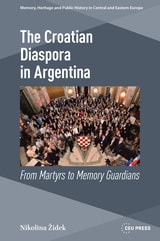
The Croatian Diaspora in Argentina
From Martyrs to Memory GuardiansNikolina Zidek
Central European University Press, 2026
Drawing on archival research and oral testimonies, Nikolina .idek explores how intergenerational memory shaped identity across time. She shows how the community preserved its origins while adapting to new realities, ultimately transforming into “planetary Croats” who use social media and transnational networks to connect with Croatia and the global diaspora.
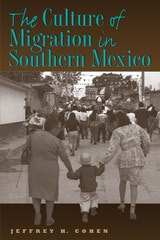
The Culture of Migration in Southern Mexico
By Jeffrey H. Cohen
University of Texas Press, 2004
Migration is a way of life for many individuals and even families in the Mexican state of Oaxaca. Some who leave their rural communities go only as far as the state capital, while others migrate to other parts of Mexico and to the United States. Most send money back to their communities, and many return to their homes after a few years. Migration offers Oaxacans economic opportunities that are not always available locally—but it also creates burdens for those who stay behind.
This book explores the complex constellation of factors that cause rural Oaxacans to migrate, the historical and contemporary patterns of their migration, the effects of migration on families and communities, and the economic, cultural, and social reasons why many Oaxacans choose not to migrate. Jeffrey Cohen draws on fieldwork and survey data from twelve communities in the central valleys of Oaxaca to give an encompassing view of the factors that drive migration and determine its outcomes. He demonstrates conclusively that, while migration is an effective way to make a living, no single model can explain the patterns of migration in southern Mexico.
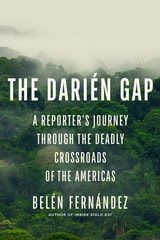
The Darién Gap
A Reporter's Journey through the Deadly Crossroads of the AmericasBelén Fernández
Rutgers University Press, 2025
The narrow Darién Gap, the only land bridge connecting South and Central America, encompasses a spectacularly hostile jungle, covered in steep mountains, dense rainforests, and flood-prone marshes. Known in Spanish as el infierno verde, or “the green hell,” it is one of the most inhospitable places in the world. Its terrain is too treacherous for roads, yet hundreds of thousands of refuge seekers contend with its horrors every year in the hopes of reaching the United States, still some three thousand miles away. And of the countless who set out for the border, an untold number never arrive.
In this book, journalist Belén Fernández travels through the Darién Gap to report on the dehumanizing and deadly stretch of land that has become a mass graveyard for migrants. Fernández’s journey brings her into contact with refuge seekers, people smugglers, law enforcement officials, and many more whose stories bring life to a place overwhelmingly associated with death. Combining history, on-the-ground reporting, travelogue, memoir, and searing politico-economic analysis, she shines light on a largely made-in-the-USA crisis that has come to define our modern era.
Engrossing and heartrending, The Darién Gap is a poignant and compassionate indictment of structural inequality and institutionalized inhumanity in a world where the have-nots must risk death for a chance at a better life—or any life at all.
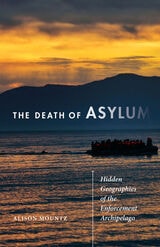
The Death of Asylum
Hidden Geographies of the Enforcement ArchipelagoAlison Mountz
University of Minnesota Press, 2020
Investigating the global system of detention centers that imprison asylum seekers and conceal persistent human rights violations
Remote detention centers confine tens of thousands of refugees, asylum seekers, and undocumented immigrants around the world, operating in a legal gray area that hides terrible human rights abuses from the international community. Built to temporarily house eight hundred migrants in transit, the immigrant “reception center” on the Italian island of Lampedusa has held thousands of North African refugees under inhumane conditions for weeks on end. Australia’s use of Christmas Island as a detention center for asylum seekers has enabled successive governments to imprison migrants from Asia and Africa, including the Sudanese human rights activist Abdul Aziz Muhamat, held there for five years.
In The Death of Asylum, Alison Mountz traces the global chain of remote sites used by states of the Global North to confine migrants fleeing violence and poverty, using cruel measures that, if unchecked, will lead to the death of asylum as an ethical ideal. Through unprecedented access to offshore detention centers and immigrant-processing facilities, Mountz illustrates how authorities in the United States, the European Union, and Australia have created a new and shadowy geopolitical formation allowing them to externalize their borders to distant islands where harsh treatment and deadly force deprive migrants of basic human rights.
Mountz details how states use the geographic inaccessibility of places like Christmas Island, almost a thousand miles off the Australian mainland, to isolate asylum seekers far from the scrutiny of humanitarian NGOs, human rights groups, journalists, and their own citizens. By focusing on borderlands and spaces of transit between regions, The Death of Asylum shows how remote detention centers effectively curtail the basic human right to seek asylum, forcing refugees to take more dangerous risks to escape war, famine, and oppression.
The Deportation Regime
Sovereignty, Space, and the Freedom of MovementNicholas De Genova and Nathalie Peutz, eds.
Duke University Press, 2010
Whether investigating the power that individual and corporate sponsors have over the fate of foreign laborers in Bahrain, the implications of Germany’s temporary suspension of deportation orders for pregnant and ill migrants, or the significance of the detention camp, the contributors reveal how deportation reflects and reproduces notions about public health, racial purity, and class privilege. They also provide insight into how deportation and deportability are experienced by individuals, including Arabs, South Asians, and Muslims in the United States. One contributor looks at asylum claims in light of an unusual anti-deportation campaign mounted by Algerian refugees in Montreal; others analyze the European Union as an entity specifically dedicated to governing mobility inside and across its official borders. The Deportation Regime addresses urgent issues related to human rights, international migration, and the extensive security measures implemented by nation-states since September 11, 2001.
Contributors: Rutvica Andrijasevic, Aashti Bhartia, Heide Castañeda , Galina Cornelisse , Susan Bibler Coutin, Nicholas De Genova, Andrew M. Gardner, Josiah Heyman, Serhat Karakayali, Sunaina Marr Maira, Guillermina Gina Nuñez, Peter Nyers, Nathalie Peutz, Enrica Rigo, Victor Talavera, William Walters, Hans-Rudolf Wicker, Sarah S. Willen
The Diasporic Condition
Ethnographic Explorations of the Lebanese in the WorldGhassan Hage
University of Chicago Press, 2021
In The Diasporic Condition, Ghassan Hage engages with the diasporic Lebanese community as a shared lifeworld, defining a common cultural milieu that transcends spatial and temporal distance—a collective mode of being here termed the “diasporic condition.” Encompassing a complicated transnational terrain, Hage’s long-term ethnography takes us from Mehj and Jalleh in Lebanon to Europe, Australia, South America, and North America, analyzing how Lebanese migrants and their families have established themselves in their new homes while remaining socially, economically, and politically related to Lebanon and to each other.
At the heart of The Diasporic Condition lies a critical anthropological question: How does the study of a particular sociocultural phenomenon expand our knowledge of modes of existing in the world? As Hage establishes what he terms the “lenticular condition,” he breaks down the boundaries between “us” and “them,” “here” and “there,” showing that this convergent mode of existence increasingly defines everyone’s everyday life.
The Diversity Paradox
Immigration and the Color Line in Twenty-First Century AmericaJennifer Lee
Russell Sage Foundation, 2010
The Documented Child
Migration, Personhood, and Citizenship in Twenty-First-Century U.S. Latinx Children's LiteratureMaya Socolovsky
University of Arizona Press, 2025
Immigration is at once a personal, immediate, and urgent issue that plays a central role in the United States’ perception of itself. In The Documented Child, scholar Maya Socolovsky demonstrates how the portrayal of Latinx children has shifted over the first two decades of the twenty-first century in literary texts aimed at children and young adults and looks at how these shifts map onto broader changes in immigration policy and discourse.
Through a critical inquiry into picture books and middle-grade and young adult literature, Socolovsky argues that the literary documentations of—and for—U.S. Latinx children have shifted over the decades, from an emphasis on hybrid transnationalism to that of a more American-oriented self. Socolovsky delves into texts written from 1997 to 2020, a period marked by tremendous changes in U.S. immigration policies, amplified discourses around nationhood, and an increasingly militarized border. The author shows how children’s and young adult books have shifted their depictions of the border, personal and national identity, and sovereignty.
For students, scholars, and educators of Latinx studies and children’s literature, this work shows how the creators of children’s literature reflect new strategies for representing the undocumented Latinx child protagonist. While earlier books document the child as a transnational (sometimes global) subject, later books document her as both a transnational and U.S. national subject. The Documented Child explores this change as a necessary survival strategy, reflecting current awareness that cultural hybridity and transnational identity are not sufficient stand-ins for the stability and security of legal personhood.
The Economic Sociology of Immigration
Essays on Networks, Ethnicity, and EntrepreneurshipAlejandro Portes
Russell Sage Foundation, 1995

The Ellis Island Snow Globe
Erica Rand
Duke University Press, 2005
Rand notes that portrayals of the Statue of Liberty as a beacon for immigrants tend to suppress the Statue’s connections to people brought to this country by force. She examines what happened to migrants at Ellis Island whose bodies did not match the gender suggested by the clothing they wore. In light of contemporary ideas about safety and security, she examines the “Decide an Immigrant’s Fate” program, which has visitors to Ellis Island act as a 1910 board of inspectors hearing the appeal of an immigrant about to be excluded from the country. Rand is a witty, insightful, and open-minded tour guide, able to synthesize numerous diverse ideas—about tourism, immigration history, sexuality, race, ethnicity, commodity culture, and global capitalism—and to candidly convey her delight in her Ellis Island snow globe. And pen. And lighter. And back scratcher. And golf ball. And glittery pink key chain.
The Evolution of a Cricket Fan
My Shapeshifting JourneySamir Chopra
Temple University Press, 2021
Samir Chopra is an immigrant, a “voluntary exile,” who discovers he can tell the story of his life through cricket, a game that has long been an influence—really, an obsession—for him. In so doing, he reveals how his changing views on the sport mirror his journey of self-discovery. In The Evolution of a Cricket Fan, Chopra is thus able to reflect on his changing perceptions of self, and of the nations and cultures that have shaped his identity, politics, displacement, and fandom.
Chopra’s passion for the sport began as a child, when he rooted for Pakistan and against his native India. When he migrated, he became a fan of the Indian team that gave him a sense of home among the various cultures he encountered in North America and Australia. This “shapeshifting” exposes the rift between the Old and the New world, which Chopra acknowledges is “cricket’s greatest modern crisis.” But it also illuminates the identity dilemmas of post-colonial immigrants in the Indian diaspora.
Chopra’s thoughts about the sport and its global influence are not those of a player. He provides access to the inner world of the global cricket fan navigating the world that colonial empire wrought and that cricket continues to connect and animate. He observes that the Indian cricket team carries many burdens—not only must they win cricket matches, but their style of play must generate a pride that assuages generations of wounds inflicted by history. And Chopra must navigate where he stands in that history.
The Evolution of a Cricket Fan shows Chopra’s own wins and losses as his life takes new directions and his fandom changes allegiances.

The Fixer
Visa Lottery ChroniclesCharles Piot with Kodjo Nicolas Batema
Duke University Press, 2019
The Gift of Freedom
War, Debt, and Other Refugee PassagesMimi Thi Nguyen
Duke University Press, 2012

The Golden Mountain
The Autobiography of a Korean Immigrant, 1895-1960Easurk Emsen Charr
University of Illinois Press, 1996
At the age of ten and without his parents, Easurk Charr, a convert to Christianity, came to Hawa'ii in 1904 to earn enough money to acquire an education and return to his native Korea as a medical missionary. The Golden Mountain is Charr's story of his early years in Korea, his migration to Hawai'i and the American mainland, and the joys and pain of his life as one of some seven thousand Koreans who migrated to the United States between 1903 and 1905.
First published in 1961, Charr's memoir offers touching insights into the experience of early Korean immigrants. He tells eloquently of how difficult it was for him to become a naturalized citizen, even after serving in the U.S. Army. An introduction by Wayne Patterson provides a broader perspective on both Charr and the Korean immigrant experience.
The Great Famine and the Irish Diaspora in America
Arthur Gribben
University of Massachusetts Press, 1999
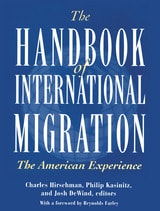
The Handbook of International Migration
The American ExperienceCharles Hirschman
Russell Sage Foundation, 1999
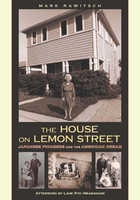
The House on Lemon Street
Japanese Pioneers and the American DreamMark Rawitsch
University Press of Colorado, 2013
Bringing this little-known story to light, The House on Lemon Street details the Haradas' decision to fight for the American dream. Chronicling their experiences from their immigration to the United States through their legal battle over their home, their incarceration during World War II, and their lives after the war, this book tells the story of the family's participation in the struggle for human and civil rights, social justice, property and legal rights, and fair treatment of immigrants in the United States.
The Harada family's quest for acceptance illuminates the deep underpinnings of anti-Asian animus, which set the stage for Executive Order 9066, and recognizes fundamental elements of our nation's anti-immigrant history that continue to shape the American story. It will be worthwhile for anyone interested in the Japanese American experience in the twentieth century, immigration history, public history, and law.
This publication was made possible with the support of Naomi, Kathleen, Ken, and Paul Harada, who donated funds in memory of their father, Harold Shigetaka Harada, honoring his quest for justice and civil rights. Additional support for this publication was also provided, in part, by UCLA's Aratani Endowed Chair as well as Wallace T. Kido, Joel B. Klein, Elizabeth A. Uno, and Rosalind K. Uno.
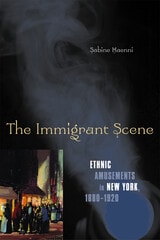
The Immigrant Scene
Ethnic Amusements in New York, 1880–1920Sabine Haenni
University of Minnesota Press, 2008
Explores the relationship between immigrant and national culture
Yiddish melodramas about the tribulations of immigration. German plays about alpine tourism. Italian vaudeville performances. Rubbernecking tours of Chinatown. In the New York City of the late nineteenth and early twentieth centuries, these seemingly disparate leisure activities played similar roles: mediating the vast cultural, demographic, and social changes that were sweeping the nation’s largest city.
In The Immigrant Scene, Sabine Haenni reveals how theaters in New York created ethnic entertainment that shaped the culture of the United States in the early twentieth century. Considering the relationship between leisure and mass culture, The Immigrant Scene develops a new picture of the metropolis in which the movement of people, objects, and images on-screen and in the street helped residents negotiate the complexities of modern times. In analyzing how communities engaged with immigrant theaters and the nascent film culture in New York City, Haenni traces the ways in which performance and cinema provided virtual mobility—ways of navigating the socially complex metropolis—and influenced national ideas of immigration, culture, and diversity in surprising and lasting ways.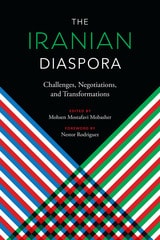
The Iranian Diaspora
Challenges, Negotiations, and TransformationsEdited by Mohsen Mostafavi Mobasher
University of Texas Press, 2018
The Iranian revolution of 1978–1979 uprooted and globally dispersed an enormous number of Iranians from all walks of life. Bitter political relations between Iran and the West have since caused those immigrants to be stigmatized, marginalized, and politicized, which, in turn, has discredited and distorted Iranian migrants’ social identity; subjected them to various subtle and overt forms of prejudice, discrimination, and social injustice; and pushed them to the edges of their host societies. The Iranian Diaspora presents the first global overview of Iranian migrants’ experiences since the revolution, highlighting the similarities and differences in their experiences of adjustment and integration in North America, Europe, Australia, and the Middle East.
Written by leading scholars of the Iranian diaspora, the original essays in this volume seek to understand and describe how Iranians in diaspora (re)define and maintain their ethno-national identity and (re)construct and preserve Iranian culture. They also explore the integration challenges the Iranian immigrants experience in a very negative context of reception. Combining theory and case studies, as well as a variety of methodological strategies and disciplinary perspectives, the essays offer needed insights into some of the most urgent and consequential issues and problem areas of immigration studies, including national, ethnic, and racial identity construction; dual citizenship and dual nationality maintenance; familial and religious transformation; politics of citizenship; integration; ethnic and cultural maintenance in diaspora; and the link between politics and the integration of immigrants, particularly Muslim immigrants.
The Irish in Illinois
Mathieu W. Billings and Sean Farrell
Southern Illinois University Press, 2021
Today over a million people in Illinois claim Irish ancestry and celebrate their love for Ireland. In this concise narrative history, authors Mathieu W. Billings and Sean Farrell bring together both familiar and unheralded stories of the Irish in Illinois, highlighting the critical roles these immigrants and their descendants played in the settlement and the making of the Prairie State. Short biographies and twenty-eight photographs vividly illustrate the significance and diversity of Irish contributions to Illinois.
Billings and Farrell remind us of the countless ways Irish men and women have shaped the history and culture of the state. They fought in the French and Indian War, the American Revolution, the Civil War, and two world wars; built the state’s infrastructure and worked in its factories; taught Illinois children and served the poor. Irish political leaders helped to draw up the state’s first constitution, served in city, county, and state offices, and created a machine that dominated twentieth-century politics in Chicago and the state.
This lively history adds to our understanding of the history of the Irish in the state over the past two hundred fifty years. Illinoisans and Midwesterners celebrating their connections to Ireland will treasure this rich and important account of the state’s history.
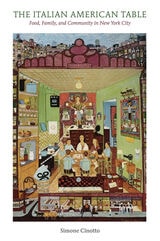
The Italian American Table
Food, Family, and Community in New York CitySimone Cinotto
University of Illinois Press, 2013
Looking at the historic Italian American community of East Harlem in the 1920s and 30s, Simone Cinotto recreates the bustling world of Italian life in New York City and demonstrates how food was at the center of the lives of immigrants and their children. From generational conflicts resolved around the family table to a vibrant food-based economy of ethnic producers, importers, and restaurateurs, food was essential to the creation of an Italian American identity. Italian American foods offered not only sustenance but also powerful narratives of community and difference, tradition and innovation as immigrants made their way through a city divided by class conflict, ethnic hostility, and racialized inequalities.

The Japanese in Latin America
Daniel M. Masterson with Sayaka Funada-Classen
University of Illinois Press, 2003
Latin America is home to 1.5 million persons of Japanese descent. Combining detailed scholarship with rich personal histories, Daniel M. Masterson, with the assistance of Sayaka Funada-Classen, presents the first comprehensive study of the patterns of Japanese migration on the continent as a whole.
When the United States and Canada tightened their immigration restrictions in 1907, Japanese contract laborers began to arrive at mines and plantations in Latin America. The authors examine Japanese agricultural colonies in Latin America, as well as the subsequent cultural networks that sprang up within and among them, and the changes that occurred as the Japanese moved from wage labor to ownership of farms and small businesses. They also explore recent economic crises in Brazil, Argentina, and Peru, which, combined with a strong Japanese economy, caused at least a quarter million Latin American Japanese to migrate back to Japan.
Illuminating authoritative research with extensive interviews with migrants and their families, The Japanese in Latin America tells the story of immigrants who maintained strong allegiances to their Japanese roots, even while they struggled to build lives in their new countries.
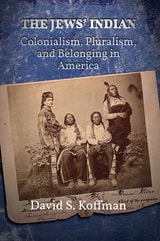
The Jews’ Indian
Colonialism, Pluralism, and Belonging in AmericaKoffman, David S
Rutgers University Press, 2019
Honorable Mention, 2021 Saul Viener Book Prize
The Jews’ Indian investigates the history of American Jewish relationships with Native Americans, both in the realm of cultural imagination and in face-to-face encounters. These two groups’ exchanges were numerous and diverse, proving at times harmonious when Jews’ and Natives people’s economic and social interests aligned, but discordant and fraught at other times. American Jews could be as exploitative of Native cultural, social, and political issues as other American settlers, and historian David Koffman argues that these interactions both unsettle and historicize the often triumphant consensus history of American Jewish life. Focusing on the ways Jewish class mobility and civic belonging were wrapped up in the dynamics of power and myth making that so severely impacted Native Americans, this books is provocative and timely, the first history to critically analyze Jewish participation in, and Jews’ grappling with the legacies of Native American history and the colonial project upon which America rests.
The Labor of Care
Filipina Migrants and Transnational Families in the Digital AgeValerie Francisco-Menchavez
University of Illinois Press, 2018
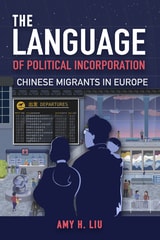
The Language of Political Incorporation
Chinese Migrants in EuropeAmy Liu
Temple University Press, 2021
In this groundbreaking study, The Language of Political Incorporation, Amy Liu focuses on Chinese migrants in Central-Eastern Europe and their varying levels of political incorporation in the local community. She examines the linguistic diversity of migrant networks, finding institutional trust and civic engagement depend not on national identity, but on the network’s linguistic diversity—namely, whether the operating language is a migrant’s mother tongue or a lingua franca.
The Language of Political Incorporation uses original survey data to assess when the Chinese engage positively with the authorities and when they become civic minded. The results are surprising. In Hungary, the Chinese community has experienced high levels of political incorporation in part because they have not been targeted by anti-immigrant rhetoric and policies. In contrast, migrants in Romania sought the assistance of the Chinese embassy to fight an effort to collect back taxes.
Liu also compares the Chinese experiences in Central-Eastern Europe with those of Muslims in the region, as well as how the Chinese are treated in Western Europe. Additionally, she considers how the local communities perceive the Chinese. The Language of Political Incorporation concludes by offering best practices for how governments can help migrants become more trusting of—and have greater involvement with—locals in their host countries. Ultimately, Liu demonstrates the importance of linguistic networks for the incorporation of immigrants.
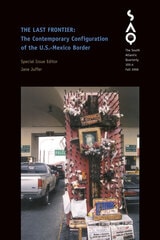
The Last Frontier
The Contemporary Configuration of the U.S.-Mexico Border, Volume 105Jane Juffer, ed.
Duke University Press, 0
Covering a range of disciplinary perspectives—geography, political science, anthropology, American studies, literary studies, and environmental studies—these essays contend that U.S. policies to curtail immigration and drug trafficking along the Mexican border are ineffective. George W. Bush’s call for a volunteer security force has legitimized a vigilante presence through the formation of Minutemen civilian border patrols, in addition to larger numbers of Border Patrol agents and expanded detention centers. One contributor argues that, due to the increasingly dangerous border-crossing conditions, more undocumented immigrants are remaining in the United States year-round rather than following the traditional seasonal pattern of work and returning to Mexico. Another contributor interviews drug smugglers and government officials, revealing the gap between reality and the claims of success by the U.S. government in the “war on drugs.” Focusing on the social justice movement Ni Una Mas (Not One More), one essay delves into the controversy over the unsolved murders of hundreds of young women in the border town of Ciudad Juárez and the refusal of the government to investigate these murders properly. Other essays consider instances of resistance and activism—ranging from political movements and protests by NGOs to artistic expression through alternative narratives, poetry, and photography—against the consequences of neoliberalism on the border and its populations.
Contributors. Ana M. Manzanas Calvo, Alicia Schmidt Camacho, Arturo Dávila, Sarah Hill, Jane Juffer, Laura Lewis, Alejandro Lugo, Tony Payan, Claudia Sadowski-Smith, Santiago Vaquera, Melissa Wright