Results by title
173 books match the query 'Ireland' and 38 start with t
Tax Haven Ireland
Brian O’ Boyle
Pluto Press, 2021
Tax Haven Ireland uncovers the central players in this process and exposes the coverups employed by the Irish state, with the help of accountants, lawyers, and financial services companies. From the lucrative internet porn industry to corruption in the property market, this issue distorts the economy across the state and in the wider international system, and its history runs deep, going back the country’s origins as a British colonial outpost.
Today, in the wake of Brexit and in the shadow of yet another economic crash, what can be done to prevent such dangerous behaviour and reorganize our economies to invest in the people? Can Ireland – and all of us – build an alternative economy based on fairness and democratic values?
The American Presence in Ulster
A Diplomatic History, 1796–1996Francis M. Carroll
Catholic University of America Press, 2005
The Aran Islands
John M. Synge
Northwestern University Press, 1999
Synge first traveled to the primitive, little-known Aran Islands in 1898. His trip proved to be a wonderfully fruitful and decisive experience. He then went back for part of each summer until 1902. The Aran Islands, his memoir of those experiences, was published in 1907, and the future playwright called it his "first serious piece of work."
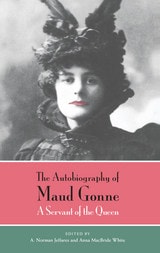
The Autobiography of Maud Gonne
A Servant of the QueenMaud Gonne
University of Chicago Press, 1995
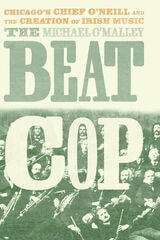
The Beat Cop
Chicago's Chief O'Neill and the Creation of Irish MusicMichael O'Malley
University of Chicago Press, 2022
The remarkable story of how modern Irish music was shaped and spread through the brash efforts of a Chicago police chief.
Irish music as we know it today was invented not just in the cobbled lanes of Dublin or the green fields of County Kerry, but also in the burgeoning metropolis of early-twentieth-century Chicago. The genre’s history combines a long folk tradition with the curatorial quirks of a single person: Francis O’Neill, a larger-than-life Chicago police chief and an Irish immigrant with a fervent interest in his home country’s music.
Michael O’Malley’s The Beat Cop tells the story of this singular figure, from his birth in Ireland in 1865 to his rough-and-tumble early life in the United States. By 1901, O’Neill had worked his way up to become Chicago’s chief of police, where he developed new methods of tracking criminals and recording their identities. At the same time, he also obsessively tracked and recorded the music he heard from local Irish immigrants, enforcing a strict view of what he felt was and wasn’t authentic. Chief O’Neill’s police work and his musical work were flip sides of the same coin, and O’Malley delves deep into how this brash immigrant harnessed his connections and policing skills to become the foremost shaper of how Americans see, and hear, the music of Ireland.
The Church Confronts Modernity
Leslie Woodcock Tentler
Catholic University of America Press, 2007
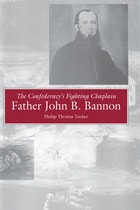
The Confederacy's Fighting Chaplain
Father John B. BannonPhillip Thomas Tucker
University of Alabama Press, 1992
The Confederacy’s Fighting Chaplain is the remarkable story of the Irishman who brought the Bible and his own resourcefulness and daring to both the battlefield and the diplomatic field—a story that has been largely ignored for more than 130 years. The biography of John B. Bannon also chronicles the forgotten Southerners—the Irish immigrants of the Confederacy—whose colorful and crucial role in the Civil War has been seriously neglected.
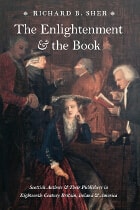
The Enlightenment and the Book
Scottish Authors and Their Publishers in Eighteenth-Century Britain, Ireland, and AmericaRichard B. Sher
University of Chicago Press, 2007
The late eighteenth century witnessed an explosion of intellectual activity in Scotland by such luminaries as David Hume, Adam Smith, Hugh Blair, William Robertson, Adam Ferguson, James Boswell, and Robert Burns. And the books written by these seminal thinkers made a significant mark during their time in almost every field of polite literature and higher learning throughout Britain, Europe, and the Americas.
In this magisterial history, Richard B. Sher breaks new ground for our understanding of the Enlightenment and the forgotten role of publishing during that period. The Enlightenment and the Book seeks to remedy the common misperception that such classics as The Wealth of Nations and The Life of Samuel Johnson were written by authors who eyed their publishers as minor functionaries in their profession. To the contrary, Sher shows how the process of bookmaking during the late eighteenth-century involved a deeply complex partnership between authors and their publishers, one in which writers saw the book industry not only as pivotal in the dissemination of their ideas, but also as crucial to their dreams of fame and monetary gain. Similarly, Sher demonstrates that publishers were involved in the project of bookmaking in order to advance human knowledge as well as to accumulate profits.
The Enlightenment and the Book explores this tension between creativity and commerce that still exists in scholarly publishing today. Lavishly illustrated and elegantly conceived, it will be must reading for anyone interested in the history of the book or the production and diffusion of Enlightenment thought.
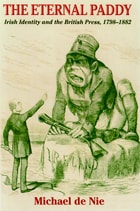
The Eternal Paddy
Irish Identity and the British Press, 1798–1882Michael de Nie
University of Wisconsin Press, 2004
In The Eternal Paddy, Michael de Nie examines anti-Irish prejudice, Anglo-Irish relations, and the construction of Irish and British identities in nineteenth-century Britain. This book provides a new, more inclusive approach to the study of Irish identity as perceived by Britons and demonstrates that ideas of race were inextricably connected with class concerns and religious prejudice in popular views of both peoples. De Nie suggests that while traditional anti-Irish stereotypes were fundamental to British views of Ireland, equally important were a collection of sympathetic discourses and a self-awareness of British prejudice. In the pages of the British newspaper press, this dialogue created a deep ambivalence about the Irish people, an ambivalence that allowed most Britons to assume that the root of Ireland’s difficulties lay in its Irishness.
Drawing on more than ninety newspapers published in England, Scotland, and Wales, The Eternal Paddy offers the first major detailed analysis of British press coverage of Ireland over the course of the nineteenth century. This book traces the evolution of popular understandings and proposed solutions to the "Irish question," focusing particularly on the interrelationship between the press, the public, and the politicians. The work also engages with ongoing studies of imperialism and British identity, exploring the role of Catholic Ireland in British perceptions of their own identity and their empire.

The Feminization of Famine
Expressions of the Inexpressible?Margaret Kelleher
Duke University Press, 1997
Kelleher begins with a critical reading of the novels and short stories written about the Irish famine over the last 150 years, from the novels of William Carleton and Anthony Trollope to the writings of Liam O’Flaherty and John Banville. She then moves on to unveil a lesser-known body of literature—works written by women. This literature is read in the context of a rich variety of other sources, including eye-witness accounts, memoirs, journalistic accounts, and famine historiography. Concluding with a reading of the twentieth-century accounts of the famine in Bengal, this book reveals how gendered representations have played a crucial role in defining notions of famine.
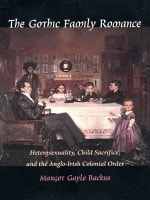
The Gothic Family Romance
Heterosexuality, Child Sacrifice, and the Anglo-Irish Colonial OrderMargot Gayle Backus
Duke University Press, 1999
Backus uses contemporary theory, including that of Michel Foucault and Eve Kosofsky Sedgwick, to analyze texts by authors ranging from Richardson, Swift, Burke, Edgeworth, Stoker, and Wilde to contemporary Irish novelists and playwrights.
By charting the changing relations between the family and the British state, she shows how these authors dramatized a legacy of violence within the family cell and discusses how disturbing themes of child sacrifice and colonial repression are portrayed through irony, satire, “paranoid” fantasy, and gothic romance. In a reconceptualization of the Freudian family romance, Backus argues that the figures of the Anglo-Irish gothic embody the particular residue of childhood experiences within a settler colonial society in which biological reproduction represented an economic and political imperative.
Backus’s bold positioning of the nuclear family at the center of post-Enlightenment class and colonial power relations in England and Ireland will challenge and provoke scholars in the fields of Irish literature and British and postcolonial studies. The book will also interest students and scholars of women’s studies, and it has important implications for understanding contemporary conflicts in Ireland.
The Great Famine and the Irish Diaspora in America
Arthur Gribben
University of Massachusetts Press, 1999
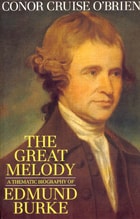
The Great Melody
A Thematic Biography of Edmund BurkeConor Cruise O'Brien
University of Chicago Press, 1992
"In bringing Burke to our attention, Mr. O'Brien has brought back a lost treasure. The Great Melody is a brilliant work of narrative sweep and analytical depth. Conor Cruise O'Brien on Edmund Burke is a literary gift to political thought."—John Patrick Diggins, New York Times Book Review
"Serious readers of history are in for a treat: a book by the greatest living Irishman on the greatest Irishman who ever lived. . . . O'Brien's study is not merely a reconstruction of a fascinating man and period. It is also a tract for the times. . . . I cannot remember another time when I finished a book of more than 600 pages wishing it were longer."—Paul Johnson, The Independent
"The Great Melody combines superb biography and fascinating history with a profound understanding of political philosophy."—Former President Richard Nixon
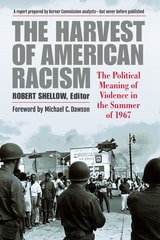
The Harvest of American Racism
The Political Meaning of Violence in the Summer of 1967Robert Shellow
University of Michigan Press, 2018
In the summer of 1967, in response to violent demonstrations that rocked 164 U.S. cities, the National Advisory Commission on Civil Disorders, a.k.a. the Kerner Commission, was formed. The Commission sought reasons for the disturbances, including the role that law enforcement played. Chief among its research projects was a study of 23 American cities, headed by social psychologist Robert Shellow. An early draft of the scientists’ analysis, titled “The Harvest of American Racism: The Political Meaning of Violence in the Summer of 1967,” provoked the Commission’s staff in November 1967 by uncovering political causes for the unrest; the team of researchers was fired, and the controversial report remained buried at the LBJ Presidential Library until now.
The first publication of the Harvest report half a century later reveals that many of the issues it describes are still with us, including how cities might more effectively and humanely react to groups and communities in protest. In addition to the complete text of the suppressed Harvest report, the book includes an introduction by Robert Shellow that provides useful historical context; personal recollections from four of the report’s surviving social scientists, Robert Shellow, David Boesel, Gary T. Marx, and David O. Sears; and an appendix outlining the differences between the unpublished Harvest analysis and the well-known Kerner Commission Report that followed it.
“The [Harvest of American Racism] report was rejected by Johnson administration functionaries as being far too radical—politically ‘unviable’… Social science can play an extremely positive role in fighting racial and other injustice and inequality, but only if it is matched with a powerful political will to implement the findings. That will has never come from within an American presidential administration—that will has only been forged in black and other radical communities’ movements for justice. The political power for change, as incremental as it has been, has come from within those communities. Washington responds, it does not lead."
—from the Foreword by Michael C. Dawson
The Hibernensis
Book 1: A Study and EditionRoy Flechner
Catholic University of America Press, 2019
Widely recognized as the single most important source for the history of the church in early medieval Ireland, the Hibernensis is also our best index for knowing what books were available in Ireland at the time of its compilation: it consists of excerpted material from the Bible, Church Fathers and doctors, hagiography, church histories, chronicles, wisdom texts, and insular normative material unattested elsewhere. This in addition to the staple sources of canonical collections, comprising the acta of church councils and papal letters. Altogether there are forty-two cited authors and 135 cited texts. But unlike previous canonical collections, the contents of the Hibernensis are not simply derivative: they have been modified and systematically organised, offering an important insight into the manner in which contemporary clerical scholars attempted to define, interpret, and codify law for the use of a growing Christian society.
The Hibernensis
Book 2: Translation, Commentary, and IndexesRoy Flechner
Catholic University of America Press, 2019
Widely recognized as the single most important source for the history of the church in early medieval Ireland, the Hibernensis is also our best index for knowing what books were available in Ireland at the time of its compilation: it consists of excerpted material from the Bible, Church Fathers and doctors, hagiography, church histories, chronicles, wisdom texts, and insular normative material unattested elsewhere. This in addition to the staple sources of canonical collections, comprising the acta of church councils and papal letters. Altogether there are forty-two cited authors and 135 cited texts. But unlike previous canonical collections, the contents of the Hibernensis are not simply derivative: they have been modified and systematically organised, offering an important insight into the manner in which contemporary clerical scholars attempted to define, interpret, and codify law for the use of a growing Christian society.

The Hidden Famine
Hunger, Poverty and Sectarianism in Belfast 1840-50Christine Kinealy and Gerard Mac Atasney
Pluto Press, 2000
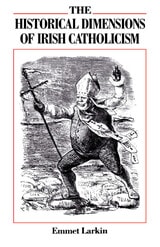
The Historical Dimensions of Irish Catholicism
Emmet J. Larkin
Catholic University of America Press, 1984
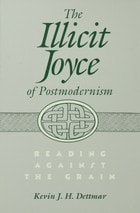
The Illicit Joyce of Postmodernism
Reading Against the GrainKevin Dettmar
University of Wisconsin Press, 1996
For nearly three quarters of a century, the modernist way of reading has been the only way of reading James Joyce—useful, yes, and powerful but, like all frameworks, limited. This book takes a leap across those limits into postmodernism, where the pleasures and possibilities of an unsuspected Joyce are yet to be found.
Kevin J. H. Dettmar begins by articulating a stylistics of postmodernism drawn from the key texts of Roland Barthes, Mikhail Bakhtin, and Jean-François Lyotard. Read within this framework, Dubliners emerges from behind its modernist facade as the earliest product of Joyce’s proto-postmodernist sensibility. Dettmar exposes these stories as tales of mystery, not mastery, despite the modernist earmarks of plentiful symbols, allusions, and epiphanies. Ulysses, too, has been inadequately served by modernist critics. Where they have emphasized the work’s ingenious Homeric structure, Dettmar focuses instead upon its seams, those points at which the narrative willfully, joyfully overflows its self-imposed bounds. Finally, he reads A Portrait of the Artist and Finnegans Wake as less playful, less daring texts—the first constrained by the precious, would-be poet at its center, the last marking a surprising retreat from the constantly evolving, vertiginous experience of Ulysses.
In short, The Illicit Joyce of Postmodernism explores what happens when the extra-literary pronouncements of Eliot, Pound, and Joyce, as well as Joyce’s early critics, are set aside and a new, “unauthorized” Joyce is allowed to appear. This postmodern Joyce, more willful and less easily compartmentalized, stands as a counterpoint to the modernist Joyce who has perhaps become too familiar.
The Letters of St. Patrick and Early Patrician Literature
Philip Freeman
Catholic University of America Press, 2025
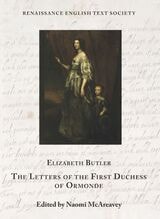
The Letters of the First Duchess of Ormonde
Elizabeth Butler
Iter Press, 2022
The volume comprises more than three hundred letters written by Ormonde to her husband and family, agents and servants, and friends and clients. Spanning six decades, these letters are meticulously transcribed, edited, and annotated, and the volume includes a substantial scholarly introduction, family trees, a glossary, and other resources.
The Luck of Barry Lyndon
A Romance of the Last Century. By Fitz-Boodle.William Makepeace Thackeray
University of Michigan Press, 1999
The Thackeray Edition proudly announces two additions to its collection: Catherine and The Luck of Barry Lyndon. The Thackeray Edition is the first full-scale scholarly edition of William Makepeace Thackeray's works to appear in over seventy years, and the only one ever to be based on an examination of manuscripts and relevant printed texts. It is also a concrete attempt to put into practice a theory of scholarly editing that gives new insight into Thackeray's own compositional process.
The Luck of Barry Lyndon, serialized in Fraser's Magazine in 1844, is a wonderfully hard-edged advance upon Thackeray's previous writing: a tour de force dramatization at novelistic length of the moral vacuity of its first person narrator. The inner workings of this narrator are far more complicated than in earlier Thackeray writings, and are presented in a far more subtle, yet not humorless, manner. The mock-Bildungsroman aspect of the novel is brought about by the non-enlightenment of the title-figure, his failure to find a meaningful love-relationship, and his inability to discover a calling that identifies both a significant direction for his individual existence and, at the same time, an appropriate accommodation to his duties to society. Achieved in brilliant, accomplished style, Barry Lyndon is a significant and progressive experiment in narration for Thackeray.
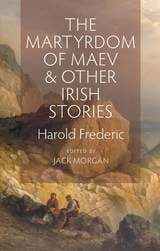
The Martyrdom of Maev and Other Irish Stories
Harold Frederic
Catholic University of America Press, 2015
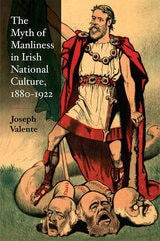
The Myth of Manliness in Irish National Culture, 1880-1922
Joseph Valente
University of Illinois Press, 2011
The Pastoral Role of the Roman Catholic Church in Pre-Famine Ireland, 1750–1850
Emmet Larkin
Catholic University of America Press, 2006
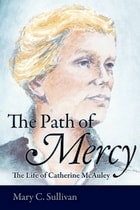
The Path of Mercy
The Life of Catherine McAuleyMary C. Sullivan
Catholic University of America Press, 2012
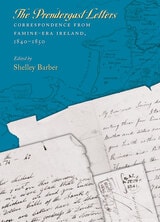
The Prendergast Letters
Correspondence from Famine-Era Ireland, 1840–1850Shelley Barber
University of Massachusetts Press, 2006
Most important, the letters offer a rare contemporary, firsthand account of Ireland's an Gorta Mor, the Great Famine that began with the failure of the potato crop in 1845. Letters written in the months and years following the announcement of the first crop failure provide insight into not only the sufferings of one family but also the response of the community and nation as this crisis transformed Ireland.
James and Elizabeth Prendergast were the parents of six children. Their letters from Milltown, County Kerry, dictated to a scrivener, were posted to sons Thomas and Jeffrey and daughter Julia Riordan and her husband Cornelius, all of whom had emigrated in search of employment to Boston, Massachusetts—a city that would itself be transformed by the famine-era influx of Irish immigrants.
In addition to transcriptions of the forty-eight letters in the collection, this volume includes contextual essays by historian Ruth-Ann Harris and genealogist Marie Daly. The evidence of the letters themselves, along with the contributions of Harris and Daly, demonstrate the ways in which the family of James Prendergast was at once exceptional and typical.
The Provisional IRA
From Insurrection to ParliamentTommy McKearney
Pluto Press, 2011
This book analyses the underlying reasons behind the formation of the Provisional Irish Republican Army (IRA), its development, where this current in Irish republicanism is at present and its prospects for the future.
Tommy McKearney, a former IRA member who was part of the 1980 hunger strike, challenges the misconception that the Provisional IRA was only, or even wholly, about ending partition and uniting Ireland. He argues that while these objectives were always the core and headline demands of the organisation, opposition to the old Northern Ireland state was a major dynamic for the IRA’s armed campaign. As he explores the makeup and strategy of the IRA he is not uncritical, examining alternative options available to the movement at different periods, arguing that its inability to develop a clear socialist programme has limited its effectiveness and reach.
This authoritative and engaging history provides a fascinating insight into the workings and dynamics of a modern resistance movement.
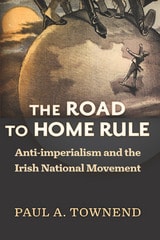
The Road to Home Rule
Anti-imperialism and the Irish National MovementPaul A. Townend
University of Wisconsin Press, 2016
Paul Townend shows that a growing critique of British imperialism shaped a rapidly evolving Irish political consciousness and was a crucial factor giving momentum to the Home Rule and Land League campaigns. Examining newspaper accounts, the rich political cartoons of the era, and the rhetoric and actions of Irish nationalists, he argues that anti-imperialism was a far more important factor in the formation of the independence movement than has been previously recognized in historical scholarship.
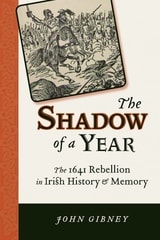
The Shadow of a Year
The 1641 Rebellion in Irish History and MemoryJohn Gibney
University of Wisconsin Press, 2013
Was the 1641 rebellion a justified response to dispossession and repression? Or was it an unprovoked attempt at sectarian genocide? John Gibney comprehensively examines three centuries of this debate. The struggle to establish and interpret the facts of the past was also a struggle over the present: if Protestants had been slaughtered by vicious Catholics, this provided an ideal justification for maintaining Protestant privilege. If, on the other hand, Protestant propaganda had inflated a few deaths into a vast and brutal “massacre,” this justification was groundless.
Gibney shows how politicians, historians, and polemicists have represented (and misrepresented) 1641 over the centuries, making a sectarian understanding of Irish history the dominant paradigm in the consciousness of the Irish Protestant and Catholic communities alike.
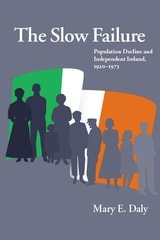
The Slow Failure
Population Decline and Independent Ireland, 1920–1973Mary E. Daly
University of Wisconsin Press, 2006
Today Ireland’s population is rising, immigration outpaces emigration, most families have two or at most three children, and full-time farmers are in steady decline. But the opposite was true for more than a century, from the great famine of the 1840s until the 1960s. Between 1922 and 1966—most of the first fifty years after independence—the population of Ireland was falling, in the 1950s as rapidly as in the 1880s. Mary Daly’s The Slow Failure examines not just the reasons for the decline, but the responses to it by politicians, academics, journalists, churchmen, and others who publicly agonized over their nation’s “slow failure.” Eager to reverse population decline but fearful that economic development would undermine Irish national identity, they fashioned statistical evidence to support ultimately fruitless policies to encourage large, rural farm families. Focusing on both Irish government and society, Daly places Ireland’s population history in the mainstream history of independent Ireland.
Daly’s research reveals how pastoral visions of an ideal Ireland made it virtually impossible to reverse the fall in population. Promoting large families, for example, contributed to late marriages, actually slowing population growth further. The crucial issue of emigration failed to attract serious government attention except during World War II; successive Irish governments refused to provide welfare services for emigrants, leaving that role to the Catholic Church. Daly takes these and other elements of an often-sad story, weaving them into essential reading for understanding modern Irish history
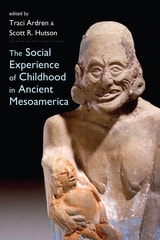
The Social Experience of Childhood in Ancient Mesoamerica
Traci Ardren
University Press of Colorado, 2015
Contributors examine material evidence, historical records, and iconography, productively criticizing the claim that children are invisible in the archaeological record and elucidating an ancient childhood comprising multiple and complex identities. They explore the methodological and theoretical difficulties created when investigating childhood - a category defined by each culture - in the archaeological record.
Sure to appeal widely to New World and Old World archaeologists and anthropologists, The Social Experience of Childhood in Ancient Mesoamerica opens up new avenues of research into the lives of this previously overlooked yet remarkably large population.
Contributors include Traci Ardren, Ximena Chávez Balderas, Billie Follensbee, Byron Hamann, Scott R. Hutson, Rosemary A. Joyce, Stacie M. King, Jeanne Lopiparo, Patricia McAnany, Geoffrey G. McCafferty, Sharisse D. McCafferty, Juan Alberto Román Berrelleza, Rebecca Storey, Rissa M. Trachman, Fred Valdez Jr.

The Subaltern Ulysses
Enda Duffy
University of Minnesota Press, 1994
The Subaltern Ulysses was first published in 1994. Minnesota Archive Editions uses digital technology to make long-unavailable books once again accessible, and are published unaltered from the original University of Minnesota Press editions.
How might an IRA bomb and James Joyce's Ulysses have anything in common? Could this masterpiece of modernism, written at the violent moment of Ireland's national emergence, actually be the first postcolonial novel? Exploring the relation of Ulysses to the colony in which it is set, and to the nation being born as the book was written, Enda Duffy uncovers a postcolonial modernism and in so doing traces another unsuspected strain within the one-time critical monolith. In the years between 1914 and 1921, as Joyce was composing his text, Ireland became the first colony of the British Empire to gain its independence in this century after a violent anticolonial war. Duffy juxtaposes Ulysses with documents and photographs from the archives of both empire and insurgency, as well as with recent postcolonial literary texts, to analyze the political unconscious of subversive strategies, twists on class and gender, that render patriarchal colonialist culture unfamiliar.
Ulysses, Duffy argues, is actually a guerrilla text, and here he shows how Joyce's novel pinpoints colonial regimes of surveillance, mocks imperial stereotypes of the "native," exposes nationalism and other chauvinistic ideologies of "imagined community" as throwbacks to the colonial ethos, and proposes versions of a postcolonial subject. A significant intervention in the massive "Joyce industry" founded on the rhetoric and aesthetics of high modernism, Duffy's insights show us not only Ulysses, but also the origins of postcolonial textuality, in a startling new way.Enda Duffy is assistant professor of English at the University of California at Santa Barbara.
The Subject of Modernism
Narrative Alterations in the Fiction of Eliot, Conrad, Woolf, and JoyceTony E. Jackson
University of Michigan Press, 1994
Theatre of the Real
Yeats, Beckett, and SondheimGina Masucci MacKenzie
The Ohio State University Press, 2008
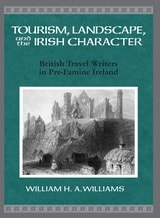
Tourism, Landscape, and the Irish Character
British Travel Writers in Pre-Famine IrelandWilliam H. A. Williams
University of Wisconsin Press, 2007
Picturesque but poor, abject yet sublime in its Gothic melancholy, the Ireland perceived by British visitors during the eighteenth and nineteenth centuries did not fit their ideas of progress, propriety, and Protestantism. The rituals of Irish Catholicism, the lamentations of funeral wakes, the Irish language they could not comprehend, even the landscapes were all strange to tourists from England, Wales, and Scotland. Overlooking the acute despair in England’s own industrial cities, these travelers opined in their writings that the poverty, bog lands, and ill-thatched houses of rural Ireland indicated moral failures of the Irish character.
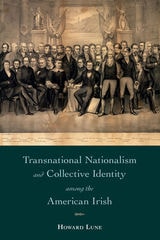
Transnational Nationalism and Collective Identity among the American Irish
Howard Lune
Temple University Press, 2020
In Transnational Nationalism and Collective Identity among the American Irish, Howard Lune considers the development and mobilization of different nationalisms over 125 years of Irish diasporic history (1791–1920) and how these campaigns defined the Irish nation and Irish citizenship.
Lune takes a collective approach to exploring identity, concentrating on social identities in which organizations are the primary creative agent to understand who we are and how we come to define ourselves. As exiled Irishmen moved to the United States, they sought to create a new Irish republic following the American model. Lune traces the construction of Irish American identity through the establishment and development of Irish nationalist organizations in the United States. He looks at how networks—such as societies, clubs, and private organizations—can influence and foster diaspora, nationalism, and nationalist movements.
By separating nationalism from the physical nation, Transnational Nationalism and Collective Identity among the American Irish uniquely captures the processes and mechanisms by which collective identities are constructed, negotiated, and disseminated. Inevitably, this work tackles the question of what it means to be Irish—to have a nationality, a community, or a shared history.
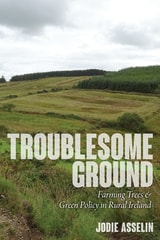
Troublesome Ground
Farming Trees and Green Policy in Rural IrelandJodie Asselin
University Press of Colorado, 2025
Through ethnographic description, Asselin illuminates how ephemeral worlds of green discourse and development plans manifest in rural areas, demonstrating the lived consequences of today’s competing demands on marginal regions. Troublesome Ground is a significant contribution to the anthropology of rural Ireland while offering insights into the wider realities of conflicting development and conservation strategies in global contemporary rural landscapes.