Results by title
110 books match the query 'Italian' and 25 start with t
The Age of Subtlety
Nature and Rhetorical Conceits in Early Modern EuropeJavier Patiño Loira
University of Delaware Press, 2024
The Ambassador and the Courtesan
Political Bodies in Renaissance ItalyPaola De Santo
University of Delaware Press, 2026
The Buffoons, A Ridiculous Comedy
A Bilingual EditionMargherita Costa
Iter Press, 2018
The Complete Danteworlds
A Reader's Guide to the Divine ComedyGuy P. Raffa
University of Chicago Press, 2009
Dante Alighieri’s Divine Comedy has, despite its enormous popularity and importance, often stymied readers with its multitudinous characters, references, and themes. But until the publication in 2007 of Guy Raffa’s guide to the Inferno, students lacked a suitable resource to help them navigate Dante’s underworld. With this new guide to the entire Divine Comedy, Raffa provides readers—experts in the Middle Ages and Renaissance, Dante neophytes, and everyone in between—with a map of the entire poem, from the lowest circle of Hell to the highest sphere of Paradise.
Based on Raffa’s original research and his many years of teaching the poem to undergraduates, The CompleteDanteworlds charts a simultaneously geographical and textual journey, canto by canto, region by region, adhering closely to the path taken by Dante himself through Hell, Purgatory, and Paradise. This invaluable reference also features study questions, illustrations of the realms, and regional summaries. Interpreting Dante’s poem and his sources, Raffa fashions detailed entries on each character encountered as well as on many significant historical, religious, and cultural allusions.
The Complete Poems of Michelangelo
Michelangelo
University of Chicago Press, 1998
"Wonderful. . . . Nims gives us Michelangelo whole: the polymorphous love sonneteer, the political allegorist, and the solitary singer of madrigals."—Kirkus Reviews
"A splendid, fresh and eloquent translation. . . . Nims, an eminent poet and among the best translators of our time, conveys the full meaning and message of Michelangelo's love sonnets and religious poems in fluently rhymed, metrical forms."—St. Louis Post-Dispatch
"The best so far. . . . Nims is best at capturing the sound and sense of Michelangelo's poetic vocabulary."—Choice
"Surely the most compelling translations of Michelangelo currently available in English."—Ronald L. Martinez, Washington Times
The Enemy in Italian Renaissance Epic
Images of Hostility from Dante to TassoAndrea Moudarres
University of Delaware Press, 2019
Published by University of Delaware Press. Distributed worldwide by Rutgers University Press.
The Fake Husband, A Comedy
Flaminio Scala
Iter Press, 2020
The Other Voice in Early Modern Europe - The Toronto Series, volume 75
The Governance of Friendship
Law and Gender in the DecameronMichael Sherberg
The Ohio State University Press, 2011
Through a series of close readings at all three levels of the text—the author’s statements, the frame narrative, and the stories themselves—Sherberg shows how Boccaccio exposes and explores gender tensions rooted in a notion of the patriarchal household, which finds its own rationale in the natural-law postulate of the inferiority of women. Relying on the writings of the great twentieth-century legal theorist Hans Kelsen, Sherberg demonstrates how through the complex architecture of the Decameron Boccaccio dismantles the logic of natural law, exposing it instead as a rhetoric used by men to justify their control of women.
The Governance of Friendship aims well to advance our understanding of Boccaccio as an intellectual: not only steeped in the key texts of his time, but also at the forefront of critical thinking about such issues as law and gender which will play out over the coming centuries and beyond.
The History Of Breathing
Alison Grimaldi Donahue
Diaphanes, 2025
The Etruscan language knew no blank spaces, no breaks between words. Its texture resembled an uninterrupted flow of speech—more singing than speaking, more form than content. Only in the dictum of the pause and the meaningful fragmentation of the breath does language become comprehensible rhythmic expression. In a world full of slogans and catchphrases, Allison Grimaldi Donahue defends the poetological demand of sound over content. The History of Breathing weaves linguistics and poetry, verse and song, meaning and sound into a dense narrative about breathing, rhythm, and the gaps in language that allow words to take on meaning in the first place.
In the tradition of such poets as Charles Olsen, Alice Notley, and Sappho, Grimaldi Donahue’s poetry connects the history of breath and language with narratives about the discovery and loss of our own voice.
The Italian American Table
Food, Family, and Community in New York CitySimone Cinotto
University of Illinois Press, 2013
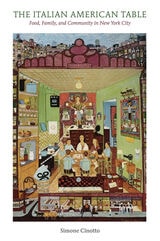
Looking at the historic Italian American community of East Harlem in the 1920s and 30s, Simone Cinotto recreates the bustling world of Italian life in New York City and demonstrates how food was at the center of the lives of immigrants and their children. From generational conflicts resolved around the family table to a vibrant food-based economy of ethnic producers, importers, and restaurateurs, food was essential to the creation of an Italian American identity. Italian American foods offered not only sustenance but also powerful narratives of community and difference, tradition and innovation as immigrants made their way through a city divided by class conflict, ethnic hostility, and racialized inequalities.
The Italian Way
Food and Social LifeDouglas Harper and Patrizia Faccioli
University of Chicago Press, 2009
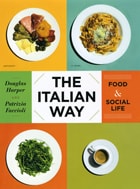
Outside of Italy, the country’s culture and its food appear to be essentially synonymous. And indeed, as The Italian Way makes clear, preparing, cooking, and eating food play a central role in the daily activities of Italians from all walks of life. In this beautifully illustrated book, Douglas Harper and Patrizia Faccioli present a fascinating and colorful look at the Italian table.
The Italian Way focuses on two dozen families in the city of Bologna, elegantly weaving together Harper’s outsider perspective with Faccioli’s intimate knowledge of the local customs. The authors interview and observe these families as they go shopping for ingredients, cook together, and argue over who has to wash the dishes. Throughout, the authors elucidate the guiding principle of the Italian table—a delicate balance between the structure of tradition and the joy of improvisation. With its bite-sized history of food in Italy, including the five-hundred-year-old story of the country’s cookbooks, and Harper’s mouth-watering photographs, The Italian Way is a rich repast—insightful, informative, and inviting.
The Merits of Women
Wherein Is Revealed Their Nobility and Their Superiority to MenModerata Fonte
University of Chicago Press, 2018
Without help from their wives, men are just like unlit lamps . . .
Just think of them as an unreliable clock that tells you it’s ten o’clock when it’s in fact barely two . . .
A man without a woman is like a fly without a head . . .
These are but a small selection of the quips bandied about at this lively gathering of women. The broad topic at hand is the relative pros and cons of men, and the cases in point range from pick-up artists to locker-room talk, and from double standards to fragile masculinity.
Yet this dialogue unfolds not among ironically misandrist millenials venting at their local dive bar, but rather among sixteenth-century women—variously married, widowed, single, and betrothed—attending a respectable Venice garden party. Written in the early 1590s by Moderata Fonte, pseudonym of the Renaissance poet and writer Modesta Pozzo, this literary dialogue interrogates men and men’s treatment of women, and explores by contrast the virtues of singledom and female friendship. As the women diverge from their theme—discussing everything from astrology to the curative powers of plants and minerals—a remarkable group portrait of wisdom, wit, and erudition emerges.
A new introduction by translator Virginia Cox and foreword by Dacia Maraini situate The Merits of Women in its historical context, written as it was on the cusp of Shakespeare’s heyday, and straddling the centuries between the feminist works of Christine de Pizan and Mary Wollstonecraft. Elegantly presented for a general audience, this is a must-read for baby feminists and “nasty women” alike, not to mention the perfect subtle gift for any mansplaining friend who needs a refresher on the merits of women . . . and their superiority to men.
The Neapolitan Recipe Collection
Cuoco NapoletanoTerence Scully
University of Michigan Press, 2015
The Other Renaissance
Italian Humanism between Hegel and HeideggerRocco Rubini
University of Chicago Press, 2014
Bookended by Giambattista Vico and Antonio Gramsci, this strand of Renaissance-influenced philosophy rose in reaction to the major revolutions of the time in Italy, such as national unity, fascism, and democracy. Exploring the ways its thinkers critically assimilated the thought of their northern counterparts, Rubini uncovers new possibilities in our intellectual history: that antihumanism could have been forestalled, and that our postmodern condition could have been entirely different. In doing so, he offers an important new way of thinking about the origins of modernity, one that renews a trust in human dignity and the Western legacy as a whole.
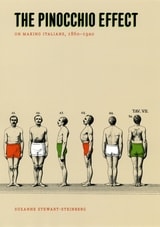
The Pinocchio Effect
On Making Italians, 1860-1920Suzanne Stewart-Steinberg
University of Chicago Press, 2007
Taking as her guiding metaphor the character of Pinocchio—a national icon made famous in 1881 by the eponymous children’s book—Susan Stewart-Steinberg argues that just like the renowned puppet, modern Italians were caught in a complex interplay between freely chosen submission and submission demanded by an outside force. In doing so, she explores all the ways that identity was constructed through newly formed attachments, voluntary and otherwise, to the young nation. Featuring deft readings of the period’s most important Italian cultural and social thinkers—including the theorist of mass psychology Scipio Sighele, the authors Matilde Serao and Edmondo De Amicis, the criminologist Cesare Lombroso, and the pedagogue Maria Montessori—Stewart-Steinberg’s richly multidisciplinary book will set a new standard in Italian studies.
The Pleasant Nights
Giovan Straparola
Iter Press, 2015
In Giovan Francesco Straparola’s The Pleasant Nights, a group of men and women gather together in a villa on the Venetian island of Murano during Carnival to sing songs, tell tales, and solve riddles. A sixteenth-century bestseller, The Pleasant Nights is today a fundamental text for European folk and fairy tale studies, for alongside triumphal and tragic love stories, comical tales of practical jokes, and accounts of witty retorts, Straparola (1480? – 1557?) placed some of the first fairy tales printed in Europe. Straparola’s eloquent female narrators and the fairy tales they recount became a model for a generation of French women writers in Parisian salons, who used the fairy tale to interrogate the gender norms of their day. This book presents the first new and complete English translation of Straparola’s tales and riddles to be published since the nineteenth century.
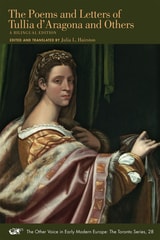
The Poems and Letters of Tullia d'Aragona and Others
A Bilingual EditionTullia d'Aragona and Others, Edited by Julia L. Hairston, Translated by Julia L. Hairston
Iter Press, 2014
Hairston has constructed a full personal, cultural and literary biography for d’Aragona, using newly discovered letters, archival material of other kinds, and contemporary theory about gender in women’s writing. Footnotes establish the intricacy of Tullia’s intellectual networks and her courting of intellectuals in rhyme. Hairston includes poems written to d’Aragona, including Girolamo Muzio’s long pastoral, Tirrhenia. She addresses with tact the question of how sexual Tullia’s relationships were with her various interlocutors. At times, as she says, one just can’t know, but that the issue is much less important than the poems themselves. I agree wholeheartedly. This is the editor Tullia has been waiting for: an indefatigable researcher, a creative biographer, and a precise and appreciative literary critic.
—Ann Rosalind Jones
Esther Cloudman Dunn Professor of Comparative Literature, Smith College
The figure of Tullia d’Aragona has long fascinated readers as the prototype of the “honest courtesan”, a woman who successfully exploited her physical and intellectual charms to win the adoration and respect of the Italian cultural elite. With Julia Hairston’s richly annotated edition of her collected verse, the product of more than a decade of scholarship, d’Aragona finally comes into focus also as poet. She emerges in this volume as one of the most distinctive protagonists in a key transitional moment in Italian literary history, when the aristocratic tradition of Petrarchist lyric began to be reshaped and democratized by its encounter with print.
—Virginia Cox
Professor of Italian, New York University
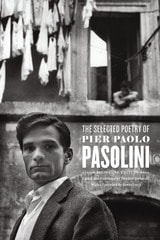
The Selected Poetry of Pier Paolo Pasolini
A Bilingual EditionPier Paolo Pasolini
University of Chicago Press, 2014
Most people outside Italy know Pier Paolo Pasolini for his films, many of which began as literary works—Arabian Nights, The Gospel According to Matthew, The Decameron, and The Canterbury Tales among them. What most people are not aware of is that he was primarily a poet, publishing nineteen books of poems during his lifetime, as well as a visual artist, novelist, playwright, and journalist. Half a dozen of these books have been excerpted and published in English over the years, but even if one were to read all of those, the wide range of poetic styles and subjects that occupied Pasolini during his lifetime would still elude the English-language reader.
For the first time, Anglophones will now be able to discover the many facets of this singular poet. Avoiding the tactics of the slim, idiosyncratic, and aesthetically or politically motivated volumes currently available in English, Stephen Sartarelli has chosen poems from every period of Pasolini’s poetic oeuvre. In doing so, he gives English-language readers a more complete picture of the poet, whose verse ranged from short lyrics to longer poems and extended sequences, and whose themes ran not only to the moral, spiritual, and social spheres but also to the aesthetic and sexual, for which he is most known in the United States today. This volume shows how central poetry was to Pasolini, no matter what else he was doing in his creative life, and how poetry informed all of his work from the visual arts to his political essays to his films. Pier Paolo Pasolini was “a poet of the cinema,” as James Ivory says in the book’s foreword, who “left a trove of words on paper that can live on as the fast-deteriorating images he created on celluloid cannot.”
This generous selection of poems will be welcomed by poetry lovers and film buffs alike and will be an event in American letters.
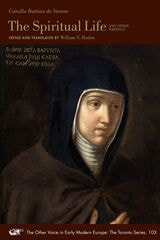
The Spiritual Life and Other Writings
Camilla Battista Da Varano
Iter Press, 2023
Camilla Battista da Varano (1458–1524) was a Franciscan nun and the author of profound spiritual writings in both prose and verse. Raised in the princely household of Camerino in north-central Italy, she put her thorough humanist education to use explaining her own spiritual experience and delivering advice to others. Varano composed ecstatic revelations, prayers, poems, hagiography, spiritual direction, and commentary on convent legislation. She drew on a wide variety of sources, including scripture and Church Fathers, plus popular literature and proverbs. Varano was an erudite woman of considerable complexity, defying many of the commonplace images we associate with religious women of the late fifteenth and early sixteenth centuries.
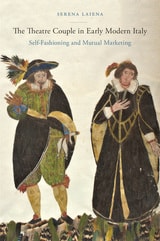
The Theatre Couple in Early Modern Italy
Self-Fashioning and Mutual MarketingSerena Laiena
University of Delaware Press, 2024
Who were the first celebrity couples? How was their success forged? Which forces influenced their self-fashioning and marketing strategies?
These questions are at the core of this study, which looks at the birth of a phenomenon, that of the couple in show business, with a focus on the promotional strategies devised by two professional performers: Giovan Battista Andreini (1576–1654) and Virginia Ramponi (1583–ca.1631). This book examines their artistic path – a deliberately crafted and mutually beneficial joint career – and links it to the historical, social, and cultural context of post-Tridentine Italy. Rooted in a broad research field, encompassing theatre history, Italian studies, celebrity studies, gender studies, and performance studies, The Theatre Couple in Early Modern Italy revises the conventional view of the Italian diva, investigates the deployment of Catholic devotion as a marketing tool, and argues for the importance of the couple system in the history of Commedia dell’Arte, a system that continues to shape celebrity today.
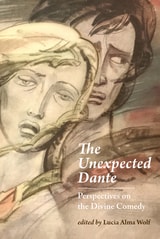
The Unexpected Dante
Perspectives on the Divine ComedyLucia Alma Wolf
Bucknell University Press, 2021
The Unexpected Dante brings together five leading scholars who offer fresh perspectives on the meanings and reception of The Divine Comedy. Some investigate Dante’s intentions by exploring the poem’s esoteric allusions to topics ranging from musical instruments to Roman law. Others examine the poem’s long afterlife and reception in the United States, with chapters showcasing new discoveries about Nicolaus de Laurentii’s 1481 edition of Commedia and the creative contemporary adaptations that have relocated Dante’s visions of heaven and hell to urban American settings.
This study also includes a guide that showcases selected treasures from the extensive Dante collections at the Library of Congress, illustrating the depth and variety of The Divine Comedy’s global influence. The Unexpected Dante is thus a boon to both Dante scholars and aficionados of this literary masterpiece.
Published by Bucknell University Press in association with the Library of Congress. Distributed worldwide by Rutgers University Press.
The World Saved by Kids
And Other EpicsElsa Morante
Seagull Books, 2016
First published in Italian in 1968, The World Saved by Kids was written in the aftermath of deep personal change and in the context of what Elsa Morante called the “great youth movement exploding against the funereal machinations of the organized contemporary world.” Morante believed that it was only the youth who could truly hear her revolutionary call. With the fiftieth anniversary of the tumultuous events of 1968 approaching, there couldn’t be a more timely moment for this first English translation of Morante’s work to appear.
Greeted by Antonio Porta as one of the most important books of its decade, The World Saved by Kids showcases Morante’s true mastery of tone, rhythm, and imagery as she works elegy, parody, storytelling, song, and more into an act of linguistic magic through which Gramsci and Rimbaud, Christ and Antigone, Mozart and Simone Weil, and a host of other figures join the sassy, vulnerable neighborhood kids in a renewal of the word’s timeless, revolutionary power to explore and celebrate life’s insoluble paradox.
Morante gained international recognition and critical acclaim for her novels History, Arturo’s Island, and Aracoeli, and The World Saved By Kids may be her best book and the one that most closely represents her spirit.
The Worlds of Petrarch
Giuseppe Mazzotta
Duke University Press, 1993
Written in a clear and passionate style, The Worlds of Petrarch takes us into the politics of culture, the poetic imagination, into history and ethics, art and music, rhetoric and theology. With this encyclopedic strategy, Mazzotta is able to demonstrate that the self for Petrarch is not a unified whole but a unity of parts, and, at the same time, that culture emerges not from a consensus but from a conflict of ideas produced by opposition and dark passion. These conflicts, intrinsic to Petrarch's style of thought, lead Mazzotta to a powerful rethinking of the concepts of "fragments" and "unity" and, finally, to a new understanding of the relationship between them.
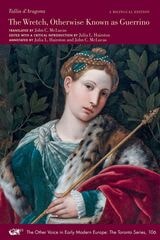
The Wretch, Otherwise Known as Guerrino
A Bilingual EditionTullia d'Aragona
Iter Press, 2024
This is an unabridged bilingual, fully annotated edition of Tullia d’Aragona’s epic poem The Wretch. This mid-century epic reflects the many historical and religious changes taking place in the first half of the sixteenth century in Europe and the burgeoning literary debates following the publication of another Italian epic poem, Ariosto’s Orlando Furioso. The Wretch recounts the adventures of Guerrino, a nobleman captured by pirates as an infant and sold into slavery. His famous quest in search of his parents and his identity involves abductions, same-sex seductions, and skirmishes with fantastical beasts as he travels through Europe, Turkey, Africa, India, Arabia, and the Purgatory of St. Patrick. The poem occupies an important position in the development of the prestigious epic genre, the highest step on the ladder to literary recognition and fame, and Tullia’s work paved the way for the epics of other women writers in subsequent decades.
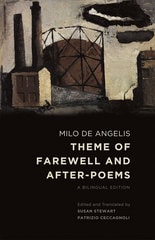
Theme of Farewell and After-Poems
A Bilingual EditionMilo de Angelis
University of Chicago Press, 2013