Results by title
486 books match the query 'LGBTQ+' and 88 start with t
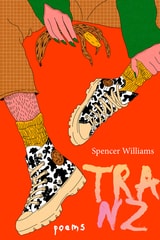
TRANZ
Spencer Williams
Four Way Books, 2024
Take Me with You, Wherever You're Going
Jessica Jacobs
Four Way Books, 2019
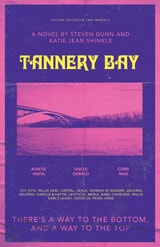
Tannery Bay
A NovelSteven Dunn and Katie Jean Shinkle
University of Alabama Press, 2024
In a town trapped in endless July, love, resistance, and imagination break the loop
Enter a world where time stands still and summer never ends. In the enchanted town of Tannery Bay, it’s July 37, and then July 2 again, but the year is a mystery. Trapped in an eternal loop, the residents embark on an extraordinary journey of self-discovery, unity, and defiance against the forces that seek to divide them.
Otis and Joy, intrepid siblings, work with their family and friends to oppose a formidable adversary: The Owners. These cunning and ruthless old men, driven by insatiable greed, hold the town hostage, exploiting its resources and dividing its people. In this powerful #OwnVoices narrative, Tannery Bay is a captivating tale of Black Joy and Queer Joy and the ways in which family is both biological and chosen, where love transcends boundaries, and where art is a vehicle for change.
Tell Me
StoriesJoe Baumann
Northwestern University Press, 2024
Queer stories about love, loneliness, the surreal, and the self
The stories in Tell Me feature queer men of various ages reckoning with loneliness, selfishness, and the struggle for self-discovery and identity. In “The Vanisher,” a young bisexual man struggling with his own desire to be seen receives a bandana that allows him to become invisible. In “Retreat,” a widower travels to an artists’ colony to seek an audience with his recently deceased husband. And in “We Are Rendered Silent,” people lose their ability to speak when a man they love dies. Through Baumann’s inventive employment of the strange and surreal, these stories set out to explore the bizarre and often confounding experience of navigating modern-day queerness. With his unique voice and magnificent imagination, Baumann fully immerses readers in the queer experience.
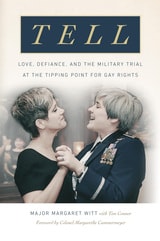
Tell
Love, Defiance, and the Military Trial at the Tipping Point for Gay RightsMajor Margaret Witt
University Press of New England, 2017
Telling Moments
Autobiographical Lesbian Short StoriesEdited by Lynda Hall
University of Wisconsin Press, 2003
The stories are by well-known contemporary writers—Gloria Anzaldúa, Mary Cappello, Emma Donoghue, Jewelle Gomez, Karla Jay, Anna Livia, Valerie Miner, Lesléa Newman, Minnie Bruce Pratt, Ruthann Robson, Sarah Schulman, and Jess Wells—and exciting newer voices, such as Donna Allegra and Marion Douglas. There are also stories from performance artists Carmelita Tropicana, Peggy Shaw, and Maya Chowdhry. Anna Livia’s protagonist appreciates her mother’s artful garden creation. Ruthann Robson tells of a survivor of the health care system. In Marion Douglas’s story a teenager dances with an alluring classmate. Donna Allegra’s strong construction worker copes with the death of her mother. And Karla Jay sets her character forth to swim with sharks. Most of the stories are accompanied by an author photo, biographical sketch, and—a most significant feature—a commentary from the author on her writing process and the autobiographical nature of her story, illustrating the truth behind the fiction.
Tendencies
Eve Kosofsky Sedgwick
Duke University Press, 1983
The essays range from Diderot, Oscar Wilde, and Henry James to queer kids and twelve-step programs; from "Jane Austen and the Masturbating Girl" to a performance piece on Divine written with Michael Moon; from political correctness and the poetics of spanking to the experience of breast cancer in a world ravaged and reshaped by AIDS. What unites Tendencies is a vision of a new queer politics and thought that, however demanding and dangerous, can also be intent, inclusive, writerly, physical, and sometimes giddily fun.
The Affliction
A Novel in StoriesC. Dale Young
Four Way Books, 2018
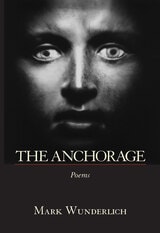
The Anchorage
PoemsMark Wunderlich
University of Massachusetts Press, 1999
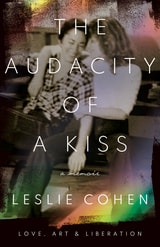
The Audacity of a Kiss
Love, Art, and LiberationLeslie Cohen
Rutgers University Press, 2021
Rendered in bronze, covered in white lacquer, two women sit together on a park bench in Greenwich Village. One of the women touches the thigh of her partner as they gaze into each other’s eyes. The two women are part of George Segal’s iconic sculpture “Gay Liberation,” but these powerful symbols were modeled on real people: Leslie Cohen and her partner (now wife) Beth Suskin.
In this evocative memoir, Cohen tells the story of a love that has lasted for over fifty years. Transporting the reader to the pivotal time when brave gay women and men carved out spaces where they could live and love freely, she recounts both her personal struggles and the accomplishments she achieved as part of New York’s gay and feminist communities. Foremost among these was her 1976 cofounding of the groundbreaking women’s nightclub Sahara, which played host to such luminaries as Betty Friedan, Gloria Steinem, Pat Benatar, Ntozake Shange, Rita Mae Brown, Adrienne Rich, Patti Smith, Bella Abzug, and Jane Fonda. The Audacity of a Kiss is a moving and inspiring tale of how love, art, and solidarity can overcome oppression.
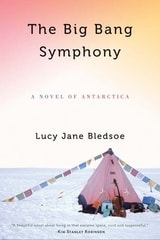
The Big Bang Symphony
A Novel of AntarcticaLucy Jane Bledsoe
University of Wisconsin Press, 2010
At least that’s how thirty-year-old Rosie Moore views it as she flies in for her third season on the Ice. She plans to avoid all entanglements, romantic and otherwise, and do her work as a galley cook. But when her flight crash-lands, so do all her plans.
Mikala Wilbo, a brilliant young composer whose heart—and music—have been frozen since the death of her partner, is also on that flight. She has come to the Ice as an artist-in-residence, to write music, but also to secretly check out the astrophysicist father she has never met.
Arriving a few weeks later, Alice Neilson, a graduate student in geology who thinks in charts and equations, is thrilled to leave her dependent mother and begin her career at last. But from the start she is aware that her post-doc advisor, with whom she will work in Antarctica, expects much more from their relationship.
As the three women become increasingly involved in each other’s lives, they find themselves deeply transformed by their time on the Ice. Each falls in love. Each faces challenges she never thought she would meet. And ultimately, each finds redemption in a depth and quality of friendship that only the harsh beauty of Antarctica can engender.
The Blue Clerk
Ars Poetica in 59 VersosDionne Brand
Duke University Press, 2018
The Bodies of Others
Drag Dances and Their AfterlivesSelby Wynn Schwartz
University of Michigan Press, 2019
The Bohemian Body
Gender and Sexuality in Modern Czech CultureAlfred Thomas
University of Wisconsin Press, 2007
By re-examining the work of key Czech male and female writers and poets from the National Revival to the Velvet Revolution, Alfred Thomas exposes the tendency of Czech literary criticism to separate the political and the personal in modern Czech culture. He points instead to the complex interplay of the political and the personal across ethnic, cultural, and intellectual lines and within the works of such individual writers as Karel Hynek Mácha, Bozena Nemcová, and Rainer Maria Rilke, resulting in the emergence and evolution of a protean modern identity. The product is a seemingly paradoxical yet nuanced understanding of Czech culture (including literature, opera, and film), long overlooked or misunderstood by Western scholars.
The Book of Hulga
Rita Mae Reese, Illustrations by Julie Franki
University of Wisconsin Press, 2016
The Book of Queer Mormon Joy
Pray, Kerry Spencer
Signature Books, 2024
The story of queer Mormons is one that some might not expect to be joyful. The Church of Jesus Christ of Latter-day Saints has traditionally asserted that queerness is counter to God’s plan and that gender as determined at birth is eternal. Any marriage other than a monogamous pairing of male and female is “counterfeit.” So called “wickedness,” we are told, “never was happiness.”
But queer Mormons tell different stories—stories filled with joy. This collection includes essays by queer Mormons across the LGBTQ spectrum who, when they looked inside themselves, found divinity rather than sin. Stories by people who are made exactly as they are meant to be, and live accordingly.
Queer Mormons who feel forced out of the institutional church don’t typically find despair on the outside or abandonment by the divine. Instead, their lives are rich and beautiful—made all the more so by the struggle. The Book of Mormon tells us, “Men are that they might have joy.” The Book of Queer Mormon Joy affirms that trans, nonbinary, intersex, asexual, bisexual, polyamorous, and gay people have joy. Joy is for everyone.
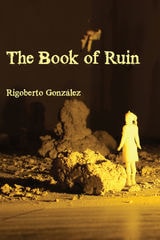
The Book of Ruin
Rigoberto González
Four Way Books, 2019
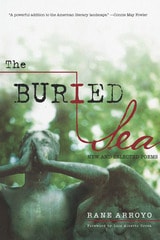
The Buried Sea
New and Selected PoemsRane Arroyo; Foreword by Luis Alberto Urrea
University of Arizona Press, 2008
Reading Rane Arroyo’s poems is a little like watching a movie playing at fastforward speed on the TV in your darkened bedroom. The colors pop and snap, the images leap and recede, the colors seem brighter than life—and you can’t stop watching even long enough to blink. It’s an intimate experience. Even at hyperspeed you can make out the images of friends, family, and lovers (especially lovers) burning rubber across the unblinking screen. And even without a sound track, you can hear the music—a symphony of jazz and samba, salsa and street sounds.
In The Buried Sea, Arroyo has selected poems from his first eleven books—five full-length collections of poems and six chapbooks—and has added nineteen new poems. When asked to describe himself, Arroyo writes that “the answer is easy: I’m a Puerto Rican, gay, Midwestern, educated, former working class, liberal, atheistic, humanist, American, male, ex-Mormon, ex-Catholic, pseudo-Buddhist, teacher, reader, global, and popular culture—informed poet.” Readers will find traces of all of these selves in this collection. And Arroyo does make it “easy” to follow the clues. His poems—vivacious, sexy, shiny, sly, pointed, ambitious—are easy to approach and easy to love. But they come with strings attached—like all affairs of the heart—and therein lies so much of their pleasure.
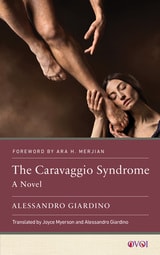
The Caravaggio Syndrome
A NovelAlessandro Giardino
Rutgers University Press, 2024
Leyla is a headstrong Brooklyn-born art historian at a prestigious upstate New York college. When she meets feckless young computer technician Pablo at a party, she quickly becomes pregnant with his child. There’s only one problem: she can’t stand him. And one more problem: her student Michael wants Pablo for himself.
Amid this love triangle, the objects of Leyla and Michael’s study take on a life of their own. Trying to learn more about Caravaggio’s masterpiece The Seven Works of Mercy, they pore over the journal and prison writings of maverick 17th-century utopian philosopher Tommaso Campanella, which, as if by enchantment, transport them back four centuries to Naples. And while the past and present miraculously converge, Leyla, Michael, and Tommaso embark on a voyage of self-discovery in search of a new life.
In this fusion of historical, queer, and speculative fiction, Alessandro Giardino combines the intellectual playfulness of Umberto Eco with the psychological finesse of Michael Cunningham.
The Certain Body
Julia Guez
Four Way Books, 2022
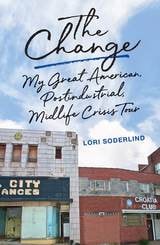
The Change
My Great American, Postindustrial, Midlife Crisis TourLori Soderlind
University of Wisconsin Press, 2020
With humanity and humor, Soderlind's journey introduces quirky folks along the way, including Swannie Jim of Silo City and his fawn pit bull, Champ. She attempts to channel muckraking journalist Ida M. Tarbell and celebrates complicated characters, including Robert De Niro's heartbroken veteran in The Deer Hunter. Ultimately a romance—of Soderlind's love for America, her dog, the long-term partner she left behind, and the childhood crush she remembers with a big, aching pang—The Change offers daring and often hilarious insights into loss and acceptance, especially when it takes a while to get there.
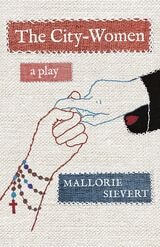
The City-Women
Mallorie Sievert
Carnegie Mellon University Press, 2026
This debut play from Mallorie Sievert follows what happens after two nuns fall in love.
When two young nuns in a seventeenth-century cloistered convent discover their feelings for each other, they must decide whether to conform to the life that was chosen for them or forge their own path and discover who God truly wants them to be. Set against the backdrop of Latin America during the Counter-Reformation, The City-Women explores love, spirituality, and sisterhood, and seeks to redefine what it means to be queer in the eyes of God.
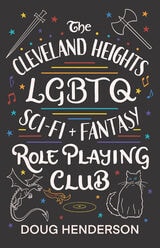
The Cleveland Heights LGBTQ Sci-Fi and Fantasy Role Playing Club
Doug Henderson
University of Iowa Press, 2021
On Thursday nights, the players assemble in the back of Readmore Comix and Games. Celeste is the dungeon master; Valerie, who works at the store, was roped in by default; Mooneyham, the banker, likes to argue; and Ben, sensitive, unemployed, and living at home, is still recovering from an unrequited love. In the real world they go about their days falling in love, coming out at work, and dealing with their family lives all with varying degrees of success. But in the world of their fantasy game, they are heroes and wizards fighting to stop an evil cult from waking a sleeping god.
But then a sexy new guy, Albert, joins the club, Ben’s character is killed, and Mooneyham’s boyfriend is accosted on the street. The connections and parallels between the real world and the fantasy one become stronger and more important than ever as Ben struggles to bring his character back to life and win Albert’s affection, and the group unites to organize a protest at a neighborhood bar. All the while the slighted and competing vampire role playing club, working secretly in the shadows, begins to make its move.
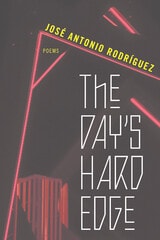
The Day's Hard Edge
PoemsJose A. Rodriguez
Northwestern University Press, 2024
In his fourth poetry collection, José Antonio Rodríguez investigates how one constructs a relationship to the self, to community, and to poetry itself. The Day's Hard Edge is composed of three sections, the first of which situates the reader in the speaker’s world, one marked by multiple forms of trauma. Here are the contours of the Texas/Mexico borderlands where the speaker’s initial sense of self and community emerges. The second section broadens in scope and considers the potential and limitations of poetry as a site for meaning-making. The third section brings the speaker to a new understanding of the poem as it relates to the transformative and destabilizing experience of trauma. Ultimately this book lays bare an individual and, in doing so, shows how poetry acts as a place of succor and vulnerability for one’s very identity. Together these poems explore what it means to be queer, immigrant, and Chicano.
The Deaf-Mute Boy
Joseph Geraci
University of Wisconsin Press, 2006
The Disintegrations
A NovelAlistair McCartney
University of Wisconsin Press, 2019
Within this dizzying investigation into the mystery of death is another mystery: who is the companion igniting these memories? This enigmatic novel blurs the line between fiction and nonfiction, story and eulogy, poetry and obituary. Wry yet somber, astringent yet tender, The Disintegrations confronts both the impossibility of understanding death and the timeless longing for immortality.
The End of the World Book
A NovelAlistair McCartney
University of Wisconsin Press, 2008
This is no ordinary novel. An encyclopedia of memory—from A to Z—The End of the World Book deftly intertwines fiction, memoir, and cultural history, reimagining the story of the world and one man’s life as they both hurtle toward a frightening future. Alistair McCartney’s alphabetical guide to the apocalypse layers images like a prose poem, building from Aristotle to da Vinci, hip-hop to lederhosen, plagues to zippers, while barreling from antiquity to the present.
In this profound book about mortality, McCartney composes an irreverent archive of philosophical obsessions and homoerotic fixations, demonstrating the difficulty of separating what is real from what is imagined.
Finalist, Edmund White Award for Debut Fiction, The Publishing Triangle
Finalist, PEN USA Literary Award for Fiction
The Faith Healer of Olive Avenue
StoriesManuel Muñoz and Cherríe Moraga
Northwestern University Press, 2025
From the divergent paths of triplet brothers to a grieving father confronting his mistreatment of his son, these stories interweave a recurring cast of neighborhood characters, many of them in search of escape or release. Lauded for its empathetic portrayals of communities often ignored, The Faith Healer of Olive Avenue won a Whiting Award and an O. Henry Award; it was shortlisted for the Frank O’Connor International Short Story Award as one of the best collections published in English worldwide. A new foreword by author and activist Cherríe Moraga gives testament to Muñoz’s status as “the cartographer of a people.”

The Future Will Call You Something Else
Natasha Sajé
Tupelo Press, 2023
—Cyrus Cassells
The German Officer’s Boy
Harlan Greene
University of Wisconsin Press, 2005
The Half of It
Domenick Scudera
Carnegie Mellon University Press, 2026
A play that explores the influence of pioneer drag artist Bert Savoy.
The Half of It is inspired by the life and work of Bert Savoy, a Vaudeville drag artist who was active in the 1910s and early 1920s. Savoy was at the height of his career when he was tragically killed by lightning in 1923. The play highlights the groundbreaking and inspirational work of this important, yet largely forgotten, pioneer. Characters include some of Savoy’s famous friends, such as Klondike Kate and Mae West (who many believe borrowed her sassy stage persona from Savoy’s drag act). The play explores themes of gender identity, gender expression, celebrity in the modern era, the LGBTQ community of the early twentieth century, and the origins of contemporary drag performance.
The Halo
C. Dale Young
Four Way Books, 2016
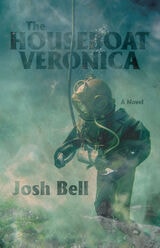
The Houseboat Veronica
A NovelJosh Bell
University of Alabama Press, 2024
A witch, a ward, and a houseboat adrift in time—where beauty and terror share the helm.
The mysterious houseboat Veronica motors across a postapocalyptic freshwater lake, inhabited by a black-haired witch and her young male ward. They explore an unfolding world of shape-shifting moons, vampire moths, and submerged witch cemeteries—a world where voluntary imprisonment holds its own appeal and the heart yearns for the delicate dance between blood and power, beauty and terror.
Neither a pirate nor a mere witch, she is an artist, a master of water and time who shapes reality with her baffling powers. This lyrical and compelling novel beckons readers to explore the enigmatic depths of its prose, inviting them to traverse the waters of wonder and bewilderment. Embrace the bewitching allure of The Houseboat Veronica and lose yourself in its enchanting embrace.
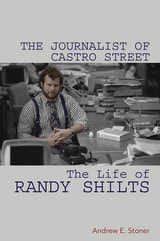
The Journalist of Castro Street
The Life of Randy ShiltsAndrew E. Stoner
University of Illinois Press, 2019
In-depth and dramatic, Andrew E. Stoner's biography follows the remarkable life of the brash, pioneering journalist. Shilts's reporting on AIDS in San Francisco broke barriers even as other gay writers and activists ridiculed his overtures to the mainstream and labeled him a traitor to the movement, charges the combative Shilts forcefully answered. Behind the scenes, Shilts overcame career-threatening struggles with alcohol and substance abuse to achieve the notoriety he had always sought, while the HIV infection he had purposely kept hidden began to take his life.
Filled with new insights and fascinating detail, The Journalist of Castro Street reveals the historic work and passionate humanity of the legendary investigative reporter and author.
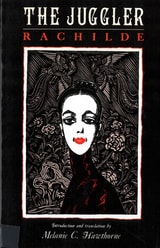
The Juggler
RachildeHawthorne, Melanie C
Rutgers University Press, 1990
The Juggler (La Jongleuse) is a "decadent" novel that was first published in 1900. Its author, Marguerite Vallette-Eymery (1860-1953), who used the pseudonym Rachilde, was a prolific novelist (over sixty works of fiction), playwright, literary critic and reviewer, and a forceful presence in French literary society of her time.
The protagonist of the novel, Eliante Donalger, is in some sense an exaggerated double for her creator--bizarre in appearance, clothing, and interests. Instinctively grasping a medical and psychological truth that the turn-of-the-century scientific world was only beginning to understand, Eliante maintains that there is nothing "natural" about human sexual expression. She claims to be in love with an inanimate (though anthropomorphic and sexually ambiguous) object, a Greek amphora, and the novel traces the rivalry between this faithful partner and an ardent human suitor, a young medical student. It is only through juggling, both literally and metaphorically, that Eliante is able to use her seductive power to maintain desire. The surprise ending challenges the limits of such power in a controversial and surprising twist.
Although Rachilde's work has been neglected in the past, the women's movement and feminist criticism have stimulated renewed interest in her fiction. The Juggler is a major rediscovery.
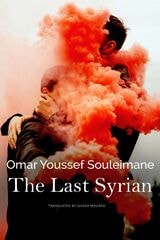
The Last Syrian
Omar Youssef Souleimane
Seagull Books, 2024
Youssef’s mother has always told him that he is named after the biblical prophet Joseph who had the power of foresight. But when Youssef participated in the first demonstration in Damascus in 2011, he felt that the uprising against the Bashar al-Assad regime after forty years of silence and fear was “a miracle more powerful than that of the prophet.”
While Josephine, a charming young Alawite, gathers in her home a group of youth to fight for their visions of a promising future, a forbidden love story unfolds between two men, Youssef and Mohammad. Meanwhile, young Khalid’s love for Josephine is brutally interrupted by the agents of the oppressive regime. Homosexuality clashes with tradition, emancipation with persecution, and feelings with loyalties, leading to an upheaval that sweeps away the destinies of the young as well as that of an entire nation.
Omar Youssef Souleimane’s eloquent novel is not only a narrative of the Syrian Revolution; it is also a story about inter-generational conflicts, rebellion, and liberation. With intense, poetic prose, he brilliantly captures the indomitable yearning for freedom that, despite all obstacles and setbacks, always survives in a hopeful person’s heart until it’s attained.
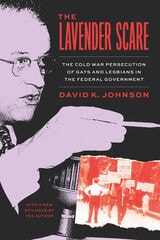
The Lavender Scare
The Cold War Persecution of Gays and Lesbians in the Federal GovernmentDavid K. Johnson
University of Chicago Press, 2023
In The Lavender Scare, David K. Johnson tells the frightening story of how, during the Cold War, homosexuals were considered as dangerous a threat to national security as Communists. Charges that the Roosevelt and Truman administrations were havens for homosexuals proved a potent political weapon, sparking a “Lavender Scare” more vehement and long-lasting than Joseph McCarthy’s Red Scare. Drawing on declassified documents, years of research in the records of the National Archives and the FBI, and interviews with former civil servants, Johnson recreates the vibrant gay subculture that flourished in midcentury Washington and takes us inside the security interrogation rooms where anti-homosexual purges ruined the lives and careers of thousands of Americans. This enlarged edition of Johnson’s classic work of history—the winner of numerous awards and the basis for an acclaimed documentary broadcast on PBS—features a new epilogue, bringing the still-relevant story into the twenty-first century.
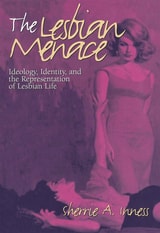
The Lesbian Menace
Ideology, Identity, and the Representation of Lesbian LifeSherrie A. Inness
University of Massachusetts Press, 1997
Electroshock. Hysterectomy. Lobotomy. These are only three of the many “cures” to which lesbians have been subjected in this century. How does a society develop such a profound aversion to a particular minority? In what ways do images in the popular media perpetuate cultural stereotypes about lesbians, and to what extent have lesbians been able to subvert and revise those images? This book addresses these and other questions by examining how lesbianism has been represented in American popular culture in the twentieth century and how conflicting ideologies have shaped lesbian experiences and identity.
In the first section, “Inventing the Lesbian,” Sherrie A. Inness explores depictions of lesbians in popular texts aimed primarily at heterosexual consumers. She moves from novels of the 1920s to books about life at women's colleges and boarding schools, to such contemporary women's magazines as Cosmopolitan, Glamour, and Vogue.
In the next section, “Forms of Resistance,” Inness probes the ways in which lesbians have refashioned texts intended for a heterosexual audience or created their own narratives. One chapter shows how lesbian readers have reinterpreted the Nancy Drew mysteries, looking at them from a distinctly “queer” perspective. Another chapter addresses the changing portrayal of lesbians in children's books over the past two decades.
The last section, “Writing in the Margins,” scrutinizes the extent to which lesbians, themselves a marginalized group, have created a society that relegates some of its own members to the outskirts. Topics include the geographic politics of lesbianism, the complex issue of "passing," and the meaning of butch identity in twentieth-century lesbian culture.
The Life Assignment
Ricardo Alberto Maldonado
Four Way Books, 2020
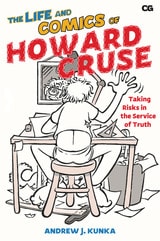
The Life and Comics of Howard Cruse
Taking Risks in the Service of TruthAndrew J. Kunka
Rutgers University Press, 2022
The Life and Comics of Howard Cruse tells the remarkable story of how a self-described “preacher’s kid” from Birmingham, Alabama, became the so-called “Godfather of Gay Comics.” This study showcases a remarkable fifty-year career that included working in the 1970s underground comics scene, becoming founding editor of the groundbreaking anthology series Gay Comix, and publishing the graphic novel Stuck Rubber Baby, partially based on his own experience of coming of age in the Civil Rights era.
Through his exploration of Cruse’s life and work, Andrew J. Kunka also chronicles the dramatic ways that gay culture changed over the course of Cruse’s lifetime, from Cold War-era homophobia to the gay liberation movement to the AIDS crisis to the legalization of gay marriage. Highlighting Cruse’s skills as a trenchant satirist and social commentator, Kunka explores how he cast a queer look at American politics, mainstream comics culture, and the gay community’s own norms.
Lavishly illustrated with a broad selection of comics from Cruse’s career, this study serves as a perfect introduction to this pioneering cartoonist, as well as an insightful read for fans who already love how his work sketched a new vision of gay life.
The Long Hallway
Richard Scott Larson
University of Wisconsin Press, 2024
Larson was only nine years old when he recognized something of his own experience in how Michael Myers hid his true face from the world. This spark of recognition ignited his imagination while he searched for clues to what the future might hold for boys like him, all the while being made to understand his nascent sexuality as deviant and punishable. Like in the movies, his superficially safe suburban childhood was in fact filled with threat: a classmate’s murder, his father’s alcoholism and death, and his own sexual assault by a much older man. The figurative mask Larson learned to wear could not contain his yearning to be seen and desired. In the aftermath of this violence, his boyhood self came to believe that fear and desire would be forever intertwined.
This lyrical memoir expresses a boy’s search for identity while navigating the darkness and isolation of a deeply private inner world. With introspection and tenderness, Larson reflects on how little we understand in the moment about the experiences that mark us forever.
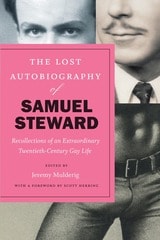
The Lost Autobiography of Samuel Steward
Recollections of an Extraordinary Twentieth-Century Gay LifeSamuel Steward
University of Chicago Press, 2018
The story of this life would undoubtedly have been a sensation if it had reached publication. But after finishing a 110,000-word draft in 1979, Steward lost interest in the project and subsequently published only a slim volume of selections from his manuscript.
In The Lost Autobiography of Samuel Steward, Jeremy Mulderig has integrated Steward’s truncated published text with the text of the original manuscript to create the first extended version of Steward’s autobiography to appear in print—the first sensational, fascinating, and ultimately enlightening story of his many lives told in his own words. The product of a rigorous line-by-line comparison of these two sources and a thoughtful editing of their contents, Mulderig’s thoroughly annotated text is more complete and coherent than either source alone while also remaining faithful to Steward’s style and voice, to his engaging self-deprecation and his droll sense of humor. Compellingly readable and often unexpectedly funny, this newly discovered story of a gay life full of wildly improbable—but nonetheless true—events is destined to become a landmark queer autobiography from the twentieth century.
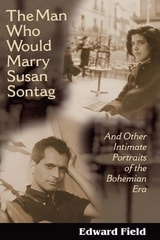
The Man Who Would Marry Susan Sontag
And Other Intimate Literary Portraits of the Bohemian EraEdward Field
University of Wisconsin Press, 2007
Long before Stonewall, young Air Force veteran Edward Field, fresh from combat in WWII, threw himself into New York’s literary bohemia, searching for fulfillment as a gay man and poet. In this vivid account of his avant-garde years in Greenwich Village and the bohemian outposts of Paris’s Left Bank and Tangier—where you could write poetry, be radical, and be openly gay—Field opens the closet door to reveal, as never been seen before, some of the most important writers of his time.
Here are young, beautiful Susan Sontag sitting at the feet of her idol Alfred Chester, who shrewdly plotted to marry her; May Swenson and her two loves; Paul and Jane Bowles in their ambiguous marriage; Frank O’Hara in and out of bed; Fritz Peters, the anointed son of Gurdjieff; and James Baldwin, Isabel Miller (Patience and Sarah), Tobias Schneebaum, Robert Friend, and many others. With its intimate portraits, Field’s memoir brings back a forgotten era—postwar bohemia—bawdy, comical, romantic, sad, and heroic.
The Monster I Am Today
Leontyne Price and a Life in VerseKevin Simmonds
Northwestern University Press, 2021
Structured operatically into overture, acts, and postlude, The Monster I Am Today guides the reader through associative shifts from arias like “weather events” and Price’s forty-two-minute final ovation to memories of Simmonds’s coming of age in New Orleans. As he melds lyric forms with the biography of one of classical music’s greatest virtuosos, Simmonds composes a duet that spotlights Price’s profound influence on him as a person and an artist: “That’s how I hear: Her.”
The Ndola Muto Salon
A NovelFrieda Ekotto
Bucknell University Press, 2027
At the Ndola Muto Salon Douala, Cameroon, women slip behind closed doors to seek pleasure, refuge, and one another. When young Violette begins work there as a courtesan for women to support her family, she enters a world her mother cannot accept, where desire moves quietly but powerfully. Part sanctuary, part hidden house of pleasure, the salon becomes a mirror of empowerment, longing, and possibility beyond the restrictions of Cameroonian society. Within its walls, Violette encounters a constellation of women who shape her awakening: Lady Budu, the formidable owner; Caroline, who first opens her to joy; and the enigmatic Lady with Sexy Toes, who urges her to imagine a life of her own making. As these lives intertwine in this evocative novel, the salon reveals how tenderness between women can become an act of resistance, defying patriarchy, class, and convention in small but profound revolutions.
Published by Bucknell University Press. Distributed worldwide by Rutgers University Press.
The New Woman
Literary Modernism, Queer Theory, and the Trans Feminine AllegoryEmma Heaney
Northwestern University Press, 2017
The book is the first to identify the process by which medical sources simplified the diversity of trans feminine experience into a single diagnostic narrative. It then demonstrates that this medical figure became an archetype for the "sexual anarchy" of the Modernist period in works by Aldous Huxley, James Joyce, Djuna Barnes, T. S. Eliot, and Jean Genet.
Thus illuminating the trans feminine's Modernist provenance, the book examines foundational works of Queer Theory that resuscitated the trans feminine allegory at the end of the twentieth century. Insightful and seminal, The New Woman debunks the pervasive reflex beginning in the 1990s to connect trans experience to a late twentieth-century collapse of sexual differences by revealing the Modernist roots of that very formulation.
The Off Season
Amy Hoffman
University of Wisconsin Press, 2019
In the damp, windy winter, Nora contends with heartbreak, aging, and local environmental worries, while painting what she hopes will be her masterpiece. Along the way, she encounters the chain-smoking, motor scooter–driving landlady Miss Ruby; Reverend Patsy, the vegan minister of the Unitarian church; and Brunhilde, barista extraordinaire and rival for Baby's affections. As the first tourists begin to arrive in June, Nora must decide what she really wants from life.
The Only Way Through Is Out
Suzette Mullen
University of Wisconsin Press, 2024
Digging into her past, Suzette uncovered a deeply buried truth: she’d been in love with her best friend—a woman—for nearly two decades—and still was. Leaning into these “unspeakable” feelings would put Suzette’s identity, relationships, and life of privilege at risk—but taking this leap might be her only chance to feel fully alive. As Suzette opened herself up to new possibilities, an unexpected visit to a new city helped her discover who she was meant to be.
Introspective, bittersweet, and empowering, The Only Way Through Is Out is both a coming-out and coming-of-age story, as well as a call to action for every human who is longing to live authentically but is afraid of the cost.
The Paternity Test
A NovelMichael Lowenthal
University of Wisconsin Press, 2018
Pat Faunce is a faltering romantic, a former poetry major who now writes textbooks. A decade into his relationship with Stu, an airline pilot from a fraught Jewish family, he fears he’s losing Stu to other men—and losing himself in their “no rules” arrangement. Yearning for a baby and a deeper commitment, he pressures Stu to move from Manhattan to Cape Cod, to the cottage where Pat spent boyhood summers.
As they struggle to adjust to their new life, they enlist a surrogate: Debora, a charismatic Brazilian immigrant, married to Danny, an American carpenter. Gradually, Pat and Debora bond, drawn together by the logistics of getting pregnant and away from their spouses. Pat gets caught between loyalties—to Stu and his family, to Debora, to his own potent desires—and wonders: is he fit to be a father?
In one of the first novels to explore the experience of gay men seeking a child through surrogacy, Michael Lowenthal writes passionately about marriages and mistakes, loyalty and betrayal, and about how our drive to create families can complicate the ones we already have. The Paternity Test is a provocative look at the new “family values.”
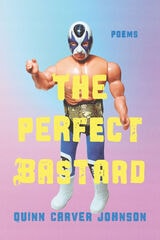
The Perfect Bastard
PoemsQuinn Carver Johnson
Northwestern University Press, 2023
An innovative poetic interrogation of wrestling, queerness, and staying true to oneself
Quinn Carver Johnson’s debut collection, The Perfect Bastard, follows its titular protagonist, a nonbinary and queer professional wrestler, as they travel across Kansas, Oklahoma, Arkansas, and Missouri, working for a booker known as the Puppeteer. Inspired by their idol Adrian Street, the Perfect Bastard strives to positively represent queerness and resist the Puppeteer’s stereotypical and demeaning kayfabe. In the ring, they face off against the likes of champion Jack Holiday and the First Crusher, but their most important battles, against the Puppeteer, take place behind the scenes. They must choose between person and persona, authenticity and humiliating hype, if they want to succeed in the industry.
When offered success on the grandest scale—the championship belt—in exchange for mocking their own queerness, the Perfect Bastard questions their path: Will they betray their identity to achieve their dream, or will they walk away from the world of professional wrestling—a world that refuses to make a genuine, healthy space for them?