Results by title
4030 books match the query 'Language Arts & Disciplines' and 760 start with t

Tablet Computers in School Libraries and Classrooms
Heather Moorefield-Lang
American Library Association, 2014
Tablet Computers in the Academic Library
Rebecca K. Miller
American Library Association, 2014
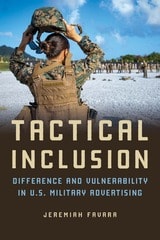
Tactical Inclusion
Difference and Vulnerability in U.S. Military AdvertisingJeremiah Favara
University of Illinois Press, 2024
Compelling and eye-opening, Tactical Inclusion combines original analysis with personal experience to chart advertising’s role in building the all-volunteer military.
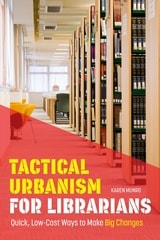
Tactical Urbanism for Librarians
Quick, Low-Cost Ways to Make Big ChangesKaren Munro
American Library Association, 2017
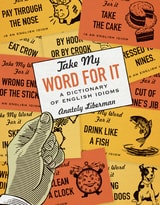
Take My Word for It
A Dictionary of English IdiomsAnatoly Liberman
University of Minnesota Press, 2022
Three centuries of English idioms—their unusual origins and unexpected interpretations
To pay through the nose. Raining cats and dogs. By hook or by crook. Curry favor. Drink like a fish. Eat crow. We hear such phrases every day, but this book is the first truly all-encompassing etymological guide to both their meanings and origins. Spanning more than three centuries, Take My Word for It is a fascinating, one-of-a-kind window into the surprisingly short history of idioms in English. Widely known for his studies of word origins, Anatoly Liberman explains more than one thousand idioms, both popular and obscure, occurring in both American and British standard English and including many regional expressions.
The origins, and even the precise meaning, of most idioms are often obscure and lost in history. Based on a critical analysis of countless conjectures, with exact, in-depth references (rare in the literature on the subject), Take My Word for It provides not only a large corpus of idiomatic phrases but also a vast bibliography. Detailed indexes and a thesaurus make the content accessible at a glance, and Liberman’s introduction and conclusion add historical dimensions. The result of decades of research by a leading authority, this book is both instructive and absorbing for scholars and general readers, who won’t find another resource as comparable in scope or based on data even remotely as exhaustive.

Taking the Risk Out of Democracy
Corporate Propaganda versus Freedom and LibertyAlex Carey
University of Illinois Press, 1995
Tales of Times Now Past
Sixty-Two Stories from a Medieval Japanese CollectionMarian Ury
University of Michigan Press, 1993
Tales of the Field
On Writing Ethnography, Second EditionJohn Van Maanen
University of Chicago Press, 2011
For more than twenty years, John Van Maanen’s Tales of the Field has been a definitive reference and guide for students, scholars, and practitioners of ethnography and beyond. Originally published in 1988, it was the one of the first works to detail and critically analyze the various styles and narrative conventions associated with written representations of culture. This is a book about the deskwork of fieldwork and the various ways culture is put forth in print. The core of the work is an extended discussion and illustration of three forms or genres of cultural representation—realist tales, confessional tales, and impressionist tales. The novel issues raised in Tales concern authorial voice, style, truth, objectivity, and point-of-view. Over the years, the work has both reflected and shaped changes in the field of ethnography.
In this second edition, Van Maanen’s substantial new Epilogue charts and illuminates changes in the field since the book’s first publication. Refreshingly humorous and accessible, Tales of the Field remains an invaluable introduction to novices learning the trade of fieldwork and a cornerstone of reference for veteran ethnographers.

Talk, Tools, and Texts
A Logic-in-Use for Studying Lifespan Literate Action DevelopmentRyan J. Dippre
University Press of Colorado, 2020
Talk, Tools, and Texts tackles a perplexing issue: how can we envision writing as developing throughout a lifetime, from the first purposeful marks made on paper to the last? How can we make accounts of writing development that keep the complexity of our lives in mind while also providing useful insight to researchers, teachers, and writers?
Drawing on eleven accounts of writers at different points in the lifespan (ages 12 to 80) and in different social circumstances (from a middle-school classroom to a bird-sanctuary newsletter), Talk, Tools, and Texts constructs a “logic-in-use” for following writers and their writing development at a variety of points in the lifespan. It also offers several strategies scholars can use in pursuit of their own research into lifespan writing.

Talking Back
Senior Scholars and Their Colleagues Deliberate the Past, Present, and Future of Writing StudiesNorbert Elliot
Utah State University Press, 2020
In Talking Back, a veritable Who’s Who of writing studies scholars deliberate on intellectual traditions, current practices, and important directions for the future. In response, junior and mid-career scholars reflect on each chapter with thoughtful and measured moves forward into the contemporary environment of research, teaching, and service. Each of the prestigious chapter authors in the volume has three common traits: a sense of responsibility for advancing the profession, a passion for programs of research dedicated to advancing opportunities for others, and a reflective sense of their work accompanied by humility for their contributions. As a documentary, Talking Back is the first history of writing studies in autobiography.
Contributors: Jo Allen, Ann N. Amicucci, Akua Duku Anokye, Paige Davis Arrington, Doug Baldwin, John C. Brereton, Judy Buchanan, Hugh Burns, Leasa Burton, Ellen C. Carillo, William Condon, Dylan B. Dryer, Michelle F. Eble, Jennifer Enoch, Joan Feinberg, Patricia Friedrich, Cinthia Gannett, Eli Goldblatt, Shenika Hankerson, Janis Haswell, Richard Haswell, Eric Heltzel, Douglas Hesse, Bruce Horner, Alice S. Horning, Asao B. Inoue, Ruth Ray Karpen, Suzanne Lane, Min-Zhan Lu, Donald McQuade, Elisabeth L. Miller, Rebecca Williams Mlynarczyk, Sean Molloy, Les Perelman, Louise Wetherbee Phelps, Stacey Pigg, Sherry Rankins-Robertson, Jessica Restaino, J. Michael Rifenburg, Eliana Schonberg, Geneva Smitherman, Richard Sterling, Katherine E. Tirabassi, Devon Tomasulo, Martha A. Townsend, Mike Truong, Victor Villanueva, Edward M. White, Anne Elrod Whitney, Kathleen Blake Yancey
Talking Heads
Language, Metalanguage, and the Semiotics of SubjectivityBenjamin Lee
Duke University Press, 1997
Talking Heads synthesizes the views and works of a breathtaking range of the most influential modern theorists of the humanities and social sciences, including Austin, Searle, Derrida, Jakobson, Bakhtin, Wittgenstein, Peirce, Frege, Kripke, Donnellan, Putnam, Saussure, and Whorf. After illuminating these many strands of thought, Lee moves beyond disciplinary biases and re-embeds within the context of the public sphere the questions of subjectivity and language raised by these theorists. In his examination of how subjectivity relates not just to grammatical patterns but also to the specific social institutions in which these patterns develop and are sustained, Lee discusses such topics as the concept of public opinion and the emergence of Western nation-states.
Talking Indian
Identity and Language Revitalization in the Chickasaw RenaissanceJenny L. Davis
University of Arizona Press, 2018
In south-central Oklahoma and much of “Indian Country,” using an Indigenous language is colloquially referred to as “talking Indian.” Among older Chickasaw community members, the phrase is used more often than the name of the specific language, Chikashshanompa’ or Chickasaw. As author Jenny L. Davis explains, this colloquialism reflects the strong connections between languages and both individual and communal identities when talking as an Indian is intimately tied up with the heritage language(s) of the community, even as the number of speakers declines.
Today a tribe of more than sixty thousand members, the Chickasaw Nation was one of the Native nations removed from their homelands to Oklahoma between 1837 and 1838. According to Davis, the Chickasaw’s dispersion from their lands contributed to their disconnection from their language over time: by 2010 the number of Chickasaw speakers had radically declined to fewer than seventy-five speakers.
In Talking Indian, Davis—a member of the Chickasaw Nation—offers the first book-length ethnography of language revitalization in a U.S. tribe removed from its homelands. She shows how in the case of the Chickasaw Nation, language programs are intertwined with economic growth that dramatically reshape the social realities within the tribe. She explains how this economic expansion allows the tribe to fund various language-learning forums, with the additional benefit of creating well-paid and socially significant roles for Chickasaw speakers. Davis also illustrates how language revitalization efforts are impacted by the growing trend of tribal citizens relocating back to the Nation.
Tangled Web They Weave
Truth, Falsity, & AdvertisersIvan L. Preston
University of Wisconsin Press, 1996
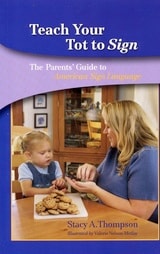
Teach Your Tot to Sign
The Parents' Guide to American Sign LanguageStacy A. Thompson
Gallaudet University Press, 2005
Research has shown that very young children can learn sign language before they learn to speak. Teach Your Tot to Sign: The Parents’ Guide to American Sign Language provides parents and teachers the opportunity to teach more than 500 basic American Sign Language (ASL) signs to their infants, toddlers, and young children. Hearing children, deaf children, and children with special needs can benefit from learning the elementary signs chosen for this handy pocket-size book. Young children who can communicate using simple signs become less frustrated and also bond in a special way with their parents. In teaching ASL to parents of toddlers and preschool teachers, author Stacy A. Thompson recognized the need for a book that could be used at home and in the classroom. Her book features fundamental signs of great appeal to young children and concise instructions on how to sign, including the critical importance of facial expression.
Teach Your Tot to Sign anticipates all of the common desires and interests of young children — food, pets, planes, trains, cars, and boats, games, holidays, vegetables, family — in short, nearly everything. Reflecting children’s endless curiosity, the vocabulary chosen ranges from signs for “baby,” “broken,” “clown,” “dinosaur,” “firefighter,” “gentle,” “hot,” “hurt,” “ketchup,” “pacifier,” “rooster,” “sad,” “spaghetti,” “wagon,” “water,” “wet,” to “you’re welcome,” and even “McDonalds.” This lively assortment of signs will help every child convey earlier in their development their thoughts, feelings, and desires to their parents and teachers.
Teaching Accelerated and Corequisite Composition
David Starkey
Utah State University Press, 2023
The book primarily explores accelerated composition through the lens of two-year colleges to answer a central question in the field: to what extent do educators need to alter two-year college curricular design? The contributors also delve into assessment, a crucial process for instructors and their students transitioning to accelerated learning; the key role that reading plays in the writing process; and noncognitive learning, an area of study that has been associated with accelerated learning since its inception. Together these thirteen chapters provide instructors with a strategic approach to teaching accelerated and corequisite composition.
Teaching Accelerated and Corequisite Composition points toward a new way of approaching first-year composition: a method of instruction that fosters the growth and success of writers who were once considered underprepared for college writing and are now achieving unprecedented success.
Teaching Banned Books
12 Guides for Young ReadersPat R. Scales
American Library Association, 2001
Teaching Banned Books
32 Guides For Children And TeensPat R. Scales
American Library Association, 2019
As standard-bearers for intellectual freedom, school and children’s librarians are in ideal positions to collaborate with educators to not only protect the freedom to read but also ensure that valued books which touch upon important topics are not quarantined from the readers for whom they were written. In this best-selling classroom- and library-ready book of discussion guides, thoroughly updated and expanded to include genres such as graphic novels and nonfiction, award-winning champion of children's literature Scales shows that there is a way to teach these books while respecting all views. Also freshened to include only books that are in print, this resource
- reprints Judy Blume's stirring introduction from the first edition;
- aids educators and librarians in stimulating the critical thinking skills of young readers aged 9-18 while also encouraging freedom of thought and expression, in either classroom or book club settings;
- spotlights titles dealing with sensitive but vital issues such as bullying, racism, bigotry, making tough choices, other cultures, and our uncertain future;
- offers tips for introducing each book and its associated topics;
- provides open-ended questions for discussion which explore the book as a whole rather than simply its "controversial" aspects, along with research and writing activities; and
- includes short summaries of each book, plus a read-alikes section to keep the conversation going.
Teaching Business Information Literacy
Genifer Snipes
American Library Association, 2022
At the same time, the resources, research techniques, and assignments that business students need to master often have little in common with a traditional research paper. Teaching Business Information Literacy provides guidance to new business specialists, generalists, and subject librarians in other disciplines being asked to teach business research classes for the first time. Featuring more than 40 practical, classroom-proven lesson plans for one-shot, embedded, and credit-bearing library classes, it’s divided into nine sections:
- Basic Business Research
- Finance and Accounting
- Entrepreneurship
- Management
- Marketing
- Specialty Subjects
- Data Literacy/Data Visualization
- Experiential Learning/Career
- Using Technology in the Classroom
Chapters cover such crucial topics as competitive intelligence, market research, financial analysis, ethics, intellectual property, accounting and auditing, supply chain management, job searching, and more. Each one guides you through the background of the topic and activity being taught, pre-class planning and preparation, a step-by-step lesson plan, how to adapt the activity for other institutional contexts, and learning outcomes. Additional supporting materials such as slide decks, worksheets, and game boards are freely available in the ACRL Sandbox (sandbox.acrl.org) and findable with the tag “#bizinfolit.”
Teaching College Writing to Diverse Student Populations
Dana R. Ferris
University of Michigan Press, 2013
Statistical and anecdotal evidence documents that even states with relatively little ethnic or cultural diversity are beginning to notice and ask questions about long-term resident immigrants in their classes. As shifts in student population become more widespread, there is an even greater need for second language specialists, composition specialists, program administrators, and developers in colleges and universities to understand and adapt to the needs of the changing student audience(s).
Teaching Composition As A Social Process
Bruce McComiskey
Utah State University Press, 2000
Bruce McComiskey is a strong advocate of social approaches to teaching writing. However, he opposes composition teaching that relies on cultural theory for content, because it too often prejudges the ethical character of institutions and reverts unnecessarily to product-centered practices in the classroom. He opposes what he calls the "read-this-essay-and-do-what-the-author-did method of writing instruction: read Roland Barthes's essay 'Toys' and write a similar essay; read John Fiske's essay on TV and critique a show."
McComiskey argues for teaching writing as situated in discourse itself, in the constant flow of texts produced within social relationships and institutions. He urges writing teachers not to neglect the linguistic and rhetorical levels of composing, but rather to strengthen them with attention to the social contexts and ideological investments that pervade both the processes and products of writing.
A work with a sophisticated theory base, and full of examples from McComiskey's own classrooms, Teaching Composition as a Social Process will be valued by experienced and beginning composition teachers alike.
Teaching Critical Reading Skills v1
Strategies for Academic Librarians Volume 1Hannah Gascho Rempel
Assoc of College & Research Libraries, 2023
Volume 1
- Part I: Reading in the Disciplines
- Part II: Reading for Specific Populations
Volume 2
- Part III: Reading Beyond Scholarly Texts
- Part IV: Reading to Evaluate
- Part V: Reading in the World
Each of the 45 chapters contains teaching and programmatic strategies, resources, and lesson plans, as well as a section titled “Critical Reading Connection” that highlights each author’s approach for engaging with the purpose of reading critically and advancing the conversation about how librarians can foster this skill.
Academic librarians and archivists have a long history of engaging with different types of literacy and acting as a bridge between faculty and students. We understand the different reading needs of specific student populations and the affective challenges with reading that are often shared across learner audiences. We know what types of sources are read, the histories—and needed changes—of how authority has been granted in various fields, how students may be expected to apply what they read in future professional or civic settings, and frequently look beyond our local institutions to think about the larger structural and social justice implications of what is read, how we read, and who does the reading.
These volumes can help you make the implicit explicit for learners and teach that reading is both a skill that must be practiced and nurtured and a communal act. Teaching Critical Reading Skills demonstrates librarians’ and archivists’ deep connections to our campus communities and how critical reading instruction can be integrated in a variety of contexts within those communities.
Teaching Critical Reading Skills v2
Strategies for Academic Librarians Volume 2Hannah Gascho Rempel
Assoc of College & Research Libraries, 2023
Volume 1
- Part I: Reading in the Disciplines
- Part II: Reading for Specific Populations
Volume 2
- Part III: Reading Beyond Scholarly Texts
- Part IV: Reading to Evaluate
- Part V: Reading in the World
Each of the 45 chapters contains teaching and programmatic strategies, resources, and lesson plans, as well as a section titled “Critical Reading Connection” that highlights each author’s approach for engaging with the purpose of reading critically and advancing the conversation about how librarians can foster this skill.
Academic librarians and archivists have a long history of engaging with different types of literacy and acting as a bridge between faculty and students. We understand the different reading needs of specific student populations and the affective challenges with reading that are often shared across learner audiences. We know what types of sources are read, the histories—and needed changes—of how authority has been granted in various fields, how students may be expected to apply what they read in future professional or civic settings, and frequently look beyond our local institutions to think about the larger structural and social justice implications of what is read, how we read, and who does the reading.
These volumes can help you make the implicit explicit for learners and teach that reading is both a skill that must be practiced and nurtured and a communal act. Teaching Critical Reading Skills demonstrates librarians’ and archivists’ deep connections to our campus communities and how critical reading instruction can be integrated in a variety of contexts within those communities.
Teaching Critical Reading Skills
Strategies for Academic Librarians Set: 2-Volume SetHannah Gascho Rempel
Assoc of College & Research Libraries, 2023
Volume 1
- Part I: Reading in the Disciplines
- Part II: Reading for Specific Populations
Volume 2
- Part III: Reading Beyond Scholarly Texts
- Part IV: Reading to Evaluate
- Part V: Reading in the World
Each of the 45 chapters contains teaching and programmatic strategies, resources, and lesson plans, as well as a section titled “Critical Reading Connection” that highlights each author’s approach for engaging with the purpose of reading critically and advancing the conversation about how librarians can foster this skill.
Academic librarians and archivists have a long history of engaging with different types of literacy and acting as a bridge between faculty and students. We understand the different reading needs of specific student populations and the affective challenges with reading that are often shared across learner audiences. We know what types of sources are read, the histories—and needed changes—of how authority has been granted in various fields, how students may be expected to apply what they read in future professional or civic settings, and frequently look beyond our local institutions to think about the larger structural and social justice implications of what is read, how we read, and who does the reading.
These volumes can help you make the implicit explicit for learners and teach that reading is both a skill that must be practiced and nurtured and a communal act. Teaching Critical Reading Skills demonstrates librarians’ and archivists’ deep connections to our campus communities and how critical reading instruction can be integrated in a variety of contexts within those communities.
Teaching Foreign Language Skills
Second EditionWilga M. Rivers
University of Chicago Press, 1981
Teaching Gender with Libraries and Archives
Sara De Jong
Central European University Press, 2014
Teaching Generation M
A Handbook for Librarians and EducatorsAmerican Library Association, 2009
Teaching Information Literacy Online
Trudi E. Jacobson
American Library Association, 2011
Teaching Information Literacy Reframed
50+ Framework-Based Exercises for Creating Information-Literate LearnersJoanna M. Burkhardt
American Library Association, 2016
The six threshold concepts outlined in the Framework for Information Literacy for Higher Education are not simply a revision of ACRL's previous Information Literacy Competency Standards for Higher Education. They are instead an altogether new way of looking at information literacy. In this important new book, bestselling author and expert instructional librarian Burkhardt decodes the Framework, putting its conceptual approach into straightforward language while offering more than 50 classroom-ready Framework-based exercises. Guiding instructors towards helping students cross each threshold, this book
- discusses the history of the development of the Framework document and briefly deconstructs the six threshold concepts;
- thoroughly addresses each threshold concept, scaffolding from the beginner level to the intermediate level;
- includes exercises that can be used in the one-shot timeframe as well as others designed for longer class sessions and semester-long courses;
- offers best practices in creating learning outcomes, assessments, rubrics, and teaching tricks and tips; and
- looks at how learning, memory, and transfer of learning applies to the teaching of information literacy.
Offering a solid starting point for understanding and teaching the six threshold concepts in the Framework, Burkhardt's guidance will help instructors create their own local information literacy programs.

Teaching Information Literacy Skills to Social Sciences Students and Practitioners
A Casebook of ApplicationsDouglas Cook
Assoc of College & Research Libraries, 2011
Teaching Information Literacy Skills to Social Sciences Students and Practitioners
A Casebook of ApplicationsDouglas Cook
Assoc of College & Research Libraries, 2011
Teaching Information Literacy Threshold Concepts
LessonPatricia Bravender
Assoc of College & Research Libraries, 2015
Teaching Information Literacy Threshold Concepts
Lesson Plans for LibrariansPatricia Bravender
Assoc of College & Research Libraries, 2015
Teaching Information Literacy by Discipline
Using and Creating Adaptations of the FrameworkScott P. Libson
Assoc of College & Research Libraries, 2025
In nine thorough sections, Teaching Information Literacy by Discipline shows the great diversity in how librarians understand, adapt, and apply the Framework. It explores how frames are applied when drafting learning outcomes, building research guides, crafting assignments, designing curricula for a particular discipline, and more.
- Arts
- Writing
- Humanities
- Interdisciplinary Studies
- Social Sciences
- Business
- Education and Behavioral Studies
- Health
- Sciences
Teaching Information Literacy
50 Standards-Based Exercises for College StudentsJoanna M. Burkhardt
American Library Association, 2010
Teaching Literacies in Diverse Contexts
Edited by Sinéad Harmey and Bobbie Kabuto
University College London, 2023
Literacy education doesn’t just happen in schools, with young children. It can take place in many locations, and at many different points in people’s lives. Literacy educators, therefore, need flexibility and a deep toolbox to meet their students’ diverse needs, regardless of whether they work in traditional school and college settings or in other environments with varied populations. Teaching Literacy in Diverse Contexts shows how practical experiences can be used in creative ways to support educator development for teaching literacy in a global context. Mentorship between a developing literacy educator and an experienced teacher educator is central to the book, and to the practical experiences in training or professional development that it focuses on. Chapters share the creative solutions discovered during mentorship that supported developing literacy educators to teach with authenticity in a number of contexts, including the adult learning sector, a rural community in Africa, and alongside parents of very sick children. Together, the chapters build a crucial resource for preparing a broad range of literacy educators to teach literacy in many contexts where policy on how best to teach reading and writing to diverse student bodies ebbs and flows.
Teaching Literary Research
Challenges in a Changing EnvironmentKathleen A. Johnson
Assoc of College & Research Libraries, 2011
Teaching Literary Research
Challenges in a Changing EnvironmentKathleen A. Johnson
Assoc of College & Research Libraries, 2011
Teaching Lives
Essays & StoriesWendy Bishop
Utah State University Press, 1997
Teaching Media Literacy
Belinha S. De Abreu
American Library Association, 2019
Foreword by Michelle Ciulla Lipkin, Executive Director, National Association for Media Literacy Education
Preface by Denise E. Agosto
Though media literacy and information literacy are intertwined, there are important differences; and there has never been a more urgent need for an incisive examination of the crucial role librarians and other educators can play in teaching the skills necessary to access, analyze, evaluate, and create media. Media literate youth and adults are better able to understand the complex messages emanating from television, movies, radio, the internet, news outlets, magazines, books, billboards, video games, music, and all other forms of media. In this book, international expert De Abreu melds advice from a diverse array of practitioners and subject experts with her own research findings to examine how consuming media and technology impacts the learning of K–12 students, tackling such paramount issues as
- fake news/alternative facts;
- critical thinking
- digital literacy and digital citizenship;
- social inclusion and equity;
- global interconnectivity; and
- social justice and advocacy.
Teaching Mindful Writers
Brian Jackson
Utah State University Press, 2020
Teaching Mindful Writers introduces new writing teachers to a learning cycle that will help students become self-directed writers through planning, practicing, revising, and reflecting. Focusing on the art and science of instructing self-directed writers through major writing tasks, Brian Jackson helps teachers prepare students to engage purposefully in any writing task by developing the habits of mind and cognitive strategies of the mindful writer.
Relying on the most recent research in writing studies and learning theory, Jackson gives new teachers practical advice about setting up writing tasks, using daily writing, leading class discussions, providing feedback, joining teaching communities, and other essential tools that should be in every writing teacher’s toolbox. Teaching Mindful Writers is a timely, fresh perspective on teaching students to be self-directed writers.
Teaching Multiwriting
Researching and Composing with Multiple Genres, Media, Disciplines, and CulturesRobert L. Davis and Mark F. Shadle
Southern Illinois University Press, 2007
Teaching Performance Studies
Edited by Nathan Stucky and Cynthia Wimmer. Foreword by Richard Schechner
Southern Illinois University Press, 2002
Edited by Nathan Stucky and Cynthia Wimmer, Teaching Performance Studies is the first organized treatment of performance studies theory, practice, and pedagogy. This collection of eighteen essays by leading scholars and educators reflects the emergent and contested nature of performance studies, a field that looks at the broad range of human performance from everyday conversation to formal theatre and cultural ritual. The cross-disciplinary freedom enacted by the writers suggests a new vision of performance studies—a deliberate commerce between field and classroom.
Teaching Professional and Technical Communication
A Practicum in a BookTracy Bridgeford
Utah State University Press, 2018
This practicum features chapters by prominent PTC scholars and teachers on rhetoric, style, ethics, design, usability, genre, and other central concerns of PTC programs. Each chapter includes a scenario or personal narrative of teaching a particular topic, provides a theoretical basis for interpreting the narrative, illustrates the practical aspects of the approach, describes relevant assignments, and presents a list of questions to prompt pedagogical discussions.
Teaching Professional and Technical Communication is not a compendium of best practices but instead offers a practical collection of rich, detailed narratives that show inexperienced PTC instructors how to work most effectively in the classroom.
Contributors: Pam Estes Brewer, Eva Brumberger, Dave Clark, Paul Dombrowski, James M. Dubinsky, Peter S. England, David K. Farkas, Brent Henze, Tharon W. Howard, Dan Jones, Karla Saari Kitalong, Traci Nathans-Kelly, Christine G. Nicometo, Kirk St.Amant
Teaching Readers in Post-Truth America
Ellen C. Carillo
Utah State University Press, 2018
Readers in this post-truth culture are under unprecedented pressure to interpret an overwhelming quantity of texts in many forms, including speeches, news articles, position papers, and social media posts. In response, Carillo describes pedagogical interventions designed to help students become more metacognitive about their own reading and, in turn, better equipped to respond to texts in a post-truth culture.
Teaching Readers in Post-Truth America is an invaluable source of support for writing instructors striving to prepare their students to resist post-truth rhetoric and participate in an information-rich, divisive democratic society.
Teaching U.S.-Educated Multilingual Writers
Pedagogical Practices from and for the ClassroomMark Roberge, Kay M. Losey, Margi Wald
University of Michigan Press, 2015
All of the contributors are teachers who are writing about and reflecting on their own experiences and outcomes and interweaving those experiences and outcomes with current theory and research in the field. The volume thus portrays teachers as active, reflective participants engaged in critical inquiry. Contributors represent community college, college, and university contexts; academic ESL, developmental writing, and first-year composition classes; and face-to-face, hybrid, and online contexts.
This book was developed primarily to meet the needs of practicing writing teachers in college-level ESL, basic writing, and college composition classrooms, but will also be useful to pre-service teachers in TESOL, Composition, and Education graduate programs.
Teaching Undergraduates with Archives
Nancy Bartlett
Michigan Publishing Services, 2019
"The contributions to this volume capture exceptionally well the passion and the creativity that archivists and special collections librarians who teach and do outreach with primary sources are bringing to their work in this increasingly important activity domain."
-- Martha O’Hara Conway, Director, Special Collections Research Center, University of Michigan Library
"As teaching with archival materials has moved to the foreground of the archival mission for many institutions, this timely, inspiring, and practical volume, which comes out of the multi-day symposium solely devoted to teaching undergraduates with archival materials, is a required reading for anyone who teaches with archival materials, or who would like to. It really captures the spirit and enthusiasm that these authors brought to that symposium."
-- Josué Hurtado, Coordinator of Public Services & Outreach, Special Collections Research Center, Temple University Libraries
"Reflecting the increasing priority of teaching in archives and special collections libraries, this book captures a variety of perspectives, insights, approaches, and prognostications that will enlighten, challenge, and inspire a growing community of practitioners."
-- Bill Landis, Head of Public Services, Manuscripts and Archives, Yale University Library
"Building on the momentum generated at the symposium, this book is a treasure trove for professionals in the field who are eager for innovative ideas regarding collaboration and experimentation in teaching with archival material."
-- Elizabeth Williams-Clymer, Special Collections Librarian, Kenyon College
Teaching Vocabulary Is the Writing Teacher's Job
Why and HowKeith S. Folse
University of Michigan Press, 2020
Teaching With Student Texts
Essays Toward an Informed PracticeJoseph Harris
Utah State University Press, 2010
Harris, Miles and Paine ask: What happens when the texts that students write become the focus of a writing course? In response, a distinguished group of scholar/teachers suggests that teaching with students texts is not simply a classroom technique, but a way of working with writing that defines composition as a field.
In Teaching with Student Texts, authors discuss ways of revaluing student writing as intellectual work, of circulating student texts in the classroom and beyond, and of changing our classroom practices by bringing student writings to the table. Together, these essays articulate a variety of ways that student texts can take a central place in classroom work and can, in the process, redefine the ways our field talks about writing.
Teaching Writing That Works
A Group Approach to Practical EnglishEric S. Rabkin and Macklin Smith
University of Michigan Press, 1990
Teaching Writing as a Second Language
Alice S. Horning. Foreword by W. Ross Winterowd
Southern Illinois University Press, 1986
Classrooms filled with glassy-eyed students provide an experiential base for Alice S. Horning’s new comprehensive theory about basic writers.
Horning explores the theory of writing acquisition in detail. Her examination of spoken and written language and redundancy give a theoretical base to her argument that academic discourse is a separate linguistic system characterized by particular psycholinguistic features. She proposes that basic writers learn to write as other learners master a second language because for them, academic written English is a whole new language.
She explores the many connections to be found in second language acquisition research to the teaching and learning of writing and gives special attention to the interlanguage hypothesis, pidginization theory, and the Monitor theory. She also addresses the role of affective factors (feelings, attitudes, emotions, and motivation) in the success or failure of writing students.