Results by title
78 books match the query 'Legends' and 17 start with t
Tales and Towns of Northern New Jersey
Beck, Henry
Rutgers University Press, 1967
Tales of Old-Time Texas
By J. Frank Dobie
University of Texas Press, 1955
It is for good reason that J. Frank Dobie is known as the Southwest's master storyteller. With his eye for color and detail, his ear for the rhythm of language and song, and his heart open to the simple truth of folk wisdom and ways, he movingly and unpretentiously spins the tales of our collective heritages. This he does in Tales of Old-Time Texas, a heartwarming array of twenty-eight stories filled with vivid characters, exciting historical episodes, and traditional themes. As Dobie himself says: "Any tale belongs to whoever can best tell it." Here, then, is a collection of the best Texas tales—by the Texan who can best tell them.
Dobie's recollections include such classics in Lone Star State lore as the tale of Jim Bowie's knife, the legend of the Texas bluebonnet, the story of the Wild Woman of the Navidad, and the account of the headless horseman of the mustangs. Other stories in this outstanding collection regale us with odd and interesting characters and events: the stranger of Sabine Pass, the Apache secret of the Guadalupes, the planter who gambled away his bride, and the Robinhooding of Sam Bass. These stories, and many more, make Tales of Old-Time Texas a beloved classic certain to endure for generations.

Tall Tale America
A Legendary History of our Humorous HeroesWalter Blair
University of Chicago Press, 1987

The Aeneid
Virgil
University of Chicago Press, 2017
The paperback and e-book editions include a new introduction by Richard F. Thomas, along with a new glossary of names that makes the book even more accessible for students and for general readers coming to the Aeneid for the first time who may need help acclimating to Virgil’s world.
The Aeneid of Virgil
Virgil
University of Michigan Press, 1995
In this new translation Edward McCrorie has performed the difficult task of rendering Virgil's compact, dense Latin into fine, readable, modern English verse. The sometimes complex text is made clear and comprehensible even for first-time readers, and a glossary of names helps identify characters and place-names in the poem. The translation is well suited for students at all levels, and readers already familiar with Virgil will find many fresh images and ideas.
"A brilliant effort."--Robert Bly
"I admire the ambition of the project, and the generosity of many of the lines."--Robert Fagles
Edward McCrorie is Professor of English, Providence College. His poetry and translations of Latin verse have been widely published.
The Afterlife of Pope Joan
Deploying the Popess Legend in Early Modern EnglandCraig M. Rustici
University of Michigan Press, 2010
The legend concerning a popess had first taken written form in the thirteenth century and for several hundred years was more or less accepted. The Reformation, however, polarized discussions of the legend, pitting Catholics, who denied the story’s veracity, against Protestants, who suspected a cover-up and instantly cited Joan as evidence of papal depravity. In this heated environment, writers reimagined Joan variously as a sorceress, a hermaphrodite, and even a noteworthy author.
The Afterlife of Pope Joan examines sixteenth- and seventeenth-century debates concerning the popess’s existence, uncovering the disputants’ historiographic methods, rules of evidence, rhetorical devices, and assumptions concerning what is probable and possible for women and transvestites. Author Craig Rustici then investigates the cultural significance of a series of notions advanced in those debates: the claim that Queen Elizabeth I was a popess in her own right, the charge that Joan penned a book of sorcery, and the curious hypothesis that the popess was not a disguised woman at all but rather a man who experienced a sort of spontaneous sex change.
The Afterlife of Pope Joan draws upon the discourses of religion, politics, natural philosophy, and imaginative literature, demonstrating how the popess functioned as a powerful rhetorical instrument and revealing anxieties and ambivalences about gender roles that persist even today.
Craig M. Rustici is Associate Professor of English at Hofstra University.
The Aggada of the Bavli and Its Cultural World
Geoffrey Herman
SBL Press, 2018
Essays that explore the rich engagement of the Talmud with its cultural world
The Babylonian Talmud (Bavli), the great compilation of Jewish law edited in the late Sasanian era (sixth–seventh century CE), also incorporates a great deal of aggada, that is, nonlegal material, including interpretations of the Bible, stories, folk sayings, and prayers. The Talmud’s aggadic traditions often echo conversations with the surrounding cultures of the Persians, Eastern Christians, Manichaeans, Mandaeans, and the ancient Babylonians, and others. The essays in this volume analyze Bavli aggada to reveal this rich engagement of the Talmud with its cultural world.
Features:
- A detailed analysis of the different conceptions of martyrdom in the Talmud as opposed to the Eastern Christian martyr accounts
- Illustration of the complex ways rabbinic Judaism absorbed Christian and Zoroastrian theological ideas
- Demonstration of the presence of Persian-Zoroastrian royal and mythological motifs in talmudic sources
The Global White Snake
Liang Luo
University of Michigan Press, 2021
The Global White Snake uncovers how the White Snake legend often acts as an unsettling narrative of radical tolerance for hybrid sexualities, loving across traditional boundaries, subverting authority, and valuing the strange and the uncanny. A timely mediation and reflection on our contemporary moment of continued struggle for minority rights and social justice, The Global White Snake revives the radical anti-authoritarian spirit slithering under the tales of monsters and demons, love and lust, and reminds us of the power of the fantastic and the fabulous in inspiring and empowering personal and social transformations.
The Lancelot-Grail Cycle
Text and TransformationsEdited by William W. Kibler
University of Texas Press, 1994
Composed in Old French between about 1220 and 1240, the Lancelot-Grail Cycle is a group of five prose romances centered on the love affair between Lancelot and Guenevere. It consists of an immense central core, the Lancelot Proper, introduced by The History of the Holy Grail and The Story of Merlin and concluded by The Quest for the Holy Grail and The Death of Arthur.
This volume brings together thirteen essays by noted scholars from the first symposium ever devoted exclusively to the Lancelot-Grail Cycle. Exploring the cycle's evolution across the literatures of medieval France, Italy, Spain, Catalonia, and England, the authors take a variety of approaches that highlight a broad range of cultural, social, historical, and political concerns and offer a comparative and interdisciplinary vision of this great romance.
The Lost Gold Mine of Juan Mondragón
A Legend from New Mexico performed by Melaquías RomeroEdited by Charles L. Briggs and Julián Josué Vigil
University of Arizona Press, 1990
The Myth of Pope Joan
Alain Boureau
University of Chicago Press, 2001
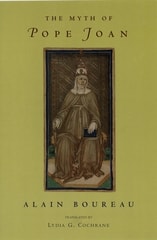
Or so the legend goes—a legend that was fabricated sometime in the thirteenth century, according to Alain Boureau, and which has persisted in one form or another down to the present day. In this fascinating saga of belief and rhetoric, politics and religion, Boureau investigates the historical and ecclesiastical circumstances under which the myth of Pope Joan was constructed and the different uses to which it was put over the centuries. He shows, for instance, how Catholic clerics justified the exclusion of women from the papacy and the priesthood by employing the myth in misogynist moral tales, only to find the popess they had created turned against them in anti-Catholic propaganda during the Reformation.

The Republic of Football
Legends of the Texas High School GameChad S. Conine
University of Texas Press, 2016
Anywhere football is played, Texas is the force to reckon with. Its powerhouse programs produce the best football players in America. In The Republic of Football, Chad S. Conine vividly captures Texas’s impact on the game with action-filled stories about legendary high school players, coaches, and teams from around the state and across seven decades.
Drawing on dozens of interviews, Conine offers rare glimpses of the early days of some of football’s biggest stars. He reveals that some players took time to achieve greatness—LaDainian Tomlinson wasn’t even the featured running back on his high school team until a breakthrough game in his senior season vaulted him to the highest level of the sport—while others, like Colt McCoy, showed their first flashes of brilliance in middle school. In telling these and many other stories of players and coaches, including Hayden Fry, Spike Dykes, Bob McQueen, Lovie Smith, Art Briles, Lawrence Elkins, Warren McVea, Ray Rhodes, Dat Nguyen, Zach Thomas, Drew Brees, and Adrian Peterson, Conine spotlights the decisive moments when players caught fire and teams such as Celina, Southlake Carroll, and Converse Judson turned into Texas dynasties. Packed with never-before-told anecdotes, as well as fresh takes on the games everyone remembers, The Republic of Football is a must-read for all fans of Friday night lights.
The Sanctity of the Leaders
Holy Kings, Princes, Bishops and Abbots from Central Europe (11th to 13th Centuries)Gábor Klaniczay
Central European University Press, 2023
The latest title in the Central European Medieval Texts series contains the lives of saints who were canonized in the eleventh through thirteenth centuries in the newly Christianized countries of Central and Eastern Europe (Bohemia, Poland, Hungary, and Dalmatia). A rejoinder to the earlier volume in the series, the Saints of the Christianization Age of Central Europe (CEMT, Vol. 6), containing hermits, missionaries, and martyrs, this second volume of hagiography is dominated by political or ecclesiastical leaders who became saintly patrons of their region and were highly venerated throughout the Middle Ages.
The legends in the volume present the two Hungarian holy kings Stephen and Ladislas, the holy duke Emeric, the Czech holy abbot Prokop of Sázava, three bishops, the Venetian-Hungarian Gellért of Csanád, the Polish Stanislas of Cracow (both martyrs), and the Dalmatian holy bishop Saint John of Trogir. Each “vita” is published in Latin original with an English translation and with prefaces discussing the textual tradition.
Saints’ lives have been recognized as an invaluable source of information on social and economic history, the history of mentalities and everyday life, cultural history, and, above all, as a special genre with crucial importance and prevalence in medieval literature.
The Visual World of the Hungarian Angevin Legendary
Béla Zsolt Szakács
Central European University Press, 2016
There Was a Woman
La Llorona from Folklore to Popular CultureBy Domino Renee Perez
University of Texas Press, 2008
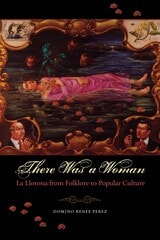
"How is it that there are so many lloronas?" A haunting figure of Mexican oral and literary traditions, La Llorona permeates the consciousness of her folk community. From a ghost who haunts the riverbank to a murderous mother condemned to wander the earth after killing her own children in an act of revenge or grief, the Weeping Woman has evolved within Chican@ imaginations across centuries, yet no truly comprehensive examination of her impact existed until now. Tracing La Llorona from ancient oral tradition to her appearance in contemporary material culture, There Was a Woman delves into the intriguing transformations of this provocative icon.
From La Llorona's roots in legend to the revisions of her story and her exaltation as a symbol of resistance, Domino Renee Perez illuminates her many permutations as seductress, hag, demon, or pitiful woman. Perez draws on more than two hundred artifacts to provide vivid representations of the ways in which these perceived identities are woven from abstract notions—such as morality or nationalism—and from concrete, often misunderstood concepts from advertising to television and literature. The result is a rich and intricate survey of a powerful figure who continues to be reconfigured.
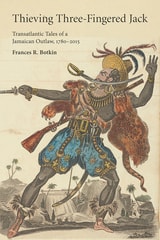
Thieving Three-Fingered Jack
Transatlantic Tales of a Jamaican Outlaw, 1780-2015Botkin, Frances R.
Rutgers University Press, 2018
The fugitive slave known as “Three-Fingered Jack” terrorized colonial Jamaica from 1780 until vanquished by Maroons, self-emancipated Afro-Jamaicans bound by treaty to police the island for runaways and rebels. A thief and a killer, Jack was also a freedom fighter who sabotaged the colonial machine until his grisly death at its behest. Narratives about his exploits shed light on the problems of black rebellion and solutions administered by the colonial state, creating an occasion to consider counter-narratives about its methods of divide and conquer. For more than two centuries, writers, performers, and storytellers in England, Jamaica, and the United States have “thieved" Three Fingered Jack's riveting tale, defining black agency through and against representations of his resistance.
Frances R. Botkin offers a literary and cultural history that explores the persistence of stories about this black rebel, his contributions to constructions of black masculinity in the Atlantic world, and his legacies in Jamaican and United States popular culture.

Treasure Tales of the Rockies
Perry Eberhart
Ohio University Press, 1990
Perry Eberhart gathered and researched almost 150 treasure tales and tells them with the same thoroughness, engaging style, and lively anecdotes that distinguish his other major contribution to Colorado lore and history: Guide to the Colorado Ghost Towns and Mining Camps.
Treasure Tales not only tells the original story of a lost mine or a buried treasure, but also fills in the pieces of the puzzle as they have come to light over the years. Many tales become more and more intriguing — but still remain a puzzle. In some cases the puzzle is solved, often accidentally. Eberhart also collects the fascinating tales of lost treasures found. This latest edition of Treasure Tales brings all of this information up to date.
Forty-three maps by Sandy Eberhart and forty-eight well-chosen photographs round out Treasure Tales. This is a book for both armchair excitement and for the adventurer who wants to search out what nature, time, and man's ingenuity have hidden from us — and what nature, time, and man's ingenuity also often help us find. Good luck!