Results by title
178 books match the query 'Media' and 30 start with t
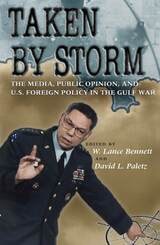
Taken by Storm
The Media, Public Opinion, and U.S. Foreign Policy in the Gulf WarEdited by W. Lance Bennett and David L. Paletz
University of Chicago Press, 1994
Tracing the flow of news, public opinion, and policy decisions from Sadam Hussein's rise to power in 1979, to the Iraqi invasion of Kuwait, through the outbreak and conclusion of the war, the contributors look at how the media have become key players in the foreign policy process. They examine the pre-war media debate, news coverage during and after the war, how the news-gathering process shaped the content of the coverage, and the media's effect on public opinion and decision makers. We see what goes on behind the scenes in the high tech world of political communication, and are confronted by troubling questions about the ways the government managed coverage of the war and captured journalists at their own news game.
Taken by Storm also examines more general patterns in post-Cold war journalism and foreign policy, particularly how contemporary journalistic practices determine whose voices and what views are heard in foreign policy coverage. At stake are the reactions of a vast media audience and the decision of government officials who see both the press and the public and key elements of the policy game.
The first book to fully integrate our understanding of the news business, public opinion, and government action, Taken by Storm transcends the limits of the Gulf War to illuminate the complex relationship between the media, the public, and U.S. foreign policy in the late twentieth century.

Taking Up McLuhan's Cause
Perspectives on Media and Formal CausalityEdited by Corey Anton, Robert K. Logan, and Lance Strate
Intellect Books, 2017
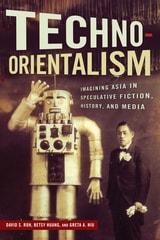
Techno-Orientalism
Imagining Asia in Speculative Fiction, History, and MediaRoh, David S.
Rutgers University Press, 2015

The Alabama Folk Lyric
A Study in Origins and Media of DisseminationCollected and Edited with an Introduction and Notes by Ray B. Browne
University of Wisconsin Press, 1979
Alabamians have always been a singing people. The settlers who moved into the various sections of the state brought with them songs which reflected their national origins and geographical backgrounds, and as they spread into the hills and over the lowlands they created new songs out of the conditions under which they lived. Also, they absorbed songs from outside sources whenever these pieces could be adapted to their sentiments and ways of life. Thus, by a process of memory, composition and recreation they developed a rich body of folk songs. The following collection a part of the effort to discover and preserve these songs.
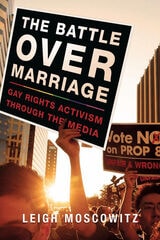
The Battle over Marriage
Gay Rights Activism through the MediaLeigh Moscowitz
University of Illinois Press, 2013
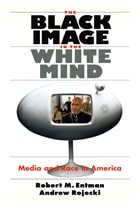
The Black Image in the White Mind
Media and Race in AmericaRobert M. Entman and Andrew Rojecki
University of Chicago Press, 2001
Using the media, and especially television, as barometers of race relations, Robert Entman and Andrew Rojecki explore but then go beyond the treatment of African Americans on network and local news to incisively uncover the messages sent about race by the entertainment industry-from prime-time dramas and sitcoms to commercials and Hollywood movies. While the authors find very little in the media that intentionally promotes racism, they find even less that advances racial harmony. They reveal instead a subtle pattern of images that, while making room for Blacks, implies a racial hierarchy with Whites on top and promotes a sense of difference and conflict. Commercials, for example, feature plenty of Black characters. But unlike Whites, they rarely speak to or touch one another. In prime time, the few Blacks who escape sitcom buffoonery rarely enjoy informal, friendly contact with White colleagues—perhaps reinforcing social distance in real life.
Entman and Rojecki interweave such astute observations with candid interviews of White Americans that make clear how these images of racial difference insinuate themselves into Whites' thinking.
Despite its disturbing readings of television and film, the book's cogent analyses and proposed policy guidelines offer hope that America's powerful mediated racial separation can be successfully bridged.
"Entman and Rojecki look at how television news focuses on black poverty and crime out of proportion to the material reality of black lives, how black 'experts' are only interviewed for 'black-themed' issues and how 'black politics' are distorted in the news, and conclude that, while there are more images of African-Americans on television now than there were years ago, these images often don't reflect a commitment to 'racial comity' or community-building between the races. Thoroughly researched and convincingly argued."—Publishers Weekly
"Drawing on their own research and that of a wide array of other scholars, Entman and Rojecki present a great deal of provocative data showing a general tendency to devalue blacks or force them into stock categories."—Ben Yagoda, New Leader
Winner of the Frank Luther Mott Award for best book in Mass Communication and the Robert E. Lane Award for best book in political psychology.
The Body of War
Media, Ethnicity, and Gender in the Break-up of YugoslaviaDubravka Zarkov
Duke University Press, 2007
Tracing the links between the war and press representations of ethnicity, gender, and sexuality, Žarkov examines the media’s coverage of two major protests by women who explicitly identified themselves as mothers, of sexual violence against women and men during the war, and of women as militants. She draws on contemporary feminist analyses of violence to scrutinize international and local feminist writings on the war in former Yugoslavia. Demonstrating that some of the same essentialist ideas of gender and sexuality used to produce and reinforce the significance of ethnic differences during the war often have been invoked by feminists, she points out the political and theoretical drawbacks to grounding feminist strategies against violence in ideas of female victimhood.
The Charismatic Gymnasium
Breath, Media, and Religious Revivalism in Contemporary BrazilMaria José de Abreu
Duke University Press, 2020

The Gospel of Sustainability
Media, Market and LOHASMonica M. Emerich
University of Illinois Press, 2014
The Great Industrial War
Framing Class Conflict in the Media, 1865-1950Rondinone, Troy
Rutgers University Press, 2011
Examining how the mainstream press along with the writings of a select group of influential reformers and politicians framed strike news, Rondinone argues that the Civil War, coming on the cusp of a revolution in industrial productivity, offered a gruesome, indelible model for national conflict. He follows the heated discourse on class war through the nineteenth century until its general dissipation in the mid-twentieth century. Incorporating labor history, cultural studies, linguistic anthropology, and sociology, The Great Industrial War explores the influence of historical experience on popular perceptions of social order and class conflict and provides a reinterpretation of the origins and meaning of the Taft-Hartley Act and the industrial relations regime it supported.
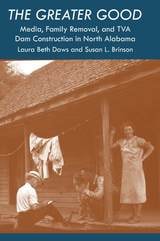
The Greater Good
Media, Family Removal, and TVA Dam Construction in North AlabamaLaura Beth Daws and Susan L. Brinson
University of Alabama Press, 2019
For poverty-stricken families in the Tennessee River Valley during the Great Depression, news of President Franklin D. Roosevelt’s New Deal plans to create the Tennessee Valley Authority—bringing the promise of jobs, soil conservation, and electricity—offered hope for a better life. The TVA dams would flood a considerable amount of land on the riverbanks, however, forcing many families to relocate. In exchange for this sacrifice for the “greater good,” these families were promised “fair market value” for their land. As the first geographic location to benefit from the electricity provided by TVA, the people of North Alabama had much to gain, but also much to lose.
In The Greater Good: Media, Family Removal, and TVA Dam Construction in North Alabama Laura Beth Daws and Susan L. Brinson describe the region’s preexisting conditions, analyze the effects of relocation, and argue that local newspapers had a significant impact in promoting the TVA’s agenda. The authors contend that it was principally through newspapers that local residents learned about the TVA and the process and reasons for relocation. Newspapers of the day encouraged regional cooperation by creating an overwhelmingly positive image of the TVA, emphasizing its economic benefits and disregarding many of the details of removal.
Using mostly primary research, the volume addresses two key questions: What happened to relocated families after they sacrificed their homes, lifestyles, and communities in the name of progress? And what role did mediated communication play in both the TVA’s family relocation process and the greater movement for the public to accept the TVA’s presence in their lives? The Greater Good offers a unique window into the larger impact of the New Deal in the South. Until now, most research on the TVA was focused on organizational development rather than on families, with little attention paid to the role of the media in garnering acceptance of a government-enforced relocation.
The Historical Film
History and Memory in MediaLandy, Marcia
Rutgers University Press, 2000
What is history? How do we represent it? How do our notions of history change over time? The essays in The Historical Film: History and Memory in Media probe the roles that cinema and television play in altering and complicating our understanding of historical events.
The book brings together representative examples of how both media critics and historians write about history as it is created and disseminated through film and television. The essays explore what is at stake culturally and politically in media history and how this form of history-making is different from traditional historiography. The volume is divided into four parts--Regarding History; History as Trauma; History, Fiction, and Postcolonial Memory; and History and Television--that progressively deepen our understanding of just how complex the issues are. Essays by top scholars analyze many different kinds of film: historical film, documentary, costume drama, and heritage films. The section on television is equally broad, examining phenomena as diverse as news broadcasts and Ken Burns's documentary The Civil War.
Contributors are Mbye Cham, George F. Custen, Mary Ann Doane, Richard Dienst, Taylor Downing, Gary Edgerton, Naomi Greene, Miriam Bratu Hansen, Sue Harper, Sumiko Higashi, Anton Kaes, Marcia Landy, Shawn Rosenheim, Robert A. Rosenstone, Pierre Sorlin, Maria Wyke, and Ismail Xavier.
The Historical Film
History and Memory in MediaLandy, Marcia
Rutgers University Press, 2000
What is history? How do we represent it? How do our notions of history change over time? The essays in The Historical Film: History and Memory in Media probe the roles that cinema and television play in altering and complicating our understanding of historical events.
The book brings together representative examples of how both media critics and historians write about history as it is created and disseminated through film and television. The essays explore what is at stake culturally and politically in media history and how this form of history-making is different from traditional historiography. The volume is divided into four parts--Regarding History; History as Trauma; History, Fiction, and Postcolonial Memory; and History and Television--that progressively deepen our understanding of just how complex the issues are. Essays by top scholars analyze many different kinds of film: historical film, documentary, costume drama, and heritage films. The section on television is equally broad, examining phenomena as diverse as news broadcasts and Ken Burns's documentary The Civil War.
Contributors are Mbye Cham, George F. Custen, Mary Ann Doane, Richard Dienst, Taylor Downing, Gary Edgerton, Naomi Greene, Miriam Bratu Hansen, Sue Harper, Sumiko Higashi, Anton Kaes, Marcia Landy, Shawn Rosenheim, Robert A. Rosenstone, Pierre Sorlin, Maria Wyke, and Ismail Xavier.
The Independence of the Media and its Regulatory Agencies
Shedding New Light on Formal and Actual Independence against the National ContextEdited by Wolfgang Schulz, Peggy Valcke, and Kristina Irion
Intellect Books, 2013
The Intellect Handbook of Adult Film and Media
Edited by Peter Alilunas, Patrick Keilty, and Darshana Sreedhar Mini
Intellect Books, 2026
The Intellect Handbook of Adult Film and Media brings together thirty-six chapters organized into six sections, ranging from historical and methodological approaches to issues of representation, production, and spectatorship, to transnational perspectives, and questions of law, health, and policy, offering a comprehensive survey of this growing field. Written by leading scholars, the volume examines sexually explicit media in its full context: its production, circulation, consumption, and reception. Engaging with an extensive body of scholarship, the essays provide overviews of key literature, major historical developments, and central theoretical debates, supporting the continued growth of adult film and media studies as a legitimate area of academic inquiry. Designed as both a reference work and a teaching resource, the handbook will be invaluable to emerging scholars and educators working in film, media, gender, sexuality, and porn studies.
The Media and Communications Study Skills Student Guide
Doug Specht
University of Westminster Press, 2019
All the tips, ideas and advice given to, and requested by, MA students in Media and Communications, are brought together in an easy-to-use accessible guide to help students study most effectively.
Based upon many years of teaching study skills and hundreds of lecture slides and handouts this introduction covers a range of general and generic skills that the author relates specifically towards media and communications studies. As well as the mechanics of writing and presentations, the book also shows how students can work on and engage with the critical and contemplative elements of their degrees whilst retaining motivation and refining timekeeping skills.
Of course the nuts and bolts of reading, writing, listening, seminars and the dreaded dissertation and essays are covered too. In addition advice on referencing, citation and academic style is offered for those with concerns over English grammar and expression.
Aimed primarily at postgraduate students, there is significant crossover with undergraduate work, so this book will also prove of use to upper level undergraduate readers whether using English as a first or second language.

The Media and the Rwanda Genocide
Edited by Allan Thompson
Pluto Press, 2007
This is the first book to explore both sides of the media equation. Examining how local radio was used as a tool of hate, encouraging neighbors to turn against each other, the book also presents a critique of international media coverage. Bringing together local reporters, high-profile Western journalists, and leading media theorists, this is the only book to identify the extent of the media's accountability. It also examines deliberations by the International Criminal Tribunal for Rwanda on the role of the media in the genocide. This book is a startling record of the negative influence that the media can have. The authors put forward suggestions for the future, outlining how we can avoid censorship and propaganda and they argue for a new responsibility in media reporting.
The Metaphysics of Media
Toward an End of Postmodern Cynicism and the Construction of a Virtuous RealityPeter K. Fallon
University of Scranton Press, 2009
In The Metaphysics of Media, award-winning media critic Peter K. Fallon tackles the complicated question of how a succession of dominant forms of media have supported—and even to some extent created—different conceptions of reality. To do so, he starts with the basics: a critical discussion of the very idea of objective reality and the various postmodern responses that have tended to dominate recent philosophical approaches to the subject. From there, he embarks on a survey of the evolution of communication through four major eras: orality; literacy; print; and electricity.
Within each era, Fallon argues, the dominant form of media supported particular ways of understanding the world, from the ascendance of reason that followed the development of alphabets to the obliteration of space and time that we associate with electronic communications. Fallon concludes with a hard look at the mass ignorance that prevails today despite (or perhaps because of) the sea of information with which contemporary life is surrounded.
A stirring, philosophically rich investigation, The Metaphysics of Media offers not only a clear picture of where our society has been but also a road map to a more engaged, informed, and fully human future.
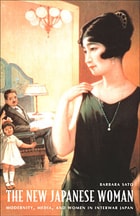
The New Japanese Woman
Modernity, Media, and Women in Interwar JapanBarbara Sato
Duke University Press, 2003
The New Japanese Woman is rich in descriptive detail and full of fascinating vignettes from Japan’s interwar media and consumer industries—department stores, film, radio, popular music and the publishing industry. Sato pays particular attention to the enormously influential role of the women’s magazines, which proliferated during this period. She describes the different kinds of magazines, their stories and readerships, and the new genres the emerged at the time, including confessional pieces, articles about family and popular trends, and advice columns. Examining reactions to the images of the modern girl, the housewife, and the professional woman, Sato shows that while these were not revolutionary figures, they caused anxiety among male intellectuals, government officials, and much of the public at large, and they contributed to the significant changes in gender relations in Japan following the Second World War.
The New Real
Media and Mimesis in Japan from Stereographs to EmojiJonathan E. Abel
University of Minnesota Press, 2022
Unlocking a vital understanding of how literary studies and media studies overlap and are bound together
A synthetic history of new media reception in modern and contemporary Japan, The New Real positions mimesis at the heart of the media concept. Considering both mimicry and representation as the core functions of mediation and remediation, Jonathan E. Abel offers a new model for media studies while explaining the deep and ongoing imbrication of Japan in the history of new media.
From stereoscopy in the late nineteenth century to emoji at the dawn of the twenty-first, Abel presents a pioneering history of new media reception in Japan across the analog and digital divide. He argues that there are two realities created by new media: one marketed to us through advertising that proclaims better, faster, and higher-resolution connections to the real; and the other experienced by users whose daily lives and behaviors are subtly transformed by the presence and penetration of the content carried through new media. Intervening in contemporary conversations about virtuality, copyright, copycat violence, and social media, each chapter unfolds with a focus on a single medium or technology, including 3D photographs, the phonograph, television, videogames, and emoji.
By highlighting the tendency of the mediated to copy the world and the world to copy the mediated, The New Real provides a new path for analysis of media, culture, and their function in the world.
The O. J. Simpson Trials
Rhetoric, Media, and the LawEdited by Janice Schuetz and Lin S. Lilley
Southern Illinois University Press, 1999
The O. J. Simpson case captured the attention of the public like no other event in media history, and the Simpson criminal trial is arguably the most notable example of the media's ability to transform litigation. This collection of original essays provides a critical analysis of the Simpson criminal and civil trials. Edited by communications professor Janice Schuetz and professional trial consultant Lin S. Lilley, the book focuses on telelitigation, the media's transformation of sensational trials, with celebrity defendants and victims, into telemediated forms.
The contributors—Ann Burnett, Patricia M. Ganer, Ann M. Gill, Diane Furno-Lamude, Lin S. Lilley, and Janice Schuetz—describe media spectacles, analyze the opening statements of trial attorneys in both cases, investigate the testimony of Mark Fuhrman in the criminal trial and O. J. Simpson in the civil trial, analyze the summations of trial attorneys in both cases, look at the processes of jury decision making, and identify the unique legal and social outcomes of the trials.
The discussions focus on five "hot button" legal issues sparked by the Simpson trials: the perceived unfairness of the jury system; unprecedented calls for jury reform in both civil and criminal arenas; the fairness issues of jury nullification, wherein a jury disregards the law in a criminal case in favor of leniency; wealth and the question of "buying" justice; and ethical questions about the ways the Simpson trials were conducted, in particular the ways in which Simpson attorney Johnnie Cochran and the "Dream Team" repeatedly nudged and occasionally crossed the ethical line.
The Palestinian Idea
Film, Media, and the Radical ImaginationGreg Burris
Temple University Press, 2019
Is there a link between the colonization of Palestinian lands and the enclosing of Palestinian minds? The Palestinian Idea argues that it is precisely through film and media that hope can occasionally emerge amidst hopelessness, emancipation amidst oppression, freedom amidst apartheid. Greg Burris employs the work of Edward W. Said, Jacques Rancière, and Cedric J. Robinson in order to locate Palestinian utopia in the heart of the Zionist present.
He analyzes the films of prominent directors Annemarie Jacir (Salt of This Sea, When I Saw You) and Hany Abu-Assad (Paradise Now) to investigate the emergence and formation of Palestinian identity. Looking at Mais Darwazah’s documentary My Love Awaits Me By the Sea, Burris considers the counterhistories that make up the Palestinian experience—stories and memories that have otherwise been obscured or denied. He also examines Palestinian (in)visibility in the global media landscape, and how issues of Black-Palestinian transnational solidarity are illustrated through social media, staged news spectacles, and hip hop music.
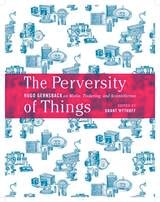
The Perversity of Things
Hugo Gernsback on Media, Tinkering, and ScientifictionHugo Gernsback
University of Minnesota Press, 2016
In 1905, a young Jewish immigrant from Luxembourg founded an electrical supply shop in New York. This inventor, writer, and publisher Hugo Gernsback would later become famous for launching the first science fiction magazine, Amazing Stories, in 1926. But while science fiction’s annual Hugo Awards were named in his honor, there has been surprisingly little understanding of how the genre began among a community of tinkerers all drawn to Gernsback’s vision of comprehending the future of media through making. In The Perversity of Things, Grant Wythoff makes available texts by Hugo Gernsback that were foundational both for science fiction and the emergence of media studies.
Wythoff argues that Gernsback developed a means of describing and assessing the cultural impact of emerging media long before media studies became an academic discipline. From editorials and blueprints to media histories, critical essays, and short fiction, Wythoff has collected a wide range of Gernsback’s writings that have been out of print since their magazine debut in the early 1900s. These articles cover such topics as television; the regulation of wireless/radio; war and technology; speculative futures; media-archaeological curiosities like the dynamophone and hypnobioscope; and more. All together, this collection shows how Gernsback’s publications evolved from an electrical parts catalog to a full-fledged literary genre.
The Perversity of Things aims to reverse the widespread misunderstanding of Gernsback within the history of science fiction criticism. Through painstaking research and extensive annotations and commentary, Wythoff reintroduces us to Gernsback and the origins of science fiction.
The Science of Reading
Information, Media, and Mind in Modern AmericaAdrian Johns
University of Chicago Press, 2023
Reading is perhaps the essential practice of modern civilization. For centuries, it has been seen as key to both personal fulfillment and social progress, and millions today depend on it to participate fully in our society. Yet, at its heart, reading is a surprisingly elusive practice. This book tells for the first time the story of how American scientists and others have sought to understand reading, and, by understanding it, to improve how people do it.
Starting around 1900, researchers—convinced of the urgent need to comprehend a practice central to industrial democracy—began to devise instruments and experiments to investigate what happened to people when they read. They traced how a good reader’s eyes moved across a page of printed characters, and they asked how their mind apprehended meanings as they did so. In schools across the country, millions of Americans learned to read through the application of this science of reading. At the same time, workers fanned out across the land to extend the science of reading into the social realm, mapping the very geography of information for the first time. Their pioneering efforts revealed that the nation’s most pressing problems were rooted in drastic informational inequities, between North and South, city and country, and white and Black—and they suggested ways to tackle those problems.
Today, much of how we experience our information society reflects the influence of these enterprises. This book explains both how the science of reading shaped our age and why, with so-called reading wars still plaguing schools across the nation, it remains bitterly contested.
The Science of Reading
Information, Media, and Mind in Modern AmericaAdrian Johns
University of Chicago Press, 2023
For the first time, the story of how and why we have plumbed the mysteries of reading, and why it matters today.
Reading is perhaps the essential practice of modern civilization. For centuries, it has been seen as key to both personal fulfillment and social progress, and millions today depend on it to participate fully in our society. Yet, at its heart, reading is a surprisingly elusive practice. This book tells for the first time the story of how American scientists and others have sought to understand reading, and, by understanding it, to improve how people do it.
Starting around 1900, researchers—convinced of the urgent need to comprehend a practice central to industrial democracy—began to devise instruments and experiments to investigate what happened to people when they read. They traced how a good reader’s eyes moved across a page of printed characters, and they asked how their mind apprehended meanings as they did so. In schools across the country, millions of Americans learned to read through the application of this science of reading. At the same time, workers fanned out across the land to extend the science of reading into the social realm, mapping the very geography of information for the first time. Their pioneering efforts revealed that the nation’s most pressing problems were rooted in drastic informational inequities, between North and South, city and country, and white and Black—and they suggested ways to tackle those problems.
Today, much of how we experience our information society reflects the influence of these enterprises. This book explains both how the science of reading shaped our age and why, with so-called reading wars still plaguing schools across the nation, it remains bitterly contested.
The Social Use of Media
Cultural and Social Scientific Perspectives on Audience ResearchEdited by Helena Bilandzic, Geoffroy Patriarche, and Paul J. Traudt
Intellect Books, 2012
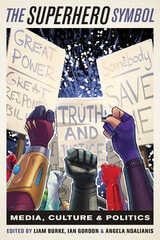
The Superhero Symbol
Media, Culture, and PoliticsLiam Burke
Rutgers University Press, 2020
It is hard to imagine a time when superheroes have been more pervasive in our culture. Today, superheroes are intellectual property jealously guarded by media conglomerates, icons co-opted by grassroots groups as a four-color rebuttal to social inequities, masks people wear to more confidently walk convention floors and city streets, and bulletproof banners that embody regional and national identities. From activism to cosplay, this collection unmasks the symbolic function of superheroes.
Bringing together superhero scholars from a range of disciplines, alongside key industry figures such as Harley Quinn co-creator Paul Dini, The Superhero Symbol provides fresh perspectives on how characters like Captain America, Iron Man, and Wonder Woman have engaged with media, culture, and politics, to become the “everlasting” symbols to which a young Bruce Wayne once aspired.
The User Unconscious
On Affect, Media, and MeasurePatricia Ticineto Clough
University of Minnesota Press, 2018
Wide-ranging essays and experimental prose forcefully demonstrate how digital media and computational technologies have redefined what it is to be human
Over the past decade, digital media has expanded exponentially, becoming an essential part of daily life. The stimulating essays and experimental compositions in The User Unconscious delve into the ways digital media and computational technologies fundamentally affect our sense of self and the world we live in, from both human and other-than-human perspectives.
Critical theorist Patricia Ticineto Clough’s provocative essays center around the motif of the “user unconscious” to advance the challenging thesis that that we are both human and other-than-human: we now live, think, and dream within multiple layers of computational networks that are constantly present, radically transforming subjectivity, sociality, and unconscious processes.
Drawing together rising strains of philosophy, critical theory, and media studies, as well as the political, social, and economic transformations that are shaping the twenty-first-century world, The User Unconscious points toward emergent crises and potentialities in both human subjectivity and sociality. Moving from affect to data, Clough forces us to see that digital media and computational technologies are not merely controlling us—they have already altered what it means to be human.
Transnational Sport
Gender, Media, and Global KoreaRachael Miyung Joo
Duke University Press, 2012
Turning the Page
Storytelling as Activism in Queer Film and MediaCoon, David R
Rutgers University Press, 2018
Surprisingly, Hollywood is still clumsily grappling with its representation of sexual minorities, and LGBTQ filmmakers struggle to find a place in the mainstream movie industry. However, organizations outside the mainstream are making a difference, helping to produce and distribute authentic stories that are both by and for LGBTQ people.
Turning the Page introduces readers to three nonprofit organizations that, in very different ways, have each positively transformed the queer media landscape. David R. Coon takes readers inside In the Life Media, whose groundbreaking documentaries on the LGBTQ experience aired for over twenty years on public television stations nationwide. Coon reveals the successes of POWER UP, a nonprofit production company dedicated to mentoring filmmakers who can turn queer stories into fully realized features and short films. Finally, he turns to Three Dollar Bill Cinema, an organization whose film festivals help queer media find an audience and whose filmmaking camps for LGBTQ youth are nurturing the next generation of queer cinema.
Combining a close analysis of specific films and video programs with extensive interviews of industry professionals, Turning the Page demonstrates how queer storytelling in visual media has the potential to empower individuals, strengthen communities, and motivate social justice activism.