Results by title
355 books match the query 'Middle Atlantic (DC, DE, MD, NJ, NY, PA)' and 81 start with t
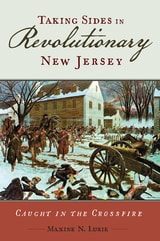
Taking Sides in Revolutionary New Jersey
Caught in the CrossfireMaxine N. Lurie
Rutgers University Press, 2022
Supplemental Instructor Resources for Taking Sides in Revolutionary New Jersey:
Questions (https://d3tto5i5w9ogdd.cloudfront.net/wp-content/uploads/2022/07/19144155/Taking-Sides-Supplementary-Instructor-Resources-Questions.pdf)
Bibliography (https://d3tto5i5w9ogdd.cloudfront.net/wp-content/uploads/2022/07/19144154/Taking-Sides-Supplementary-Instructor-Resources-Bibliography.pdf)
Tales and Towns of Northern New Jersey
Beck, Henry
Rutgers University Press, 1967
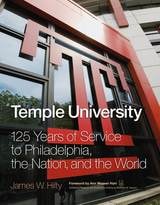
Temple University
125 Years of Service to Philadelphia, the Nation, and the WorldJames W. Hilty with Matthew M. Hanson, foreword by Ann Weaver Hart
Temple University Press, 2010
Temple University: 125 Years of Service to Philadelphia, the Nation, and the World, by noted historian and Temple professor James Hilty offers the first full history of Temple University. Lovingly written and beautifully designed, it presents a rich chronicle from founder Russell Conwell’s vision to democratize, diversify, and broaden the reach of higher education to Temple's present-day status as the twenty-eighth largest university and the fifth largest provider of professional education in the United States. With its state-of-the-art technological capabilities, improved amenities, and new multi-million- dollar facilities, Temple remains at the forefront of America’s modern urban universities.
The book captures Temple’s long record of service to its North Philadelphia neighbors, its global reach to Rome, Tokyo, and beyond, and its development from a rowhouse campus into a lively 11,000- resident urban village—all the while assuring “Access to Excellence.” Along the way, we learn how Temple reacted to and helped shape major developments in the history of American higher education.
Featuring 250 full-color photos, Temple University provides a wonderful keepsake for those who already know the university and will become a valued resource for anyone interested in the urban university.
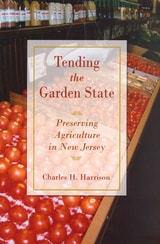
Tending the Garden State
Preserving Agriculture in New JerseyHarrison, Charles
Rutgers University Press, 2006
Early in the nineteenth century, an army colonel stood before a crowd at the Salem County Courthouse and ate buckets of tomatoes to prove that they were not poisonous. Ever since, the red vegetable of summer has played a starring role in New Jersey’s history. Although today visitors to the state are more likely to see smoke-spewing factories than acres of farmland or grazing cattle, the state’s legacy of agriculture and farming continues, and extends far beyond the popular Jersey tomato.
In Tending the Garden State, Charles Harrison tells the story of the state’s rich agricultural history from the time when Leni-Lenape Indians scratched the earth with primitive tools up through today. He recalls New Jersey’s rural past, traces the evolution of farming over the course of the twentieth century, and explains innovative approaches to protecting the industry.
Drawing on interviews with farmers, as well as researchers, professional planners, designers, and architects, Harrison discovers that despite the discouraging spread of suburban sprawl, the Garden State’s farming legacy is not as endangered as it may seem. Many residents care deeply about preserving New Jersey’s agricultural industry and are making great strides to keep the tradition alive for future generations. Some of these protective measures include new laws that encourage the conservation of land and research devoted to helping farmers make the most of their limited acreage. Innovative techniques such as high-tunnel farming, together with the growth of some very profitable farm specializations, such as turf grass, aquaculture, horticulture, and wine making, will enable farmers to remain active and successful in the state’s oldest industry.
Anyone interested in New Jersey’s history or, more broadly, in the history of American agriculture, will be delighted by Harrison’s engaging and readable account of farming in the Garden State.
The Accokeek Creek Site
A Middle Atlantic Seaboard Culture SequenceRobert L. Stephenson, Alice L. L. Ferguson and Henry G. Ferguson
University of Michigan Press, 1963
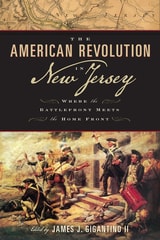
The American Revolution in New Jersey
Where the Battlefront Meets the Home FrontJames J. Gigantino II
Rutgers University Press, 2015
Battles were fought in many colonies during the American Revolution, but New Jersey was home to more sustained and intense fighting over a longer period of time. The nine essays in The American Revolution in New Jersey, depict the many challenges New Jersey residents faced at the intersection of the front lines and the home front.
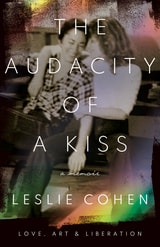
The Audacity of a Kiss
Love, Art, and LiberationLeslie Cohen
Rutgers University Press, 2021
Rendered in bronze, covered in white lacquer, two women sit together on a park bench in Greenwich Village. One of the women touches the thigh of her partner as they gaze into each other’s eyes. The two women are part of George Segal’s iconic sculpture “Gay Liberation,” but these powerful symbols were modeled on real people: Leslie Cohen and her partner (now wife) Beth Suskin.
In this evocative memoir, Cohen tells the story of a love that has lasted for over fifty years. Transporting the reader to the pivotal time when brave gay women and men carved out spaces where they could live and love freely, she recounts both her personal struggles and the accomplishments she achieved as part of New York’s gay and feminist communities. Foremost among these was her 1976 cofounding of the groundbreaking women’s nightclub Sahara, which played host to such luminaries as Betty Friedan, Gloria Steinem, Pat Benatar, Ntozake Shange, Rita Mae Brown, Adrienne Rich, Patti Smith, Bella Abzug, and Jane Fonda. The Audacity of a Kiss is a moving and inspiring tale of how love, art, and solidarity can overcome oppression.
The Baltimore Book
New Views of Local HistoryLinda Shopes
Temple University Press, 1993
Baltimore has a long, colorful history that traditionally has been focused on famous men, social elites, and patriotic events. The Baltimore Book is both a history of "the other Baltimore" and a tour guide to places in the city that are important to labor, African American, and women's history. The book grew out of a popular local bus tour conducted by public historians, the People's History Tour of Baltimore, that began in 1982. This book records and adds sites to that tour; provides maps, photographs, and contemporary documents; and includes interviews with some of the uncelebrated people whose experiences as Baltimoreans reflect more about the city than Francis Scott Key ever did.
The tour begins at the B&O Railroad Station at Camden Yards, site of the railroad strike of 1877, moves on to Hampden-Woodbury, the mid-19th century cotton textile industry's company town, and stops on the way to visit Evergreen House and to hear the narratives of ex-slaves. We travel to Old West Baltimore, the late 19th-century center of commerce and culture for the African American community; Fells Point; Sparrows Point; the suburbs; Federal Hill; and Baltimore's "renaissance" at Harborplace. Interviews with community activists, civil rights workers, Catholic Workers, and labor union organizers bring color and passion to this historical tour. Specific labor struggles, class and race relations, and the contributions of women to Baltimore's development are emphasized at each stop.
In the series Critical Perspectives on the Past, edited by Susan Porter Benson, Stephen Brier, and Roy Rosenzweig.
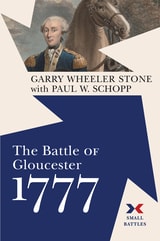
The Battle of Gloucester, 1777
Garry Wheeler Stone
Westholme Publishing, 2022
In The Battle of Gloucester, 1777, archaeological historian Garry Wheeler Stone, with the assistance of historian Paul W. Schopp, recreates this minor but important clash during the Philadelphia campaign. Relying on both primary source documents and the latest archaeological interpretations, the authors have determined the course of this fascinating “battle,” as Benjamin Franklin later proclaimed it to be. As a result of this action, when Washington requested that Lafayette be given a division, Congress agreed. On December 4, 1777, the marquis, promoted to major-general, took command of the brigades of Generals Woodford and Scott to begin what would be a glorious career in American service.
Small Battles: Military History as Local History
Mark Edward Lender and James Kirby Martin, Series Editors
Small Battles offers a fresh and important new perspective on the story of America’s early conflicts. It was the small battles, not the clash of major armies, that truly defined the fighting during the colonial wars, the American Revolution, the War of 1812, and the hostilities on the frontiers. This is dramatic military history as seen through the prism of local history—history with a depth of detail, a feeling for place, people, and the impact of battle and its consequences that the story of major battles often cannot convey. The Small Battles series focuses on America’s military conflicts at their most intimate and revealing level.

The Battle of Harlem Heights, 1776
David Price
Westholme Publishing, 2022
The action began when a contingent of rangers led by Col. Thomas Knowlton of Connecticut encountered British light infantry while conducting a reconnaissance mission on Washington’s orders. What began as a skirmish transformed into a full-fledged battle as both sides reinforced, and a heavy engagement continued for several hours until, with ammunition running low, the British withdrew. Washington decided not to pursue and risk confrontation with a larger force, thereby keeping his army intact. In The Battle of Harlem Heights, 1776, David Price conveys the significance of the Continental Army’s first victory and highlights the role of one of its key participants, the largely forgotten Knowlton—the “father of American military intelligence”—who gave his life during the action while urging his rangers forward. No matter how many times U.S. Army troops have recorded a battlefield success over the past two and a half centuries—whether on American soil, in a European wood, across a Middle Eastern desert, or on a Pacific island—one thing about that history remains indisputable. They did it first at Harlem Heights.
Small Battles: Military History as Local History
Mark Edward Lender and James Kirby Martin, Series Editors
Small Battles offers a fresh and important new perspective on the story of America’s early conflicts. It was the small battles, not the clash of major armies, that truly defined the fighting during the colonial wars, the American Revolution, the War of 1812, and the hostilities on the frontiers. This is dramatic military history as seen through the prism of local history—history with a depth of detail, a feeling for place, people, and the impact of battle and its consequences that the story of major battles often cannot convey. The Small Battles series focuses on America’s military conflicts at their most intimate and revealing level.

The Battles of Connecticut Farms and Springfield, 1780
Edward G. Lengel
Westholme Publishing, 2020
By the spring of 1780, American fortunes were at a low point. Charleston, South Carolina, fell to British forces on May 12. At Morristown, New Jersey, George Washington’s army struggled to recover from the worst winter of the entire war. The national economy failing, his troops short of supplies and on the verge of mutiny, Washington prepared for an all-out assault on British-occupied New York City with the support of approaching French naval and land forces under General Rochambeau. The planned attack was a gamble born of desperation. Washington felt he had to risk it, or face certain defeat. In New York City, German General Wilhelm von Knyphausen sensed opportunity. Commanding there in the absence of British General Henry Clinton, who was on his way back from Charleston, Knyphausen hoped that a quick strike into New Jersey could deliver a staggering blow to Washington’s weakened army. The June 7–8 Battle of Connecticut Farms, however, found American militia and Continentals—mostly soldiers of General William Maxwell’s New Jersey Brigade—to be shockingly stalwart. In a series of sharp engagements, fought hard on both sides, the Americans convinced Knyphausen to turn back. Clinton, fresh from his victory in the South, tried again on June 23 to end the war. His advance into New Jersey, intended to draw Washington into the open and perhaps capture Morristown, culminated in the Battle of Springfield. Once again, though, Washington’s hardened soldiers, led by men like Colonel Israel Angell, Colonel Elias Dayton, and Major “Light Horse Harry” Lee, fought Clinton’s forces to a standstill.
The Battles for Connecticut Farms and Springfield, 1780, by distinguished historian Edward G. Lengel, chronicles these two important battles that marked a turning of the tide in the Revolutionary War. Drawing on newly available primary sources, the author presents a fresh and engaging interpretation of these events, which exposed King George III’s declining military fortunes in North America even as they revealed the resilience of George Washington’s army.
The Small Battles Series: Military History as Local History
Mark Edward Lender and James Kirby Martin, Series Editors
Small Battles offers a fresh and important new perspective on the story of America’s early conflicts. It was the small battles, not the clash of major armies, that truly defined the fighting during the colonial wars, the American Revolution, the War of 1812, and the hostilities on the frontiers. This is dramatic military history as seen through the prism of local history—history with a depth of detail, a feeling for place, people, and the impact of battle and its consequences that the story of major battles often cannot convey. The Small Battles Series focuses on America’s military conflicts at their most intimate and revealing level.
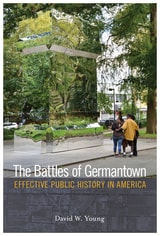
The Battles of Germantown
Effective Public History in AmericaDavid W. Young
Temple University Press, 2019
2020 Philip S. Klein Book Prize Winner, Pennsylvania Historical Association
Known as America’s most historic neighborhood, the Germantown section of Philadelphia (established in 1683) has distinguished itself by using public history initiatives to forge community. Progressive programs about ethnic history, postwar urban planning, and civil rights have helped make historic preservation and public history meaningful. The Battles of Germantown considers what these efforts can tell us about public history’s practice and purpose in the United States.
Author David Young, a neighborhood resident who worked at Germantown historic sites for decades, uses his practitioner’s perspective to give examples of what he calls “effective public history.” The Battles of Germantown shows how the region celebrated “Negro Achievement Week” in 1928 and, for example, how social history research proved that the neighborhood’s Johnson House was a station on the Underground Railroad. These encounters have useful implications for addressing questions of race, history, and memory, as well as issues of urban planning and economic revitalization.
Germantown’s historic sites use public history and provide leadership to motivate residents in an area challenged by job loss, population change, and institutional inertia. The Battles of Germantown illustrates how understanding and engaging with the past can benefit communities today.
The Big Story
The Oral History of Philadelphia TV NewsDavid Grzybowski
Temple University Press, 2025
“We were the only station that stayed on the air continuously. We even pre-empted the CBS evening news.”—Larry Kane, anchor at WCAU, about covering the MOVE bombing
“The highs of working during the pandemic were keeping people informed of this deadly virus and what they had to do to take care of themselves and each other.”—Ukee Washington, KYW anchor, on the pandemic
The Big Story is David Grzybowski’s engrossing oral history of Philadelphia TV news from the perspective of reporters, photographers, producers, and news directors. Covering all the big stories from the late 1970s through the present, this fast-paced running commentary reflects on the uncertainty of the Three Mile Island disaster, the thrill of the Live Aid concert, the “Storm of the Century” (that wasn’t), and the championship victories of the Phillies and the Eagles, among other notable events, local, national, and global.
The Big Story features more than 200 interviews, including anecdotes from seasoned Philadelphia anchors Jim Gardner, Larry Kane, Lisa Thomas-Laury, Mike Jerrick, Vai Sikahema, Tamala Edwards, Pat Ciarrocchi, and Cecily Tynan, among others, about their experience on and off the job. Decision makers reflect on how to cover hot news stories such as Pennsylvania State Treasure R. Budd Dwyer’s on-air suicide. (“It was a big bloody horrifying mess,” according to Chris Wagner, WPVI anchor.)
Grzybowski highlights the Mummers, the launch of Good Day Philadelphia, off-the-air scandals, and how the Action News style secured a loyal following with Philadelphians while the Eyewitness News format competed hard to gain ratings. But the Big Story is how The Big Story provides compelling stories about Philadelphia’s news breakers and newsmakers.
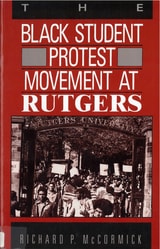
The Black Student Protest Movement at Rutgers
Richard P. McCormick
Rutgers University Press, 1990
Richard P. McCormick has chronicled the black student protest movement at Rutgers University, from the 1960s to today. He examines the forces that produced the protest movement, the tactics that were employed, and the qualified gains that were achieved. He tells us about demonstrations, building occupations, committee hearings, and countless meetings, but he also paints portraits of the many student leaders who mobilized protest. This is the story of a lot of pain, some blunders, and some successes.
In the mid-sixties, the University established committees to recruit black students and to add more blacks to the faculty. These efforts produced only modest results. By 1968, there were still not enough black students on campus, but there were enough to create a political presence for the first time. They were committed to acting against the racism they perceived within the University. To respond to their protests, in March 1969 the Board of Governors passed a dramatically new and controversial policy to encourage disadvantaged students who lived in Camden, Newark, and New Brunswick to apply to Rutgers, where they would take college-preparatory classes as unmatriculated students, and then enter Rutgers as matriculated students. This program, never very successful, lasted only two years.
Unrest did not end with the sixties. During the seventies, black students sporadically voiced protests against what they perceived to be an unsupportive environment. During the eighties, black enrollment actually declined, as did the black graduation rate. In conclusion, McCormick points to the effort that has been made but even more to the effort that still needs to be made and the social cost of ignoring the problem.
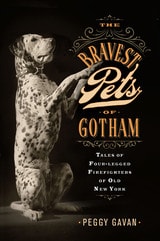
The Bravest Pets of Gotham
Tales of Four-Legged Firefighters of Old New YorkPeggy Gavan
Rutgers University Press, 2024
The Bravest Pets of Gotham takes readers on a fun historical tour of Old New York, sharing touching and comical stories about the bond between FDNY firefighters and their four-legged or feathered friends. The book contains more than one hundred astonishing, emotional, and sometimes hilariously absurd tales of the FDNY animal mascots whose extraordinary intelligence, acts of bravery, and funny antics deserve to be remembered. Some anecdotes depict fire companies that broke the one-pet rule and welcomed a veritable menagerie of animals into their firehouses, including goats, turtles, and even monkeys. Whether you are an animal lover, a history buff, or a fan of firefighting, The Bravest Pets of Gotham is full of stories that will thrill and amuse you.
The Bronx
The Ultimate Guide to New York City's Beautiful BoroughUltan, Lloyd
Rutgers University Press, 2015
The Brooklyn Experience
The Ultimate Guide to Neighborhoods & Noshes, Culture & the Cutting EdgeFreudenheim, Ellen
Rutgers University Press, 2016
Targeting the independent, curious traveler, The Brooklyn Experience includes a dozen “do-it-yourself” tours, including a visit to Woody Allen’s childhood neighborhood, and amazing Revolutionary and Civil War sites.
The Case That Never Dies
The Lindbergh KidnappingLloyd C. Gardner
Rutgers University Press, 2012
Winner of the 2004 New Jersey Studies Academic Alliance Book Award for Scholarly Non-Fiction | Named a 2005 Honor Book by the New Jersey Council for the Humanities
Essential reading for anyone interested in the most famous American crime of the twentieth century
Since its original publication in 2004, The Case That Never Dies has become the standard account of the Lindbergh kidnapping. Now, in a new afterword, historian Lloyd C. Gardner presents a surprise conclusion based on recently uncovered pieces of evidence that were missing from the initial investigation as well as an evaluation of Charles Lindbergh’s role in the search for the kidnappers. Out of the controversies surrounding the actions of Colonel Lindbergh, Norman Schwarzkopf, commander of the New Jersey State Police, and FBI director J. Edgar Hoover, Gardner presents a well-reasoned argument for what happened on the night of March 1, 1932.
The Case That NeverDies places the Lindbergh kidnapping, investigation, and trial in the context of the Depression, when many feared the country was on the edge of anarchy. Gardner delves deeply into the aspects of the case that remain confusing to this day, including Lindbergh’s dealings with crime baron Owney Madden, Al Capone’s New York counterpart, as well as the inexplicable exploits of John Condon, a retired schoolteacher who became the prosecution’s best witness. The initial investigation was hampered by Colonel Lindbergh, who insisted that the police not attempt to find the perpetrator because he feared the investigation would endanger his son’s life. He relented only when the child was found dead.
After two years of fruitless searching, Bruno Richard Hauptmann, a German immigrant, was discovered to have some of the ransom money in his possession. Hauptmann was arrested, tried, and sentenced to death. Throughout the book, Gardner pays special attention to the evidence of the case and how it was used and misused in the trial. Whether Hauptmann was guilty or not, Gardner concludes that there was insufficient evidence to convict him of first-degree murder.
Set in historical context, the book offers not only a compelling read, but a powerful vantage point from which to observe the United States in the 1930s as well as contemporary arguments over capital punishment.
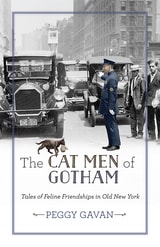
The Cat Men of Gotham
Tales of Feline Friendships in Old New YorkPeggy Gavan
Rutgers University Press, 2019
The nineteenth century was a rough time to be a stray cat in New York City. The city’s human residents dealt with feline overpopulation by gassing unwanted cats or tossing them in rivers. But a few lucky strays were found by a diverse array of men—including firemen, cops, athletes, and politicians—who rescued them from the streets and welcomed them into their homes and hearts.
This book tells the stories of these heroic cat men of Gotham and their beloved feline companions. Not only does it introduce us to some remarkable men, but we get to meet many extraordinary cats as well, from Chinese stowaways prowling the Chelsea Piers to the sole feline survivor of the USS Maine explosion. Among the forty-two profiles, we find many feline Cinderella stories, as humble alley cats achieved renown as sports team mascots, artists’ muses, and even presidential pets.
Sure to appeal to cat fanciers and history fans alike, The Cat Men of Gotham will give you a new appreciation for Old New York and the people and animals who made it their home. As it takes you on a journey through the streets of Manhattan and Brooklyn, it will amuse and astound you with tales of powerful men and their pussycats.
The Communist Party in Maryland, 1919-57
Vernon L. Pedersen
University of Illinois Press, 2001
Bolsheviks in Baltimore charts the uneven transformation of Baltimore's fledgling Communists into underground revolutionaries in the 1920s. Pedersen documents the mercurial careers of local organizers, their devotion to the Soviet cause, and their efforts to convert the Party from a hodgepodge of ethnic groups to an effective instrument of class interests. He also tracks the public's changing perception of the Communists, from amused unconcern to alarm, and details how the Ober antisubversive law and the HUAC hearings of the 1950s dismantled the Party from without while planting seeds of paranoia that destroyed it from within.
Behind the public fear of a Communist conspiracy against the U.S. government, Pedersen finds a party fractured by conflicting agendas, ineffectual leadership, and unstable membership. However, he also uncovers new evidence that Communists in the United States, acting on Soviet orders, used their influence in unions and front groups to sway American foreign policy in ways that benefited the Soviet Union. He documents the consolidation of an espionage apparatus in Baltimore and demonstrates that while espionage activities may have involved only a few individuals, all Party members shared an attitude of willing support for the activities of the Soviet Union that made these covert practices possible.
Paying tribute to the fervor and the effort dedicated by the Maryland Communists, often at the expense of their own physical and financial well-being, to a cause that ultimately failed them, Bolsheviks in Baltimore assesses an ambiguous legacy of admirable social vision, haphazard international conspiracy, and fierce internal conflict.
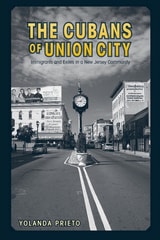
The Cubans of Union City
Immigrants and Exiles in a New Jersey CommunityYolanda Prieto
Temple University Press, 2009
As a result of the conflicts between Cuba and the United States, especially after 1959, Cubans immigrated in great numbers. Most stayed in Miami, but many headed north to Union City, making it second only to Miami in its concentration of Cubans. In The Cubans of Union City, Yolanda Prieto discusses why Cubans were drawn to this particular city and how the local economy and organizations developed. Central aspects of this story are the roles of women, religion, political culture, and the fact of exile itself.
As a member of this community and a participant in many of its activities, Prieto speaks with special authority about its demographic uniqueness. Far from being a snapshot of the community, The Cubans of Union City conveys an ongoing research agenda extending over more than twenty years, from 1959 to the 1980s. As a long-term observer who was also a resident, Prieto offers a unique and insightful view of the dynamics of this community’s evolution.
The Defender
The Battle to Protect the Rights of the Accused in PhiladelphiaEdward W. Madeira Jr. and Michael D. Schaffer
Temple University Press, 2020
Long before the Supreme Court ruled that impoverished defendants in criminal cases have a right to free counsel, Philadelphia’s public defenders were working to ensure fair trials for all. In 1934, when penniless defendants were routinely railroaded through the courts without ever seeing a lawyer, Philadelphia attorney Francis Fisher Kane helped create the Voluntary Defender Association, supported by charity and free from political interference, to represent poor people accused of crime.
When the Supreme Court’s 1963 decision Gideonv. Wainwright mandated free counsel for indigent defendants, the Defender (as it is now known) became more essential than ever, representing at least 70 percent of those caught in the machinery of justice in the city. Its groundbreaking work in juvenile advocacy, homicide representation, death-row habeas corpus petitions, parole issues, and alternative sentencing has earned a national reputation.
In The Defender, Edward Madeira, past president of the Defender’s Board of Directors, and former Philadelphia Inquirer journalist Michael Schaffer chart the 80-plus-year history of the organization as it grew from two lawyers in 1934 to a staff of nearly 500 in 2015.
This is a compelling story about securing justice for those who need it most.
The Delaware Indians
A HistoryWeslager, C. A.
Rutgers University Press, 1990
In the seventeenth century white explorers and settlers encountered a tribe of Indians calling themselves Lenni Lenape along the Delaware River and its tributaries in New Jersey, Delaware, eastern Pennsylvania, and southeastern New York. Today communities of their descendants, known as Delawares, are found in Oklahoma, Kansas, Wisconsin, and Ontario, and individuals of Delaware ancestry are mingled with the white populations in many other states. The Delaware Indians is the first comprehensive account of what happened to the main body of the Delaware Nation over the past three centuries.
C. A. Weslager puts into perspective the important events in United States history in which the Delawares participated and he adds new information about the Delawares. He bridges the gap between history and ethnology by analyzing the reasons why the Delawares were repeatedly victimized by the white man.
The Douglass Century
Transformation of the Women’s College at Rutgers UniversityDenda, Kayo
Rutgers University Press, 2018
The Douglass Century celebrates the college’s longevity and diversity as distinctive accomplishments, and analyzes the contributions of Douglass administrators, alumnae, and students to its survival, while also investigating multiple challenges that threatened its existence. This book demonstrates how changing historical circumstances altered the possibilities for women and the content of higher education, comparing the Jazz Age, American the Great Depression, the Second World War, the post-war Civil Rights era, and the resurgence of feminism in the 1970s and 1980s. Concluding in the present day, the authors highlight the college’s ongoing commitment to Mabel Smith Douglass’ founding vision, “to bring about an intellectual quickening, a cultural broadening in connection with specific training so that women may go out into the world fitted…for leadership…in the economic, political, and intellectual life of this nation.” In addition to providing a comprehensive history of the college, the book brings its subjects to life with eighty full-color images from the Special Collections and University Archives, Rutgers University Libraries.
The Eagles Encyclopedia
Champions EditionRay Didinger
Temple University Press, 2018
Ray Didinger, like every die-hard Eagles fan, has been waiting since the 1960 NFL Title for the Birds to win the Super Bowl. In this “Champions Edition” of The Eagles Encyclopedia, beloved Eagles commentator Didinger celebrates his team and their remarkable, against-all-odds season that ended at Super Bowl LII, where they claimed victory over the Patriots in Minnesota.
Didinger updates his best-selling book The Eagles Encyclopedia with the departure of Coach Chip Kelly and the dawn of the Doug Pederson era. He provides a new chapter on the 2017–18 season and postseason. And he includes dozens of new player, coach, and front-office profiles as well as Hall of Fame updates on 2018 inductees Brian Dawkins and Terrell Owens.
But wait, there’s more!
- An all-new 16-page color insert highlights key moments on the road to the Super Bowl
- Iconic photos old and new, from Concrete Charlie Bednarik’s tackle of Frank Gifford to Nick Foles and the Philly Special
- More than 100 new photos from the recent season as well as from earlier periods in the Eagles’ storied history
TheEagles Encyclopedia: Champions Edition is more than a keepsake of a championship season. It is a book about a city and a team and the emotion that binds them.

The Eagles Encyclopedia
Champions IIRay Didinger with Robert S. Lyons
Temple University Press, 2025
Quarterback Jalen Hurts described the city’s love for the Eagles as “a Philly thing,” and no one understands that better than Didinger, who has followed the team since the 1950s. In Champions II, he brings that history up to date by writing about the Tush Push, Saquon Barkley’s reverse hurdle, and other milestones of the 2024 season.
This new edition includes:
- More than 60 new photographs plus a 16-page color insert.
- Dozens of new player, coach and front-office profiles.
- Tributes to the team's newest Hall of Fame inductees: Eric Allen, Dick Vermeil and Harold Carmichael.
- An expanded chapter on the Eagles–Cowboys rivalry.
- An updated statistics and records section.
The Eagles Encyclopedia: Champions II is a must have for any E-A-G-L-E-S fan who wants to relive the Big Game and all the drama that led up to it.
The Ellis Island Snow Globe
Erica Rand
Duke University Press, 2005
Rand notes that portrayals of the Statue of Liberty as a beacon for immigrants tend to suppress the Statue’s connections to people brought to this country by force. She examines what happened to migrants at Ellis Island whose bodies did not match the gender suggested by the clothing they wore. In light of contemporary ideas about safety and security, she examines the “Decide an Immigrant’s Fate” program, which has visitors to Ellis Island act as a 1910 board of inspectors hearing the appeal of an immigrant about to be excluded from the country. Rand is a witty, insightful, and open-minded tour guide, able to synthesize numerous diverse ideas—about tourism, immigration history, sexuality, race, ethnicity, commodity culture, and global capitalism—and to candidly convey her delight in her Ellis Island snow globe. And pen. And lighter. And back scratcher. And golf ball. And glittery pink key chain.
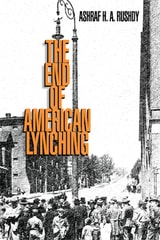
The End of American Lynching
Ashraf H. A. Rushdy
Rutgers University Press, 2012
The End of American Lynching questions how we think about the dynamics of lynching, what lynchings mean to the society in which they occur, how lynching is defined, and the circumstances that lead to lynching. Ashraf H. A. Rushdy looks at three lynchings over the course of the twentieth century—one in Coatesville, Pennsylvania, in 1911, one in Marion, Indiana, in 1930, and one in Jasper, Texas, in 1998—to see how Americans developed two distinct ways of thinking and talking about this act before and after the 1930s.
One way takes seriously the legal and moral concept of complicity as a way to understand the dynamics of a lynching; this way of thinking can give us new perceptions into the meaning of mobs and the lynching photographs in which we find them. Another way, which developed in the 1940s and continues to influence us today, uses a strategy of denial to claim that lynchings have ended. Rushdy examines how the denial of lynching emerged and developed, providing insight into how and why we talk about lynching the way we do at the dawn of the twenty-first century. In doing so, he forces us to confront our responsibilities as American citizens and as human beings.
The Fixers
Devolution, Development, and Civil Society in Newark, 1960-1990Julia Rabig
University of Chicago Press, 2016
Rabig argues that fixers play dual roles. They support resistance, but also mediation; they fight for reform, but also more radical and far-reaching alternatives; they rally others to a collective cause, but sometimes they broker factions. Fixers reflect longer traditions of organizing while responding to the demands of their times. In so doing, they end up fixing (like a fixative) a new and enduring pattern of activist strategies, reforms, and institutional expectations—a pattern we continue to see today.
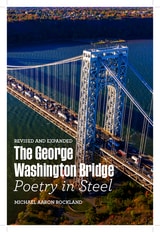
The George Washington Bridge
Poetry in SteelMichael Aaron Rockland
Rutgers University Press, 2020
Since opening in 1931, the George Washington Bridge, linking New York and New Jersey, has become the busiest bridge in the world, with 103 million vehicles crossing it in 2016. Many people also consider it the most beautiful bridge in the world, yet remarkably little has been written about this majestic structure.
Intimate and engaging, this revised and expanded edition of Michael Rockland's rich narrative presents perspectives on the GWB, as it is often called, that span history, architecture, engineering, transportation, design, the arts, politics, and even post-9/11 mentalities. This new edition brings new insight since its initial publication in 2008, including a new chapter on the infamous “Bridgegate” Chris Christie-era scandal of 2013, when members of the governor's administration shut down access to the bridge, causing a major traffic jam and scandal and subsequently helping undermine Christie’s candidacy for the US presidency.
Stunning photos, from when the bridge was built in the late 1920s through the present, are a powerful complement to the bridge's history. Rockland covers the competition between the GWB and the Brooklyn Bridge that parallels the rivalry between New Jersey and New York City. Readers will learn about the Swiss immigrant Othmar Ammann, an unsung hero who designed and built the GWB, and how a lack of funding during the Depression dictated the iconic, uncovered steel beams of its towers, which we admire today. There are chapters discussing accidents on the bridge, such as an airplane crash landing in the westbound lanes and the sad story of suicides off its span; the appearance of the bridge in media and the arts; and Rockland's personal adventures on the bridge, including scaling its massive towers on a cable.
Movies, television shows, songs, novels, countless images, and even PlayStation 2 games have aided the GWB in becoming a part of the global popular culture. This tribute will captivate residents living in the shadow of the GWB, the millions who walk, jog, bike, skate, or drive across it, as well as tourists and those who will visit it someday.
.
The Georgia of the North
Black Women and the Civil Rights Movement in New JerseyHettie V. Williams
Rutgers University Press, 2024
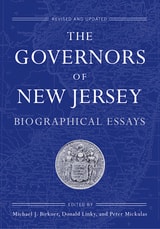
The Governors of New Jersey
Biographical EssaysBirkner, Michael J
Rutgers University Press, 2014
Rogues, aristocrats, and a future U.S. president. These and other governors are portrayed in this revised and updated edition of the classic reference work on the chief executives of New Jersey. Editors Michael J. Birkner, Donald Linky, and Peter Mickulas present new essays on the governors of the last three decades—Brendan T. Byrne, Thomas Kean, James Florio, Christine Todd Whitman, Donald DiFrancesco, James McGreevey, Richard Codey, and Jon Corzine. The essays included in the original edition are amended, edited, and corrected as necessary in light of new and relevant scholarship.
The authors of each governor’s life story represent a roster of such notable scholars as Larry Gerlach, Stanley Katz, Arthur Link, and Clement Price, as well as many other experts on New Jersey history and politics. As a result, this revised edition is a thorough and current reference work on the New Jersey governorship—one of the strongest in the nation.
Also of Interest:
New Jersey Politics and Government
The Suburbs Come of Age
Fourth Edition
Barbara G. Salmore with Stephen A. Salmore
978-0-8135-6139-4 paper $34.95
A volume in the Rivergate Regionals Collection
Me, Governor?
My Life in the Rough-and-Tumble World of New Jersey Politics
Richard J. Codey
978-0-8135-5045-9 cloth $24.95
The Life and Times of Richard J. Hughes
The Politics of Civility
John B. Wefing
978-0-8135-4641-4 cloth $32.50
Governor Tom Kean
From the New Jersey Statehouse to the 911 Commission
Alvin S. Felzenberg
978-0-8135-3799-3 cloth $29.95
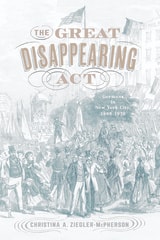
The Great Disappearing Act
Germans in New York City, 1880-1930Christina A. Ziegler-McPherson
Rutgers University Press, 2022
This study examines these questions in relation to the German immigrant community in New York City between 1880-1930, and seeks to understand how German-American New Yorkers assimilated into the larger American society in the early twentieth century.
By the turn of the twentieth century, New York City was one of the largest German-speaking cities in the world and was home to the largest German community in the United States. This community was socio-economically diverse and increasingly geographically dispersed, as upwardly mobile second and third generation German Americans began moving out of the Lower East Side, the location of America’s first Kleindeutschland (Little Germany), uptown to Yorkville and other neighborhoods. New York’s German American community was already in transition, geographically, socio-economically, and culturally, when the anti-German/One Hundred Percent Americanism of World War I erupted in 1917.
This book examines the structure of New York City’s German community in terms of its maturity, geographic dispersal from the Lower East Side to other neighborhoods, and its ultimate assimilation to the point of invisibility in the 1920s. It argues that when confronted with the anti-German feelings of World War I, German immigrants and German Americans hid their culture – especially their language and their institutions – behind closed doors and sought to make themselves invisible while still existing as a German community.
But becoming invisible did not mean being absorbed into an Anglo-American English-speaking culture and society. Instead, German Americans adopted visible behaviors of a new, more pluralistic American culture that they themselves had helped to create, although by no means dominated. Just as the meaning of “German” changed in this period, so did the meaning of “American” change as well, due to nearly 100 years of German immigration.
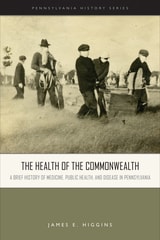
The Health of the Commonwealth
A Brief History of Medicine, Public Health, and Disease in PennsylvaniaJames E. Higgins
Temple University Press, 2020
“The history of medicine in Pennsylvania is no less vital to understanding the state’s past than is its political or industrial history,” writes James Higgins in The Health of the Commonwealth, his overview of medicine and public health in the state. Covering the outbreak of yellow fever in 1793 through the 1976 Legionnaire’s Disease epidemic, and the challenges of the present day, he shows how Pennsylvania has played a central role in humanity’s understanding of—and progress against—disease.
Higgins provides close readings of specific medical advances—for instance, scientists at the University of Pittsburgh discovered the polio vaccine—and of disease outbreaks, like AIDS. He examines sanitation and water purification efforts, allopathic medicine and alternative therapies, and the building of the state’s tuberculosis sanitaria. Higgins also describes Native American and pre-modern European folk medicine, the rise of public health in the state, and women’s roles in both folk and scientific medicine.
The Health of the Commonwealth places Pennsylvania’s unique contribution to the history of public health and medicine in a larger narrative of health and disease throughout the United States and the world.
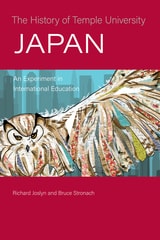
The History of Temple University Japan
An Experiment in International EducationRichard Joslyn and Bruce Stronach
Temple University Press, 2023
The authors recount the development of the academic program, the recruitment of students, and the support from Temple that enabled curricular and pedagogical improvement.
They also address the university’s relationships with three Japanese partners, and the financial threats and crises TUJ faced over the decades.
The History of Temple University Japan is not only an important documentation of TUJ, but also a history of U.S.-Japanese relations. What emerges is the significant impact TUJ has had on the thousands of students, faculty, and staff who have been a part of this international academic institution.
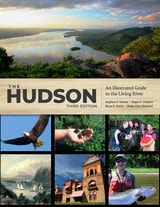
The Hudson
An Illustrated Guide to the Living RiverStephen P. Stanne
Rutgers University Press, 2021
This volume gives a detailed account of the Hudson River’s history, including the geological forces that created it, the various peoples who have lived on its banks, and the great works of art it has inspired. It also showcases the many species making a home on this waterway, including the Atlantic sturgeon, the bald eagle, the invasive zebra mussel, and the herons of New York Harbor. Combining both scientific and historical perspectives, this book demonstrates why the Hudson and its valley have been so central to the environmental movement.
As it charts the progress made towards restoring the river ecosystem and the effects of emerging threats like climate change, The Hudson identifies concrete ways that readers can help. To that end, royalties from the sale of this book will go to the non-profit environmental advocacy group Hudson River Sloop Clearwater, Inc.
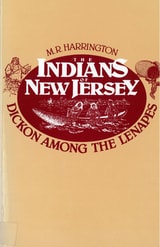
The Indians of New Jersey
Dickon Among the LenapesHarrington, M. R
Rutgers University Press, 1963
In presenting the lore and heritage of the Lenapes, Dr. M.R. Harrington does so through the eyes of a shipwrecked English boy who became a captive of the Indians, and was eventually adopted into the tribe. The narrative is lively reading, and the facts on which it is based are accurate. With the accompanying Clarence Ellsworth line drawings, the reader can understand and even reproduce many of the objects the author describes: the Lenape bows and arrows, muccasins and mats, baskets and bowls.
This new edition is a reissue of an often asked for an unavailable New Jersey classic, first published in 1938.
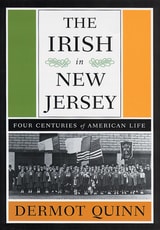
The Irish in New Jersey
Four Centuries of American Life, First Paperback EditionDermot Quinn
Rutgers University Press, 2004
In this richly illustrated history, Dermot Quinn uncovers the story of how the Irish in New Jersey maintained their cultural roots while also laying the foundations for the social, economic, political, and religious landscapes of their adopted country. Quinn chronicles the emigration of families from a conflict-torn and famine-stricken Ireland to the unfamiliar land whose unwelcoming streets often fell far short of being paved with gold.
Using case histories from Paterson, Jersey City, and Newark, Quinn examines the transition of the Irish from a rejected minority to a middle-class, secular, and suburban identity. The Irish in New Jersey will appeal to everyone with an interest in the cultural heritage of a proud and accomplished people.
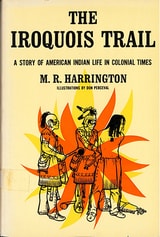
The Iroquois Trail
Dickon among the Onondagas and SenecasM. R. Harrington
Rutgers University Press, 1965
As Dickon and his companions travel the Iroquois Trail in search of his Lenape brother, Little-Bear, they learn the ways of the Onondagas, Senecas, Mohawks, Oneidas, and Cayugas. Dickon tells his own story, describing the day-to-day activities in the villages along the trail—their ways of making clothing, weapons, household articles, and ornaments, and how they hunt, cook, travel, and worship. He meets Hiawatha, Deganawide, Jigonsasay, and other Indian leaders. His tale is accompanied by line drawings that vividly portray the art of making baskets, moccasins, bows and arrows, clothing, and other everday articles. These illustrations are done by Don Perceval, a renowned artist and specialist on Indians.

The Italian Legacy in Philadelphia
History, Culture, People, and IdeasEdited by Andrea Canepari and Judith Goode
Temple University Press, 2021
Italian arts and culture have been a significant influence on Philadelphia dating back to Thomas Jefferson and colonial times. Throughout the ensuing decades, Italian art and architecture styles flourished, and wealthy Philadelphians traveled to Italy and brought back objects to display in emerging institutions of art and culture. New immigration formed neighborhoods—such as South Philly, home to the Italian Market—and Italian business leaders, politicians, artists, musicians and sports figures came to prominence and became part of the social fabric of the city.
This glorious volume, The Italian Legacy in Philadelphia, celebrates the history, impact, and legacy of this vibrant community, tracing four periods of key transformation in the city’s political, economic, and social structures. The editors and contributors chronicle the changing dynamics of the city as Italian immigrants established themselves and as they continue to have lively interactions with people and institutions in Italy.
Interdisciplinary essays, along with nearly 250 gorgeous images, explore the changing perspectives and styles of those who contributed Italian influences. As settlers and their descendants brought everyday cultural practices, memories, and traditions, they created different Italian-American experiences that became important parts of American culture, a legacy that is thriving in contemporary, globalized Philadelphia.
The Jersey Shore
The Past, Present & Future of a National TreasureMazzagetti, Dominick
Rutgers University Press, 2018
Divided into chronological and thematic sections, this book will attract general readers interested in the history of the Shore: how it appeared to early European explorers; how the earliest settlers came to the beaches for the whaling trade; the first attractions for tourists in the nineteenth century; and how the coming of railroads, and ultimately automobiles, transformed the Shore into a major vacation destination over a century later. Mazzagetti also explores how the impact of changing national mores on development, race relations, and the environment, impacted the Shore in recent decades and will into the future. Ultimately, this book is an enthusiastic and comprehensive portrait by a native son, whose passion for the region is shared by millions of beachgoers throughout the Northeast.
The Legacy of Fort William Henry
Resurrecting the PastDavid R. Starbuck
University Press of New England, 2014
The Life and Times of Richard J. Hughes
The Politics of CivilityWefing, John B
Rutgers University Press, 2009
This biography illuminates the governor's accomplishments between 1962 and 1970, including the creation of the Hackensack Meadowlands Commission, formation of the county college system, establishment of stringent antipollution laws, design of the public defender system, and the adoption of a New Jersey sales tax, as well as his pivotal role during the Newark riots. As chief justice, Hughes faced difficult issuesùschool funding, low and moderate income housing needs, freedom of speech, and his decision in the rightto-die case involving Karen Ann Quinlan. With a career characterized by liberal activism, Hughes also contributed nationally and internationally, from serving as host of the 1964 Democratic National Convention to monitoring elections in South Vietnam.
John B. Wefing's research includes interviews with prominent politicians and leaders who worked with Hughes at various points in his career. The result is a rich story of a public servant who possessed a true ability to work with members of both political parties and played a significant role in shaping modern New Jersey.
The Lofts of SoHo
Gentrification, Art, and Industry in New York, 1950–1980Aaron Shkuda
University of Chicago Press, 2016
American cities entered a new phase when, beginning in the 1950s, artists and developers looked upon a decaying industrial zone in Lower Manhattan and saw, not blight, but opportunity: cheap rents, lax regulation, and wide open spaces. Thus, SoHo was born. From 1960 to 1980, residents transformed the industrial neighborhood into an artist district, creating the conditions under which it evolved into an upper-income, gentrified area. Introducing the idea—still potent in city planning today—that art could be harnessed to drive municipal prosperity, SoHo was the forerunner of gentrified districts in cities nationwide, spawning the notion of the creative class.
In The Lofts of SoHo, Aaron Shkuda studies the transition of the district from industrial space to artists’ enclave to affluent residential area, focusing on the legacy of urban renewal in and around SoHo and the growth of artist-led redevelopment. Shkuda explores conflicts between residents and property owners and analyzes the city’s embrace of the once-illegal loft conversion as an urban development strategy. As Shkuda explains, artists eventually lost control of SoHo’s development, but over several decades they nonetheless forced scholars, policymakers, and the general public to take them seriously as critical actors in the twentieth-century American city.
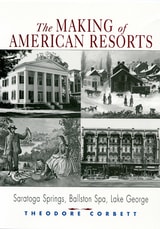
The Making of American Resorts
Saratoga Springs, Ballston Spa, and Lake GeorgeCorbett, Theodore
Rutgers University Press, 2001
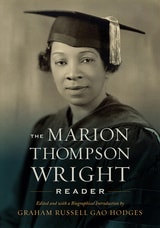
The Marion Thompson Wright Reader
Edited and with a Biographical Introduction by Graham Russell Gao HodgesGraham Russell Gao Hodges
Rutgers University Press, 2022
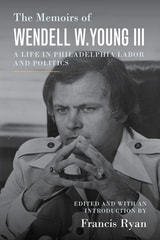
The Memoirs of Wendell W. Young III
A Life in Philadelphia Labor and PoliticsFrancis Ryan
Temple University Press, 2019
Philadelphia native Wendell W. Young III was one of the most important American labor leaders in the last half of the twentieth century. An Acme Markets clerk in the 1950s and ’60s, he was elected top officer of the Retail Clerks Union when he was twenty-four. His social justice unionism sought to advance wages while moving beyond collective bargaining to improve the conditions of the working-class majority, whether in a union or not. Young quickly gained a reputation for his independence, daring at times to publicly criticize the policies of the city’s powerful AFL-CIO leadership and tangle with the city’s political machine.
Editor Francis Ryan, whose introduction provides historical context, interviewed Young about his experiences working in the region’s retail and food industry, measuring the changes over time and the tangible impact that union membership had on workers. Young also describes the impact of Philadelphia’s deindustrialization in the 1970s and ’80s and recounts his activism for civil rights and the anti-war movements as well as on John F. Kennedy’s presidential campaign.
The Memoirs of Wendell W. YoungIII provides the most extensive labor history of late twentieth-century Philadelphia yet written.

The Mighty WMMR
An Oral History of Philadelphia's Rock Radio RevolutionErin Riley
Temple University Press, 2026
In the early 1980s, the scrappy radio station 93.3 WMMR was on the verge of a major takeover of the Philadelphia airwaves. Erin Riley, who had her finger on the pulse of new artists like Bon Jovi, whose music would define a generation, was hired as the station’s Music Director in 1983.
The Mighty WMMR is Riley’s affectionate and nostalgic oral history of the station’s early years, especially its 1980s heyday, covering everything from the pioneering influence of The Marconi Experiment and the success of The Morning Zoo to how WMMR broke artists like Bruce Springsteen, Billy Joel, and local favorites The Hooters onto the national scene. Featuring anecdotes and memories by beloved on-air personalities including John DeBella, Pierre Robert, and Michael Tearson, Riley chronicles the memorable songs and musicians; concerts, contests, and clubs; and the live broadcasts that marked the height of an unforgettable era in Philadelphia radio.
Riley breezily captures the station’s impact on listeners, which made WMMR a perfect storm of the times, the culture, and the counterculture. The Mighty WMMR is a captivating look back at Philadelphia’s rock history and the station that shaped a city and a generation.
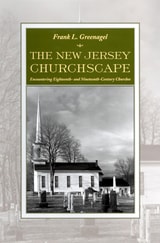
The New Jersey Churchscape
Encountering Eighteenth- and Nineteenth-Century ChurchesFrank L. Greenagel
Rutgers University Press, 2001
Although best known as the Garden State, New Jersey could also be called the Church State. The state boasts thousands of houses of worship, with more than one thousand still standing that were built in the eighteenth and nineteenth centuries. Frank L. Greenagel has photographed more than six hundred. He has selected two hundred of these historic landmarks for an examination of why they are sited where they are and why they look the way they do.
Greenagel has sought out and included images of not only mainstream Christian churches, but also Jewish synagogues as well as the places of worship of religious groups such as the Moravians, the Church of the Brethren, and the Seventh Day Baptists. The photographs are arranged chronologically within sections on three major early settlement regions of the state ¾ the Hudson River, the Delaware River, and the Raritan Valley. For each building, Greenagel details the date of construction, the cultural, historic, and religious influences that shaped it, the architectural details that distinguish it, and what purpose it currently serves.
The New Jersey State Constitution
A Reference GuideWilliams, Robert F
Rutgers University Press, 1997
The year 1997 marks the fiftieth anniversary of New Jerseys wellregarded state constitution. State constitutions, although the highest source of law within a state, are not well understood by citizens, government officials, historians, political scientists, lawyers, or even judges.
This book is the first single volume to combine a detailed review of New Jersey's constitutional history and analysis of each section of the current constitution. It is the standard work on New Jersey constitutional development and law. Divided into two parts, the book first covers the historical development of the constitutions of 1776, 1844, the Constitutional Commission of 1873, and the current constitution written in 1947. It then traces the origins and major judicial interpretations of each section of the present-day constitution. It concludes with an exhaustive bibliographical essay which organizes the most complete listing of primary and secondary sources to date.