Results by title
179 books match the query 'Middle West' and 34 start with t

Taking Flight
A History of Birds and People in the Heart of AmericaMichael Edmonds
Wisconsin Historical Society Press, 2018
Today, more than fifty million Americans traipse through wetlands at dawn, endure clouds of mosquitoes, and brave freezing autumn winds just to catch a glimpse of a bird. The human desire to connect with winged creatures defies age and generation. In the Midwest, humans and birds have lived together for more than twelve thousand years. Taking Flight explores how and why people have worshipped, feared, studied, hunted, eaten, and protected the birds that surrounded them.
Author and birder Michael Edmonds has combed archaeological reports, missionaries’ journals, travelers’ letters, early scientific treatises, the memoirs of American Indian elders, and the folklore of hunters, farmers, and formerly enslaved people throughout the Midwest to reveal how our ancestors thought about the very same birds we see today. Whether you’re a casual bird-watcher, a hard-core life-lister, or simply someone who loves the outdoors, you’ll look at birds differently after reading this book.
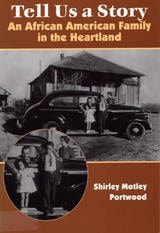
Tell Us a Story
An African American Family in the HeartlandShirley Motley Portwood
Southern Illinois University Press, 2000
Illinois State Historical Society's Certificate of Excellence (2002)
Supplemented by recollections from the present era, Tell Us a Story is a colorful mosaic of African American autobiography and family history set in Springfield, Illinois, and in rural southern Illinois, Missouri, and Arkansas from the 1920s through the 1950s.
Shirley Motley Portwood shares rural, African American family and community history through a collection of vignettes about the Motley family. Initially transcribed accounts of the Motleys’ rich oral history, these stories have been passed among family members for nearly fifty years. In addition to her personal memories, Portwood presents interviews with her father, three brothers, and two sisters plus notes and recollections from their annual family reunions. The result is a composite view of the Motley family.
A historian, Portwood enhances the Motley family story by investigating primary data such as census, marriage, school, and land records, newspaper accounts, city directories, and other sources. The backbone of this saga, however, is oral history gathered from five generations, extending back to Portwood's grandparents, born more than one hundred years ago. Information regarding two earlier generations—her great- grandfather and great-great-grandparents, who were slaves—is based on historical research into state archives, county and local records, plantation records, and manuscript censuses.
A rich source for this material—the Motley family reunions—are week-long retreats where four generations gather at the John Motley house in Burlington, Connecticut, the Portwood home in Godfrey, Illinois, or other locations. Here the Motleys, all natural storytellers, pass on the family traditions. The stories, ranging from humorous to poignant, reveal much about the culture and history of African Americans, especially those from nonurban areas. Like many rural African Americans, the Motleys have a rich and often joyful family history with traditions reaching back to the slave past. They have known the harsh poverty that made even the necessities difficult to obtain and the racial prejudice that divided whites and blacks during the era of Jim Crow segregation and inequality; yet they have kept a tremendous faith in self-improvement through hard work and education.
The Disinherited
A Novel of the 1930s by Jack ConroyJack Conroy & Intro by Douglas Wixson
University of Missouri Press, 1991
Douglas Wixson's introduction to this new edition of Conroy's classic provides biographical information on the aspects of Conroy's life that influenced his writings, explores the socialist movement of the 1930s, and examines the critical reaction to the novel, showing why The Disinherited has endured both as historical document and as fiction.
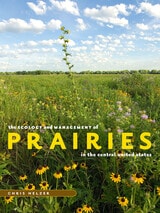
The Ecology and Management of Prairies in the Central United States
Chris Helzer
University of Iowa Press, 2010
Most prairies exist today as fragmented landscapes, making thoughtful and vigilant management ever more important. Intended for landowners and managers dedicated to understanding and nurturing their prairies as well as farmers, ranchers, conservationists, and all those with a strong interest in grasslands, ecologist Chris Helzer’s readable and practical manual educates prairie owners and managers about grassland ecology and gives them guidelines for keeping prairies diverse, vigorous, and viable.
Chapters in the first section, "Prairie Ecology," describe prairie plants and the communities they live in, the ways in which disturbance modifies plant communities, the animal and plant inhabitants that are key to prairie survival, and the importance of diversity within plant and animal communities. Chapters in the second section, "Prairie Management," explore the adaptive management process as well as guiding principles for designing management strategies, examples of successful management systems such as fire and grazing, guidance for dealing with birds and other species that have particular habitat requirements and with the invasive species that have become the most serious threat that prairie managers have to deal with, and general techniques for prairie restoration. Following the conclusion and a forward-thinking note on climate change, eight appendixes provide more information on grazing, prescribed fire, and invasive species as well as bibliographic notes, references, and national and state organizations with expertise in prairie management.
Grasslands can be found throughout much of North America, and the ideas and strategies in this book apply to most of them, particularly tallgrass and mixed-grass prairies in eastern North Dakota, eastern South Dakota, eastern Nebraska, eastern Kansas, eastern Oklahoma, northwestern Missouri, northern Illinois, northwestern Indiana, Iowa, southwestern Wisconsin, and southwestern Minnesota. By presenting all the factors that promote biological diversity and thus enhance prairie communities, then incorporating these factors into a set of clear-sighted management practices, The Ecology and Management of Prairies in the Central United States presents the tools necessary to ensure that grasslands are managed in the purposeful ways essential to the continued health and survival of prairie communities.
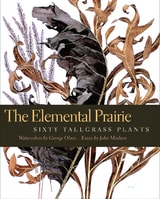
The Elemental Prairie
Sixty Tallgrass PlantsOlson, George
University of Iowa Press, 2005
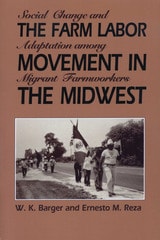
The Farm Labor Movement in the Midwest
Social Change and Adaptation among Migrant FarmworkersBy W. K. Barger and Ernesto M. Reza
University of Texas Press, 1994
The Farm Labor Organizing Committee (FLOC) was founded by Baldemar Velásquez in 1967 to challenge the poverty and powerlessness that confronted migrant farmworkers in the Midwest. This study documents FLOC's development through its first quarter century and analyzes its effectiveness as a social reform movement.
Barger and Reza describe FLOC's founding as a sister organization of the United Farm Workers (UFW). They devote particular attention to FLOC's eight-year struggle (1978-1986) with the Campbell Soup company that led to three-way contracts for improved working conditions between FLOC, Campbell Soup, and Campbell's tomato and cucumber growers in Ohio and Michigan. This contract significantly changed the structure of agribusiness and instituted key reforms in American farm labor.
The authors also address the processes of social change involved in FLOC actions. Their findings are based on extensive research among farmworkers, growers, and representatives of agribusiness, as well as personal involvement with FLOC leaders and supporters.
The Fishing Line
A History of the Grand Rapids & Indiana RailroadGraydon M. Meints
Michigan State University Press, 2018
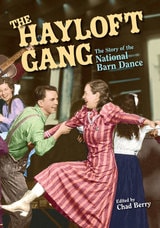
The Hayloft Gang
The Story of the National Barn DanceEdited by Chad Berry
University of Illinois Press, 2007
The Hayloft Gang draws on the colorful commentary of performers and former listeners to analyze the National Barn Dance, its audience, and its impact. Contributors trace the history of barn dance radio, explore the paradox of a foundational country music program broadcast from a major city, investigate notions of authenticity in the presentation of country music and entertainment, and delve into provocative issues raised by the barn dance phenomenon.
Contributors: Chad Berry, Michael T. Bertrand, Lisa Krissoff Boehm, Don Cusic, Wayne W. Daniel, Loyal Jones, Kristine M. McCusker, Stephen Parry, Susan Smulyan, Paul L. Tyler, and Michael Ann Williams.
The Heart of Things
A Midwestern AlmanacJohn Hildebrand
Wisconsin Historical Society Press, 2014
In this remarkable book of days, John Hildebrand charts the overlapping rings—home, town, countryside—of life in the Midwest. Like E. B. White, Hildebrand locates the humor and drama in ordinary life: church suppers, Friday night football, outdoor weddings, garden compost, family reunions, roadside memorials, camouflage clothing. In these wry, sharply observed essays, the Midwest isn’t The Land Time Forgot but a more complicated (and vastly more interesting) place where the good life awaits once we figure exactly out what it means. From his home range in northwestern Wisconsin, Hildebrand attempts to do just that by boiling down a calendar year to its rich marrow of weather, animals, family, home—in other words, all the things that matter.
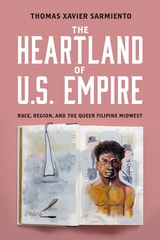
The Heartland of U.S. Empire
Race, Region, and the Queer Filipinx MidwestThomas Xavier Sarmiento
Temple University Press, 2026
Examining Filipinx cultural representations in the Midwest since the early twentieth century, Thomas Sarmiento shrewdly considers the impact of American exceptionalism and U.S. imperialism in a region where white, middle class, heterosexual, and Christian is the norm. The Heartland of U.S. Empire offers a cogent analysis of the 1904 St. Louis World’s Fair and its infamous Philippine Exhibit alongside minor museum displays and archives of Midwesterners in the Philippines. Sarmiento also considers the “exile literature” of Filipino/American writer Bienvenido Santos as well as the TV shows Glee and Superstore, which provide mainstream visibility of the queer Filipinx Midwest.
He employs a queer, decolonial Filipinx methodology that traces how narratives of America’s heartland position Filipinxs in the region as nonnormative due to their racial, gender, sexual, and national statuses. The Heartland of U.S. Empire locates queer Filipinxs in the geographic center of the nation and at the center of cultural narratives, thereby mapping alternative images of diasporic Filipinx identity and experience alongside U.S. regional and national identities, histories, and realities.
In the series Asian American History and Culture
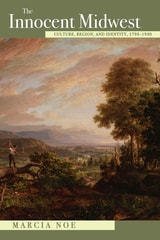
The Innocent Midwest
Culture, Region, and Identity, 1793–1930Marcia Noe
Ohio University Press, 0
The Innocent Midwest delves into one of the most enduring stereotypes in American cultural history: the image of the Midwest as a bastion of innocence. Despite its share of social, political, and economic complexities, the region has long been portrayed as wholesome, virtuous, and peace loving—a perception that has persisted from its pastoral beginnings through industrialization and into the digital age.
This book traces the roots and evolution of that myth, arguing that the Midwest’s innocent image has been carefully cultivated through American popular and high culture. From literature and film to music and visual art, the trope of the innocent Midwesterner has shaped national perceptions of the region for over a century. Focusing on literature from 1793 to the 1920s, the book explores how this character type emerged, evolved, and eventually confronted the disillusionment of the machine age.
Organized thematically, the book examines early frontier narratives, stories of Midwesterners abroad, Progressive Era ideals of neighborliness, immigrant and migrant experiences, and the eventual unraveling of the pastoral dream. It reveals how the myth of innocence was underpinned by a constellation of values—agrarianism, Christian morality, and a belief in education—that supported the Jeffersonian vision of a democratic, virtuous citizenry.
Rather than offering a sweeping theory of regional identity, The Innocent Midwest focuses on the recurring literary figure of the innocent Midwesterner—an individual shaped by the land and striving for self-actualization. The book draws both on canonical authors like Mark Twain, William Dean Howells, Booth Tarkington, Sinclair Lewis, Theodore Dreiser, and Willa Cather and on lesser-known voices such as Maria Susanna Cummins, David Graham Phillips, Elia W. Peattie, William Webb, Chief Luther Standing Bear, and Oscar Micheaux, whose works contributed to the cultural construction of the Midwest.
Through its nuanced exploration of literature and culture, this book offers a compelling account of how the Midwest came to symbolize innocence—and why that image continues to resonate in the American imagination.
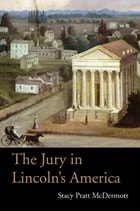
The Jury in Lincoln’s America
Stacy Pratt McDermott
Ohio University Press, 2012
In the antebellum Midwest, Americans looked to the law, and specifically to the jury, to navigate the uncertain terrain of a rapidly changing society. During this formative era of American law, the jury served as the most visible connector between law and society. Through an analysis of the composition of grand and trial juries and an examination of their courtroom experiences, Stacy Pratt McDermott demonstrates how central the law was for people who lived in Abraham Lincoln’s America.
McDermott focuses on the status of the jury as a democratic institution as well as on the status of those who served as jurors. According to the 1860 census, the juries in Springfield and Sangamon County, Illinois, comprised an ethnically and racially diverse population of settlers from northern and southern states, representing both urban and rural mid-nineteenth-century America. It was in these counties that Lincoln developed his law practice, handling more than 5,200 cases in a legal career that spanned nearly twenty-five years.
Drawing from a rich collection of legal records, docket books, county histories, and surviving newspapers, McDermott reveals the enormous power jurors wielded over the litigants and the character of their communities.
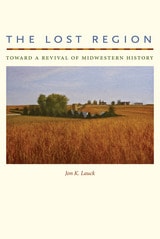
The Lost Region
Toward a Revival of Midwestern HistoryJon K. Lauck
University of Iowa Press, 2013
In addition to outlining the centrality of the Midwest to crucial moments in American history, Jon K. Lauck resurrects the long-forgotten stories of the institutions founded by an earlier generation of midwestern historians, from state historical societies to the Mississippi Valley Historical Association. Their strong commitment to local and regional communities rooted their work in place and gave it an audience outside the academy. He also explores the works of these scholars, showing that they researched a broad range of themes and topics, often pioneering fields that remain vital today.
The Lost Region demonstrates the importance of the Midwest, the depth of historical work once written about the region, the continuing insights that can be gleaned from this body of knowledge, and the lessons that can be learned from some of its prominent historians, all with the intent of once again finding the forgotten center of the nation and developing a robust historiography of the Midwest.
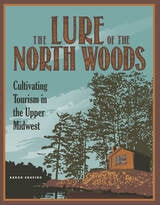
The Lure of the North Woods
Cultivating Tourism in the Upper MidwestAaron Shapiro
University of Minnesota Press, 2013
In the late nineteenth century, the North Woods offered people little in the way of a pleasant escape. Rather, it was a hub of production supplying industrial America with vast quantities of lumber and mineral ore. This book tells the story of how northern Minnesota, northern Wisconsin, and Michigan’s Upper Peninsula became a tourist paradise, turning a scarred countryside into the playground we know today.
Stripped of much of its timber and ore by the early 1900s, the North Woods experienced deindustrialization earlier than the Rust Belt cities that consumed its resources. In The Lure of the North Woods, Aaron Shapiro describes how residents and visitors reshaped the region from a landscape of exploitation to a vacationland. The rejuvenating North Woods profited in new ways by drawing on emerging connections between the urban and the rural, including improved transportation, promotion, recreational land use, and conservation initiatives. Shapiro demonstrates how this transformation helps explain the interwar origins of modern American environmentalism, when both the consumption of nature for pleasure and the work of the Civilian Conservation Corps in the North Woods and elsewhere led many Americans to cultivate a fresh perspective on the outdoors. At a time when travel and recreation are considered major economic forces, The Lure of the North Woods reveals how leisure—and tourism in particular—has shaped modern America.
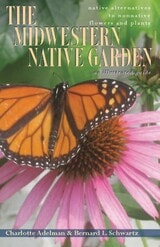
The Midwestern Native Garden
Native Alternatives to Nonnative Flowers and PlantsCharlotte Adelman, Bernard L. Schwartz
Ohio University Press, 2011
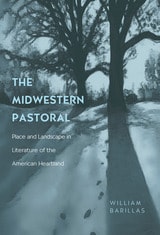
The Midwestern Pastoral
Place and Landscape in Literature of the American HeartlandWilliam Barillas
Ohio University Press, 2006

The Prairie in Seed
Identifying Seed-Bearing Prairie Plants in the Upper MidwestDave Williams
University of Iowa Press, 2016
As interest in these wildflowers and grasses has grown, so has demand for better resources to identify the hundreds of species that make up the native prairie. In The Prairie in Seed, Dave Williams shows us how to identify wildflowers when they are out of bloom and, in particular, how to harvest their seeds. Without the flower color and shape as guides, it can be difficult to identify prairie plants. Imagine trying to distinguish between a simple prairie sunflower and an ox-eye sunflower with no flowers to look at!
In this richly illustrated guide, Williams offers dormant plant identification information, seed descriptions, and advice on seed harvesting and cleaning for seventy-three of the most common wildflowers found in the tallgrass prairie. He includes photographs and descriptions of the plants in bloom and in seed to assist in finding them when you are ready to harvest. Each species description explains where the seeds are located on the plant, when seed ripening begins, and how many seeds each species produces, along with a photograph and approximate measurements of the actual seed. Finally, this guide provides assistance on how and when to hand-harvest seeds for each species, as well as some simple tips on seed cleaning.
An indispensable guide for anyone involved in prairie restoration or conservation, this book is the perfect complement to Williams’s The Tallgrass Prairie Center Guide to Seed and Seedling Identification in the Upper Midwest.

The Quality of Life Report
A NovelBy Meghan Daum, Foreword by Curtis Sittenfeld
University of Texas Press, 2017
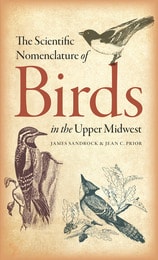
The Scientific Nomenclature of Birds in the Upper Midwest
James Sandrock and Jean C. Prior
University of Iowa Press, 2014
The authors examine the roots, stems, and construction of scientific names from their classical Latin and Greek or other linguistic origins. The translations of these words and insights into their sources yield quirky, tantalizing facts about the people, geography, habitat, and mythology behind bird names. Each entry also includes the bird’s common name as well as local or regional names. Beginning birders confused by scientific names as well as more experienced birders curious about such names will find that the book opens unexpected connections into linguistic, historical, biological, artistic, biographical, and even aesthetic realms.
Highlighting the obvious and not-so-obvious links between birds and language, this practical guide continues a long scholarly tradition of such books by and for those afoot in the field. Whether you are hiking with binoculars or watching a backyard bird feeder or reading at home, The Scientific Nomenclature of Birds in the Upper Midwest will greatly enhance your appreciation of birds.
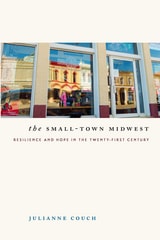
The Small-Town Midwest
Resilience and Hope in the Twenty-First CenturyJulianne Couch
University of Iowa Press, 2016
The people featured live—by choice or circumstances—in one of nine small communities in five states in the Midwest and Great Plains: Iowa, Kansas, Missouri, Nebraska, and Wyoming. Daily they witness people moving out, heading to more urban areas, small businesses closing down, connected infrastructure drying up, entrepreneurs becoming discouraged, and more people thinking about leaving. This is the story we hear in the news, the story told by abandoned farms, consolidated schools, and boarded-up Main Streets.
But it’s not the whole story. As Couch found in her travels throughout the Midwest, many people long to return to these towns, places where they may have deep family roots or where they can enjoy short commutes, familiar neighbors, and proximity to rural and wild places. And many of the residents of small midwestern towns are not just accepting the trend toward urbanization with a sigh. They are betting that the tide of rural population loss can’t go out forever, and they’re backing those bets with creatively repurposed schools, entrepreneurial innovation, and community commitment. From Bellevue, Iowa, to Centennial, Wyoming, the region’s small-town residents remain both hopeful and resilient.
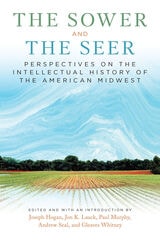
The Sower and the Seer
Perspectives on the Intellectual History of the American MidwestJoseph Hogan
Wisconsin Historical Society Press, 2021
The Midwest has been characterized as a fertile seedbed for the germination of great thinkers, but a wasteland for their further growth. The Sower and the Seer reveals that representation to be false. In fact, the region has sustained many innovative minds and been the locus of extraordinary intellectualism. It has also been the site of shifting interpretations—to some a frontier, to others a colonized space, a breadbasket, a crossroads, a heartland. As agrarian reformed (and Michigander) Liberty Hyde Bailey expressed in his 1916 poem “Sower and Seer,” the Midwestern landscape has given rise to significant visionaries, just as their knowledge has nourished and shaped the region.
The essays gathered for this collection examine individual thinkers, writers, and leaders, as well as movements and ideas that shaped the Midwest, including rural school consolidation, women’s literary societies, Progressive-era urban planning, and Midwestern radical liberalism. While disparate in subject and style, these essays taken together establish the irrefutable significance of the intellectual history of the American Midwest.
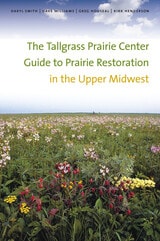
The Tallgrass Prairie Center Guide to Prairie Restoration in the Upper Midwest
Daryl Smith
University of Iowa Press, 2010
Although less than 3 percent of the original vast landscape survives, the tallgrass prairie remains a national treasure, glowing with a vast array of colorful wildflowers in spring and summer, enriched by the warm reds and browns of grasses in fall and winter. This comprehensive manual, crafted by the staff of the Tallgrass Prairie Center at the University of Northern Iowa, will be an essential companion for everyone dedicated to planning, developing, and maintaining all types of prairie restorations and reconstructions in the tallgrass prairie region of Iowa, northern Illinois, northwestern Indiana, southwestern Wisconsin, southwestern Minnesota, eastern South Dakota, eastern Nebraska, northwestern Missouri, and northeastern Kansas.
Focusing on conservation plantings, prairie recovery, native landscaping in yards and at schools, roadside plantings, and pasture renovations, the authors—who collectively have more than a hundred years of experience with prairie restoration—have created a manual that will be particularly useful to landowners, conservation agency personnel, ecosystem managers, native-seeding contractors, prairie enthusiasts, teachers, and roadside managers. A wealth of color and black-and-white photographs taken in the field as well as checklists and tables support the detailed text, which also includes useful online and print sources and references, a glossary, and lists of common and scientific names of all plant species discussed.
The text is divided into five parts. Part I, Reconstruction Planning, provides an overall summary of the entire process, information about securing good-quality seed, and the design of seed mixes. In Part II, Implementing Reconstruction, the authors consider ways to prepare and seed the site, manage the site in its first growing season, identify seedlings, and evaluate success. Part III, Prairie Restoration and Management, deals with identifying and assessing prairie remnants, working toward a predetermined restoration goal, and managing restored prairie remnants and completed reconstructions, including prescribed burning. Chapters in Part IV, Special Cases, discuss the uses of prairie in public spaces, roadside vegetation management, and landscaping on a smaller scale in yards and outdoor classrooms. Part V, Native Seed Production, describes the processes of harvesting, drying, cleaning, and storing native seed as well as propagating and transplanting native seedlings.
Although we cannot recreate the original blacksoil prairie, tallgrass prairie restoration offers the opportunity to reverse environmental damage and provide for the recovery of vital aspects of this lost ecosystem. Anyone in the Upper Midwest who wishes to improve water quality, reduce flood damage, support species diversity, preserve animal habitats, and enjoy the changing panorama of grasses and wildflowers will benefit from the clear, careful text and copious illustrations in this authoritative guide.
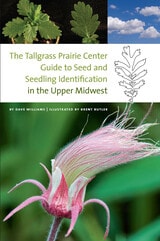
The Tallgrass Prairie Center Guide to Seed and Seedling Identification in the Upper Midwest
Dave Williams
University of Iowa Press, 2010
Settlers crossing the tallgrass prairie in the early 1800s were greeted by a seemingly endless landscape of wildflowers and grasses, one of the most diverse ecosystems on our planet. Today, although the tallgrass prairie has been reduced to a tiny percentage of its former expanse, people are working to restore and reconstruct prairie communities. This lavishly illustrated guide to seeds and seedlings, crafted by Tallgrass Prairie Center botanist Dave Williams and illustrator Brent Butler, will insure that everyone from urban gardeners to grassland managers can properly identify and germinate seventy-two species of tallgrass wildflowers and grasses in eastern North Dakota, eastern South Dakota, southwestern Minnesota, southwestern Wisconsin, northern Illinois, northwestern Indiana, Iowa, eastern Nebraska, eastern Kansas, northwestern Missouri, and eastern Oklahoma.
Williams has created a brilliant, nearly foolproof system of identification and verification. Two primary keys lead to eleven secondary keys that link to characteristic groups of tallgrass plants: seven groups for wildflowers and four groups for grasses. To identify a seedling, use the primary key to discover its place in the secondary key, then turn to that characteristic group to find your seedling. Circles on each full seedling photograph correspond to close-up photographs; triangles on these close-ups illustrate information in the text to further pinpoint identification. Drawings of leaves illuminate exact identification, and enlarged photographs of each seed provide yet another way to confirm identification.
Thousands of seeds were sprouted in the Tallgrass Prairie Center’s greenhouse to provide seedlings close in size and development to those grown in the field near the end of their first season; research and photography took place over four years. Williams’s text for each species includes a thorough description, a comparison of similar species, and guidance for germination and growth. A complete glossary supports the text, which is concise but detailed enough to be accessible to beginning prairie enthusiasts.
Anyone in the Upper Midwest who wishes to preserve the native vegetation of prairie remnants or reconstruct a tallgrass prairie of whatever size—from home gardens to schoolyards to roadsides to large acreages—will benefit from the hundreds of photographs and drawings and the precise text in this meticulously prepared guide.

The Tallgrass Prairie Reader
John T. Price
University of Iowa Press, 2014
The answer to that question is his Tallgrass Prairie Reader, a first-of-its-kind collection of literature from and about the tallgrass bioregion. Focusing on autobiographical nonfiction in a wide variety of forms, voices, and approaches—including adventure narrative, spiritual reflection, childhood memoir, Native American perspectives, literary natural history, humor, travel writing and reportage—he honors the ecological diversity of tallgrass itself and provides a range of models for nature writers and students.
The chronological arrangement allows readers to experience tallgrass through the eyes and imaginations of forty-two authors from the nineteenth to the twenty-first centuries. Writings by very early explorers are followed by works of nineteenth-century authors that reflect the fear, awe, reverence, and thrill of adventure rampant at the time. After 1900, following the destruction of the majority of tallgrass, much of the writing became nostalgic, elegiac, and mythic. A new environmental consciousness asserted itself midcentury, as personal responses to tallgrass were increasingly influenced by larger ecological perspectives. Preservation and restoration—informed by hard science—emerged as major themes. Early twenty-first-century writings demonstrate an awareness of tallgrass environmental history and the need for citizens, including writers, to remember and to help save our once magnificent prairies.
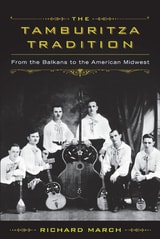
The Tamburitza Tradition
From the Balkans to the American MidwestRichard March
University of Wisconsin Press, 2013

The Town of Whispering Dolls
StoriesSusan Neville, Foreword by Shelley Jackson
University of Alabama Press, 2020
WINNER OF FC2’S CATHERINE DOCTOROW INNOVATIVE FICTION PRIZE
Stories haunted by the remains of the industrial Midwest, the opioid epidemic, and the technology of war
Located somewhere in the rust belt in the early twenty-first century, residents of the town of Whispering Dolls dream of a fabled and illusory past, even as new technologies reshape their world into something different and deeply strange. Dolls walk down the streets, cradling their empty heads and letting the wind turn them into flutes. A politician heads to Washington, DC, and leaves a toxic underground plume in his wake. A woman eats car parts instead of confronting the children who have forgotten her. A young woman falls in love with the robot who took her job at the candy factory.
In The Town of Whispering Dolls, it is usually the grandmothers and the children who grieve. Feeling invisible, in the story “Here,” a woman who has buried her children looks up at the sky where commercial and military jets fly overhead and tries to express her rage to the rich and powerful: “Keep flying above us in your planes. From one coast to the other, keep right on flying over us! We test your bombs and your beloved warriors. Here. Right here. Look down.”
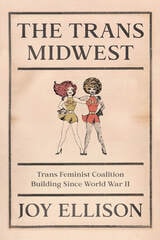
The Trans Midwest
Trans Feminist Coalition Building Since World War IIJoy Ellison
University of Chicago Press, 2027
A revelatory regional history of trans feminist coalition-building between feminist, queer, and Black communities.
In the face of heightened transphobia and rising fascism in the United States, Joy Ellison’s TheTrans Midwest recounts the history of Midwestern trans women and femmes as a force in the larger feminist movement in the United States. Facing repression and geographic isolation, trans feminine Midwesterners built, and continue to build, vibrant coalitions with feminist, queer, and Black organizations.
Drawing on a vast range of archives and oral histories, Ellison shares a detailed and intersectional description of trans life and politics. These historical figures range from the Black trans women who worked in drag shows to the student coalitions that led to the passage of the country’s first trans-inclusive anti-discrimination ordinance and transsexual lesbian feminist activism in the 1990s. Ellison examines community networks and support groups, newsletters and advertisements, and Midwestern cities from Detroit to Kansas City to elucidate how trans regional groups found common interests across different races, classes, abilities, and sexualities, a marked difference from existing historical accounts of similar movements elsewhere.
Contributing to our understanding of trans history and the impact of intersectional organizing, The Trans Midwest presents new possibilities and critical lessons for trans feminist movements today.

The Western Journals of Nehemiah and Henry Sanford, 1839–1846
Kenneth E. Lewis
Michigan State University Press, 2019
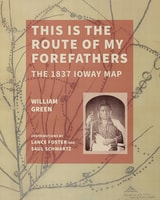
This Is the Route of My Forefathers
The 1837 Ioway MapWilliam Green
University of Iowa Press, 2025
Illustrating nearly 200 years of Ioway history, the 1837 Ioway map provides insights into the tribe’s political and diplomatic strategies, their relationships with neighboring nations, and how they resisted and negotiated in the face of dispossession. This Is the Route of My Forefathers uses an interdisciplinary approach to reveal how group accounts may fade over time, while accounts of origin—legendary histories—remain rich and vibrant.
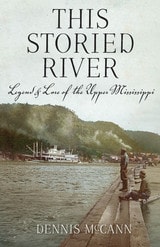
This Storied River
Legend & Lore of the Upper MississippiDennis McCann
Wisconsin Historical Society Press, 2017

Tied to the Great Packing Machine
The Midwest and MeatpackingWilson J. Warren
University of Iowa Press, 2007
Writing from the vantage point of twenty-five years of extensive research, Warren analyzes the evolution of the packing industry from its early period, dominated by the big terminal markets, through the development of new marketing and technical innovations that transformed the ways animals were gathered, slaughtered, and processed and the final products were distributed. In addition, he concentrates on such cultural impacts as ethnic and racial variations, labor unions, gender issues, and changes in Americans’ attitudes toward the ethics of animal slaughter and patterns of meat consumption and such environmental problems as site-point pollution and microbe contamination, ending with a stimulating discussion of the future of American meatpacking.
Providing an excellent and well-referenced analysis within a regional and temporal framework that ensures a fresh perspective, Tied to the Great Packing Machine is a dynamic narrative that contributes to a fuller understanding of the historical context and contemporary concerns of an extremely important industry.
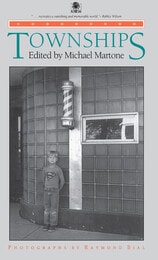
Townships
Michael Martone
University of Iowa Press, 1992
Townships establishes the Midwest as an important center of creativity, a region to be noted for more than corn and prairie and neat, square patches of land. The reverberations in sensibility that make their way through these essays speak to all midwesterners and to all those for whom a sense of place is a source of inspiration.
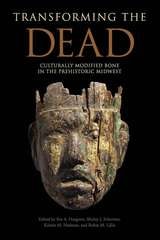
Transforming the Dead
Culturally Modified Bone in the Prehistoric MidwestEve A. Hargrave
University of Alabama Press, 2015
Revealing how the dead continued to shape the spiritual and social worlds of prehistoric North America.
Transforming the Dead is a collection of essays that examines culturally modified human bones and their roles as “cultural and ritual objects” among prehistoric Eastern Woodland cultures. Previous scholarship has explored the role of human body parts in Native American cultures as trophies of war and revered ancestors. This collection discusses new evidence that human elements were also important components of daily and ritual activities across the Eastern Woodlands. The contributors to this volume discuss each case study within the unique regional and temporal contexts of the material, rather than seeking universal answers to how these objects were used.
Most research addressing modified human bone has focused on cut marks and trauma associated with warfare, trophy taking, and burial practices. The editors and contributors of Transforming the Dead document the varied and often overlooked ways that human bone was intentionally modified through drilling, incising, cutting, and polishing for utilitarian, ornamental, spiritual, or ritual use. Examples include bracelets and gorgets to be worn, as well as musical rasps, pipe stems, masks, and protective talismans. The form and function of these objects are not unusual; their construction from the remains of “another” sets them apart.
Through a flexible but systematic analysis of the archaeological record, the contributors bring into focus how the careful selection, modification, and retention of particular bones or body parts of an individual after death offer insights into concepts of personhood, the body, life, and death among the prehistoric Native Americans in the Midwest.
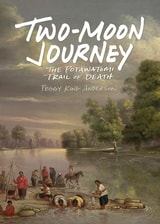
Two-Moon Journey
The Potawatomi Trail of DeathPeggy King Anderson
Indiana Historical Society Press, 2018