Results by title
754 books match the query 'Native American Studies' and 144 start with t
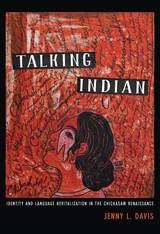
Talking Indian
Identity and Language Revitalization in the Chickasaw RenaissanceJenny L. Davis
University of Arizona Press, 2018
In south-central Oklahoma and much of “Indian Country,” using an Indigenous language is colloquially referred to as “talking Indian.” Among older Chickasaw community members, the phrase is used more often than the name of the specific language, Chikashshanompa’ or Chickasaw. As author Jenny L. Davis explains, this colloquialism reflects the strong connections between languages and both individual and communal identities when talking as an Indian is intimately tied up with the heritage language(s) of the community, even as the number of speakers declines.
Today a tribe of more than sixty thousand members, the Chickasaw Nation was one of the Native nations removed from their homelands to Oklahoma between 1837 and 1838. According to Davis, the Chickasaw’s dispersion from their lands contributed to their disconnection from their language over time: by 2010 the number of Chickasaw speakers had radically declined to fewer than seventy-five speakers.
In Talking Indian, Davis—a member of the Chickasaw Nation—offers the first book-length ethnography of language revitalization in a U.S. tribe removed from its homelands. She shows how in the case of the Chickasaw Nation, language programs are intertwined with economic growth that dramatically reshape the social realities within the tribe. She explains how this economic expansion allows the tribe to fund various language-learning forums, with the additional benefit of creating well-paid and socially significant roles for Chickasaw speakers. Davis also illustrates how language revitalization efforts are impacted by the growing trend of tribal citizens relocating back to the Nation.
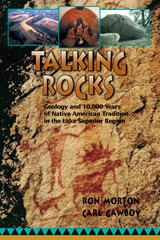
Talking Rocks
Geology and 10,000 Years of Native American Tradition in the Lake Superior RegionRon Morton
University of Minnesota Press, 2003
Join the conversation as an earth scientist and a Native American elder—wise men from two cultures—explore the natural history of the Lake Superior region, examining both the science and the spirit of the land.
As the geologist carefully presents a modern scientific perspective, the storyteller eloquently recounts a traditional Native American understanding, passed on through tales, myths, and symbols that illustrate how intimately his people have known and honored the earth and its history for over a hundred centuries.
Talking Rocks is not only a story of geological history told from two perspectives, it is also a chronicle of two people from very different cultural and scientific heritages learning to understand and appreciate each other’s distinct yet complementary ways of viewing the land we share.
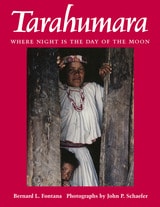
Tarahumara
Where Night is the Day of the MoonBernard L. Fontana; Photographs by John P. Schaefer
University of Arizona Press, 1997
The subtitle of the book derives from the Tarahumara's belief that the soul works at night while the body sleeps and that during this "day of the moon" both the spirits of the dead and the souls of the living move about in their mysterious ways.
As the authors observe, the fact that "so many men, women, and children persist in distinctive, centuries-old cultural traditions in spite of their nearness to all the complexities and attractions of modern industrial society is an importatn part of the story." Their book tells that story and brings readers closer to understanding the Tarahumara world and way of life.
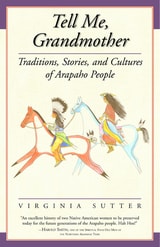
Tell Me, Grandmother
Traditions, Stories, and Cultures of Arapaho PeopleVirginia Sutter
University Press of Colorado, 2004
- Watonga Republican
"Virginia Sutter uses an interesting technique to write the history of her people, the Northern Arapaho Indian Nation. She constructs her work as a series of conversations between herself and her paternal great-grandmother. . . . [T]hrough this device, the history of the Arapaho people is traced from the early nineteenth-century years, when the buffalo ran aplenty and the prairies were boundless, through present-day living conditions in American Indian tribal reservations."
- Moira Richards, www.WomenWriters.net
"Emblematic of the struggle of so many Native Americans of the twentieth century, who seek to reconcile modernity with tradition, and who struggle to recast, reframe, and restore what is Native, even as the majority culture has done its best to uproot, separate, and tell Natives that they can be either modern or Native, but certainly not both."
- Brian Hosmer, Studies in American Indian Literatures (SAIL)
Tell Me, Grandmother is at once the biography of Goes-in-Lodge, a traditional Arapaho woman of the nineteenth century, and the autobiography of her descendant, Virginia Sutter, a modern Arapaho woman with a Ph.D. in public administration. Sutter adeptly weaves her own story with that of Goes-in-Lodge - who, in addition to being Sutter's great-grandmother, was first wife of Sharpnose, the last chief of the Northern Arapaho nation.
Writing in a question-and-answer format between twentieth-century granddaughter and matriarchal ancestor, Sutter discusses four generations of home life, including details about child rearing, education, courtship, marriage, birthing, and burial. Sutter's portrait of Goes-in-Lodge is based on tribal history and interviews with tribal members. Goes-in-Lodge speaks of social and ceremonial gatherings, the Sun Dance, the sweat lodges, and the changes that took place on the Great Plains throughout her lifetime. Sutter details her own life as a child born in a teepee to a white mother and Indian father and the discrimination and injustice she faced struggling to make her way in an increasingly Euro-American world.
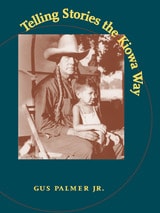
Telling Stories the Kiowa Way
Gus Palmer
University of Arizona Press, 2003
This book explores the traditional art of storytelling still practiced by Kiowas today as Gus Palmer shares conversations held with storytellers. Combining narrative, personal experience, and ethnography in an original and artful way, Palmer—an anthropologist raised in a traditional Kiowa family—shows not only that storytelling remains an integral part of Kiowa culture but also that narratives embedded in everyday conversation are the means by which Kiowa cultural beliefs and values are maintained.
Palmer's study features contemporary oral storytelling and other discourses, assembled over two and a half years of fieldwork, that demonstrate how Kiowa storytellers practice their art. Focusing on stories and their meaning within a narrative and ethnographic context, he draws on a range of material, including dream stories, stories about the coming of Táimê (the spirit of the Sun Dance) to the Kiowas, and stories of tricksters and tribal heroes. He shows how storytellers employ the narrative devices of actively participating in oral narratives, leaving stories wide open, or telling stories within stories. And he demonstrates how stories can reflect a wide range of sensibilities, from magical realism to gossip.
Firmly rooted in current linguistic anthropological thought, Telling Stories the Kiowa Way is a work of analysis and interpretation that helps us understand story within its larger cultural contexts. It combines the author's unique literary talent with his people's equally unique perspective on anthropological questions in a text that can be enjoyed on multiple levels by scholars and general readers alike.
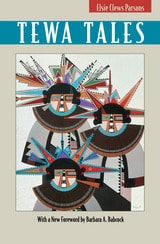
Tewa Tales
Elsie Clews Parsons
University of Arizona Press, 1994
This collection of more than one hundred tales from both New Mexico and Arizona Tewa, first published in 1926, bears witness to their rich cultural history. In addition to emergence and animal stories, these tales also provide an account of many social customs such as wedding ceremonials and relay racing--that show marked differences between the two tribal groups. A comparison of tales from the two divisions of the tribe reveals something of what has happened to both emigrant and home-staying Tewa over two centuries of separation. Yet, while only half of the Arizona tales are distinctly parallel to the New Mexican, additional similarities may be found in such narrative features as the helpfulness of Spider old woman and her possession of medicine, creating life magically under a blanket, or Coyote beguiling girls into marriage.
Elsie Clews Parsons was a pioneering anthropologist in the Southwest whose works included the encyclopedic Pueblo Indian Religion. The Tewa tales she gathered for this volume are thus notable not only as fascinating stories that will delight curious readers, but also as authentic reflections of a people less known to scholars.
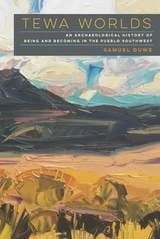
Tewa Worlds
An Archaeological History of Being and Becoming in the Pueblo SouthwestSamuel Duwe
University of Arizona Press, 2020
Tewa Worlds tells a history of eight centuries of the Tewa people, set among their ancestral homeland in northern New Mexico. Bounded by four sacred peaks and bisected by the Rio Grande, this is where the Tewa, after centuries of living across a vast territory, reunited and forged a unique type of village life. It later became an epicenter of colonialism, for within its boundaries are both the ruins of the first Spanish colonial capital and the birthplace of the atomic bomb. Yet through this dramatic change the Tewa have endured and today maintain deep connections with their villages and a landscape imbued with memory and meaning.
Anthropologists have long trekked through Tewa country, but the literature remains deeply fractured among the present and the past, nuanced ethnographic description, and a growing body of archaeological research. Samuel Duwe bridges this divide by drawing from contemporary Pueblo philosophical and historical discourse to view the long arc of Tewa history as a continuous journey. The result is a unique history that gives weight to the deep past, colonial encounters, and modern challenges, with the understanding that the same concepts of continuity and change have guided the people in the past and present, and will continue to do so in the future.
Focusing on a decade of fieldwork in the northern portion of the Tewa world—the Rio Chama Valley—Duwe explores how incorporating Pueblo concepts of time and space in archaeological interpretation critically reframes ideas of origins, ethnogenesis, and abandonment. It also allows archaeologists to appreciate something that the Tewa have always known: that there are strong and deep ties that extend beyond modern reservation boundaries.
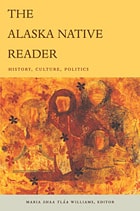
The Alaska Native Reader
History, Culture, PoliticsMaria Shaa Tláa Williams, ed.
Duke University Press, 2009
The Alaska Native Reader describes indigenous worldviews, languages, arts, and other cultural traditions as well as contemporary efforts to preserve them. Several pieces examine Alaska Natives’ experiences of and resistance to Russian and American colonialism; some of these address land claims, self-determination, and sovereignty. Some essays discuss contemporary Alaska Native literature, indigenous philosophical and spiritual tenets, and the ways that Native peoples are represented in the media. Others take up such diverse topics as the use of digital technologies to document Native cultures, planning systems that have enabled indigenous communities to survive in the Arctic for thousands of years, and a project to accurately represent Dena’ina heritage in and around Anchorage. Fourteen of the volume’s many illustrations appear in color, including work by the contemporary artists Subhankar Banerjee, Perry Eaton, Erica Lord, and Larry McNeil.
The American Southeast at the End of the Ice Age
Edited by D. Shane Miller, Ashley M. Smallwood, and Jesse W. Tune
University of Alabama Press, 2022
Synthesizes archaeological and environmental evidence to reinterpret how early human populations adapted to dynamic climatic changes during the Late Pleistocene, reshaping our understanding of Paleoindian lifeways and migration in the Southeastern United States.
The 1996 benchmark volume The Paleoindian and Early Archaic Southeast, edited by David G. Anderson and Kenneth E. Sassaman, was the first study to summarize what was known of the peoples who lived in the Southeast when ice sheets covered the northern part of the continent and mammals such as mammoths, saber-toothed cats, and ground sloths roamed the landscape.
The American Southeast at the End of the Ice Age provides an updated, definitive synthesis of current archaeological research gleaned from an array of experts in the region. It is organized in three parts: state records, the regional perspective, and reflections and future directions. Chapters survey a diversity of topics including the distribution of the earliest archaeological sites in the region, chipped-stone tool technology, the expanding role of submerged archaeology, hunter-gatherer lifeways, past climate changes and the extinction of megafauna on the transitional landscape, and evidence of demographic changes at the end of the Ice Age. Discussion of the ethical responsibilities regarding the use of private collections and the relationship of archaeologists and the avocational community, insight from outside the Southeast, and considerations for future research round out the volume.
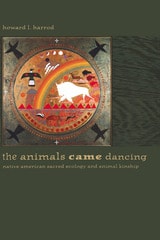
The Animals Came Dancing
Native American Sacred Ecology and Animal KinshipHoward L. Harrod
University of Arizona Press, 2000
Drawing on memories of Native Americans recorded by anthropologists, fur traders, missionaries, and other observers, Harrod examines cultural practices that flourished from the mid-eighteenth to the mid-nineteenth century. He reconstructs the complex rituals of Plains peoples, which included buffalo hunting ceremonies employing bundles or dancing, and rituals such as the Sun Dance for the renewal of animals. In a closing chapter, Harrod examines the meanings of Indian-animal relations for a contemporary society that values human dominance over the natural world—one in which domestic animals are removed from our consciousness as a source of food, wild animals are managed for humans to "experience," and hunting has become a form of recreation. His meticulous scholarship re-imagines a vanished way of life, while his keen insights give voice to a hunger among many contemporary people for the recovery of a ritual relationship between themselves and the natural sources of their lives.
The Arapaho Language
Andrew Cowell
University Press of Colorado, 2015
Cowell and Moss detail strategies used by speakers of this highly polysynthetic language to form complex words and illustrate how word formation interacts with information structure. They discuss word order and discourse-level features, treat the special features of formal discourse style and traditional narratives, and list gender-specific particles, which are widely used in conversation. Appendices include full sets of inflections for a variety of verbs.
Arapaho is spoken primarily in Wyoming, with a few speakers in Oklahoma. The corpus used in The Arapaho Language spans more than a century of documentation, including multiple speakers from Wyoming and Oklahoma, with emphasis on recent recordings from Wyoming. The book cites approximately 2,000 language examples drawn largely from natural discourse - either recorded spoken language or texts written by native speakers.
With The Arapaho Language, Cowell and Moss have produced a comprehensive document of a language that, in its departures from its nearest linguistic neighbors, sheds light on the evolution of grammar.
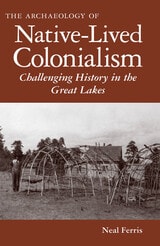
The Archaeology of Native-Lived Colonialism
Challenging History in the Great LakesNeal Ferris
University of Arizona Press, 2009
In reconsidering Native adaptation and resistance to colonial British rule, Ferris reviews five centuries of interaction that are usually read as a single event viewed through the lens of historical bias. He first examines patterns of traditional lifeway continuity among the Ojibwa, demonstrating their ability to maintain seasonal mobility up to the mid-nineteenth century and their adaptive response to its loss. He then looks at the experience of refugee Delawares, who settled among the Ojibwa as a missionary-sponsored community yet managed to maintain an identity distinct from missionary influences. And he shows how the archaeological history of the Six Nations Iroquois reflected patterns of negotiating emergent colonialism when they returned to the region in the 1780s, exploring how families managed tradition and the contemporary colonial world to develop innovative ways of revising and maintaining identity.
The Archaeology of Native-Lived Colonialism convincingly utilizes historical archaeology to link the Native experience of the eighteenth and nineteenth centuries to the deeper history of sixteenth- and seventeenth-century interactions and with pre-European times. It shows how these Native communities succeeded in retaining cohesiveness through centuries of foreign influence and material innovations by maintaining ancient, adaptive social processes that both incorporated European ideas and reinforced historically understood notions of self and community.
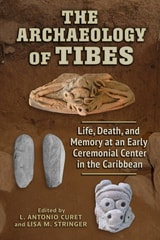
The Archaeology of Tibes
Life, Death, and Memory at an Early Ceremonial Center in the CaribbeanEdited by L. Antonio Curet and Lisa M. Stringer
University of Alabama Press, 2025
A collection of new essays that brings archaeological insights and discoveries at the Tibes Ceremonial Center up to date
The Archaeology of Tibes is a collection of essays offering a fresh analysis of this important ceremonial center. It brings new insights about social structure, illuminating the smaller-scale daily lives of ancient peoples rather than focusing on large-scale chiefdoms.
Tibes is the earliest known (ca. 400 to 1300 CE) ceremonial center in Puerto Rico. It has been the focus of one of the largest and longest-running archaeological programs in the Caribbean. Early researchers interpreted evidence in the area of a shift from dispersed villages to a ceremonial center as suggesting the development of social stratification and accumulation of power. Seen as the seat of an early chiefdom, Tibes served as a model applied broadly across the Greater Antilles.
New discoveries prompted archaeologists to question their original assumptions about ancient Puerto Rico, and later research failed to produce evidence of social stratification at Tibes. The Archaeology of Tibes therefore incorporates updated and wider perspectives on social formation. It considers agency, decisions, and events and the possibility of more than one form of social organization. It also presents a more accurate “humanized” past: the sociological meanings of that space and its significance for the people who created, used, and occupied it and who influenced rituals, social memory, and community.
Summarizing findings from excavations at Tibes after 2010, the collection also reviews the geoarchaeology of the site. Additional essays cover ceramic pastes, lithic production, faunal remains, coral, burials, and rock art. This work will engender discussion and future research by archaeologists across the Caribbean and beyond.
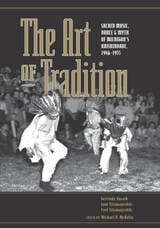
The Art of Tradition
Sacred Music, Dance & Myth of Michigan's Anishinaabe, 1946-1955Michael D. McNally
Michigan State University Press, 2009
The Art of Tradition documents the complexity of Native life and culture at a critical juncture in Native American history, where the rekindling of pride in Native cultures characteristic of the later twentieth century met the generation of elders who spent their early years speaking Native tongues but who came of age in boarding schools and amid strong pressures of assimilation. Because this period was deemed by most ethnographers of the time to be one of "acculturation," marking the end of traditional Native cultures, the authors' appreciation for the integrity of mid-century Native culture stands out markedly from other scholarship of the day. The songs, dance steps, and stories collected here are evidence of the artful work of maintaining and breathing new life into traditions, often in contexts that seem anything but traditional, by indigenous elders and artists. As the editor notes, there are no "Native informants" in this study, only collaborators whose lives are shown to be as resilient as the repertories they performed.
The Basket Woman
A Book Of Indian TalesMary Austin
University of Nevada Press, 1999
The Black Shoals
Offshore Formations of Black and Native StudiesTiffany Lethabo King
Duke University Press, 2019
The Blood of Guatemala
A History of Race and NationGreg Grandin
Duke University Press, 2000
Focusing on Mayan elites in the community of Quetzaltenango, Grandin shows how their efforts to maintain authority over the indigenous population and secure political power in relation to non-Indians played a crucial role in the formation of the Guatemalan nation. To explore the close connection between nationalism, state power, ethnic identity, and political violence, Grandin draws on sources as diverse as photographs, public rituals, oral testimony, literature, and a collection of previously untapped documents written during the nineteenth century. He explains how the cultural anxiety brought about by Guatemala’s transition to coffee capitalism during this period led Mayan patriarchs to develop understandings of race and nation that were contrary to Ladino notions of assimilation and progress. This alternative national vision, however, could not take hold in a country plagued by class and ethnic divisions. In the years prior to the 1954 coup, class conflict became impossible to contain as the elites violently opposed land claims made by indigenous peasants.
This “history of power” reconsiders the way scholars understand the history of Guatemala and will be relevant to those studying nation building and indigenous communities across Latin America.
The Cherokees and Their Chiefs
In the Wake of EmpireStan Hoig
University of Arkansas Press, 1999
The Colonial Construction of Indian Country
Native American Literatures and Federal Indian LawEric Cheyfitz
University of Minnesota Press, 2024
A guide to the colonization and projected decolonization of Native America
In The Colonial Construction of Indian Country, Eric Cheyfitz mounts a pointed historical critique of colonialism through careful analysis of the dialogue between Native American literatures and federal Indian law. Illuminating how these literatures indict colonial practices, he argues that if the decolonization of Indian country is to be achieved, then federal Indian law must be erased and replaced with independent Native nation sovereignty—because subordinate sovereignty, the historical regime, is not sovereignty at all.
At the same time, Cheyfitz argues that Native American literatures, specifically U.S. American Indian literatures, cannot be fully understood without a knowledge of U.S. federal Indian law: the matrix of colonialism in Indian country. Providing intersectional readings of a range of literary and legal texts, he discusses such authors as Louise Erdrich, Frances Washburn, James Welch, Gerald Vizenor, Simon Ortiz, Leslie Marmon Silko, and others. Cheyfitz examines how American Indian writers and critics have responded to the impact of law on Native life, revealing recent trends in Native writing that build upon traditional modes of storytelling and governance.
With a focus on resistance to the colonial regime of federal Indian law, The Colonial Construction of Indian Country not only elucidates how Native American literatures and federal Indian law are each crucial to any reading of the other, it also guides readers to better understand the genocidal assault on Indigenous peoples by Western structures of literacy, politics, and law.
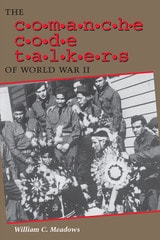
The Comanche Code Talkers of World War II
By William C. Meadows
University of Texas Press, 2003
Among the allied troops that came ashore in Normandy on D-Day, June 6, 1944, were thirteen Comanches in the 4th Infantry Division, 4th Signal Company. Under German fire they laid communications lines and began sending messages in a form never before heard in Europe—coded Comanche. For the rest of World War II, the Comanche Code Talkers played a vital role in transmitting orders and messages in a code that was never broken by the Germans.
This book tells the full story of the Comanche Code Talkers for the first time. Drawing on interviews with all surviving members of the unit, their original training officer, and fellow soldiers, as well as military records and news accounts, William C. Meadows follows the group from their recruitment and training to their active duty in World War II and on through their postwar lives up to the present. He also provides the first comparison of Native American code talking programs, comparing the Comanche Code Talkers with their better-known Navajo counterparts in the Pacific and with other Native Americans who used their languages, coded or not, for secret communication. Meadows sets this history in a larger discussion of the development of Native American code talking in World Wars I and II, identifying two distinct forms of Native American code talking, examining the attitudes of the American military toward Native American code talkers, and assessing the complex cultural factors that led Comanche and other Native Americans to serve their country in this way.
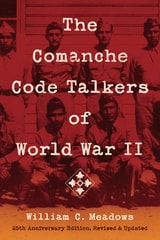
The Comanche Code Talkers of World War II
25th Anniversary Edition, Revised and UpdatedWilliam C. Meadows
University of Texas Press, 2027
An updated edition of a popular study of the Comanche Code Talkers of WWII.
Among the Allied troops who came ashore in Normandy on D-Day were thirteen Comanches in the 4th Infantry Division’s 4th Signal Company. Under German fire they laid communications lines and sent messages in a form never before heard in Europe: coded Comanche. For the rest of World War II, the Comanche Code Talkers played a vital role transmitting orders in a code the Germans never broke. Drawing on interviews with surviving members of the unit, their training officer, and fellow soldiers, as well as archival records, William C. Meadows traces the Comanche Code Talkers from recruitment and training through wartime service and into their postwar lives. He also places their story within the broader history of Native American code talking in the world wars, comparing the Comanche program with the better-known Navajo Code Talkers and examining the military’s use of Native languages for secure communication.
This twenty-fifth anniversary edition adds a new chapter and photographs documenting long-overdue recognition for the Comanche Code Talkers, in the form of congressional medals, museum exhibits, films, and memorials, along with updates in several areas that clarify the development of code talking, add key details of the unit’s history, and highlight the enduring legacy of these soldiers and their linguistic contribution to Allied victory.
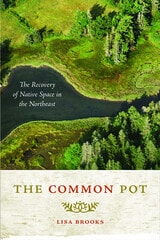
The Common Pot
The Recovery of Native Space in the NortheastLisa Brooks
University of Minnesota Press, 2008
Illuminates the significance of writing to colonial-era Native American resistance
Literary critics frequently portray early Native American writers either as individuals caught between two worlds or as subjects who, even as they defied the colonial world, struggled to exist within it. In striking counterpoint to these analyses, Lisa Brooks demonstrates the ways in which Native leaders—including Samson Occom, Joseph Brant, Hendrick Aupaumut, and William Apess—adopted writing as a tool to reclaim rights and land in the Native networks of what is now the northeastern United States.
“The Common Pot,” a metaphor that appears in Native writings during the eighteenth and nineteenth centuries, embodies land, community, and the shared space of sustenance among relations. Far from being corrupted by forms of writing introduced by European colonizers, Brooks contends, Native people frequently rejected the roles intended for them by their missionary teachers and used the skills they acquired to compose petitions, political tracts, and speeches; to record community councils and histories; and most important, to imagine collectively the routes through which the Common Pot could survive.Reframing the historical landscape of the region, Brooks constructs a provocative new picture of Native space before and after colonization. By recovering and reexamining Algonquian and Iroquoian texts, she shows that writing was not a foreign technology but rather a crucial weapon in the Native Americans’ arsenal as they resisted—and today continue to oppose—colonial domination.
The Community-Based PhD
Complexities and Triumphs of Conducting CBPREdited by Sonya Atalay and Alexandra McCleary
University of Arizona Press, 2022
The Community-Based PhD brings together the experiences of PhD students from a range of disciplines discussing CBPR in the arts, humanities, social sciences, public health, and STEM fields. They write honestly about what worked, what didn’t, and what they learned. Essays address the impacts of extended research time frames, why specialized skill sets may be needed to develop community-driven research priorities, the value of effective relationship building with community partners, and how to understand and navigate inter- and intra-community politics.
This volume provides frameworks for approaching dilemmas that graduate student CBPR researchers face. They discuss their mistakes, document their successes, and also share painful failures and missteps, viewing them as valuable opportunities for learning and pushing the field forward. Several chapters are co-authored by community partners and provide insights from diverse community perspectives. The Community-Based PhD is essential reading for graduate students, scholars, and the faculty who mentor them in a way that truly crosses disciplinary boundaries.
Contributors: Anna S. Antoniou, Amy Argenal, Sonya Atalay, Stacey Michelle Chimimba Ault, Victoria Bochniak, Megan Butler, Elias Capello, Ashley Collier-Oxandale, Samantha Cornelius, Annie Danis, Earl Davis, John Doyle, Margaret J. Eggers, Cyndy Margarita García-Weyandt, R. Neil Greene, D. Kalani Heinz, Nicole Kaechele, Myra J. Lefthand, Emily Jean Leischner, Christopher B. Lowman, Geraldine Low-Sabado, Alexandra G. Martin, Christine Martin, Alexandra McCleary, Chelsea Meloche, Bonnie Newsom, Katherine L. Nichols, Claire Novotny, Nunanta (Iris Siwallace), Reidunn H. Nygård, Francesco Ripanti, Elena Sesma, Eric Simons, Cassie Lynn Smith, Tanupreet Suri, Emery Three Irons, Arianna Trott, Cecilia I. Vasquez, Kelly D. Wiltshire, Julie Woods, Sara L. Young
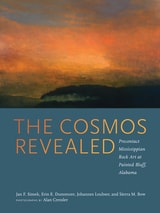
The Cosmos Revealed
Precontact Mississippian Rock Art at Painted Bluff, AlabamaBy Jan F. Simek, Erin E. Dunsmore, Johannes Loubser, and Sierra M. Bow
University of Alabama Press, 2021
The definitive rock art book on Painted Bluff, Alabama and the visual language of a Native American cosmos.
Boasting more than 130 paintings and engravings, Painted Bluff is perhaps the most elaborate prehistoric pictograph site east of the Mississippi River. Positioned at several levels on a dramatic sandstone cliff along the Tennessee River in northern Alabama, the spectacular paintings and engravings depict mythical creatures, dancing humans, and mystical portals. The Cosmos Revealed: Precontact Mississippian Rock Art at Painted Bluff, Alabama is the first complete documentation of one of the most important archaeological sites in eastern North America. Through art, the site materializes a model or “cosmogram” of the Mississippian Native American view of the universe, offering connections between the visible and invisible worlds for Native spiritual leaders and other visitors.
Discovered by Euro-Americans in the early 1800s, the site became known as “Painted Bluff” because of its pictographs, but inexplicably it has only recently been subjected to the intensive archaeological study it deserves. Under the auspices of the Tennessee Valley Authority (TVA), the authors of this volume have documented and assessed the site since 2005, and efforts have been made to reverse some of the vandalism that has occurred over many decades and to stabilize natural degradation of the cliff and its artwork.
Including more than one hundred remarkable prehistoric paintings on the cliff face that have been recorded, mapped, and photographed, this book synthesizes the research done on Painted Bluff to date and documents the entire site. Richly illustrated chapters cover the historical background, geology and archaeology, documentation methods, types of rock art, stratigraphy, paint recipes, TVA management, graffiti removal, and a summary that broadly synthesizes the meaning, timeframe, artistry, organization, conceptual boundaries, and the cosmos revealed. This groundbreaking study features 113 color photographs and a complete catalog of the pictographs and petroglyphs at the site.
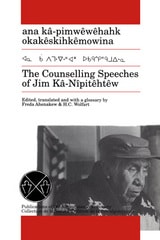
The Counselling Speeches of Jim Ka-Nipitehtew
Freda Ahenakew
University of Manitoba Press, 1998

The Daring Trader
Jacob Smith in the Michigan Territory, 1802-1825Kim Crawford
Michigan State University Press, 2012
A fur trader in the Michigan Territory and confidant of both the U.S. government and local Indian tribes, Jacob Smith could have stepped out of a James Fenimore Cooper novel. Controversial, mysterious, and bold during his lifetime, in death Smith has not, until now, received the attention he deserves as a pivotal figure in Michigan’s American period and the War of 1812. This is the exciting and unlikely story of a man at the frontier’s edge, whose missions during both war and peace laid the groundwork for Michigan to accommodate settlers and farmers moving west. The book investigates Smith’s many pursuits, including his role as an advisor to the Indians, from whom the federal government would gradually gain millions of acres of land, due in large part to Smith’s work as an agent of influence. Crawford paints a colorful portrait of a complicated man during a dynamic period of change in Michigan’s history.
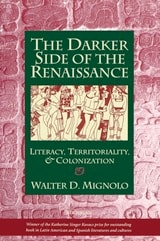
The Darker Side of the Renaissance
Literacy, Territoriality, and ColonizationWalter D. Mignolo
University of Michigan Press, 1995

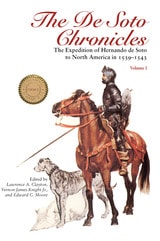
The De Soto Chronicles Vol 1
The Expedition of Hernando de Soto to North America in 1539-1543Edited by Lawrence A. Clayton, Vernon James Knight Jr., and Edward C. Moore
University of Alabama Press, 2022
1993 CHOICE OUTSTANDING ACADEMIC BOOK, SPONSORED BY CHOICE MAGAZINE
Unearthing the documents that shaped our earliest understanding of a continent.
The De Soto expedition was the first major encounter of Europeans with indigenous North Americans in the eastern half of the United States. De Soto and his army of over 600 men, including 200 cavalry, spent four years traveling through what is now Florida, Georgia, Alabama, North and South Carolina, Tennessee, Mississippi, Louisiana, Arkansas, and Texas. The De Soto Chronicles Volume 1 and Volume 2 present for the first time all four primary accounts of the De Soto expedition together in English translation.
The four primary accounts are generally referred to as Elvas, Rangel, Biedma (in Volume 1), and Garcilaso, or the Inca (in Volume 2). In this landmark 1993 publication, Clayton’s team presents the four accounts with literary and historical introductions. They further add brief essays about De Soto and the expedition, translations of De Soto documents from the Spanish Archivo General de Indias, two short biographies of De Soto, and bibliographical studies.
For anthropologists, archaeologists, and historians, The De Soto Chronicles are valued for the unique ethnological information they contain. They form the only detailed eyewitness records of the most advanced native civilization in North America—the Mississippian culture—a culture largely lost in the wake of European contact.
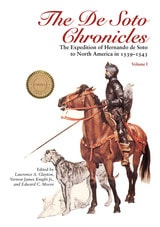
The De Soto Chronicles Vol 1
The Expedition of Hernando de Soto to North America in 1539-1543Lawrence A. Clayton
University of Alabama Press, 1993
1993 CHOICE OUTSTANDING ACADEMIC BOOK, SPONSORED BY CHOICE MAGAZINE
Unearthing the documents that shaped our earliest understanding of a continent.
The De Soto expedition was the first major encounter of Europeans with indigenous North Americans in the eastern half of the United States. De Soto and his army of over 600 men, including 200 cavalry, spent four years traveling through what is now Florida, Georgia, Alabama, North and South Carolina, Tennessee, Mississippi, Louisiana, Arkansas, and Texas. The De Soto Chronicles Volume 1 and Volume 2 present for the first time all four primary accounts of the De Soto expedition together in English translation.
The four primary accounts are generally referred to as Elvas, Rangel, Biedma (in Volume 1), and Garcilaso, or the Inca (in Volume 2). In this landmark 1993 publication, Clayton’s team presents the four accounts with literary and historical introductions. They further add brief essays about De Soto and the expedition, translations of De Soto documents from the Spanish Archivo General de Indias, two short biographies of De Soto, and bibliographical studies.
For anthropologists, archaeologists, and historians, The De Soto Chronicles are valued for the unique ethnological information they contain. They form the only detailed eyewitness records of the most advanced native civilization in North America—the Mississippian culture—a culture largely lost in the wake of European contact.
The De Soto Chronicles Vol 2
The Expedition of Hernando de Soto to North America in 1539-1543Edited by Lawrence A. Clayton, Vernon James Knight Jr., and Edward C. Moore
University of Alabama Press, 2022
A critical expansion of the documentary record of the de Soto expedition.
The De Soto expedition was the first major encounter of Europeans with indigenous North Americans in the eastern half of the United States. De Soto and his army of over 600 men, including 200 cavalry, spent four years traveling through what is now Florida, Georgia, Alabama, North and South Carolina, Tennessee, Mississippi, Louisiana, Arkansas, and Texas. The De Soto Chronicles Volume 1 and Volume 2 present for the first time all four primary accounts of the De Soto expedition together in English translation.
The four primary accounts are generally referred to as Elvas, Rangel, Biedma (in Volume 1), and Garcilaso, or the Inca (in Volume 2). In this landmark 1993 publication, Clayton’s team presents the four accounts with literary and historical introductions. They further add brief essays about De Soto and the expedition, translations of De Soto documents from the Spanish Archivo General de Indias, two short biographies of De Soto, and bibliographical studies.
For anthropologists, archaeologists, and historians, The De Soto Chronicles are valued for the unique ethnological information they contain. They form the only detailed eyewitness records of the most advanced native civilization in North America—the Mississippian culture—a culture largely lost in the wake of European contact.
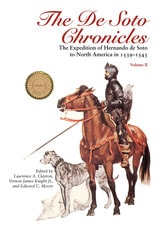
The De Soto Chronicles Vol 2
The Expedition of Hernando de Soto to North America in 1539-1543Edited by Lawrence A. Clayton, Vernon James Knight Jr., and Edward C. Moore
University of Alabama Press, 1993
A critical expansion of the documentary record of the de Soto expedition.
The De Soto expedition was the first major encounter of Europeans with indigenous North Americans in the eastern half of the United States. De Soto and his army of over 600 men, including 200 cavalry, spent four years traveling through what is now Florida, Georgia, Alabama, North and South Carolina, Tennessee, Mississippi, Louisiana, Arkansas, and Texas. The De Soto Chronicles Volume 1 and Volume 2 present for the first time all four primary accounts of the De Soto expedition together in English translation.
The four primary accounts are generally referred to as Elvas, Rangel, Biedma (in Volume 1), and Garcilaso, or the Inca (in Volume 2). In this landmark 1993 publication, Clayton’s team presents the four accounts with literary and historical introductions. They further add brief essays about De Soto and the expedition, translations of De Soto documents from the Spanish Archivo General de Indias, two short biographies of De Soto, and bibliographical studies.
For anthropologists, archaeologists, and historians, The De Soto Chronicles are valued for the unique ethnological information they contain. They form the only detailed eyewitness records of the most advanced native civilization in North America—the Mississippian culture—a culture largely lost in the wake of European contact.
The De Soto Chronicles, 2 Volume Set
The Expedition of Hernando de Soto to North America in 1539-1543Edited by Lawrence A. Clayton, Vernon James Knight Jr., and Edward C. Moore
University of Alabama Press, 1995
1993 CHOICE OUTSTANDING ACADEMIC BOOK, SPONSORED BY CHOICE MAGAZINE
Unearthing the documents that shaped our earliest understanding of a continent.
The De Soto expedition was the first major encounter of Europeans with indigenous North Americans in the eastern half of the United States. De Soto and his army of over 600 men, including 200 cavalry, spent four years traveling through what is now Florida, Georgia, Alabama, North and South Carolina, Tennessee, Mississippi, Louisiana, Arkansas, and Texas. The De Soto Chronicles Volume 1 and Volume 2 present for the first time all four primary accounts of the De Soto expedition together in English translation.
The four primary accounts are generally referred to as Elvas, Rangel, Biedma (in Volume 1), and Garcilaso, or the Inca (in Volume 2). In this landmark 1993 publication, Clayton’s team presents the four accounts with literary and historical introductions. They further add brief essays about De Soto and the expedition, translations of De Soto documents from the Spanish Archivo General de Indias, two short biographies of De Soto, and bibliographical studies.
For anthropologists, archaeologists, and historians, The De Soto Chronicles are valued for the unique ethnological information they contain. They form the only detailed eyewitness records of the most advanced native civilization in North America—the Mississippian culture—a culture largely lost in the wake of European contact.
The Deadly Politics of Giving
Exchange and Violence at Ajacan, Roanoke, and JamestownSeth Mallios
University of Alabama Press, 2006
The Delaware Indians
A HistoryWeslager, C. A.
Rutgers University Press, 1990
In the seventeenth century white explorers and settlers encountered a tribe of Indians calling themselves Lenni Lenape along the Delaware River and its tributaries in New Jersey, Delaware, eastern Pennsylvania, and southeastern New York. Today communities of their descendants, known as Delawares, are found in Oklahoma, Kansas, Wisconsin, and Ontario, and individuals of Delaware ancestry are mingled with the white populations in many other states. The Delaware Indians is the first comprehensive account of what happened to the main body of the Delaware Nation over the past three centuries.
C. A. Weslager puts into perspective the important events in United States history in which the Delawares participated and he adds new information about the Delawares. He bridges the gap between history and ethnology by analyzing the reasons why the Delawares were repeatedly victimized by the white man.
The Diné Reader
An Anthology of Navajo LiteratureEdited by Esther G. Belin, Jeff Berglund, Connie A. Jacobs, and Anthony K. Webster; Foreword by Sherwin Bitsui
University of Arizona Press, 2021
The Diné Reader: An Anthology of Navajo Literature is unprecedented. It showcases the breadth, depth, and diversity of Diné creative artists and their poetry, fiction, and nonfiction prose.This wide-ranging anthology brings together writers who offer perspectives that span generations and perspectives on life and Diné history. The collected works display a rich variety of and creativity in themes: home and history; contemporary concerns about identity, historical trauma, and loss of language; and economic and environmental inequalities.
The Diné Reader developed as a way to demonstrate both the power of Diné literary artistry and the persistence of the Navajo people. The volume opens with a foreword by poet Sherwin Bitsui, who offers insight into the importance of writing to the Navajo people. The editors then introduce the volume by detailing the literary history of the Diné people, establishing the context for the tremendous diversity of the works that follow, which includes free verse, sestinas, limericks, haiku, prose poems, creative nonfiction, mixed genres, and oral traditions reshaped into the written word.
This volume combines an array of literature with illuminating interviews, biographies, and photographs of the featured Diné writers and artists. A valuable resource to educators, literature enthusiasts, and beyond, this anthology is a much-needed showcase of Diné writers and their compelling work. The volume also includes a chronology of important dates in Diné history by Jennifer Nez Denetdale, as well as resources for teachers, students, and general readers by Michael Thompson. The Diné Reader is an exciting convergence of Navajo writers and artists with scholars and educators.
The Dog's Children
Anishinaabe Texts told by Angeline WilliamsLeonard Bloomfield
University of Manitoba Press, 1991
The Eagle Returns
The Legal History of the Grand Traverse Band of Ottawa and Chippewa IndiansMatthew L.M. Fletcher
Michigan State University Press, 2012
The Elusive Promise of Indigenous Development
Rights, Culture, StrategyKaren Engle
Duke University Press, 2010
Conceiving indigenous rights as cultural rights, Engle argues, has largely displaced or deferred many of the economic and political issues that initially motivated much indigenous advocacy. She contends that by asserting static, essentialized notions of indigenous culture, indigenous rights advocates have often made concessions that threaten to exclude many claimants, force others into norms of cultural cohesion, and limit indigenous economic, political, and territorial autonomy.
Engle explores one use of the right to culture outside the context of indigenous rights, through a discussion of a 1993 Colombian law granting collective land title to certain Afro-descendant communities. Following the aspirations for and disappointments in this law, Engle cautions advocates for marginalized communities against learning the wrong lessons from the recent struggles of indigenous peoples at the international level.
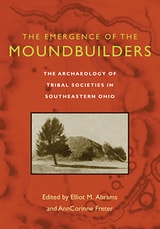
The Emergence of the Moundbuilders
The Archaeology of Tribal Societies in Southeastern OhioElliot M. Abrams
Ohio University Press, 2004
Native American societies, often viewed as unchanging, in fact experienced a rich process of cultural innovation in the millennia prior to recorded history. Societies of the Hocking River Valley in southeastern Ohio, part of the Ohio River Valley, created a tribal organization beginning about 2000 bc.
Edited by Elliot M. Abrams and AnnCorinne Freter, The Emergence of the Moundbuilders: The Archaeology of Tribal Societies in Southeastern Ohio presents the process of tribal formation and change in the region based on analyses of all available archaeological data from the Hocking River Valley. Drawing on the work of scholars in archaeology, anthropology, geography, geology, and botany, the collection addresses tribal society formation through such topics as the first pottery made in the valley, aggregate feasting by nomadic groups, the social context for burying their dead in earthen mounds, the formation of religious ceremonial centers, and the earliest adoption of corn.
Providing the most current research on indigenous societies in the Hocking Valley, The Emergence of the Moundbuilders is distinguished by its broad, comparative overview of tribal life.
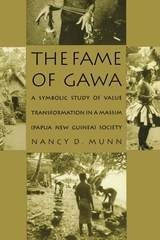
The Fame of Gawa
A Symbolic Study of Value Transformation in a Massim SocietyNancy D. Munn
Duke University Press, 1992
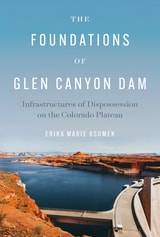
The Foundations of Glen Canyon Dam
Infrastructures of Dispossession on the Colorado PlateauErika Marie Bsumek
University of Texas Press, 2023
2024 Best Indigenous Studies Award, The Mormon History Association
2024 Southwest Book of the Year, Pima County Public Library
A history of how the construction of the Glen Canyon Dam was built and sustained by social inequalities
The second highest concrete-arch dam in the United States, Glen Canyon Dam was built to control the flow of the Colorado River throughout the Western United States. Completed in 1966, the dam continues to serve as a water storage facility for residents, industries, and agricultural use across the American West. The dam also generates hydroelectric power for residents in Colorado, Wyoming, New Mexico, Utah, Nevada, Arizona, and Nebraska. More than a massive piece of physical infrastructure and an engineering feat, the dam exposes the cultural structures and complex regional power relations that relied on Indigenous knowledge and labor while simultaneously dispossessing the Indigenous communities of their land and resources across the Colorado Plateau.
Erika Marie Bsumek reorients the story of the dam to reveal a pattern of Indigenous erasure by weaving together the stories of religious settlers and Indigenous peoples, engineers and biologists, and politicians and spiritual leaders. Infrastructures of dispossession teach us that we cannot tell the stories of religious colonization, scientific exploration, regional engineering, environmental transformation, or political deal-making as disconnected from Indigenous history. This book is a provocative and essential piece of modern history, particularly as water in the West becomes increasingly scarce and fights over access to it continue to unfold.
The Great Confusion in Indian Affairs
Native Americans and Whites in the Progressive EraBy Tom Holm
University of Texas Press, 2005
The United States government thought it could make Indians "vanish." After the Indian Wars ended in the 1880s, the government gave allotments of land to individual Native Americans in order to turn them into farmers and sent their children to boarding schools for indoctrination into the English language, Christianity, and the ways of white people. Federal officials believed that these policies would assimilate Native Americans into white society within a generation or two. But even after decades of governmental efforts to obliterate Indian culture, Native Americans refused to vanish into the mainstream, and tribal identities remained intact.
This revisionist history reveals how Native Americans' sense of identity and "peoplehood" helped them resist and eventually defeat the U.S. government's attempts to assimilate them into white society during the Progressive Era (1890s-1920s). Tom Holm discusses how Native Americans, though effectively colonial subjects without political power, nonetheless maintained their group identity through their native languages, religious practices, works of art, and sense of homeland and sacred history. He also describes how Euro-Americans became increasingly fascinated by and supportive of Native American culture, spirituality, and environmental consciousness. In the face of such Native resiliency and non-Native advocacy, the government's assimilation policy became irrelevant and inevitably collapsed. The great confusion in Indian affairs during the Progressive Era, Holm concludes, ultimately paved the way for Native American tribes to be recognized as nations with certain sovereign rights.

The Hatak Witches
Devon A. Mihesuah
University of Arizona Press, 2021
Monique discovers that a portion of an ancient and deformed skeleton had also been stolen from the neglected museum archives. Her uncle, the spiritual leader Leroy Bear Red Ears, concludes that the stolen remains are those of Hatak haksi, a witch and the matriarch of the Crow family, a group of shape-shifting Choctaws who plan to reestablish themselves as the powerful creatures they were when the tribe lived in Mississippi. Monique, Leroy, and Chris must stop the Crows, but to their dread, the entities have retreated to the dark and treacherous hollow in the center of Chalakwa Ranch. The murderous shape-shifters believe the enormous wild hogs, poisonous snakes, and other creatures of the hollow might form an adequate defense for Hatak haksi.
But what no one counts on is the unexpected appearance and power of the Old Ones who guard the lands of the Choctaw afterlife. Blending tribal beliefs and myths into a modern context, The Hatak Witches continues the storyline of Choctaw cosmology and cultural survival that are prominent in Devon A. Mihesuah’s award-winning novel, The Roads of My Relations.
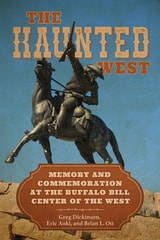
The Haunted West
Memory and Commemoration at the Buffalo Bill Center of the WestGreg Dickinson, Eric Aoki, and Brian L. Ott
University of Alabama Press, 2024
Through incisive analysis of the museum’s five institutions, Greg Dickinson and his coauthors reveal how narratives of Native American heritage, violent colonial settlement, Western art, natural history, and ever‑present gun culture collide to shape a haunted sense of American identity. By tracing the tensions between what is memorialized, what is mythologized, and what is suppressed, the authors expose the ghosts that linger in contemporary understandings of the West and offer a compelling rethinking of how memory and commemoration continue to influence the nation’s cultural imagination.
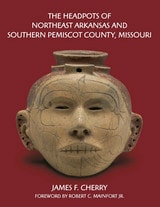
The Headpots of Northeast Arkansas and Southern Pemiscot County, Missouri
James F. Cherry
University of Arkansas Press, 2009
The Heart as a Drum
Continuance and Resistance in American Indian PoetryRobin Riley Fast
University of Michigan Press, 2000
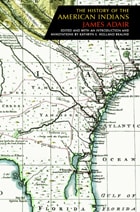
The History of the American Indians
A Critical EditionJames Adair; edited, introduced, and annotated by Kathryn E. Holland Braund
University of Alabama Press, 2009
A fully annotated edition of a classic work detailing the cultures of five southeastern American Indian tribes during the Contact Period
James Adair was an Englishman who lived and traded among the southeastern Indians for more than 30 years, from 1735 to 1768. During that time he covered the territory from the Appalachian Mountains to the Mississippi River. He encountered and lived among Indians, advised governors, spent time with settlers, and worked tirelessly for the expansion of British interests against the French and the Spanish. Adair’s acceptance by the Creeks, Choctaws, Cherokees, and Chickasaws provided him the opportunity to record, compare, and analyze their cultures and traditions.Adair’s written work, first published in England in 1775, is considered one of the finest histories of the Native Americans. His observations provide one of the earliest and what many modern scholars regard as the best account of southeastern Indian cultures. This edition adheres to current standards of literary editing, following the original closely, and provides fully annotated and indexed critical apparatus.
The Hopi Indians of Old Oraibi
Change and ContinuityMischa Titiev
University of Michigan Press, 1972
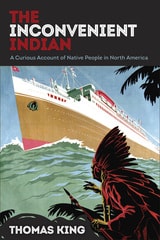
The Inconvenient Indian
A Curious Account of Native People in North AmericaThomas King
University of Minnesota Press, 2013
In The Inconvenient Indian, Thomas King offers a deeply knowing, darkly funny, unabashedly opinionated, and utterly unconventional account of Indian–White relations in North America since initial contact. Ranging freely across the centuries and the Canada–U.S. border, King debunks fabricated stories of Indian savagery and White heroism, takes an oblique look at Indians (and cowboys) in film and popular culture, wrestles with the history of Native American resistance and his own experiences as a Native rights activist, and articulates a profound, revolutionary understanding of the cumulative effects of ever-shifting laws and treaties on Native peoples and lands.
Suffused with wit, anger, perception, and wisdom, The Inconvenient Indian is at once an engaging chronicle and a devastating subversion of history, insightfully distilling what it means to be “Indian” in North America. It is a critical and personal meditation that sees Native American history not as a straight line but rather as a circle in which the same absurd, tragic dynamics are played out over and over again. At the heart of the dysfunctional relationship between Indians and Whites, King writes, is land: “The issue has always been land.” With that insight, the history inflicted on the indigenous peoples of North America—broken treaties, forced removals, genocidal violence, and racist stereotypes—sharpens into focus. Both timeless and timely, The Inconvenient Indian ultimately rejects the pessimism and cynicism with which Natives and Whites regard one another to chart a new and just way forward for Indians and non-Indians alike.
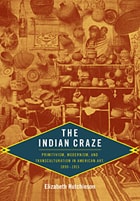
The Indian Craze
Primitivism, Modernism, and Transculturation in American Art, 1890–1915Elizabeth Hutchinson
Duke University Press, 2009
Illustrating her argument with images culled from late-nineteenth- and early-twentieth-century publications, Hutchinson revises the standard history of the mainstream interest in Native American material culture as “art.” While many locate the development of this cross-cultural interest in the Southwest after the First World War, Hutchinson reveals that it began earlier and spread across the nation from west to east and from reservation to metropolis. She demonstrates that artists, teachers, and critics associated with the development of American modernism, including Arthur Wesley Dow and Gertrude Käsebier, were inspired by Native art. Native artists were also able to achieve some recognition as modern artists, as Hutchinson shows through her discussion of the Winnebago painter and educator Angel DeCora. By taking a transcultural approach, Hutchinson transforms our understanding of the role of Native Americans in modernist culture.