Results by title
68 books match the query 'Philosophical anthropology' and 21 start with t
The Communicative Body
Studies in Communicative Philosophy, Politics, and SociologyJohn O'Neill
Northwestern University Press, 1989
The Embers and the Stars
Erazim Kohák
University of Chicago Press, 1987
"Those who share Kohák's concern to understand nature as other than a mere resource or matter in motion will find his temporally oriented interpretation of nature instructive. It is here in particular that Kohák turns moments of experience to account philosophically, turning what we habitually overlook or avoid into an opportunity and basis for self-knowledge. This is an impassioned attempt to see the vital order of nature and the moral order of our humanity as one."—Ethics
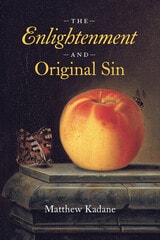
The Enlightenment and Original Sin
Matthew Kadane
University of Chicago Press, 2024
What was the Enlightenment? This question has been endlessly debated. In The Enlightenment and Original Sin, historian Matthew Kadane advances the bold claim that the Enlightenment is best defined through what it set out to accomplish, which was nothing short of rethinking the meaning of human nature.
Kadane argues that this project centered around the doctrine of original sin and, ultimately, its rejection, signaling the radical notion that an inherently flawed nature can be overcome by human means. Kadane explores this and other wide-ranging themes through the story of a previously unknown figure, Pentecost Barker, an eighteenth-century purser and wine merchant. By examining Barker’s personal diary and extensive correspondence with a Unitarian minister, Kadane tracks the transformation of Barker’s consciousness from a Puritan to an Enlightenment outlook, revealing through one man’s journey the large-scale shifts in self-understanding whose philosophical reverberations have shaped debates on human nature for centuries.
The Feeling Intellect
Selected WritingsPhilip Rieff
University of Chicago Press, 1989
The Genealogical Imagination
Two Studies of Life over TimeMichael Jackson
Duke University Press, 2021
The Human Condition
Second EditionHannah Arendt
University of Chicago Press, 2018
The twenty-first century has seen a resurgence of interest in the political thinker Hannah Arendt, “the theorist of beginnings,” whose work probes the logics underlying unexpected transformations—from totalitarianism to revolution.
A work of striking originality, The Human Condition is in many respects more relevant now than when it first appeared in 1958. In her study of the state of modern humanity, Hannah Arendt considers humankind from the perspective of the actions of which it is capable. The problems Arendt identified then—diminishing human agency and political freedom, the paradox that as human powers increase through technological and humanistic inquiry, we are less equipped to control the consequences of our actions—continue to confront us today. This new edition, published to coincide with the sixtieth anniversary of its original publication, contains Margaret Canovan’s 1998 introduction and a new foreword by Danielle Allen.
A classic in political and social theory, The Human Condition is a work that has proved both timeless and perpetually timely.
The Indiscrete Image
Infinitude and Creation of the HumanThomas A. Carlson
University of Chicago Press, 2008
Framed in response to Martin Heidegger’s influential account of the relation between technological modernity and theological tradition, The Indiscrete Image builds an understanding of creativity as conditioned by insurmountable unknowing and incalculable possibility through alternative readings of Christian theological tradition and technological culture—and the surprising resonance between these two. Carlson concludes that the always ongoing work of world creation, tied essentially to human self-creation, implies neither an idol’s closure nor an icon’s transcendence, but the “indiscrete image” whose love makes possible—by keeping open—both the human and its world.
The Kingdom and the Garden
Giorgio Agamben
Seagull Books, 2020
What happened to paradise after Adam and Eve were expelled? The question may sound like a theological quibble, or even a joke, but in The Kingdom and the Garden, Giorgio Agamben uses it as a starting point for an investigation of human nature and the prospects for political transformation. In a tour-de-force reinterpretation of the Christian tradition, Agamben shows that the Garden of Eden has always served as a symbol of humanity’s true nature. Where earlier theologians viewed the expulsion as temporary, Augustine’s doctrine of original sin makes it permanent, reimagining humanity as the paradoxical creature that has been completely alienated from its own nature. From this perspective, there can be no return to paradise, only the hope for the messianic kingdom. Yet there have always been thinkers who rebelled against this idea, and Agamben highlights two major examples. The first is the early medieval philosopher John Scotus Eriugena, who argued for a radical unity of humanity with all living things. The second is Dante, whose vision of the earthly paradise points towards the possibility of genuine human happiness in this world. In place of the messianic kingdom, which has provided the model for modern revolutionary movements, Agamben contends that we should place our hopes for political change in a return to our origins, by reclaiming the earthly paradise.
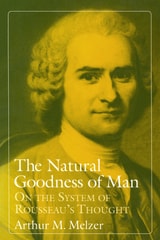
The Natural Goodness of Man
On the System of Rousseau's ThoughtArthur M. Melzer
University of Chicago Press, 1990
Arthur M. Melzer adopts this approach in The Natural Goodness of Man. The first two parts of the book restore the original, revolutionary significance of this now time-worn principle and examine the arguments Rousseau offers in proof of it. The final section unfolds and explains Rousseau’s programmatic thought, especially the Social Contract, as a precise solution to the human problem as redefined by the principle of natural goodness.
The result is a systematic reconstruction of Rousseau’s philosophy that discloses with unparalleled clarity both the complex weave of his argument and the majestic unity of his vision. Melzer persuasively resolves one after another of the famous Rousseauian paradoxes–enlarging, in the process, our understanding of modern philosophy and politics. Engagingly and lucidly written, The Natural Goodness of Man will be of interest to general as well as scholarly readers.
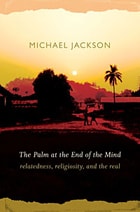
The Palm at the End of the Mind
Relatedness, Religiosity, and the RealMichael Jackson
Duke University Press, 2009
Through sixty-one beautifully crafted essays based on sojourns in Europe, West Africa, the United States, Australia, and New Zealand, and taking his cue from Wallace Stevens’s late poem, “Of Mere Being,” Jackson explores a range of experiences where “the palm at the end of the mind” stands “beyond thought,” on “the edge of space,” “a foreign song.” Moments of crisis as well as everyday experiences in cafés, airports, and offices disclose the subtle ways in which a single life shades into others, the boundaries between cultures become blurred, fate unfolds through genealogical time, elective affinities make their appearance, and different values contend.
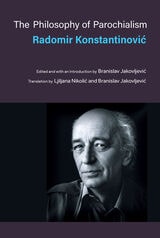
The Philosophy of Parochialism
Radomir Konstantinovic, Edited and with an Introduction by Branislav Jakovljevic, Translation by Ljiljana Nikolic and Branislav Jakovljevic
University of Michigan Press, 2021
The Philosophy of Parochialism is Radomir Konstantinović’s (1928–2011) most celebrated and reviled book. First published in Belgrade as Filosofija palanke in 1969, it attracted keen attention and controversy through its unsparing critique of Serbian and any other nationalism in Yugoslavia and beyond. The book was prophetic, seeming to anticipate not only the bloody disintegration of Yugoslavia in the 1990s, but also the totalitarian turn in politics across the globe in the first decades of the new century. With this translation, English-speaking audiences can at last discover one of the most original writers of eastern European late modernism, and gain an important and original perspective into contemporary politics and culture in the West and beyond. This is a book that seems to age in reverse, as its meanings become deeper and more universal with the passage of time.
Konstantinović’sbookresists easy classification, mixing classical, Montaigne-like essay, prose poetry, novel, and literary history. The word “philosophy” in the book’s title refers to the solitary activity of reflection and critical thinking, and is also paradoxical: according to the author, a defining characteristic of parochialism is precisely its intolerance toward this kind of self-reflexivity. In Konstantinović’s analysis, parochialism is not a simply a characteristic of a geographical region or a cultural, political, and historical formation—these are all just manifestations of the parochial spirit as the spirit of insularity. His book illuminates the current moment, in which insularity undergirds not only ethnic and national divisions, but also dictates the very structure of everyday life, and where individuals can easily find themselves locked in an echo chamber of social media. The Philosophy of Parochialism can help us understand better not only the dead ends of ethnic nationalism and other atavistic ideologies, but also of those cultural forces such as digital technologies that have been built on the promise of overcoming those ideologies.
The Relevance of Philosophy to Life
John Lachs
Vanderbilt University Press, 1995
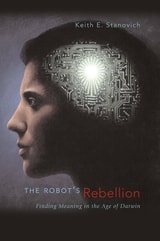
The Robot's Rebellion
Finding Meaning in the Age of DarwinKeith E. Stanovich
University of Chicago Press, 2004
Accepting and now forcefully responding to this decentering and disturbing idea, Keith Stanovich here provides the tools for the "robot's rebellion," a program of cognitive reform necessary to advance human interests over the limited interest of the replicators and define our own autonomous goals as individual human beings. He shows how concepts of rational thinking from cognitive science interact with the logic of evolution to create opportunities for humans to structure their behavior to serve their own ends. These evaluative activities of the brain, he argues, fulfill the need that we have to ascribe significance to human life.
We may well be robots, but we are the only robots who have discovered that fact. Only by recognizing ourselves as such, argues Stanovich, can we begin to construct a concept of self based on what is truly singular about humans: that they gain control of their lives in a way unique among life forms on Earth—through rational self-determination.
The Roots Of Thinking
Maxine Sheets-Johnstone
Temple University Press, 1990
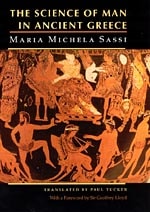
The Science of Man in Ancient Greece
Maria Michela Sassi
University of Chicago Press, 2000
Maria Michela Sassi reconstructs Greek attempts to answer such questions from Homer's day to late antiquity, ranging across physiognomy, ethnography, geography, medicine, and astrology. Sassi demonstrates that in the Greek science of man, empirical observations were inextricably bound up with a prejudiced view of the free Greek male as superior to all others. Thus, because women were assumed to have pale skin from staying indoors too much, Greek biology and medicine sought to explain this feature as an indication of the "cold" nature of women, as opposed to the "hot" constitution of men.
For this English translation, Sassi has rewritten the introduction and updated the text and references throughout, and Sir Geoffrey Lloyd has provided a new foreword.
The Sovereignty of Taste
James S. Hans
University of Illinois Press, 2002
Taste is everything, Hans says, for it produces the primary values that guide our lives. Taste is the fundamental organizing mechanism of human bodies, a lifelong effort to fit one's own rhythms to the rhythms and patterns of the natural world and the larger human community. It is an aesthetic sorting process by which one determines what belongs in--a conversation, a curriculum, a committee, a piece of art, a meal, a logical argument--and what should be left out. On the one hand, taste is the source of beauty, justice, and a sense of the good. On the other hand, as an arbiter of the laws of fair and free play, taste enters into more ominous and destructive patterns--but patterns nonetheless--of resentment and violence.
Hans develops his conception of taste through astute readings of five literary landmarks: Milan Kundera's The Unbearable Lightness of Being, Sophocles' Oedipus the King, William Faulkner's Light in August, and the poetry of Emily Dickinson and the Polish Nobel Laureate Czeslaw Milosz. These texts explore the art of soulmaking and the quest for personal expression: the costs as well as the fruits that come from acceding to the imperatives of one's being. They also reveal how the collision of personal and collective rhythms, whether in the Greek citadel or the Mississippi countryside, leads to violence and ritualized sacrifice.
Elegant, principled, and provocative, The Sovereignty of Taste is an essential book that restores taste to its rightful place of influence, shoring up the ground beneath civilization's feet and offering hope for the future of integrity, value, and aesthetic truth.
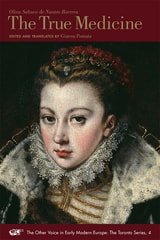
The True Medicine
Oliva Sabuco de Nantes Barrera, Edited by Gianna Pomata, Translated by Gianna Pomata
Iter Press, 2010
This annotated translation allows the reader to locate the Dialogue on the True Medicine in the context of early modern medical and philosophical culture, identifying Sabuco’s ancient and modern sources. The editor’s introduction reviews the contested issue of authorship, offers new documentation for the history of the reception of Sabuco’s ideas in the seventeenth century, and relates Sabuco’s work to the Querelle des femmes, the protofeminist debate which had remarkable echoes in early modern medicine.
The Western Illusion of Human Nature
With Reflections on the Long History of Hierarchy, Equality and the Sublimation of Anarchy in the West, and Comparative Notes on Other Conceptions of the Human ConditionMarshall Sahlins
Prickly Paradigm Press, 2008
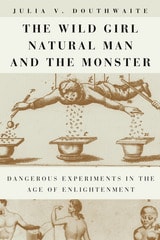
The Wild Girl, Natural Man, and the Monster
Dangerous Experiments in the Age of EnlightenmentJulia V. Douthwaite
University of Chicago Press, 2002
A variety of educational experiments failed to tame these feral children by the standards of the day. After telling their stories, Douthwaite turns to literature that reflects on similar experiments to perfect human subjects. Her examples range from utopian schemes for progressive childrearing to philosophical tales of animated statues, from revolutionary theories of regenerated men to Gothic tales of scientists run amok. Encompassing thinkers such as Rousseau, Sade, Defoe, and Mary Shelley, Douthwaite shows how the Enlightenment conceived of mankind as an infinitely malleable entity, first with optimism, then with apprehension. Exposing the darker side of eighteenth-century thought, she demonstrates how advances in science gave rise to troubling ethical concerns, as parents, scientists, and politicians tried to perfect mankind with disastrous results.

Traditional Truth, Poetry, Sacrament
For My Mother, on Her 70th BirthdayJosef Pieper
St. Augustine's Press, 2019
Pieper collects his contributions to radio programs and to a number of journals and periodicals. The book also includes a selection of notes and comments. The contributions fall into two main groups: the period which encompasses the immediate pre-war period as well as the war period itself, and the post-war period up to 1953.The reader becomes witness, first, to Pieper’s problems with the National Socialist regime and, second, to his problems with the ensuing challenges to religious life as it is exposed to increasing secularization.
As with his later works, Pieper draws on traditional wisdom which, for him, dates back to Plato and Aristotle, and in these contributions we also see his early preoccupation with the wisdom of St. Thomas Aquinas. The normal boundaries between philosophy and theology are here not clearly drawn. Pieper is preoccupied with the mystery of our world and its importance as a source of symbols signifying deeper levels of reality. He sees the sacraments as achieving their fundamental effect from divine intervention, but he also highlights the need for careful observance of the rituals, so that their meaning is not obscured. Proper execution of the sacrament should enable the faithful to enjoy the existential fruits of their participation in the ritual.
This work manifests the organic cohesion of Pieper’s thinking, and it reflects his profound awareness of the role to be played not so much by the professional (academic) philosopher as by the existential Philosophizer.
Transhumanism
Evolutionary Futurism and the Human Technologies of UtopiaAndrew Pilsch
University of Minnesota Press, 2017
Transhumanism posits that humanity is on the verge of rapid evolutionary change as a result of emerging technologies and increased global consciousness. However, this insight is dismissed as a naive and controversial reframing of posthumanist thought, having also been vilified as “the most dangerous idea in the world” by Francis Fukuyama. In this book, Andrew Pilsch counters these critiques, arguing instead that transhumanism’s utopian rhetoric actively imagines radical new futures for the species and its habitat.
Pilsch situates contemporary transhumanism within the longer history of a rhetorical mode he calls “evolutionary futurism” that unifies diverse texts, philosophies, and theories of science and technology that anticipate a radical explosion in humanity’s cognitive, physical, and cultural potentialities. By conceptualizing transhumanism as a rhetoric, as opposed to an obscure group of fringe figures, he explores the intersection of three major paradigms shaping contemporary Western intellectual life: cybernetics, evolutionary biology, and spiritualism. In analyzing this collision, his work traces the belief in a digital, evolutionary, and collective future through a broad range of texts written by theologians and mystics, biologists and computer scientists, political philosophers and economic thinkers, conceptual artists and Golden Age science fiction writers. Unearthing the long history of evolutionary futurism, Pilsch concludes, allows us to more clearly see the novel contributions that transhumanism offers for escaping our current geopolitical bind by inspiring radical utopian thought.