Results by title
139 books match the query 'Poets, American' and 32 start with t
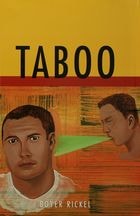
Taboo
Boyer Rickel
University of Wisconsin Press, 1999
An impressionistic memoir offers images of a life in progress, including scenes from Boyer Rickel’s rural Tempe, Arizona, childhood in the 1950s; his relationship with a physically shrinking father; his eccentric teenage friendships; his growing awareness of his sexuality among young, Hispanic gays; and a trip through Italy with his lover. A personal book, but also wholly universal, Taboo investigates the way one breaks through taboos and becomes a self-realized adult.
Tales Out of School
Selected InterviewsRobert Creeley
University of Michigan Press, 1994
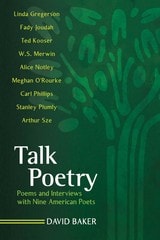
Talk Poetry
Poems and Interviews with Nine American PoetsDavid Baker
University of Arkansas Press, 2012
Talking All Morning
Robert Bly
University of Michigan Press, 1980
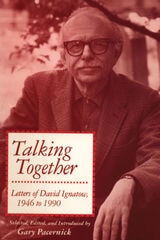
Talking Together
Letters of David Ignatow, 1946-1990David Ignatow; Selected, Edited and Introduced by Gary Pacernick
University of Alabama Press, 1992
The letters of David Ignatow reveal the poet in “company” with a community of writers as he shares with them the details and nuances of his everyday existence: the key acts of friendship and enmity, of good news and bad, of struggle, work, success, and failure that comprise a life devoted to making art. The letters also serve as a vehicle for Ignatow to express his views on a whole range of issues from writing, teaching, and editing poetry, to his visions of the self, death and the cosmos. But the key is “company”—the support system that helps sustain the poet and that enables him to help others.
One of the many things we may learn from the letters of David Ignatow is the power of the individual to affect another’s life, to help sustain and even change it.
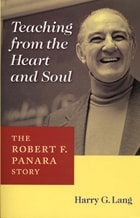
Teaching from the Heart and Soul
The Robert F. Panara StoryHarry G. Lang
Gallaudet University Press, 2007
The Sixth Volume in the Deaf Lives Series
Robert F. Panara lost his hearing from spinal meningitis in 1931 at the age of ten. However, he could read and write, and with his friends’ help, Bob (as he was known), made it through high school. His new solitude created a new passion – reading, reading, and reading. The stage was set for the emergence of one of the great deaf educators in modern time, a life fully captured in Harry G. Lang’s Teaching from the Heart and Soul: The Robert F. Panara Story.
Bob Panara’s many achievements began after his discovery of Gallaudet College in the 1940s. There, he wrote “The Significance of the Reading Problem,” which first expressed his belief that teaching “comes from the heart and soul.” The article secured him his first job at the New York School for the Deaf in White Plains. Bob returned to teach at Gallaudet College from 1948 until 1965, when he left to help found the National Technical Institute for the Deaf (NTID) and the National Theatre of the Deaf (NTD) — all in the same year. He continued to expand arts and literature at NTID until his retirement in 1987.
Bob Panara’s genius resides in the people he inspired with his vivacious teaching style. He believed ardently in involving students, that they should “be the book.” Former students tell story after story about his fabulous interpretations of drama and poetry, a legacy confirmed by his own story in Teaching from the Heart and Soul.
Television, a memoir
Karen Brennan
Four Way Books, 2022
Television, a memoir is a hybrid collection of autobiographical pieces, tragi-comic in spirit, that depict a woman’s life evolving through time and culture in fragmentary glimpses. Indeterminate in genre, Television is a fluid text that sometimes reads as poetry, sometimes as prose, while exploring classism, ableism, and feminism in a world defined by the advent of new media and, for the author, a privilege that often felt suffocating. Working structurally and thematically, television creates conceptual mileposts in the memoir, with certain programs and cultural references corresponding to specific eras in the author’s past, but it also gestures at an existential modality — the experience of a televisual life, the performative arrangements of nuclear families and neighborhoods, the periodic events and dramas of an adolescence watched from outside oneself.
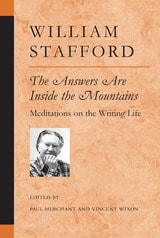
The Answers Are Inside the Mountains
Meditations on the Writing LifeWilliam Stafford, Edited by Paul Merchant & Vincent Wixon
University of Michigan Press, 2003
In this fourth collection of reflections on writing and the writing life, the late William Stafford's lifelong refusal to separate his work from the task of living responsibly -- "What a person is shows up in what a person does" -- rings clear.
The Answers Are Inside the Mountains collects unpublished interviews, poems, articles, aphorisms, and writing exercises from this great American man of letters and hugely prolific author, who kept a journal for nearly half a century and produced over 20,000 poems -- a staggering output by any standard.
The book begins with the words "To overwhelm by rightness," a phrase evoking the two demands Stafford made on himself: to write daily, and to live uprightly. The Answers Are Inside the Mountains lives up to those deceptively simple ethics, and confirms William Stafford's enduringly important voice for our uncertain age.
William Stafford (1914-93) authored more than thirty-five books of poetry and prose, including the highly acclaimed Writing the Australian Crawl, You Must Revise Your Life, Crossing Unmarked Snow: Further Views on the Writer's Vocation, and Traveling Through the Dark, winner of the National Book Award for Poetry.
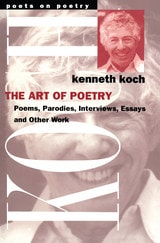
The Art of Poetry
Kenneth Koch
University of Michigan Press, 1996
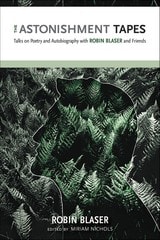
The Astonishment Tapes
Talks on Poetry and Autobiography with Robin Blaser and FriendsRobin Blaser
University of Alabama Press, 2015
Robin Blaser moved from his native Idaho to attend the University of California, Berkeley, in 1944. While there, he developed as a poet, explored his homosexuality, engaged in a lively arts community, and met fellow travelers and poets Robert Duncan and Jack Spicer. The three men became the founding members of the Berkeley core of what is now known as the San Francisco Renaissance in New American Poetry.
In the company of a small group of friends and writers in 1974, Blaser was asked to narrate his personal story and to comment on the Berkeley poetry scene. In twenty autobiographical audiotapes, Blaser talks about his childhood in Idaho, his time in Berkeley, and his participation in the making of a new kind of poetry. The Astonishment Tapes is the expertly edited transcript of these recordings by Miriam Nichols, Blaser’s editor and biographer.
In The Astonishment Tapes Blaser comments extensively on the poetic principles that he, Duncan, and Spicer worked through, as well as the differences and dissonances between the three of them. Nichols has edited the transcripts only minimally, allowing readers to make their own interpretations of Blaser’s intentions.
Sometimes gossipy, sometimes profound, Blaser offers his version on the inside story of one of the most significant moments in mid-twentieth century American poetry. The Astonishment Tapes is of considerable value and interest, not only to readers of Blaser, Duncan, and Spicer, but also to scholars of the early postmodern and twentieth-century American poetry.
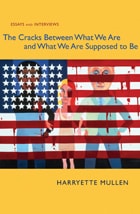
The Cracks Between What We Are and What We Are Supposed to Be
Essays and InterviewsHarryette Mullen
University of Alabama Press, 2012
The Cracks Between What We Are and What We Are Supposed to Be forms an extended consideration not only of Harryette Mullen’s own work, methods, and interests as a poet, but also of issues of central importance to African American poetry and language, women’s voices, and the future of poetry.
Together, these essays and interviews highlight the impulses and influences that drive Mullen’s work as a poet and thinker, and suggest unique possibilities for the future of poetic language and its role as an instrument of identity and power.
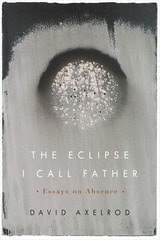
The Eclipse I Call Father
Essays on AbsenceDavid Axelrod
Oregon State University Press, 2019
The essays in this collection grew from a ten-year period when the author found himself periodically living and working abroad, wondering why foreign landscapes haunted him more than the familiar landscapes of the inland Pacific Northwest he called home. Each place had a long history of habitation, but at home he was blind, unable to see past the surfaces of things. Axelrod examines many aspects of that phenomenon in these pages, framing surface realities and imagining the scale and scope of that surface, but also trying to sense what is absent or changed, and how, despite its absence, the unseen accretes to ever-greater densities and persists as something uncanny.
Curious, alert, and keenly observant, these essays probe the boundaries between what is here and what is gone, what is present and what is past, in elegant prose. Readers familiar with Axelrod’s poetry will find a new facet of his lyrical gifts, while those encountering his work for the first time will be richly rewarded by the discovery of this Northwest literary talent.
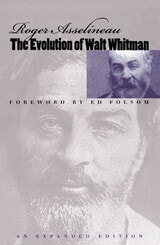
The Evolution of Walt Whitman
Roger Asselineau
University of Iowa Press, 1999
Now, nearly forty years after its original translation into English, Roger Asselineau's complete and magisterial biography of Walt Whitman will remind readers of the complex weave of traditions in Whitman scholarship. It is startling to recognize how much of our current understanding of Whitman was already articulated by Asselineau nearly half a century ago. Throughout its eight hundred pages, The Evolution of Walt Whitman speaks with authority on a vast range of topics that define both Whitman the man and Whitman the mythical personage. Remarkably, most of these discussions remain fresh and relevant, and that is in part because they have been so influential.
In particular, The Evolution of Walt Whitman inaugurated the study of Leaves of Grass as a lifelong work in progress, and it marked the end of the habit of talking about Leaves as if it were a single unified book. Asselineau saw Whitman's poetry “not as a body of static data but as a constantly changing continuum whose evolution must be carefully observed.” Throughout Evolution, Asselineau placed himself in the role of the observer, analyzing Whitman's development with a kind of scientific detachment. But behind this objective persona burned the soul of a risk taker who was willing to rewrite Whitman studies by bravely proposing what was then a controversial biographical source for Whitman's art—his homosexual desires.
The Evolution of Walt Whitman is a reminder that extraordinary works of criticism never exist in and of themselves. In this expanded edition, Roger Asselineau has provided a new essay summarizing his own continuing journey with Whitman. A foreword by Ed Folsom, editor of the Walt Whitman Quarterly, regards Evolution as the genesis of contemporary Whitman studies.
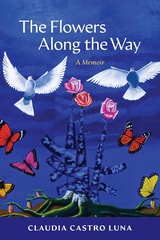
The Flowers Along the Way
A MemoirClaudia Castro Luna
Northwestern University Press, 2026
Passionately demonstrating the dormant trauma of political violence and the redemption waiting beyond it
From El Salvador’s lush countryside to the streets of Oakland, California, a young mother wrestles with the intersecting forces of memory, history, and language in order to chart a new path for herself and her growing family. Fleeing political unrest and civil war violence in El Salvador, fourteen-year-old Claudia Castro Luna arrived in the United States with her family in 1981. Two decades later, holding her two-year-old and pregnant with her second child, she survives a public shooting by hiding behind shrubs in front of her house in Oakland. This event unleashes disorienting and traumatic memories, plunging her into a journey of discovery as she grapples with PTSD, recovers family stories, and begins to make sense of all that was torn asunder within her by the experiences of war and emigration. Beauty, longing, fear, and joy entwine in this powerful story of love, self-determination, and the search for home.
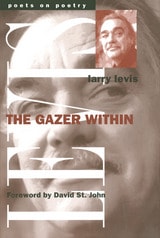
The Gazer Within
Larry Levis
University of Michigan Press, 2001
David St. John's foreword speaks eloquently of Levis's enduring legacy: "Of the poets of his generation, Larry Levis spoke most powerfully of what it means to be a poet at this historical moment. With the same majesty he brought to his poetry, Larry Levis engaged his readers with the most subtle and disturbing questions of the self to be found in the prose--essays, reviews or interviews--of any contemporary American poet. Broadly international in his scope and deeply personal in his reflections, Levis addressed poetic concerns that are both immediate and timeless. For many of us who struggle with these issues, Larry Levis's prose on poetry stands as some of the most capacious to be found since Randell Jarrell's."
The late Larry Levis was the author of six volumes of poetry. He was Director of the Creative Writing Program, University of Utah; Professor of English, Virginia Commonwealth University; and also taught at the Iowa Writers Workshop.
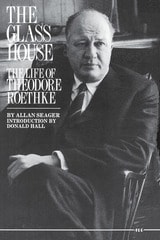
The Glass House
The Life of Theodore RoethkeAllan Seager
University of Michigan Press, 1991
Biographer Allan Seager interviewed a number of Roethke’s friends and fellow writers, and he had access to the voluminous notes the poet left behind. Seager reveals the Theodore Roethke who existed behind the public persona – a complex, self-contradictory, gentle, often disturbed mysterious, and ruthlessly honest man. One of the book’s most moving passages is the defense of the poet’s role within the university, written by a colleague when Roethke was faced with the threat of dismissal. A committed teacher himself, Seager succeeds in doing justice to an often neglected aspect of Roethke’s achievement, his remarkable power as a teacher, and his unusual and committed teaching style.
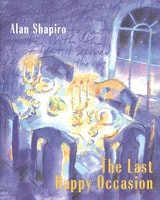
The Last Happy Occasion
Alan Shapiro
University of Chicago Press, 1996
A refreshingly honest, lovingly crafted work, The Last Happy Occasion is a treasure map for anyone interested in exploring the intersections of life and art.
"The Last Happy Occasion is touching and intelligent, emotionally satisfying and eloquent testimony to the power of poetry to instruct, heal and inspire."—Emily Barton, New York Times Book Review
"Shapiro, not unlike Auden, doses his wordplay with a certain sly irony. . . . We come away from Shapiro's book with an intimate appreciation of the little subversions that poetry can work in one's life."—Jonathan Kirsch, Los Angeles Times
"He is an acute observer of moments, people, art and language. And he packs even seemingly simple stories with many layers of meaning. . . . He shows us the power and importance of transformative art in life."—Publishers Weekly, starred review
"The literary criticism is sharp, but what enthralls the reader more is Shapiro's humorous but honest perspective on his younger self, a perspective that is critical without being condescending."—Heller McAlpin, Newsday
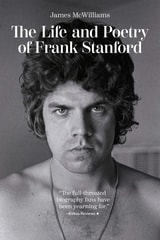
The Life and Poetry of Frank Stanford
James McWilliams
University of Arkansas Press, 2025
Finalist, 2026 Pulitzer Prize (Biography)
Kirkus Reviews - Best of 2025, Nonfiction
"The full-throated biography fans have been yearning for.”
—Kirkus Starred Review, April 2025
"McWilliams does a remarkable job connecting Stanford’s poetry with his personal life, particularly his lifelong friendship with Irv Broughton, owner of a small press and Stanford’s first publisher; his penchant for love triangles; and how his need for connection fueled his poetry. The end of Stanford’s life, which saw him cohabiting with two women in different towns and running an independent press before his death by suicide at age 29, is rendered here in spellbinding detail. It’s a page-turner."
—Publishers Weekly Starred Review, July 2025
When twenty-nine-year-old Frank Stanford put three bullets in his chest on June 3, 1978, he ended a life that had been inextricably linked with poetry since childhood. Deeply influential but largely unknown outside his corner of the poetry world, this prodigy of the American South inspired a cult following that has kept his reputation and work flickering on the periphery of the American literary tradition ever since.
The Life and Poetry of Frank Stanford offers for the first time a comprehensive study of Stanford’s life and work, introducing to a broad readership poetry that remains both captivating to poets and, in its celebration of everyday experience over academic erudition, accessible to those who rarely read poetry.
Stanford’s poems range from one line to his 15,283-line epic, The Battlefield Where the Moon Says I Love You. The vital thread running through all of his poetry is an ear for language that vies with Walt Whitman in its expansiveness and generosity. Stanford’s omnivorous attraction to vernacular, particularly Black and rural vernacular, centered on an admiration for the marginalized and eccentric. Blending the Southern Gothic of Faulkner and O’Connor with a racially egalitarian vision, his poetry thrives on the stories and traditions of the oppressed and forgotten.
The themes that preoccupied Stanford’s prolific output—language, sex, death, class, geography, commercialism, surrealism, film, race—also preoccupied the poet in his daily life, which was marked by heavy drinking, philandering, mental instability, emotional abuse, and, through it all, an inveterate desire for beauty. Constantly attentive to this tension, biographer James McWilliams traces the short and painfully complicated life of this hidden talent who left a lifetime’s worth of poetry that, through its grounding in the mundane, achieved a vision of the transcendent.
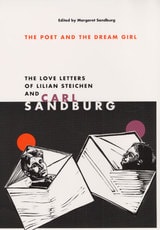
The Poet and Dream Girl
The Love Letters of Lilian Steichen and Carl SandburgEdited by Margaret Sandburg
University of Illinois Press, 1987
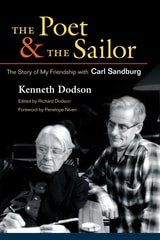
The Poet and the Sailor
The Story of My Friendship with Carl SandburgKenneth Dodson. Edited by Richard Dodson. Foreword by Penelope Niven
University of Illinois Press, 2006
Carl Sandburg first encountered Kenneth Dodson through a letter written at sea during World War II. Though Dodson wrote the letter to his wife, Letha, Sandburg read it in tears and told her, "I've got to meet this man." Composed primarily of their correspondence that continued until Sandburg's death in 1967, The Poet and the Sailor is a chronicle of the deep friendship that followed. Ranging over anything they found important, from writing to health and humor, the letters are arranged by Richard Dodson and are accompanied by a foreword from Sandburg's noted biographer, Penelope Niven.
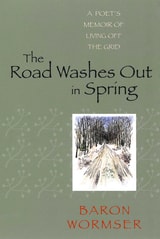
The Road Washes Out in Spring
A Poet’s Memoir of Living Off the GridBaron Wormser
University Press of New England, 2008
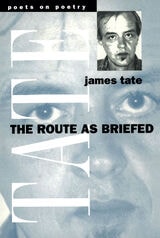
The Route as Briefed
James Tate
University of Michigan Press, 1999
In typical Tate style, the book continually straddles the line between fiction and autobiography, entertaining readers with amusing accounts of the poet's own experiences while drawing on these to narrate the fictional stories as well.
James Tate is Professor of Poetry, University of Massachusetts. He is the author of a number of books of poetry, including Worshipful Company of Fletchers: Poems, 1994; Selected Poems, 1991; Distance from Loved Ones, 1990. He has received several awards for his work, including the Pulitzer Prize for poetry in 1992.
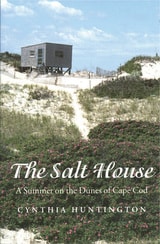
The Salt House
A Summer on the Dunes of Cape CodCynthia Huntington
Dartmouth College Press, 2003
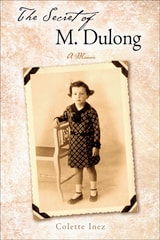
The Secret of M. Dulong
A MemoirColette Inez
University of Wisconsin Press, 2005
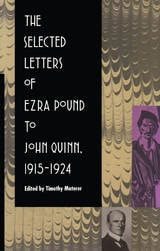
The Selected Letters of Ezra Pound to John Quinn
1915–1924Timothy Materer, ed.
Duke University Press, 1991
Pound wrote to John Quinn—a New York lawyer, an expert in business law, and a collector of unusual taste and discrimination—about these artists and many more, urging him to support their journals, collect their manuscripts, and buy and exhibit their paintings and sculptures. Quinn at one time owned manuscripts of Ulysses and The Waste Land, Brancusi’s sculpture Mlle. Pogany, and Picasso’s painting Three Musicians. Yet he was often skeptical about the value of new schools of art, such as Vorticism, and disturbed by the outspokenness of authors such as Joyce. Pound’s letters are unusually tactful when he counters Quinn’s doubts and explains the premises of experimental art. Pound’s letters to Quinn are touched with his characteristic humor and wordplay and are especially notable for their lucidity of expression, engendered by Pound’s deep respect for Quinn.

The Selected Letters of George Oppen
Rachel Blau DuPlessis, ed.
Duke University Press, 1990
These working papers include a rich correspondence, letters which provide access to the sustained, perceptive body of critical and aesthetic thinking of Oppen’s poetic career. Provocative and witty comments on poetry and poetics, especially interesting for the development of an Objectivist aesthetics, and shrewd, deeply felt assessments about the politics of the twentieth century and its moral dilemmas are some of the issues attended to. This edition offers primary documentation about an influential poetics, a little-known movement, and its active figures. Given the aggressive studies of the politics of canon-formation, the interest in describing a historical context for individual literary achievement, and current debates about mainstream poetry, the rethinking of the Objectivist movement, and the collection of documents contributing to its poetics, is an important achievement in literary scholarship.
The Spiral of Memory
InterviewsJoy Harjo
University of Michigan Press, 1995
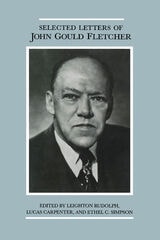
The The Selected Letters of John Gould Fletcher
John Fletcher
University of Arkansas Press, 1996
To Make a Prairie
Essays on Poets, Poetry, and Country LivingMaxine Kumin
University of Michigan Press, 1980
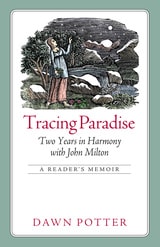
Tracing Paradise
Two Years in Harmony with John MiltonDawn Potter
University of Massachusetts Press, 2009
One winter morning, poet Dawn Potter sat down at her desk in Harmony, Maine, and began copying out the opening lines of John Milton's Paradise Lost. Her intent was to spend half an hour with a poem she had never liked, her goal to transcribe a page or two. Maybe she would begin to appreciate the poet's art, though she had no real expectations that the exercise would change her mind about the poem. Yet what began as a whim turned rapidly into an obsession, and soon Potter was immersed in a strange and unexpected project: she found herself copying out every single word of Milton's immense, convoluted epic.
Tracing Paradise: Two Years in Harmony with John Milton is her memoir of that long task. Over the course of twelve chapters, Potter explores her very personal response to Milton and Paradise Lost, tracing the surprising intersections between a seventeenth-century biblical epic and the routine joys and tragedies of domestic life in contemporary rural Maine. Curious, opinionated, and eager, she engages with the canon on mutable, individual terms. Though she writes perceptively about the details and techniques of Milton's art, always her reactions are linked to her present-tense experiences as a poet, small-time farmer, family member, and citizen of a poor and beleaguered north-country town.
A skilled and entertaining writer, Potter is also a wide-ranging and sophisticated reader. Yet her memoir is not a scholarly treatise: her enthusiasms and misgivings about both Milton and Paradise Lost ebb and flow with the days. Tracing Paradise reminds us that close engagement with another artist's task may itself be a form of creation. Above all, Potter's memoir celebrates one reader's difficult yet transformative love affair with Milton's glorious, irritating, inscrutable masterpiece.
Trying to Say It
Outlooks and Insights on How Poems HappenPhilip Booth
University of Michigan Press, 1996
Gathering together selections from his notebooks, dreamlogs, memoirs, and essays of such poets as Frost, Robert Lowell and George Oppen, Trying to Say It particularly focuses on the ways that the tension between in-formed structures and lineation create poems which--in all senses--move.
Employing the Thoreauvian sense of place for which his poetry is known, Booth probes the nature of poetry itself, as well as the poetry of nature--yielding insights that are rooted in the acute observation that catalyzes imagination. Infused with a restless spirit in search of a moving language commensurate with the complexity of being fully alive, the essays collected in Trying to Say It reveal the pulses of a teacher's mind and a poet's heart.
Philip Booth is the author of nine books of poetry, and has been honored by Guggenheim, Rockefeller, and National Endowment for the Arts fellowships, the National Institute of Arts and Letters, and the Academy of American Poets.
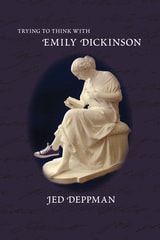
Trying to Think with Emily Dickinson
Jed Deppman
University of Massachusetts Press, 2008
This book presents Emily Dickinson as one of America's great thinkers and argues that she has even more to say to the twenty-first century than she did to the nineteenth. Jed Deppman weaves together many strands in Dickinson's intellectual culture—philosophy, lexicography, religion, experimental science, the female Bildungsroman—and shows how she developed a lyricized, conversational hermeneutics uniquely suited to rethinking the authoritative discourses of her time.
Through Deppman's original analysis, readers come to see how Dickinson's mind and poetry were informed by two strong but opposing philosophical vocabularies: on the one hand, the Lockean materialism and Scottish Common Sense that dominated her schoolbooks in logic and mental philosophy—Reid, Hedge, Watts, Stewart, Brown, and Upham—and on the other, the neo-Kantian modes of apprehending the supersensible that circulated throughout German idealism and Transcendentalism.
Blending close readings with philosophical and historical approaches, Deppman affirms Dickinson's place in the history of ideas and brings her to the center of postmodern conversations initiated by Jean-François Lyotard, Jean-Luc Nancy, Jacques Derrida, Richard Rorty, and Gianni Vattimo. Trying her out in various postmodern roles—the Nietzschean accomplished nihilist, the Nancian finite thinker, the Vattimian weak thinker, and the Rortian liberal ironist—Deppman adds to the traditional expressive functions of her poetry a valuable, timely, and interpretable layer of philosophical inquiry. Dickinson, it turns out, is an ideal companion for anybody trying to think in the contemporary conditions that Vattimo characterizes as the “weakened experience of truth.”