Results by title
637 books match the query 'Political activity' and 110 start with t

Taking the Risk Out of Democracy
Corporate Propaganda versus Freedom and LibertyAlex Carey
University of Illinois Press, 1995
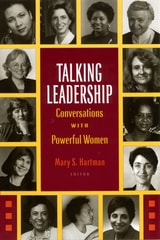
Talking Leadership
Conversations with Powerful WomenHartman, Mary
Rutgers University Press, 1999
Talking Leadership presents a though-provoking look at differences and commonalities in the lives and leadership approaches of some of today's outstanding women in areas ranging from philanthropy to politics, and from business to academia. Regardless of their backgrounds and areas of expertise, these women are committed to social change--change that includes improving women's lives and options.
Well beyond personal details and entertaining anecdotes, these conversations capture a variety of fascinating experiences and insights reflecting what it is like to be a woman and a major leader in America at the close of the twentieth century. Many of these women hold positions in which womanhood sets them apart--not infrequently in uncomfortable ways. Talking Leadership gives testimony not only to how far women have come, but also how far they still have to go to claim their places as leaders.
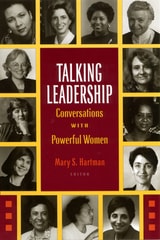
Talking Leadership
Conversations with Powerful WomenHartman, Mary
Rutgers University Press, 1999
Whether we love it, hate it, or use it just to pass the time, most adults in the United States are watching more television than ever, up to four hours a day by some estimates. Our devotion to commercial television gives it unprecedented power in our lives.
Advertisers and television executives want us to spend as much time as we can in front of our sets, for it is access to our brains that they buy and sell. Yet the most important effect of television may be one that no one intends-accelerated destruction of the natural environment.
Consuming Environments explores how, with its portrayal of a world of simulated abundance, television has nurtured a culture of consumerism and overconsumption. The average person in the US consumers more than twice the grain and ten times the oil of a citizen of Brazil or Indonesia. And people in less industrialized countries suffer while their resources while their resources are commandeered to support comfortable lifestyles in richer nations.
Using detailed examples illustrated with images from actual commercials, news broadcasts, and television shows, and authors demonstrate how ads and programs are put together in complex way s to manipulate viewers, and they offer specific ways to counteract the effects of TV and overconsumption's assault on the environment.

Texas Through Women's Eyes
The Twentieth-Century ExperienceBy Judith N. McArthur and Harold L. Smith
University of Texas Press, 2010
Winner, Liz Carpenter Award For Research in the History of Women, Texas State Historical Association, 2010
Texas women broke barriers throughout the twentieth century, winning the right to vote, expanding their access to higher education, entering new professions, participating fully in civic and political life, and planning their families. Yet these major achievements have hardly been recognized in histories of twentieth-century Texas. By contrast, Texas Through Women's Eyes offers a fascinating overview of women's experiences and achievements in the twentieth century, with an inclusive focus on rural women, working-class women, and women of color.
McArthur and Smith trace the history of Texas women through four eras. They discuss how women entered the public sphere to work for social reforms and the right to vote during the Progressive era (1900–1920); how they continued working for reform and social justice and for greater opportunities in education and the workforce during the Great Depression and World War II (1920–1945); how African American and Mexican American women fought for labor and civil rights while Anglo women laid the foundation for two-party politics during the postwar years (1945–1965); and how second-wave feminists (1965–2000) promoted diverse and sometimes competing goals, including passage of the Equal Rights Amendment, reproductive freedom, gender equity in sports, and the rise of the New Right and the Republican party.
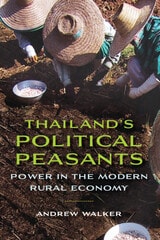
Thailand’s Political Peasants
Power in the Modern Rural EconomyAndrew Walker
University of Wisconsin Press, 2012
When a populist movement elected Thaksin Shinawatra as prime minister of Thailand in 2001, many of the country’s urban elite dismissed the outcome as just another symptom of rural corruption, a traditional patronage system dominated by local strongmen pressuring their neighbors through political bullying and vote-buying. In Thailand’s Political Peasants, however, Andrew Walker argues that the emergence of an entirely new socioeconomic dynamic has dramatically changed the relations of Thai peasants with the state, making them a political force to be reckoned with. Whereas their ancestors focused on subsistence, this generation of middle-income peasants seeks productive relationships with sources of state power, produces cash crops, and derives additional income through non-agricultural work. In the increasingly decentralized, disaggregated country, rural villagers and farmers have themselves become entrepreneurs and agents of the state at the local level, while the state has changed from an extractor of taxes to a supplier of subsidies and a patron of development projects.
Thailand’s Political Peasants provides an original, provocative analysis that encourages an ethnographic rethinking of rural politics in rapidly developing countries. Drawing on six years of fieldwork in Ban Tiam, a rural village in northern Thailand, Walker shows how analyses of peasant politics that focus primarily on rebellion, resistance, and evasion are becoming less useful for understanding emergent forms of political society.
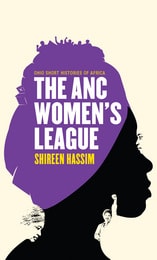
The ANC Women’s League
Sex, Gender and PoliticsShireen Hassim
Ohio University Press, 2015
First formed in the early twentieth century, the ANC Women’s League has grown into a leading organization in the women’s movement in South Africa. The league has been at the forefront of the nation’s century-long transition from an authoritarian state to a democracy that espouses gender equality as a core constitutional value. It has, indeed, always regarded itself as the women’s movement, frequently asserting its primacy as a vanguard organization and as the only legitimate voice of the women of South Africa. But, as this deeply insightful book shows, the history of the league is a more complicated affair—it was neither the only women’s organization in the political field nor an easy ally for South African feminism.
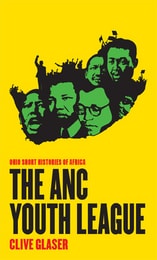
The ANC Youth League
Clive Glaser
Ohio University Press, 2012
This brilliant little book tells the story of the African National Congress (ANC) Youth League from its origins in the 1940s to the present and the controversies over Julius Malema and his influence in contemporary youth politics. Glaser analyzes the ideology and tactics of its founders, some of whom (notably Nelson Mandela and Oliver Tambo) later became iconic figures in South African history as well as inspirational figures such as A. P. Mda (father of author Zakes Mda) and Anton Lembede. It shows how the early Youth League gave birth not only to the modern ANC but also to its rival, the Pan Africanist Congress. Dormant for many years, the Youth League reemerged in the transition era under the leadership of Peter Mokaba—infused with the tradition of the militant youth politics of the 1980s. Throughout its history the Youth League has tried to “dynamize” and criticize the ANC from within, while remaining devoted to the mother body and struggling to find a balance between loyalty and rebellion.
The Anthropology of Labor Unions
E. Paul Durrenberger
University Press of Colorado, 2010
Union-organized workplaces consistently afford workers higher wages and better pensions, benefits, and health coverage than their nonunion counterparts. In addition, women and minorities who belong to unions are more likely to receive higher wages and benefits than their nonunion peers. Given the economic advantages of union membership, one might expect to see higher rates of organization across industries, but labor affiliation is at an all-time low. What accounts for this discrepancy?
The contributors in this volume provide a variety of perspectives on this paradox, including discussions of approaches to and findings on the histories, cultures, and practices of organized labor. They also address substantive issues such as race, class, gender, age, generation, ethnicity, health and safety concerns, corporate co-optation of unions, and the cultural context of union-management relationships.
The first to bring together anthropological case studies of labor unions, this volume will appeal to cultural anthropologists, social scientists, sociologists, and those interested in labor studies and labor movements.
The Argentine Silent Majority
Middle Classes, Politics, Violence, and Memory in the SeventiesSebastián Carassai
Duke University Press, 2014

The Ashio Riot of 1907
A Social History of Mining in JapanKazuo Nimura, ed.
Duke University Press, 1997
Arguing against the spontaneous resistance theory that has long dominated Japanese social history accounts, Nimura traces the laborers’ unrest prior to the riots as well as the development of the event itself. Drawing from such varied sources as governmental records, media reports, and secret legal documents relating to the riot, Nimura discusses the active role of the metal mining workers’ trade organization and the stance taken by mine labor bosses. He examines how technological development transformed labor-management relations and details the common characteristics of the laborers who were involved in the riot movement. In the course of this historical analysis, Nimura takes on some of the most influential critical perspectives on Japanese social and labor history. This translation of Nimura’s prize-winning study—originally published in Japan—contains a preface by Andrew Gordon and an introduction and prologue written especially for this edition.

The Best-Kept Secret
Women Corporate Lobbyists, Policy, and Power in the United StatesBenoit, Denise
Rutgers University Press, 2007
From lobbyists such as Jack Abramoff, to corporate executives, like Enron's Kenneth Lay and Jeffrey Skilling, recent scandals dealing with politics and government have focused only on men at the top. But do these high-profile men accurately represent the gendered make up of corporate-government in the United States?
In this first in-depth look at the changing face of corporate lobbying, Denise Benoit shows how women who have historically worked mostly in policy areas relating to "women's issues" such as welfare, family, and health have become increasingly influential as corporate lobbyists, specializing in what used to be considered "masculine" policy, such as taxes and defense. Benoit finds that this new crop of female lobbyists mobilize both masculinity and femininity in ways that create and maintain trusting, open, and strong relations with those in government, and at the same time help corporations to save and earn billions of dollars.
While the media focuses on the dubious behaviors of men at the top of business and government, this book shows that female corporate lobbyists are indeed one of the best kept secrets in Washington.
The Black Student Protest Movement at Rutgers
Richard P. McCormick
Rutgers University Press, 1990
Richard P. McCormick has chronicled the black student protest movement at Rutgers University, from the 1960s to today. He examines the forces that produced the protest movement, the tactics that were employed, and the qualified gains that were achieved. He tells us about demonstrations, building occupations, committee hearings, and countless meetings, but he also paints portraits of the many student leaders who mobilized protest. This is the story of a lot of pain, some blunders, and some successes.
In the mid-sixties, the University established committees to recruit black students and to add more blacks to the faculty. These efforts produced only modest results. By 1968, there were still not enough black students on campus, but there were enough to create a political presence for the first time. They were committed to acting against the racism they perceived within the University. To respond to their protests, in March 1969 the Board of Governors passed a dramatically new and controversial policy to encourage disadvantaged students who lived in Camden, Newark, and New Brunswick to apply to Rutgers, where they would take college-preparatory classes as unmatriculated students, and then enter Rutgers as matriculated students. This program, never very successful, lasted only two years.
Unrest did not end with the sixties. During the seventies, black students sporadically voiced protests against what they perceived to be an unsupportive environment. During the eighties, black enrollment actually declined, as did the black graduation rate. In conclusion, McCormick points to the effort that has been made but even more to the effort that still needs to be made and the social cost of ignoring the problem.

The Burden of Responsibility
Blum, Camus, Aron, and the French Twentieth CenturyTony Judt
University of Chicago Press, 1998
Through the prism of the lives of Leon Blum, Albert Camus, and Raymond Aron, Judt examines pivotal issues in the history of contemporary French society—antisemitism and the dilemma of Jewish identity, political and moral idealism in public life, the Marxist moment in French thought, the traumas of decolonization, the disaffection of the intelligentsia, and the insidious quarrels rending Right and Left. Judt focuses particularly on Blum's leadership of the Popular Front and his stern defiance of the Vichy governments, on Camus's part in the Resistance and Algerian War, and on Aron's cultural commentary and opposition to the facile acceptance by many French intellectuals of communism's utopian promise. Severely maligned by powerful critics and rivals, each of these exemplary figures stood fast in their principles and eventually won some measure of personal and public redemption.
Judt constructs a compelling portrait of modern French intellectual life and politics. He challenges the conventional account of the role of intellectuals precisely because they mattered in France, because they could shape public opinion and influence policy. In Blum, Camus, and Aron, Judt finds three very different men who did not simply play the role, but evinced a courage and a responsibility in public life that far outshone their contemporaries.
"An eloquent and instructive study of intellectual courage in the face of what the author persuasively describes as intellectual irresponsibility."—Richard Bernstein, New York Times
The Capacity Contract
Intellectual Disability and the Question of CitizenshipStacy Clifford Simplican
University of Minnesota Press, 2015
In the first sustained examination of disability through the lens of political theory, The Capacity Contract shows how the exclusion of disabled people has shaped democratic politics. Stacy Clifford Simplican demonstrates how disability buttresses systems of domination based on race, sex, and gender. She exposes how democratic theory and politics have long blocked from political citizenship anyone whose cognitive capacity falls below a threshold level⎯marginalization with real-world repercussions on the implementation of disability rights today.
Simplican’s compelling ethnographic analysis of the self-advocacy movement describes the obstacles it faces. From the outside, the movement must confront stiff budget cuts and dwindling memberships; internally, self-advocates must find ways to demand political standing without reinforcing entrenched stigma against people with profound cognitive disabilities. And yet Simplican’s investigation also offers democratic theorists and disability activists a more emancipatory vision of democracy as it relates to disability⎯one that focuses on enabling people to engage in public and spontaneous action to disrupt exclusion and stigma.
Taking seriously democratic promises of equality and inclusion, The Capacity Contract rejects conceptions of political citizenship that privilege cognitive capacity and, instead, centers such citizenship on action that is accessible to all people.
The Changing Face of Representation
The Gender of U.S. Senators and Constituent CommunicationsKim L. Fridkin and Patrick J. Kenney
University of Michigan Press, 2015
As the number of women in the U.S. Senate grows, so does the number of citizens represented by women senators. At the same time, gender remains a key factor in senators’ communications to constituents as well as in news media portrayals of senators. Focusing on 32 male and female senators during the 2006 congressional election year, Kim L. Fridkin and Patrick J. Kenney examine in detail senators’ official websites, several thousand press releases and local news stories, and surveys of 18,000 citizens to discern constituents’ attitudes about their senators.
The authors conclude that gender role expectations and stereotypes do indeed constrain representational and campaign messages and influence news coverage of both candidates and elected senators. Further, while citizens appear to be less influenced by entrenched stereotypes, they pay more attention to female senators’ messages and become more knowledgeable about them, in comparison to male senators.
The Channels of Student Activism
How the Left and Right Are Winning (and Losing) in Campus Politics TodayAmy J. Binder and Jeffrey L. Kidder
University of Chicago Press, 2022
The past six years have been marked by a contentious political atmosphere that has touched every arena of public life, including higher education. Though most college campuses are considered ideologically progressive, how can it be that the right has been so successful in mobilizing young people even in these environments?
As Amy J. Binder and Jeffrey L. Kidder show in this surprising analysis of the relationship between political activism on college campuses and the broader US political landscape, while liberal students often outnumber conservatives on college campuses, liberal campus organizing remains removed from national institutions that effectively engage students after graduation. And though they are usually in the minority, conservative student groups have strong ties to national right-leaning organizations, which provide funds and expertise, as well as job opportunities and avenues for involvement after graduation. Though the left is more prominent on campus, the right has built a much more effective system for mobilizing ongoing engagement. What’s more, the conservative college ecosystem has worked to increase the number of political provocations on campus and lower the public’s trust in higher education.
In analyzing collegiate activism from the left, right, and center, The Channels of Student Activism shows exactly how politically engaged college students are channeled into two distinct forms of mobilization and why that has profound consequences for the future of American politics.
The Chiapas Rebellion
The Struggle for Land and DemocracyNeil Harvey
Duke University Press, 1998
Beginning with an exploration of the history of ethnic and class conflict in Chiapas since the Conquest, Harvey moves specifically to trace the development of peasant and indigenous organizations in Chiapas since the early 1970s. He compares the struggles for agrarian rights of three grassroots movements facing hostility from both local elites and federal bureaucrats. His examination of the complexities of political change in Chiapas includes the impact of neoliberal economic policies, the origins of the Zapatista army of National Liberation (EZLN), and the political impact of the rebellion itself. Engaging with current theoretical debates on the role and significance of social movements in Mexico and Latin America, Harvey focuses on the primacy of political struggle and on the importance of these movements in the construction and meaning of citizenship. While suggesting that the Zapatista revolution has heightened awareness among the people of Chiapas of such democratic issues as ethnicity, gender, and land distribution, he concludes with an analysis of the obstacles to peace in the region today.
This unprecedented study of the Zapatista rebellion will provoke discussion among students and scholars of contemporary Mexico, political science, Latin American studies, history, sociology, and anthropology.
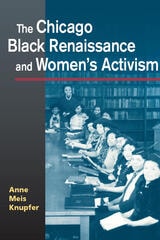
The Chicago Black Renaissance and Women's Activism
Anne Meis Knupfer
University of Illinois Press, 2006
The book examines various groups of black female activists, including writers and actresses, social workers, artists, school teachers, and women's club members to document the impact of social class, gender, nativity, educational attainment, and professional affiliations on their activism. Together, these women worked to sponsor black history and literature, to protest overcrowded schools, and to act as a force for improved South Side housing and employment opportunities. Knupfer also reveals the crucial role these women played in founding and sustaining black cultural institutions, such as the first African American art museum in the country; the first African American library in Chicago; and various African American literary journals and newspapers. As a point of contrast, Knupfer also examines the overlooked activism of working-class and poor women in the Ida B. Wells and Altgeld Gardens housing projects.
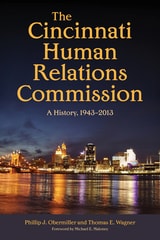
The Cincinnati Human Relations Commission
A History, 1943–2013Phillip J. Obermiller
Ohio University Press, 2018
In the summer of 1943, as World War II raged overseas, the United States also faced internal strife. Earlier that year, Detroit had erupted in a series of race riots that killed dozens and destroyed entire neighborhoods. Across the country, mayors and city councils sought to defuse racial tensions and promote nonviolent solutions to social and economic injustices. In Cincinnati, the result of those efforts was the Mayor’s Friendly Relations Committee, later renamed the Cincinnati Human Relations Commission (CHRC).
The Cincinnati Human Relations Commission: A History, 1943–2013, is a decade-by-decade chronicle of the agency: its accomplishments, challenges, and failures. The purpose of municipal human relations agencies like the CHRC was to give minority groups access to local government through internal advocacy, education, mediation, and persuasion—in clear contrast to the tactics of lawsuits, sit-ins, boycotts, and marches adopted by many external, nongovernmental organizations.
In compiling this history, Phillip J. Obermiller and Thomas E. Wagner have drawn on an extensive base of archival records, reports, speeches, and media sources. In addition, archival and contemporary interviews provide first-person insight into the events and personalities that shaped the agency and the history of civil rights in this midwestern city.
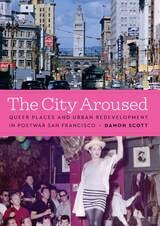
The City Aroused
Queer Places and Urban Redevelopment in Postwar San FranciscoDamon Scott
University of Texas Press, 2023
A history of San Francisco that studies change in the postwar urban landscape in relation to the city's queer culture.
The City Aroused is a lively history of urban development and its influence on queer political identity in postwar San Francisco. By reconstructing the planning and queer history of waterfront drinking establishments, Damon Scott shows that urban renewal was a catalyst for community organizing among racially diverse operators and patrons with far-reaching implications for the national gay rights movement.
Following the exclusion of suspected homosexuals from the maritime trades in West Coast ports in the early 1950s, seamen’s hangouts in the city came to resemble gay bars. Local officials responded by containing the influx of gay men to a strip of bars on the central waterfront while also making plans to raze and rebuild the area. This practice ended when city redevelopment officials began acquiring land in the early 1960s. Aided by law enforcement, they put these queer social clubs out of business, replacing them with heteronormative, desexualized land uses that served larger postwar urban development goals. Scott argues that this shift from queer containment to displacement aroused a collective response among gay and transgender drinking publics who united in solidarity to secure a place in the rapidly changing urban landscape.

The Collaborator
The Trial and Execution of Robert BrasillachAlice Kaplan
University of Chicago Press, 2000
Was Brasillach in fact guilty of treason? Was he condemned for his denunciations of the resistance, or singled out as a suspected homosexual? Was it right that he was executed when others, who were directly responsible for the murder of thousands, were set free? Kaplan's meticulous reconstruction of Brasillach's life and trial skirts none of these ethical subtleties: a detective story, a cautionary tale, and a meditation on the disturbing workings of justice and memory, The Collaborator will stand as the definitive account of Brasillach's crime and punishment.
A National Book Award Finalist
A National Book Critics Circle Award Finalist
"A well-researched and vivid account."—John Weightman, New York Review of Books
"A gripping reconstruction of [Brasillach's] trial."—The New Yorker
"Readers of this disturbing book will want to find moral touchstones of their own. They're going to need them. This is one of the few works on Nazism that forces us to experience how complex the situation really was, and answers won't come easily."—Daniel Blue, San Francisco Chronicle Book Review
"The Collaborator is one of the best-written, most absorbing pieces of literary history in years."—David A. Bell, New York Times Book Review
"Alice Kaplan's clear-headed study of the case of Robert Brasillach in France has a good deal of current-day relevance. . . . Kaplan's fine book . . . shows that the passage of time illuminates different understandings, and she leaves it to us to reflect on which understanding is better."—Richard Bernstein, The New York Times

The Conservative Frontier
Texas and the Origins of the New RightJeff Roche
University of Texas Press, 2025
2026 Al Lowman Memorial Prize, Texas State Historical Association (TSHA)
2026 Bonney MacDonald Outstanding Book Award Winner, Center for the Study of the American West at West Texas A&M University (CSAW)
How West Texas business and culture molded the rise of conservatism in the United States.
Much of what we understand as modern American political conservatism was born in West Texas, where today it predominates. How did the people of such a vast region—larger than New England and encompassing big cities like Lubbock and Amarillo, as well as tiny towns from Anson to Dalhart—develop such a uniform political culture? And why and how did it go national?
Jeff Roche finds answers in the history of what he calls cowboy conservatism. Political power players matter in this story, but so do football coaches, newspaper editors, and a breakfast cereal tycoon who founded a capitalist utopia. The Conservative Frontier follows these and other figures as they promoted an ideology grounded in the entrepreneurial and proto-libertarian attitudes of nineteenth-century Texas ranchers, including a fierce devotion to both individualism and small-town notions of community responsibility. This political sensibility was in turn popularized by its association with the mythology and iconography of the cowboy as imagined in twentieth-century mass media. By the 1970s and the rise of Ronald Reagan, Roche shows, it was clear that the cowboy conservatism of West Texas had set the stage for the emergence of the New Right—the more professionalized and tech-savvy operation that dominated national conservative politics for the next quarter century.

The Dividends of Dissent
How Conflict and Culture Work in Lesbian and Gay Marches on WashingtonAmin Ghaziani
University of Chicago Press, 2008
Amin Ghaziani ably puts these demonstrations into their cultural context, chronicling gay and lesbian life at the time and the political currents that prompted the protests. He then turns to each march in detail, focusing on the role that internal dissent played in its organization. Ultimately, Ghaziani concludes that infighting can contribute positively to the development of social movements, and that the debates over the marches helped define what it means to be gay in the United States.

The Eagle Has Eyes
The FBI Surveillance of César Estrada Chávez of the United Farm Workers Union of America, 1965–1975José Angel Gutiérrez
Michigan State University Press, 2019
The Emancipation Circuit
Black Activism Forging a Culture of FreedomThulani Davis
Duke University Press, 2022

The Evangelical Crackup?
The Future of the Evangelical-Republican CoalitionEdited by Paul Djupe and Ryan L. Claassen
Temple University Press, 2019
Why did Donald Trump attract a record number of white evangelical voters without unified support—and despite nontrivial antipathy from evangelical leaders? The editors and leading scholars that contribute to the timely volume The Evangelical Crackup? answer this question and provide a comprehensive assessment of the status of evangelicals and the Christian Right in the Republican coalition.
The expected “crackup” with the Republican Party never happened. Each chapter in this cogent volume includes analyses of the 2016 election to explain why—and why that is critical. Chapters examine policy priorities, legal advocacy, and evangelical loyalty to the Republican Party; rhetoric, social networks, and evangelical elite influence; and the political implications of movements within evangelicalism, such as young evangelicals, Hispanics, and the Emergent Church movement.
Contributors include: Daniel Bennett, Mark Brockway, Ryan P. Burge, Brian R. Calfano, Jeremy Castle, Kimberly Conger, Daniel A. Cox, Kevin den Dulk, Sarah Allen Gershon, Tobin Grant, Robert P. Jones, Geoffrey Layman, Andrew R. Lewis, Ronald J. McGauvran, Joshua Mitchell, Juhem Navarro-Rivera, Jacob R. Neiheisel, Elizabeth Oldmixon, Adrian D. Pantoja, David Searcy, Anand Edward Sokhey, J. Benjamin Taylor, Robert Wuthnow, and the editors.
The Federalist Frontier
Settler Politics in the Old Northwest, 1783-1840Kristopher Maulden
University of Missouri Press, 2023
Historians of early American politics will have a chance to read about Federalists in the Northwest, and they will see the early American state in action in fighting Indians, shaping settler understandings of space and social advancement, and influencing political ideals among the citizens. For historians of the early American West, Maulden’s work demonstrates that the origins of state-led expansion reach much further back in time than generally understood.

The Fierce Urgency of Now
Improvisation, Rights, and the Ethics of CocreationDaniel Fischlin, Ajay Heble, and George Lipsitz
Duke University Press, 2013
Improvisation is the creation and development of new, unexpected, and productive cocreative relations among people. It cultivates the capacity to discern elements of possibility, potential, hope, and promise where none are readily apparent. Improvisers work with the tools they have in the arenas that are open to them. Proceeding without a written score or script, they collaborate to envision and enact something new, to enrich their experience in the world by acting on it and changing it. By analyzing the dynamics of particular artistic improvisations, mostly by contemporary American jazz musicians, the authors reveal improvisation as a viable and urgently needed model for social change. In the process, they rethink politics, music, and the connections between them.
The Frontier of Loyalty
Political Exiles in the Age of the Nation-StateYossi Shain
University of Michigan Press, 2005
"In a world increasingly shaped by transnational organizations and processes, this is a timely and welcome subject, and Yossi Shain provides an informative overview."
--Rogers Brubaker, Harvard University, in The American Journal of Sociology
"Engrossing."
--International Affairs
"Mr. Shain is at his best stitching together information that hitherto had not been systematically related to analytical themes. . . . A major contribution to understanding the patterns and complexities of the politics of those at home abroad."
--International Migration Review
"The Frontier of Loyalty is the first comprehensive and theoretically oriented study of exile politics; the types of exile activity; the relation to both the home and host governments; and the difficulties and ambiguities of exile politics, particularly the struggle for legitimacy as spokesman for the opposition at home and for recognition from the outside."
--- Juan J. Linz, Yale University
"An ingenious and sensitive analysis of political exiles as 'voice from without,' which contributes to our understanding of the transnational character of contemporary politics."
--- Aristide R. Zolberg, New School for Social Research
"Drawing upon a wide literature on contemporary political exiles, Yossi Shain presents a sophisticated, learned and sensible survey of their place in political life today. More important, his meditation on the role of exiles proves such essential political categories as legitimacy,
national loyalty, and opposition in the modern state. One test of any work of scholarship is whether it enhances our understanding of concepts that we have previously taken for granted. By this measure, Shain's book passes with flying colors."
--- Michael R. Marrus, University of Toronto
The Future of Democracy
Developing the Next Generation of American CitizensPeter Levine
University Press of New England, 2015
The Geographies of Social Movements
Afro-Colombian Mobilization and the Aquatic SpaceUlrich Oslender
Duke University Press, 2016
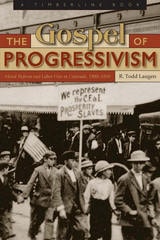
The Gospel of Progressivism
Moral Reform and Labor War in Colorado, 1900-1930R. Todd Laugen
University Press of Colorado, 2010
Sharing enemies like the party boss and corporate lobbyist who undermined honest and responsive government, Progressive leaders were determined to root out selfish political action with public exposure. Labor unions defied bosses and rallied for government protection of workers. Women's clubs appealed to other women as mothers, calling for social welfare, economic justice, and government responsiveness. Protestant church congregations formed a core of support for moral reform. Labor relations experts struggled to prevent the outbreak of violence through mediation between corporate employers and organized labor. Persevering through World War I, Colorado reformers faced their greatest challenge in the 1920s, when leaders of the Ku Klux Klan drew upon the rhetoric of Protestant Progressives and manipulated reform tools to strengthen their own political machine. Once in power, Klan legislators turned on Progressive leaders in the state government.
A story of promising alliances never fully realized, zealous crusaders who resisted compromise, and reforms with unexpected consequences, The Gospel of Progressivism will appeal to those interested in Progressive Era reform, Colorado history, labor relations, and women's activism.
The Governors' Lobbyists
Federal-State Relations Offices and Governors Associations in WashingtonJennifer M. Jensen
University of Michigan Press, 2016
The Great Strikes of 1877
Edited by David O. Stowell
University of Illinois Press, 2007
A spectacular example of collective protest, the Great Strike of 1877--actually a sequence of related actions--was America's first national strike and the first major strike against the railroad industry. In some places, non-railroad workers also abandoned city businesses, creating one of the nation's first general strikes. Mobilizing hundreds of thousands of workers, the Great Strikes of 1877 transformed the nation's political landscape, shifting the primary political focus from Reconstruction to labor, capital, and the changing role of the state.
Probing essays by distinguished historians explore the social, political, regional, and ethnic landscape of the Great Strikes of 1877: long-term effects on state militias and national guard units; ethnic and class characterization of strikers; pictorial representations of poor laborers in the press; organizational strategies employed by railroad workers; participation by blacks; violence against Chinese immigrants; and the developing tension between capitalism and racial equality in the United States.
Contributors: Joshua Brown, Steven J. Hoffman, Michael Kazin, David Miller, Richard Schneirov, David O. Stowell, and Shelton Stromquist.
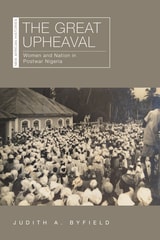
The Great Upheaval
Women and Nation in Postwar NigeriaJudith A. Byfield
Ohio University Press, 2021
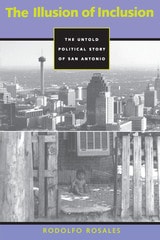
The Illusion of Inclusion
The Untold Political Story of San AntonioBy Rodolfo Rosales
University of Texas Press, 2000
To many observers, the 1981 election of Henry Cisneros as mayor of San Antonio, Texas, represented the culminating victory in the Chicano community's decades-long struggle for inclusion in the city's political life. Yet, nearly twenty years later, inclusion is still largely an illusion for many working-class and poor Chicanas and Chicanos, since business interests continue to set the city's political and economic priorities.
In this book, Rodolfo Rosales offers the first in-depth history of the Chicano community's struggle for inclusion in the political life of San Antonio during the years 1951 to 1991, drawn from interviews with key participants as well as archival research. He focuses on the political and organizational activities of the Chicano middle class in the context of post-World War II municipal reform and how it led ultimately to independent political representation for the Chicano community. Of special interest is his extended discussion of the role of Chicana middle-class women as they gained greater political visibility in the 1980s.
The Internal Colony
Race and the American Politics of Global DecolonizationSam Klug
University of Chicago Press, 2025
In The Internal Colony, Sam Klug reveals the central but underappreciated importance of global decolonization to the divergence between mainstream liberalism and the Black freedom movement in postwar America. Klug reconsiders what has long been seen as a matter of primarily domestic policy in light of a series of debates concerning self-determination, postcolonial economic development, and the meanings of colonialism and decolonization. These debates deeply influenced the discord between Black activists and state policymakers and formed a crucial dividing line in national politics in the 1960s and 1970s.
The result is a history that broadens our understanding of ideological formation—particularly how Americans conceptualized racial power and political economy—by revealing a much wider and more dynamic network of influences. Linking intellectual, political, and social movement history, The Internal Colony illuminates how global decolonization transformed the terms of debate over race and social class in the twentieth-century United States.

The Journey of a Tzotzil-Maya Woman of Chiapas, Mexico
Pass Well over the EarthBy Christine Eber and “Antonia”
University of Texas Press, 2011
Most recent books about Chiapas, Mexico, focus on political conflicts and the indigenous movement for human rights at the macro level. None has explored those conflicts and struggles in-depth through an individual woman's life story. The Journey of a Tzotzil-Maya Woman of Chiapas, Mexico now offers that perspective in one woman's own words. Anthropologist Christine Eber met "Antonia" in 1986 and has followed her life's journey ever since. In this book, they recount Antonia's life story and also reflect on challenges and rewards they have experienced in working together, offering insight into the role of friendship in anthropological research, as well as into the transnational movement of solidarity with the indigenous people of Chiapas that began with the Zapatista uprising.
Antonia was born in 1962 in San Pedro Chenalhó, a Tzotzil-Maya township in highland Chiapas. Her story begins with memories of childhood and progresses to young adulthood, when Antonia began working with women in her community to form weaving cooperatives while also becoming involved in the Word of God, the progressive Catholic movement known elsewhere as Liberation Theology. In 1994, as a wife and mother of six children, she joined a support base for the Zapatista Army of National Liberation. Recounting her experiences in these three interwoven movements, Antonia offers a vivid and nuanced picture of working for social justice while trying to remain true to her people's traditions.

The Language of Political Incorporation
Chinese Migrants in EuropeAmy Liu
Temple University Press, 2021
In this groundbreaking study, The Language of Political Incorporation, Amy Liu focuses on Chinese migrants in Central-Eastern Europe and their varying levels of political incorporation in the local community. She examines the linguistic diversity of migrant networks, finding institutional trust and civic engagement depend not on national identity, but on the network’s linguistic diversity—namely, whether the operating language is a migrant’s mother tongue or a lingua franca.
The Language of Political Incorporation uses original survey data to assess when the Chinese engage positively with the authorities and when they become civic minded. The results are surprising. In Hungary, the Chinese community has experienced high levels of political incorporation in part because they have not been targeted by anti-immigrant rhetoric and policies. In contrast, migrants in Romania sought the assistance of the Chinese embassy to fight an effort to collect back taxes.
Liu also compares the Chinese experiences in Central-Eastern Europe with those of Muslims in the region, as well as how the Chinese are treated in Western Europe. Additionally, she considers how the local communities perceive the Chinese. The Language of Political Incorporation concludes by offering best practices for how governments can help migrants become more trusting of—and have greater involvement with—locals in their host countries. Ultimately, Liu demonstrates the importance of linguistic networks for the incorporation of immigrants.
The Left Bank
Writers, Artists, and Politics from the Popular Front to the Cold WarHerbert Lottman
University of Chicago Press, 1998
"Surprisingly fresh and intense. . . . A retrospective travelogue of the Left Bank in the days when it was the setting for almost all French intellectual activity. . . . Absorbing."—Naomi Bliven, New Yorker
"As an introduction to a period in French history already legendary, The Left Bank is superb."—Michael Dirda, Washington Post Book World
"An intellectual history. A history of the interaction between politics and letters. And a rumination on the limitless credulity of intellectuals."—Christopher Hitchens, New Statesman
The Lettered Barriada
Workers, Archival Power, and the Politics of Knowledge in Puerto RicoJorell A. Meléndez-Badillo
Duke University Press, 2021
Duke University Press Scholars of Color First Book Award recipient
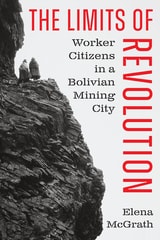
The Limits of Revolution
Worker Citizens in a Bolivian Mining CityElena McGrath
University of Texas Press, 2026
The role of Bolivian mining families in revolution and politics.
In 1952, Bolivia’s Revolutionary Nationalist Movement (MNR) swept into power, promising collective prosperity through class-based nationalism. The heroic symbol of the movement was the worker citizen—the formerly indigenous miner who would fuel economic development in a nationalized mining economy.
The Limits of Revolution explores this history from the worker barrios of the copper mining city of Corocoro. As the state walked back its promises of worker political power at the national level, mining men and women in Corocoro struggled—through protests, court battles, and barfights—to maintain the benefits of worker citizenship locally. After the MNR fell to a military dictatorship in 1964, however, families retreated to defending the nationalized mining company against an increasingly hostile state. In this battle to keep the revolution alive, the expansive potential of worker citizenship disappeared and old racial exclusions resurfaced. Largely forgotten today, Bolivia’s experience of revolution exposes the contradictions of postcolonial nationalism and sheds light on Latin America’s transition from Cold War–era class politics to twenty-first-century Pink Tide politics.
The Long War
The Intellectual People’s Front and Anti-Stalinism, 1930–1940Judy Kutulas
Duke University Press, 1994
Judy Kutulas takes us into the debates and outright fights between and within the ranks of organizations such as the League of American Writers, the John Reed Clubs, the Committee for Cultural Freedom, the American Civil Liberties Union, and the National Committee for the Defense of Political Prisoners. Showing how extremist views about the nature and value of communism triumphed over more moderate ones, she traces the transfer of the left’s leadership from one generation to the next. She describes how supporters of the People’s Front were discredited by the time of the Nazi-Soviet Pact and how this opened the way for a new generation of leaders better known as the New York intellectuals. In this shift, Kutulas identifies the beginnings of the liberal anti-communism that would follow World War II.
A book for students and scholars of the intersection of politics and culture, The Long War offers a new, informed perspective on the intellectual maneuvers of the American left of the 1930s and leads to a reinterpretation of the time and its complex legacy.
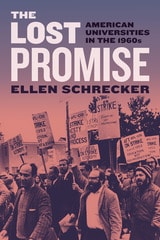
The Lost Promise
American Universities in the 1960sEllen Schrecker
University of Chicago Press, 2021
The 1950s through the early 1970s are widely seen as American academia’s golden age, when universities—well-funded and viewed as essential for national security, economic growth, and social mobility—embraced an egalitarian mission. Swelling in size, schools attracted new types of students and professors, including radicals who challenged their institutions’ calcified traditions. But that halcyon moment soon came to a painful and confusing end, with consequences that still afflict the halls of ivy. In The Lost Promise, Ellen Schrecker—our foremost historian of both the McCarthy era and the modern American university—delivers a far-reaching examination of how and why it happened.
Schrecker illuminates how US universities’ explosive growth intersected with the turmoil of the 1960s, fomenting an unprecedented crisis where dissent over racial inequality and the Vietnam War erupted into direct action. Torn by internal power struggles and demonized by conservative voices, higher education never fully recovered, resulting in decades of underfunding and today’s woefully inequitable system. As Schrecker’s magisterial history makes blazingly clear, the complex blend of troubles that disrupted the university in that pivotal period haunts the ivory tower to this day.

The Mexican American Experience in Texas
Citizenship, Segregation, and the Struggle for EqualityBy Martha Menchaca
University of Texas Press, 2022
A historical overview of Mexican Americans' social and economic experiences in Texas
For hundreds of years, Mexican Americans in Texas have fought against political oppression and exclusion—in courtrooms, in schools, at the ballot box, and beyond. Through a detailed exploration of this long battle for equality, this book illuminates critical moments of both struggle and triumph in the Mexican American experience.
Martha Menchaca begins with the Spanish settlement of Texas, exploring how Mexican Americans’ racial heritage limited their incorporation into society after the territory’s annexation. She then illustrates their political struggles in the nineteenth century as they tried to assert their legal rights of citizenship and retain possession of their land, and goes on to explore their fight, in the twentieth century, against educational segregation, jury exclusion, and housing covenants. It was only in 1967, she shows, that the collective pressure placed on the state government by Mexican American and African American activists led to the beginning of desegregation. Menchaca concludes with a look at the crucial roles that Mexican Americans have played in national politics, education, philanthropy, and culture, while acknowledging the important work remaining to be done in the struggle for equality.

The Monarchia Controversy
An Historical Study with Accompanying Translations of Dante Alighieri's Monarchia, Guido Vernani's Refutation of the "Monarchia" Composed by Dante, and Pope John XXII's Bull Si fratrumAnthony K. Cassell
Catholic University of America Press, 2004
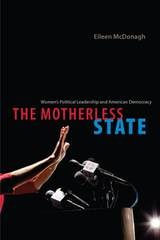
The Motherless State
Women's Political Leadership and American DemocracyEileen McDonagh
University of Chicago Press, 2009
American women attain more professional success than most of their counterparts around the world, but they lag surprisingly far behind in the national political arena. Women held only 15 percent of U.S. congressional seats in 2006, a proportion that ranks America behind eighty-two other countries in terms of females elected to legislative office. A compelling exploration of this deficiency, TheMotherless State reveals why the United States differs from comparable democracies that routinely elect far more women to their national governing bodies and chief executive positions.
Explaining that equal rights alone do not ensure equal access to political office, Eileen McDonagh shows that electoral gender parity also requires public policies that represent maternal traits. Most other democracies, she demonstrates, view women as more suited to govern because their governments have taken on maternal roles through social welfare provisions, gender quotas, or the continuance of symbolic hereditary monarchies. The United States has not adopted such policies, and until it does, McDonagh insightfully warns, American women run for office with a troubling disadvantage.
The National Alliance of Black Feminists
A HistoryIleana Nachescu
University of Illinois Press, 2025
Ileana Nachescu places the NABF’s history as the bridge between Black women’s social activism in the 1970s and the intellectual activism of the 1980s. Her account details the NABF’s work and how it reflected the group’s strong humanist belief in the transformation of all human beings. Nachescu also shows that the NABF’s post-Eighties erasure from movement histories is consistent with how many white feminists marginalized women of color and rejected their leadership. From there, Nachescu examines Black lesbians’ vibrant support of the NABF and shows how respectability politics pressured the group to support its lesbian membership in private but maintain a public silence on the issue.
A rare in-depth look at an overlooked organization, The National Alliance of Black Feminists tells an untold story of Black women’s liberation in the Midwest.
The New Left and Labor in 1960s
Peter B. Levy
University of Illinois Press, 1994
It is a powerful story: the relationship between the 1960s New Left and organized labor was summed up by hardhats confronting students and others over US involvement in Vietnam. But the real story goes beyond the "Love It or Leave It" signs and melees involving blue-collar types attacking protesters.
Peter B. Levy challenges these images by exploring the complex relationship between the two groups. Early in the 1960s, the New Left and labor had cooperated to fight for civil rights and anti-poverty programs. But diverging opinions on the Vietnam War created a schism that divided these one-time allies. Levy shows how the war, combined with the emergence of the black power movement and the blossoming of the counterculture, drove a permanent wedge between the two sides and produced the polarization that remains to this day.
The New Presidential Elite
Men and Women in National PoliticsJeane J. Kirkpatrick
Russell Sage Foundation, 1976