Results by title
2916 books match the query 'Politics and government' and 650 start with t
THOMAS WORTHINGTON
FATHER OF OHIO STATEHOODAlfred Byron Sears
The Ohio State University Press, 1998
Taking African Cartoons Seriously
Politics, Satire, and CulturePeter Limb
Michigan State University Press, 2018
Taking Charge
Native American Self-Determination and Federal Indian Policy, 1975–1993George Pierre Castile
University of Arizona Press, 2006
Talkative Polity
Radio, Domination, and Citizenship in UgandaFlorence Brisset-Foucault
Ohio University Press, 2019
For the first decade of the twenty-first century, every weekend, people throughout Uganda converged to participate in ebimeeza, open debates that invited common citizens to share their political and social views. These debates, also called “People’s Parliaments,” were broadcast live on private radio stations until the government banned them in 2009. In Talkative Polity, Florence Brisset-Foucault offers the first major study of ebimeeza, which complicate our understandings of political speech in restrictive contexts and force us to move away from the simplistic binary of an authoritarian state and a liberal civil society.
Brisset-Foucault conducted fieldwork from 2005 to 2013, primarily in Kampala, interviewing some 150 orators, spectators, politicians, state officials, journalists, and NGO staff. The resulting ethnography invigorates the study of political domination and documents a short-lived but highly original sphere of political expression. Brisset-Foucault thus does justice to the richness and depth of Uganda’s complex political and radio culture as well as to the story of ambitious young people who didn’t want to behave the way the state expected them to. Positioned at the intersection of media studies and political science, Talkative Polity will help us all rethink the way in which public life works.

Talking to North Korea
Ending the Nuclear StandoffGlyn Ford
Pluto Press, 2018
This provocative insider’s account blasts apart the myths which paint North Korea as a rogue state run by a mad leader. Informed by extraordinary access to the country's leadership, Glyn Ford investigates the regime from the inside, providing game-changing insights. Acknowledging that North Korea is a deeply flawed and barbaric state, he nonetheless shows that sections of the leadership are desperate to modernize and end their isolation.
With chapters on recent developments including the Trump / Kim summit, Ford supports a dialogue between East and West and provides a road map to avert the looming threat of a war that would threaten the lives of millions.
Tariff Wars and the Politics of Jacksonian America
William K. Bolt
Vanderbilt University Press, 2016
The spreading of democracy caused by the tariff evoked bitter sectional controversy among Americans. Northerners claimed they needed a tariff to protect their industries and also their wages. Southerners alleged the tariff forced them to buy goods at increased prices. Having lost the argument against the tariff on its merits, in the 1820s, southerners began to argue the Constitution did not allow Congress to enact a protective tariff. In this fight, we see increased tensions between northerners and southerners in the decades before the Civil War began.
As Tariff Wars reveals, this struggle spawned a controversy that placed the nation on a path that would lead to the early morning hours of Charleston Harbor in April of 1861.
Tax Politics in Eastern Europe
Globalization, Regional Integration, and the Democratic CompromiseHilary Appel
University of Michigan Press, 2011
“This is the first book to systematically examine the variation in policies of Eastern European countries. There is a theoretical contribution to understandings of variation in tax policies, but just as impressive is the in-depth empirical analysis and in particular the data from interviews with key players in the process.”
—Yoshiko Herrera, University of Wisconsin-Madison
Post-Communist tax reform, like institutional reform in other areas of the post-Communist transition, holds tremendous material consequences for different groups in society. Consequently, one would expect the allocation of resources and the distribution of the financial burden of that allocation to be highly sensitive to domestic politics. Indeed the political stakes should be especially high since post-Communist tax reform requires not merely a simple adjustment at the margin, but the fundamental reallocation of the responsibility for government revenue. In Eastern Europe, however, important areas of tax policy do not reflect traditional domestic variables (e.g., interest groups and partisanship) so much as the international imperatives associated with regional and global economic integration.
In Tax Politics in Eastern Europe, Hilary Appel analyzes the domestic and international factors that drive tax policy. She begins with a review of the greatest challenges in the initial creation of the capitalist tax systems in former Communist states and then turns to the evolution of specific forms of taxation in order to gauge the relative impact of domestic politics on tax policy. Appel concludes that, although some tax areas, such as personal income taxes, remain politicized, most other taxes, such as corporate income taxes and all forms of consumption taxes, have been less subject to domestic political pressures because of powerful constraints resulting from regional and global economic integration.
Teacher Strike!
Public Education and the Making of a New American Political OrderJon Shelton
University of Illinois Press, 2017
As Shelton shows, many working- and middle-class whites sided with corporate interests in seeing themselves as society's only legitimate, productive members. This alliance increasingly argued that public employees and the urban poor took but did not give. Drawing on a wealth of research ranging from school board meetings to TV news reports, Shelton puts readers in the middle of fraught, intense strikes in Newark, St. Louis, and three other cities where these debates and shifting attitudes played out. He also demonstrates how the labor actions contributed to the growing public perception of unions as irrelevant or even detrimental to American prosperity. Foes of the labor movement, meanwhile, tapped into cultural and economic fears to undermine not just teacher unionism but the whole of liberalism.

Tell Mother I'm in Paradise
Memoirs of a Political Prisoner in El SalvadorAna Margarita Gasteazoro, edited by Judy Blankenship and Andrew Wilson
University of Alabama Press, 2022
The life and times of Ana Margarita Gasteazoro: political activist, clandestine operative, and prisoner of conscience.
Ana Margarita Gasteazoro (1950–1993) was a Salvadoran opposition activist and renowned Amnesty International prisoner of conscience. Tell Mother I’m in Paradise:Memoirs of a Political Prisoner in El Salvador recounts her extraordinary life story. From a privileged Catholic upbringing, with time spent studying and working abroad, Ana Margarita first became a member of the legal political opposition in the late 1970s and later a clandestine operative at work against the brutal military junta.
Gasteazoro recounts her early rebellion against the strictures of conservative upper-class Salvadoran society. She spoke perfect English and discovered a talent for organizing in administrative jobs abroad and at home. As the civil war progressed, she quickly became a valued figure in the National Revolutionary Movement (MNR), a social democratic party, often representing it at international meetings. Against the backdrop of massive social oppression and the “disappearances” of thousands of opposition members, Gasteazoro began a double life as an operative in a faction of the Farabundo Martí National Liberation Front (FMLN). Multitalented and energetic, she organized safe houses for fellow activists, transported weapons and equipment, wrote scripts for an underground radio station, and produced an award-winning documentary film. But the toll on her family life and personal relationships was heavy.
Ana Margarita was disappeared in May 1981 by the infamous National Guard and endured a nightmare 11 days of interrogations, beatings, and abuse. Through international pressure and the connections of her family, her arrest was finally made public, and she was transferred to the women’s prison at Ilopango. There, she and other activists continued the political struggle through the Committee of Political Prisoners of El Salvador (COPPES). During her two years in prison, tested by hunger strikes, violence, and factional divisions, she became one of Amnesty International’s best-known prisoners of conscience. Tell Mother I’m in Paradise is a gripping story of a self-aware activist and a vital young woman’s struggle to find her own way within a deeply conservative society.
Teller Tales
HistoriesJo Carson
Ohio University Press, 2007
“All my work fits in my mouth,” Jo Carson says. “I write performance material no matter what else the pieces get called, and whether they are for my voice or other characters’ voices … they are first to be spoken aloud.” Following an oral tradition that has strong roots in her native Tennessee, the author of Teller Tales invites the reader to participate in events in a way that no conventional history book can.
Both stories in this book are set in East Tennessee in the mid-eighteenth century and share certain characters. The first narrative, “What Sweet Lips Can Do,” recounts the story of the Overmountain Men and the battle of King’s Mountain, a tide-turning battle in the American Revolution. “Men of Their Time” is an exploration of white-Cherokee relationships from early contact through the time of the Revolution.
Although not well known to the outside world, the stories recounted in Teller Tales are cornerstones in the heritage of the Appalachian region and of American history. In ways that will appeal to young and old alike, Jo Carson’s irreverent telling will broaden the audience and the understanding for the stories of native Americans, settlers, explorers, and revolutionaries of early America.
Tennessee Government and Politics
Democracy in the Volunteer StateJohn R. Vile
Vanderbilt University Press, 1998
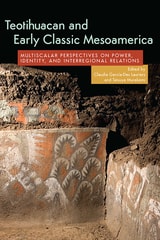
Teotihuacan and Early Classic Mesoamerica
Multiscalar Perspectives on Power, Identity, and Interregional RelationsClaudia García-Des Lauriers
University Press of Colorado, 2021
The volume offers a multiscalar view of power and identity, showing that the spread of Teotihuacan-related material culture may have resulted from direct and indirect state administration, colonization, emulation by local groups, economic transactions, single-event elite interactions, and various kinds of social and political alliances. The contributors explore questions concerning who interacted with whom; what kinds of materials and ideas were exchanged; what role interregional interactions played in the creation, transformation, and contestation of power and identity within the city and among local polities; and how interactions on different scales were articulated. The answers to these questions reveal an Early Classic Mesoamerican world engaged in complex economic exchanges, multidirectional movements of goods and ideas, and a range of material patterns that require local, regional, and macroregional contextualization.
Focusing on the intersecting themes of identity and power, Teotihuacan and Early Classic Mesoamerica makes a strong contribution to the understanding of the role of this important metropolis in the Early Classic history of the region. The volume will be of interest to scholars and graduate students of Mesoamerican archaeology, the archaeology of interaction, and the archaeology of identity.
Contributors: Sarah C. Clayton, Fiorella Fenoglio Limón, Agapi Filini, Julie Gazzola, Sergio Gómez-Chávez, Haley Holt Mehta, Carmen Pérez, Patricia Plunket, Juan Carlos Saint Charles Zetina, Yoko Sugiura, Gabriela Uruñuela, Gustavo Jaimes Vences
Tepoztlán and the Transformation of the Mexican State
The Politics of Loose ConnectionsJoAnn Martin
University of Arizona Press, 2005

Territories of Difference
Place, Movements, Life, RedesArturo Escobar
Duke University Press, 2008
Escobar illuminates many interrelated dynamics, including the Colombian government’s policies of development and pluralism that created conditions for the emergence of black and indigenous social movements and those movements’ efforts to steer the region in particular directions. He examines attempts by capitalists to appropriate the rainforest and extract resources, by developers to set the region on the path of modernist progress, and by biologists and others to defend this incredibly rich biodiversity “hot-spot” from the most predatory activities of capitalists and developers. He also looks at the attempts of academics, activists, and intellectuals to understand all of these complicated processes. Territories of Difference is Escobar’s effort to think with Afro-Colombian intellectual-activists who aim to move beyond the limits of Eurocentric paradigms as they confront the ravages of neoliberal globalization and seek to defend their place-based cultures and territories.

Terry Sanford
Politics, Progress, and Outrageous AmbitionsHoward E. Covington Jr. and Marion A. Ellis
Duke University Press, 1999
After defeating a segregationist campaign in 1960 to win the governorship, Sanford used his years in office to boost public education and advance race relations. A decade later, at the height of tumult on American campuses, Sanford assumed the presidency of Duke University and led it to its position as one of the top universities in the nation. During his more than fifty years as a public servant he was associated with presidents John F. Kennedy, Lyndon B. Johnson, Richard Nixon, and Jimmy Carter. Sanford was a presidential candidate himself in 1972 and 1976, and he won election to the United States Senate in 1986 where his international commission produced an economic recovery plan for Central America. As one of the last New Deal Democrats in the Senate, he remained passionate about the opportunity for leaders to use government to improve people’s lives.
Terry Sanford draws on Sanford’s considerable private and public archive as well as on the recollections of Sanford himself and his family, colleagues, and friends. This biography offers a unique perspective on North Carolina life, politics, political personalities, and the shifting public allegiances of the second half of the twentieth century that transformed life both in North Carolina and throughout the American South.
Testimony
Death of a Guatemalan VillageVictor Montejo
Northwestern University Press, 1987

Texas Through Women's Eyes
The Twentieth-Century ExperienceBy Judith N. McArthur and Harold L. Smith
University of Texas Press, 2010
Winner, Liz Carpenter Award For Research in the History of Women, Texas State Historical Association, 2010
Texas women broke barriers throughout the twentieth century, winning the right to vote, expanding their access to higher education, entering new professions, participating fully in civic and political life, and planning their families. Yet these major achievements have hardly been recognized in histories of twentieth-century Texas. By contrast, Texas Through Women's Eyes offers a fascinating overview of women's experiences and achievements in the twentieth century, with an inclusive focus on rural women, working-class women, and women of color.
McArthur and Smith trace the history of Texas women through four eras. They discuss how women entered the public sphere to work for social reforms and the right to vote during the Progressive era (1900–1920); how they continued working for reform and social justice and for greater opportunities in education and the workforce during the Great Depression and World War II (1920–1945); how African American and Mexican American women fought for labor and civil rights while Anglo women laid the foundation for two-party politics during the postwar years (1945–1965); and how second-wave feminists (1965–2000) promoted diverse and sometimes competing goals, including passage of the Equal Rights Amendment, reproductive freedom, gender equity in sports, and the rise of the New Right and the Republican party.

Texas in the Confederacy
An Experiment in Nation BuildingClayton E. Jewett
University of Missouri Press, 2002
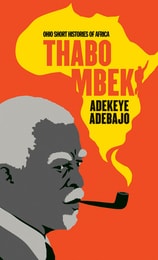
Thabo Mbeki
Adekeye Adebajo
Ohio University Press, 2017
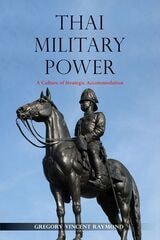
Thai Military Power
A Culture of Strategic AccommodationGregory Vincent Raymond
National University of Singapore Press, 2018
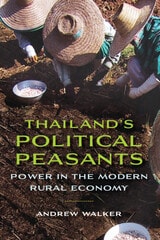
Thailand’s Political Peasants
Power in the Modern Rural EconomyAndrew Walker
University of Wisconsin Press, 2012
When a populist movement elected Thaksin Shinawatra as prime minister of Thailand in 2001, many of the country’s urban elite dismissed the outcome as just another symptom of rural corruption, a traditional patronage system dominated by local strongmen pressuring their neighbors through political bullying and vote-buying. In Thailand’s Political Peasants, however, Andrew Walker argues that the emergence of an entirely new socioeconomic dynamic has dramatically changed the relations of Thai peasants with the state, making them a political force to be reckoned with. Whereas their ancestors focused on subsistence, this generation of middle-income peasants seeks productive relationships with sources of state power, produces cash crops, and derives additional income through non-agricultural work. In the increasingly decentralized, disaggregated country, rural villagers and farmers have themselves become entrepreneurs and agents of the state at the local level, while the state has changed from an extractor of taxes to a supplier of subsidies and a patron of development projects.
Thailand’s Political Peasants provides an original, provocative analysis that encourages an ethnographic rethinking of rural politics in rapidly developing countries. Drawing on six years of fieldwork in Ban Tiam, a rural village in northern Thailand, Walker shows how analyses of peasant politics that focus primarily on rebellion, resistance, and evasion are becoming less useful for understanding emergent forms of political society.
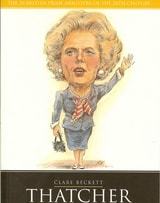
Thatcher
Clare Beckett
Haus Publishing, 2006
The "Puerto Rican Problem" in Postwar New York City
Edgardo Meléndez
Rutgers University Press, 2023
The ANC and the Liberation Struggle
A Critical Political BiographyDale T. McKinley
Pluto Press, 1997
eloquent testimony of the continuing vitality of the South African left' Modern African Studies
The African National Congress, the ANC, negotiated a transition of government and power in South Africa in the early 1990s and gained widespread respect and legitimacy when Nelson Mandela was voted in as President in 1994.
In this controversial and radical critique of the ANC and the struggle for liberation in South Africa, Dale T. McKinley challenges conventional public perceptions of the organisation and its celebrated rise to power. McKinley offers the first detailed analysis of the ANC's leadership, tactics and strategies from the 1920s, through the years of exile, to the 1990s, focusing on its close alliance with the South African Communist Party. he reveals that the organisation, despite historical claims to the contrary, failed to stay in touch with the south African masses. The ANC made fundamental compromises to gain political power, and in so doing has ensured that the economic power-base of the ruling elites in South Africa remains essentially unaltered.
The ASEAN Miracle
A Catalyst for PeaceKishore Mahbubani and Jeffery Sng
National University of Singapore Press, 2017
In 1967, leaders from Indonesia, Malaysia, the Philippines, Singapore, and Thailand struck a landmark agreement, forming ASEAN. They had realized that political and economic cooperation would bring greater stability and prosperity to the region. Fifty years and five additional countries later, the alliance has remained one of the world’s most successful collaborations. Kishore Mahbubani and Jeffery Sng explain how this partnership has benefited the ten member countries and why it should serve as a model for other regions of the world, challenging our assumptions about international cooperation. As the world turns to Asia and the United States and China jostle for dominance, the ASEAN region will have an undeniably powerful role in shaping our global systems. Mahbubani and Sng offer an important primer for understanding this immensely successful—and woefully underappreciated—regional organization.
The Adaptability Paradox
Political Inclusion and Constitutional ResilienceStephen Skowronek
University of Chicago Press, 2025
Has American democracy outstripped its constitutional accommodations?
Faith in the resilience and adaptability of the US Constitution rests on a long history of finding new ways to make the system work. In The Adaptability Paradox, political scientist Stephen Skowronek examines the rearrangements that regenerated the American government in the past and brings that experience to bear on our current predicament. He shows how a constitution framed in writing some 230 years ago can run into serious difficulties directly related to its long and impressive history of adaptation.
Skowronek connects questions about the Constitution’s adaptability to the challenges of democratization. For most of American history, serial rearrangements of constitutional relationships widened the government’s purview as a national democracy without giving either nationalism or democracy free rein. Skowronek argues that the politics of adaptation shifted fundamentally with the “Rights Revolution” of the 1960s and `70s when American national democracy approached the inclusion of all its citizens on equal footing. Since then, power and authority have been reconfigured in ways that have steadily magnified conflicts over the essentials of good order. Conservatives aim to dismantle a Constitution that progressives are intent on building upon, and the consensus necessary for a constitutional democracy to function effectively has all but evaporated. No longer a socially bound framework for national action, the Constitution has become an abstract matrix of possibilities, a disembodied opportunity structure open to starkly different, mutually unacceptable futures.
Rather than being liberated by this unbound Constitution, the American people now appear entrapped by it. Is it possible that the development of American democracy has exhausted the adaptive capacities of the Constitution? A timely reminder that constitutional democracies do not survive on faith alone, The Adaptability Paradox is a sober appraisal of the unfamiliar ground on which we now tread.

The Administrative Partitioning of Costa Rica
Marilyn April Dorn
University of Chicago Press, 1989
The African Union's Africa
New Pan-African Initiatives in Global GovernanceRita Kiki Edozie
Michigan State University Press, 2014

The Age of Strict Construction
a History of the Growth of Federal Power, 1789-1861Peter Zavodnyik
Catholic University of America Press, 2007
The Algerine Spy in Pennsylvania
Peter Markoe
Westholme Publishing, 2008
An Important Book in America’s Early Encounter with the Arab World
“A pungent satire on American affairs.” —Samuel Eliot Morison
In 1787, while American sailors languished in a Barbary prison, delegates debated the Constitution in Philadelphia. Despite America’s desire to respond to the crisis, without a central government, the new republic had no means to create a naval force. Enter an anonymously published book, The Algerine Spy in Pennsylvania: or, Letters Written by a Native of Algiers on the Affairs of the United States in America, which began circulating among the delegates. Consisting of a series of letters ostensibly written by an Algerian agent “Mehmet” back to his leader, the spy predicted that the former colonies would never be able to resolve their differences and be “ruined by disunion.” The book created a sensation and it helped tip the balance for those in favor of adopting the new Constitution. Following the Constitution’s final ratification in 1789, the United States created a navy and began asserting its power overseas. With its commentary about men and women, business and pleasure, and historical and religious comparisons between nations, The Algerine Spy in Pennsylvania provides both a contemporary snapshot of early American life and the political ideas of the period. Never before reprinted, and recently rated one of the five best works in the history of America’s encounter with the Arab world, this new edition is edited by historian Timothy Marr, who reconsiders the importance of this early work in the political and literary history of the United States.
The Allure of Labor
Workers, Race, and the Making of the Peruvian StatePaulo Drinot
Duke University Press, 2011
Although the vast majority of laboring peoples in Peru were indigenous, in the minds of social reformers indigeneity was not commensurable with labor: Indians could not be workers and were therefore excluded from the labor policies enacted in the 1920s and 1930s and, more generally, from elite conceptions of industrial progress. Drinot shows how the incommensurability of indigeneity with labor was expressed in the 1920 constitution, in specific labor policies, and in the activities of state agencies created to oversee collective bargaining and provide workers with affordable housing, inexpensive food, and social insurance. He argues that the racialized assumptions of the modernizing Peruvian state are reflected in the enduring inequalities of present-day Peru.
The Americanist
Daniel Aaron
University of Michigan Press, 2009
“I have read all of Daniel Aaron’s books, and admired them, but in The Americanist I believe he has composed an intellectual and social memoir for which he will be remembered. His self-portrait is marked by personal tact and admirable restraint: he is and is not its subject. The Americanist is a vision of otherness: literary and academic friends and acquaintances, here and abroad. Eloquently phrased and free of nostalgia, it catches a lost world that yet engendered much of our own.”
—Harold Bloom
“The Americanist is the absorbing intellectual autobiography of Daniel Aaron, who is the leading proponent and practitioner of American Studies. Written with grace and wit, it skillfully blends Daniel Aaron’s personal story with the history of the field he has done so much to create. This is a first-rate book by a first-rate scholar.”
—David Herbert Donald, Professor Emeritus, Harvard University
The Americanist is author and critic Daniel Aaron’s anthem to nearly a century of public and private life in America and abroad. Aaron, who is widely regarded as one of the founders of American Studies, graduated from the University of Michigan, received his Ph.D. from Harvard, and taught for over three decades each at Smith College and Harvard.
Aaron writes with unsentimental nostalgia about his childhood in Los Angeles and Chicago and his later academic career, which took him around the globe, often in the role of America’s accidental yet impartial critic. When Walt Whitman, whom Aaron frequently cites as a touchstone, wrote, “I am large, I contain multitudes,” he could have been describing Daniel Aaron—the consummate erudite and Renaissance individual whose allegiance to the truth always outweighs mere partisan loyalty.
Not only should Aaron’s book stand as a resplendent and summative work from one of the finest thinkers of the last hundred years, it also succeeds on its own as a first-rate piece of literature, on a par with the writings of any of its subjects. The Americanist is a veritable Who’s Who of twentieth-century writers Aaron interviewed, interacted with, or otherwise encountered throughout his life: Ralph Ellison, Robert Frost, Lillian Hellman, Richard Hofstadter, Alfred Kazin, Sinclair Lewis, Malcolm Muggeridge, John Crowe Ransom, Upton Sinclair, Edmund Wilson, Leonard Woolf, and W. B. Yeats, to name only a few.
Aaron’s frank and personal observations of these literary lights make for lively reading. As well, scattered throughout The Americanist are illuminating portraits of American presidents living and passed—miniature masterworks of astute political observation that offer dazzlingly fresh approaches to well-trod subjects.
The Anatomy of Post-Communist Regimes
A Conceptual FrameworkBálint Magyar
Central European University Press, 2021
Offering a single, coherent framework of the political, economic, and social phenomena that characterize post-communist regimes, this is the most comprehensive work on the subject to date. Focusing on Central Europe, the post-Soviet countries and China, the study provides a systematic mapping of possible post-communist trajectories.
At exploring the structural foundations of post-communist regime development, the work discusses the types of state, with an emphasis on informality and patronalism; the variety of actors in the political, economic, and communal spheres; the ways autocrats neutralize media, elections, etc. The analysis embraces the color revolutions of civil resistance (as in Georgia and in Ukraine) and the defensive mechanisms of democracy and autocracy; the evolution of corruption and the workings of “relational economy”; an analysis of China as “market-exploiting dictatorship”; the sociology of “clientage society”; and the instrumental use of ideology, with an emphasis on populism. Beyond a cataloguing of phenomena—actors, institutions, and dynamics of post-communist democracies, autocracies, and dictatorships—Magyar and Madlovics also conceptualize everything as building blocks to a larger, coherent structure: a new language for post-communist regimes.
While being the most definitive book on the topic, the book is nevertheless written in an accessible style suitable for both beginners who wish to understand the logic of post-communism and scholars who are interested in original contributions to comparative regime theory. The book is equipped with QR codes that link to www.postcommunistregimes.com, which contains interactive, 3D supplementary material for teaching.

The Anti-Semitic Moment
A Tour of France in 1898Pierre Birnbaum
University of Chicago Press, 2011
In 1898, the Dreyfus Affair plunged French society into a yearlong frenzy. In Paris and provincial villages throughout the country, angry crowds paraded through the streets, threatening to attack Jews and destroy Jewish-owned businesses. Anger about the imagined power of Jewish capital, as well as fears of treason and racial degeneration, made anti-Semitism a convenient banner behind which social and political factions could fall in line. Anti-Semitic feelings that had been simmering in France for decades came boiling to the surface.
Here Pierre Birnbaum guides readers on a tour of France during this crisis. He shows that in the midst of violence, Jewish citizens bravely and effectively defended themselves and were aided by a police force determined to maintain order. Birnbaum paints a vivid portrait of French Jewish culture at the time and explains why the French state remained strong in this time of widespread unrest.
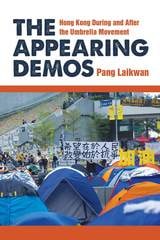
The Appearing Demos
Hong Kong During and After the Umbrella MovementPang Laikwan
University of Michigan Press, 2020
The 79-day-long Hong Kong Umbrella Movement occupied major streets in the busiest parts of the city, creating tremendous inconvenience to this city famous for capitalist order and efficiency. It was also a peaceful collective effort of appearance, and it was as much a political event as a cultural one. The urge for expressing an independent cultural identity underlined both the Occupy movement and the remarkably rich cultural expressions it generated. While understanding the specificity of Hong Kong’s situations, The Appearing Demos also comments on some global predicaments we are facing in the midst of neoliberalism and populism. It directs our attention from state-based sovereignty to city-based democracy, and emphasizes the importance of participation and cohabitation. The book also examines how the ideas of Hannah Arendt are useful to those happenings much beyond the political circumstances that gave rise to her theorization. The book pays particular attention to the actual intersubjective experiences during the protest. These experiences are local, fragile, and sometimes inarticulable, therefore resisting rationality and debates, but they define the fullness of any individual, and they also make politics possible. Using the Umbrella Movement as an example, this book examines the “freed” political agents who constantly take others into consideration in order to guarantee the political realm as a place without coercion and discrimination. In doing so, Pang Laikwan demonstrates how politics means neither to rule nor to be ruled, and these movements should be defined by hope, not by goals.
The Argentine Folklore Movement
Sugar Elites, Criollo Workers, and the Politics of Cultural Nationalism, 1900–1955Oscar Chamosa
University of Arizona Press, 2010
Oscar Chamosa combines intellectual history with ethnographic and sociocultural analysis to reconstruct the process by which mestizo culture—in Argentina called criollo culture—came to occupy the center of national folklore in a country that portrayed itself as the only white nation in South America. The author finds that the conservative plantation owners—the “sugar elites”—who exploited the criollo peasants sponsored the folklore movement that romanticized them as the archetypes of nationhood. Ironically, many of the composers and folk singers who participated in the landowner-sponsored movement adhered to revolutionary and reformist ideologies and denounced the exploitation to which those criollo peasants were subjected. Chamosa argues that, rather than debilitating the movement, these opposing and contradictory ideologies permitted its triumph and explain, in part, the enduring romanticizing of rural life and criollo culture, essential components of Argentine nationalism.
The book not only reveals the political motivations of culture in Argentina and Latin America but also has implications for understanding the articulation of local culture with national politics and entertainment markets that characterizes contemporary cultural processes worldwide today.
The Argentine Silent Majority
Middle Classes, Politics, Violence, and Memory in the SeventiesSebastián Carassai
Duke University Press, 2014

The Arizona Diary of Lily Frémont, 1878–1881
Elizabeth Benton Frémont
University of Arizona Press, 1997
Here, in rich detail, her day-by-day narrative and the editor's annotations bring to life Arizona's territorial capital of Prescott more than one hundred years ago. Lily gives us firsthand accounts of the operation of territorial government; of pressure from Anglo settlers to dispossess Pima Indians from their land; and of efforts by the governor and the army to deal with Indian scares. Here also, underlying her words, are insights into the dynamics of a close-knit Victorian family, shaping the life of an intelligent, educated single woman. As unofficial secretary for her father, Lily was well placed to observe and record an almost constant stream of visitors to the governor's home and office. Observe and record, she did. Her diary is filled with unvarnished images of personalities such as the Goldwaters, General O. B. Willcox, Moses Sherman, Judge Charles Silent, and a host of lesser citizens, politicians, and army officers.
Lily's anecdotes vividly re-create the periodic personality clashes that polarized society (and one full-fledged scandal), the ever-present danger of fire, religious practices (particularly a burial service conducted in Hebrew), and attitudes toward Native Americans and Chinese. On a more personal level, the reader will find intimate accounts of John Frémont's obsession with mining promotion, his complicated business dealings with Judge Silent, and his attempts to recoup his family's sagging fortune. Here especially, Lily outlines a telling profile of her father, a man roundly castigated then and now as a carpetbagger less interested in promoting Arizona's interests than his own.
For students of western history, Lily Frémont's diary provides a wealth of fresh information on frontier politics, mining, army life, social customs, and ethnicity. For all readers, her words from a century ago offer new perspectives on the winning of the West as well as fascinating glimpses of a world that once was and is no more.
The Art of Being In-between
Native Intermediaries, Indian Identity, and Local Rule in Colonial OaxacaYanna Yannakakis
Duke University Press, 2008
Through interpretation of a wide array of historical sources—including descriptions of public rituals, accounts of indigenous rebellions, idolatry trials, legal petitions, court cases, land disputes, and indigenous pictorial histories—Yannakakis weaves together an elegant narrative that illuminates political and cultural struggles over the terms of local rule. As cultural brokers, native intermediaries at times reconciled conflicting interests, and at other times positioned themselves in opposing camps over the outcome of municipal elections, the provision of goods and labor, landholding, community ritual, the meaning of indigenous “custom” in relation to Spanish law, and representations of the past. In the process, they shaped an emergent “Indian” identity in tension with other forms of indigenous identity and a political order characterized by a persistent conflict between local autonomy and colonial control. This innovative study provides fresh insight into colonialism’s disparate cultures and the making of race, ethnicity, and the colonial state and legal system in Spanish America.
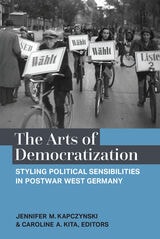
The Arts of Democratization
Styling Political Sensibilities in Postwar West GermanyJennifer M. Kapczynski and Caroline A. Kita, Editors
University of Michigan Press, 2022
These essays highlight the contradictory and competing impulses that ran through the project to democratize postwar society and cast a critical eye toward the internal biases that shaped the model of Western democracy. In so doing, the contributions probe critical questions that we continue to grapple with today. How did postwar thinkers understand what it meant to be democratic? Did they conceive of democratic subjectivity in terms of acts of participation, a set of beliefs or principles, or perhaps in terms of particular feelings or emotions? How did the work to define democracy and its subjects deploy notions of nation, race and gender or sexuality? As this book demonstrates, the case of West Germany offers compelling ways to think more broadly about the emergence of democracy. The Arts of Democratization offers lessons that resonate with the current moment as we consider what interventions may be necessary to resuscitate democracy today.
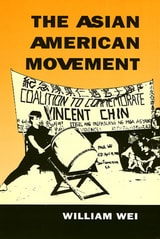
The Asian American Movement
William Wei
Temple University Press, 1993
Active for more than two decades, the Asian American movement began a middle-class reform effort to achieve racial equality, social justice, and political empowerment. In this first history and in-depth analysis of the Movement, William Wei traces to the late 1960s, the genesis of an Asian American identity, culture, and activism.
Wei analyzes the Asian American women's movement, the alternative press, Asian American involvement in electoral politics. Interviews with many key participants in the Movement and photographs of Asian American demonstrations and events enliven this portrayal of the Movement's development, breadth, and conflicts.
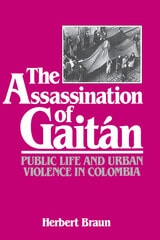
The Assassination of Gaitán
Public Life and Urban Violence in ColombiaHerbert Braun
University of Wisconsin Press, 1985
Drawn in part from personal interviews with participants and witnesses, Herbert Braun’s analysis of the riot’s roots, its patterns and consequences, provides a dramatic account of this historic turning point and an illuminating look at the making of modern Colombia.
Braun’s narrative begins in the year 1930 in Bogotá, Colombia, when a generation of Liberals and Conservatives came to power convinced they could kept he peace by being distant, dispassionate, and rational. One of these politicians, Jorge Eliécer Gaitán, was different. Seeking to bring about a society of merit, mass participation, and individualism, he exposed the private interests of the reigning politicians and engendered a passionate relationship with his followers. His assassination called forth urban crowds that sought to destroy every visible evidence of public authority of a society they felt no longer had the moral right to exist.
This is a book about behavior in public: how the actors—the political elite, Gaitán, and the crowds—explained and conducted themselves in public, what they said and felt, and what they sought to preserve or destroy, is the evidence on which Braun draws to explain the conflicts contained in Colombian history. The author demonstrates that the political culture that was emerging through these tensions offered the hope of a peaceful transition to a more open, participatory, and democratic society.
“Most Colombians regard Jorge Eliécer Gaitán as a pivotal figure in their nation’s history, whose assassination on April 9, 1948 irrevocably changed the course of events in the twentieth century. . . . As biography, social history, and political analysis, Braun’s book is a tour de force.”—Jane M. Rausch, Hispanic American Historical Review
The Athenian Experiment
Building an Imagined Political Community in Ancient Attica, 508-490 B.C.Greg Anderson
University of Michigan Press, 2003
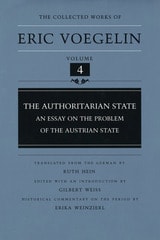
The Authoritarian State (CW4)
An Essay on the Problem of the Austrian StateEric Voegelin, Edited & Intro by Gilbert Weiss, Translated by Ruth Hein, & Historical Commentary by Erika Weinzierl
University of Missouri Press, 1999
Published in Vienna in 1936, The Authoritarian State by Eric Voegelin has remained virtually unknown to the public until now. Sales of the German edition were halted following the Nazi invasion of Austria in 1938, and the entire printing was later destroyed by wartime bombing. In this volume, Voegelin offers a critical examination of the most prominent European theories of state and constitutional law of the period while providing a political and historical analysis of the Austrian situation. He discusses the dismissal of Parliament in 1933, the civil war, the murder of Federal Chancellor Dollfuss, the adoption of the "Authoritarian Constitution" of 1934, and the predicament of being sandwiched between Hitler and Mussolini.
A radical critique of Hans Kelsen's pure theory of law lies at the heart of this work, marking Voegelin's definitive departure from Neo-Kantian epistemology. For the first time, Voegelin elaborates on the important distinction between theoretical concepts and political symbols as a basis for explaining the nontheoretical and speculative character of ideologies, both left and right. He shows that total and authoritarian are symbols of ideological self-interpretation that have no theoretical value, a distinction basic to his later work in The New Science of Politics.
Available for the first time in English, The Authoritarian State is a valuable addition to the Voegelin canon and to the field of intellectual history in general.

The Autobiography of Harry S. Truman
Edited with a New Introduction by Robert H. Ferrell
University of Missouri Press, 2002
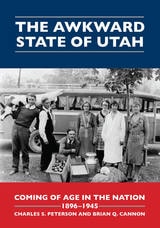
The Awkward State of Utah
Coming of Age in the Nation, 1896-1945Charles Peterson and Brian Cannon
University of Utah Press, 2015
The half century between statehood in 1896 and the end of World War II in 1945 was a period of transformation and transition for Utah. This book interprets those profound changes, revealing sweeping impacts on both institutions and ordinary people. Drawing upon expertise honed over decades of teaching, researching, and writing about Utah’s history, the authors incorporate fresh archival sources, new oral histories, and hundreds of scholarly articles and books as they narrate the little-known story of the crucial formative years when Utah came of age.
During its sometimes awkward years of adolescence and maturation, Utah was gradually incorporated into the American political, social, and economic mainstream. Urban and industrial influences supplanted agrarian traditions, displacing people socially, draining the countryside of population, and galvanizing a critical crisis in values and self-identification. National corporations and mass labor movements took root in the state as commerce expanded. Involvement in world events such as the Spanish-American War, two world wars, and the Great Depression further set the stage for entry into the modern, globalized world as Utahns immersed themselves in national politics and became part of the democratic, corporate culture of twentieth-century America.
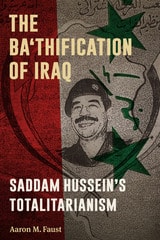
The Ba'thification of Iraq
Saddam Hussein's TotalitarianismBy Aaron M. Faust
University of Texas Press, 2015
Saddam Hussein ruled Iraq as a dictator for nearly a quarter century before the fall of his regime in 2003. Using the Ba’th party as his organ of meta-control, he built a broad base of support throughout Iraqi state and society. Why did millions participate in his government, parrot his propaganda, and otherwise support his regime when doing so often required betraying their families, communities, and beliefs? Why did the “Husseini Ba’thist” system prove so durable through uprisings, two wars, and United Nations sanctions?
Drawing from a wealth of documents discovered at the Ba’th party’s central headquarters in Baghdad following the US-led invasion in 2003, The Ba’thification of Iraq analyzes how Hussein and the party inculcated loyalty in the population. Through a grand strategy of “Ba’thification,” Faust argues that Hussein mixed classic totalitarian means with distinctly Iraqi methods to transform state, social, and cultural institutions into Ba’thist entities, and the public and private choices Iraqis made into tests of their political loyalty. Focusing not only on ways in which Iraqis obeyed, but also how they resisted, and using comparative examples from Hitler’s Germany and Stalin’s Russia, The Ba’thification of Iraq explores fundamental questions about the roles that ideology and culture, institutions and administrative practices, and rewards and punishments play in any political system.

The Bangladesh Reader
History, Culture, PoliticsMeghna Guhathakurta and Willem van Schendel, eds.
Duke University Press, 2013
Intended for travelers, students, and scholars, the Reader encompasses first-person accounts, short stories, historical documents, speeches, treaties, essays, poems, songs, photographs, cartoons, paintings, posters, advertisements, maps, and a recipe. Classic selections familiar to many Bangladeshis—and essential reading for those who want to know the country—are juxtaposed with less-known pieces. The selections are translated from a dozen languages; many have not been available in English until now. Featuring eighty-three images, including seventeen in color, The Bangladesh Reader is an unprecedented, comprehensive introduction to the South Asian country's turbulent past and dynamic present.
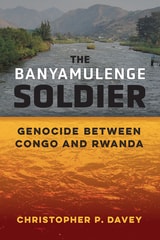
The Banyamulenge Soldier
Genocide between Congo and RwandaChristopher P. Davey
University of Michigan Press, 2025
Challenging the preconceived perpetrator and victim categories with a forward-thinking approach using the concept of genocide narrative identity—meaning a narrative identity shaped by experiences of social destruction or uses of genocide as a concept—Christopher P. Davey reveals how the stories we tell about ourselves shapes who we are. He shows that Banyamulenge experiences of genocide between Congo and Rwanda are layered around agencies of victimhood and perpetration of genocide. Using soldier and other community narratives, Davey examines the subjective nature of genocide in perception of an event, strategic deployment of the label, and in the (re)shaping of social worlds inhabited by this community and therefore impacting others in Congo and Rwanda. The Banyamulenge Soldier offers an insider view of the historical dynamics of current conflicts in South Kivu while adding to our understanding of relational genocide theory.
The Basic Symbols of the American Political Tradition
Willmoore Kendall
Catholic University of America Press, 1995