Results by title
160 books match the query 'Poverty & Homelessness' and 24 start with t
The American Non-Dilemma
Racial Inequality Without RacismNancy DiTomaso
Russell Sage Foundation, 2013
The Colors of Poverty
Why Racial and Ethnic Disparities PersistAnn Chih Lin
Russell Sage Foundation, 2008
The Death Gap
How Inequality KillsDavid A. Ansell, MD
University of Chicago Press, 2017
While the contrasts and disparities among Chicago’s communities are particularly stark, the death gap is truly a nationwide epidemic—as Ansell shows, there is a thirty-five-year difference in life expectancy between the healthiest and wealthiest and the poorest and sickest American neighborhoods. If you are poor, where you live in America can dictate when you die. It doesn’t need to be this way; such divisions are not inevitable. Ansell calls out the social and cultural arguments that have been raised as ways of explaining or excusing these gaps, and he lays bare the structural violence—the racism, economic exploitation, and discrimination—that is really to blame. Inequality is a disease, Ansell argues, and we need to treat and eradicate it as we would any major illness. To do so, he outlines a vision that will provide the foundation for a healthier nation—for all.
Inequality is all around us, and often the distance between high and low life expectancy can be a matter of just a few blocks. But geography need not be destiny, urges Ansell. In The Death Gap he shows us how we can face this national health crisis head-on and take action against the circumstances that rob people of their dignity and their lives.
The Death Gap
How Inequality KillsDavid A. Ansell, MD
University of Chicago Press, 2021
While the contrasts and disparities among Chicago’s communities are particularly stark, the death gap is truly a nationwide epidemic—as Ansell shows, there is a thirty-five-year difference in life expectancy between the healthiest and wealthiest and the poorest and sickest American neighborhoods. If you are poor, where you live in America can dictate when you die. It doesn’t need to be this way; such divisions are not inevitable. Ansell calls out the social and cultural arguments that have been raised as ways of explaining or excusing these gaps, and he lays bare the structural violence—the racism, economic exploitation, and discrimination—that is really to blame. Inequality is a disease, Ansell argues, and we need to treat and eradicate it as we would any major illness. To do so, he outlines a vision that will provide the foundation for a healthier nation—for all.
As the COVID-19 mortality rates in underserved communities proved, inequality is all around us, and often the distance between high and low life expectancy can be a matter of just a few blocks. Updated with a new foreword by Chicago mayor Lori Lightfoot and an afterword by Ansell, The Death Gap speaks to the urgency to face this national health crisis head-on.
The Economics of Poverty Traps
Edited by Christopher B. Barrett, Michael R. Carter, and Jean-Paul Chavas
University of Chicago Press, 2018
The research in this volume explores the hypothesis that poverty is self-reinforcing because the equilibrium behaviors of the poor perpetuate low standards of living. Contributions explore the dynamic, complex processes by which households accumulate assets and increase their productivity and earnings potential, as well as the conditions under which some individuals, groups, and economies struggle to escape poverty. Investigating the full range of phenomena that combine to generate poverty traps—gleaned from behavioral, health, and resource economics as well as the sociology, psychology, and environmental literatures—chapters in this volume also present new evidence that highlights both the insights and the limits of a poverty trap lens.
The framework introduced in this volume provides a robust platform for studying well-being dynamics in developing economies.
The Ethics of Space
Homelessness and Squatting in Urban EnglandSteph Grohmann
HAU, 2020
Set against the backdrop of economic crisis, austerity, and a disintegrating British state, Steph Grohmann tells the story of a flourishing squatter community in the city of Bristol and how it was eventually outlawed by the state. The first ethnography of homelessness done by a researcher who was formally homeless throughout fieldwork, this volume explores the intersection between spatial existence, subjectivity, and ethics. The result is a book that rethinks how ethical views are shaped and constructed through our own spatial existences.

The Fair Trade Scandal
Marketing Poverty to Benefit the RichNdongo Samba Sylla
Pluto Press, 2014
Sylla shows empirically that Fair Trade excludes those who need it the most and that its benefits are essentially captured by the wealthiest groups in the supply chain. Based on his experience of working for Fairtrade International, Sylla shows the flaws in the Fair Trade system which compromise its ethical mission.
The Fair Trade Scandal is both a provocative and deeply informative exploration of the Fair Trade phenomenon, suitable for specialists and non-specialists alike.

The Fundamental Institution
Poverty, Social Welfare, and Agriculture in American Poor FarmsMegan Birk
University of Illinois Press, 2022
In-depth and innovative, The Fundamental Institution offers an overdue portrait of rural social welfare in the United States.
The Housing Lottery
How Scarcity Drives America’s Rental Assistance PoliciesBrian J. McCabe
University of Chicago Press, 2026
How scarcity shapes nearly every aspect of our rental assistance programs, including the Housing Choice Voucher program.
It’s no secret that the United States is experiencing a housing crisis. While the cost of rental housing has soared since 2000, the median household income has barely changed. The Housing Choice Voucher program is America’s largest rental assistance program, but most households that are eligible for assistance simply cannot get access to it. Without enough resources to serve every eligible household in their communities, public housing agencies keep waiting lists, run lotteries, and claw back vouchers from households that are unable to meet the demands of the housing market. Despite the enormous benefits that come from affordable housing, it’s simply out of reach for most renters in need.
In The Housing Lottery, sociologist Brian J. McCabe takes readers to the frontlines of these housing agencies to understand how scarcity shapes nearly every aspect of the program. Following the bureaucrats charged with making these decisions about allocating housing resources, McCabe shows how decisions and regulations resulting from scarcity have enormous consequences. He presents extensive evidence about the importance of rental assistance for lifting households out of poverty and creating economic opportunity. To improve housing assistance as a public resource and to combat housing insecurity and its negative effects, McCabe argues for a more inclusive, expansive approach to federal housing policy.
The News Untold
Community Journalism and the Failure to Confront Poverty in AppalachiaMichael Clay Carey
West Virginia University Press, 2017
Weatherford Award winner, nonfiction
The News Untold offers an important new perspective on media narratives about poverty in Appalachia. It focuses on how small-town reporters and editors in some of the region’s poorest communities decide what aspects of poverty are news, how their audiences interpret those decisions, and how those two related processes help shape broader understandings of economic need and local social responsibility. Focusing on patterns of both media creation and consumption, The News Untold shows how a lack of constructive news coverage of economic need can make it harder for the poor to voice their concerns.
Critical and inclusive news coverage of poverty at the local level, Michael Clay Carey writes, can help communities start to look past old stereotypes and attitudes and encourage solutions that incorporate broader sets of community voices. Such an effort will require journalists and community leaders to reexamine some of the professional traditions and social views that often shape what news looks like in small towns.
The People of the Abyss
Jack London
Pluto Press, 2001
As well as being a literary masterpiece, The People of the Abyss stands as a major sociological study. While other American writers were blindly celebrating the glories of the British Empire at its peak, Jack London was asking why such misery was to be found in the heart of a capital city of immense wealth.
This is a work of reportage - London lets his observations speak for themselves. A precursor to the writings of George Orwell, this book remains a standard-bearer critique of capitalism, as powerful today as it was then.
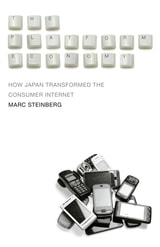
The Platform Economy
How Japan Transformed the Consumer InternetMarc Steinberg
University of Minnesota Press, 2019
Offering a deeper understanding of today’s internet media and the management theory behind it
Platforms are everywhere. From social media to chat, streaming, credit cards, and even bookstores, it seems like almost everything can be described as a platform. In The Platform Economy, Marc Steinberg argues that the “platformization” of capitalism has transformed everything, and it is imperative that we have a historically precise, robust understanding of this widespread concept.
Taking Japan as the key site for global platformization, Steinberg delves into that nation’s unique technological and managerial trajectory, in the process systematically examining every facet of the elusive word platform. Among the untold stories revealed here is that of the 1999 iPhone precursor, the i-mode: the world’s first widespread mobile internet platform, which became a blueprint for Apple and Google’s later dominance of the mobile market. Steinberg also charts the rise of social gaming giants GREE and Mobage, chat tools KakaoTalk, WeChat, and LINE, and video streaming site Niconico Video, as well as the development of platform theory in Japan, as part of a wider transformation of managerial theory to account for platforms as mediators of cultural life.
Analyzing platforms’ immense impact on contemporary media such as video streaming, music, and gaming, The Platform Economy fills in neglected parts of the platform story. In narrating the rise and fall of Japanese platforms, and the enduring legacy of Japanese platform theory, this book sheds light on contemporary tech titans like Facebook, Google, Apple, and Netflix, and their platform-mediated transformation of contemporary life—it is essential reading for anyone wanting to understand what capitalism is today and where it is headed.

The Poem Electric
Technology and the American LyricSeth Perlow
University of Minnesota Press, 2018
An enlightening examination of the relationship between poetry and the information technologies increasingly used to read and write it
Many poets and their readers believe poetry helps us escape straightforward, logical ways of thinking. But what happens when poems confront the extraordinarily rational information technologies that are everywhere in the academy, not to mention everyday life?
Examining a broad array of electronics—including the radio, telephone, tape recorder, Cold War–era computers, and modern-day web browsers—Seth Perlow considers how these technologies transform poems that we don’t normally consider “digital.” From fetishistic attachments to digital images of Emily Dickinson’s manuscripts to Jackson Mac Low’s appropriation of a huge book of random numbers originally used to design thermonuclear weapons, these investigations take Perlow through a revealingly eclectic array of work, offering both exciting new voices and reevaluations of poets we thought we knew.
With close readings of Gertrude Stein, Frank O’Hara, Amiri Baraka, and many others, The Poem Electric constructs a distinctive lineage of experimental writers, from the 1860s to today. Ultimately, Perlow mounts an important investigation into how electronic media allows us to distinguish poetic thought from rationalism. Posing a necessary challenge to the privilege of information in the digital humanities, The Poem Electric develops new ways of reading poetry, alongside and against the electronic equipment that is now ubiquitous in our world.
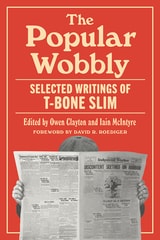
The Popular Wobbly
Selected Writings of T-Bone SlimT-Bone Slim
University of Minnesota Press, 2025
The first critical edition of the writings of the prolific radical workers’ newspaper columnist and musician who rode the rails during the Great Depression
The Popular Wobbly brings together a wide selection of writings by T-Bone Slim, the most popular and talented writer belonging to the Industrial Workers of the World (IWW). Slim wrote humorous, polemical pieces, engaging with topics like labor and class injustice, which were mostly published in IWW publications from 1920 until his death in 1942. Although relatively little is known about Slim, editors Owen Clayton and Iain McIntyre coalesce the latest research on this enigmatic character to create a vivid portrait that adds valuable context for the array of writings assembled here.
Known as “the laureate of the logging camps,” Slim also composed numerous songs that have been performed and recorded by Pete Seeger, Utah Phillips, and Candie Carawan, who in 1960 updated Slim’s song “The Popular Wobbly” with Civil Rights–era lyrics. Slim’s witticisms, sayings, and exhortations (“Wherever you find injustice, the proper form of politeness is attack”; “Only the poor break laws—the rich evade them”) were widely discussed among fellow hobos across the “jungle” campfires that dotted the railways, and some even transcribed his commentary on boxcars that traveled the country. Yet despite Slim’s importance and fame during his lifetime, his work disappeared from public view almost immediately after his death.
The Popular Wobbly is the first critical edition of Slim’s work and also a significant contribution to literature about working-class writers, the radical labor movement, and the history and culture of nomadism and precarity. With this publication, Slim’s rediscovered writings can once again inspire artists and activists to march and agitate for a more just and equitable world.
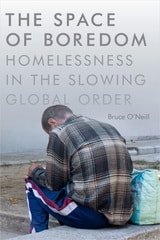
The Space of Boredom
Homelessness in the Slowing Global OrderBruce O'Neill
Duke University Press, 2017
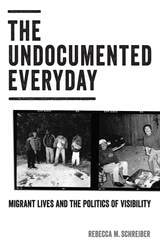
The Undocumented Everyday
Migrant Lives and the Politics of VisibilityRebecca M. Schreiber
University of Minnesota Press, 2018
Examining how undocumented migrants are using film, video, and other documentary media to challenge surveillance, detention, and deportation
As debates over immigration increasingly become flashpoints of political contention in the United States, a variety of advocacy groups, social service organizations, filmmakers, and artists have provided undocumented migrants with the tools and training to document their experiences.
In The Undocumented Everyday, Rebecca M. Schreiber examines the significance of self-representation by undocumented Mexican and Central American migrants, arguing that by centering their own subjectivity and presence through their use of documentary media, these migrants are effectively challenging intensified regimes of state surveillance and liberal strategies that emphasize visibility as a form of empowerment and inclusion. Schreiber explores documentation as both an aesthetic practice based on the visual conventions of social realism and a state-administered means of identification and control.
As Schreiber shows, by visualizing new ways of belonging not necessarily defined by citizenship, these migrants are remaking documentary media, combining formal visual strategies with those of amateur photography and performative elements to create a mixed-genre aesthetic. In doing so, they make political claims and create new forms of protection for migrant communities experiencing increased surveillance, detention, and deportation.
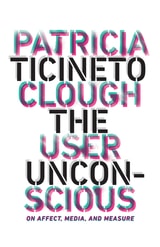
The User Unconscious
On Affect, Media, and MeasurePatricia Ticineto Clough
University of Minnesota Press, 2018
Wide-ranging essays and experimental prose forcefully demonstrate how digital media and computational technologies have redefined what it is to be human
Over the past decade, digital media has expanded exponentially, becoming an essential part of daily life. The stimulating essays and experimental compositions in The User Unconscious delve into the ways digital media and computational technologies fundamentally affect our sense of self and the world we live in, from both human and other-than-human perspectives.
Critical theorist Patricia Ticineto Clough’s provocative essays center around the motif of the “user unconscious” to advance the challenging thesis that that we are both human and other-than-human: we now live, think, and dream within multiple layers of computational networks that are constantly present, radically transforming subjectivity, sociality, and unconscious processes.
Drawing together rising strains of philosophy, critical theory, and media studies, as well as the political, social, and economic transformations that are shaping the twenty-first-century world, The User Unconscious points toward emergent crises and potentialities in both human subjectivity and sociality. Moving from affect to data, Clough forces us to see that digital media and computational technologies are not merely controlling us—they have already altered what it means to be human.
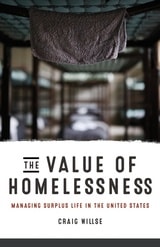
The Value of Homelessness
Managing Surplus Life in the United StatesCraig Willse
University of Minnesota Press, 2015
It is all too easy to assume that social service programs respond to homelessness, seeking to prevent and understand it. The Value of Homelessness, however, argues that homelessness today is an effect of social services and sciences, which shape not only what counts as such but what will?or ultimately won’t?be done about it.
Through a history of U.S. housing insecurity from the 1930s to the present, Craig Willse traces the emergence and consolidation of a homeless services industry. How to most efficiently allocate resources to control ongoing insecurity has become the goal, he shows, rather than how to eradicate the social, economic, and political bases of housing needs. Drawing on his own years of work in homeless advocacy and activist settings, as well as interviews conducted with program managers, counselors, and staff at homeless services organizations in New York, Los Angeles, San Francisco, and Seattle, Willse provides the first analysis of how housing insecurity becomes organized as a governable social problem.
An unprecedented and powerful historical account of the development of contemporary ideas about homelessness and how to manage homelessness, The Value of Homelessness offers new ways for students and scholars of social work, urban inequality, racial capitalism, and political theory to comprehend the central role of homelessness in governance and economy today.
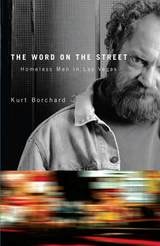
The Word On The Street
Homeless Men In Las VegasKurt Borchard
University of Nevada Press, 2007
Borchard’s account offers a graphic, disturbing, and profoundly moving picture of life on Las Vegas’s streets, depicting the strategies that homeless men employ in order to survive, from the search for a safe place to sleep at night to the challenges of finding food, maintaining personal hygiene, and finding an acceptable place to rest during a long day on the street.
That such misery and desperation exist in the midst of Las Vegas’s hedonistic tourist economy and booming urban development is a cruel irony, according to the author, and it threatens the city’s future as a prime tourist destination. The book will be of interest to social workers, sociologists, anthropologists, politicians, and all those concerned about changing the misery on the street.
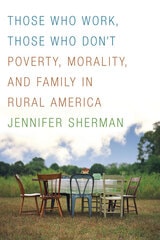
Those Who Work, Those Who Don't
Poverty, Morality, and Family in Rural AmericaJennifer Sherman
University of Minnesota Press, 2009
When the rural poor prioritize issues such as the right to bear arms, and disapprove of welfare despite their economic concerns, they are often dismissed as uneducated and backward by academics and political analysts. In Those Who Work, Those Who Don't, Jennifer Sherman offers a much-needed sympathetic understanding of poor rural Americans, persuasively arguing that the growing cultural significance of moral values is a reasonable and inevitable response to economic collapse and political powerlessness.
Those Who Work, Those Who Don't is based on the intimate interviews and in-depth research Sherman conducted while spending a year living in "Golden Valley," a remote logging town in Northern California. Economically devastated by the 1990 ruling that listed the northern spotted owl as a threatened species, Golden Valley proved to be a rich case study for Sherman. She looks at how the members of the community coped with downward mobility caused by the loss of timber industry jobs and examines a wide range of reactions. She shows how substance abuse, domestic violence, and gender roles fluctuated under the town's economic strain.
Compellingly written, shot through with honesty and empathy, Those Who Work, Those Who Don't is a rare firsthand account that studies the rural poor. As incomes erode and the American dream becomes more and more inaccessible, Sherman reveals that moral values and practices become a way for the poor to gain status and maintain a sense of dignity in the face of economic ruin.
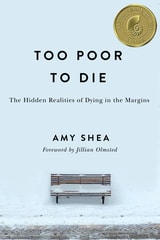
Too Poor to Die
The Hidden Realities of Dying in the MarginsAmy Shea
Rutgers University Press, 2025
Gold Winner in the Death & Dying Category of the Nautilus Book Awards
Winner of the 2025 Book Excellence Awards in the Death and Dying Category
Silver Winner in the Reader Views Literary Awards in the Humanities and Societal Issues categories
Best Nonfiction Book in TalkDeath's Reader Choice Awards
CALIBA Golden Poppy Award Finalist — Nonfiction category
Death is the great equalizer, but not all deaths are created equal. In recent years, there has been an increased interest and advocacy concerning end-of-life and after-death care. An increasing number of individuals and organizations from health care to the funeral and death care industries are working to promote and encourage people to consider their end-of-life wishes. Yet, there are limits to who these efforts reach and who can access such resources. These conversations come from a place of good intentions, but also from a place of privilege.
Too Poor to Die: The Hidden Realities of Dying in the Margins, a collection of closely connected essays, takes the reader on a journey into what happens to those who die while experiencing homelessness or who end up indigent or unclaimed at the end of life. Too Poor to Die bears witness to the disparities in death and dying faced by some of society’s most vulnerable and marginalized and asks the reader to consider their own end-of-life and disposition plans within the larger context of how privilege and access plays a role in what we want versus what we get in death.
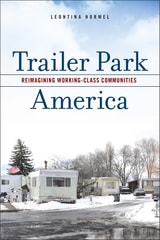
Trailer Park America
Reimagining Working-Class CommunitiesLeontina Hormel
Rutgers University Press, 2023
Trapped in America's Safety Net
One Family's StruggleAndrea Louise Campbell
University of Chicago Press, 2014
As a social policy scholar, Campbell thought she knew a lot about means-tested assistance programs. What she quickly learned was that missing from most government manuals and scholarly analyses was an understanding of how these programs actually affect the lives of the people who depend on them. Using Marcella and Dave’s situation as a case in point, she reveals their many shortcomings in Trapped in America’s Safety Net. Because American safety net programs are designed for the poor, Marcella and Dave first had to spend down their assets and drop their income to near-poverty level before qualifying for help. What’s more, to remain eligible, they will have to stay under these strictures for the rest of their lives, meaning they are barred from doing many of the things middle-class families are encouraged to do: Save for retirement. Develop an emergency fund. Take advantage of tax-free college savings. And, while Marcella and Dave’s story is tragic, the financial precariousness they endured even before the accident is all too common in America, where the prevalence of low-income work and unequal access to education have generated vast—and growing—economic inequality. The implementation of Obamacare has cut the number of uninsured and underinsured and reduced some of the disparities in coverage, but it continues to leave too many people open to tremendous risk.
Behind the statistics and beyond the ideological battles are human beings whose lives are stunted by policies that purport to help them. In showing how and why this happens, Trapped in America’s Safety Net offers a way to change it.
Trapped in America's Safety Net
One Family's StruggleAndrea Louise Campbell
University of Chicago Press, 2014
When Andrea Louise Campbell’s sister-in-law, Marcella Wagner, was run off the freeway by a hit-and-run driver, she was seven-and-a-half months pregnant. She survived—and, miraculously, the baby was born healthy. But that’s where the good news ends. Marcella was left paralyzed from the chest down. This accident was much more than just a physical and emotional tragedy. Like so many Americans—50 million, or one-sixth of the country’s population—neither Marcella nor her husband, Dave, who works for a small business, had health insurance. On the day of the accident, she was on her way to class for the nursing program through which she hoped to secure one of the few remaining jobs in the area with the promise of employer-provided insurance. Instead, the accident plunged the young family into the tangled web of means-tested social assistance.
As a social policy scholar, Campbell thought she knew a lot about means-tested assistance programs. What she quickly learned was that missing from most government manuals and scholarly analyses was an understanding of how these programs actually affect the lives of the people who depend on them. Using Marcella and Dave’s situation as a case in point, she reveals their many shortcomings in Trapped in America’s Safety Net. Because American safety net programs are designed for the poor, Marcella and Dave first had to spend down their assets and drop their income to near-poverty level before qualifying for help. What’s more, to remain eligible, they will have to stay under these strictures for the rest of their lives, meaning they are barred from doing many of the things middle-class families are encouraged to do: Save for retirement. Develop an emergency fund. Take advantage of tax-free college savings. And, while Marcella and Dave’s story is tragic, the financial precariousness they endured even before the accident is all too common in America, where the prevalence of low-income work and unequal access to education have generated vast—and growing—economic inequality. The implementation of Obamacare has cut the number of uninsured and underinsured and reduced some of the disparities in coverage, but it continues to leave too many people open to tremendous risk.
Behind the statistics and beyond the ideological battles are human beings whose lives are stunted by policies that purport to help them. In showing how and why this happens, Trapped in America’s Safety Net offers a way to change it.