Results by title
151 books match the query 'Radicalism' and 31 start with t
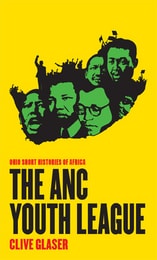
The ANC Youth League
Clive Glaser
Ohio University Press, 2012
This brilliant little book tells the story of the African National Congress (ANC) Youth League from its origins in the 1940s to the present and the controversies over Julius Malema and his influence in contemporary youth politics. Glaser analyzes the ideology and tactics of its founders, some of whom (notably Nelson Mandela and Oliver Tambo) later became iconic figures in South African history as well as inspirational figures such as A. P. Mda (father of author Zakes Mda) and Anton Lembede. It shows how the early Youth League gave birth not only to the modern ANC but also to its rival, the Pan Africanist Congress. Dormant for many years, the Youth League reemerged in the transition era under the leadership of Peter Mokaba—infused with the tradition of the militant youth politics of the 1980s. Throughout its history the Youth League has tried to “dynamize” and criticize the ANC from within, while remaining devoted to the mother body and struggling to find a balance between loyalty and rebellion.
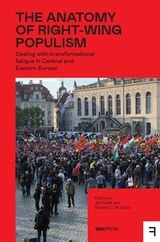
The Anatomy of Right-Wing Populism
Dealing with Transformational Fatigue in Central and Eastern EuropeEdited by Jan Kubik and Richard C. M. Mole
University College London, 2025
Over the past two decades, populist politicians and parties have enjoyed remarkable success across the globe. To develop a multidisciplinary understanding of the rise and functioning of right-wing populism in Central and Eastern Europe, The Anatomy of Right-Wing Populism examines two original concepts. The first, neo-feudalism, refers to an economic system whereby a relatively small group of elites holds most of the political power and controls a significant portion of the country’s economy. The second concept, neo-traditionalism, is a cultural strategy that aims to legitimize neo-feudal systems. Based on this framework, this volume provides empirical and theoretical analysis of populist movements and offers policy recommendations on how to resist illiberalism.
The Art of Protest
Culture and Activism from the Civil Rights Movement to the PresentT.V. Reed
University of Minnesota Press, 2019
A second edition of the classic introduction to arts in social movements, fully updated and now including Black Lives Matter, Occupy Wall Street, and new digital and social media forms of cultural resistance
The Art of Protest, first published in 2006, was hailed as an “essential” introduction to progressive social movements in the United States and praised for its “fluid writing style” and “well-informed and insightful” contribution (Choice Magazine). Now thoroughly revised and updated, this new edition of T. V. Reed’s acclaimed work offers engaging accounts of ten key progressive movements in postwar America, from the African American struggle for civil rights beginning in the 1950s to Occupy Wall Street and Black Lives Matter in the twenty-first century.
Reed focuses on the artistic activities of these movements as a lively way to frame progressive social change and its cultural legacies: civil rights freedom songs, the street drama of the Black Panthers, revolutionary murals of the Chicano movement, poetry in women’s movements, the American Indian Movement’s use of film and video, anti-apartheid rock music, ACT UP’s visual art, digital arts in #Occupy, Black Lives Matter rap videos, and more.
Through the kaleidoscopic lens of artistic expression, Reed reveals how activism profoundly shapes popular cultural forms. For students and scholars of social change and those seeking to counter reactionary efforts to turn back the clock on social equality and justice, the new edition of The Art of Protest will be both informative and inspiring.
The Art of Protest
Culture and Activism from the Civil Rights Movement to the Streets of SeattleT.V. Reed
University of Minnesota Press, 2005
The Communal Experience
Anarchist and Mystical Communities in Twentieth Century AmericaLaurence R. Veysey
University of Chicago Press, 1978
Veysey compares the history of secular communities such as the early Ferrer Colony and Modern School, of Shelton, New Jersey, with contemporary anarchist communities in New York, Vermont, and New Mexico. Religious communes—"Communities of Discipline"—such as the Vedanta monasteries of the early twentieth century are compared with contemporary mystical communities in New Mexico. Distinctions between the anarchist and the mystical groups are most obvious from their approach to communal life. As Veysey shows, anarchist communities are loose, unstructured, voluntaristic; the mystics establish more rigid life-styles, focus on spiritual leaders, and hold community a secondary goal to self-realization. In a new preface written for this Phoenix Edition, he describes his return to a New Mexican mystical community and the changes that have occurred in the six years since his last visit.
The Communist Party in Maryland, 1919-57
Vernon L. Pedersen
University of Illinois Press, 2001
Bolsheviks in Baltimore charts the uneven transformation of Baltimore's fledgling Communists into underground revolutionaries in the 1920s. Pedersen documents the mercurial careers of local organizers, their devotion to the Soviet cause, and their efforts to convert the Party from a hodgepodge of ethnic groups to an effective instrument of class interests. He also tracks the public's changing perception of the Communists, from amused unconcern to alarm, and details how the Ober antisubversive law and the HUAC hearings of the 1950s dismantled the Party from without while planting seeds of paranoia that destroyed it from within.
Behind the public fear of a Communist conspiracy against the U.S. government, Pedersen finds a party fractured by conflicting agendas, ineffectual leadership, and unstable membership. However, he also uncovers new evidence that Communists in the United States, acting on Soviet orders, used their influence in unions and front groups to sway American foreign policy in ways that benefited the Soviet Union. He documents the consolidation of an espionage apparatus in Baltimore and demonstrates that while espionage activities may have involved only a few individuals, all Party members shared an attitude of willing support for the activities of the Soviet Union that made these covert practices possible.
Paying tribute to the fervor and the effort dedicated by the Maryland Communists, often at the expense of their own physical and financial well-being, to a cause that ultimately failed them, Bolsheviks in Baltimore assesses an ambiguous legacy of admirable social vision, haphazard international conspiracy, and fierce internal conflict.
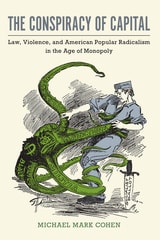
The Conspiracy of Capital
Law, Violence, and American Popular Radicalism in the Age of MonopolyMichael Mark Cohen
University of Massachusetts Press, 2019
In this detailed cultural history, Michael Mark Cohen argues that a legal, ideological, and representational politics of conspiracy contributed to the formation of a genuinely revolutionary mass culture in the United States, starting with the 1886 Haymarket bombing. Drawing on a wealth of primary sources, The Conspiracy of Capital offers a new history of American radicalism and the alliance between the modern business corporation and national security state through a comprehensive reassessment of the role of conspiracy laws and conspiracy theories in American social movements.
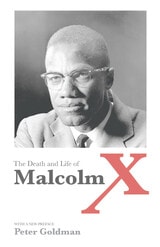
The Death and Life of Malcolm X
Peter Goldman
University of Illinois Press, 2013
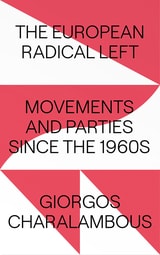
The European Radical Left
Movements and Parties since the 1960sGiorgos Charalambous
Pluto Press, 2021
Is today’s left really new? How has the European radical left evolved?
Giorgos Charalambous answers these questions by looking at three moments of rapid political change - the late 1960s to late 1970s; the turn of the millennium; and post-2008. He challenges the conventional understanding of a ‘new left’, drawing out continuities with earlier movements and parties.
Charalambous examines the ‘Long ‘68’, symbolised by the May uprisings in France, which saw the rise of new left forces and the widespread criticism by younger radical activists of traditional communist and socialist parties. He puts this side by side with the turn of the millennium when the Global Justice Movement rose to prominence and changed the face of the international left, and also the period after the financial crash of 2008 and the rise of anti-austerity politics which initiated the most recent wave of new left parties such as Podemos in Spain and Syriza in Greece.
With a unique ‘two-level’ perspective, Charalambous approaches the left through both social movements and party politics, looking at identities, rhetoric and organization, and bringing a fresh new approach to radical history, as well as assessing challenges for both activists and scholars.
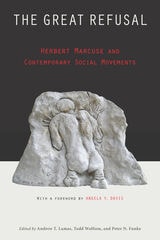
The Great Refusal
Herbert Marcuse and Contemporary Social MovementsAndrew Lamas
Temple University Press, 2016
Herbert Marcuse examined the subjective and material conditions of radical social change and developed the "Great Refusal," a radical concept of "the protest against that which is." The editors and contributors to the exciting new volume The Great Refusal provide an analysis of contemporary social movements around the world with particular reference to Marcuse's revolutionary concept. The book also engages-and puts Marcuse in critical dialogue with-major theorists including Slavoj Žižek and Michel Foucault, among others.
The chapters in this book analyze different elements and locations of the contemporary wave of struggle, drawing on the work and vision of Marcuse in order to reveal, with a historical perspective, the present moment of resistance. Essays seek to understand recent uprisings-such as the Zapatistas in Mexico, the Arab Spring, and the Occupy movement-in the context of Marcuse's powerful conceptual apparatus.
The Great Refusal also charts contemporary social movements against global warming, mass incarceration, police brutality, white supremacy, militarization, technological development, and more, to provide insights that advance our understanding of resistance today.
Contributors include: Kevin B. Anderson, Stanley Aronowitz, Joan Braune, Jenny Chan, Angela Y. Davis, Arnold L. Farr, Andrew Feenberg, Michael Forman, Christian Fuchs, Stefan Gandler, Christian Garland, Toorjo Ghose, Imaculada Kangussu, George Katsiaficas, Douglas Kellner, Sarah Lynn Kleeb, Filip Kovacevic, Lauren Langman, Heather Love, Peter Marcuse, Martin J. Beck Matuštík, Russell Rockwell, AK Thompson, Marcelo Vieta, and the editors.
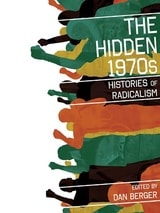
The Hidden 1970s
Histories of RadicalismBerger, Dan
Rutgers University Press, 2010
This powerful collection is a compelling assessment of left-wing social movements in a period many have described as dominated by conservatism or confusion. Scholars examine critical and largely buried legacies of the 1970s. The decade of Nixon's fall and Reagan's rise also saw widespread indigenous militancy, prisoner uprisings, transnational campaigns for self-determination, pacifism, and queer theories of play as political action. Contributors focus on diverse topics, including the internationalization of Black Power and Native sovereignty, organizing for Puerto Rican independence among Latinos and whites, and women's self-defense. Essays and ideas trace the roots of struggles from the 1960s through the 1970s, providing fascinating insight into the myriad ways that radical social movements shaped American political culture in the 1970s and the many ways they continue to do so today.
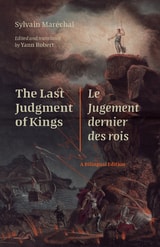
The Last Judgment of Kings / Le Jugement dernier des rois
A Bilingual EditionYann Robert
Bucknell University Press, 2025
Joué pour la première fois le lendemain de l’exécution de Marie-Antoinette, Le Jugement dernier des rois met en scène le procès burlesque des autres rois et reines d’Europe : exhibés et enchaînés tels des animaux, contraints de se battre pour un tonneau de biscuits, et finalement anéantis par l’éruption spectaculaire d’un volcan. Tel est le contexte scandaleux—tragédie et farce à la fois—de la pièce la plus célèbre de la Révolution française, bien connue de tous les spécialistes de cette période. Jusqu’à maintenant, pourtant, il n’existait ni édition critique ni traduction anglaise de cet ouvrage historique. Notre édition bilingue fait revivre la pièce de Maréchal et la replace au centre des plus grands débats chez les historiens de la Révolution, traitant de justice, religion, commémoration, comédie, et propagande. Provocateur, facile à lire, et concis—parfaitement adapté aux étudiants d’un cours de français ou d’histoire—Le Jugement dernier des rois propose ainsi une introduction idéale à la période révolutionnaire et à ses principales controverses.
Published by Bucknell University Press. Distributed worldwide by Rutgers University Press.
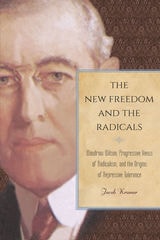
The New Freedom and the Radicals
Woodrow Wilson, Progressive Views of Radicalism, and the Origins of Repressive ToleranceJacob Kramer
Temple University Press, 2017
In The New Freedom and the Radicals, Jacob Kramer deftly examines how progressivism emerged at a time of critical transformation in American life. Using original archival sources, Kramer presents a study of Wilsonian-era politics to convey an understanding of the progressives’ views on radical America.
The New Freedom and the Radicals shows how the reactions of progressives to radicals accelerated the pace of reform in the United States, but how the movement was at times predisposed to repressing the radical elements to its left. In addition, Kramer asks to what extent progressives were responding to and influenced by those who opposed the state, capitalism, and the class structure altogether, as well as how progressives’ views of them changed in relation to events.
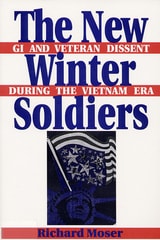
The New Winter Soldiers
GI and Veteran Dissent During the Vietnam EraMoser, Richard
Rutgers University Press, 1996
Richard Moser uses interviews and personal stories of Vietnam veterans to offer a fundamentally new interpretation of the Vietnam War and the antiwar movement. Although the Vietnam War was the most important conflict of recent American history, its decisive battle was not fought in the jungles of Vietnam, or even in the streets of the United States, but rather in the hearts and minds of American soldiers. To a degree unprecedented in American history, soldiers and veterans acted to oppose the very war they waged. Tens of thousands of soldiers and veterans engaged in desperate conflicts with their superiors and opposed the war through peaceful protest, creating a mass movement of dissident organizations and underground newspapers.
Moser shows how the antiwar soldiers lived out the long tradition of the citizen soldier first created in the American Revolution and Civil War. Unlike those great upheavals of the past, the Vietnam War offered no way to fulfill the citizen-soldier's struggle for freedom and justice. Rather than abandoning such ideals, however, tens of thousands abandoned the war effort and instead fulfilled their heroic expectations in the movements for peace and justice. According to Moser, this transformation of warriors into peacemakers is the most important recent development of our military culture.
The struggle for peace took these new winter soldiers into America rather than away from it. Collectively these men and women discovered the continuing potential of American culture to advance the values of freedom, equality, and justice on which the nation was founded.
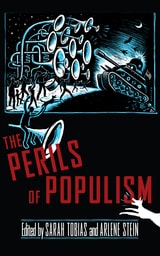
The Perils of Populism
Sarah Tobias
Rutgers University Press, 2022
The Perils of Populism shows how a feminist lens can help diagnose the factors behind the global rise of right-wing populism and teach us how to resist the threat it presents to democracy. Featuring interdisciplinary essays about politics in the United States, the Middle East, Europe, and India from a variety of acclaimed theorists and activists, the volume contributes to a rapidly expanding literature on gender and the far right. Together, these chapters offer a truly intersectional analysis of the problem, addressing everything from how populism has thrived in a “post-truth” era to the ways it appeals to working-class voters looking for an alternative to neoliberalism. Yet the authors also find reasons to be hopeful, as they showcase forms of grassroots feminist activism that challenge right-wing populism by advocating for racial and economic justice.
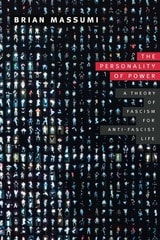
The Personality of Power
A Theory of Fascism for Anti-fascist LifeBrian Massumi
Duke University Press, 2025

The Puerto Rican Movement
Voices from the DiasporaAndres Torres
Temple University Press, 1998
To combat these two problems, and drawing n a tradition of patriotism and social responsibility, a number of organizations grew up, including the Young Lords Party (YLP), which later evolved into the Puerto Rican Revolutionary Workers Organization; the Pro Independence Movement (MPI), which evolved into the U.S> branch of the Puerto Rican Socialist Party; El Comite; the Puerto Rican Student Union (PRSU); the Movement for National Liberation (MLN); and the Armed Forces of National Liberation (FALN). THe Puerto Rican Movement looks at all these groups as specific organizations of real people in such places as Boston, Chicago, Hartford, New York, and Philadelphia.
The contributors, almost all of whom were involved with the organizations they describe, provide detailed descriptions and historical analyses of the Puerto Rican Left. Interviews with such key figures as Elizam Escobar, Piri Thomas, and Luis Fuentes, as well as accounts by people active in the gay/lesbian, African American, and white Left movements add a vivid picture of why and how people became radicalized and how their ideals intersected with their group's own dynamics.
These critical assessments highlight each organization's accomplishments and failures and illuminate how different sets of people, in different circumstances, respond to social problems -- in this case, the "national question" and the issues of social justice and movement politics.
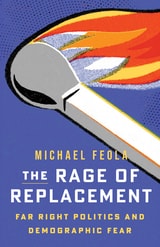
The Rage of Replacement
Far Right Politics and Demographic FearMichael Feola
University of Minnesota Press, 2024
Tracing how the “Great Replacement” narrative has shaped far-right extremism and propelled its dangerous political projects and acts of violence
The “Great Replacement” narrative, which imagines that historic white majorities are being intentionally replaced through immigration policies crafted by global elites, has effectively mobilized racist, nationalist, and nativist movements in the United States and Europe. The Rage of Replacement tracks how this narrative has shaped the politics and worldview of the far right, binding its various camps into a community of rage obsessed with nostalgia for a white-supremacist past.
Showing how the replacement narrative has found significant purchase in recent mainstream discourse through the rise of Trumpism, right-wing media figures like Tucker Carlson, and events such as 2017’s “Unite the Right” rally in Charlottesville, Virginia, Michael Feola diagnoses the dangers this racist theory poses as it shapes the far-right imagination, expands through civil society, and deforms political culture. In particular, he tracks how the replacement narrative has given rise to malignant political strategies designed to “take back” the nation from its perceived enemies—by force if deemed necessary.
Identifying the Great Replacement narrative as a central force behind the rise and expansion of far-right extremism, Feola shows how it has motivated a variety of dangerous political projects in pursuit of illiberal, antidemocratic futures. From calls for the creation of segregated white ethnostates to extremist violence such as the mass shootings in Christchurch, El Paso, and Buffalo, The Rage of Replacement makes clear that replacement theory poses a dire threat to democracy and safety.
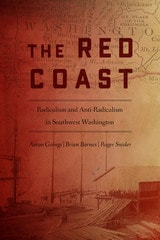
The Red Coast
Radicalism and Anti-Radicalism in Southwest WashingtonAaron Goings
Oregon State University Press, 2019
With a focus on socialists, militant unionists, Wobblies, "Red" Finns, and Communists, The Red Coast covers the people, places, and events that made history-well-known events like the 1919 Armistice Day Tragedy in Centralia and the murders of labor activists William McKay and Laura Law in Aberdeen as well as lesser-known events that have been lost to posterity until now.
The Red Coast also delves deep into the lives and work of the region's anti-radical forces, examining the collective efforts of employers, news editors, and vigilantes to combat working-class organization. Topics include the Wobblies, the labor wars of the 1910s and 1930s, and the lumber and maritime industries. Labor historians, scholars, and general readers with interest in the working-class history of the Pacific Northwest will welcome this comprehensive and accessible account.
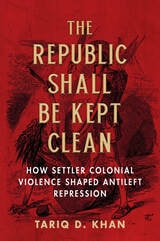
The Republic Shall Be Kept Clean
How Settler Colonial Violence Shaped Antileft RepressionTariq D. Khan
University of Illinois Press, 2023
The colonizing wars against Native Americans created the template for anticommunist repression in the United States. Tariq D. Khan’s analysis reveals bloodshed and class war as foundational aspects of capitalist domination and vital elements of the nation’s long history of internal repression and social control. Khan shows how the state wielded the tactics, weapons, myths, and ideology refined in America’s colonizing wars to repress anarchists, labor unions, and a host of others labeled as alien, multi-racial, multi-ethnic urban rabble. The ruling classes considered radicals of all stripes to be anticolonial insurgents. As Khan charts the decades of red scares that began in the 1840s, he reveals how capitalists and government used much-practiced counterinsurgency rhetoric and tactics against the movements they perceived and vilified as “anarchist.”
Original and boldly argued, The Republic Shall Be Kept Clean offers an enlightening new history with relevance for our own time.
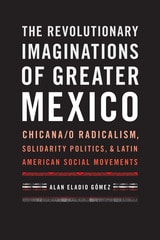
The Revolutionary Imaginations of Greater Mexico
Chicana/o Radicalism, Solidarity Politics, and Latin American Social MovementsBy Alan Eladio Gómez
University of Texas Press, 2016
Bringing to life the stories of political teatristas, feminists, gunrunners, labor organizers, poets, journalists, ex-prisoners, and other revolutionaries, The Revolutionary Imaginations of Greater Mexico examines the inspiration Chicanas/os found in social movements in Mexico and Latin America from 1971 to 1979. Drawing on fifteen years of interviews and archival research, including examinations of declassified government documents from Mexico, this study uncovers encounters between activists and artists across borders while sharing a socialist-oriented, anticapitalist vision. In discussions ranging from the Nuevo Teatro Popular movement across Latin America to the Revolutionary Proletariat Party of America in Mexico and the Peronista Youth organizers in Argentina, Alan Eladio Gómez brings to light the transnational nature of leftist organizing by people of Mexican descent in the United States, tracing an array of festivals, assemblies, labor strikes, clandestine organizations, and public protests linked to an international movement of solidarity against imperialism.
Taking its title from the “greater Mexico” designation used by Américo Paredes to describe the present and historical movement of Mexicans, Mexican Americans, and Chicanas/os back and forth across the US-Mexico border, this book analyzes the radical creativity and global justice that animated “Greater Mexico” leftists during a pivotal decade. While not all the participants were of one mind politically or personally, they nonetheless shared an international solidarity that was enacted in local arenas, giving voice to a political and cultural imaginary that circulated throughout a broad geographic terrain while forging multifaceted identities. The epilogue considers the politics of going beyond solidarity.
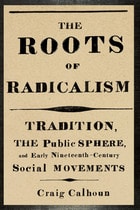
The Roots of Radicalism
Tradition, the Public Sphere, and Early Nineteenth-Century Social MovementsCraig Calhoun
University of Chicago Press, 2012
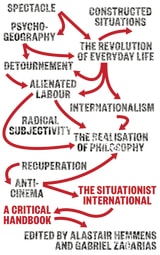
The Situationist International
A Critical HandbookAlastair Hemmens
Pluto Press, 2020
Looking at philosophy, sociology, critical theory, art, architecture and literature, The Situationist International is an up-to-date and comprehensive survey of the SI and its thought. Leading thinkers analyze the SI's interdisciplinary challenges, its roots in the artistic avant-garde and the traditional workers' movements, its engagement with the problems of postcolonialism and issues of gender and sexuality.
Including contributions from key thinkers, including Anselm Jappe and Michael Lowy, as well as new and upcoming scholars, The Situationist International unpacks the complexity of a group that has come to define radical politics and culture in the postwar period.
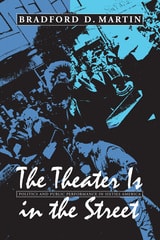
The Theater Is in the Street
Politics and Public Performance in 1960s AmericaBradford D. Martin
University of Massachusetts Press, 2004
During the 1960s, the SNCC Freedom Singers, The Living Theatre, the Diggers, the Art Workers Coalition, and the Guerrilla Art Action Group fused art and politics by staging unexpected and uninvited performances in public spaces. Through their activism and the response it provoked, art, theater, and politics began to converge and assume a new visibility in everyday life. While their specific political visions varied, these groups shared the impulse to stage performances and actions publicly—"in the streets"—eschewing museums, theaters, and other conventional halls of culture. Bradford D. Martin offers detailed portraits of each of these groups and examines why they embraced public performance as a vehicle to express and advance their politics.
At a time when the New Left and the counterculture were on the rise, these artists reflected the decade's political and cultural radicalism and helped to define a new aesthetic. Civil rights activists mobilized singing in the struggle for desegregation, introducing a vibrant musical form into the public space. The Living Theatre culminated an arduous quest to mesh artistic and political goals, leading audiences from theaters into the streets to begin the “beautiful nonviolent anarchist revolution.” The Diggers playfully engaged San Francisco's counterculture in politics with their carnivalesque public actions. The Art Workers Coalition and the Guerrilla Action Art Group sought to disrupt the conventional art world, mounting protests in and around New York City museums.
By questioning the values and assumptions that separated art from politics, these groups not only established public performance as a legitimate aesthetic but also provided a new creative vocabulary for future generations of artists. Their continued involvement with the women's liberation movement, rural communes, and political street theater into the 1970s and beyond challenges the popular myth that activists disengaged from politics after the 1960s.
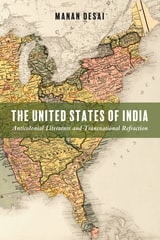
The United States of India
Anticolonial Literature and Transnational RefractionManan Desai
Temple University Press, 2020
The United States of India shows how Indian and American writers in the United States played a key role in the development of anticolonial thought in the years during and immediately following the First World War. For Indians Lajpat Rai and Dhan Gopal Mukerji, and Americans Agnes Smedley, W.E.B. Du Bois, and Katherine Mayo, the social and historical landscape of America and India acted as a reflective surface. Manan Desai considers how their interactions provided a “transnational refraction”—a political optic and discursive strategy that offered ways to imagine how American history could shed light on an anticolonial Indian future.
Desai traces how various expatriate and immigrant Indians formed political movements that rallied for American support for the cause of Indian independence. These intellectuals also developed new forms of writing about subjugation in the U.S. and India. Providing an examination of race, caste, nationhood, and empire, Desai astutely examines this network of Indian and American writers and the genres and social questions that fomented solidarity across borders.
The World in a City
Multiethnic Radicalism in Early Twentieth-Century Los AngelesDavid M. Struthers
University of Illinois Press, 2019
David M. Struthers draws on the anarchist concept of affinity to explore the radicalism of Los Angeles's interracial working class from 1900 to 1930. Uneven economic development created precarious employment and living conditions for laborers. The resulting worker mobility led to coalitions that, inevitably, remained short lived. As Struthers shows, affinity helps us understand how individual cooperative actions shaped and reshaped these alliances. It also reveals social practices of resistance that are often too unstructured or episodic for historians to capture. What emerges is an untold history of Los Angeles and a revolutionary movement that, through myriad successes and failures, produced powerful examples of racial cooperation.
This Radical Land
A Natural History of American DissentDaegan Miller
University of Chicago Press, 2018
But if you know where to look, you can uncover a different history, one of vibrant resistance, one that’s been mostly forgotten. This Radical Land recovers that story. Daegan Miller is our guide on a beautifully written, revelatory trip across the continent during which we encounter radical thinkers, settlers, and artists who grounded their ideas of freedom, justice, and progress in the very landscapes around them, even as the runaway engine of capitalism sought to steamroll everything in its path. Here we meet Thoreau, the expert surveyor, drawing anticapitalist property maps. We visit a black antislavery community in the Adirondack wilderness of upstate New York. We discover how seemingly commercial photographs of the transcontinental railroad secretly sent subversive messages, and how a band of utopian anarchists among California’s sequoias imagined a greener, freer future. At every turn, everyday radicals looked to landscape for the language of their dissent—drawing crucial early links between the environment and social justice, links we’re still struggling to strengthen today.
Working in a tradition that stretches from Thoreau to Rebecca Solnit, Miller offers nothing less than a new way of seeing the American past—and of understanding what it can offer us for the present . . . and the future.

Thomas Holcroft’s Revolutionary Drama
Reception and AfterlivesAmy Garnai
Bucknell University Press, 2023
Those Without A Country
The Political Culture of Italian American SyndicalistsMichael Miller Topp
University of Minnesota Press, 2001
In the first book-length history of the Italian American syndicalist movement—the Italian Socialist Federation—Michael Miller Topp presents a new way of understanding the Progressive Era labor movement in relation to migration, transnationalism, gender, and class identity. Those without a Country demonstrates that characterizations of "old" (pre-1960s) social movements as predominantly class-based are vastly oversimplified—and contribute to current debates about the implications of identity politics for the American Left and American culture generally.
Topp traces the rise and fall of the Italian American syndicalist movement from the turn of the twentieth century to the executions of Sacco and Vanzetti in 1927. His use of Italian-language sources, combined with his attention to transnationalism and masculinity, provides new vantage points on a range of related topics, including the 1912 Lawrence, Massachusetts, textile workers’ strike, the impact of World War I on this immigrant community, and the genesis of both fascism and antifascism. Those without a Country brings forward fascinating new material to revise and refine our views of not only Progressive Era radicalism but immigration, gender, and working-class history as well.

To Shake Their Guns in the Tyrant's Face
Libertarian Political Violence and the Origins of the Militia MovementRobert H. Churchill
University of Michigan Press, 2011
After the bombings of Oklahoma City in 1995, most Americans were shocked to discover that tens of thousands of their fellow citizens had banded together in homegrown militias. Within the next few years, numerous studies and media reports appeared revealing the unseen world of the American militia movement, a loose alliance of groups with widely divergent views. Not surprisingly, it was the movement’s most extreme voices that attracted the lion's share of attention.
In reality the militia movement was neither as irrational nor as new as it was portrayed in the press, Robert Churchill writes. What bound the movement together was the shared belief that citizens have a right, even a duty, to take up arms against wanton exercise of unconstitutional power by the federal government. Many were motivated to join the movement by what they saw as a rise in state violence, illustrated by the government assaults at Ruby Ridge, Idaho in 1992, and Waco, Texas in 1993. It was this perception and the determination to deter future state violence, Churchill argues, that played the greatest role in the growth of the American militia movement.
Churchill uses three case studies to illustrate the origin of some of the core values of the modern militia movement: Fries' Rebellion in Pennsylvania at the end of the eighteenth century, the Sons of Liberty Conspiracy in Civil War-era Indiana and Illinois, and the Black Legion in Michigan and Ohio during the Depression. Building on extensive interviews with militia members, the author places the contemporary militia movement in the context of these earlier insurrectionary movements that, animated by a libertarian interpretation of the American Revolution, used force to resist the authority of the federal government.
A historian of early America, Robert H. Churchill has published numerous articles on American political violence and the right to keep and bear arms. He is currently Associate Professor of History at the University of Hartford.
"This book is about how we think about the past, how cultural memories are formed and evolve, and how these memories then come to impact current understandings of issues. Churchill provides an enlightening analysis of the ideology, structure, and purpose of the militia movement. Where much scholarship has categorized it as a cohesive, single movement, Churchill begins the process of unraveling its complexity."
---Steve Chermak, Michigan State University
"To Shake Their Guns in the Tyrant's Face addresses an area---the relationship of American political violence to American ideology---that is of growing importance and that is commanding an ever increasing audience, and it does so in a way like nothing else in the field."
---David Williams, Indiana University Bloomington
Toward a Cooperative Commonwealth
The Transplanted Roots of Farmer-Labor Radicalism in TexasThomas Alter II
University of Illinois Press, 2022
A rare look at the German roots of radicalism in Texas, Toward a Cooperative Commonwealth illuminates the labor movements and populist ideas that changed the nation’s course at a pivotal time in its history.