Results by title
939 books match the query 'Religious aspects' and 189 start with t

THE AMERICAN QUEST FOR THE PRIMITIVE CHURCH
Richard T. Hughes
University of Illinois Press, 1988
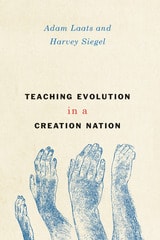
Teaching Evolution in a Creation Nation
Adam Laats and Harvey Siegel
University of Chicago Press, 2016
Laats and Siegel agree with most scientists: creationism is flawed, as science. But, they argue, students who believe it nevertheless need to be accommodated in public school science classes. Scientific or not, creationism maintains an important role in American history and culture as a point of religious dissent, a sustained form of protest that has weathered a century of broad—and often dramatic—social changes. At the same time, evolutionary theory has become a critical building block of modern knowledge. The key to accommodating both viewpoints, they show, is to disentangle belief from knowledge. A student does not need to believe in evolution in order to understand its tenets and evidence, and in this way can be fully literate in modern scientific thought and still maintain contrary religious or cultural views. Altogether, Laats and Siegel offer the kind of level-headed analysis that is crucial to finding a way out of our culture-war deadlock.
Teaching the Bible through Popular Culture and the Arts
Mark Roncace
SBL Press, 2007
Technology and Religion
Remaining Human Co-created WorldNoreen Herzfeld
Templeton Press, 2009
Technology is changing all the time, but does it also have the ability to change us and the way we approach religion and spirituality? In Technology and Religion: Remaining Human in a Co-created World, Noreen Herzfeld examines this and other provocative questions as she provides an accessible and fascinating overview of the relationship between religion and the ever-broadening world of technology.
The result is a multifaceted look at the ongoing dialogue between these two subjects that are not commonly associated with one another. This volume is the third title published in the new Templeton Science and Religion Series.
Templeton Plan
21 Steps to Personal Success and Real HappinessSir John Templeton
Templeton Press, 2013
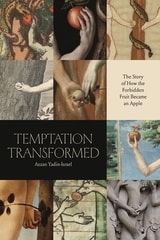
Temptation Transformed
The Story of How the Forbidden Fruit Became an AppleAzzan Yadin-Israel
University of Chicago Press, 2022
How did the apple, unmentioned by the Bible, become the dominant symbol of temptation, sin, and the Fall? Temptation Transformed pursues this mystery across art and religious history, uncovering where, when, and why the forbidden fruit became an apple.
Azzan Yadin-Israel reveals that Eden’s fruit, once thought to be a fig or a grape, first appears as an apple in twelfth-century French art. He then traces this image back to its source in medieval storytelling. Though scholars often blame theologians for the apple, accounts of the Fall written in commonly spoken languages—French, German, and English—influenced a broader audience than cloistered Latin commentators. Azzan Yadin-Israel shows that, over time, the words for “fruit” in these languages narrowed until an apple in the Garden became self-evident. A wide-ranging study of early Christian thought, Renaissance art, and medieval languages, Temptation Transformed offers an eye-opening revisionist history of a central religious icon.
Text, Image, and Otherness in Children's Bibles
What is in the Picture.Caroline Vander Stichele
SBL Press, 2012
The Albigensian Crusades
Joseph R. Strayer
University of Michigan Press, 1992
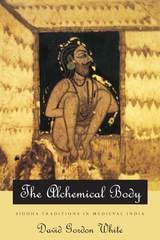
The Alchemical Body
Siddha Traditions in Medieval IndiaDavid Gordon White
University of Chicago Press, 1996
"White proves a skillful guide in disentangling historical and theoretical complexities that have thus far bedeviled the study of these influential aspects of medieval Indian culture."—Yoga World
"Anyone seriously interested in finding out more about authentic tantra, original hatha yoga, embodied liberation . . . sacred sexuality, paranormal abilities, healing, and of course alchemy will find White's extraordinary book as fascinating as any Tom Clancy thriller."—Georg Feuerstein, Yoga Journal
The Altruism Reader
Selections from Writings on Love, Religion, and ScienceThomas Oord
Templeton Press, 2007
This anthology brings together, for the first time, leading essays and book chapters from theologians, philosophers, and scientists on their research on ethics, altruism, and love. Because the general consensus today is that scholarship in moral theory requires empirical research, the arguments of the leading scholars presented in this book will be fundamental to those examining issues in love, ethics, religion, and science.
The first half of The Altruism Reader offers essential selections from religious texts, leading contemporary scholars, and cutting-edge ethicists. Buddhism, Christianity, Hinduism, Islam, and Judaism are represented. Among the highly respected writers are Thomas Aquinas, the Dalai Lama, Thich Nhat Hanh, John Polkinghorne, Stephen Pope, Louis Fischer, Amira Shamma Abdin, Katharine Doob Sakenfeld, and Daniel Day Williams.
The book’s second half features primary readings on love and altruism from the sciences. Here the focus is on anthropology, psychology, sociology, biology, and neurology, with material written by Daniel C. Batson, David Sloan Wilson, Robert Wright, Stephen G. Post, Robert Axelrod, Richard Dawkins, Holmes Rolston III, and other renowned scientists and philosophers.
“Virtually all people act—and often talk—as if they have some clue about love. We speak about loving food, falling in love, loving God, feeling loved, and loving a type of music. We say that love hurts, love waits, love stinks, and love means never having to say you’re sorry. We use the word and its derivatives in a wide variety of ways . . . . My definition of love is this: To love is to act intentionally, in sympathetic response to others (including God), to promote well-being.” —Thomas Jay Oord
The Analyst and the Mystic
Psychoanalytic Reflections on Religion and MysticismSudhir Kakar
University of Chicago Press, 1992
The Anarchy of Black Religion
A Mystic SongJ. Kameron Carter
Duke University Press, 2023
The Ancient Roman Afterlife
Di Manes, Belief, and the Cult of the DeadBy Charles W. King
University of Texas Press, 2020
In ancient Rome, it was believed some humans were transformed into special, empowered beings after death. These deified dead, known as the manes, watched over and protected their surviving family members, possibly even extending those relatives’ lives. But unlike the Greek hero-cult, the worship of dead emperors, or the Christian saints, the manes were incredibly inclusive—enrolling even those without social clout, such as women and the poor, among Rome's deities. The Roman afterlife promised posthumous power in the world of the living.
While the manes have often been glossed over in studies of Roman religion, this book brings their compelling story to the forefront, exploring their myriad forms and how their worship played out in the context of Roman religion’s daily practice. Exploring the place of the manes in Roman society, Charles King delves into Roman beliefs about their powers to sustain life and bring death to individuals or armies, examines the rituals the Romans performed to honor them, and reclaims the vital role the manes played in the ancient Roman afterlife.
The Anthropology of Christianity
Fenella Cannell, ed.
Duke University Press, 2006
The contributors examine the contours of Christianity among diverse groups: Catholics in India, the Philippines, and Bolivia, and Seventh-Day Adventists in Madagascar; the Swedish branch of Word of Life, a charismatic church based in the United States; and Protestants in Amazonia, Melanesia, and Indonesia. Highlighting the wide variation in what it means to be Christian, the contributors reveal vastly different understandings and valuations of conversion, orthodoxy, Scripture, the inspired word, ritual, gifts, and the concept of heaven. In the process they bring to light how local Christian practices and beliefs are affected by encounters with colonialism and modernity, by the opposition between Catholicism and Protestantism, and by the proximity of other religions and belief systems. Together the contributors show that it not sufficient for anthropologists to assume that they know in advance what the Christian experience is; each local variation must be encountered on its own terms.
Contributors. Cecilia Busby, Fenella Cannell, Simon Coleman, Peter Gow, Olivia Harris, Webb Keane, Eva Keller, David Mosse, Danilyn Rutherford, Christina Toren, Harvey Whitehouse
The Antigay Agenda
Orthodox Vision and the Christian RightDidi Herman
University of Chicago Press, 1997
"A penetrating analysis of the Christian Right's antigay agenda and of how that agenda is derived from the Christian Right's peculiar vision of American history and the Christian faith."—Rev. Peter J. Gomes, Boston Book Review
"Public intellectualism at its best. . . . A comprehensive summary of the conservative Protestant worldview."—Michael Joseph Gross, Boston Phoenix Literary Section
"Presents considerable information not previously part of the nation's political discourse. . . . [Herman] dissects the Christian Right's antigay stance dispassionately giving, as it were, the devil his due. For anyone on either side of this passionate and important conflict, that is an impressive accomplishment."—Hastings Wyman, Jr., Washington Post Book World

The Apocalypse in Germany
Klaus Vondung & Translated by Stephen D. Ricks
University of Missouri Press, 2001
Originally published in German in 1988, The Apocalypse in Germany is now available for the first time in English. A fitting subject for the dawn of the new millennium, the apocalypse has intrigued humanity for the last two thousand years, serving as both a fascinating vision of redemption and a profound threat.
A cross-disciplinary study, The Apocalypse in Germany analyzes fundamental aspects of the apocalypse as a religious, political, and aesthetic phenomenon. Author Klaus Vondung draws from religious, philosophical, and political texts, as well as works of art and literature. Using classic Jewish and Christian apocalyptic texts as symbolic and historical paradigms, Vondung determines the structural characteristics and the typical images of the apocalyptic worldview. He clarifies the relationship between apocalyptic visions and utopian speculations and explores the question of whether modern apocalypses can be viewed as secularizations of the Judeo-Christian models.
Examining sources from the eighteenth century to the present, Vondung considers the origins of German nationalism, World War I, National Socialism, and the apocalyptic tendencies in Marxism as well as German literature—from the fin de siècle to postmodernism. His analysis of the existential dimension of the apocalypse explores the circumstances under which particular individuals become apocalyptic visionaries and explains why the apocalyptic tradition is so prevalent in Germany.
The Apocalypse in Germany offers an interdisciplinary perspective that will appeal to a broad audience. This book will also be of value to readers with an interest in German studies, as it clarifies the riddles of Germany's turbulent history and examines the profile of German culture, particularly in the past century.
The Becoming of Time
Integrating Physical and Religious TimeLawrence W. Fagg
Duke University Press, 2002
Integrating concepts of time derived from the physical sciences and world religions, The Becoming of Time examines various questions about time, including its origin, its relation to space and motion, its irreversible nature, the notion of timelessness, and the reality of the future. Lawrence W. Fagg contends that the use of spatial metaphors to describe time obscures its true character. He offers an alternative, non-spatial description of time by developing the concept of time as becoming.
”This lucid and wide-ranging study sets out to reconcile the objective and subjective perspectives in the investigation of the phenomenon of time. [Lawrence W. Fagg] . . . explores the wondrous subtleties of time that modern physics continues to reveal, but complements them with the rich insights of the spiritual perspectives on time that the world's major religions have to offer.”—Helga Nowotny, Former President, International Society for the Study of Time
”Lawrence W. Fagg has made a fundamental contribution to our reflection upon time. His work immediately takes its place as a basic text for students and researchers, from college to seminary and university levels.”—Philip Hefner, Director, Zygon Center for Religion and Science
The Besht
Magician, Mystic, and LeaderImmanuel Etkes
Brandeis University Press, 2012
The Birth of Doubt
Confronting Uncertainty in Early Rabbinic LiteratureMoshe Halbertal
SBL Press, 2020
A systematic attempt to understand the rabbinic world through its approach to confronting uncertainty
In the history of halakhah, the treatment of uncertainty became one of the most complex fields of intense study. In his latest book, Moshe Halbertal focuses on examining the point of origin of the study of uncertainty in early rabbinic literature, including the Mishnah, Tosefta, and halakhic midrashim. Halbertal explores instructions concerning how to behave in situations of uncertainty ranging from matters of ritual purity, to lineage and marriage, to monetary law, and to the laws of forbidden foods. This examination of the rules of uncertainty introduced in early rabbinic literature reveals that these rules were not aimed at avoiding but rather at dwelling in the midst of uncertainty, thus rejecting the sectarian isolationism that sought to minimize a community’s experience of and friction with uncertainty.
Features:
- A thorough investigation of the principles concerning how to behave in cases of uncertainty
- An examination of two distinct modes for coping with uncertainty
The Body in Mystery
The Political Theology of the Corpus Mysticum in the Literature of Reformation EnglandJennifer R. Rust
Northwestern University Press, 2013
The Book of Proverbs
A Social Justice CommentaryRabbi Dr. Shmuly Yanklowitz
Central Conference of American Rabbis, 2022
The Book of Queer Mormon Joy
Pray, Kerry Spencer
Signature Books, 2024
The story of queer Mormons is one that some might not expect to be joyful. The Church of Jesus Christ of Latter-day Saints has traditionally asserted that queerness is counter to God’s plan and that gender as determined at birth is eternal. Any marriage other than a monogamous pairing of male and female is “counterfeit.” So called “wickedness,” we are told, “never was happiness.”
But queer Mormons tell different stories—stories filled with joy. This collection includes essays by queer Mormons across the LGBTQ spectrum who, when they looked inside themselves, found divinity rather than sin. Stories by people who are made exactly as they are meant to be, and live accordingly.
Queer Mormons who feel forced out of the institutional church don’t typically find despair on the outside or abandonment by the divine. Instead, their lives are rich and beautiful—made all the more so by the struggle. The Book of Mormon tells us, “Men are that they might have joy.” The Book of Queer Mormon Joy affirms that trans, nonbinary, intersex, asexual, bisexual, polyamorous, and gay people have joy. Joy is for everyone.
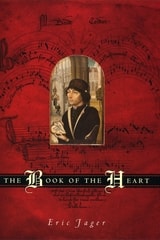
The Book of the Heart
Eric Jager
University of Chicago Press, 2000
Eric Jager traces the history and psychology of the self-as-text concept from antiquity to the modern day. He focuses especially on the Middle Ages, when the metaphor of a "book of the heart" modeled on the manuscript codex attained its most vivid expressions in literature and art. For instance, medieval saints' legends tell of martyrs whose hearts recorded divine inscriptions; lyrics and romances feature lovers whose hearts are inscribed with their passion; paintings depict hearts as books; and medieval scribes even produced manuscript codices shaped like hearts.
"The Book of the Heart provides a fresh perspective on the influence of the book as artifact on our language and culture. Reading this book broadens our appreciation of the relationship between things and ideas."—Henry Petroski, author of The Book on the Bookshelf
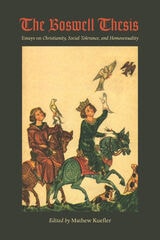
The Boswell Thesis
Essays on Christianity, Social Tolerance, and HomosexualityEdited by Mathew Kuefler
University of Chicago Press, 2005
The essays in this magnificent volume examine a variety of aspects of Boswell's interpretation of events in the development of sexuality from Classical Antiquity through the Middle Ages, including a Roman emperor's love letters to another man; suspicions of sodomy among medieval monks, knights, and crusaders; and the gender-bending visions of Christian saints and mystics. Also included are discussions of Boswell's career, including his influence among gay and lesbian Christians and his role in academic debates between essentialists and social constructionists.
Elegant and thought-provoking, this collection provides a fitting twenty-fifth anniversary tribute to the incalculable influence of Christianity, Social Tolerance, and Homosexuality and its author.
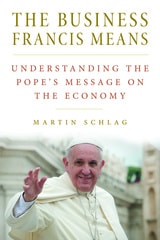
The Business Francis Means
Understanding the Pope's Message on the EconomyMartin Schlag
Catholic University of America Press, 2017
The Business Francis Means aims to break through these walls, showing that Pope Francis has something to say to all Christians. His message, taken as a whole, keeps us from dividing the “seamless garment” of Christ: he reminds the conservatives of the problems of inequality and poverty, and the liberals that social justice is not enough – the Church is the bride of Christ, not a social institution or an NGO.
Monsignor Martin Schlag summarizes and explains the message of Pope Francis on business and the economy in this compact volume. The Business Francis Means will be of great interest to the Catholic layperson, especially one involved in political or economic life.
The Challenge of Honesty
Essays for Latter-day Saints by Frances Lee MenloveDan Wotherspoon, editor
Signature Books, 2013
These words remain as fresh and bracing today as they were nearly fifty years ago. The sixteen other essays and devotionals in this collection, some published here for the first time, are equally bold, exposing injustice masked as God’s will. They contain an underlying theme of personal integrity and striving for spiritual transformation. They stand perceived wisdom on its head in the same way that scripture so often does. Readers will want to share these essays with family and friends but will also find the concepts again and again occupying their own private thoughts.

The Challenges of Sovereignty
Essays on Israel and ZionismDavid Ellenson
Brandeis University Press, 2026
Key essays by a notable scholar address some of the most pressing questions facing Israel today.
Over the course of his rich career, David Ellenson—one of the most outstanding Jewish scholars, intellectuals, and thinkers of our time—probed the tension between tradition and modernity, especially as reflected in the ceaseless reinterpretation of liturgical and halakhic texts. Alongside that scholarly interest, largely centered on European Jewry, Ellenson produced an impressive body of work on Zionism and Israel.
This volume follows the arc of this body of work from Ellenson’s early articles on the Zionism of American rabbis to his last essay on the struggle between Jewish and democratic impulses in Israeli society. He draws on familiar sources of inquiry—Jewish prayers and legal sources—to chart changes in Israeli religious life and to excavate its theological-political foundation. What emerges is a profound meditation on some of the most important questions that Israel faces today: what does it mean to be Jewish in the state? What role should Halakhah play in a self-defined Jewish state? How should the state treat its non-Jewish minority? How deeply rooted is democracy in the state and its foundational texts? And can the state ever escape seemingly irrepressible internal and external conflict?
The Charismatic Gymnasium
Breath, Media, and Religious Revivalism in Contemporary BrazilMaria José de Abreu
Duke University Press, 2020
The Chastity Plot
Lisabeth During
University of Chicago Press, 2021
Examining literature, religion, psychoanalysis, and cultural history from antiquity through the middle ages and into modernity, During provides a sweeping history of chastity and insight into its subversive potential. Instead of simply asking what chastity is, During considers what chastity can do, why we should care, and how it might provide a productive disruption, generating new ways of thinking about sex, integrity, and freedom.
The Coloniality of the Secular
Race, Religion, and Poetics of World-MakingAn Yountae
Duke University Press, 2024
The Colors of Violence
Cultural Identities, Religion, and ConflictSudhir Kakar
University of Chicago Press, 1996
With honesty, insight, and unsparing self-reflection, Kakar confronts the profoundly enigmatic relations that link individual egos to cultural moralities and religious violence. His innovative psychological approach offers a framework for understanding the kind of ethnic-religious conflict that has so vexed social scientists in India and throughout the world.
Through riveting case studies, Kakar explores cultural stereotypes, religious antagonisms, ethnocentric histories, and episodic violence to trace the development of both Hindu and Muslim psyches. He argues that in early childhood the social identity of every Indian is grounded in traditional religious identifications and communalism. Together these bring about deep-set psychological anxieties and animosities toward the other. For Hindus and Muslims alike, violence becomes morally acceptable when communally and religiously sanctioned. As the changing pressures of modernization and secularism in a multicultural society grate at this entrenched communalism, and as each group vies for power, ethnic-religious conflicts ignite. The Colors of Violence speaks with eloquence and urgency to anyone concerned with the postmodern clash of religious and cultural identities.
The Common Good of Constitutional Democracy
Essays in Political Philosophy and on Catholic Social TeachingMartin Rhonheimer
Catholic University of America Press, 2013
The Complementarity of Women and Men
Philosophy, Theology, Psychology, and ArtPaul C. Vitz
Catholic University of America Press, 2021
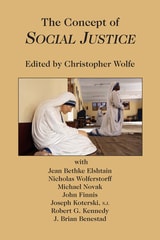
The Concept of Social Justice
Christopher Wolfe
St. Augustine's Press, 2018
The inspiration for this book comes from the fact that current discussions of “social justice” often deal overwhelmingly with programs that aim to advance certain specific and controversial policies to deal with various social problems. In the process, important theoretical questions about social justice are not even confronted, much less resolved. For example, what does the word “social” add to “justice”? Isn't all justice “social”? What is the relation between “social justice” and more classical Aristotelian terms such as “distributive justice,” “commutative justice,” and “legal justice”? With respect to its current usage, is the term “social justice” applicable only to special policies or programs (e.g., government or nonprofit social welfare programs)? Does it apply only to the provision of material goods and services? Does it play a role in the ordinary everyday world of business and work?
The papers in this book aim, not at identifying some particular set of public policies that allegedly constitute the right content of “social justice,” but at reflection on the meaning of social justice. It is not an exhortation to pursue policies that are “understood,” without discussion, to be the right way to pursue social justice. It is not aimed at stimulating activism, mobilizing people to go out and achieve social justice now. Rather, it aims at building the foundation upon which people can identify general principles of justice, and make reasonable prudential judgments about how to pursue social justice. This theoretical orientation means that it is neither “right-wing” nor “left-wing.” The Concept of Social Justice provides a range of insightful essays on the term and on its various uses and abuses. The authors of these papers are committed to something like “social justice” – they don't believe that it is spurious notion that should be rejected. They may very well disagree about exactly how to pursue social justice. But their primary concern here is to ask, simply, “what is social justice?”
Jean Bethke Elshtain and Michael Novak show various ways in which the term has been misunderstood or narrowed or abused for ideological reasons. Nicholas Wolterstorff’s essay makes careful distinctions necessary to identify the implications of adding “social” to “justice” and fleshes out a valuable notion of the concept. John Finnis locates the origins of social justice in an historical misreading of Thomas Aquinas’ discussion of justice, which narrowed his “general justice” in a way that required a new notion of “social justice.” Joseph Koterksi, S.J., Robert Kennedy, and J. Brian Benestad each elaborate some of the ways in which “social justice” has been used in the Catholic social teaching since Rerum Novarum and in international theological and U.S. episcopal documents.
Readers will come away from this book with a deeper understanding of the origins of social justice, a sensitivity to the frequent abuses of the term, and a recognition of the forms in which it can be a valuable part of today’s political discourse.

The Confederacy's Fighting Chaplain
Father John B. BannonPhillip Thomas Tucker
University of Alabama Press, 1992
The Confederacy’s Fighting Chaplain is the remarkable story of the Irishman who brought the Bible and his own resourcefulness and daring to both the battlefield and the diplomatic field—a story that has been largely ignored for more than 130 years. The biography of John B. Bannon also chronicles the forgotten Southerners—the Irish immigrants of the Confederacy—whose colorful and crucial role in the Civil War has been seriously neglected.
The Connections Paradigm
Ancient Jewish Wisdom for Modern Mental HealthDavid H. Rosmarin
Templeton Press, 2021
The idea behind the paradigm is that at any given moment, human beings are either “connected” or “disconnected” across three key relationships. To be “connected” means to be in a loving, harmonious, and fulfilling relationship; to be “disconnected” means, of course, the opposite. The three relationships are those between our souls and our bodies, ourselves and others, and ourselves and God.
These relationships are hierarchal; each depends on the one that precedes it. This means that we can only connect with God to the extent that we associate with others, and we cannot connect with others if we don’t connect with ourselves. The author, Dr. David H. Rosmarin, devotes a section to each relationship and describes techniques and practices to become a more connected individual. He also brings in compelling stories from his clinical practice to show the process in action.
Whether you’re a clinician working with clients, or a person seeking the healing balm of wisdom; whether you’re a member of the Jewish faith, or a person open to new spiritual perspectives, you will find this book sensible, practical, and timely because, for all of us, connection leads to mental health.
The Cow in the Elevator
An Anthropology of WonderTulasi Srinivas
Duke University Press, 2018
The Critic in the World
Essays in Honor of Fernando F. SegoviaAmy Lindeman Allen
SBL Press, 2024
A Pact of Love with Criticism, A Pact of Blood with the World
Building on the legacy of Fernando F. Segovia, the pioneering essays in this volume redefine the intersection of biblical studies and geopolitics. Through a thorough exploration of how ancient texts and modern readers influence and reflect geopolitical dynamics, each contributor reveals how biblical narratives have shaped and been shaped by historical power structures, territorial conflicts and climate changes, and cultural exchanges. Essays employ contemporary geopolitical concepts that move beyond traditional readings to offer fresh insights into the strategic and ideological forces behind scriptural texts. An annotated interview with Fernando F. Segovia traces his immigration journey as an adolescent and its indelible imprint on his scholarship as a postcolonial critic. Contributors include Efraín Agosto, Amy Lindeman Allen, Reimund Bieringer, Mark G. Brett, Ahida Calderón Pilarski, Greg Carey, Jorge E. Castillo Guerra, Jin Young Choi, Stephanie Buckhanon Crowder, Gregory L. Cuéllar, Musa W. Dube, Neil Elliott, Eleazar S. Fernandez, Bridgett A. Green, Leticia A. Guardiola-Sáenz, Jacqueline M. Hidalgo, Knut Holter, Ma. Maricel S. Ibita, Ma. Marilou S. Ibita, John F. Kutsko, Sung Uk Lim, Francisco Lozada Jr., Luis Menéndez-Antuña, Rubén Muñoz-Larrondo, Robert Myles, Wongi Park, Mitri Raheb, Elisabeth Schüssler Fiorenza, Fernando F. Segovia, Yak-hwee Tan, Ekaputra Tupamahu, Gerald O. West, Hans (J. H.) de Wit, and H. Daniel Zacharias.

The Cross of War
Christian Nationalism and U.S. Expansion in the Spanish-American WarMatthew McCullough
University of Wisconsin Press, 2014
The Crosses of Auschwitz
Nationalism and Religion in Post-Communist PolandGeneviève Zubrzycki
University of Chicago Press, 2006
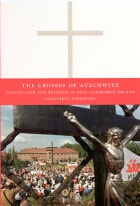
In the summer and fall of 1998, ultranationalist Polish Catholics erected hundreds of crosses outside Auschwitz, setting off a fierce debate that pitted Catholics and Jews against one another. While this controversy had ramifications that extended well beyond Poland’s borders, Geneviève Zubrzycki sees it as a particularly crucial moment in the development of post-Communist Poland’s statehood and its changing relationship to Catholicism.
In The Crosses of Auschwitz, Zubrzycki skillfully demonstrates how this episode crystallized latent social conflicts regarding the significance of Catholicism in defining “Polishness” and the role of anti-Semitism in the construction of a new Polish identity. Since the fall of Communism, the binding that has held Polish identity and Catholicism together has begun to erode, creating unease among ultranationalists. Within their construction of Polish identity also exists pride in the Polish people’s long history of suffering. For the ultranationalists, then, the crosses at Auschwitz were not only symbols of their ethno-Catholic vision, but also an attempt to lay claim to what they perceived was a Jewish monopoly over martyrdom.
This gripping account of the emotional and aesthetic aspects of the scene of the crosses at Auschwitz offers profound insights into what Polishness is today and what it may become.

The Culture of Korean Industry
An Ethnography of Poongsan CorporationChoong Soon Kim
University of Arizona Press, 1992
The Cunning of Gender Violence
Geopolitics and FeminismLila Abu-Lughod, Rema Hammami, and Nadera Shalhoub-Kevorkian, editors
Duke University Press, 2023
Contributors. Lila Abu-Lughod, Nina Berman, Inderpal Grewal, Rema Hammami, Janet R. Jakobsen, Shenila Khoja-Moolji, Vasuki Nesiah, Samira Shackle, Sima Shakhsari, Nadera Shalhoub-Kevorkian, Dina M Siddiqi, Shahla Talebi, Leti Volpp, Rafia Zakaria
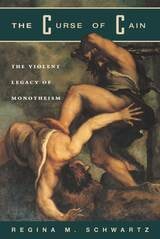
The Curse of Cain
The Violent Legacy of MonotheismRegina M. Schwartz
University of Chicago Press, 1997
"[A] provocative and timely examination of the interrelationship of monotheism and violence. . . . This is a refreshing alternative to criticism-biblical and otherwise-that so often confuses interpretation with closure; it is an invitation to an ethic of possibility, plenitude, and generosity, a welcome antidote to violence, as important for its insights into memory, identity, and place as for its criticism of monotheism's violent legacy."—Booklist
"Brilliant and provocative, this is a work demanding close attention from critics, theologians, and all those interested in the imaginative roots of common life."—Rowan Williams, Bishop of Monmouth
"A stunningly important book."—Walter Brueggemann, Theology Today
"Artfully rendered, endlessly provocative."—Lawrence Weschler, New Yorker
The Disturbing Profane
Hip Hop, Blackness, and the SacredJoseph R. Winters
Duke University Press, 2025
The Diversity of Religions
A Christian PerspectiveJ. A. DiNoia, O.P.
Catholic University of America Press, 1992
The Divine Institution
White Evangelicalism's Politics of the FamilySophie Bjork-James
Rutgers University Press, 2021
Winner of the Anne Bolin & Gil Herdt Book Prize from the Human Sexuality and Anthropology Interest Group (HSAIG)
The Divine Institution provides an account of how a theology of the family came to dominate a white evangelical tradition in the post-civil rights movement United States, providing a theological corollary to Religious Right politics.
This tradition inherently enforces racial inequality in that it draws moral, religious, and political attention away from problems of racial and economic structural oppression, explaining all social problems as a failure of the individual to achieve the strong gender and sexual identities that ground the nuclear family. The consequences of this theology are both personal suffering for individuals who cannot measure up to prescribed gender and sexual roles, and political support for conservative government policies. Exposure to experiences that undermine the idea that an emphasis on the family is the solution to all social problems is causing a younger generation of white evangelicals to shift away from this narrow theological emphasis and toward a more social justice-oriented theology. The material and political effects of this shift remain to be seen.
The Drug, the Soul, and God
A Catholic Moral Perspective on AntidepressantsJohn-Mark Miravalle
University of Scranton Press, 2010
With The Drug, the Soul, and God, John-Mark Miravelle examines the stance of the Catholic Church regarding the prescription and consumption of antidepressants. After a careful investigation of Catholic moral theology and philosophy, Miravelle argues that treating depression with medication alone fails to address the underlying causes of the depression and does not facilitate the cognitive, interpersonal, and environmental changes necessary for a patient’s long-term health. In addition, he suggests that such medication may deprive sufferers of providential opportunities for personal and communal conversion and sanctification. This controversial volume will engage theologians and medical professionals alike.

The Earth Will Appear as the Garden of Eden
Essays on Mormon Environmental HistoryJedediah S. Rogers and Matthew C. Godfrey
University of Utah Press, 2018
Since Joseph Smith’s revelations, Mormons have interacted with nature in significant ways—whether perceiving it as a place to find God, uncorrupted spaces in which to build communities to usher in the Second Coming, wildness needing domestication and control, or a world brimming with natural resources to ensure economic well-being. The essays in this volume—written by leading scholars in both environmental history and Mormon history—explore how nature has influenced Mormon beliefs and how these beliefs inform Mormons’ encounters with nature. Introducing overarching environmental ideas, contributors examine specific aspects of nature and Mormon theology to glean new insights into the Mormon experience.
The Economics of the Mishnah
Jacob Neusner
University of Chicago Press, 1990
The Economics of the Mishnah is the first book to examine the place of economic theory generally in the Judaic system of the Mishnah. Jacob Neusner begins by surveying previous work on economics and Judaism, the best known being Werner Sombart's The Jews and Modern Capitalism. The mistaken notion that Jews have had a common economic history has outlived the demise of Sombart's argument, and it is a notion that Neusner overturns before discussing the Mishnaic economics.
Only in Aristotle, Neusner argues, do we find an equal to the Mishnah's accomplishment in engaging economics in the service of a larger systemic statement. Neusner shows that the framers of the Mishnah imagined a distributive economy functioning through the Temple and priesthood, while also legislating for the action of markets. The economics of the Mishnah, then, is to some extent a mixed economy. The dominant, distributive element in this mixed economy, Neusner contends, derives from the belief that the Temple and its designated castes on earth exercise God's claim to the ownership of the holy land. He concludes by considering the implications of the derivation of the Mishnah's economics from the interests of the undercapitalized and overextended farmer.
The Edge of Islam
Power, Personhood, and Ethnoreligious Boundaries on the Kenya CoastJanet McIntosh
Duke University Press, 2009
The Edge of Islam explores themes as wide-ranging as spirit possession, divination, healing rituals, madness, symbolic pollution, ideologies of money, linguistic code-switching, and syncretism and its alternatives. McIntosh shows how the differing versions of Islam practiced by Swahili and Giriama, and their differing understandings of personhood, have figured in the growing divisions between the two groups. Her ethnographic analysis helps to explain why Giriama view Islam, a supposedly universal religion, as belonging more deeply to certain ethnic groups than to others; why Giriama use Islam in their rituals despite the fact that so many do not consider the religion their own; and how Giriama appropriations of Islam subtly reinforce a distance between the religion and themselves. The Edge of Islam advances understanding of ethnic essentialism, religious plurality, spirit possession, local conceptions of personhood, and the many meanings of “Islam” across cultures.