Results by title
119 books match the query 'Religious life and customs' and 26 start with t
Talking to the Dead
Religion, Music, and Lived Memory among Gullah/Geechee WomenLeRhonda S. Manigault-Bryant
Duke University Press, 2014
The Ancient Roman Afterlife
Di Manes, Belief, and the Cult of the DeadBy Charles W. King
University of Texas Press, 2020
In ancient Rome, it was believed some humans were transformed into special, empowered beings after death. These deified dead, known as the manes, watched over and protected their surviving family members, possibly even extending those relatives’ lives. But unlike the Greek hero-cult, the worship of dead emperors, or the Christian saints, the manes were incredibly inclusive—enrolling even those without social clout, such as women and the poor, among Rome's deities. The Roman afterlife promised posthumous power in the world of the living.
While the manes have often been glossed over in studies of Roman religion, this book brings their compelling story to the forefront, exploring their myriad forms and how their worship played out in the context of Roman religion’s daily practice. Exploring the place of the manes in Roman society, Charles King delves into Roman beliefs about their powers to sustain life and bring death to individuals or armies, examines the rituals the Romans performed to honor them, and reclaims the vital role the manes played in the ancient Roman afterlife.
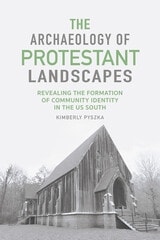
The Archaeology of Protestant Landscapes
Revealing the Formation of Community Identity in the US SouthKimberly Pyszka
University of Alabama Press, 2023
How religious institutions used landscapes and architecture to express their religious and social ideologies
The Archaeology of Protestant Landscapes focuses on three religious institutions in the US South in the eighteenth and nineteenth centuries: St. Paul’s Parish Church in coastal South Carolina, St. Luke’s Episcopal Church in central Alabama, and Cane Hill College in Northwest Arkansas. Drawing from archaeological surveys and excavations, artifact analysis, archival research, geophysical testing, and architectural information on religious structures, Kimberly Pyszka offers case studies of these institutions, which were located in developing communities that varied socially, politically, and economically.
Pyszka uses these case studies to demonstrate that select religious institutions used and modified natural landscape features to create cultural landscapes to express their ideology, identity, goals, and social, religious, and political power. She notes that where those structures were constructed, how they sat on the landscape, their architectural style, and their overall visual appearance were well-considered decisions made by religious leaders to benefit their organizations, communities, and, sometimes, themselves.
Pyszka also uses these case studies to highlight the social roles that religious organizations played in the development of communities. She points to landscape decisions—specifically to how the architectural design of religious structures was used, intentionally or not, to unite people, often those of differing religious backgrounds—as contributing to the creation of a common identity among people living in new and still-growing settlements, aiding in community development. This book contributes to the growing body of work within historical archaeology on churches, churchyards, and cemeteries and to the increasing awareness among archaeologists of how these sites contribute to questions of identity, consumerism, trade, and colonialism.

The Black Cow's Footprint
Time, Space and Music in the Lives of the Kotas of South IndiaRichard K. Wolf
University of Illinois Press, 2006
The Burden of the Ancients
Maya Ceremonies of World Renewal from the Pre-columbian Period to the PresentBy Allen J. Christenson
University of Texas Press, 2016
In Maya theology, everything from humans and crops to gods and the world itself passes through endless cycles of birth, maturation, dissolution, death, and rebirth. Traditional Maya believe that human beings perpetuate this cycle through ritual offerings and ceremonies that have the power to rebirth the world at critical points during the calendar year. The most elaborate ceremonies take place during Semana Santa (Holy Week), the days preceding Easter on the Christian calendar, during which traditionalist Maya replicate many of the most important world-renewing rituals that their ancient ancestors practiced at the end of the calendar year in anticipation of the New Year’s rites.
Marshaling a wealth of evidence from Pre-Columbian texts, early colonial Spanish writings, and decades of fieldwork with present-day Maya, The Burden of the Ancients presents a masterfully detailed account of world-renewing ceremonies that spans the Pre-Columbian era through the crisis of the Conquest period and the subsequent colonial occupation all the way to the present. Allen J. Christenson focuses on Santiago Atitlán, a Tz’utujil Maya community in highland Guatemala, and offers the first systematic analysis of how the Maya preserved important elements of their ancient world renewal ceremonies by adopting similar elements of Roman Catholic observances and infusing them with traditional Maya meanings. His extensive description of Holy Week in Santiago Atitlán demonstrates that the community’s contemporary ritual practices and mythic stories bear a remarkable resemblance to similar cultural entities from its Pre-Columbian past.
The Cow in the Elevator
An Anthropology of WonderTulasi Srinivas
Duke University Press, 2018
The Cubans of Union City
Immigrants and Exiles in a New Jersey CommunityYolanda Prieto
Temple University Press, 2009
As a result of the conflicts between Cuba and the United States, especially after 1959, Cubans immigrated in great numbers. Most stayed in Miami, but many headed north to Union City, making it second only to Miami in its concentration of Cubans. In The Cubans of Union City, Yolanda Prieto discusses why Cubans were drawn to this particular city and how the local economy and organizations developed. Central aspects of this story are the roles of women, religion, political culture, and the fact of exile itself.
As a member of this community and a participant in many of its activities, Prieto speaks with special authority about its demographic uniqueness. Far from being a snapshot of the community, The Cubans of Union City conveys an ongoing research agenda extending over more than twenty years, from 1959 to the 1980s. As a long-term observer who was also a resident, Prieto offers a unique and insightful view of the dynamics of this community’s evolution.
The Cuisine of Sacrifice among the Greeks
Marcel Detienne and Jean-Pierre Vernant
University of Chicago Press, 1989
The fundamental myth is that of Prometheus, who introduced sacrifice and, in the process, both joined us to and separated us from the gods—and ambiguous relation that recurs in marriage and in the growing of grain. Thus we can understand why the ascetic man refuses both women and meat, and why Greek women celebrated the festival of grain-giving Demeter with instruments of butchery.
The ambiguity coded in the consumption of meat generated a mythology of the "other"—werewolves, Scythians, Ethiopians, and other "monsters." The study of the sacrificial consumption of meat thus leads into exotic territory and to unexpected findings.
In The Cuisine of Sacrifice, the contributors—all scholars affiliated with the Center for Comparative Studies of Ancient Societies in Paris—apply methods from structural anthropology, comparative religion, and philology to a diversity of topics: the relation of political power to sacrificial practice; the Promethean myth as the foundation story of sacrificial practice; representations of sacrifice found on Greek vases; the technique and anatomy of sacrifice; the interaction of image, language, and ritual; the position of women in sacrificial custom and the female ritual of the Thesmophoria; the mythical status of wolves in Greece and their relation to the sacrifice of domesticated animals; the role and significance of food-related ritual in Homer and Hesiod; ancient Greek perceptions of Scythian sacrificial rites; and remnants of sacrificial ritual in modern Greek practices.
The Development of Spiritual Life in Bosnia under the Influence of Turkish Rule
Ivo Andric
Duke University Press, 1990
Over his long and distinguished career as a diplomat and man of letters Andric never again so directly or discursively addressed, as a social historian, the impact of Turkish hegemony on the Bosnian people (1463–1878), a theme he returns to again and again in his novels. Although Andric’s fiction was embedded in history, scholars know very little of his actual readings in history and have no other comparable treatment of it from his own pen. This dissertation abounds with topics that Andric incorporated into his early stories and later novels, including a focus on the moral stresses and compromises within Bosnia’s four religious confessions: Catholic, Orthodox, Jew, and Muslim.
Z. B. Juricic provides an extensive introduction describing the circumstances under which this work was written and situating it in Andric’s oeuvre. John F. Loud’s original bibliography drawn from this dissertation stands as the only comprehensive inventory of historical sources known to have been closely familiar to the author at this early stage in his development.
The Devil and the Dolce Vita
Catholic Attempts to Save Italy's Soul, 1948-1974Roy Domenico
Catholic University of America Press, 2021
The Devil and the Land of the Holy Cross
Witchcraft, Slavery, and Popular Religion in Colonial BrazilBy Laura de Mello e Souza
University of Texas Press, 2004
Originally published in Brazil as O Diabo e a Terra de Santa Cruz, this translation from the Portuguese analyzes the nature of popular religion and the ways it was transferred to the New World in the sixteenth and seventeenth centuries. Using richly detailed transcripts from Inquisition trials, Mello e Souza reconstructs how Iberian, indigenous, and African beliefs fused to create a syncretic and magical religious culture in Brazil.
Focusing on sorcery, the author argues that European traditions of witchcraft combined with practices of Indians and African slaves to form a uniquely Brazilian set of beliefs that became central to the lives of the people in the colony. Her work shows how the Inquisition reinforced the view held in Europe (particularly Portugal) that the colony was a purgatory where those who had sinned were exiled, a place where the Devil had a wide range of opportunities. Her focus on the three centuries of the colonial period, the multiple regions in Brazil, and the Indian, African, and Portuguese traditions of magic, witchcraft, and healing, make the book comprehensive in scope.
Stuart Schwartz of Yale University says, "It is arguably the best book of this genre about Latin America...all in all, a wonderful book." Alida Metcalf of Trinity University, San Antonio, says, "This book is a major contribution to the field of Brazilian history...the first serious study of popular religion in colonial Brazil...Mello e Souza is a wonderful writer."

The Glory Road
A Gospel Gypsy LifeAnita Faye Garner
University of Alabama Press, 2021
“This is a story central to the origins of country music: the marriage of Saturday night and Sunday morning, and the literal marriage of two musicians, sometimes at odds with each other creatively and personally.” —Rosanne Cash
An essential memoir of music, memory, and the American South.
Anita Faye Garner grew up in the South—just about every corner of it. She and her musical family lived in Texarkana, Bossier City, Hot Springs, Jackson, Vicksburg, Hattiesburg, Pascagoula, Bogalusa, Biloxi, Gulfport, New Orleans, and points between, picking up sticks every time her father, a Pentecostal preacher known as “Brother Ray,” took over a new congregation.
In between jump-starting churches, Brother Ray took his wife and kids out on the gospel revival circuit as the Jones Family Singers. Ray could sing and play, and “Sister Fern” (Mama) was a celebrated singer and songwriter, possessed of both talent and beauty. Rounding out the band were the young Garner (known as Nita Faye then) and her big brother Leslie Ray. At all-day singings and tent revivals across the South, the Joneses made a joyful noise for the faithful and loaded into the car for the next stage of their tour.
But growing up gospel wasn’t always joyous. The kids practically raised and fended for themselves, bonding over a shared dislike of their rootless life and strict religious upbringing. Sister Fern dreamed of crossing over from gospel to popular music and recording a hit record. An unlikely combination of preacher’s wife and glamorous performer, she had the talent and presence to make a splash, and her remarkable voice brought Saturday night rock and roll to Sunday morning music. Always singing, performing, and recording at the margins of commercial success, Sister Fern shared a backing band with Elvis Presley and wrote songs recorded by Johnny Cash and many other artists.
In her touching memoir The Glory Road, Anita Faye Garner re-creates her remarkable upbringing. The story begins with Ray’s attempts to settle down and the family’s inevitable return to the gospel circuit and concludes with Sister Fern’s brushes with stardom and the family’s journey west to California where they finally landed—with some unexpected detours along the way. The Glory Road carries readers back to the 1950s South and the intersections of faith and family at the very roots of American popular music.
For more information about the book and Anita Garner, visit www.thegloryroad.com or www.anitagarner.com
The Intimacy of Images
Saints, Death, and Devotion to La Santa Muerte in OaxacaMyriam Lamrani
University of Texas Press, 2024
2026 Edie Turner First Book Prize in Ethnographic Writing, Society for Humanistic Anthropology
La Santa Muerte becomes a lens for understanding how Oaxacans relate to saints, loved ones, and other “special dead.”
In Oaxaca, images of saints and loved ones, as well as of victims of political or criminal violence, are seemingly everywhere. While Oaxacans relate to all sorts of “special dead,” they are particularly devoted to La Santa Muerte (Saint Death), a female reaper-like figure whose popularity has risen in tandem with violence throughout Mexico.
The Intimacy of Images recontextualizes Oaxacans’ relationships with their “special dead” through the lens of La Santa Muerte, examining how devotees closely interact with what Lamrani terms “intimate images”: not only devotional effigies but also photographs, films, tattoos, and murals, and even dreams and visions. Though Mexicans have a well-known cultural familiarity with death, Lamrani argues that devotion to La Santa Muerte builds upon this intimacy even as it also participates in the production of terror and reflects political and criminal violence. Ultimately, Lamrani finds that these human-image interactions represent more than Catholic devotion; they reveal the secrets of Oaxacan political, religious, and social life, embody changing relationships to mortality and violence, and even offer insight into the practice of anthropology itself.
The Labor of Faith
Gender and Power in Black Apostolic PentecostalismJudith Casselberry
Duke University Press, 2017

The Last Word
Women, Death, and Divination in Inner ManiC. Nadia Seremetakis
University of Chicago Press, 1991
The Noise Silence Makes
Secularity and Ghana's Drum WarsMariam Goshadze
Duke University Press, 2025
The Old German Baptist Brethren
Faith, Farming, and Change in the Virginia Blue RidgeCharles D. Thompson Jr.
University of Illinois Press, 2006
Charles D. Thompson Jr.'s The Old German Baptist Brethren combines oral history with ethnography and archival research--as well as his own family ties to the Franklin County community--to tell the story of the Brethren's faith on the cusp of impending change. The book traces the transformation of their operations from frontier subsistence farms to cash-based enterprises, connecting this with the wider confluence of agriculture and faith in colonial America. Using extensive interviews, Thompson looks behind the scenes at how individuals interpret their own futures in farming, their hope for their faith, and how the failure of religiously motivated agriculture figures in the larger story of the American farmer.
The Phratries of Attica
S. D. Lambert
University of Michigan Press, 1998
The Power of Huacas
Change and Resistance in the Andean World of Colonial PeruBy Claudia Brosseder
University of Texas Press, 2014
Based on extensive archival research, The Power of Huacas is the first book to take account of the reciprocal effects of religious colonization as they impacted Andean populations and, simultaneously, dramatically changed the culture and beliefs of Spanish Christians.
Winner, Award for Excellence in the Study of Religion in the category of Historical Studies, American Academy of Religion, 2015
The role of the religious specialist in Andean cultures of the sixteenth, seventeenth, and eighteenth centuries was a complicated one, balanced between local traditions and the culture of the Spanish. In The Power of Huacas, Claudia Brosseder reconstructs the dynamic interaction between religious specialists and the colonial world that unfolded around them, considering how the discourse about religion shifted on both sides of the Spanish and Andean relationship in complex and unexpected ways. In The Power of Huacas, Brosseder examines evidence of transcultural exchange through religious history, anthropology, and cultural studies. Taking Andean religious specialists—or hechizeros (sorcerers) in colonial Spanish terminology—as a starting point, she considers the different ways in which Andeans and Spaniards thought about key cultural and religious concepts. Unlike previous studies, this important book fully outlines both sides of the colonial relationship; Brosseder uses extensive archival research in Bolivia, Chile, Ecuador, Peru, Spain, Italy, and the United States, as well as careful analysis of archaeological and art historical objects, to present the Andean religious worldview of the period on equal footing with that of the Spanish. Throughout the colonial period, she argues, Andean religious specialists retained their own unique logic, which encompassed specific ideas about holiness, nature, sickness, and social harmony. The Power of Huacas deepens our understanding of the complexities of assimilation, showing that, within the maelstrom of transcultural exchange in the Spanish Americas, European paradigms ultimately changed more than Andean ones.
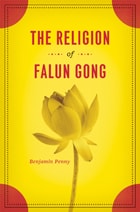
The Religion of Falun Gong
Benjamin Penny
University of Chicago Press, 2012
In July 1999, a mere seven years after the founding of the religious movement known as the Falun Gong, the Chinese government banned it. Falun Gong is still active in other countries, and its suppression has become a primary concern of human rights activists and is regularly discussed in dealings between the Chinese government and its Western counterparts. But while much has been written on Falun Gong’s relation to political issues, no one has analyzed in depth what its practitioners actually believe and do.
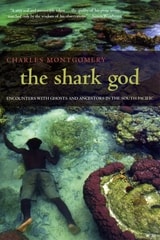
The Shark God
Encounters with Ghosts and Ancestors in the South PacificCharles Montgomery
University of Chicago Press, 2007
In the South Pacific, he discovers a world of sorcery and shark worship, where Christian and pagan rituals coexist and an ordinary day is marked by confrontations with America-worshiping cult leaders and militants alike. A defiantly original blend of history and memoir, anthropology and travel writing, The Shark God is ultimately a tale of personal and political transformation.
“The Shark God, a travel story as dark and twisted as one might ever wish to hear . . . reaches a superb climax with some apocalyptically page-turning scenes.”—Guardian
“A fascinating account of the drama of Melanesian life.”—Times Literary Supplement
“With exquisite writing, Montgomery lovingly captures the beauty and the horrors, the mysteries and the shams of the people and places he visits.”—Publishers Weekly
“A very real and memorable talent. . . . The endurance [Montgomery] displayed on his travels was admirable, the adventures he survived were tremendous, and the quality of his prose seems matched only by the wisdom of his observations.”—Simon Winchester, Globe and Mail (Toronto)
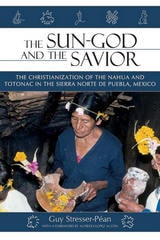
The Sun God and the Savior
The Christianization of the Nahua and Totonac in the Sierra Norte de Puebla, MexicoGuy Stresser-Péan
University Press of Colorado, 2009
The first English translation of Guy Stresser-Péan's tour-de-force presents two decades of fieldwork in the Sierra Norte de Puebla, Mexico, where native pre-Hispanic pagan beliefs blended with traditional Catholic evangelization from the sixteenth century and the more recent intrusion of modernism.
The Indians of the Sierra Norte de Puebla are deeply devoted to Christianity, but their devotion is seamlessly combined with pagan customs, resulting in a hybrid belief system that is not wholly indigenous, yet not wholly Christian. The syncretism practiced here has led the Totonac and Nahua people to identify Christ with the Sun God, a belief expressed symbolically in ritual practices such as the Dance of the Voladores.
Spanning the four centuries from the earliest systematic campaign against Nahua ritual practices - Zumárraga's idolatry trials of 1536-1540 - to the twentieth century, Stresser-Péan contextualizes Nahua and Totonac ritual practices as a series of responses to Christian evangelization and the social reproduction of traditional ritual practices. The Sun God and the Savior is a monumental work on the ethnographic and historical knowledge of the peoples of the Sierra Norte.
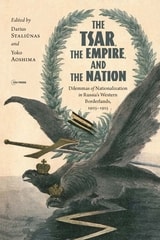
The Tsar, The Empire, and The Nation
Dilemmas of Nationalization in Russia's Western Borderlands, 1905-1915Darius Staliunas
Central European University Press, 2021
This collection of essays addresses the challenge of modern nationalism to the tsarist Russian Empire. First appearing on the empire’s western periphery this challenge, was most prevalent in twelve provinces extending from Ukrainian lands in the south to the Baltic provinces in the north, as well as to the Kingdom of Poland.
At issue is whether the late Russian Empire entered World War I as a multiethnic state with many of its age-old mechanisms run by a multiethnic elite, or as a Russian state predominantly managed by ethnic Russians. The tsarist vision of prioritizing loyalty among all subjects over privileging ethnic Russians and discriminating against non-Russians faced a fundamental problem: as soon as the opportunity presented itself, non-Russians would increase their demands and become increasingly separatist.
The authors found that although the imperial government did not really identify with popular Russian nationalism, it sometimes ended up implementing policies promoted by Russian nationalist proponents. Matters addressed include native language education, interconfessional rivalry, the “Jewish question,” the origins of mass tourism in the western provinces, as well as the emergence of Russian nationalist attitudes in the aftermath of the first Russian revolution.
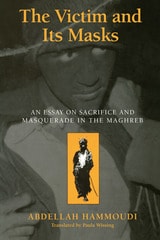
The Victim and its Masks
An Essay on Sacrifice and Masquerade in the MaghrebAbdellah Hammoudi
University of Chicago Press, 1993
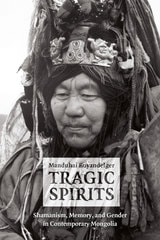
Tragic Spirits
Shamanism, Memory, and Gender in Contemporary MongoliaManduhai Buyandelger
University of Chicago Press, 2013
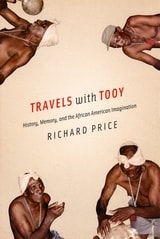
Travels with Tooy
History, Memory, and the African American ImaginationRichard Price
University of Chicago Press, 2007
Included on the itinerary for this hallucinatory expedition: forays into the eighteenth century to talk with slaves newly arrived from Africa; leaps into the midst of battles against colonial armies; close encounters with double agents and femme fatale forest spirits; and trips underwater to speak to the comely sea gods who control the world’s money supply. This enchanting book draws on Price’s long-term ethnographic and archival research, but above all on Tooy’s teachings, songs, stories, and secret languages to explore how Africans in the Americas have created marvelous new worlds of the imagination.